

The DOI matches its Crossref record; 96 of the 96 references it cites were found in a registry or an index.
Barriers to Men’s Help Seeking for Intimate Partner Violence
Open accessAbstract
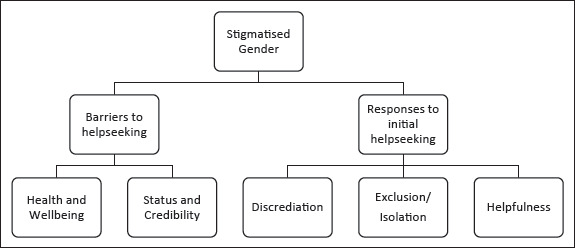
Evidence suggests that male victims of intimate partner violence (IPV) are less likely to seek help for their victimization than female victims. Studies exploring barriers to help seeking are relatively scarce in the United Kingdom (UK) and those that have been undertaken across Europe, United States, Canada, and Australia have tended to rely on small samples of help-seeking men who have self-identified as victims of IPV. With a view to include more male victim voices in the literature, an anonymous qualitative questionnaire was distributed via social media. In total, 147 men (85% from the UK) who self-identified as being subject to abuse from their female partners, completed the questionnaire. The data was subjected to a deductive thematic analysis and one superordinate and two overarching themes were identified. The superordinate theme was stigmatized gender and the two overarching themes (subthemes in parentheses) were barriers prohibiting help seeking (status and credibility, health and well-being) and responses to initial help seeking (discreditation, exclusion/isolation, and helpfulness). The findings are discussed in the context of Overstreet and Quinn’s (2013) interpersonal violence and stigma model and findings from previous research. The conclusions and recommendations promote education and training and advocate a radical change to policy.
Overview
The claims and statistics of this paper haven’t been checked yet.
Run the check — free, no account needed. It reads the open-access text and checks the sources it cites.
Integrity signals
Registry
Cites
Statistics
Figures
Verification
Claims the paper makes
The claims and statistics of this paper haven’t been checked yet.
Run the check — free, no account needed. It reads the open-access text and checks the sources it cites.
Claims other papers make about this one
Each is checked against this paper’s own text: does it say what the citing paper says it does?
The source backs part of the claim, not all of it — or backs it for a different population, condition or comparison.
In the citing paper
“Male victims are less likely to seek help for their victimization than female victims (female 81%, male 57%).”
From Help‐seeking behavior of male victims of intimate partner violence in Japan (2024) · cites this paper as [14]
Experimental — accuracy not yet measuredThe source backs part of the claim, not all of it — or backs it for a different population, condition or comparison.
In the citing paper
“There is no empirical consensus regarding IPV experience prevalence among men, variation in the type of IPV experiences, nor in any differences or unique needs resulting from these experiences (Scott-Storey et al., 2023; Taylor et al., 2022).”
From Experiences and Impacts of Intimate Partner Violence Against Men in Northern Ireland: Qualitative Findings from the Male Experiences of Intimate Partner Violence Study (2026) · cites this paper as Taylor et al., 2022
Experimental — accuracy not yet measuredThe source backs part of the claim, not all of it — or backs it for a different population, condition or comparison.
In the citing paper
“Under-reporting also affects these rates, as many men who have experienced IPV are unaware their experiences meet the definition of abuse (Bates, 2020a, 2020b; Taylor et al., 2022).”
From Experiences and Impacts of Intimate Partner Violence Against Men in Northern Ireland: Qualitative Findings from the Male Experiences of Intimate Partner Violence Study (2026) · cites this paper as Taylor et al., 2022
Experimental — accuracy not yet measuredThe source backs part of the claim, not all of it — or backs it for a different population, condition or comparison.
In the citing paper
“To date, IPV against cisgender women and its impacts have been widely researched, but the experiences of men remain understudied (Scott-Storey et al., 2023; Taylor et al., 2022).”
From Experiences and Impacts of Intimate Partner Violence Against Men in Northern Ireland: Qualitative Findings from the Male Experiences of Intimate Partner Violence Study (2026) · cites this paper as Taylor et al., 2022
Experimental — accuracy not yet measuredThe cited source says what the claim attributes to it.
In the citing paper
“Men are more likely to either not report due to psychosocial and cultural influences, or to not recognise their experiences as IPV (Bates, 2020b; Taylor et al., 2022).”
From Experiences and Impacts of Intimate Partner Violence Against Men in Northern Ireland: Qualitative Findings from the Male Experiences of Intimate Partner Violence Study (2026) · cites this paper as Taylor et al., 2022
The cited source says what the claim attributes to it.
In the citing paper
“They may fail to report due to self and societal stigma, retaliation concerns, and fear of not being believed (Walker et al., 2020; Bates, 2020a; Taylor et al., 2022).”
From Experiences and Impacts of Intimate Partner Violence Against Men in Northern Ireland: Qualitative Findings from the Male Experiences of Intimate Partner Violence Study (2026) · cites this paper as Taylor et al., 2022
The cited source says what the claim attributes to it.
In the citing paper
“Lack of disclosure in men can be driven by the fear that their experiences would be minimised/ignored/not believed, or they themselves would be accused of perpetrating abuse (Walker et al., 2020; Bates, 2020a; Taylor et al., 2022).”
From Experiences and Impacts of Intimate Partner Violence Against Men in Northern Ireland: Qualitative Findings from the Male Experiences of Intimate Partner Violence Study (2026) · cites this paper as Taylor et al., 2022
Self-check
Percentages, sums and reported differences re-computed from the paper’s own numbers.
The self-check needs the paper’s full text.
Citations
Cites
Using thematic analysis in psychology
Braun, V., & Clarke, V. (2006) · Qualitative Research in Psychology · doi:10.1191/1478088706qp063oa · Cited by 194,414 · cited 3×
“The main objective of this final step was to ensure that that the final themes represented the lived experiences of the men in the sample and were contextually meaningful (Braun & Clarke, 2006, 2012; Carpenter & Suto, 2008; Guest et al., 2012).”
BackgroundMethodFereday, J., & Muir-Cochrane, E. (2006) · International Journal of Qualitative Methods · doi:10.1177/160940690600500107 · Cited by 11,829
Stigma: Notes on the Management of Spoiled Identity.
Seeman, M. S., & Goffman, E. (1964) · American Sociological Review · doi:10.2307/2091442 · Cited by 10,716
Qualitative research: Methods in the social sciences
(2006) · PsycEXTRA Dataset · doi:10.1037/e668352010-001 · Cited by 10,619
Link, B. G., & Phelan, J. C. (2001) · Annual Review of Sociology · doi:10.1146/annurev.soc.27.1.363 · Cited by 8,848
Guest, G., MacQueen, K., & Namey, E. (2012) · doi:10.4135/9781483384436 · Cited by 7,924
Sex differences in aggression between heterosexual partners: a meta-analytic review
Archer, J. (2000) · Psychological Bulletin · doi:10.1037/0033-2909.126.5.651 · Cited by 2,507 · cited 1×
“This line of inquiry has also confirmed that men can be the victims and women the perpetrators of IPV (Archer, 2000; Breiding, 2014; Desmarais et al., 2012; Dutton et al., 2005).”
BackgroundPhysical and mental health effects of intimate partner violence for men and women
Coker, A. L., Davis, K. E., Arias, I., Desai, S., Sanderson, M., Brandt, H. M., & Smith, P. H. (2002) · American Journal of Preventive Medicine · doi:10.1016/s0749-3797(02)00514-7 · Cited by 2,258 · cited 2×
“…with their physical and mental health as a result of the abuse they had experienced, including posttraumatic stress disorder (PTSD; e.g., Hines & Douglas, 2011), anxiety and depression (Coker et al., 2002; Próspero, 2007; Próspero & Vohra-Gupta, 2007), and suicidality (McLaughlin et al., 2012).”
BackgroundDoing a thematic analysis: A practical, step-by-step guide for learning and teaching scholars.
Maguire, M., & Delahunt, B. (2017) · All Ireland Journal of Higher Education · doi:10.62707/aishej.v9i3.335 · Cited by 2,099 · cited 1×
“A thematic map was produced to ensure that the codes (extracted data) and the entire data set were represented by the themes and subthemes (Braun & Clarke, 2006; Maguire & Delahunt, 2017).”
Method(1979) · Research Explorer (The University of Manchester) · Cited by 1,905
Research works printed but not linked: 7
- Braun V., 2012, vol. 2: Research designs: Quantitative, qualitative, neuropsychological, and biological, 57
- Breiding M. J., 2014, Morbidity and Mortality Weekly Report. Surveillance Summaries, 63, 1
- Heffernan M., 2011, Wilful blindness: Why we ignore the obvious
- Milligan M. (2019). The response of law enforcement in regards to intimate partner violence on male victims within heterosexual relationships [Doctoral dissertation]. University of West Georgia.
- Pence E., 2003, Creating a process of change for men who batter. An education curriculum
- Piga M. L., 2018, Italian Sociological Review, 8, 339
- Wright C., 2016, Plymouth Law and Criminal Justice Review, 8, 333
Cited by
Sorted by citations
Culture, trauma, and memory in investigative interviews
Vredeveldt, A., Given‐Wilson, Z., & Memon, A. (2023) · Psychology Crime and Law · doi:10.1080/1068316x.2023.2209262 · Cited by 35
“Of course, shame and stigma may also explain why men in Western cultures are less likely to report being victims of intimate partner violence (Taylor et al., 2022).”
McLeod, D. A., Ozturk, B., Butler-King, R. L., & Peek, H. (2023) · Trauma Violence & Abuse · doi:10.1177/15248380231177318 · Cited by 21
“Participants said their friends and family would be shocked and surprised, and some reported expectations that family and friends would not believe them or would downplay the seriousness of the abuse (Taylor et al., 2022; Walker et al., 2020).”
BackgroundInfluentialKim, E. Y. Y., Nelson, L. E., Pereira, T. L., & Shorey, S. (2023) · Trauma Violence & Abuse · doi:10.1177/15248380231209435 · Cited by 29
“The attitudes collectively contribute to the trivialization of victimized men, thereby exacerbating their plight (Bates et al., 2019b; Gerber, 1991; Taylor et al., 2022).”
BackgroundInfluentialStein, C., Flor, L. S., Gil, G., Khalil, M., Herbert, M. E., Aravkin, A. Y., Arrieta, A., Baeza, M. J., Bustreo, F., Cagney, J., et al. (2025) · Nature Human Behaviour · doi:10.1038/s41562-025-02144-2 · Cited by 23
Walklate, S., Fitz‐Gibbon, K., Reeves, E., Meyer, S., & McGowan, J. (2022) · Journal of Criminology · doi:10.1177/26338076221127452 · Cited by 18
“Dominant narratives on masculinity can do a disservice to those men who do not fit within it (see also Taylor et al., 2021) and the consequences of this can carry life-changing impacts in terms of mental health problems and risk of suicide (Scourfield and Evans, 2015).”
BackgroundPisano, G., Widanaralalage, B. K., & Willmott, D. (2024) · Journal of Criminal Psychology · doi:10.1108/jcp-04-2024-0033 · Cited by 18
Factors Influencing Help-seeking Choices Among Non-Service-Connected Survivors of IPV
Ravi, K. E., Leat, S. R., Schrag, R. V., & Moore, K. A. (2023) · Journal of Family Violence · doi:10.1007/s10896-023-00495-w · Cited by 15
Wadji, D. L., Pirro, T., & Langevin, R. (2024) · Trauma Violence & Abuse · doi:10.1177/15248380241287144 · Cited by 18
Waila, J. M., Lule, H., Wilson, M. L., Bärnighausen, T., & Abio, A. (2022) · Journal of Prevention · doi:10.1007/s10935-022-00683-2 · Cited by 15
Black Men’s Intimate Partner Violence Victimization, Help-Seeking, and Barriers to Help-Seeking
Stewart, M. A., & Haselschwerdt, M. L. (2023) · Journal of Interpersonal Violence · doi:10.1177/08862605231159632 · Cited by 14
“The fear of being falsely labeled was also accompanied by the fear of counterclaims (e.g., claiming he was the abusive partner) from their abusive partner (J. C. Taylor et al., 2021).”
BackgroundInfluentialBoyle, M., & Tighe, S. M. (2022) · Journal of Advanced Nursing · doi:10.1111/jan.15213 · Cited by 13
Challenging violence in South African education: a feminist pedagogical and legal analysis
Pietersen, D., & Langeveldt, D. C. (2024) · Curriculum Perspectives · doi:10.1007/s41297-024-00265-8 · Cited by 23
“Access to counselling and legal assistance is limited, compounding the trauma experienced (Taylor et al., 2022).”
Owusu‐Antwi, R., Fedina, L., Baeza, M. J., Khatibi, K., Bosomtwe, D., Nsereko, E., Shadare, O., Compton, S. D., Akinyemi, A. I., Randa, M. B., et al. (2024) · Women s Health · doi:10.1177/17455057241307519 · Cited by 17
Li, Y., Wang, G., Chen, J., Xia, Q. J., Chen, K., Ou, S., & Tang, S. (2024) · PLoS ONE · doi:10.1371/journal.pone.0310297 · Cited by 11
Saberi, E., Hutchinson, M., & Hurley, J. (2023) · International Emergency Nursing · doi:10.1016/j.ienj.2023.101311 · Cited by 12
Maposa, I., Twabi, H. S., Zingoni, Z. M., Batidzirai, J. M., Singini, G. C., Mohammed, M., Bere, A., Kgarosi, K., Mchunu, N. N., Nevhungoni, P., et al. (2023) · BMC Public Health · doi:10.1186/s12889-023-16988-8 · Cited by 10
Pooled Prevalence of Violence Against Men: A Systematic Review and Meta-Analysis of a Silent Crises
Rehman, S., Habib, M., & bin Tahir, S. (2023) · Violence and Gender · doi:10.1089/vio.2022.0060 · Cited by 11
Kurbatfinski, S., Letourneau, N. L., Marshall, S., McBride, D. L., Novick, J., Griggs, K., Perrotta, A., Daye, M., McManus, C., & Nixon, K. (2024) · Frontiers in Sociology · doi:10.3389/fsoc.2024.1466984 · Cited by 10
Amédée, L. M., Darius, W. P., Farahi, S. M. M. M., Guillaume, D., Jacob, G., Guerrier, M., Clorméus, L. A., Hébert, M., & Cénat, J. M. (2024) · Journal of Affective Disorders · doi:10.1016/j.jad.2024.07.074 · Cited by 9
Macassa, G., Stål, F., Rydback, M., Pliakas, J., Winsjansen, D., Hiswåls, A.-S., & Soares, J. J. F. (2025) · Societies · doi:10.3390/soc15010017 · Cited by 12
Jiang, S., Jin, C., Du, R., & Liang, Z. (2025) · Child Abuse & Neglect · doi:10.1016/j.chiabu.2025.107695 · Cited by 10
Violence Against Men and Its Effects Within the Workplace: A Literature Review
Garro, M., Bonfanti, R. C., Argento, A., & Ruggieri, S. A. (2024) · Social Sciences · doi:10.3390/socsci13120636 · Cited by 10
Landa–Blanco, M., & Mejía-Sánchez, R. (2025) · Frontiers in Public Health · doi:10.3389/fpubh.2025.1565284 · Cited by 8
Aborisade, R. A. (2023) · Journal of Aggression Maltreatment & Trauma · doi:10.1080/10926771.2023.2194252 · Cited by 8
“…reporting has been widely noted to be stigmatizing for both genders due to the hidden and visible components that it entails (N. M. Overstreet et al., 2017; Taylor et al., 2021), the stigmatization, and fears of being stigmatized in patriarchal Nigeria appear to be more intense and far-reaching.”
BackgroundHelp‐seeking behavior of male victims of intimate partner violence in Japan
Morishita, J., Yasuda, M., & Suda, S. (2024) · Psychiatry and Clinical Neurosciences Reports · doi:10.1002/pcn5.70013 · Cited by 8
“14,15 Lysova et al. 16 showed that male victims have four internal and two external barriers as reasons for being hesitant about help ‐ seeking behavior.”
BackgroundEnding the stigma of male domestic violence and abuse victims: A mixed-methods study
Ambrozewicz, P., Hammond, C., & Fido, D. (2024) · Journal of Criminal Justice · doi:10.1016/j.jcrimjus.2024.102222 · Cited by 8
Schemmel, J., Maciey, D., & Goede, L.-R. (2025) · Journal of Interpersonal Violence · doi:10.1177/08862605251321003 · Cited by 9
“…usually perceives men as perpetrators of IPV rather than as victims which results in their reluctance to openly address their IPV experiences or even report them to the police as they fear discredi-tation and a loss of status (Hine, Wallace, et al., 2022; Lysova et al., 2020; Taylor et al., 2022).”
Isangha, S. O. (2024) · Journal of Family Studies · doi:10.1080/13229400.2024.2366306 · Cited by 8
“It has resulted in male victims experiencing a series of internal struggles and systemic biases that are re fl ected in their help-seeking behaviors and experiences (Richardson & Kloess, 2022; Sivagurunathan et al., 2022; Taylor et al., 2022).”
InfluentialRejecting Identities: Stigma and Hermeneutical Injustice
Edlich, A., & Archer, A. (2024) · Social Epistemology · doi:10.1080/02691728.2024.2407646 · Cited by 13
Muzingili, T., & Mafa, I. H. (2024) · Journal of Asian and African Studies · doi:10.1177/00219096241263961 · Cited by 6
“Studies have found that women may choose not to report instances of IPV for several reasons, such as fear of embar-rassment and economic reliance on the abusive partner (Li et al., 2023; Taylor et al., 2022).”
Stewart, M. A., & Haselschwerdt, M. L. (2025) · Journal of Family Theory & Review · doi:10.1111/jftr.12619 · Cited by 7
Jones, B., & Anyieth, A. K. (2023) · Violence Against Women · doi:10.1177/10778012231214775 · Cited by 6
“Studies have shown that perpetrators in general — from either Western or non-Western backgrounds — rarely seek help to address their violent behavior (Corbally, 2015; Machado et al., 2017; Mugford, 1989; Taylor et al., 2022; Tsui et al., 2010).”
Merscher, J., Barra, S., Xander, A. M., Patrasc, P. G., Retz-Junginger, P., & Retz, W. (2025) · Scientific Reports · doi:10.1038/s41598-024-74222-w · Cited by 6
PettyJohn, M. E., Baumler, E. R., Backes, B. L., Brashear, B., Temple, J. R., & Wood, L. (2023) · Journal of Family Violence · doi:10.1007/s10896-023-00657-w · Cited by 6
Correlates of Domestic Violence Victimization Among Immigrants During COVID-19 in the United States
Rai, A., Grossman, S. F., Perkins, N. H., Saasa, S., Guzzardo, O., & Tamayo, J. (2024) · Journal of Aggression Maltreatment & Trauma · doi:10.1080/10926771.2024.2345185 · Cited by 5
“This finding along with the reports of other types of abuse for men and women, suggests a need for service providers to assess for abuse among both men and women in the immigrant community (Taylor et al., 2021).”
ResultDenhard, L., Brown, C., Kanagasabai, U., Thorsen, V. C., Kambona, C., Kamagaté, F., Ramphalla, P. L., Benevides, R., Kamami, M., McOwen, J., et al. (2023) · Child Abuse & Neglect · doi:10.1016/j.chiabu.2023.106452 · Cited by 5
“(Hine et al., 2022; Lysova et al., 2022; Machado et al., 2020; Taylor et al., 2022).”
BackgroundWang, L., Chen, J., Wu, Y., Duan, Y., Weng, Y., Wu, F., Huang, Q., Cai, T., & Yuan, C. (2025) · Public Health · doi:10.1016/j.puhe.2025.105863 · Cited by 5
Murphy, A. (2025) · The British Journal of Criminology · doi:10.1093/bjc/azaf110 · Cited by 4
Pless, J., & Gibbs, J. J. (2024) · Journal of Interpersonal Violence · doi:10.1177/08862605241271395 · Cited by 4
“While there are more intersectional models emerging (Baker et al., 2013; McPhail et al., 2007), for men who are victims the predominant feminist theories of IPV begin to fall short (Letellier, 1994; Taylor et al., 2021).”
Purbaningrum, T. M., Setiansah, M., & Novianti, W. (2023) · Jurnal Komunikasi Nusantara · doi:10.33366/jkn.v5i1.245 · Cited by 4
“…Mite Setiansah, & Wiwik Novianti ini menyatakan 13 % dari total 147 responden yang merupakan korban laki-laki tidak pernah menceritakan tentang pengalaman mereka, sedangkan 21 % responden lainnya baru menceritakan tentang kasus kekerasan setelah beberapa tahun setelahnya (Taylor et al., 2022).”
BackgroundGräber, M., & Horten, B. (2022) · Forensische Psychiatrie Psychologie Kriminologie · doi:10.1007/s11757-022-00706-y · Cited by 3
“Insgesamt wurden 147 Männer, die mit 85% vorwiegend aus dem Vereinigten Königreich stammten, zu ihrer Viktimisierung durch ihre Partnerin befragt (Taylor et al. 2021, S. 7).”
BackgroundInfluentialIdriss-Wheeler, D., Surkan, P., Bainbridge, S., & El-Khatib, Z. (2025) · BMC Public Health · doi:10.1186/s12889-025-25124-7 · Cited by 3
“Anonymity may also have reduced stigma and enabled men to disclose experiences more openly [57].”
Hines, D. A., & Lysova, A. (2024) · Partner Abuse · doi:10.1891/pa-2023-0018 · Cited by 3
Trafford, L., & Le, B. L. (2025) · Frontiers in Sociology · doi:10.3389/fsoc.2025.1694399 · Cited by 5
Taverna, E. C., Iverson, K. M., Kumar, S. A., Vogt, D. S., & Mitchell, K. S. (2025) · Stress and Health · doi:10.1002/smi.3526 · Cited by 3
Andreevskikh, O. (2023) · Journal of Family Violence · doi:10.1007/s10896-023-00614-7 · Cited by 3
Sexual Orientation and Risk for Elder Abuse: Findings from the Canadian Longitudinal Study on Aging
GUTMAN, G. M., Karbakhsh, M., & Stewart, H. G. (2023) · OBM Geriatrics · doi:10.21926/obm.geriatr.2304260 · Cited by 3
Difficult male clients? Social service and health practitioners’ perspectives
Deslauriers, J.-M., & Hoebanx, P. (2025) · Discover Global Society · doi:10.1007/s44282-025-00202-8 · Cited by 3
“Despite such initiatives, men continue to underutilize social and health services such as mental health services, primary health care, and support for victims of intimate partner violence [5–8].”
Prevalence of Partner Abuse, Emotional Abuse, and Control: A 10-Year Retrospective
Carney, M. M., & Barner, J. R. (2024) · Partner Abuse · doi:10.1891/pa-2024-0041 · Cited by 3
Cooke, K., Ridgway, K., Pecora, L. A., Westrupp, E. M., Hedley, D., Hooley, M., & Stokes, M. A. (2025) · Review Journal of Autism and Developmental Disorders · doi:10.1007/s40489-025-00498-x · Cited by 7
Harries, T., Walker, A., Lyall, K., Drutschinin, K., Costa, B. M., Curtis, A., & Mayshak, R. (2025) · Journal of Family Violence · doi:10.1007/s10896-025-00903-3 · Cited by 2
Skauge, A. D., Aakvaag, H. F., Strøm, I. F., Nissen, A., Seifert, L. C., Överlien, C., & Dale, M. T. G. (2025) · BMJ Open · doi:10.1136/bmjopen-2025-101434 · Cited by 2
Intimate Partner Violence Among Older Women and Men in Spain: Prevalence and Types
Baena, M. B. C., Vieites, A. R., & Falcón, C. M. (2023) · Partner Abuse · doi:10.1891/pa-2022-0048 · Cited by 2
The Johnny Depp and Amber Heard Case in News Media: A Critical Discourse Analysis
Harper, E. I., Gibbons, D., & Bates, E. A. (2023) · Partner Abuse · doi:10.1891/pa-2022-0025 · Cited by 2
Self-citationCavanaugh, C. E., Rucci, S., & Vasquez-Home, O. (2023) · Psychiatry Research · doi:10.1016/j.psychres.2023.115456 · Cited by 2
Brunton, R., & Shin, M. (2024) · Acta Psychologica · doi:10.1016/j.actpsy.2024.104576 · Cited by 2
Ananyeva, O. A., & Prusova, I. (2025) · Social Psychology and Society · doi:10.17759/sps.2024150414 · Cited by 2
Leonard, A. F., Estrada, Y., Jakubowski, K., & Medrano, A. S. (2025) · Journal of Interpersonal Violence · doi:10.1177/08862605251375422 · Cited by 2
Bates, E. A., Harper, E. I., & Amisi, A. (2023) · Springer eBooks · doi:10.1007/978-3-031-42007-8_7 · Cited by 2
Self-citationPalantza, C., Davis, M., Witteveen, A. B., & Padilla-Medina, D. M. (2025) · medRxiv · doi:10.1101/2025.05.23.25328223 · Cited by 2
Associations Between the Frequency of Youth Dating Violence Victimization and Cyberbullying
Post, A., & Huber, L. R. B. (2023) · International Journal of Bullying Prevention · doi:10.1007/s42380-023-00163-z · Cited by 1
“For example, males have been stereotypically referred to as the “stronger” sex, and in turn, being labeled a “victim” of dating violence may lead others to perceive them as “weak” (Taylor et al., 2021; Overstreet & Quinn, 2013).”
‘ I will show the man pepper ’: Factors underlying male spousal abuse in Lagos metropolis
Chukwuma, I., & Aderinto, A. A. (2025) · International Review of Victimology · doi:10.1177/02697580251330322 · Cited by 1
“…to acknowledge male victims of spousal abuse by organisations that tackle spousal abuse against women due to fears that it will take away the seriousness of the abuse experienced by women and also reduce funds and resources available to female victims (Hine et al., 2022; Taylor et al., 2022).”
Isangha, S. O., Tam, H.-L., Chuang, S. S., Akintunde, T. Y., Choi, A. W., Cudjoe, E., & Umar, R. D. (2025) · Families in Society The Journal of Contemporary Social Services · doi:10.1177/10443894251322846 · Cited by 1
“As a result, interventions for male victims are often integrated into those for female victims, rendering them less visible and accessible (Isangha, 2024c; Taylor et al., 2022).”
InfluentialPublic Perceptions of Intimate Partner Violence: A Qualitative Story Completion Task
Sheehan, K., Watson, L., & McKnight, C. (2025) · Journal of Family Violence · doi:10.1007/s10896-025-00906-0 · Cited by 1
Post-Separation Experience of Male Victims of Intimate Partner Violence in Southern Nigeria
Isangha, S. O., Tam, H.-L., Chuang, S. S., Akintunde, T. Y., Choi, A. W., Cudjoe, E., & Umar, R. D. (2025) · Journal of Aggression Maltreatment & Trauma · doi:10.1080/10926771.2025.2521074 · Cited by 1
“While research and public discourse have focused on the experiences of female victims in heterosexual relationships (Bates & Carthy, 2020; Corbally, 2014), recent studies have highlighted the often-overlooked experiences of male victims (Isangha, 2024b, 2024c; Taylor et al., 2022).”
Coping and psychological outcomes of male victims of intimate partner violence: A systematic review
Isangha, S. O., Akintunde, T. Y., Tam, H.-L., Choi, A. W., & Olurin, T. K. (2026) · Public Health · doi:10.1016/j.puhe.2026.106187 · Cited by 1
Li, C. K. W. (2026) · Journal of Interpersonal Violence · doi:10.1177/08862605261419455 · Cited by 2
Russo, L. N., Mezzapelle, J. L., Hines, D. A., Douglas, E. M., Lee, K. A., & Sabina, C. (2026) · Victims & Offenders · doi:10.1080/15564886.2026.2650131 · Cited by 1
“…experiences of male IPV victims, moving beyond documenting types of violence or help-seeking experiences (Dim & Lysova, 2022; Drijber et al., 2013; Hines & Douglas, 2010, 2016; Hogan et al., 2021; Kim et al., 2024; Machado et al., 2016; Taylor et al., 2022; Vail et al., 2025; Walker et al., 2020).”
Agwu, P. (2026) · Journal of Asian and African Studies · doi:10.1177/00219096261454351 · Cited by 1
Humwa, F., Daniel, O., Peter, M., & Amolo., A. S. (2026) · Journal of Psychiatry and Psychiatric Disorders · doi:10.26502/jppd.2572-519x0276 · Cited by 2
Men’s Exposure to Intimate Partner Violence and Their Experiences With a Crisis Center in Denmark
Lassen, B., Nielsen, N. H., Winther, M., & Bates, E. A. (2022) · Partner Abuse · doi:10.1891/pa-2022-0032 · Cited by 1
Self-citationIntimate Partner Violence Toward Men in Estonia
Lassen, B. (2023) · Journal of Aggression Maltreatment & Trauma · doi:10.1080/10926771.2023.2186297 · Cited by 1
“It is well described that men who are victims of IPV do not commonly report this to authorities or the hospital (Carmo et al., 2011; Taylor et al., 2021).”
BackgroundConroy, S. A., Trzebiatowski, T. M., & Liou, R. (2023) · Journal of Workplace Behavioral Health · doi:10.1080/15555240.2023.2214740 · Cited by 1
“Our research is consistent with work suggesting that stigma influences disclosure and help-seeking (Taylor et al., 2022).”
BackgroundResultThe Influence of Victim Gender on Perception of Economic Abuse
Yamawaki, N., Green, J., Macias, Z., Umphress, R., Ulloa, S., Duran, E., & Hickey, M. (2023) · Psychology · doi:10.4236/psych.2023.149083 · Cited by 1
Rai, A., Ravi, K. E., Kapur, I., Gomez, A. S., Levya, E., & Farzam, F. (2025) · Journal of Evidence-Based Social Work · doi:10.1080/26408066.2025.2478567 · Cited by 1
Manhood/Honor Culture and Its Impact on the Queer Community
MacLennan-Matthews, N. S. (2025) · Springer eBooks · doi:10.1007/978-3-030-85493-5_2197-1 · Cited by 1
Spikol, E., McGlinchey, E., & Armour, C. (2026) · Behavioral Sciences · doi:10.3390/bs16061007 · Cited by 1
“Disclosure, Barriers to Help-Seeking, and Support in Northern Ireland Men are more likely to either not report due to psychosocial and cultural influences, or to not recognise their experiences as IPV (Bates, 2020b; Taylor et al., 2022).”
InfluentialBurnell, J. L. (2022) · Open Access Victoria University of Wellington | Te Herenga Waka (Figshare) · doi:10.26686/wgtn.20209187
Exploring Leverages and Pitfalls of Context Collapse in Modern Communication
Ijaz, D., Araja, J., Walker, S., & Mahmoud, M. (2022) · International Conference on Computational Science and Computational Intelligence (CSCI) · doi:10.1109/csci58124.2022.00153
“Society has a vested interest in taking men being the aggressor more seriously than women, and that is due to the likelihood of injury, hospitalization, or death being far greater for women [11].”
BackgroundYap, K. S., & Ng, J. H. (2023) · Malaysian Journal of Social Sciences and Humanities (MJSSH) · doi:10.47405/mjssh.v8i8.2480
“This article is licensed under a Creative Commons Attribution 4.0 International License (CC BY). as being treated as liars (Jovanoski & Sharlamanov, 2021; Taylor et al., 2021).”
InfluentialCochrane in CORR®: Psychological Therapies for Women Who Experience Intimate Partner Violence
Irish, K., & Madden, K. (2023) · Clinical Orthopaedics and Related Research · doi:10.1097/corr.0000000000002838
Characteristics of Men Who Seek Help From an Irish Domestic Abuse Helpline: The MENCALLHELP Study
Corbally, M., Hine, B. A., & Kestell, B. (2023) · Partner Abuse · doi:10.1891/pa-2023-0017
FOUCAULDIAN DISCOURSE ANALYSIS OF BATTERED MEN IN THE PHILIPPINES
Poticano, M. Z., & Sasot, C. F. (2024) · International Journal of Education Humanities and Social Science · doi:10.54922/ijehss.2024.0661
Male victims of domestic violence among professional families: Shackled in masculinity
Mas’udah, S. (2024) · Jurnal Sosiologi Dialektika · doi:10.20473/jsd.v19i1.2024.66-76
A Multi-Level Analysis of Help-Seeking Behaviour of Male Victims of Intimate Partner Violence
Candia, D. A., Weke, P. G. O., Muhua, G. O., & Manene, M. M. (2024) · Sri Lankan Journal of Applied Statistics · doi:10.4038/sljas.v25i1.8121
“…of the studies focusing on the help-seeking of male victims have been carried out in developed countries (Hogan et al., 2021; Machado et al., 2016; Taylor et al., 2021; Tsui, 2014), and only a limited number in the developing world such as Sub-Saharan Africa (Gubi and Wandera, 2022; Kgatle and…”
BackgroundResultvan Gelder, N. E., Sow, J., van Haalen, D. L., Schoorlemmer, I., Knol, M., Bouwer, E., & Oertelt‐Prigione, S. (2024) · Violence Against Women · doi:10.1177/10778012241270223
“Furthermore, no men IPVA survivors were included but their experiences and opinions are important and could differ from women IPVA survivors (Taylor et al., 2022).”
Analysis of the causes of Domestic Violence against men in Ecuador
Serrano, K. I. H., Llerena, C. E. G., Romero, L. D. T., & Lagla, D. M. T. (2024) · Salud Ciencia y Tecnología - Serie de Conferencias · doi:10.56294/sctconf2024.775
Belton, J., Awrey, M. J., Sheinin, G. D. B., & Langton, C. M. (2024) · Journal of Family Violence · doi:10.1007/s10896-024-00752-6
Effective nursing strategies to identify and prevent sexual violence risk in adolescents
Biedlingmaier, R., & Heavey, E. J. (2024) · Nursing · doi:10.1097/nsg.0000000000000115
Wholeben, M., Cheon, H., Goodson, A., Salazar, G., & McCreary, R. (2025) · Journal of Trauma Nursing · doi:10.1097/jtn.0000000000000836
Zhang, Y. (2025) · Communications in Humanities Research · doi:10.54254/2753-7064/2025.22471
Abdullah, S., Hong, S. S., Vinod, M., Siddiqui, H., Mejía-Lancheros, C., Irfan, U., Carter, A., Zenlea, I. S., & Fierheller, D. (2025) · Social Sciences · doi:10.3390/socsci14060347
Cho, H., Allen, J., Nelson, A., & Gillis, K. (2025) · Journal of Social Work and Social Welfare Policy · doi:10.33790/jswwp1100145 · Cited by 1
Paternal perinatal intimate partner violence victimization and child abuse
Obikane, E., Nishi, D., Kato, T., Nagayoshi, M., Ochi, M., Takehara, K., & Tabuchi, T. (2025) · Pediatric Research · doi:10.1038/s41390-025-04296-3
The Domestic Violence Act, 2005: Addressing Violence
Pandit, S. A. (2025) · Springer eBooks · doi:10.1007/978-981-96-9685-7_6
Asiimwe, J. B., Nuwabaine, L., Alinda, I., Sserwanja, Q., Amperiize, M., Katushabe, E., & Kawuki, J. (2025) · Research Square · doi:10.21203/rs.3.rs-7526421/v1
Factors for Perceived Helpfulness of Support Sources Among Survivors of Intimate Partner Violence
Cho, H., Kim, W., Gillis, K., & Goetz, K. (2025) · Behavioral Sciences · doi:10.3390/bs15101350
“Similarly, men may face societal stigma and pressure to adhere to traditional masculine norms, which can inhibit their willingness to seek help from formal sources like doctors, psychologists, or the police (Douglas & Hines, 2011; Taylor et al., 2022; Tsui, 2014).”
Metadata
- Authors
- Taylor, J. C., Bates, E. A., Colosi, A., & Creer, A. J.
- Affiliations
- University of Cumbria (GB)
- Corresponding author
- Taylor, Julie C.
- Venue
- Journal of Interpersonal Violence
- Publisher
- SAGE Publications
- Published
- 2021-08-25
- Volume
- 37
- Issue
- 19-20
- Pages
- NP18417-NP18444
- ISSN
- 0886-2605 (ISSN-L)
- 1552-6518
- PMC
- PMC9554285
- OpenAlex
- W3194102121
- Cited by
- 129
- References
- 96
- Citations by year
- 2026: 30 · 2025: 37 · 2024: 27 · 2023: 27 · 2022: 8
- FWCI
- 8.56
- Type
- journal article
- Language
- en
- Open access
- hybrid
- doi.org
- Licence
- Locations
- Journal of Interpersonal Violence (publishedVersion, cc-by-nc)
- PubMed Central (publishedVersion, cc-by-nc)
- PubMed (publishedVersion)
- Insight (University of Cumbria) (acceptedVersion)
- Topics
- Social Sciences › Health › Intimate Partner and Family Violence
- Social Sciences › Gender Studies › Sexual Assault and Victimization Studies
- Health Sciences › Medicine › Geriatrics and Gerontology › Elder Abuse and Neglect
- Keywords
- intimate partner violence, male victims, help-seeking, help-seeking barriers, gender stigma, victim isolation, health and well-being, gender-based violence, United Kingdom
- MeSH terms
- Intimate Partner Violence, Female, Humans, Male, Men, Surveys and Questionnaires, United States, Violence, Crime Victims
About these checks
Registry, retraction, Cites and statistics results are computed, not judged, with one exception: a printed reference that no index lists is read once by a model before it counts as a citation error. Claims are extracted by a model and kept only when their quote appears verbatim in the text; each cited source is then checked, with a model’s help, for whether it says what the claim relies on. Those verdicts can be wrong — read the claim’s quote and the cited source before relying on one.
Statistics and arithmetic are recomputed, not judged.
Confidence bands are shown only for fields calibrated on our annotated test set. None is calibrated yet, so no band is shown.
What counts as a claim ›How we measure confidence ›How we check this ›
Are you an author, or do you see a problem with this page? Request a review
