

The DOI matches its Crossref record; 96 of the 96 references it cites were found in a registry or an index.
Barriers to Men’s Help Seeking for Intimate Partner Violence
Open accessAbstract
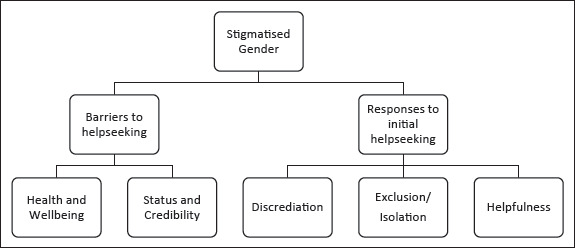
Evidence suggests that male victims of intimate partner violence (IPV) are less likely to seek help for their victimization than female victims. Studies exploring barriers to help seeking are relatively scarce in the United Kingdom (UK) and those that have been undertaken across Europe, United States, Canada, and Australia have tended to rely on small samples of help-seeking men who have self-identified as victims of IPV. With a view to include more male victim voices in the literature, an anonymous qualitative questionnaire was distributed via social media. In total, 147 men (85% from the UK) who self-identified as being subject to abuse from their female partners, completed the questionnaire. The data was subjected to a deductive thematic analysis and one superordinate and two overarching themes were identified. The superordinate theme was stigmatized gender and the two overarching themes (subthemes in parentheses) were barriers prohibiting help seeking (status and credibility, health and well-being) and responses to initial help seeking (discreditation, exclusion/isolation, and helpfulness). The findings are discussed in the context of Overstreet and Quinn’s (2013) interpersonal violence and stigma model and findings from previous research. The conclusions and recommendations promote education and training and advocate a radical change to policy.
Overview
The claims and statistics of this paper haven’t been checked yet.
Run the check — free, no account needed. It reads the open-access text and checks the sources it cites.
Integrity signals
Registry
Cites
Statistics
Figures
Verification
Claims the paper makes
The claims and statistics of this paper haven’t been checked yet.
Run the check — free, no account needed. It reads the open-access text and checks the sources it cites.
Claims other papers make about this one
Each is checked against this paper’s own text: does it say what the citing paper says it does?
The source backs part of the claim, not all of it — or backs it for a different population, condition or comparison.
In the citing paper
“Male victims are less likely to seek help for their victimization than female victims (female 81%, male 57%).”
From Help‐seeking behavior of male victims of intimate partner violence in Japan (2024) · cites this paper as [14]
Experimental — accuracy not yet measuredThe source backs part of the claim, not all of it — or backs it for a different population, condition or comparison.
In the citing paper
“There is no empirical consensus regarding IPV experience prevalence among men, variation in the type of IPV experiences, nor in any differences or unique needs resulting from these experiences (Scott-Storey et al., 2023; Taylor et al., 2022).”
From Experiences and Impacts of Intimate Partner Violence Against Men in Northern Ireland: Qualitative Findings from the Male Experiences of Intimate Partner Violence Study (2026) · cites this paper as Taylor et al., 2022
Experimental — accuracy not yet measuredThe source backs part of the claim, not all of it — or backs it for a different population, condition or comparison.
In the citing paper
“Under-reporting also affects these rates, as many men who have experienced IPV are unaware their experiences meet the definition of abuse (Bates, 2020a, 2020b; Taylor et al., 2022).”
From Experiences and Impacts of Intimate Partner Violence Against Men in Northern Ireland: Qualitative Findings from the Male Experiences of Intimate Partner Violence Study (2026) · cites this paper as Taylor et al., 2022
Experimental — accuracy not yet measuredThe source backs part of the claim, not all of it — or backs it for a different population, condition or comparison.
In the citing paper
“To date, IPV against cisgender women and its impacts have been widely researched, but the experiences of men remain understudied (Scott-Storey et al., 2023; Taylor et al., 2022).”
From Experiences and Impacts of Intimate Partner Violence Against Men in Northern Ireland: Qualitative Findings from the Male Experiences of Intimate Partner Violence Study (2026) · cites this paper as Taylor et al., 2022
Experimental — accuracy not yet measuredThe cited source says what the claim attributes to it.
In the citing paper
“Men are more likely to either not report due to psychosocial and cultural influences, or to not recognise their experiences as IPV (Bates, 2020b; Taylor et al., 2022).”
From Experiences and Impacts of Intimate Partner Violence Against Men in Northern Ireland: Qualitative Findings from the Male Experiences of Intimate Partner Violence Study (2026) · cites this paper as Taylor et al., 2022
The cited source says what the claim attributes to it.
In the citing paper
“They may fail to report due to self and societal stigma, retaliation concerns, and fear of not being believed (Walker et al., 2020; Bates, 2020a; Taylor et al., 2022).”
From Experiences and Impacts of Intimate Partner Violence Against Men in Northern Ireland: Qualitative Findings from the Male Experiences of Intimate Partner Violence Study (2026) · cites this paper as Taylor et al., 2022
The cited source says what the claim attributes to it.
In the citing paper
“Lack of disclosure in men can be driven by the fear that their experiences would be minimised/ignored/not believed, or they themselves would be accused of perpetrating abuse (Walker et al., 2020; Bates, 2020a; Taylor et al., 2022).”
From Experiences and Impacts of Intimate Partner Violence Against Men in Northern Ireland: Qualitative Findings from the Male Experiences of Intimate Partner Violence Study (2026) · cites this paper as Taylor et al., 2022
Self-check
Percentages, sums and reported differences re-computed from the paper’s own numbers.
The self-check needs the paper’s full text.
Citations
Cites
Using thematic analysis in psychology
Braun, V., & Clarke, V. (2006) · Qualitative Research in Psychology · doi:10.1191/1478088706qp063oa · Cited by 194,414 · cited 3×
“The main objective of this final step was to ensure that that the final themes represented the lived experiences of the men in the sample and were contextually meaningful (Braun & Clarke, 2006, 2012; Carpenter & Suto, 2008; Guest et al., 2012).”
BackgroundMethodFereday, J., & Muir-Cochrane, E. (2006) · International Journal of Qualitative Methods · doi:10.1177/160940690600500107 · Cited by 11,829
Stigma: Notes on the Management of Spoiled Identity.
Seeman, M. S., & Goffman, E. (1964) · American Sociological Review · doi:10.2307/2091442 · Cited by 10,716
Qualitative research: Methods in the social sciences
(2006) · PsycEXTRA Dataset · doi:10.1037/e668352010-001 · Cited by 10,619
Link, B. G., & Phelan, J. C. (2001) · Annual Review of Sociology · doi:10.1146/annurev.soc.27.1.363 · Cited by 8,848
Guest, G., MacQueen, K., & Namey, E. (2012) · doi:10.4135/9781483384436 · Cited by 7,924
Sex differences in aggression between heterosexual partners: a meta-analytic review
Archer, J. (2000) · Psychological Bulletin · doi:10.1037/0033-2909.126.5.651 · Cited by 2,507 · cited 1×
“This line of inquiry has also confirmed that men can be the victims and women the perpetrators of IPV (Archer, 2000; Breiding, 2014; Desmarais et al., 2012; Dutton et al., 2005).”
BackgroundPhysical and mental health effects of intimate partner violence for men and women
Coker, A. L., Davis, K. E., Arias, I., Desai, S., Sanderson, M., Brandt, H. M., & Smith, P. H. (2002) · American Journal of Preventive Medicine · doi:10.1016/s0749-3797(02)00514-7 · Cited by 2,258 · cited 2×
“…with their physical and mental health as a result of the abuse they had experienced, including posttraumatic stress disorder (PTSD; e.g., Hines & Douglas, 2011), anxiety and depression (Coker et al., 2002; Próspero, 2007; Próspero & Vohra-Gupta, 2007), and suicidality (McLaughlin et al., 2012).”
BackgroundDoing a thematic analysis: A practical, step-by-step guide for learning and teaching scholars.
Maguire, M., & Delahunt, B. (2017) · All Ireland Journal of Higher Education · doi:10.62707/aishej.v9i3.335 · Cited by 2,099 · cited 1×
“A thematic map was produced to ensure that the codes (extracted data) and the entire data set were represented by the themes and subthemes (Braun & Clarke, 2006; Maguire & Delahunt, 2017).”
Method(1979) · Research Explorer (The University of Manchester) · Cited by 1,905
Breiding, M. J., Smith, S. G., Basile, K. C., Walters, M. L., Chen, J., & Merrick, M. T. (2015) · American Journal of Public Health · doi:10.2105/ajph.2015.302634 · Cited by 1,160
(2009) · Choice Reviews Online · doi:10.5860/choice.46-6509 · Cited by 1,152
Kelly, J. B., & Johnson, M. P. (2008) · Family Court Review · doi:10.1111/j.1744-1617.2008.00215.x · Cited by 801 · cited 1×
“Early work also suggested that the violence and abuse suffered by male victims of female perpetrated abuse was not comparable to that experienced by female victims (Flynn, 1990; James, 1996; Kelly & Johnson, 2008).”
ResultViolent Childhood Experiences and the Risk of Intimate Partner Violence in Adults
Whitfield, C. L., Anda, R. F., Dube, S. R., & Felitti, V. J. (2003) · Journal of Interpersonal Violence · doi:10.1177/0886260502238733 · Cited by 784 · cited 1×
“Research following this perspective has highlighted the complexity of IPV, indicating that men’s violence may be better explained by a complex array of factors including adverse childhood experiences and trauma (Whitfield et al., 2003).”
BackgroundStigma: Advances in Theory and Research
Bos, A. E. R., Pryor, J. B., Reeder, G. D., & Stutterheim, S. E. (2013) · Basic and Applied Social Psychology · doi:10.1080/01973533.2012.746147 · Cited by 762 · cited 2×
“This is highly relevant because it means that what is stigmatizing in one social context may not be in another (Bos et al., 2013).”
BackgroundWhitaker, D. J., Haileyesus, T., Swahn, M. H., & Saltzman, L. S. (2007) · American Journal of Public Health · doi:10.2105/ajph.2005.079020 · Cited by 589 · cited 1×
“…contemporary accounts have adopted terminology to delineate the types of IPV observed within relationships, e.g., reciprocal and nonreciprocal (Whitaker et al., 2007); symmetrical and asymmetrical (Mennicke & Kulkarni, 2016), bidirectional and unidirectional (Caetano et al., 2005; Renner &…”
BackgroundWomen's Violence to Men in Intimate Relationships: Working on a Puzzle
Dobash, R. P., & Dobash, R. P. (2004) · The British Journal of Criminology · doi:10.1093/bjc/azh026 · Cited by 558 · cited 1×
“Early research exploring male victimization and female perpetration, frequently constructed women’s violence within a self-defense narrative (Dobash & Dobash, 2004; Hamberger & Potente, 1994; Saunders, 2002).”
BackgroundA Hybrid Approach to Thematic Analysis in Qualitative Research: Using a Practical Example
Swain, J. (2018) · doi:10.4135/9781526435477 · Cited by 475 · cited 3×
“, isolation, exclusion, alone, lonely) (Swain, 2018).”
BackgroundThe Intimate Partner Violence Stigmatization Model and Barriers to Help Seeking
Overstreet, N. M., & Quinn, D. M. (2013) · Basic and Applied Social Psychology · doi:10.1080/01973533.2012.746599 · Cited by 473 · cited 6×
“There were elements here of what Overstreet and Quinn (2013) referred to as internalized stigma, in terms of the participants’ own beliefs relating to their gender and their own expectations of masculinity, for example, “It is very difficult to show others my failure as a male” (Participant 147, 74…”
BackgroundInfluentialQualitative Research for Occupational and Physical Therapists: A Practical Guide
Carpenter, C., & Suto, M. (2008) · Cited by 345
The abusive personality: violence and control in intimate relationships
(1999) · Choice Reviews Online · doi:10.5860/choice.36-4189 · Cited by 339
Violence and gender reexamined.
Felson, R. B. (2002) · doi:10.1037/10470-000 · Cited by 318 · cited 1×
“Alternative explanations for IPV have also been proposed, for example, theories of family violence and general aggression (Felson, 2002).”
BackgroundDouglas, E. M., & Hines, D. A. (2011) · Journal of Family Violence · doi:10.1007/s10896-011-9382-4 · Cited by 289
Are Physical Assaults by Wives and Girlfriends a Major Social Problem?
Saunders, D. G. (2002) · Violence Against Women · doi:10.1177/107780102237964 · Cited by 263 · cited 2×
“Early research exploring male victimization and female perpetration, frequently constructed women’s violence within a self-defense narrative (Dobash & Dobash, 2004; Hamberger & Potente, 1994; Saunders, 2002).”
BackgroundCoping Among Adult Female Victims of Domestic Violence
Waldrop, A. E., & Resick, P. A. (2004) · Journal of Family Violence · doi:10.1023/b:jofv.0000042079.91846.68 · Cited by 256
Intimate partner abuse and suicidality: a systematic review
McLaughlin, J., O'Carroll, R. E., & O'Connor, R. C. (2012) · Clinical Psychology Review · doi:10.1016/j.cpr.2012.08.002 · Cited by 248
Risk factors for unidirectional and bidirectional intimate partner violence among young adults
Renner, L. M., & Whitney, S. D. (2012) · Child Abuse & Neglect · doi:10.1016/j.chiabu.2011.07.007 · Cited by 241 · cited 1×
“…accounts have adopted terminology to delineate the types of IPV observed within relationships, e.g., reciprocal and nonreciprocal (Whitaker et al., 2007); symmetrical and asymmetrical (Mennicke & Kulkarni, 2016), bidirectional and unidirectional (Caetano et al., 2005; Renner & Whitney, 2012).”
BackgroundSorenson, S. B., & Taylor, C. A. (2005) · Psychology of Women Quarterly · doi:10.1111/j.1471-6402.2005.00170.x · Cited by 235 · cited 1×
“Studies have consistently shown men being blamed more for their victimization than women (Lysova et al., 202 ; Sorenson & Taylor, 2005; Yamawaki et al., 2018).”
BackgroundBabcock, J. C., Miller, S., & Siard, C. (2003) · Psychology of Women Quarterly · doi:10.1111/1471-6402.00095 · Cited by 229 · cited 2×
“Female perpetration was argued to be protective being utilized instrumentally for self or child protection (Babcock et al., 2003; Swan & Snow, 2003; Swan & Sullivan, 2009).”
Background"Why Won't He Go to the Doctor?": The Psychology of Men's Help Seeking
Mansfield, A. K., Addis, M. E., & Mahalik, J. R. (2003) · International Journal of Men s Health · doi:10.3149/jmh.0202.93 · Cited by 225
Male Victims of Domestic Violence
Drijber, B. C., Reijnders, U. J. L., & Ceelen, M. (2013) · Journal of Family Violence · doi:10.1007/s10896-012-9482-9 · Cited by 219 · cited 7×
“The age range captured in this study remained similar to those in previous research (Brooks et al., 2017; Cheung et al., 2009; Corbally, 2015; Drijber et al., 2013; Entilli & Cipolletta, 2017; Huntley et al., 2019; Tsui et al., 2010) male victims primarily over 40 and 2”
BackgroundMethodResultInfluentialCounseling Heterosexual Women Arrested for Domestic Violence: Implications for Theory and Practice
Hamberger, L. K., & Potente, T. (1994) · Violence and Victims · doi:10.1891/0886-6708.9.2.125 · Cited by 209 · cited 1×
“Early research exploring male victimization and female perpetration, frequently constructed women’s violence within a self-defense narrative (Dobash & Dobash, 2004; Hamberger & Potente, 1994; Saunders, 2002).”
BackgroundDesmarais, S. L., Reeves, K. A., Nicholls, T. L., Telford, R. P., & Fiebert, M. S. (2012) · Partner Abuse · doi:10.1891/1946-6560.3.2.140 · Cited by 209 · cited 1×
“This line of inquiry has also confirmed that men can be the victims and women the perpetrators of IPV (Archer, 2000; Breiding, 2014; Desmarais et al., 2012; Dutton et al., 2005).”
BackgroundPromoting the “Social” in the Examination of Social Stigmas
Hebl, M. R., & Dovidio, J. F. (2005) · Personality and Social Psychology Review · doi:10.1207/s15327957pspr0902_4 · Cited by 208 · cited 1×
“Moreover, stigma is argued to exist within social interactions, it is a function of interaction as opposed to a feature resident within an individual (Hebl & Dovidio, 2005).”
BackgroundChaudoir, S. R., Earnshaw, V. A., & Andel, S. A. (2013) · Basic and Applied Social Psychology · doi:10.1080/01973533.2012.746612 · Cited by 205 · cited 1×
“This fear of being discredited or devalued may be particularly relevant to IPV help-seeking narratives where revealing victimization, simultaneously reveals the stigma and may, if poorly managed lead to a victim feeling devalued (Chaudoir et al., 2013; Taylor, 2019).”
BackgroundIntimate Partner Violence Victim and Perpetrator Characteristics Among Couples in the United States
Caetano, R., Vaeth, P. A. C., & Ramisetty‐Mikler, S. (2008) · Journal of Family Violence · doi:10.1007/s10896-008-9178-3 · Cited by 202 · cited 1×
“These explanations posit that IPV perpetration may be better understood if the “problem” is constructed at a relationship/individual level rather than a structural one (Caetano et al., 2008; White & Chen, 2002).”
BackgroundHuntley, A. L., Potter, L., Williamson, E., Malpass, A., Szilassy, E., & Feder, G. (2019) · BMJ Open · doi:10.1136/bmjopen-2018-021960 · Cited by 194 · cited 5×
“…recent studies examining male victimization, help seeking, and professional service responses (Brooks et al., 2017; Brown et al., 2019; Hogan, 2020; Huntley et al., 2019; Lysova & Dim, 2020; Lysova et al., 202 ; Machado et al., 2017) we endorse the calls for the discrimination in the system to be…”
BackgroundResultInfluentialProblem drinking and intimate partner violence.
WHITE, H. R., & Chen, P.-H. (2002) · Journal of Studies on Alcohol · doi:10.15288/jsa.2002.63.205 · Cited by 185 · cited 1×
“These explanations posit that IPV perpetration may be better understood if the “problem” is constructed at a relationship/individual level rather than a structural one (Caetano et al., 2008; White & Chen, 2002).”
BackgroundA Closer Look at Men Who Sustain Intimate Terrorism by Women
Hines, D. A., & Douglas, E. M. (2010) · Partner Abuse · doi:10.1891/1946-6560.1.3.286 · Cited by 169 · cited 1×
“For example, work in the United States and Canada (Dim, 2020; Hines & Douglas, 2010) and Europe (Bates, 2019; Bjørnholt, & Rosten, 2020; Drijber et al., 2013; McCarrick et al., 2016) has shown that men’s victimization experiences may include physical and psychological forms of abuse.”
BackgroundUnderstanding How Domestic Violence Support Services Promote Survivor Well-being: A Conceptual Model
Sullivan, C. M. (2017) · Journal of Family Violence · doi:10.1007/s10896-017-9931-6 · Cited by 168
Caetano, R., Ramisetty‐Mikler, S., & Field, C. A. (2005) · Violence and Victims · doi:10.1891/0886-6708.20.4.393 · Cited by 153 · cited 2×
“, 2007); symmetrical and asymmetrical (Mennicke & Kulkarni, 2016), bidirectional and unidirectional (Caetano et al., 2005; Renner & Whitney, 2012).”
BackgroundHelp‐seeking among male victims of partner abuse: men's hard times
Tsui, V., Cheung, M., & Leung, P. (2010) · Journal of Community Psychology · doi:10.1002/jcop.20394 · Cited by 152 · cited 8×
“…men do not seek help for a variety of reasons including fear of losing their children (Bates, 2019; Brooks et al., 2017), shame and embarrassment (Tsui et al., 2010), a fear of not being taken seriously (Drijber et al., 2013), a protective or chivalrous attitude toward their partner (Entilli &…”
BackgroundMethodInfluentialBates, E. A. (2020) · Psychology of Men & Masculinities · doi:10.1037/men0000206 · Cited by 152
Self-citationWalker, A., Lyall, K., Silva, D., Craigie, G., Mayshak, R., Costa, B., Hyder, S., & Bentley, A. (2020) · Psychology of Men & Masculinities · doi:10.1037/men0000222 · Cited by 152 · cited 14×
“The impact of the responses varied across and within participants, for some it was discussed in terms of decreasing mental health, suicidal ideation, and general worthlessness, findings consistent with previous research (Machado, et al., 2017; Walker et al., 2019).”
BackgroundResultInfluentialHine, B. A., Bates, E. A., & Wallace, S. (2020) · Journal of Interpersonal Violence · doi:10.1177/0886260520944551 · Cited by 152 · cited 4×
“However, their socialization to never hit/hurt girls/women was a barrier to self-defense or help seeking, a fear that was intensified by threats of false allegations and the implications for their children (Hine et al., 2020; Walker et al., 2019).”
BackgroundInfluentialSelf-citationSwan, S. C., & Snow, D. L. (2003) · Violence Against Women · doi:10.1177/1077801202238431 · Cited by 145 · cited 2×
“Female perpetration was argued to be protective being utilized instrumentally for self or child protection (Babcock et al., 2003; Swan & Snow, 2003; Swan & Sullivan, 2009).”
BackgroundHines, D. A., & Douglas, E. M. (2011) · Psychology of Men & Masculinity · doi:10.1037/a0022983 · Cited by 143 · cited 2×
“Much of the research to date has come from help-seeking samples (Hines & Douglas, 2011; Morgan & Wells, 2016; Simmons et al., 2016).”
BackgroundThe Social Psychology of Stigma
Dassori, A. M. (2001) · Psychiatric Services · doi:10.1176/appi.ps.52.6.846 · Cited by 135
Gender and role‐based perceptions of domestic abuse: does sexual orientation matter?
Seelau, E. P., Seelau, S. M., & Poorman, P. B. (2003) · Behavioral Sciences & the Law · doi:10.1002/bsl.524 · Cited by 126 · cited 2×
“…that IPV can have powerful and enduring effects on victims, the status of “victim” is argued not to have been applied equally to NP18420 Journal of Interpersonal Violence 37(19-20)4 Jou nal f Interp rsonal Violence men and women (Lysova et al., 202 ; Seelau et al., 2003; Yamawaki et al., 2018).”
BackgroundHelp-seeking and needs of male victims of intimate partner violence in Portugal.
Machado, A., Hines, D., & Matos, M. (2016) · Psychology of Men & Masculinity · doi:10.1037/men0000013 · Cited by 122 · cited 5×
“The isolation the participants reported was not simply a function of the control used by the abuser to prevent help seeking, it was also a reflection of socio-political and -cultural systems that unintentionally enable isolation by excluding males from media campaigns, support services and policy (Machado et al., 2016…”
BackgroundResultInfluentialExploring Help Seeking Experiences of Male Victims of Female Perpetrators of IPV
Machado, A., Santos, A., Graham-Kevan, N., & Matos, M. (2017) · Journal of Family Violence · doi:10.1007/s10896-016-9853-8 · Cited by 122 · cited 3×
“…examining male victimization, help seeking, and professional service responses (Brooks et al., 2017; Brown et al., 2019; Hogan, 2020; Huntley et al., 2019; Lysova & Dim, 2020; Lysova et al., 202 ; Machado et al., 2017) we endorse the calls for the discrimination in the system to be acknowledged.”
BackgroundAccounting for Intimate Partner Violence
Corbally, M. (2014) · Journal of Interpersonal Violence · doi:10.1177/0886260514554429 · Cited by 108
Abused Men: The Hidden Side of Domestic Violence
Cook, P. W. (2009) · doi:10.5040/9798216188391 · Cited by 93
McCarrick, J., Davis-McCabe, C., & Hirst-Winthrop, S. (2016) · Journal of Family Violence · doi:10.1007/s10896-015-9749-z · Cited by 89
A Marked Man: Female-Perpetrated Intimate Partner Abuse
Allen‐Collinson, J. (2009) · International Journal of Men s Health · doi:10.3149/jmh.0801.22 · Cited by 89 · cited 2×
“Unsurprisingly, given the relative recency in research terms of the recognition of men’s victimization, there remains a paucity of research examining how male victims of IPV respond to and seek support for their victimization (Allen-Collinson, 2009; Dim, 2020).”
Background‘It’s deemed unmanly’: men’s experiences of intimate partner violence (IPV)
Morgan, W., & Wells, M. (2016) · The Journal of Forensic Psychiatry & Psychology · doi:10.1080/14789949.2015.1127986 · Cited by 89 · cited 2×
“Much of the research to date has come from help-seeking samples (Hines & Douglas, 2011; Morgan & Wells, 2016; Simmons et al., 2016).”
BackgroundWest East Journal of Social Sciences
(2019) · West East Journal of Social Sciences · doi:10.36739/wejss.2019 · Cited by 87
Female Perpetrators of Intimate Abuse
Dutton, D. G., Nicholls, T. L., & Spidel, A. L. (2005) · Journal of Offender Rehabilitation · doi:10.1300/j076v41n04_01 · Cited by 86 · cited 3×
“A factor which is of particular concern given claims that IPV rates in female perpetration are increasingly common in younger women (Dutton et al., 2005).”
BackgroundMental Health Symptoms Among Male Victims of Partner Violence
Próspero, M. (2007) · American Journal of Men s Health · doi:10.1177/1557988306297794 · Cited by 86 · cited 3×
“…with their physical and mental health as a result of the abuse they had experienced, including posttraumatic stress disorder (PTSD; e.g., Hines & Douglas, 2011), anxiety and depression (Coker et al., 2002; Próspero, 2007; Próspero & Vohra-Gupta, 2007), and suicidality (McLaughlin et al., 2012).”
BackgroundSources and Components of Stigma Experienced by Survivors of Intimate Partner Violence
Murray, C. E., Crowe, A., & Overstreet, N. M. (2015) · Journal of Interpersonal Violence · doi:10.1177/0886260515609565 · Cited by 84 · cited 1×
“As yet underexplored in the male victimization literature, findings do indicate that this model may be helpfully applied (Murray et al., 2018; Overstreet et al., 2017).”
BackgroundLysova, A. V., & Dim, E. E. (2020) · Journal of Interpersonal Violence · doi:10.1177/0886260520922352 · Cited by 83 · cited 3×
“…examining male victimization, help seeking, and professional service responses (Brooks et al., 2017; Brown et al., 2019; Hogan, 2020; Huntley et al., 2019; Lysova & Dim, 2020; Lysova et al., 202 ; Machado et al., 2017) we endorse the calls for the discrimination in the system to be acknowledged.”
BackgroundBarrett, B. J., Peirone, A., & Cheung, C. H. (2019) · Journal of Family Violence · doi:10.1007/s10896-019-00086-8 · Cited by 81 · cited 6×
“This strategy has already been shown to be successful for recruiting male victim samples in the UK (Bates, 2019) and in Australia (Walker et al., 2019).”
ResultInfluentialGlobal Responses to Domestic Violence
(2017) · Springer eBooks · doi:10.1007/978-3-319-56721-1 · Cited by 73
“How Many Silences Are There?” Men’s Experience of Victimization in Intimate Partner Relationships
Brooks, C. M., Martin, S., Broda, L. J., & Poudrier, J. (2017) · Journal of Interpersonal Violence · doi:10.1177/0886260517719905 · Cited by 72 · cited 6×
“The age range captured in this study remained similar to those in previous research (Brooks et al., 2017; Cheung et al., 2009; Corbally, 2015; Drijber et al., 2013; Entilli & Cipolletta, 2017; Huntley et al., 2019; Tsui et al., 2010) male victims primarily over 40 and 2 NP18436 Journal of…”
BackgroundMethodResultInfluentialLysova, A., Hanson, K., Dixon, L., Douglas, E. M., Hines, D. A., & Celi, E. M. (2022) · International Journal of Offender Therapy and Comparative Criminology · doi:10.1177/0306624x20919710 · Cited by 70
Nybergh, L., Enander, V., & Krantz, G. (2015) · Journal of Family Violence · doi:10.1007/s10896-015-9785-8 · Cited by 67 · cited 2×
“…assurance of confidentiality and anonymity to disclose their experiences (Mankind Initiative, 2020; Tsui et al., 2010) which means that the dominance of face to face data collection methods used to date may inadvertently exclude some potential participants (Cook, 2009; Nybergh et al., 2015).”
BackgroundMethodAsian Male Domestic Violence Victims: Services Exclusive for Men
Cheung, M., Leung, P., & Tsui, V. (2009) · Journal of Family Violence · doi:10.1007/s10896-009-9240-9 · Cited by 63 · cited 6×
“, 2010), and a denial of their victim status (Cheung et al., 2009; Corbally, 2015).”
BackgroundMethodResultInfluentialCharman, S. (2019) · Policing & Society · doi:10.1080/10439463.2019.1601721 · Cited by 59 · cited 1×
“There are powerful social and ethical arguments for training and education around victimization and the power and consequences of unconscious bias (Charman, 2020).”
BackgroundMale victims of domestic abuse: implications for health visiting practice
Perryman, S. M., & Appleton, J. V. (2016) · Journal of research in nursing · doi:10.1177/1744987116653785 · Cited by 58 · cited 2×
“A factor that may make help seeking even more difficult (Perryman & Appleton, 2016).”
BackgroundRENTOUL, L., & Appleboom, N. (1997) · Journal of Psychiatric and Mental Health Nursing · doi:10.1046/j.1365-2850.1997.00064.x · Cited by 53 · cited 1×
“This narrative promulgates the belief that men should be powerful and able to protect themselves (Corbally, 2015; Rentoul & Appleboom, 1997), and that they should be able to resolve their own issues and defend themselves and others against abuse (Bjørnholt & Rosten, 2020; Tsui et al., 2010).”
BackgroundRelationship Violence by Women: Issues and Implications
Flynn, C. P. (1990) · Family Relations · doi:10.2307/585723 · Cited by 52 · cited 1×
“Early work also suggested that the violence and abuse suffered by male victims of female perpetrated abuse was not comparable to that experienced by female victims (Flynn, 1990; James, 1996; Kelly & Johnson, 2008).”
ResultThe Role of Gender in Officially Reported Intimate Partner Abuse
Melton, H. C., & Sillito, C. L. (2011) · Journal of Interpersonal Violence · doi:10.1177/0886260511424498 · Cited by 50
Interpersonal Violence Against Women
Schwartz, M. D., & DeKeseredy, W. S. (2008) · Journal of Contemporary Criminal Justice · doi:10.1177/1043986208315483 · Cited by 48 · cited 1×
“These models constructed IPV as an issue of men’s violence toward women, driven by a patriarchal imperative to control and dominate (Buzawa et al., 2017; Schwartz & DeKeseredy, 2008) in a narrative of power that privileges men and subjugates women.”
Entilli, L., & Cipolletta, S. (2016) · Journal of Clinical Nursing · doi:10.1111/jocn.13500 · Cited by 42 · cited 4×
“…this study remained similar to those in previous research (Brooks et al., 2017; Cheung et al., 2009; Corbally, 2015; Drijber et al., 2013; Entilli & Cipolletta, 2017; Huntley et al., 2019; Tsui et al., 2010) male victims primarily over 40 and 2 NP18436 Journal of Interpersonal Violence 37(19-20)20…”
BackgroundMethodResultInfluentialPark, S., Bang, S.-H., & Jeon, J. (2020) · Journal of Interpersonal Violence · doi:10.1177/0886260519900966 · Cited by 39 · cited 1×
“This unintended consequence has the power to reinforce the undeserving male victim status and disenfranchise the victim by reducing their social capital (Park et al., 2020).”
BackgroundPróspero, M., & Vohra-Gupta, S. (2007) · Violence and Victims · doi:10.1891/088667007781553928 · Cited by 36 · cited 1×
“…with their physical and mental health as a result of the abuse they had experienced, including posttraumatic stress disorder (PTSD; e.g., Hines & Douglas, 2011), anxiety and depression (Coker et al., 2002; Próspero, 2007; Próspero & Vohra-Gupta, 2007), and suicidality (McLaughlin et al., 2012).”
BackgroundServices for Domestic Violence Victims in the United Kingdom and United States: Where Are We Today?
Bates, E. A., & Douglas, E. M. (2020) · Partner Abuse · doi:10.1891/pa-2020-0019 · Cited by 36
Self-citation(2016) · UWE Research Repository (UWE Bristol) · Cited by 35
Simmons, J., Brüggemann, A. J., & Swahnberg, K. (2016) · BMJ Open · doi:10.1136/bmjopen-2015-010847 · Cited by 35 · cited 1×
“Much of the research to date has come from help-seeking samples (Hines & Douglas, 2011; Morgan & Wells, 2016; Simmons et al., 2016).”
BackgroundCounsellors’ experiences of working with male victims of female‐perpetrated domestic abuse
Hogan, K., HEGARTY, J. R., Ward, T., & Dodd, L. J. (2011) · Counselling and Psychotherapy Research · doi:10.1080/14733145.2011.630479 · Cited by 34 · cited 1×
“A message that also appears to have influenced both service availability and response style (Hine et al., 2020; Hogan et al., 2012; Huntley et al., 2019).”
BackgroundHelp-Seeking Among Men for Mental Health Problems
Brown, J. S. L., Sagar-Ouriaghli, I., & Sullivan, L. (2019) · Springer eBooks · doi:10.1007/978-3-030-04384-1_20 · Cited by 33 · cited 2×
“Consistent with conclusions from recent studies examining male victimization, help seeking, and professional service responses (Brooks et al., 2017; Brown et al., 2019; Hogan, 2020; Huntley et al., 2019; Lysova & Dim, 2020; Lysova et al., 202 ; Machado et al., 2017) we endorse the calls for the…”
Result“It can’t be that bad, I mean, he’s a guy”
Hine, B. A. (2019) · Routledge eBooks · doi:10.4324/9781315169842-4 · Cited by 32 · cited 1×
“These suggestions echo those presented by Gold (2019) and Hine (2019).”
BackgroundDim, E. E. (2020) · International Journal of Offender Therapy and Comparative Criminology · doi:10.1177/0306624x20911898 · Cited by 29 · cited 16×
“…2019; Walker et al., 2019), indicating that the masculinity narrative is pervasive and influences both the individual in need of help (Brooks et al., 2017; Morgan & Wells, 2016) and those who are charged with responding (e.g. the police and social services; Lysova & Dim, 2020; Lysova et al., 202 ).”
BackgroundInfluentialUnderstanding Gender Symmetry within an Expanded Partner Violence Typology
Mennicke, A. M., & Kulkarni, S. J. (2016) · Journal of Family Violence · doi:10.1007/s10896-016-9867-2 · Cited by 25 · cited 1×
“…accounts have adopted terminology to delineate the types of IPV observed within relationships, e.g., reciprocal and nonreciprocal (Whitaker et al., 2007); symmetrical and asymmetrical (Mennicke & Kulkarni, 2016), bidirectional and unidirectional (Caetano et al., 2005; Renner & Whitney, 2012).”
BackgroundTruth or Fiction: Men as Victims of Domestic Violence?
James, K. (1996) · Australian and New Zealand Journal of Family Therapy · doi:10.1002/j.1467-8438.1996.tb01087.x · Cited by 21 · cited 2×
“Early work also suggested that the violence and abuse suffered by male victims of female perpetrated abuse was not comparable to that experienced by female victims (Flynn, 1990; James, 1996; Kelly & Johnson, 2008).”
BackgroundResultThe Resource Utilization of Women Who Use Violence in Intimate Relationships
Swan, S. C., & Sullivan, T. P. (2008) · Journal of Interpersonal Violence · doi:10.1177/0886260508319365 · Cited by 20
Tsang, W. H. W. (2015) · The Hong Kong Journal of Social Work · doi:10.1142/s0219246215000066 · Cited by 19
Venäläinen, S. (2019) · Men and Masculinities · doi:10.1177/1097184x18824374 · Cited by 19 · cited 1×
“In the context of a masculinity narrative, the inferred synonymy between victim and weakness may be even more salient for male victims (Allen-Collinson, 2009; Corbally, 2015; Melton, & Sillito, 2012; Venäläinen, 2020).”
BackgroundOverstreet, N. M., Gaskins, J. L., Quinn, D. M., & Williams, M. K. (2017) · Journal of Social Issues · doi:10.1111/josi.12218 · Cited by 16 · cited 1×
“As yet underexplored in the male victimization literature, findings do indicate that this model may be helpfully applied (Murray et al., 2018; Overstreet et al., 2017).”
BackgroundYamawaki, N., Riley, C., & Gardner, N. (2018) · Partner Abuse · doi:10.1891/1946-6560.9.3.230 · Cited by 13 · cited 3×
“…that IPV can have powerful and enduring effects on victims, the status of “victim” is argued not to have been applied equally to NP18420 Journal of Interpersonal Violence 37(19-20)4 Jou nal f Interp rsonal Violence men and women (Lysova et al., 202 ; Seelau et al., 2003; Yamawaki et al., 2018).”
BackgroundJosolyne, S. (2011) · Cited by 8
Validating the Experiences of Emotionally Abused Men: A Call to the Profession
Gold, J. M. (2019) · Partner Abuse · doi:10.1891/1946-6560.10.4.507 · Cited by 8 · cited 5×
“One of the reasons identified for this was that the allegations made against them by their abusive partners did not appear to be rigorously challenged by professionals (Gold, 2019; Hine et al., 2020).”
BackgroundInfluentialChildhood experiences of domestic violence and adult outcomes
Taylor, J. C. (2019) · Routledge eBooks · doi:10.4324/9781315169842-11 · Cited by 5 · cited 1×
“This fear of being discredited or devalued may be particularly relevant to IPV help-seeking narratives where revealing victimization, simultaneously reveals the stigma and may, if poorly managed lead to a victim feeling devalued (Chaudoir et al., 2013; Taylor, 2019).”
BackgroundSelf-citationBates, E. A., & Taylor, J. C. (2021) · Partner Abuse · doi:10.1891/pa-d-20-00004 · Cited by 3
Self-citationMale victims of violence and men’s rights struggles
Bjørnholt, M., & Rosten, M. G. (2020) · Routledge eBooks · doi:10.4324/9780429280054-9 · Cited by 2 · cited 2×
“This narrative promulgates the belief that men should be powerful and able to protect themselves (Corbally, 2015; Rentoul & Appleboom, 1997), and that they should be able to resolve their own issues and defend themselves and others against abuse (Bjørnholt & Rosten, 2020; Tsui et al., 2010).”
BackgroundPiga, M. L. (2018) · Italian Sociological Review · doi:10.13136/isr.v8i3.243 · Cited by 1 · cited 2×
“social and community capital is in the process of recovery (Piga, 2018; Sullivan, 2018).”
Background
Research works printed but not linked: 7
- Braun V., 2012, vol. 2: Research designs: Quantitative, qualitative, neuropsychological, and biological, 57
- Breiding M. J., 2014, Morbidity and Mortality Weekly Report. Surveillance Summaries, 63, 1
- Heffernan M., 2011, Wilful blindness: Why we ignore the obvious
- Milligan M. (2019). The response of law enforcement in regards to intimate partner violence on male victims within heterosexual relationships [Doctoral dissertation]. University of West Georgia.
- Pence E., 2003, Creating a process of change for men who batter. An education curriculum
- Piga M. L., 2018, Italian Sociological Review, 8, 339
- Wright C., 2016, Plymouth Law and Criminal Justice Review, 8, 333
Cited by
Sorted by citations
Culture, trauma, and memory in investigative interviews
Vredeveldt, A., Given‐Wilson, Z., & Memon, A. (2023) · Psychology Crime and Law · doi:10.1080/1068316x.2023.2209262 · Cited by 35
“Of course, shame and stigma may also explain why men in Western cultures are less likely to report being victims of intimate partner violence (Taylor et al., 2022).”
McLeod, D. A., Ozturk, B., Butler-King, R. L., & Peek, H. (2023) · Trauma Violence & Abuse · doi:10.1177/15248380231177318 · Cited by 21
“Participants said their friends and family would be shocked and surprised, and some reported expectations that family and friends would not believe them or would downplay the seriousness of the abuse (Taylor et al., 2022; Walker et al., 2020).”
BackgroundInfluentialKim, E. Y. Y., Nelson, L. E., Pereira, T. L., & Shorey, S. (2023) · Trauma Violence & Abuse · doi:10.1177/15248380231209435 · Cited by 29
“The attitudes collectively contribute to the trivialization of victimized men, thereby exacerbating their plight (Bates et al., 2019b; Gerber, 1991; Taylor et al., 2022).”
BackgroundInfluentialStein, C., Flor, L. S., Gil, G., Khalil, M., Herbert, M. E., Aravkin, A. Y., Arrieta, A., Baeza, M. J., Bustreo, F., Cagney, J., et al. (2025) · Nature Human Behaviour · doi:10.1038/s41562-025-02144-2 · Cited by 23
Walklate, S., Fitz‐Gibbon, K., Reeves, E., Meyer, S., & McGowan, J. (2022) · Journal of Criminology · doi:10.1177/26338076221127452 · Cited by 18
“Dominant narratives on masculinity can do a disservice to those men who do not fit within it (see also Taylor et al., 2021) and the consequences of this can carry life-changing impacts in terms of mental health problems and risk of suicide (Scourfield and Evans, 2015).”
Background
Metadata
- Authors
- Taylor, J. C., Bates, E. A., Colosi, A., & Creer, A. J.
- Affiliations
- University of Cumbria (GB)
- Corresponding author
- Taylor, Julie C.
- Venue
- Journal of Interpersonal Violence
- Publisher
- SAGE Publications
- Published
- 2021-08-25
- Volume
- 37
- Issue
- 19-20
- Pages
- NP18417-NP18444
- ISSN
- 0886-2605 (ISSN-L)
- 1552-6518
- PMC
- PMC9554285
- OpenAlex
- W3194102121
- Cited by
- 129
- References
- 96
- Citations by year
- 2026: 30 · 2025: 37 · 2024: 27 · 2023: 27 · 2022: 8
- FWCI
- 8.56
- Type
- journal article
- Language
- en
- Open access
- hybrid
- doi.org
- Licence
- Locations
- Journal of Interpersonal Violence (publishedVersion, cc-by-nc)
- PubMed Central (publishedVersion, cc-by-nc)
- PubMed (publishedVersion)
- Insight (University of Cumbria) (acceptedVersion)
- Topics
- Social Sciences › Health › Intimate Partner and Family Violence
- Social Sciences › Gender Studies › Sexual Assault and Victimization Studies
- Health Sciences › Medicine › Geriatrics and Gerontology › Elder Abuse and Neglect
- Keywords
- intimate partner violence, male victims, help-seeking, help-seeking barriers, gender stigma, victim isolation, health and well-being, gender-based violence, United Kingdom
- MeSH terms
- Intimate Partner Violence, Female, Humans, Male, Men, Surveys and Questionnaires, United States, Violence, Crime Victims
About these checks
Registry, retraction, Cites and statistics results are computed, not judged, with one exception: a printed reference that no index lists is read once by a model before it counts as a citation error. Claims are extracted by a model and kept only when their quote appears verbatim in the text; each cited source is then checked, with a model’s help, for whether it says what the claim relies on. Those verdicts can be wrong — read the claim’s quote and the cited source before relying on one.
Statistics and arithmetic are recomputed, not judged.
Confidence bands are shown only for fields calibrated on our annotated test set. None is calibrated yet, so no band is shown.
What counts as a claim ›How we measure confidence ›How we check this ›
Are you an author, or do you see a problem with this page? Request a review
