

The DOI matches its Crossref record; 96 of the 96 references it cites were found in a registry or an index.
Barriers to Men’s Help Seeking for Intimate Partner Violence
Open accessAbstract
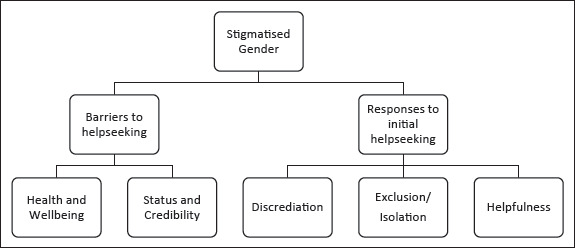
Evidence suggests that male victims of intimate partner violence (IPV) are less likely to seek help for their victimization than female victims. Studies exploring barriers to help seeking are relatively scarce in the United Kingdom (UK) and those that have been undertaken across Europe, United States, Canada, and Australia have tended to rely on small samples of help-seeking men who have self-identified as victims of IPV. With a view to include more male victim voices in the literature, an anonymous qualitative questionnaire was distributed via social media. In total, 147 men (85% from the UK) who self-identified as being subject to abuse from their female partners, completed the questionnaire. The data was subjected to a deductive thematic analysis and one superordinate and two overarching themes were identified. The superordinate theme was stigmatized gender and the two overarching themes (subthemes in parentheses) were barriers prohibiting help seeking (status and credibility, health and well-being) and responses to initial help seeking (discreditation, exclusion/isolation, and helpfulness). The findings are discussed in the context of Overstreet and Quinn’s (2013) interpersonal violence and stigma model and findings from previous research. The conclusions and recommendations promote education and training and advocate a radical change to policy.
Overview
The claims and statistics of this paper haven’t been checked yet.
Run the check — free, no account needed. It reads the open-access text and checks the sources it cites.
Integrity signals
Registry
Cites
Statistics
Figures
Verification
Claims the paper makes
The claims and statistics of this paper haven’t been checked yet.
Run the check — free, no account needed. It reads the open-access text and checks the sources it cites.
Claims other papers make about this one
Each is checked against this paper’s own text: does it say what the citing paper says it does?
The source backs part of the claim, not all of it — or backs it for a different population, condition or comparison.
In the citing paper
“Male victims are less likely to seek help for their victimization than female victims (female 81%, male 57%).”
From Help‐seeking behavior of male victims of intimate partner violence in Japan (2024) · cites this paper as [14]
Experimental — accuracy not yet measuredThe source backs part of the claim, not all of it — or backs it for a different population, condition or comparison.
In the citing paper
“There is no empirical consensus regarding IPV experience prevalence among men, variation in the type of IPV experiences, nor in any differences or unique needs resulting from these experiences (Scott-Storey et al., 2023; Taylor et al., 2022).”
From Experiences and Impacts of Intimate Partner Violence Against Men in Northern Ireland: Qualitative Findings from the Male Experiences of Intimate Partner Violence Study (2026) · cites this paper as Taylor et al., 2022
Experimental — accuracy not yet measuredThe source backs part of the claim, not all of it — or backs it for a different population, condition or comparison.
In the citing paper
“Under-reporting also affects these rates, as many men who have experienced IPV are unaware their experiences meet the definition of abuse (Bates, 2020a, 2020b; Taylor et al., 2022).”
From Experiences and Impacts of Intimate Partner Violence Against Men in Northern Ireland: Qualitative Findings from the Male Experiences of Intimate Partner Violence Study (2026) · cites this paper as Taylor et al., 2022
Experimental — accuracy not yet measuredThe source backs part of the claim, not all of it — or backs it for a different population, condition or comparison.
In the citing paper
“To date, IPV against cisgender women and its impacts have been widely researched, but the experiences of men remain understudied (Scott-Storey et al., 2023; Taylor et al., 2022).”
From Experiences and Impacts of Intimate Partner Violence Against Men in Northern Ireland: Qualitative Findings from the Male Experiences of Intimate Partner Violence Study (2026) · cites this paper as Taylor et al., 2022
Experimental — accuracy not yet measuredThe cited source says what the claim attributes to it.
In the citing paper
“Men are more likely to either not report due to psychosocial and cultural influences, or to not recognise their experiences as IPV (Bates, 2020b; Taylor et al., 2022).”
From Experiences and Impacts of Intimate Partner Violence Against Men in Northern Ireland: Qualitative Findings from the Male Experiences of Intimate Partner Violence Study (2026) · cites this paper as Taylor et al., 2022
The cited source says what the claim attributes to it.
In the citing paper
“They may fail to report due to self and societal stigma, retaliation concerns, and fear of not being believed (Walker et al., 2020; Bates, 2020a; Taylor et al., 2022).”
From Experiences and Impacts of Intimate Partner Violence Against Men in Northern Ireland: Qualitative Findings from the Male Experiences of Intimate Partner Violence Study (2026) · cites this paper as Taylor et al., 2022
The cited source says what the claim attributes to it.
In the citing paper
“Lack of disclosure in men can be driven by the fear that their experiences would be minimised/ignored/not believed, or they themselves would be accused of perpetrating abuse (Walker et al., 2020; Bates, 2020a; Taylor et al., 2022).”
From Experiences and Impacts of Intimate Partner Violence Against Men in Northern Ireland: Qualitative Findings from the Male Experiences of Intimate Partner Violence Study (2026) · cites this paper as Taylor et al., 2022
Self-check
Percentages, sums and reported differences re-computed from the paper’s own numbers.
The self-check needs the paper’s full text.
Citations
Cites
Using thematic analysis in psychology
Braun, V., & Clarke, V. (2006) · Qualitative Research in Psychology · doi:10.1191/1478088706qp063oa · Cited by 194,414 · cited 3×
“The main objective of this final step was to ensure that that the final themes represented the lived experiences of the men in the sample and were contextually meaningful (Braun & Clarke, 2006, 2012; Carpenter & Suto, 2008; Guest et al., 2012).”
BackgroundMethodFereday, J., & Muir-Cochrane, E. (2006) · International Journal of Qualitative Methods · doi:10.1177/160940690600500107 · Cited by 11,829
Stigma: Notes on the Management of Spoiled Identity.
Seeman, M. S., & Goffman, E. (1964) · American Sociological Review · doi:10.2307/2091442 · Cited by 10,716
Qualitative research: Methods in the social sciences
(2006) · PsycEXTRA Dataset · doi:10.1037/e668352010-001 · Cited by 10,619
Link, B. G., & Phelan, J. C. (2001) · Annual Review of Sociology · doi:10.1146/annurev.soc.27.1.363 · Cited by 8,848
Guest, G., MacQueen, K., & Namey, E. (2012) · doi:10.4135/9781483384436 · Cited by 7,924
Sex differences in aggression between heterosexual partners: a meta-analytic review
Archer, J. (2000) · Psychological Bulletin · doi:10.1037/0033-2909.126.5.651 · Cited by 2,507 · cited 1×
“This line of inquiry has also confirmed that men can be the victims and women the perpetrators of IPV (Archer, 2000; Breiding, 2014; Desmarais et al., 2012; Dutton et al., 2005).”
BackgroundPhysical and mental health effects of intimate partner violence for men and women
Coker, A. L., Davis, K. E., Arias, I., Desai, S., Sanderson, M., Brandt, H. M., & Smith, P. H. (2002) · American Journal of Preventive Medicine · doi:10.1016/s0749-3797(02)00514-7 · Cited by 2,258 · cited 2×
“…with their physical and mental health as a result of the abuse they had experienced, including posttraumatic stress disorder (PTSD; e.g., Hines & Douglas, 2011), anxiety and depression (Coker et al., 2002; Próspero, 2007; Próspero & Vohra-Gupta, 2007), and suicidality (McLaughlin et al., 2012).”
BackgroundDoing a thematic analysis: A practical, step-by-step guide for learning and teaching scholars.
Maguire, M., & Delahunt, B. (2017) · All Ireland Journal of Higher Education · doi:10.62707/aishej.v9i3.335 · Cited by 2,099 · cited 1×
“A thematic map was produced to ensure that the codes (extracted data) and the entire data set were represented by the themes and subthemes (Braun & Clarke, 2006; Maguire & Delahunt, 2017).”
Method(1979) · Research Explorer (The University of Manchester) · Cited by 1,905
Research works printed but not linked: 7
- Braun V., 2012, vol. 2: Research designs: Quantitative, qualitative, neuropsychological, and biological, 57
- Breiding M. J., 2014, Morbidity and Mortality Weekly Report. Surveillance Summaries, 63, 1
- Heffernan M., 2011, Wilful blindness: Why we ignore the obvious
- Milligan M. (2019). The response of law enforcement in regards to intimate partner violence on male victims within heterosexual relationships [Doctoral dissertation]. University of West Georgia.
- Pence E., 2003, Creating a process of change for men who batter. An education curriculum
- Piga M. L., 2018, Italian Sociological Review, 8, 339
- Wright C., 2016, Plymouth Law and Criminal Justice Review, 8, 333
Cited by
Sorted by citations
Items 101–129 of 129
The Process of Help-Seeking by Men Who Have Experienced Intimate Partner Abuse
Toews, K., Cummings, J. A., & Deleurme, K. A. (2025) · Journal of Family Violence · doi:10.1007/s10896-025-00978-y
Jordan, J., Hurst, N., McCartan, C. J., McFadden, D., Shannon, C., Dyer, K. F. W., & Lagdon, S. (2025) · Sex Roles · doi:10.1007/s11199-025-01616-z
“…as fear of not being believed, discrimination and counter-allegations (Bates, 2020; Edwards et al., 2015; Renzetti, 1996; Sylaska & Edwards, 2015 ; Taylor et al., 2022; Walters, 2011 ) whilst simultaneously facilitating more effective third-party intervention and decreasing the likelihood of…”
Victims’ justification of violence, support need, and help-seeking: A longitudinal study
Dannisworo, C. A., Kluwer, E. S., Arriaga, X. B., & Karremans, J. C. (2025) · Journal of Social and Personal Relationships · doi:10.1177/02654075251404126 · Cited by 1
“Recognizing themselves as victims may lead to feelings of shame and embarrassment, as societal norms pressure them to “ man up ” and conform to the traditional notions of masculinity (Migliaccio, 2001; Taylor et al., 2022).”
Maposa, I., Twabi, H. S., Zingoni, Z. M., Batidzirai, J. M., Singini, G. C., Mohammed, M., Bere, A., Kgarosi, K., Mchunu, N. N., Nevhungoni, P., et al. (2023) · Figshare · doi:10.6084/m9.figshare.24416141
Intimate Partner Violence and Male Survivors’ Help-Seeking
Cho, H., Kim, W., Gillis, K., Harris, R., & Goetz, K. (2026) · Journal of Family Violence · doi:10.1007/s10896-026-01059-4
Sánchez, G. B., & Patiño, P. A. L. (2026) · Estudios y Perspectivas Revista Científica y Académica · doi:10.61384/r.c.a..v6i1.1699
Sánchez, G. B., & Patiño, P. A. L. (2026) · Estudios y Perspectivas Revista Científica y Académica · doi:10.61384/r.c.a..v6i1.1707
Palantza, C., Davis, M., Witteveen, A. B., & Padilla-Medina, D. M. (2026) · International Journal of Environmental Research and Public Health · doi:10.3390/ijerph23030319 · Cited by 2
“The literature stresses important differences in help-seeking barriers among genders [97,98] and people with low income [99], in disclosure among sexual minorities [100] and older adults [101].”
Pell, B., Howarth, E., Bacchus, L., Buckley, K., Burn, A., Evans, R., & Moore, G. (2026) · Journal of Family Violence · doi:10.1007/s10896-026-01063-8
“These are often related to concerns over losing contact with their children (Hines et al., 2015; Bates, 2019; Taylor et al., 2022) and appear to arise in the context of gendered parenting norms, where mothers are traditionally viewed as primary attachments for children.”
Högberg, B., Lindberg, J., Snellman, M.-L., Sundqvist, J., & Blom, B. (2026) · Journal of Family Violence · doi:10.1007/s10896-026-01058-5
Yesuf, S. A., Demeke, S. S., Berhe, A. Y., Elradi, Y. M. Z., & Tenaw, N. B. (2026) · BMC Public Health · doi:10.1186/s12889-026-26936-x
“Consequently, the concept of female-per-petrated IPV against men is often met with skepticism, which further compounds the already low rates of care-seeking behavior among men experiencing IPV [6, 9, 10].”
Women’s Psychological Abuse of Male Intimate Partners
Rizvi, F., & Purshottam, V. (2026) · Springer eBooks · doi:10.1007/978-3-030-85493-5_1798-1
Intimate Partner Violence in Men in Heterosexual Relationships: A Cross Sectional Study
Nweke, A. N., Ifeoma, U.-O. C., Nwafor, A. V., Doris, A.-O., Oliobi, C. W., Abraham, O., Nwachukwu, N., Ifeanyi, E., Emmanuella, O., & Uche-Omovoh, I. C. (2026) · Open Journal of Social Sciences · doi:10.4236/jss.2026.144031
The Impact of the COVID-19 Pandemic on Male Intimate Partner Violence Victims
Hines, D. A., Bates, E. A., & Taylor, J. (2026) · Behavioral Sciences · doi:10.3390/bs16050707
“…are additional barriers to accessing help for male IPV victims (Machado et al., 2017), including feeling internalized stigma due to their gender (Taylor et al., 2021), fearing they will not be believed by a system that still views men as primarily perpetrators (Bates, 2020), and fearing losing…”
Self-citationDomestic Violence Against Men in Canada: An Overlooked but Growing Public Health and Social Concern
Dahal, R., Dahal, A., & KARKI, B. N. (2026) · American Journal of Lifestyle Medicine · doi:10.1177/15598276261448820
Internalización de la violencia en hombres heterosexuales en Puerto Rico
Santiago, S. P.-D. (2024) · [in]genio revista de investigación y labor creativa · doi:10.54114/ingeniosv10i2.85482
“Dicha exigencia hacia los hombres heterosexuales les cohíbe rechazar propuestas sexuales por temor a verse invalidada su masculinidad (Taylor et al., 2021).”
Mezzapelle, J. L., Douglas, E. M., Hines, D. A., Lee, K. A., Russo, L. N., & Sabina, C. (2026) · Journal of Family Violence · doi:10.1007/s10896-026-01131-z
Garthe, R. C., Nag, A., McMurray, C., Strickland, E., & Dickens, S. (2026) · Qualitative Social Work · doi:10.1177/14733250261445567
“Taylor et al. (2021) also found gender stigma and discreditation as barriers to help-seeking and the responses they received from service providers.”
Childhood Sexual Abuse and Rates of Loneliness in Adulthood
Akinyemi, O. A., Fasokun, M., Ogunyankin, F., Singleton, D., Ogunsakin, A., Eze, O., Khalil, S., Gordon, K., Michael, M. B., Hughes, K., et al. (2026) · JAMA Network Open · doi:10.1001/jamanetworkopen.2026.22180
Pica, E., Fraser, B. M., Hildenbrand, A., & Pozzulo, J. (2026) · Journal of Interpersonal Violence · doi:10.1177/08862605261467694
Intimate Partner Violence Among LGBTQ+ Populations in Southeast Asia: A Scoping Review
Hong, C., Brooks, C. K., Luxmikanthan, S., Mahajan, A., Shrestha, R., Wickersham, J. A., Storholm, E. D., Watson, R. J., & Eaton, L. A. (2026) · Trauma Violence & Abuse · doi:10.1177/15248380261467498
Explicit and Implicit Legitimization of Intimate Partner Violence: A Pilot Study with Adolescents
Mosca, O., Mureddu, C., Scarci, F., Cecalupo, A., Mula, S., Saladino, V., & Maricchiolo, F. (2026) · Journal of Aggression Maltreatment & Trauma · doi:10.1080/10926771.2026.2711244
“Research has shown that men who report being victims of IPV are more likely to be blamed for their abuse, ridiculed, and receive less support from authorities or social services, reinforcing traditional gender expectations surrounding masculinity and vic-timization (Taylor et al., 2022).”
Russo, L. N., Sabina, C., Lee, K. A., Mezzapelle, J. L., Hines, D. A., & Douglas, E. M. (2026) · Journal of Racial and Ethnic Health Disparities · doi:10.1007/s40615-026-03169-7
Ike, T. J., Jidong, D. E., Ayobi, E. E., Ike, M. L., Dada, S. O., Ike, P. R., Doghor, R. F., & Mahmood, T. (2026) · American Journal of Men s Health · doi:10.1177/15579883261418920
Examining the Relation Between Intimate Partner Violence and Housing Instability by Gender
Withrow, A., Voith, L. A., & Pfoh, E. R. (2026) · Journal of Family Violence · doi:10.1007/s10896-026-01162-6
dos Santos, E. O., & Miziara, I. D. (2026) · Journal of Forensic and Legal Medicine · doi:10.1016/j.jflm.2026.103252
Accounting for Economic Abuse: Contesting Neoliberal Framings through A Critical Counter-AccountPreprint
Tanima, F. A., Brown, J. A., Andrew, J., George, S., & Twyford, E. J. (2026) · SSRN Electronic Journal · doi:10.2139/ssrn.7608025
Gautam, U., Tewari, D. B., Jaiswal, V., Das, P., Mishra, A., Randhawa, N. S., & Marjara, K. (2026) · Social Sciences · doi:10.3390/socsci15100713
Gender-based violence against men in Kenya: a case study of Tigania West
John, M., Sitati, G. K., & Wakhu, S. (2026) · Contemporary Justice Review · doi:10.1080/10282580.2026.2752206
Metadata
- Authors
- Taylor, J. C., Bates, E. A., Colosi, A., & Creer, A. J.
- Affiliations
- University of Cumbria (GB)
- Corresponding author
- Taylor, Julie C.
- Venue
- Journal of Interpersonal Violence
- Publisher
- SAGE Publications
- Published
- 2021-08-25
- Volume
- 37
- Issue
- 19-20
- Pages
- NP18417-NP18444
- ISSN
- 0886-2605 (ISSN-L)
- 1552-6518
- PMC
- PMC9554285
- OpenAlex
- W3194102121
- Cited by
- 129
- References
- 96
- Citations by year
- 2026: 30 · 2025: 37 · 2024: 27 · 2023: 27 · 2022: 8
- FWCI
- 8.56
- Type
- journal article
- Language
- en
- Open access
- hybrid
- doi.org
- Licence
- Locations
- Journal of Interpersonal Violence (publishedVersion, cc-by-nc)
- PubMed Central (publishedVersion, cc-by-nc)
- PubMed (publishedVersion)
- Insight (University of Cumbria) (acceptedVersion)
- Topics
- Social Sciences › Health › Intimate Partner and Family Violence
- Social Sciences › Gender Studies › Sexual Assault and Victimization Studies
- Health Sciences › Medicine › Geriatrics and Gerontology › Elder Abuse and Neglect
- Keywords
- intimate partner violence, male victims, help-seeking, help-seeking barriers, gender stigma, victim isolation, health and well-being, gender-based violence, United Kingdom
- MeSH terms
- Intimate Partner Violence, Female, Humans, Male, Men, Surveys and Questionnaires, United States, Violence, Crime Victims
About these checks
Registry, retraction, Cites and statistics results are computed, not judged, with one exception: a printed reference that no index lists is read once by a model before it counts as a citation error. Claims are extracted by a model and kept only when their quote appears verbatim in the text; each cited source is then checked, with a model’s help, for whether it says what the claim relies on. Those verdicts can be wrong — read the claim’s quote and the cited source before relying on one.
Statistics and arithmetic are recomputed, not judged.
Confidence bands are shown only for fields calibrated on our annotated test set. None is calibrated yet, so no band is shown.
What counts as a claim ›How we measure confidence ›How we check this ›
Are you an author, or do you see a problem with this page? Request a review
