

Screens, Teens, and Psychological Well-Being: Evidence From Three Time-Use-Diary Studies
Open accessThe DOI matches its Crossref record; 45 of the 45 references it cites were found in a registry or an index.
Abstract
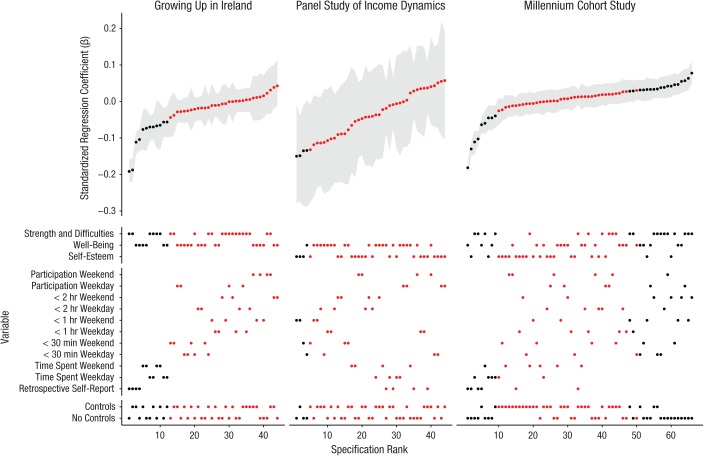
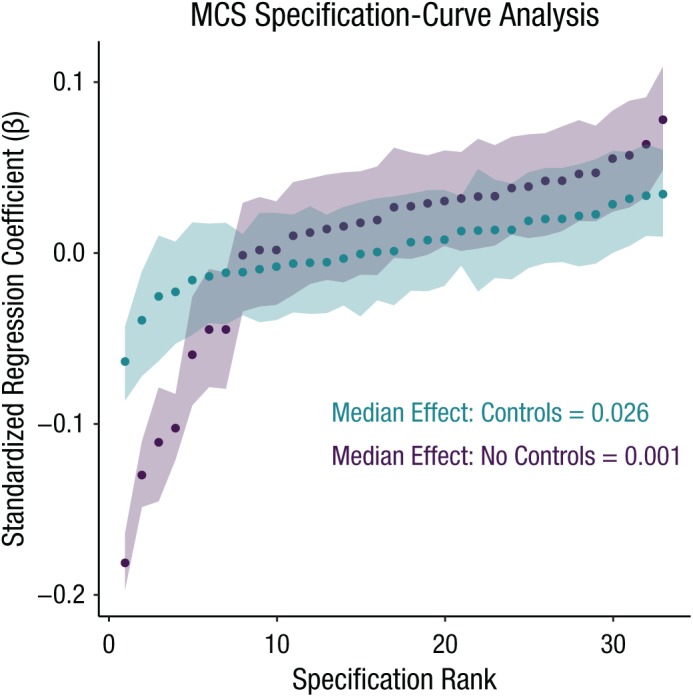
The notion that digital-screen engagement decreases adolescent well-being has become a recurring feature in public, political, and scientific conversation. The current level of psychological evidence, however, is far removed from the certainty voiced by many commentators. There is little clear-cut evidence that screen time decreases adolescent well-being, and most psychological results are based on single-country, exploratory studies that rely on inaccurate but popular self-report measures of digital-screen engagement. In this study, which encompassed three nationally representative large-scale data sets from Ireland, the United States, and the United Kingdom ( N = 17,247 after data exclusions) and included time-use-diary measures of digital-screen engagement, we used both exploratory and confirmatory study designs to introduce methodological and analytical improvements to a growing psychological research area. We found little evidence for substantial negative associations between digital-screen engagement—measured throughout the day or particularly before bedtime—and adolescent well-being.
Overview
The claims and statistics of this paper haven’t been checked yet.
Free: it reads the open-access text and checks the first 5 claims that cite a source we can check. Create a free account to check every claim.
Integrity signals
Registry
Cites
Statistics
Figures
Verification
Claims the paper makes
The claims and statistics of this paper haven’t been checked yet.
Free: it reads the open-access text and checks the first 5 claims that cite a source we can check. Create a free account to check every claim.
Claims other papers make about this one
Each is checked against this paper’s own text: does it say what the citing paper says it does?
The source backs part of the claim, not all of it — or backs it for a different population, condition or comparison.
In the citing paper
“Although the link between social media use and depression is contentious (16, 17), several have nonetheless implicated social media as pervasive and detrimental to psychological well-being.”
From Does Social Media Use Increase Depressive Symptoms? A Reverse Causation Perspective (2021) · cites this paper as [16]
Experimental — accuracy not yet measuredThe cited source says what the claim attributes to it.
In the citing paper
“Therefore, problematic social media use could represent a more clinically meaningful behavior to direct research, as a stronger relationship is seen with adverse mental health symptoms compared to previous studies investigating time spent on social networking sites or screen time in general [23,53,54].”
From Problematic Social Media Use in Adolescents and Young Adults: Systematic Review and Meta-analysis. (2022) · cites this paper as [53]
Self-check
Percentages, sums and reported differences re-computed from the paper’s own numbers.
The self-check needs the paper’s full text.
Citations
Cites
Norman, G. R., Sloan, J. A., & Wyrwich, K. W. (2003) · Medical Care · doi:10.1097/01.mlr.0000062554.74615.4c · Cited by 4,700
An effect size primer: A guide for clinicians and researchers.
Ferguson, C. J. (2009) · Professional Psychology: Research and Practice · doi:10.1037/a0015808 · Cited by 3,467 · cited 3×
“In the preregistration, we also specified a smallest effect size of interest (SESOI; Lakens, Scheel, & Isager, 2017), a concept proposed to avoid the problematic overinterpretation of significant but minimal associations, which are becoming increasingly common in large-scale studies of technology-use outcomes (Ferguso…”
BackgroundResultRobins, R. W., Hendin, H. M., & Trzesniewski, K. H. (2001) · Personality and Social Psychology Bulletin · doi:10.1177/0146167201272002 · Cited by 3,041
(1995) · International Journal of Methods in Psychiatric Research · Cited by 1,847
Goodman, R., Ford, T., Simmons, H., Gatward, R., & Meltzer, H. (2000) · British Journal of Psychiatry · doi:10.1192/bjp.177.6.534 · Cited by 1,818
Twenge, J. M., Joiner, T. E., Rogers, M. L., & Martin, G. N. (2018) · Clinical Psychological Science · doi:10.1177/2167702617723376 · Cited by 1,705
Equivalence Testing for Psychological Research: A Tutorial
Lakens, D., Scheel, A. M., & Isager, P. M. (2018) · Advances in Methods and Practices in Psychological Science · doi:10.1177/2515245918770963 · Cited by 1,560 · cited 1×
“We argue that these effects are therefore too small to merit substantial scientific discussion (Lakens et al., 2017).”
BackgroundThe association between adolescent well-being and digital technology use
Orben, A., & Przybylski, A. K. (2019) · Nature Human Behaviour · doi:10.1038/s41562-018-0506-1 · Cited by 1,500 · cited 8×
“This is in line with results from previous research showing that the association between digital-technology use and well-being often falls below or near this threshold (Ferguson, 2009; Orben & Przybylski, 2019; Twenge, Joiner, Rogers, & Martin, 2017; Twenge, Martin, & Campbell, 2018).”
BackgroundMethodResultInfluentialSelf-citationInternational Journal of Methods in Psychiatric Research
(2006) · International Journal of Methods in Psychiatric Research · doi:10.1002/(issn)1557-0657 · Cited by 1,492
Insufficient Sleep in Adolescents and Young Adults: An Update on Causes and Consequences
Owens, J., ADOLESCENT SLEEP WORKING GROUP, COMMITTEE ON ADOLESCENCE, Au, R., Carskadon, M., Millman, R., Wolfson, A., Braverman, P. K., Adelman, W. P., Breuner, C. C., et al. (2014) · Pediatrics · doi:10.1542/peds.2014-1696 · Cited by 1,413 · cited 1×
“…two exploratory studies detailed above, and from previous literature about the negative effects of technology use during the week on well-being (Harbard et al., 2016; Levenson et al., 2017; Owens, 2014), we derived five specific hypotheses concerning digital engagement and psychological well-being.”
Research works printed but not linked: 2
- Rose G., 1992, The strategy of preventative medicine
- 10.1177/109821400102200202 · doi:10.1177/109821400102200202 · Paper page
Cited by
Items 201–300 of 415
Rimel, S. E., Bam, D., Farren, L., Thaanum, A., Smith, A., Park, S. Y., Boeldt, D. L., & Sigmon, C. A. N. (2023) · JMIR Formative Research · doi:10.2196/41694 · Cited by 18
Yan, Z., Yang, Z., Xu, X., Zhou, C., & Sang, Q. (2025) · Psychology Research and Behavior Management · doi:10.2147/prbm.s498142 · Cited by 11
Shao, X., & Ni, X. (2021) · SAGE Open · doi:10.1177/21582440211005453 · Cited by 12
Zahedi, S., Jaffer, R., & Iyer, A. (2021) · International Journal of Educational Research Open · doi:10.1016/j.ijedro.2021.100094 · Cited by 13
The A, B, Cs of Youth Technology Access: Promoting Effective Media Parenting
Gabrielli, J., & Tanski, S. E. (2020) · Clinical Pediatrics · doi:10.1177/0009922819901008 · Cited by 10
Modecki, K. L., Low‐Choy, S., Vasco, D., Vernon, L., & Uink, B. N. (2021) · Journal of Child Psychology and Psychiatry · doi:10.1111/jcpp.13433 · Cited by 13
Tibber, M. S., Wang, M., & Zhang, C. (2022) · International Journal of Human-Computer Interaction · doi:10.1080/10447318.2022.2064035 · Cited by 19
Zimmermann, L., & Sobolev, M. (2020) · PsyArXiv (OSF Preprints) · doi:10.31234/osf.io/nmgdz · Cited by 11
Lohmann, S., & Zagheni, E. (2023) · PLOS Digital Health · doi:10.1371/journal.pdig.0000292 · Cited by 15
Simanjuntak, D. V., Sitompul, D. A., Nadapdap, I., Raja, S. L., & Naibaho, D. (2024) · Jurnal Parenting dan Anak · doi:10.47134/jpa.v1i3.422 · Cited by 39
Sellami, I., Amin, H., Ozturk, O., Zaman, A., Sever, S. D., & Tok, E. (2025) · Discover Education · doi:10.1007/s44217-025-00413-w · Cited by 22
Asarnow, L. D., Gasperetti, C. E., Gumport, N. B., & Harvey, A. G. (2021) · Journal of Clinical Sleep Medicine · doi:10.5664/jcsm.9380 · Cited by 12
The Association Between Well-Being and Objectively Measured Versus Self-Reported Smartphone TimePreprint
Walsh, L. C., Okabe‐Miyamoto, K., Regan, A., Twenge, J. M., & Lyubomirsky, S. (2021) · PsyArXiv (OSF Preprints) · doi:10.31234/osf.io/zcwmv · Cited by 9
How COVID-19 Changed Self-Presentation on Instagram and its Relation to User Well-Being
Turner, M., & Ordonia, D. (2023) · Interacting with Computers · doi:10.1093/iwc/iwad013 · Cited by 9
Capturing the self-others dichotomy of social media use: Affordances-actualizations-outcomes model
Gladkaya, M., & Deters, F. G. (2023) · Information & Management · doi:10.1016/j.im.2023.103899 · Cited by 14
Gillespie, K. M., Branjerdporn, G., Woerwag‐Mehta, S., Glegg, J., Porter, M., & Bartlett, S. E. (2024) · PLoS ONE · doi:10.1371/journal.pone.0314621 · Cited by 11
Gumport, N. B., Gasperetti, C. E., Silk, J. S., & Harvey, A. G. (2021) · Journal of Youth and Adolescence · doi:10.1007/s10964-021-01429-9 · Cited by 16
Lascău, L., Brumby, D. P., Gould, S. J. J., & Cox, A. L. (2024) · ACM Transactions on Computer-Human Interaction · doi:10.1145/3635145 · Cited by 16
Orr, N., Matthews, B., See, Z. S., Burrell, A., Day, J. J., & Seengal, D. (2021) · Virtual Creativity · doi:10.1386/vcr_00048_1 · Cited by 8
Alsaigh, R. R., Assas, G. E., Yahia, N. H., Sharaf, N. F., Shaikh, S. F., Alghamdi, H. M., Badr, H., & Alghamdi, S. (2022) · Belitung Nursing Journal · doi:10.33546/bnj.2058 · Cited by 11
Factor structure and interpretation on the Thai-Social Media Engagement Scale (T-SMES)
Wisessathorn, M., Pramepluem, N., & Kaewwongsa, S. (2022) · Heliyon · doi:10.1016/j.heliyon.2022.e09985 · Cited by 9
Twenge, J. M., & Hamilton, J. L. (2022) · Acta Psychologica · doi:10.1016/j.actpsy.2022.103696 · Cited by 14
de Vaate, N. A. J. D. B., Veldhuis, J., & Konijn, E. A. (2023) · Computers in Human Behavior · doi:10.1016/j.chb.2023.107906 · Cited by 16
General and Alcohol-Related Social Media Use and Mental Health: a Large-Sample Longitudinal Study
Erevik, E. K., Pallesen, S., Vedaa, Ø., Andreassen, C. S., Dhir, A., & Torsheim, T. (2020) · International Journal of Mental Health and Addiction · doi:10.1007/s11469-020-00296-y · Cited by 12
Tuck, A. B., & Thompson, R. J. (2025) · Personality and Individual Differences · doi:10.1016/j.paid.2025.113139 · Cited by 10
Is Time on Smartphones Well Spent?
Rasmussen, M. A., Frydendahl, J. O., Mekler, E. D., & Hornbæk, K. (2021) · Interacting with Computers · doi:10.1093/iwc/iwac003 · Cited by 13
Morris, S., Farran, E. K., & Gilligan-Lee, K. A. (2023) · Journal of Intellectual Disabilities · doi:10.1177/17446295231176121 · Cited by 14
Chopik, W. J., & Francis, J. (2021) · Computers in Human Behavior · doi:10.1016/j.chb.2021.107028 · Cited by 9
Forte, C., McDowell, C. P., Woods, C. B., Hallgren, M. Å., O’Brien, W., Belton, S., MURPHY, M. H., Powell, C., & Herring, M. P. (2022) · International Journal of Behavioral Medicine · doi:10.1007/s12529-022-10133-2 · Cited by 7
Variables asociadas al uso de pantallas al término de la primera infancia
Ortiz-de-Villate, C., Flores, J. G., & Rodríguez-Santero, J. (2023) · Pixel-Bit Revista de Medios y Educación · doi:10.12795/pixelbit.96225 · Cited by 27
The impact of digital socialization on psychological well-being
Rubtsova, N. E., & Lenkov, S. L. (2020) · Psychology in Education · doi:10.33910/2686-9527-2020-2-2-143-149 · Cited by 7
Martinez, A., Browne, L., & Knee, C. R. (2024) · Cyberpsychology Journal of Psychosocial Research on Cyberspace · doi:10.5817/cp2024-3-2 · Cited by 12
Exploring the digital detox journey among generation Y Instagram users
Scheppe, M. M., Seiffen, A. L., & Berndt, A. D. (2025) · Information Technology and People · doi:10.1108/itp-07-2023-0721 · Cited by 13
Exploring the prevalence of nomophobia in a Canadian university: An environmental scan
Sui, A., Sui, W., & Irwin, J. D. (2022) · Journal of American College Health · doi:10.1080/07448481.2022.2070712 · Cited by 9
Who post more negatively on social media? A large-scale sentiment analysis of Weibo users
Yang, Z., & Xu, W. (2022) · Current Psychology · doi:10.1007/s12144-022-03616-8 · Cited by 7
Multiverse-style analysis: Introduction and application
Shunsen, H., Chen, H., Xiaoxiong, L., Xinran, D., & Yun, W. (2022) · Advances in Psychological Science · doi:10.3724/sp.j.1042.2023.00196 · Cited by 7
Personality Traits and Social Media Use
Seidman, G. (2020) · Wiley eBooks · doi:10.1002/9781119011071.iemp0295 · Cited by 15
Video Games During the Time of the Plague
Ferguson, C. J. (2020) · Psychological Inquiry · doi:10.1080/1047840x.2020.1820222 · Cited by 5
“Debates about whether too much screen time influences youth mental health persist, of course, and in many examples can be rather acrimonious (e.g., Orben & Przybylski, 2019a; Twenge & Campbell, 2019).”
BackgroundInfluentialExperimental evidence of instagram influencers’ impact on well-being
T’ng, K., Chan, K. Q., & Hartanto, A. (2024) · Current Psychology · doi:10.1007/s12144-024-06821-9 · Cited by 7
Types of Adolescent Screen Use and Positive Wellbeing: Gender and Parental Education Influences
Chang, G. (2025) · Journal of Happiness Studies · doi:10.1007/s10902-025-00884-6 · Cited by 9
Yang, F., Xu, K., Huang, Y., Pu, K., & Lin, J. (2025) · BMC Public Health · doi:10.1186/s12889-025-22894-y · Cited by 9
Biernesser, C. L., Bear, T., Brent, D. A., Mair, C., Zelazny, J. M., & Trauth, J. M. (2021) · Archives of Suicide Research · doi:10.1080/13811118.2021.1943581 · Cited by 6
Exploring the concept of digital well-being: A bibliometric analysis
Ghai, S., Bhasin, J., & Mushtaq, S. (2023) · Asian Journal of Management and Commerce · doi:10.22271/27084515.2023.v4.i1d.179 · Cited by 9
Vidal, C., Philippe, F. L., Geoffroy, M., & Paquin, V. (2024) · International Journal of Mental Health and Addiction · doi:10.1007/s11469-024-01313-0 · Cited by 13
Saindon, J. (2021) · UKnowledge (University of Kentucky) · doi:10.13023/etd.2021.149 · Cited by 9
Devos, S., Schreurs, L., Eggermont, S., & Vandenbosch, L. (2023) · New Media & Society · doi:10.1177/14614448231188935 · Cited by 9
Mossini, M. (2024) · International Journal on Social and Education Sciences · doi:10.46328/ijonses.684 · Cited by 11
How empathy affects preschool teachers’ burnout
He, Y., Li, X., Wang, X., & Xu, H. (2025) · Psychology Health & Medicine · doi:10.1080/13548506.2025.2469194 · Cited by 6
McNamara, R., Quinn, R., Murrin, C. M., & Bel‐Serrat, S. (2021) · Appetite · doi:10.1016/j.appet.2021.105585 · Cited by 6
Juan, N. V. S., Oram, S., Pinfold, V., Temple, R., Foye, U., Simpson, A., Johnson, S., Hardt, S., Abdinasir, K., & Edbrooke-Childs, J. H. (2022) · Frontiers in Psychiatry · doi:10.3389/fpsyt.2022.697346 · Cited by 7
Introducing the Media Use Behaviour Conceptual Framework
Parry, D. A., & Roux, D. (2020) · Lecture notes in computer science · doi:10.1007/978-3-030-45002-1_15 · Cited by 5
Schuengel, C. (2022) · Journal of Child Psychology and Psychiatry · doi:10.1111/jcpp.13577 · Cited by 5
Huang, S., Lai, X., Zhang, C., Xinmei, Z., Xinran, D., Mengdi, Q., Huanlei, W., Wenrong, W., & Wang, Y. (2024) · Acta Psychologica Sinica · doi:10.3724/sp.j.1041.2024.00745 · Cited by 13
Neuhaus, R., & O’Connor, E. (2025) · Journal of Children and Media · doi:10.1080/17482798.2025.2455566 · Cited by 6
Sametoğlu, S., Pelt, D. H. M., & Bartels, M. (2025) · Behavior Genetics · doi:10.1007/s10519-025-10224-2 · Cited by 6
Ferguson, C. J. (2024) · Communication Reports · doi:10.1080/08934215.2023.2298948 · Cited by 5
Khafif, M. E., Wibberly, K. H., Cleckley, E., Nguyen, T. H., & Divers, M. H. (2021) · International Journal of E-Planning Research · doi:10.4018/ijepr.20211001.oa4 · Cited by 4
Buda, T. S., Khwaja, M. K., Garriga, R., & Matic, A. (2023) · PLoS ONE · doi:10.1371/journal.pone.0284104 · Cited by 8
Fehring, D. J., Gaillard, A., Mazzoli, E., Rossell, S. L., Dempsey, P. C., Wheeler, M. J., Owen, N. G., Dunstan, D. W., & Hallgren, M. Å. (2025) · Scientific Reports · doi:10.1038/s41598-025-09360-w · Cited by 7
The Impact of Remote Working During the COVID-19 Epidemic on Employee Well-being
Nowacki, K., Grabowska, S., & Lis, T. (2021) · Multidisciplinary Aspects of Production Engineering · doi:10.2478/mape-2021-0022 · Cited by 6
Olivella-Cirici, M., Sánchez, E., Continente, X., Clotas, C., & Pérez, G. (2021) · Journal of Technology in Behavioral Science · doi:10.1007/s41347-021-00228-0 · Cited by 8
Candel, O. S. (2021) · Psychology in Russia State of Art · doi:10.11621/pir.2021.0311 · Cited by 3
McFarland, S., Tan, T. Y., France, K. D., & Hoffmann, J. D. (2023) · Frontiers in Psychiatry · doi:10.3389/fpsyt.2023.1015635 · Cited by 9
Tutar, H., Nam, S., Czarkowski, J. J., & Lukács, E. (2024) · Economics & Sociology · doi:10.14254/2071-789x.2024/17-2/9 · Cited by 10
How do video games affect mental health? A narrative review of 13 proposed mechanismsPreprint
Ballou, N., Hakman, T., Vuorre, M., Magnusson, K., & Przybylski, A. K. (2024) · doi:10.31234/osf.io/q2kxg · Cited by 4
Self-citationHaag, A., Nick, E. A., Chen, S., Telzer, E. H., Prinstein, M. J., & Bonanno, G. A. (2024) · Journal of Research on Adolescence · doi:10.1111/jora.13045 · Cited by 8
Cuddihy, A., McCormack, D., Cross, J., Craig, S. N., & Fosker, T. (2025) · Review Journal of Autism and Developmental Disorders · doi:10.1007/s40489-025-00513-1 · Cited by 7
Association Between Smartphone Attachment and Mental Health in Adolescents
Liu, X., Huang, L., McIntosh, C. W., Liu, J., & McDonald, C. C. (2025) · Journal of Child and Adolescent Psychiatric Nursing · doi:10.1111/jcap.70030 · Cited by 6
Chen, Y. (2025) · Applied Psychology Health and Well-Being · doi:10.1111/aphw.70088 · Cited by 4
Balayar, B., & Langlais, M. R. (2024) · Academia Mental Health and Well-Being · doi:10.20935/mhealthwellb7436 · Cited by 4
Children, Childhood, and Development in Evolutionary Perspective
Bjorklund, D. F. (2020) · Oxford University Press eBooks · doi:10.1093/oso/9780190066864.003.0001 · Cited by 4
Topić, M. K., Brkljačić, T., & Brajša‐Žganec, A. (2023) · Child & Family Social Work · doi:10.1111/cfs.13032 · Cited by 3
Barns bruk av sosiale medier: Om ensomhet, samvær med venner og livskvalitet blant jenter og gutter
Løvgren, M., & Hyggen, C. (2023) · Norsk sosiologisk tidsskrift · doi:10.18261/nost.7.6.4 · Cited by 5
García, T. M., Mohedano, F. O., Ramos, M. M., Holgado, P. S., Martín-Ledezma, A., & Benito, D. B. (2024) · Educational Media International · doi:10.1080/09523987.2024.2436751 · Cited by 3
Toward the future: A conceptual review and call for research and action with online communities
Steltenpohl, C. N., Reed, J., & Keys, C. B. (2020) · Global Journal of Community Psychology Practice · doi:10.17161/gjcpp.v11i1.20683 · Cited by 3
Gender Influence of Personality on Adolescents’ Social Media Engagement
Li, X., & Ni, X. (2021) · SHS Web of Conferences · doi:10.1051/shsconf/202112301013 · Cited by 3
McNamee, P., Mendolia, S., & Yerokhin, O. (2019) · SSRN Electronic Journal · doi:10.2139/ssrn.3510445 · Cited by 3
Hjetland, G. J., Schønning, V., Hella, R. T., Veseth, M., & Skogen, J. C. (2020) · Research Square · doi:10.21203/rs.3.rs-133641/v1 · Cited by 3
Shaw, D. J., Kaye, L. K., Ngombe, N., Kessler, K., & Pennington, C. R. (2021) · doi:10.31234/osf.io/ztkmv · Cited by 3
Perceptions of Social Media: Do They Foster or Hinder Online Prosocial Behavior in Adolescence?
Ruiz, Y. P., Lobato-Rincón, L. L., Currás, H. T., Pérez-Torres, V., & López‐Sáez, M. Á. (2025) · Youth & Society · doi:10.1177/0044118x241312926 · Cited by 4
Media parenting strategies for Czech children aged 6–9 years
Hrabec, O., Slussareff, M., Novotná, A., & Lukavská, K. (2025) · Children s Health Care · doi:10.1080/02739615.2025.2503169 · Cited by 2
Marin-Dragu, S., Orr, M., Corkum, P. V., Rusak, B., Bagnell, A. L., & Meier, S. M. (2025) · Cyberpsychology Journal of Psychosocial Research on Cyberspace · doi:10.5817/cp2025-5-3 · Cited by 2
Late Night Use of Social Media and Sleep Deprivation
Balamurugan, M., Roopa, D., Shruthi, K. N., Sushma, R., Kruthi, T. C., Swetha, G., & Raghu, N. (2025) · IGI Global eBooks · doi:10.4018/979-8-3373-5307-4.ch008 · Cited by 2
Carlsson, N. F. (2025) · Journal of Documentation · doi:10.1108/jd-09-2025-0276 · Cited by 9
Reid, C. A., Dhamankar, M., Marsh, S., Peterson, E. R., Erb, C. D., & Waldie, K. E. (2026) · Developmental Review · doi:10.1016/j.dr.2026.101266 · Cited by 7
Who Am I: Considerations for Adolescent Development During A Pandemic
Khazvand, S., Riley, T. N., Whitener, M., & Zapolski, T. C. B. (2021) · Journal of Mental Health and Social Behaviour · doi:10.33790/jmhsb1100143 · Cited by 2
rostami, F. Z. H., Akerdi, E. M., Dehrouyeh, S., & Sahnesaraee, M. A. (2022) · مجله علمی دانشگاه علوم پزشکی رفسنجان · doi:10.52547/jrums.20.12.1323 · Cited by 2
Listening to Young People’s Concerns
Phippen, A., & Street, L. (2021) · Springer eBooks · doi:10.1007/978-3-030-88634-9_4 · Cited by 2
Ellis, B., Bird, J., Bould, H., Biddle, L., & Moore, R. (2022) · CHI Conference Extended Abstracts on Human Factors in Computing Systems (CHI EA) · doi:10.1145/3491101.3519861 · Cited by 3
Time Management, Psychological Well-Being, Home-Learning COVID-19
Juniarti, F., & Regina, A. (2022) · Psikodidaktika Jurnal Ilmu Pendidikan Psikologi Bimbingan dan Konseling · doi:10.32663/psikodidaktika.v6i2.2027 · Cited by 4
Жукова, Н. (2021) · Психологические исследования · doi:10.54359/ps.v14i80.1049 · Cited by 2
Can the media benefit the children?
Pejovic-Milovancevic, M. M. (2019) · Psihijatrija danas · doi:10.5937/psihdan1901005p · Cited by 2
Personality and Individual Differences
Ellis, D. A. (2020) · Cambridge University Press eBooks · doi:10.1017/9781108671408.006 · Cited by 5
Ellis, D. A. (2020) · Cambridge University Press eBooks · doi:10.1017/9781108671408.003 · Cited by 2
Stress, Mood, and Smartphone Use in University Students: A 12-week Longitudinal StudyPreprint
Bradley, A., & Howard, A. (2021) · doi:10.31219/osf.io/frvpb · Cited by 2
Do pre-schoolers with high touchscreen use show executive function differences?Preprint
Portugal, A. M., Hendry, A. J., Smith, T. J., & Bedford, R. (2022) · doi:10.31219/osf.io/uj78t · Cited by 2
Child and Adolescent Time Use and Well-Being: A Study of Current Debates and Empirical EvidencePreprint
Gracia, P. (2023) · OSF Preprints (OSF Preprints) · doi:10.31219/osf.io/9qmrk · Cited by 2
The Changing Social Worlds of 13-year-olds
Smyth, E. (2024) · doi:10.26504/rs178 · Cited by 9
Metadata
- Authors
- Orben, A., & Przybylski, A. K.
- Affiliations
- University of Oxford (GB)
- Corresponding author
- Orben, Amy
- Venue
- Psychological Science
- Publisher
- SAGE Publications
- Published
- 2019-04-02
- Volume
- 30
- Issue
- 5
- Pages
- 682-696
- ISSN
- 0956-7976 (ISSN-L)
- 1467-9280
- PMC
- PMC6512056
- OpenAlex
- W2934563845
- Semantic Scholar
- e6c7e53870fd75f05f1ede3d931744c6a9ac58c9
- Cited by
- 414
- References
- 44
- Citations by year
- 2026: 34 · 2025: 39 · 2024: 39 · 2023: 54 · 2022: 64 · 2021: 72 · 2020: 94 · 2019: 18
- FWCI
- 124.55
- Type
- journal article
- Language
- en
- Update notices
- correction (2019-06-28)
- Open access
- hybrid
- doi.org
- Licence
- cc-by-nc
- journals.sagepub.com/page/policies/text-and-data-mining-license (tdm)
- Locations
- Psychological Science (publishedVersion, cc-by-nc)
- Europe PMC (PubMed Central) (publishedVersion, cc-by-nc)
- PubMed Central (publishedVersion, cc-by-nc)
- PubMed (publishedVersion)
- OSF Preprints (OSF Preprints) (submittedVersion)
- Funders
- horizon 2020 (IBSEN)
- economic and social research council
- Topics
- Social Sciences › Sociology and Political Science › Impact of Technology on Adolescents
- Social Sciences › Education › Child Development and Digital Technology
- Social Sciences › Psychology › Experimental and Cognitive Psychology › Sleep and related disorders
- Keywords
- screen time, adolescents, psychological well-being, time diaries, self-report validity, cross-national comparison
- MeSH terms
- Screen Time, Diaries as Topic, Adolescent, Child, Child Welfare, Female, United Kingdom, Humans, Ireland, Male, Television, United States, Self Report, Datasets as Topic
About these checks
Registry, retraction, Cites and statistics results are computed, not judged, with one exception: a printed reference that no index lists is read once by a model before it counts as a citation error. Claims are extracted by a model and kept only when their quote appears verbatim in the text; each cited source is then checked, with a model’s help, for whether it says what the claim relies on. Those verdicts can be wrong — read the claim’s quote and the cited source before relying on one.
Statistics and arithmetic are recomputed, not judged.
Confidence bands are shown only for fields calibrated on our annotated test set. None is calibrated yet, so no band is shown.
What counts as a claim ›How we measure confidence ›How we check this ›
Are you an author, or do you see a problem with this page? Request a review
Data sources
Bibliographic data: Semantic Scholar, OpenAlex, Crossref.
Contains information from the Semantic Scholar Academic Graph Datasets, made available under the ODC Attribution License (ODC-BY 1.0).
Semantic Scholar’s data is described in: Kinney, R., et al. (2023). The Semantic Scholar Open Data Platform. arXiv:2301.10140.
