

Screens, Teens, and Psychological Well-Being: Evidence From Three Time-Use-Diary Studies
Open accessThe DOI matches its Crossref record; 45 of the 45 references it cites were found in a registry or an index.
Abstract
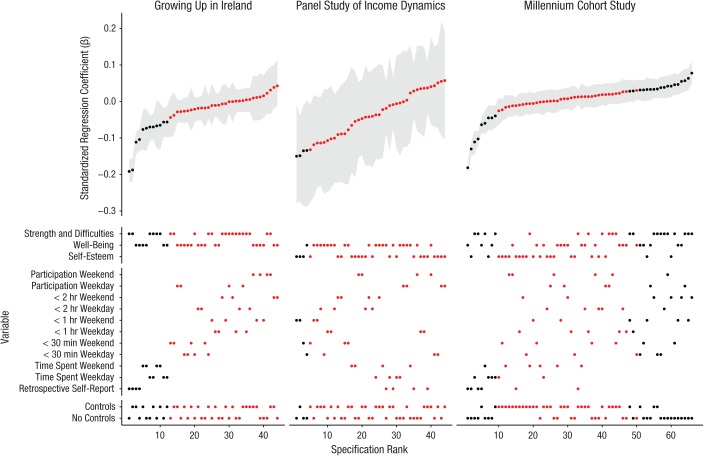
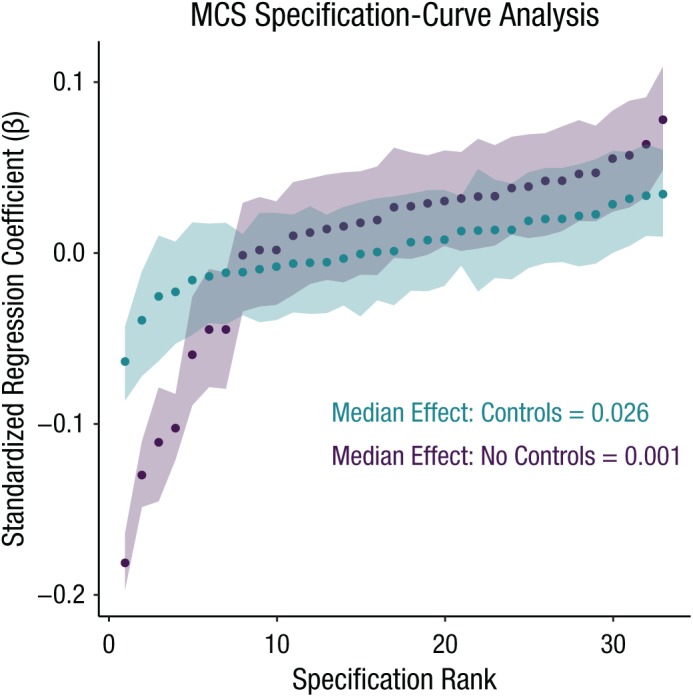
The notion that digital-screen engagement decreases adolescent well-being has become a recurring feature in public, political, and scientific conversation. The current level of psychological evidence, however, is far removed from the certainty voiced by many commentators. There is little clear-cut evidence that screen time decreases adolescent well-being, and most psychological results are based on single-country, exploratory studies that rely on inaccurate but popular self-report measures of digital-screen engagement. In this study, which encompassed three nationally representative large-scale data sets from Ireland, the United States, and the United Kingdom ( N = 17,247 after data exclusions) and included time-use-diary measures of digital-screen engagement, we used both exploratory and confirmatory study designs to introduce methodological and analytical improvements to a growing psychological research area. We found little evidence for substantial negative associations between digital-screen engagement—measured throughout the day or particularly before bedtime—and adolescent well-being.
Overview
The claims and statistics of this paper haven’t been checked yet.
Free: it reads the open-access text and checks the first 5 claims that cite a source we can check. Create a free account to check every claim.
Integrity signals
Registry
Cites
Statistics
Figures
Verification
Claims the paper makes
The claims and statistics of this paper haven’t been checked yet.
Free: it reads the open-access text and checks the first 5 claims that cite a source we can check. Create a free account to check every claim.
Claims other papers make about this one
Each is checked against this paper’s own text: does it say what the citing paper says it does?
The source backs part of the claim, not all of it — or backs it for a different population, condition or comparison.
In the citing paper
“Although the link between social media use and depression is contentious (16, 17), several have nonetheless implicated social media as pervasive and detrimental to psychological well-being.”
From Does Social Media Use Increase Depressive Symptoms? A Reverse Causation Perspective (2021) · cites this paper as [16]
Experimental — accuracy not yet measuredThe cited source says what the claim attributes to it.
In the citing paper
“Therefore, problematic social media use could represent a more clinically meaningful behavior to direct research, as a stronger relationship is seen with adverse mental health symptoms compared to previous studies investigating time spent on social networking sites or screen time in general [23,53,54].”
From Problematic Social Media Use in Adolescents and Young Adults: Systematic Review and Meta-analysis. (2022) · cites this paper as [53]
Self-check
Percentages, sums and reported differences re-computed from the paper’s own numbers.
The self-check needs the paper’s full text.
Citations
Cites
Norman, G. R., Sloan, J. A., & Wyrwich, K. W. (2003) · Medical Care · doi:10.1097/01.mlr.0000062554.74615.4c · Cited by 4,700
An effect size primer: A guide for clinicians and researchers.
Ferguson, C. J. (2009) · Professional Psychology: Research and Practice · doi:10.1037/a0015808 · Cited by 3,467 · cited 3×
“In the preregistration, we also specified a smallest effect size of interest (SESOI; Lakens, Scheel, & Isager, 2017), a concept proposed to avoid the problematic overinterpretation of significant but minimal associations, which are becoming increasingly common in large-scale studies of technology-use outcomes (Ferguso…”
BackgroundResultRobins, R. W., Hendin, H. M., & Trzesniewski, K. H. (2001) · Personality and Social Psychology Bulletin · doi:10.1177/0146167201272002 · Cited by 3,041
(1995) · International Journal of Methods in Psychiatric Research · Cited by 1,847
Goodman, R., Ford, T., Simmons, H., Gatward, R., & Meltzer, H. (2000) · British Journal of Psychiatry · doi:10.1192/bjp.177.6.534 · Cited by 1,818
Twenge, J. M., Joiner, T. E., Rogers, M. L., & Martin, G. N. (2018) · Clinical Psychological Science · doi:10.1177/2167702617723376 · Cited by 1,705
Equivalence Testing for Psychological Research: A Tutorial
Lakens, D., Scheel, A. M., & Isager, P. M. (2018) · Advances in Methods and Practices in Psychological Science · doi:10.1177/2515245918770963 · Cited by 1,560 · cited 1×
“We argue that these effects are therefore too small to merit substantial scientific discussion (Lakens et al., 2017).”
BackgroundThe association between adolescent well-being and digital technology use
Orben, A., & Przybylski, A. K. (2019) · Nature Human Behaviour · doi:10.1038/s41562-018-0506-1 · Cited by 1,500 · cited 8×
“This is in line with results from previous research showing that the association between digital-technology use and well-being often falls below or near this threshold (Ferguson, 2009; Orben & Przybylski, 2019; Twenge, Joiner, Rogers, & Martin, 2017; Twenge, Martin, & Campbell, 2018).”
BackgroundMethodResultInfluentialSelf-citationInternational Journal of Methods in Psychiatric Research
(2006) · International Journal of Methods in Psychiatric Research · doi:10.1002/(issn)1557-0657 · Cited by 1,492
Insufficient Sleep in Adolescents and Young Adults: An Update on Causes and Consequences
Owens, J., ADOLESCENT SLEEP WORKING GROUP, COMMITTEE ON ADOLESCENCE, Au, R., Carskadon, M., Millman, R., Wolfson, A., Braverman, P. K., Adelman, W. P., Breuner, C. C., et al. (2014) · Pediatrics · doi:10.1542/peds.2014-1696 · Cited by 1,413 · cited 1×
“…two exploratory studies detailed above, and from previous literature about the negative effects of technology use during the week on well-being (Harbard et al., 2016; Levenson et al., 2017; Owens, 2014), we derived five specific hypotheses concerning digital engagement and psychological well-being.”
Research works printed but not linked: 2
- Rose G., 1992, The strategy of preventative medicine
- 10.1177/109821400102200202 · doi:10.1177/109821400102200202 · Paper page
Cited by
Ellis, W. E., Dumas, T. M., & Forbes, L. M. (2020) · Canadian Journal of Behavioural Science / Revue canadienne des sciences du comportement · doi:10.1037/cbs0000215 · Cited by 830
Teenagers, screens and social media: a narrative review of reviews and key studies
Orben, A. (2020) · Social Psychiatry and Psychiatric Epidemiology · doi:10.1007/s00127-019-01825-4 · Cited by 706
Self-citationProblematic Social Media Use in Adolescents and Young Adults: Systematic Review and Meta-analysis.
Shannon, H., Bush, K., Villeneuve, P. J., Hellemans, K. G., & Guimond, S. (2022) · JMIR Mental Health · doi:10.2196/33450 · Cited by 593
“Therefore, problematic social media use could represent a more clinically meaningful behavior to direct research, as a stronger relationship is seen with adverse mental health symptoms compared to previous studies investigating time spent on social networking sites or screen time in general [23,53,54].”
ResultAdolescents’ Intense and Problematic Social Media Use and Their Well-Being in 29 Countries
Boer, M., van den Eijnden, R. J. J. M., Boniel-Nissim, M., Wong, S.-L., Inchley, J. C., Badura, P., Craig, W. M., Gobina, I., Kleszczewska, D., Klanšček, H. J., et al. (2020) · Journal of Adolescent Health · doi:10.1016/j.jadohealth.2020.02.014 · Cited by 434
“In addition, all measures were based on selfreports that may deviate from, for example, actual time spent on SMU [49,50].”
BackgroundThe impact of digital technology use on adolescent well-being
Dienlin, T., & Johannes, N. (2020) · Dialogues in Clinical Neuroscience · doi:10.31887/dcns.2020.22.2/tdienlin · Cited by 393
A meta-analysis of the association between adolescent social media use and depressive symptoms
Ivie, E. J., Pettitt, A., Moses, L. J., & Allen, N. B. (2020) · Journal of Affective Disorders · doi:10.1016/j.jad.2020.06.014 · Cited by 358
Digital detox: An effective solution in the smartphone era? A systematic literature review
Radtke, T., Apel, T., Schenkel, K., Keller, J., & von Lindern, E. (2022) · Mobile Media & Communication · doi:10.1177/20501579211028647 · Cited by 342
Are Social Media Ruining Our Lives? A Review of Meta-Analytic Evidence
Appel, M., Marker, C., & Gnambs, T. (2020) · Review of General Psychology · doi:10.1177/1089268019880891 · Cited by 290
Not all screen time is created equal: associations with mental health vary by activity and gender
Twenge, J. M., & Farley, E. (2021) · Social Psychiatry and Psychiatric Epidemiology · doi:10.1007/s00127-020-01906-9 · Cited by 252
“girls, especially in large samples, and thus far, few large studies have examined gender differences in associations [19, 40, 41, 46, 65, 66].”
BackgroundBeyond Screen Time: Identity Development in the Digital Age
Granic, I., Morita, H., & Scholten, H. (2020) · Psychological Inquiry · doi:10.1080/1047840x.2020.1820214 · Cited by 237
“…(e.g. Drummond & Sauer, 2019; Ellis, 2019; Ellis, Davidson, Shaw, & Geyer, 2019; Heffer et al., 2019; Hilgard, Engelhardt, & Rouder, 2017; Kardefelt-Winther, 2017; Markey & Ferguson, 2017; Ophir, Lipshits-Braziler, & Rosenberg, 2020; Orben & Przybylski, 2019a, 2019b; Twenge & Campbell, 2019).”
BackgroundInfluentialSocial media literacy: A conceptual framework
Cho, H., Cannon, J., Lopez, R., & Li, W. (2024) · New Media & Society · doi:10.1177/14614448211068530 · Cited by 235
National trends in mental health care for US adolescents
Mojtabai, R., & Olfson, M. (2020) · JAMA Psychiatry · doi:10.1001/jamapsychiatry.2020.0279 · Cited by 229
Digital transformation of mental health services
Bond, R. R., Mulvenna, M. D., Potts, C., O’Neill, S., Ennis, E., & Torous, J. (2023) · npj Mental Health Research · doi:10.1038/s44184-023-00033-y · Cited by 199
“While the relationship between screen-time and mental health is complicated 31 , there is stronger agreement that the most effective use of digital interventions is when they are augmented and supported by people 32 .”
Twenge, J. M., Haidt, J., Lozano, J., & Cummins, K. M. (2022) · Acta Psychologica · doi:10.1016/j.actpsy.2022.103512 · Cited by 191
Social Drivers and Algorithmic Mechanisms on Digital Media.
Metzler, H., & Garcia, D. (2024) · Perspectives on Psychological Science · doi:10.1177/17456916231185057 · Cited by 204
“…they fail to derive causal insights from correlation, present results limited to single studies and countries, take self-reports at face value, or omit the fact that effect sizes are small (see Cavanagh, 2017; Dienlin & Johannes, 2020; Orben & Przybylski, 2019b; Ritchie, 2021; Sumpter, 2018).”
BackgroundTrends in Adverse Childhood Experiences (ACEs) in the United States
Finkelhor, D. (2020) · Child Abuse & Neglect · doi:10.1016/j.chiabu.2020.104641 · Cited by 170
Sela, Y., Zach, M., Amichay-Hamburger, Y., Mishali, M., & Omer, H. (2020) · Computers in Human Behavior · doi:10.1016/j.chb.2019.106226 · Cited by 166
Boer, M., Stevens, G., Finkenauer, C., & van den Eijnden, R. (2020) · Child Development · doi:10.1111/cdev.13334 · Cited by 157
Barthorpe, A., Winstone, L., Mars, B., & Moran, P. (2020) · Journal of Affective Disorders · doi:10.1016/j.jad.2020.05.106 · Cited by 158
Lyngs, U., Lukoff, K., Slovak, P., Seymour, W., Webb, H., Jirotka, M., Zhao, J., Van Kleek, M., & Shadbolt, N. (2020) · Proceedings of the 2020 CHI Conference on Human Factors in Computing Systems · doi:10.1145/3313831.3376672 · Cited by 157
Sewall, C. J. R., Bear, T. M., Merranko, J., & Rosen, D. (2020) · Mobile Media & Communication · doi:10.1177/2050157920902830 · Cited by 139
“…2015; Kelly, Zilanawala, Booker, & Sacker, 2018; Kross et al., 2013; Lin et al., 2016; Twenge et al., 2018), whereas others have found either a positive or null relationship (Berryman, Ferguson, & Negy, 2018; Hampton, 2019; Jensen, George, Russell, & Odgers, 2019; Orben & Przybylski, 2019a, 2019b).”
BackgroundVuorre, M., Orben, A., & Przybylski, A. K. (2021) · Clinical Psychological Science · doi:10.1177/2167702621994549 · Cited by 158
“Depression was measured in the MTF data set with six items that have been used in previous research (Miech et al., 2020; Newcomb et al., 1981; Twenge et al., 2018), although not always in a consistent manner (Orben & Przybylski, 2019a, see especially Supplementary Table 6).”
BackgroundMethodResultInfluentialSelf-citationThe accuracy and validity of self-reported social media use measures among adolescents
Verbeij, T., Pouwels, J. L., Beyens, I., & Valkenburg, P. M. (2021) · Computers in Human Behavior Reports · doi:10.1016/j.chbr.2021.100090 · Cited by 163
What Is Digital Parenting? A Systematic Review of Past Measurement and Blueprint for the Future
Modecki, K. L., Goldberg, R., Wiśniewski, P., & Orben, A. C. (2022) · Perspectives on Psychological Science · doi:10.1177/17456916211072458 · Cited by 270
Self-citationPrzybylski, A. K., Orben, A., & Weinstein, N. (2020) · Journal of the American Academy of Child & Adolescent Psychiatry · doi:10.1016/j.jaac.2019.06.017 · Cited by 142
“…with researcher degrees of freedom, a problem known to in fl uence what we understand about the relations linking technology use to youth outcomes, 22 we analyzed well-validated measures of screen time and psychosocial functioning, de fi ning a number of key control variables at the individual,…”
BackgroundSelf-citationDel Giudice, M., & Gangestad, S. W. (2021) · Advances in Methods and Practices in Psychological Science · doi:10.1177/2515245920954925 · Cited by 143
Roffarello, A. M., & De Russis, L. (2023) · ACM Transactions on Computer-Human Interaction · doi:10.1145/3571810 · Cited by 137
“instance, most studies about Facebook overuse rely on self-reported measures, but prior work [57, 169] already demonstrated that self-report often does not correspond with actual use of digital devices.”
BackgroundGoldstone, A., Javitz, H. S., Claudatos, S. A., Buysse, D. J., Hasler, B. P., de Zambotti, M., Clark, D. B., Franzen, P. L., Prouty, D., Colrain, I. M., et al. (2020) · Journal of Adolescent Health · doi:10.1016/j.jadohealth.2019.12.005 · Cited by 154
Experimentally manipulating social media abstinence: results of a four-week diary study
Hall, J. A., Xing, C., Ross, E. M., & Johnson, R. M. (2021) · Media Psychology · doi:10.1080/15213269.2019.1688171 · Cited by 120
Sociodemographic Correlates of Contemporary Screen Time Use among 9- and 10-Year-Old Children
Nagata, J. M., Ganson, K. T., Iyer, P., Chu, J., Baker, F. C., Pettee Gabriel, K., Garber, A. K., Murray, S. B., & Bibbins-Domingo, K. (2022) · The Journal of Pediatrics · doi:10.1016/j.jpeds.2021.08.077 · Cited by 117
Johannes, N., Meier, A., Reinecke, L., Ehlert, S., Setiawan, D. N., Walasek, N., Dienlin, T., Buijzen, M., & Veling, H. (2021) · Media Psychology · doi:10.1080/15213269.2020.1768122 · Cited by 114
Digital Overuse and Subjective Well-Being in a Digitized Society
Büchi, M., Festic, N., & Latzer, M. (2019) · Social Media + Society · doi:10.1177/2056305119886031 · Cited by 109
Rosendo-Rios, V., Trott, S., & Shukla, P. (2022) · Addictive Behaviors · doi:10.1016/j.addbeh.2022.107238 · Cited by 108
Pornography and Sexual Aggression: Can Meta-Analysis Find a Link?
Ferguson, C. J., & Hartley, R. D. (2022) · Trauma, Violence, & Abuse · doi:10.1177/1524838020942754 · Cited by 106
Does Social Media Use Increase Depressive Symptoms? A Reverse Causation Perspective
Hartanto, A., Quek, F. Y. X., Tng, G. Y. Q., & Yong, J. C. (2021) · Frontiers in Psychiatry · doi:10.3389/fpsyt.2021.641934 · Cited by 107
“Although the link between social media use and depression is contentious (16, 17), several have nonetheless implicated social media as pervasive and detrimental to psychological well-being.”
BackgroundDrummond, A., Sauer, J. D., & Ferguson, C. J. (2020) · Royal Society Open Science · doi:10.1098/rsos.200373 · Cited by 104
How students' self-control and smartphone-use explain their academic performance
Troll, E. S., Friese, M., & Loschelder, D. D. (2020) · doi:10.31234/osf.io/27stp · Cited by 107
Aggressive Video Games are Not a Risk Factor for Future Aggression in Youth: A Longitudinal Study
Ferguson, C. J., & Wang, J. (2019) · Journal of Youth and Adolescence · doi:10.1007/s10964-019-01069-0 · Cited by 125
Social Media Use and Depressive Symptoms Among United States Adolescents
Kreski, N., Platt, J., Rutherford, C., Olfson, M., Odgers, C., Schulenberg, J., & Keyes, K. M. (2021) · Journal of Adolescent Health · doi:10.1016/j.jadohealth.2020.07.006 · Cited by 97
Boniel-Nissim, M., van den Eijnden, R. J. J. M., Furstova, J., Marino, C., Lahti, H., Inchley, J., Šmigelskas, K., Vieno, A., & Badura, P. (2022) · Computers in Human Behavior · doi:10.1016/j.chb.2021.107144 · Cited by 96
Moitra, P., & Madan, J. (2022) · PLOS ONE · doi:10.1371/journal.pone.0264951 · Cited by 92
A Nudge-Based Intervention to Reduce Problematic Smartphone Use: Randomised Controlled Trial
Olson, J. A., Sandra, D. A., Chmoulevitch, D., Raz, A., & Veissière, S. P. L. (2023) · International Journal of Mental Health and Addiction · doi:10.1007/s11469-022-00826-w · Cited by 91
Opportunities for increased reproducibility and replicability of developmental neuroimaging
Klapwijk, E. T., van den Bos, W., Tamnes, C. K., Raschle, N. M., & Mills, K. L. (2020) · Developmental Cognitive Neuroscience · doi:10.1016/j.dcn.2020.100902 · Cited by 90
Longitudinal association between social media use and psychological distress among adolescents
Thorisdottir, I. E., Sigurvinsdottir, R., Kristjansson, A. L., Allegrante, J. P., Lilly, C. L., & Sigfusdottir, I. D. (2020) · Preventive Medicine · doi:10.1016/j.ypmed.2020.106270 · Cited by 90
Beeres, D. T., Andersson, F., Vossen, H. G. M., & Galanti, M. R. (2021) · Journal of Adolescent Health · doi:10.1016/j.jadohealth.2020.07.042 · Cited by 102
Social Media Use and Deliberate Self-Harm Among Youth: A Systematized Narrative Review
Biernesser, C., Sewall, C. J. R., Brent, D., Bear, T., Mair, C., & Trauth, J. (2020) · Children and Youth Services Review · doi:10.1016/j.childyouth.2020.105054 · Cited by 86
Development of the Social Media Engagement Scale for Adolescents
Ni, X., Shao, X., Geng, Y., Qu, R., Niu, G., & Wang, Y. (2020) · Frontiers in Psychology · doi:10.3389/fpsyg.2020.00701 · Cited by 126
Svensson, R., Johnson, B., & Olsson, A. (2022) · BMC Public Health · doi:10.1186/s12889-022-12670-7 · Cited by 79
Trends in the Incidence and Lethality of Suicidal Acts in the United States, 2006 to 2015
Wang, J., Sumner, S. A., Simon, T. R., Crosby, A. E., Annor, F. B., Gaylor, E., Xu, L., & Holland, K. M. (2020) · JAMA Psychiatry · doi:10.1001/jamapsychiatry.2020.0596 · Cited by 78
Like this meta-analysis: Screen media and mental health.
Ferguson, C. J., Kaye, L. K., Branley-Bell, D., Markey, P., Ivory, J. D., Klisanin, D., Elson, M., Smyth, M., Hogg, J. L., McDonnell, D., et al. (2022) · Professional Psychology: Research and Practice · doi:10.1037/pro0000426 · Cited by 78
“One alternative to selfreport would be the use of time diaries wherein respondents are periodically asked or reminded to note current screen use in real time (Orben & Przybylski, 2019a) or note their screen time via the information provided in their device’s screen time settings.”
BackgroundLoid, K., Täht, K., & Rozgonjuk, D. (2020) · Computers in Human Behavior · doi:10.1016/j.chb.2019.08.007 · Cited by 76
Souto‐Manning, M., & Melvin, S. A. (2021) · Early Childhood Research Quarterly · doi:10.1016/j.ecresq.2021.11.005 · Cited by 108
Effect of Screen Time on Recovery From Concussion: A Randomized Clinical Trial
Macnow, T. E., Curran, T., Tolliday, C., Martin, K., McCarthy, M. L., Ayturk, D., Babu, K. M., & Mannix, R. (2021) · Archives of Pediatrics and Adolescent Medicine · doi:10.1001/jamapediatrics.2021.2782 · Cited by 83
Hjetland, G. J., Schønning, V., Hella, R. T., Veseth, M., & Skogen, J. C. (2021) · BMC Psychology · doi:10.1186/s40359-021-00582-x · Cited by 101
Impact of COVID-19 Pandemic on the Human Behavior
Hussain, M. W., Mirza, T., & Hassan, M. M. (2020) · International Journal of Education and Management Engineering · doi:10.5815/ijeme.2020.05.05 · Cited by 101
Nagata, J. M., Iyer, P., Chu, J., Baker, F. C., Pettee Gabriel, K., Garber, A. K., Murray, S. B., Bibbins‐Domingo, K., & Ganson, K. T. (2021) · International Journal of Eating Disorders · doi:10.1002/eat.23489 · Cited by 71
Bohnert, M., & Gracia, P. (2021) · Child Indicators Research · doi:10.1007/s12187-020-09767-z · Cited by 71
“Several sociodemographic, household, and parental characteristics were selected as covariates for the models, guided by previous research (Parkes et al. 2013; Hope et al. 2014; Orben and Przybylski 2019a).”
BackgroundMethodResultInfluentialHilty, D. M., Stubbe, D., McKean, A. J., Hoffman, P. E., Zalpuri, I., Myint, M. T., Joshi, S. V., Pakyurek, M., & Li, S.-T. T. (2023) · BJPsych Open · doi:10.1192/bjo.2023.523 · Cited by 64
McNamee, P., Mendolia, S., & Yerokhin, O. (2021) · Economics & Human Biology · doi:10.1016/j.ehb.2021.100992 · Cited by 62
Sewall, C. J. R., Goldstein, T. R., Wright, A. G. C., & Rosen, D. (2022) · Clinical Psychological Science · doi:10.1177/21677026221078309 · Cited by 64
Adolescents’ real-time social and affective experiences of online and face-to-face interactions
Achterhof, R., Kirtley, O. J., Schneider, M., Hagemann, N., Hermans, K. S. F. M., Hiekkaranta, A. P., Lecei, A., Lafit, G., & Myin-Germeys, I. (2022) · Computers in Human Behavior · doi:10.1016/j.chb.2021.107159 · Cited by 62
Teenage sleep and technology engagement across the week
Orben, A., & Przybylski, A. K. (2020) · PeerJ · doi:10.7717/peerj.8427 · Cited by 58
Self-citationA systematized review of the use of mobile technology in outdoor learning
van Kraalingen, I. (2021) · Journal of Adventure Education & Outdoor Learning · doi:10.1080/14729679.2021.1984963 · Cited by 69
Irmer, A., & Schmiedek, F. (2023) · Communications Psychology · doi:10.1038/s44271-023-00013-0 · Cited by 58
“However, many researchers have questioned the practical signi fi cance of this small average effect and emphasize the heterogeneity of fi ndings 29 – 31 .”
Rozgonjuk, D., Pruunsild, P., Jürimäe, K., Schwarz, R.-J., & Aru, J. (2020) · Mobile Media & Communication · doi:10.1177/2050157920910190 · Cited by 56
Excessive and pathological Internet use – Risk-behavior or psychopathology?
Kaess, M., Klar, J., Kindler, J., Parzer, P., Brunner, R. M., Carli, V., Sarchiapone, M., Hoven, C. W., Apter, A., Balázs, J., et al. (2021) · Addictive Behaviors · doi:10.1016/j.addbeh.2021.107045 · Cited by 70
Johannes, N., Nguyen, T.-V., Weinstein, N., & Przybylski, A. K. (2021) · Technology, Mind, and Behavior · doi:10.1037/tmb0000035 · Cited by 53
Self-citationStavrova, O., & Denissen, J. (2021) · Social Psychological and Personality Science · doi:10.1177/1948550620944304 · Cited by 49
Steinsbekk, S., Nesi, J., & Wichstrøm, L. (2023) · Computers in Human Behavior · doi:10.1016/j.chb.2023.107859 · Cited by 50
Patte, K. A., Faulkner, G., Qian, W., Duncan, M. J., & Leatherdale, S. T. (2020) · BMC Public Health · doi:10.1186/s12889-020-08887-z · Cited by 52
Jones, A., Hook, M., Podduturi, P., McKeen, H., Beitzell, E., & Liss, M. (2021) · Personality and Individual Differences · doi:10.1016/j.paid.2021.111284 · Cited by 52
Depressive symptoms and upward social comparisons during Instagram use: A vicious circle
Aubry, R., Quiamzade, A., & Meier, L. L. (2023) · Personality and Individual Differences · doi:10.1016/j.paid.2023.112458 · Cited by 67
Kandola, A., Owen, N., Dunstan, D. W., & Hallgren, M. (2022) · Psychological Medicine · doi:10.1017/s0033291721000258 · Cited by 48
“The factors contributing to relationships of screen time with mental health in adolescents are complex (Orben & Przybylski, 2019; Przybylski & Weinstein, 2017), and the type of screen time may affect mental health differently.”
BackgroundZhou, W., Yan, Z., Yang, Z., & Hussain, Z. (2023) · Frontiers in Psychiatry · doi:10.3389/fpsyt.2023.1237924 · Cited by 64
Portugal, A. M., Bedford, R., Cheung, C. H. M., Mason, L., & Smith, T. J. (2021) · Scientific Reports · doi:10.1038/s41598-021-81775-7 · Cited by 61
Smartphone Use and Academic Performance: A Pervasiveness Approach Beyond Addiction
Gerosa, T., Gui, M., & Büchi, M. (2021) · Social Science Computer Review · doi:10.1177/08944393211018969 · Cited by 57
Yang, Z., Asbury, K., & Griffiths, M. D. (2021) · International Journal of Mental Health and Addiction · doi:10.1007/s11469-019-00204-z · Cited by 45
“However, in a recent study, no clear negative effect of digital-screen use (including smartphones) on wellbeing was found among a very large sample of adolescents (those under 18 years) from Ireland, the USA, and the UK (Orben and Przybylski 2019; Przybylski and Weinstein 2017).”
BackgroundScreen media activity in youth: A critical review of mental health and neuroscience findings
Paulus, M. P., Zhao, Y., Potenza, M. N., Aupperle, R. L., Bagot, K. S., & Tapert, S. F. (2023) · Journal of Mood and Anxiety Disorders · doi:10.1016/j.xjmad.2023.100018 · Cited by 68
Hartanto, A., Lua, V. Y. Q., Quek, F. Y. X., Yong, J. C., & Ng, M. H. S. (2021) · Computers in Human Behavior Reports · doi:10.1016/j.chbr.2021.100135 · Cited by 43
Screen time and suicidal behaviors among U.S. children 9–11 years old: A prospective cohort study
Chu, J., Ganson, K. T., Baker, F. C., Testa, A. M., Jackson, D. B., Murray, S. B., & Nagata, J. M. (2023) · Preventive Medicine · doi:10.1016/j.ypmed.2023.107452 · Cited by 48
No effect of different types of media on well-being
Johannes, N., Dienlin, T., Bakhshi, H., & Przybylski, A. K. (2022) · Scientific Reports · doi:10.1038/s41598-021-03218-7 · Cited by 59
Self-citationBradley, A. H. M., & Howard, A. L. (2023) · Clinical Psychological Science · doi:10.1177/21677026221116889 · Cited by 58
Improving practices and inferences in developmental cognitive neuroscience
Flournoy, J. C., Vijayakumar, N., Cheng, T. W., Cosme, D., Flannery, J., & Pfeifer, J. H. (2020) · Developmental Cognitive Neuroscience · doi:10.1016/j.dcn.2020.100807 · Cited by 46
Social networking and symptoms of depression and anxiety in early adolescence
Mundy, L. K., Canterford, L., Moreno‐Betancur, M., Hoq, M., Sawyer, S. M., Allen, N. B., & Patton, G. C. (2021) · Depression and Anxiety · doi:10.1002/da.23117 · Cited by 38
Bjerre-Nielsen, A., Andersen, A., Minor, K., & Lassen, D. D. (2020) · Psychological Science · doi:10.1177/0956797620956613 · Cited by 40
“…on the effects of digitaldevice use might depend heavily on the usage context from which the data are gathered and the subsequent methods of analysis chosen by the researchers (Adelantado-Renau et al., 2019; Orben, Dienlin, & Przybylski, 2019; Orben & Przybylski, 2019; Whitlock & Masur, 2019).”
BackgroundMethodNagata, J. M., Chu, J., Ganson, K. T., Murray, S. B., Iyer, P., Gabriel, K. P., Garber, A. K., Bibbins‐Domingo, K., & Baker, F. C. (2023) · Journal of Child Psychology and Psychiatry · doi:10.1111/jcpp.13673 · Cited by 39
Mental Health Literacy and Positive Mental Health in Adolescents: A Correlational Study
Nobre, J. R., Calha, A., Luís, H., Oliveira, A. P., Monteiro, F., Ferré‐Grau, C., & Sequeira, C. (2022) · International Journal of Environmental Research and Public Health · doi:10.3390/ijerph19138165 · Cited by 59
Adolescent students’ digital engagement and achievement goal orientation profiles
Mädamürk, K., Tuominen, H., Hietajärvi, L., & Salmela‐Aro, K. (2020) · Computers & Education · doi:10.1016/j.compedu.2020.104058 · Cited by 49
McAllister, C., Hisler, G. C., Blake, A. B., Twenge, J. M., Farley, E., & Hamilton, J. L. (2021) · Research on Child and Adolescent Psychopathology · doi:10.1007/s10802-021-00832-x · Cited by 38
Sun, X., Haydel, K. F., Matheson, D., Desai, M., & Robinson, T. N. (2023) · Child Development · doi:10.1111/cdev.13851 · Cited by 38
“These null results add to prior findings in other samples identifying little evidence for the effects of digital technology on child adjustment (George et al., 2020; Jensen et al., 2019; Orben & Przybylski, 2019a, 2019b).”
ResultBurnell, K., George, M. J., Kurup, A. R., Underwood, M. K., & Ackerman, R. A. (2021) · Communication Methods and Measures · doi:10.1080/19312458.2021.1918654 · Cited by 38
Digital Strategies for Screen Time Reduction: A Randomized Field Experiment
Zimmermann, L., & Sobolev, M. (2023) · Cyberpsychology, Behavior, and Social Networking · doi:10.1089/cyber.2022.0027 · Cited by 37
Internet use, depression, and cognitive outcomes among Chinese adolescents
Zhou, M., & Ding, X. (2021) · Journal of Community Psychology · doi:10.1002/jcop.22779 · Cited by 39
Camerini, A.-L., Gerosa, T., & Marciano, L. (2020) · New Media & Society · doi:10.1177/1461444820948809 · Cited by 47
Instagram Use, InstaMums, and Anxiety in Mothers of Young Children
Moujaes, M., & Verrier, D. B. (2020) · Journal of Media Psychology Theories Methods and Applications · doi:10.1027/1864-1105/a000282 · Cited by 51
Open-source smartphone app and tools for measuring, quantifying, and visualizing technology use
Geyer, K., Ellis, D. A., Shaw, H., & Davidson, B. I. (2022) · Behavior Research Methods · doi:10.3758/s13428-021-01585-7 · Cited by 37
Salway, R., Walker, R. A. J., Sansum, K. M., House, D., Emm-Collison, L., Reid, T., Breheny, K., Williams, J. G., de Vocht, F., Hollingworth, W., et al. (2023) · BMC Public Health · doi:10.1186/s12889-023-14976-6 · Cited by 41
Reply to: Underestimating digital media harm
Orben, A., & Przybylski, A. K. (2020) · Nature Human Behaviour · doi:10.1038/s41562-020-0840-y · Cited by 36
Self-citationUpshaw, J. D., Stevens, C. E., Ganis, G., & Zabelina, D. L. (2022) · PLoS ONE · doi:10.1371/journal.pone.0277220 · Cited by 64
Tibber, M. S., Zhao, J., & Butler, S. (2020) · Computers in Human Behavior · doi:10.1016/j.chb.2020.106371 · Cited by 51
Metadata
- Authors
- Orben, A., & Przybylski, A. K.
- Affiliations
- University of Oxford (GB)
- Corresponding author
- Orben, Amy
- Venue
- Psychological Science
- Publisher
- SAGE Publications
- Published
- 2019-04-02
- Volume
- 30
- Issue
- 5
- Pages
- 682-696
- ISSN
- 0956-7976 (ISSN-L)
- 1467-9280
- PMC
- PMC6512056
- OpenAlex
- W2934563845
- Semantic Scholar
- e6c7e53870fd75f05f1ede3d931744c6a9ac58c9
- Cited by
- 414
- References
- 44
- Citations by year
- 2026: 34 · 2025: 39 · 2024: 39 · 2023: 54 · 2022: 64 · 2021: 72 · 2020: 94 · 2019: 18
- FWCI
- 124.55
- Type
- journal article
- Language
- en
- Update notices
- correction (2019-06-28)
- Open access
- hybrid
- doi.org
- Licence
- cc-by-nc
- journals.sagepub.com/page/policies/text-and-data-mining-license (tdm)
- Locations
- Psychological Science (publishedVersion, cc-by-nc)
- Europe PMC (PubMed Central) (publishedVersion, cc-by-nc)
- PubMed Central (publishedVersion, cc-by-nc)
- PubMed (publishedVersion)
- OSF Preprints (OSF Preprints) (submittedVersion)
- Funders
- horizon 2020 (IBSEN)
- economic and social research council
- Topics
- Social Sciences › Sociology and Political Science › Impact of Technology on Adolescents
- Social Sciences › Education › Child Development and Digital Technology
- Social Sciences › Psychology › Experimental and Cognitive Psychology › Sleep and related disorders
- Keywords
- screen time, adolescents, psychological well-being, time diaries, self-report validity, cross-national comparison
- MeSH terms
- Screen Time, Diaries as Topic, Adolescent, Child, Child Welfare, Female, United Kingdom, Humans, Ireland, Male, Television, United States, Self Report, Datasets as Topic
About these checks
Registry, retraction, Cites and statistics results are computed, not judged, with one exception: a printed reference that no index lists is read once by a model before it counts as a citation error. Claims are extracted by a model and kept only when their quote appears verbatim in the text; each cited source is then checked, with a model’s help, for whether it says what the claim relies on. Those verdicts can be wrong — read the claim’s quote and the cited source before relying on one.
Statistics and arithmetic are recomputed, not judged.
Confidence bands are shown only for fields calibrated on our annotated test set. None is calibrated yet, so no band is shown.
What counts as a claim ›How we measure confidence ›How we check this ›
Are you an author, or do you see a problem with this page? Request a review
Data sources
Bibliographic data: Semantic Scholar, OpenAlex, Crossref.
Contains information from the Semantic Scholar Academic Graph Datasets, made available under the ODC Attribution License (ODC-BY 1.0).
Semantic Scholar’s data is described in: Kinney, R., et al. (2023). The Semantic Scholar Open Data Platform. arXiv:2301.10140.
