

The DOI matches its Crossref record; 113 of the 113 references it cites were found in a registry or an index.
A New Treatment Strategy for Parkinson's Disease through the Gut–Brain Axis: The Glucagon-Like Peptide-1 Receptor Pathway
Open accessAbstract
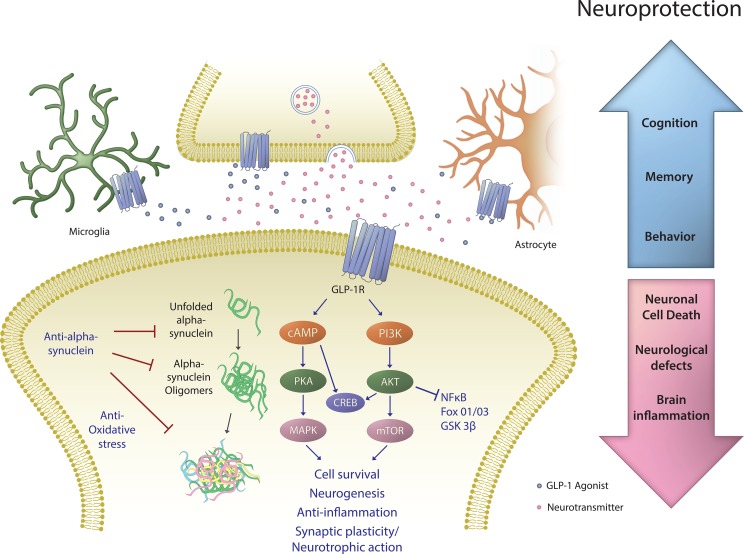
Molecular communications in the gut–brain axis, between the central nervous system and the gastrointestinal tract, are critical for maintaining healthy brain function, particularly in aging. Epidemiological analyses indicate type 2 diabetes mellitus (T2DM) is a risk factor for neurodegenerative disorders including Alzheimer's disease (AD) and Parkinson's diseases (PD) for which aging shows a major correlative association. Common pathophysiological features exist between T2DM, AD, and PD, including oxidative stress, inflammation, insulin resistance, abnormal protein processing, and cognitive decline, and suggest that effective drugs for T2DM that positively impact the gut–brain axis could provide an effective treatment option for neurodegenerative diseases. Glucagon-like peptide-1 (GLP-1)-based antidiabetic drugs have drawn particular attention as an effectual new strategy to not only regulate blood glucose but also decrease body weight by reducing appetite, which implies that GLP-1 could affect the gut–brain axis in normal and pathological conditions. The neurotrophic and neuroprotective effects of GLP-1 receptor (R) stimulation have been characterized in numerous in vitro and in vivo preclinical studies using GLP-1R agonists and dipeptidyl peptidase-4 inhibitors. Recently, the first open label clinical study of exenatide, a long-acting GLP-1 agonist, in the treatment of PD showed long-lasting improvements in motor and cognitive function. Several double-blind clinical trials of GLP-1R agonists including exenatide in PD and other neurodegenerative diseases are already underway or are about to be initiated. Herein, we review the physiological role of the GLP-1R pathway in the gut–brain axis and the therapeutic strategy of GLP-1R stimulation for the treatment of neurodegenerative diseases focused on PD, for which age is the major risk factor.
Overview
The claims and statistics of this paper haven’t been checked yet.
Run the check — free, no account needed. It reads the open-access text and checks the sources it cites.
Integrity signals
Registry
Cites
Statistics
Figures
Verification
Claims the paper makes
The claims and statistics of this paper haven’t been checked yet.
Run the check — free, no account needed. It reads the open-access text and checks the sources it cites.
Claims other papers make about this one
Each is checked against this paper’s own text: does it say what the citing paper says it does?
In the citing paper
“There are studies indicate that GLP-1 has a neuroprotective effect in the central nervous system (CNS), which affects the proliferation and apoptosis of neural cells, improves learning, memory and motor dysfunction, reduces the deposition of Aβ plaques in the brain, decreases the loss of dopaminergic neurons and promotes nerve regeneration (Kim et al. 2017).”
From Therapeutic effect of GLP-1 engineered strain on mice model of Alzheimer’s disease and Parkinson’s disease (2020) · cites this paper as Kim et al. 2017
Self-check
Percentages, sums and reported differences re-computed from the paper’s own numbers.
The self-check needs the paper’s full text.
Citations
Cites
Mutation in the α-Synuclein Gene Identified in Families with Parkinson's Disease
Polymeropoulos, M. H., Lavedan, C., Leroy, E., Ide, S. E., Dehejia, A., Dutra, A., Pike, B., Root, H., Rubenstein, J., Boyer, R., et al. (1997) · Science · doi:10.1126/science.276.5321.2045 · Cited by 8,240
Dauer, W., & Przedborski, S. (2003) · Neuron · doi:10.1016/s0896-6273(03)00568-3 · Cited by 5,469
Chronic Parkinsonism in Humans Due to a Product of Meperidine-Analog Synthesis
Langston, J. W., Ballard, P., Tetrud, J. W., & Irwin, I. (1983) · Science · doi:10.1126/science.6823561 · Cited by 4,914
Overdependence on degraded gist memory in Alzheimer's disease.
Gallo, D. A., Shahid, K. R., Olson, M. A., Solomon, T. M., Schacter, D. L., & Budson, A. E. (2006) · Neuropsychology · doi:10.1037/0894-4105.20.6.625 · Cited by 4,757
Chronic systemic pesticide exposure reproduces features of Parkinson's disease
Betarbet, R. S., Sherer, T., MacKenzie, G. M., Garcia‐Osuna, M., Panov, A. V., & Greenamyre, J. T. (2000) · Nature Neuroscience · doi:10.1038/81834 · Cited by 3,770
Immune attack: the role of inflammation in Alzheimer disease
Heppner, F. L., Ransohoff, R. M., & Becher, B. (2015) · Nature Reviews Neuroscience · doi:10.1038/nrn3880 · Cited by 2,134
How neuroinflammation contributes to neurodegeneration
Ransohoff, R. M. (2016) · Science · doi:10.1126/science.aag2590 · Cited by 1,967 · cited 2×
“Inflammation, oxidative stress, and deficits in neurotransmitters are the common features of the biochemical switch that ultimately results in the activation of the apoptotic pathways that lead to neuronal cell dysfunction and death and eventually to the neurological disorder.(2,25) Interestingly, these pathological e…”
BackgroundThe Role of Oxidative Stress in Parkinson's Disease
Dias, V., Junn, E., & Mouradian, M. M. (2013) · Journal of Parkinson’s Disease · doi:10.3233/jpd-130230 · Cited by 1,845
Molecular Pathways of Neurodegeneration in Parkinson's Disease
Dawson, T. M., & Dawson, V. L. (2003) · Science · doi:10.1126/science.1087753 · Cited by 1,674
Bender, A., Krishnan, K. J., Morris, C. M., Taylor, G. A., Reeve, A. K., Perry, R. H., Jaros, E., Hersheson, J. S., Betts, J., Klopstock, T., et al. (2006) · Nature Genetics · doi:10.1038/ng1769 · Cited by 1,570
Research works printed but not linked: 3
- Guo LX, 2009, Chin Med J (Engl), 122, 2886
- Puddu A, 2013, Mediators Inflamm, 317120
- Heikkila RE, 1987, Adv Neurol, 45, 149
Cited by
Sorted by citations
Kopp, K. O., Glotfelty, E. J., Li, Y., & Greig, N. H. (2022) · Pharmacological Research · doi:10.1016/j.phrs.2022.106550 · Cited by 298
Self-citationSun, J., Li, H., Jin, Y., Yu, J., Mao, S., Su, K.-P., Ling, Z., & Liu, J. (2021) · Brain, Behavior, and Immunity · doi:10.1016/j.bbi.2020.10.014 · Cited by 264
The Association Between Type 2 Diabetes Mellitus and Parkinson’s Disease
Cheong, J. L. Y., Pablo‐Fernández, E. D., Foltynie, T., & Noyce, A. J. (2020) · Journal of Parkinson s Disease · doi:10.3233/jpd-191900 · Cited by 241
Sposito, A. C., Berwanger, O., de Carvalho, L. S. F., & Saraiva, J. F. K. (2018) · Cardiovascular Diabetology · doi:10.1186/s12933-018-0800-2 · Cited by 171
G protein-coupled receptors in neurodegenerative diseases and psychiatric disorders
Wong, T., Li, G., Li, S., Gao, W., Chen, G., Gan, S., Zhang, M., Li, H., Wu, S., & Du, Y. (2023) · Signal Transduction and Targeted Therapy · doi:10.1038/s41392-023-01427-2 · Cited by 179
Dutta, S., Verma, S., Jain, V., Surapaneni, B. K., Vinayek, R., Phillips, L. E., & Nair, P. P. (2019) · Journal of Neurogastroenterology and Motility · doi:10.5056/jnm19044 · Cited by 150
Diet in Parkinson’s Disease: Critical Role for the Microbiome
Jackson, A., Forsyth, C. B., Shaikh, M., Voigt, R. M., Engen, P. A., Ramirez, V., & Keshavarzian, A. (2019) · Frontiers in Neurology · doi:10.3389/fneur.2019.01245 · Cited by 145
Emerging Therapeutic Strategies for Parkinson’s Disease and Future Prospects: A 2021 Update
Gouda, N. A., Elkamhawy, A., & Cho, J. (2022) · Biomedicines · doi:10.3390/biomedicines10020371 · Cited by 112
GLP-1a: Going beyond Traditional Use
Laurindo, L. F., Barbalho, S. M., Guiguer, E. L., da Silva Soares de Souza, M., de Souza, G. A., Fidalgo, T. M., Araújo, A. C., de Souza Gonzaga, H. F., de Bortoli Teixeira, D., de Oliveira Silva Ullmann, T., et al. (2022) · International Journal of Molecular Sciences · doi:10.3390/ijms23020739 · Cited by 102
The gut microbiome in Parkinson's disease: A culprit or a bystander?
Keshavarzian, A., Engen, P. A., Bonvegna, S., & Cilia, R. (2020) · Progress in brain research · doi:10.1016/bs.pbr.2020.01.004 · Cited by 108
Psychobiotics: the Influence of Gut Microbiota on the Gut-Brain Axis in Neurological Disorders
Oroojzadeh, P., Bostanabad, S. Y., & Lotfi, H. (2022) · Journal of Molecular Neuroscience · doi:10.1007/s12031-022-02053-3 · Cited by 109
Yaribeygi, H., Rashidy-Pour, A., Atkin, S. L., Jamialahmadi, T., & Sahebkar, A. (2021) · Life Sciences · doi:10.1016/j.lfs.2020.118645 · Cited by 96
Parkinson’s disease and diabetes mellitus: common mechanisms and treatment repurposing
Labandeira, C. M., Bau, A. F., Ron, D. A., Álvarez, E., Alba, P. V., Garma, J. L., & Rodriguez-Perez, A. I. (2021) · Neural Regeneration Research · doi:10.4103/1673-5374.332122 · Cited by 96
Simonet, C., Bestwick, J. P., Jitlal, M., Waters, S., Ben-Joseph, A., Marshall, C. R., Dobson, R., Marrium, S., Robson, J. P., Jacobs, B. M., et al. (2022) · JAMA Neurology · doi:10.1001/jamaneurol.2022.0003 · Cited by 89
Toll-Like Receptor 4: A Promising Therapeutic Target for Alzheimer’s Disease
Wu, L., Xian, X., Xu, G., Tan, Z., Dong, F., Zhang, M., & Zhang, F. (2022) · Mediators of Inflammation · doi:10.1155/2022/7924199 · Cited by 93
Hassan, A. T., Kandel, R. S., Mishra, R., Gautam, J., Alaref, A. A., & Jahan, N. (2020) · Cureus · doi:10.7759/cureus.9853 · Cited by 74
Anesthesia and surgery induce cognitive dysfunction in elderly male mice: the role of gut microbiota
Zhan, G., Hua, D., Huang, N., Wang, Y., Li, S., Zhou, Z., Yang, N., Jiang, R., Zhu, B., Yang, L., et al. (2019) · Aging · doi:10.18632/aging.101871 · Cited by 71
Self-citationFang, X., Zhou, X., Miao, Y., Han, Y., Wei, J., & Chen, T. (2020) · AMB Express · doi:10.1186/s13568-020-01014-6 · Cited by 70
Neuromodulatory effects of anti-diabetes medications: A mechanistic review
Yaribeygi, H., Ashrafizadeh, M., Henney, N. C., Sathyapalan, T., Jamialahmadi, T., & Sahebkar, A. (2019) · Pharmacological Research · doi:10.1016/j.phrs.2019.104611 · Cited by 71
Cansız, D., Ünal, İ., Üstündağ, Ü. V., Alturfan, A. A., Altinoz, M. A., Elmacı, İ., & Emekli‐Alturfan, E. (2021) · Molecular Biology Reports · doi:10.1007/s11033-021-06532-5 · Cited by 69
Chen, S., Yu, S., Li, Y., Lecca, D., Glotfelty, E. J., Kim, H. K., Choi, H., Hoffer, B. J., Greig, N. H., Kim, D. S., et al. (2018) · Scientific Reports · doi:10.1038/s41598-018-28449-z · Cited by 68
Self-citationSadek, M. A., Kandil, E. A., Sayed, N. S. E., Sayed, H. M., & Rabie, M. A. (2022) · International Immunopharmacology · doi:10.1016/j.intimp.2022.109647 · Cited by 68
Alternative role of glucagon-like Peptide-1 receptor agonists in neurodegenerative diseases
Chen, S., Chuang, Y., Lin, T., & Yang, J. (2022) · European Journal of Pharmacology · doi:10.1016/j.ejphar.2022.175439 · Cited by 68
Associations Between Diabetes Mellitus and Neurodegenerative Diseases
Szablewski, L. (2025) · International Journal of Molecular Sciences · doi:10.3390/ijms26020542 · Cited by 80
Halloum, W., Dughem, Y. A., Beier, D., & Pellesi, L. (2024) · The Journal of Headache and Pain · doi:10.1186/s10194-024-01821-3 · Cited by 63
Glucagon-like peptide-1 (GLP-1)-based receptor agonists as a treatment for Parkinson’s disease
Glotfelty, E. J., Olson, L., Karlsson, T. E., Li, Y., & Greig, N. H. (2020) · Expert Opinion on Investigational Drugs · doi:10.1080/13543784.2020.1764534 · Cited by 63
Self-citationYue, M., Wei, J., Chen, W., Hong, D., Chen, T., & Fang, X. (2022) · Nutrients · doi:10.3390/nu14224886 · Cited by 62
Dietary Regulation of Gut-Brain Axis in Alzheimer’s Disease: Importance of Microbiota Metabolites
Frausto, D. M., Forsyth, C. B., Keshavarzian, A., & Voigt, R. M. (2021) · Frontiers in Neuroscience · doi:10.3389/fnins.2021.736814 · Cited by 61
Neuroprotective effects of genistein on SH-SY5Y cells overexpressing A53T mutant α-synuclein
Zhang, S., Liu, Z.-L., Wu, H., Hu, Q., Zhang, S., Wang, Y.-M., Jin, Z., Lv, L.-F., Wu, H.-L., & Cheng, O. (2018) · Neural Regeneration Research · doi:10.4103/1673-5374.235250 · Cited by 59
Self-citationElbassuoni, E., & Ahmed, R. F. (2019) · Neurochemistry International · doi:10.1016/j.neuint.2019.104583 · Cited by 57
Pathological and Therapeutic Advances in Parkinson’s Disease: Mitochondria in the Interplay
Naren, P., Cholkar, A., Kamble, S., Khan, S. S., Srivastava, S., Madan, J., Mehra, N. K., Tiwari, V., Singh, S. B., & Khatri, D. K. (2022) · Journal of Alzheimer s Disease · doi:10.3233/jad-220682 · Cited by 60
The role of nutrition on Parkinson’s disease: a systematic review
Bianchi, V. E., Rizzi, L., & Somaa, F. A. (2022) · Nutritional Neuroscience · doi:10.1080/1028415x.2022.2073107 · Cited by 60
Wang, Y., Chen, W., Han, Y., Xu, X., Yang, A., Wei, J., Hong, D., Fang, X., & Chen, T. (2023) · Bioengineering & Translational Medicine · doi:10.1002/btm2.10505 · Cited by 55
Self-citationTherapeutic application of GLP-1 and GIP receptor agonists in Parkinson’s disease
Yang, X., Feng, P., Ji, R., Ren, Y., Wei, W., & Hölscher, C. (2022) · Expert Opinion on Therapeutic Targets · doi:10.1080/14728222.2022.2079492 · Cited by 52
Yu, H., Sun, T., He, X., Wang, Z., Zhao, K., An, J., Wen, L., Li, J., Li, W., & Feng, J. (2022) · Aging and Disease · doi:10.14336/ad.2022.0325 · Cited by 56
Mitochondria and Oxidative Stress as a Link between Alzheimer’s Disease and Diabetes Mellitus
Veselov, I. M., Vinogradova, D. V., Maltsev, A. V., Shevtsov, P. N., Spirkova, E. A., Бачурин, С. О., & Shevtsova, E. F. (2023) · International Journal of Molecular Sciences · doi:10.3390/ijms241914450 · Cited by 55
The Post-amyloid Era in Alzheimer's Disease: Trust Your Gut Feeling
Osorio, C. P., Kanukuntla, T., Diaz, E. L., Jafri, N., Cummings, M., & Sfera, A. (2019) · Frontiers in Aging Neuroscience · doi:10.3389/fnagi.2019.00143 · Cited by 50
Zhang, Y., Xu, S., Qian, Y., Mo, C., Ai, P., Yang, X., & Xiao, Q. (2023) · Frontiers in Aging Neuroscience · doi:10.3389/fnagi.2023.1099018 · Cited by 51
Animal Venom Peptides as a Treasure Trove for New Therapeutics Against Neurodegenerative Disorders
Yang, X., Wang, Y., Wu, C., & Ling, E. (2018) · Current Medicinal Chemistry · doi:10.2174/0929867325666181031122438 · Cited by 49
Self-citationIncretin Mimetics as Rational Candidates for the Treatment of Traumatic Brain Injury
Glotfelty, E. J., Delgado, T., Tovar‐y‐Romo, L. B., Luo, Y., Hoffer, B. J., Olson, L., Karlsson, T. E., Mattson, M. P., Harvey, B. K., Tweedie, D., et al. (2019) · ACS Pharmacology & Translational Science · doi:10.1021/acsptsci.9b00003 · Cited by 48
Self-citationBader, M., Li, Y., Tweedie, D., Shlobin, N. A., Bernstein, A., Rubovitch, V., Tovar‐y‐Romo, L. B., DiMarchi, R. D., Hoffer, B. J., Greig, N. H., et al. (2020) · Frontiers in Cell and Developmental Biology · doi:10.3389/fcell.2019.00356 · Cited by 48
Self-citationLi, Y., Glotfelty, E. J., Karlsson, T. E., Fortuno, L. V., Harvey, B. K., & Greig, N. H. (2021) · Journal of Neurochemistry · doi:10.1111/jnc.15521 · Cited by 47
Self-citationMobahat, M., Sadroddiny, E., Nooshabadi, V. T., Ebrahimi‐Barough, S., Goodarzi, A., Malekshahi, Z. V., & Ai, J. (2022) · Cell and Tissue Banking · doi:10.1007/s10561-022-10008-6 · Cited by 46
Alpha synuclein post translational modifications: potential targets for Parkinson’s disease therapy?
Brembati, V., Faustini, G., Longhena, F., & Bellucci, A. (2023) · Frontiers in Molecular Neuroscience · doi:10.3389/fnmol.2023.1197853 · Cited by 43
Raval, U., Harary, J. M., Zeng, E., & Pasinetti, G. M. (2020) · Expert Review of Neurotherapeutics · doi:10.1080/14737175.2020.1775585 · Cited by 45
Otvos, R. A., Still, K. B. M., Somsen, G. W., Smit, A. B., & Kool, J. (2019) · SLAS DISCOVERY · doi:10.1177/2472555218822098 · Cited by 43
Novel mechanistic insights towards the repositioning of alogliptin in Parkinson's disease
Safar, M. M., Abdelkader, N. F., Ramadan, E. S., Kortam, M. A., & Mohamed, A. F. (2021) · Life Sciences · doi:10.1016/j.lfs.2021.120132 · Cited by 38
Wu, P., Dong, Y., Chen, J., Guan, T., Cao, B., Zhang, Y., Qi, Y., Guan, Z., & Wang, Y. (2022) · Neurotoxicity Research · doi:10.1007/s12640-021-00460-9 · Cited by 41
Self-citationBeyond Weight Loss: Added Benefits Could Guide the Choice of Anti-Obesity Medications
Guglielmi, V., Bettini, S., Sbraccia, P., Busetto, L., Pellegrini, M., Yumuk, V., Colao, A. M. L., Ghoch, M. E., & Muscogiuri, G. (2023) · Current Obesity Reports · doi:10.1007/s13679-023-00502-7 · Cited by 41
Wang, V., Kuo, T., Huang, E. Y., Ma, K., Chou, Y., Fu, Z.-Y., Lai, L.-W., Jung, J. H., Choi, H.-I., Choi, D., et al. (2021) · ACS Pharmacology & Translational Science · doi:10.1021/acsptsci.1c00013 · Cited by 35
Self-citationTargeting Infectious Agents as a Therapeutic Strategy in Alzheimer’s Disease
Fülöp, T., Munawara, U., Larbi, A., Desroches, M., Rodrigues, S., Catanzaro, M., Guidolin, A., Khalil, A., Bernier, F., Barron, A. E., et al. (2020) · CNS Drugs · doi:10.1007/s40263-020-00737-1 · Cited by 32
Shandilya, A., & Mehan, S. (2021) · Neurological Sciences · doi:10.1007/s10072-021-05328-6 · Cited by 34
Potential Crosstalk Between Parkinson's Disease and Energy Metabolism
Liu, M., Jiao, Q., Du, X., Bi, M., Chen, X., & Jiang, H. F. (2021) · Aging and Disease · doi:10.14336/ad.2021.0422 · Cited by 34
Bader, M., Li, Y., Lecca, D., Rubovitch, V., Tweedie, D., Glotfelty, E. J., Rachmany, L., Kim, H. K., Choi, H., Hoffer, B. J., et al. (2018) · Neurobiology of Disease · doi:10.1016/j.nbd.2018.11.023 · Cited by 34
Self-citationNeuroprotective Effects of Brain-Gut Peptides: A Potential Therapy for Parkinson’s Disease
Dong, D., Xie, J.-X., & Wang, J. (2019) · Neuroscience Bulletin · doi:10.1007/s12264-019-00407-3 · Cited by 34
Can dipeptidyl peptidase-4 inhibitors treat cognitive disorders?
Cheng, Q., Cheng, J., Cordato, D. J., & Gao, J. (2020) · Pharmacology & Therapeutics · doi:10.1016/j.pharmthera.2020.107559 · Cited by 34
Green, H., Tsitsi, P., Markaki, I., Aarsland, D., & Svenningsson, P. (2019) · CNS Drugs · doi:10.1007/s40263-018-0601-x · Cited by 31
Rajendran, R., Raghavan, R. P., Al-Sehemi, A. G., Uddin, M. S., Aleya, L., & Mathew, B. (2022) · Environmental Science and Pollution Research · doi:10.1007/s11356-021-17931-3 · Cited by 29
Meca, A.-D., Boboc, I. K. Ş., Mititelu-Tarțău, L., & Bogdán, M. (2024) · Current Issues in Molecular Biology · doi:10.3390/cimb46060354 · Cited by 29
Labandeira, C. M., Bau, A. F., Ron, D. A., Muñoz, A., Losada, G. A., Koukoulis, A., Romero-López, J., & Rodriguez-Perez, A. I. (2021) · Frontiers in Neuroendocrinology · doi:10.1016/j.yfrne.2021.100914 · Cited by 28
Fan, Y., Jiang, R., Han, W., Zhan, G., Xu, X., Jiang, X., Wang, L., Xiang, S., Zhou, Q., Liu, C., et al. (2020) · Aging · doi:10.18632/aging.104101 · Cited by 28
Long-term functional alterations following prenatal GLP-1R activation
Graham, D. L., Madkour, H. S., Noble, B. L., Schatschneider, C. W., & Stanwood, G. D. (2021) · Neurotoxicology and Teratology · doi:10.1016/j.ntt.2021.106984 · Cited by 24
Valverde, A., Dunys, J., Lorivel, T., Debayle, D., Gay, A.-S., Caillava, C., Chami, M., & Checler, F. (2021) · Journal of Biological Chemistry · doi:10.1016/j.jbc.2021.100963 · Cited by 24
Sandeep, X. X. X. X., Ahmad, M. H., Rani, L., & Mondal, A. C. (2022) · Molecular Neurobiology · doi:10.1007/s12035-022-02867-7 · Cited by 24
Nazeen, S., Yu, Y. W., & Berger, B. (2020) · Genome biology · doi:10.1186/s13059-020-1933-7 · Cited by 21
Dipeptidyl peptidase 4(DPP4) inhibitors stride up the management of Parkinson's disease
Maanvi, Kumari, S., & Deshmukh, R. R. (2022) · European Journal of Pharmacology · doi:10.1016/j.ejphar.2022.175426 · Cited by 23
Paracelsus’ legacy in the faunal realm: Drugs deriving from animal toxins
Fischer, T., & Riedl, R. (2021) · Drug Discovery Today · doi:10.1016/j.drudis.2021.10.003 · Cited by 23
Psilopanagioti, A., Nikou, S., Logotheti, S., Arbi, M., Chartoumpekis, D. V., & Papadaki, H. (2022) · International Journal of Molecular Sciences · doi:10.3390/ijms232314899 · Cited by 22
Li, Y., Vaughan, K. L., Tweedie, D., Jung, Y. J., Kim, H. K., Choi, H.-I., Kim, D. S., Mattison, J. A., & Greig, N. H. (2019) · Scientific Reports · doi:10.1038/s41598-019-53356-2 · Cited by 22
Self-citationExendin-4 for Parkinson's disease
Esparza-Salazar, F. D. J., Lezama-Toledo, A. R., Rivera-Monroy, G., & Borlongan, C. V. (2021) · Brain Circulation · doi:10.4103/bc.bc_21_21 · Cited by 22
Considerations about Hypoxic Changes in Neuraxis Tissue Injuries and Recovery
Stoica, S. I., Bleoţu, C., Ciobanu, V., Ionescu, A. M., Albadi, I., Onose, G., & Munteanu, C. (2022) · Biomedicines · doi:10.3390/biomedicines10020481 · Cited by 23
Gut-Brain Communication in Parkinson’s Disease: Enteroendocrine Regulation by GLP-1
Manfready, R. A., Forsyth, C. B., Voigt, R. M., Hall, D. A., Goetz, C. G., & Keshavarzian, A. (2022) · Current Neurology and Neuroscience Reports · doi:10.1007/s11910-022-01196-5 · Cited by 24
Wang, V., Tseng, K.-Y., Kuo, T., Huang, E. Y., Lan, K.-L., Chen, Z., Ma, K., Greig, N. H., Jung, Y. J., Choi, H.-I., et al. (2024) · Journal of Biomedical Science · doi:10.1186/s12929-024-01025-6 · Cited by 23
Self-citationThe Emerging Role of GLP-1 Receptors in DNA Repair: Implications in Neurological Disorders
Yang, J., Chen, W., & Chen, S. (2017) · International Journal of Molecular Sciences · doi:10.3390/ijms18091861 · Cited by 23
Structural Changes Observed in the Piriform Cortex in a Rat Model of Pre-motor Parkinson’s Disease
Sancandi, M., Schul, E. V., Economides, G., Constanti, A., & Mercer, A. (2018) · Frontiers in Cellular Neuroscience · doi:10.3389/fncel.2018.00479 · Cited by 22
Tseng, Y., Tsai, Y., Fülöp, F., Chang, F., & Lo, Y. (2019) · Molecules · doi:10.3390/molecules24122249 · Cited by 22
Effects of a probiotic suspension Symprove™ on a rat early-stage Parkinson’s disease model
Sancandi, M., Caro, C. D., Cypaite, N., Marascio, N., Avagliano, C., Marco, C. D., Russo, E., Constanti, A., & Mercer, A. (2023) · Frontiers in Aging Neuroscience · doi:10.3389/fnagi.2022.986127 · Cited by 22
Attenuated Postprandial GLP-1 Response in Parkinson’s Disease
Manfready, R. A., Engen, P. A., Metman, L. V., Sanzo, G., Goetz, C. G., Hall, D. A., Forsyth, C. B., Raeisi, S., Voigt, R. M., & Keshavarzian, A. (2021) · Frontiers in Neuroscience · doi:10.3389/fnins.2021.660942 · Cited by 24
Yu, Y.-W., Hsueh, S., Lai, J.-H., Chen, Y., Kang, S.-J., Chen, K., Hsieh, T.-H., Hoffer, B. J., Li, Y., Greig, N. H., et al. (2018) · International Journal of Molecular Sciences · doi:10.3390/ijms19041153 · Cited by 19
Self-citationYu, S., Chen, S., Yang, Y.-Y., Glotfelty, E. J., Jung, Y. J., Kim, H.-K., Choi, H.-I., Choi, D., Hoffer, B. J., Greig, N. H., et al. (2020) · Frontiers in Neuroscience · doi:10.3389/fnins.2020.00785 · Cited by 19
Self-citationEl-Sayed, S. S., Ali, S. O., & Ibrahim, W. W. (2024) · Life Sciences · doi:10.1016/j.lfs.2024.122917 · Cited by 18
The gut-brain connection in the pathogenicity of Parkinson disease: Putative role of autophagy
Kakoty, V., Sarathlal, K. C., Dubey, S. K., Yang, C. H., Kesharwani, P., & Taliyan, R. (2021) · Neuroscience Letters · doi:10.1016/j.neulet.2021.135865 · Cited by 18
Human Glucose Transporters in Health and Selected Neurodegenerative Diseases
Szablewski, L. (2025) · International Journal of Molecular Sciences · doi:10.3390/ijms26157392 · Cited by 18
Shateri, S., Khatami, S. H., Toutounchi, A. H., Rajaei, S., Mahdavi, M., Baram, S. M., Shahidi, G. A., Habibi, A. H., Aghamollaii, V., Ghlichnia, B., et al. (2023) · International Journal of Neuroscience · doi:10.1080/00207454.2023.2292951 · Cited by 16
Prospects of antidiabetic drugs in the treatment of neurodegenerative disease
Hu, L., Wang, W., Chen, X., Bai, G., Ma, L., Yang, X., Shu, Q., & Li, X. (2024) · Brain‐X · doi:10.1002/brx2.52 · Cited by 17
Turcato, F. C., Kim, P., Barnett, A., Jin, Y., Scerba, M., Casey, A., Selman, W. R., Greig, N. H., & Luo, Y. (2018) · Cell Transplantation · doi:10.1177/0963689718766328 · Cited by 16
Self-citationShang, P., Baker, M. R., Banks, S. A., Hong, S., & Choi, D. (2021) · Journal of Movement Disorders · doi:10.14802/jmd.21035 · Cited by 16
Victorino, D. B., Nejm, M. B., Guimarães‐Marques, M., Scorza, F. A., & Scorza, C. A. (2021) · Pharmaceutical Medicine · doi:10.1007/s40290-020-00374-5 · Cited by 15
Perspectives of People At-Risk on Parkinson’s Prevention Research
Keavney, J. L., Mathur, S., Schroeder, K., Merrell, R., Castillo‐Torres, S. A., Gao, V., Crotty, G. F., Schwarzschild, M. A., & Poma, J. M. (2024) · Journal of Parkinson s Disease · doi:10.3233/jpd-230436 · Cited by 13
Status and future directions of clinical trials in Parkinson's disease
Söderbom, G. (2020) · International review of neurobiology · doi:10.1016/bs.irn.2020.02.009 · Cited by 14
Khan, M. A., Haider, N., Singh, T., Bandopadhyay, R., Ghoneim, M. M., Alshehri, S., Taha, M., Ahmad, J., & Mishra, A. (2023) · Metabolic Brain Disease · doi:10.1007/s11011-023-01180-z · Cited by 12
Mulak, A. (2019) · Expert Review of Neurotherapeutics · doi:10.1080/14737175.2020.1701437 · Cited by 13
Dhureja, M., & Deshmukh, R. R. (2024) · European Journal of Pharmacology · doi:10.1016/j.ejphar.2024.176635 · Cited by 11
Ali, I., Adil, M., Imran, M., Qureshi, S. A., Qureshi, S., Hasan, N., & Ahmad, F. J. (2025) · Drug Delivery and Translational Research · doi:10.1007/s13346-025-01799-8 · Cited by 11
Repurposing GLP1 agonists for neurodegenerative diseases
Markaki, I., Winther, K., Catrina, S., & Svenningsson, P. (2020) · International review of neurobiology · doi:10.1016/bs.irn.2020.02.007 · Cited by 11
Li, Y., Vaughan, K. L., Wang, Y., Yu, S., Bae, E.-K., Tamargo, I. A., Kopp, K. O., Tweedie, D., Chiang, C., Schmidt, K. T., et al. (2024) · GeroScience · doi:10.1007/s11357-024-01120-4 · Cited by 12
Self-citationImpact of Nutrition on the Gut Microbiota: Implications for Parkinson’s Disease
Sobral, J., Empadinhas, N., Esteves, A. R., & Cardoso, S. M. (2025) · Nutrition Reviews · doi:10.1093/nutrit/nuae208 · Cited by 12
Bernstein, H., Keilhoff, G., Dobrowolny, H., & Steiner, J. H. (2022) · Reviews in the Neurosciences · doi:10.1515/revneuro-2022-0026 · Cited by 10
Figat, M., Kardas, G., Kuna, P., & Panek, M. (2022) · Brain Sciences · doi:10.3390/brainsci12081090 · Cited by 10
Prebiotics and probiotics and Parkinson's disease
Amani, R., & Mehrabani, S. (2023) · Elsevier eBooks · doi:10.1016/b978-0-323-90052-2.00034-2 · Cited by 9
Metadata
- Authors
- Kim, D. S., Choi, H.-I., Wang, Y., Luo, Y., Hoffer, B. J., & Greig, N. H.
- Affiliations
- National Institutes of Health (US)
- Peptron Inc., Yuseong-gu, Daejeon, Republic of Korea
- National Health Research Institutes (TW)
- Case Western Reserve University (US)
- Corresponding author
- Kim, Dong Seok
- Greig, Nigel H.
- Venue
- Cell Transplantation
- Publisher
- SAGE Publications
- Published
- 2017-09
- Volume
- 26
- Issue
- 9
- Pages
- 1560-1571
- ISSN
- 0963-6897 (ISSN-L)
- 1555-3892
- PMC
- PMC5680957
- OpenAlex
- W2609107212
- Cited by
- 136
- References
- 113
- Citations by year
- 2025: 12 · 2024: 15 · 2023: 15 · 2022: 29 · 2021: 20 · 2020: 19 · 2019: 14 · 2018: 10 · 2017: 2
- FWCI
- 1.64
- Type
- journal article
- Language
- en
- Open access
- gold
- doi.org
- Locations
- Cell Transplantation (publishedVersion, cc-by-nc)
- Europe PMC (PubMed Central) (publishedVersion, cc-by-nc)
- PubMed Central (publishedVersion, cc-by-nc)
- PubMed (publishedVersion)
- DOAJ (DOAJ: Directory of Open Access Journals) (submittedVersion, cc-by-sa)
- Funders
- National Institute of Neurological Disorders and Stroke (R01NS094152)
- Topics
- Health Sciences › Medicine › Clinical Neurology › Parkinson's Disease Mechanisms and Treatments
- Health Sciences › Medicine › Endocrinology, Diabetes and Metabolism › Diabetes Treatment and Management
- Life Sciences › Neuroscience › Cellular and Molecular Neuroscience › Alzheimer's disease research and treatments
- Keywords
- Parkinson's disease, gut-brain axis, GLP-1 receptor agonists, exenatide, type 2 diabetes, neurodegenerative diseases, neuroprotection, aging, DPP-4 inhibitors, oxidative stress, inflammation, insulin resistance, motor and cognitive function
- MeSH terms
- Glucagon-Like Peptide-1 Receptor, Exenatide, Animals, Blood Glucose, Humans, Hypoglycemic Agents, Parkinson Disease, Peptides, Venoms, Neuroprotective Agents, Glucagon-Like Peptide 1
About these checks
Registry, retraction, Cites and statistics results are computed, not judged, with one exception: a printed reference that no index lists is read once by a model before it counts as a citation error. Claims are extracted by a model and kept only when their quote appears verbatim in the text; each cited source is then checked, with a model’s help, for whether it says what the claim relies on. Those verdicts can be wrong — read the claim’s quote and the cited source before relying on one.
Statistics and arithmetic are recomputed, not judged.
Confidence bands are shown only for fields calibrated on our annotated test set. None is calibrated yet, so no band is shown.
What counts as a claim ›How we measure confidence ›How we check this ›
Are you an author, or do you see a problem with this page? Request a review
