

The DOI matches its Crossref record; 113 of the 113 references it cites were found in a registry or an index.
A New Treatment Strategy for Parkinson's Disease through the Gut–Brain Axis: The Glucagon-Like Peptide-1 Receptor Pathway
Open accessAbstract
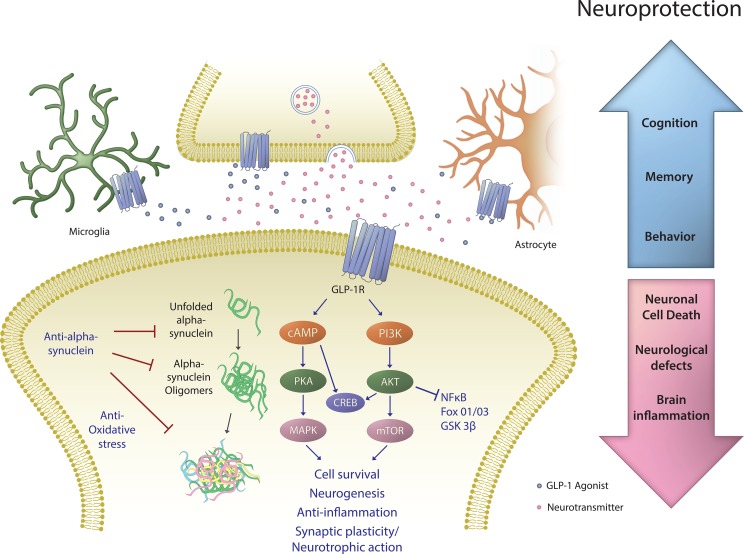
Molecular communications in the gut–brain axis, between the central nervous system and the gastrointestinal tract, are critical for maintaining healthy brain function, particularly in aging. Epidemiological analyses indicate type 2 diabetes mellitus (T2DM) is a risk factor for neurodegenerative disorders including Alzheimer's disease (AD) and Parkinson's diseases (PD) for which aging shows a major correlative association. Common pathophysiological features exist between T2DM, AD, and PD, including oxidative stress, inflammation, insulin resistance, abnormal protein processing, and cognitive decline, and suggest that effective drugs for T2DM that positively impact the gut–brain axis could provide an effective treatment option for neurodegenerative diseases. Glucagon-like peptide-1 (GLP-1)-based antidiabetic drugs have drawn particular attention as an effectual new strategy to not only regulate blood glucose but also decrease body weight by reducing appetite, which implies that GLP-1 could affect the gut–brain axis in normal and pathological conditions. The neurotrophic and neuroprotective effects of GLP-1 receptor (R) stimulation have been characterized in numerous in vitro and in vivo preclinical studies using GLP-1R agonists and dipeptidyl peptidase-4 inhibitors. Recently, the first open label clinical study of exenatide, a long-acting GLP-1 agonist, in the treatment of PD showed long-lasting improvements in motor and cognitive function. Several double-blind clinical trials of GLP-1R agonists including exenatide in PD and other neurodegenerative diseases are already underway or are about to be initiated. Herein, we review the physiological role of the GLP-1R pathway in the gut–brain axis and the therapeutic strategy of GLP-1R stimulation for the treatment of neurodegenerative diseases focused on PD, for which age is the major risk factor.
Overview
The claims and statistics of this paper haven’t been checked yet.
Run the check — free, no account needed. It reads the open-access text and checks the sources it cites.
Integrity signals
Registry
Cites
Statistics
Figures
Verification
Claims the paper makes
The claims and statistics of this paper haven’t been checked yet.
Run the check — free, no account needed. It reads the open-access text and checks the sources it cites.
Claims other papers make about this one
Each is checked against this paper’s own text: does it say what the citing paper says it does?
In the citing paper
“There are studies indicate that GLP-1 has a neuroprotective effect in the central nervous system (CNS), which affects the proliferation and apoptosis of neural cells, improves learning, memory and motor dysfunction, reduces the deposition of Aβ plaques in the brain, decreases the loss of dopaminergic neurons and promotes nerve regeneration (Kim et al. 2017).”
From Therapeutic effect of GLP-1 engineered strain on mice model of Alzheimer’s disease and Parkinson’s disease (2020) · cites this paper as Kim et al. 2017
Self-check
Percentages, sums and reported differences re-computed from the paper’s own numbers.
The self-check needs the paper’s full text.
Citations
Cites
Mutation in the α-Synuclein Gene Identified in Families with Parkinson's Disease
Polymeropoulos, M. H., Lavedan, C., Leroy, E., Ide, S. E., Dehejia, A., Dutra, A., Pike, B., Root, H., Rubenstein, J., Boyer, R., et al. (1997) · Science · doi:10.1126/science.276.5321.2045 · Cited by 8,240
Dauer, W., & Przedborski, S. (2003) · Neuron · doi:10.1016/s0896-6273(03)00568-3 · Cited by 5,469
Chronic Parkinsonism in Humans Due to a Product of Meperidine-Analog Synthesis
Langston, J. W., Ballard, P., Tetrud, J. W., & Irwin, I. (1983) · Science · doi:10.1126/science.6823561 · Cited by 4,914
Overdependence on degraded gist memory in Alzheimer's disease.
Gallo, D. A., Shahid, K. R., Olson, M. A., Solomon, T. M., Schacter, D. L., & Budson, A. E. (2006) · Neuropsychology · doi:10.1037/0894-4105.20.6.625 · Cited by 4,757
Chronic systemic pesticide exposure reproduces features of Parkinson's disease
Betarbet, R. S., Sherer, T., MacKenzie, G. M., Garcia‐Osuna, M., Panov, A. V., & Greenamyre, J. T. (2000) · Nature Neuroscience · doi:10.1038/81834 · Cited by 3,770
Immune attack: the role of inflammation in Alzheimer disease
Heppner, F. L., Ransohoff, R. M., & Becher, B. (2015) · Nature Reviews Neuroscience · doi:10.1038/nrn3880 · Cited by 2,134
How neuroinflammation contributes to neurodegeneration
Ransohoff, R. M. (2016) · Science · doi:10.1126/science.aag2590 · Cited by 1,967 · cited 2×
“Inflammation, oxidative stress, and deficits in neurotransmitters are the common features of the biochemical switch that ultimately results in the activation of the apoptotic pathways that lead to neuronal cell dysfunction and death and eventually to the neurological disorder.(2,25) Interestingly, these pathological e…”
BackgroundThe Role of Oxidative Stress in Parkinson's Disease
Dias, V., Junn, E., & Mouradian, M. M. (2013) · Journal of Parkinson’s Disease · doi:10.3233/jpd-130230 · Cited by 1,845
Molecular Pathways of Neurodegeneration in Parkinson's Disease
Dawson, T. M., & Dawson, V. L. (2003) · Science · doi:10.1126/science.1087753 · Cited by 1,674
Bender, A., Krishnan, K. J., Morris, C. M., Taylor, G. A., Reeve, A. K., Perry, R. H., Jaros, E., Hersheson, J. S., Betts, J., Klopstock, T., et al. (2006) · Nature Genetics · doi:10.1038/ng1769 · Cited by 1,570
Pharmacology, physiology, and mechanisms of incretin hormone action.
Campbell, J. E., & Drucker, D. J. (2013) · Cell Metabolism · doi:10.1016/j.cmet.2013.04.008 · Cited by 1,500
Alzheimer’s disease is type 3 diabetes—Evidence reviewed
de la Monte, S. M., & Wands, J. R. (2008) · Journal of Diabetes Science and Technology · doi:10.1177/193229680800200619 · Cited by 1,158
Adult Neurogenesis in the Hippocampus: From Stem Cells to Behavior
Gonçalves, J. T., Schafer, S. T., & Gage, F. H. (2016) · Cell · doi:10.1016/j.cell.2016.10.021 · Cited by 1,122
Mechanism of Toxicity in Rotenone Models of Parkinson's Disease
Sherer, T., Betarbet, R. S., Testa, C. M., Seo, B. B., Richardson, J. R., Kim, J. H., Miller, G. W., Yagi, T., Matsuno‐Yagi, A., & Greenamyre, J. T. (2003) · Journal of Neuroscience · doi:10.1523/jneurosci.23-34-10756.2003 · Cited by 1,102
Kraytsberg, Y., Kudryavtseva, E., McKee, A. C., Geula, C., Kowall, N. W., & Khrapko, K. (2006) · Nature Genetics · doi:10.1038/ng1778 · Cited by 896
Athauda, D., Maclagan, K., Skene, S. S., Bajwa-Joseph, M., Letchford, D., Chowdhury, K., Hibbert, S., Budnik, N., Zampedri, L., Dickson, J., et al. (2017) · The Lancet · doi:10.1016/s0140-6736(17)31585-4 · Cited by 889 · cited 10×
“”(99) This suggests disease-modifying effects of exenatide, and the results are encouraging enough that a subsequent doubleblind clinical study (NCT01971242) was initiated by the same investigators using a sustained release formulation of exenatide (Bydureon: 2 mg administered subcutaneously once weekly) to evaluate i…”
BackgroundMethodResultInfluentialSelf-citationGlucagon-like peptide-1 receptor is involved in learning and neuroprotection
During, M. J., Cao, L., Zuzga, D. S., Francis, J. S., Fitzsimons, H. L., Jiao, X., Bland, R. J., Klugmann, M., Banks, W. A., Drucker, D. J., et al. (2003) · Nature Medicine · doi:10.1038/nm919 · Cited by 851
The role of incretins in glucose homeostasis and diabetes treatment
Kim, W., & Egan, J. M. (2008) · Pharmacological Reviews · doi:10.1124/pr.108.000604 · Cited by 824
Deficiencies in Complex I subunits of the respiratory chain in Parkinson's disease
Mizuno, Y., Ohta, S., Tanaka, M., Takamiya, S., Suzuki, K., SATO, T. A., Oya, H., Ozawa, T., & Kagawa, Y. (1989) · Biochemical and Biophysical Research Communications · doi:10.1016/0006-291x(89)91141-8 · Cited by 735
Mitochondrial Defects and Oxidative Stress in Alzheimer Disease and Parkinson Disease
Yan, M. H., Wang, X., & Zhu, X. (2013) · Free Radical Biology and Medicine · doi:10.1016/j.freeradbiomed.2012.11.014 · Cited by 718
Unimolecular Dual Incretins Maximize Metabolic Benefits in Rodents, Monkeys, and Humans
Finan, B., Ma, T., Ottaway, N., Müller, T. D., Habegger, K. M., Heppner, K. M., Kirchner, H., Holland, J., Hembree, J., Raver, C., et al. (2013) · Science Translational Medicine · doi:10.1126/scitranslmed.3007218 · Cited by 696
The Cardiovascular Biology of Glucagon-like Peptide-1
Drucker, D. J. (2016) · Cell Metabolism · doi:10.1016/j.cmet.2016.06.009 · Cited by 665
A rationally designed monomeric peptide triagonist corrects obesity and diabetes in rodents
Finan, B., Yang, B., Ottaway, N., Smiley, D. L., Ma, T., Clemmensen, C., Chabenne, J., Zhang, L., Habegger, K. M., Fischer, K., et al. (2015) · Nature Medicine · doi:10.1038/nm.3761 · Cited by 645
Is Alzheimer’s disease a type 3 diabetes? A critical appraisal
Kandimalla, R., Thirumala, V., & Reddy, P. H. (2017) · Biochimica et Biophysica Acta (BBA) - Molecular Basis of Disease · doi:10.1016/j.bbadis.2016.08.018 · Cited by 621
Li, Y., Perry, T., Kindy, M. S., Harvey, B. K., Tweedie, D., Holloway, H. W., Powers, K., Shen, H., Egan, J. M., Sambamurti, K., et al. (2009) · Proceedings of the National Academy of Sciences · doi:10.1073/pnas.0806720106 · Cited by 589
Self-citationClinton, L. K., Blurton-Jones, M., Myczek, K., Trojanowski, J. Q., & LaFerla, F. M. (2010) · The Journal of Neuroscience · doi:10.1523/jneurosci.0490-10.2010 · Cited by 576
Noyan-Ashraf, M. H., Momen, M. A., Ban, K., Sadi, A.-M., Zhou, Y.-Q., Riazi, A. M., Baggio, L. L., Henkelman, R. M., Husain, M., & Drucker, D. J. (2009) · Diabetes · doi:10.2337/db08-1193 · Cited by 575
Protein Aggregation in the Brain: The Molecular Basis for Alzheimer’s and Parkinson’s Diseases
Irvine, G. B., El‐Agnaf, O. M. A., Shankar, G. M., & Walsh, D. M. (2008) · Molecular Medicine · doi:10.2119/2007-00100.irvine · Cited by 567
Exenatide and the treatment of patients with Parkinson's disease
Aviles-Olmos, I., Dickson, J., Kefalopoulou, Z., Djamshidian, A., Ell, P., Soderlund, T., Whitton, P., Wyse, R., Isaacs, T., Lees, A., et al. (2013) · Journal of Clinical Investigation · doi:10.1172/jci68295 · Cited by 529
Microglia during development and aging
Harry, G. J. (2013) · Pharmacology & Therapeutics · doi:10.1016/j.pharmthera.2013.04.013 · Cited by 524
Verdile, G., Keane, K. N., Cruzat, V. F., Medic, S., Sabale, M., Rowles, J., Wijesekara, N., Martins, R. N., Fraser, P. E., & Newsholme, P. (2015) · Mediators of Inflammation · doi:10.1155/2015/105828 · Cited by 509
Hunter, K., & Hölscher, C. (2012) · BMC Neuroscience · doi:10.1186/1471-2202-13-33 · Cited by 504
The MPTP model of Parkinson's disease
Smeyne, R. J., & Jackson-Lewis, V. R. (2004) · Molecular Brain Research · doi:10.1016/j.molbrainres.2004.09.017 · Cited by 387
Athauda, D., & Foltynie, T. (2016) · Drug Discovery Today · doi:10.1016/j.drudis.2016.01.013 · Cited by 383 · cited 6×
“In relation to the clinical use of GLP-1R agonists for the treatment of PD, pharmacokinetic–pharmacodynamic correlations of each GLP-1R agonist, from relatively short acting exenatide (in the form of Byetta [twice daily] and sustained release Bydureon [once weekly]) to longer acting dulaglutide, should be closely exam…”
MethodInfluentialEntry of exendin-4 into brain is rapid but may be limited at high doses
Kastin, A. J., & Akerstrom, V. L. (2003) · International Journal of Obesity · doi:10.1038/sj.ijo.0802206 · Cited by 358
Perry, T., Lahiri, D. K., Sambamurti, K., Chen, D., Mattson, M. P., Egan, J. M., & Greig, N. H. (2003) · Journal of Neuroscience Research · doi:10.1002/jnr.10611 · Cited by 347
Self-citationBertilsson, G., Patrone, C., Zachrisson, O., Andersson, A., Dannaeus, K., Heidrich, J., Kortesmaa, J., Mercer, A., Nielsen, E., Rönnholm, H., et al. (2008) · Journal of Neuroscience Research · doi:10.1002/jnr.21483 · Cited by 345
Niranjan, R. (2013) · Molecular Neurobiology · doi:10.1007/s12035-013-8483-x · Cited by 338
Insulin, IGF-1 and GLP-1 signaling in neurodegenerative disorders: Targets for disease modification?
Bassil, F., Fernagut, P., Bézard, E., & Meissner, W. G. (2014) · Progress in Neurobiology · doi:10.1016/j.pneurobio.2014.02.005 · Cited by 323
Li, Y., Duffy, K. B., Ottinger, M. A., Ray, B., Bailey, J. A., Holloway, H. W., Tweedie, D., Perry, T., Mattson, M. P., Kapogiannis, D., et al. (2010) · Journal of Alzheimer s Disease · doi:10.3233/jad-2010-1314 · Cited by 323
Self-citationPerry, T., Lahiri, D. K., Chen, D., Zhou, J., Shaw, K. T. Y., Egan, J. M., & Greig, N. H. (2002) · Journal of Pharmacology and Experimental Therapeutics · doi:10.1124/jpet.300.3.958 · Cited by 303
Self-citationCentral effects of GLP-1: new opportunities for treatments of neurodegenerative diseases
Hölscher, C. (2013) · Journal of Endocrinology · doi:10.1530/joe-13-0221 · Cited by 303
Motor and Cognitive Advantages Persist 12 Months After Exenatide Exposure in Parkinson’s Disease
Avilés-Olmos, I., Dickson, J. C., Kefalopoulou, Z. M., Djamshidian, A., Kahan, J., Ell, P. J., Whitton, P. S., Wyse, R. K. H., Isaacs, T., Lees, A. J., et al. (2014) · Journal of Parkinson s Disease · doi:10.3233/jpd-140364 · Cited by 300
Harkavyi, A., Abuirmeileh, A. N., Lever, R., Kingsbury, A. E., Biggs, C. S., & Whitton, P. S. (2008) · Journal of Neuroinflammation · doi:10.1186/1742-2094-5-19 · Cited by 294
Yamamoto, H., Kishi, T., Lee, C. E., Choi, B. J., Fang, H., Hollenberg, A. N., Drucker, D. J., & Elmquist, J. K. (2003) · The Journal of Neuroscience · doi:10.1523/jneurosci.23-07-02939.2003 · Cited by 294
Salcedo, I., Tweedie, D., Li, Y., & Greig, N. H. (2012) · British Journal of Pharmacology · doi:10.1111/j.1476-5381.2012.01971.x · Cited by 272
Self-citationIslet α cells and glucagon--critical regulators of energy homeostasis
Campbell, J. E., & Drucker, D. J. (2015) · Nature Reviews Endocrinology · doi:10.1038/nrendo.2015.51 · Cited by 266
Kim, S., Moon, M., & Park, S. (2009) · Journal of Endocrinology · doi:10.1677/joe-09-0132 · Cited by 263
Ved, R., Saha, S., Westlund, B., Perier, C., Griffin, L. B., Sluder, A. E., Hoener, M. C., Rodrigues, C. M. P., Alfonso, A., Steer, C. J., et al. (2005) · Journal of Biological Chemistry · doi:10.1074/jbc.m505910200 · Cited by 262
Mitochondrial Lipid Abnormality and Electron Transport Chain Impairment in Mice Lacking α-Synuclein
Ellis, C. E., Murphy, E. J., Mitchell, D. C., Golovko, M. Y., Scaglia, F., Barceló‐Coblijn, G., & Nussbaum, R. L. (2005) · Molecular and Cellular Biology · doi:10.1128/mcb.25.22.10190-10201.2005 · Cited by 260
IV. MPTP, MPP+ and mitochondrial function
Nicklas, W. J., Youngster, S. K., Kindt, M. V., & Heikkila, R. E. (1987) · Life Sciences · doi:10.1016/0024-3205(87)90299-2 · Cited by 257
Targeting TNF-Alpha to Elucidate and Ameliorate Neuroinflammation in Neurodegenerative Diseases
Frankola, K. A., Greig, N. H., Luo, W., & Tweedie, D. (2011) · CNS & Neurological Disorders - Drug Targets · doi:10.2174/187152711794653751 · Cited by 255
Self-citationLiu, W., Jalewa, J., Sharma, M., Li, G., Li, L., & Hölscher, C. (2015) · Neuroscience · doi:10.1016/j.neuroscience.2015.06.054 · Cited by 246
Protein misfolding and aggregation in Alzheimer’s disease and type 2 diabetes mellitus
Ashraf, G., Greig, N., Khan, T., Hassan, I., Tabrez, S., Shakil, S., Sheikh, I., Zaidi, S., Akram, M., Jabir, N., et al. (2014) · CNS & Neurological Disorders - Drug Targets · doi:10.2174/1871527313666140917095514 · Cited by 236
Self-citationSuh, H.-S., Zhao, M.-L., Derico, L., Choi, N., & Lee, S. C. (2013) · Journal of Neuroinflammation · doi:10.1186/1742-2094-10-37 · Cited by 226
Mizuno, Y., Sone, N., & Saitoh, T. (1987) · Journal of Neurochemistry · doi:10.1111/j.1471-4159.1987.tb05737.x · Cited by 222
Aβ deposition is associated with enhanced cortical α-synuclein lesions in Lewy body diseases
Pletniková, O., West, N. C., Lee, M. K., Rudow, G. L., Skolasky, R. L., Dawson, T. M., Marsh, L., & Troncoso, J. C. (2004) · Neurobiology of Aging · doi:10.1016/j.neurobiolaging.2004.10.006 · Cited by 210
Glucagon-like peptide-1 inhibits LPS-induced IL-1β production in cultured rat astrocytes
Iwai, T., Ito, S., Tanimitsu, K., Udagawa, S., & Oka, J.-I. (2006) · Neuroscience Research · doi:10.1016/j.neures.2006.04.008 · Cited by 207
Animal models of Parkinson's disease
Jackson-Lewis, V. R., Blesa, J., & Przedborski, S. (2011) · Parkinsonism & Related Disorders · doi:10.1016/s1353-8020(11)70057-8 · Cited by 199
Heppner, K. M., Kirigiti, M. A., Secher, A., Paulsen, S. J., Buckingham, R., Pyke, C., Knudsen, L. B., Vrang, N., & Grove, K. L. (2014) · Endocrinology · doi:10.1210/en.2014-1675 · Cited by 195
Perry, T., Holloway, H. W., Weerasuriya, A., Mouton, P. R., Duffy, K. B., Mattison, J. A., & Greig, N. H. (2006) · Experimental Neurology · doi:10.1016/j.expneurol.2006.09.028 · Cited by 183
Self-citationZhu, H., Zhang, Y., Shi, Z., Lu, D., Li, T., Ding, Y. F., Ruan, Y., & Xu, A. (2016) · Scientific Reports · doi:10.1038/srep26859 · Cited by 183
Emerging combinatorial hormone therapies for the treatment of obesity and T2DM
Sadry, S. A., & Drucker, D. J. (2013) · Nature Reviews Endocrinology · doi:10.1038/nrendo.2013.47 · Cited by 176
Lashley, T., Holton, J. L., Gray, E., Kirkham, K., O’Sullivan, S. S., Hilbig, A., Wood, N. W., Lees, A. J., & Révész, T. (2008) · Acta Neuropathologica · doi:10.1007/s00401-007-0336-0 · Cited by 172
Edholm, T., Degerblad, M., Grybäck, P., Hilsted, L., Holst, J. J., Jacobsson, H., Efendic, S., Schmidt, P. T., & Hellström, P. M. (2010) · Neurogastroenterology & Motility · doi:10.1111/j.1365-2982.2010.01554.x · Cited by 164
Isacson, R., Nielsen, E. I., Dannaeus, K., Bertilsson, G., Patrone, C., Zachrisson, O., & Wikström, L. (2010) · European Journal of Pharmacology · doi:10.1016/j.ejphar.2010.10.008 · Cited by 153
Li, Y., Tweedie, D., Mattson, M. P., Holloway, H. W., & Greig, N. H. (2010) · Journal of Neurochemistry · doi:10.1111/j.1471-4159.2010.06731.x · Cited by 150
Self-citationDuarte, A. I., Candeias, E., Correia, S. C., Santos, R. X., Carvalho, C., Cardoso, S., Plácido, A. I., Santos, M. S., Oliveira, C. R., & Moreira, P. I. (2013) · Biochimica et Biophysica Acta (BBA) - Molecular Basis of Disease · doi:10.1016/j.bbadis.2013.01.008 · Cited by 149
Liu, J., Yin, F., Zheng, X., Jing, J., & Hu, Y. (2007) · Neurochemistry International · doi:10.1016/j.neuint.2007.04.021 · Cited by 145
Li, Y., Chigurupati, S., Holloway, H. W., Mughal, M. R., Tweedie, D., Bruestle, D. A., Mattson, M. P., Wang, Y., Harvey, B. K., Ray, B., et al. (2012) · PLoS ONE · doi:10.1371/journal.pone.0032008 · Cited by 131
Self-citationAutonomic disorders predicting Parkinson's disease
Palma, J., & Kaufmann, H. (2013) · Parkinsonism & Related Disorders · doi:10.1016/s1353-8020(13)70024-5 · Cited by 123
Belsham, D. D., Fick, L. J., Dalvi, P. S., Centeno, M.-L., Chalmers, J. A., Lee, P. K. P., Wang, Y., Drucker, D. J., & Koletar, M. M. (2009) · The FASEB Journal · doi:10.1096/fj.09-133454 · Cited by 122
Self-citationLee, C. H., Yan, B., Yoo, K., Choi, J. H., Kwon, S., Her, S., Sohn, Y., Hwang, I. K., Cho, J. H., Kim, Y., et al. (2011) · Journal of Neuroscience Research · doi:10.1002/jnr.22596 · Cited by 118
The glucagon-like peptides: a double-edged therapeutic sword?
Perry, T., & Greig, N. H. (2003) · Trends in Pharmacological Sciences · doi:10.1016/s0165-6147(03)00160-3 · Cited by 114
Self-citationShen, J., & Cookson, M. (2004) · Neuron · doi:10.1016/j.neuron.2004.07.012 · Cited by 114
Denton, T. A., & Howard, B. D. (1987) · Journal of Neurochemistry · doi:10.1111/j.1471-4159.1987.tb02909.x · Cited by 107
GLP-1 secretion by microglial cells and decreased CNS expression in obesity
Kappe, C., Tracy, L. M., Patrone, C., Iverfeldt, K., & Sjöholm, Å. (2012) · Journal of Neuroinflammation · doi:10.1186/1742-2094-9-276 · Cited by 107
Ji, C., Xue, G., Cao, L., Feng, P., Li, D., Li, L., Li, G., & Hölscher, C. (2015) · Brain Research · doi:10.1016/j.brainres.2015.09.035 · Cited by 103
Compta, Y., Parkkinen, L., Kempster, P. A., Selikhova, M., Lashley, T., Holton, J. L., Lees, A. J., & Révész, T. (2013) · Neurodegenerative Diseases · doi:10.1159/000354670 · Cited by 102
Hölscher, C. (2014) · Biochemical Society Transactions · doi:10.1042/bst20140016 · Cited by 97
Arnt, J. (1985) · Life Sciences · doi:10.1016/0024-3205(85)90541-7 · Cited by 95
The gut hormone glucagon-like peptide-1 produced in brain: is this physiologically relevant?
Trapp, S., & Richards, J. E. (2013) · Current Opinion in Pharmacology · doi:10.1016/j.coph.2013.09.006 · Cited by 93
Cao, L., Li, D., Feng, P., Li, L., Xue, G., Li, G., & Hölscher, C. (2016) · Neuroreport · doi:10.1097/wnr.0000000000000548 · Cited by 90
Animal Models of Neurological Disorders
Chesselet, M., & Carmichael, S. T. (2012) · Neurotherapeutics · doi:10.1007/s13311-012-0118-9 · Cited by 85
Cardiovascular autonomic dysfunction in MSA and Parkinson's disease: Similarities and differences
Iodice, V., Low, D. A., Vichayanrat, E., & Mathias, C. J. (2011) · Journal of the Neurological Sciences · doi:10.1016/j.jns.2011.07.014 · Cited by 81
Jalewa, J., Sharma, M. K., Gengler, S., & Hölscher, C. (2017) · Neuropharmacology · doi:10.1016/j.neuropharm.2017.02.013 · Cited by 79
Jackson-Lewis, V. R., & Smeyne, R. J. (2005) · Neurotoxicity Research · doi:10.1007/bf03036449 · Cited by 77
IL-6-type cytokines enhance epidermal growth factor-stimulated astrocyte proliferation
Levison, S. W., Jiang, F., Stoltzfus, O. K., & Ducceschi, M. H. (2000) · Glia · doi:10.1002/1098-1136(200012)32:3 · Cited by 72
Greig, N. H., Tweedie, D., Rachmany, L., Li, Y., Rubovitch, V., Schreiber, S., Chiang, Y. H., Hoffer, B. J., Miller, J. P., Lahiri, D. K., et al. (2014) · Alzheimer s & Dementia · doi:10.1016/j.jalz.2013.12.011 · Cited by 71
Self-citationLiraglutide Improves Pancreatic Beta Cell Mass and Function in Alloxan-Induced Diabetic Mice
Tamura, K., Minami, K., Kudo, M., Iemoto, K., Takahashi, H., & Seino, S. (2015) · PLOS ONE · doi:10.1371/journal.pone.0126003 · Cited by 70
Chowen, J. A., de Fonseca, F. R., Álvarez, E., Navarro, M. A., García‐Segura, L. M., & Blázquez, E. (1999) · Neuropeptides · doi:10.1054/npep.1999.0757 · Cited by 63
Bao, Y., Jiang, L., Chen, H., Zou, J., Liu, Z., & Shi, Y. (2015) · Cellular Physiology and Biochemistry · doi:10.1159/000430199 · Cited by 60
Ahmad, K., Baig, M. H., Mushtaq, G., Kamal, M. A., Greig, N. H., & Choi, I. (2017) · Current Alzheimer Research · doi:10.2174/1567205014666170203141151 · Cited by 59
Self-citationToklu, H. Z., & Tümer, N. (2015) · Frontiers in neuroengineering series/Frontiers in neuroengineering · doi:10.1201/b18126-7 · Cited by 53
Glucagon-Like Peptide 1 Analogs and their Effects on Pancreatic Islets
Tudurí, E., López, M., Diéguez, C., Nadal, Á., & Nogueiras, R. (2016) · Trends in Endocrinology and Metabolism · doi:10.1016/j.tem.2016.03.004 · Cited by 53
Development and aging of a brain neural stem cell niche
Conover, J. C., & Todd, K. L. (2016) · Experimental Gerontology · doi:10.1016/j.exger.2016.11.007 · Cited by 53
Jena, I., Nayak, S. R., Behera, S., Singh, B., Ray, S., Jena, D., Singh, S., & Sahoo, S. K. (2017) · Journal of Natural Science Biology and Medicine · doi:10.4103/0976-9668.198346 · Cited by 52
Foltynie, T., & Avilés-Olmos, I. (2014) · Alzheimer s & Dementia · doi:10.1016/j.jalz.2013.12.005 · Cited by 50
Luciani, P., Deledda, C., Benvenuti, S., Cellai, I., Squecco, R., Monici, M., Cialdai, F., Luciani, G., Danza, G., Stefano, C. D., et al. (2010) · Cellular and Molecular Life Sciences · doi:10.1007/s00018-010-0398-3 · Cited by 47
Tamargo, I. A., Bader, M., Li, Y., Yu, S., Wang, Y., Talbot, K., DiMarchi, R. D., Pick, C. G., & Greig, N. H. (2016) · Experimental Neurology · doi:10.1016/j.expneurol.2016.11.005 · Cited by 43
Self-citationGLP-1: benefits beyond pancreas
Muscogiuri, G., Cignarelli, A., Giorgino, F., Prodram, F., Santi, D., Tirabassi, G., Balercia, G., Modica, R., Faggiano, A., & Colao, A. (2014) · Journal of Endocrinological Investigation · doi:10.1007/s40618-014-0137-y · Cited by 41
Jia, Y., Gong, N., Li, T., Zhu, B., & Wang, Y. (2015) · Pharmacological Research · doi:10.1016/j.phrs.2015.10.008 · Cited by 36
Self-citationMicroenvironmental stimuli for proliferation of functional islet β-cells
Alismail, H., & Jin, S. (2014) · Cell & Bioscience · doi:10.1186/2045-3701-4-12 · Cited by 33
Li, Y., Wu, K., Yu, S., Tamargo, I. A., Wang, Y., & Greig, N. H. (2016) · Experimental Neurology · doi:10.1016/j.expneurol.2016.11.010 · Cited by 33
Self-citationGeniposide inhibits CoCl2-induced PC12 cells death via the mitochondrial pathway.
Guo, L., Liu, J., & Xia, Z. (2009) · PubMed · Cited by 32
Mitochondrial and metabolic toxicity of 1-methyl-4-(2'-methylphenyl)-1,2,3,6-tetrahydropyridine.
Kindt, M. V., Heikkila, R. E., & Nicklas, W. J. (1987) · Journal of Pharmacology and Experimental Therapeutics · doi:10.1016/s0022-3565(25)39184-6 · Cited by 32
Liraglutide: A glucagon-like peptide-1 agonist for chronic weight management
Manigault, K., & Thurston, M. M. (2016) · The Consultant Pharmacist · doi:10.4140/tcp.n.2016.685 · Cited by 25
Peptide-based GLP-1/glucagon co-agonists: A double-edged sword to combat diabesity
Soni, H. (2016) · Medical Hypotheses · doi:10.1016/j.mehy.2016.08.005 · Cited by 22
Kovacic, P., Edwards, W. D., & Ming, G. (1991) · Free Radical Research Communications · doi:10.3109/10715769109088938 · Cited by 19
Improving glucose tolerance via the gut–brain axis
Weber, C. (2015) · Nature Reviews Gastroenterology & Hepatology · doi:10.1038/nrgastro.2015.204 · Cited by 15
Puddu, A., Sanguineti, R., Durante, A., Nencioni, A., Mach, F., Montecucco, F., & Viviani, G. L. (2013) · Mediators of Inflammation · doi:10.1155/2013/317120 · Cited by 14
Cardiovascular Outcome Trials of the Incretin-Based Therapies: What Do We Know So Far?
Mora, P. F., & Johnson, E. L. (2016) · Endocrine Practice · doi:10.4158/ep161481.ra · Cited by 12
Heikkila, R. E., Wj, N., & Duvoisin, R. C. (1987) · PubMed · Cited by 5
Research works printed but not linked: 3
- Guo LX, 2009, Chin Med J (Engl), 122, 2886
- Puddu A, 2013, Mediators Inflamm, 317120
- Heikkila RE, 1987, Adv Neurol, 45, 149
Cited by
Sorted by citations
Kopp, K. O., Glotfelty, E. J., Li, Y., & Greig, N. H. (2022) · Pharmacological Research · doi:10.1016/j.phrs.2022.106550 · Cited by 298
Self-citationSun, J., Li, H., Jin, Y., Yu, J., Mao, S., Su, K.-P., Ling, Z., & Liu, J. (2021) · Brain, Behavior, and Immunity · doi:10.1016/j.bbi.2020.10.014 · Cited by 264
The Association Between Type 2 Diabetes Mellitus and Parkinson’s Disease
Cheong, J. L. Y., Pablo‐Fernández, E. D., Foltynie, T., & Noyce, A. J. (2020) · Journal of Parkinson s Disease · doi:10.3233/jpd-191900 · Cited by 241
Sposito, A. C., Berwanger, O., de Carvalho, L. S. F., & Saraiva, J. F. K. (2018) · Cardiovascular Diabetology · doi:10.1186/s12933-018-0800-2 · Cited by 171
G protein-coupled receptors in neurodegenerative diseases and psychiatric disorders
Wong, T., Li, G., Li, S., Gao, W., Chen, G., Gan, S., Zhang, M., Li, H., Wu, S., & Du, Y. (2023) · Signal Transduction and Targeted Therapy · doi:10.1038/s41392-023-01427-2 · Cited by 179
Metadata
- Authors
- Kim, D. S., Choi, H.-I., Wang, Y., Luo, Y., Hoffer, B. J., & Greig, N. H.
- Affiliations
- National Institutes of Health (US)
- Peptron Inc., Yuseong-gu, Daejeon, Republic of Korea
- National Health Research Institutes (TW)
- Case Western Reserve University (US)
- Corresponding author
- Kim, Dong Seok
- Greig, Nigel H.
- Venue
- Cell Transplantation
- Publisher
- SAGE Publications
- Published
- 2017-09
- Volume
- 26
- Issue
- 9
- Pages
- 1560-1571
- ISSN
- 0963-6897 (ISSN-L)
- 1555-3892
- PMC
- PMC5680957
- OpenAlex
- W2609107212
- Cited by
- 136
- References
- 113
- Citations by year
- 2025: 12 · 2024: 15 · 2023: 15 · 2022: 29 · 2021: 20 · 2020: 19 · 2019: 14 · 2018: 10 · 2017: 2
- FWCI
- 1.64
- Type
- journal article
- Language
- en
- Open access
- gold
- doi.org
- Locations
- Cell Transplantation (publishedVersion, cc-by-nc)
- Europe PMC (PubMed Central) (publishedVersion, cc-by-nc)
- PubMed Central (publishedVersion, cc-by-nc)
- PubMed (publishedVersion)
- DOAJ (DOAJ: Directory of Open Access Journals) (submittedVersion, cc-by-sa)
- Funders
- National Institute of Neurological Disorders and Stroke (R01NS094152)
- Topics
- Health Sciences › Medicine › Clinical Neurology › Parkinson's Disease Mechanisms and Treatments
- Health Sciences › Medicine › Endocrinology, Diabetes and Metabolism › Diabetes Treatment and Management
- Life Sciences › Neuroscience › Cellular and Molecular Neuroscience › Alzheimer's disease research and treatments
- Keywords
- Parkinson's disease, gut-brain axis, GLP-1 receptor agonists, exenatide, type 2 diabetes, neurodegenerative diseases, neuroprotection, aging, DPP-4 inhibitors, oxidative stress, inflammation, insulin resistance, motor and cognitive function
- MeSH terms
- Glucagon-Like Peptide-1 Receptor, Exenatide, Animals, Blood Glucose, Humans, Hypoglycemic Agents, Parkinson Disease, Peptides, Venoms, Neuroprotective Agents, Glucagon-Like Peptide 1
About these checks
Registry, retraction, Cites and statistics results are computed, not judged, with one exception: a printed reference that no index lists is read once by a model before it counts as a citation error. Claims are extracted by a model and kept only when their quote appears verbatim in the text; each cited source is then checked, with a model’s help, for whether it says what the claim relies on. Those verdicts can be wrong — read the claim’s quote and the cited source before relying on one.
Statistics and arithmetic are recomputed, not judged.
Confidence bands are shown only for fields calibrated on our annotated test set. None is calibrated yet, so no band is shown.
What counts as a claim ›How we measure confidence ›How we check this ›
Are you an author, or do you see a problem with this page? Request a review
