

The DOI matches its Crossref record; 69 of the 70 references it cites were found in a registry or an index.
Making Green Stuff? Effects of Corporate Greenwashing on Consumers
Open accessAbstract
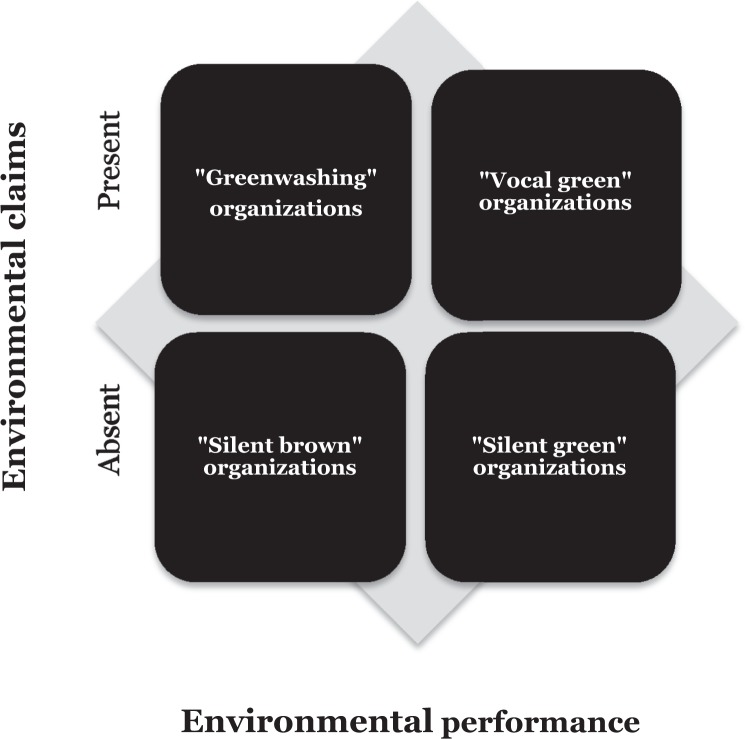
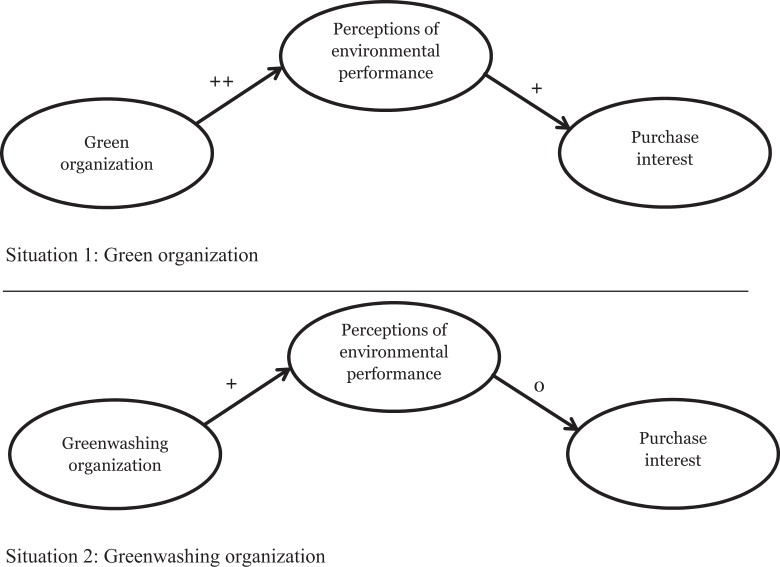
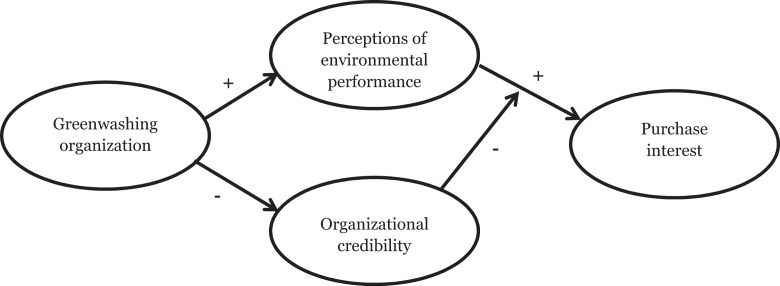
The marketing success of green products has spawned the phenomenon of greenwashing, but studies on the effects of greenwashing on consumers are still limited. Using a 4 × 2 randomized experimental design, this study examines such effects by determining whether consumers respond differently to greenwashing, silent brown, vocal green, and silent green organizations selling hedonic products (perfume) or utilitarian products (detergent). The results show that consumers recognized the green claims in the greenwashing condition, which led to an environmental performance impression in between green and brown organizations but also to more negative judgments about the integrity of communication. Regarding purchase interest, greenwashing organizations performed similarly as silent brown organizations, with significantly lower scores than those of vocal green and silent green organizations. No significant effects of product type and no interaction effects were found. Overall, greenwashing has only limited benefits (perceived environmental performance), poses a major threat (perceived integrity), and has no true competitive advantage (purchase interest).
Overview
The claims and statistics of this paper haven’t been checked yet.
Run the check — free, no account needed. It reads the open-access text and checks the sources it cites.
Integrity signals
Registry
Cites
Statistics
Figures
Verification
Claims the paper makes
The claims and statistics of this paper haven’t been checked yet.
Run the check — free, no account needed. It reads the open-access text and checks the sources it cites.
Claims other papers make about this one
Each is checked against this paper’s own text: does it say what the citing paper says it does?
The source backs part of the claim, not all of it — or backs it for a different population, condition or comparison.
In the citing paper
“The purchases of consumers increase only when the companies demonstrate a real and genuine interest in the protection of the environment [37].”
From Are You Environmentally Conscious Enough to Differentiate between Greenwashed and Sustainable Items? A Global Consumers Perspective (2020) · cites this paper as [37]
Experimental — accuracy not yet measuredThe cited source says what the claim attributes to it.
In the citing paper
“Having said that, a recent study has concluded that greenwashing is not e ectively a beneficial strategy because it does not a ect the consumers' purchase intent [37].”
From Are You Environmentally Conscious Enough to Differentiate between Greenwashed and Sustainable Items? A Global Consumers Perspective (2020) · cites this paper as [37]
The cited source says what the claim attributes to it.
In the citing paper
“The same study also found that 'greenwashing has a positive e ect on the perceived environmental performance of the organization, but a negative e ect on the perceived integrity of its communication' [37].”
From Are You Environmentally Conscious Enough to Differentiate between Greenwashed and Sustainable Items? A Global Consumers Perspective (2020) · cites this paper as [37]
Self-check
Percentages, sums and reported differences re-computed from the paper’s own numbers.
The self-check needs the paper’s full text.
Citations
Cites
A Theory of Cognitive Dissonance
Festinger, L. (1957) · doi:10.1515/9781503620766 · Cited by 24,241
A Theory of Cognitive Dissonance
Morvan, C., & O’Connor, A. (2017) · Macat Library eBooks · doi:10.4324/9781912282432 · Cited by 18,284
Carroll, A. B. (1991) · Business Horizons · doi:10.1016/0007-6813(91)90005-g · Cited by 9,036
Cannibals with forks: the triple bottom line of 21st century business
(1999) · Choice Reviews Online · doi:10.5860/choice.36-3997 · Cited by 9,023
Effects of Price, Brand, and Store Information on Buyers’ Product Evaluations
Dodds, W. B., Monroe, K. B., & Grewal, D. (1991) · Journal of Marketing Research · doi:10.1177/002224379102800305 · Cited by 5,853
What We Know and Don’t Know About Corporate Social Responsibility
Aguinis, H., & Glavas, A. (2012) · Journal of Management · doi:10.1177/0149206311436079 · Cited by 4,032
Does corporate social responsibility affect the cost of capital?
El Ghoul, S., Guedhami, O., Kwok, C. C. Y., & Mishra, D. R. (2011) · Journal of Banking & Finance · doi:10.1016/j.jbankfin.2011.02.007 · Cited by 3,465
Delmas, M. A., & Burbano, V. C. (2011) · California Management Review · doi:10.1525/cmr.2011.54.1.64 · Cited by 3,441 · cited 6×
“A systematic examination of the effects of the four types of organizations—vocal green, silent green, greenwashing, and silent brown (Delmas & Burbano, 2011)—could shed more light on the actual effects of greenwashing.”
BackgroundMethodInfluentialMaximizing business returns to corporate social responsibility (CSR): The role of CSR communication
Du, S., Bhattacharya, C. B., & Sen, S. (2010) · International Journal of Management Reviews · doi:10.1111/j.1468-2370.2009.00276.x · Cited by 2,633
The Impact of Corporate Social Responsibility on Firm Value: The Role of Customer Awareness
Servaes, H., & Tamayo, A. (2013) · Management Science · doi:10.1287/mnsc.1120.1630 · Cited by 2,534
Research works printed but not linked: 4
- Alves I. M., 2009, Journal of Global Change and Governance, 2, 1
- Elving W., 2011, Akademija MM (Slovenian Journal of Marketing), 10, 49
- 10.1017/S183336720000290X · DOI
- TerraChoice. (2010). The sins of greenwashing. Home and family edition 2010: Report on environmental claims made in the North American consumer market. Retrieved from http://sinsofgreenwashing.com/index35c6.pdf
Cited by
Sorted by citations
Items 201–244 of 244
Environmental perceptions of global business travel by Swiss companies in the Zurich airport region
Arrondo, I. E., & Wolfs, B. (2022) · F1000Research · doi:10.12688/f1000research.54862.3
Emerging Trends in Green Best Practices and the Impact on Government Policy
Holt, E., & Corrado, C. R. (2022) · Advances in Science Technology and Engineering Systems Journal · doi:10.25046/aj070623
Implementing Zero Waste Pattern Cutting for Sustainable Fashion Collection
BINUS University, Andhini, G. K., Paramita, R. D., & Janyfer, J. (2023) · International Conference on Industrial Engineering and Operations Management (IEOM) · doi:10.46254/ap03.20220591
Bosone, C., Kostiuk, Y., & Cerchiello, P. (2023) · SSRN Electronic Journal · doi:10.2139/ssrn.4464185
Greenwashing: Lessons to be learned for the future of the sustainability
Béjaoui, A., & Kéri, A. (2023) · Elsevier eBooks · doi:10.1016/b978-0-44-313776-1.00125-2
Roszkowska‐Menkes, M. (2023) · Springer eBooks · doi:10.1007/978-3-031-25984-5_390
Eco-guilty pleasure: Understanding the unsustainable consumer behaviour
Brdar, I. (2023) · International Scientific Conference FINIZ · doi:10.15308/finiz-2023-119-124
Surfing the Green Wave: What’s in a “Green” Name Change?Preprint
Latino, C. (2023) · SSRN Electronic Journal · doi:10.2139/ssrn.4670504
Andreoli, T. P., & Negrais, J. (2023) · Navus - Revista de Gestão e Tecnologia · doi:10.22279/navus.v13.1780
Attracting Early Career Talent
Donald, W. E. (2024) · Advances in educational marketing, administration, and leadership book series · doi:10.4018/978-1-6684-9827-9.ch005
Greenwashing and Consumer Awareness of Environmental Issues: A Pilot Analysis
Piccarozzi, M., Gallo, T., & Silvestri, C. (2024) · Circular economy and sustainability · doi:10.1007/978-3-031-28292-8_39
Bosone, C., Cerchiello, P., & Kostiuk, Y. (2024) · SSRN Electronic Journal · doi:10.2139/ssrn.4840850
Kantor, A. (2023) · Academic Review of Business and Economics · doi:10.22367/arbe.2023.05.01
Bourdin, D., Greslehner, L., & Pezenka, I. (2024) · Developments in marketing science: proceedings of the Academy of Marketing Science · doi:10.1007/978-3-031-80904-0_1
Impact of Green Marketing Practices on Consumer Purchase Awareness and Buying Decision
Eltayib, N. H. E., Abdullah, O., & Manoj, M. (2025) · International Journal of Latest Technology in Engineering Management & Applied Science · doi:10.51583/ijltemas.2025.1401035
Circular packaging under suspicion: the cat and mouse game with greenwashing
Lopes, J. M., Gomes, S., Nogueira, E., & da Silva, F. M. T. P. (2025) · Journal of Enterprising Communities People and Places in the Global Economy · doi:10.1108/jec-10-2024-0215
The Impact of Greenwashing on Job Applicant's Choice of Company
Yada, K., Ishibashi, K., Li, Z., Iwasaki, T., Takai, K., & Kimura, A. (2024) · International Conference on Sustainable Technology and Engineering (i-COSTE) · doi:10.1109/i-coste63786.2024.11025056
Yılmaz, E. Ü., TULUK, T., & Bozbay, Z. (2025) · SSRN Electronic Journal · doi:10.2139/ssrn.5376261
Wu, K., Badshah, W., Brancu, L., & Palazzo, M. (2025) · Corporate Social Responsibility and Environmental Management · doi:10.1002/csr.70105
Knäble, D., Puente, E. D. Q., & Baumgärtler, T. (2025) · SSRN Electronic Journal · doi:10.2139/ssrn.5400978
O efeito do greenwashing no consumo ético mediado pela confusão verde e pelo ódio à marca
Santos, C., Coelho, A., & Marques, A. (2025) · Innovar · doi:10.15446/innovar.v35n97.102239
Green Marketing en la industria manufacturera de México
Castro, S. Y. P., & Guzmán, G. M. (2025) · Universidad Autónoma de Aguascalientes eBooks · doi:10.33064/uaa/978-607-2638-33-4
Colorwashing jako narzędzie zarządzania wizerunkiem globalnych korporacji w mediach
Gadziałowska, H. (2025) · Zarządzanie Mediami · doi:10.4467/23540214zm.25.014.22134
Cairnduff, S. (2025) · Cultural Trends · doi:10.1080/09548963.2025.2592010
Consumer Perception and Education in Promoting Sustainable Choices in Textiles
Nunoo, S., Dairo, M., & Kalsoom, T. (2025) · SDGs and textiles · doi:10.1007/978-981-95-0469-5_15
Ríos-Lama, C. A., Vargas-Merino, J. A., Urdanivia, J. S., Huarancca, J. Q., & Flores, C. E. G. (2026) · Cleaner and Responsible Consumption · doi:10.1016/j.clrc.2026.100414
Walczyna, A., Mazur, B., & Wilczewska, W. (2026) · Sustainability · doi:10.3390/su18052593
Liu, S., Pham, C.-V., & CHEN, S. (2026) · Corporate Social Responsibility and Environmental Management · doi:10.1002/csr.70566
Sousa, S., Henriques, C., Viseu, C., & Oliveira, L. (2026) · Eurasian studies in business and economics · doi:10.1007/978-3-032-10967-5_2
The Impact of EU Taxonomy on Firms’ ESG Performance and RisksPreprint
Song, J. M. (2026) · SSRN Electronic Journal · doi:10.2139/ssrn.6635541
Firmansyah, I., Adawiyah, W. R., & Setyorini, C. T. (2026) · Studia Universitatis „Vasile Goldis” Arad – Economics Series · doi:10.2478/sues-2026-0008
Zainudin, R., Khaw, K. L., Wahab, A. B. A., & Akhter, T. (2026) · Springer eBooks · doi:10.1007/978-981-95-5255-9_6
Greenwashing Discourse in Tesla Advertising on Chinese and U.S.Social Media
高, 金., & 苗, 得. (2026) · Global Journal of Media Studies · doi:10.26599/gjms.2026.9330018
Faking Sustainability, Facing Distress: Greenwashing and Corporate Default RiskPreprint
He, L., & Lei, A. C. H. (2026) · SSRN Electronic Journal · doi:10.2139/ssrn.7194439
Khan, S. J., Albishri, N. A., Gupta, B., Centobelli, P., & Giudice, M. D. (2026) · Corporate Social Responsibility and Environmental Management · doi:10.1002/csr.70802 · Cited by 1
Environmental Communication and Sustainable Development in the Fast Fashion Industry
Gam, A., Bouallegue, M., Beltaief, R., & Ammari, N. B. (2026) · IGI Global eBooks · doi:10.4018/979-8-2600-0562-0.ch011
Fatimah, ., Alyssa, H. P., Redyanita, H., & Ekowati, L. (2026) · KnE Social Sciences · doi:10.18502/kss.v11i5.21478
Le, D. Q., Long, N. T., & Le, H. T. B. (2026) · Tourism and Hospitality Research · doi:10.1177/14673584261480749
Jiang, F., Yu, Z., Zhang, L., & Tang, X. (2026) · Energy Economics · doi:10.1016/j.eneco.2026.109631
Unmasking Greenwashing in Developing Countries: The Role of AI and FinTech
ALJASEM, S. A. (2026) · Özgür Yayınları eBooks · doi:10.58830/ozgur.pub1510.c6054
Gustafson, A., Ball, I., Goodrich, S., Hartis, C., Rubadue, S., & Vilardo, L. (2026) · Environmental Communication · doi:10.1080/17524032.2026.2746682
Metadata
- Authors
- De Jong, M. D. T., Harkink, K. M., & Barth, S.
- Affiliations
- University of Twente (NL)
- Corresponding author
- De Jong, Menno D. T.
- Venue
- Journal of Business and Technical Communication
- Publisher
- SAGE Publications
- Published
- 2017-09-25
- Volume
- 32
- Issue
- 1
- Pages
- 77-112
- ISSN
- 0892-5720 (ISSN-L)
- 1050-6519
- 1552-4574
- PMC
- PMC6044111
- OpenAlex
- W2757956424
- Cited by
- 249
- References
- 70
- Citations by year
- 2026: 26 · 2025: 59 · 2024: 41 · 2023: 34 · 2022: 27 · 2021: 32 · 2020: 17 · 2019: 12 · 2018: 1
- FWCI
- 14.85
- Type
- journal article
- Language
- en
- Open access
- hybrid
- doi.org
- Locations
- Journal of Business and Technical Communication (publishedVersion, cc-by-nc)
- Europe PMC (PubMed Central) (publishedVersion, cc-by-nc)
- PubMed Central (publishedVersion, cc-by-nc)
- PubMed (publishedVersion)
- University of Twente Research Information (submittedVersion, cc-by-nc)
- Topics
- Social Sciences › Business, Management and Accounting › Marketing › Environmental Sustainability in Business
- Social Sciences › Business, Management and Accounting › Strategy and Management › Corporate Social Responsibility Reporting
- Social Sciences › Business, Management and Accounting › Strategy and Management › Sustainable Supply Chain Management
- Keywords
- greenwashing, corporate greenwashing, consumer response, environmental claims, purchase interest, hedonic products, utilitarian products, green marketing
About these checks
Registry, retraction, Cites and statistics results are computed, not judged, with one exception: a printed reference that no index lists is read once by a model before it counts as a citation error. Claims are extracted by a model and kept only when their quote appears verbatim in the text; each cited source is then checked, with a model’s help, for whether it says what the claim relies on. Those verdicts can be wrong — read the claim’s quote and the cited source before relying on one.
Statistics and arithmetic are recomputed, not judged.
Confidence bands are shown only for fields calibrated on our annotated test set. None is calibrated yet, so no band is shown.
What counts as a claim ›How we measure confidence ›How we check this ›
Are you an author, or do you see a problem with this page? Request a review
