

The DOI matches its Crossref record; 69 of the 70 references it cites were found in a registry or an index.
Making Green Stuff? Effects of Corporate Greenwashing on Consumers
Open accessAbstract
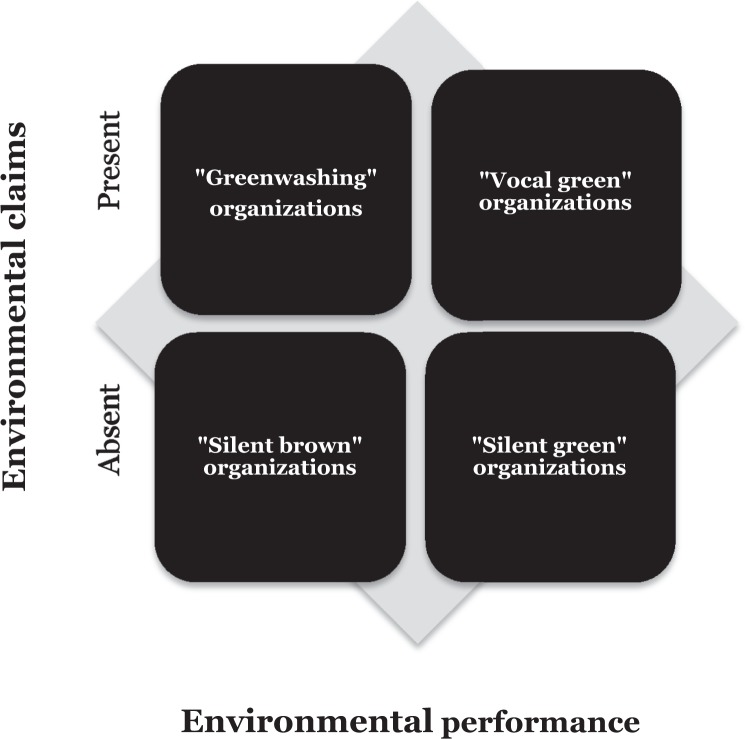
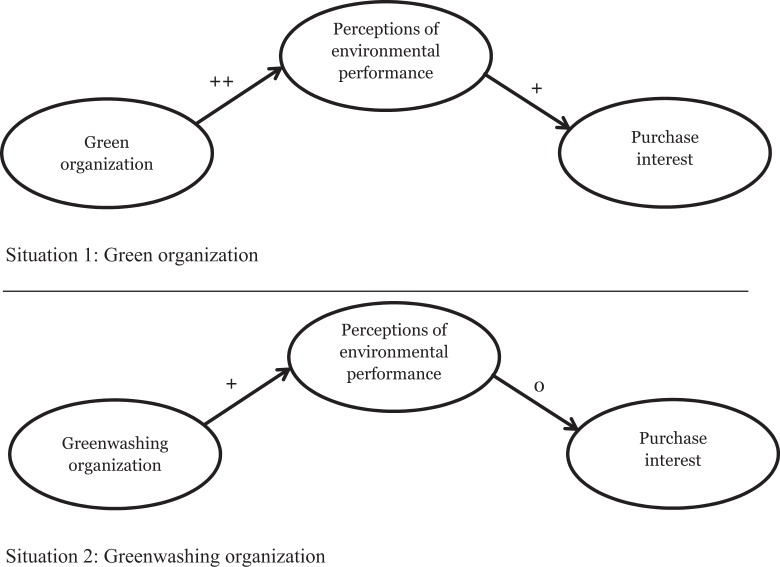
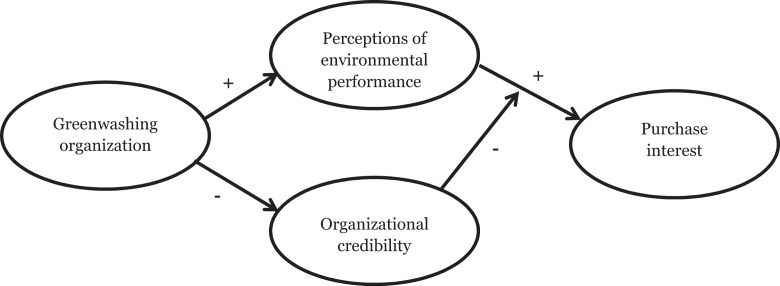
The marketing success of green products has spawned the phenomenon of greenwashing, but studies on the effects of greenwashing on consumers are still limited. Using a 4 × 2 randomized experimental design, this study examines such effects by determining whether consumers respond differently to greenwashing, silent brown, vocal green, and silent green organizations selling hedonic products (perfume) or utilitarian products (detergent). The results show that consumers recognized the green claims in the greenwashing condition, which led to an environmental performance impression in between green and brown organizations but also to more negative judgments about the integrity of communication. Regarding purchase interest, greenwashing organizations performed similarly as silent brown organizations, with significantly lower scores than those of vocal green and silent green organizations. No significant effects of product type and no interaction effects were found. Overall, greenwashing has only limited benefits (perceived environmental performance), poses a major threat (perceived integrity), and has no true competitive advantage (purchase interest).
Overview
The claims and statistics of this paper haven’t been checked yet.
Run the check — free, no account needed. It reads the open-access text and checks the sources it cites.
Integrity signals
Registry
Cites
Statistics
Figures

Verification
Claims the paper makes
The claims and statistics of this paper haven’t been checked yet.
Run the check — free, no account needed. It reads the open-access text and checks the sources it cites.
Claims other papers make about this one
Each is checked against this paper’s own text: does it say what the citing paper says it does?
The source backs part of the claim, not all of it — or backs it for a different population, condition or comparison.
In the citing paper
“The purchases of consumers increase only when the companies demonstrate a real and genuine interest in the protection of the environment [37].”
From Are You Environmentally Conscious Enough to Differentiate between Greenwashed and Sustainable Items? A Global Consumers Perspective (2020) · cites this paper as [37]
Experimental — accuracy not yet measuredThe cited source says what the claim attributes to it.
In the citing paper
“Having said that, a recent study has concluded that greenwashing is not e ectively a beneficial strategy because it does not a ect the consumers' purchase intent [37].”
From Are You Environmentally Conscious Enough to Differentiate between Greenwashed and Sustainable Items? A Global Consumers Perspective (2020) · cites this paper as [37]
The cited source says what the claim attributes to it.
In the citing paper
“The same study also found that 'greenwashing has a positive e ect on the perceived environmental performance of the organization, but a negative e ect on the perceived integrity of its communication' [37].”
From Are You Environmentally Conscious Enough to Differentiate between Greenwashed and Sustainable Items? A Global Consumers Perspective (2020) · cites this paper as [37]
Self-check
Percentages, sums and reported differences re-computed from the paper’s own numbers.
The self-check needs the paper’s full text.
Citations
Cites
A Theory of Cognitive Dissonance
Festinger, L. (1957) · doi:10.1515/9781503620766 · Cited by 24,241
A Theory of Cognitive Dissonance
Morvan, C., & O’Connor, A. (2017) · Macat Library eBooks · doi:10.4324/9781912282432 · Cited by 18,284
Carroll, A. B. (1991) · Business Horizons · doi:10.1016/0007-6813(91)90005-g · Cited by 9,036
Cannibals with forks: the triple bottom line of 21st century business
(1999) · Choice Reviews Online · doi:10.5860/choice.36-3997 · Cited by 9,023
Effects of Price, Brand, and Store Information on Buyers’ Product Evaluations
Dodds, W. B., Monroe, K. B., & Grewal, D. (1991) · Journal of Marketing Research · doi:10.1177/002224379102800305 · Cited by 5,853
What We Know and Don’t Know About Corporate Social Responsibility
Aguinis, H., & Glavas, A. (2012) · Journal of Management · doi:10.1177/0149206311436079 · Cited by 4,032
Does corporate social responsibility affect the cost of capital?
El Ghoul, S., Guedhami, O., Kwok, C. C. Y., & Mishra, D. R. (2011) · Journal of Banking & Finance · doi:10.1016/j.jbankfin.2011.02.007 · Cited by 3,465
Delmas, M. A., & Burbano, V. C. (2011) · California Management Review · doi:10.1525/cmr.2011.54.1.64 · Cited by 3,441 · cited 6×
“A systematic examination of the effects of the four types of organizations—vocal green, silent green, greenwashing, and silent brown (Delmas & Burbano, 2011)—could shed more light on the actual effects of greenwashing.”
BackgroundMethodInfluentialMaximizing business returns to corporate social responsibility (CSR): The role of CSR communication
Du, S., Bhattacharya, C. B., & Sen, S. (2010) · International Journal of Management Reviews · doi:10.1111/j.1468-2370.2009.00276.x · Cited by 2,633
The Impact of Corporate Social Responsibility on Firm Value: The Role of Customer Awareness
Servaes, H., & Tamayo, A. (2013) · Management Science · doi:10.1287/mnsc.1120.1630 · Cited by 2,534
The impact of perceived corporate social responsibility on consumer behavior
Becker-Olsen, K. L., Cudmore, B. A., & Hill, R. P. (2005) · Journal of Business Research · doi:10.1016/j.jbusres.2005.01.001 · Cited by 2,075
The Drivers of Green Brand Equity: Green Brand Image, Green Satisfaction, and Green Trust
Chen, Y. (2009) · Journal of Business Ethics · doi:10.1007/s10551-009-0223-9 · Cited by 1,866
Morsing, M., & Schultz, M. (2006) · Business Ethics: A European Review · doi:10.1111/j.1467-8608.2006.00460.x · Cited by 1,653
The Means and End of Greenwash
Lyon, T. P., & Montgomery, A. W. (2015) · Organization & Environment · doi:10.1177/1086026615575332 · Cited by 1,636 · cited 4×
“The broadness of the concept of greenwashing—an umbrella term, according to Lyon and Montgomery (2015)—becomes clear when we take a closer look at the way it has been used so far.”
BackgroundInfluentialKlein, J. G., & Dawar, N. (2004) · International Journal of Research in Marketing · doi:10.1016/j.ijresmar.2003.12.003 · Cited by 1,512
Managers' Personal Values as Drivers of Corporate Social Responsibility
Hemingway, C. A., & Maclagan, P. W. (2004) · Journal of Business Ethics · doi:10.1023/b:busi.0000020964.80208.c9 · Cited by 1,494
Walker, K., & Wan, F. (2011) · Journal of Business Ethics · doi:10.1007/s10551-011-1122-4 · Cited by 1,388
Reaping relational rewards from corporate social responsibility: The role of competitive positioning
Du, S., Bhattacharya, C. B., & Sen, S. (2007) · International Journal of Research in Marketing · doi:10.1016/j.ijresmar.2007.01.001 · Cited by 1,295
Chen, Y.-S., & Chang, C.-H. (2013) · Journal of Business Ethics · doi:10.1007/s10551-012-1360-0 · Cited by 1,281
Parguel, B., Benoît-Moreau, F., & Larceneux, F. (2011) · Journal of Business Ethics · doi:10.1007/s10551-011-0901-2 · Cited by 1,024 · cited 7×
“Perceived environmental performance was measured using 7 items (Cronbach’s a ¼ .96), inspired by existing scales (Chen, 2010; Gershoff & Frels, 2015; Parguel et al., 2011 ).”
BackgroundMethodResultInfluentialWhen Is Honesty the Best Policy? The Effect of Stated Company Intent on Consumer Skepticism
Foreh, M. R., & Grier, S. (2003) · Journal of Consumer Psychology · doi:10.1207/s15327663jcp1303_15 · Cited by 1,003 · cited 1×
“…related to credibility, such as the perceived motives behind the CSR activity (Barone, Miyazaki, & Taylor, 2000; Folse, Niedrich, & Grau, 2010; Forehand & Grier, 2003; Gao & Matilla, 2014; Myers, Kwon, & Forsythe, 2012; Skarmeas & Leonidou, 2013; Skarmeas, Leonidou, & Saridakis, 2014) and the…”
Rifon, N. J., Choi, S. M., Trimble, C. S., & Li, H. (2004) · Journal of Advertising · doi:10.1080/00913367.2004.10639151 · Cited by 971
The Influence of Cause-Related Marketing on Consumer Choice: Does One Good Turn Deserve Another?
Barone, M. J., Miyazaki, A. D., & Taylor, K. A. (2000) · Journal of the Academy of Marketing Science · doi:10.1177/0092070300282006 · Cited by 948
When consumers doubt, Watch out! The role of CSR skepticism
Skarmeas, D., & Leonidou, C. N. (2013) · Journal of Business Research · doi:10.1016/j.jbusres.2013.02.004 · Cited by 917
Corporate social responsibility in the banking industry: Motives and financial performance
Wu, M., & Shen, C. (2013) · Journal of Banking & Finance · doi:10.1016/j.jbankfin.2013.04.023 · Cited by 873
Green marketing strategies: an examination of stakeholders and the opportunities they present
Cronin, J. J., Smith, J. S., Gleim, M. R., Ramirez, E., & Martinez, J. (2010) · Journal of the Academy of Marketing Science · doi:10.1007/s11747-010-0227-0 · Cited by 821
Nyilasy, G., Gangadharbatla, H., & Paladino, A. (2014) · Journal of Business Ethics · doi:10.1007/s10551-013-1944-3 · Cited by 815
How the Market Values Greenwashing? Evidence from China
Du, X. (2014) · Journal of Business Ethics · doi:10.1007/s10551-014-2122-y · Cited by 697
Hahn, R., & Lülfs, R. (2013) · Journal of Business Ethics · doi:10.1007/s10551-013-1801-4 · Cited by 666
Christensen, L. T., Morsing, M., & Thyssen, O. (2013) · Organization · doi:10.1177/1350508413478310 · Cited by 591
Perceived Organizational Motives and Consumer Responses to Proactive and Reactive CSR
Groza, M. D., Groza, M. P., & Walker, M. (2011) · Journal of Business Ethics · doi:10.1007/s10551-011-0834-9 · Cited by 555
Hur, W.-M., Kim, H., & Woo, J. (2014) · Journal of Business Ethics · doi:10.1007/s10551-013-1910-0 · Cited by 538
Jahdi, K. S., & Açıkdilli, G. (2009) · Journal of Business Ethics · doi:10.1007/s10551-009-0113-1 · Cited by 448
The Generation and Consequences of Communication-Evoked Imagery
Bone, P. F., & Ellen, P. S. (1992) · Journal of Consumer Research · doi:10.1086/209289 · Cited by 388
Corporate social responsibility: The disclosure–performance gap
Font, X., Walmsley, A., Cogotti, S., McCombes, L., & Häusler, N. (2012) · Tourism Management · doi:10.1016/j.tourman.2012.02.012 · Cited by 366
Can evoking nature in advertising mislead consumers? The power of ‘executional greenwashing'
Parguel, B., Benoit-Moreau, F., & Russell, C. A. (2015) · International Journal of Advertising · doi:10.1080/02650487.2014.996116 · Cited by 364
Gao, Y. L., & Mattila, A. S. (2014) · International Journal of Hospitality Management · doi:10.1016/j.ijhm.2014.06.003 · Cited by 360
Choi, B., & La, S. (2013) · Journal of Services Marketing · doi:10.1108/08876041311330717 · Cited by 344
Examining the role of CSR skepticism using fuzzy-set qualitative comparative analysis
Skarmeas, D., Leonidou, C. N., & Saridakis, C. (2014) · Journal of Business Research · doi:10.1016/j.jbusres.2013.12.010 · Cited by 331
Generating global brand equity through corporate social responsibility to key stakeholders
Torres, A., Bijmolt, T. H. A., Tribó, J. A., & Verhoef, P. (2012) · International Journal of Research in Marketing · doi:10.1016/j.ijresmar.2011.10.002 · Cited by 323
No End in Sight? A Greenwash Review and Research Agenda
Montgomery, A. W., Lyon, T. P., & Barg, J. (2023) · Organization & Environment · doi:10.1177/10860266231168905 · Cited by 321
Gershoff, A. D., & Frels, J. K. (2014) · Journal of Marketing · doi:10.1509/jm.13.0303 · Cited by 293
Lin, C., Chen, S.-C., Chiu, C., & Lee, W.-Y. (2011) · Journal of Business Ethics · doi:10.1007/s10551-011-0824-y · Cited by 279
Chen, Y.-S., Lin, C.-L., & Chang, C. (2013) · Quality & Quantity · doi:10.1007/s11135-013-9898-1 · Cited by 259
de Jong, M. D. T., & van der Meer, M. (2015) · Journal of Business Ethics · doi:10.1007/s10551-015-2782-2 · Cited by 247
(2010) · Journal of Marketing Research · doi:10.1509/jmkr.47.2.i · Cited by 239
Measuring ecological concern: A multi‐construct perspective
Bohlen, G. M., Schlegelmilch, B. B., & Diamantopoulos, A. (1993) · Journal of Marketing Management · doi:10.1080/0267257x.1993.9964250 · Cited by 211
Folse, J. A. G., Niedrich, R. W., & Grau, S. L. (2010) · Journal of Retailing · doi:10.1016/j.jretai.2010.02.005 · Cited by 209
Cause-related marketing: More buck than bang?
Berglind, M., & Nakata, C. C. (2005) · Business Horizons · doi:10.1016/j.bushor.2005.04.008 · Cited by 209
The Effect of Misleading Environmental Claims on Consumer Perceptions of Advertisements
Newell, S. J., Goldsmith, R. E., & Banzhaf, E. J. (1998) · Journal of Marketing Theory and Practice · doi:10.1080/10696679.1998.11501795 · Cited by 202
Baum, L. M. (2012) · Environmental Communication · doi:10.1080/17524032.2012.724022 · Cited by 198
Motives for Corporate Social Responsibility
Graafland, J. J., & Schouten, C. M.-V. D. D. (2012) · De Economist · doi:10.1007/s10645-012-9198-5 · Cited by 177
Unpacking the Mechanism by which Corporate Responsibility Impacts Stakeholder Relationships
Hillenbrand, C., Money, K. G., & Ghobadian, A. (2011) · British Journal of Management · doi:10.1111/j.1467-8551.2011.00794.x · Cited by 133
What’s Worse in Times of Product-Harm Crisis? Negative Corporate Ability or Negative CSR Reputation?
Kim, S. (2013) · Journal of Business Ethics · doi:10.1007/s10551-013-1808-x · Cited by 115
How do consumers infer corporate social responsibility? The role of organisation size
Green, T. J., & Peloza, J. (2014) · Journal of Consumer Behaviour · doi:10.1002/cb.1466 · Cited by 114
Walker, M., & Kent, A. (2012) · Journal of Business Ethics · doi:10.1007/s10551-012-1472-6 · Cited by 105
The influence of hedonic versus utilitarian consumption situations on the compromise effect
Kim, S., & Kim, J. (2014) · Marketing Letters · doi:10.1007/s11002-014-9331-0 · Cited by 89
Atkinson, L., & Kim, Y. (2015) · Environmental Communication · doi:10.1080/17524032.2014.932817 · Cited by 89
Spack, J., Virginia E. Board, Crighton, L., Kostka, P. M., & Ivory, J. (2012) · Environmental Communication · doi:10.1080/17524032.2012.706231 · Cited by 88
Evaluating the impact of corporate social responsibility programs on consumers
Smith, V., & Langford, P. H. (2009) · Journal of Management & Organization · doi:10.5172/jmo.837.15.1.97 · Cited by 82
Turri, A., & Turri, J. (2015) · Cognition · doi:10.1016/j.cognition.2015.01.007 · Cited by 79
Communicating a Green Corporate Perspective
Mason, M., & Mason, R. D. (2012) · Journal of Business and Technical Communication · doi:10.1177/1050651912448872 · Cited by 52
Nature of green advertisements in India: Are they greenwashed?
Fernando, A. G., Sivakumaran, B., & Suganthi, L. (2014) · Asian Journal of Communication · doi:10.1080/01292986.2014.885537 · Cited by 43
What happens when consumers realise about green washing? A qualitative investigation
Lim, W. M., Ting, D. H., Bonaventure, V. S., Sendiawan, A. P., & Tanusina, P. P. (2013) · International Journal of Global Environmental Issues · doi:10.1504/ijgenvi.2013.057323 · Cited by 41
The Overarching Effects of Ethical Reputation Regardless of CSR Cause Fit and Information Source
Tao, W., & Ferguson, M. A. (2015) · International Journal of Strategic Communication · doi:10.1080/1553118x.2014.954285 · Cited by 37
Creating Effective Cause-Related Marketing Campaigns
Myers, B., Kwon, W., & Forsythe, S. M. (2012) · Clothing and Textiles Research Journal · doi:10.1177/0887302x12452339 · Cited by 33
Militarism in Environmental Disguise: The Greenwashing of an Overseas Military Base
Harris, P. (2015) · International Political Sociology · doi:10.1111/ips.12074 · Cited by 32
Beyond identity washing: Corporate social responsibility in an age of skepticism
Elving, W. J. L., & van Vuuren, M. (2011) · University of Twente Research Information · Cited by 17
Perez-Batres, L. A., & Doh, J. P. (2014) · Emerald Group Publishing Limited eBooks · doi:10.1108/s1745-8862(2013)0000008016 · Cited by 10
Research works printed but not linked: 4
- Alves I. M., 2009, Journal of Global Change and Governance, 2, 1
- Elving W., 2011, Akademija MM (Slovenian Journal of Marketing), 10, 49
- 10.1017/S183336720000290X · DOI
- TerraChoice. (2010). The sins of greenwashing. Home and family edition 2010: Report on environmental claims made in the North American consumer market. Retrieved from http://sinsofgreenwashing.com/index35c6.pdf
Cited by
Sorted by citations
Lee, M. T., & Raschke, R. L. (2022) · Journal of Business Research · doi:10.1016/j.jbusres.2022.113393 · Cited by 629
Greenwashing behavior and firm value – From the perspective of board characteristics
Chen, P., & Dagestani, A. A. (2023) · Corporate Social Responsibility and Environmental Management · doi:10.1002/csr.2488 · Cited by 307
Green lies and their effect on intention to invest
Gatti, L., Pizzetti, M., & Seele, P. (2021) · Journal of Business Research · doi:10.1016/j.jbusres.2021.01.028 · Cited by 297
Santos, C., Coelho, A., & Marques, A. (2024) · Management Review Quarterly · doi:10.1007/s11301-023-00337-5 · Cited by 235
de Jong, M. D. T., Huluba, G., & Beldad, A. D. (2019) · Journal of Business and Technical Communication · doi:10.1177/1050651919874105 · Cited by 247
Metadata
- Authors
- De Jong, M. D. T., Harkink, K. M., & Barth, S.
- Affiliations
- University of Twente (NL)
- Corresponding author
- De Jong, Menno D. T.
- Venue
- Journal of Business and Technical Communication
- Publisher
- SAGE Publications
- Published
- 2017-09-25
- Volume
- 32
- Issue
- 1
- Pages
- 77-112
- ISSN
- 0892-5720 (ISSN-L)
- 1050-6519
- 1552-4574
- PMC
- PMC6044111
- OpenAlex
- W2757956424
- Cited by
- 249
- References
- 70
- Citations by year
- 2026: 26 · 2025: 59 · 2024: 41 · 2023: 34 · 2022: 27 · 2021: 32 · 2020: 17 · 2019: 12 · 2018: 1
- FWCI
- 14.85
- Type
- journal article
- Language
- en
- Open access
- hybrid
- doi.org
- Locations
- Journal of Business and Technical Communication (publishedVersion, cc-by-nc)
- Europe PMC (PubMed Central) (publishedVersion, cc-by-nc)
- PubMed Central (publishedVersion, cc-by-nc)
- PubMed (publishedVersion)
- University of Twente Research Information (submittedVersion, cc-by-nc)
- Topics
- Social Sciences › Business, Management and Accounting › Marketing › Environmental Sustainability in Business
- Social Sciences › Business, Management and Accounting › Strategy and Management › Corporate Social Responsibility Reporting
- Social Sciences › Business, Management and Accounting › Strategy and Management › Sustainable Supply Chain Management
- Keywords
- greenwashing, corporate greenwashing, consumer response, environmental claims, purchase interest, hedonic products, utilitarian products, green marketing
About these checks
Registry, retraction, Cites and statistics results are computed, not judged, with one exception: a printed reference that no index lists is read once by a model before it counts as a citation error. Claims are extracted by a model and kept only when their quote appears verbatim in the text; each cited source is then checked, with a model’s help, for whether it says what the claim relies on. Those verdicts can be wrong — read the claim’s quote and the cited source before relying on one.
Statistics and arithmetic are recomputed, not judged.
Confidence bands are shown only for fields calibrated on our annotated test set. None is calibrated yet, so no band is shown.
What counts as a claim ›How we measure confidence ›How we check this ›
Are you an author, or do you see a problem with this page? Request a review
