

The Very Efficient Assessment of Need for Cognition: Developing a Six-Item Version
Open accessThe DOI matches its Crossref record; 89 of the 91 references it cites were found in a registry or an index.
Abstract
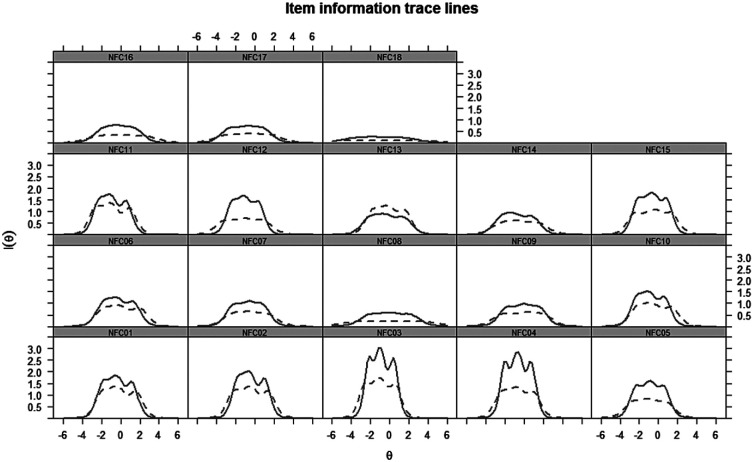
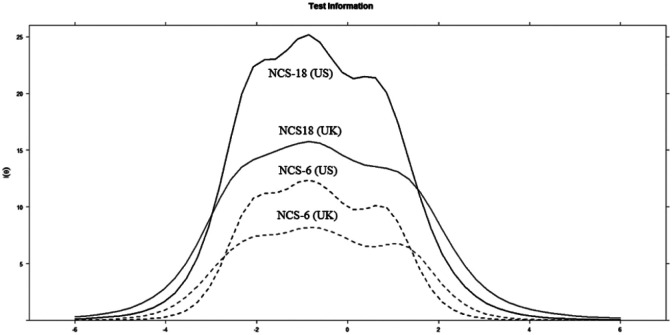
The need for cognition refers to people’s tendency to engage in and enjoy thinking and has become influential across social and medical sciences. Using three samples from the United States and the United Kingdom ( N = 1,596), we introduce a six-item short version of the Need for Cognition Scale (NCS-18). First, we reduced the number of items from 18 to 6 based on the items’ discrimination values, threshold levels, measurement precision (item information curve), item–total correlations, and factor loadings. Second, we confirmed the one-factor structure and established measurement invariance across countries and gender. Finally, we demonstrated that while the NCS-6 provides significant time savings, it comes at a minimal cost in terms of its construct validity with external variables such as openness, cognitive reflection test, and need for affect. Overall, our findings indicate that the NCS-6 is a parsimonious, reliable, and valid measure of need for cognition.
Overview
The claims and statistics of this paper haven’t been checked yet.
Free: it reads the open-access text and checks the first 5 claims that cite a source we can check. Create a free account to check every claim.
Integrity signals
Registry
Cites
Statistics
Figures
Verification
Claims the paper makes
The claims and statistics of this paper haven’t been checked yet.
Free: it reads the open-access text and checks the first 5 claims that cite a source we can check. Create a free account to check every claim.
Claims other papers make about this one
Each is checked against this paper’s own text: does it say what the citing paper says it does?
The cited source says what the claim attributes to it.
In the citing paper
“NFC is a stable personality trait measuring people's propensity towards completing cognitively difficult tasks.”
From Explanations Can Reduce Overreliance on AI Systems During Decision-Making (2023) · cites this paper as [18]
The cited source says what the claim attributes to it.
In the citing paper
“To measure the need for cognition, we used a short 6-item scale developed by Lins de Holanda Coelho et al [ 64 ].”
From Psychological Factors Influencing Appropriate Reliance on AI-enabled Clinical Decision Support Systems: Experimental Web-Based Study Among Dermatologists (2025) · cites this paper as [64]
Self-check
Percentages, sums and reported differences re-computed from the paper’s own numbers.
The self-check needs the paper’s full text.
Citations
Cites
R: A Language and Environment for Statistical Computing
R Core Team (2025) · doi:10.32614/r.manuals · Cited by 352,181
Tabachnick, B. G., & Fidell, L. S. (1983) · Cited by 80,058
lavaan : An R Package for Structural Equation Modeling
Rosseel, Y. (2012) · Journal of Statistical Software · doi:10.18637/jss.v048.i02 · Cited by 27,955 · cited 1×
“Subsequently, we conducted a confirmatory factor analysis (CFA), using the lavaan package (Rosseel, 2012) and the robust maximum likelihood (MLR) estimator.”
MethodSchwartz, S. H. (1992) · Advances in Experimental Social Psychology · doi:10.1016/s0065-2601(08)60281-6 · Cited by 14,619 · cited 3×
“Values are usually defined as abstract ideals or principles that guide people’s behavior and transcend specific situations (Schwartz, 1992).”
BackgroundInfluentialThe application of electronic computers to factor analysis
Kaiser, H. F. (1960) · Educational and Psychological Measurement · doi:10.1177/001316446002000116 · Cited by 12,459 · cited 1×
“In both countries, one factor with eigenvalues greater than one emerged (Kaiser, 1960), indicating a unidimensional structure.”
BackgroundSensitivity of Goodness of Fit Indexes to Lack of Measurement Invariance
Chen, F. F. (2007) · Structural Equation Modeling: A Multidisciplinary Journal · doi:10.1080/10705510701301834 · Cited by 12,217 · cited 2×
“015, respectively (Chen, 2007), when a model is compared with the next higher one (e.”
BackgroundMethodA Rationale and Test for the Number of Factors in Factor Analysis
Horn, J. L. (1965) · Psychometrika · doi:10.1007/bf02289447 · Cited by 8,714 · cited 1×
“To further strengthen the evidence for this structure, the original eigenvalues were compared with eigenvalues generated in simulated data (k = 1000), using the parallel analysis technique (Horn, 1965).”
MethodA very brief measure of the Big-Five personality domains
Gosling, S. D., Rentfrow, P. J., & Swann, W. B. (2003) · Journal of Research in Personality · doi:10.1016/s0092-6566(03)00046-1 · Cited by 8,307
The development of markers for the Big-Five factor structure
Goldberg, L. R. (1992) · Psychological Assessment · doi:10.1037/1040-3590.4.1.26 · Cited by 5,530 · cited 1×
“Openness to new experiences or intellect (Goldberg, 1992).”
Cacioppo, J. T., & Petty, R. E. (1982) · Journal of Personality and Social Psychology · doi:10.1037/0022-3514.42.1.116 · Cited by 5,359 · cited 8×
“…cognition also predicts a range of attitudinal and behavioral outcomes, including preferences for a complex number-circling task over a simple one (Cacioppo & Petty, 1982), achieving higher grade point averages (see, Cacioppo et al., 1996), interpersonal and intergroup attitudes (Aquino et al.,…”
BackgroundMethodInfluential
Research works printed but not linked: 7
- Baker F. B. (2001). The basics of item response theory. Retrieved from http://eric.ed.gov/?id=ED458219 PMC6023097 30034058
- Bizer G. Y. Krosnick J. A. Petty R. E. Rucker D. D. Wheeler S. C. (2000, 3 28). Need for cognition and need to evaluate in the 1998 National Election Survey Pilot Study (ANES Pilot Study Report No. nes008997). Report to the Board of Overseers for the National Election Studies). Ann Arbor, MI: American National Election Studies.
- Bless H. Wänke M. Bohner G. Fellhauer R. F. Schwarz N. (1994). Need for cognition: Eine Skala zur Erfassung von Engagement und Freude bei Denkaufgaben [ Presentation and validation of a German version of the Need for Cognition Scale]. Zeitschrift Für Sozialpsychologie, 25, 147- 154.
- Gutiérrez-Maldonado J. Bajén M. J. Sintas F. Amat M. (1993). Evaluación de la tendencia al esfuerzo cognitivo [ An assessment of the tendency to exert cognitive effort.]. Anuario de Psicología, 58(3), 53- 67.
- Hooper D. Coughlan J. Mullen M. (2008). Structural equation modeling: Guidelines for determining model fit. Electronic Journal on Business Research Methods, 6, 53- 60.
- Kao C. (1994). The concept and measurement of need for cognition: The concept and measurement of need for cognition. Chinese Journal of Psychology, 36, 1- 20.
- Pieters R. G. Verplanken B. Modde J. M. (1987). “Neiging tot nadenken”: Samenhang met beredeneerd gedrag [ Leaning toward reflection: The connection with reasoned behavior]. Nederlands Tijdschrift Voor de Psychologie En Haar Grensgebieden, 42(2), 62- 70.
Cited by
Items 101–200 of 358
The Influence of Curiosity Traits and On-Demand Explanations in AI-Assisted Decision-Making
Cau, F. M., & Spano, L. D. (2025) · ACM International Conference on Intelligent User Interfaces (IUI) · doi:10.1145/3708359.3712165 · Cited by 15
The non-unitary nature of information preference
Liew, S. X., Embrey, J. R., & Newell, B. R. (2023) · Psychonomic Bulletin & Review · doi:10.3758/s13423-022-02243-5 · Cited by 12
“Indeed, it is an open question whether the variation could be captured by other candidate task-exogenous factors, such as Need for Cognition (Holanda Coelho, Hanel, & Wolf, 2020) or measures of impulsivity (e.g., BIS; Patton, Stanford, & Barratt, 1995), or whether the task is simply not a good correlate of more genera…”
Wenzel, M., Rowland, Z., Nielsen, K. S., & Lange, F. (2023) · Journal of Experimental Social Psychology · doi:10.1016/j.jesp.2023.104475 · Cited by 10
Paakkari, O., Kulmala, M., Lyyra, N., Torppa, M., Mazur, J., Boberová, Z., & Paakkari, L. T. (2023) · Scientific Reports · doi:10.1038/s41598-023-45606-1 · Cited by 13
Is overconfidence an individual difference?
Li, S., Hale, R., & Moore, D. A. (2025) · Judgment and Decision Making · doi:10.1017/jdm.2025.11 · Cited by 11
Oh, V. Y. S. (2023) · Frontiers in Psychology · doi:10.3389/fpsyg.2023.1231845 · Cited by 10
Lie, D. S., Gohary, A., Chien, P.-Y., & Truong, B. T. N. (2024) · Decision Support Systems · doi:10.1016/j.dss.2024.114340 · Cited by 11
The structure of adult thinking: A network approach to (meta)cognitive processing
Orona, G. A., Eccles, J. S., Solanki, S. M., Copp, D. A., Dang, Q.-V., & Arum, R. (2024) · Learning and Individual Differences · doi:10.1016/j.lindif.2024.102584 · Cited by 10
Rohden, S. F., Espartel, L. B., & Lopes, J. C. (2025) · International Journal of Consumer Studies · doi:10.1111/ijcs.70128 · Cited by 10
Can norm‐based information campaigns reduce corruption?
Erlich, A., & Gans‐Morse, J. (2025) · American Journal of Political Science · doi:10.1111/ajps.12940 · Cited by 8
Gotcha! Behavioural validation of the Gullibility Scale
George, M. S., Teunisse, A. K., & Case, T. I. (2020) · Personality and Individual Differences · doi:10.1016/j.paid.2020.110034 · Cited by 16
Chopik, W. J., & Francis, J. (2021) · Computers in Human Behavior · doi:10.1016/j.chb.2021.107028 · Cited by 9
“…problem-solving ability, time invested in deliberative thinking, a preference for complex tasks, school and professional success, and modestly ( r s < 0.26) correlated with intelligence (Cacioppo & Petty, 1982; Cacioppo et al., 1996; Lins de Holanda Coelho et al., 2020; Rudolph et al., 2018).”
InfluentialLoose, T., Vásquez‐Echeverría, A., & Alvarez-Nuñez, L. S. (2022) · Current Psychology · doi:10.1007/s12144-022-02739-2 · Cited by 13
“Most recently, a team of researchers rigorously developed a 6-item version in English and showed that the measure was reliable and valid among people from the United States and the United Kingdom (Coelho et al., 2020).”
BackgroundMethodInfluentialThe food allergy COPE inventory: Adaptation and psychometric properties
Coelho, G. L. D. H., Hanel, P. H. P., Byrne, A. M., Hourihane, J. O., & DunnGalvin, A. (2022) · World Allergy Organization Journal · doi:10.1016/j.waojou.2022.100626 · Cited by 7
“Shorter versions can help to provide faster and more accessible data collection, thereby reducing participants’ boredom and fatigue.(23) We assessed reliability for both full and short versions of the FA COPE Inventory, through McDonald’s omega (u; for the long version) and inter-item correlations (for the shorter ver…”
MethodGutfleisch, M., Schöps, M., Sayin, S., Wende, F., & Sasse, M. A. (2022) · IEEE/ACM International Conference on Software Engineering: Software Engineering Education and Training (ICSE-SEET) · doi:10.1145/3510456.3514139 · Cited by 10
The Short Food Allergy Quality of Life Questionnaire (FAQLQ-12) for Adults
Coelho, G. L. D. H., Lloyd, M., Tang, M. L. K., & DunnGalvin, A. (2023) · The Journal of Allergy and Clinical Immunology In Practice · doi:10.1016/j.jaip.2023.02.018 · Cited by 8
Audio delivery of health information: An NLP study of information difficulty and bias in listeners
Ahmed, A., Gondy Leroy, A., Lu, H. Y., Kauchak, D., Stone, J., Harber, P. I., Rains, S. A., Mishra, P., & Chitroda, B. (2023) · Procedia Computer Science · doi:10.1016/j.procs.2023.01.442 · Cited by 6
Haff, N., Sreedhara, S. K., Wood, W., Yom‐Tov, E., Horn, D. M., Hoover, M., Low, G., Lauffenburger, J. C., Chaitoff, A. M., Russo, M., et al. (2023) · American Heart Journal · doi:10.1016/j.ahj.2023.11.005 · Cited by 7
Lua, V. Y. Q., Ooi, W. M., Najib, A., Tan, C. L. H., Majeed, N. M., Leung, A. K. ‐., & Hartanto, A. (2023) · Motivation and Emotion · doi:10.1007/s11031-023-10047-w · Cited by 8
“All records included in the current work utilized one of four types of NCS to measure participants’ NFC: the NCS-34 developed by Cacioppo and Petty (1982), the NCS-18 by Cacioppo et al. (1984), the NCS-6 as validated by Coelho et al. (2020), or other forms of modified or adapted NCS scales.”
Rose, B., Kuiper, M. E., Folmer, C. R., & van Rooij, B. (2024) · Crime Science · doi:10.1186/s40163-024-00240-8 · Cited by 10
Catch me if you search: When contextual web search results affect the detection of hallucinations
Nahar, M., Lee, E.-J., Park, J. W., & Lee, D. (2025) · Computers in Human Behavior · doi:10.1016/j.chb.2025.108763 · Cited by 7
Analytic cognitive style is inversely related to meat consumption
Bègue, L., & Vezirian, K. (2023) · Personality and Individual Differences · doi:10.1016/j.paid.2023.112269 · Cited by 8
A comparative evaluation of measures to assess randomness in human-generated sequences
Angelike, T., & Musch, J. (2024) · Behavior Research Methods · doi:10.3758/s13428-024-02456-7 · Cited by 6
“After completing the experimental task, participants provided self-reports on a need for cognition scale (Lins de Holanda Coelho et al., 2020), a conscientiousness scale (Rammstedt et al., 2013), and on their mathematical abilities (e.g., school grade in mathematics, learning stochastics in school…”
MethodSusanto, S., Hartoyo, H., & Syarief, R. (2021) · Jurnal Aplikasi Bisnis dan Manajemen · doi:10.17358/jabm.7.1.55 · Cited by 6
Psychometric parameters of food allergy quality of life during an allergen immunotherapy trial
Coelho, G. L. D. H., DunnGalvin, A., Greenhawt, M., Hourihane, J. O., Fleischer, D. M., Chen, G., Shaker, M. S., Campbell, D. E., Green, T. D., & Bégin, P. (2022) · Allergy · doi:10.1111/all.15323 · Cited by 6
Makady, H. (2023) · Journal of Technology in Behavioral Science · doi:10.1007/s41347-023-00351-0 · Cited by 9
Hostility has a trivial effect on persuasiveness of rebutting science denialism on social media
Schmid, P., & Werner, B. (2023) · Communications Psychology · doi:10.1038/s44271-023-00041-w · Cited by 8
“We also measured need for cognition 49 , issue involvement 50 , and social desirability 51 .”
Average user ratings prompt disparate decision strategies in online retail shopping
LaCour, M., & Serra, M. J. (2021) · Journal of Consumer Behaviour · doi:10.1002/cb.1995 · Cited by 8
Holtgraves, T., & Bray, K. (2022) · Journal of Applied Social Psychology · doi:10.1111/jasp.12930 · Cited by 9
Robb, K. A., Gatting, L., von Wagner, C., & McGregor, L. (2019) · Annals of Behavioral Medicine · doi:10.1093/abm/kaz039 · Cited by 7
“Need for Cognition has had considerable research attention and Coelho, Hanel and Wolf have reported many studies showing the Need for Cognition scale to have high internal consistency (17).”
BackgroundNorthcott, C., Middleton, P., Makrides, M., & Simmonds, L. (2024) · Journal of Advertising Research · doi:10.2501/jar-2024-003 · Cited by 5
The effect of personality traits on over-the-top service use and binge-watching
Lee, J.-H., Shokparova, A., Asrymbetova, Z., Lahcine, O. F., & Kim, Y. (2024) · Acta Psychologica · doi:10.1016/j.actpsy.2024.104234 · Cited by 6
Ahadzadeh, A. S., Lee, K.-F., & Ong, F. S. (2025) · Online Information Review · doi:10.1108/oir-08-2024-0502 · Cited by 5
Exploring the impact of explainable AI and cognitive capabilities on users’ decisions
Cau, F. M., & Spano, L. D. (2025) · User Modeling and User-Adapted Interaction · doi:10.1007/s11257-025-09438-0 · Cited by 21
Hu, Y.-H., Yu, H.-Y., & Hsieh, C.-L. (2025) · Education and Information Technologies · doi:10.1007/s10639-025-13784-2 · Cited by 10
“Prior research suggests that students high in NFC are more motivated to persist through challenging learning activities and benefit more from reflective and scaffolded instruction (Coelho et al., 2018 ).”
Schroeders, U., Morgenstern, M., Jankowsky, K., & Gnambs, T. (2024) · European Journal of Psychological Assessment · doi:10.1027/1015-5759/a000818 · Cited by 11
Marot, T. A., & Lins, S. (2021) · Suma Psicológica · doi:10.14349/sumapsi.2021.v28.n2.6 · Cited by 5
Torres‐Marín, J., Navarro‐Carrillo, G., Bustos-Ortega, M., Heintz, S., & Carretero‐Dios, H. (2023) · Journal of Personality Assessment · doi:10.1080/00223891.2023.2274533 · Cited by 10
Zadelaar, J. N., Dekkers, T. J., & Huizenga, H. M. (2020) · Journal of Behavioral Decision Making · doi:10.1002/bdm.2177 · Cited by 5
Preferential Choice to Exert Cognitive Effort in Children with ADHD: a Diffusion Modelling Account
Xu, Y., & Huang‐Pollock, C. L. (2023) · Research on Child and Adolescent Psychopathology · doi:10.1007/s10802-023-01080-x · Cited by 6
“Individual variation in the valuation of effort is associated with important aspects of self-regulation as well as academic achievement (Cacioppo et al., 1984; Coelho et al., 2020; Kokis et al., 2002; Malanchini et al., 2019) which makes the valuation of effort particularly relevant to understanding cognitive and beha…”
BackgroundLim, G., Kim, J., & Perrault, S. T. (2026) · ACM Transactions on Computer-Human Interaction · doi:10.1145/3771935 · Cited by 7
“At the start, participants filled a pre-survey on their demographics, and their familiarity with social media, LLM tools, and fallacies.”
AI tour guides: the role of conversation style and destination type
Yan, H., Tian, T., Lu, Y., & Xiong, H. (2025) · Tourism Review · doi:10.1108/tr-04-2025-0390 · Cited by 6
Zhang, M., Li, X., Xia, Q., Li, J. (., & Huang, H. (2026) · Journal of Hospitality and Tourism Management · doi:10.1016/j.jhtm.2026.101417 · Cited by 4
Utrecht Work Engagement Scale (UWES): Psychometric parameters in Brazil
Coelho, G. L. D. H., Monteiro, R. P., Santos, L. C. D. O., Mendes, L. A. D. C., Gouveia, V. V., da Fonsêca, P. N., Faculdades Integradas de Patos, B., & Faculdade Maurício de Nassau, B. (2023) · Suma Psicológica · doi:10.14349/sumapsi.2023.v30.n2.2 · Cited by 6
Prete, M. D., Golossenko, A., Gorton, M., Tocco, B., & Samoggia, A. (2024) · Journal of Business Ethics · doi:10.1007/s10551-024-05756-2 · Cited by 8
Castéran, G. (2024) · Recherche et Applications en Marketing (English Edition) · doi:10.1177/20515707241256096 · Cited by 9
“…sensitivity of the respondents (i.e. personal and interpersonal), using Toti and Moulins’s (2017) scale; for the consumers’ familiarity with Fairtrade products, using Josiassen et al.’s (2008) scale; and for the consumers’ need for cognition, using Lins de Holanda Coelho et al.’s (2020) scale.”
Understanding the Psychology of Practical Wisdom
Nusbaum, H. C. (2025) · The Journal of Medicine and Philosophy A Forum for Bioethics and Philosophy of Medicine · doi:10.1093/jmp/jhae050 · Cited by 7
Harnessing frontline managers’ values for ethical AI and enhanced customer trust in tourism industry
Soomro, M. A., & Khan, A. (2025) · Journal of Hospitality and Tourism Technology · doi:10.1108/jhtt-06-2024-0383 · Cited by 4
Stranger in a strange land: The role of study abroad in civic virtues
Boulware, J. N., Kim, Y., Nusbaum, H. C., & Henly, A. S. (2022) · Journal of Moral Education · doi:10.1080/03057240.2022.2139668 · Cited by 4
Objective numeracy exacerbates framing effects from decision-making under political risk
Fitz, E. B., Stecula, D. A., Hitt, M. P., & Saunders, K. L. (2024) · Scientific Reports · doi:10.1038/s41598-024-61099-y · Cited by 5
The Pitfalls of Epistemic Autonomy without Intellectual Humility
Beebe, J. R. (2024) · Social Epistemology · doi:10.1080/02691728.2024.2342870 · Cited by 22
Trending Now: Implicit Factors Influence Users’ Online Audiovisual Media Motivations and Engagement
Chapman, H. E., & Abraham, A. (2024) · Imagination Cognition and Personality · doi:10.1177/02762366241263842 · Cited by 7
Killian, K. (2024) · Social Sciences · doi:10.3390/socsci13100502 · Cited by 5
“The six-item Need for Cognition-6 scale (Lins de Holanda Coelho et al. 2020) featuring items tapping openness to experience and epistemic curiosity was utilized in the current study.”
CorpusStudio: Surfacing Emergent Patterns In A Corpus Of Prior Work While Writing
Dang, H., Swoopes, C., Buschek, D., & Glassman, E. L. (2025) · CHI Conference on Human Factors in Computing Systems · doi:10.1145/3706598.3713974 · Cited by 17
Coelho, G. L. D. H., Byrne, A. M., Hourihane, J. O., & DunnGalvin, A. (2021) · World Allergy Organization Journal · doi:10.1016/j.waojou.2021.100615 · Cited by 6
“A bell-shaped curve indicates a good amount of information, whereas flat lines indicate no considerable information shared.(40) As shown in Figs.”
BackgroundPredictores psicosociales de la exposición y difusión de noticias falsas en Costa Rica
Brenes-Peralta, C., Sánchez, R. P., & Siles, I. (2021) · Cuadernos info · doi:10.7764/cdi.49.27437 · Cited by 10
de Medeiros, É. D., Monteiro, R. P., da Silva, P. G. N., & Gouveia, V. V. (2022) · Current Psychology · doi:10.1007/s12144-022-03081-3 · Cited by 4
“, 2014); the sixitem version of the Need for Cognition Scale (Coelho et al., 2020); and the 16-item version of the Narcissistic Personality Inventory (Ames et al.”
BackgroundCoelho, G. L. D. H., Monteiro, R. P., de Queiroz, K. K. R., Dianni, N. V. R., Nakamura, P. M., & Diniz, T. N. (2022) · doi:10.31234/osf.io/gsc43 · Cited by 4
Ntshingila, M. L. (2025) · EUREKA Social and Humanities · doi:10.21303/2504-5571.2025.003703 · Cited by 6
Vizcaíno-Cuenca, R., Romero-Sánchez, M., & Carretero‐Dios, H. (2025) · Psychology of Women Quarterly · doi:10.1177/03616843251330248 · Cited by 6
“First, we developed a Spanish version of the AMCYS following a theoretical rationale (APA, AERA & NCME, 2014) and the recommendations for creating brief scales in psychological research (Coelho et al., 2018a, 2018b).”
Hoferer, N., Sprenkamp, K., Quelle, D., Jones, D. G., Katashinskaya, Z., Bovet, A., & Zavolokina, L. (2025) · CHI Conference Extended Abstracts on Human Factors in Computing Systems (CHI EA) · doi:10.1145/3706599.3720125 · Cited by 5
“We employ a set of measurements to evaluate participants’ CT abilities, propaganda awareness, and overall experience with the tool, such as the Need for Cognition Scale [22], a psychologically grounded approach to assess the thinking tendencies of a participant.”
Reducing impulse buying: a review and research agenda
Sivakumaran, B., Deshpande, B., Pradhan, D., & Lyngdoh, T. (2025) · Journal of Consumer Marketing · doi:10.1108/jcm-03-2024-6721 · Cited by 9
Learning from outcomes shapes reliance on moral rules versus cost–benefit reasoning
Maier, M., Cheung, V., & Lieder, F. (2025) · Nature Human Behaviour · doi:10.1038/s41562-025-02271-w · Cited by 14
“The participants completed the six-item Need for Cognition Scale 90 and the short-form Self-Reflection Scale 91 .”
Cao, X., Borah, P., Lee, D. K. L., Vishnevskaya, A., Su, Y., & Lorenzano, K. J. (2025) · Vaccine · doi:10.1016/j.vaccine.2025.127760 · Cited by 3
Mara, M., Bauer, L., Tschopp, M. V., Grosswieser, H., & Kraus, J. (2026) · CHI Conference on Human Factors in Computing Systems · doi:10.1145/3772318.3791005 · Cited by 6
“…complex to simple problems”; “I really enjoy a task that involves coming up with new solutions to problems”; “I would rather do something that requires little thought than something that is sure to challenge my thinking abilities”), created and validated by Lins De Holanda Coelho et al. [57].”
Mustata, M. A., Răpan, I., Dumitrescu, L., Dobreva, H., Dimov, P., Lis, A., Révayová, E., Marineanu, V. D., Buluc, R., Olariu, C., et al. (2023) · Applied Cognitive Psychology · doi:10.1002/acp.4130 · Cited by 6
Theisen, M., & Germar, M. (2024) · Cognitive Science · doi:10.1111/cogs.13422 · Cited by 4
Antecedents of undergraduate research skills and the mediating role of grit
Cutillas, A. L., Benolirao, E., Camasura, J., Lilio, E., Yamagishi, K. D., & Ocampo, L. A. (2024) · Studies in Higher Education · doi:10.1080/03075079.2024.2367146 · Cited by 8
Gottlieb, U., & Hansson, H. (2024) · Agribusiness · doi:10.1002/agr.21986 · Cited by 8
Champlin, S. (2021) · Current Psychology · doi:10.1007/s12144-020-01293-z · Cited by 3
Wahyuddin, W., Rusdin, N. Q., & Nur, M. A. (2022) · Jurnal Elemen · doi:10.29408/jel.v8i2.4950 · Cited by 7
“Likewise, the opinion (Coelho et al., 2020) that practical skills consist of self-efficacy, attitudes, anxiety, beliefs, and interests.”
BackgroundSeeking Spoilage: The Impact of Content Challenge, Self-Control, and Traits on Spoiler Selection
Kryston, K., Ulusoy, E., Grady, S. M., Johnson, B. K., Rosenbaum, J. E., & Eden, A. (2022) · Journal of Broadcasting & Electronic Media · doi:10.1080/08838151.2022.2110593 · Cited by 5
“NFC was measured using the six-item very efficient need for cognition scale (M = 4.64, SD = 1.60; e.g., “I prefer complex to simple problems”; Lins de Holanda Coelho et al., 2018).”
MethodInfluentialThe Reasoning through Evidence versus Advice (EvA) Scale: Scale Development and Validation
Shin, H., Shah, P., & Preston, S. D. (2024) · Journal of Personality Assessment · doi:10.1080/00223891.2023.2297266 · Cited by 4
“The extent to which individuals enjoy or engage in effortful thinking was measured with the Need for Cognition Scale (Coelho et al., 2018).”
Mu, W., Qiao, K., Tan, M., & Wang, Y. (2024) · Asian Journal Of Social Psychology · doi:10.1111/ajsp.12629 · Cited by 3
Need for Affect and Need for Cognition vs. Cybersecurity Attitude
Abughazaleh, F., Abuelezz, I., Khan, K. M., & Ali, R. (2024) · Lecture notes in computer science · doi:10.1007/978-981-96-0570-5_30 · Cited by 4
Johar, R., Harnita, F., Sasaki, D., & Oktari, R. S. (2024) · International Journal of Disaster Risk Reduction · doi:10.1016/j.ijdrr.2024.105083 · Cited by 12
Check or reject? Trust and motivation development in app-based warning systems
von der Linde, M., Göcke, M., Hirschfeld, G. H. F., & Thielsch, M. T. (2025) · Safety Science · doi:10.1016/j.ssci.2024.106724 · Cited by 8
Meatless but not mindless: Cognitive style, meat exclusion and the role of underlying motives
Bègue, L., & Vezirian, K. (2025) · Food Quality and Preference · doi:10.1016/j.foodqual.2025.105496 · Cited by 3
Bordewieck, M., & Elson, M. (2021) · Applied Cognitive Psychology · doi:10.1002/acp.3809 · Cited by 7
Zhong, B., Sun, T., Forde, S. L., & Payne, G. F. (2021) · American Behavioral Scientist · doi:10.1177/00027642211003143 · Cited by 5
“This concept was assessed by a 6-item instrument developed by Lins de Holanda Coelho et al (2020), a shortened version of the original 18-item scale developed by Cacioppo et al. (1984).”
MethodNgo, T., & Krämer, N. C. (2022) · PsyArXiv (OSF Preprints) · doi:10.31234/osf.io/6az2h · Cited by 4
Schroeders, U., Morgenstern, M., Jankowsky, K., & Gnambs, T. (2023) · doi:10.31234/osf.io/nw8k7 · Cited by 3
Luo, C., Tang, Y., Deng, Y., & Li, Y. (2023) · medRxiv · doi:10.1101/2023.08.18.23294258 · Cited by 4
“The six-item version of the NFC scale developed by de Holanda Coelho et al. (2020) was adopted to measure respondents’ NFC levels.”
MethodInfluentialAbstractExplorer: Leveraging Structure-Mapping Theory to Enhance Comparative Close Reading at Scale
Gu, Z., Zhou, J., Lei, N.-E. (., Kummerfeld, J. K., Jasim, M., Mahyar, N., & Glassman, E. L. (2025) · ACM Symposium on User Interface Software and Technology (UIST) · doi:10.1145/3746059.3747773 · Cited by 11
“Throughout the two tasks, we also collected detailed interaction logs including counts of user-defned aspects created, duration of highlighting usage, and time allocation across the three possible alignment options.”
Lee, E. Y., & Chu, K. (2023) · Frontiers in Psychology · doi:10.3389/fpsyg.2023.1166092 · Cited by 3
“The measurement of the need for cognition was based on the items from Caccioppo and Petty (1982, 1984) and Lins de Holanda Coelho et al. (2020).”
MethodKramer, L., Lüdtke, S., & Freund, P. A. (2025) · Frontiers in Psychology · doi:10.3389/fpsyg.2025.1487038 · Cited by 3
“Lins de Holanda Coelho et al. (2020) presented a six items short form for the efficient assessment of NFC.”
Thinking Hard, Thinking Smart: How News Users’ Cognitive Traits Guide Their Responses to Fact-Checks
Lee, E.-J., & Chung, M. (2025) · Digital Journalism · doi:10.1080/21670811.2025.2492209 · Cited by 7
“…indicated how well each statement described them (1 = Doesn’t describe me at all , 5 = Describes me very well ; Cacioppo and Petty 1982; Lins de Holanda Coelho, Hanel, and Wolf 2020), including “I would prefer complex to simple problems,” “I like to have the responsibility of handling…”
Evaluating Phishing Email Efficacy
Olea, C., Christensen, A. P., Fazio, L. K., Cutting, L. E., Lieb, M., Phelan, J., Wise, A. F., & Tucker, H. (2025) · ACM SIGCPR Conference on Computer Personnel Research (SIGCPR) · doi:10.1145/3716489.3728437 · Cited by 7
“After this, users were prompted to complete two short psychological questionnaires: the NCS-6 (6 question Need for Cognition questionnaire) [23] and TIPI - Ten Item Personality Inventory (10 question Big Five Inventory) [14].”
Soraci, P., Griffiths, M. D., Fante, E. D., Pisanti, R., Marafioti, G., Servidio, R. C., Chini, E., & Szabó, A. (2025) · Evaluation & the Health Professions · doi:10.1177/01632787251380550 · Cited by 4
Ku, K. Y. L., Li, J., Lun, V. M., Tsang, Y., Lui, M. A., Kong, Q., & Song, Y. (2025) · Computers in Human Behavior · doi:10.1016/j.chb.2025.108829 · Cited by 7
Takeuchi, R., & Wang, J. (2025) · International Journal of Advertising · doi:10.1080/02650487.2025.2589588 · Cited by 3
Vejandla, S., Ray, A., Sikstrom, L., Ratto, M., Zaheer, J., & Maslej, M. M. (2025) · Scientific Reports · doi:10.1038/s41598-025-30506-3 · Cited by 4
Zero-sum bias in politicized problem solving
Molnar, A. C., & Sloman, S. A. (2025) · Cognition · doi:10.1016/j.cognition.2025.106408 · Cited by 4
From likes to trusts: How trust feedback reduces misinformation on social media
Ceylan, G., & Wood, W. (2026) · Behavioral Science & Policy · doi:10.1177/23794607261423714 · Cited by 5
Sharma, N., & Tandon, U. (2026) · Journal of Systems and Information Technology · doi:10.1108/jsit-06-2025-0261 · Cited by 5
Evaluating the utility of feature importance visualizations in SHAP
Collaris, D., Liang, Y., Willemsen, M. C., Chatzimparmpas, A., & van Wijk, J. J. (2026) · Information Visualization · doi:10.1177/14738716261434842 · Cited by 4
Das, M., Lim, W. M., Hollebeek, L. D., Verma, A., Majumder, S., Sreen, N., & Saha, R. (2026) · International Journal of Advertising · doi:10.1080/02650487.2026.2679379 · Cited by 2
“…largely mirrored those used in Studies 1a and 2, with the following changes: a 4 (CSA type: token vs. servant vs. strategic vs. citizen) × 2 (need for cognition: low vs. high) between-subjects design and the inclusion of items to measure NFC (Lins de Holanda Coelho, Hanel, and Wolf 2020; α = 0.82).”
InfluentialDas, M., Saha, V., Paul, S., & Paul, M. K. (2026) · Journal of Business Research · doi:10.1016/j.jbusres.2026.116367 · Cited by 2
Measuring Large Language Models Dependency: Validating the Arabic Version of the LLM-D12 Scale
Alshakhsi, S. A. A., Yankouskaya, A., Liebherr, M., & Ali, R. (2026) · Arabian Journal for Science and Engineering · doi:10.1007/s13369-026-11386-9 · Cited by 7
“To evaluate the convergent and discriminant validity of the Instrumental Dependency and Relationship Dependency subscales, we examined associations between each dependency subscale and a set of theoretically relevant variables, including AI acceptance, AI fear, internet addiction, need for cognition, and perceived tru…”
InfluentialLiebherr, M., Yankouskaya, A., Alshakhsi, S. A. A., Montag, C., & Ali, R. (2026) · Discover Artificial Intelligence · doi:10.1007/s44163-026-01781-4 · Cited by 2
“Need for cognition was assessed using the 6-item short version of the NFC scale [32], which measures individuals’ intrinsic motivation to engage in effortful cognitive activities.”
Metadata
- Authors
- Lins de Holanda Coelho, G., H. P. Hanel, P., & J. Wolf, L.
- Affiliations
- Cardiff University, Cardiff, UK
- University of Bath, Bath, UK
- Venue
- Assessment
- Publisher
- SAGE Publications
- Published
- 2018-08-10
- Volume
- 27
- Issue
- 8
- Pages
- 1870-1885
- ISSN
- 1073-1911 (ISSN-L)
- 1552-3489
- PMC
- PMC7545655
- OpenAlex
- W2886960137
- Cited by
- 358
- References
- 91
- Citations by year
- 2026: 76 · 2025: 78 · 2024: 58 · 2023: 59 · 2022: 42 · 2021: 28 · 2020: 12 · 2019: 5
- FWCI
- 8.93
- Type
- journal article
- Language
- en
- Open access
- hybrid
- doi.org
- Locations
- Assessment (publishedVersion, cc-by)
- Europe PMC (PubMed Central) (publishedVersion, cc-by)
- PubMed Central (publishedVersion, cc-by)
- PubMed (publishedVersion)
- ORCA Online Research @Cardiff (Cardiff University) (acceptedVersion)
- Open Access at Essex (University of Essex) (acceptedVersion)
- Pure (University of Bath) (submittedVersion, cc-by)
- Funders
- Coordenação de Aperfeiçoamento de Pessoal de Nível Superior
- Governo Brasil
- Economic and Social Research Council (1358978)
- Topics
- Social Sciences › Decision Sciences › Management Science and Operations Research › Psychometric Methodologies and Testing
- Social Sciences › Psychology › Applied Psychology › Psychological Testing and Assessment
- Social Sciences › Psychology › Clinical Psychology › Personality Traits and Psychology
- Keywords
- need for cognition, Need for Cognition Scale, short-form scale development, psychometric validation, measurement invariance, construct validity, cognitive reflection, openness to experience, need for affect, item reduction
- MeSH terms
- Cognition, Factor Analysis, Statistical, United Kingdom, Humans, Psychometrics, Surveys and Questionnaires, United States, Reproducibility of Results
About these checks
Registry, retraction, Cites and statistics results are computed, not judged, with one exception: a printed reference that no index lists is read once by a model before it counts as a citation error. Claims are extracted by a model and kept only when their quote appears verbatim in the text; each cited source is then checked, with a model’s help, for whether it says what the claim relies on. Those verdicts can be wrong — read the claim’s quote and the cited source before relying on one.
Statistics and arithmetic are recomputed, not judged.
Confidence bands are shown only for fields calibrated on our annotated test set. None is calibrated yet, so no band is shown.
What counts as a claim ›How we measure confidence ›How we check this ›
Are you an author, or do you see a problem with this page? Request a review
Data sources
Bibliographic data: Semantic Scholar, OpenAlex, Crossref.
Contains information from the Semantic Scholar Academic Graph Datasets, made available under the ODC Attribution License (ODC-BY 1.0).
Semantic Scholar’s data is described in: Kinney, R., et al. (2023). The Semantic Scholar Open Data Platform. arXiv:2301.10140.
