

The Very Efficient Assessment of Need for Cognition: Developing a Six-Item Version
Open accessThe DOI matches its Crossref record; 89 of the 91 references it cites were found in a registry or an index.
Abstract
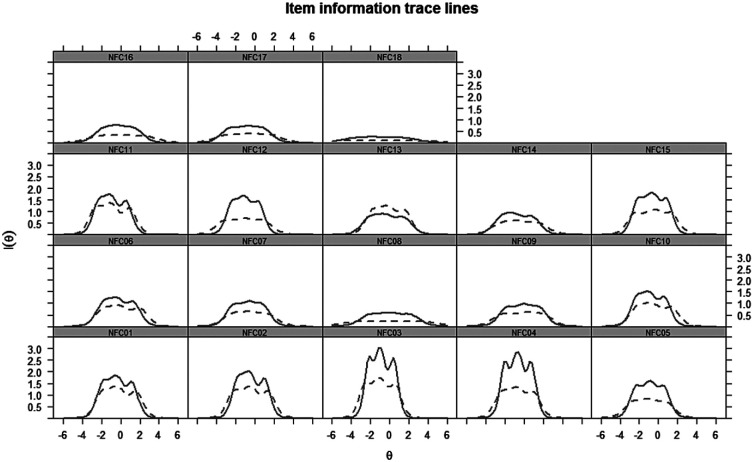
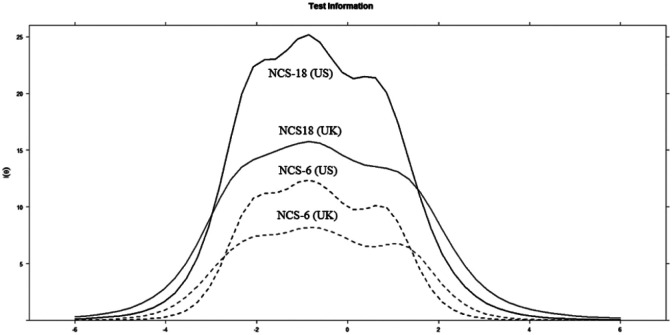
The need for cognition refers to people’s tendency to engage in and enjoy thinking and has become influential across social and medical sciences. Using three samples from the United States and the United Kingdom ( N = 1,596), we introduce a six-item short version of the Need for Cognition Scale (NCS-18). First, we reduced the number of items from 18 to 6 based on the items’ discrimination values, threshold levels, measurement precision (item information curve), item–total correlations, and factor loadings. Second, we confirmed the one-factor structure and established measurement invariance across countries and gender. Finally, we demonstrated that while the NCS-6 provides significant time savings, it comes at a minimal cost in terms of its construct validity with external variables such as openness, cognitive reflection test, and need for affect. Overall, our findings indicate that the NCS-6 is a parsimonious, reliable, and valid measure of need for cognition.
Overview
The claims and statistics of this paper haven’t been checked yet.
Free: it reads the open-access text and checks the first 5 claims that cite a source we can check. Create a free account to check every claim.
Integrity signals
Registry
Cites
Statistics
Figures
Verification
Claims the paper makes
The claims and statistics of this paper haven’t been checked yet.
Free: it reads the open-access text and checks the first 5 claims that cite a source we can check. Create a free account to check every claim.
Claims other papers make about this one
Each is checked against this paper’s own text: does it say what the citing paper says it does?
The cited source says what the claim attributes to it.
In the citing paper
“NFC is a stable personality trait measuring people's propensity towards completing cognitively difficult tasks.”
From Explanations Can Reduce Overreliance on AI Systems During Decision-Making (2023) · cites this paper as [18]
The cited source says what the claim attributes to it.
In the citing paper
“To measure the need for cognition, we used a short 6-item scale developed by Lins de Holanda Coelho et al [ 64 ].”
From Psychological Factors Influencing Appropriate Reliance on AI-enabled Clinical Decision Support Systems: Experimental Web-Based Study Among Dermatologists (2025) · cites this paper as [64]
Self-check
Percentages, sums and reported differences re-computed from the paper’s own numbers.
The self-check needs the paper’s full text.
Citations
Cites
R: A Language and Environment for Statistical Computing
R Core Team (2025) · doi:10.32614/r.manuals · Cited by 352,181
Tabachnick, B. G., & Fidell, L. S. (1983) · Cited by 80,058
lavaan : An R Package for Structural Equation Modeling
Rosseel, Y. (2012) · Journal of Statistical Software · doi:10.18637/jss.v048.i02 · Cited by 27,955 · cited 1×
“Subsequently, we conducted a confirmatory factor analysis (CFA), using the lavaan package (Rosseel, 2012) and the robust maximum likelihood (MLR) estimator.”
MethodSchwartz, S. H. (1992) · Advances in Experimental Social Psychology · doi:10.1016/s0065-2601(08)60281-6 · Cited by 14,619 · cited 3×
“Values are usually defined as abstract ideals or principles that guide people’s behavior and transcend specific situations (Schwartz, 1992).”
BackgroundInfluentialThe application of electronic computers to factor analysis
Kaiser, H. F. (1960) · Educational and Psychological Measurement · doi:10.1177/001316446002000116 · Cited by 12,459 · cited 1×
“In both countries, one factor with eigenvalues greater than one emerged (Kaiser, 1960), indicating a unidimensional structure.”
BackgroundSensitivity of Goodness of Fit Indexes to Lack of Measurement Invariance
Chen, F. F. (2007) · Structural Equation Modeling: A Multidisciplinary Journal · doi:10.1080/10705510701301834 · Cited by 12,217 · cited 2×
“015, respectively (Chen, 2007), when a model is compared with the next higher one (e.”
BackgroundMethodA Rationale and Test for the Number of Factors in Factor Analysis
Horn, J. L. (1965) · Psychometrika · doi:10.1007/bf02289447 · Cited by 8,714 · cited 1×
“To further strengthen the evidence for this structure, the original eigenvalues were compared with eigenvalues generated in simulated data (k = 1000), using the parallel analysis technique (Horn, 1965).”
MethodA very brief measure of the Big-Five personality domains
Gosling, S. D., Rentfrow, P. J., & Swann, W. B. (2003) · Journal of Research in Personality · doi:10.1016/s0092-6566(03)00046-1 · Cited by 8,307
The development of markers for the Big-Five factor structure
Goldberg, L. R. (1992) · Psychological Assessment · doi:10.1037/1040-3590.4.1.26 · Cited by 5,530 · cited 1×
“Openness to new experiences or intellect (Goldberg, 1992).”
Cacioppo, J. T., & Petty, R. E. (1982) · Journal of Personality and Social Psychology · doi:10.1037/0022-3514.42.1.116 · Cited by 5,359 · cited 8×
“…cognition also predicts a range of attitudinal and behavioral outcomes, including preferences for a complex number-circling task over a simple one (Cacioppo & Petty, 1982), achieving higher grade point averages (see, Cacioppo et al., 1996), interpersonal and intergroup attitudes (Aquino et al.,…”
BackgroundMethodInfluential
Research works printed but not linked: 7
- Baker F. B. (2001). The basics of item response theory. Retrieved from http://eric.ed.gov/?id=ED458219 PMC6023097 30034058
- Bizer G. Y. Krosnick J. A. Petty R. E. Rucker D. D. Wheeler S. C. (2000, 3 28). Need for cognition and need to evaluate in the 1998 National Election Survey Pilot Study (ANES Pilot Study Report No. nes008997). Report to the Board of Overseers for the National Election Studies). Ann Arbor, MI: American National Election Studies.
- Bless H. Wänke M. Bohner G. Fellhauer R. F. Schwarz N. (1994). Need for cognition: Eine Skala zur Erfassung von Engagement und Freude bei Denkaufgaben [ Presentation and validation of a German version of the Need for Cognition Scale]. Zeitschrift Für Sozialpsychologie, 25, 147- 154.
- Gutiérrez-Maldonado J. Bajén M. J. Sintas F. Amat M. (1993). Evaluación de la tendencia al esfuerzo cognitivo [ An assessment of the tendency to exert cognitive effort.]. Anuario de Psicología, 58(3), 53- 67.
- Hooper D. Coughlan J. Mullen M. (2008). Structural equation modeling: Guidelines for determining model fit. Electronic Journal on Business Research Methods, 6, 53- 60.
- Kao C. (1994). The concept and measurement of need for cognition: The concept and measurement of need for cognition. Chinese Journal of Psychology, 36, 1- 20.
- Pieters R. G. Verplanken B. Modde J. M. (1987). “Neiging tot nadenken”: Samenhang met beredeneerd gedrag [ Leaning toward reflection: The connection with reasoned behavior]. Nederlands Tijdschrift Voor de Psychologie En Haar Grensgebieden, 42(2), 62- 70.
Cited by
Items 201–300 of 358
Alka, V., Pothiyil, D. I., & Ravindran, S. K. (2022) · International Journal of Cyber Behavior Psychology and Learning · doi:10.4018/ijcbpl.304904 · Cited by 2
Williams, S. T., Lee, J., Halperin, B. A., Liao, J. M., Hsieh, G., & Reinecke, K. (2022) · Scientific Reports · doi:10.1038/s41598-022-24607-6 · Cited by 4
Kim, H., Jang, S. S., & Gim, J. (2023) · International Journal of Contemporary Hospitality Management · doi:10.1108/ijchm-08-2022-0928 · Cited by 2
What about the children? The effectiveness of including children in environmental appeals
Wolf, L. J., Iosifyan, M., Foad, C. M. G., Haddock, G., & Maio, G. R. (2023) · Journal of Environmental Psychology · doi:10.1016/j.jenvp.2023.102195 · Cited by 3
“We used the six-item version of the need for cognition scale (NCS-6, Lins de Holanda Coelho et al., 2020).”
MethodSchütt, A., Huber, T., Nasir, J., Conati, C., & André, E. (2024) · International Conference on Learning Analytics and Knowledge (LAK) · doi:10.1145/3636555.3636876 · Cited by 5
What motivates start-up entrepreneurs? Exploring the role of human values in success
Curtin, E., Coelho, G. L. D. H., & Hanel, P. H. P. (2024) · PLoS ONE · doi:10.1371/journal.pone.0312944 · Cited by 5
Jin, X., Wang, G., Zhang, Z., Zhou, W., Yu, N., Gao, B., & Gao, S. (2025) · Information Communication & Society · doi:10.1080/1369118x.2025.2496902 · Cited by 11
“Meanwhile, need for cognition (Cronbach’s α = 0.93, M = 5.13, SD = 1.21) was measured using a scale based on that of Coelho et al. (2018).”
InfluentialSurprise, surprise: The dual impact of double discounting on consumer preferences
Hardesty, D. M., Hasford, J., Farmer, A., & Kidwell, B. (2025) · Journal of Retailing · doi:10.1016/j.jretai.2025.06.003 · Cited by 3
A Mixed-Methods Study of Public Understanding of Scientific Uncertainty
Beets, B., Brossard, D., & Scheufele, D. A. (2025) · Science Communication · doi:10.1177/10755470251348142 · Cited by 3
The Influence of Emoticons on New Product Evaluation
Bok, S. Y. (2023) · Journal of Marketing Development and Competitiveness · doi:10.33423/jmdc.v17i1.6026 · Cited by 2
Fan Communities in Online Co-viewing of Sports: Impact of Perceived Needs and Benefits
Soni, M. J., & Sarkar, S. (2023) · Sports economics, management and policy · doi:10.1007/978-981-19-7010-8_12 · Cited by 3
Proceedings of the Conference on Managing Tourism Across Continents: Volume 3
Okumus, F., Tuna, M., & Denizci Guillet, B. (2023) · MTCON ... proceedings · doi:10.5038/2834-4731-v3 · Cited by 1
Coelho, G. L. D. H., Monteiro, R. P., & DunnGalvin, A. (2022) · Clinical and Translational Allergy · doi:10.1002/clt2.12205 · Cited by 2
Conijn, R., Kahr, P. K., & Snijders, C. C. P. (2023) · doi:10.31234/osf.io/tgpf4 · Cited by 2
Rudnev, M., de la Rosa, A. L. R., Barrett, R., Christakis, N. A., & Grossmann, I. (2023) · doi:10.31234/osf.io/9bscz · Cited by 2
MyBioethics: How Ed-Tech Enables Discovery-Driven Empirical Bioethics Research
Janhonen, J., Värttö, M., & Saxén, H. (2024) · Digital Society · doi:10.1007/s44206-024-00119-w · Cited by 2
Judicial instructions on alibis: impact on mock jury decision-making
Allison, M., Caluri, G., Jordoson, J., & Solan, S. (2024) · Psychiatry Psychology and Law · doi:10.1080/13218719.2024.2362145 · Cited by 1
“Allison and Brimacombe (2010) used an 18-item NFC measure (Cacioppo et al., 1984), and we used a 6-item NFC measure (de Holanda Coelho et al., 2020).”
Drążkowski, D. (2024) · Journal of Beliefs and Values · doi:10.1080/13617672.2024.2417148 · Cited by 1
“Short version of the Need for Cognition Scale (Lins de Holanda Coelho, Hanel, and Wolf 2020).”
Al-Hamad, E. A., Alshakhsi, S. A. A., Babiker, A., Erbad, A., & Ali, R. (2024) · Lecture notes in computer science · doi:10.1007/978-981-96-0570-5_28 · Cited by 1
Cognitive Style Underlying Belief in a Just World
Bègue, L. (2025) · Social Justice Research · doi:10.1007/s11211-024-00448-8 · Cited by 2
“…thinking, as well as of other cognitive measures such as IQ (Frederick, 2005; Shenhav et al., 2012; Toplak et al., 2011 ), need for cognition (de Holanda et al., 2020 ; Littrell et al., 2020; Penny - cook et al., 2016), conceptual understanding in science and mathematics (Shtulman &…”
Restrictions in social media engagement and User's fairness perception
Lee, S. H., & Kwon, K. (2025) · Computers in Human Behavior · doi:10.1016/j.chb.2025.108609 · Cited by 5
Psychometric Properties of the Academic Procrastination Scale in an Iranian Sample
Ghorbankhani, M., & صالحی, ک. (2025) · SAGE Open · doi:10.1177/21582440251327873 · Cited by 1
Development and Validation of the Sexual Minority Adolescent Rejection Sensitivity Scale Short Form
Warton, W., Byrne, M. L., & Kiekens, W. J. (2025) · The Journal of Sex Research · doi:10.1080/00224499.2025.2507821 · Cited by 1
Chávez-González, H. Y., Alamán-Aguilar, S., Recobos-Duque, J. G., Villa-Tená, M. J., Martínez-Silva, I. M., Alamillo-Cuéllar, A. I., & Toledo-Fernández, A. (2025) · Advances in Cognitive Psychology · doi:10.5709/acp-0454-4 · Cited by 1
Ellis, S., & Shenkar, O. (2025) · Journal of Organization Design · doi:10.1007/s41469-025-00190-8 · Cited by 3
Understanding the Effects of Corporate Environmental Communication on Jobseekers
Robertson, J. L., Karamally, T., Simpson, B. J. K., & Montgomery, A. W. (2025) · Business Strategy and the Environment · doi:10.1002/bse.70094 · Cited by 1
Pembroke, L., Sherman, K. A., Dhillon, H. M., Francis, H., Gillatt, D. A., & Gurney, H. (2025) · Supportive Care in Cancer · doi:10.1007/s00520-025-09771-5 · Cited by 2
Trust in Stories: A Reader Response Study of (Un)Reliability in Akutagawa’s “In a Grove”
van de Ven, I. (2025) · Literature · doi:10.3390/literature5040024 · Cited by 2
Guo, Y. Q., Sun, Z., Li, Y., Zheng, Y., & Xiang, H. (2025) · Health Communication · doi:10.1080/10410236.2025.2572500 · Cited by 2
The Explanation Scope Does not Fit all: Local, Model-Centric and the Role of Cognitive Traits
Cau, F. M., & Spano, L. D. (2025) · Biannual Conference of the Italian SIGCHI Chapter (CHItaly) · doi:10.1145/3750069.3750343 · Cited by 1
“We measured NFC using the NCS-6 six-item five-point scale (1 = extremely uncharacteristic of me; 5 = extremely characteristic of me) as defined in [20], assigning participants to low or high levels by comparing their score to the distribution median.”
Jung, H., & Duys, D. K. (2025) · Journal of Counseling & Development · doi:10.1002/jcad.70012 · Cited by 4
Dutta, T., & Maner, J. K. (2025) · Personality and Individual Differences · doi:10.1016/j.paid.2025.113546 · Cited by 2
Sarno, D. M., Solorio, J., Ballar, S., Chadwick, S., Harris, K., Moss, D., & Lyu, S. (2025) · Acta Psychologica · doi:10.1016/j.actpsy.2025.105995 · Cited by 2
Sun, C., Wang, L., & Liu, Y. (2026) · Information Technology & Tourism · doi:10.1007/s40558-026-00359-1 · Cited by 1
Bao, T. G., El-Haj, M., Alshakhsi, S. A. A., García‐Cabot, A., Ali, R., & Yankouskaya, A. (2026) · Discover Psychology · doi:10.1007/s44202-026-00829-x · Cited by 1
Fekih‐Romdhane, F., Malaeb, D. N., Sakr, F., Dabbous, M., Obeïd, S., & Hallit, S. R. (2026) · Early Intervention in Psychiatry · doi:10.1111/eip.70158 · Cited by 2
“There is some agreement amongst researchers towards developing and using shorter scales that reduce the burden on respondents and save time, whilst maintaining the desirable qualities of the corresponding full-length versions [e.g., (de Lins Holanda Coelho et al. 2020; Monteiro et al. 2022)].”
Deepfaking the past: Memory and perceived truth of resurrected historical figures
Soto-Sanfiel, M. T., & Fu, G. J. (2026) · Computers in Human Behavior · doi:10.1016/j.chb.2026.109008 · Cited by 2
Waddell, T. F. (2026) · Mass Communication & Society · doi:10.1080/15205436.2026.2679456 · Cited by 2
Trust and Reliance on AI in Education: AI Literacy and Need for Cognition as Moderators
Pitts, G., Rani, N., & Mildort, W. (2026) · Lecture notes in computer science · doi:10.1007/978-3-032-29763-1_28 · Cited by 7
Amazeen, M. A., Krishna, A., & Su, C. C. (2026) · Science Communication · doi:10.1177/10755470261459850 · Cited by 2
Abdelhamied, H. H. S., & Al‐Romeedy, B. S. (2026) · Journal of theoretical and applied electronic commerce research · doi:10.3390/jtaer21100348 · Cited by 1
Using Text Data Mining to Enhance the Literature Search Process for Novice STEM Researchers
Fortino, A., Zhong, Q., Yeh, L., & Fang, S. (2020) · IEEE Integrated STEM Education Conference (ISEC) · doi:10.1109/isec49744.2020.9397851 · Cited by 2
“We used the shorter six-item NCG survey [18].”
MethodPENGARUH COGNITIVE SKILLS TERHADAP HASIL BELAJAR MATEMATIKA SECARA DARING
Wahyuddin, W., Nur, M. A., & Satriani, S. (2022) · Jurnal Pendidikan Matematika (Jupitek) · doi:10.30598/jupitekvol5iss1pp1-13 · Cited by 1
“Variabel need for cognition diukur dengan instrumen baku yang dikembangkan oleh Lins de Holanda Coelho et al. (2020) yang ditranslate dalam Bahasa Indonesia dengan 6 item pernyataan dan telah di uji validitas dengan realibilitas tes sebesar 0,876.”
BackgroundSafraou, I., & Guiot, D. (2023) · Journal of Organizational Change Management · doi:10.1108/jocm-09-2022-0271 · Cited by 1
Smit, E. S., Kirch, M., & Resnicow, K. (2024) · Patient Education and Counseling · doi:10.1016/j.pec.2024.108330 · Cited by 2
Alshakhsi, S. A. A., Babiker, A., Sindermann, C., Al‐Thani, D., Montag, C., & Ali, R. (2024) · Frontiers in Computer Science · doi:10.3389/fcomp.2024.1387681 · Cited by 2
Markowitz, D. M. (2025) · Scientific Reports · doi:10.1038/s41598-024-85011-w · Cited by 3
When boredom settles in: Measurement of individual differences in boredom responses
Lench, H. C., Asani, N., North, S. G., & Salsedo, K. (2025) · Personality and Individual Differences · doi:10.1016/j.paid.2025.113215 · Cited by 4
Ahmadyar, K., Szypula, J., Bogosian, A., & Tapper, K. (2025) · JMIR mhealth and uhealth · doi:10.2196/65260 · Cited by 1
“Need for cognition was assessed using the short form of the NCS [43], which consisted of 6 items, each rated on a 5-point Likert scale ranging from 1 (extremely uncharacteristic of me) to 5 (extremely characteristic of me).”
The psychology of political attitudinal volatility
Dennison, J. (2025) · Political Psychology · doi:10.1111/pops.70096 · Cited by 2
“Need for cognition (NFC) refers to an individual's intrinsic motivation to engage in thinking and effortful cognitive activities (Cacioppo & Petty, 1982; for review, see Lins de Holanda Coelho et al., 2020).”
Conducting High Impact Research With Limited Financial Resources (While Working from Home)
Hanel, P. H. P. (2020) · Meta-Psychology · doi:10.15626/mp.2020.2560 · Cited by 1
Jiang, O., Whatley, M. C., & Castel, A. D. (2022) · Gerontology and Geriatric Medicine · doi:10.1177/23337214221082763 · Cited by 1
“Participants completed the six-item version of the Need for Cognition Scale (NCS-6; Lins de Holanda Coelho et al., 2018).”
Correction of manipulated responses in the choice blindness paradigm: What are the predictors?
Strandberg, T., Häll, L., Johansson, P., Björklund, F., & Pärnamets, P. (2019) · Lund University Publications (Lund University) · Cited by 1
Measuring cognitive effort without difficultyPreprint
Fleming, H. A., Robinson, O. J., & Roiser, J. P. (2021) · PsyArXiv (OSF Preprints) · doi:10.31234/osf.io/rbwmp · Cited by 2
The Effect of Personality Traits on Over-the-Top Service Use and Binge-WatchingPreprint
Lee, J.-H., Shokparova, A., Asrymbetova, Z., Lahcine, O. F., & Kim, Y. (2023) · SSRN Electronic Journal · doi:10.2139/ssrn.4593437 · Cited by 1
Fekih‐Romdhane, F., Malaeb, D. N., Sakr, F., Dabbous, M., Obeïd, S., & Hallit, S. R. (2024) · Research Square · doi:10.21203/rs.3.rs-4509430/v1 · Cited by 1
Catch Me If You Search: When Contextual Web Search Results Affect the Detection of HallucinationsPreprint
Nahar, M., Lee, E.-J., Park, J. W., & Lee, D. (2025) · SSRN Electronic Journal · doi:10.2139/ssrn.5251555 · Cited by 1
Psychometrics, Model Generation, and Data
Madsen, J. K. (2019) · Springer eBooks · doi:10.1007/978-3-030-22145-4_7
The malleability of political attitudes : Choice blindness, confabulation and attitude change
Strandberg, T. (2020) · Lund University Publications (Lund University)
Zhou, S., & Guo, L. (2020) · Wiley eBooks · doi:10.1002/9781119011071.iemp0248
A dual-process account on media persuasion of physical activity decision-making
True, R. M. (2021) · Iowa State University Digital Repository (Iowa State University) · doi:10.31274/etd-20210609-189
Gutfleisch, M., Schöps, M., Sayin, S., Wende, F., & Sasse, M. A. (2022) · IEEE/ACM International Conference on Software Engineering: Software Engineering Education and Training (ICSE-SEET) · doi:10.1109/icse-seet55299.2022.9794181
Exploring links between social learning and persuasion: The role of credibilityPreprint
Kasran, S., Hughes, S., & Houwer, J. D. (2022) · PsyArXiv (OSF Preprints) · doi:10.31234/osf.io/v596x
Designing Visual Metaphors in Advertisements:
Takeuchi, R., & Wang, J. (2022) · Quarterly Journal of Marketing · doi:10.7222/marketing.2022.033
(AR)e These Products Making Sense? Resolving Product Schema-Incongruity with Augmented Reality
Teh, C., Phang, C. W., Zhang, C., & Chong, A. Y. (2022) · Lecture notes in computer science · doi:10.1007/978-3-031-05014-5_39
Primacy and recency during spatial-cueingPreprint
Nevado, Á., & del Castillo-Olivares, M. (2022) · doi:10.31234/osf.io/6943y
Payne, R. (2023) · Queensland University of Technology · doi:10.5204/thesis.eprints.240006 · Cited by 2
Thinking of Meaning in Life: Cognitive Engagement in MeaningPreprint
Noguchi, K., & Sherwood, J. A. (2023) · SSRN Electronic Journal · doi:10.2139/ssrn.4526789
Fabella, F. E. T. (2023) · International Journal of Research and Review · doi:10.52403/ijrr.20230905
Preferências por gêneros cinematográficos, personalidade e necessidade de cognição
Santos, L. C. D. O., & do Bonfim, I. F. F. (2023) · Psicologia Argumento · doi:10.7213/psicolargum.41.115.ao06
Image-Based Information Filtering to Compare and Select Items
Hu, Z. F., Mauro, N., & Ardissono, L. (2023) · IEEE/WIC/ACM International Conference on Web Intelligence and Intelligent Agent Technology (WI-IAT) · doi:10.1109/wi-iat59888.2023.00007
“3) Administration of the Need for Cognition questionnaire [30] to investigate the user’s tendency to engage in and enjoy thinking.”
BackgroundMarkowitz, D. M. (2024) · doi:10.31234/osf.io/fq5am
Adversarial Economic Preferences Predict Right-Wing VotingPreprint
Buser, T. (2024) · SSRN Electronic Journal · doi:10.2139/ssrn.4688020
“The same questionnaire also contains two measures of cognitive skills: a short version of the need for cognition scale (Lins de Holanda Coelho, Hanel, and Wolf, 2020) 14 and the three-item cognitive reflection test (Frederick, 2005) 15 .”
Lingwall, B. N., Andrea Surovek, & Reiter‐Palmon, R. (2024) · ASEE Annual Conference & Exposition · doi:10.18260/1-2--43028
إبراهيم, ش. (2021) · مجلة کلية التربية جامعة طنطا · doi:10.21608/mkmgt.2023.200846.1508
محمد, ا. ب. ق., & الله, م. خ. م. ع. (2024) · مجلة کلية التربية · doi:10.21608/jfe.2024.263209.1840
Bodelet, C., Paucsik, M., Landelle, C., & Gauchet, A. (2024) · Psychology and Health · doi:10.1080/08870446.2024.2357293
Mindset to Gain? Framing Effects, Need for Chaos, and the Limits of "Burning It All Down"Preprint
Fitz, E. B., Stecula, D. A., Hitt, M. P., & Saunders, K. L. (2024) · PsyArXiv (OSF Preprints) · doi:10.31234/osf.io/6ytq7
Meanor, A., Scheibe, D. A., Fitzsimmons, C. J., Taber, J. M., Woodbury, L. H., & Thompson, C. A. (2024) · Journal of Numerical Cognition · doi:10.5964/jnc.11657
“Due to limited time with participants, we administered a condensed, previously validated measure of need for cognition (Lins de Holanda Coelho et al., 2020) to assess how this variable related to negative emotional activation.”
MethodCastéran, G. (2024) · Recherche et Applications en Marketing (French Edition) · doi:10.1177/07673701241264714
Yan, V. X., Rea, S. D., Casaca-Watkins, N., Reifler, B. L., Cournoyer, A., Gold, R., & Jones, B. A. (2025) · AIAA SciTech Forum · doi:10.2514/6.2025-2377
The Vividness Effect on Indirect Comparative Advertising Response
Petrovici, D. A., Golden, L. L., Laroche, M., & Liu, Q. (2025) · European Advertising Academy · doi:10.1007/978-3-658-43936-1_8
Improving consumption diversity via graph-based topic nudging
Vercoutere, S., Joris, G., Pessemier, T. D., & Martens, L. (2025) · User Modeling and User-Adapted Interaction · doi:10.1007/s11257-025-09429-1
“The result of the pre-survey will be addressed in a separate paper and contained questions related to the use of different news sources, perception of personalized content, political orientation, and need for cognition Lins de Holanda Coelho et al. (2020).”
Ahmadyar, K., Szypula, J., Bogosian, A., & Tapper, K. (2024) · doi:10.2196/preprints.65260
Lying to an older adult in a sharing situation: differences between young and mid-life adults
Elaad, E., Bracha, Y., Avraham, H., Rabi, C., & Katzin, T. (2025) · Frontiers in Psychology · doi:10.3389/fpsyg.2025.1541248
When less confident forecasts signal more expertise
Palmeira, M. M., & Heath, T. B. (2025) · Organizational Behavior and Human Decision Processes · doi:10.1016/j.obhdp.2025.104431 · Cited by 2
The State of Kindergarten Education in the Division of Agusan del Norte: An Evaluation Research
Navarra-Corpus, C., & Tampus, D. J. (2025) · International Journal of Research Publication and Reviews · doi:10.55248/gengpi.6.0725.2645
Song, I. (2025) · Asian Communication Research · doi:10.20879/acr.2025.22.012
Amitai, Y., Mirsky, R., & Amir, O. (2025) · IEEE International Conference on AI and Data Analytics (ICAD) · doi:10.1109/icad65464.2025.11114061
“• Need for cognition, using de Holanda Coelho et al. [20].”
Jafari, E. (2025) · ACM Conference on Recommender Systems (RecSys) · doi:10.1145/3705328.3748758
Validation of the very efficient nomophobia short-form questionnaire in Chinese
Zhu, W., Cheng, M., Wang, H. E., & Yuan, Y. (2025) · BMC Psychology · doi:10.1186/s40359-025-03449-7 · Cited by 1
“By contrast, shorter instruments reduce respondent burden and allow rapid screening in clinical or time-limited settings [26].”
Malysheva, K., Lytvyn, S., Maksymchuk, M., & Keller, V. (2025) · Bulletin of Taras Shevchenko National University of Kyiv Psychology · doi:10.17721/bpsy.2025.1(21).9
Perceptions of complexity in sustainability: Scale construction and validation
Taavila, S., Rutjens, B. T., & Jostmann, N. B. (2025) · Journal of Environmental Psychology · doi:10.1016/j.jenvp.2025.102812
Designing and Personalising Hybrid Health Explanations for Lay Users
Szymanski, M., Keyaerts, S., Conati, C., Croon, R. D., Abeele, V. V., & Verbert, K. (2026) · ACM Transactions on Interactive Intelligent Systems · doi:10.1145/3772071 · Cited by 2
“…completed a questionnaire regarding their personal characteristics (PC), which included their ease-of-satisfaction (ease-of-satisfaction, from Kouki et al. [42], slightly adapted to fit the health recommendation setting) and the abbreviated 6-item version of the need for cognition scale [21].”
Ackermann, K. A., Furchheim, P., Bächler, J., Heim, N., & Lenggenhager, V. N. (2025) · Journal of Consumer Behaviour · doi:10.1002/cb.70051 · Cited by 1
The cognitive architecture of degraded speech intelligibility
Rovetti, J., Johnsrude, I. S., & Hedger, S. C. V. (2026) · Cognition · doi:10.1016/j.cognition.2026.106692
How need for cognition affects resilience: a serial mediation model
Saha, S., & Pradhan, R. K. (2025) · Evidence-based HRM a Global Forum for Empirical Scholarship · doi:10.1108/ebhrm-05-2024-0164
How Confident AI Misleads: When Certainty Heuristics Undermine Skepticism in MisinformationPreprint
Chen, C. C., & Yang, J. (2025) · SSRN Electronic Journal · doi:10.2139/ssrn.5875242 · Cited by 1
Cai, X., Hu, Z., Leung, X. Y., Xiong, W., & Zhang, D. (2025) · Current Issues in Tourism · doi:10.1080/13683500.2025.2606946
Metadata
- Authors
- Lins de Holanda Coelho, G., H. P. Hanel, P., & J. Wolf, L.
- Affiliations
- Cardiff University, Cardiff, UK
- University of Bath, Bath, UK
- Venue
- Assessment
- Publisher
- SAGE Publications
- Published
- 2018-08-10
- Volume
- 27
- Issue
- 8
- Pages
- 1870-1885
- ISSN
- 1073-1911 (ISSN-L)
- 1552-3489
- PMC
- PMC7545655
- OpenAlex
- W2886960137
- Cited by
- 358
- References
- 91
- Citations by year
- 2026: 76 · 2025: 78 · 2024: 58 · 2023: 59 · 2022: 42 · 2021: 28 · 2020: 12 · 2019: 5
- FWCI
- 8.93
- Type
- journal article
- Language
- en
- Open access
- hybrid
- doi.org
- Locations
- Assessment (publishedVersion, cc-by)
- Europe PMC (PubMed Central) (publishedVersion, cc-by)
- PubMed Central (publishedVersion, cc-by)
- PubMed (publishedVersion)
- ORCA Online Research @Cardiff (Cardiff University) (acceptedVersion)
- Open Access at Essex (University of Essex) (acceptedVersion)
- Pure (University of Bath) (submittedVersion, cc-by)
- Funders
- Coordenação de Aperfeiçoamento de Pessoal de Nível Superior
- Governo Brasil
- Economic and Social Research Council (1358978)
- Topics
- Social Sciences › Decision Sciences › Management Science and Operations Research › Psychometric Methodologies and Testing
- Social Sciences › Psychology › Applied Psychology › Psychological Testing and Assessment
- Social Sciences › Psychology › Clinical Psychology › Personality Traits and Psychology
- Keywords
- need for cognition, Need for Cognition Scale, short-form scale development, psychometric validation, measurement invariance, construct validity, cognitive reflection, openness to experience, need for affect, item reduction
- MeSH terms
- Cognition, Factor Analysis, Statistical, United Kingdom, Humans, Psychometrics, Surveys and Questionnaires, United States, Reproducibility of Results
About these checks
Registry, retraction, Cites and statistics results are computed, not judged, with one exception: a printed reference that no index lists is read once by a model before it counts as a citation error. Claims are extracted by a model and kept only when their quote appears verbatim in the text; each cited source is then checked, with a model’s help, for whether it says what the claim relies on. Those verdicts can be wrong — read the claim’s quote and the cited source before relying on one.
Statistics and arithmetic are recomputed, not judged.
Confidence bands are shown only for fields calibrated on our annotated test set. None is calibrated yet, so no band is shown.
What counts as a claim ›How we measure confidence ›How we check this ›
Are you an author, or do you see a problem with this page? Request a review
Data sources
Bibliographic data: Semantic Scholar, OpenAlex, Crossref.
Contains information from the Semantic Scholar Academic Graph Datasets, made available under the ODC Attribution License (ODC-BY 1.0).
Semantic Scholar’s data is described in: Kinney, R., et al. (2023). The Semantic Scholar Open Data Platform. arXiv:2301.10140.
