

The Very Efficient Assessment of Need for Cognition: Developing a Six-Item Version
Open accessThe DOI matches its Crossref record; 89 of the 91 references it cites were found in a registry or an index.
Abstract
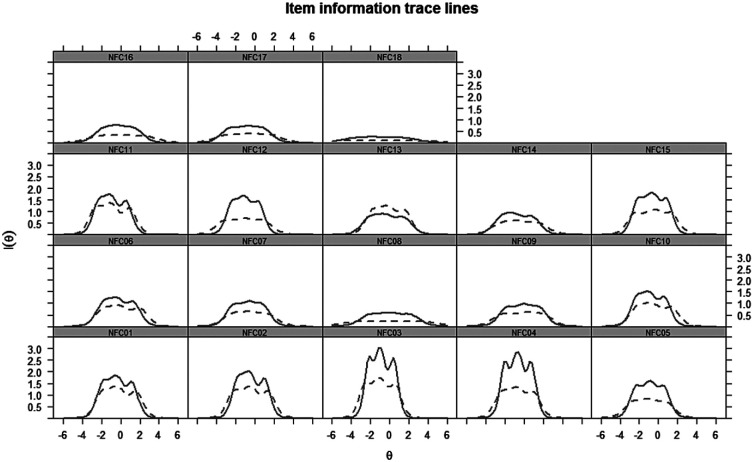
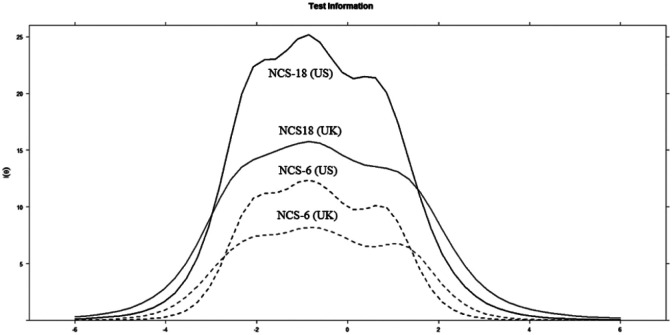
The need for cognition refers to people’s tendency to engage in and enjoy thinking and has become influential across social and medical sciences. Using three samples from the United States and the United Kingdom ( N = 1,596), we introduce a six-item short version of the Need for Cognition Scale (NCS-18). First, we reduced the number of items from 18 to 6 based on the items’ discrimination values, threshold levels, measurement precision (item information curve), item–total correlations, and factor loadings. Second, we confirmed the one-factor structure and established measurement invariance across countries and gender. Finally, we demonstrated that while the NCS-6 provides significant time savings, it comes at a minimal cost in terms of its construct validity with external variables such as openness, cognitive reflection test, and need for affect. Overall, our findings indicate that the NCS-6 is a parsimonious, reliable, and valid measure of need for cognition.
Overview
The claims and statistics of this paper haven’t been checked yet.
Free: it reads the open-access text and checks the first 5 claims that cite a source we can check. Create a free account to check every claim.
Integrity signals
Registry
Cites
Statistics
Figures
Verification
Claims the paper makes
The claims and statistics of this paper haven’t been checked yet.
Free: it reads the open-access text and checks the first 5 claims that cite a source we can check. Create a free account to check every claim.
Claims other papers make about this one
Each is checked against this paper’s own text: does it say what the citing paper says it does?
The cited source says what the claim attributes to it.
In the citing paper
“NFC is a stable personality trait measuring people's propensity towards completing cognitively difficult tasks.”
From Explanations Can Reduce Overreliance on AI Systems During Decision-Making (2023) · cites this paper as [18]
The cited source says what the claim attributes to it.
In the citing paper
“To measure the need for cognition, we used a short 6-item scale developed by Lins de Holanda Coelho et al [ 64 ].”
From Psychological Factors Influencing Appropriate Reliance on AI-enabled Clinical Decision Support Systems: Experimental Web-Based Study Among Dermatologists (2025) · cites this paper as [64]
Self-check
Percentages, sums and reported differences re-computed from the paper’s own numbers.
The self-check needs the paper’s full text.
Citations
Cites
R: A Language and Environment for Statistical Computing
R Core Team (2025) · doi:10.32614/r.manuals · Cited by 352,181
Tabachnick, B. G., & Fidell, L. S. (1983) · Cited by 80,058
lavaan : An R Package for Structural Equation Modeling
Rosseel, Y. (2012) · Journal of Statistical Software · doi:10.18637/jss.v048.i02 · Cited by 27,955 · cited 1×
“Subsequently, we conducted a confirmatory factor analysis (CFA), using the lavaan package (Rosseel, 2012) and the robust maximum likelihood (MLR) estimator.”
MethodSchwartz, S. H. (1992) · Advances in Experimental Social Psychology · doi:10.1016/s0065-2601(08)60281-6 · Cited by 14,619 · cited 3×
“Values are usually defined as abstract ideals or principles that guide people’s behavior and transcend specific situations (Schwartz, 1992).”
BackgroundInfluentialThe application of electronic computers to factor analysis
Kaiser, H. F. (1960) · Educational and Psychological Measurement · doi:10.1177/001316446002000116 · Cited by 12,459 · cited 1×
“In both countries, one factor with eigenvalues greater than one emerged (Kaiser, 1960), indicating a unidimensional structure.”
BackgroundSensitivity of Goodness of Fit Indexes to Lack of Measurement Invariance
Chen, F. F. (2007) · Structural Equation Modeling: A Multidisciplinary Journal · doi:10.1080/10705510701301834 · Cited by 12,217 · cited 2×
“015, respectively (Chen, 2007), when a model is compared with the next higher one (e.”
BackgroundMethodA Rationale and Test for the Number of Factors in Factor Analysis
Horn, J. L. (1965) · Psychometrika · doi:10.1007/bf02289447 · Cited by 8,714 · cited 1×
“To further strengthen the evidence for this structure, the original eigenvalues were compared with eigenvalues generated in simulated data (k = 1000), using the parallel analysis technique (Horn, 1965).”
MethodA very brief measure of the Big-Five personality domains
Gosling, S. D., Rentfrow, P. J., & Swann, W. B. (2003) · Journal of Research in Personality · doi:10.1016/s0092-6566(03)00046-1 · Cited by 8,307
The development of markers for the Big-Five factor structure
Goldberg, L. R. (1992) · Psychological Assessment · doi:10.1037/1040-3590.4.1.26 · Cited by 5,530 · cited 1×
“Openness to new experiences or intellect (Goldberg, 1992).”
Cacioppo, J. T., & Petty, R. E. (1982) · Journal of Personality and Social Psychology · doi:10.1037/0022-3514.42.1.116 · Cited by 5,359 · cited 8×
“…cognition also predicts a range of attitudinal and behavioral outcomes, including preferences for a complex number-circling task over a simple one (Cacioppo & Petty, 1982), achieving higher grade point averages (see, Cacioppo et al., 1996), interpersonal and intergroup attitudes (Aquino et al.,…”
BackgroundMethodInfluential
Research works printed but not linked: 7
- Baker F. B. (2001). The basics of item response theory. Retrieved from http://eric.ed.gov/?id=ED458219 PMC6023097 30034058
- Bizer G. Y. Krosnick J. A. Petty R. E. Rucker D. D. Wheeler S. C. (2000, 3 28). Need for cognition and need to evaluate in the 1998 National Election Survey Pilot Study (ANES Pilot Study Report No. nes008997). Report to the Board of Overseers for the National Election Studies). Ann Arbor, MI: American National Election Studies.
- Bless H. Wänke M. Bohner G. Fellhauer R. F. Schwarz N. (1994). Need for cognition: Eine Skala zur Erfassung von Engagement und Freude bei Denkaufgaben [ Presentation and validation of a German version of the Need for Cognition Scale]. Zeitschrift Für Sozialpsychologie, 25, 147- 154.
- Gutiérrez-Maldonado J. Bajén M. J. Sintas F. Amat M. (1993). Evaluación de la tendencia al esfuerzo cognitivo [ An assessment of the tendency to exert cognitive effort.]. Anuario de Psicología, 58(3), 53- 67.
- Hooper D. Coughlan J. Mullen M. (2008). Structural equation modeling: Guidelines for determining model fit. Electronic Journal on Business Research Methods, 6, 53- 60.
- Kao C. (1994). The concept and measurement of need for cognition: The concept and measurement of need for cognition. Chinese Journal of Psychology, 36, 1- 20.
- Pieters R. G. Verplanken B. Modde J. M. (1987). “Neiging tot nadenken”: Samenhang met beredeneerd gedrag [ Leaning toward reflection: The connection with reasoned behavior]. Nederlands Tijdschrift Voor de Psychologie En Haar Grensgebieden, 42(2), 62- 70.
Cited by
Explanations Can Reduce Overreliance on AI Systems During Decision-Making
Vasconcelos, H., Jörke, M., Grunde-McLaughlin, M., Gerstenberg, T., Bernstein, M. S., & Krishna, R. (2023) · Proceedings of the ACM on Human-Computer Interaction · doi:10.1145/3579605 · Cited by 402
Liu, B. (2021) · Journal of Computer-Mediated Communication · doi:10.1093/jcmc/zmab013 · Cited by 228
Kumar, J. A. (2021) · International Journal of Educational Technology in Higher Education · doi:10.1186/s41239-021-00302-w · Cited by 183
“…(Pintrich & de Groot, 1990) and modified MSLQ (Silva et al., 2017), need for cognition using the Need for Cognition Scale–6 (NCS-6) (de Holanda Coelho et al., 2020), creative self-efficacy from the Creative Self-Efficacy (QCSE) (Brockhus et al., 2014) and teamwork using a modified version of…”
BackgroundMethodDevelopment and initial psychometric properties of a panic buying scale during COVID-19 pandemic
Lins, S., & Aquino, S. (2020) · Heliyon · doi:10.1016/j.heliyon.2020.e04746 · Cited by 167
“Need for cognition was measured using a 6-item brief version scale of Cacioppo et al. (1984), developed by Coelho et al. (2018).”
Sharing of misinformation is habitual, not just lazy or biased
Ceylan, G., Anderson, I. A., & Wood, W. (2023) · Proceedings of the National Academy of Sciences · doi:10.1073/pnas.2216614120 · Cited by 155
The Efficient Assessment of Self-Esteem: Proposing the Brief Rosenberg Self-Esteem Scale
Monteiro, R. P., Coelho, G. L. D. H., Hanel, P. H. P., de Medeiros, É. D., & da Silva, P. D. G. (2021) · Applied Research in Quality of Life · doi:10.1007/s11482-021-09936-4 · Cited by 238
“Thus, in recent years more and more scales have been reduced to short measures which assess clinical (e.g., two-item Generalized Anxiety Disorder Scale; REF) and non-clinical (e.g., six-item Need for Cognition Scale; Coelho et al., 2020) constructs.”
BackgroundInfluentialPsychological Correlates of Populist Attitudes
Erişen, C., Guidi, M., Martini, S., Toprakkiran, S., Isernia, P., & Littvay, L. (2021) · Political Psychology · doi:10.1111/pops.12768 · Cited by 163
Liao, M., & Sundar, S. S. (2021) · Journal of Advertising · doi:10.1080/00913367.2021.1887013 · Cited by 125
“This approach focuses on each user ’ s own preference (Degemmis et al. 2004).”
BackgroundXiao, X., Su, Y., & Lee, D. K. L. (2021) · Social Media + Society · doi:10.1177/2056305121990635 · Cited by 112
Su, Y., Lee, D. K. L., & Xiao, X. (2021) · Computers in Human Behavior · doi:10.1016/j.chb.2021.107111 · Cited by 88
“Individuals low in NFC, however, are (1) more likely to rely on the heuristic processing approach that requires less cognition effort to make sense of new information (Lins de Holanda Coelho, 2020) and (2) more likely to “suffer from information overload” than those high in NFC (Putrevu, 2008, p. 61).”
BackgroundInfluentialThe Effects of Explanations in Automated Essay Scoring Systems on Student Trust and Motivation
Conijn, R., Kahr, P., & Snijders, C. (2023) · Journal of Learning Analytics · doi:10.18608/jla.2023.7801 · Cited by 76
“Need for cognition , or one’s tendency to engage in effortful cognitive activity, was measured by the Need for Cognition scale (Lins de Holanda Coelho et al., 2020).”
MethodLi, F. S., & Ma, J. (2023) · Tourism Management · doi:10.1016/j.tourman.2023.104772 · Cited by 81
Chan, M. (2022) · New Media & Society · doi:10.1177/14614448221127675 · Cited by 89
“…of agreement (1 = “Strongly disagree” to 5 = “Strongly agree”) to questions based on the short version of the need for cognitions scale (NCS-6; Lins de Holanda Coelho et al., 2020): (1) “I would prefer complex to simple problems,” (2) “I like to have the responsibility of handling a situation…”
BackgroundSu, Y., Lee, D. K. L., Xiao, X., Li, W., & Shu, W. (2021) · Computers in Human Behavior · doi:10.1016/j.chb.2021.106760 · Cited by 86
Meijer, I. C. (2021) · Digital Journalism · doi:10.1080/21670811.2021.1919537 · Cited by 105
“Most people have a “tendency to engage in and enjoy thinking” (Lins de Holanda Coelho, Hanel, and Wolf 2020:1).”
BackgroundWu, Y., Kuru, O., Campbell, S. W., & Baruh, L. (2022) · Health Communication · doi:10.1080/10410236.2021.2010891 · Cited by 64
Psychological Traits and Appropriate Reliance: Factors Shaping Trust in AI
Küper, A., & Krämer, N. (2024) · International Journal of Human–Computer Interaction · doi:10.1080/10447318.2024.2348216 · Cited by 49
“The need for cognition is a personality trait describing the tendency to engage in effortful cognitive tasks and enjoy it (Cacioppo & Petty, 1982; Lins De Holanda Coelho et al., 2020).”
Eisbach, S., Langer, M., & Hertel, G. (2023) · Computers in Human Behavior: Artificial Humans · doi:10.1016/j.chbah.2023.100015 · Cited by 46
ChatGPT personalized and humorous recommendations
Kim, J. H., Kim, J., Baek, T. H., & Kim, C. (2024) · Annals of Tourism Research · doi:10.1016/j.annals.2024.103857 · Cited by 58
Revisiting the rigidity-of-the-right hypothesis: A meta-analytic review.
Costello, T. H., Bowes, S. M., Baldwin, M. W., Malka, A., & Tasimi, A. (2023) · Journal of Personality and Social Psychology · doi:10.1037/pspp0000446 · Cited by 66
Immunizing with information – Inoculation messages against conversational agents’ response failures
Weiler, S., Matt, C., & Hess, T. (2022) · Electronic Markets · doi:10.1007/s12525-021-00509-9 · Cited by 40
“…propensity to trust (Cheung & Lee, 2002; Hampton-Sosa & Koufaris, 2005), personal inno-vativeness (Agarwal and Prasad 1998), need for cognition (Coelho et al., 2018), user’s expertise (Tauchert & Mesbah, 2019), and participants’ perceived degree of realism of the CA usage (Adam et al., 2021)…”
BackgroundHumble and apologetic? Predicting apology quality with intellectual and general humility
Ludwig, J. M., Schumann, K., & Porter, T. (2022) · Personality and Individual Differences · doi:10.1016/j.paid.2021.111477 · Cited by 40
Hoch, E., Sidi, Y., Ackerman, R., Hoogerheide, V., & Scheiter, K. (2023) · Educational Psychology Review · doi:10.1007/s10648-023-09779-5 · Cited by 50
“Need for cognition (Cacioppo & Petty, 1982; Lins de Holanda Coelho et al., 2020) was measured with the short (six-item) scale assessing the extent to which people enjoy engaging in the process of thinking (e.g., “I really enjoy a task that involves coming up with new solutions to problems”).”
MethodChatti, M. A., Guesmi, M., Vorgerd, L., Ngo, T., Joarder, S., Ain, Q. U., & Muslim, A. (2022) · ACM Conference on User Modeling, Adaptation and Personalization (UMAP) · doi:10.1145/3503252.3531304 · Cited by 55
Chan, K.-Y., Oerlemans, L. A. G., & Meslec, N. (2020) · International Journal of Project Management · doi:10.1016/j.ijproman.2020.11.002 · Cited by 47
Are organizational buyers rational? Using price heuristics in functional risk judgment
Saab, A. B., & Botelho, D. (2019) · Industrial Marketing Management · doi:10.1016/j.indmarman.2019.10.001 · Cited by 51
Tang, Y., Luo, C., & Su, Y. (2023) · Online Information Review · doi:10.1108/oir-04-2023-0157 · Cited by 47
Buçinca, Z., Swaroop, S., Paluch, A. E., Doshi‐Velez, F., & Gajos, K. Z. (2025) · CHI Conference on Human Factors in Computing Systems · doi:10.1145/3706598.3713229 · Cited by 76
“Figure 3 provides a sample of a decision task with illustrations of the key conditions.”
Sovrano, F., & Vitali, F. (2022) · Data Mining and Knowledge Discovery · doi:10.1007/s10618-022-00872-x · Cited by 48
Yankouskaya, A., Babiker, A., Rizvi, S., Alshakhsi, S., Liebherr, M., & Ali, R. (2025) · ACM Transactions on the Web · doi:10.1145/3765895 · Cited by 32
Gerace, A., Rigney, G., & Anderson, J. (2022) · PLoS ONE · doi:10.1371/journal.pone.0263128 · Cited by 36
Improving metacognition through self-explication in a digital self-regulated learning tool
Braad, E., Degens, N., Barendregt, W., & IJsselsteijn, W. A. (2022) · Educational Technology Research and Development · doi:10.1007/s11423-022-10156-2 · Cited by 65
Dark patterns and consumer vulnerability
Zac, A., Huang, Y.-C., von Moltke, A., Decker, C., & Ezrachi, A. (2025) · Behavioural Public Policy · doi:10.1017/bpp.2024.49 · Cited by 74
Zhang, Y., Tian, Y., Yao, L., Duan, C., Sun, X., & Niu, G. (2023) · Teaching and Teacher Education · doi:10.1016/j.tate.2023.104167 · Cited by 30
Dekhili, S., & Ertz, M. (2023) · Journal of Cleaner Production · doi:10.1016/j.jclepro.2023.139987 · Cited by 38
Psychological predictors of consumer-level virtual reality technology adoption and usage
Cummings, J. J., Cahill, T. J., Wertz, B., & Zhong, Q. (2022) · Virtual Reality · doi:10.1007/s10055-022-00736-1 · Cited by 36
Küper, A., Lodde, G. C., Livingstone, E., Schadendorf, D., & Krämer, N. (2025) · Journal of Medical Internet Research · doi:10.2196/58660 · Cited by 31
“The need for cognition is a personality trait that reflects an inclination to engage in mentally taxing tasks and to derive pleasure from doing so [63,64].”
Qiu, Z., Liu, Q., Li, X., & Zhang, Y. (2024) · Safety and Health at Work · doi:10.1016/j.shaw.2024.05.004 · Cited by 26
“The need for cognition was assessed using six items based on the scale developed by Coelho [30].”
MethodThe effects of generative AI’s human-like competencies on clinical decision-making
Spatscheck, N., Schaschek, M., & Winkelmann, A. (2024) · Journal of Decision System · doi:10.1080/12460125.2024.2430731 · Cited by 37
Sun, Y., & Sundar, S. S. (2022) · CHI Conference Extended Abstracts on Human Factors in Computing Systems (CHI EA) · doi:10.1145/3491101.3519668 · Cited by 39
“We also measured need for cognition (NFC) with 6 items such as “I would prefer complex to simple problems” from [23], since NFC may affect the propensity to scrutinize the information [28].”
MethodInterpretable Program Synthesis
Zhang, T., Chen, Z., Zhu, Y., Vaithilingam, P., Wang, X., & Glassman, E. L. (2021) · CHI Conference on Human Factors in Computing Systems · doi:10.1145/3411764.3445646 · Cited by 36
“either higher engagement tendency (as measured by NCS-6 [44]) or less expertise expressed a stronger preference towards the highestfidelity representation, i.”
BackgroundMethodInfluentialFrom anecdote to evidence: the relationship between personality and need for cognition of developers
Russo, D., Masegosa, A. R., & Stol, K.-J. (2022) · Empirical Software Engineering · doi:10.1007/s10664-021-10106-1 · Cited by 32
Explanations Can Reduce Overreliance on AI Systems During Decision-Making
Vasconcelos, H., Jörke, M., Grunde-McLaughlin, M., Gerstenberg, T., Bernstein, M., & Krishna, R. (2022) · arXiv · Cited by 403
Ai, W., Cunningham, W. A., & Lai, M. (2023) · Comprehensive Psychiatry · doi:10.1016/j.comppsych.2023.152434 · Cited by 38
Constructive retrieval: Benefits for learning, motivation, and metacognitive monitoring
Endres, T., Carpenter, S. K., & Renkl, A. (2024) · Learning and Instruction · doi:10.1016/j.learninstruc.2024.101974 · Cited by 38
The Bright Side of the Human Personality: Evidence of a Measure of Prosocial Traits
Gouveia, V. V., de Oliveira, I. C. V., Grangeiro, A. S. D. M., Monteiro, R. P., & Coelho, G. L. D. H. (2020) · Journal of Happiness Studies · doi:10.1007/s10902-020-00280-2 · Cited by 35
Xiao, X., & Yang, W. (2023) · Online Information Review · doi:10.1108/oir-04-2023-0172 · Cited by 32
Think Fast, Think Slow, Think Critical: Designing an Automated Propaganda Detection Tool
Zavolokina, L., Sprenkamp, K., Katashinskaya, Z., Jones, D. G., & Schwabe, G. (2024) · CHI Conference on Human Factors in Computing Systems · doi:10.1145/3613904.3642805 · Cited by 52
“In this section, we describe the participants of the expert survey and the online experiment, the procedure, and the data collection.”
Let Me Think about It: Cognitive Elaboration and Strategies of Resistance to Political Persuasion
Valli, C., & Nai, A. (2022) · Media Psychology · doi:10.1080/15213269.2022.2098774 · Cited by 29
Zerna, J., Strobel, A., & Strobel, A. (2024) · Collabra Psychology · doi:10.1525/collabra.92885 · Cited by 32
Measuring cognitive effort without difficulty
Fleming, H. A., Robinson, O. J., & Roiser, J. P. (2023) · Cognitive Affective & Behavioral Neuroscience · doi:10.3758/s13415-023-01065-9 · Cited by 42
“…the Fatigue Severity Scale (Krupp et al., 1989), the International Physical Activity Questionnaire Short Form (Lee et al., 2011), the Need for Cognition six-item scale (Coelho et al., 2018), the Temporal Experience of Pleasure Scale (Gard et al., 2006) and the Zung Depression Scale (Zung, 1965).”
Explaining User Models with Different Levels of Detail for Transparent Recommendation: A User Study
Guesmi, M., Chatti, M. A., Vorgerd, L., Ngo, T., Joarder, S., Ain, Q. U., & Muslim, A. (2022) · ACM Conference on User Modeling, Adaptation and Personalization (UMAP) · doi:10.1145/3511047.3537685 · Cited by 36
Who gives? Characteristics of those who have taken the Giving What We Can pledge
Wilks, M., McCurdy, J., & Bloom, P. (2023) · Journal of Personality · doi:10.1111/jopy.12842 · Cited by 25
The 12-Item Mini-DASS: A Concise and Efficient Measure of Depression, Anxiety, and Stress
Monteiro, R. P., Coelho, G. L. D. H., Hanel, P. H. P., Gouveia, V. V., & Vilar, R. (2023) · Applied Research in Quality of Life · doi:10.1007/s11482-023-10214-8 · Cited by 34
Sheng, X., Felix, R., Saravade, S., Siguaw, J. A., Ketron, S. C., Krejtz, K., & Duchowski, A. T. (2019) · Journal of Business Research · doi:10.1016/j.jbusres.2019.11.084 · Cited by 22
Gignac, G. E., & Stevens, E. M. (2024) · Intelligence · doi:10.1016/j.intell.2024.101808 · Cited by 30
Atari, M., Omrani, A., & Dehghani, M. (2023) · PsyArXiv (OSF Preprints) · doi:10.31234/osf.io/m93pd · Cited by 30
Aha over Haha: Brands benefit more from being clever than from being funny
Howe, H. S., Zhou, L., Dias, R. S., & Fitzsimons, G. J. (2022) · Journal of Consumer Psychology · doi:10.1002/jcpy.1307 · Cited by 26
Oiknine, A. H., Pollard, K. A., Khooshabeh, P., & Files, B. T. (2021) · Frontiers in Psychology · doi:10.3389/fpsyg.2021.606847 · Cited by 21
Arshad, B., Hassan, H., & Azam, A. (2024) · Frontiers in Psychology · doi:10.3389/fpsyg.2023.1324474 · Cited by 43
Evaluating mobile-based data collection for crowdsourcing behavioral research
Esch, D. T., Mylonopoulos, N. A., & Theoharakis, V. (2025) · Behavior Research Methods · doi:10.3758/s13428-025-02618-1 · Cited by 26
Consideration of future consequences (CFC): Validation and proposition of an ultra-short scale
Vilar, R., Milfont, T. L., Araújo, R. D. C. R., Coelho, G. L. D. H., Soares, A. K. S., & Gouveia, V. (2020) · Current Psychology · doi:10.1007/s12144-020-00840-y · Cited by 15
Psychometric Properties of the Academic Procrastination Scale (APS) in Brazil
Soares, A. K. S., Coelho, G. L. D. H., Freires, L. A., & da Fonsêca, P. N. (2022) · Journal of Psychoeducational Assessment · doi:10.1177/07342829221079948 · Cited by 28
Peng, X., Xing, Y., Tian, Y., Fei, M., & Wang, Q. (2023) · Decision Support Systems · doi:10.1016/j.dss.2023.113999 · Cited by 23
‘Smart’ Choice? Evaluating AI-Based mobile decision bots for in-store decision-making
Chattaraman, V., Kwon, W., Ross, K., Sung, J., Alikhademi, K., Richardson, B., & Gilbert, J. E. (2024) · Journal of Business Research · doi:10.1016/j.jbusres.2024.114801 · Cited by 22
Fossen, F. M., & Neyse, L. (2023) · Entrepreneurship Theory and Practice · doi:10.1177/10422587231211005 · Cited by 19
“…in a number of studies, including Frederick (2005), Toplak et al. (2014), and Pennycook et al. (2016), with a shorter version of the NFC scale (Lins de Holanda Coelho et al., 2020), and also with the FI, although the results are slightly weaker than for the NFC (Alo´s-Ferrer & Hu¨gelscha¨fer,…”
ResultMaximizers and Satisficers: Can’t choose and Can’t reject
Khare, A., Chowdhury, T. G., & Morgan, J. (2021) · Journal of Business Research · doi:10.1016/j.jbusres.2021.07.008 · Cited by 18
How AI Overview of Customer Reviews Influences Consumer Perceptions in E-Commerce?
Bian, Z., & Che, C. (2025) · Journal of theoretical and applied electronic commerce research · doi:10.3390/jtaer20040315 · Cited by 24
Into the unknown? Explaining management nonresponse after a supply‐base disruption
Lu, J., Yan, T., & Browning, T. R. (2023) · Journal of Operations Management · doi:10.1002/joom.1287 · Cited by 20
Marie, A., & Petersen, M. B. (2024) · Political Communication · doi:10.1080/10584609.2024.2363542 · Cited by 26
“…(Studies 1–3); outgroup animosity based on feelings thermometers (Studies 1–3; Osmundsen et al., 2021); need for cognition (Studies 1, 3; Lins de Holanda Coelho et al., 2020); need for closure (Study 3; Roets & Van Hiel, 2007); and the cognitive reflection test, captured with the…”
Sovrano, F., & Vitali, F. (2022) · ACM Transactions on Interactive Intelligent Systems · doi:10.1145/3519265 · Cited by 18
Andreotta, M., Boschetti, F., Farrell, S., Paris, C. L., Walker, I. A., & Hurlstone, M. J. (2022) · Climatic Change · doi:10.1007/s10584-022-03437-5 · Cited by 27
Das, M., Jebarajakirthy, C., Balaji, M. S., Saha, V., Paul, M. K., & Achchuthan, S. (2024) · European Journal of Marketing · doi:10.1108/ejm-08-2022-0584 · Cited by 22
Dark Patterns and Consumer VulnerabilityPreprint
Zac, A., Huang, Y.-C., von Moltke, A., Decker, C., & Ezrachi, A. (2023) · SSRN Electronic Journal · doi:10.2139/ssrn.4547964 · Cited by 15
Key Information Influencing Patient Decision-Making About AI in Health Care: Survey Experiment Study
Zhu, X., Stroud, A. M., Minteer, S. A., Yoo, D. W., Ridgeway, J. L., Mooghali, M., Miller, J. E., & Barry, B. A. (2026) · Journal of Medical Internet Research · doi:10.2196/75615 · Cited by 20
“…were measured in terms of the need for cognition, which reflects motivation to process complex information and engage in effortful thinking [54,55], familiarity with AI, medical mistrust [56], health literacy [57-59], last routine medical checkup, health insurance coverage, and demographics…”
Education as the Social Cultivation of Intellectual Virtue
Croce, M., & Pritchard, D. (2022) · Social Virtue Epistemology · doi:10.4324/9780367808952-78 · Cited by 14
Player, L., Hanel, P. H. P., Whitmarsh, L. E., & Shah, P. (2023) · Heliyon · doi:10.1016/j.heliyon.2023.e17862 · Cited by 26
Makowska-Tłomak, E., Bedyńska, S., Skorupska, K., Nielek, R., Kornacka, M., & Kopeć, W. (2023) · PLoS ONE · doi:10.1371/journal.pone.0287223 · Cited by 28
“For above mentioned (and practical reasons), from the beginning, our aim was to develop a brief and less time consuming scale [41, 47, 100, 101], possible to use as a screening test at the workplace, which meant it had to be quicker to complete [41, 47, 101].”
BackgroundPeople are curious about immoral and morally ambiguous others
Wylie, J., & Gantman, A. P. (2023) · Scientific Reports · doi:10.1038/s41598-023-30312-9 · Cited by 20
Bustos-Ortega, M., Carretero‐Dios, H., Megías, J. L., & Romero-Sánchez, M. (2023) · Psychology of Women Quarterly · doi:10.1177/03616843231162837 · Cited by 19
What are the active ingredients in recovery activities? Introducing a dimensional approach.
Alameer, K. M., Uitdewilligen, S., & Hulsheger, U. R. (2023) · Journal of Occupational Health Psychology · doi:10.1037/ocp0000354 · Cited by 27
Kakinohana, R. K., & Pilati, R. (2023) · Psicologia Reflexão e Crítica · doi:10.1186/s41155-023-00265-z · Cited by 24
Veldhuis, G. A., Smits-Clijsen, E., van Waas, R. P. M., Hof, T., Maccatrozzo, V., Rouwette, E. A. J. A., & Kerstholt, J. H. (2025) · Computers in Human Behavior Reports · doi:10.1016/j.chbr.2025.100613 · Cited by 25
Πέλλας, Ν., & Tzafilkou, K. (2023) · Education Sciences · doi:10.3390/educsci13040379 · Cited by 19
Röhner, J., Schütz, A., & Ziegler, M. D. (2024) · International Journal of Selection and Assessment · doi:10.1111/ijsa.12513 · Cited by 16
Ulusoy, E., Sethi, N., Baldwin, J. A., Grady, S. M., & Roskos‐Ewoldsen, D. R. (2022) · Human Communication Research · doi:10.1093/hcr/hqac019 · Cited by 17
Franzen, D., Müller-Birn, C., & Wegwarth, O. (2024) · Proceedings of the ACM on Human-Computer Interaction · doi:10.1145/3637309 · Cited by 21
Derreumaux, Y., Shamsian, K., & Hughes, B. (2022) · Cognition · doi:10.1016/j.cognition.2022.105304 · Cited by 18
Delivering affordable clean energy to consumers
Kopalle, P. K., Burkhardt, J., Gillingham, K. T., Grewal, L. S., & Ordabayeva, N. (2024) · Journal of the Academy of Marketing Science · doi:10.1007/s11747-024-01003-2 · Cited by 11
“…of various solutions across segments, we also measured relevant individual difference characteristics (need for cognition, 6-item version from Coelho et al., 2020, adapted from Cacioppo et al., 1986; green consumption values, 6 items from Haws, Winterich, and Naylor, 2014; and political…”
Pedagogic prestidigitation: using magic tricks to enhance educational videos
Wiseman, R. J., Houstoun, W., & Watt, C. A. (2020) · PeerJ · doi:10.7717/peerj.9610 · Cited by 14
Chen, J., Zhang, Y., & Liu, Z. (2025) · Current Psychology · doi:10.1007/s12144-024-07175-y · Cited by 11
Challenging response latencies in faking detection: The case of few items and no warnings
Röhner, J., & Holden, R. R. (2021) · Behavior Research Methods · doi:10.3758/s13428-021-01636-z · Cited by 11
Martin, B. A. S., Chrysochou, P., & Strong, C. (2024) · Journal of Consumer Behaviour · doi:10.1002/cb.2366 · Cited by 9
Rodríguez-Hernández, V., Hidalgo, V., & Salvador, A. (2024) · Psychological Reports · doi:10.1177/00332941241291497 · Cited by 16
Illusion of explanatory depth and social desirability of historical knowledge
Martínez, C. D. G., & Corredor, J. (2021) · Metacognition and Learning · doi:10.1007/s11409-021-09267-7 · Cited by 16
Justification of recommender systems results: a service-based approach
Mauro, N., Hu, Z. F., & Ardissono, L. (2022) · User Modeling and User-Adapted Interaction · doi:10.1007/s11257-022-09345-8 · Cited by 17
“Moreover, the people having high or low values of the Curiosity trait (Kashdan et al, 2009), and those having low Need for Cognition (NfC) (Coelho et al, 2020), evaluated the Interface Adequacy and Satisfaction of our models higher than the baselines.”
MethodResultThompson, C. A., Taber, J. M., Sidney, P. G., Fitzsimmons, C. J., Mielicki, M. K., Matthews, P. G., Schemmel, E., Simonovic, N., Foust, J. L., Aurora, P., et al. (2020) · doi:10.31234/osf.io/hukyv · Cited by 9
Everyday Life vs Art: Effects of Framing on the Mode of Object Interpretation
Iosifyan, M., & Wolfe, J. (2023) · Empirical Studies of the Arts · doi:10.1177/02762374231170259 · Cited by 10
Easy to read, easy to judge: Assessing readability as a heuristic for credibility in news
Sparks, J. F., & Waddell, T. F. (2024) · Newspaper Research Journal · doi:10.1177/07395329241242819 · Cited by 11
Chen, R., & Yan, H. (2024) · Behaviour and Information Technology · doi:10.1080/0144929x.2024.2361349 · Cited by 9
“…(2009) (Aspara 2009; Chaudhuri and Holbrook 2001; Kervyn, Fiske, and Malone 2012 ) and the measurement of cognitive demand questions adapted from Lins De Holanda Coelho, Hanel, and Wolf (2020) and Cacioppo and Petty (1982) (Cacioppo and Petty 1982; Lins De Holanda Coelho, Hanel, and Wolf 2020).”
Metadata
- Authors
- Lins de Holanda Coelho, G., H. P. Hanel, P., & J. Wolf, L.
- Affiliations
- Cardiff University, Cardiff, UK
- University of Bath, Bath, UK
- Venue
- Assessment
- Publisher
- SAGE Publications
- Published
- 2018-08-10
- Volume
- 27
- Issue
- 8
- Pages
- 1870-1885
- ISSN
- 1073-1911 (ISSN-L)
- 1552-3489
- PMC
- PMC7545655
- OpenAlex
- W2886960137
- Cited by
- 358
- References
- 91
- Citations by year
- 2026: 76 · 2025: 78 · 2024: 58 · 2023: 59 · 2022: 42 · 2021: 28 · 2020: 12 · 2019: 5
- FWCI
- 8.93
- Type
- journal article
- Language
- en
- Open access
- hybrid
- doi.org
- Locations
- Assessment (publishedVersion, cc-by)
- Europe PMC (PubMed Central) (publishedVersion, cc-by)
- PubMed Central (publishedVersion, cc-by)
- PubMed (publishedVersion)
- ORCA Online Research @Cardiff (Cardiff University) (acceptedVersion)
- Open Access at Essex (University of Essex) (acceptedVersion)
- Pure (University of Bath) (submittedVersion, cc-by)
- Funders
- Coordenação de Aperfeiçoamento de Pessoal de Nível Superior
- Governo Brasil
- Economic and Social Research Council (1358978)
- Topics
- Social Sciences › Decision Sciences › Management Science and Operations Research › Psychometric Methodologies and Testing
- Social Sciences › Psychology › Applied Psychology › Psychological Testing and Assessment
- Social Sciences › Psychology › Clinical Psychology › Personality Traits and Psychology
- Keywords
- need for cognition, Need for Cognition Scale, short-form scale development, psychometric validation, measurement invariance, construct validity, cognitive reflection, openness to experience, need for affect, item reduction
- MeSH terms
- Cognition, Factor Analysis, Statistical, United Kingdom, Humans, Psychometrics, Surveys and Questionnaires, United States, Reproducibility of Results
About these checks
Registry, retraction, Cites and statistics results are computed, not judged, with one exception: a printed reference that no index lists is read once by a model before it counts as a citation error. Claims are extracted by a model and kept only when their quote appears verbatim in the text; each cited source is then checked, with a model’s help, for whether it says what the claim relies on. Those verdicts can be wrong — read the claim’s quote and the cited source before relying on one.
Statistics and arithmetic are recomputed, not judged.
Confidence bands are shown only for fields calibrated on our annotated test set. None is calibrated yet, so no band is shown.
What counts as a claim ›How we measure confidence ›How we check this ›
Are you an author, or do you see a problem with this page? Request a review
Data sources
Bibliographic data: Semantic Scholar, OpenAlex, Crossref.
Contains information from the Semantic Scholar Academic Graph Datasets, made available under the ODC Attribution License (ODC-BY 1.0).
Semantic Scholar’s data is described in: Kinney, R., et al. (2023). The Semantic Scholar Open Data Platform. arXiv:2301.10140.
