

The Very Efficient Assessment of Need for Cognition: Developing a Six-Item Version
Open accessThe DOI matches its Crossref record; 89 of the 91 references it cites were found in a registry or an index.
Abstract
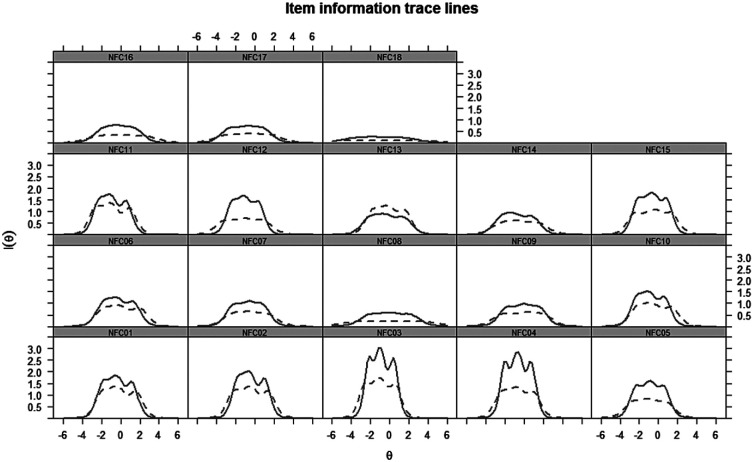
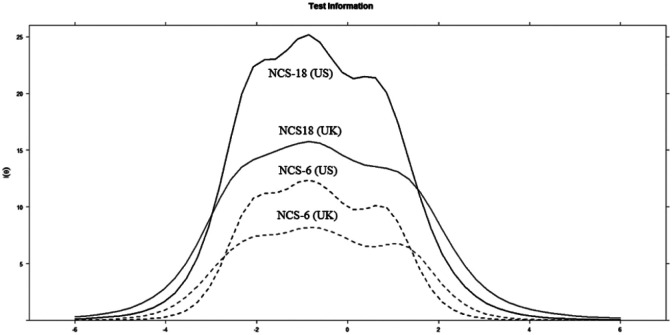
The need for cognition refers to people’s tendency to engage in and enjoy thinking and has become influential across social and medical sciences. Using three samples from the United States and the United Kingdom ( N = 1,596), we introduce a six-item short version of the Need for Cognition Scale (NCS-18). First, we reduced the number of items from 18 to 6 based on the items’ discrimination values, threshold levels, measurement precision (item information curve), item–total correlations, and factor loadings. Second, we confirmed the one-factor structure and established measurement invariance across countries and gender. Finally, we demonstrated that while the NCS-6 provides significant time savings, it comes at a minimal cost in terms of its construct validity with external variables such as openness, cognitive reflection test, and need for affect. Overall, our findings indicate that the NCS-6 is a parsimonious, reliable, and valid measure of need for cognition.
Overview
The claims and statistics of this paper haven’t been checked yet.
Free: it reads the open-access text and checks the first 5 claims that cite a source we can check. Create a free account to check every claim.
Integrity signals
Registry
Cites
Statistics
Figures
Verification
Claims the paper makes
The claims and statistics of this paper haven’t been checked yet.
Free: it reads the open-access text and checks the first 5 claims that cite a source we can check. Create a free account to check every claim.
Claims other papers make about this one
Each is checked against this paper’s own text: does it say what the citing paper says it does?
The cited source says what the claim attributes to it.
In the citing paper
“NFC is a stable personality trait measuring people's propensity towards completing cognitively difficult tasks.”
From Explanations Can Reduce Overreliance on AI Systems During Decision-Making (2023) · cites this paper as [18]
The cited source says what the claim attributes to it.
In the citing paper
“To measure the need for cognition, we used a short 6-item scale developed by Lins de Holanda Coelho et al [ 64 ].”
From Psychological Factors Influencing Appropriate Reliance on AI-enabled Clinical Decision Support Systems: Experimental Web-Based Study Among Dermatologists (2025) · cites this paper as [64]
Self-check
Percentages, sums and reported differences re-computed from the paper’s own numbers.
The self-check needs the paper’s full text.
Citations
Cites
R: A Language and Environment for Statistical Computing
R Core Team (2025) · doi:10.32614/r.manuals · Cited by 352,181
Tabachnick, B. G., & Fidell, L. S. (1983) · Cited by 80,058
lavaan : An R Package for Structural Equation Modeling
Rosseel, Y. (2012) · Journal of Statistical Software · doi:10.18637/jss.v048.i02 · Cited by 27,955 · cited 1×
“Subsequently, we conducted a confirmatory factor analysis (CFA), using the lavaan package (Rosseel, 2012) and the robust maximum likelihood (MLR) estimator.”
MethodSchwartz, S. H. (1992) · Advances in Experimental Social Psychology · doi:10.1016/s0065-2601(08)60281-6 · Cited by 14,619 · cited 3×
“Values are usually defined as abstract ideals or principles that guide people’s behavior and transcend specific situations (Schwartz, 1992).”
BackgroundInfluentialThe application of electronic computers to factor analysis
Kaiser, H. F. (1960) · Educational and Psychological Measurement · doi:10.1177/001316446002000116 · Cited by 12,459 · cited 1×
“In both countries, one factor with eigenvalues greater than one emerged (Kaiser, 1960), indicating a unidimensional structure.”
BackgroundSensitivity of Goodness of Fit Indexes to Lack of Measurement Invariance
Chen, F. F. (2007) · Structural Equation Modeling: A Multidisciplinary Journal · doi:10.1080/10705510701301834 · Cited by 12,217 · cited 2×
“015, respectively (Chen, 2007), when a model is compared with the next higher one (e.”
BackgroundMethodA Rationale and Test for the Number of Factors in Factor Analysis
Horn, J. L. (1965) · Psychometrika · doi:10.1007/bf02289447 · Cited by 8,714 · cited 1×
“To further strengthen the evidence for this structure, the original eigenvalues were compared with eigenvalues generated in simulated data (k = 1000), using the parallel analysis technique (Horn, 1965).”
MethodA very brief measure of the Big-Five personality domains
Gosling, S. D., Rentfrow, P. J., & Swann, W. B. (2003) · Journal of Research in Personality · doi:10.1016/s0092-6566(03)00046-1 · Cited by 8,307
The development of markers for the Big-Five factor structure
Goldberg, L. R. (1992) · Psychological Assessment · doi:10.1037/1040-3590.4.1.26 · Cited by 5,530 · cited 1×
“Openness to new experiences or intellect (Goldberg, 1992).”
Cacioppo, J. T., & Petty, R. E. (1982) · Journal of Personality and Social Psychology · doi:10.1037/0022-3514.42.1.116 · Cited by 5,359 · cited 8×
“…cognition also predicts a range of attitudinal and behavioral outcomes, including preferences for a complex number-circling task over a simple one (Cacioppo & Petty, 1982), achieving higher grade point averages (see, Cacioppo et al., 1996), interpersonal and intergroup attitudes (Aquino et al.,…”
BackgroundMethodInfluential
Research works printed but not linked: 7
- Baker F. B. (2001). The basics of item response theory. Retrieved from http://eric.ed.gov/?id=ED458219 PMC6023097 30034058
- Bizer G. Y. Krosnick J. A. Petty R. E. Rucker D. D. Wheeler S. C. (2000, 3 28). Need for cognition and need to evaluate in the 1998 National Election Survey Pilot Study (ANES Pilot Study Report No. nes008997). Report to the Board of Overseers for the National Election Studies). Ann Arbor, MI: American National Election Studies.
- Bless H. Wänke M. Bohner G. Fellhauer R. F. Schwarz N. (1994). Need for cognition: Eine Skala zur Erfassung von Engagement und Freude bei Denkaufgaben [ Presentation and validation of a German version of the Need for Cognition Scale]. Zeitschrift Für Sozialpsychologie, 25, 147- 154.
- Gutiérrez-Maldonado J. Bajén M. J. Sintas F. Amat M. (1993). Evaluación de la tendencia al esfuerzo cognitivo [ An assessment of the tendency to exert cognitive effort.]. Anuario de Psicología, 58(3), 53- 67.
- Hooper D. Coughlan J. Mullen M. (2008). Structural equation modeling: Guidelines for determining model fit. Electronic Journal on Business Research Methods, 6, 53- 60.
- Kao C. (1994). The concept and measurement of need for cognition: The concept and measurement of need for cognition. Chinese Journal of Psychology, 36, 1- 20.
- Pieters R. G. Verplanken B. Modde J. M. (1987). “Neiging tot nadenken”: Samenhang met beredeneerd gedrag [ Leaning toward reflection: The connection with reasoned behavior]. Nederlands Tijdschrift Voor de Psychologie En Haar Grensgebieden, 42(2), 62- 70.
Cited by
Items 301–358 of 358
König, C. J., Husain, Z., Vesper, D., & Bajwa, N. U. H. (2026) · Journal of International Migration and Integration / Revue de l integration et de la migration internationale · doi:10.1007/s12134-025-01333-2
López‐Zafra, E., & Lorente‐Anguís, A. (2026) · International Journal of Social Psychology Revista de Psicología Social · doi:10.1177/02134748251401479 · Cited by 1
“…instrumentos validados existentes es preferible a la creación de medidas completamente nuevas cuando ya existen escalas fiables para un constructo (Lins de Holanda Coelho et al., 2020), lo que permite a los investi-gadores incorporar constructos establecidos en modelos de relaciones…”
Understanding attraction-related electronic word-of-mouth from the spoiler perspective
Tan, W.-K. (2026) · Service Business · doi:10.1007/s11628-026-00601-0
Liu, C. H., Chiu, F.-C., Huang, P., Lin, T.-H., & Chang, C.-L. (2026) · Cyberpsychology Journal of Psychosocial Research on Cyberspace · doi:10.5817/cp2026-1-2
“In addition to demographic questions and filler scales (e.g., Self-Esteem Scale; see Supplementary Materials), participants first completed the Toronto Empathy Questionnaire and the Need for Cognition Scale (see Measures).”
InfluentialSense or sensibility? Exploring the motivations behind fandom nationalism expression in China
蓝洁, Waheed, M., & Bidin, R. B. H. (2026) · Acta Psychologica · doi:10.1016/j.actpsy.2026.106266 · Cited by 1
No Credences in Active Reasoning: The Argument From Alternative Neglect
Ballarini, C. (2026) · Noûs · doi:10.1111/nous.70037
Torre, M. V., Weijers, R., Specht, M. M., & Oertel, C. (2026) · International Journal of Human-Computer Studies · doi:10.2139/ssrn.6297817
Fitz, E. B., & Saunders, K. L. (2026) · Journal of Retailing and Consumer Services · doi:10.1016/j.jretconser.2026.104759
Anonymous, He, G., Rieger, A., & Gadiraju, U. (2026) · Conference on Human Information Interaction and Retrieval · doi:10.1145/3786304.3787942 · Cited by 1
“Given the wealth of evidence in existing literature that has demonstrated how NFC influences attitude change and user interactions with information, we measured users’ NFC using the NFC-6 scale developed by Lins de Holanda Coelho et al. [44].”
Integrating Complementary Feature Sets for Human-AI Decision-Making
Lage, I., & Wintersteen, B. (2026) · ACM International Conference on Intelligent User Interfaces (IUI) · doi:10.1145/3742413.3789096
“We also asked participants a short Need for Cognition (NFC) questionnaire [21] to assess how much they enjoy thinking.”
Beyond Information Amount: Rethinking Transparency through Active Reasoning Demand
Zhang, X., Ye, Y., Ma, Y., Zhang, Z. T., & Butz, A. M. (2026) · ACM/IEEE International Conference on Human-Robot Interaction (HRI) · doi:10.1145/3757279.3785623
“To account for individual differences, we included the Curiosity and Exploration Inventory-II (CEI-II) [25] to measure participants’ trait curiosity, and the six-item short form of the Need for Cognition Scale (NCS-6) [29] to assess their tendency to engage in and enjoy effortful cognitive activity.”
Sinha, V., Bhattacharya, S., Neelam, N. G., & Mandal, S. (2026) · Social Sciences & Humanities Open · doi:10.1016/j.ssaho.2026.102629
Retributive Impulses in Online Cancel Culture: The Role of Echo Chambers and Individual DifferencesPreprint
McLean, J. C., Gogan, T. D., & Sivasubramaniam, D. (2026) · Research Square · doi:10.21203/rs.3.rs-8883436/v1
Impact of behavioral biases and social factors on financial satisfaction: a moderated-mediated model
Khalid, I., & Riaz, A. (2026) · Journal of economic and administrative sciences. · doi:10.1108/jeas-06-2024-0198 · Cited by 1
Kops, M., Schittenhelm, C., D'Errico, F., & Wachs, S. (2026) · Computers in Human Behavior Reports · doi:10.1016/j.chbr.2026.100991 · Cited by 1
Gong, H., Liu, S., & Zheng, C. (2026) · VOLUNTAS International Journal of Voluntary and Nonprofit Organizations · doi:10.1017/s0957876526000215
Ling, T.-W., Peng, W., Meng, J., & Liu, J. (2026) · CHI Conference Extended Abstracts on Human Factors in Computing Systems (CHI EA) · doi:10.1145/3772363.3798608
Hasegawa, A. A., Kasama, T., & AKIYAMA, M. (2026) · CHI Conference on Human Factors in Computing Systems · doi:10.1145/3772318.3791384
Guided Reflection in AI-Assisted Decision-Making: Effects on AI Overreliance and Decision Accuracy
Li, S., Li, J., Li, H., Zhu, H., & Li, X. (2026) · CHI Conference on Human Factors in Computing Systems · doi:10.1145/3772318.3790632 · Cited by 8
Pataranutaporn, P., Lee, E., Amores, J., & Maes, P. (2026) · CHI Conference on Human Factors in Computing Systems · doi:10.1145/3772318.3791851 · Cited by 1
Does Sycophancy Change Decisions? Effect of LLM Sycophancy on AI-Assisted Decision-Making
Li, Z., Pan, J., Liu, Q., Xi, Y., Zhou, Y., Jin, Y., Mao, R., & Chen, P. (2026) · CHI Conference on Human Factors in Computing Systems · doi:10.1145/3772318.3790934 · Cited by 13
Liu, J., Peng, W., Meng, J., & Ling, T.-W. (2026) · Journal of Broadcasting & Electronic Media · doi:10.1080/08838151.2026.2670673
Bie, Y., Yao, Y., Yang, M., Feng, C., & Jiang, Y. (2026) · Journal of Research in Interactive Marketing · doi:10.1108/jrim-07-2025-0378
He, B., Peng, S., & Zeng, X. (2026) · Sustainability · doi:10.3390/su18105092
How Warnings of Product Drawbacks Affect Online Shopping Decisions
Jafari, E., & Vassileva, J. (2026) · Lecture notes in computer science · doi:10.1007/978-981-95-7141-3_4
Allison, M., & Caluri, G. (2026) · Psychiatry Psychology and Law · doi:10.1080/13218719.2026.2651168
I Don’t Believe Misinformation, But I Might Share It: Inoculation Effects in Messenger Communication
Ancina, A., Zumbrägel, J., & Krämer, N. C. (2026) · Social Media + Society · doi:10.1177/20563051261449194
“NFC. NFC was measured with a six-item short scale (NFC-6; Lins De Holanda Coelho et al., 2020; adapted from Cacioppo et al., 1984) on a five-point Likert-type scale (1 = extremely uncharacteristic of me to 5 = extremely characteristic of me; M = 3.42, SD = 0.69).”
InfluentialTanaka, M., Furutani, K., Alshakhsi, S. A. A., Yankouskaya, A., & Ali, R. (2026) · Research Square · doi:10.21203/rs.3.rs-9832900/v1
Bakrim, R., Hyun, M. Y., Sabri, O., Lee, S., & Kim, H.-C. (2026) · International Journal of Hospitality Management · doi:10.1016/j.ijhm.2026.104776
Ain, Q. U., Chatti, M. A., Varjani, N. Y., Kamal, F., & Pütten, A. M. R.-V. D. (2026) · ACM Conference on User Modeling, Adaptation and Personalization (UMAP) · doi:10.1145/3774935.3806179
Development and validation of the Online Media for Avoidance Coping Scale
Shin, M., Juventin, M., Prichard, I. J., & Kemps, E. (2026) · Personality and Individual Differences · doi:10.1016/j.paid.2026.113955
Hyun, J., & Slaton, K. (2026) · IT Professional · doi:10.1109/mitp.2026.3678122
Vanbrabant, S., Thys, J., Eerlings, G., Luyten, K., Ruiz, G. A. R., & Vanacken, D. (2026) · Proceedings of the ACM on Human-Computer Interaction · doi:10.1145/3816764
Mukherjee, K., & Sharma, S. N. (2026) · Research Square · doi:10.21203/rs.3.rs-10216164/v1
Huh, J. Y., Lee, G., & Kim, T. H. (2026) · Journal of Retailing and Consumer Services · doi:10.1016/j.jretconser.2026.104986
Elite Signal Interpretability and Political Judgment: The Mediating Role of Perceived Uncertainty
Liu, C. (2026) · Trends in Sociology · doi:10.61187/ts.v4i1.322
Donoso-Guzmán, I., Kacafírková, K. S., Szymanski, M., Jacobs, A., Parra, D., & Verbert, K. (2026) · SSRN Electronic Journal · doi:10.2139/ssrn.7201281
The Role of Variability in Human Navigational Instructions in Visual Language Robot Navigation
Sayour, M., Carreno‐Medrano, P., Burke, M. G., & Kulić, D. (2026) · IEEE Robotics and Automation Letters · doi:10.1109/lra.2026.3723312
“915, 95% CI [.894,. 933], N = 165) [34].”
Liu, B., 劉經偉, & Wei, L. (2026) · Journal of Computer-Mediated Communication · doi:10.1093/jcmc/zmag018
The role of (voluntary) large language model use and individual needs in shaping work design
Maisch, V., Bipp, T., & Walczok, M. (2026) · Work · doi:10.1177/10519815261476647
Gong, K.-B., & Zhang, J. (2026) · Acta Psychologica · doi:10.1016/j.actpsy.2026.107753
Amzalag, M., Zviel-Girshin, R., & Beimel, D. (2026) · Frontiers in Education · doi:10.3389/feduc.2026.1861548 · Cited by 1
Stojanović, A., Fris, D. A. H., van Hooft, E. A. J., de Hoog, M., & de Pagter, A. P. J. (2026) · Journal of Occupational and Organizational Psychology · doi:10.1111/joop.70155
Ganming, Y., Wei, S., & Cao, Z. (2026) · Frontiers in Psychology · doi:10.3389/fpsyg.2026.1942537
“Individuals high in need for cognition are generally more willing to invest cognitive effort rather than rely on simple and intuitive explanations (Lins de Holanda Coelho et al., 2020).”
InfluentialMukherjee, K., & Sharma, S. N. (2026) · Motivation and Emotion · doi:10.1007/s11031-026-10282-x
Fani, V., Mazzoli, V., Confente, I., & Bandinelli, R. (2026) · Business Strategy and the Environment · doi:10.1002/bse.71578 · Cited by 1
Minds in motion: The effect of perceived social mobility on distant brand extension
Chen, H., Hu, J., & Zhao, Y. (2026) · Journal of the Academy of Marketing Science · doi:10.1007/s11747-026-01203-y
Shen, W., & Gao, M. (2026) · Frontiers in Psychology · doi:10.3389/fpsyg.2026.1927892
Stance-Prompting Frames and Tolerance of Service Robot Failures
Lv, D., Sun, R., Zhu, Q., Cheng, Y., & Qin, S. (2026) · International Journal of Social Robotics · doi:10.1007/s12369-026-01444-5
Kokkinos, C. M., & Voulgaridou, I. (2026) · Personality and Individual Differences · doi:10.1016/j.paid.2026.114114
Promoting health information-seeking behaviour prior to vaccination decisions
Groß, M., Sievert, E. D. C., Korn, L., Santana, A. P., Betsch, C., & BOHM, R. M. (2026) · Psychology and Health · doi:10.1080/08870446.2026.2739472
OLDER AGE IS ASSOCIATED WITH HIGHER LEVELS OF CONFIRMATION BIAS IN CLIMATE-RELATED DECISION MAKINGPreprint
Nolte, J., Shavit, Y. Z., & Ng, W. Q. (2026) · SSRN Electronic Journal · doi:10.2139/ssrn.7582981
Surveys measuring correlates of numeracy
Kerr, J. R., Schneider, C. R., Dryhurst, S., Recchia, G. L., & Freeman, A. L. J. (2026) · Octopus · doi:10.57874/najc-5241
Personality, cognition, and AI use profiles of college students
Liss, M., & Schweitzer, L. (2026) · Personality and Individual Differences · doi:10.1016/j.paid.2026.114132
Xu, Q., & Chen, C. (2026) · Computers in Human Behavior · doi:10.1016/j.chb.2026.109236
Development and validation of the AI cognitive offloading scale for Chinese college students
Chang, H. (2026) · Frontiers in Psychology · doi:10.3389/fpsyg.2026.1884676
Metadata
- Authors
- Lins de Holanda Coelho, G., H. P. Hanel, P., & J. Wolf, L.
- Affiliations
- Cardiff University, Cardiff, UK
- University of Bath, Bath, UK
- Venue
- Assessment
- Publisher
- SAGE Publications
- Published
- 2018-08-10
- Volume
- 27
- Issue
- 8
- Pages
- 1870-1885
- ISSN
- 1073-1911 (ISSN-L)
- 1552-3489
- PMC
- PMC7545655
- OpenAlex
- W2886960137
- Cited by
- 358
- References
- 91
- Citations by year
- 2026: 76 · 2025: 78 · 2024: 58 · 2023: 59 · 2022: 42 · 2021: 28 · 2020: 12 · 2019: 5
- FWCI
- 8.93
- Type
- journal article
- Language
- en
- Open access
- hybrid
- doi.org
- Locations
- Assessment (publishedVersion, cc-by)
- Europe PMC (PubMed Central) (publishedVersion, cc-by)
- PubMed Central (publishedVersion, cc-by)
- PubMed (publishedVersion)
- ORCA Online Research @Cardiff (Cardiff University) (acceptedVersion)
- Open Access at Essex (University of Essex) (acceptedVersion)
- Pure (University of Bath) (submittedVersion, cc-by)
- Funders
- Coordenação de Aperfeiçoamento de Pessoal de Nível Superior
- Governo Brasil
- Economic and Social Research Council (1358978)
- Topics
- Social Sciences › Decision Sciences › Management Science and Operations Research › Psychometric Methodologies and Testing
- Social Sciences › Psychology › Applied Psychology › Psychological Testing and Assessment
- Social Sciences › Psychology › Clinical Psychology › Personality Traits and Psychology
- Keywords
- need for cognition, Need for Cognition Scale, short-form scale development, psychometric validation, measurement invariance, construct validity, cognitive reflection, openness to experience, need for affect, item reduction
- MeSH terms
- Cognition, Factor Analysis, Statistical, United Kingdom, Humans, Psychometrics, Surveys and Questionnaires, United States, Reproducibility of Results
About these checks
Registry, retraction, Cites and statistics results are computed, not judged, with one exception: a printed reference that no index lists is read once by a model before it counts as a citation error. Claims are extracted by a model and kept only when their quote appears verbatim in the text; each cited source is then checked, with a model’s help, for whether it says what the claim relies on. Those verdicts can be wrong — read the claim’s quote and the cited source before relying on one.
Statistics and arithmetic are recomputed, not judged.
Confidence bands are shown only for fields calibrated on our annotated test set. None is calibrated yet, so no band is shown.
What counts as a claim ›How we measure confidence ›How we check this ›
Are you an author, or do you see a problem with this page? Request a review
Data sources
Bibliographic data: Semantic Scholar, OpenAlex, Crossref.
Contains information from the Semantic Scholar Academic Graph Datasets, made available under the ODC Attribution License (ODC-BY 1.0).
Semantic Scholar’s data is described in: Kinney, R., et al. (2023). The Semantic Scholar Open Data Platform. arXiv:2301.10140.
