

The DOI matches its Crossref record; 65 of the 65 references it cites were found in a registry or an index.
Effects of COVID-19 Misinformation on Information Seeking, Avoidance, and Processing: A Multicountry Comparative Study
Open accessAbstract
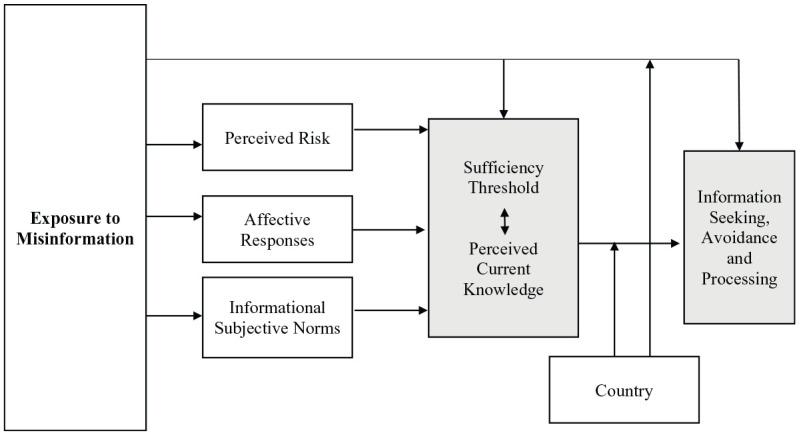
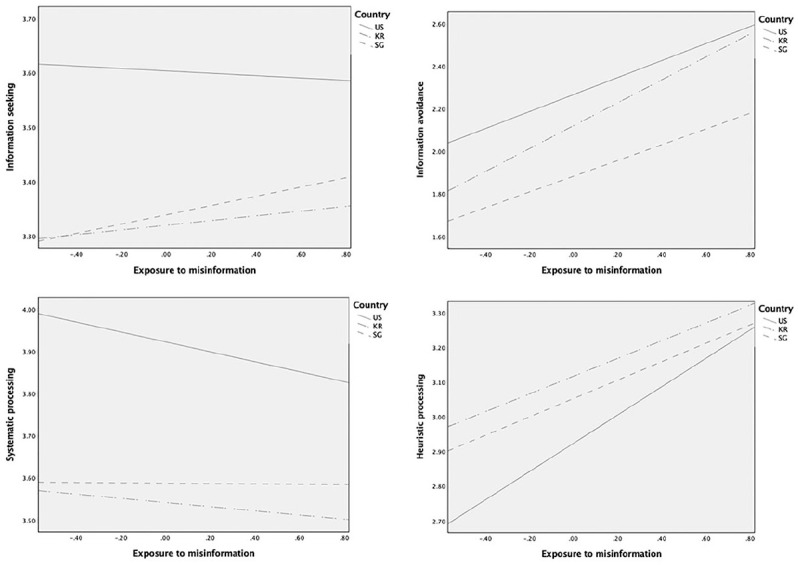
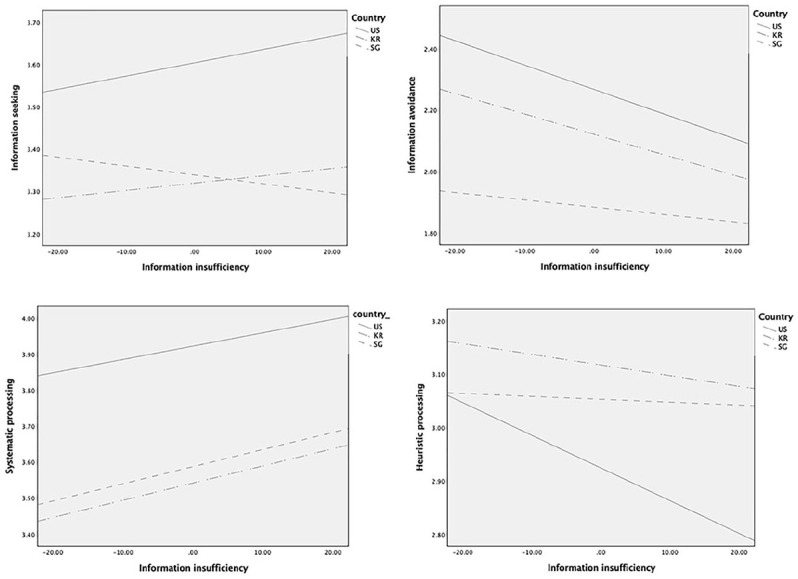
We examined the implications of exposure to misinformation about COVID-19 in the United States, South Korea, and Singapore in the early stages of the global pandemic. The online survey results showed that misinformation exposure reduced information insufficiency, which subsequently led to greater information avoidance and heuristic processing, as well as less systematic processing of COVID-19 information. Indirect effects differ by country and were stronger in the U.S. sample than in the Singapore sample. This study highlights negative consequences of misinformation during a global pandemic and addresses possible cultural and situational differences in how people interpret and respond to misinformation.
Overview
The claims and statistics of this paper haven’t been checked yet.
Run the check — free, no account needed. It reads the open-access text and checks the sources it cites.
Integrity signals
Registry
Cites
Statistics
Figures
Verification
Claims the paper makes
The claims and statistics of this paper haven’t been checked yet.
Run the check — free, no account needed. It reads the open-access text and checks the sources it cites.
Claims other papers make about this one
Each is checked against this paper’s own text: does it say what the citing paper says it does?
The source backs part of the claim, not all of it — or backs it for a different population, condition or comparison.
In the citing paper
“misinformation has even been shown to lead to information avoidance and less systematic processing of COVID-19 information 32”
From Measuring the impact of COVID-19 vaccine misinformation on vaccination intent in the UK and USA (2021) · cites this paper as [32]
Experimental — accuracy not yet measured
Self-check
Percentages, sums and reported differences re-computed from the paper’s own numbers.
The self-check needs the paper’s full text.
Citations
Cites
The theory of planned behavior
Ajzen, I. (1991) · Organizational Behavior and Human Decision Processes · doi:10.1016/0749-5978(91)90020-t · Cited by 90,587
(2013) · Cited by 44,563
Cultures and Organizations: Software of the Mind.
Triandis, H. C., & Hofstede, G. (1993) · Administrative Science Quarterly · doi:10.2307/2393257 · Cited by 17,696
Applied Multiple Regression/Correlation Analysis for the Behavioral Sciences.
Fong, G. T., Cohen, J., & Cohen, P. R. (1985) · Journal of the American Statistical Association · doi:10.2307/2287930 · Cited by 4,610
When Corrections Fail: The Persistence of Political Misperceptions
Nyhan, B., & Reifler, J. (2010) · Political Behavior · doi:10.1007/s11109-010-9112-2 · Cited by 3,173
Systematic Literature Review on the Spread of Health-related Misinformation on Social Media
Wang, Y., McKee, M., Torbica, A., & Stuckler, D. (2019) · Social Science & Medicine · doi:10.1016/j.socscimed.2019.112552 · Cited by 1,806 · cited 1×
“There is limited understanding of why certain individuals or societies are more or less vulnerable to misinformation (Wang et al., 2019).”
BackgroundNational Cultures in Four Dimensions: A Research-Based Theory of Cultural Differences among Nations
Hofstede, G. H. (1983) · International Studies of Management and Organization · doi:10.1080/00208825.1983.11656358 · Cited by 1,684
Cultures and organizations: Software of the mind
(1992) · International Journal of Intercultural Relations · doi:10.1016/0147-1767(92)90033-q · Cited by 1,653
Less than you think: Prevalence and predictors of fake news dissemination on Facebook
Guess, A., Nagler, J., & Tucker, J. (2019) · Science Advances · doi:10.1126/sciadv.aau4586 · Cited by 1,652
Garfin, D. R., Silver, R. C., & Holman, E. A. (2020) · Health Psychology · doi:10.1037/hea0000875 · Cited by 1,270
Research works printed but not linked: 2
- Cohen J., 2003, Appplied multiple regression/correlation analysis for the behavioral sciences
- Eagly A. H., 1993, The psychology of attitudes
Cited by
Sorted by citations
Items 101–200 of 313
An Examination of the Link between Leader Motivating Language and Follower Interactional Justice
Alikaj, A., & Hanke, D. (2021) · International Journal of Business Communication · doi:10.1177/23294884211011240 · Cited by 13
Leigh, J. P., Moss, S. J., Sriskandarajah, C., McArthur, E., Ahmed, S. B., Birnie, K. A., Halperin, B. A., Halperin, S. A., Harley, M., Hu, J., et al. (2023) · Scientific Reports · doi:10.1038/s41598-023-34544-7 · Cited by 12
Descriptive Norms and eHealth Use Among Older Adults: A Cross-Country Comparative Study
Wu, Q. J., Ngien, A., & Jiang, S. (2023) · Health Communication · doi:10.1080/10410236.2023.2297120 · Cited by 13
Yang, Q., Luo, Z., Li, M., & Liu, J. (2021) · Global Health Promotion · doi:10.1177/17579759211035053 · Cited by 12
“I Heard That COVID-19 Was...”: Rumors, Pandemic, and Psychological Distance
Kwon, K. H., Pellizzaro, K., Shao, C., & Chadha, M. (2022) · American Behavioral Scientist · doi:10.1177/00027642211066026 · Cited by 13
Ding, Q., Gu, Y., Zhang, G., Li, X., Zhao, Q. P., Gu, D., Yang, X., & Wang, X. (2022) · Healthcare · doi:10.3390/healthcare10081381 · Cited by 13
Mirzabeigi, M., Torabi, M., & Jowkar, T. (2023) · Library Hi Tech · doi:10.1108/lht-03-2022-0150 · Cited by 12
Huang, Q., & Wei, L. (2022) · Information Processing & Management · doi:10.1016/j.ipm.2022.102989 · Cited by 12
COVID-19 information-seeking behaviors and preventive behaviors among college students in Oklahoma
Chen, X., Ariati, J., McMaughan, D. J., Han, H., Hubach, R. D., & Miller, B. M. (2022) · Journal of American College Health · doi:10.1080/07448481.2022.2090842 · Cited by 12
Kim, L., Hong, Y., Abrar, S., & FitzGerald, C. A. (2023) · Journal of Creative Communications · doi:10.1177/09732586231166111 · Cited by 11
Lu, J., Zhang, H., Xiao, Y., & Wang, Y. (2024) · JMIR AI · doi:10.2196/47240 · Cited by 11
Why do people avoid health risk information? A qualitative analysis
O'Brien, A. G., Meese, W. B., Taber, J. M., Johnson, A. E., Hinojosa, B. M., Burton, R., Ranjan, S., Rodarte, E. D., Coward, C., & Howell, J. L. (2024) · SSM - Qualitative Research in Health · doi:10.1016/j.ssmqr.2024.100461 · Cited by 11
Mohamad, E. M. W., Tham, J. S., Ajis, S. Z. M., Hamzah, M. R., Ayub, S. H., Sakti, A. M. T., & Azlan, A. A. (2022) · International Journal of Environmental Research and Public Health · doi:10.3390/ijerph192214623 · Cited by 14
Kessler, S. H., & Humprecht, E. (2023) · Digital Health · doi:10.1177/20552076231177131 · Cited by 11
Pandey, S., & Ghosh, M. (2023) · Journal of Creative Communications · doi:10.1177/09732586231165577 · Cited by 12
Roche, J., Bell, L., Martin, I., Loone, F. M., Mathieson, A. J., & Sommer, F. (2021) · Science Communication · doi:10.1177/10755470211038506 · Cited by 11
Defining Health MisinformationPreprint
Wang, Y., Thier, K., & Nan, X. (2022) · doi:10.31234/osf.io/jt9f7 · Cited by 11
Liu, T., Song, X., & Zhu, Q.-H. (2024) · Frontiers in Public Health · doi:10.3389/fpubh.2024.1377017 · Cited by 9
Sun, S., Seo, M., Wang, F., & Liu, Z. (2021) · Journal of Broadcasting & Electronic Media · doi:10.1080/08838151.2021.2011284 · Cited by 10
Evaluating the elevation of authoritative health content online during the COVID-19 pandemic
Walsh, M., Baker, S. A., & Wade, M. (2022) · Online Information Review · doi:10.1108/oir-12-2021-0655 · Cited by 10
Huang, J., Ren, W., Wang, S., Zhou, Y., & Yang, Y. Y. (2023) · INQUIRY The Journal of Health Care Organization Provision and Financing · doi:10.1177/00469580231159747 · Cited by 10
Gibson, K. E., Sanders, C. E., & Lamm, A. J. (2021) · SAGE Open · doi:10.1177/21582440211061324 · Cited by 10
Cluster Analysis of Biochemical Markers as Predictor of COVID-19 Severity
Mohammed, S. K., Taha, M. M., Taha, E. M., & Mohammad, M. N. A. (2022) · Baghdad Science Journal · doi:10.21123/bsj.2022.7454 · Cited by 10
Salamah, S., Khafiyya, A. N., Ramadhani, R., Arfiana, M. R., Syamsuri, I., Faizah, N. N., Nugraha, D., Arifin, B., & Alkaff, F. F. (2023) · Medical Science Monitor · doi:10.12659/msm.939797 · Cited by 9
Liu, Z., & Yang, J. Z. (2023) · Journal of Risk Research · doi:10.1080/13669877.2023.2270605 · Cited by 9
A model for predicting factors affecting health information avoidance on WeChat
Chen, M., Huang, X., Wu, Y., Song, S., & Qi, X. (2025) · Digital Health · doi:10.1177/20552076251314277 · Cited by 9
Link, E. (2025) · Communication Research · doi:10.1177/00936502251328717 · Cited by 9
Propaganda Gone Viral: A Theory of Chinese and Russian “COVID Diplomacy” in the Age of Social Media
Foster, N. (2021) · Contributions to international relations · doi:10.1007/978-3-030-73955-3_7 · Cited by 9
Irish Media Coverage of COVID-19 Evidence-Based Research Reports From One National Agency
Sharp, M. K., Forde, Z., McGeown, C., Murchú, É. Ó., Smith, S. M., O’Neill, M., Ryan, M., & Clyne, B. (2021) · International Journal of Health Policy and Management · doi:10.34172/ijhpm.2021.169 · Cited by 9
Priebe, J., Silber, H., Beuthner, C., & Pötzschke, S. (2022) · BMC Public Health · doi:10.1186/s12889-022-12725-9 · Cited by 9
Weinzierl, M., Hopfer, S., & Harabagiu, S. M. (2022) · Journal of Behavioral Medicine · doi:10.1007/s10865-022-00328-z · Cited by 9
Nelson, J. R., Lu, A., Maestre, J. P., Palmer, E. J., Jarma, D., Kinney, K. A., Grubesic, T. H., & Kirisits, M. J. (2022) · Spatial and Spatio-temporal Epidemiology · doi:10.1016/j.sste.2022.100521 · Cited by 10
Reasons people avoid colorectal cancer information: a mixed-methods study
Orom, H., Stanar, S., Allard, N. C., Hay, J. L., Waters, E. A., Kiviniemi, M. T., & Lewicka, M. (2023) · Psychology and Health · doi:10.1080/08870446.2023.2280177 · Cited by 9
Zimmermann, B. M. (2024) · Social Science & Medicine · doi:10.1016/j.socscimed.2024.116647 · Cited by 9
Chen, X., Ariati, J., Li, M., & Kreps, G. L. (2022) · Health Behavior Research · doi:10.4148/2572-1836.1151 · Cited by 9
Stubenvoll, M. (2022) · Science Communication · doi:10.1177/10755470221142304 · Cited by 8
Li, Y., Chen, M.-L., & Lee, H. (2024) · Social Science & Medicine · doi:10.1016/j.socscimed.2024.116748 · Cited by 8
Avoiding negative information as a strategy for emotion regulation
Heinström, J., Nikou, S., & Sormunen, E. (2022) · Information Research · doi:10.47989/irisic2229 · Cited by 8
Jin, X. (2023) · Online Information Review · doi:10.1108/oir-08-2022-0436 · Cited by 8
Bilandzić, H., & Myrick, J. G. (2023) · Health Communication · doi:10.1080/10410236.2023.2263220 · Cited by 8
Lee, H., & Kim, J. (2022) · Journal of Applied Communication Research · doi:10.1080/00909882.2022.2141069 · Cited by 8
Golos, A., Guntuku, S. C., Piltch-Loeb, R. N., Leininger, L. J., Simanek, A. M., Kumar, A., Albrecht, S. S., Dowd, J. B., Jones, M., & Buttenheim, A. M. (2023) · PLoS ONE · doi:10.1371/journal.pone.0281773 · Cited by 8
Lai, C. (2022) · International Journal of Disaster Risk Reduction · doi:10.1016/j.ijdrr.2022.102826 · Cited by 8
Design Principles for an Educational Intervention Into Online Vaccine Misinformation
Veletsianos, G., Houlden, S., Reid, D., Hodson, J., & Thompson, C. P. (2022) · TechTrends · doi:10.1007/s11528-022-00755-4 · Cited by 7
Ren, R., & Yan, B. (2022) · Frontiers in Psychology · doi:10.3389/fpsyg.2022.964994 · Cited by 7
Desinformación y vacunas en redes
Vivó, J. M. N., Grandío-Pérez, M. D. M., Villar-Rodríguez, G., Martín, A. G., & Camacho, D. (2022) · Revista Latina de Comunicación Social · doi:10.4185/rlcs-2023-1820 · Cited by 7
Influence of COVID-19 on online shopping behaviour, leisure and socialisation
Borges, A. P., Vieira, E., Rodrigues, P. C. L., & Sousa, A. (2023) · Management Research The Journal of the Iberoamerican Academy of Management · doi:10.1108/mrjiam-09-2021-1229 · Cited by 10
Addressing Mis- and Disinformation on Social Media
Canela, G., Claesson, A., & Pollack, R. (2023) · Springer eBooks · doi:10.1007/978-3-031-27789-4_9 · Cited by 7
Partisan selective exposure and politically polarized attitudes toward disruptive protest
Lorenzano, K. J., Moon, S. J., & Borah, P. (2023) · Communication and the Public · doi:10.1177/20570473231171460 · Cited by 7
George, R. S., Goodey, H., Russo, M. A., Tula, R., & Ghezzi, P. (2024) · Frontiers in Public Health · doi:10.3389/fpubh.2024.1327704 · Cited by 7
Xu, X., & Lin, C. A. (2024) · Vaccines · doi:10.3390/vaccines12101096 · Cited by 6
Reality Decoupling: Rumours, Disinformation, and Studying the Politics of Truth in Digital Asia
Schneider, F. (2023) · Asiascape Digital Asia · doi:10.1163/22142312-bja10045 · Cited by 6
Exploring Information Behavior Patterns in Response to False and Misleading Health Information
Bressel, P., Dewitz, L., & Greifeneder, E. (2023) · Proceedings of the Association for Information Science and Technology · doi:10.1002/pra2.770 · Cited by 6
Can you cite that? Describing Tennessee consumers’ use of GMO information channels and sources
Gibson, J., Greig, J. A., Rampold, S. D., Nelson, H., & Stripling, C. T. (2022) · Advancements in Agricultural Development · doi:10.37433/aad.v3i2.181 · Cited by 6
Iwanowska, M., Zawadzka, A. M., & Kondratowicz, B. (2023) · Current Issues in Personality Psychology · doi:10.5114/cipp/156172 · Cited by 10
Bazrafshan, A., Sadeghi, A., Bazrafshani, M. S., Mirzaie, H., Shafiee, M., Geerts, J. M., & Sharifi, H. P. (2023) · BMJ Open · doi:10.1136/bmjopen-2023-072326 · Cited by 6
Zhang, T. H., Tham, J. S., & Waheed, M. (2022) · International Journal of Environmental Research and Public Health · doi:10.3390/ijerph19137991 · Cited by 9
Conflicted and Relevant: Systematic Processing of Information on PFAS Contamination
Dong, X., & Yang, J. Z. (2024) · Health Communication · doi:10.1080/10410236.2024.2328456 · Cited by 5
Zeng, J., Duan, H. L., Zhu, W., & Song, J. (2024) · Energy · doi:10.1016/j.energy.2024.132031 · Cited by 5
Lim, J. S., Zhang, J., Kim, J., & Lee, C. (2024) · Asian Journal of Communication · doi:10.1080/01292986.2024.2384033 · Cited by 5
Lu, J., & Xiao, Y. (2023) · Journal of Health Communication · doi:10.1080/10810730.2023.2185320 · Cited by 5
Nah, S., Oh, J., & Atkinson, L. (2023) · Journal of Health Communication · doi:10.1080/10810730.2023.2204308 · Cited by 5
Self-citationLink, E. (2023) · Communications · doi:10.1515/commun-2022-0085 · Cited by 5
Ünlü, A., Truong, S., Sawhney, N., Sivelä, J., & Tammi, T. (2024) · Journal of Computational Social Science · doi:10.1007/s42001-024-00257-8 · Cited by 7
Analyzing pro-vax discourse during the pandemic: Techno-scientism, elitism, anti-populism
Venizelos, G., & Trimithiotis, D. (2024) · The Communication Review · doi:10.1080/10714421.2024.2378576 · Cited by 6
Pregnancy-related health information behaviour of Estonian women
Ojaperv, K., & Virkus, S. (2021) · Global Knowledge, Memory and Communication · doi:10.1108/gkmc-05-2021-0086 · Cited by 5
PERSEPSI RISIKO DAN BIAS KOGNITIF DALAM PENCEGAHAN PENULARAN COVID-19 DI JAWA BARAT, INDONESIA
Nastiti, A., Kusumah, S. W. D., Wangsaatmaja, A., Roosmini, D., Sundana, E. J., & Sutadian, A. (2020) · CR Journal (Creative Research for West Java Development) · doi:10.34147/crj.v6i2.282 · Cited by 5
Lee, E. H., Lee, T., & Noh, H. (2025) · Atlantic Journal of Communication · doi:10.1080/15456870.2025.2595983 · Cited by 4
Sun, L., & Wang, Y. (2026) · Health Communication · doi:10.1080/10410236.2026.2616279 · Cited by 5
Chen, S. (2022) · Journalism Practice · doi:10.1080/17512786.2022.2090999 · Cited by 4
Cao, W., Yang, Q., & Zhang, X. (2023) · International Journal of Environmental Research and Public Health · doi:10.3390/ijerph20054041 · Cited by 4
Nguyen, D. V. P., & Phung, T.-B. (2023) · SAGE Open · doi:10.1177/21582440231205169 · Cited by 5
Frisli, S. (2025) · Journal of Computational Social Science · doi:10.1007/s42001-025-00367-x · Cited by 4
Behera, R. K., Bala, P. K., Rana, N. P., & Dwivedi, Y. K. (2022) · Benchmarking An International Journal · doi:10.1108/bij-11-2021-0718 · Cited by 5
Roe, M., Buggy, C., Ingram, C., Codd, M., Buckley, C. M., Archibald, M., Rachwal, N., Downey, V., Chen, Y., Sripaiboonkij, P., et al. (2022) · BMJ Open · doi:10.1136/bmjopen-2022-061583 · Cited by 4
General Knowledge and Perception of Portuguese Children About COVID-19
Toniolo, B. P., Baptista, J. P., Ramos, C., Piñeiro-Naval, V., & Gradim, A. (2021) · Advances in intelligent systems and computing · doi:10.1007/978-3-030-68418-1_19 · Cited by 4
Amin, K. H. A. K., Yusof, M. H., Itam, M. F., Fisal, Z. A. M., Yatim, M. H. M., & Manaf, R. A. (2023) · Malaysian Journal of Medicine and Health Sciences · doi:10.47836/mjmhs.19.1.32 · Cited by 4
Chen, Y., Ramírez, M., Lumpkins, C. Y., Crawford, B., Greiner, K. A., & Ellerbeck, E. F. (2022) · American Journal of Public Health · doi:10.2105/ajph.2022.307071 · Cited by 4
Yuqi, Y., Rui, H. U., Yongqing, G. E., & Yin, J. (2023) · Heliyon · doi:10.1016/j.heliyon.2023.e20240 · Cited by 3
Tahir, M. A., Haq, I. U., Zakki, S. A., & Akbar, F. (2025) · China CDC Weekly · doi:10.46234/ccdcw2025.060 · Cited by 3
Sherkatalabbasieh, M., Mirzabeigi, M., & Sotudeh, H. (2025) · Journal of Librarianship and Information Science · doi:10.1177/09610006251351346 · Cited by 2
Shahzad, K., Raza, A., Ishaq, M. I., Talpur, Q., & Junaid, M. (2026) · Electronic Commerce Research · doi:10.1007/s10660-025-10079-z · Cited by 3
Information Avoidance: a Systematic Review
Torabi, M., & Mirzabeigi, M. (2021) · پژوهشنامه پردازش و مدیریت اطلاعات · doi:10.52547/jipm.37.2.387 · Cited by 3
Lai, C., & Tang, T. (2023) · Health Communication · doi:10.1080/10410236.2023.2185923 · Cited by 3
Misinformation and Generative AI: How Users Construe Their Sense of Diagnostic Misinformation
Shin, D. (2024) · Springer eBooks · doi:10.1007/978-3-031-52569-8_9 · Cited by 3
Shi, N., Liang, J., Yi, Y., Miao, R., Yang, X., Yang, L., Tao, T., Zhang, Y., Jin, H., & Zheng, X. (2024) · British Journal of Health Psychology · doi:10.1111/bjhp.12759 · Cited by 3
Okoroiwu, H. U., Okafor, I. M., Echieh, C. P., Ogar, C. O., Abunimye, D. A., & Uchendu, I. K. (2022) · Pan African Medical Journal · doi:10.11604/pamj.2022.41.102.30262 · Cited by 3
Desinformación y vacunas en redes
Vivó, J. M. N., Grandío-Pérez, M. D. M., Villar-Rodríguez, G., Martín, A. G., & Camacho, D. (2022) · Revista Latina de Comunicación Social · doi:10.4185/rlcs-2022-1820 · Cited by 3
Lachlan, K. A., Gilbert, C., Hutter, E., & Spence, P. R. (2023) · Atlantic Journal of Communication · doi:10.1080/15456870.2023.2173363 · Cited by 3
Heitkemper, E., Wilcox, G. B., Zuniga, J. A., Kim, M. T., & Cuevas, H. E. (2023) · The Science of Diabetes Self-Management and Care · doi:10.1177/26350106231158828 · Cited by 3
Chew, H. E., & Chong, Y. K. (2023) · Mobile communication in Asia · doi:10.1007/978-94-024-2225-2_9 · Cited by 3
Experience, learning and the detection of deception
Banerjee, P., Ghosh, S., & Hazra, S. (2021) · Journal of Economic Criminology · doi:10.1016/j.jeconc.2023.100010 · Cited by 3
Hopp, T., & Kazmi, S. (2023) · Frontiers in Psychology · doi:10.3389/fpsyg.2023.1226861 · Cited by 6
Borah, P., Kim, S. C., & Lorenzano, K. J. (2024) · Health Communication · doi:10.1080/10410236.2024.2309811 · Cited by 3
Rahman, A., Mohammadi, E., & Alhoori, H. (2024) · Natural Language Processing Journal · doi:10.1016/j.nlp.2024.100085 · Cited by 3
Mayweg-Paus, E., Zimmermann, M., & Lefke, C. (2021) · Frontiers in Psychology · doi:10.3389/fpsyg.2021.728408 · Cited by 4
Agendamelding and COVID-19: the dance of horizontal and vertical media in a pandemic
Minooie, M., Taylor, J. B., & Vargo, C. J. (2023) · Frontiers in Political Science · doi:10.3389/fpos.2023.1021855 · Cited by 3
The Use of Dark Web as a COVID-19 Information Source: A Three-Country StudyPreprint
Sirola, A., Nuckols, J. A., Nyrhinen, J., & Wilska, T. (2022) · SSRN Electronic Journal · doi:10.2139/ssrn.4010785 · Cited by 3
Hovick, S. R. A., & Ryu, J. Y. (2025) · Annals of the International Communication Association · doi:10.1093/anncom/wlaf015 · Cited by 2
Zhong, Q., Peng, Z., & Zhang, X. (2025) · Risk Analysis · doi:10.1111/risa.70108 · Cited by 2
Metadata
- Authors
- Kim, H. K., Ahn, J., Atkinson, L., & Kahlor, L. A.
- Affiliations
- Nanyang Technological University (SG)
- Hallym University (KR)
- The University of Texas at Austin (US)
- Corresponding author
- Kim, Hye Kyung
- Venue
- Science Communication
- Publisher
- SAGE Publications
- Published
- 2020-09-13
- Volume
- 42
- Issue
- 5
- Pages
- 586-615
- ISSN
- 0164-0259 (ISSN-L)
- 1075-5470
- 1552-8545
- PMC
- PMC7492825
- OpenAlex
- W3086361638
- Cited by
- 313
- References
- 64
- Citations by year
- 2026: 22 · 2025: 33 · 2024: 43 · 2023: 71 · 2022: 93 · 2021: 45 · 2020: 5
- FWCI
- 71.69
- Type
- journal article
- Language
- en
- Open access
- hybrid
- doi.org
- Locations
- Science Communication (publishedVersion, cc-by)
- PubMed Central (publishedVersion, cc-by)
- PubMed (publishedVersion)
- DR-NTU (Nanyang Technological University) (submittedVersion, cc-by)
- Funders
- ministry of education - singapore (Academic Research Fund Tier 1)
- national research foundation of korea (NRF-2018S1A3A2074932)
- Ministry of Education of the Republic of Korea
- Topics
- Social Sciences › Sociology and Political Science › Misinformation and Its Impacts
- Social Sciences › Communication › Communication and COVID-19 Impact
- Social Sciences › Communication › Public Relations and Crisis Communication
- Keywords
- COVID-19 misinformation, information seeking, information avoidance, heuristic processing, systematic processing, information insufficiency, cross-cultural comparison, pandemic response, United States, South Korea, Singapore
About these checks
Registry, retraction, Cites and statistics results are computed, not judged, with one exception: a printed reference that no index lists is read once by a model before it counts as a citation error. Claims are extracted by a model and kept only when their quote appears verbatim in the text; each cited source is then checked, with a model’s help, for whether it says what the claim relies on. Those verdicts can be wrong — read the claim’s quote and the cited source before relying on one.
Statistics and arithmetic are recomputed, not judged.
Confidence bands are shown only for fields calibrated on our annotated test set. None is calibrated yet, so no band is shown.
What counts as a claim ›How we measure confidence ›How we check this ›
Are you an author, or do you see a problem with this page? Request a review
