

Technology-Facilitated Gender-Based Violence, Hate Speech, and Terrorism: A Risk Assessment on the Rise of the Incel Rebellion in Canada
Open accessThe DOI matches its Crossref record; 36 of the 38 references it cites were found in a registry or an index, and 2 are not checked yet; 3 of the 102 sources its claims cite were checked for support.
Abstract
With the proliferation of the internet, emerging groups such as the men's rights movement involuntary celibate (incel) community have new ways to reproduce real-world harm and gender-based violence (GBV) against women. This study conducts a critical discourse and semantic analysis of the incels.co webpage, revealing that theoretical frameworks often fail to capture online-to-offline GBV, hate speech, and violent extremism.
Verified 2026-11-25 · 2 references not checked yet
Overview
CoChat Summary
TL;DR
This study uses critical discourse and semantic analysis plus VERA-2 and CYBERA risk tools to assess the incels.co forum and Alek Minassian’s police interview, finding high or moderately high violent-extremism risk. It argues that Canadian terrorism and hate speech frameworks minimize online gender-based violence and that risk assessment must better capture gendered ideology and the online–offline continuum.
Key findings
- The incels.co forum scored 34/50 on VERA-2 (moderately high risk) and 42/50 on CYBERA (high risk); Minassian scored 42/50 on VERA-2 and 38/50 on CYBERA (both high risk).
- The forum’s highest VERA-2 section was Beliefs and Attitudes at 14/14, and its CYBERA Beliefs, Attitudes, Intention section was 19/20; Minassian’s VERA-2 Commitment and Motivation was 10/10, and his CYBERA Semantic Content and Virtual Social Network Context sections were both 8/8.
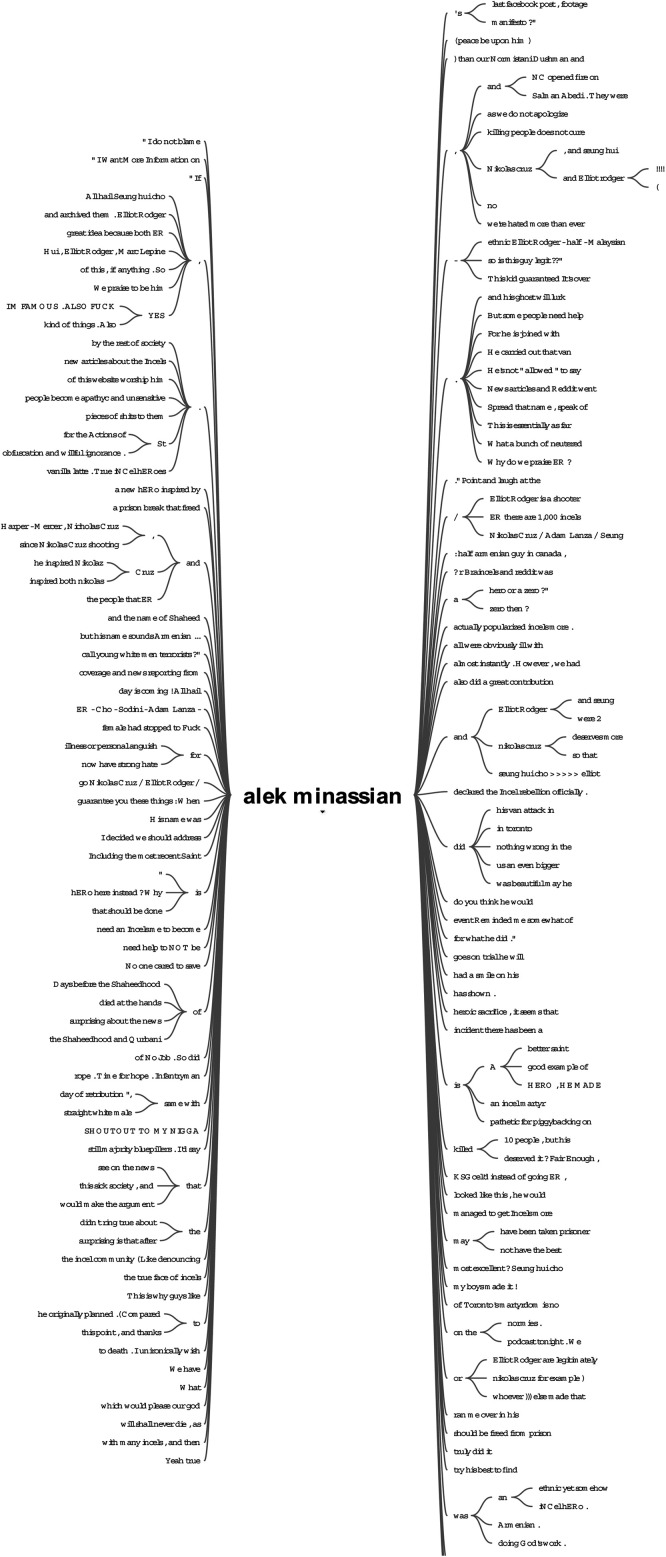
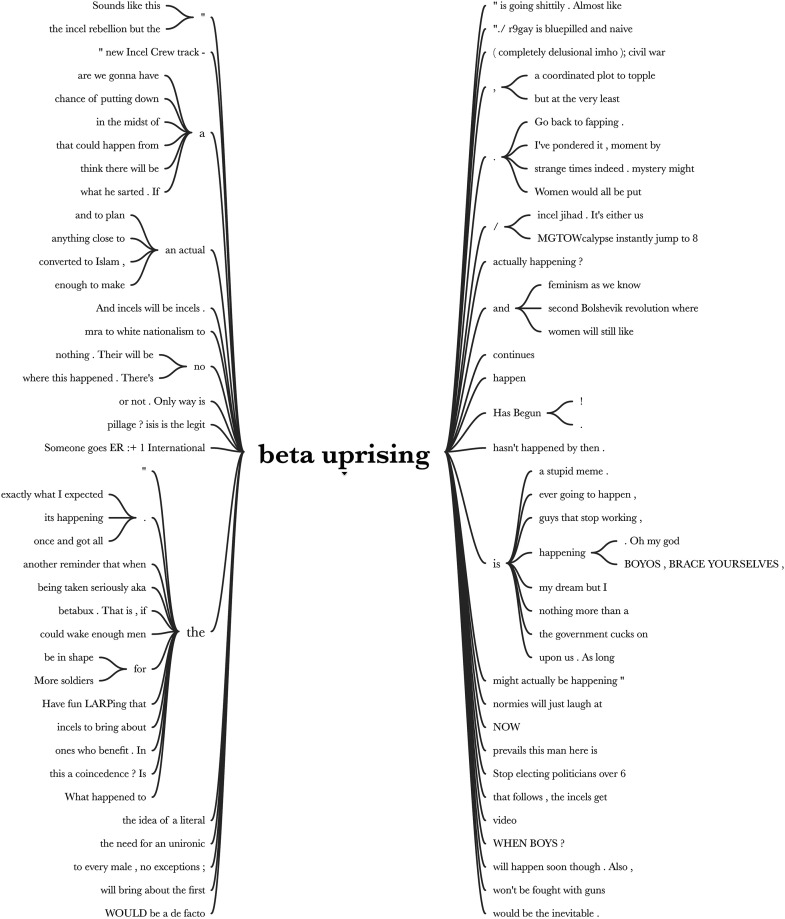
- Gendered and violent language was prevalent: 994 counts of “roastie,” 880 counts of “femoid,” 204 references to shooting, 119 mentions of “going ER,” and 55 mentions of “beta uprising”; 113 mentions of Minassian’s name glorified his actions.
- The paper concludes that Canadian violent extremism frameworks dismiss gendered harm and hegemonic masculinity, and it recommends expanding “technology-facilitated sexual violence” to “technology-facilitated gender-based violence” and making risk tools gender-aware.
Methods
- Critical discourse and semantic analysis using NVivo on the incels.co webpage from 23 April 2018 to 23 May 2018 and on Alek Minassian’s police video interview and transcript.
- Eight lexicons were used, with 386 terms selected and assigned to VERA-2 and CYBERA risk factors; word frequency and word tree queries were combined with manual review of forum imagery, profiles, polls, and readership statistics.
- Risk factors were rated 0–2, with totals categorized as low (1–16), medium (17–33), or high (34–50); four total scores were produced for incels.co and Minassian across VERA-2 and CYBERA.
Limitations
- The paper states that incels.co is only one forum, that members may use multiple platforms, that only public comments were reviewed and not private messages, and that Minassian referenced private messaging with Rodger.
- The paper states that online discussion does not consistently translate to real-world violence, and that limited public information due to Minassian’s ongoing trial affected his CYBERA risk ranking because imagery was not captured.
- Evident from the text: the analysis and risk ratings were performed by a single analyst, with no inter-coder reliability reported, and the case-study design limits generalizability.
Model-written summary. Check it against the paper before relying on it.
Integrity signals
Registry
Cites
Statistics
Figures
Verification
Claims the paper makes
3 Valid · 9 Not valid · 85 Not checked · 91 Own results and interpretations
Every source the paper cites for this claim was checked and supports it.
In the paper
“Furthermore, only recently has incel violence been evaluated as a form of terrorism (Hoffman et al., 2020).”
§ Technology-Facilitated Gender-Based Violence, Hate Speech, and Terrorism: A Risk Assessment on the Rise of the Incel Rebellion in Canada > Introduction
What the sources say
- Supportedcites Hoffman et al., 2020 matched to “Assessing the Threat of Incel Violence” (2020) source
The Abstract says scholarly analysis of incel violence remains sparse and describes this 2020 paper as an assessment of the threat. In “Typology and Political Violence,” the authors explicitly evaluate whether incel violence should be considered terrorism and conclude that its extreme fringes should be. (LLM, conf=0.90)
plain- Asserted: passes — The authors put it forward as true.
- Checkable: passes — It can be checked against evidence.
- Load-bearing: unclear — It is unclear whether the paper’s conclusions depend on it.
- Based: passes — The paper gives a reason why it holds.
- Supported
The cited sources support only part of this claim — read each source’s verdict below.
In the paper
“Online platforms allow incel members to use various modes of interaction, such as humor, critique, and discussion, to forge closer in-group bonds (Dynel, 2020).”
§ Technology-Facilitated Gender-Based Violence, Hate Speech, and Terrorism: A Risk Assessment on the Rise of the Incel Rebellion in Canada > Case Study > Rise of the Incel Movement
What the sources say
- Partly supportedcites Dynel, 2020 matched to “Vigilante disparaging humour at r/IncelTears: Humour as critique of incel ideology” (2020) sourceExperimental — accuracy not yet measured
The Discussion and conclusions says humour, criticism and comments foster bonding, but among r/IncelTears members who mock incels—not among incel members. The Introduction notes that celibate men sometimes seek support by sharing online, but does not establish that incel members forge closer bonds through the modes of interaction claimed. (LLM, conf=0.86)
plainstates a cause- Asserted: passes — The authors put it forward as true.
- Checkable: passes — It can be checked against evidence.
- Load-bearing: passes — The paper’s conclusions depend on it.
- Based: passes — The paper gives a reason why it holds.
- Partly supported
A result the paper states — it cites no source for it, so there is none to check. The quote shows it is in the paper.
In the paper
“Within the incels.co forum itself, there are also 204 references to shooting that discuss the effectiveness of mass shootings and violence.”
§ Technology-Facilitated Gender-Based Violence, Hate Speech, and Terrorism: A Risk Assessment on the Rise of the Incel Rebellion in Canada > Findings and Discussion > Thematic Findings
plain- Asserted: passes — The authors put it forward as true.
- Checkable: passes — It can be checked against evidence.
- Load-bearing: unclear — It is unclear whether the paper’s conclusions depend on it.
- Based: passes — The paper gives a reason why it holds.
A result the paper reports from its own data — it cites no other source for it, so there is none to check. The quote shows it is in the paper.
In the paper
“I attributed low scores to the Imagery section resulting in zero out of eight due to limited access to available information.”
§ Technology-Facilitated Gender-Based Violence, Hate Speech, and Terrorism: A Risk Assessment on the Rise of the Incel Rebellion in Canada > Findings and Discussion > Risk Assessment Findings
plainstates a causeSingle case- Asserted: passes — The authors put it forward as true.
- Checkable: passes — It can be checked against evidence.
- Load-bearing: unclear — It is unclear whether the paper’s conclusions depend on it.
- Based: passes — The paper gives a reason why it holds.
A result the paper reports from its own data — it cites no other source for it, so there is none to check. The quote shows it is in the paper.
In the paper
“In the assessment of incels.co through VERA-2, the highest marks are in the Beliefs and Attitudes risk section, equating to 14 out of 14, due to a high level of hostility toward society and rationalization for violent behavior.”
§ Technology-Facilitated Gender-Based Violence, Hate Speech, and Terrorism: A Risk Assessment on the Rise of the Incel Rebellion in Canada > Findings and Discussion > Risk Assessment Findings
plainstates a causeSingle case- Asserted: passes — The authors put it forward as true.
- Checkable: passes — It can be checked against evidence.
- Load-bearing: passes — The paper’s conclusions depend on it.
- Based: passes — The paper gives a reason why it holds.
92 more claims
Create a free account to see all 188 claims and to verify the 3 references still open.
- It may state two separate claims as one. 54
- Probably not a substantial claim. 49
- The quote only partly states this claim. 4
Claims other papers make about this one
Each is checked against this paper’s own text: does it say what the citing paper says it does?
The source backs part of the claim, not all of it — or backs it for a different population, condition or comparison.
In the citing paper
“Building on Chan (2023), we suggest that incels’ participation in TFSV is underacknowledged as a form of extremism and violence directed toward women.”
From Stochastic Gender-Based Violence: How Incels Justify and Encourage Sexualized Violence Against Women (2025) · cites this paper as Chan, 2023
Experimental — accuracy not yet measuredThe source backs part of the claim, not all of it — or backs it for a different population, condition or comparison.
In the citing paper
“Incels (short for “involuntarily celibate”) are one of these communities, and they have been linked to the harassment, assault, and murder of women (e.g., Baele et al., 2019; Chan, 2023; Halpin et al., 2024).”
From Stochastic Gender-Based Violence: How Incels Justify and Encourage Sexualized Violence Against Women (2025) · cites this paper as Chan, 2023
Experimental — accuracy not yet measuredThe cited source says what the claim attributes to it.
In the citing paper
“Further, while the internet creates new avenues for hate speech, the regulation of online hate speech is a contentious topic (Chan, 2023).”
From Stochastic Gender-Based Violence: How Incels Justify and Encourage Sexualized Violence Against Women (2025) · cites this paper as Chan, 2023
Self-check
Percentages, sums and reported differences re-computed from the paper’s own numbers.
Each contradiction between two passages listed here was confirmed by an independent check.
Rated minor: it would not touch a result — a value no result rests on, a p-value that stays on the same side of the significance level, or a conflict that is clerical, resolved elsewhere in the paper, or outside its own findings.
In the paper
§ Technology-Facilitated Gender-Based Violence, Hate Speech, and Terrorism: A Risk Assessment on the Rise of the Incel Rebellion in Canada > Findings and Discussion > Risk Assessment Findings
“Assessment of the Minassian case through VERA-2 revealed notably high scores of 10 out of 10 in the Commitment and Motivation, Beliefs, and Attitudes, and 13 out of 14 in the Context and Intent section, respectively.”
§ Technology-Facilitated Gender-Based Violence, Hate Speech, and Terrorism: A Risk Assessment on the Rise of the Incel Rebellion in Canada > Research Design > Risk Assessment Evaluation
“| Section A total | | | 14/14 | | | 13/14 |”
Citations
Cites
Hegemonic Masculinity: Rethinking the Concept
Connell, R. W., & Messerschmidt, J. W. (2005) · Gender & Society · doi:10.1177/0891243205278639 · Cited by 9,367 · cited 2×
“Hegemonic masculinity is the performance of masculine hierarchies, entangled in societal norms and institutions, which highlight the dynamics of power within gender relations (Connell & Messerschmidt, 2005).”
BackgroundJournal of Inter Personal Violence
(2005) · Journal of Interpersonal Violence · doi:10.1177/088626050502000112 · Cited by 1,909
Technology-facilitated sexual violence: A literature review of empirical research
Henry, N., & Powell, A. (2018) · Trauma, Violence, & Abuse · doi:10.1177/1524838016650189 · Cited by 675
Drinking male tears: language, the manosphere, and networked harassment
Marwick, A. E., & Caplan, R. (2018) · Feminist Media Studies · doi:10.1080/14680777.2018.1450568 · Cited by 495 · cited 2×
“In response to the rise of the feminist movement, several misogynist and anti-feminist groups have emerged (Jaki et al., 2019; Marwick & Caplan, 2018).”
BackgroundAssessing the Threat of Incel Violence
Hoffman, B., Ware, J., & Shapiro, E. (2020) · Studies in Conflict & Terrorism · doi:10.1080/1057610x.2020.1751459 · Cited by 408 · cited 3×
“Furthermore, only recently has incel violence been evaluated as a form of terrorism (Hoffman et al., 2020).”
BackgroundInfluentialA General Critical Discourse Analysis Framework for Educational Research
Mullet, D. R. (2018) · Journal of Advanced Academics · doi:10.1177/1932202x18758260 · Cited by 387 · cited 2×
“Critical discourse analysis (CDA) is used for “describing, interpreting, and explaining how discourse construct, maintain, and legitimize social inequalities” (Mullet, 2018, p. 116).”
BackgroundMethodOnline incivility or sexual harassment? Conceptualising women's experiences in the digital age
Megarry, J. (2014) · Women's Studies International Forum · doi:10.1016/j.wsif.2014.07.012 · Cited by 295 · cited 1×
“Online connectivity is central to the distribution of violent ideas (Megarry, 2014).”
BackgroundEveryday terrorism: Connecting domestic violence and global terrorism
Pain, R. (2014) · Progress in Human Geography · doi:10.1177/0309132513512231 · Cited by 288 · cited 1×
“While blatantly aggressive terminology such as 204 counts of shooting and 49 counts of assault in incels.co is understood as violent, a gendered analysis of the forum reveals the underlying nuances and of violence against women (Hammer, 2002, as cited in Pain, 2014).”
BackgroundEmbodied Harms: Gender, Shame, and Technology-Facilitated Sexual Violence
Henry, N., & Powell, A. (2015) · Violence Against Women · doi:10.1177/1077801215576581 · Cited by 270 · cited 6×
“Their definition of TFSV includes distribution of sexual images, cyberstalking, gender-based hate speech, and online facilitation of sexual assault (Henry & Powell, 2015).”
BackgroundInfluentialExploring Misogyny across the Manosphere in Reddit
Farrell, T., Fernandez, M., Novotny, J., & Alani, H. (2019) · Proceedings of the 10th ACM Conference on Web Science · doi:10.1145/3292522.3326045 · Cited by 265 · cited 3×
“…Lexicon (2019), Rezvan’s Harassment Corpus (Farrell et al., 2019; Rezvan, 2018), Squirrell’s Incel Dictionary (Squirrell, 2018), Geen’s Violence Verbs (Farrell et al., 2019; Geen & Stonner, 1975), two Hatebase repositories (Davidson, 2019; Hatebase, 2020), are and two incel and…”
Background
Research works printed but not linked: 11
- Bratich J. Banet-Weiser S. (2019). From pick-up artists to incels: Con(fidence) games, networked misogyny, and the failure of neoliberalism. International Journal of Communication, 13, 5003– 5027. https://ijoc.org/index.php/ijoc/article/view/13216
- Hart S. Cook A. Pressman E. Strang S. Lim Y. (2017). A concurrent evaluation of threat assessment tools for the individual assessment of terrorism. Canadian Network for Research on Terrorism, Security, and Society, 17(1), 1– 59.
- Hinson L. Mueller J. O’Brien-Milne L. Wandera N. (2018). Technology-facilitated gender-based violence: What is it, and how do we measure it?. Washington, DC: International Center for Research on Women.
- Janis I. (1991). Groupthink. In A First Look at Communication Theory, pp. 235–246
- Lupton D. (1999). Risk. Routledge.
- Mahoney K. (2009). Hate speech, equality, and the state of Canadian law. Wake Forest Law Review, 44(1), 321– 352.
- McCulloh J. Maher J. M. Fitz-Gibbon K. Segrave M. Roffee J. (2016). Review of the family violence risk assessment and risk management framework (CRAF). Monash University.
- Status of Women Canada. (2019). A year in review 2018-2019. Canada’s strategy to prevent and address gender-based violence. https://cfc-swc.gc.ca/violence/strategy-strategie/report-rapport2019-en.html
- Stoleru M. Costescu E. (2014). (Re)Producing violence against women in online spaces. Philobiblon, 19(1), 95– 114.
- Tanczer L. Neira I. Parkin S. Patel T. Danezis G. (2018). Gender and IOT research report: The rise of the internet of things and implications for technology-facilitated abuse. UCL.
- Van Der Wilk A. (2018). Cyber violence and hate speech online against women. Study for the FEMM Committee, European Parliament.
Cited by
Mainstreaming the Blackpill: Understanding the Incel Community on TikTok
Solea, A. I., & Sugiura, L. (2023) · European Journal on Criminal Policy and Research · doi:10.1007/s10610-023-09559-5 · Cited by 105
“There is research which purports incels as extremists engaging in unique and spectacular forms of misogynistic violence, focusing on instances of domestic terrorism and mass shootings (Chan, 2022; Hoffman et al., 2020).”
BackgroundTechnology-Facilitated Abuse Victimization: A Gendered Analysis in a Representative Survey of Adults
Powell, A., & Flynn, A. (2023) · Feminist Criminology · doi:10.1177/15570851231196548 · Cited by 40
“The current study has not captured men ’ s engagement in TFA, particularly in networked and gender-based hate contexts (see Chan, 2023 for a more detailed discussion).”
BackgroundStochastic Gender-Based Violence: How Incels Justify and Encourage Sexualized Violence Against Women
Gosse, M., Halpin, M., & Maguire, F. (2025) · Violence Against Women · doi:10.1177/10778012241279816 · Cited by 22
“Incels (short for “ involuntarily celibate ” ) are one of these communities, and they have been linked to the harassment, assault, and murder of women (e.g., Baele et al., 2019; Chan, 2023; Halpin et al., 2024).”
Grulich, A. E., Mercer, C. H., Sturrock, B. R., Baral, S., Turpin, N., Phanuphak, N., Rowley, J. T., Wi, T., Gemzell‐Danielsson, K., Garcia‐Moreno, C., et al. (2025) · The Lancet · doi:10.1016/s0140-6736(25)01188-2 · Cited by 29
Solea, A. I., & Sugiura, L. (2025) · Crime Media Culture An International Journal · doi:10.1177/17416590251387245 · Cited by 24
Extreme overvalued beliefs and identities: revisiting the drivers of violent extremism
Kristinsdottir, K., Ebner, J., & Whitehouse, H. (2025) · Frontiers in Psychology · doi:10.3389/fpsyg.2025.1556919 · Cited by 11
“Both tools have been used to explore various acts of extremist violence, including attacks by self-identified Incels (Collins and Clark, 2021; Chan, 2023) and individuals who partook in the Capitol riots (Challacombe and Patrick, 2023).”
Deciphering the incels: A scoping review on empirical research
Rodríguez, R., Maldonado, M. Á., & Moyano, M. (2025) · Aggression and Violent Behavior · doi:10.1016/j.avb.2025.102093 · Cited by 10
Incels: An Introduction for Mental Health Clinicians
Tastenhoye, C. A., Dupré, J., Ross, N. E., Bodnar, T. V., & Friedman, S. H. (2023) · Journal of Psychiatric Practice · doi:10.1097/pra.0000000000000738 · Cited by 11
LGBTQ+ Victimization by Extremist Organizations: Charting a New Path for Research
Dmello, J., Bloom, M., & Moskalenko, S. (2025) · PS: Political Science and Politics · doi:10.1017/s1049096524001173 · Cited by 5
Comparing policy responses to incels in Sweden and the UK
Meuller, E. B., & Evans, E. (2024) · Policy & Politics · doi:10.1332/03055736y2024d000000045 · Cited by 6
From Reddit to manifestos: Forensic evaluation of incel online activity
Dupré, J. K., Tastenhoye, C. A., Ross, N. E., Bodnar, T. V., & Friedman, S. H. (2024) · Behavioral Sciences & the Law · doi:10.1002/bsl.2648 · Cited by 6
Arbeit, M. R., Dufault, A. E., Burnham, S. L. F., Onuoha, A. C., Wanjuki, W., & de Four, D. (2025) · Violence Against Women · doi:10.1177/10778012251329186 · Cited by 1
“Male supremacist threats include sexual violence, murder, and mass murder (Chan, 2023; Silva et al., 2021; Tranchese & Sugiura, 2021).”
InfluentialSolea, A. I. (2025) · Palgrave hate studies · doi:10.1007/978-3-031-92670-9_3 · Cited by 1
Mobilization of Sexual Violence within the Manosphere: A Mixed Methods Systematic Review
PettyJohn, M. E., Nason, J. A., Cary, K. M., & Graves, C. (2026) · The Journal of Sex Research · doi:10.1080/00224499.2026.2670470 · Cited by 2
Fernández, M. B. (2024) · Advances in educational technologies and instructional design book series · doi:10.4018/979-8-3693-2053-2.ch012 · Cited by 1
Corradi, A., & Egan, K. (2024) · Feminist Criminology · doi:10.1177/15570851241283557 · Cited by 3
“Though “ incels ” are their own category of MRM, the movement has connections to calling for and condoning violent acts, particularly against women (Baele et al., 2021; Chan, 2023; Decook & Kelly, 2022).”
InfluentialConclusions: Wearing Away the Stone
Sudderth, L. K. (2024) · Springer eBooks · doi:10.1007/978-3-031-75356-5_5
Perin, C. (2025) · Gender and Research · doi:10.13060/gav.2024.014 · Cited by 1
Why mental health and neurodivergence should not be used to explain incel violence
Chan, E., & Qiang, V. (2024) · doi:10.64628/aam.phng43a9w
Self-citationToxic Monetization and Amplification in Digital Platform Design: The Case of Online Gendered Hate
Chan, E. (2025) · Palgrave hate studies · doi:10.1007/978-3-031-92670-9_7 · Cited by 1
Self-citationFraming misogyny in the metaverse: Theorising incel communities in virtual reality (VR) environments
Sugiura, L., & Lakhani, S. (2025) · Crime Media Culture An International Journal · doi:10.1177/17416590251406448
“Misogynistic incels frequently discuss and even celebrate rape and sexual violence on their forums (Chan, 2023; Lindsay, 2022), while simultaneously denying rape as a harmful or a criminal act.”
Lucy, S., Heritage, F., & Sugiura, L. (2026) · Emerald Group Publishing Limited eBooks · doi:10.1108/978-1-80686-647-220261009
Comprensión de la violencia basada en género de mujeres emprendedoras de cooperativas
Piedrahíta, J. S. C., & Zapata, G. M. I. (2026) · doi:10.21501/9786287765306.4
Metadata
- Authors
- Chan, E.
- Affiliations
- King's College London (GB)
- Corresponding author
- Chan, Esli
- ORCID
- Chan, Esli
- Venue
- Violence Against Women
- Publisher
- SAGE Publications
- Published
- 2022-10-13
- Volume
- 29
- Issue
- 9
- Pages
- 1687-1718
- ISSN
- 1077-8012 (ISSN-L)
- 1552-8448
- PMC
- PMC10248308
- OpenAlex
- W4304845784
- Cited by
- 36
- References
- 34
- Citations by year
- 2026: 6 · 2025: 16 · 2024: 9 · 2023: 5
- FWCI
- 8.21
- Type
- journal article
- Language
- en
- Open access
- hybrid
- doi.org
- Licence
- Locations
- Violence Against Women (publishedVersion, cc-by-nc)
- PubMed Central (publishedVersion, cc-by-nc)
- PubMed (publishedVersion)
- Topics
- Social Sciences › Sociology and Political Science › Terrorism, Counterterrorism, and Political Violence
- Social Sciences › Sociology and Political Science › Stalking, Cyberstalking, and Harassment
- Social Sciences › Gender Studies › Gender, Feminism, and Media
- Keywords
- incel movement, gender-based violence, online hate speech, cyber extremism, violent extremism, risk assessment framework, men's rights movement, terrorism, Canada
- MeSH terms
- Gender-Based Violence, Canada, Female, Hate, Humans, Male, Sexual Abstinence, Speech, Violence, Risk Assessment, Terrorism
About these checks
Registry, retraction, Cites and statistics results are computed, not judged, with one exception: a printed reference that no index lists is read once by a model before it counts as a citation error. Claims are extracted by a model and kept only when their quote appears verbatim in the text; each cited source is then checked, with a model’s help, for whether it says what the claim relies on. Those verdicts can be wrong — read the claim’s quote and the cited source before relying on one.
The claim verdicts this report counts are experimental: their accuracy is not yet measured.
A language model drew the claims from the paper on 2026-10-10, under version 3 of the claim definition (model deepseek-v4.1-flash, prompt extract-v3).
A second model labelled each claim on 2026-10-10 (model jev-1.13-20260917, definition revision gold-guideline-v0.2).
Cited sources are checked with a language model’s help (gpt-6-sol).
Statistics and arithmetic are recomputed, not judged.
Confidence bands are shown only for fields calibrated on our annotated test set. None is calibrated yet, so no band is shown.
What counts as a claim ›How we measure confidence ›How we check this ›
Are you an author, or do you see a problem with this page? Request a review
Data sources
Bibliographic data: Semantic Scholar, OpenAlex, Crossref.
Contains information from the Semantic Scholar Academic Graph Datasets, made available under the ODC Attribution License (ODC-BY 1.0).
Semantic Scholar’s data is described in: Kinney, R., et al. (2023). The Semantic Scholar Open Data Platform. arXiv:2301.10140.
