

The Stability and Change of Loneliness Across the Life Span: A Meta-Analysis of Longitudinal Studies
Open accessPublished version of a preprint
The DOI matches its Crossref record; 240 of the 244 references it cites were found in a registry or an index.
Abstract
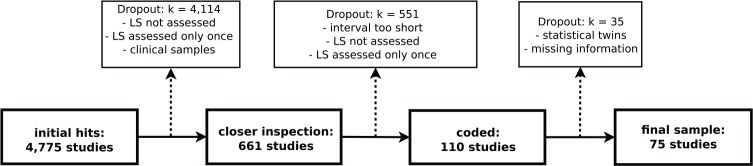
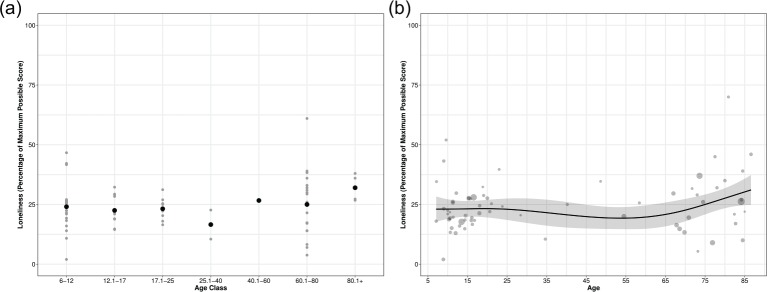
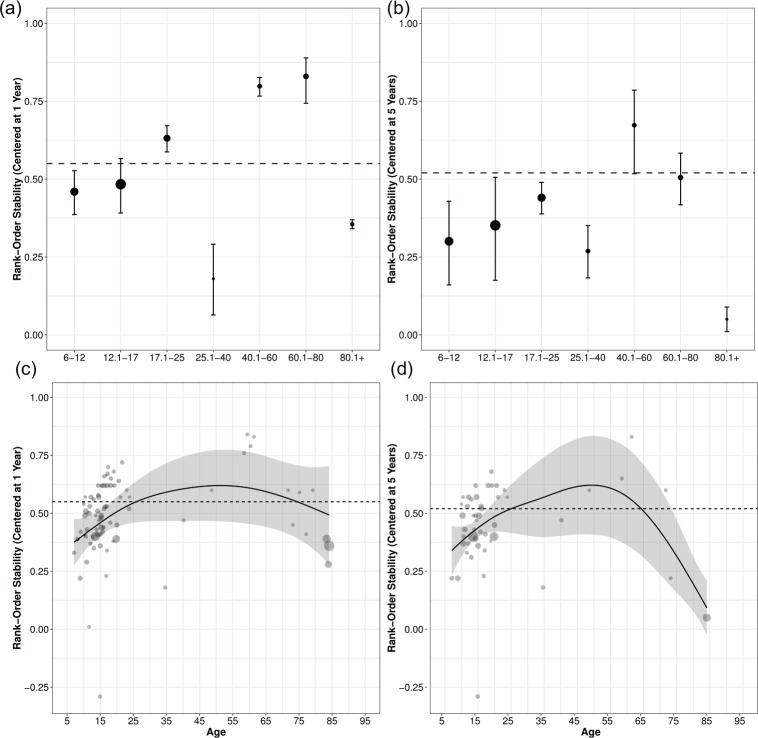
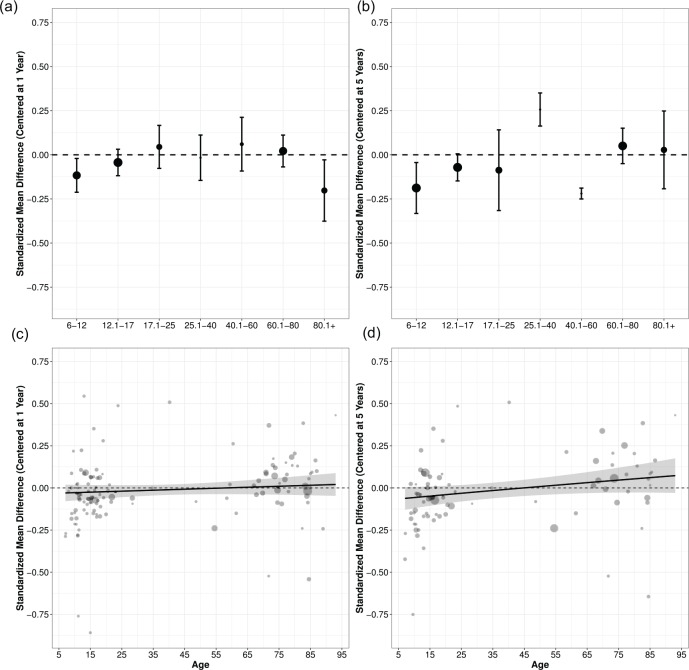
Individuals experience loneliness when they perceive a deficiency in the quality or quantity of their social relationships. In the present meta-analysis, we compiled data from 75 longitudinal studies conducted in Asia, Australia, Europe, and North America ( N = 83, 679) to examine the rank-order and mean-level development of loneliness across the life span. Data were analyzed using two- and three-level meta-analyses and generalized additive mixed models. The results indicate that the rank order of loneliness is as stable as the rank order of personality traits and follows an inverted U-shaped trajectory across the life span. Regarding mean-level development, loneliness was found to decrease throughout childhood and to remain essentially stable from adolescence to oldest old age. Thus, in contrast to other personality characteristics, changes in loneliness are not generally related to age. Implications for theory are discussed.
Overview
The claims and statistics of this paper haven’t been checked yet.
Free: it reads the open-access text and checks the first 5 claims that cite a source we can check. Create a free account to check every claim.
Integrity signals
Registry
Cites
Statistics
Figures
Verification
Claims the paper makes
The claims and statistics of this paper haven’t been checked yet.
Free: it reads the open-access text and checks the first 5 claims that cite a source we can check. Create a free account to check every claim.
Claims other papers make about this one
Each is checked against this paper’s own text: does it say what the citing paper says it does?
The cited source doesn’t support the claim as written.
In the citing paper
“The developmental trajectories of loneliness and negative affect also differ during adolescence (12.1–17 years) and emerging adulthood (17.1–25 years), with feelings of loneliness typically peaking during middle adolescence, whereas negative affect continue to increase between adolescence and young adulthood”
From Adolescent Loneliness and Negative Affect during the COVID-19 Pandemic: The Role of Extraversion and Neuroticism (2023) · cites this paper as Mund et al., 2019
Checked by a reasoning model — may be wrong.
Experimental — accuracy not yet measuredThe source backs part of the claim, not all of it — or backs it for a different population, condition or comparison.
In the citing paper
“It is worth noting that loneliness and negative affect are not commonly understood to be facets of any personality characteristic such as neuroticism”
From Adolescent Loneliness and Negative Affect during the COVID-19 Pandemic: The Role of Extraversion and Neuroticism (2023) · cites this paper as Mund et al., 2019
Experimental — accuracy not yet measuredThe source backs part of the claim, not all of it — or backs it for a different population, condition or comparison.
In the citing paper
“However, a single indicator can be an adequate replacement for a larger scale and is widely used (Mund et al., 2019; Mund et al., 2022).”
From Adolescent Loneliness and Negative Affect during the COVID-19 Pandemic: The Role of Extraversion and Neuroticism (2023) · cites this paper as Mund et al., 2019
Experimental — accuracy not yet measuredThe cited source says what the claim attributes to it.
In the citing paper
“Drawing from a personality psychology perspective, loneliness was expected to be a trait-like personality attribute, given that loneliness has found to be as stable over time as Big Five personality traits (Mund et al., 2019).”
From Adolescent Loneliness and Negative Affect during the COVID-19 Pandemic: The Role of Extraversion and Neuroticism (2023) · cites this paper as Mund et al., 2019
The cited source says what the claim attributes to it.
In the citing paper
“Lastly, some studies find no change in life satisfaction (Baird et al. 2010) or loneliness (Mund et al. 2020) during this period.”
From Patterns of Romantic Relationship Experiences and Psychosocial Adjustment From Adolescence to Young Adulthood (2021) · cites this paper as Mund et al. 2020
1 more claim about this paper
Create a free account to see every claim other papers make about this one.
Self-check
Percentages, sums and reported differences re-computed from the paper’s own numbers.
The self-check needs the paper’s full text.
Citations
Cites
R: A Language and Environment for Statistical Computing
R Core Team (2025) · doi:10.32614/r.manuals · Cited by 352,181
The need to belong: Desire for interpersonal attachments as a fundamental human motivation.
Baumeister, R. F., & Leary, M. R. (1995) · Psychological Bulletin · doi:10.1037//0033-2909.117.3.497 · Cited by 23,245 · cited 2×
“This finding might be due to the universal nature of the challenge to establish close and intimate relationships (Axelrod & Hamilton, 1981; Baumeister & Leary, 1995; Cacioppo, Cacioppo, Cole, et al., 2015).”
BackgroundConducting Meta-Analyses in R with the metafor Package
Viechtbauer, W. (2010) · Journal of Statistical Software · doi:10.18637/jss.v036.i03 · Cited by 20,464 · cited 7×
“As a consequence, we ran FE models that do not allow generalizations to broader populations (Hedges & Vevea, 1998; Konstantopoulos & Hedges, 2009; Viechtbauer, 2010).”
MethodResultInfluentialAxelrod, R., & Hamilton, W. D. (1981) · Science · doi:10.1126/science.7466396 · Cited by 20,065
Handbook of Personality: Theory and Research
Krueger, R. F., & Johnson, W. (2008) · Cited by 7,884
Social Relationships and Health
House, J. S., Landis, K. R., & Umberson, D. (1988) · Science · doi:10.1126/science.3399889 · Cited by 7,073 · cited 1×
“…and neuroanatomical outcomes in humans (Caspi, Harrington, Moffitt, Milne, & Poulton, 2006; HoltLunstad, Smith, Baker, Harris, & Stephenson, 2015; House et al., 1988; Shankar, McMunn, Banks, & Steptoe, 2011; Shankar, McMunn, Demakakos, Hamer, & Steptoe, 2017) and animals (Cacioppo, Capitanio,…”
Journal of social behavior and personality
(1986) · Personality and Individual Differences · doi:10.1016/0191-8869(86)90025-5 · Cited by 6,706
Loneliness and Social Isolation as Risk Factors for Mortality: A Meta-Analytic Review
Holt-Lunstad, J., Smith, T. B., Baker, M., Harris, T., & Stephenson, D. (2015) · Perspectives on Psychological Science · doi:10.1177/1745691614568352 · Cited by 6,043 · cited 2×
“That is, as loneliness has been found to be related to an increased mortality risk (Holt-Lunstad et al., 2015; Luo & Waite, 2014; Patterson & Veenstra, 2010; Shiovitz-Ezra & Ayalon, 2010), individuals with higher or increasing loneliness might have deceased earlier in the course of the primary…”
BackgroundMethodUCLA loneliness scale (version 3): reliability, validity, and factor structure
Russell, D. W. (1996) · Journal of Personality Assessment · doi:10.1207/s15327752jpa6601_2 · Cited by 5,800 · cited 11×
“UCLA = The University of California, Los Angeles Loneliness Scale; LSDQ = Loneliness and Social Dissatisfaction Scale; dJG-LS = de Jong Gierveld Loneliness Scale; LACA = Loneliness and Aloneness Scale for Children and Adolescents. aFor some studies, we could not use the full sample size.”
BackgroundInfluentialThe Revised UCLA Loneliness Scale: concurrent and discriminant validity evidence
Russell, D., Peplau, L. A., & Cutrona, C. E. (1980) · Journal of Personality and Social Psychology · doi:10.1037/0022-3514.39.3.472 · Cited by 5,173 · cited 4×
“Third, we conducted forward searches (Reed & Baxter, 2009; White, 2009) for the articles that have introduced the most influential scales for measuring loneliness, including (a) the LACA (Marcoen & Brumagne, 1985; Marcoen et al., 1987), (b) the LSDQ (Asher et al., 1984; Asher & Wheeler, 1985; Cassidy & Asher, 1992), (…”
BackgroundInfluential
Research works printed but not linked: 8
- *Kochenderfer B. J. (1998). An application of HLM for modeling adjustment growth curves of peer victimized children (Unpublished doctoral dissertation). University of Illinois at Urbana-Champaign.
- *Mayer S. E. (2017). Examining the relationships between chronic stress, HPA axis activity, and depression in a prospective and longitudinal study of medical internship (Doctoral dissertation, University of Michigan). Retrieved from https://deepblue.lib.umich.edu/bitstream/handle/2027.42/137074/stemayer_1.pdf?sequence=1&isAllowed=y
- Perlman D. Peplau L. A. (1981). Toward a social psychology of loneliness. In Duck N. Gilmour R. (Eds.), Personal relationships: Personal relationships in disorder (pp. 31- 56). London, England: Academic Press.
- *Polasky S. A. (2010). Coping with school bullying: An examination of longitudinal effects of coping on peer victimization and adjustment (Doctoral dissertation, Arizona State University). Retrieved from https://repository.asu.edu/attachments/56064/content/Polasky_asu_0010E_10037.pdf
- Raudenbush S. W. (2009). Analyzing effect sizes: Random-effects models. In Cooper H. Hedges L. V. Valentine J. C. (Eds.), The handbook of research synthesis and meta-analysis (2nd ed., pp. 295- 316). New York, NY: SAGE.
- Reed J. G. Baxter P. M. (2009). Using reference databases. In Cooper H. Hedges L. V. Valentine J. C. (Eds.), The handbook of research synthesis and meta-analysis (2nd ed., pp. 73- 101). New York, NY: SAGE.
- Shadish W. R. Haddock C. K. (2009). Combining estimates of effect size. In Cooper H. Hedges L. V. Valentine J. C. (Eds.), The handbook of research synthesis and meta-analysis (2nd ed., pp. 257- 277). New York, NY: SAGE.
- *Tong S. S. (2013). The relationship between early attachment and adolescent risky behaviors with changes in loneliness in a mediating role (Doctoral dissertation, University of Louisville). Retrieved from https://ir.library.louisville.edu/etd/1449/
Cited by
Items 301–349 of 349
Sonnauer, F., Fries, F. L., Druzenko, M., Kastner, U. W., Mühle, C., & Kornhuber, J. (2026) · Frontiers in Psychiatry · doi:10.3389/fpsyt.2026.1827062
“However, this scenario would be interesting to assess, in that experiences of loneliness exhibit lifetime consistency that is comparable to that of personality traits (known as ‘ trait-like features ’ ) (55).”
Shekhar, A., & Mabaso, C. (2026) · Frontiers in Psychology · doi:10.3389/fpsyg.2026.1860516
“People may feel lonely in the presence of others, and some may spend extended periods alone without experiencing that condition as painful (Mund et al., 2020; Ong et al., 2016).”
Hall, A., Barreto, M., Victor, C., Qualter, P., & Pitman, A. (2026) · Current Research in Behavioral Sciences · doi:10.1016/j.crbeha.2026.100219
Combatting Loneliness for the Older Person in Rural Communities
McDonnell‐Naughton, M. (2026) · Proceedings of the ... International Conference on Business Excellence · doi:10.2478/picbe-2026-0074
“Other evidence by Mund et al. (2020) and O’Luanaigh and Lawlor (2008) reflecting on the issues pertaining to old age highlighted poor cognitive ability; living alone and lower socio-economic status all of which subscribes to loneliness.”
Loneliness among Chinese Adults: Validating the ALONE Scale With Age-Related Vulnerability
Ma, Y.-G., Leung, P., Berg‐Weger, M., Cheung, M., Malmstrom, T. K., Ma, G., & Chen, X. (2026) · Research on Social Work Practice · doi:10.1177/10497315261463199
Fu, M., Kang, H., Huang, X., & Guo, J. (2026) · Journal of Health Psychology · doi:10.1177/13591053261459891
Does Peer Victimization Predict Loneliness? A Meta-Analysis of Longitudinal Studies
Chu, X., & Chen, H. (2026) · Journal of Youth and Adolescence · doi:10.1007/s10964-026-02376-z · Cited by 1
“This pattern is consistent with the view that lone-liness is a relatively stable construct over time (Mund et al., 2020 ).”
Chowdhury, D., Corbett, E., Laney, J., Winkle, S. V., Khan, A. A., Edmonds, E., & Sprong, M. E. (2026) · Frontiers in Public Health · doi:10.3389/fpubh.2026.1817065
“…in loneliness, particularly among older adults and socially isolated populations (40, 41), longitudinal and cross-cohort evidence indicates that pre-existing risk factors—such as age, relationship status, health limitations, and social resources—remain the primary drivers of loneliness (10, 42).”
Zhou, J., Liu, Y., 辰巳, 遼., & Toikko, T. (2026) · Psychology Research and Behavior Management · doi:10.2147/prbm.s591431
“Single-item measures of loneliness and life satisfaction have been widely used in large-scale research and are considered to have strong content validity, 59,60 though they provide more limited construct coverage than multi-item instruments.”
Skaug, E., Waaktaar, T., & Torgersen, S. O. (2026) · Twin Research and Human Genetics · doi:10.1017/thg.2026.10090
“Supporting this phrasing, previous studies have found that loneliness (Mund et al., 2020) and sense of coherence (Honkinen et al., 2008; Skaug et al., 2022b) show similar stability over time as the Big Five traits, and resilience (Hu et al., 2015), self-efficacy (Altaweel et al., 2023) and…”
Grygiel, P., Opozda-Suder, S., & Dolata, R. (2026) · European Journal of Investigation in Health Psychology and Education · doi:10.3390/ejihpe16060078
Ao, L., Yang, M., Xu, D., Zheng, Z., Chen, C., & An, Y. (2026) · Applied Psychology Health and Well-Being · doi:10.1111/aphw.70170
Haas, M., Meier, T., Huber, Z., Kliegel, M., & Horn, A. B. (2026) · Memory · doi:10.1080/09658211.2026.2675581
“Accordingly, the empirical findings clearly point to the negative impact of loneliness on mental health and the importance of quality social relationships as a potential buffering resource (e.g., Holt-Lunstad et al., 2010, 2015; Lee & Waters, 2021; Macdonald & Hülür, 2021; Mund et al., 2020).”
Ortells-Faci, P., McDanal, R., & Eaton, N. R. (2026) · Social Psychiatry and Psychiatric Epidemiology · doi:10.1007/s00127-026-03107-2
“A recent meta-analysis found high stability of loneliness from adolescence to old age [7 ], a finding which highlights the enduring nature of this social determinant of psychiatric morbidity.”
Yao, M., Zhang, X., Lei, F., Yan, T., Jin, B., Wang, J. Z., & Xv, D. (2026) · Annals of General Psychiatry · doi:10.1186/s12991-026-00649-2 · Cited by 1
“Neverthe-less, given the considerable stability of these traits across an individual’s lifespan, as indicated by a meta-analysis, their impact on the final results is likely minimal [57].”
Trachtenberg, E., Mousley, A., Jelen, M. B., & Astle, D. E. (2026) · bioRxiv (Cold Spring Harbor Laboratory) · doi:10.64898/2026.04.20.719698
Nilsson, A., Kajonius, P., Kjell, O., Dahlén, M., Schwartz, H. A., Case, B. W., Johnson, B. R., Lomas, T., Padgett, R. N., & VanderWeele, T. J. (2026) · SSM - Population Health · doi:10.1016/j.ssmph.2026.101913 · Cited by 1
“Further, lone-liness is typically not linearly related to age in other studies and contexts (Hawkley, Buecker, Kaiser, & Luhmann, 2022; Mund et al., 2020) and if it is linear, loneliness is typically thought to increase with age (Surkalim et al., 2022), including in Sweden (Dahlberg et al., 2015).”
Aslan, A. K. D., Gellerstedt, M., Reynolds, C. A., & Finkel, D. (2026) · JMIR Formative Research · doi:10.2196/95955
“As changes in loneliness are suggested to reflect individual experiences rather than a uniform age-related phenomenon [49], a latent class approach can capture distinct patterns of change that may be obscured when focusing solely on mean-level trajectories.”
Mutiso, V., Ndetei, D. M., Musyimi, C. W., Nyamai, P. K., Kioko, D., Thakya, D., Onuonga, K., Malinda, S., Kiogora, Y., Achola, D., et al. (2026) · Cambridge Prisms Global Mental Health · doi:10.1017/gmh.2026.10172
“While many surveys suggest rising levels of loneliness, particularly among adolescents and older populations, some longitudinal analyses do not suggest uniform findings but suggest context-dependent findings, shaped by both structural and cultural factors (Mund et al., 2020).”
Loneliness and Social Connection in Autistic and/or ADHD Males: A Scoping Review
Lear, J. T., Dorstyn, D., Opozda, M. J., & Zajac, I. T. (2026) · Review Journal of Autism and Developmental Disorders · doi:10.1007/s40489-026-00542-4
Loneliness inventory for older adults: Psychometric evaluation of the Turkish version
Okyar, A., & Aydin, D. (2026) · Educational Gerontology · doi:10.1080/03601277.2026.2630683
Milford, S. R., Vernooij, R., Rost, M., Gehlen, C., Elger, B. S., & Malgir, B. Z. (2026) · Frontiers in Public Health · doi:10.3389/fpubh.2026.1712906
Witte, J. D., & Stegen, H. (2026) · Journal of Family Issues · doi:10.1177/0192513x251414627
“…that loneliness is of all ages (Luhmann & Hawkley, 2016; Marquez et al., 2022) and often follows a U-shaped pattern whereby young and older adults are more confronted with loneliness than middle-aged adults (Lasgaard et al., 2016; Luhmann & Hawkley, 2016; Mund et al., 2020; Victor & Yang, 2012).”
The Family Trajectory of Kin Absence and Its Impact on Loneliness in Later Life in China
Chen, H., & Peng, Y. (2026) · Research on Aging · doi:10.1177/01640275251414993
Duan, T., Cao, Z., Wang, X., Sun, T., Wang, Y., & Xu, C. (2025) · BMC Medicine · doi:10.1186/s12916-025-04555-4
“More critically, newly occurring life events or changes in individuals’ resilience to painful events [12], and environmental and structural transformations in workplace, familial, and community settings have collectively exacerbated feelings of loneliness [13, 14].”
Ribeiro, O., Rubin, K. H., & dos Santos, A. J. (2025) · International Journal of Behavioral Development · doi:10.1177/01650254251392370
The etiology of loneliness: insights from twin and family, genome-wide, and epigenetic studies
Freilich, C. D., & Krueger, R. F. (2025) · Current Opinion in Behavioral Sciences · doi:10.1016/j.cobeha.2025.101618
ÇAKI, B., Kuşlu, S., Eminoğlu, A., & Çakır, B. (2025) · Aging & Mental Health · doi:10.1080/13607863.2025.2585497
“Similarly, Mund et al. (2020) focused on the high level of social isolation in old age.”
Saraswaty, R., & Wulandari, M. T. A. (2025) · Jurnal Psikologi Teori dan Terapan · doi:10.26740/jptt.v16n03.p202-216 · Cited by 3
“For instance, personality traits such as neuroticism may heighten an individual's vulnerability to loneliness and stress, even in the presence of external social support (Mund et al., 2020).”
Yoo-Jeong, M., & Waldrop, D. (2025) · AIDS Care · doi:10.1080/09540121.2025.2566384
“This finding is consistent with the ETL (Cacioppo et al., 2014; Hawkley & Cacioppo, 2010) and an existing body of literature that suggests the chronicity of loneliness (Mund et al., 2020) and its adverse effects on health (Lim et al., 2023).”
The Journey of Junior High School Learners Towards Early Marriages: The Case of Tboli Tribe
Elevencione, S. M., & Rollo, C. R. (2025) · Psychology and Education A Multidisciplinary Journal · doi:10.70838/pemj.440103
Exploring the Relationship Between Locus of Control, Loneliness, and Bullying in School Students
Khursheed, M., Ali, R., & Ismaeel, G. (2025) · Journal of Social & Organizational Matters · doi:10.56976/jsom.v4i1.235
“Furthermore, a recent meta-analysis of longitudinal studies suggested that loneliness tends to remain stable from adolescence to adulthood (Mund, 2020).”
ASSOCIAÇÕES ENTRE A SOLIDÃO E A SAÚDE FISÍCA E PSIQUICA DA PESSOA IDOSA: Uma revisão integrativa
Canuto, R. M. S., Salles, R. J., & Bastos, M. F. (2025) · Psicologia e Saúde em Debate · doi:10.22289/2446-922x.v11a1a28 · Cited by 5
Loneliness in Middle-Aged and Older Adults: Effects of Social Environments
Ралифовна, М. И., Михайловна, К. К., & Strizhitskaya, O. Y. (2025) · Behavioral Sciences · doi:10.3390/bs15010071 · Cited by 1
Ernst, M. (2024) · Psychotherapie-Wissenschaft · doi:10.30820/1664-9583-2024-2-9 · Cited by 1
Addressing the Epidemic of Loneliness and Social Isolation for Cardiovascular Health.
Raygani, S., Martyn-Nemeth, P., & Park, L. G. (2024) · Journal of Cardiovascular Nursing · doi:10.1097/jcn.0000000000001127
Warwick-Booth, L., & Woodcock, D. (2024) · Educational Action Research · doi:10.1080/09650792.2024.2381707 · Cited by 2
“However, evidence indicates that experiences of loneliness remain stable over the life course (Mund et al. 2020), with younger people being more likely to report experiences of loneliness compared to older adults (Barreto et al. 2020; Gov.UK 2021; Office for National Statistics 2018), especially…”
Perceived discrimination and relative deprivation as predictors for age differences in loneliness
Paat, Y., & Morales, D. X. (2024) · Social Work in Mental Health · doi:10.1080/15332985.2024.2357352
“On the one hand, some studies have shown that loneliness follows a U-shaped trajectory where it is reported to be high in adolescence, low in middle adulthood, and high in old age (Mund et al., 2020).”
A seed and soil model of loneliness in Alzheimer’s disease
Apostolou, H. L., & McDonough, I. M. (2024) · Neural Regeneration Research · doi:10.4103/nrr.nrr-d-23-01618
“Despite this risk, levels of loneliness are highly stable in old age and relatively low compared to other points in the lifespan, likely owing to the improved emotion regulation skills often found among healthy older adults (Mund et al., 2020).”
BackgroundThe Impact of Adults' Used Skills on Their Self-Evaluated Skills and Social Lives Over Time
Wolgast, A. (2023) · European Journal of Psychology and Educational Research · doi:10.12973/ejper.6.2.97 · Cited by 2
“Moreover, adults who feel lonely (Mund et al., 2020; Sherman et al., 2000; Solano, 1986) and have fewer opportunities to use objective frames of reference (e.”
BackgroundFactors affecting the reproductive behaviour of the population in Latvia
Kronberga, G., & Jancevica-Timcenko, O. (2023) · Proceedings of the International Scientific Conference "Economic Science for Rural Development"/Economic Science for Rural Development · doi:10.22616/esrd.2023.57.043 · Cited by 1
Chu, L. E., Davis, K. M., & Murdock, K. W. (2023) · Mitochondrion · doi:10.1016/j.mito.2023.03.004
RetractedYksinäisyyden kokemisen muutokset nuoreksi kasvamisen polulla
Kurtelius, T., & Kumpulainen, K. (2022) · Kasvatus & Aika · doi:10.33350/ka.107919 · Cited by 18
Response to letter from Prof. Hedayati
As, B. A. L. V., Nocentini, A., & Menesini, E. (2022) · International Psychogeriatrics · doi:10.1017/s1041610222000916
“Even the other study (Mund et al., 2020) suggests that loneliness could have trait-like features failed to find a perfect stability coefficient, leaving room for other individual and differential changes.”
BackgroundHedayati, D. O. (2022) · International Psychogeriatrics · doi:10.1017/s1041610222000904 · Cited by 1
“A meta-analysis by Mund et al. (2020) demonstrated the stability of loneliness between individuals, mirroring personality characteristics and supporting a possible distinction between dispositional loneliness and episodic loneliness.”
BackgroundCoughlan, H., Quin, D., O'Brien, K., Healy, C., Deacon, J., Kavanagh, N., Humphries, N., Clarke, M., & Cannon, M. (2020) · doi:10.2196/preprints.21338
Research Progress of the Association between Loneliness and Sleep Quality
刘, 悦. (2025) · Advances in Clinical Medicine · doi:10.12677/acm.2025.153653
Etablierte Befunde der Psychologischen Alternsforschung und Psychotherapie im Alter
Wahl, H. (2024) · Psychotherapie im Alter · doi:10.30820/1613-2637-2024-1-31
Numanović, A., Smailović, S., Mladenović, Ž., & Murić, N. (2023) · Zbornik radova Filozofskog fakulteta u Pristini · doi:10.5937/zrffp53-43458 · Cited by 3
“Some find elevated levels of loneliness among adolescents or young adults, lower levels in mid-adulthood, and increased levels again in old age (Lasgaard et al., 2016; Mund et al., 2020; Victor & Yang, 2012).”
Background
Metadata
- Authors
- Mund, M., Freuding, M. M., Möbius, K., Horn, N., & Neyer, F. J.
- Affiliations
- Friedrich Schiller University Jena (DE)
- Corresponding author
- Mund, Marcus
- Venue
- Personality and Social Psychology Review
- Publisher
- SAGE Publications
- Published
- 2019-06-10
- Volume
- 24
- Issue
- 1
- Pages
- 24-52
- ISSN
- 1088-8683 (ISSN-L)
- 1532-7957
- PMC
- PMC6943963
- OpenAlex
- W2952367993
- Cited by
- 417
- References
- 244
- Citations by year
- 2026: 66 · 2025: 74 · 2024: 68 · 2023: 67 · 2022: 71 · 2021: 49 · 2020: 18 · 2019: 3
- FWCI
- 5.55
- Type
- journal article
- Language
- en
- Open access
- hybrid
- doi.org
- Licence
- cc-by-nc
- journals.sagepub.com/page/policies/text-and-data-mining-license (tdm)
- Locations
- Personality and Social Psychology Review (publishedVersion, cc-by-nc)
- Europe PMC (PubMed Central) (publishedVersion, cc-by-nc)
- PubMed Central (publishedVersion, cc-by-nc)
- PubMed (publishedVersion)
- PsyArXiv (OSF Preprints) (submittedVersion)
- PsyArXiv (OSF Preprints) (submittedVersion, cc-by)
- Topics
- Social Sciences › Psychology › Clinical Psychology › Personality Traits and Psychology
- Social Sciences › Health › Health disparities and outcomes
- Social Sciences › Psychology › Social Psychology › Attachment and Relationship Dynamics
- Keywords
- loneliness, lifespan development, rank-order stability, personality traits, interpersonal relationships, age differences, childhood, adolescence, old age
- MeSH terms
- Age Factors, Humans, Human Development, Interpersonal Relations, Loneliness, Longitudinal Studies, Personality, Personality Development
About these checks
Registry, retraction, Cites and statistics results are computed, not judged, with one exception: a printed reference that no index lists is read once by a model before it counts as a citation error. Claims are extracted by a model and kept only when their quote appears verbatim in the text; each cited source is then checked, with a model’s help, for whether it says what the claim relies on. Those verdicts can be wrong — read the claim’s quote and the cited source before relying on one.
Statistics and arithmetic are recomputed, not judged.
Confidence bands are shown only for fields calibrated on our annotated test set. None is calibrated yet, so no band is shown.
What counts as a claim ›How we measure confidence ›How we check this ›
Are you an author, or do you see a problem with this page? Request a review
Data sources
Bibliographic data: Semantic Scholar, OpenAlex, Crossref.
Contains information from the Semantic Scholar Academic Graph Datasets, made available under the ODC Attribution License (ODC-BY 1.0).
Semantic Scholar’s data is described in: Kinney, R., et al. (2023). The Semantic Scholar Open Data Platform. arXiv:2301.10140.
