

Does sex influence the diagnostic evaluation of autism spectrum disorder in adults?
Open accessThe DOI matches its Crossref record; 48 of the 49 references it cites were found in a registry or an index, and 1 are not checked yet.
Abstract
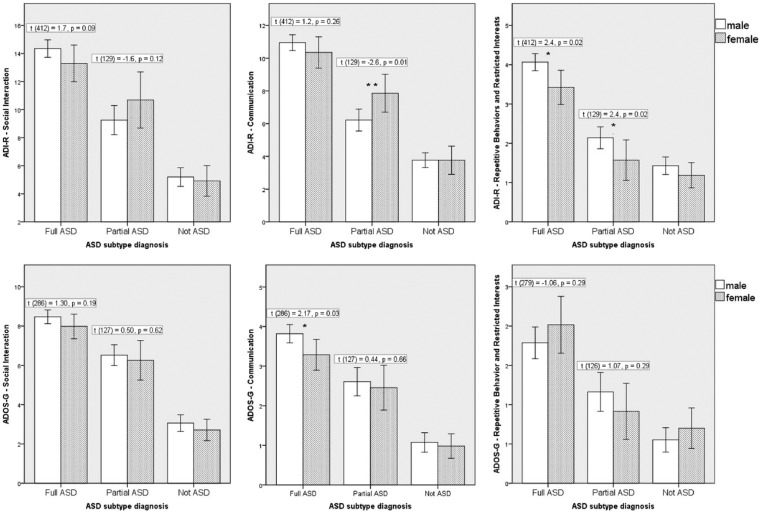
It is unknown whether sex influences the diagnostic evaluation of autism spectrum disorder, or whether male and female adults within the spectrum have different symptom profiles. This study reports sex differences in clinical outcomes for 1244 adults (935 males and 309 females) referred for autism spectrum disorder assessment. Significantly, more males (72%) than females (66%) were diagnosed with an autism spectrum disorder of any subtype (x 2 = 4.09; p = 0.04). In high-functioning autism spectrum disorder adults (IQ > 70; N = 827), there were no significant sex differences in severity of socio-communicative domain symptoms. Males had significantly more repetitive behaviours/restricted interests than females ( p = 0.001, d = 0.3). A multivariate analysis of variance indicated a significant interaction between autism spectrum disorder subtype (full-autism spectrum disorder/partial-autism spectrum disorder) and sex: in full-autism spectrum disorder, males had more severe socio-communicative symptoms than females; for partial-autism spectrum disorder, the reverse was true. There were no sex differences in prevalence of co-morbid psychopathologies. Sex influenced diagnostic evaluation in a clinical sample of adults with suspected autism spectrum disorder. The sexes may present with different manifestations of the autism spectrum disorder phenotype and differences vary by diagnostic subtype. Understanding and awareness of adult female repetitive behaviours/restricted interests warrant attention and sex-specific diagnostic assessment tools may need to be considered.
Overview
The claims and statistics of this paper haven’t been checked yet.
Free: it reads the open-access text and checks the first 5 claims that cite a source we can check. Create a free account to check every claim.
Integrity signals
Registry
Cites
Statistics
Figures
Verification
Claims the paper makes
The claims and statistics of this paper haven’t been checked yet.
Free: it reads the open-access text and checks the first 5 claims that cite a source we can check. Create a free account to check every claim.
Claims other papers make about this one
Each is checked against this paper’s own text: does it say what the citing paper says it does?
The source backs part of the claim, not all of it — or backs it for a different population, condition or comparison.
In the citing paper
“Diagnostic services tended to report a male-female ratio of 2-3 to 1 (e.g. Happé et al., 2016; Rutherford, McKenzie, Johnson, et al., 2016; Wilson et al., 2016).”
From Diagnosis of autism in adulthood: A scoping review (2020) · cites this paper as Wilson et al., 2016
Experimental — accuracy not yet measuredThe cited source says what the claim attributes to it.
In the citing paper
“A potential explanation is that clinical measures are insufficiently sensitive to the presentation of autistic traits in women (Wilson et al., 2016), especially considering women's reported use of camouflaging strategies (Bargiela et al., 2016).”
From Diagnosis of autism in adulthood: A scoping review (2020) · cites this paper as Wilson et al., 2016
The cited source says what the claim attributes to it.
In the citing paper
“Co- occurring mental illnesses are similarly common across genders.”
From Diagnosis of autism in adulthood: A scoping review (2020) · cites this paper as Wilson et al. (2016)
The cited source says what the claim attributes to it.
In the citing paper
“More men than women received an autism diagnosis.”
From Diagnosis of autism in adulthood: A scoping review (2020) · cites this paper as Wilson et al. (2016)
The cited source says what the claim attributes to it.
In the citing paper
“Men scored higher in 'repetitive behaviours/restricted interests' domain.”
From Diagnosis of autism in adulthood: A scoping review (2020) · cites this paper as Wilson et al. (2016)
2 more claims about this paper
Create a free account to see every claim other papers make about this one.
Self-check
Percentages, sums and reported differences re-computed from the paper’s own numbers.
The self-check needs the paper’s full text.
Citations
Cites
Journal of Clinical Psychiatry
(2018) · Journal of Clinical Psychiatry · doi:10.5505/kpd · Cited by 13,651
Lord, C., Rutter, M., & Le Couteur, A. (1994) · Journal of Autism and Developmental Disorders · doi:10.1007/bf02172145 · Cited by 9,065 · cited 2×
“They reported that girls showed more social and communication symptoms on the Autism Diagnostic Observation Schedule–Generic (ADOS-G; Lord et al., 2000) and had fewer repetitive behaviour symptoms on the Autism Diagnostic Interview–Revised (ADI-R; Lord et al., 1994).”
BackgroundInfluentialLord, C., Risi, S., Lambrecht, L., Cook, E. H., Leventhal, B. L., DiLavore, P. C., Pickles, A., & Rutter, M. (2000) · Journal of Autism and Developmental Disorders · doi:10.1023/a:1005592401947 · Cited by 7,520 · cited 1×
“They reported that girls showed more social and communication symptoms on the Autism Diagnostic Observation Schedule–Generic (ADOS-G; Lord et al., 2000) and had fewer repetitive behaviour symptoms on the Autism Diagnostic Interview–Revised (ADI-R; Lord et al., 1994).”
BackgroundKessler, R. C., Petukhova, M., Sampson, N. A., Zaslavsky, A. M., & Wittchen, H. (2012) · International Journal of Methods in Psychiatric Research · doi:10.1002/mpr.1359 · Cited by 2,947 · cited 1×
“…of certain common psychiatric conditions – in particular mood and anxiety disorders – are higher in women than men in the general adult population (Kessler et al., 2012), but it is unclear whether sex differences translate to the autistic spectrum, or whether additional mental health…”
BackgroundEpidemiology of Pervasive Developmental Disorders
Fombonne, E. (2009) · Pediatric Research · doi:10.1203/pdr.0b013e31819e7203 · Cited by 1,971 · cited 1×
“Males are diagnosed approximately four times more often than females in childhood (Fombonne, 2005, 2009) although this ratio varies with IQ and is reportedly as low as 2:1 when ASD is comorbid with intellectual disability, and as high as 6–8:1 in high-functioning populations (Fombonne, 2005).”
BackgroundSex/Gender Differences and Autism: Setting the Scene for Future Research
Lai, M.-C., Lombardo, M. V., Auyeung, B., Chakrabarti, B., & Baron-Cohen, S. (2015) · Journal of the American Academy of Child & Adolescent Psychiatry · doi:10.1016/j.jaac.2014.10.003 · Cited by 1,120 · cited 5×
“Additional future investigations could focus on developmental differences between males and females on the spectrum across the lifespan (Lai et al., 2015).”
BackgroundInfluentialPsychiatric and psychosocial problems in adults with normal-intelligence autism spectrum disorders
Hofvander, B., Delorme, R., Chaste, P., Nydén, A., Wentz, E., Ståhlberg, O., Herbrecht, E., Stopin, A., Anckarsäter, H., Gillberg, C., et al. (2009) · BMC Psychiatry · doi:10.1186/1471-244x-9-35 · Cited by 812 · cited 2×
“Second, co-morbid psychiatric conditions are common in ASD (Hofvander et al., 2009; Joshi et al., 2013; Russell et al., 2005, 2015) and symptoms of ASD are often difficult to disentangle from additional or alternative conditions (Mazzone et al.”
Background(2005) · PubMed · Cited by 775
Mandy, W., Chilvers, R., Chowdhury, U., Salter, G., Seigal, A., & Skuse, D. (2012) · Journal of Autism and Developmental Disorders · doi:10.1007/s10803-011-1356-0 · Cited by 715 · cited 1×
“Additionally, males and females may present with different ASD phenotypes (Howe et al., 2015; Mandy et al., 2012; Van Wijngaarden-Cremers et al., 2014); this may affect diagnostic rates since the female profile is less well understood and hence less easily detected (Kirkovski et al., 2013).”
BackgroundA behavioral comparison of male and female adults with high functioning autism spectrum conditions
Lai, M.-C., Lombardo, M. V., Pasco, G., Ruigrok, A. N. V., Wheelwright, S. J., Sadek, S. A., Chakrabarti, B., MRC AIMS Consortium, & Baron-Cohen, S. (2011) · PLoS ONE · doi:10.1371/journal.pone.0020835 · Cited by 650 · cited 3×
“…as a whole is in line with a review by Van Wijngaarden-Cremers et al. (2013), but contrasts with studies reporting that females have more (Carter et al., 2007; Frazier et al., 2014; Hartley and Sikora, 2009; Lord et al., 1982; McLennan et al., 1993) or less (Lai et al., 2011) symptoms than males.”
BackgroundResult
Research works printed but not linked: 4
- Her Majesty's Government (2009) Autism Act . London: HMSO.
- National Institute for Health and Clinical Excellence (NICE) (2012) Autism: Recognition, Referral, Diagnosis and Management of Adults on the Autism Spectrum (CG142) . London: NICE.
- Wechsler D (1999) Wechsler Abbreviated Scale of Intelligence. Harcourt Assessments . San Antonio, TX: Psychological Corporation.
- World Health Organization (WHO) (1993) The ICD-10 Classification of Mental and Behavioural Disorders: Diagnostic Criteria for Research . Geneva: WHO.
Cited by
Quantifying and exploring camouflaging in men and women with autism
Lai, M.-C., Lombardo, M. V., Ruigrok, A. N., Chakrabarti, B., Auyeung, B., Szatmari, P., Happé, F., Baron-Cohen, S., & MRC AIMS Consortium (2017) · Autism · doi:10.1177/1362361316671012 · Cited by 705
“…often diagnosed at later ages (Begeer et al., 2013; Giarelli et al., 2010; Rutherford et al., 2016; Shattuck et al., 2009) and less easily than males with autism (Russell et al., 2011; Wilson et al., 2016), unless there are concurrent behavioural or cognitive challenges (Dworzynski et al., 2012).”
The Female Autism Phenotype and Camouflaging: a Narrative Review
Hull, L., Petrides, K. V., & Mandy, W. (2020) · Review Journal of Autism and Developmental Disorders · doi:10.1007/s40489-020-00197-9 · Cited by 614
Barriers to Autism Spectrum Disorder Diagnosis for Young Women and Girls: a Systematic Review
Lockwood Estrin, G., Milner, V., Spain, D., Happé, F., & Colvert, E. (2021) · Review Journal of Autism and Developmental Disorders · doi:10.1007/s40489-020-00225-8 · Cited by 444
“2013), or the duration of assessment (Wilson et al. 2016).”
BackgroundSelf-citationWhat about the girls? Sex-based differences in autistic traits and adaptive skills
Ratto, A. B., Kenworthy, L., Yerys, B. E., Bascom, J., Wieckowski, A. T., White, S. W., Wallace, G. L., Pugliese, C., Schultz, R. T., Ollendick, T. H., et al. (2018) · Journal of Autism and Developmental Disorders · doi:10.1007/s10803-017-3413-9 · Cited by 342
“Some prior studies have also found that even when presenting with comparable levels of socio-communicative impairment females are less likely than males to be diagnosed with ASD and are more likely to be able to “camouflage” their social impairments on performance-based measures (Dworzynski et al. 2012; Lai et al. 201…”
BackgroundHowes, O. D., Rogdaki, M., Findon, J. L., Wichers, R. H., Charman, T., King, B. H., Loth, E., McAlonan, G. M., McCracken, J. T., Parr, J. R., et al. (2018) · Journal of Psychopharmacology · doi:10.1177/0269881117741766 · Cited by 342
Self-citationDiagnosis of autism in adulthood: A scoping review
Huang, Y., Arnold, S. R., Foley, K.-R., & Trollor, J. N. (2020) · Autism · doi:10.1177/1362361320903128 · Cited by 289
“There is no conclusive evidence of gender differences in IQ (Lehnhardt et al., 2016; Nydén et al., 2010; Wilson et al., 2016), executive function (Lehnhardt et al., 2016; Nydén et al., 2010), psychosocial functioning (Baldwin & Costley, 2016; E. Rydén & Bejerot, 2008) or mental illness (Geurts &…”
BackgroundInfluentialAutism spectrum disorder in adults: diagnosis, management, and health services development
Murphy, C., Wilson, C. E., Robertson, D. M., Ecker, C., Daly, E. M., Hammond, N., Galanopoulos, A., Dud, I., Murphy, D., & McAlonan, G. M. (2016) · Neuropsychiatric Disease and Treatment · doi:10.2147/ndt.s65455 · Cited by 261
“Furthermore, these comorbid mental health difficulties persist from childhood to adulthood(102) and occur in both males and females with ASD.(54,103) Moreover, people with ASD can have specific cognitive anomalies, including poor planning, decision making, timing, and motor skills, which may adversely impact on their…”
Self-citationSex and gender impacts on the behavioural presentation and recognition of autism
Lai, M.-C., & Szatmari, P. (2020) · Current Opinion in Psychiatry · doi:10.1097/yco.0000000000000575 · Cited by 237
A Mixed Methods Study of Barriers to Formal Diagnosis of Autism Spectrum Disorder in Adults
Lewis, L. F. (2017) · Journal of Autism and Developmental Disorders · doi:10.1007/s10803-017-3168-3 · Cited by 206
“As a result, professionals using scales such as the Autism Diagnostic Observation Schedule (ADOS-2) should be mindful that this tool may not be sensitive enough to accurately diagnose ASD in adults with average or above-average intelligence and may be particularly biased to exclude diagnosis of ASD among females (Lai…”
BackgroundThe EU-AIMS Longitudinal European Autism Project (LEAP): clinical characterisation
Charman, T., Loth, E., Tillmann, J., Crawley, D., Wooldridge, C., Goyard, D., Ahmad, J., Auyeung, B., Ambrosino, S., Banaschewski, T., et al. (2017) · Molecular Autism · doi:10.1186/s13229-017-0145-9 · Cited by 183
“…repetitive and restricted behaviours and interests (RRB) in females but comparable levels of social communication difficulties in males and females [19, 21], other studies have reported greater social communication difficulties and lower cognitive ability and adaptive function in females [22, 23].”
Self-citationSchuck, R. K., Flores, R. E., & Fung, L. K. (2019) · Journal of Autism and Developmental Disorders · doi:10.1007/s10803-019-03998-y · Cited by 172
Santos, S., Ferreira, H., Martins, J., Gonçalves, J., & Castelo-Branco, M. (2022) · Neuroscience & Biobehavioral Reviews · doi:10.1016/j.neubiorev.2022.104577 · Cited by 142
Clinical characteristics and problems diagnosing autism spectrum disorder in girls
Young, H., Oreve, M.-J., & Speranza, M. (2018) · Archives de Pédiatrie · doi:10.1016/j.arcped.2018.06.008 · Cited by 133
Tillmann, J., Ashwood, K., Absoud, M., Bölte, S., Bonnet-Brilhault, F., Buitelaar, J. K., Calderoni, S., Calvo, R., Canal-Bedia, R., Canitano, R., et al. (2018) · Journal of Autism and Developmental Disorders · doi:10.1007/s10803-018-3510-4 · Cited by 121
Self-citationIs There a Bias Towards Males in the Diagnosis of Autism? A Systematic Review and Meta-Analysis
Cruz, S., Zubizarreta, S. C.-P., Costa, A. D., Araújo, R., Martinho, J., Tubío-Fungueiriño, M., Sampaio, A., Cruz, R., Carracedo, Á., & Fernández‐Prieto, M. (2024) · Neuropsychology Review · doi:10.1007/s11065-023-09630-2 · Cited by 191
Kaat, A. J., Shui, A. M., Ghods, S. S., Farmer, C. A., Esler, A. N., Thurm, A., Georgiades, S., Kanne, S. M., Lord, C., Kim, Y. S., et al. (2021) · Journal of Child Psychology and Psychiatry · doi:10.1111/jcpp.13242 · Cited by 116
“…Georgiades, Bishop, & Hardan, 2014; Hartley & Sikora, 2009; Knutsen, Crossman, Perrin, Shui, & Kuhlthau, 2019; Lai et al., 2011; Mandy et al., 2012; Supekar & Menon, 2015; Szatmari et al., 2012; Wilson et al., 2016), but findings remain inconsistent with regard to social-communication deficits.”
Song, Y., Nie, T., Shi, W., Zhao, X., & Yang, Y. (2019) · Frontiers in Psychology · doi:10.3389/fpsyg.2019.01902 · Cited by 128
“Structurally, females with ASCs exhibit fewer repetitive behaviors (Sipes et al., 2011; Frazier et al., 2014; Wilson et al., 2016) and more intellectual impairments than males (Fombonne, 2009).”
BackgroundProtective Effect or Missed Diagnosis? Females with Autism Spectrum Disorder
Hull, L., & Mandy, W. (2017) · Future Neurology · doi:10.2217/fnl-2017-0006 · Cited by 73
The clinician perspective on sex differences in autism spectrum disorders
Jamison, R., Bishop, S. L., Huerta, M., & Halladay, A. K. (2017) · Autism · doi:10.1177/1362361316681481 · Cited by 66
“than males to be under-identified or diagnosed later (Begeer et al., 2013; Giarelli et al., 2010; Wilson et al., 2016) may be, in part, due to reduced sensitivity of currently available diagnostic instruments or diagnostic constructs for detecting ASD symptoms in females.”
BackgroundInfluentialFrigaux, A., Évrard, R., & Lighezzolo‐Alnot, J. (2019) · L Encéphale · doi:10.1016/j.encep.2019.07.002 · Cited by 94
Exploring sex differences in autistic traits: A factor analytic study of adults with autism
Grove, R., Hoekstra, R. A., Wierda, M., & Begeer, S. (2016) · Autism · doi:10.1177/1362361316667283 · Cited by 68
Barrett, S. L., Uljarević, M., Jones, C. R. G., & Leekam, S. R. (2018) · Molecular Autism · doi:10.1186/s13229-018-0242-4 · Cited by 57
Sex differences in the reciprocal behaviour of children with autism
Backer van Ommeren, T., Koot, H. M., Scheeren, A. M., & Begeer, S. (2017) · Autism · doi:10.1177/1362361316669622 · Cited by 52
Belcher, H., Morein‐Zamir, S., Stagg, S. D., & Ford, R. M. (2022) · Journal of Autism and Developmental Disorders · doi:10.1007/s10803-022-05583-2 · Cited by 73
Are males and females with autism spectrum disorder more similar than we thought?
Mussey, J. L., Ginn, N. C., & Klinger, L. G. (2017) · Autism · doi:10.1177/1362361316682621 · Cited by 47
“…examining gender differences among individuals with ASD has suggested that females with this disorder have fewer restricted and repetitive behaviors (Frazier et al., 2014; Wilson et al., 2016), but lower intelligence quotient (IQ) associated with greater symptom impairment overall (Fombonne, 2009).”
BackgroundBelcher, H., Uglik‐Marucha, N., Vitoratou, S., Ford, R. M., & Morein‐Zamir, S. (2023) · BJPsych Open · doi:10.1192/bjo.2023.562 · Cited by 63
Autism symptoms in anorexia nervosa: a comparative study with females with autism spectrum disorder
Kerr‐Gaffney, J., Hayward, H., Jones, E. J. H., Halls, D., Murphy, D., & Tchanturia, K. (2021) · Molecular Autism · doi:10.1186/s13229-021-00455-5 · Cited by 52
Self-citationFactors associated with age at autism diagnosis in a community sample of Australian adults
Huang, Y., Arnold, S. R. C., Foley, K., Lawson, L. P., Richdale, A. L., & Trollor, J. N. (2021) · Autism Research · doi:10.1002/aur.2610 · Cited by 44
“…a relatively small but significant proportion of first-diagnosed adults are younger individuals and people with intellectual disability (Geurts & Jansen, 2012; Wilson et al., 2016) whose diagnosis may have been delayed due to other reasons such as diagnostic overshadowing or healthcare inequities.”
BackgroundMurphy, C. M., Christakou, A., Giampietro, V., Brammer, M. J., Daly, E., Ecker, C., Johnston, P., Spain, D., Robertson, D., Murphy, D., et al. (2017) · Human Brain Mapping · doi:10.1002/hbm.23718 · Cited by 44
Self-citationWang, S., Deng, H., You, C., Chen, K., Li, J., Chun, T., Ceng, C.-Q., Zou, Y., & Zou, X. (2017) · Neuroscience Bulletin · doi:10.1007/s12264-017-0102-9 · Cited by 48
Houghton, R., Liu, C., & Bolognani, F. (2018) · Autism Research · doi:10.1002/aur.2040 · Cited by 37
“This could be additional support to the growing evidence that ASD is underdiagnosed in females [Begeer et al., 2013; Gould & Ashton-Smith, 2011; Wilson et al., 2016].”
ResultSpain, D., Blainey, S. H., & Vaillancourt, K. (2017) · Research in Autism Spectrum Disorders · doi:10.1016/j.rasd.2017.07.005 · Cited by 38
Self-citationVincent, J., & Ralston, K. (2024) · Autism · doi:10.1177/13623613231182756 · Cited by 38
“Others, particularly women, will either remain undiagnosed (Estrin et al., 2021), are awaiting diagnostic assessment (Wilson et al., 2016) or experience ‘diagnostic overshadowing’ where pre-existing health conditions, including anxiety, depression or eating disorders, are misapplied to autistic…”
BackgroundCleaton, M. A. M., Tal‐Saban, M., Hill, E. L., & Kirby, A. (2021) · Research in Developmental Disabilities · doi:10.1016/j.ridd.2021.104010 · Cited by 50
“As a result, some of the instruments used to diagnose ASD may have a male bias (Adamou, Johnson, & Alty, 2018; Murray et al., 2017; Wilson et al., 2016).”
ResultChoose your Own Adventure: Pathways to Adulthood Autism Diagnosis in Australia
Huang, Y., Arnold, S. R. C., Foley, K., & Trollor, J. N. (2021) · Journal of Autism and Developmental Disorders · doi:10.1007/s10803-021-05169-4 · Cited by 36
Barnett, A., Edwards, K., Harper, R., Evans, E. H., Alexander, D., Choudhary, M., & Richards, G. (2020) · Journal of Autism and Developmental Disorders · doi:10.1007/s10803-020-04669-z · Cited by 34
Tsirgiotis, J. M., Young, R. L., & Weber, N. (2021) · Journal of Autism and Developmental Disorders · doi:10.1007/s10803-021-05300-5 · Cited by 44
Problematic eating behaviours of autistic women—A scoping review
Schröder, S. S., Danner, U. N., Spek, A. A., & Elburg, A. A. V. (2022) · European Eating Disorders Review · doi:10.1002/erv.2932 · Cited by 33
“And even though restrictive and repetitive behaviours are thought to be more common in autistic men (Wilson et al., 2016), it could be that behaviours such as having preferences for a particular food brand (i.”
BackgroundRecent progress in understanding skills and impairments in social cognition
Happe, F. G. E., & Conway, J. R. (2016) · Current Opinion in Pediatrics · doi:10.1097/mop.0000000000000417 · Cited by 42
Yau, N., Anderson, S., & Smith, I. (2023) · Research in Autism · doi:10.1016/j.rasd.2022.102101 · Cited by 35
Experiences of Support Following Autism Diagnosis in Adulthood
Huang, Y., Arnold, S. R. C., Foley, K., & Trollor, J. N. (2022) · Journal of Autism and Developmental Disorders · doi:10.1007/s10803-022-05811-9 · Cited by 37
“Studies of autistic 1 people diagnosed in adulthood reported problems with social interaction and relationships, poor mental health, and difficulties finding and maintaining employment (Griffith et al., 2012; Happé et al., 2016; Jones et al., 2014; Wilson et al., 2016).”
Milner, V. L., Colvert, E., Mandy, W., & Happe, F. G. E. (2022) · Autism Research · doi:10.1002/aur.2873 · Cited by 35
“It is possible that some females may have different, nontraditional, presentations of autism that are not fully captured in the ADOS-2 scoring (Wilson et al., 2016).”
Blackmore, C. E., Woodhouse, E., Gillan, N., Wilson, E., Ashwood, K. L., Stoencheva, V., Nolan, A., McAlonan, G. M., Robertson, D., Whitwell, S., et al. (2022) · Autism · doi:10.1177/13623613221081343 · Cited by 38
“Another factor to consider in ASDassociated offending behaviour is sex, given increasing recognition of differences in both brain (Craig et al., 2007; Lai et al., 2013) and behaviour (Wilson et al., 2016) between males and females with ASD.”
BackgroundSelf-citationOverview of genetic models of autism spectrum disorders
Patel, J., Lukkes, J. L., & Shekhar, A. (2018) · Progress in brain research · doi:10.1016/bs.pbr.2018.10.002 · Cited by 34
Tsirgiotis, J. M., Young, R. L., & Weber, N. (2023) · Autism · doi:10.1177/13623613231190682 · Cited by 30
“A small number of studies has considered the presentations of individuals with subclinical ASD traits (i.e. individuals referred for ASD assessment and/or who achieve high scores on screening tools but are deemed ineligible for ASD diagnoses; Dworzynski et al., 2012; Wilson et al., 2016).”
BackgroundYong, Z., Dou, Y., Gao, Y., Xu, X., Xiao, Y., Zhu, H., Li, S., & Yuan, B. (2021) · Translational Pediatrics · doi:10.21037/tp-21-54 · Cited by 33
“Increasingly more researchers consider the difference in the prevalence of ASD between men and women to be of significance (21,23,24).”
The content and function of interests in the broad autism phenotype
Morrison, K. E., Chambers, L. K., Faso, D. J., & Sasson, N. J. (2018) · Research in Autism · doi:10.1016/j.rasd.2018.02.002 · Cited by 29
“…found discrepancies in the content of CIs between males and females with ASD (Harrop, Green, Hudry, & PACT Consortium, 2017; Mandy et al., 2012; Wilson et al., 2016), with females exhibiting less interest in systematizing domains and greater interest in gender-typical and more…”
BackgroundAllely, C. S. (2019) · Advances in Autism · doi:10.1108/aia-09-2018-0030 · Cited by 36
The Early Childhood Signs of Autism in Females: a Systematic Review
Chellew, T., Barbaro, J., & Freeman, N. C. (2022) · Review Journal of Autism and Developmental Disorders · doi:10.1007/s40489-022-00337-3 · Cited by 30
“There is also emerging evidence to suggest that some females present with a different phenotype of autism to males (Hull et al., 2020; Kirkovski et al., 2013; Wilson et al., 2016).”
Liu, P., Xiao, G., He, K., Zhang, L., Wu, X., Li, D., Zhu, C., Tian, Y., Hu, P., Qiu, B., et al. (2020) · Neural Plasticity · doi:10.1155/2020/9857987 · Cited by 20
“Fourth, autism subjects are predominantly males [57, 58].”
Wellness Efforts for Autistic Women
Tint, A., Hamdani, Y., Sawyer, A., Desarkar, P., Ameis, S. H., Bardikoff, N., & Lai, M. (2018) · Current Developmental Disorders Reports · doi:10.1007/s40474-018-0148-z · Cited by 19
Tsirgiotis, J. M., Young, R. L., & Weber, N. (2022) · Journal of Autism and Developmental Disorders · doi:10.1007/s10803-021-05286-0 · Cited by 15
Female gender and autism: underdiagnosis and misdiagnosis – clinical and scientific urgency
Minutoli, R., Marraffa, C., Failla, C., Pioggia, G., & Marino, F. (2026) · Frontiers in Psychiatry · doi:10.3389/fpsyt.2025.1704579 · Cited by 22
The differential diagnosis of autism spectrum disorder in adults
Carroll, H. M., Thom, R. P., & McDougle, C. J. (2025) · Expert Review of Neurotherapeutics · doi:10.1080/14737175.2025.2490533 · Cited by 24
“In fact, 70–80% of adults with ASD are estimated to meet diagnostic criteria for at least one other psychiatric condition [29,32]; the most common include anxiety, depression, attention-deficit/ hyperactivity disorder (ADHD), and obsessive-compulsive disorder (OCD) [28,33–35].”
Cicinelli, G., Nobile, E., Brighenti, S., Bari, S., Tonella, E., Aresi, A., Attanasio, M., Mazza, M., Valenti, M., & Keller, R. (2022) · Epidemiology and Psychiatric Sciences · doi:10.1017/s2045796022000506 · Cited by 12
“A recent study by Wilson et al. (2016) involving 1244 adults (935 males and 309 females) referred for ASD assessment reported sex differences in clinical outcome.”
BackgroundBarriers to an autistic identity: How RRBs may contribute to the underdiagnosis of females
Cary, E., Rao, A., Matsuba, E. S. M., & Russo, N. (2023) · Research in Autism Spectrum Disorders · doi:10.1016/j.rasd.2023.102275 · Cited by 12
Verma, A., Priyank, H., Viswanath, B., Bhagat, J. K., Purbay, S., Mahalakshmi, V., & Shivakumar, S. (2022) · Cureus · doi:10.7759/cureus.27950 · Cited by 16
“, who found that male ASD patients were more prevalent than female ASD patients, and to the findings of the American Autism Association, which said that male ASD prevalence was 4:1 [12,13].”
ResultTiming and Intertemporal Choice Behavior in the Valproic Acid Rat Model of Autism Spectrum Disorder
DeCoteau, W. E., & Fox, A. E. (2021) · Journal of Autism and Developmental Disorders · doi:10.1007/s10803-021-05129-y · Cited by 14
Social attention in anorexia nervosa and autism spectrum disorder: Role of social motivation
Kerr‐Gaffney, J., Jones, E. J. H., Mason, L., Hayward, H., Murphy, D., Loth, E., & Tchanturia, K. (2021) · Autism · doi:10.1177/13623613211060593 · Cited by 13
“Recent work has shown differences in the male and female presentation of ASD, for example, women with ASD show fewer restricted interests and repetitive behaviours, but show more sensory processing abnormalities than males with ASD (Lai et al., 2011; Wilson et al., 2016).”
BackgroundSelf-citationShort report: Gendered workplace social interaction processes in autism
Hayward, S. M., Stokes, M. A., & McVilly, K. (2022) · Research in Developmental Disabilities · doi:10.1016/j.ridd.2022.104310 · Cited by 14
Blackmore, C. E., Nolan, A., Stoencheva, V., Greenwood, N., Liu‐Thwaites, N., Maltezos, S., & McAlonan, G. M. (2023) · BJPsych Open · doi:10.1192/bjo.2023.24 · Cited by 9
Self-citationPagán, A. F., Izuno‐Garcia, A. K., Hughes, K. R., Chapman, K. S., & Loveland, K. A. (2023) · Advances in Neurodevelopmental Disorders · doi:10.1007/s41252-023-00371-0 · Cited by 10
“As a result, clinicians and researchers using measures such as the ADOS-2 must be mindful that this tool may not be sensitive enough to accurately diagnose ASD in women (Lai et al., 2017; Wilson et al., 2016).”
Hechler, F. C., Tuomainen, O., Weber, N., Fahr, F., Karlek, B., Maroske, M., Misia, M., & Caruana, N. (2025) · Molecular Autism · doi:10.1186/s13229-025-00643-7 · Cited by 12
Hamdan, F. B., Shareef, H., & Jasim, H. S. (2022) · Medical Journal of Babylon · doi:10.4103/mjbl.mjbl_88_21 · Cited by 11
Diagnosis and treatment of ASD in women in secure and forensic hospitals
Markham, S. (2018) · Advances in Autism · doi:10.1108/aia-09-2018-0027 · Cited by 11
Autism Spectrum Disorder: Difficulty in Adult Diagnosis
Gillespie, H. (2023) · Canadian Journal of Autism Equity · doi:10.15173/cjae.v3i1.5076 · Cited by 9
Defining turn taking in intervention for young children with autism: A review of the literature
Lee, K., & Staggs, A. (2021) · Journal of Childhood Education & Society · doi:10.37291/2717638x.202122104 · Cited by 7
“This finding may also be attributed to sex and gender differences in meeting current diagnostic criteria (Wilson et al., 2016; Wood-Downie et al., 2021).”
BackgroundFaustmann, L. L., & Altgassen, M. (2024) · Autism Research · doi:10.1002/aur.3165 · Cited by 9
“Studies have shown a male predominance; with ASD affecting two or three times more males than females (e.g., Kim et al., 2011; Loomes et al., 2017; Wilson et al., 2016).”
BackgroundVuijk, R., Deen, M. L., Arntz, A. R., & Geurts, H. M. (2021) · Journal of Autism and Developmental Disorders · doi:10.1007/s10803-021-05225-z · Cited by 8
Jefferson, S. G., & Erp, L. S. (2022) · Child & Family Behavior Therapy · doi:10.1080/07317107.2022.2111750 · Cited by 9
“Yet, the number of females with ASD is underreported as findings (e.g., Harrop et al., 2015; Hiller et al., 2014; Wilson et al., 2016) have consistently shown that the number of males diagnosed with ASD substantially exceeds that of females.”
BackgroundLin, F., Albantakis, L., Noppari, T., Santavirta, S., Brandi, M., Sun, L., Lukkarinen, L., Tani, P., Salmi, J., Nummenmaa, L., et al. (2026) · Molecular Autism · doi:10.1101/2025.02.04.636405 · Cited by 7
Psychometric Evaluation of Two Adult Autism Screening Tools in Brazil
Marques, L. D. N., Murray, C., Ferreira, L. F. D. A., Landeira-Fernández, J., & Anunciação, L. (2025) · Autism Research · doi:10.1002/aur.70089 · Cited by 9
“Historically, males have been overrepresented in this category by a ratio of 4:1 (Cook et al. 2021; Lai et al. 2011), although other findings show an increase in the prevalence of ASD among adult women (Rutherford et al. 2016; Wilson et al. 2016).”
Talari, S., Balaji, K., & Stansfield, A. J. (2017) · Advances in Autism · doi:10.1108/aia-05-2017-0012 · Cited by 7
Cortés, M. J., Orejuela, C., Castellví, G., Folch, A., Rovira, L., Salvador‐Carulla, L., Irazábal, M., Muñoz, S. G., Haro, J. M., Vilella, E., et al. (2017) · Journal of Autism and Developmental Disorders · doi:10.1007/s10803-017-3416-6 · Cited by 8
Knüppel, A., Telléus, G. K., & Lauritsen, M. B. (2018) · Journal of Mental Health Research in Intellectual Disabilities · doi:10.1080/19315864.2018.1497109 · Cited by 6
Tierney, S., & Burns, J. (2017) · Principles of Gender-Specific Medicine · doi:10.1016/b978-0-12-803506-1.00004-8 · Cited by 6
Sex-specific Behavioral Characteristics of Rats with Fetal Valproate Syndrome
Капица, И. Г., Иванова, Е. А., & Воронина, Т. А. (2020) · Moscow University Biological Sciences Bulletin · doi:10.3103/s0096392520020054 · Cited by 4
Exploring sex differences in the manifestation of autistic traits in young children
Song, D., Kim, S. Y., Bong, G., Kim, Y. A., Kim, J. H., Kim, J.-M., & Yoo, H. J. (2021) · Research in Autism · doi:10.1016/j.rasd.2021.101848 · Cited by 6
A survey of assessment practices among health professionals diagnosing females with autism
Freeman, N. C., & Grigoriadis, A. (2023) · Research in Developmental Disabilities · doi:10.1016/j.ridd.2023.104445 · Cited by 5
Day, R., Simmons, L., Shade, E., Jennison, J., Allely, C. S., & Mukherjee, R. (2024) · Advances in Autism · doi:10.1108/aia-11-2022-0053 · Cited by 3
Faustmann, L. L., & Altgassen, M. (2025) · Autism Research · doi:10.1002/aur.70057 · Cited by 3
“Recent research suggests a 3:1 male- to-female ratio (Loomes et al. 2017; Wilson et al. 2016).”
DIAGNÓSTICO DO TRANSTORNO DO ESPECTRO AUTISTA DE ALTA FUNCIONALIDADE: REVISÃO DE ESCOPO1
OLIVEIRA, F. G., Sugita, B. M., Jamus, D. R., KIMURA, E. C., OLIVEIRA, P. N. P., & Mello, R. G. (2025) · Revista Brasileira de Educação Especial · doi:10.1590/1980-54702025v31e0093 · Cited by 11
Barnicot, K., Thompson, E., Turner, S., Mandy, W., McCabe, R., Stark, E. A., & Parker, J. (2026) · Autism · doi:10.1177/13623613261431309 · Cited by 5
“Cisgender men were excluded because sex differences in the socio-communicative and repetitive motor behaviour domains of autism mean that findings from cisgender autistic men may not generalise to cisgender autistic women or gender-diverse groups (Wilson et al., 2016).”
A matter of precision? Scene imagery in individuals with high‐functioning autism spectrum disorder
Faustmann, L. L., & Altgassen, M. (2024) · Autism Research · doi:10.1002/aur.3119 · Cited by 5
“Recent studies suggest a 3:1 male-to-female ratio (Loomes et al., 2017; Wilson et al., 2016).”
BackgroundInfluences on Parent Perceptions of Autism Severity
Dovgan, K. N., Nowell, K. P., & Aguilar, J. (2018) · Focus on Autism and Other Developmental Disabilities · doi:10.1177/1088357618815884 · Cited by 3
Mårland, C., Nilsson, T., Larsson, H., Gillberg, C., Lubke, G. H., & Lundström, S. (2022) · Psychiatry Research · doi:10.1016/j.psychres.2022.114674 · Cited by 4
“Kaat et al. (2021) took these factors into account and examined sex-differences in the ADOS, ADI-R, and Social Responsiveness Scale (SRS) in a sample of children with a clinical diagnose of ASD.”
BackgroundInfluentialDighton, S., & McAloon, J. (2026) · Advances in Neurodevelopmental Disorders · doi:10.1007/s41252-026-00476-2 · Cited by 4
“They may instead be diagnosed with broader mental health problems such as anxiety and avoidant personality disorders (Mandy et al., 2012; Wilson et al., 2016).”
Adult Women on the High-Functioning Autism Spectrum
Pearlman-Avnion, S., & Shlain, R. (2019) · Autism and child psychopathology series · doi:10.1007/978-3-030-28833-4_5 · Cited by 3
Femme-bracing Neurodiversity: Applying Femme Theory to the Experiences of Feminine Autistics
Coombs, E. C., & Comeau, E. E. (2024) · Journal of femininities. · doi:10.1163/29501229-bja10006 · Cited by 3
Sedgewick, F. (2018) · UCL Discovery (University College London) · Cited by 4
Chalk, A., Bauer, A., Higgins, N., Tranter, I., & Nitz, M. (2025) · Australian & New Zealand Journal of Psychiatry · doi:10.1177/00048674251374475 · Cited by 2
“Research shows that there may be an inherent bias in some of these autism measures, as Wilson et al. (2016) found when they investigated the phenomena of an increased likelihood of males being diagnosed (rather than females).”
Autistic traits, gender and age interact to influence attitudes towards Artificial Intelligence
Hechler, F. C., Tuomainen, O., & Caruana, N. (2025) · Computers in Human Behavior Reports · doi:10.1016/j.chbr.2025.100847 · Cited by 1
Validating the German Translation of the Revised Comprehensive Autistic Trait Inventory
Hechler, F. C., Caruana, N., Fahr, F., Karlek, B., Maroske, M., Misia, M., & Tuomainen, O. (2026) · Autism in Adulthood · doi:10.1177/25739581251406751 · Cited by 1
Khudiakova, V., Sin, J., Bhattacharya, P., & Barnicot, K. (2026) · Research in Neurodiversity · doi:10.1016/j.rin.2026.100058 · Cited by 2
Moraes, R. L. D., & da Hora, A. F. L. T. (2023) · Seven Editora eBooks · doi:10.56238/cienciasaudeestuepesv1-073 · Cited by 2
Sex differences in the prevalence of common comorbidities in autism: a narrative review
Hong, Y., Song, D., & Yoo, H. (2025) · Ewha Medical Journal · doi:10.12771/emj.2024.e79 · Cited by 4
“Previous studies comparing the social communication skills of males and females with autism have yielded mixed results; some studies have identified distinct challenges faced by each sex [2,3], while others have found no statistically significant differences [4–6].”
Sexuality Among Females and Males with High-Functioning Autism Spectrum
Pearlman-Avnion, S., Eldan, A., & Cohen, N. (2019) · Autism and child psychopathology series · doi:10.1007/978-3-030-28833-4_10 · Cited by 1
Vuijk, R., de Nijs, P., Arntz, A. R., & Geurts, H. M. (2022) · Journal of Autism and Developmental Disorders · doi:10.1007/s10803-022-05521-2 · Cited by 2
“As we know the phenotypic differences between men and women with ASD (Loomes et al., 2017; Wilson et al., 2016), the inclusion of men with ASD only limits the generalizability of the findings to women with ASD.”
BackgroundMethodFactors Contributing to Late Diagnosis in Females with Autism Spectrum Disorder
Aitken, A. (2019) · doi:10.11575/prism/37215 · Cited by 3
The female side of ADHD and ASD
Kok, F. M. (2021) · University of Groningen research database (University of Groningen / Centre for Information Technology) · doi:10.33612/diss.179073089 · Cited by 2
Metadata
- Authors
- Wilson, C. E., Murphy, C. M., McAlonan, G., Robertson, D. M., Spain, D., Hayward, H., Woodhouse, E., Deeley, P. Q., Gillan, N., Ohlsen, J. C., Zinkstok, J., Stoencheva, V., Faulkner, J., Yildiran, H., Bell, V., Hammond, N., Craig, M. C., & Murphy, D. G.
- Affiliations
- King's College London (GB)
- King’s College London, UK
- South London and Maudsley NHS Foundation Trust (GB)
- Corresponding author
- Wilson, C Ellie
- ORCID
- Venue
- Autism
- Publisher
- SAGE Publications
- Published
- 2016-07-09
- Volume
- 20
- Issue
- 7
- Pages
- 808-819
- ISSN
- 1362-3613 (ISSN-L)
- 1461-7005
- PMC
- PMC5363500
- OpenAlex
- W2319586993
- Cited by
- 129
- References
- 48
- Citations by year
- 2026: 12 · 2025: 11 · 2024: 8 · 2023: 15 · 2022: 15 · 2021: 19 · 2020: 8 · 2019: 10 · 2018: 11 · 2017: 15 · 2016: 5
- FWCI
- 8.70
- Type
- journal article
- Language
- en
- Open access
- hybrid
- doi.org
- Licence
- cc-by
- journals.sagepub.com/page/policies/text-and-data-mining-license (tdm)
- Locations
- Autism (publishedVersion, cc-by)
- PubMed Central (publishedVersion, cc-by)
- PubMed (publishedVersion)
- UCL Discovery (University College London) (submittedVersion)
- Research Portal (King's College London) (submittedVersion, cc-by)
- Funders
- South London and Maudsley NHS Foundation Trust
- National Institute for Health and Care Research (RP-PG-0606-1045)
- King's College London (115300)
- European Commission (115300, 267226)
- Junta de Andalucía (267226)
- Medical Research Council (115300, MR/N026063/1)
- Topics
- Life Sciences › Neuroscience › Cognitive Neuroscience › Autism Spectrum Disorder Research
- Health Sciences › Medicine › Psychiatry and Mental health › Child Nutrition and Feeding Issues
- Life Sciences › Biochemistry, Genetics and Molecular Biology › Genetics › Genetics and Neurodevelopmental Disorders
- Keywords
- autism spectrum disorder, sex differences, autistic adults, diagnostic assessment, repetitive behavior, restricted interests, comorbid psychopathology
- MeSH terms
- Autism Spectrum Disorder, Adolescent, Adult, Aged, Female, Humans, Male, Middle Aged, Sex Factors, Young Adult
About these checks
Registry, retraction, Cites and statistics results are computed, not judged, with one exception: a printed reference that no index lists is read once by a model before it counts as a citation error. Claims are extracted by a model and kept only when their quote appears verbatim in the text; each cited source is then checked, with a model’s help, for whether it says what the claim relies on. Those verdicts can be wrong — read the claim’s quote and the cited source before relying on one.
Statistics and arithmetic are recomputed, not judged.
Confidence bands are shown only for fields calibrated on our annotated test set. None is calibrated yet, so no band is shown.
What counts as a claim ›How we measure confidence ›How we check this ›
Are you an author, or do you see a problem with this page? Request a review
Data sources
Bibliographic data: Semantic Scholar, OpenAlex, Crossref.
Contains information from the Semantic Scholar Academic Graph Datasets, made available under the ODC Attribution License (ODC-BY 1.0).
Semantic Scholar’s data is described in: Kinney, R., et al. (2023). The Semantic Scholar Open Data Platform. arXiv:2301.10140.
