

The DOI matches its Crossref record; 56 of the 56 references it cites were found in a registry or an index.
Neurodivergent intersubjectivity: Distinctive features of how autistic people create shared understanding
Open accessAbstract
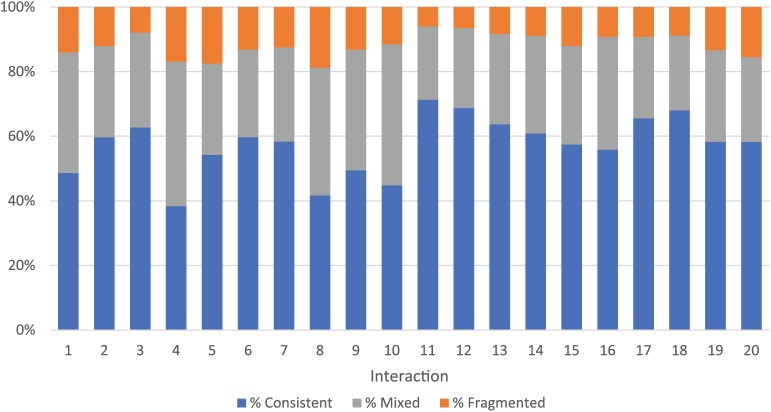
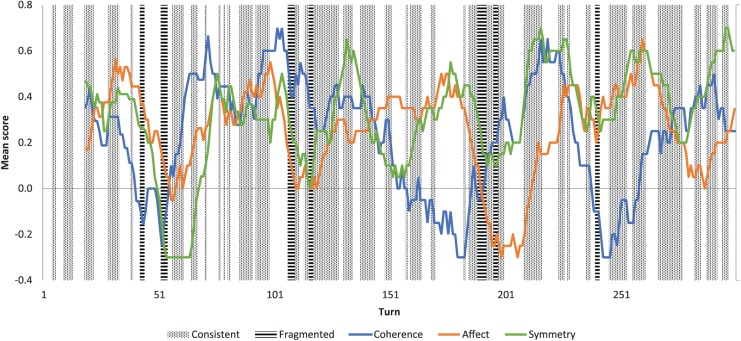
Autistic people are neurologically divergent, yet approaches to studying autism are framed by neurotypical definitions of being social. Using the concept of intersubjectivity, which conceptualises a variety of ways of socially relating, we investigate distinctive features of how autistic people build social understanding. A total of 30 members of a charity supporting adults with autism were video-recorded during a social activity they enjoyed, namely collaborative video gaming. Mapping the coherence, affect and symmetry of each conversational turn revealed shifting patterns of intersubjectivity within each interaction. Focussing on clusters of consistent and fragmented turns led us to identify two features of neurodivergent intersubjectivity: a generous assumption of common ground that, when understood, led to rapid rapport, and, when not understood, resulted in potentially disruptive utterances; and a low demand for coordination that ameliorated many challenges associated with disruptive turns. Our findings suggest that neurodivergent intersubjectivity reveals potential for unconventional forms of social relating and that a within-interaction analysis is a viable methodology for exploring neurodivergent communication. Future research should examine the varieties of neurodivergent intersubjectivity, with associated problems and potentials, and how those forms of intersubjectivity can be enabled to flourish, particularly in autistic-to-neurotypical encounters.
Overview
The claims and statistics of this paper haven’t been checked yet.
Run the check — free, no account needed. It reads the open-access text and checks the sources it cites.
Integrity signals
Registry
Cites
Statistics
Figures
Verification
Claims the paper makes
The claims and statistics of this paper haven’t been checked yet.
Run the check — free, no account needed. It reads the open-access text and checks the sources it cites.
Claims other papers make about this one
Each is checked against this paper’s own text: does it say what the citing paper says it does?
The cited source says what the claim attributes to it.
In the citing paper
“Emerging evidence also suggests that autistic social interaction may incorporate distinctive features that promote social understanding between autistic people (termed ‘neurodivergent intersubjectivity’; Heasman & Gillespie, 2019).”
From Annual Research Review: Shifting from ‘normal science’ to neurodiversity in autism science (2022) · cites this paper as Heasman & Gillespie, 2019
Self-check
Percentages, sums and reported differences re-computed from the paper’s own numbers.
The self-check needs the paper’s full text.
Citations
Cites
Understanding and sharing intentions: The origins of cultural cognition
Tomasello, M., Carpenter, M., Call, J., Behne, T., & Moll, H. (2005) · Behavioral and Brain Sciences · doi:10.1017/s0140525x05000129 · Cited by 4,882
The benefits of playing video games.
Granic, I., Lobel, A., & Engels, R. C. M. E. (2014) · American Psychologist · doi:10.1037/a0034857 · Cited by 2,456
On the ontological status of autism: the ‘double empathy problem’
Milton, D. E. M. (2012) · Disability & Society · doi:10.1080/09687599.2012.710008 · Cited by 2,082
Repair After Next Turn: The Last Structurally Provided Defense of Intersubjectivity in Conversation
Schegloff, E. A. (1992) · American Journal of Sociology · doi:10.1086/229903 · Cited by 1,820
Abductive Analysis: Theorizing Qualitative Research
Tavory, I., & Timmermans, S. (2014) · doi:10.7208/chicago/9780226180458.001.0001 · Cited by 1,726
Deficit, difference, or both? Autism and neurodiversity.
Kapp, S. K., Gillespie-Lynch, K., Sherman, L. E., & Hutman, T. (2013) · Developmental Psychology · doi:10.1037/a0028353 · Cited by 1,263
(2009) · Cited by 1,184
From Content to Context: Videogames as Designed Experience
Squire, K. (2006) · Educational Researcher · doi:10.3102/0013189x035008019 · Cited by 1,091
ROTER, D. L., & Larson, S. (2002) · Patient Education and Counseling · doi:10.1016/s0738-3991(02)00012-5 · Cited by 950
Studies of the Routine Grounds of Everyday Activities
Garfinkel, H. (1964) · Social Problems · doi:10.2307/798722 · Cited by 776
Iterative categorization (IC): a systematic technique for analysing qualitative data
Neale, J. (2016) · Addiction · doi:10.1111/add.13314 · Cited by 690
Neurotypical Peers are Less Willing to Interact with Those with Autism based on Thin Slice Judgments
Sasson, N. J., Faso, D. J., Nugent, J., Lovell, S., Kennedy, D. P., & Grossman, R. B. (2017) · Scientific Reports · doi:10.1038/srep40700 · Cited by 584
Liptak, G. S., Benzoni, L. B., Mruzek, D. W., Nolan, K. W., Thingvoll, M. A., Wade, C. M., & Fryer, G. E. (2008) · Journal of Developmental & Behavioral Pediatrics · doi:10.1097/dbp.0b013e318165c7a0 · Cited by 504
Embodiment and sense-making in autism
Jaegher, H. D. (2013) · Frontiers in Integrative Neuroscience · doi:10.3389/fnint.2013.00015 · Cited by 437
Intersubjectivity: Towards a Dialogical Analysis
Gillespie, A., & Cornish, F. (2009) · Journal for the Theory of Social Behaviour · doi:10.1111/j.1468-5914.2009.00419.x · Cited by 417
Self-citationState-of-the-art of virtual reality technologies for children on the autism spectrum
Parsons, S., & Cobb, S. V. G. (2011) · European Journal of Special Needs Education · doi:10.1080/08856257.2011.593831 · Cited by 396
Conversational Abilities Among Children with Autism and Children with Developmental Delays
Capps, L. M., Kehres, J., & Sigman, M. (1998) · Autism · doi:10.1177/1362361398024002 · Cited by 364
Sasson, N. J., & Morrison, K. E. (2017) · Autism · doi:10.1177/1362361317729526 · Cited by 314
Pragmatic Deficits in the Language of Autistic Adolescents
Baltaxe, C. A. M. (1977) · Journal of Pediatric Psychology · doi:10.1093/jpepsy/2.4.176 · Cited by 260
The Development of Contingent Discourse Ability in Autistic Children
Tager-Flusberg, H. B., & Anderson, M. L. (1991) · Journal of Child Psychology and Psychiatry · doi:10.1111/j.1469-7610.1991.tb00353.x · Cited by 239
Autism and the Social World: An Anthropological Perspective
Ochs, E., Kremer‐Sadlik, T., Sirota, K. G., & Solomon, O. (2004) · Discourse Studies · doi:10.1177/1461445604041766 · Cited by 237
How Easy is it to Read the Minds of People with Autism Spectrum Disorder?
Sheppard, E., Pillai, D., Wong, G. T.-L., Ropar, D., & Mitchell, P. (2016) · Journal of Autism and Developmental Disorders · doi:10.1007/s10803-015-2662-8 · Cited by 229
Egocentrism, allocentrism, and Asperger syndrome
Frith, U., & de Vignemont, F. (2005) · Consciousness and Cognition · doi:10.1016/j.concog.2005.04.006 · Cited by 220
Social interaction systems: theory and measurement
(1999) · Choice Reviews Online · doi:10.5860/choice.37-1849 · Cited by 199
On the Architecture of Intersubjectivity
Rommetveit, R. (1976) · Springer eBooks · doi:10.1007/978-1-4615-8765-1_16 · Cited by 196
Interactional dominance in dyadic communication: a presentation of initiative-response analysis
Linell, P., GUSTAVSSON, L., & Juvonen, P. (1988) · Linguistics · doi:10.1515/ling.1988.26.3.415 · Cited by 186
The Multiple Dimensions of Video Game Effects
Gentile, D. A. (2011) · Child Development Perspectives · doi:10.1111/j.1750-8606.2011.00159.x · Cited by 177
Hello and goodbye: a study of social engagement in autism
Hobson, R. P., & Lee, A. (1998) · Journal of Autism and Developmental Disorders · doi:10.1023/a:1026088531558 · Cited by 174
Using Resources: Conceptualizing the Mediation and Reflective Use of Tools and Signs
Gillespie, A., & Zittoun, T. (2010) · Culture & Psychology · doi:10.1177/1354067x09344888 · Cited by 171
Self-citationHeasman, B., & Gillespie, A. (2018) · Autism · doi:10.1177/1362361317708287 · Cited by 163
Self-citationMedia use among adolescents with autism spectrum disorder
Kuo, M. H., Orsmond, G. I., Coster, W. J., & Cohn, E. S. (2014) · Autism · doi:10.1177/1362361313497832 · Cited by 147
Video games from the perspective of adults with autism spectrum disorder
Mazurek, M. O., Engelhardt, C. R., & Clark, K. E. (2015) · Computers in Human Behavior · doi:10.1016/j.chb.2015.04.062 · Cited by 133
On Intersubjective Engagement in Autism: A Controlled Study of Nonverbal Aspects of Conversation
García-Pérez, R. M., Lee, A., & Hobson, R. P. (2006) · Journal of Autism and Developmental Disorders · doi:10.1007/s10803-006-0276-x · Cited by 120
Ash, J. (2013) · Body & Society · doi:10.1177/1357034x11411737 · Cited by 112
Goh, J. J., & Manahan‐Vaughan, D. (2013) · Frontiers in Integrative Neuroscience · doi:10.3389/fnint.2013.00001 · Cited by 101
Loukusa, S., Leinonen, E., Jussila, K. K., Mattila, M., Ryder, N., Ebeling, H. E., & Moilanen, I. K. (2006) · Journal of Communication Disorders · doi:10.1016/j.jcomdis.2006.10.001 · Cited by 99
Sterponi, L., de Kirby, K., & Shankey, J. (2014) · Autism · doi:10.1177/1362361314537125 · Cited by 95
Visualising Conversation Structure across Time: Insights into Effective Doctor-Patient Consultations
Angus, D. J., Watson, B. M., Smith, A., Gallois, C., & Wiles, J. (2012) · PLoS ONE · doi:10.1371/journal.pone.0038014 · Cited by 89
Grasping intersubjectivity: an invitation to embody social interaction research
Jaegher, H. D., Pieper, B., Clénin, D., & Fuchs, T. A. E. (2016) · Phenomenology and the Cognitive Sciences · doi:10.1007/s11097-016-9469-8 · Cited by 87
Analyzing medical dialogues: strength and weakness of Roter’s interaction analysis system (RIAS)
Sandvik, M., Eide, H., Lind, M., Graugaard, P. K., Torper, J., & Finset, A. (2002) · Patient Education and Counseling · doi:10.1016/s0738-3991(02)00014-9 · Cited by 85
Specificity, contexts, and reference groups matter when assessing autistic traits
Gernsbacher, M. A., Stevenson, J. L., & Dern, S. (2017) · PLoS ONE · doi:10.1371/journal.pone.0171931 · Cited by 85
Handbook of Imagination and Culture
Zittoun, T., & Glăveanu, V. P. (2017) · Oxford University Press eBooks · doi:10.1093/oso/9780190468712.001.0001 · Cited by 80
More on the ontological status of autism and double empathy
Chown, N. P. (2014) · Disability & Society · doi:10.1080/09687599.2014.949625 · Cited by 78
Kremer‐Sadlik, T. (2004) · Discourse Studies · doi:10.1177/1461445604041767 · Cited by 77
Glimpses into the blind spot: Social interaction and autism
Bottema‐Beutel, K. (2017) · Journal of Communication Disorders · doi:10.1016/j.jcomdis.2017.06.008 · Cited by 73
Logico-affective States and Nonverbal Language
Hermelin, B., & O’Connor, N. (1985) · Springer eBooks · doi:10.1007/978-1-4757-4806-2_15 · Cited by 70
Wijnhoven, L. A. M. W., Creemers, D. H. M., Engels, R. C. M. E., & Granic, I. (2015) · BMC Psychiatry · doi:10.1186/s12888-015-0522-x · Cited by 69
Brownlow, C., Rosqvist, H. B., & O’Dell, L. (2013) · Scandinavian Journal of Disability Research · doi:10.1080/15017419.2013.859174 · Cited by 61
Milton, D. E. M., Heasman, B., & Sheppard, E. (2018) · Encyclopedia of Autism Spectrum Disorders · doi:10.1007/978-1-4614-6435-8_102273-1 · Cited by 58
Self-citationSamaritter, R., & Payne, H. (2012) · The Arts in Psychotherapy · doi:10.1016/j.aip.2012.12.004 · Cited by 51
“It's like you are just a spectator in this thing”: Experiencing social life the ‘aspie’ way
Ryan, S., & Räisänen, U. (2008) · Emotion, space and society · doi:10.1016/j.emospa.2009.02.001 · Cited by 50
Pragmatic language disorder and perspective taking in autistic speakers
Volden, J., Mulcahy, R., & Holdgrafer, G. (1997) · Applied Psycholinguistics · doi:10.1017/s0142716400009966 · Cited by 41
Corporeal Reflexivity and Autism
Ochs, E. (2015) · Integrative Psychological and Behavioral Science · doi:10.1007/s12124-015-9306-6 · Cited by 40
Turowetz, J. J. (2015) · Social Science & Medicine · doi:10.1016/j.socscimed.2015.08.022 · Cited by 30
Nelson, A. A., Grahe, J. E., & Ramseyer, F. (2016) · SAGE Open · doi:10.1177/2158244016684173 · Cited by 23
In two minds: Theory of Mind, intersubjectivity, and autism
Dant, T. (2014) · Theory & Psychology · doi:10.1177/0959354314556526 · Cited by 16
Research works printed but not linked: 6
- Cornell J, 1986, Crocodile Dundee
- De Jaegher H, 2013, Frontiers in Integrative Neuroscience, 7, 1
- Dekker M (1999) On our own terms: emerging autistic culture. In: Proceedings of the Autism99. Available at: http://www.autscape.org/2015/programme/handouts/Autistic-Culture-07-Oct-1999.pdf
- Kushner D, 1982, Tron
- Oakley B, 1995, Bart vs. Australia
- Ochs E, 2010, Journal of the Society for Psychological Anthropology, 38, 69
Cited by
Sorted by citations
Annual Research Review: Shifting from ‘normal science’ to neurodiversity in autism science
Pellicano, E., & den Houting, J. (2022) · Journal of Child Psychology and Psychiatry · doi:10.1111/jcpp.13534 · Cited by 744
Autistic peer-to-peer information transfer is highly effective
Crompton, C. J., Ropar, D., Evans-Williams, C. V., Flynn, E. G., & Fletcher-Watson, S. (2020) · Autism · doi:10.1177/1362361320919286 · Cited by 524
Crompton, C. J., Sharp, M., Axbey, H., Fletcher‐Watson, S., Flynn, E., & Ropar, D. (2020) · Frontiers in Psychology · doi:10.3389/fpsyg.2020.586171 · Cited by 299
Autism and the double empathy problem: Implications for development and mental health
Mitchell, P., Sheppard, E., & Cassidy, S. (2021) · British Journal of Developmental Psychology · doi:10.1111/bjdp.12350 · Cited by 311
Schuck, R. K., Tagavi, D. M., Baiden, K. M. P., Dwyer, P., Williams, Z. J., Osuna, A., Ferguson, E. F., Jimenez Muñoz, M., Poyser, S. K., Johnson, J. F., et al. (2022) · Journal of Autism and Developmental Disorders · doi:10.1007/s10803-021-05316-x · Cited by 208
Metadata
- Authors
- Heasman, B., & Gillespie, A.
- Affiliations
- London School of Economics and Political Science (GB)
- Corresponding author
- Heasman, Brett
- Venue
- Autism
- Publisher
- SAGE Publications
- Published
- 2018-08-03
- Volume
- 23
- Issue
- 4
- Pages
- 910-921
- ISSN
- 1362-3613 (ISSN-L)
- 1461-7005
- PMC
- PMC6512057
- OpenAlex
- W2886786591
- Cited by
- 316
- References
- 56
- Citations by year
- 2026: 112 · 2025: 70 · 2024: 33 · 2023: 32 · 2022: 20 · 2021: 26 · 2020: 18 · 2019: 5
- FWCI
- 7.30
- Type
- journal article
- Language
- en
- Open access
- hybrid
- doi.org
- Locations
- Autism (publishedVersion, cc-by)
- PubMed Central (publishedVersion, cc-by)
- PubMed (publishedVersion)
- London School of Economics and Political Science Research Online (London School of Economics and Political Science) (acceptedVersion)
- Research at York St John (York St John University) (submittedVersion)
- London School of Economics and Political Science Theses Online (London School of Economics and Political Science) (submittedVersion)
- UCL Discovery (University College London) (submittedVersion)
- Funders
- Economic and Social Research Council (ES/J500070/1)
- Topics
- Life Sciences › Neuroscience › Cognitive Neuroscience › Autism Spectrum Disorder Research
- Social Sciences › Arts and Humanities › Language and Linguistics › Language, Discourse, Communication Strategies
- Social Sciences › Psychology › Developmental and Educational Psychology › Child and Animal Learning Development
- Keywords
- mutual understanding, social communication, conversational turns, common ground, rapport building, coordination
- MeSH terms
- Adolescent, Adult, Autistic Disorder, Communication, Female, Humans, Interpersonal Relations, Male, Social Behavior, Video Games, Comprehension, Qualitative Research, Young Adult
About these checks
Registry, retraction, Cites and statistics results are computed, not judged, with one exception: a printed reference that no index lists is read once by a model before it counts as a citation error. Claims are extracted by a model and kept only when their quote appears verbatim in the text; each cited source is then checked, with a model’s help, for whether it says what the claim relies on. Those verdicts can be wrong — read the claim’s quote and the cited source before relying on one.
Statistics and arithmetic are recomputed, not judged.
Confidence bands are shown only for fields calibrated on our annotated test set. None is calibrated yet, so no band is shown.
What counts as a claim ›How we measure confidence ›How we check this ›
Are you an author, or do you see a problem with this page? Request a review
