

A scoping review of gaps and priorities in dementia care in Europe
Open accessThe DOI matches its Crossref record; 34 of the 34 references it cites were found in a registry or an index.
Abstract
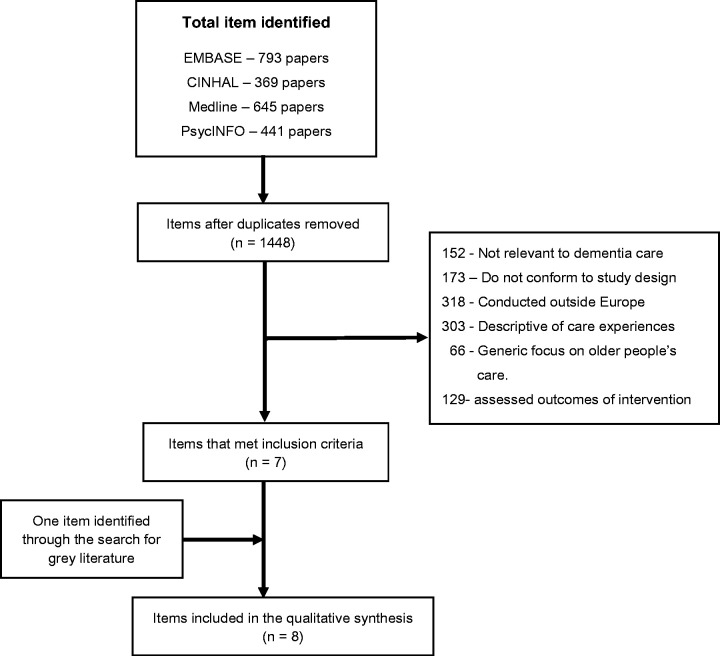
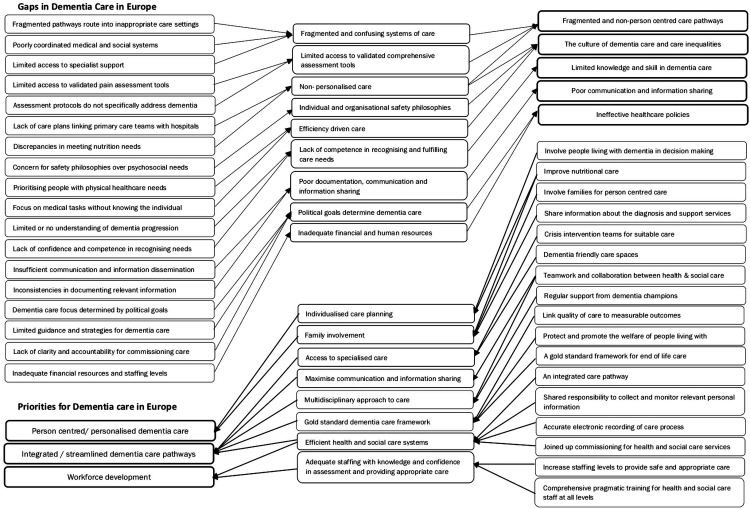
Dementia is a widely recognized public health priority due to the increasing number of people living with the condition and its attendant health, social, and economic costs. Delivering appropriate care is a challenge in many countries in Europe contributing to unmet needs of people living with dementia. Acute hospital settings are often the default route in pursuit for dementia care due to the lack of or limited knowledge of local service provisions. The care environment and the skillsets in acute hospitals do not fully embrace the personhood necessary in dementia care. Predictions of an exponential increase in people living with dementia in the coming 30 years require evidence-based strategies for advancing dementia care and maximizing independent living. However, the evidence required to inform priorities for enabling improvements in dementia care is rarely presented in a way that stimulates and sustains political interests. This scoping review of the literature drew on principles of meta-ethnography to clarify the gaps and priorities in dementia care in Europe. The review constituted eight papers (n = 8) and a stakeholder consultation involving three organizations implementing dementia care programs in Europe comprising Emmaus Elderly Care in Belgium, Residential Care Holy Heart in Belgium, and ZorgSaam in the Netherlands. Overarching concepts of gaps identified include fragmented non-person-centered care pathways, the culture of dementia care, limited knowledge and skills, poor communication and information sharing, and ineffective healthcare policies. Key areas distinguished from the literature for narrowing the gaps to improve care experiences and the support for people living with dementia care encompass person-centered care, integrated care pathways, and healthcare workforce development. Action for advancing care and maximizing independent living needs to go beyond mere inclusions on political agendas to incorporate a shift in health and social care policies to address the needs of people living with dementia.
Overview
The claims and statistics of this paper haven’t been checked yet.
Free: it reads the open-access text and checks the first 5 claims that cite a source we can check. Create a free account to check every claim.
Integrity signals
Registry
Cites
Statistics
Figures
Verification
Claims the paper makes
The claims and statistics of this paper haven’t been checked yet.
Free: it reads the open-access text and checks the first 5 claims that cite a source we can check. Create a free account to check every claim.
Claims other papers make about this one
Each is checked against this paper’s own text: does it say what the citing paper says it does?
The cited source says what the claim attributes to it.
In the citing paper
“Despite the critical importance of coordinated care during these transitions, people with dementia often experience care fragmentation (Fogg et al., 2018; Martin et al., 2020; Smith et al., 2021).”
From Mind the gap: a systematic review of barriers, facilitators, and experiences of care transitions for people living with dementia and their informal caregivers. (2026) · cites this paper as Martin et al., 2020
The cited source says what the claim attributes to it.
In the citing paper
“The persistence of structural health and social care fragmentation and information gaps suggests that existing health care systems remain poorly equipped to meet the needs of this population, despite long-standing recognition of these issues in the literature (Giebel et al., 2021; Martin et al., 2020).”
From Mind the gap: a systematic review of barriers, facilitators, and experiences of care transitions for people living with dementia and their informal caregivers. (2026) · cites this paper as Martin et al., 2020
Self-check
Percentages, sums and reported differences re-computed from the paper’s own numbers.
The self-check needs the paper’s full text.
Citations
Cites
Scoping studies: towards a methodological framework
Arksey, H., & O'Malley, L. (2005) · International Journal of Social Research Methodology · doi:10.1080/1364557032000119616 · Cited by 36,742
Noblit, G., & Hare, R. (1988) · doi:10.4135/9781412985000 · Cited by 2,723
Huber, M., Knottnerus, J. A., Green, L., Horst, H. V. D., Jadad, A. R., Kromhout, D., Leonard, B., Lorig, K., Loureiro, M. I., Meer, J. W. M. V. D., et al. (2011) · BMJ · doi:10.1136/bmj.d4163 · Cited by 2,637 · cited 1×
“This is when people are supported to develop strategies for maintaining balance between opportunities and limitations to manage life with some independence to participate in social activities for individual growth (Brooker & Latham, 2015; Huber et al., 2011).”
BackgroundBeyond PICO: The SPIDER Tool for Qualitative Evidence Synthesis
Cooke, A., Smith, D., & Booth, A. (2012) · Qualitative Health Research · doi:10.1177/1049732312452938 · Cited by 2,608
Dixon-Woods, M., Cavers, D., Agarwal, S., Annandale, E., Arthur, A., Harvey, J., Hsu, R., Katbamna, S., Olsen, R., Smith, L., et al. (2006) · BMC Medical Research Methodology · doi:10.1186/1471-2288-6-35 · Cited by 2,289
The Problem of Fragmentation and the Need for Integrative Solutions
Stange, K. C. (2009) · The Annals of Family Medicine · doi:10.1370/afm.971 · Cited by 569 · cited 1×
“This dichotomy breeds experiences of poor quality service and futile efforts for improvement (Stange, 2009).”
BackgroundEggenberger, E., Heimerl, K., & Bennett, M. I. (2013) · International Psychogeriatrics · doi:10.1017/s1041610212001664 · Cited by 340
Toye, F., Seers, K., Allcock, N., Briggs, M., Carr, E., & Barker, K. (2014) · BMC Medical Research Methodology · doi:10.1186/1471-2288-14-80 · Cited by 322 · cited 1×
“For many qualitative reviews, researchers feel the need to succumb unnecessarily to the pressure of appraising papers for inclusion to avoid the health community stigma related to gold standard methods (Toye et al., 2014).”
BackgroundDewing, J., & Dijk, S. (2016) · Dementia · doi:10.1177/1471301213520172 · Cited by 318
Erwin, E. J., Brotherson, M. J., & Summers, J. A. (2011) · Journal of Early Intervention · doi:10.1177/1053815111425493 · Cited by 272
Research works printed but not linked: 3
- Brooker D. Latham I. (2015). Person-centred dementia care: Making services better with the VIPS framework. London, England: Jessica Kingsley.
- Van de Voorde C. Van den Heede K. Beguin C. Bouckaert N. Camberlin C. de Bekker P., … Grau C. (2017). Required hospital capacity in 2025 and criteria for rationalisation of complex cancer surgery, radiotherapy and maternity services (No. 289). Retrieved from Belgian Health Care Knowledge Centre (KCE): http://www.bravo-radiotherapie.be/en/mod_news/required-hospital-capacity-in-2025-and-criteria-for-rationalisation-of-complex-cancer-surgery-radiotherapy-and-maternity-services-1/ · DOI
- Von Bertalanffy L. (1977). The role of systems theory in present day science technology and philosophy. In Schaefer K. E Hensel H. Brady R. (Eds), A new image of man in medicine: Proceedings of toward a man-centered medical science symposium (pp. 11–15). Mt Kisco, NY: Futura Publishing Company.
Cited by
Teaching and learning about dementia care among undergraduate nursing students: A scoping review
Cariñanos-Ayala, S., Arrue, M., & Zarandona, J. (2022) · Nurse Education in Practice · doi:10.1016/j.nepr.2022.103326 · Cited by 43
Hoe, J., Trickey, A., & McGraw, C. (2022) · International Journal of Older People Nursing · doi:10.1111/opn.12491 · Cited by 39
Structures for the care of people with dementia: a European comparison
Schmachtenberg, T., Monsees, J., & Thyrian, J. R. (2022) · BMC Health Services Research · doi:10.1186/s12913-022-08715-7 · Cited by 39
Messina, A., Amati, R., Albanese, E., & Fiordelli, M. (2022) · International Journal of Environmental Research and Public Health · doi:10.3390/ijerph19127504 · Cited by 36
“A better understanding of help-seeking behaviors and needs in family caregivers of people with dementia is needed to close the gap between the availability of support measures and their access and use, with potential benefits for the caregiver and the person with dementia [21,22].”
BackgroundArmstrong, M. J., Bedenfield, N., Slande Alliance, Majid, T., Taylor, A., Kurasz, A. M., Patel, B., & Smith, G. E. (2021) · Alzheimer Disease & Associated Disorders · doi:10.1097/wad.0000000000000459 · Cited by 27
“Study inclusion criteria were: (1) patient or caregiver of a patient followed at the center, (2) patient diagnosis of DLB,5 (3) if an individual with DLB, clinician-judged mild-moderate dementia severity (to allow study participation), and (4) willingness to do a telephone interview.”
BackgroundRahman, A. A., Michaud, J., Dell’Aniello, S., Moodie, E. E. M., Brophy, J. M., Durand, M., Guertin, J. R., Boivin, J., & Renoux, C. (2022) · Neurology · doi:10.1212/wnl.0000000000206748 · Cited by 28
“The proportion of older adults is projected to increase drastically in many high-income countries,(32) leading to the recognition of dementia as an upcoming public health crisis.(32) Regarding this, OAC therapy may be an effective strategy to reduce its burden in patients with NVAF.”
BackgroundGaps in the System: Supporting People Living with Dementia
King, M., Peckham, A., Marani, H., Roerig, M., Yung, S., McGrail, K. M., Young, Y., Shaw, J., & Marchildon, G. P. (2023) · Journal of Aging & Social Policy · doi:10.1080/08959420.2023.2226341 · Cited by 25
“Health care systems continue to be designed to address distinct ailments without much integration and involvement between different parts of the system (Bauer et al., 2019; Martin et al., 2020; Weiss et al., 2020; Wright & O’Connor, 2018).”
InfluentialPigott, J., Davies, N., Chesterman, E., Read, J., Nimmons, D., Walters, K. R., Armstrong, M., & Schrag, A. E. (2023) · Parkinson s Disease · doi:10.1155/2023/9732217 · Cited by 22
Boon, P., Lescrauwaet, E., Aleksovska, K., Konti, M., Berger, T., Leonardi, M., Marson, A. G., Kallweit, U., Moro, E., Toscano, A., et al. (2023) · European Journal of Neurology · doi:10.1111/ene.16171 · Cited by 20
Grosvenor, W., Gallagher, A. M., & Banerjee, S. (2020) · International Journal of Geriatric Psychiatry · doi:10.1002/gps.5452 · Cited by 22
Dooley, J., Booker, M. J., Barnes, R., & Xanthopoulou, P. (2020) · BMJ Open · doi:10.1136/bmjopen-2020-037673 · Cited by 19
What next? Experiences of social support and signposting after a diagnosis of dementia
Hagan, R. J. (2020) · Health & Social Care in the Community · doi:10.1111/hsc.12949 · Cited by 19
Determinants of hospital readmissions in older people with dementia: a narrative review
Browne, B., Ali, K., Ford, E., & Tabet, N. (2024) · BMC Geriatrics · doi:10.1186/s12877-024-04905-6 · Cited by 18
“Dementia is a known public health priority due to the increasing amount of people living with the condition worldwide and the subsequent demands placed on health and social care systems, the economy and society [1].”
BackgroundAldridge, Z., & Dening, K. H. (2019) · OBM Geriatrics · doi:10.21926/obm.geriatr.1904081 · Cited by 18
Alnes, R. E., Malmedal, W., Nordtug, B., Steinsheim, G., & Blindheim, K. (2022) · Journal of Nursing Management · doi:10.1111/jonm.13819 · Cited by 17
“A scoping review that aimed to map gaps and priorities in dementia care in Europe found, among other things, that the gaps include fragmented non-person-centred care pathways, limited knowledge and skills and poor communication and information sharing (Martin et al., 2020).”
BackgroundMayer, J. F., Green, M. R., White, L. W., & Lemley, T. (2023) · American Journal of Speech-Language Pathology · doi:10.1044/2023_ajslp-22-00410 · Cited by 16
Designing Dementia Care Pathways to Transform Non Dementia-Friendly Hospitals: Scoping Review
Riquelme-Galindo, J., & Lillo‐Crespo, M. (2021) · International Journal of Environmental Research and Public Health · doi:10.3390/ijerph18179296 · Cited by 15
“[38] Martin, O’Connor & Jackson 2020 Gaps and priorities in dementia care in Europe Europe Literature Review Scoping Review Narrowing the gaps to improve care experiences and the support for people living with dementia care encompass person-centered care, integrated care pathways, and healthcare workforce development.”
BackgroundMuralidhar, M., Spector, A. E., Hui, E. K., Liu, L., & Ali, A. (2023) · Aging & Mental Health · doi:10.1080/13607863.2023.2265322 · Cited by 14
“Lack of resources and staff who are trained to provide dementia-specific interventions are common barriers to person-centred care in health and social care settings (Martin et al., 2020).”
BackgroundA realist synthesis of dementia education programmes for pre-registration nurses
Conway, A., Harkin, D., & Ryan, A. A. (2024) · Nurse Education Today · doi:10.1016/j.nedt.2024.106393 · Cited by 15
Comparing international dementia research priorities—Systematic review
Logan, M., Leitch, S., Bosakh, Z., Beishon, L., & Quinn, T. J. (2022) · International Journal of Geriatric Psychiatry · doi:10.1002/gps.5836 · Cited by 14
Oostra, D. L., Nieuwboer, M. S., Melis, R. J. F., Remers, T. E. P., Rikkert, M. G. M. O., & Perry, M. (2023) · Alzheimer s & Dementia · doi:10.1002/alz.13154 · Cited by 12
The memory clinic and psychosocial intervention: Translating past promise into current practices
Moniz-Cook, E. D., & Mountain, G. A. (2023) · Frontiers in Rehabilitation Sciences · doi:10.3389/fresc.2023.1052244 · Cited by 11
“Reasons for fragile post-diagnostic dementia care include fragmentation, poor communication around care pathways and inadequate health and social care policies (26, 27).”
BackgroundGreene, L., Brain, J., Watkins, P., Kafadar, A. H., Sabatini, S., Blundell, B., Bothe, E., Harper, K., Hersh, D., Morrisby, C., et al. (2026) · The Gerontologist · doi:10.1093/geront/gnaf275 · Cited by 9
Lahiouel, A., Kellett, J., Isbel, S. T., & D'Cunha, N. M. (2023) · Geriatrics · doi:10.3390/geriatrics8040077 · Cited by 9
The Care Needs of Patients With Cognitive Impairment in Late-Stage Parkinson’s Disease
Pigott, J., Bloem, B. R., Lorenzl, S., Meissner, W. G., Odin, P., Ferreira, J. J., Dodel, R. C., & Schrag, A. E. (2024) · Journal of Geriatric Psychiatry and Neurology · doi:10.1177/08919887231225484 · Cited by 9
O’Connor, C. M. C., Poulos, R. G., Preti, C., Heldon, M., Barclay, L., Beattie, E., & Poulos, C. J. (2023) · Health Promotion Journal of Australia · doi:10.1002/hpja.720 · Cited by 9
“Barriers around limited access to allied health and psychosocial interventions are well-reported in Australia (Low et al., 2021; O'Connor et al., 2020 (Hansen et al., 2017; Low et al., 2021; Martin et al., 2020).”
Low, L., Gresham, M. D., Phillipson, L., Jeon, Y., Hall, D. V., Tan, A. C. W., Wong, N., & Brodaty, H. (2023) · BMC Health Services Research · doi:10.1186/s12913-023-10347-4 · Cited by 9
“This is consistent with research from the UK and Europe suggesting fragmented services without clear pathways, and with limited service capacity and capability [10, 29].”
ResultMoermans, V., Hamers, J. P. H., Verbeek, H., de Casterlé, B. D., Milisen, K., & Bleijlevens, M. H. C. (2023) · BMC Nursing · doi:10.1186/s12912-023-01553-w · Cited by 9
“Person-centred care (PCC) is a fundamental principle in providing high-quality dementia care at home [2, 3].”
BackgroundCariñanos-Ayala, S., Zarandona, J., Durán‐Sáenz, I., & Arrue, M. (2023) · Nurse Education in Practice · doi:10.1016/j.nepr.2023.103711 · Cited by 8
Alteren, J., Johannessen, A., Lyberg, A. M., & Magnussen, I.-L. (2023) · Journal of Multidisciplinary Healthcare · doi:10.2147/jmdh.s398570 · Cited by 7
Towards Establishing Quality Standards on Human Rights for Services in Dementia Care
Panagiotidou, N., Dhooper, J., Funk, M., Drew, N., Seeher, K. M., Dua, T., & Orrell, M. W. (2024) · International Journal of Older People Nursing · doi:10.1111/opn.12643 · Cited by 7
Care Planning for Community-Dwelling People with Dementia: A Systematic Scoping Review
Low, L., Duckworth, T. J., King, L., Gresham, M. D., Phillipson, L., Jeon, Y., & Brodaty, H. (2023) · Health & Social Care in the Community · doi:10.1155/2023/4674120 · Cited by 7
Methods of Engaging Interest‐Holders in Healthcare Evidence Syntheses: A Scoping Review
Todhunter‐Brown, A., Petkovic, J., Chang, C., Griebler, U., Hannigan, A., Hilgart, J., Hussain, B., Jull, J., Kien, C., Ledinger, D., et al. (2026) · Cochrane Evidence Synthesis and Methods · doi:10.1002/cesm.70066 · Cited by 7
Kovaleva, M. A., Higgins, M. K., Dietrich, M. S., Jennings, B. M., Song, M., Clevenger, C. K., Griffiths, P. C., & Hepburn, K. W. (2022) · Journal of the American Association of Nurse Practitioners · doi:10.1097/jxx.0000000000000681 · Cited by 6
Takechi, H., Yoshino, H., & Kawakita, H. (2022) · Journal of Alzheimer's Disease · doi:10.3233/jad-215472 · Cited by 5
Caregiving Within the Context of Elder Care
Boyle, D. (2023) · Springer eBooks · doi:10.1007/978-3-031-16745-4_3 · Cited by 6
Harkin, D., Conway, A., & Ryan, A. A. (2024) · Journal of research in nursing · doi:10.1177/17449871241266805 · Cited by 5
“…Education Institutions (HEIs) bear a significant responsibility in equipping pre-registration nurses to address this pressing need and enhance the capacity of the future dementia care workforce, ultimately improving the quality of care provided (Jack-Waugh, 2023; Martin et al., 2020; WHO, 2018).”
Saposnik, G., Ismail, Z., Rivard, A.-M., Knifton, D., Bromfield, G. P., Terzaghi, M., Montoya, A., & Ménard, M. (2022) · Frontiers in Medicine · doi:10.3389/fmed.2022.997277 · Cited by 5
Jelinski, D. C., Fernandes, B. E., Reich, K. M., Lang, E., Holroyd-Leduc, J. M., & Goodarzi, Z. (2025) · Emergency Medicine Journal · doi:10.1136/emermed-2023-213869 · Cited by 5
Nursing students´ conceptions of dementia: A phenomenographic study
Cariñanos-Ayala, S., Arrue, M., Yuste, S., & Zarandona, J. (2025) · Educational Gerontology · doi:10.1080/03601277.2025.2465292 · Cited by 5
“2025.2465292 Training and educating healthcare professionals in dementia care competencies remains insufficient worldwide (World Health Organization, 2021), and in Europe, healthcare workforce development was identified as an important gap in dementia care (Martin et al., 2020).”
InfluentialMoermans, V. (2023) · Research Publications (Maastricht University) · doi:10.26481/dis.20231123vm · Cited by 5
Carey, P. J. (2026) · Biomedical Science and Clinical Research · doi:10.33140/bscr.05.03.01 · Cited by 4
Cheng, S., Wong, G. H. Y., Choy, J. C. P., Wong, K. K. Y., Lum, T. Y. S., & Yu, D. S. F. (2022) · International Journal of Nursing Studies · doi:10.1016/j.ijnurstu.2022.104300 · Cited by 4
Caring for a person living with dementia: identifying and assessing a carer's needs
Dening, K. H. (2023) · British Journal of Community Nursing · doi:10.12968/bjcn.2023.28.10.492 · Cited by 4
Fatal Family Violence and the Dementias: Gray Mist Killings
Websdale, N. S. (2023) · Routledge eBooks · doi:10.4324/9781003333869 · Cited by 4
Valentini, I., Nurchis, M., Altamura, G., Cicchetti, A., Damiani, G., & Arbia, G. (2024) · Social Indicators Research · doi:10.1007/s11205-024-03354-3 · Cited by 1
“…integrated pathways, and healthcare workforce development to address these gaps, with a focus on overcoming stigma, particularly in Western societies and minority groups, to improve care access and health behaviors, affirming the insights gleaned from the national literature (Martin et al., 2020).”
Hamad, H. K. A., & Sathian, B. (2024) · Nepal Journal of Epidemiology · doi:10.3126/nje.v14i2.69363 · Cited by 4
Parsons, K., Smith-Young, J., & Pike, A. D. (2024) · Dementia · doi:10.1177/14713012241284693 · Cited by 4
“People with dementia and their caregivers have reported that they do not receive suf fi cient support and information around diagnosis (Francis & Hanna, 2020; Low et al., 2018) and fi nd services fragmented and dif fi cult to navigate (Martin et al., 2020).”
Dementism: A New Line of Inquiry in Dementia Studies From a Social Psychological Perspective
Rahman, A., & Olaison, A. (2025) · Journal for the Theory of Social Behaviour · doi:10.1111/jtsb.70013 · Cited by 3
Hegerath‐Segler, F., Giehl, C., Pentzek, M., Vollmar, H. C., & Otte, I. (2024) · BMC Geriatrics · doi:10.1186/s12877-023-04638-y · Cited by 3
“Other countries and healthcare systems outside of Europe face similar problems, as this scoping review has highlighted [29].”
BackgroundRisk management and decision-making in dementia care
Aldridge, Z., & Dening, K. H. (2024) · Nursing Older People · doi:10.7748/nop.2024.e1460 · Cited by 3
O’Connor, C. M. C., Poulos, R. G., Heldon, M., Preti, C., Beattie, E., & Poulos, C. J. (2024) · Health Promotion Journal of Australia · doi:10.1002/hpja.897 · Cited by 3
“12,38 In a separate occupational therapy implementation study, the need to educate the broader sector on the scope of practice of the intervention for people with dementia was discussed as important.”
van de Schraaf, S. A. J., Rhodius‐Meester, H. F. M., Rijnsent, L., Natawidjaja, M. D., van den Berg, E., Wolters, F. J., Visser‐Meily, J. M. A., Biessels, G. J., de Vugt, M. E., Muller, M., et al. (2024) · Journal of Alzheimer s Disease · doi:10.3233/jad-240526 · Cited by 3
“Although fragmented care has previously been reported within these pathways, 7 , 10 our study adds that collaboration and communication between these pathways is even more limited, leading to duplication of work and thereby inefficiency and ineffective communication.”
BackgroundWenker, S. L., Kieu, C., Schroepfer, T. A., Felten, K. M., Smith, K., & Khalili, H. (2023) · Internet Journal of Allied Health Sciences and Practice · doi:10.46743/1540-580x/2023.2279 · Cited by 3
Rocha‐de‐Lossada, C., Burguera, N., Fernández, J., Ribeiro, F. J., Ursell, P. G., Serrano-Castro, P. J., & Dick, H. B. (2025) · Ophthalmology and Therapy · doi:10.1007/s40123-025-01225-9 · Cited by 2
“We have demonstrated the requirement for well‑designed cognitive impairment care pathways to improve access to specialist services and ensure continu‑ ity of care [9].”
InfluentialBøgmose, J., Bøgeskov, B. M. O., Dening, T., & Martinsen, B. (2025) · Dementia · doi:10.1177/14713012251388683 · Cited by 2
“…communication of people living with advanced dementia can become incomprehensible, irregular, and unpredictable, which can make it dif fi cult for formal caregivers (i.e. professional care workers) to see and recognise the person they still are and continue to be (Martin et al., 2020; Post, 2016).”
Andrews, N., Brooks, C., Amin, J., Lim, R. H. M., Michèle Board, Latter, S. M., Fraser, S. D., & Ibrahim, K. (2025) · Dementia · doi:10.1177/14713012251376227 · Cited by 2
“However, education on dementia care more generally may also be bene fi cial, as a scoping review of dementia care in Europe found limited knowledge among healthcare professionals (Martin et al., 2020).”
Hopper, L. (2025) · Dublin City University Open Access Institutional Repository (Dublin City University) · Cited by 2
Prendergast, L. M., Davies, C. T., & Williamson, T. (2023) · Dementia · doi:10.1177/14713012231220461 · Cited by 2
“UK dementia services are described as fragmented (Martin et al., 2020) with a lack of specialist resources to provide proactive and preventative care within primary and community settings.”
BackgroundGuo, P., Efstathiou, N., Bailey, C., Adab, P., & Glasby, J. (2025) · Palliative Care and Social Practice · doi:10.1177/26323524251392625 · Cited by 1
“31 Furthermore, little is known about palliative care needs in people with moderate and severe cognitive impairments who live at home or in care homes, and how these needs change with disease progression.”
Conway, A., Harkin, D., Ryan, A. A., & Slater, P. F. (2026) · Nursing Research and Practice · doi:10.1155/nrp/9845911 · Cited by 1
Williamson, L. E., Horne, S. D., Mikelyte, R., Grey, E., Collins, P., Poyner, C., Farnood, A., & Oh, T. M. (2026) · Frontiers in Dementia · doi:10.3389/frdem.2026.1791608 · Cited by 1
“Dementia is a known source of social disadvantage (Biggs et al., 2019); in care settings, this can manifest as a ‘culture of dementia care’, in which the needs and preferences of people with dementia are overlooked (Martin et al., 2020).”
Conway, A., Harkin, D., Ryan, A. A., & Slater, P. F. (2026) · Nurse Education Today · doi:10.1016/j.nedt.2026.107167 · Cited by 1
Chiona, B. C., Mbakaya, B. C., & Liu, M. F. (2026) · Nurse Education in Practice · doi:10.1016/j.nepr.2026.104884 · Cited by 1
Cardona, M. I., Gakoudis, P. N., Macijauskienė, J., & Thyrian, J. R. (2026) · Frontiers in Medicine · doi:10.3389/fmed.2026.1774318 · Cited by 1
Imaging Persons Living with Dementia
Spacey, A., Higgins, R., & Scragg, B. (2022) · Springer eBooks · doi:10.1007/978-3-031-10898-3_35 · Cited by 1
Biesmans, J. M. A., Bolt, S., Zwakhalen, S. M. G., Janssen, D. J. A., & Meijers, J. M. M. (2025) · International Journal of Nursing Studies Advances · doi:10.1016/j.ijnsa.2025.100455 · Cited by 1
“However, complex palliative care needs or healthcare professionals ’ limited knowledge about the disease can lead to challenges in the provision of care (Martin et al., 2020; Surr et al., 2017).”
Mole, L. (2021) · PEARL (University of Plymouth) · doi:10.24382/700
Adzei, S. E. (2022) · Arts and design studies · doi:10.7176/ads/98-01
Majd, S., Bizjak-Mikic, M., & Waters, D. (2023) · International Journal of Research Publication and Reviews · doi:10.55248/gengpi.4.623.46724
Dilemmas and support strategies in dementia care: Experiences of case managers in Taiwan
Lu, J.-Y., Lee, Y.-H., & Wang, Y. (2023) · Dementia · doi:10.1177/14713012231221025
“…for ensuring clear communication between a case manager and an interdisciplinary team can hinder their ability to identify and reach a consensus regarding the type of care that is required, thereby damaging the relationship of trust between the two parties (Martin et al., 2020; Marx et al., 2014).”
BackgroundHong, Y. J., & Chang, S. O. (2024) · Journal of Advanced Nursing · doi:10.1111/jan.16706
Comprehensive Care for Patients with Dementia: A Qualitative Analysis
DuPont, J. L. (2025) · International Journal of Geriatrics and Gerontology · doi:10.29011/2577-0748.100200
Browne, B., Ali, K., Ford, E. M., & Tabet, N. (2024) · Figshare · doi:10.6084/m9.figshare.25596485
Hegerath, F.-M., Giehl, C., Pentzek, M., Vollmar, H. C., & Otte, I. C. (2024) · Figshare · doi:10.6084/m9.figshare.24965976
Hegerath, F.-M., Giehl, C., Pentzek, M., Vollmar, H. C., & Otte, I. C. (2024) · Figshare · doi:10.6084/m9.figshare.24966093
Additional file 1 of Structures for the care of people with dementia: a European comparison
Schmachtenberg, T., Monsees, J., & Thyrian, J. R. (2022) · Figshare · doi:10.6084/m9.figshare.21594006
Kommunikationsstrategier för sjuksköterskor inom demensvård
Obstfelder, V., & Škrtić, V. (2021) · Gothenburg University Publications Electronic Archive (Gothenburg University)
Rybacka, M. (2024) · Stirling Online Research Repository (University of Stirling)
Canonical correlation analysis methods for examining brain structure and behaviour
Pigeau, S. (2023) · eScholarship@McGill (McGill) · doi:10.82308/48712
Quality of life in relatives of people with cognitive disease : A qualitative interview study
Palmgren, I., & Vanberg, A. (2024) · DiVA (Digitala Vetenskapliga Arkivet)
Trauma-Informed Support in a Dementia Helpline: Retrospective Mixed Methods Study
Harkess-Murphy, E., MacRae, R., Brown, M., & Hall, J. (2026) · JMIR Formative Research · doi:10.2196/71746
“In fragmented care systems that often fail to meet complex needs [46], carers frequently become what Brodaty and Donkin [17] term the “invisible second patient,” facing XSL • FO RenderX multiple inequalities and psychological distress without adequate skills or support.”
Chen, Y., Li, S., Yu, C., Liao, Y., Wang, L.-N., & Yang, B. (2026) · Neuroepidemiology · doi:10.1159/000549913
Hegerath‐Segler, F., Giehl, C., Vollmar, H. C., & Otte, I. (2026) · BMC Family Practice · doi:10.1186/s12875-026-03305-6
“This makes it particularly difficult for PLWD to navigate between healthcare and community services [27].”
Read, S., Brimblecombe, N., Hicks, B., Hu, B., King, D., & Wittenberg, R. (2026) · Journal of Alzheimer s Disease · doi:10.1177/13872877261459015
“60 Pathway modeling helps to understand the chained associations between the background characteristics, current circumstances (e.g., level of functional dif fi culties) and receipt of help.”
Alshanberi, A. M., Nukaly, H. Y., Mousa, A. H., Alhartani, M. M., Nassar, J. Y., Ahmed, R. A., Talmesany, T., Shaikhomer, M., Imam, A. A., Abo-Ali, E. A., et al. (2026) · Risk Management and Healthcare Policy · doi:10.2147/rmhp.s604540
“20 Hence, the main objective of this unicentric study was to assess the dementia patients’ caregivers’ home safety practices.”
Dual-Platform Digital Intervention for Cognitive Training and Social Participation in Older Adults
Zhao, S., & Yang, L. (2026) · Journal of Visualized Experiments · doi:10.3791/70919
Cardona, M. I., Giebel, C. M., Scerri, A., Innes, A., Mimica, N., Kučuk, O., Nielsen, T. R., Macijauskienė, J., Bartkevičiūtė, B., Smits, C., et al. (2026) · Frontiers in Medicine · doi:10.3389/fmed.2026.1828363
“By linking research priorities with principles of equity, collaboration, and contextual sensitivity, the framework offers guidance for strengthening inclusive and sustainable dementia research across Europe (20, 21).”
Care for People with Dementia in Long-Term Care in a Home Environment
Ratenej, R. (2026) · University of Maribor digital library (University of Maribor)
Metadata
- Authors
- Martin, A., O’Connor, S., & Jackson, C.
- Affiliations
- Canterbury Christ Church University (GB)
- Corresponding author
- Martin, Anne
- Venue
- Dementia
- Publisher
- SAGE Publications
- Published
- 2018-11-29
- Volume
- 19
- Issue
- 7
- Pages
- 2135-2151
- ISSN
- 1471-3012 (ISSN-L)
- 1741-2684
- PMC
- PMC7917562
- OpenAlex
- W2903518651
- Cited by
- 80
- References
- 34
- Citations by year
- 2026: 12 · 2025: 9 · 2024: 15 · 2023: 23 · 2022: 15 · 2021: 2 · 2020: 3 · 2019: 1
- FWCI
- 1.17
- Type
- journal article
- Language
- en
- Open access
- hybrid
- doi.org
- Licence
- Locations
- Dementia (publishedVersion, cc-by-nc)
- PubMed Central (publishedVersion, cc-by-nc)
- PubMed (publishedVersion)
- Create (Canterbury Christ Church University) (acceptedVersion)
- UEA Digital Repository (University of East Anglia) (submittedVersion)
- Funders
- Interreg 2 Seas Mers Zeeen (Not applicable)
- Topics
- Health Sciences › Medicine › Psychiatry and Mental health › Dementia and Cognitive Impairment Research
- Health Sciences › Medicine › Geriatrics and Gerontology › Geriatric Care and Nursing Homes
- Health Sciences › Medicine › Public Health, Environmental and Occupational Health › Palliative Care and End-of-Life Issues
- Keywords
- dementia care, person-centred care, acute hospital care, care pathways, health workforce development, independent living, dementia policy, communication and information sharing, stakeholder consultation, Europe
- MeSH terms
- Aged, Aged, 80 and over, Belgium, Delivery of Health Care, Dementia, Europe, Humans, Netherlands
About these checks
Registry, retraction, Cites and statistics results are computed, not judged, with one exception: a printed reference that no index lists is read once by a model before it counts as a citation error. Claims are extracted by a model and kept only when their quote appears verbatim in the text; each cited source is then checked, with a model’s help, for whether it says what the claim relies on. Those verdicts can be wrong — read the claim’s quote and the cited source before relying on one.
Statistics and arithmetic are recomputed, not judged.
Confidence bands are shown only for fields calibrated on our annotated test set. None is calibrated yet, so no band is shown.
What counts as a claim ›How we measure confidence ›How we check this ›
Are you an author, or do you see a problem with this page? Request a review
Data sources
Bibliographic data: Semantic Scholar, OpenAlex, Crossref.
Contains information from the Semantic Scholar Academic Graph Datasets, made available under the ODC Attribution License (ODC-BY 1.0).
Semantic Scholar’s data is described in: Kinney, R., et al. (2023). The Semantic Scholar Open Data Platform. arXiv:2301.10140.
