

Reduction in HbA1c using professional flash glucose monitoring in insulin-treated type 2 diabetes patients managed in primary and secondary care settings: A pilot, multicentre, randomised controlled trial
Open accessThe DOI matches its Crossref record; 29 of the 29 references it cites were found in a registry or an index.
Abstract
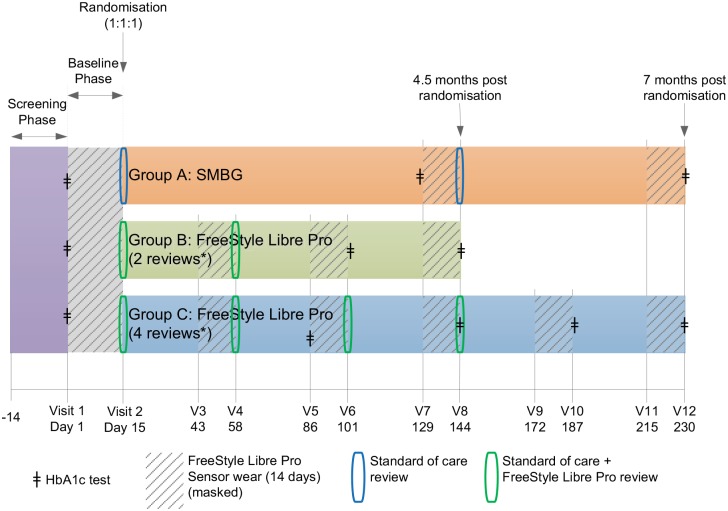
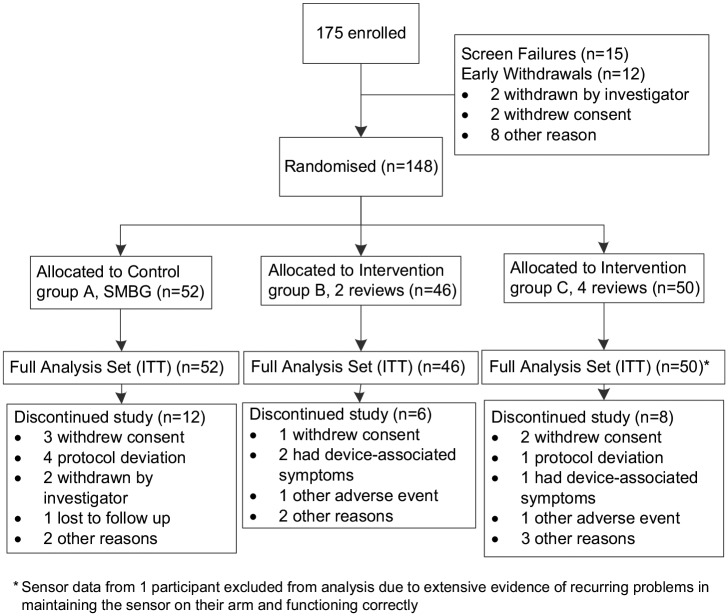
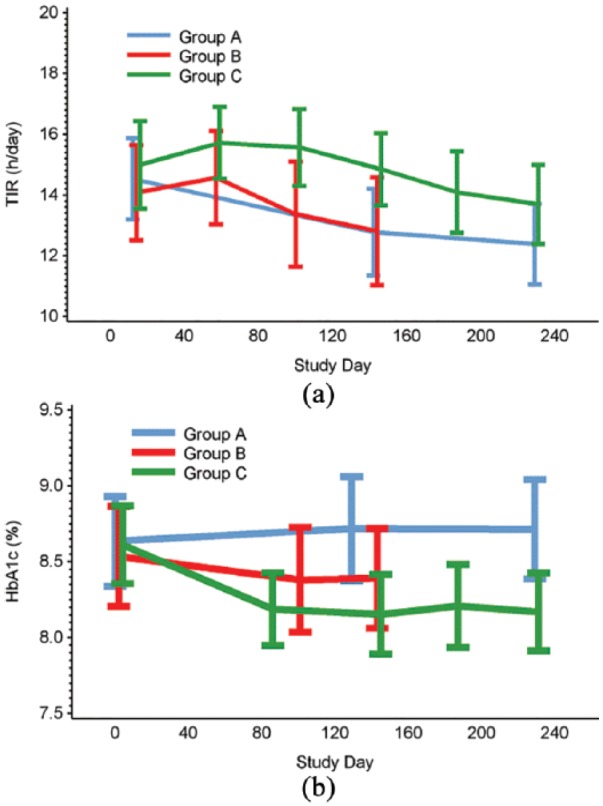
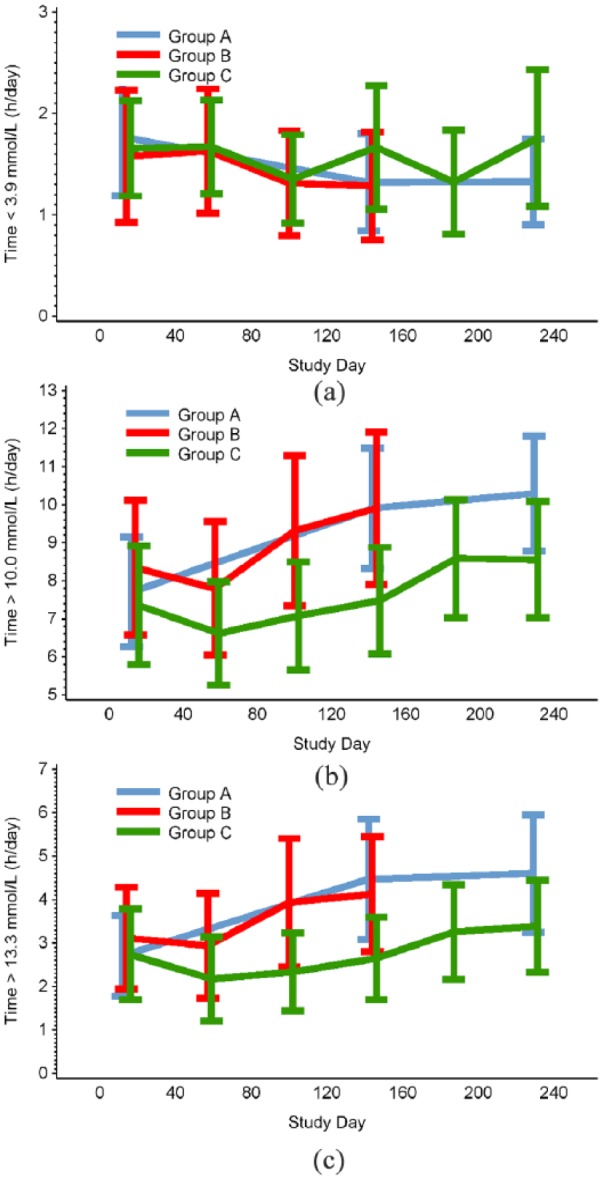
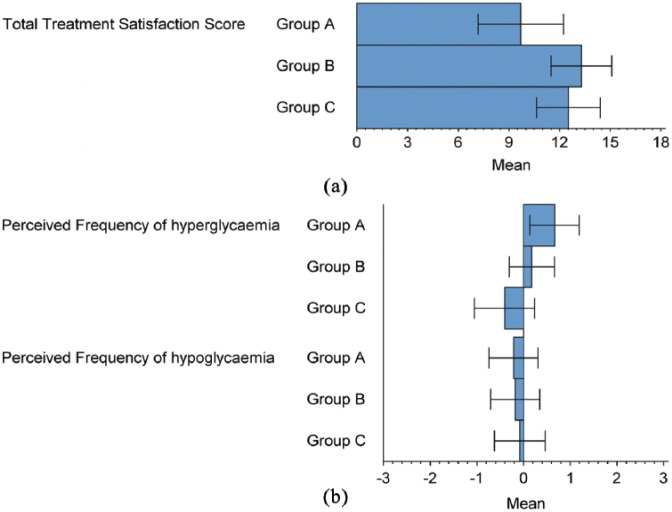
Aim: Analyse the effects of professional flash glucose monitoring system (FreeStyle Libre Pro™) on glycaemic control in insulin-treated type 2 diabetes. Methods: Primary (n = 17) and secondary care centres (n = 5) randomised 148 type 2 diabetes patients into three groups: (A) self-monitoring of blood glucose (n = 52), (B) self-monitoring of blood glucose and two Libre Pro sensor wears (n = 46) or (C) self-monitoring of blood glucose and four sensor wears (n = 50). Primary endpoint was time in range (glucose 3.9–10 mmol/L) within group C comparing baseline with days 172–187. Predefined secondary endpoints included HbA1c, hypoglycaemia and quality of life measures analysed within and between groups (clinicaltrials.gov, NCT02434315). Results: In group C, time in range in the first 14 days (baseline) and days 172–187 was similar at 15.0 ± 5.0 and 14.1 ± 4.7 h/day (mean ± SD), respectively, (p = 0.1589). In contrast, HbA1c reduced from baseline to study end within group C by 4.9 ± 8.8 mmol/mol (0.44% ± 0.81%; p = 0.0003). HbA1c was also lower in group C compared with A at study end by 5.4 ± 1.79 mmol/mol (0.48% ± 0.16%; p = 0.0041, adjusted mean ± SE), without increased time in hypoglycaemia ( p = 0.1795). Treatment satisfaction scores improved in group C compared with A ( p = 0.0225) and no device-related serious adverse events were reported. Conclusions: Libre Pro can improve HbA1c and treatment satisfaction without increasing hypoglycaemic exposure in insulin-treated type 2 diabetes individuals managed in primary/secondary care centres.
Overview
The claims and statistics of this paper haven’t been checked yet.
Free: it reads the open-access text and checks the first 5 claims that cite a source we can check. Create a free account to check every claim.
Integrity signals
Registry
Cites
Statistics
Figures
Verification
Claims the paper makes
The claims and statistics of this paper haven’t been checked yet.
Free: it reads the open-access text and checks the first 5 claims that cite a source we can check. Create a free account to check every claim.
Claims other papers make about this one
Each is checked against this paper’s own text: does it say what the citing paper says it does?
In the citing paper
“Professional CGM devices, which provide retrospective data, either blinded or unblinded, for analysis can be used to identify patterns of hypoglycemia and hyperglycemia (111,112).”
From 7. Diabetes Technology: Standards of Care in Diabetes—2025 (2025) · cites this paper as [111]
Self-check
Percentages, sums and reported differences re-computed from the paper’s own numbers.
The self-check needs the paper’s full text.
Citations
Cites
Inzucchi, S. E., Bergenstal, R. M., Buse, J. B., Diamant, M., Ferrannini, E., Nauck, M., Peters, A. L., Tsapas, A., Wender, R., & Matthews, D. R. (2015) · Diabetes Care · doi:10.2337/dc14-2441 · Cited by 3,066 · cited 1×
“Those related to sensor insertion were bleeding (5), bruising (4), pain (2), oedema (1) and induration (0).”
BackgroundInternational consensus on use of continuous glucose monitoring
Danne, T., Nimri, R., Battelino, T., Bergenstal, R. M., Close, K. L., DeVries, J. H., Garg, S., Heinemann, L., Hirsch, I., Amiel, S. A., et al. (2017) · Diabetes Care · doi:10.2337/dc17-1600 · Cited by 2,069
Defining and Reporting Hypoglycemia in Diabetes
American Diabetes Association Workgroup on Hypoglycemia (2005) · Diabetes Care · doi:10.2337/diacare.28.5.1245 · Cited by 1,146
Bolinder, J., Antuna, R., Geelhoed-Duijvestijn, P., Kröger, J., & Weitgasser, R. (2016) · The Lancet · doi:10.1016/s0140-6736(16)31535-5 · Cited by 893
The Prevalence of Meeting A1C, Blood Pressure, and LDL Goals Among People With Diabetes, 1988–2010
Stark Casagrande, S., Fradkin, J. E., Saydah, S. H., Rust, K. F., & Cowie, C. C. (2013) · Diabetes Care · doi:10.2337/dc12-2258 · Cited by 719 · cited 7×
“394 Diabetes & Vascular Disease Research 16(4)”
BackgroundInfluentialHandbook of Psychology and Diabetes
(2013) · Routledge eBooks · doi:10.4324/9781315077369 · Cited by 661
Beck, R. W., Riddlesworth, T. D., Ruedy, K., Ahmann, A., Haller, S., Kruger, D., McGill, J. B., Polonsky, W., Price, D., Aronoff, S., et al. (2017) · Annals of Internal Medicine · doi:10.7326/m16-2855 · Cited by 635 · cited 1×
“Sensor insertion-site signs and symptoms (n = 42) experienced by 29 participants (36 mild and 6 moderate) were primarily associated with sensor wear; erythema (16), itching (10) and rash (4).”
BackgroundHaak, T., Hanaire, H., Ajjan, R., Hermanns, N., Riveline, J.-P., & Rayman, G. (2017) · Diabetes Therapy · doi:10.1007/s13300-016-0223-6 · Cited by 623
Self-citationDefining and Characterizing the Progression of Type 2 Diabetes
Fonseca, V. A. (2009) · Diabetes Care · doi:10.2337/dc09-s301 · Cited by 573
Continuous glucose monitoring: a review of recent studies demonstrating improved glycemic outcomes
Rodbard, D. (2017) · Diabetes Technology & Therapeutics · doi:10.1089/dia.2017.0035 · Cited by 458
Research works printed but not linked: 1
- Bergenstal RM Danne T Heller SR et al Reaching an international consensus on standardizing continuous glucose monitoring (CGM) outcomes – aligning clinicians, researchers, patients and regulators. In: Presented at the American Diabetes Association 77th scientific sessions, San Diego, CA, 9–18 6 2017.
Cited by
7. Diabetes Technology: Standards of Medical Care in Diabetes—2022
American Diabetes Association Professional Practice Committee (2022) · Diabetes Care · doi:10.2337/dc22-s007 · Cited by 358
“Use of Professional and Intermittent Continuous Glucose Monitoring Professional CGM devices, which provide retrospective data, either blinded or unblinded, for analysis, can be used to identify patterns of hypo- and hyperglycemia (87,88).”
Background7. Diabetes Technology: Standards of Care in Diabetes—2025
American Diabetes Association Professional Practice Committee, ElSayed, N. A., McCoy, R. G., Aleppo, G., Balapattabi, K., Beverly, E. A., Briggs Early, K., Bruemmer, D., Echouffo-Tcheugui, J. B., Ekhlaspour, L., et al. (2025) · Diabetes Care · doi:10.2337/dc25-s007 · Cited by 348
7. Diabetes Technology: Standards of Care in Diabetes — 2023
ElSayed, N. A., Aleppo, G., Aroda, V. R., Bannuru, R. R., Brown, F. M., Bruemmer, D., Collins, B. S., Hilliard, M. E., Isaacs, D., Johnson, E. L., et al. (2023) · Diabetes Care · doi:10.2337/dc23-s007 · Cited by 301
7. Diabetes Technology: Standards of Care in Diabetes—2024
American Diabetes Association Professional Practice Committee, ElSayed, N. A., Aleppo, G., Bannuru, R. R., Bruemmer, D., Collins, B. S., Ekhlaspour, L., Hilliard, M. E., Johnson, E. L., Khunti, K., et al. (2024) · Diabetes Care · doi:10.2337/dc24-s007 · Cited by 281
7. Diabetes Technology: Standards of Medical Care in Diabetes—2021
American Diabetes Association (2021) · Diabetes Care · doi:10.2337/dc21-s007 · Cited by 202
“CGM Professional CGMdevices, which provide retrospective data, either blinded or unblinded, for analysis, can be used to identify patterns of hypo- and hyperglycemia (93).”
MethodWada, E., Onoue, T., Kobayashi, T., Handa, T., Hayase, A., Ito, M., Furukawa, M., Okuji, T., Okada, N., Iwama, S., et al. (2020) · BMJ Open Diabetes Research & Care · doi:10.1136/bmjdrc-2019-001115 · Cited by 157
“FGM has also been shown to be superior to SMBG in reducing hypoglycemia 14 and HbA1c level 15 16 in patients with type 2 diabetes treated with insulin.”
Continuous glucose monitoring: The achievement of 100 years of innovation in diabetes technology
Galindo, R. J., & Aleppo, G. (2020) · Diabetes Research and Clinical Practice · doi:10.1016/j.diabres.2020.108502 · Cited by 133
McCall, A. L., Lieb, D. C., Gianchandani, R., MacMaster, H., Maynard, G. A., Murad, M. H., Seaquist, E., Wolfsdorf, J. I., Wright, R. F., & Wiercioch, W. (2023) · The Journal of Clinical Endocrinology & Metabolism · doi:10.1210/clinem/dgac596 · Cited by 123
Seidu, S., Kunutsor, S. K., Ajjan, R. A., & Choudhary, P. (2024) · Diabetes Care · doi:10.2337/dc23-1520 · Cited by 124
Self-citationTechnology in the management of type 2 diabetes: Present status and future prospects
DALY, A. B., & Hovorka, R. (2021) · Diabetes Obesity and Metabolism · doi:10.1111/dom.14418 · Cited by 109
“Despite this, people with T2D using the masked “Libre Pro” reported increased understanding of therapies and improved self-management of their diabetes due to interaction with AGPs alongside their clinical team.(35)”
MethodUhl, S., Choure, A., Rouse, B., Loblack, A., & Reaven, P. (2024) · The Journal of Clinical Endocrinology & Metabolism · doi:10.1210/clinem/dgad652 · Cited by 76
A review of flash glucose monitoring in type 2 diabetes
Krakauer, M., Botero, J. F., Lavalle-González, F. J., Proietti, A., & Barbieri, D. E. (2021) · Diabetology & Metabolic Syndrome · doi:10.1186/s13098-021-00654-3 · Cited by 71
Carlson, A. L., Daniel, T. D., DeSantis, A., Jabbour, S., Karslioglu French, E., Kruger, D., Miller, E., Ozer, K., & Elliott, T. (2022) · BMJ Open Diabetes Research & Care · doi:10.1136/bmjdrc-2021-002590 · Cited by 69
Kieu, A., King, J., Govender, R. D., & Östlundh, L. (2022) · Journal of Diabetes Science and Technology · doi:10.1177/19322968211070855 · Cited by 73
Furler, J., O'Neal, D., Speight, J., Blackberry, I., Manski-Nankervis, J.-A., Thuraisingam, S., de La Rue, K., Ginnivan, L., Doyle, R., Holmes-Truscott, E., et al. (2020) · The Lancet Diabetes & Endocrinology · doi:10.1016/s2213-8587(19)30385-7 · Cited by 55
Aggarwal, A., Pathak, S., & Goyal, R. (2022) · Diabetes Research and Clinical Practice · doi:10.1016/j.diabres.2022.109825 · Cited by 55
Roldan, V. D. T., Urtecho, M., Nayfeh, T., Firwana, M., Muthusamy, K., Hasan, B., Abd‐Rabu, R., Maraboto, A., Qoubaitary, A., Prokop, L. J., et al. (2022) · The Journal of Clinical Endocrinology & Metabolism · doi:10.1210/clinem/dgac601 · Cited by 49
Dillmann, C., Amoura, L., Fall-Mostaine, F., Coste, A., Bounyar, L., & Kessler, L. (2021) · Journal of Diabetes Science and Technology · doi:10.1177/1932296821994586 · Cited by 44
Lu, J., Ying, Z., Wang, P., Fu, M., Han, C., & Zhang, M. (2024) · Diabetes, Obesity and Metabolism · doi:10.1111/dom.15328 · Cited by 39
Cowart, K., Updike, W., & Bullers, K. (2020) · Diabetes Technology & Therapeutics · doi:10.1089/dia.2019.0345 · Cited by 36
“19 On the contrary, several other RCTs did not find a change in time in glycemic range with isCGM use among adult patients with uncontrolled T2DM using insulin, 14,17 or when compared with rtCGM in patients with T1DM and impaired awareness of hypoglycemia.”
InfluentialKong, S.-Y., & Cho, M.-K. (2024) · Healthcare · doi:10.3390/healthcare12050571 · Cited by 36
Zhang, W., Liu, Y., Sun, B., Shen, Y., Li, M., Peng, L., Duan, H., Su, X., Lu, S., Tian, X., et al. (2021) · Scientific Reports · doi:10.1038/s41598-021-03480-9 · Cited by 32
Blood Glucose Monitoring in Adults and Children with Diabetes: Update 2021
CHENG, A. Y. Y., Feig, D. S., Ho, J., Siemens, R. L., BAJAJ, H. S., Gilbert, J. D., Houlden, R. L., Kim, J., MacKay, D., Rabi, D. M., et al. (2021) · Canadian Journal of Diabetes · doi:10.1016/j.jcjd.2021.07.003 · Cited by 41
Davis, T. M. E., Dwyer, P., England, M., Fegan, P. G., & Davis, W. A. (2020) · Diabetes Technology & Therapeutics · doi:10.1089/dia.2019.0331 · Cited by 31
Tan, Y. Y., Suan, E., Koh, G. C. H., Suhairi, S. B., & Tyagi, S. (2024) · Archives of Public Health · doi:10.1186/s13690-024-01459-2 · Cited by 35
Molfetta, S. D., Caruso, I., Cignarelli, A., Natalicchio, A., Perrini, S., Laviola, L., & Giorgino, F. (2023) · Diabetes Obesity and Metabolism · doi:10.1111/dom.14981 · Cited by 36
Lin, F.-Y., Lee, P., Chu, T.-F., Peng, C.-I., & Wang, G. (2021) · International Journal of Nanomedicine · doi:10.2147/ijn.s321480 · Cited by 31
“Patients with type 2 diabetes who are on multiple insulin injections, basal insulin, or sulfonylureas may also benefit from CGMs in addition to those with type 1 diabetes.(6,7) The tiny sensor wire for glucose concentration detection is the most important component of a CGM.”
BackgroundOgawa, W., Hirota, Y., Osonoi, T., Tosaki, T., Kato, Y., Utsunomiya, K., Nishimura, R., & Nakamura, J. (2020) · Journal of Diabetes Investigation · doi:10.1111/jdi.13327 · Cited by 31
Flash Glucose Monitoring and Patient Satisfaction: A Meta-Review of Systematic Reviews
Díez‐Fernández, A., Rodríguez‐Huerta, M. D., González, R. M., Laredo‐Aguilera, J. A., & Espinosa, N. M. M. (2021) · International Journal of Environmental Research and Public Health · doi:10.3390/ijerph18063123 · Cited by 33
“FCG/SMBG RCTs, n = 4 Haak [15], Ajjan [17], Yaron [16], Hermanns [18] No”
BackgroundContinuous glucose monitoring in persons with type 2 diabetes not using insulin
Cowart, K., Updike, W. H., & Franks, R. (2021) · Expert Review of Medical Devices · doi:10.1080/17434440.2021.1992274 · Cited by 27
Chi, H., Song, M. J., Zhang, J., Zhou, J., & Liu, D. (2023) · PLoS ONE · doi:10.1371/journal.pone.0289782 · Cited by 31
“Whereas CGM or flash monitoring systems with glucose measurements in interstitial fluids at 5-15min time intervals is more comprehensive and widely accepted as the gold standard method for assessing acute GV [15, 16], acute GV is emerging as a possible additional index of glycemic control in recent years [17–20].”
MethodKamusheva, M., Tachkov, K., Dimitrova, M. J., Mitkova, Z. E., García-Sáez, G., Hernando, M. E., Goettsch, W., & Petrova, G. I. (2021) · Frontiers in Endocrinology · doi:10.3389/fendo.2021.636959 · Cited by 32
Vascimini, A., Saba, Y., Baskharoun, F., Crooks, K., Huynh, V., Wasson, S., Wright, E., Bullers, K., Franks, R. B., Carris, N. W., et al. (2023) · Journal of the American Pharmacists Association · doi:10.1016/j.japh.2023.07.010 · Cited by 29
Martens, T. W., Willis, H. J., Bergenstal, R. M., Kruger, D. F., French, E. K., & Steenkamp, D. (2025) · Diabetes Technology & Therapeutics · doi:10.1089/dia.2024.0579 · Cited by 25
The use of technology in type 2 diabetes and prediabetes: a narrative review
Liarakos, A. L., Lim, J. Z. M., Leelarathna, L., & Wilmot, E. G. (2024) · Diabetologia · doi:10.1007/s00125-024-06203-7 · Cited by 27
“There was no difference in risk of hypoglycaemia between CGM and SMBG [14, 16–19].”
BackgroundRizos, E. C., Markozannes, G., Charitakis, N., Filis, P., Stoimeni, A. E., Nørgaard, K., Ntzani, E. E., & Tsilidis, K. K. (2025) · Diabetes Technology & Therapeutics · doi:10.1089/dia.2024.0599 · Cited by 21
Oganesova, Z., Pembérton, J. H., & Brown, A. C. (2024) · Diabetic Medicine · doi:10.1111/dme.15369 · Cited by 31
Martens, T. W., Bergenstal, R. M., Pearson, T. L., Carlson, A. L., Scheiner, G., Carlos, C., Liao, B., Syring, K. E., & Pollom, R. D. (2020) · Postgraduate Medicine · doi:10.1080/00325481.2020.1851946 · Cited by 14
Yan, R., Cai, T., Jiang, L., Jing, T., Cai, L., Xie, X., Su, X., Xu, L., He, K., Cheng, L., et al. (2022) · Frontiers in Endocrinology · doi:10.3389/fendo.2022.832102 · Cited by 13
Bui, A., & Kim, J. (2020) · INNOVATIONS in pharmacy · doi:10.24926/iip.v11i4.3501 · Cited by 12
Edward, R., & Priefer, R. (2023) · Primary care diabetes · doi:10.1016/j.pcd.2023.10.009 · Cited by 20
Pasour, T., Sheehan, L. L., Troyer, M., Conger, M., & Carson, P. (2024) · Journal of the American Pharmacists Association · doi:10.1016/j.japh.2024.102139 · Cited by 11
Brown, J. V. E., Ajjan, R., Alderson, S. L., Boehnke, J. R., Carswell, C., Doherty, P., Double, K., Gilbody, S. M., Hadjiconstantinou, M., Hewitt, C. E., et al. (2022) · SSM - Mental Health · doi:10.1016/j.ssmmh.2022.100086 · Cited by 12
Self-citationJain, A. B. (2021) · Diabetes & Metabolic Syndrome: Clinical Research & Reviews · doi:10.1016/j.dsx.2021.03.011 · Cited by 8
Effects of Variability in Glycemic Indices on Longevity in Chinese Centenarians
Ji, S.-H., Dong, C., Chen, R., Shen, C., Xiao, J., Gu, Y., & Gao, J. (2022) · Frontiers in Nutrition · doi:10.3389/fnut.2022.955101 · Cited by 9
The Expanding Use of Continuous Glucose Monitoring in Type 2 Diabetes
Dabbagh, Z., McKee, M. D., Pirraglia, P. A., Clements, K. M., Liu, F., Amante, D. J., Shukla, P., & Gerber, B. S. (2022) · Diabetes Technology & Therapeutics · doi:10.1089/dia.2021.0536 · Cited by 7
“16 Other RCTs and real-world chart review studies of isCGM have also demonstrated improvement in HbA1c, less time in hypoglycemia and hyperglycemia, and greater time in target range, where higher scanning frequency was associated with more favorable metrics.”
Wong, T.-W. (2023) · Clinical Diabetology · doi:10.5603/dk.a2023.0008 · Cited by 6
Shin, M., Yang, Y., Kang, J. H., & Jin, H. Y. (2024) · Diabetes Metabolic Syndrome and Obesity · doi:10.2147/dmso.s466734 · Cited by 9
A Position Statement of the Utilization and Support Status of Continuous Glucose Monitoring in Korea
Kim, W. J., Kim, J. H., Yoo, H. J., Son, J. W., Khang, A. R., Kwon, S. K., Kim, J. H., Kim, T. H., Ryu, O. H., Park, K. H., et al. (2021) · Journal of Korean Diabetes · doi:10.4093/jkd.2021.22.4.225 · Cited by 7
Lever, C. S., Williman, J. A., Boucsein, A., Watson, A. S., Sampson, R. S., Sergel‐Stringer, O. T., Keesing, C., Chepulis, L. M., Wheeler, B. J., de Bock, M. I., et al. (2023) · Journal of Diabetes & Metabolic Disorders · doi:10.1007/s40200-023-01244-y · Cited by 6
“In a recent study examining intermittent CGM in a population with type 2 diabetes, baseline time in range (TIR) was 62.5% ± 20% [32].”
InfluentialKim, J., Kang, M., Song, K., Ahn, H., & Park, Y. K. (2024) · Nutrition · doi:10.1016/j.nut.2024.112641 · Cited by 6
Botelho, M. S., Galendi, J. S. C., Novo, M. A. F. M., & Nogueira, V. D. S. N. (2025) · Diabetology & Metabolic Syndrome · doi:10.1186/s13098-025-01935-x · Cited by 5
“…and control 1 Characteristics and summary of findings of studies evaluating the effect of the intermittently scanned continuous glucose monitoring versus self-monitoring of blood glucose in individuals with type 1 or type 2 diabetes on insulin therapy groups [16, 31, 32, 35–37, 41, 45].”
Johansson, U., Gleissman, S. A., Lidén, M. K., Wickman, M., Gustafsson, B., & Sjöberg, S. (2024) · Heliyon · doi:10.1016/j.heliyon.2024.e29498 · Cited by 6
Wong, C., de Bray, A., Hassan, N. U., Almohandes, A., Thant, K. Z., Gill, S., Gill, D., Forsdick, H., Sinclair, A. J., Karamat, M. A., et al. (2024) · Therapeutic Advances in Endocrinology and Metabolism · doi:10.1177/20420188241269133 · Cited by 5
“Flash glucose monitoring has been shown to improve 8 or not worsen 9 HbA1c, improve patient satisfaction, 8,10 reduce hospitalisation 10–12 and reduce work absenteeism.”
BackgroundDiamond, K. (2023) · Journal of the American Association of Nurse Practitioners · doi:10.1097/jxx.0000000000000831 · Cited by 6
“Furthermore, two randomized controlled trials in the review noted improvement in treatment satisfaction with CGM as compared with SMBG (Ajjan, 2019; Ruedy et al., 2017).”
BackgroundInfluentialVeryanti, P. R., Sauriasari, R., Sartika, R. A. D., & Elya, B. (2024) · Current Diabetes Reviews · doi:10.2174/0115733998280552231228064154 · Cited by 5
“For the above reasons, insulin is still the preferred option for type 2 DM therapy in the country because it is cardiovascularly safe and relatively cheap compared to GLP-1 RA or SGLT2–inhibitors [57-59].”
BackgroundAn overview of the FreeStyle Libre monitoring system for individuals with type 1 and type 2 diabetes
Molfetta, S. D., Cutruzzolà, A., Gnasso, A., & Irace, C. (2025) · Expert Review of Medical Devices · doi:10.1080/17434440.2025.2489494 · Cited by 4
Glucose monitoring in diabetes: from clinical studies to real‐world practice
Sagar, R. C., Abbas, A., & Ajjan, R. (2019) · Practical Diabetes · doi:10.1002/pdi.2215 · Cited by 5
Self-citationAleppo, G. (2024) · Diabetes Care · doi:10.2337/dc24-0304 · Cited by 5
Wilmot, E. G., Ajjan, R., Cheah, Y. S., Choudhary, P., CRANSTON, I. C., Elliott, R. A., Evans, M. L., Iqbal, A., Kamaruddin, S., Barnard-Kelly, K. D., et al. (2025) · BMJ Open · doi:10.1136/bmjopen-2024-090154 · Cited by 7
Self-citationSherrill, C. H., Houpt, C. T., Dixon, E. M., & Richter, S. J. (2021) · JACCP JOURNAL OF THE AMERICAN COLLEGE OF CLINICAL PHARMACY · doi:10.1002/jac5.1427 · Cited by 4
Real-Time Continuous Glucose Monitoring for People Living With Type 1 Diabetes
Barbara, A. M., & Grobelna, A. (2022) · Canadian Journal of Health Technologies · doi:10.51731/cjht.2022.419 · Cited by 3
Giaccari, A., Gliozzo, G., Ciccarelli, G., Giuseppe, G. D., Castellano, C., Cum, S., Monache, L. D., Gallo, M., Lastretti, M., Medea, G., et al. (2026) · Acta Diabetologica · doi:10.1007/s00592-026-02693-6 · Cited by 2
“…carried out in adolescent populations and not generalizable to adults with T2DM, and trials lacking control groups; trials in which effects were confounded by additional interventions (e.g., physical Somewhat similar results have been recently described by Ajjan et al. in an expert consensus [20].”
Udby, D. L., Smith, D. K., Cushman, N. A., Vue, M., Reyes‐Gastelum, D., Klapperich, A., Ohman, T., Hromika, A. J., & Mackler, E. R. (2025) · JACCP JOURNAL OF THE AMERICAN COLLEGE OF CLINICAL PHARMACY · doi:10.1002/jac5.2075 · Cited by 1
Impacto das novas tecnologias no tratamento do Diabetes Mellitus
Guimarães, L. G., Cavalcanti, M. D. M., Barros, L. E. D. O., Magalhães, M. F., de Moura, J. T. S., da Silva, M. A., & de Oliveira, F. T. (2022) · Brazilian Journal of Health Review · doi:10.34119/bjhrv5n6-121 · Cited by 5
Seufert, J., Dänschel, I., Gölz, S., Haller, N., Kulzer, B., Tan, S., Schnell, O., Wiesner, T., & Kroeger, J. (2024) · Diabetologie und Stoffwechsel · doi:10.1055/a-2305-9093 · Cited by 1
“…26, 27, 28, 29], darunter eine Subgruppenanalyse [26], eine Post-hoc-Analyse [27] und eine Follow-up-Studie [28] zu [25] sowie 10 RWE-Studien [30, 31, 32, 33, 34, 35, 36, 37, 38, 39] ( ▶ Tab.1 und ▶ Tab.2 ) untersuchten den Einsatz von CGM bei Menschen mit Typ-2-Diabetes, die nur mit…”
Expanding Flash Continuous Glucose Monitoring Technology to a Broader Population
Cowart, K. (2021) · Clinical Diabetes · doi:10.2337/cd20-0066 · Cited by 2
M’Bemba, J. (2020) · Médecine des Maladies Métaboliques · doi:10.1016/j.mmm.2020.10.005
Hypoglycaemia in type 2 diabetes treated with pre‐mixed insulin
IDRIS, I. R., Annamalai, N., Aung, T., Binnian, I., Gibb, F. W., Malik, M. I., & Ramtoola, S. (2021) · Diabetic Medicine · doi:10.1111/dme.14684
Trends in Time in Range–Related Publications and Clinical Trials: A Bibliometric Review
Patel, P. M., Abaniel, R. M., Dogra, N., Lo, C. B., Frazzitta, M. A., & Virdi, N. S. (2023) · doi:10.2337/figshare.22714573.v1
Trends in Time in Range–Related Publications and Clinical Trials: A Bibliometric Review
Patel, P. M., Abaniel, R. M., Dogra, N., Lo, C. B., Frazzitta, M. A., & Virdi, N. S. (2023) · doi:10.2337/figshare.22714573
Seidu, S., Kunutsor, S. K., Ajjan, R., & Choudhary, P. (2023) · doi:10.2337/figshare.24291334.v1
Self-citationChaubey, A., Chaubey, D., Dwivedi, A., Dwivedi, S., & Mishra, T. (2024) · Journal of Family Medicine and Primary Care · doi:10.4103/jfmpc.jfmpc_1950_23
Titova, V. V., Yanovskaya, E. A., & Яновская, М. Е. (2025) · FOCUS Endocrinology · doi:10.62751/2713-0177-2025-6-1-09
Eer, A., Hachem, M., Hearn, T., Koye, D. N., Atkinson‐Briggs, S., Jones, J. L., Eades, S., Braat, S., Twigg, S. M., Sinha, A. K., et al. (2025) · Pilot and Feasibility Studies · doi:10.1186/s40814-025-01607-7
“There are increasing numbers of RCTs demonstrating that FGM/ CGM use leads to improvements in diabetes management in type 2 diabetes without reducing HbA1c [15, 16, 20, 45–51].”
Badawi, S. A. A., Alhajri, A. H. M., Altayb, N. M. O., Mohmmed, E., Hassabelrasoul, R. K. E., Mohammed, S. A. S., Mohammed, W. H. A., & Ghali, J. A. E. (2025) · Cureus · doi:10.7759/cureus.89534 · Cited by 3
“Notably, secondary outcomes such as treatment satisfaction were consistently higher in RT-CGM groups across multiple trials, including Haak et al. [16] and Ajjan et al. [12].”
InfluentialSevere Hypoglycemia in Insulin-Treated Type 2 Diabetes: A Call to Revisit Diabetes Education
Bilal, A., Osorio, S., & Casu, A. (2026) · Diabetes Care · doi:10.2337/dci25-0117 · Cited by 2
Elmorsy, B. Z., Ghazi, H. A., Nowara, A. S., & Elsherbiny, H. A. (2026) · International Journal of Diabetes and Technology · doi:10.4103/ijdt.ijdt_43_25
Hayek, A. A., Zahrani, W. M. A., Alotaibi, H. F., & Dawish, M. A. A. (2026) · Journal of Diabetes Science and Technology · doi:10.1177/19322968261447256 · Cited by 1
Metadata
- Authors
- Ajjan, R. A., Jackson, N., & Thomson, S. A.
- Affiliations
- University of Leeds (GB)
- Pound Hill Medical Group, Crawley, UK
- Atherstone Surgery, Atherstone, UK
- Corresponding author
- Ajjan, Ramzi A
- ORCID
- Ajjan, Ramzi A
- Venue
- Diabetes and Vascular Disease Research
- Publisher
- SAGE Publications
- Published
- 2019-07
- Volume
- 16
- Issue
- 4
- Pages
- 385-395
- ISSN
- 1479-1641 (ISSN-L)
- 1752-8984
- PMC
- PMC6613178
- OpenAlex
- W2953834345
- Cited by
- 79
- References
- 29
- Citations by year
- 2026: 4 · 2025: 9 · 2024: 14 · 2023: 14 · 2022: 12 · 2021: 15 · 2020: 7 · 2019: 4
- FWCI
- 7.71
- Type
- journal article
- Language
- en
- Open access
- hybrid
- doi.org
- Licence
- cc-by
- journals.sagepub.com/page/policies/text-and-data-mining-license (tdm)
- Locations
- Diabetes and Vascular Disease Research (publishedVersion, cc-by)
- Europe PMC (PubMed Central) (publishedVersion, cc-by)
- PubMed Central (publishedVersion, cc-by)
- PubMed (publishedVersion)
- Funders
- abbott diabetes care
- Topics
- Health Sciences › Medicine › Endocrinology, Diabetes and Metabolism › Diabetes Management and Research
- Health Sciences › Medicine › Endocrinology, Diabetes and Metabolism › Diabetes Treatment and Management
- Health Sciences › Medicine › Endocrinology, Diabetes and Metabolism › Diabetes Management and Education
- Keywords
- flash glucose monitoring, FreeStyle Libre Pro, type 2 diabetes, insulin therapy, glycemic control, HbA1c reduction, time in range, hypoglycemia, self-monitoring of blood glucose, treatment satisfaction, primary and secondary care
- MeSH terms
- Aged, Blood Glucose, Diabetes Mellitus, Type 2, England, Female, Glycated Hemoglobin, Humans, Hypoglycemia, Hypoglycemic Agents, Insulin, Male, Middle Aged, Pilot Projects, Predictive Value of Tests, Primary Health Care, Prospective Studies, Time Factors, Blood Glucose Self-Monitoring, Biomarkers, Down-Regulation, Treatment Outcome, Patient Satisfaction, Secondary Health Care
About these checks
Registry, retraction, Cites and statistics results are computed, not judged, with one exception: a printed reference that no index lists is read once by a model before it counts as a citation error. Claims are extracted by a model and kept only when their quote appears verbatim in the text; each cited source is then checked, with a model’s help, for whether it says what the claim relies on. Those verdicts can be wrong — read the claim’s quote and the cited source before relying on one.
Statistics and arithmetic are recomputed, not judged.
Confidence bands are shown only for fields calibrated on our annotated test set. None is calibrated yet, so no band is shown.
What counts as a claim ›How we measure confidence ›How we check this ›
Are you an author, or do you see a problem with this page? Request a review
Data sources
Bibliographic data: Semantic Scholar, OpenAlex, Crossref.
Contains information from the Semantic Scholar Academic Graph Datasets, made available under the ODC Attribution License (ODC-BY 1.0).
Semantic Scholar’s data is described in: Kinney, R., et al. (2023). The Semantic Scholar Open Data Platform. arXiv:2301.10140.
