

Mindfulness for the Self-Management of Fatigue, Anxiety, and Depression in Women With Metastatic Breast Cancer: A Mixed Methods Feasibility Study
Open accessThe DOI matches its Crossref record; 93 of the 94 references it cites were found in a registry or an index.
Abstract
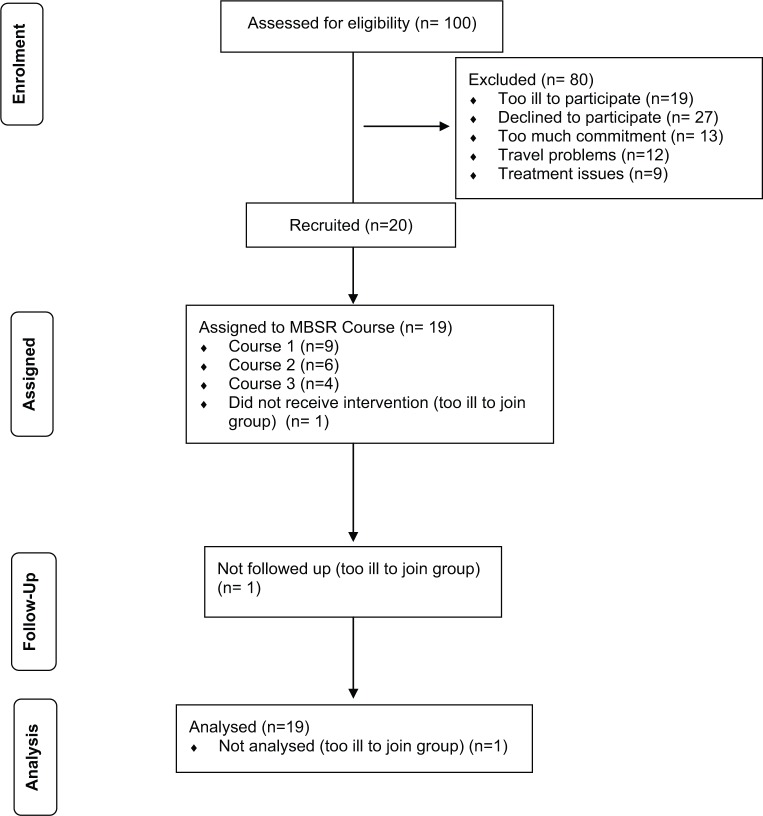
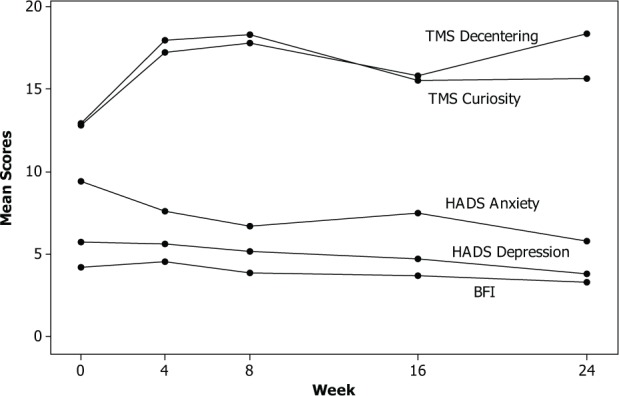
The impact of living with metastatic breast cancer (MBC) is considerable and psychosocial support can be beneficial. Mindfulness-based stress reduction (MBSR) can help self-management of anxiety, depression, quality of life (QoL), and fatigue and has been evaluated in early-stage breast cancer but not MBC. This study investigated the acceptability and feasibility of providing MBSR for women with MBC and of introducing MBSR into a National Health Service (NHS) setting. A mixed methods convergent design was used. Eligible women with MBC, an Eastern Cooperative Oncology Group (ECOG) score of 0 to 2, stable disease, and life expectancy of at least 6 months were invited to attend (by their oncologist) an 8-week MBSR course. Qualitative interviews with patients, a focus group, and interview with NHS staff were held to explore acceptability and feasibility of MBSR. Questionnaires at baseline, during (weeks 4, 8), and after (weeks 16, 24) the course measured fatigue, anxiety and depression, mindfulness, disease-specific QoL, and generic preference based QoL. Of 100 women approached, 20 joined the study. One woman dropped out prior to the intervention due to illness progression. Nineteen women took part in 3 MBSR courses. Recruitment to 2 of the 3 courses was slow. Commitment to 8 weeks was a reason for non-participation, and proved challenging to participants during the course. Participants found the course acceptable and reported many cumulative and ongoing benefits. These included feeling less reactive to emotional distress and more accepting of the disruption to life that occurs with living with MBC. There was high attendance, completion of course sessions, adherence to home practice, excellent follow-up rates, and high questionnaire return rates. MBSR was acceptable to MBC patients, who perceived benefits such as improved anxiety and QoL; but the MBSR course requires a considerable time commitment. There is scope to tailor the intervention so that it is less intensive.
Overview
The claims and statistics of this paper haven’t been checked yet.
Free: it reads the open-access text and checks the first 5 claims that cite a source we can check. Create a free account to check every claim.
Integrity signals
Registry
Cites
Statistics
Figures
Verification
Claims the paper makes
The claims and statistics of this paper haven’t been checked yet.
Free: it reads the open-access text and checks the first 5 claims that cite a source we can check. Create a free account to check every claim.
Claims other papers make about this one
Each is checked against this paper’s own text: does it say what the citing paper says it does?
The source backs part of the claim, not all of it — or backs it for a different population, condition or comparison.
In the citing paper
“The practice of mindfulness develops a state of acceptance, emphasizing emotional regulation strategies and increasing QoL and thereby decreasing invasive thoughts, anxiety, and depression.12”
From Mindfulness in mood and anxiety disorders: A review of the literature (2017) · cites this paper as [12]
Experimental — accuracy not yet measuredThe source backs part of the claim, not all of it — or backs it for a different population, condition or comparison.
In the citing paper
“The practice of mindfulness develops a state of acceptance, emphasizing emotional regulation strategies and increasing QoL and thereby decreasing invasive thoughts, anxiety, and depression.12”
From Mindfulness in mood and anxiety disorders: A review of the literature (2017) · cites this paper as [12]
Experimental — accuracy not yet measuredThe cited source says what the claim attributes to it.
In the citing paper
“Lastly, the TMS is a 13-item measure that has been criticized for including items that patients have difficulty understanding.5,11 The TMS was designed to measure state mindfulness immediately after mindfulness practice, which also limits its application.”
From Preliminary validation of the Cognitive Affective Mindfulness Scale–Revised in cancer populations (2024) · cites this paper as [11]
The cited source says what the claim attributes to it.
In the citing paper
“The MBSR-based treatment was accepted by MBC patients, who reported it was beneficial for their anxiety and QoL. 12”
From Mindfulness in mood and anxiety disorders: A review of the literature (2017) · cites this paper as [12]
The cited source says what the claim attributes to it.
In the citing paper
“The practice of mindfulness develops a state of acceptance, emphasizing emotional regulation strategies and increasing QoL and thereby decreasing invasive thoughts, anxiety, and depression.12”
From Mindfulness in mood and anxiety disorders: A review of the literature (2017) · cites this paper as [12]
Self-check
Percentages, sums and reported differences re-computed from the paper’s own numbers.
The self-check needs the paper’s full text.
Citations
Cites
Using thematic analysis in psychology
Braun, V., & Clarke, V. (2006) · Qualitative Research in Psychology · doi:10.1191/1478088706qp063oa · Cited by 194,414
Qualitative Data Analysis: An Expanded Sourcebook
(1994) · Journal of Environmental Psychology · doi:10.1016/s0272-4944(05)80231-2 · Cited by 48,420
The Hospital Anxiety and Depression Scale
Zigmond, A. S., & Snaith, R. P. (1983) · Acta Psychiatrica Scandinavica · doi:10.1111/j.1600-0447.1983.tb09716.x · Cited by 47,139
The Discovery of Grounded Theory: Strategies for Qualitative Research.
Wagner, H. R., Glaser, B. G., & Strauss, A. L. (1968) · Social Forces · doi:10.2307/2575405 · Cited by 46,361
Designing and Conducting Mixed Methods Research
Robinson, P. (2007) · Australian and New Zealand Journal of Public Health · doi:10.1111/j.1753-6405.2007.00096.x · Cited by 23,258
The National Comprehensive Cancer Network: Present and future directions
McGivney, W. T. (1998) · Cancer · doi:10.1002/(sici)1097-0142(19980515)82:10+<2057::aid-cncr14>3.0.co;2-a · Cited by 16,766
Depression and quality of life in older persons: A review
Sivertsen, H., Bjørkløf, G. H., Engedal, K., Selbæk, G., & Helvik, A.-S. (2015) · Dementia and Geriatric Cognitive Disorders · doi:10.1159/000437299 · Cited by 14,152
The benefits of being present: Mindfulness and its role in psychological well-being
Brown, K. W., & Ryan, R. M. (2003) · Journal of Personality and Social Psychology · doi:10.1037/0022-3514.84.4.822 · Cited by 13,448
Toxicity and response criteria of the Eastern Cooperative Oncology Group
Oken, M. M., Creech, R. H., Tormey, D. C., Horton, J., Davis, T. E., McFadden, E. T., & Carbone, P. P. (1982) · AMERICAN JOURNAL OF CLINICAL ONCOLOGY · doi:10.1097/00000421-198212000-00014 · Cited by 11,647
Developing and evaluating complex interventions: the new Medical Research Council guidance
Craig, P., Dieppe, P., Macintyre, S., Michie, S., Nazareth, I., & Petticrew, M. (2008) · BMJ · doi:10.1136/bmj.a1655 · Cited by 10,995
The validity of the Hospital Anxiety and Depression Scale
Bjelland, I., Dahl, A. A., Haug, T. T., & Neckelmann, D. (2002) · Journal of Psychosomatic Research · doi:10.1016/s0022-3999(01)00296-3 · Cited by 9,779
(2017) · The SAGE Encyclopedia of Communication Research Methods · doi:10.4135/9781483381411.n168 · Cited by 8,276
Using Self-Report Assessment Methods to Explore Facets of Mindfulness
Baer, R. A., Smith, G. T., Hopkins, J., Krietemeyer, J., & Toney, L. (2006) · Assessment · doi:10.1177/1073191105283504 · Cited by 7,511 · cited 1×
“The program aims to cultivate mindfulness, which is defined as bringing one’s complete attention to the present moment-to-moment experience in a nonjudgmental or accepting way.(14,41,42) The intention is that, through mindfulness, the course can help people become more aware of their automatic reactions to situations…”
Background(2008) · Medical Entomology and Zoology · Cited by 7,477
Mindfulness: A proposed operational definition.
Bishop, S. R., Lau, M., Shapiro, S., Carlson, L., Anderson, N. D., Carmody, J., Segal, Z. V., Abbey, S., Speca, M., Velting, D., et al. (2004) · Clinical Psychology: Science and Practice · doi:10.1093/clipsy.bph077 · Cited by 7,234
SAGE Handbook of Mixed Methods in Social & Behavioral Research
Tashakkori, A., & Teddlie, C. (2010) · doi:10.4135/9781506335193 · Cited by 6,215
Shapiro, S. L., Carlson, L. E., Astin, J. A., & Freedman, B. (2006) · Journal of Clinical Psychology · doi:10.1002/jclp.20237 · Cited by 4,002
Qualitative research in health care: Assessing quality in qualitative research
Mays, N. (2000) · BMJ · doi:10.1136/bmj.320.7226.50 · Cited by 3,742
(2001) · Cited by 3,666
A tutorial on pilot studies: the what, why and how
Thabane, L., Ma, J., Chu, R., Cheng, J., Ismaila, A., Rios, L. P., Robson, R., Thabane, M., Giangregorio, L., & Goldsmith, C. H. (2010) · BMC Medical Research Methodology · doi:10.1186/1471-2288-10-1 · Cited by 3,384
Integrating quantitative and qualitative research: How is it done
Bryman, A. (2006) · Qualitative Research · doi:10.1177/1468794106058877 · Cited by 3,354 · cited 1×
“Both types of data can help obtain a more comprehensive account of the data by overcoming the weaknesses of one method with the strengths of another.(37) The experiences and acceptability of the MBSR intervention to MBC patients was explored in patient interviews.”
MethodPrevention of relapse/recurrence in major depression by mindfulness-based cognitive therapy.
Teasdale, J. D., Segal, Z. V., Williams, J. M. G., Ridgeway, V. A., Soulsby, J. M., & Lau, M. A. (2000) · Journal of Consulting and Clinical Psychology · doi:10.1037/0022-006x.68.4.615 · Cited by 3,236 · cited 1×
“Mindfulness involves paying attention to experiences on purpose, without judging and without seeking to change.(14,15) Regular practice is thought to cultivate a state of acceptance,(16,17) improve emotional regulation strategies, and improve QoL, reducing intrusive thoughts, anxiety, and depression,(18-20) making it…”
BackgroundHerrmann, C. (1997) · Journal of Psychosomatic Research · doi:10.1016/s0022-3999(96)00216-4 · Cited by 2,885
Narratives in Social Science Research
Czarniawska, B. (2004) · SAGE Publications Ltd eBooks · doi:10.4135/9781849209502 · Cited by 2,575
Garnefski, N., Kraaij, V., Schroevers, M. J., & Somsen, G. A. (2008) · Journal of Clinical Psychology in Medical Settings · doi:10.1007/s10880-008-9136-5 · Cited by 2,479
Fina, A. D. (2019) · The Routledge Handbook of Linguistic Ethnography · doi:10.4324/9781315675824-12 · Cited by 2,119
The Quality of Qualitative Research
Seale, C. (1999) · SAGE Publications Ltd eBooks · doi:10.4135/9780857020093 · Cited by 2,012
Developing and Evaluating Complex Interventions: New Guidance
Craig, P., Dieppe, P. A., MacIntyre, S., Michie, S., Nazareth, I., & Petticrew, M. P. (2006) · UCL Discovery (University College London) · Cited by 1,983
Carmody, J., & Baer, R. A. (2008) · Journal of Behavioral Medicine · doi:10.1007/s10865-007-9130-7 · Cited by 1,823 · cited 1×
“Other studies have found that increased mindfulness practice leads to increased participant mindfulness, which in turn leads to symptom reduction and improved wellbeing.(39,64,74) Many studies suggest specific requirements for home practice but the relationship between optimal duration of home practice and outcomes is…”
BackgroundWhat is a pilot or feasibility study? A review of current practice and editorial policy
Arain, M., Campbell, M. J., Cooper, C. L., & Lancaster, G. A. (2010) · BMC Medical Research Methodology · doi:10.1186/1471-2288-10-67 · Cited by 1,483 · cited 2×
“Feasibility studies are used to estimate important parameters that are needed to design a larger study.(32,33) For the purposes of this study, we had 6 feasibility objectives that we needed to evaluate to design a larger definitive study:”
BackgroundMethodThe Toronto Mindfulness Scale: Development and validation
Lau, M. A., Bishop, S. R., Segal, Z. V., Buis, T., Anderson, N. D., Carlson, L., Shapiro, S., Carmody, J., Abbey, S., & Devins, G. (2006) · Journal of Clinical Psychology · doi:10.1002/jclp.20326 · Cited by 1,456
Jain, S., Shapiro, S. L., Swanick, S., Roesch, S. C., Mills, P. J., Bell, I., & Schwartz, G. E. R. (2007) · Annals of Behavioral Medicine · doi:10.1207/s15324796abm3301_2 · Cited by 1,300
Mindfulness-Based Cognitive Therapy for Depression: A New Approach to Preventing Relapse
Morgan, D. (2003) · Psychotherapy Research · doi:10.1080/713869628 · Cited by 1,193
Qualitative Research in Health Care
(2020) · Wiley eBooks · doi:10.1002/9781119410867 · Cited by 1,102
Speca, M., Carlson, L. E., Goodey, E., & Angen, M. (2000) · Psychosomatic Medicine · doi:10.1097/00006842-200009000-00004 · Cited by 1,082 · cited 1×
“Other studies have found that increased mindfulness practice leads to increased participant mindfulness, which in turn leads to symptom reduction and improved wellbeing.(39,64,74) Many studies suggest specific requirements for home practice but the relationship between optimal duration of home practice and outcomes is…”
BackgroundWilkinson, E. (2002) · The Lancet Oncology · doi:10.1016/s1470-2045(02)00737-4 · Cited by 951
Carlson, L. E., Speca, M., Patel, K. D., & Goodey, E. (2003) · Psychosomatic Medicine · doi:10.1097/01.psy.0000074003.35911.41 · Cited by 773
Fatigue in long‐term breast carcinoma survivors: A longitudinal investigation
Bower, J. E., Ganz, P. A., Desmond, K. A., Bernaards, C., Rowland, J. H., Meyerowitz, B. E., & Belin, T. R. (2006) · Cancer · doi:10.1002/cncr.21671 · Cited by 694
Cocks, K., King, M. T., Velikova, G., Martyn St-James, M., Fayers, P. M., & Brown, J. M. (2011) · Journal of Clinical Oncology · doi:10.1200/jco.2010.28.0107 · Cited by 658
Osborn, R. L., Demoncada, A. C., & Feuerstein, M. (2006) · The International Journal of Psychiatry in Medicine · doi:10.2190/eufn-rv1k-y3tr-fk0l · Cited by 621
Psychometric comparison of PHQ-9 and HADS for measuring depression severity in primary care
Cameron, I. M., Crawford, J. R., Lawton, K., & Reid, I. C. (2008) · British Journal of General Practice · doi:10.3399/bjgp08x263794 · Cited by 590 · cited 1×
“A drop of 3 points represents a clinically meaningful improvement in both depression and anxiety.(63)”
BackgroundCarmody, J., & Baer, R. A. (2009) · Journal of Clinical Psychology · doi:10.1002/jclp.20555 · Cited by 568 · cited 1×
“The MBSR program traditionally consists of 8 sessions plus 1-day retreat in week 6; however, a review of class contact hours and effect sizes for psychological distress did not find a significant association between effect sizes and class contact hours.(72) This suggests that adapting the traditional program to includ…”
BackgroundCarlson, L. E., & Garland, S. N. (2005) · International Journal of Behavioral Medicine · doi:10.1207/s15327558ijbm1204_9 · Cited by 556
Lengacher, C. A., Johnson‐Mallard, V., Post‐White, J., Moscoso, M. S., Jacobsen, P. B., Klein, T. W., Widen, R. H., Fitzgerald, S. G., Shelton, M. M., Barta, M., et al. (2009) · Psycho-Oncology · doi:10.1002/pon.1529 · Cited by 518 · cited 1×
“Although our findings showed an improvement in TMS decentering scores, depression did not significantly improve in this study contrary to other MBSR and breast cancer studies.(39,80) This is probably because the level of depression in our study participants was not particularly high at baseline perhaps because 47% of…”
ResultMindfulness‐based stress reduction and cancer: a meta‐analysis
Ledesma, D., & Kumano, H. (2009) · Psycho-Oncology · doi:10.1002/pon.1400 · Cited by 491
Reibel, D. K., Greeson, J. M., Brainard, G. C., & Rosenzweig, S. (2001) · General Hospital Psychiatry · doi:10.1016/s0163-8343(01)00149-9 · Cited by 431
Hoffman, C. J., Ersser, S. J., Hopkinson, J. B., Nicholls, P. G., Harrington, J. E., & Thomas, P. W. (2012) · Journal of Clinical Oncology · doi:10.1200/jco.2010.34.0331 · Cited by 398
Self-citationCarlson, L. E., Ursuliak, Z., Goodey, E., Angen, M., & Speca, M. (2001) · Supportive Care in Cancer · doi:10.1007/s005200000206 · Cited by 376
Cancer-Related Fatigue and Its Associations With Depression and Anxiety: A Systematic Review
Brown, L. F., & Kroenke, K. (2009) · Psychosomatics · doi:10.1016/s0033-3182(09)70835-7 · Cited by 374
Vieten, C., & Astin, J. (2008) · Archives of Women's Mental Health · doi:10.1007/s00737-008-0214-3 · Cited by 369
Effects of low-dose mindfulness-based stress reduction (MBSR-ld) on working adults
Klatt, M. D., Buckworth, J., & Malarkey, W. B. (2009) · Health Education & Behavior · doi:10.1177/1090198108317627 · Cited by 362
Psychiatric disorder in women with early stage and advanced breast cancer: a comparative analysis
Kissane, D. W., Grabsch, B., Love, A., Clarke, D. M., Bloch, S., & Smith, G. C. (2004) · Australian & New Zealand Journal of Psychiatry · doi:10.1080/j.1440-1614.2004.01358.x · Cited by 337
Chen, K. W., Berger, C. C., Manheimer, E., Forde, D., Magidson, J., Dachman, L., & Lejuez, C. W. (2012) · Depression and Anxiety · doi:10.1002/da.21964 · Cited by 286
_, _. (2007) · Journal of the National Comprehensive Cancer Network · doi:10.6004/jnccn.2007.0088 · Cited by 282
Zainal, N. Z., Booth, S., & Huppert, F. A. (2013) · Psycho-Oncology · doi:10.1002/pon.3171 · Cited by 279 · cited 1×
“Two meta-analyses of MBSR in breast cancer patients have been performed, and despite the low number of eligible studies, they identified small to moderate effects for MBSR compared with usual care in decreasing depression and anxiety.(24,27) Studies evaluating MBSR in breast cancer patients have focused on early-stage…”
MethodMindfulness‐Based Stress Reduction as supportive therapy in cancer care: systematic review
Smith, J. E., Richardson, J., Hoffman, C., & Pilkington, K. (2005) · Journal of Advanced Nursing · doi:10.1111/j.1365-2648.2005.03592.x · Cited by 273
Self-citationWhat is the evidence for the use of mindfulness‐based interventions in cancer care? A review
Shennan, C., Payne, S., & Fenlon, D. (2011) · Psycho-Oncology · doi:10.1002/pon.1819 · Cited by 271 · cited 1×
“Evidence suggests that MBSR(24,27) has the potential to meet some of these needs by improving psychological health in breast cancer patients.(23,26) Integrating MBSR in the treatment of breast cancer can help beyond treating the physical symptoms to reduce patients’ anxiety and help them adjust to a lifethreatening il…”
BackgroundMindfulness-Based Stress Reduction for Breast Cancer—A Systematic Review and Meta-Analysis
Cramer, H., Lauche, R., Paul, A., & Dobos, G. (2012) · Current Oncology · doi:10.3747/co.19.1016 · Cited by 256 · cited 1×
“Two meta-analyses of MBSR in breast cancer patients have been performed, and despite the low number of eligible studies, they identified small to moderate effects for MBSR compared with usual care in decreasing depression and anxiety.(24,27) Studies evaluating MBSR in breast cancer patients have focused on early-stage…”
MethodCancer expert doubts claims about prostate cancer trial
Cole, A. (2008) · BMJ · doi:10.1136/bmj.a979 · Cited by 255
Psychological interventions for women with metastatic breast cancer
Mustafa, M., Carson-Stevens, A., Gillespie, D., & Edwards, A. G. (2013) · Cochrane Database of Systematic Reviews · doi:10.1002/14651858.cd004253.pub4 · Cited by 244
Brooks, R. G., Rabin, R., & de Charro, F. (2003) · Cited by 238
Henderson, V. P., Clemow, L., Massion, A. O., Hurley, T. G., Druker, S., & Hébert, J. R. (2012) · Breast Cancer Research and Treatment · doi:10.1007/s10549-011-1738-1 · Cited by 232
Vettese, L. C., Toneatto, T., Stea, J. N., Nguyen, L., & Wang, J. J. (2009) · Journal of Cognitive Psychotherapy · doi:10.1891/0889-8391.23.3.198 · Cited by 207
Assessing quality of life in cancer patients
Maguire, P., & Selby, P. (1989) · British Journal of Cancer · doi:10.1038/bjc.1989.301 · Cited by 197
Mindfulness-Based Stress Reduction in Women With Breast Cancer.
Tacón, A. M., Caldera, Y. M., & Ronaghan, C. A. (2004) · Families Systems & Health · doi:10.1037/1091-7527.22.2.193 · Cited by 193
Brazier, J., Rowen, D., Mavranezouli, I., Tsuchiya, A., Young, T., Yang, Y., Barkham, M., & Ibbotson, R. (2012) · Health Technology Assessment · doi:10.3310/hta16320 · Cited by 186
Carlson, L. E. (2012) · ISRN Psychiatry · doi:10.5402/2012/651583 · Cited by 182
Mindfulness‐based cognitive therapy reduces chronic cancer‐related fatigue: a treatment study
van der Lee, M. L., & Garssen, B. (2012) · Psycho-Oncology · doi:10.1002/pon.1890 · Cited by 178
Mackenzie, M. J., Carlson, L. E., Munoz, M., & Speca, M. (2007) · Stress and Health · doi:10.1002/smi.1120 · Cited by 175 · cited 1×
“Palliative care services provide intensive support at the end of life, which is only a short phase of a much longer illness trajectory.(65) Palliative care services are clearly not meeting the needs of this population, and consideration of novel ways of working and developing integrated models of care with primary car…”
BackgroundNonpharmacologic Strategies for Managing Common Chemotherapy Adverse Effects: A Systematic Review
Lotfi-Jam, K., Carey, M., Jefford, M., Schofield, P., Charleson, C., & Aranda, S. (2008) · Journal of Clinical Oncology · doi:10.1200/jco.2007.15.9053 · Cited by 169
Lengacher, C. A., Kip, K. E., Barta, M., Post-White, J., Jacobsen, P. B., Groer, M., Lehman, B., Moscoso, M. S., Kadel, R., Le, N., et al. (2012) · Journal of Holistic Nursing · doi:10.1177/0898010111435949 · Cited by 163
Cancer-Related Fatigue and Its Associations With Depression and Anxiety: A Systematic Review
Brown, L. F., & Kroenke, K. (2009) · Psychosomatics · doi:10.1176/appi.psy.50.5.440 · Cited by 155
Fors, E. A., Bertheussen, G. F., Thune, I., Juvet, L. K., Elvsaas, I. Ø., Oldervoll, L., Anker, G., Falkmer, U., Lundgren, S., & Leivseth, G. (2011) · Psycho-Oncology · doi:10.1002/pon.1844 · Cited by 139
Mindfulness-based stress reduction: What processes are at work?
Dobkin, P. L. (2007) · Complementary Therapies in Clinical Practice · doi:10.1016/j.ctcp.2007.09.004 · Cited by 135
COX, K., & MCGARRY, J. (2003) · European Journal of Cancer Care · doi:10.1046/j.1365-2354.2003.00396.x · Cited by 130
Using QALYs in Cancer: A Review of the Methodological Limitations
Garau, M., Shah, K. K., Mason, A., Wáng, Q., Towse, A., & Drummond, M. (2011) · PharmacoEconomics · doi:10.2165/11588250-000000000-00000 · Cited by 116
Mindfulness-based stress reduction for integrative cancer care: a summary of evidence
Musial, F., Büssing, A., Heusser, P., Choi, K.-E., & Ostermann, T. (2011) · Forschende Komplementärmedizin / Research in Complementary Medicine · doi:10.1159/000330714 · Cited by 112
Labelle, L. E., Campbell, T. S., & Carlson, L. E. (2010) · Mindfulness · doi:10.1007/s12671-010-0005-6 · Cited by 102 · cited 1×
“Mindfulness may mediate this reduction in anxiety by improving the emotional regulation strategies employed by people with physical illness as they ruminate less on the past and the future and are less likely to avoid difficult feelings and situations.(18,82) Improvements in the TMS decentering scores have been shown…”
MethodReed, E., Simmonds, P., Haviland, J., & Corner, J. L. (2011) · Journal of Pain and Symptom Management · doi:10.1016/j.jpainsymman.2011.05.005 · Cited by 90
Advanced breast cancer: diagnosis and treatment
Macbeth, F. R., Champion, A. E., Bennett, A. B., Francis, K. L., Collins, E. C., Berendse, S., Cleves, A., Coles, B., Willis, S., Welton, N. J., et al. (2008) · Bristol Research (University of Bristol) · Cited by 87
Making Sense of Living Under the Shadow of Death: Adjusting to a Recurrent Breast Cancer Illness
Kenne Sarenmalm, E., Thorén-Jönsson, A.-L., Gaston-Johansson, F., & Öhlén, J. (2009) · Qualitative Health Research · doi:10.1177/1049732309341728 · Cited by 83
Clinically relevant fatigue in recurrence-free prostate cancer survivors
Storey, D. J., McLaren, D. B., Atkinson, M. A., Butcher, I., Liggatt, S., O’Dea, R., Smyth, J. F., & Sharpe, M. (2011) · Annals of Oncology · doi:10.1093/annonc/mdr034 · Cited by 79
Cox, K. (2000) · Psycho-Oncology · doi:10.1002/1099-1611(200007/08)9:4<314::aid-pon464>3.0.co;2-c · Cited by 79
Experiences of a mindfulness-based stress-reduction intervention among patients with cancer
Kvillemo, P., & Bränström, R. (2011) · Cancer Nursing · doi:10.1097/ncc.0b013e3181e2d0df · Cited by 77
Arving, C., Glimelius, B. L. G., & Brandberg, Y. (2007) · Quality of Life Research · doi:10.1007/s11136-007-9275-4 · Cited by 71
Psychological interventions for women with metastatic breast cancer
Edwards, A. G., Hulbert-Williams, N., & Neal, R. D. (2008) · Cochrane Database of Systematic Reviews · doi:10.1002/14651858.cd004253.pub3 · Cited by 49
Mindfulness-based stress reduction in breast cancer: A qualitative analysis
Hoffman, C. J., Ersser, S. J., & Hopkinson, J. B. (2012) · Complementary Therapies in Clinical Practice · doi:10.1016/j.ctcp.2012.06.008 · Cited by 43 · cited 1×
“There is some qualitative data reporting cancer patients’ experiences of MBSR,(65,67-69) and these studies either focus on a mixed cancer type population(65) or focus on a mixed stage of breast cancer population.(68) This current study, 24 16 8 4 0 20”
BackgroundSelf-citationConlin, A. K., & Seidman, A. D. (2008) · Clinical Breast Cancer · doi:10.3816/cbc.2008.n.024 · Cited by 31
Handbook of Metastatic Breast Cancer
Swanton, C., & Johnston, S. R. D. (2006) · CRC Press eBooks · doi:10.3109/9780203696910 · Cited by 25
Leydon, G., Eyles, C., & Lewith, G. T. (2012) · European Journal of Integrative Medicine · doi:10.1016/j.eujim.2012.05.003 · Cited by 9
Self-citationReed, E., Wheeler, D., & Scanlon, K. (2012) · Breast Cancer Management · doi:10.2217/bmt.12.40 · Cited by 6
The rapid assessment of fatigue severity in cancer patients
Mendoza, T. R., Wang, X. S., Cleeland, C. S., Morrissey, M., Johnson, B. A., Wendt, J. K., & Huber, S. L. (1999) · Cancer · doi:10.1002/(sici)1097-0142(19990301)85:5 · Cited by 1
(2002) · Sage eBooks
Research works printed but not linked: 1
- 46. Glaser BG. Basics of Grounded Theory Analysis: Emergence versus Forcing . Mill Valley, CA: Sociology Press; 1992.
Cited by
Kubo, A., Kurtovich, E., McGinnis, M., Aghaee, S., Altschuler, A., Quesenberry, C., Kolevska, T., & Avins, A. L. (2019) · Integrative Cancer Therapies · doi:10.1177/1534735419850634 · Cited by 167
Chayadi, E., Baes, N., & Kiropoulos, L. (2022) · PLOS ONE · doi:10.1371/journal.pone.0269519 · Cited by 159
Carlson, L., Rouleau, C. R., & Garland, S. N. (2015) · Cancer Management and Research · doi:10.2147/cmar.s64165 · Cited by 152
Li, Y., Li, J., Zhang, Y., Ding, Y., & Hu, X. (2022) · International Journal of Nursing Studies · doi:10.1016/j.ijnurstu.2022.104179 · Cited by 130
Zimmermann, F. F., Burrell, B., & Jordan, J. (2018) · Complementary Therapies in Clinical Practice · doi:10.1016/j.ctcp.2017.12.014 · Cited by 108
Metadata
- Authors
- Eyles, C., Leydon, G. M., Hoffman, C. J., Copson, E. R., Prescott, P., Chorozoglou, M., & Lewith, G.
- Affiliations
- University of Southampton (GB)
- The Haven, Breast Cancer Support, London, England
- Corresponding author
- Eyles, Caroline
- Venue
- Integrative Cancer Therapies
- Publisher
- SAGE Publications
- Published
- 2014-08-26
- Volume
- 14
- Issue
- 1
- Pages
- 42-56
- ISSN
- 1534-7354 (ISSN-L)
- 1552-695X
- PMC
- PMC4390604
- OpenAlex
- W2110247099
- Semantic Scholar
- 39f75b0fc7240f9ccabef7f017bee48327854bfb
- Cited by
- 96
- References
- 94
- Citations by year
- 2026: 3 · 2025: 9 · 2024: 11 · 2023: 6 · 2022: 11 · 2021: 5 · 2020: 13 · 2019: 11 · 2018: 9 · 2017: 7 · 2016: 4 · 2015: 4 · 2014: 1
- FWCI
- 6.29
- Type
- journal article
- Language
- en
- Open access
- gold
- doi.org
- Licence
- cc-by-nc
- journals.sagepub.com/page/policies/text-and-data-mining-license (tdm)
- Locations
- Integrative Cancer Therapies (publishedVersion, cc-by-nc)
- Europe PMC (PubMed Central) (publishedVersion, cc-by-nc)
- PubMed Central (publishedVersion, cc-by-nc)
- PubMed (publishedVersion)
- ePrints Soton (University of Southampton) (acceptedVersion)
- Funders
- National Institute for Health and Care Research (PB-PG-0408-16155)
- Topics
- Social Sciences › Psychology › Clinical Psychology › Mindfulness and Compassion Interventions
- Health Sciences › Medicine › Oncology › Cancer survivorship and care
- Social Sciences › Health › Religion, Spirituality, and Psychology
- Keywords
- mindfulness-based stress reduction, metastatic breast cancer, fatigue, anxiety, depression, quality of life, self-management, acceptability, feasibility, psychosocial support, National Health Service
- MeSH terms
- Adaptation, Psychological, Adult, Aged, Anxiety Disorders, Breast Neoplasms, Depressive Disorder, Fatigue, Feasibility Studies, Female, Humans, Middle Aged, Psychotherapy, Quality of Life, Surveys and Questionnaires, Self Care, Stress, Psychological, Mindfulness
About these checks
Registry, retraction, Cites and statistics results are computed, not judged, with one exception: a printed reference that no index lists is read once by a model before it counts as a citation error. Claims are extracted by a model and kept only when their quote appears verbatim in the text; each cited source is then checked, with a model’s help, for whether it says what the claim relies on. Those verdicts can be wrong — read the claim’s quote and the cited source before relying on one.
Statistics and arithmetic are recomputed, not judged.
Confidence bands are shown only for fields calibrated on our annotated test set. None is calibrated yet, so no band is shown.
What counts as a claim ›How we measure confidence ›How we check this ›
Are you an author, or do you see a problem with this page? Request a review
Data sources
Bibliographic data: Semantic Scholar, OpenAlex, Crossref.
Contains information from the Semantic Scholar Academic Graph Datasets, made available under the ODC Attribution License (ODC-BY 1.0).
Semantic Scholar’s data is described in: Kinney, R., et al. (2023). The Semantic Scholar Open Data Platform. arXiv:2301.10140.
