

Improving Mental Health Service Utilization Among Men: A Systematic Review and Synthesis of Behavior Change Techniques Within Interventions Targeting Help-Seeking
Open accessThe DOI matches its Crossref record; 115 of the 117 references it cites were found in a registry or an index; 22 of the 96 sources its claims cite were checked for support.
Abstract
Systematic review of male-specific help-seeking interventions for mental health.
Overview
CoChat Summary
## TL;DR
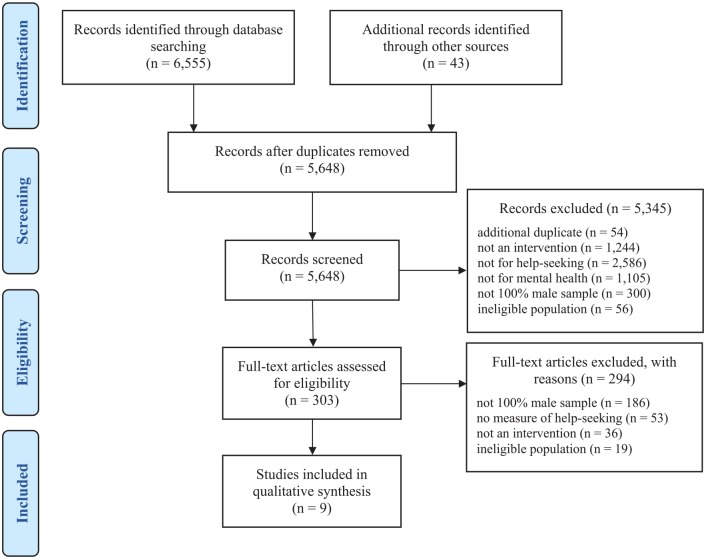
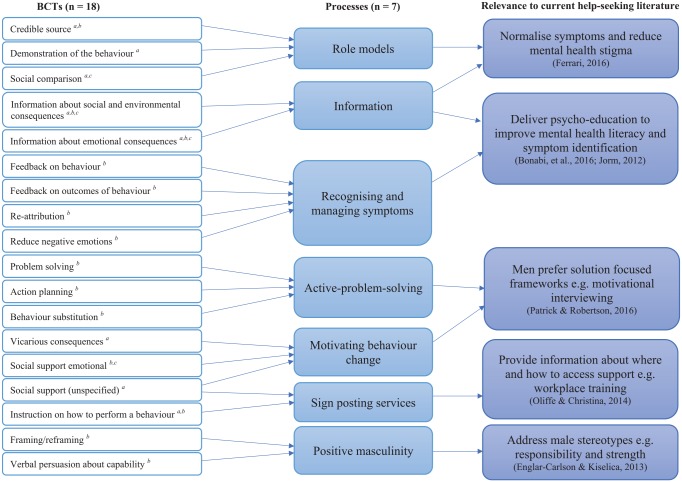
This systematic review identified 9 male-specific interventions from 6,598 records and used the Behavior Change Technique (BCT) taxonomy to synthesize what may improve men’s help-seeking for mental health. The review suggests that role models, psychoeducation, symptom recognition/management, problem-solving, signposting, motivating behavior change, and positive masculine framing are the most promising intervention processes.
## Key findings
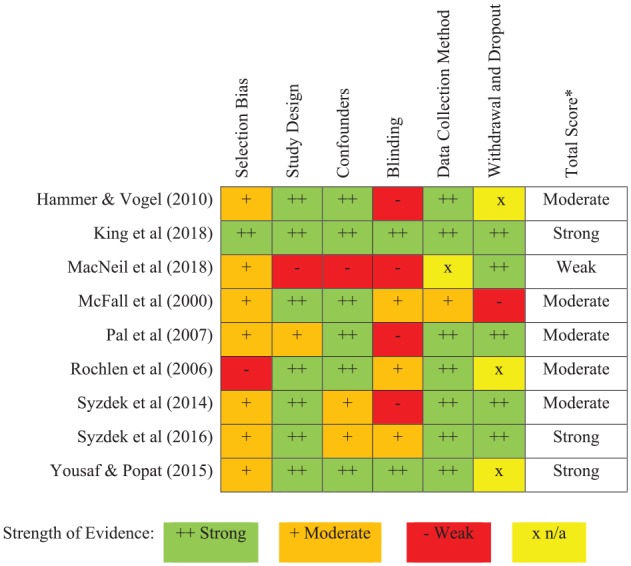
- From 6,598 records, 9 studies met inclusion criteria; study quality was rated as 3 strong, 5 moderate, and 1 weak.
- The included interventions were grouped into 4 engagement strategies, 4 RCTs/pilot RCTs, and 1 retrospective review; across all studies, 18 distinct BCTs were identified.
- All 4 engagement strategies using brochures or a documentary reported significant improvements in help-seeking, and the paper says brochures/documentaries may be feasible and acceptable strategies for men.
- The review synthesized 7 broader processes from the 18 BCTs: role models, psychoeducational material, symptom recognition/management, active problem-solving, motivating behavior change, signposting services, and content that builds on positive male traits such as responsibility and strength.
## Methods
- Systematic review conducted under PRISMA and preregistered on PROSPERO; searches were run on March 1, 2019 in MEDLINE, EMBASE, and PsycINFO, with manual reference checking and no restrictions on publication year, language, or method.
- Included interventions had to measure help-seeking as a primary, secondary, or additional outcome; only studies with a 100% male sample or a male subanalysis were eligible, and criminal/prison populations and participants under 18 were excluded.
- Two authors screened studies, assessed quality with the EPHPP checklist, and independently coded intervention content using the BCTTv1 taxonomy before reaching consensus; a meta-analysis was not done because the interventions, outcomes, and populations were too disparate.
## Limitations
- The paper states that BCT coding cannot be guaranteed 100% accurate because the taxonomy does not have perfect interrater reliability, and intervention content was likely underreported in the published articles.
- The review notes a limitation of the BCTTv1 itself: “emotional social support” may capture motivational interviewing and CBT, making it hard to distinguish social support from ambivalence-focused mechanisms.
- Evident from the text: only 9 studies were included from more than 6,000 records, and only 3 studies used practical help-seeking as an outcome, which limits the evidence base and generalizability.
Model-written summary. Check it against the paper before relying on it.
Integrity signals
Registry
Cites
Statistics
Figures
Verification
Claims the paper makes
19 Valid · 3 Not valid · 45 Not checked · 62 Own results and interpretations
Every source the paper cites for this claim was checked and supports it.
In the paper
“For instance, negative emotions are perceived as a sign of weakness, discouraging men from reaching out to friends”
§ Improving Mental Health Service Utilization Among Men: A Systematic Review and Synthesis of Behavior Change Techniques Within Interventions Targeting Help-Seeking > Abstract
What the sources say
- Supportedcites Pirkis, Spittal, Keogh, Mousaferiadis, & Currier, 2017 matched to “Masculinity and suicidal thinking” (2017) source
The “Self-reliance and suicidal thinking” section says that self-reliant men may view feeling down as a sign of weakness and be unlikely to reach out to friends for help. This directly supports the citing sentence as a paraphrase of the paper’s qualified explanation. (LLM, conf=0.92)
plainstates a cause- Asserted: passes — The authors put it forward as true.
- Checkable: passes — It can be checked against evidence.
- Load-bearing: unclear — It is unclear whether the paper’s conclusions depend on it.
- Based: passes — The paper gives a reason why it holds.
- Supported
The cited sources support only part of this claim — read each source’s verdict below.
In the paper
“The motivating behavior change process comprised of the “vicarious consequences” and “emotional social support” BCTs as the BCCTv1 dictates that cognitive behavioral therapy (CBT) and motivational interviewing (MI) frameworks should be coded as emotional social support (Michie et al., 2013).”
§ Improving Mental Health Service Utilization Among Men: A Systematic Review and Synthesis of Behavior Change Techniques Within Interventions Targeting Help-Seeking > Results > BCTs Within RCTs and Retrospective Review
What the sources say
- Partly supportedcites Michie et al., 2013 matched to “The behavior change technique taxonomy (v1) of 93 hierarchically clustered techniques: building an international consensus for the reporting of behavior change interventions” (2013) sourceExperimental — accuracy not yet measured
Table 5 lists “social support (emotional)” as a BCT, supporting that part of the citation. The passages found do not identify “vicarious consequences” as a BCT or say that CBT and MI should be coded as emotional social support. The Future Developments section says the taxonomy specifies intervention content but does not itself make links with theory. (LLM, conf=0.85)
plainstates a cause- Asserted: passes — The authors put it forward as true.
- Checkable: passes — It can be checked against evidence.
- Load-bearing: passes — The paper’s conclusions depend on it.
- Based: passes — The paper gives a reason why it holds.
- Partly supported
The sources with a verdict support this claim; the rest weren’t checked yet, have no full text we could read, or their verdicts aren’t rated yet.
In the paper
“These highlighted the “social comparison” BCT as it provided someone who one could relate to (Hammer & Vogel, 2010; King et al., 2018; Rochlen et al., 2006).”
§ Improving Mental Health Service Utilization Among Men: A Systematic Review and Synthesis of Behavior Change Techniques Within Interventions Targeting Help-Seeking > Results > BCTs Within the Engagement Strategies
What the sources say
- Not checked — no full text of the sourcecites Hammer & Vogel, 2010 matched to “Men’s Help Seeking for Depression: The Efficacy of a Male-Sensitive Brochure About Counseling” (2010) source
- Supportedcites King et al., 2018 matched to “Can a documentary increase help-seeking intentions in men? A randomised controlled trial” (2018) source
The Methods (Procedures; page unavailable) describe Man Up as featuring men from all walks of life who modelled talking about problems and seeking help. That supports the citing authors’ description of people viewers could relate to; “social comparison” is the citing authors’ BCT label for that feature. (LLM, conf=0.84)
- Not checked — no full text of the sourcecites Rochlen et al., 2006 matched to “A preliminary examination of the "Real Men. Real Depression" campaign.” (2006) source
plainstates a cause- Asserted: passes — The authors put it forward as true.
- Checkable: passes — It can be checked against evidence.
- Load-bearing: unclear — It is unclear whether the paper’s conclusions depend on it.
- Based: passes — The paper gives a reason why it holds.
Every source the paper cites for this claim was checked and supports it.
In the paper
“Also, the BCT of “vicarious consequences” was used within one engagement strategy, whereby men with lived experience discussed how seeking mental health help improved their overall trajectory (King et al., 2018).”
§ Improving Mental Health Service Utilization Among Men: A Systematic Review and Synthesis of Behavior Change Techniques Within Interventions Targeting Help-Seeking > Results > BCTs Within RCTs and Retrospective Review
What the sources say
- Supportedcites King et al., 2018 matched to “Can a documentary increase help-seeking intentions in men? A randomised controlled trial” (2018) source
The Methods (Intervention and control conditions) describe men who had experienced mental health problems or suicide attempts sharing real-life examples of how reaching out for help changed their trajectory for the better. The paper does not use the term “vicarious consequences,” but the cited description supports the citing authors’ characterization of the documentary strategy. (LLM, conf=0.91)
plain- Asserted: passes — The authors put it forward as true.
- Checkable: passes — It can be checked against evidence.
- Load-bearing: passes — The paper’s conclusions depend on it.
- Based: passes — The paper gives a reason why it holds.
- Supported
The cited sources support only part of this claim — read each source’s verdict below.
In the paper
“Similarly, drawing men’s attention to the potential benefits of treatment and how seeking help can improve long-term outcomes may also improve their motivation to seek help (King et al., 2018).”
§ Improving Mental Health Service Utilization Among Men: A Systematic Review and Synthesis of Behavior Change Techniques Within Interventions Targeting Help-Seeking > Discussion > Interpretation of BCTs With Regard to the Literature
What the sources say
- Partly supportedcites King et al., 2018 matched to “Can a documentary increase help-seeking intentions in men? A randomised controlled trial” (2018) sourceExperimental — accuracy not yet measured
The Methods (Procedures; page unavailable) say the documentary showed men whose trajectories improved after seeking help, and the Results (page unavailable) report increased intentions to seek help among viewers. The paper does not isolate attention to treatment benefits as the cause of that increase, and its examples include informal help rather than treatment specifically. (LLM, conf=0.82)
hedgedstates a possible cause- Asserted: passes — The authors put it forward as true.
- Checkable: passes — It can be checked against evidence.
- Load-bearing: unclear — It is unclear whether the paper’s conclusions depend on it.
- Based: passes — The paper gives a reason why it holds.
- Partly supported
56 more claims · 1 with their cited sources checked
Create a free account to see all 129 claims and to verify the 14 references still open.
- It may state two separate claims as one. 47
- Probably not a substantial claim. 34
Claims other papers make about this one
Each is checked against this paper’s own text: does it say what the citing paper says it does?
In the citing paper
“This striking gender imbalance is consistent with previously reported gender imbalances in both online and face-to-face therapy.”
From Behavioral Activation and Depression Symptomatology: Longitudinal Assessment of Linguistic Indicators in Text-Based Therapy Sessions (2021) · cites this paper as [47]
In the citing paper
“Systematic reviews have examined help-seeking interventions for men, 18 common mental health disorders in particular, 19 and mental health concerns in general. 11”
From Technology-Based Interventions to Improve Help-Seeking for Mental Health Concerns: A Systematic Review (2022) · cites this paper as [18]
Citations
Cites
Diagnostic and Statistical Manual of Mental Disorders
American Psychiatric Association (2013) · doi:10.1176/appi.books.9780890425596 · Cited by 116,369
Preferred Reporting Items for Systematic Reviews and Meta-Analyses: the PRISMA statement
Moher, D., Liberati, A., Tetzlaff, J., Altman, D. G., & for the PRISMA Group (2009) · BMJ · doi:10.1136/bmj.b2535 · Cited by 83,823
Preferred Reporting Items for Systematic Reviews and Meta-Analyses: The PRISMA Statement
Moher, D., Liberati, A., Tetzlaff, J., Altman, D. G., & The PRISMA Group (2009) · PLoS Medicine · doi:10.1371/journal.pmed.1000097 · Cited by 64,042 · cited 1×
“In accordance with the PRISMA guidelines, the study selection was undertaken in two phases (Moher et al., 2009).”
A Coefficient of Agreement for Nominal Scales
Cohen, J. (1960) · Educational and Psychological Measurement · doi:10.1177/001316446002000104 · Cited by 42,398 · cited 1×
“00, almost perfect levels of agreement (Cohen, 1960; McHugh, 2012).”
BackgroundCochrane Handbook for Systematic Reviews of Interventions: Cochrane Book Series
(2008) · doi:10.1002/9780470712184 · Cited by 25,048
Interrater reliability: The kappa statistic
McHugh, M. L. (2012) · Biochemia Medica · doi:10.11613/bm.2012.031 · Cited by 19,877 · cited 2×
“00, almost perfect levels of agreement (Cohen, 1960; McHugh, 2012).”
BackgroundMethodInfluentialWang, G., Ma, R., Qiao, G., Wada, K., Aizawa, Y., & Satoh, T. (2015) · Integrative Medicine International · doi:10.1159/000368408 · Cited by 18,657
Diagnostic and Statistical Manual of Mental Disorders, 5th ed.
Carter, M. J. (2014) · Therapeutic Recreation Journal · Cited by 15,166
Developing and evaluating complex interventions: the new Medical Research Council guidance
Craig, P., Dieppe, P., Macintyre, S., Michie, S., Nazareth, I., & Petticrew, M. (2008) · BMJ · doi:10.1136/bmj.a1655 · Cited by 10,995 · cited 2×
“When developing a complex intervention, it is recommended that a theoretical understanding of the likely processes eliciting behavior change be explored (Craig et al., 2008).”
BackgroundMethodHoffmann, T. C., Glasziou, P. P., Boutron, I., Milne, R., Perera, R., Moher, D., Altman, D. G., Barbour, V., Macdonald, H., Johnston, M., et al. (2014) · BMJ · doi:10.1136/bmj.g1687 · Cited by 10,548 · cited 1×
“For example, the Template for Intervention Description and Replication (TIDieR) checklist (Hoffman et al., 2014), the Transparent Reporting of Evaluations with Nonrandomized Designs (TREND) statement (Des Jarlais, Lyles, Crepaz, & Trend Group, 2004), and the use of BCCTv1 will improve the clarity and consistency in th…”
Method
Research works printed but not linked: 3
- Spencer-Thomas S. Hindman J. Conrad J. (2014). Man therapy: Outreach and impact on men’s mental health program 18 months after launch.
- Thomas H. (2003). Quality assessment tool for quantitative studies. In Effective public health practice project. Toronto: McMaster University.
- World Health Organization. (1992). The ICD-10 classification of mental and behavioural disorders: Clinical descriptions and diagnostic guidelines. Geneva: World Health Organization.
Cited by
Impact of COVID-19 on the mental health of US college students
Lee, J., Solomon, M., Stead, T., Kwon, B., & Ganti, L. (2021) · BMC Psychology · doi:10.1186/s40359-021-00598-3 · Cited by 259
“The key difference is that men are less likely to seek help for mental health difficulties compared to women even pre-pandemic [16].”
BackgroundCooper, M., Avery, L., Scott, J., Ashley, K., Jordan, C., Errington, L., & Flynn, D. (2022) · BMJ Open · doi:10.1136/bmjopen-2021-060214 · Cited by 161
Danieli, M., Ciulli, T., Mousavi, S. M., Silvestri, G., Barbato, S., Di Natale, L., & Riccardi, G. (2022) · JMIR Mental Health · doi:10.2196/38067 · Cited by 84
“The participants were mainly women, and the fact that women tend to seek psychological help more often than men has been studied previously [23,24].”
Shahwan, S., Lau, J. H., Goh, C. M. J., Ong, W. J., Tan, G. T. H., Kwok, K. W., Samari, E., Lee, Y. Y., Teh, W. L., Seet, V. A. L., et al. (2020) · BMC Psychiatry · doi:10.1186/s12888-020-02960-y · Cited by 146
“Earlier studies have found that using role models to convey information and content that are built on positive male traits such as responsibility and strength improved help-seeking attitudes in men [43].”
BackgroundSheikh, A., Payne-Cook, C., Lisk, S. C., Carter, B., & Brown, J. S. L. (2024) · European Child & Adolescent Psychiatry · doi:10.1007/s00787-024-02520-9 · Cited by 112
“Sagar-Ouriaghli et al.’s [16] review also supports this idea.”
InfluentialSelf-citationSileo, K. M., & Kershaw, T. (2020) · American Journal of Men s Health · doi:10.1177/1557988320906980 · Cited by 105
Burkhardt, H. A., Alexopoulos, G. S., Pullmann, M. D., Hull, T. D., Areán, P. A., & Cohen, T. (2021) · Journal of Medical Internet Research · doi:10.2196/28244 · Cited by 68
“Sagar-Ouriaghli et al [47] reported that women are 1.6 times more likely to receive any form of mental health treatment than men.”
InfluentialEngaging male students with mental health support: a qualitative focus group study
Sagar-Ouriaghli, I., Brown, J. S. L., Tailor, V., & Godfrey, E. L. (2020) · BMC Public Health · doi:10.1186/s12889-020-09269-1 · Cited by 98
“This approach is often used within male help-seeking interventions [62], where evidence supports the use of celebrities to teach people about mental illness and is an effective strategy for reducing mental health stigma [63].”
BackgroundSelf-citationNajjuka, S. M., Chekwech, G., Olum, R., Ashaba, S., & Kaggwa, M. M. (2020) · African Health Sciences · doi:10.4314/ahs.v21i4.6 · Cited by 70
Johnson, J. A., Sanghvi, P., & Mehrotra, S. (2022) · Indian Journal of Psychological Medicine · doi:10.1177/02537176211034578 · Cited by 60
Reasons for Suicide During the COVID-19 Pandemic in Japan
Koda, M., Harada, N., Eguchi, A., Nomura, S., & Ishida, Y. (2022) · JAMA Network Open · doi:10.1001/jamanetworkopen.2021.45870 · Cited by 63
Understanding Men’s Engagement and Disengagement When Seeking Support for Mental Health
Kwon, M., Lawn, S., & Kaine, C. (2023) · American Journal of Men s Health · doi:10.1177/15579883231157971 · Cited by 64
“Despite existing literatures reporting at least doubled to quadrupled suicide rate in men compared with women, men have been reported to hold more reluctance and negative attitudes toward engaging with mental health services, even at the point of crisis (Levan & Wimer, 2014; Sagar-Ouriaghli et al., 2019).”
BackgroundMethodResultInfluentialAbelson, S., Lipson, S. K., & Eisenberg, D. (2022) · Higher education · doi:10.1007/978-3-030-76660-3_6 · Cited by 83
Sagar-Ouriaghli, I., Godfrey, E. L., Graham, S., & Brown, J. S. L. (2020) · International Journal of Environmental Research and Public Health · doi:10.3390/ijerph17144965 · Cited by 63
““Sagar-Ouriaghli and colleagues [22] identified 18 BCTs (e.”
BackgroundMethodInfluentialSelf-citationArachchige, I. A. N., Sandanapitchai, P., & Weerasinghe, R. (2021) · Information · doi:10.3390/info12110444 · Cited by 51
“In terms of demographic factors such as gender, studies have proven more women are affected by depression compared to men [10,11].”
BackgroundMatthews, L. R., Gerald, J., & Jessup, G. M. (2021) · International Journal of Mental Health Systems · doi:10.1186/s13033-021-00489-5 · Cited by 49
“As discussed above, men’s use of mental health support is still strongly associated with stigma [36, 63, 64], and our participants, as well as employees in previous studies [33, 65], had concerns of being stigmatized by management if their use of EAP services was revealed.”
ResultAlvarado, R., Ramírez, J., Lanio, Í., Cortés, M., Aguirre, J., Bedregal, P., Allel, K., Tapia‐Muñoz, T., Burrone, M. S., Cuadra-Malinarich, G., et al. (2021) · Revista médica de Chile · doi:10.4067/s0034-98872021000801205 · Cited by 58
Pass, L., Kennelty, K. A., & Carter, B. L. (2019) · BMJ Open · doi:10.1136/bmjopen-2019-029976 · Cited by 42
El-Hachem, S. S., Lakkis, N. A., Osman, M. H., Issa, H. G., & Beshara, R. Y. (2023) · Social Psychiatry and Psychiatric Epidemiology · doi:10.1007/s00127-023-02470-8 · Cited by 81
Smyth, N., Buckman, J. E. J., Naqvi, S. A., Aguirre, E., Cardoso, A., Pilling, S., & Saunders, R. (2022) · Social Psychiatry and Psychiatric Epidemiology · doi:10.1007/s00127-022-02256-4 · Cited by 37
Doukani, A., van Dalen, R., Valev, H., Njenga, A., Sera, F., & Chibanda, D. (2021) · Global Mental Health · doi:10.1017/gmh.2021.3 · Cited by 31
Gender Matters: A Critical Piece in Mental Health
Baños, R., & Miragall, M. (2024) · The Spanish Journal of Psychology · doi:10.1017/sjp.2024.29 · Cited by 50
“To improve the balance in the treatment between genders, Sagar-Ouriaghli et al. (2019) conducted a systematic review of the specific techniques that contributed to an improvement in psychological help-seeking in men in terms of attitudes, intentions, and behaviors.”
Fillipo, I. G., Pullmann, M. D., Hull, T. D., Zech, J. M., Wu, J., Litvin, B., Chen, S., & Areán, P. A. (2022) · Frontiers in Digital Health · doi:10.3389/fdgth.2022.963741 · Cited by 52
“While in general, men are overrepresented in biomedical research, they are historically under-represented in mental health research (48), and are less likely to use psychosocial treatment (49).”
BackgroundHayes, D., Mansfield, R., Mason, C., Santos, J., Moore, A., Boehnke, J. R., Ashworth, E., Moltrecht, B., Humphrey, N., Stallard, P. N., et al. (2023) · European Child & Adolescent Psychiatry · doi:10.1007/s00787-022-02135-y · Cited by 43
“For example, males may benefit from the use of role-models, psychoeducational material to improve mental health knowledge, and sign posting to services [42].”
BackgroundSamlan, H., Shetty, A., & McWhirter, E. H. (2020) · Journal of College Student Psychotherapy · doi:10.1080/87568225.2020.1734133 · Cited by 33
Roche, E., Richardson, N., Sweeney, J., & O’Donnell, S. (2024) · American Journal of Men s Health · doi:10.1177/15579883241236223 · Cited by 47
“Previous reviews have synthesized BCTs within interventions targeting help-seeking among men (Sagar-Ouriaghli et al., 2019) and within workplace wellness programs more generally (De Korte et al., 2018; Ryan et al., 2021).”
BackgroundResultInfluentialLin, C., Pham, H., & Hser, Y. (2023) · Community Mental Health Journal · doi:10.1007/s10597-022-01081-y · Cited by 34
Abelson, S., Lipson, S. K., & Eisenberg, D. (2021) · Higher education · doi:10.1007/978-3-030-66959-1_6-1 · Cited by 43
Reb, A. M., Borneman, T., Economou, D., Cangin, M. A., Cope, D. G., Ma, H., Ruel, N., Sharpe, L., Patel, S. K., Cristea, M., et al. (2020) · European Journal of Oncology Nursing · doi:10.1016/j.ejon.2020.101855 · Cited by 26
Holtz, B., Kanthawala, S., Martin, K., Nelson, V. M., & Parrott, S. (2023) · Journal of American College Health · doi:10.1080/07448481.2023.2227727 · Cited by 29
Suicide stigma and suicide literacy among Bangladeshi young adults: a cross-sectional study
Jahan, I., Sharif, A. B., & Hasan, A. (2023) · Frontiers in Psychiatry · doi:10.3389/fpsyt.2023.1160955 · Cited by 31
“Female respondents are generally more likely to seek help and access mental health resources compared with male respondents (52), which could contribute to their better suicide literacy level.”
BackgroundSagar-Ouriaghli, I., Godfrey, E. L., Tailor, V., & Brown, J. S. L. (2023) · American Journal of Men s Health · doi:10.1177/15579883231163728 · Cited by 35
“…lay language and humor (American Psychological Association, Boys and Men Guidelines Group, 2018; Brown et al., 2019; Erentzen et al., 2018; Liddon et al., 2019; Patrick & Robertson, 2016; Sagar-Ouriaghli, Brown, et al., 2020; Sagar-Ouriaghli et al., 2019; Seidler et al., 2018; Yousaf et al., 2015).”
BackgroundInfluentialSelf-citationMiller, T. W., Coates, J. K., Plateau, C. R., & Barker, J. B. (2023) · Journal of Applied Sport Psychology · doi:10.1080/10413200.2023.2197962 · Cited by 38
“…how famous role models discussing their experiences of mental health struggles and challenging misconceptions around mental health, can be an important mechanism by which to promote mental health help-seeking behavior among typically hard-to-reach groups (e.g., men; Sagar-Ouriaghli et al., 2019).”
BackgroundSøegaard, E. G. I., Kan, Z., Koirala, R., Hauff, E., & Thapa, S. B. (2021) · European Journal of Psychotraumatology · doi:10.1080/20008198.2021.1975952 · Cited by 29
Nicolakakis, N., Lafantaisie, M., Letellier, M.-C., Biron, C., Vézina, M., Jauvin, N., Vivion, M., & Pelletier, M. (2022) · International Journal of Environmental Research and Public Health · doi:10.3390/ijerph19159653 · Cited by 25
Tai, E. L. M., Kueh, Y. C., & Abdullah, B. (2020) · International Journal of Environmental Research and Public Health · doi:10.3390/ijerph17031067 · Cited by 20
A Systematic Review of Help-Seeking Interventions for Parents of Adolescents
Murphy, D., Heary, C., Hennessy, M., Dwan-O'Reilly, M., & Hennessy, E. (2021) · Journal of Adolescent Health · doi:10.1016/j.jadohealth.2021.07.004 · Cited by 28
Copland, F. S., & Hunter, S. C. (2025) · Discover Mental Health · doi:10.1007/s44192-025-00165-x · Cited by 29
“Nevertheless, men reported motivation to attend routine appointments, which could provide opportunities for psychoeducation [136] and normalisation around the experience of patrescence, challenging self-stigma and false beliefs [137].”
Cohen, K. A., Shroff, A., Nook, E. C., & Schleider, J. L. (2022) · PsyArXiv (OSF Preprints) · doi:10.1016/j.brat.2022.104220 · Cited by 18
Ng’ambi, W. F., Mangal, T. D., Phillips, A. N., Colbourn, T., Nkhoma, D., Mfutso-Bengo, J. M., Revill, P. A., & Hallett, T. B. (2020) · PubMed Central · doi:10.4314/mmj.v32i4.5 · Cited by 15
The impact of media-based mental health campaigns on male help-seeking: a systematic review
Duthie, G., Reavley, N. J., Wright, J., & Morgan, A. J. (2024) · Health Promotion International · doi:10.1093/heapro/daae104 · Cited by 32
Rees, S., Watkins, A., Keauffling, J., & John, A. (2022) · Clinical Epidemiology · doi:10.2147/clep.s325235 · Cited by 21
“Accessible and acceptable services need to be available to those who are at greater risk, or who are less likely to engage, such as young men and those living in the most deprived areas, and use co-produced approaches that are designed to meet their needs.(57) However a “glass ceiling” effect may limit the value of st…”
Background“Male suicide and barriers to accessing professional support: a qualitative thematic analysis”
Bennett, S., Robb, K. A., & O’Connor, R. C. (2023) · Current Psychology · doi:10.1007/s12144-023-05423-1 · Cited by 22
“To effectively increase male help-seeking, scholars have suggested that interventions be developed based on a theoretical understanding of behavior change processes (Sagar-Ouriaghli et al., 2019).”
InfluentialBarriers to Seeking Treatment for Sexual Difficulties in Sex Therapy
Sever, Z., & Vowels, L. M. (2023) · Journal of Couple & Relationship Therapy · doi:10.1080/15332691.2023.2264470 · Cited by 19
“This finding contrasted prior research on psychological treatments which generally find that men seek psychological treatment less often than women (Parent et al., 2018; Sagar-Ouriaghli et al., 2019).”
ResultHelp‐seeking and Man Therapy: The impact of an online suicide intervention
Gilgoff, J. N., Wagner, F. A., Frey, J. J., & Osteen, P. J. (2022) · Suicide and Life-Threatening Behavior · doi:10.1111/sltb.12929 · Cited by 23
Fleury, M., Cao, Z., Grenier, G., & Huỳnh, C. (2022) · The Canadian Journal of Psychiatry · doi:10.1177/07067437221136461 · Cited by 14
‘Sheds for Life’: delivering a gender-transformative approach to health promotion in Men’s Sheds
McGrath, A., Murphy, N. M., & Richardson, N. (2022) · Health Promotion International · doi:10.1093/heapro/daac150 · Cited by 16
Oláh, B., Rádi, B. M., & Kósa, K. (2022) · International Journal of Environmental Research and Public Health · doi:10.3390/ijerph19137662 · Cited by 23
“However, since men are well known to be less likely to seek help for mental health problems compared to women, their viewpoints may even be more intriguing [50].”
BackgroundLi, L., Chang, Z., Sun, J., Jangmo, A., Zhang, L., Andersson, L. M., Werner‐Kiechle, T., Ahnemark, E., D'Onofrio, B. M., & Larsson, H. (2022) · JAMA Network Open · doi:10.1001/jamanetworkopen.2022.6815 · Cited by 19
ROCHE, A. M., McEntee, A., & Kim, S. W. (2022) · Drugs Education Prevention and Policy · doi:10.1080/09687637.2022.2028729 · Cited by 11
“Males tend to be less health-conscious, poor help-seekers and reluctant to engage with health services (Sagar-Ouriaghli et al., 2019), in spite of being higher risk-takers (Strickland et al.”
BackgroundHamil, J. L., Gier, E. E., Garfield, C. F., & Tandon, S. D. (2021) · American Journal of Men s Health · doi:10.1177/15579883211044306 · Cited by 15
“(Hankerson et al., 2015; Sagar-Ouriaghli et al., 2019).”
BackgroundInfluentialNguyen, T. N. M., Saunders, R., Dermody, G., & Whitehead, L. (2024) · Journal of Advanced Nursing · doi:10.1111/jan.16283 · Cited by 22
Nonsuicidal Self-injury in Southeast Asia: A Systematic Literature Review
Fernandez, J. A., Jaladin, R. A. M., & Lau, P. L. (2022) · Millennial Asia · doi:10.1177/09763996221095146 · Cited by 15
“Females tend to seek professional help more than males, with respect to mental health issues (Sagar-Ouriaghli et al., 2019).”
BackgroundVenkatesan, A., Forster, B., Rao, P., Miller, M., & Scahill, M. D. (2022) · JMIR Formative Research · doi:10.2196/38005 · Cited by 19
“7 | e38005 | p. 4https://formative.jmir.org/2022/7/e38005 (page number not for citation purposes) XSL•FO RenderX in studies of mental health service use in the United States [55-57].”
BackgroundInfluentialPrzybylko, G., Morton, D. P., Morton, J. K., & Renfrew, M. E. (2021) · JMIR Mental Health · doi:10.2196/29866 · Cited by 16
“Numerous strategies such as role models, incorporating problem-solving tasks, and portraying positive male traits have been proposed for improving the outcomes of MHPIs when targeting men [28].”
BackgroundTan, J. Y., Ge, G., Low, C. E., Rana, S., Tan, T. Y. Z., Fang, N. B. J., Teo, J. Y. Y., Yap, Y. T., Yau, C. E., Lee, A. R. Y. B., et al. (2025) · JAMA Network Open · doi:10.1001/jamanetworkopen.2024.57544 · Cited by 16
Alharbi, A., Aljerian, N., Binhotan, M. S., Alghamdi, H. A., Alsultan, A. K., Arafat, M. S., Aldhabib, A., Alaska, Y. A., Alwahbi, E. B., Muaddi, M. A., et al. (2025) · JMIR Public Health and Surveillance · doi:10.2196/64257 · Cited by 13
“This delay in help-seeking among men has been linked with a higher risk of suicide [26], potentially explaining the higher referral rate.”
Turner, E. A., Douglas, C., & Haseeb, A. (2023) · Community Mental Health Journal · doi:10.1007/s10597-023-01183-1 · Cited by 20
“A meta-analysis conducted supports this possibility as they found that men were generally more likely to engage in help-seeking and have fewer fears about therapy following psychoeducation (Sagar-Ouriaghli et al., 2019).”
Learnings from user feedback of a novel digital mental health assessment
Funnell, E. L., Spadaro, B., Benáček, J., Martin-Key, N. A., Metcalfe, T., Olmert, T., Barton‐Owen, G., & Bahn, S. (2022) · Frontiers in Psychiatry · doi:10.3389/fpsyt.2022.1018095 · Cited by 14
“This is corroborated by evidence of low rates of help-seeking for mental health concerns in men (107).”
ResultMudiyanselage, K. W. W., Bastiaansen, J. A., Stewart, R. E., Wardenaar, K. J., Penninx, B. W. J. H., Schoevers, R. A., van Hemert, A. M., & Jörg, F. (2021) · Journal of Affective Disorders · doi:10.1016/j.jad.2021.09.054 · Cited by 12
Student loans, mental health, and substance use: A gender comparison among US young adults
Qian, Y., & Fan, W. (2021) · Journal of American College Health · doi:10.1080/07448481.2021.1909046 · Cited by 18
“Given that men are meanwhile less likely than their women peers to seek help from health professionals for mental health and substance use problems,(65,66) there is an urgent need for mental health promotion programs that effectively engage young adult men.(67) Second, extending previous studies that typically focused…”
BackgroundWhitley, R. (2021) · Springer eBooks · doi:10.1007/978-3-030-86320-3_6 · Cited by 17
Social prescribing for people living with long-term health conditions: a scoping review
Wilson, A. C., Noble, H. R., Galway, K., & Doherty, J. (2025) · Systematic Reviews · doi:10.1186/s13643-025-02848-6 · Cited by 23
“…Shed [35, 41, 58] which provides social and community support for men; however, GPs and other healthcare professionals may have missed opportunities to refer more males into social prescribing programs if they did not seek help or indicate that they needed support during routine appointments [73].”
Bondar, L. I., Iovanovici, D. C., Măduța, V., Butari, D. B., Șandor, F. M., Mariș, M. A., Piroș, L. E., Miuţa, C. C., Toderescu, C. D., & Popescu, M. I. (2025) · Journal of Clinical Medicine · doi:10.3390/jcm14030837 · Cited by 13
Barnett, P., Tickell, A., Osborn, T., Delamain, H., Fonagy, P., Pilling, S., & Gibbon, L. (2024) · International Journal of Mental Health and Addiction · doi:10.1007/s11469-024-01416-8 · Cited by 22
Ford, P. A., & Keane, C. A. (2024) · Heliyon · doi:10.1016/j.heliyon.2024.e29114 · Cited by 15
“As an identified at-risk group when it comes to mental ill health, the low help-seeking rates of men are a substantial public health concern [38].”
BackgroundAn Update on the Use of Wearable Devices in Men’s Health
Qureshi, F. M., Golan, R., Ghomeshi, A., & Ramasamy, R. (2023) · The World Journal of Men s Health · doi:10.5534/wjmh.220205 · Cited by 12
“Higher smoking rates may be due to the longstanding trend that men are less likely to seek psychiatric help for mental health issues, and as a result, do not learn healthy coping mechanisms [27].”
BackgroundPTSD and PTG in French and American Firefighters: A Comparative Study
Henson, C., Truchot, D., & Canevello, A. (2022) · International Journal of Environmental Research and Public Health · doi:10.3390/ijerph191911973 · Cited by 20
“Our study showed that post-traumatic stress was positively associated with the development of positive psychological change in the aftermath of trauma, which is consistent with a large number of studies [20,21,23] and confirms our initial hypothesis.”
BackgroundResultMeeting men’s mental health needs during COVID-19 and beyond: a global health imperative
Gottert, A., Shattuck, D. C., Pulerwitz, J., Betron, M. L., McLarnon, C., Wilkins, J. D., Tseng, T., & on behalf of the Interagency Gender Working Group Male Engagement Task Force (2022) · BMJ Global Health · doi:10.1136/bmjgh-2021-008297 · Cited by 12
Rayner, C., Coleman, J. R. I., Purves, K. L., Carr, E., Cheesman, R., Davies, M. R., Delgadillo, J., Hübel, C., Krebs, G., Peel, A. J., et al. (2021) · BJPsych Open · doi:10.1192/bjo.2021.1012 · Cited by 12
Conroy, D., Smith, J. A., Butler, S., Byford, S., Cottrell, D. J., Kraam, A., Fonagy, P., Ellison, R., Simes, E., & Anokhina, A. (2021) · Journal of Adolescent Research · doi:10.1177/07435584211025323 · Cited by 13
“Systematic review work has also indicated interventions effective in promoting mental health service utilization among men (e.g. role modelling; motivating behavior change) (Sagar-Ouriaghli et al., 2019).”
Whitmore, C., Mytkolli, L., Mangialardi, N., Maghera, J., Rudick, A., Shephard, K., Zazzera, S., Saiva, A., McQuire, T., Senior, P. A., et al. (2024) · Health Expectations · doi:10.1111/hex.14131 · Cited by 9
Sikweyiya, Y. M., Mahlangu, P., Jewkes, R. K., Brooke‐Sumner, C., Gibbs, A., Dartnall, E., Pillay, M., & Machisa, M. (2025) · BMC Public Health · doi:10.1186/s12889-025-22252-y · Cited by 14
“Yet, a recent review has shown that men tend to have more negative attitudes towards mental health services, and are less likely to seek help for mental health problems [12].”
O’Connor, S., O’Hagan, A. D., Firnhaber, J., O’Shaughnessy, B. R., McNamara, J. G., Breslin, G., O’Keeffe, S., & Malone, S. M. (2024) · Journal of Occupational Medicine and Toxicology · doi:10.1186/s12995-024-00446-1 · Cited by 11
“Age and gender are important correlates of help-seeking; being young and being male is associated with poorer help seeking compared to those in other age and gender categories [39–42].”
Gilbert‐Ouimet, M., Sultan‐Taïeb, H., Aubé, K., Matteau, L., Trudel, X., Brisson, C., & Guertin, J. R. (2024) · Journal of Occupational and Environmental Medicine · doi:10.1097/jom.0000000000003182 · Cited by 11
“21 On the other hand, the substantial number of hours lost in men may be explained by their lower likelihood of consulting a physician or seeking help for a MHP, 22 potentially resulting inworking while ill instead of taking a sickness absence leave.”
Mușat, M. I., Militaru, F., Udriștoiu, I., Mitran, S. I., & Cătălin, B. (2024) · Journal of Clinical Medicine · doi:10.3390/jcm13092723 · Cited by 14
“This may be due to the limited number of patients included in the young analyzed group, or the decreasing discrepancy in alcohol consumption between genders, especially among younger individuals [37,38].”
BackgroundGöttgens, I., Modderkolk, L., Vermuë, P. C., Darweesh, S. K. L., Bloem, B. R., & Oertelt‐Prigione, S. (2023) · EClinicalMedicine · doi:10.1016/j.eclinm.2023.102285 · Cited by 11
“…normalising mental health and acknowledging the diverse ways in which men may construct gender ideals, is psychosocial health promotion for men with, and without, PD. 10,36,41,42 Gender norms related to ‘ women as family carers ’ were most strongly internalised among the women in our study.”
BackgroundWalker, D. J., Qureshi, A., Marchant, D., & Balani, A. B. (2023) · PLoS ONE · doi:10.1371/journal.pone.0292751 · Cited by 8
Rainbow, C., Tatnell, R., Blashki, G. A., & Melvin, G. A. (2023) · Psychiatry Research · doi:10.1016/j.psychres.2023.115195 · Cited by 8
Miles, J. A., & Naumann, S. E. (2023) · British Journal of Guidance and Counselling · doi:10.1080/03069885.2023.2196711 · Cited by 10
“Women report a signi fi cantly greater likelihood to obtain assistance from others to manage their stress (Eisenbarth, 2019; Sagar-Ouriaghli et al., 2019).”
Bäckström, B., Rask, O., & Knutsson, J. (2023) · Child Psychiatry & Human Development · doi:10.1007/s10578-023-01504-1 · Cited by 12
“Shedding some light on why this is, a recent review of nine studies on psychological help seeking behavior found that compared to women, men are less likely to seek help for mental health difficulties and hold more negative attitudes toward the use of such services [45].”
Jones, C., Gulliver, A., & Keegan, R. J. (2022) · Psychology of sport and exercise · doi:10.1016/j.psychsport.2022.102281 · Cited by 11
Dowling, N. A., Spence, K., Browne, M., Rockloff, M., & Merkouris, S. (2025) · Journal of Gambling Studies · doi:10.1007/s10899-025-10377-z · Cited by 8
“Moreover, in this study, female AOs were significantly more likely to seek professional help than male AOs, suggesting there is a need to enhance gambling service utilisation among men specifically (Sagar-Ouriaghli et al., 2019).”
Peterson, S. J., Arterberry, B. J., & Patrick, M. E. (2024) · Journal of College Student Mental Health · doi:10.1080/28367138.2024.2373946 · Cited by 12
“Typically, women are more likely engage with mental health services than men (Eisenberg et al., 2012; Sagar-Ouriaghli et al., 2019).”
Chen, T., Cao, Z., Ferland, F., Farand, L., & Fleury, M. (2024) · International Journal of Environmental Research and Public Health · doi:10.3390/ijerph21020234 · Cited by 11
“Previous literature has shown that men are less likely than women to seek mental health treatments, or that they will seek help only as a last resort [70].”
BackgroundFearing, G. (2024) · Children and Youth Services Review · doi:10.1016/j.childyouth.2024.107479 · Cited by 11
Abdulhussein, D., Jones, L., Dintakurti, S. H., et al. (2024) · Therapeutic Advances in Ophthalmology · doi:10.1177/25158414241232285 · Cited by 7
“25 The number of patients with a new diagnosis of CBS was similar between the two intervals.”
Gamieldien, F., Galvaan, R., MYERS, B. J., & Sorsdahl, K. R. (2023) · Journal of Psychosocial Rehabilitation and Mental Health · doi:10.1007/s40737-023-00341-8 · Cited by 9
“Gender is important to consider since men are less likely to seek help for mental health difficulties, resulting in an under-utilisation of services (Sagar-Ouriaghli et al., 2019).”
BackgroundPebole, M. M., Singleton, C. R., Hall, K. S. M., Petruzzello, S. J., Alston, R. J., & Gobin, R. L. (2023) · The Journal of Men s Studies · doi:10.1177/10608265231151248 · Cited by 7
“Among men who do enroll in these treatments, dropout rates are high and residual symptoms often remain following completion (Hoge et al., 2014; Sagar-Ouriaghli et al., 2019).”
BackgroundTuda, D., Stefančić, A., Hawes, M. R., Wang, X., Guo, S., & Cabassa, L. J. (2021) · Community Mental Health Journal · doi:10.1007/s10597-021-00881-y · Cited by 7
Purc‐Stephenson, R. J., Roy, N. C., Chimaobi, A., & Hood, D. (2024) · International Journal of Environmental Research and Public Health · doi:10.3390/ijerph21060791 · Cited by 16
“While timely help-seeking can mitigate the adverse effects of poor mental health [26], farmers have shown a lower propensity to seek treatment for physical or mental health issues compared to the general adult population [27,28].”
BackgroundChan, E. C., Conlon, K., & Gagnon, L. M. (2024) · Frontiers in Psychiatry · doi:10.3389/fpsyt.2024.1425371 · Cited by 6
What do men gain from listening to men's mental health podcast episodes?
Murphy, H., Watling, S., Woodhams, J., & Shepherd, G. (2024) · Mental Health & Prevention · doi:10.1016/j.mhp.2024.200347 · Cited by 9
Gendered Prison and Reentry Experiences: Perspectives From Rural People on Parole
Oroz, R., Dewey, S. C., VandeBerg, B., & Longoria, E. (2023) · Feminist Criminology · doi:10.1177/15570851231181631 · Cited by 6
Steele, M. L., Wittenhagen, L., Meurk, C., Phillips, J. L., Clugston, B., Heck, P., Waterson, E., & Heffernan, E. (2023) · Psychiatry Psychology and Law · doi:10.1080/13218719.2023.2206878 · Cited by 7
“Police negotiation incidents represent an important opportunity to connect people to ongoing mental health care, especially given the large proportion of men with mental health problems who are less likely to seek help for mental health difficulties than women (Sagar-Ouriaghli et al., 2019).”
Wintermann, G., Weidner, K., Strauss, B. M., & Rosendahl, J. (2023) · BMJ Open · doi:10.1136/bmjopen-2022-063468 · Cited by 8
Mental Illness in Adults With HIV and HCV Infection: Indian Health Service, 2001–2020
Smith, C. M., Kennedy, J. L., Evans, M. E., Person, M. K., Haverkate, R., & Apostolou, A. (2022) · American Journal of Preventive Medicine · doi:10.1016/j.amepre.2022.03.023 · Cited by 7
Madhusudhan, D. K., Glied, K., Nguyen, E., Rose, J. R., & Bravata, D. M. (2020) · JOURNAL OF MENTAL HEALTH AND CLINICAL PSYCHOLOGY · doi:10.29245/2578-2959/2020/4.1220 · Cited by 8
Lok, R. H. T., & Law, Y. W. (2025) · SSM - Qualitative Research in Health · doi:10.1016/j.ssmqr.2025.100596 · Cited by 14
Grief, bereavement and prolonged grief disorder: scoping and mapping the evidence
Raine, G., Khouja, C., Khatwa, M., Fulbright, H., Sutcliffe, K., & Sowden, A. J. (2025) · BJPsych Open · doi:10.1192/bjo.2025.10050 · Cited by 12
“…use is important given that some studies have identified a relationship between being a woman and experiencing PGD. 9,210 There is also evidence that men are less likely to seek help and use services when experiencing mental health difficulties, 243 which could also include grief-related problems.”
Metadata
- Authors
- Sagar-Ouriaghli, I., Godfrey, E., Bridge, L., Meade, L., & Brown, J. S. L.
- Affiliations
- King's College London (GB)
- Corresponding author
- Sagar-Ouriaghli, Ilyas
- Venue
- American Journal of Men’s Health
- Publisher
- SAGE Publications
- Published
- 2019-05
- Volume
- 13
- Issue
- 3
- Pages
- 1557988319857009-1557988319857009
- ISSN
- 1557-9883 (ISSN-L)
- 1557-9891
- PMC
- PMC6560805
- OpenAlex
- W2953153530
- Semantic Scholar
- 29cbd68e27a5429e4d93e5589c2051b4b58cfc9a
- Cited by
- 274
- References
- 117
- Citations by year
- 2026: 45 · 2025: 47 · 2024: 63 · 2023: 46 · 2022: 31 · 2021: 26 · 2020: 13 · 2019: 1
- FWCI
- 2.74
- Type
- journal article
- Language
- en
- Open access
- gold
- doi.org
- Licence
- cc-by-nc
- journals.sagepub.com/page/policies/text-and-data-mining-license (tdm)
- Locations
- American Journal of Men s Health (publishedVersion, cc-by-nc)
- PubMed Central (publishedVersion, cc-by-nc)
- PubMed (publishedVersion)
- Research Portal (King's College London) (submittedVersion, cc-by-nc)
- DOAJ (DOAJ: Directory of Open Access Journals) (submittedVersion, cc-by-sa)
- Funders
- National Institute for Health Research
- south london and maudsley nhs foundation trust
- the Institute of Psychiatry, Psychology and NeuroscienceKing’s
- Topics
- Health Sciences › Medicine › Psychiatry and Mental health › Mental Health Treatment and Access
- Social Sciences › Gender Studies › Gender Roles and Identity Studies
- Social Sciences › Psychology › Applied Psychology › Digital Mental Health Interventions
- Keywords
- help-seeking, men's mental health, behaviour change techniques, BCT taxonomy, help-seeking attitudes, help-seeking intentions, role models, psychoeducation, symptom recognition, problem solving, engagement strategies
- MeSH terms
- Help-Seeking Behavior, Behavior, Humans, Male, Mental Health Services, Patient Acceptance of Health Care
About these checks
Registry, retraction, Cites and statistics results are computed, not judged, with one exception: a printed reference that no index lists is read once by a model before it counts as a citation error. Claims are extracted by a model and kept only when their quote appears verbatim in the text; each cited source is then checked, with a model’s help, for whether it says what the claim relies on. Those verdicts can be wrong — read the claim’s quote and the cited source before relying on one.
The claim verdicts this report counts are experimental: their accuracy is not yet measured.
A language model drew the claims from the paper on 2026-10-10, under version 3 of the claim definition (model deepseek-v4.1-flash, prompt extract-v3).
A second model labelled each claim on 2026-10-10 (model jev-1.13-20260917, definition revision gold-guideline-v0.2).
Cited sources are checked with a language model’s help (gpt-6-sol).
Statistics and arithmetic are recomputed, not judged.
Confidence bands are shown only for fields calibrated on our annotated test set. None is calibrated yet, so no band is shown.
What counts as a claim ›How we measure confidence ›How we check this ›
Are you an author, or do you see a problem with this page? Request a review
Data sources
Bibliographic data: Semantic Scholar, OpenAlex, Crossref.
Contains information from the Semantic Scholar Academic Graph Datasets, made available under the ODC Attribution License (ODC-BY 1.0).
Semantic Scholar’s data is described in: Kinney, R., et al. (2023). The Semantic Scholar Open Data Platform. arXiv:2301.10140.
