

Improving Mental Health Service Utilization Among Men: A Systematic Review and Synthesis of Behavior Change Techniques Within Interventions Targeting Help-Seeking
Open accessThe DOI matches its Crossref record; 115 of the 117 references it cites were found in a registry or an index; 22 of the 96 sources its claims cite were checked for support.
Abstract
Systematic review of male-specific help-seeking interventions for mental health.
Overview
CoChat Summary
## TL;DR
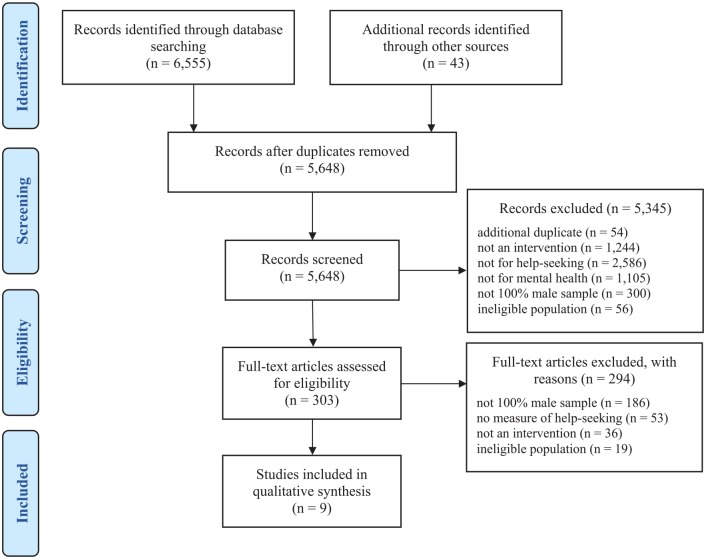
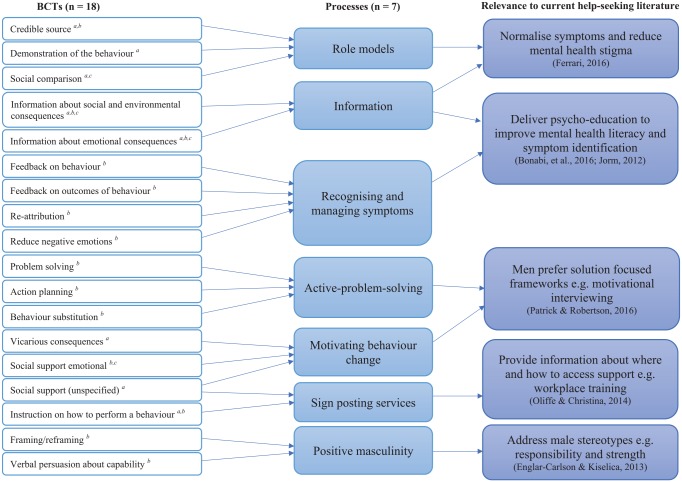
This systematic review identified 9 male-specific interventions from 6,598 records and used the Behavior Change Technique (BCT) taxonomy to synthesize what may improve men’s help-seeking for mental health. The review suggests that role models, psychoeducation, symptom recognition/management, problem-solving, signposting, motivating behavior change, and positive masculine framing are the most promising intervention processes.
## Key findings
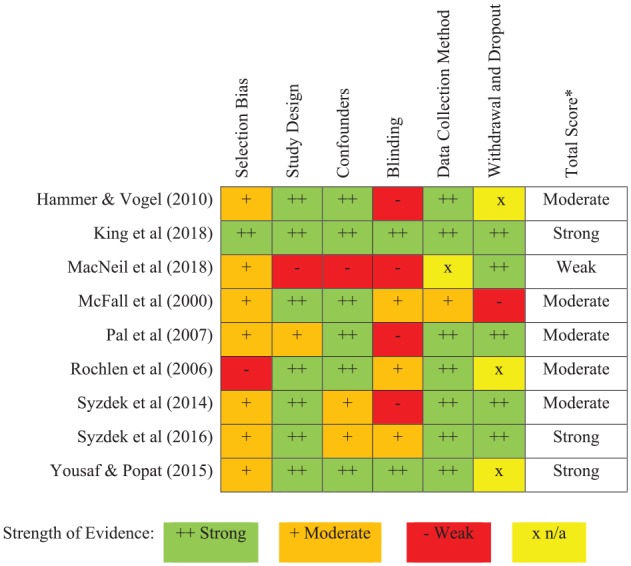
- From 6,598 records, 9 studies met inclusion criteria; study quality was rated as 3 strong, 5 moderate, and 1 weak.
- The included interventions were grouped into 4 engagement strategies, 4 RCTs/pilot RCTs, and 1 retrospective review; across all studies, 18 distinct BCTs were identified.
- All 4 engagement strategies using brochures or a documentary reported significant improvements in help-seeking, and the paper says brochures/documentaries may be feasible and acceptable strategies for men.
- The review synthesized 7 broader processes from the 18 BCTs: role models, psychoeducational material, symptom recognition/management, active problem-solving, motivating behavior change, signposting services, and content that builds on positive male traits such as responsibility and strength.
## Methods
- Systematic review conducted under PRISMA and preregistered on PROSPERO; searches were run on March 1, 2019 in MEDLINE, EMBASE, and PsycINFO, with manual reference checking and no restrictions on publication year, language, or method.
- Included interventions had to measure help-seeking as a primary, secondary, or additional outcome; only studies with a 100% male sample or a male subanalysis were eligible, and criminal/prison populations and participants under 18 were excluded.
- Two authors screened studies, assessed quality with the EPHPP checklist, and independently coded intervention content using the BCTTv1 taxonomy before reaching consensus; a meta-analysis was not done because the interventions, outcomes, and populations were too disparate.
## Limitations
- The paper states that BCT coding cannot be guaranteed 100% accurate because the taxonomy does not have perfect interrater reliability, and intervention content was likely underreported in the published articles.
- The review notes a limitation of the BCTTv1 itself: “emotional social support” may capture motivational interviewing and CBT, making it hard to distinguish social support from ambivalence-focused mechanisms.
- Evident from the text: only 9 studies were included from more than 6,000 records, and only 3 studies used practical help-seeking as an outcome, which limits the evidence base and generalizability.
Model-written summary. Check it against the paper before relying on it.
Integrity signals
Registry
Cites
Statistics
Figures
Verification
Claims the paper makes
19 Valid · 3 Not valid · 45 Not checked · 62 Own results and interpretations
Every source the paper cites for this claim was checked and supports it.
In the paper
“For instance, negative emotions are perceived as a sign of weakness, discouraging men from reaching out to friends”
§ Improving Mental Health Service Utilization Among Men: A Systematic Review and Synthesis of Behavior Change Techniques Within Interventions Targeting Help-Seeking > Abstract
What the sources say
- Supportedcites Pirkis, Spittal, Keogh, Mousaferiadis, & Currier, 2017 matched to “Masculinity and suicidal thinking” (2017) source
The “Self-reliance and suicidal thinking” section says that self-reliant men may view feeling down as a sign of weakness and be unlikely to reach out to friends for help. This directly supports the citing sentence as a paraphrase of the paper’s qualified explanation. (LLM, conf=0.92)
plainstates a cause- Asserted: passes — The authors put it forward as true.
- Checkable: passes — It can be checked against evidence.
- Load-bearing: unclear — It is unclear whether the paper’s conclusions depend on it.
- Based: passes — The paper gives a reason why it holds.
- Supported
The cited sources support only part of this claim — read each source’s verdict below.
In the paper
“The motivating behavior change process comprised of the “vicarious consequences” and “emotional social support” BCTs as the BCCTv1 dictates that cognitive behavioral therapy (CBT) and motivational interviewing (MI) frameworks should be coded as emotional social support (Michie et al., 2013).”
§ Improving Mental Health Service Utilization Among Men: A Systematic Review and Synthesis of Behavior Change Techniques Within Interventions Targeting Help-Seeking > Results > BCTs Within RCTs and Retrospective Review
What the sources say
- Partly supportedcites Michie et al., 2013 matched to “The behavior change technique taxonomy (v1) of 93 hierarchically clustered techniques: building an international consensus for the reporting of behavior change interventions” (2013) sourceExperimental — accuracy not yet measured
Table 5 lists “social support (emotional)” as a BCT, supporting that part of the citation. The passages found do not identify “vicarious consequences” as a BCT or say that CBT and MI should be coded as emotional social support. The Future Developments section says the taxonomy specifies intervention content but does not itself make links with theory. (LLM, conf=0.85)
plainstates a cause- Asserted: passes — The authors put it forward as true.
- Checkable: passes — It can be checked against evidence.
- Load-bearing: passes — The paper’s conclusions depend on it.
- Based: passes — The paper gives a reason why it holds.
- Partly supported
The sources with a verdict support this claim; the rest weren’t checked yet, have no full text we could read, or their verdicts aren’t rated yet.
In the paper
“These highlighted the “social comparison” BCT as it provided someone who one could relate to (Hammer & Vogel, 2010; King et al., 2018; Rochlen et al., 2006).”
§ Improving Mental Health Service Utilization Among Men: A Systematic Review and Synthesis of Behavior Change Techniques Within Interventions Targeting Help-Seeking > Results > BCTs Within the Engagement Strategies
What the sources say
- Not checked — no full text of the sourcecites Hammer & Vogel, 2010 matched to “Men’s Help Seeking for Depression: The Efficacy of a Male-Sensitive Brochure About Counseling” (2010) source
- Supportedcites King et al., 2018 matched to “Can a documentary increase help-seeking intentions in men? A randomised controlled trial” (2018) source
The Methods (Procedures; page unavailable) describe Man Up as featuring men from all walks of life who modelled talking about problems and seeking help. That supports the citing authors’ description of people viewers could relate to; “social comparison” is the citing authors’ BCT label for that feature. (LLM, conf=0.84)
- Not checked — no full text of the sourcecites Rochlen et al., 2006 matched to “A preliminary examination of the "Real Men. Real Depression" campaign.” (2006) source
plainstates a cause- Asserted: passes — The authors put it forward as true.
- Checkable: passes — It can be checked against evidence.
- Load-bearing: unclear — It is unclear whether the paper’s conclusions depend on it.
- Based: passes — The paper gives a reason why it holds.
Every source the paper cites for this claim was checked and supports it.
In the paper
“Also, the BCT of “vicarious consequences” was used within one engagement strategy, whereby men with lived experience discussed how seeking mental health help improved their overall trajectory (King et al., 2018).”
§ Improving Mental Health Service Utilization Among Men: A Systematic Review and Synthesis of Behavior Change Techniques Within Interventions Targeting Help-Seeking > Results > BCTs Within RCTs and Retrospective Review
What the sources say
- Supportedcites King et al., 2018 matched to “Can a documentary increase help-seeking intentions in men? A randomised controlled trial” (2018) source
The Methods (Intervention and control conditions) describe men who had experienced mental health problems or suicide attempts sharing real-life examples of how reaching out for help changed their trajectory for the better. The paper does not use the term “vicarious consequences,” but the cited description supports the citing authors’ characterization of the documentary strategy. (LLM, conf=0.91)
plain- Asserted: passes — The authors put it forward as true.
- Checkable: passes — It can be checked against evidence.
- Load-bearing: passes — The paper’s conclusions depend on it.
- Based: passes — The paper gives a reason why it holds.
- Supported
The cited sources support only part of this claim — read each source’s verdict below.
In the paper
“Similarly, drawing men’s attention to the potential benefits of treatment and how seeking help can improve long-term outcomes may also improve their motivation to seek help (King et al., 2018).”
§ Improving Mental Health Service Utilization Among Men: A Systematic Review and Synthesis of Behavior Change Techniques Within Interventions Targeting Help-Seeking > Discussion > Interpretation of BCTs With Regard to the Literature
What the sources say
- Partly supportedcites King et al., 2018 matched to “Can a documentary increase help-seeking intentions in men? A randomised controlled trial” (2018) sourceExperimental — accuracy not yet measured
The Methods (Procedures; page unavailable) say the documentary showed men whose trajectories improved after seeking help, and the Results (page unavailable) report increased intentions to seek help among viewers. The paper does not isolate attention to treatment benefits as the cause of that increase, and its examples include informal help rather than treatment specifically. (LLM, conf=0.82)
hedgedstates a possible cause- Asserted: passes — The authors put it forward as true.
- Checkable: passes — It can be checked against evidence.
- Load-bearing: unclear — It is unclear whether the paper’s conclusions depend on it.
- Based: passes — The paper gives a reason why it holds.
- Partly supported
56 more claims · 1 with their cited sources checked
Create a free account to see all 129 claims and to verify the 11 references still open.
- It may state two separate claims as one. 47
- Probably not a substantial claim. 34
Claims other papers make about this one
Each is checked against this paper’s own text: does it say what the citing paper says it does?
In the citing paper
“This striking gender imbalance is consistent with previously reported gender imbalances in both online and face-to-face therapy.”
From Behavioral Activation and Depression Symptomatology: Longitudinal Assessment of Linguistic Indicators in Text-Based Therapy Sessions (2021) · cites this paper as [47]
In the citing paper
“Systematic reviews have examined help-seeking interventions for men, 18 common mental health disorders in particular, 19 and mental health concerns in general. 11”
From Technology-Based Interventions to Improve Help-Seeking for Mental Health Concerns: A Systematic Review (2022) · cites this paper as [18]
Citations
Cites
Diagnostic and Statistical Manual of Mental Disorders
American Psychiatric Association (2013) · doi:10.1176/appi.books.9780890425596 · Cited by 116,369
Preferred Reporting Items for Systematic Reviews and Meta-Analyses: the PRISMA statement
Moher, D., Liberati, A., Tetzlaff, J., Altman, D. G., & for the PRISMA Group (2009) · BMJ · doi:10.1136/bmj.b2535 · Cited by 83,823
Preferred Reporting Items for Systematic Reviews and Meta-Analyses: The PRISMA Statement
Moher, D., Liberati, A., Tetzlaff, J., Altman, D. G., & The PRISMA Group (2009) · PLoS Medicine · doi:10.1371/journal.pmed.1000097 · Cited by 64,042 · cited 1×
“In accordance with the PRISMA guidelines, the study selection was undertaken in two phases (Moher et al., 2009).”
A Coefficient of Agreement for Nominal Scales
Cohen, J. (1960) · Educational and Psychological Measurement · doi:10.1177/001316446002000104 · Cited by 42,398 · cited 1×
“00, almost perfect levels of agreement (Cohen, 1960; McHugh, 2012).”
BackgroundCochrane Handbook for Systematic Reviews of Interventions: Cochrane Book Series
(2008) · doi:10.1002/9780470712184 · Cited by 25,048
Interrater reliability: The kappa statistic
McHugh, M. L. (2012) · Biochemia Medica · doi:10.11613/bm.2012.031 · Cited by 19,877 · cited 2×
“00, almost perfect levels of agreement (Cohen, 1960; McHugh, 2012).”
BackgroundMethodInfluentialWang, G., Ma, R., Qiao, G., Wada, K., Aizawa, Y., & Satoh, T. (2015) · Integrative Medicine International · doi:10.1159/000368408 · Cited by 18,657
Diagnostic and Statistical Manual of Mental Disorders, 5th ed.
Carter, M. J. (2014) · Therapeutic Recreation Journal · Cited by 15,166
Developing and evaluating complex interventions: the new Medical Research Council guidance
Craig, P., Dieppe, P., Macintyre, S., Michie, S., Nazareth, I., & Petticrew, M. (2008) · BMJ · doi:10.1136/bmj.a1655 · Cited by 10,995 · cited 2×
“When developing a complex intervention, it is recommended that a theoretical understanding of the likely processes eliciting behavior change be explored (Craig et al., 2008).”
BackgroundMethodHoffmann, T. C., Glasziou, P. P., Boutron, I., Milne, R., Perera, R., Moher, D., Altman, D. G., Barbour, V., Macdonald, H., Johnston, M., et al. (2014) · BMJ · doi:10.1136/bmj.g1687 · Cited by 10,548 · cited 1×
“For example, the Template for Intervention Description and Replication (TIDieR) checklist (Hoffman et al., 2014), the Transparent Reporting of Evaluations with Nonrandomized Designs (TREND) statement (Des Jarlais, Lyles, Crepaz, & Trend Group, 2004), and the use of BCCTv1 will improve the clarity and consistency in th…”
MethodMichie, S., Richardson, M., Johnston, M., Abraham, C., Francis, J., Hardeman, W., Eccles, M. P., Cane, J., & Wood, C. E. (2013) · Annals of Behavioral Medicine · doi:10.1007/s12160-013-9486-6 · Cited by 7,629 · cited 9×
“BCTs refer to the observable and replicable components within an intervention designed to change behavior (Michie et al., 2013), in this case, help-seeking.”
BackgroundMethodInfluentialCochrane Handbook for Systematic Reviews of Interventions
Higgins, J. P. T., Green, S., & Ben Van Den, A. (2020) · International Coaching Psychology Review · doi:10.53841/bpsicpr.2020.15.2.123 · Cited by 5,670
Motivational Interviewing: Helping People Change
Tober, G. (2013) · Alcohol and Alcoholism · doi:10.1093/alcalc/agt010 · Cited by 4,268
Constructions of masculinity and their influence on men's well-being: a theory of gender and health
Courtenay, W. H. (2000) · Social Science & Medicine · doi:10.1016/s0277-9536(99)00390-1 · Cited by 4,091 · cited 1×
“These approaches could be argued to contribute to an increase in violence and poorer well-being among men (Baugher & Gazmararian, 2015; Courtenay, 2000).”
BackgroundGulliver, A., Griffiths, K. M., & Christensen, H. (2010) · BMC Psychiatry · doi:10.1186/1471-244x-10-113 · Cited by 3,292
Evaluating non-randomised intervention studies
Deeks, J., Dinnes, J., D'Amico, R., Sowden, A., Sakarovitch, C., Song, F., Petticrew, M., & Altman, D. (2003) · Health Technology Assessment · doi:10.3310/hta7270 · Cited by 2,907
Des Jarlais, D. C., Lyles, C., Crepaz, N., & the TREND Group (2004) · American Journal of Public Health · doi:10.2105/ajph.94.3.361 · Cited by 2,817
Men, masculinity, and the contexts of help seeking
Addis, M. E., & Mahalik, J. R. (2003) · American Psychologist · doi:10.1037/0003-066x.58.1.5 · Cited by 2,761 · cited 2×
“Men tend to hold more negative attitudes toward the use of mental health services compared to women (Addis & Mahalik, 2003; Mackenzie, Gekoski, & Knox, 2006; Möller-Leimkühler, 2002; Yousaf, Popat, & Hunter, 1Department of Psychology, Institute of Psychiatry, Psychology & Neuroscience, King’s…”
BackgroundWang, P. S., Lane, M., Olfson, M., Pincus, H. A., Wells, K. B., & Kessler, R. C. (2005) · Archives of General Psychiatry · doi:10.1001/archpsyc.62.6.629 · Cited by 2,695
Critical appraisal skills programme
Singh, J. (2013) · Journal of Pharmacology and Pharmacotherapeutics · doi:10.4103/0976-500x.107697 · Cited by 2,556
(2013) · Cited by 2,393
Gender differences in depression: Critical review
Piccinelli, M., & Wilkinson, G. (2000) · British Journal of Psychiatry · doi:10.1192/bjp.177.6.486 · Cited by 2,376
Suicide and suicidal behaviour
Turecki, G., & Brent, D. A. (2016) · The Lancet · doi:10.1016/s0140-6736(15)00234-2 · Cited by 2,338 · cited 1×
“It is important to note that not all men who commit suicide have a mental health issue due to a variety of psychological, social, and physical risk factors (Turecki & Brent, 2016).”
BackgroundMental health literacy: empowering the community to take action for better mental health
Jorm, A. F. (2012) · American Psychologist · doi:10.1037/a0025957 · Cited by 1,783 · cited 2×
“, 2016) and having knowledge of mental health disorders assists in their recognition, management, and prevention (Jorm, 2012).”
BackgroundMental illness stigma: Concepts, consequences, and initiatives to reduce stigma
Rüsch, N., Angermeyer, M. C., & Corrigan, P. W. (2005) · European Psychiatry · doi:10.1016/j.eurpsy.2005.04.004 · Cited by 1,621
Armijo‐Olivo, S., Stiles, C. R., Hagen, N. A., Biondo, P. D., & Cummings, G. G. (2012) · Journal of Evaluation in Clinical Practice · doi:10.1111/j.1365-2753.2010.01516.x · Cited by 1,539
Risk factors for adolescent substance abuse and dependence: Data from a national sample.
Kilpatrick, D. G., Acierno, R. E., Saunders, B. A., Resnick, H. S., Best, C. L., & Schnurr, P. P. (2000) · Journal of Consulting and Clinical Psychology · doi:10.1037//0022-006x.68.1.19 · Cited by 1,164 · cited 1×
“Men cope with mental health difficulties differently compared to women, demonstrating an increased tendency to self-medicate with alcohol and drugs to alleviate emotional distress (Kilpatrick et al., 2000; Möller-Leimkühler, 2002; Oliver, Pearson, Coe, & Gunnell, 2005; Rutz & Rihmer, 2009).”
BackgroundThe role of masculinity in men's help-seeking for depression: A systematic review
Seidler, Z. E., Dawes, A. J., Rice, S. M., Oliffe, J. L., & Dhillon, H. M. (2016) · Clinical Psychology Review · doi:10.1016/j.cpr.2016.09.002 · Cited by 1,093 · cited 1×
“This negatively impacts men’s overall help-seeking behaviors and their choice of treatment type (Seidler et al., 2016).”
BackgroundGender differences in risk factors and consequences for alcohol use and problems
Nolen-Hoeksema, S. (2004) · Clinical Psychology Review · doi:10.1016/j.cpr.2004.08.003 · Cited by 1,006 · cited 1×
“This is supported by higher prevalence rates of substance use disorders in men (Nolen-Hoeksema, 2004; Wilhelm, 2014).”
BackgroundSpecifying and reporting complex behaviour change interventions: the need for a scientific method
Michie, S., Fixsen, D., Grimshaw, J. M., & Eccles, M. P. (2009) · Implementation Science · doi:10.1186/1748-5908-4-40 · Cited by 976
Neuropsychiatric Disease and Treatment
Tóth-Czifra, E. (2017) · doi:10.14293/s2199-1006.1.sor-med.clwxpbd.v1 · Cited by 929
Mackenzie, C. S., Gekoski, W. L., & Knox, V. J. (2006) · Aging & Mental Health · doi:10.1080/13607860600641200 · Cited by 878 · cited 1×
“Although help-seeking is consistently reported to be worse in males (Mackenzie et al., 2006), the identified techniques in this review should be interpreted cautiously.”
BackgroundMöller-Leimkühler, A. M. (2002) · Journal of Affective Disorders · doi:10.1016/s0165-0327(01)00379-2 · Cited by 851 · cited 3×
“Men cope with mental health difficulties differently compared to women, demonstrating an increased tendency to self-medicate with alcohol and drugs to alleviate emotional distress (Kilpatrick et al., 2000; Möller-Leimkühler, 2002; Oliver, Pearson, Coe, & Gunnell, 2005; Rutz & Rihmer, 2009).”
Background(2016) · City Research Online (City University London) · Cited by 747
Gender differences in depression
Angst, J., Gamma, A., Gastpar, M., L�pine, J.-P., Mendlewicz, J., & Tylee, A. (2002) · European Archives of Psychiatry and Clinical Neuroscience · doi:10.1007/s00406-002-0381-6 · Cited by 629 · cited 2×
“In response to these symptomatic gender differences, it has been suggested that men would benefit from lower clinical thresholds (Angst et al., 2002) or the use of other measures that may be more sensitive to the symptoms that they express (Cochran & Rabinowitz, 2003; Strömberg, Backlund, & Löfvander, 2010).”
BackgroundCriteria for the systematic review of health promotion and public health interventions
Jackson, N., & Waters, E. (2005) · Health Promotion International · doi:10.1093/heapro/dai022 · Cited by 572
Help-seeking behaviour in men and women with common mental health problems: cross-sectional study
Oliver, M. I., Pearson, N., Coe, N., & Gunnell, D. (2005) · British Journal of Psychiatry · doi:10.1192/bjp.186.4.297 · Cited by 558
Vogel, D. L., Heimerdinger-Edwards, S. R., Hammer, J. H., & Hubbard, A. (2011) · Journal of Counseling Psychology · doi:10.1037/a0023688 · Cited by 551 · cited 2×
“, 2015; Lane & Addis, 2005), and sexual orientation (Vogel et al., 2011) all intersect with help-seeking behaviors.”
BackgroundNational Survey of Mental Health and Wellbeing: Summary of Results: (681292012-001)
(2008) · PsycEXTRA Dataset · doi:10.1037/e681292012-001 · Cited by 520
Wong, Y. J., Ho, M.-H. R., Wang, S.-Y., & Miller, I. S. K. (2017) · Journal of Counseling Psychology · doi:10.1037/cou0000176 · Cited by 507
Examining a progressive model of self-stigma and its impact on people with serious mental illness
Corrigan, P. W., Rafacz, J., & Rüsch, N. (2011) · Psychiatry Research · doi:10.1016/j.psychres.2011.05.024 · Cited by 467
Hom, M. A., Stanley, I. H., & Joiner, T. E. (2015) · Clinical Psychology Review · doi:10.1016/j.cpr.2015.05.006 · Cited by 462
Addis, M. E. (2008) · Clinical Psychology: Science and Practice · doi:10.1111/j.1468-2850.2008.00125.x · Cited by 403 · cited 1×
“Men express symptoms of depression that do not always conform to the Diagnostic and Statistical Manual of Mental Disorders (5th ed., DSM-5; Addis, 2008; American Psychiatric Association, 2013).”
BackgroundHunt, K., Wyke, S., Gray, C. M., Anderson, A. S., Brady, A., Bunn, C., Donnan, P. T., Fenwick, E., Grieve, E., Leishman, J., et al. (2014) · The Lancet · doi:10.1016/s0140-6736(13)62420-4 · Cited by 394 · cited 1×
“Finally, active problem-solving or tangible solutionfocused approaches have been reported to be effective for changing other behaviors, such as increasing physical activity and dieting (Hunt et al., 2014).”
BackgroundMichie, S., West, R., Sheals, K., & Godinho, C. A. (2018) · Translational Behavioral Medicine · doi:10.1093/tbm/ibx019 · Cited by 377
Cane, J., Richardson, M., Johnston, M., Ladha, R., & Michie, S. (2015) · British Journal of Health Psychology · doi:10.1111/bjhp.12102 · Cited by 376
A Meta-analysis of Gender Differences in Attitudes Toward Seeking Professional Psychological Help
Nam, S. K., Chu, H. J., Lee, M. K., Lee, J. H., Kim, N., & Lee, S. M. (2010) · Journal of American College Health · doi:10.1080/07448481.2010.483714 · Cited by 366 · cited 1×
“Being male is negatively associated with one’s willingness to seek mental health support (Gonzalez, Alegría, Prihoda, Copeland, & Zeber, 2011) and is a significant predictor of help-seeking attitudes (Nam et al., 2010).”
BackgroundBonabi, H., Müller, M., Ajdacic-Gross, V., Eisele, J., Rodgers, S., Seifritz, E., Rössler, W., & Rüsch, N. (2016) · Journal of Nervous & Mental Disease · doi:10.1097/nmd.0000000000000488 · Cited by 308 · cited 3×
“Mental health literacy can be a strong facilitator for seeking mental health help (Bonabi et al., 2016).”
BackgroundQuestioning gender norms with men to improve health outcomes: Evidence of impact
Barker, G., Ricardo, C., Nascimento, M., Olukoya, A., & Santos, C. (2010) · Global Public Health · doi:10.1080/17441690902942464 · Cited by 297
Influence of Gender on Mental Health Literacy in Young Australians
Cotton, S. M., Wright, A., Harris, M. G., Jorm, A. F., & Mcgorry, P. D. (2006) · Australian & New Zealand Journal of Psychiatry · doi:10.1080/j.1440-1614.2006.01885.x · Cited by 286
Pederson, E. L., & Vogel, D. L. (2007) · Journal of Counseling Psychology · doi:10.1037/0022-0167.54.4.373 · Cited by 278
Seymour-Smith, S., Wetherell, M., & Phoenix, A. (2002) · Journal of Health Psychology · doi:10.1177/1359105302007003220 · Cited by 273
Thompson, A., Hunt, C., & Issakidis, C. (2004) · Social Psychiatry and Psychiatric Epidemiology · doi:10.1007/s00127-004-0816-7 · Cited by 253
Identifying content-based and relational techniques to change behaviour in motivational interviewing
Hardcastle, S. J., Fortier, M., Blake, N., & Hagger, M. S. (2017) · Health Psychology Review · doi:10.1080/17437199.2016.1190659 · Cited by 245
Perspectives on perceived stigma and self-stigma in adult male patients with depression
Latalova, K., Kamaradova, D., & Prasko, J. (2014) · Neuropsychiatric Disease and Treatment · doi:10.2147/ndt.s54081 · Cited by 241
Men’s discourses of help‐seeking in the context of depression
Johnson, J. L., Oliffe, J. L., Kelly, M. T., Galdas, P., & Ogrodniczuk, J. S. (2012) · Sociology of Health & Illness · doi:10.1111/j.1467-9566.2011.01372.x · Cited by 238
Kiselica, M. S., & Englar-Carlson, M. (2010) · Psychotherapy: Theory, Research, Practice, Training · doi:10.1037/a0021159 · Cited by 228
Doherty, D. T., & Kartalova‐O'Doherty, Y. (2010) · British Journal of Health Psychology · doi:10.1348/135910709x457423 · Cited by 221
Masculinity and suicidal thinking
Pirkis, J., Spittal, M. J., Keogh, L., Mousaferiadis, T., & Currier, D. (2017) · Social Psychiatry and Psychiatric Epidemiology · doi:10.1007/s00127-016-1324-2 · Cited by 205
Gender-sensitive recommendations for assessment and treatment of depression in men
Cochran, S. V., & Rabinowitz, F. E. (2003) · Professional Psychology: Research and Practice · doi:10.1037/0735-7028.34.2.132 · Cited by 190
Masculine gender role stress and violence: A literature review and future directions
Baugher, A. R., & Gazmararian, J. A. (2015) · Aggression and Violent Behavior · doi:10.1016/j.avb.2015.04.002 · Cited by 190
“Real Men Don't”: Constructions of Masculinity and Inadvertent Harm in Public Health Interventions
Fleming, P. J., Lee, J. G. L., & Dworkin, S. L. (2014) · American Journal of Public Health · doi:10.2105/ajph.2013.301820 · Cited by 189 · cited 4×
“Campaigns such as Man Up Monday seek to encourage tests for sexually transmitted infections (Anderson, Eastman-Mueller, Henderson, & Even, 2015) but also reinforce the notion that to be a “real man” one must sleep with multiple partners and engage in violent or risky sexual behaviors (Fleming et al., 2014).”
BackgroundInfluentialGonzalez, J. M., Alegría, M., Prihoda, T. J., Copeland, L. A., & Zeber, J. E. (2011) · Social Psychiatry and Psychiatric Epidemiology · doi:10.1007/s00127-009-0168-4 · Cited by 184
Affirming the Strengths in Men: A Positive Masculinity Approach to Assisting Male Clients
Englar‐Carlson, M., & Kiselica, M. S. (2013) · Journal of Counseling & Development · doi:10.1002/j.1556-6676.2013.00111.x · Cited by 182
An investigation of masculinity attitudes, gender, and attitudes toward psychological help-seeking.
Yousaf, O., Popat, A., & Hunter, M. S. (2015) · Psychology of Men & Masculinity · doi:10.1037/a0036241 · Cited by 172
A Review of Effective Youth Engagement Strategies for Mental Health and Substance Use Interventions
Dunne, T., Bishop, L. D., Avery, S., & D’Arcy, S. (2017) · Journal of Adolescent Health · doi:10.1016/j.jadohealth.2016.11.019 · Cited by 168
Swami, V. (2012) · PLoS ONE · doi:10.1371/journal.pone.0049779 · Cited by 166 · cited 2×
“Men are regarded as having poorer mental health literacy compared to women as they are worse at identifying mental health disorders (Cotton, Wright, Harris, Jorm, & McGorry, 2006; Swami, 2014).”
BackgroundGender inequality and suicide gender ratios in the world
Chang, Q., Yip, P. S. F., & Chen, Y.-Y. (2019) · Journal of Affective Disorders · doi:10.1016/j.jad.2018.09.032 · Cited by 165
Singh, S. P., & Tuomainen, H. (2015) · World Psychiatry · doi:10.1002/wps.20266 · Cited by 163
Motivational Interviewing and Decisional Balance: Contrasting Responses to Client Ambivalence
Miller, W. R., & Rose, G. S. (2015) · Behavioural and Cognitive Psychotherapy · doi:10.1017/s1352465813000878 · Cited by 161
Developing a taxonomy of helpful and harmful practices for clinical work with boys and men.
Mahalik, J. R., Good, G. E., Tager, D., Levant, R. F., & Mackowiak, C. (2012) · Journal of Counseling Psychology · doi:10.1037/a0030130 · Cited by 149 · cited 1×
“Indeed, positive masculinity and practitioner training around male gender socialization may assist with reducing practitioner biases when working with men (Mahalik et al., 2012).”
BackgroundMen's help seeking: Examination of differences across community size, education, and income.
Hammer, J. H., Vogel, D. L., & Heimerdinger-Edwards, S. R. (2013) · Psychology of Men & Masculinity · doi:10.1037/a0026813 · Cited by 147
Begun, A. L., Early, T. J., & Hodge, A. I. (2015) · Administration and Policy in Mental Health and Mental Health Services Research · doi:10.1007/s10488-015-0632-2 · Cited by 147
Men's mental health help-seeking behaviors: an intersectional analysis
Parent, M. C., Hammer, J. H., Bradstreet, T. C., Schwartz, E. N., & Jobe, T. (2018) · American Journal of Men's Health · doi:10.1177/1557988315625776 · Cited by 124
Men’s Help Seeking for Depression: The Efficacy of a Male-Sensitive Brochure About Counseling
Hammer, J. H., & Vogel, D. L. (2010) · The Counseling Psychologist · doi:10.1177/0011000009351937 · Cited by 119
Harris, M. G., Diminic, S., Reavley, N., Baxter, A., Pirkis, J., & Whiteford, H. A. (2015) · Australian & New Zealand Journal of Psychiatry · doi:10.1177/0004867415577434 · Cited by 113
Male Gender and Low Education with Poor Mental Health Literacy: A Population-based Study
Kaneko, Y., & Motohashi, Y. (2007) · Journal of Epidemiology · doi:10.2188/jea.17.114 · Cited by 98
MACINNES, D. L., & LEWIS, M. (2008) · Journal of Psychiatric and Mental Health Nursing · doi:10.1111/j.1365-2850.2007.01212.x · Cited by 98
Male gender role conflict and patterns of help seeking in Costa Rica and the United States.
Lane, J. M., & Addis, M. E. (2005) · Psychology of Men & Masculinity · doi:10.1037/1524-9220.6.3.155 · Cited by 95
Kerr, L. K. (2001) · Western Journal of Medicine · doi:10.1136/ewjm.175.5.349 · Cited by 85
Guo, S., Nguyen, H., Weiss, B., Ngo, V. K., & Lau, A. S. (2015) · Journal of Counseling Psychology · doi:10.1037/cou0000094 · Cited by 84
Wilhelm, K. A. (2014) · Australian & New Zealand Journal of Psychiatry · doi:10.1177/0004867414538678 · Cited by 75
Rice, S. M., Fallon, B. J., Aucote, H. M., Möller-Leimkühler, A., Treeby, M. S., & Amminger, G. P. (2015) · International Journal of Social Psychiatry · doi:10.1177/0020764014540149 · Cited by 74
Can a documentary increase help-seeking intentions in men? A randomised controlled trial
King, K. E., Schlichthorst, M., Spittal, M. J., Phelps, A., & Pirkis, J. (2018) · Journal of Epidemiology and Community Health · doi:10.1136/jech-2017-209502 · Cited by 74 · cited 7×
“Video footage of men talking about their personal problems, help-seeking, and emotional expression was also used to model positive health behaviors and demonstrate how to seek help (King et al., 2018).”
BackgroundMethodInfluentialGonzalez, J. M., Tinsley, H. E. A., & Kreuder, K. R. (2002) · Cited by 72
Blazina, C., & Marks, L. I. (2001) · Psychotherapy: Theory, Research, Practice, Training · doi:10.1037/0033-3204.38.3.297 · Cited by 72
Hayes, B. C., & Prior, P. M. (2003) · doi:10.1007/978-1-4039-3760-5_7 · Cited by 70
A preliminary examination of the "Real Men. Real Depression" campaign.
Rochlen, A. B., McKelley, R. A., & Pituch, K. A. (2006) · Psychology of Men & Masculinity · doi:10.1037/1524-9220.7.1.1 · Cited by 66
Beyond Workers’ Compensation: Men’s Mental Health In and Out of Work
Oliffe, J. L., & Han, C. S. E. (2014) · American Journal of Men's Health · doi:10.1177/1557988313490786 · Cited by 64
River, J. (2016) · American Journal of Men s Health · doi:10.1177/1557988316661486 · Cited by 61 · cited 2×
“Once in treatment, interventions that steer away from a diagnostic framework may be more palatable to men (River, 2018).”
BackgroundPal, H. R., Yadav, D., Mehta, S., & Mohan, I. (2007) · Alcohol and Alcoholism · doi:10.1093/alcalc/agm009 · Cited by 60 · cited 18×
“These processes were also apparent in the RCTs and the retrospective review.”
BackgroundMethodInfluentialHeadsUpGuys: Canadian online resource for men with depression.
Ogrodniczuk, J. S., Oliffe, J. L., & Beharry, J. (2018) · Europe PMC (PubMed Central) · Cited by 53
Edwards, S., Tinning, L., Brown, J. S. L., Boardman, J., & Weinman, J. (2007) · Journal of Nervous & Mental Disease · doi:10.1097/01.nmd.0000253781.49079.53 · Cited by 52 · cited 1×
“Alongside sex, other factors such as symptom severity, diagnosis (Edwards et al., 2007), culture (Guo et al.”
BackgroundSelf-citationCounselors' Perceptions of Female and Male Clients
Vogel, D. L., Epting, F. R., & Wester, S. R. (2003) · Journal of Counseling & Development · doi:10.1002/j.1556-6678.2003.tb00234.x · Cited by 51
Michie, S., Johnston, M., & Carey, R. (2016) · Encyclopedia of Behavioral Medicine · doi:10.1007/978-1-4614-6439-6_1661-2 · Cited by 50
Men's use of positive strategies for preventing and managing depression: A qualitative investigation
Fogarty, A. S., Proudfoot, J. G., Whittle, E. L., Player, M. J., Christensen, H. M., Hadži-Pavlović, D., & Wilhelm, K. A. (2015) · Journal of Affective Disorders · doi:10.1016/j.jad.2015.08.070 · Cited by 50 · cited 1×
“For example, self-reliance and responsibility can be helpful when experiencing emotional difficulties (Englar-Carlson & Kiselica, 2013; Fogarty et al., 2015).”
BackgroundThe Men's Stress Workshop: A Gender-Sensitive Treatment for Depressed Men
Primack, J. M., Addis, M. E., Syzdek, M., & Miller, I. W. (2010) · Cognitive and Behavioral Practice · doi:10.1016/j.cbpra.2009.07.002 · Cited by 47 · cited 2×
“Men who do identify as having a mental health difficulty are at risk of stigmatizing themselves for not being “strong enough” to cope (Primack et al., 2010), reducing their likeliness of seeking support.”
BackgroundMcFall, M., Malte, C., Fontana, A., & Rosenheck, R. A. (2000) · Psychiatric Services · doi:10.1176/appi.ps.51.3.369 · Cited by 46 · cited 4×
“Furthermore, only three studies utilized a measure of practical help-seeking (MacNeil et al, 2018; McFall et al., 2000; Syzdek et al., 2016), which also highlights the lack of research using practical help-seeking as an outcome measure.”
BackgroundInfluentialMen’s health: time for a new approach
Baker, P. (2018) · Physical Therapy Reviews · doi:10.1080/10833196.2018.1452562 · Cited by 43 · cited 1×
“Although many acknowledge that men and women’s health initiatives are not a binary choice (Baker, 2018), these strategies may face some resistance from the wider public.”
BackgroundCollege men’s depression-related help-seeking: a gender analysis
Tang, M. O. T., Oliffe, J. L., Galdas, P. M., Phinney, A., & Han, C. S. (2014) · Journal of Mental Health · doi:10.3109/09638237.2014.910639 · Cited by 42
Strömberg, R., Backlund, L. G., & Löfvander, M. B. (2010) · Nordic Journal of Psychiatry · doi:10.3109/08039480903511407 · Cited by 41
Ferrari, A. (2016) · Teaching of Psychology · doi:10.1177/0098628316662765 · Cited by 32 · cited 1×
“This made the problems more acceptable, enabling men to acknowledge their symptoms, and may have reduced mental health stigma (Ferrari, 2016).”
BackgroundSyzdek, M. R., Addis, M. E., Green, J. D., Whorley, M. R., & Berger, J. L. (2014) · Psychology of Men & Masculinity · doi:10.1037/a0030950 · Cited by 30 · cited 2×
“Syzdek and colleagues also discussed potential actions that could be taken to address men’s current mental health problems including formal help, informal help, and coping skills (Syzdek et al., 2014).”
BackgroundMen's Rights or Men's Needs? Anti-Feminism in Australian Men's Health Promotion
Salter, M. (2016) · Canadian Journal of Women and the Law/Revue Femmes et Droit · doi:10.3138/cjwl.28.1.69 · Cited by 29 · cited 1×
“This makes them susceptible to being used to justify certain men’s rights movements seeking to regain hegemonic masculine ideals that have been previously threatened (Salter, 2016).”
BackgroundMental health and wellbeing: focus on men's health
Patrick, S., & Robertson, S. (2016) · British Journal of Nursing · doi:10.12968/bjon.2016.25.21.1163 · Cited by 28
The Application of Social Marketing to Promoting Men's Health: A Brief Critique
Robinson, M., & Robertson, S. (2010) · International Journal of Men's Health · doi:10.3149/jmh.0901.50 · Cited by 28
Syzdek, M. R., Green, J. D., Lindgren, B. R., & Addis, M. E. (2016) · Psychotherapy · doi:10.1037/pst0000043 · Cited by 27
Archer, M., Brown, J. S. L., Idusohan, H., Coventry, S., Andiappan, M., & Espie, C. A. (2009) · Behavioural and Cognitive Psychotherapy · doi:10.1017/s1352465809005256 · Cited by 23 · cited 1×
“This has been demonstrated through interventions marketed as “improve your sleep” or a “stress workshop,” gaining high levels of male engagement (Archer et al., 2009; Primack et al., 2010).”
Self-citationSuicide in men: Suicide prevention for the male person
Rutz, W., & Rihmer, Z. (2009) · doi:10.1093/med/9780198570059.003.0035 · Cited by 22
Anderson, E. A., Eastman-Mueller, H. P., Henderson, S., & Even, S. (2015) · Journal of American College Health · doi:10.1080/07448481.2015.1062768 · Cited by 16
MacNeil, B. A., Hudson, C. C., & Leung, P. (2018) · Eating and Weight Disorders - Studies on Anorexia, Bulimia and Obesity · doi:10.1007/s40519-018-0586-y · Cited by 12 · cited 4×
“This BCT was observed in two studies using CBT and MI (MacNeil et al., 2018; Pal et al., 2007) and two pilot RCTs adapting MI to be gender sensitive (Syzdek et al.”
BackgroundMethodInfluentialEarly and effective intervention in male mental health
Pollard, J. (2016) · Perspectives in Public Health · doi:10.1177/1757913916666219 · Cited by 11 · cited 1×
“, BCTs), and the strategies used to recruit men (such as marketing techniques, language, and phrases chosen) as these have been highlighted as key factors when designing male interventions (Pollard, 2016).”
BackgroundThe bolstering effect of conceptual priming on psychological help-seeking attitudes in men
Yousaf, O., & Popat, A. (2015) · Journal of Mental Health · doi:10.3109/09638237.2014.998808 · Cited by 7
Men’s Health and Well-Being: The Case Against a Separate Field
Hearn, J. (2015) · University of Huddersfield Repository (University of Huddersfield) · Cited by 6
(1898) · BMJ · doi:10.1136/bmj.2.1964.499 · Cited by 1
Research works printed but not linked: 3
- Spencer-Thomas S. Hindman J. Conrad J. (2014). Man therapy: Outreach and impact on men’s mental health program 18 months after launch.
- Thomas H. (2003). Quality assessment tool for quantitative studies. In Effective public health practice project. Toronto: McMaster University.
- World Health Organization. (1992). The ICD-10 classification of mental and behavioural disorders: Clinical descriptions and diagnostic guidelines. Geneva: World Health Organization.
Cited by
Impact of COVID-19 on the mental health of US college students
Lee, J., Solomon, M., Stead, T., Kwon, B., & Ganti, L. (2021) · BMC Psychology · doi:10.1186/s40359-021-00598-3 · Cited by 259
“The key difference is that men are less likely to seek help for mental health difficulties compared to women even pre-pandemic [16].”
BackgroundCooper, M., Avery, L., Scott, J., Ashley, K., Jordan, C., Errington, L., & Flynn, D. (2022) · BMJ Open · doi:10.1136/bmjopen-2021-060214 · Cited by 161
Danieli, M., Ciulli, T., Mousavi, S. M., Silvestri, G., Barbato, S., Di Natale, L., & Riccardi, G. (2022) · JMIR Mental Health · doi:10.2196/38067 · Cited by 84
“The participants were mainly women, and the fact that women tend to seek psychological help more often than men has been studied previously [23,24].”
Shahwan, S., Lau, J. H., Goh, C. M. J., Ong, W. J., Tan, G. T. H., Kwok, K. W., Samari, E., Lee, Y. Y., Teh, W. L., Seet, V. A. L., et al. (2020) · BMC Psychiatry · doi:10.1186/s12888-020-02960-y · Cited by 146
“Earlier studies have found that using role models to convey information and content that are built on positive male traits such as responsibility and strength improved help-seeking attitudes in men [43].”
BackgroundSheikh, A., Payne-Cook, C., Lisk, S. C., Carter, B., & Brown, J. S. L. (2024) · European Child & Adolescent Psychiatry · doi:10.1007/s00787-024-02520-9 · Cited by 112
“Sagar-Ouriaghli et al.’s [16] review also supports this idea.”
InfluentialSelf-citation
Metadata
- Authors
- Sagar-Ouriaghli, I., Godfrey, E., Bridge, L., Meade, L., & Brown, J. S. L.
- Affiliations
- King's College London (GB)
- Corresponding author
- Sagar-Ouriaghli, Ilyas
- Venue
- American Journal of Men’s Health
- Publisher
- SAGE Publications
- Published
- 2019-05
- Volume
- 13
- Issue
- 3
- Pages
- 1557988319857009-1557988319857009
- ISSN
- 1557-9883 (ISSN-L)
- 1557-9891
- PMC
- PMC6560805
- OpenAlex
- W2953153530
- Cited by
- 274
- References
- 117
- Citations by year
- 2026: 45 · 2025: 47 · 2024: 63 · 2023: 46 · 2022: 31 · 2021: 26 · 2020: 13 · 2019: 1
- FWCI
- 2.74
- Type
- journal article
- Language
- en
- Open access
- gold
- doi.org
- Licence
- cc-by-nc
- journals.sagepub.com/page/policies/text-and-data-mining-license (tdm)
- Locations
- American Journal of Men s Health (publishedVersion, cc-by-nc)
- PubMed Central (publishedVersion, cc-by-nc)
- PubMed (publishedVersion)
- Research Portal (King's College London) (submittedVersion, cc-by-nc)
- DOAJ (DOAJ: Directory of Open Access Journals) (submittedVersion, cc-by-sa)
- Funders
- National Institute for Health Research
- south london and maudsley nhs foundation trust
- the Institute of Psychiatry, Psychology and NeuroscienceKing’s
- Topics
- Health Sciences › Medicine › Psychiatry and Mental health › Mental Health Treatment and Access
- Social Sciences › Gender Studies › Gender Roles and Identity Studies
- Social Sciences › Psychology › Applied Psychology › Digital Mental Health Interventions
- Keywords
- help-seeking, men's mental health, behaviour change techniques, BCT taxonomy, help-seeking attitudes, help-seeking intentions, role models, psychoeducation, symptom recognition, problem solving, engagement strategies
- MeSH terms
- Help-Seeking Behavior, Behavior, Humans, Male, Mental Health Services, Patient Acceptance of Health Care
About these checks
Registry, retraction, Cites and statistics results are computed, not judged, with one exception: a printed reference that no index lists is read once by a model before it counts as a citation error. Claims are extracted by a model and kept only when their quote appears verbatim in the text; each cited source is then checked, with a model’s help, for whether it says what the claim relies on. Those verdicts can be wrong — read the claim’s quote and the cited source before relying on one.
The claim verdicts this report counts are experimental: their accuracy is not yet measured.
A language model drew the claims from the paper on 2026-10-10, under version 3 of the claim definition (model deepseek-v4.1-flash, prompt extract-v3).
A second model labelled each claim on 2026-10-10 (model jev-1.13-20260917, definition revision gold-guideline-v0.2).
Cited sources are checked with a language model’s help (gpt-6-sol).
Statistics and arithmetic are recomputed, not judged.
Confidence bands are shown only for fields calibrated on our annotated test set. None is calibrated yet, so no band is shown.
What counts as a claim ›How we measure confidence ›How we check this ›
Are you an author, or do you see a problem with this page? Request a review
Data sources
Bibliographic data: Semantic Scholar, OpenAlex, Crossref.
Contains information from the Semantic Scholar Academic Graph Datasets, made available under the ODC Attribution License (ODC-BY 1.0).
Semantic Scholar’s data is described in: Kinney, R., et al. (2023). The Semantic Scholar Open Data Platform. arXiv:2301.10140.
