

The Hamilton Rating Scale for Depression: The making of a “gold standard” and the unmaking of a chronic illness, 1960–1980
Open accessThe DOI matches its Crossref record; 45 of the 45 references it cites were found in a registry or an index.
Abstract
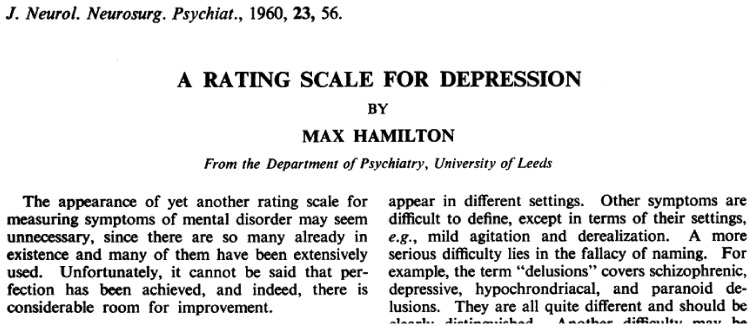
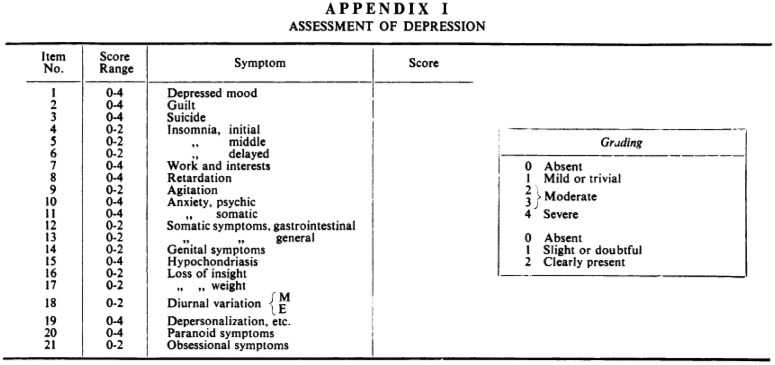
Objectives: To show why and how the Hamilton Rating Scale for Depression became the ‘Gold Standard’ for assessing therapies from the mid-1960s and how it was used to frame depression as a short-term and curable illness rather than a chronic one. Methods: My approach is that of the social construction of knowledge, identifying the interests, institutional contexts and practices that produce knowledge claims and then mapping the social processes of their circulation, validation and acceptance. Results: The circulation and validation of Hamilton Rating Scale for Depression was relatively slow and it became a ‘Gold Standard’ ‘from below’, from an emerging consensus amongst psychiatrists undertaking clinical trials for depression, which from the 1960s were principally with psychopharmaceuticals for short-term illness. Hamilton Rating Scale for Depression, drug trials and the construction of depression as non-chronic were mutually constituted. Discussion: Hamilton Rating Scale for Depression framed depression and its sufferers in new ways, leading psychiatrists to understand illness as a treatable episode, rather than a life course condition. As such, Hamilton Rating Scale for Depression served the interests of psychiatrists and psychiatry in its new era of drug therapy outside the mental hospital. However, Hamilton Rating Scale for Depression was a strange kind of ‘standard’, being quite non-standard in the widely varying ways it was used and the meanings given to its findings.
Overview
The claims and statistics of this paper haven’t been checked yet.
Free: it reads the open-access text and checks the first 5 claims that cite a source we can check. Create a free account to check every claim.
Integrity signals
Registry
Cites
Statistics
Figures
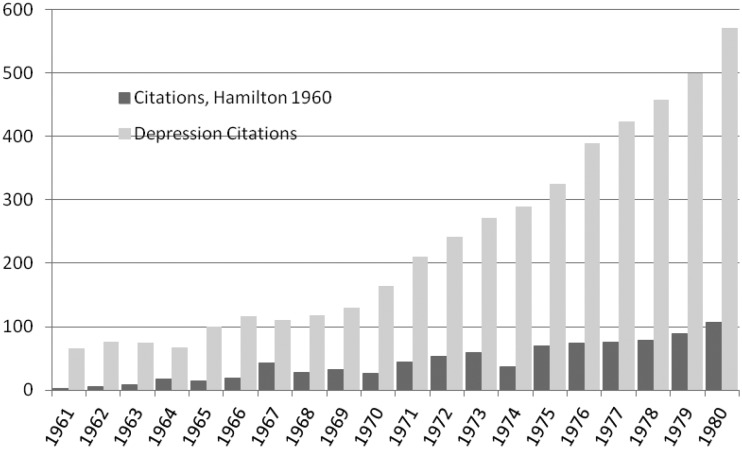
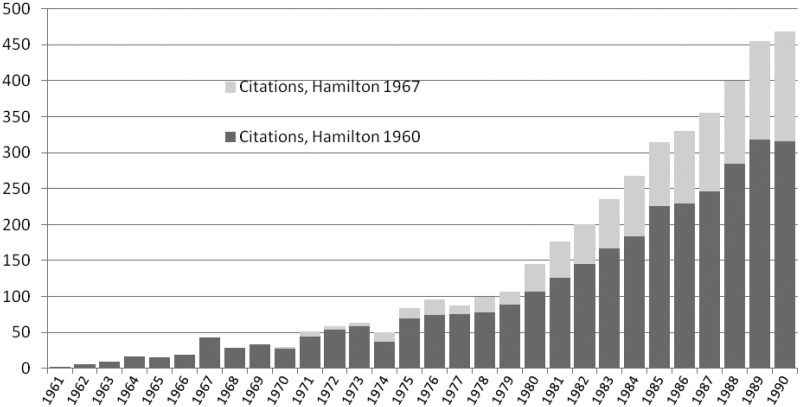
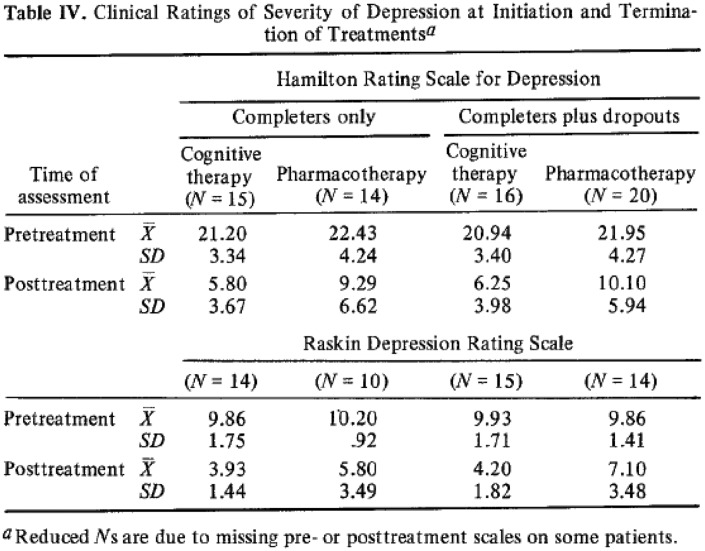
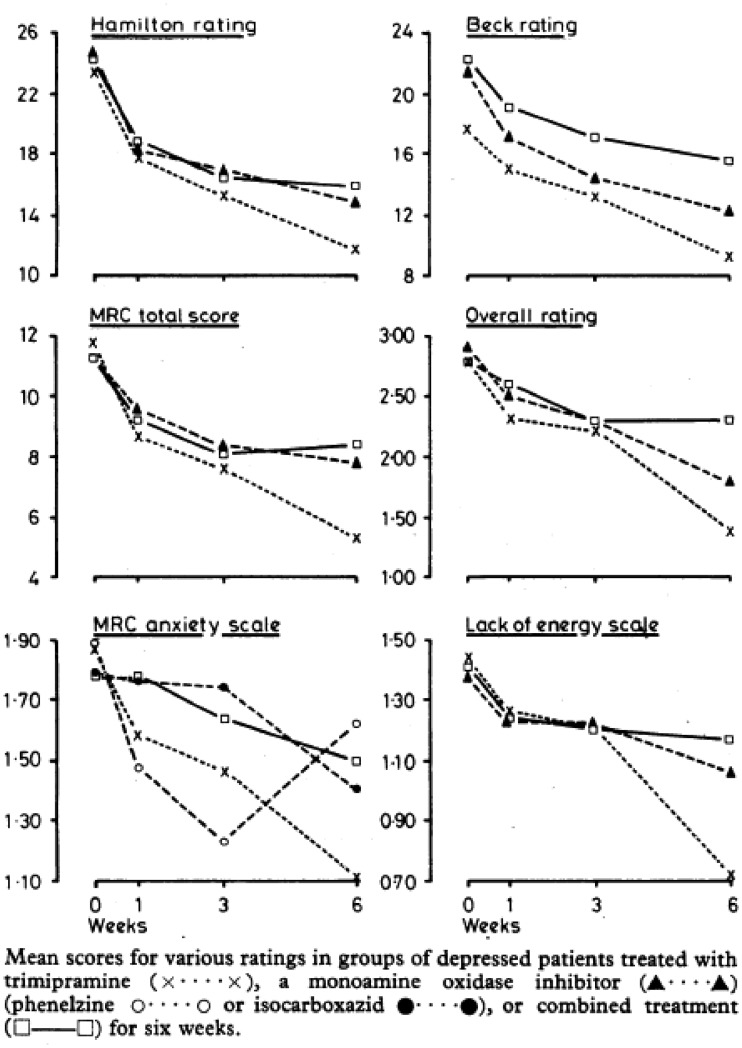
Verification
Claims the paper makes
The claims and statistics of this paper haven’t been checked yet.
Free: it reads the open-access text and checks the first 5 claims that cite a source we can check. Create a free account to check every claim.
Self-check
Percentages, sums and reported differences re-computed from the paper’s own numbers.
The self-check needs the paper’s full text.
Citations
Cites
An inventory for measuring depression
BECK, A. T. (1961) · Archives of General Psychiatry · doi:10.1001/archpsyc.1961.01710120031004 · Cited by 38,032 · cited 2×
“In the 1960s, HRSD had a competitor, the Inventory for Measuring Depression (then ID and now Beck depression inventory (BDI)), proposed by Aaron T Beck at the University of Pennsylvania.26 BDI has proved similarly enduring and also had the advantage of being a ‘first’ and the one against which other scales were calibr…”
MethodHamilton, M. (1960) · Journal of Neurology, Neurosurgery & Psychiatry · doi:10.1136/jnnp.23.1.56 · Cited by 32,817 · cited 11×
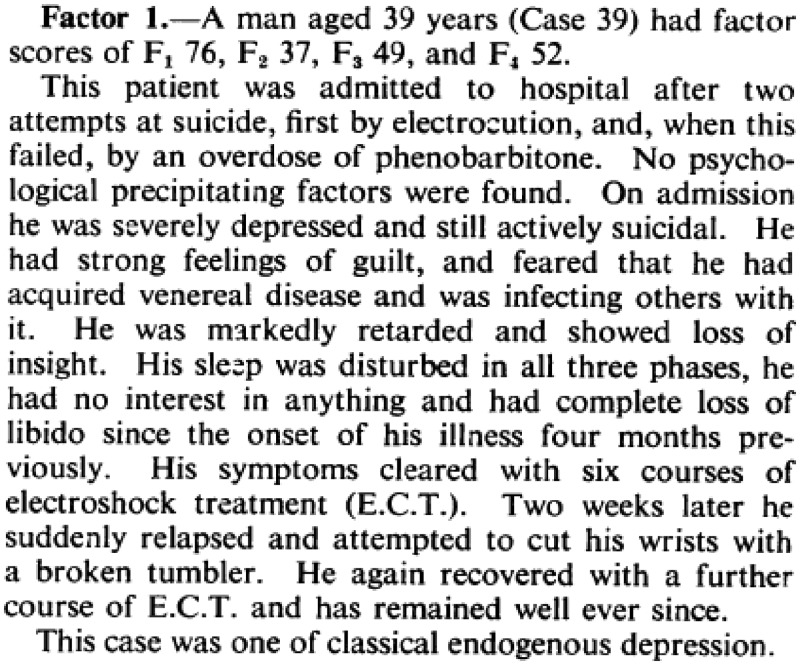
“An example of the case histories and commentaries included in Hamilton’s 1960 paper.(4) 208 Chronic Illness 9(3)”
BackgroundMethodInfluentialThe assessment of anxiety states by rating
HAMILTON, M. (1959) · British Journal of Medical Psychology · doi:10.1111/j.2044-8341.1959.tb00467.x · Cited by 11,455 · cited 1×
“Hamilton had previously spoken on the use of scales in this work on anxiety at the British Psychological Society in 1956.(16) In what became a feature of his publications of scales, he devoted much of the paper to sophisticated statistical testing of reliability and reproducibility.”
MethodDevelopment of a Rating Scale for Primary Depressive Illness
HAMILTON, M. (1967) · British Journal of Social and Clinical Psychology · doi:10.1111/j.2044-8260.1967.tb00530.x · Cited by 8,410 · cited 3×
“Weights are given for calculating factor scores, both for rotated as well as unrotated factors.(30)”
BackgroundMethodResultInfluentialScoville, W. B. (1949) · Journal of neurosurgery · doi:10.3171/jns.1949.6.1.0065 · Cited by 7,381
The Hamilton Depression Rating Scale: Has the Gold Standard Become a Lead Weight?
Bagby, R. M., Ryder, A. G., Schuller, D. R., & Marshall, M. B. (2004) · American Journal of Psychiatry · doi:10.1176/appi.ajp.161.12.2163 · Cited by 1,148 · cited 1×
“It has earned the title of the ‘Gold Standard’ for the assessment of depression, though its reign may now be limited.(6) Given its status and influence, it is surprising that it has not been subject of historical enquiry and even authors who are critical of modern psychiatry and its ‘manufacturing of depression’ have…”
BackgroundRush, A. J., Beck, A. T., Kovacs, M., & Hollon, S. (1977) · Cognitive Therapy and Research · doi:10.1007/bf01173502 · Cited by 913 · cited 2×
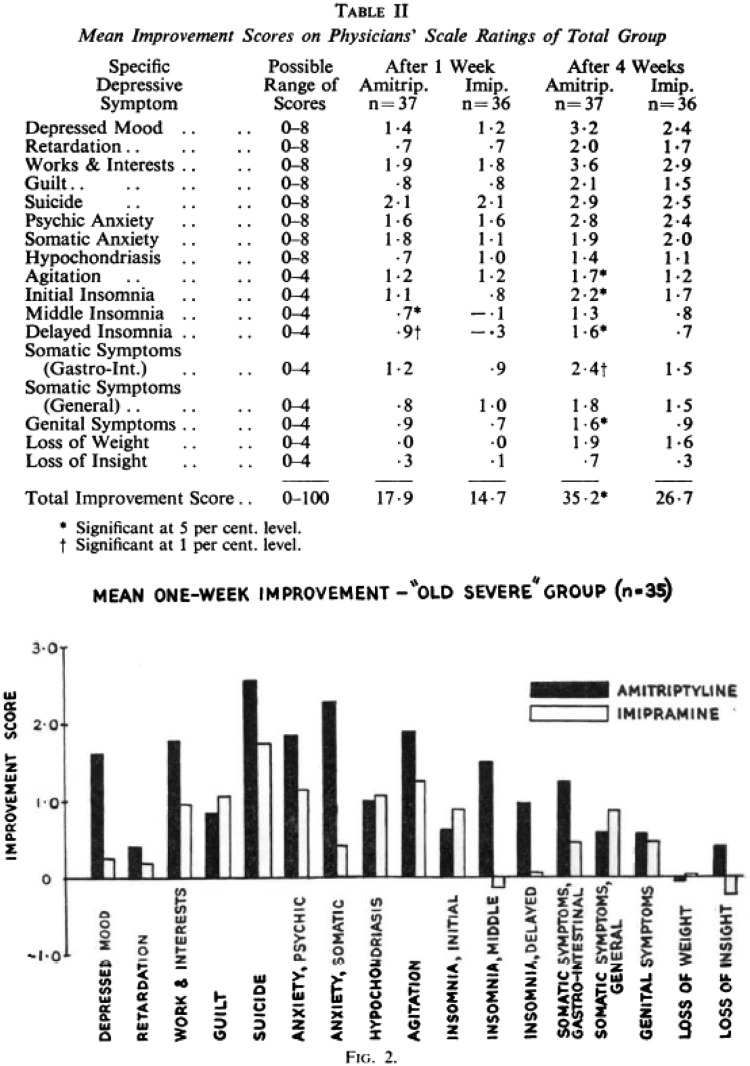
“An example of the reporting outcomes of the use of HRSD with another scale and for different treatments.(33) 214 Chronic Illness 9(3)”
MethodDSM-III and the transformation of American psychiatry: a history
(1993) · American Journal of Psychiatry · doi:10.1176/ajp.150.3.399 · Cited by 628 · cited 1×
“Influenced strongly by Karl Menninger’s assumption that all mental disorders were reducible to ‘the failure of the suffering individual to adapt to his or her environment’, psychiatrists tended to focus on finding underlying mental causes and to interpret these as constitutional and likely to be chronic.(13) DSM-III’s…”
BackgroundDSM-III and the revolution in the classification of mental illness
Mayes, R., & Horwitz, A. V. (2005) · Journal of the History of the Behavioral Sciences · doi:10.1002/jhbs.20103 · Cited by 577
The creation of psychopharmacology
(2002) · Choice Reviews Online · doi:10.5860/choice.40-0332 · Cited by 423
Research works printed but not linked: 2
- 9. Tansey T Review of D Healy, ‘The Antidepressant Era’. Hist Psychiatry 1998; 9: 536– 536
- 14. Rollin RH. Hamilton, Max (1912–1988). Oxford Dictionary of National Biography. Oxford University Press, online ed., September 2010, http://www.oxforddnb.com/view/article/70380 (2004, accessed 16 July 2012)
Cited by
Chen, K., Xu, Y., Chu, A., Ding, D., Liang, X., Nasreddine, Z. S., Dong, Q., Hong, Z., Zhao, Q., & Guo, Q. (2016) · Journal of the American Geriatrics Society · doi:10.1111/jgs.14530 · Cited by 399
“Except for the common inclusion criteria, controls were required to have no cognitive impairment, verified according to no significant impairment in cognitive function or activities of daily living, no memory complaints or memory impairments reported by informants, MMSE score at or above the cutoff,(16) a Modified Hac…”
MethodRusso, A., Silvestro, M., di Clemente, F. S., Trojsi, F., Bisecco, A., Bonavita, S., Tessitore, A., & Tedeschi, G. (2020) · The Journal of Headache and Pain · doi:10.1186/s10194-020-01143-0 · Cited by 140
Huang, L., Chen, K.-L., Lin, B.-Y., Tang, L., Zhao, Q.-H., Lv, Y.-R., & Guo, Q.-H. (2018) · Neuropsychiatric Disease and Treatment · doi:10.2147/ndt.s174293 · Cited by 112
“Moreover, NC should have no memory complaints, no significant impairment in activities of daily living, MMSE score at or above the cutoff,(22) a CDR score of 0,(23) a Modified Hachinski Ischemic Scale (MHIS) score of 4 or less,(25) and a Hamilton Depression Rating Scale (HDRS) score of 12 or less in the past 2 weeks.(…”
The Columbia-Suicide Severity Rating Scale (C-SSRS): Has the "Gold Standard" Become a Liability?
Giddens, J. M., Sheehan, K. H., & Sheehan, D. V. (2014) · Europe PMC (PubMed Central) · Cited by 134
Besteher, B., Gaser, C., Ivanšić, D., Guntinas‐Lichius, O., Dobel, C., & Nenadić, I. (2019) · NeuroImage Clinical · doi:10.1016/j.nicl.2019.101976 · Cited by 79
Metadata
- Authors
- Worboys, M.
- Affiliations
- University of Manchester (GB)
- Corresponding author
- Worboys, Michael
- ORCID
- Worboys, Michael
- Venue
- Chronic Illness
- Publisher
- SAGE Publications
- Published
- 2012-11-21
- Volume
- 9
- Issue
- 3
- Pages
- 202-219
- ISSN
- 1742-3953 (ISSN-L)
- 1745-9206
- PMC
- PMC3837544
- OpenAlex
- W2144998526
- Semantic Scholar
- 0376b0251998370ae9e634236094cbb0ce039a1e
- Cited by
- 95
- References
- 45
- Citations by year
- 2026: 4 · 2025: 10 · 2024: 8 · 2023: 9 · 2022: 12 · 2021: 16 · 2020: 11 · 2019: 8 · 2018: 7 · 2017: 2 · 2016: 5 · 2015: 1 · 2014: 2
- FWCI
- 1.09
- Type
- journal article
- Language
- en
- Open access
- hybrid
- doi.org
- Licence
- cc-by-nc
- journals.sagepub.com/page/policies/text-and-data-mining-license (tdm)
- Locations
- Chronic Illness (publishedVersion, cc-by-nc)
- Europe PMC (PubMed Central) (publishedVersion, cc-by-nc)
- PubMed Central (publishedVersion, cc-by-nc)
- PubMed (publishedVersion)
- Research Explorer (The University of Manchester) (publishedVersion, other-oa)
- Funders
- Wellcome Trust (092782)
- Topics
- Social Sciences › Psychology › Clinical Psychology › Historical Psychiatry and Medical Practices
- Social Sciences › Arts and Humanities › Philosophy › Mental Health and Psychiatry
- Social Sciences › Psychology › General Psychology › Academic and Historical Perspectives in Psychology
- Keywords
- Hamilton Depression Rating Scale, depression, psychopharmacology, clinical trials, social construction of knowledge, gold standard, psychopharmacological treatment, history of psychiatry
- MeSH terms
- Chronic Disease, Depressive Disorder, Humans, Terminology as Topic, Psychiatric Status Rating Scales, Psychotropic Drugs, Severity of Illness Index, History, 20th Century
About these checks
Registry, retraction, Cites and statistics results are computed, not judged, with one exception: a printed reference that no index lists is read once by a model before it counts as a citation error. Claims are extracted by a model and kept only when their quote appears verbatim in the text; each cited source is then checked, with a model’s help, for whether it says what the claim relies on. Those verdicts can be wrong — read the claim’s quote and the cited source before relying on one.
Statistics and arithmetic are recomputed, not judged.
Confidence bands are shown only for fields calibrated on our annotated test set. None is calibrated yet, so no band is shown.
What counts as a claim ›How we measure confidence ›How we check this ›
Are you an author, or do you see a problem with this page? Request a review
Data sources
Bibliographic data: Semantic Scholar, OpenAlex, Crossref.
Contains information from the Semantic Scholar Academic Graph Datasets, made available under the ODC Attribution License (ODC-BY 1.0).
Semantic Scholar’s data is described in: Kinney, R., et al. (2023). The Semantic Scholar Open Data Platform. arXiv:2301.10140.
