

Transitions from avoidance: Reinforcing competing behaviours reduces generalised avoidance in new contexts
Open accessThe DOI matches its Crossref record; 48 of the 48 references it cites were found in a registry or an index.
Abstract
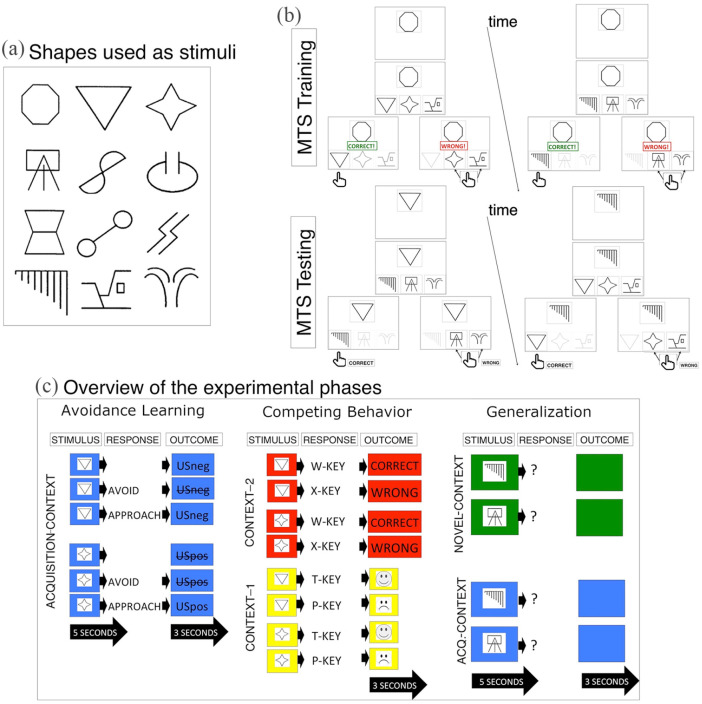
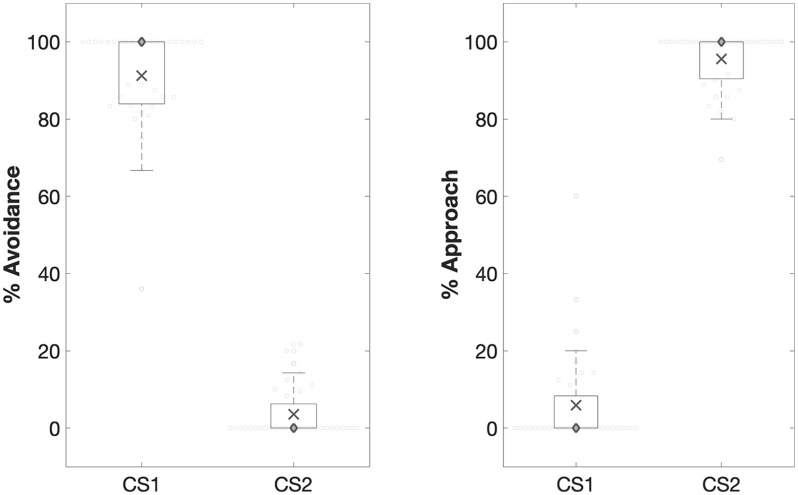
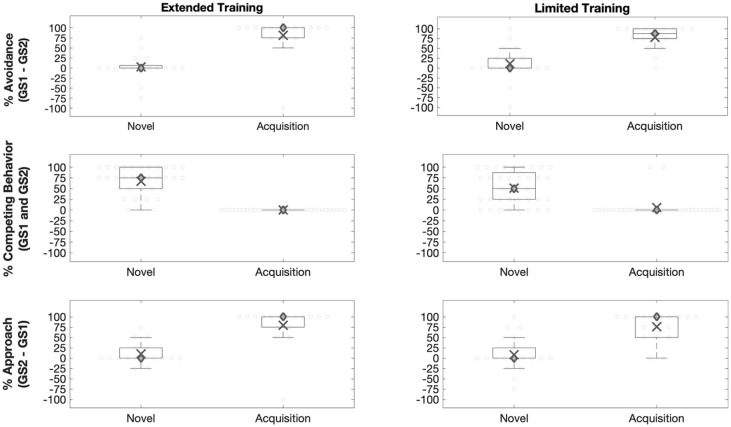
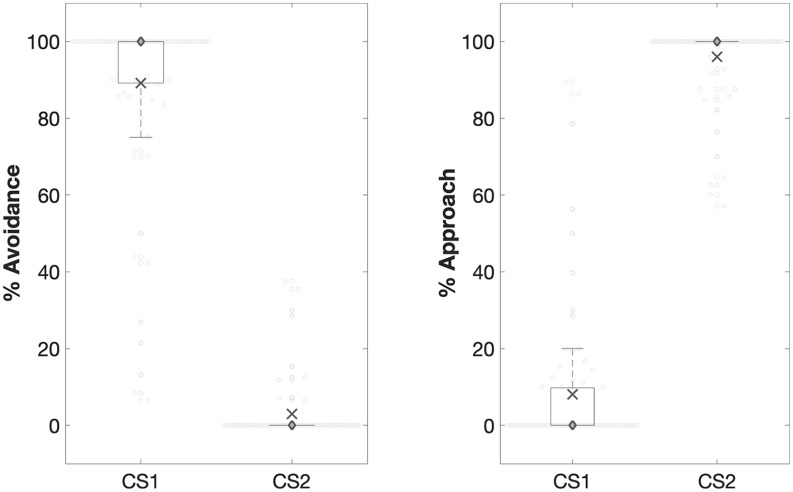
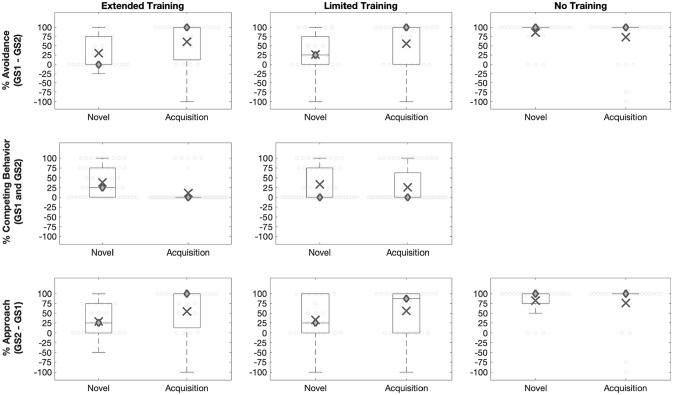
Generalised avoidance behaviours are a common diagnostic feature of anxiety-related disorders and a barrier to affecting changes in anxiety during therapy. However, strategies to mitigate generalised avoidance are under-investigated. Even less attention is given to reducing the category-based generalisation of avoidance. We therefore investigated the potential of an operant-based approach. Specifically, it was examined whether reinforcing competing (non-avoidance) behaviours to threat-predictive cues would interfere with the expression of generalised avoidance. Using a matching-to-sample task, artificial stimulus categories were established using physically dissimilar nonsense shapes. A member of one category (conditioned stimulus; CS1) was then associated with an aversive outcome in an Acquisition context, unless an avoidance response was made. Next, competing behaviours were reinforced in response to the CS1 in new contexts. Finally, we tested for the generalisation of avoidance to another member of the stimulus category (generalisation stimulus; GS1) in both a Novel context and the Acquisition context. The selective generalisation of avoidance to GS1 was observed, but only in the Acquisition context. In the Novel context, the generalisation of avoidance to GSs was significantly reduced. A comparison group (Experiment 2), which did not learn any competing behaviours, avoided GS1 in both contexts. These findings suggest that reinforcing competing behavioural responses to threat-predictive cues can lead to reductions in generalised avoidance. This study is among the first study to demonstrate sustained reductions in generalised avoidance resulting from operant-based protocols, and the clinical and research implications are discussed.
Overview
The claims and statistics of this paper haven’t been checked yet.
Free: it reads the open-access text and checks the first 5 claims that cite a source we can check. Create a free account to check every claim.
Integrity signals
Registry
Cites
Statistics
Figures
Verification
Claims the paper makes
The claims and statistics of this paper haven’t been checked yet.
Free: it reads the open-access text and checks the first 5 claims that cite a source we can check. Create a free account to check every claim.
Claims other papers make about this one
Each is checked against this paper’s own text: does it say what the citing paper says it does?
The source backs part of the claim, not all of it — or backs it for a different population, condition or comparison.
In the citing paper
“More specifically, symbolically acquired stimulus functions can be reduced through direct learning processes, namely respondent and operant extinction (Bennett et al., 2020;Boldrin & Debert, 2020;Roche et al., 2008;Vervoort et al., 2014), that differ from the procedures that were used to generate the acquired stimulus functions in the first instance.”
From A Process-Based Analysis of Cognitive Defusion in Acceptance and Commitment Therapy (2023) · cites this paper as Bennett et al., 2020
Experimental — accuracy not yet measuredThe source backs part of the claim, not all of it — or backs it for a different population, condition or comparison.
In the citing paper
“Two lines of empirical investigation have demonstrated the foregoing processes.”
From A Process-Based Analysis of Cognitive Defusion in Acceptance and Commitment Therapy (2023) · cites this paper as Bennett et al., 2020
Experimental — accuracy not yet measuredThe cited source says what the claim attributes to it.
In the citing paper
“The first involves the delivery of reinforcement for new responses that compete with previously learned responses acquired through symbolic relations (e.g., Bennett et al., 2020;Bones et al., 2001;Broothaerts, 2015).”
From A Process-Based Analysis of Cognitive Defusion in Acceptance and Commitment Therapy (2023) · cites this paper as Bennett et al., 2020
Self-check
Percentages, sums and reported differences re-computed from the paper’s own numbers.
The self-check needs the paper’s full text.
Citations
Cites
Acceptance and commitment therapy: model, processes and outcomes
Hayes, S. C., Luoma, J. B., Bond, F. W., Masuda, A., & Lillis, J. (2006) · Behaviour Research and Therapy · doi:10.1016/j.brat.2005.06.006 · Cited by 6,587 · cited 1×
“Interestingly, the prototype intervention examined here parallels a therapeutic strategy known as cognitive defusion, as described by Acceptance and Commitment Therapy (ACT; Hayes et al., 2006, 2012).”
Method(2005) · CTIT technical reports series · Cited by 5,307
Fear-avoidance and its consequences in chronic musculoskeletal pain: a state of the art.
Vlaeyen, J. W. S., & Linton, S. J. (2000) · Pain · doi:10.1016/s0304-3959(99)00242-0 · Cited by 4,931 · cited 1×
“Avoidance tendencies that persist in the absence of any physical or psychological threat can negatively impact psychosocial functioning and lead to psychopathology (Hayes et al., 1996; LeDoux et al., 2017; Vlaeyen & Linton, 2000, 2012).”
BackgroundHayes, S. C., Wilson, K. G., Gifford, E. V., Follette, V. M., & Strosahl, K. (1996) · Journal of Consulting and Clinical Psychology · doi:10.1037//0022-006x.64.6.1152 · Cited by 3,595
Acceptance and commitment therapy.
Hayes, S. C., & Lillis, J. (2012) · American Psychological Association eBooks · doi:10.1037/17335-000 · Cited by 1,543
Fear-avoidance model of chronic musculoskeletal pain: 12 years on
Vlaeyen, J. W. S., & Linton, S. J. (2012) · Pain · doi:10.1016/j.pain.2011.12.009 · Cited by 1,281 · cited 1×
“Avoidance tendencies that persist in the absence of any physical or psychological threat can negatively impact psychosocial functioning and lead to psychopathology (Hayes et al., 1996; LeDoux et al., 2017; Vlaeyen & Linton, 2000, 2012).”
BackgroundLonsdorf, T. B., Menz, M. M., Andreatta, M., Fullana, M. A., Golkar, A., Haaker, J., Heitland, I., Hermann, A., Kuhn, M., Kruse, O., et al. (2017) · Neuroscience & Biobehavioral Reviews · doi:10.1016/j.neubiorev.2017.02.026 · Cited by 837 · cited 1×
“These measures are common in conditioning research and confer information about the subjective emotional experience (Boddez et al., 2013; Lonsdorf et al., 2017).”
BackgroundSelf-citationFear Generalization in Humans: Systematic Review and Implications for Anxiety Disorder Research
Dymond, S., Dunsmoor, J. E., Vervliet, B., Roche, B., & Hermans, D. (2015) · Behavior Therapy · doi:10.1016/j.beth.2014.10.001 · Cited by 507
Self-citationLissek, S., Biggs, A. L., Rabin, S. J., Cornwell, B. R., Alvarez, R. P., Pine, D. S., & Grillon, C. (2008) · Behaviour Research and Therapy · doi:10.1016/j.brat.2008.02.005 · Cited by 401 · cited 1×
“This literature almost exclusively focused on the perceptual generalisation of avoidance between stimuli that are perceptually similar (Lissek, 2012; Lissek et al., 2008; Lommen et al., 2010).”
BackgroundDurand, V. M., & Carr, E. G. (1991) · Journal of Applied Behavior Analysis · doi:10.1901/jaba.1991.24-251 · Cited by 400
Enhanced avoidance habits in obsessive-compulsive disorder
Gillan, C. M., Morein-Zamir, S., Urcelay, G. P., Sule, A., Voon, V., Apergis-Schoute, A. M., Fineberg, N. A., Sahakian, B. J., & Robbins, T. W. (2014) · Biological Psychiatry · doi:10.1016/j.biopsych.2013.02.002 · Cited by 399
Avoidance learning: a review of theoretical models and recent developments
Krypotos, A.-M. (2015) · Frontiers in Behavioral Neuroscience · doi:10.3389/fnbeh.2015.00189 · Cited by 375
Yule, W., Bolton, D., Udwin, O., Boyle, S., O'Ryan, D., & Nurrish, J. (2000) · Journal of Child Psychology and Psychiatry · doi:10.1017/s0021963099005570 · Cited by 364
The birth, death and resurrection of avoidance: a reconceptualization of a troubled paradigm
LeDoux, J. E., Moscarello, J., Sears, R., & Campese, V (2017) · Molecular Psychiatry · doi:10.1038/mp.2016.166 · Cited by 348 · cited 2×
“As such, problematic avoidance is a common diagnostic feature of anxiety-related disorders (Dymond & Roche, 2009; Krypotos et al., 2015; LeDoux et al., 2017).”
BackgroundInhibition of avoidance behavior.
Rescorla, R. A., & Lolordo, V. M. (1965) · Journal of Comparative and Physiological Psychology · doi:10.1037/h0022060 · Cited by 323 · cited 1×
“However, our focus was on avoidance which is not always concordant with these measures (Rachman, 1990; Rescorla & Lolordo, 1965).”
BackgroundMasuda, A., Hayes, S. C., Sackett, C. F., & Twohig, M. P. (2004) · Behaviour Research and Therapy · doi:10.1016/j.brat.2003.10.008 · Cited by 317
Rethinking avoidance: Toward a balanced approach to avoidance in treating anxiety disorders
Hofmann, S. G., & Hay, A. C. (2018) · Journal of Anxiety Disorders · doi:10.1016/j.janxdis.2018.03.004 · Cited by 303
Lissek, S. (2012) · Depression and Anxiety · doi:10.1002/da.21922 · Cited by 288 · cited 1×
“This literature almost exclusively focused on the perceptual generalisation of avoidance between stimuli that are perceptually similar (Lissek, 2012; Lissek et al., 2008; Lommen et al., 2010).”
BackgroundSpruyt, A., Clarysse, J., Vansteenwegen, D., Baeyens, F., & Hermans, D. (2010) · Experimental Psychology · doi:10.1027/1618-3169/a000005 · Cited by 246
Self-citationA review of empirical support for differential reinforcement of alternative behavior
Petscher, E. S., Rey, C., & Bailey, J. S. (2009) · Research in Developmental Disabilities · doi:10.1016/j.ridd.2008.08.008 · Cited by 211
Neural structures mediating expression and extinction of platform-mediated avoidance
Bravo-Rivera, C., Roman-Ortiz, C., Brignoni-Perez, E., Sotres-Bayon, F., & Quirk, G. J. (2014) · The Journal of Neuroscience · doi:10.1523/jneurosci.0191-14.2014 · Cited by 206 · cited 2×
“In contrast, experimental evidence suggests that standard fear extinction procedures have a limited impact on avoidance behaviour (Bravo-Rivera et al., 2014, 2015).”
MethodResultCategories, concepts, and conditioning: how humans generalize fear
Dunsmoor, J. E., & Murphy, G. L. (2015) · Trends in Cognitive Sciences · doi:10.1016/j.tics.2014.12.003 · Cited by 205
Differential reinforcement as treatment for behavior disorders: Procedural and functional variations
Vollmer, T. R., & Iwata, B. A. (1992) · Research in Developmental Disabilities · doi:10.1016/0891-4222(92)90013-v · Cited by 198
Rating data are underrated: Validity of US expectancy in human fear conditioning
Boddez, Y., Baeyens, F., Luyten, L., Vansteenwegen, D., Hermans, D., & Beckers, T. (2013) · Journal of Behavior Therapy and Experimental Psychiatry · doi:10.1016/j.jbtep.2012.08.003 · Cited by 197
Self-citationNeuroticism and avoidance of ambiguous stimuli: Better safe than sorry?
Lommen, M. J. J., Engelhard, I. M., & van den Hout, M. A. (2010) · Personality and Individual Differences · doi:10.1016/j.paid.2010.08.012 · Cited by 168
A contemporary behavior analysis of anxiety and avoidance
Dymond, S., & Roche, B. (2009) · The Behavior Analyst · doi:10.1007/bf03392173 · Cited by 165
Self-citationSTIMULI INEVITABLY GENERATED BY BEHAVIOR THAT AVOIDS ELECTRIC SHOCK ARE INHERENTLY REINFORCING
Dinsmoor, J. A. (2001) · Journal of the Experimental Analysis of Behavior · doi:10.1901/jeab.2001.75-311 · Cited by 164
Low-Cost Avoidance Behaviors are Resistant to Fear Extinction in Humans
Vervliet, B., & Indekeu, E. (2015) · Frontiers in Behavioral Neuroscience · doi:10.3389/fnbeh.2015.00351 · Cited by 157
Self-citationThe ‘Jupiter’ Sinking: Effects on Children's Fears, Depression and Anxiety
Yule, W., Udwin, O., & Murdoch, K. (1990) · Journal of Child Psychology and Psychiatry · doi:10.1111/j.1469-7610.1990.tb00845.x · Cited by 128
Persistent active avoidance correlates with activity in prelimbic cortex and ventral striatum
Bravo-Rivera, C., Roman-Ortiz, C., Montesinos-Cartagena, M., & Quirk, G. J. (2015) · Frontiers in Behavioral Neuroscience · doi:10.3389/fnbeh.2015.00184 · Cited by 122
Meulders, A., Daele, T. V., Volders, S., & Vlaeyen, J. W. S. (2016) · Clinical Psychology Review · doi:10.1016/j.cpr.2016.02.002 · Cited by 93
Masuda, A., Hayes, S. C., Twohig, M. P., Drossel, C., Lillis, J., & Washio, Y. (2009) · Behavior Modification · doi:10.1177/0145445508326259 · Cited by 89 · cited 1×
“These experiential exercises evidently reduce problematic emotional responses to target words (Masuda et al., 2004, 2009; Tyndall et al., 2017).”
BackgroundDifferential- Reinforcement-of-Other-Behavior Schedules: Therapeutic Applications
Poling, A. D., & Ryan, C. (1982) · Behavior Modification · doi:10.1177/01454455820061001 · Cited by 89
Cognitive defusion in acceptance and commitment therapy: What are the basic processes of change?
Assaz, D. A., Roche, B., Kanter, J. W., & Oshiro, C. K. B. (2018) · The Psychological Record · doi:10.1007/s40732-017-0254-z · Cited by 85
Self-citationInferred threat and safety: Symbolic generalization of human avoidance learning
Dymond, S., Schlund, M. W., Roche, B., Whelan, R., Richards, J., & Davies, C. (2011) · Behaviour Research and Therapy · doi:10.1016/j.brat.2011.06.007 · Cited by 69 · cited 1×
“Avoidance was established using a negative valence US (USneg) validated previously in our laboratory (Bennett, Hermans, et al., 2015; Bennett, Vervoort, et al., 2015; Dymond et al., 2011; Lenaert et al., 2014).”
MethodSelf-citationTreanor, M., & Barry, T. J. (2017) · Behaviour Research and Therapy · doi:10.1016/j.brat.2017.04.009 · Cited by 65 · cited 1×
“To manage avoidance, exposure therapy typically relies on Pavlovian procedures that are also effective at reducing fear like extinction learning (Treanor & Barry, 2017).”
MethodLenaert, B., Boddez, Y., Griffith, J. W., Vervliet, B., Schruers, K., & Hermans, D. (2014) · Journal of Anxiety Disorders · doi:10.1016/j.janxdis.2014.09.006 · Cited by 60
Self-citationPerceptual and conceptual similarities facilitate the generalization of instructed fear
Bennett, M., Vervoort, E., Boddez, Y., Hermans, D., & Baeyens, F. (2015) · Journal of Behavior Therapy and Experimental Psychiatry · doi:10.1016/j.jbtep.2015.03.011 · Cited by 58
Self-citationDymond, S., Bennett, M., Boyle, S., Roche, B., & Schlund, M. (2018) · Perspectives on Behavior Science · doi:10.1007/s40614-017-0133-6 · Cited by 46
Self-citationLommen, M. J. J., Duta, M. D., Vanbrabant, K., de Jong, R., Juechems, K., & Ehlers, A. (2017) · PLoS ONE · doi:10.1371/journal.pone.0184485 · Cited by 37
Bending rules: the shape of the perceptual generalisation gradient is sensitive to inference rules
Boddez, Y., Bennett, M., van Esch, S., & Beckers, T. (2016) · Cognition & Emotion · doi:10.1080/02699931.2016.1230541 · Cited by 34
Self-citationFrom bad to worse: Symbolic equivalence and opposition in fear generalisation
Bennett, M., Hermans, D., Dymond, S., Vervoort, E., & Baeyens, F. (2015) · Cognition and Emotion · doi:10.1080/02699931.2014.973833 · Cited by 27
Self-citationSmith, B. M., Smith, G. S., & Dymond, S. (2020) · Journal of the Experimental Analysis of Behavior · doi:10.1002/jeab.573 · Cited by 27 · cited 1×
“However, techniques derived from operant principles might be useful adjuncts to standard treatments because avoidance is a product of operant conditioning (Dinsmoor, 2001; Smith et al., 2020).”
MethodSelf-citationClaes, N., Vlaeyen, J. W. S., & Crombez, G. (2016) · Behaviour Research and Therapy · doi:10.1016/j.brat.2016.07.004 · Cited by 26
Meulders, A., & Bennett, M. (2017) · Journal of Pain · doi:10.1016/j.jpain.2017.09.003 · Cited by 21
Self-citationPsychological Flexibility: What Theory and Which Predictions?
Vlaeyen, J. W. S. (2014) · Journal of Pain · doi:10.1016/j.jpain.2014.01.003 · Cited by 14
Survival circuits and therapy: from automaticity to the conscious experience of fear and anxiety
Hayes, S. C., & Hofmann, S. G. (2018) · Current Opinion in Behavioral Sciences · doi:10.1016/j.cobeha.2018.02.006 · Cited by 13
Tyndall, I., Papworth, R., Roche, B., & Bennett, M. (2017) · The Psychological Record · doi:10.1007/s40732-017-0227-2 · Cited by 10 · cited 1×
“These experiential exercises evidently reduce problematic emotional responses to target words (Masuda et al., 2004, 2009; Tyndall et al., 2017).”
BackgroundSelf-citation
Research works printed but not linked: 2
- Dymond, S., Schlund, M. W., Roche, B., Whelan, R., Richards, J., & Davies, C. (2011). Inferred threat and safety: Symbolic generalization of human avoidance learning. Behaviour Research and Therapy, 49 (10), 614621.
- Rachman, S. J. (1990). Fear and courage : WH Freeman/Times Books/Henry Holt & Co.
Cited by
Bennett, M. P., Knight, R., Patel, S., So, T., Dunning, D., Barnhofer, T., Smith, P., Kuyken, W., Ford, T., & Dalgleish, T. (2021) · Translational Psychiatry · doi:10.1038/s41398-021-01397-5 · Cited by 81
Self-citationA Process-Based Analysis of Cognitive Defusion in Acceptance and Commitment Therapy
Assaz, D. A., Tyndall, I., Oshiro, C. K. B., & Roche, B. (2023) · Behavior Therapy · doi:10.1016/j.beth.2022.06.003 · Cited by 43
Self-citationAvoidance of learnt fear: Models, potential mechanisms, and future directions
Wong, A. H. K., Wirth, F. M., & Pittig, A. (2022) · Behaviour Research and Therapy · doi:10.1016/j.brat.2022.104056 · Cited by 45
Vandael, K., Vervliet, B., Peters, M. L., & Meulders, A. (2023) · Pain · doi:10.1097/j.pain.0000000000002990 · Cited by 22
Self-citationEquivalence relations and the contextual control of multiple derived stimulus functions
Perez, W. F., de Azevedo, S. P., Gomes, C. T., & Vichi, C. (2020) · Journal of the Experimental Analysis of Behavior · doi:10.1002/jeab.649 · Cited by 12
Metadata
- Authors
- Bennett, M. P., Roche, B., Dymond, S., Baeyens, F., Vervliet, B., & Hermans, D.
- Affiliations
- MRC Cognition and Brain Sciences Unit (GB)
- National University of Ireland, Maynooth (IE)
- Swansea University (GB)
- KU Leuven (BE)
- Corresponding author
- Bennett, Marc P
- Venue
- Quarterly Journal of Experimental Psychology
- Publisher
- SAGE Publications
- Published
- 2020-08-21
- Volume
- 73
- Issue
- 12
- Pages
- 2119-2131
- ISSN
- 0033-555X (ISSN-L)
- 1747-0218
- 1747-0226
- PMC
- PMC7672781
- OpenAlex
- W3044713494
- Cited by
- 10
- References
- 47
- Citations by year
- 2024: 1 · 2023: 1 · 2022: 5 · 2021: 2 · 2020: 1
- FWCI
- 2.18
- Type
- journal article
- Language
- en
- Open access
- hybrid
- doi.org
- Locations
- Quarterly Journal of Experimental Psychology (publishedVersion, cc-by)
- PubMed Central (publishedVersion, cc-by)
- PubMed (publishedVersion)
- Maynooth University ePrints and eTheses Archive (Maynooth University) (acceptedVersion)
- Lirias (submittedVersion, other-oa)
- Cronfa (Swansea University) (submittedVersion, cc-by)
- Apollo (University of Cambridge) (submittedVersion, cc-by)
- Apollo (cc-by)
- Funders
- Irish Research Council (GOIPD/2016/617)
- Fonds Wetenschappelijk Onderzoek (PF/10/005)
- KU Leuven (PF/10/005)
- Topics
- Social Sciences › Psychology › Experimental and Cognitive Psychology › Anxiety, Depression, Psychometrics, Treatment, Cognitive Processes
- Life Sciences › Neuroscience › Cognitive Neuroscience › Memory and Neural Mechanisms
- Social Sciences › Psychology › Developmental and Educational Psychology › Behavioral and Psychological Studies
- Keywords
- avoidance learning, anxiety disorders, matching-to-sample, conditioned stimulus, novel context
- MeSH terms
- Anxiety, Avoidance Learning, Conditioning, Classical, Fear, Generalization, Psychological, Humans
About these checks
Registry, retraction, Cites and statistics results are computed, not judged, with one exception: a printed reference that no index lists is read once by a model before it counts as a citation error. Claims are extracted by a model and kept only when their quote appears verbatim in the text; each cited source is then checked, with a model’s help, for whether it says what the claim relies on. Those verdicts can be wrong — read the claim’s quote and the cited source before relying on one.
Statistics and arithmetic are recomputed, not judged.
Confidence bands are shown only for fields calibrated on our annotated test set. None is calibrated yet, so no band is shown.
What counts as a claim ›How we measure confidence ›How we check this ›
Are you an author, or do you see a problem with this page? Request a review
Data sources
Bibliographic data: Semantic Scholar, OpenAlex, Crossref.
Contains information from the Semantic Scholar Academic Graph Datasets, made available under the ODC Attribution License (ODC-BY 1.0).
Semantic Scholar’s data is described in: Kinney, R., et al. (2023). The Semantic Scholar Open Data Platform. arXiv:2301.10140.
