

A Virtual Type 2 Diabetes Clinic Using Continuous Glucose Monitoring and Endocrinology Visits
Open accessThe DOI matches its Crossref record; 18 of the 18 references it cites were found in a registry or an index.
Abstract
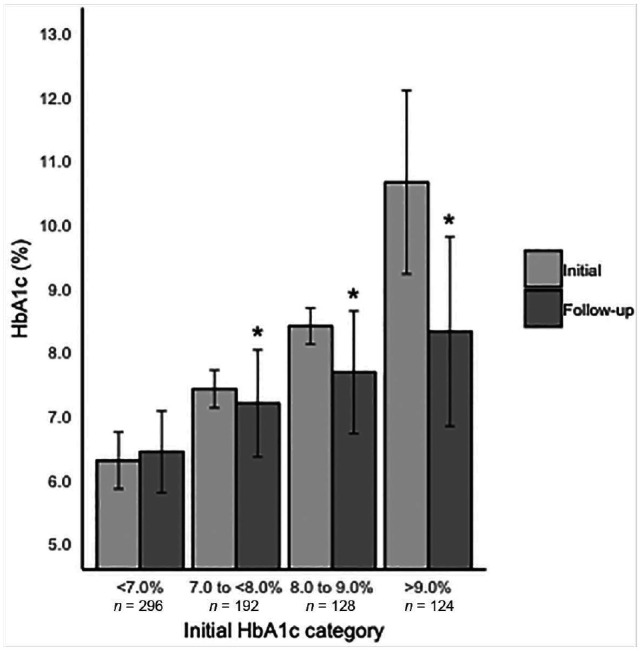
The Onduo Virtual Diabetes Clinic (VDC) telehealth technology/care model for adults with type 2 diabetes (T2D) combines connected devices, remote lifestyle coaching, and clinical support with a mobile App. Key differentiating program features are the availability of live video consultations with board-certified endocrinologists for medication management and real-time continuous glucose monitor use for higher-risk participants. Preliminary data ( n = 740) suggest that participation was associated with a significant improvement in HbA1c with up to 6 months follow-up in those not meeting treatment targets. HbA1c decreased by 2.3% ± 1.9%, 0.7% ± 1.0%, and 0.2% ± 0.8% across baseline categories of >9.0%, 8.0%-9.0% and 7.0% to <8.0%, respectively (all P < .001). These findings suggest that the VDC has potential to support individuals with T2D and their clinicians in diabetes management between office visits.
Overview
The claims and statistics of this paper haven’t been checked yet.
Free: it reads the open-access text and checks the first 5 claims that cite a source we can check. Create a free account to check every claim.
Integrity signals
Registry
Cites
Statistics
Figures
Verification
Claims the paper makes
The claims and statistics of this paper haven’t been checked yet.
Free: it reads the open-access text and checks the first 5 claims that cite a source we can check. Create a free account to check every claim.
Claims other papers make about this one
Each is checked against this paper’s own text: does it say what the citing paper says it does?
The source backs part of the claim, not all of it — or backs it for a different population, condition or comparison.
In the citing paper
“Virta health, Accolade and Onduo by Verily (Alphabet) have all developed applications that aim to improve diabetes control, with some demonstrating improvement in hemoglobin A1c levels in individuals who followed the programs 75 .”
From Multimodal biomedical AI (2022) · cites this paper as [75]
Experimental — accuracy not yet measuredThe cited source says what the claim attributes to it.
In the citing paper
“Others assist in improving diabetes outcomes by remotely monitoring clinical data (for instance, wireless monitoring of glucose levels, weight, or blood pressure) and providing feedback and coaching (266-271).”
From 7. Diabetes Technology: Standards of Care in Diabetes—2025 (2025) · cites this paper as [269]
Self-check
Percentages, sums and reported differences re-computed from the paper’s own numbers.
The self-check needs the paper’s full text.
Citations
Cites
Economic Costs of Diabetes in the U.S. in 2017
American Diabetes Association (2018) · Diabetes Care · doi:10.2337/dci18-0007 · Cited by 2,528
State of Type 1 Diabetes Management and Outcomes from the T1D Exchange in 2016–2018
Foster, N. C., Beck, R. W., Miller, K. M., Clements, M. A., Rickels, M. R., DiMeglio, L. A., Maahs, D. M., Tamborlane, W. V., Bergenstal, R., Smith, E., et al. (2019) · Diabetes Technology & Therapeutics · doi:10.1089/dia.2018.0384 · Cited by 1,907
Diabetes 2030: Insights from Yesterday, Today, and Future Trends
Rowley, W. R., Bezold, C., Arikan, Y., Byrne, E., & Krohe, S. (2017) · Population Health Management · doi:10.1089/pop.2015.0181 · Cited by 655 · cited 1×
“New approaches to diabetes care and delivery are needed given the expected increase in the prevalence of type 2 diabetes (T2D) to 49 million people by the year 2030, most of whom will not have access to care from diabetes specialists.(3-7) Telemedicine is a growing area of healthcare for people with diabetes and has t…”
BackgroundBeck, R. W., Riddlesworth, T. D., Ruedy, K., Ahmann, A., Haller, S., Kruger, D., McGill, J. B., Polonsky, W., Price, D., Aronoff, S., et al. (2017) · Annals of Internal Medicine · doi:10.7326/m16-2855 · Cited by 635 · cited 1×
“There is a growing body of evidence supporting the use of CGM technology in T2D management to improve glycemic control and treatment adherence; however, utilization and access have been limited, particularly for primary care patients.(19,20) The ability of VDC endocrinologists to prescribe rtCGM devices with remote CG…”
BackgroundPrevalence of diagnosed diabetes in adults by diabetes type – United States, 2016
Bullard, K. M., Cowie, C. C., Lessem, S. E., Saydah, S. H., Menke, A., Geiss, L. S., Orchard, T. J., Rolka, D. B., & Imperatore, G. (2018) · MMWR. Morbidity and Mortality Weekly Report · doi:10.15585/mmwr.mm6712a2 · Cited by 512
Hou, C., Carter, B., Hewitt, J., Francisa, T., & Mayor, S. (2016) · Diabetes Care · doi:10.2337/dc16-0346 · Cited by 411 · cited 1×
“Telemedicine is a growing area of healthcare for people with diabetes and has the potential to increase access to care, positively impact self-management behaviors, and improve health outcomes.(8-14) However, current programs vary in the use of technologies employed, models for interactions, and access to diabetes pro…”
BackgroundIntroduction: Standards of Medical Care in Diabetes—2019
(2019) · Diabetes Care · doi:10.2337/dc19-sint01 · Cited by 356
Vigersky, R. A., Fonda, S. J., Chellappa, M., Walker, M. S., & Ehrhardt, N. M. (2012) · Diabetes Care · doi:10.2337/dc11-1438 · Cited by 301 · cited 1×
“There is a growing body of evidence supporting the use of CGM technology in T2D management to improve glycemic control and treatment adherence; however, utilization and access have been limited, particularly for primary care patients.(19,20) The ability of VDC endocrinologists to prescribe rtCGM devices with remote CG…”
Background2017 National Standards for Diabetes Self-Management Education and Support
Beck, J., Greenwood, D. A., Blanton, L., Bollinger, S. T., Butcher, M. K., Condon, J. E., Cypress, M., Faulkner, P., Fischl, A. H., Francis, T., et al. (2018) · The Diabetes Educator · doi:10.1177/0145721718754797 · Cited by 288
Tomky, D., Tomky, D., Cypress, M., Dang, D., Maryniuk, M., Peyrot, M., & Mensing, C. (2008) · The Diabetes Educator · doi:10.1177/0145721708316625 · Cited by 270
Evaluation of the Cascade of Diabetes Care in the United States, 2005-2016
Kazemian, P., Shebl, F. M., McCann, N., Walensky, R. P., & Wexler, D. J. (2019) · JAMA Internal Medicine · doi:10.1001/jamainternmed.2019.2396 · Cited by 252
Hou, C., Xu, Q., Diao, S., Hewitt, J., Li, J., & Carter, B. (2018) · Diabetes, Obesity and Metabolism · doi:10.1111/dom.13307 · Cited by 127 · cited 1×
“Telemedicine is a growing area of healthcare for people with diabetes and has the potential to increase access to care, positively impact self-management behaviors, and improve health outcomes.(8-14) However, current programs vary in the use of technologies employed, models for interactions, and access to diabetes pro…”
BackgroundReal-world assessments of mySugr mobile health app
Debong, F., Mayer, H., & Kober, J. (2019) · Diabetes Technology & Therapeutics · doi:10.1089/dia.2019.0019 · Cited by 95
Bollyky, J. B., Bravata, D., Yang, J., Williamson, M., & Schneider, J. (2018) · Journal of Diabetes Research · doi:10.1155/2018/3961730 · Cited by 85 · cited 1×
“Telemedicine is a growing area of healthcare for people with diabetes and has the potential to increase access to care, positively impact self-management behaviors, and improve health outcomes.(8-14) However, current programs vary in the use of technologies employed, models for interactions, and access to diabetes pro…”
BackgroundOffringa, R., Sheng, T., Parks, L., Clements, M., Kerr, D., & Greenfield, M. S. (2018) · Journal of Diabetes Science and Technology · doi:10.1177/1932296817747291 · Cited by 66 · cited 1×
“Telemedicine is a growing area of healthcare for people with diabetes and has the potential to increase access to care, positively impact self-management behaviors, and improve health outcomes.(8-14) However, current programs vary in the use of technologies employed, models for interactions, and access to diabetes pro…”
BackgroundThe high-cost, type 2 diabetes mellitus patient: an analysis of managed care administrative data
Meyers, J., Parasuraman, S. V., Bell, K. F., Graham, J. P., & Candrilli, S. D. (2014) · Archives of Public Health · doi:10.1186/2049-3258-72-6 · Cited by 53 · cited 3×
“New approaches to diabetes care and delivery are needed given the expected increase in the prevalence of type 2 diabetes (T2D) to 49 million people by the year 2030, most of whom will not have access to care from diabetes specialists.(3-7) Telemedicine is a growing area of healthcare for people with diabetes and has t…”
BackgroundDowning, J., Bollyky, J., & Schneider, J. (2017) · Journal of Medical Internet Research · doi:10.2196/jmir.6659 · Cited by 48 · cited 1×
“Telemedicine is a growing area of healthcare for people with diabetes and has the potential to increase access to care, positively impact self-management behaviors, and improve health outcomes.(8-14) However, current programs vary in the use of technologies employed, models for interactions, and access to diabetes pro…”
BackgroundThe Emerging Role of Telemedicine and Mobile Health Technologies in Improving Diabetes Care
Garg, S. K., & Parkin, C. G. (2019) · Diabetes Technology & Therapeutics · doi:10.1089/dia.2019.0090 · Cited by 14 · cited 1×
“Telemedicine is a growing area of healthcare for people with diabetes and has the potential to increase access to care, positively impact self-management behaviors, and improve health outcomes.(8-14) However, current programs vary in the use of technologies employed, models for interactions, and access to diabetes pro…”
Background
Research works printed but not linked: 1
- Centers for Disease Control and Prevention. 2017 National Diabetes Statistics Report. Atlanta, GA: US Department of Health and Human Services; 2019.
Cited by
Foundation models for generalist medical artificial intelligence
Moor, M., Banerjee, O., Abad, Z. S. H., Krumholz, H. M., Leskovec, J., Topol, E. J., & Rajpurkar, P. (2023) · Nature · doi:10.1038/s41586-023-05881-4 · Cited by 2,028
Acosta, J. N., Falcone, G. J., Rajpurkar, P., & Topol, E. J. (2022) · Nature Medicine · doi:10.1038/s41591-022-01981-2 · Cited by 1,365
7. Diabetes Technology: Standards of Medical Care in Diabetes—2022
American Diabetes Association Professional Practice Committee (2022) · Diabetes Care · doi:10.2337/dc22-s007 · Cited by 358
7. Diabetes Technology: Standards of Care in Diabetes—2025
American Diabetes Association Professional Practice Committee, ElSayed, N. A., McCoy, R. G., Aleppo, G., Balapattabi, K., Beverly, E. A., Briggs Early, K., Bruemmer, D., Echouffo-Tcheugui, J. B., Ekhlaspour, L., et al. (2025) · Diabetes Care · doi:10.2337/dc25-s007 · Cited by 348
A deep learning system for predicting time to progression of diabetic retinopathy
Dai, L., Sheng, B., Chen, T., Wu, Q., Liu, R., Cai, C., Wu, L., Yang, D., Hamzah, H., Liu, Y., et al. (2024) · Nature Medicine · doi:10.1038/s41591-023-02702-z · Cited by 339
“These participants could be preferentially selected for more intensive management or counseling 35,36 .”
Metadata
- Authors
- Dixon, R. F., Zisser, H., Layne, J. E., Barleen, N. A., Miller, D. P., Moloney, D. P., Majithia, A. R., Gabbay, R. A., & Riff, J.
- Affiliations
- Onduo LLC, Newton, MA, USA
- Verily Life Sciences LLC (United States) (US)
- University of California San Diego (US)
- Joslin Diabetes Center (US)
- Corresponding author
- Layne, Jennifer E.
- Venue
- Journal of Diabetes Science and Technology
- Publisher
- SAGE Publications
- Published
- 2019-11-25
- Volume
- 14
- Issue
- 5
- Pages
- 908-911
- ISSN
- 1932-2968 (ISSN-L)
- PMC
- PMC7477772
- OpenAlex
- W2991558875
- Cited by
- 80
- References
- 18
- Citations by year
- 2026: 4 · 2025: 7 · 2024: 13 · 2023: 12 · 2022: 13 · 2021: 18 · 2020: 13
- FWCI
- 10.13
- Type
- journal article
- Language
- en
- Open access
- hybrid
- doi.org
- Licence
- Locations
- Journal of Diabetes Science and Technology (publishedVersion, cc-by-nc)
- PubMed Central (publishedVersion, cc-by-nc)
- PubMed (publishedVersion)
- Funders
- Onduo, LLC
- Topics
- Health Sciences › Medicine › Public Health, Environmental and Occupational Health › Telemedicine and Telehealth Implementation
- Health Sciences › Medicine › Endocrinology, Diabetes and Metabolism › Diabetes Management and Research
- Health Sciences › Medicine › Endocrinology, Diabetes and Metabolism › Diabetes Management and Education
- Keywords
- type 2 diabetes, telemedicine, continuous glucose monitoring, HbA1c, glycemic control, mobile application, medication management, video consultation, IoT devices
- MeSH terms
- Glycemic Control, Ambulatory Care Facilities, Blood Glucose, Diabetes Mellitus, Type 2, Endocrinology, Female, Glycated Hemoglobin, Humans, Hypoglycemic Agents, Male, Middle Aged, Predictive Value of Tests, Time Factors, United States, Blood Glucose Self-Monitoring, Biomarkers, Treatment Outcome, Telemedicine, Monitoring, Ambulatory, Risk Reduction Behavior, Mobile Applications
About these checks
Registry, retraction, Cites and statistics results are computed, not judged, with one exception: a printed reference that no index lists is read once by a model before it counts as a citation error. Claims are extracted by a model and kept only when their quote appears verbatim in the text; each cited source is then checked, with a model’s help, for whether it says what the claim relies on. Those verdicts can be wrong — read the claim’s quote and the cited source before relying on one.
Statistics and arithmetic are recomputed, not judged.
Confidence bands are shown only for fields calibrated on our annotated test set. None is calibrated yet, so no band is shown.
What counts as a claim ›How we measure confidence ›How we check this ›
Are you an author, or do you see a problem with this page? Request a review
Data sources
Bibliographic data: Semantic Scholar, OpenAlex, Crossref.
Contains information from the Semantic Scholar Academic Graph Datasets, made available under the ODC Attribution License (ODC-BY 1.0).
Semantic Scholar’s data is described in: Kinney, R., et al. (2023). The Semantic Scholar Open Data Platform. arXiv:2301.10140.
