

Do (Microtargeted) Deepfakes Have Real Effects on Political Attitudes?
Open accessThe DOI matches its Crossref record; 68 of the 68 references it cites were found in a registry or an index.
Abstract
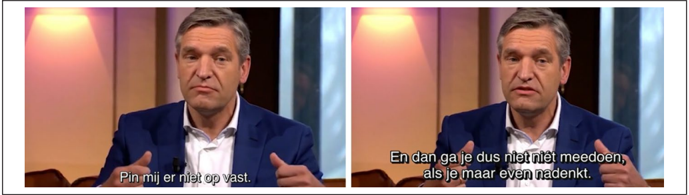
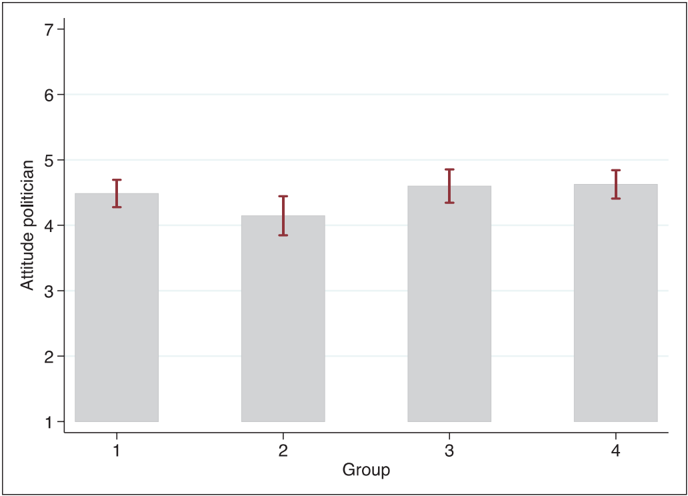
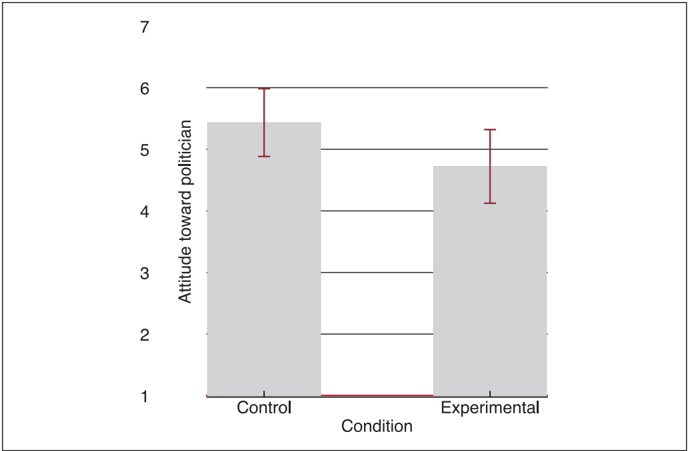
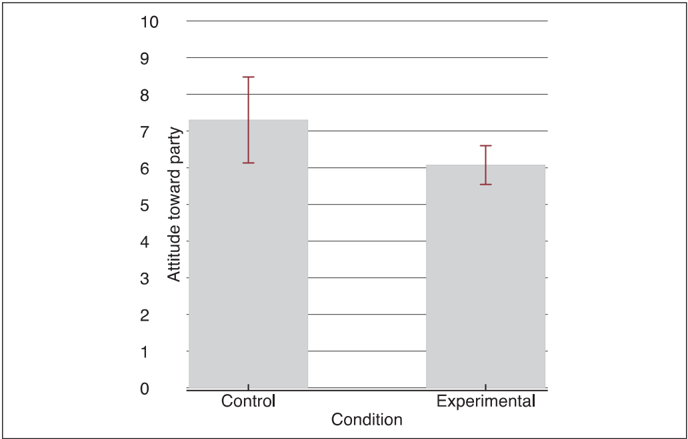
Deepfakes are perceived as a powerful form of disinformation. Although many studies have focused on detecting deepfakes, few have measured their effects on political attitudes, and none have studied microtargeting techniques as an amplifier. We argue that microtargeting techniques can amplify the effects of deepfakes, by enabling malicious political actors to tailor deepfakes to susceptibilities of the receiver. In this study, we have constructed a political deepfake (video and audio), and study its effects on political attitudes in an online experiment ( N = 278). We find that attitudes toward the depicted politician are significantly lower after seeing the deepfake, but the attitudes toward the politician’s party remain similar to the control condition. When we zoom in on the microtargeted group, we see that both the attitudes toward the politician and the attitudes toward his party score significantly lower than the control condition, suggesting that microtargeting techniques can indeed amplify the effects of a deepfake, but for a much smaller subgroup than expected.
Overview
The claims and statistics of this paper haven’t been checked yet.
Free: it reads the open-access text and checks the first 5 claims that cite a source we can check. Create a free account to check every claim.
Integrity signals
Registry
Cites
Statistics
Figures

Verification
Claims the paper makes
The claims and statistics of this paper haven’t been checked yet.
Free: it reads the open-access text and checks the first 5 claims that cite a source we can check. Create a free account to check every claim.
Claims other papers make about this one
Each is checked against this paper’s own text: does it say what the citing paper says it does?
The source backs part of the claim, not all of it — or backs it for a different population, condition or comparison.
In the citing paper
“studies that show that people are poor at recognizing deepfakes and false content online (Dobber et al., 2020; Vaccari and Chadwick, 2020; Köbis et al., 2021; Nightingale and Farid, 2022; Vaccari et al., 2022)”
From On manipulation by emotional AI: UK adults’ views and governance implications (2024) · cites this paper as Dobber et al., 2020
Experimental — accuracy not yet measuredThe source backs part of the claim, not all of it — or backs it for a different population, condition or comparison.
In the citing paper
“However, prior research has largely focused on its potential societal consequences rather than its real-world prevalence.”
From Characterizing AI-Generated Misinformation on Social Media (2025) · cites this paper as Dobber et al. 2021
Experimental — accuracy not yet measuredThe source backs part of the claim, not all of it — or backs it for a different population, condition or comparison.
In the citing paper
“AI-assisted misinformation can spread rapidly on social media and micro-targeting people with deepfakes can influence their attitudes toward politicians (e.g. (23)).”
From The impact of generative artificial intelligence on socioeconomic inequalities and policy making (2024) · cites this paper as [23]
Experimental — accuracy not yet measuredThe source backs part of the claim, not all of it — or backs it for a different population, condition or comparison.
In the citing paper
“These results are based on an experiment with a stimuli set that is much larger than most stimuli sets for the psychology of media effects research38 and deepfake detection33,35,36”
From Human detection of political speech deepfakes across transcripts, audio, and video (2024) · cites this paper as [36]
Experimental — accuracy not yet measuredThe source backs part of the claim, not all of it — or backs it for a different population, condition or comparison.
In the citing paper
“Lip-syncs are easier to detect when there are unnatural or inconsistent lip/mouth movements [20, 30, 7, 28].”
From Human Performance in Deepfake Detection: A Systematic Review (2025) · cites this paper as [30]
Experimental — accuracy not yet measured
10 more claims about this paper
Create a free account to see every claim other papers make about this one.
Self-check
Percentages, sums and reported differences re-computed from the paper’s own numbers.
The self-check needs the paper’s full text.
Citations
Cites
Statistical Power Analysis for the Behavioral Sciences
Muller, K. (1989) · Technometrics · doi:10.1080/00401706.1989.10488618 · Cited by 99,167
Faul, F., Erdfelder, E., Lang, A.-G., & Buchner, A. (2007) · Behavior Research Methods · doi:10.3758/bf03193146 · Cited by 65,971 · cited 1×
“We conducted an a priori power analysis by using G*Power (Faul et al. 2007) with a significance level of α = .05, a moderate effect size of d = .3, and a statistical power of (1 – β ) = 0.80 (Cohen 1988).”
InfluentialProceedings of the National Academy of Sciences of the United States of America
Dowling, J. E., & Wald, G. (2009) · Nutrition Reviews · doi:10.1111/j.1753-4887.1981.tb06752.x · Cited by 17,893
The Elaboration Likelihood Model of Persuasion
Petty, R. E., & Cacioppo, J. T. (1986) · Advances in Experimental Social Psychology · doi:10.1016/s0065-2601(08)60214-2 · Cited by 8,822
JOURNAL OF INTERNATIONAL AFFAIRS
(2023) · JOURNAL OF INTERNATIONAL AFFAIRS · doi:10.58710/jia · Cited by 4,586
The Origins of Totalitarianism
Shields, C. V., & Arendt, H. (1951) · The Western Political Quarterly · doi:10.2307/442863 · Cited by 4,425
MesoNet: a Compact Facial Video Forgery Detection Network
Afchar, D., Nozick, V., Yamagishi, J., & Echizen, I. (2018) · 2018 IEEE International Workshop on Information Forensics and Security (WIFS) · doi:10.1109/wifs.2018.8630761 · Cited by 1,872
A New Era of Minimal Effects? The Changing Foundations of Political Communication
Bennett, W. L., & Iyengar, S. (2008) · Journal of Communication · doi:10.1111/j.1460-2466.2008.00410.x · Cited by 1,558 · cited 1×
“For now, the limited, but significant main effect of our imperfect deepfake on the attitudes of the general sample is more or less aligned with the idea of “minimal effects” of political communication (see Bennett and Iyengar 2008).”
The disinformation order: Disruptive communication and the decline of democratic institutions
Bennett, W. L., & Livingston, S. (2018) · European Journal of Communication · doi:10.1177/0267323118760317 · Cited by 1,552 · cited 1×
“This can raise questions about the legitimacy of democratic institutions (Bennett and Livingston 2018), the quality of public debate (Xia et al. 2019), the power of citizens (Flynn et al. 2017), and the power of malicious political actors (Bradshaw and Howard 2018).”
Tucker, J. A., Guess, A., Barbera, P., Vaccari, C., Siegel, A., Sanovich, S., Stukal, D., & Nyhan, B. (2018) · doi:10.2139/ssrn.3144139 · Cited by 1,222 · cited 1×
“Literature about disinformation is growing rapidly, but there is still a “substantive research gap” about its effects (Tucker et al. 2018: 57).”
Cited by
Items 101–200 of 261
An Average Joe, a Laptop, and a Dream: Assessing the Potency of Homemade Political Deepfakes
Murphy, G., Ching, D., Meehan, E., Twomey, J., Bolger, A., & Linehan, C. (2025) · Applied Cognitive Psychology · doi:10.1002/acp.70061 · Cited by 11
The harm of deepfakes: a scoping review of deepfakes’ negative effects on human mind and behavior
Diel, A., Lalgi, T. J., Mellis, F. S., Teufel, A., & Bäuerle, A. (2025) · AI & Society · doi:10.1007/s00146-025-02774-0 · Cited by 28
König, P. D. (2022) · Media Culture & Society · doi:10.1177/01634437221111893 · Cited by 8
“Regarding online political microtargeting, evidence from several experimental studies does indicate that targeting with personality-congruent content makes messages more effective (Dobber et al., 2021; Krotzek, 2019; Lavigne, 2021; Zarouali et al., 2020).”
BackgroundDhahir, D. F., Kenda, N., Dirgahayu, D., Syarifuddin, S., Djaffar, R., Widihastuti, R., Rustam, M., & Pala, R. (2024) · Jurnal Pekommas · doi:10.56873/jpkm.v9i2.5873 · Cited by 26
Karaboga, M. (2023) · Springer eBooks · doi:10.1007/978-3-662-65964-9_10 · Cited by 15
Deepfake és dezinformáció. Mit tehet a jog a mélyhamisítással készített álhírek ellen?
Gosztonyi, G., & Lendvai, G. F. (2024) · Médiakutató · doi:10.55395/mk.2024.1.3 · Cited by 19
Deepfake and Digital Citizenship: A Long-Term Protection Method for Children and Youth
Turan, S. G. (2021) · Advances in educational technologies and instructional design book series · doi:10.4018/978-1-7998-6474-5.ch006 · Cited by 10
Ahmed, S., Masood, M., Deng, R., & Malviya, S. (2025) · Asian Journal of Communication · doi:10.1080/01292986.2025.2538142 · Cited by 10
“Political misinformation that aligns ideologically tends to be perceived as more credible by political cynics, and as a result, it can have a greater negative effect on their attitudes and behaviors (Dobber et al., 2021).”
Amin, A., Yu, H. H., & Mazhar, B. (2025) · Journal of Visual Literacy · doi:10.1080/1051144x.2025.2543689 · Cited by 12
“This suggests that once individuals form or reinforce ideological positions—often influenced by manipulated content—they are more likely to perceive political opposition as threatening, intensifying social and political divides (Dobber et al., 2021).”
InfluentialGuo, S., Zhong, Y., & Hu, X. (2025) · Harvard Kennedy School Misinformation Review · doi:10.37016/mr-2020-189 · Cited by 12
A survey of deepfakes in terms of deep learning and multimedia forensics
Hadi, W. J., Kadhem, S. M., & Abbas, A. R. (2022) · International Journal of Power Electronics and Drive Systems/International Journal of Electrical and Computer Engineering · doi:10.11591/ijece.v12i4.pp4408-4414 · Cited by 12
Bosilkov, I. (2021) · Journal of Elections Public Opinion and Parties · doi:10.1080/17457289.2021.1928679 · Cited by 7
Artificial intelligence for deepfake detection: systematic review and impact analysis
Sunkari, V., & Sri Nagesh, A. (2024) · IAES International Journal of Artificial Intelligence (IJ-AI) · doi:10.11591/ijai.v13.i4.pp3786-3792 · Cited by 6
The Cost of Reach: Testing the Role of Ad Delivery Algorithms in Online Political Campaigns
Votta, F., Dobber, T., Guinaudeau, B., Helberger, N., & de Vreese, C. H. (2024) · Political Communication · doi:10.1080/10584609.2024.2439317 · Cited by 15
“…known as political microtargeting and has generated its own subset of literature (Bennett & Gordon, 2021; Bodó et al., 2017; Coppock et al., 2022; Dobber et al., 2020; Haenschen, 2022; Krotzek, 2019; Kruikemeier et al., 2016; Tappin et al., 2023; Zarouali et al., 2022; Zuiderveen Borgesius et…”
Self-citationSierra, H. F. G., Puerta, M. P., & Rincón, D. F. G. (2025) · Cogent Social Sciences · doi:10.1080/23311886.2025.2552342 · Cited by 9
“…the dimensions in which deepfakes appear as a threat that is difficult to control (audrey & smaili 2022; Busch & ware, 2023; Chesney & Citron, 2018; Dobber et al., 2021; Dobrobaba, 2022). much of the most recent discussion regarding the threats posed by the use of deepfakes has focused on their…”
Hu, B., & Huang, G. (2025) · Social Media + Society · doi:10.1177/20563051251401815 · Cited by 5
“Previous studies (Dobber et al., 2021; Hameleers, 2022) suggest that individuals are not powerless against deepfakes with false information.”
The Dual Role of Artificial Intelligence in Online Disinformation: A Critical Analysis
Montasari, R. (2024) · Advanced sciences and technologies for security applications · doi:10.1007/978-3-031-50454-9_11 · Cited by 13
The Current Landscape of Deepfake Legislation in the United States
Ugwuoke, V., & Sanfilippo, M. R. (2025) · Journal of Information Policy · doi:10.5325/jinfopoli.15.2025.0004 · Cited by 9
Neyazi, T. A., Ee, T. K., & Kuru, O. (2025) · Social Science Computer Review · doi:10.1177/08944393251362247 · Cited by 14
“AI technologies are employed not only to analyze vast datasets, optimize outreach, and personalizing messages to voters but also to create sophisticated deepfake content that can dramatically alter perceptions (Dobber et al., 2021).”
Artificial Intelligence and Illicit Drugs: A World of Possibilities
Weisheit, R. A. (2025) · Deviant Behavior · doi:10.1080/01639625.2025.2537441 · Cited by 5
Deepfake Phenomenon: An Advanced Form of Fake News and Its Implications on Reliable Journalism
Vatreš, A. (2021) · Društvene i humanističke studije · doi:10.51558/2490-3647.2021.6.3.561 · Cited by 9
Bazarkina, D., Mikhalevich, E. A., Pashentsev, E. N., & Matyashova, D. (2023) · Springer eBooks · doi:10.1007/978-3-031-22552-9_13 · Cited by 6
Deepfakes and Political Misinformation in U.S. Elections
Sorell, T. (2023) · Techné Research in Philosophy and Technology · doi:10.5840/techne20231110190 · Cited by 6
Laurent, V., Kosinski, T., & Rusinek, S. (2023) · Acta Psychologica · doi:10.1016/j.actpsy.2023.104094 · Cited by 5
Media coverage of DeepFake disinformation: An analysis of three South-Asian countries
Shafkat, A., Reza, R. B., & Imran, A. A. (2024) · INFORMASI · doi:10.21831/informasi.v53i2.66479 · Cited by 10
“According to Dobber (2021) , the use of micro-targeting methods has the potential to enhance the impact of DeepFakes.”
Economic, political, and social factors impeding the regulation of digital platforms
García‐Murillo, M., & MacInnes, I. (2025) · Telecommunications Policy · doi:10.1016/j.telpol.2025.102915 · Cited by 12
Yeilaghi, N., & Mou, Y. (2025) · Javnost - The Public · doi:10.1080/13183222.2025.2478787 · Cited by 6
A Pilot Study Investigating STEM Learners’ Ability to Decipher AI-generated Video
Shu, D., Doss, C., Mondschein, J., Kopecky, D., Fitton-Kane, V. A., Bush, L. B., & Tucker, C. S. (2021) · ASEE Annual Conference & Exposition · doi:10.18260/1-2--36601 · Cited by 6
“…in one study found that prior knowledge of deepfakes did not impact particip ants’ ability to correctly identify authentic and deepfake videos [32], contrasting with a latter study which found that greater awareness of deepfakes tended to increase the likelihood that individuals believed the…”
BackgroundMethodResultInfluentialДремлюга, Р., & Korobeev, A. (2021) · Russian Journal of Criminology · doi:10.17150/2500-4255.2021.15(3).372-379 · Cited by 7
Introduction to Visual Politics in the Global South
Veneti, A., & Rovisco, M. L. (2023) · Political campaigning and communication · doi:10.1007/978-3-031-22782-0_1 · Cited by 6
Deepfake Sockpuppets: The Toxic “Realities” of a Weaponised Internet
Morris, K. W. (2024) · Palgrave gothic · doi:10.1007/978-3-031-43852-3_5 · Cited by 8
Moral intuitions behind deepfake-related discussions in Reddit communitiesPreprint
Gamage, D., Raveenthiran, H., & Sasahara, K. (2023) · SocArXiv (OSF Preprints) · doi:10.31235/osf.io/mznge · Cited by 8
Understanding the Threat of Political Deepfakes
Afroz, K., Chittam, S., & Roy, K. (2025) · IEEE International Conference on AI in Cybersecurity (ICAIC) · doi:10.1109/icaic63015.2025.10848832 · Cited by 4
“For example, false speeches created by AI tool from former president Barack Obama surfaced after his presidency [4].”
Patil, S., Bhat, A. K., Jain, N., & Javalkar, V. (2025) · International Conference on Pervasive Computational Technologies (ICPCT) · doi:10.1109/icpct64145.2025.10940229 · Cited by 5
“However, the same technology has been misused to fabricate fake news, create non-consensual explicit content, and manipulate public opinion during political campaigns [8].”
Deepfakes and Journalism: Normative Considerations and Implications
Raemy, P., Bitton, D. B., Ötting, H. L., Hoffmann, C. P., Godulla, A., & Puppis, M. (2025) · Journalism Studies · doi:10.1080/1461670x.2025.2547300 · Cited by 12
“So far, research has focused primarily on the audiences and their perception of media content created and manipulated using deep-fake technologies (e.g., Dobber et al. 2021; Vaccari and Chadwick 2020), while journalists’ perceptions of the topic have received less attention.”
Hameleers, M. (2025) · Communication Theory · doi:10.1093/ct/qtaf021 · Cited by 3
Mikkilineni, S. D., & Lee, J. (2025) · Behaviour and Information Technology · doi:10.1080/0144929x.2025.2577221 · Cited by 5
“Multiple studies have confirmed the notion that deepfakes increase individuals’ susceptibility to the fabricated content (e.g. Dobber, Metoui, and Trilling 2021; Hwang, Ryu, and Jeong 2021; Lee and Hameleers 2024; Lee and Shin 2022).”
Addressing Misinformation and Disinformation
Meese, J., & Tan, C. C. T. (2026) · Cambridge University Press eBooks · doi:10.1017/9781009768177 · Cited by 4
Kruschinski, S., & Votta, F. A. (2026) · Zeitschrift für Politikwissenschaft · doi:10.1007/s41358-026-00457-w · Cited by 3
AI Literacy and Deepfake Detection Competence in Peruvian Higher Education
Rodriguez-Saavedra, M. O., Galindo, I. C., Ascuña, L. M. C., Gonzales, A. V. M., Cuarite, J. L. C., & Cabe, R. B. A. (2026) · European Journal of Educational Research · doi:10.12973/eu-jer.15.3.1009 · Cited by 5
Party Equalization or Normalization Through Visual Generative AI in the 2025 German Federal Election
Kruschinski, S., & Votta, F. (2026) · Media and Communication · doi:10.17645/mac.11859 · Cited by 3
“Additionally, the mass production of emotionally charged, targeted visuals may fuel polarization and fragment the public sphere (Dobber et al., 2021; Jungherr, 2024).”
Deepfakes and Victimology: Exploring the Impact of Digital Manipulation on Victims
Ali, M., Fernando, Z. J., Huda, C., & Mahmutarom, M. (2025) · Substantive Justice International Journal of Law · doi:10.56087/substantivejustice.v8i1.306 · Cited by 22
The Nature and Circulation of False Information
Bakir, V., & McStay, A. (2022) · Springer eBooks · doi:10.1007/978-3-031-13551-4_4 · Cited by 5
The profile: unleashing your deepfake self
Cheres, I., & Groza, A. P. (2023) · Multimedia Tools and Applications · doi:10.1007/s11042-023-14568-x · Cited by 8
“Concerningly, given social media’s ability to target content to particular ide-ological or demographic groups, the study found that microtargeting the deepfake to groups most likely to be insulted magnified this effect when compared to sharing the deepfake with a wider public [17].”
BackgroundDigitale Hate Speech: Interdisziplinäre Perspektiven auf Erkennung, Beschreibung und Regulation
Jaki, S., & Steiger, S. (2023) · Springer eBooks · doi:10.1007/978-3-662-65964-9 · Cited by 68
Zang, L., Xiong, F., & Zhang, Q. (2023) · Journal of Chinese Political Science · doi:10.1007/s11366-023-09880-0 · Cited by 3
“Individual political attitudes thus vary widely and can be influenced by factors such as genes[24, 25], personal experience, socioeconomic background [26], education, culture [27], and media exposure [28–30].”
Vinogradova, E. A. (2024) · Мировая политика · doi:10.25136/2409-8671.2024.3.71519 · Cited by 6
The Imitation Game: Examining Regulatory Challenges of Political Deepfakes in the European Union
Karunian, A. Y. (2024) · doi:10.31235/osf.io/59qjw · Cited by 1
Properties of AI-generated images that influence misinformation belief and correction efficacyPreprint
Guo, S., Zhong, Y., & Hu, X. (2024) · OSF Preprints (OSF Preprints) · doi:10.31219/osf.io/2p64a · Cited by 5
Digital Literacy Interventions Can Boost Humans in Discerning DeepfakesPreprint
Geissler, D., Robertson, C. E., & Feuerriegel, S. (2025) · SSRN Electronic Journal · doi:10.2139/ssrn.5368742 · Cited by 6
Hacking Hybrid Media: Power and Practice in an Age of Manipulation
Barnard, S. R. (2024) · doi:10.1093/oso/9780197570272.001.0001 · Cited by 8
The ‘Known Unknown’: Changes in the Media over the Last Quarter Century (2000–2025)
Aczél, P., & Veszelszki, Á. (2024) · Filológia.hu · doi:10.59648/filologia.2024.1-4.1 · Cited by 2
Jansen, M., Meier, Y., & Krämer, N. C. (2025) · Behaviour and Information Technology · doi:10.1080/0144929x.2025.2551578 · Cited by 4
“Finally, the direct relation that users’ perceptions of the party have on their evaluations of the political actor were examined (Dobber et al. 2021).”
Iannuzzi, M., Bogaard, G., & Schell‐Leugers, J. M. (2025) · AI & Society · doi:10.1007/s00146-025-02755-3 · Cited by 5
Hameleers, M., & van der Meer, T. G. L. A. (2026) · New Media & Society · doi:10.1177/14614448251409208 · Cited by 5
“In line with previous experimental studies, our findings indicate that visual disinforma-tion is not universally perceived as more credible or believable than textual disinforma-tion (e.g. Barari et al., 2025; Dobber et al., 2020; Vaccari and Chadwick, 2020).”
Effects of data-driven campaigning: an integrative framework, literature review, and research agenda
Chu, X., Noetzel, S., Stubenvoll, M., Otto, L., Lecheler, S. K., Matthes, J., Vliegenthart, R., & Kruikemeier, S. (2026) · Annals of the International Communication Association · doi:10.1093/anncom/wlag004 · Cited by 2
Mapping the landscape of deepfake research: A systematic review of empirical studies
Wang, S. (2026) · Big Data & Society · doi:10.1177/20539517261434331 · Cited by 4
“Previous research has shown that deepfakes have the potential to amplify the power of disinformation to confuse audiences, distort reality, and in fl uence public opinion (Dobber et al., 2021; Hameleers et al., 2024; Vaccari & Chadwick, 2020).”
Kameel, T. A. R., Soboh, N. M., Alnuaimi, A. A., Alblooshi, H. N., Alblooshi, M. A., & Alblooshi, S. I. (2025) · Global Congress on Emerging Technologies (GCET) · doi:10.1109/gcet68529.2025.11450693 · Cited by 2
Oliullah, M., & Murtuza, H. M. (2026) · Computers in Human Behavior Reports · doi:10.1016/j.chbr.2026.101066 · Cited by 6
Misinformation as strategy: Epistemic consequences and the undermining of shared truth
Ecker, U. K. H., Spearing, E. R., DiResta, R., & Lewandowsky, S. (2026) · Trends in Cognitive Sciences · doi:10.1016/j.tics.2026.06.009 · Cited by 4
Adolescents and the dark side of social media—Law enforcement perspectives
Äijälä, J., Riikonen, R., Huhtinen, A., & Sederholm, T. (2023) · Frontiers in Communication · doi:10.3389/fcomm.2023.1106165 · Cited by 5
Mitigating microtargeting: Political microtargeting law in Australia and New Zealand
Dowling, M. (2023) · Regulation & Governance · doi:10.1111/rego.12566 · Cited by 4
“Yet, the evidence is unclear as to whether political microtargeting is effective in persuading voters to alter their preferences, with studies producing mixed results (Baldwin-Philippi, 2019; Dobber et al., 2021; Endres & Kelly, 2018; Zarouali et al., 2022).”
BackgroundVrielink, J., Vliegenthart, R., Remoortere, A. V., & Kruikemeier, S. (2025) · The International Journal of Press/Politics · doi:10.1177/19401612251371514 · Cited by 4
Olariu, O. (2022) · Logos Universality Mentality Education Novelty SOCIAL SCIENCES · doi:10.18662/lumenss/11.1/61 · Cited by 10
“…rooted in cognitive dissonance avoidance (Kaaronen, 2018), motivated reasoning explains to large extent both deception vulnerability in exposure to bogus contents confirming previous beliefs, and deception resistance in exposure to bogus contents challenging previous beliefs (Dobber et al., 2021).”
BackgroundInfluentialAraujo, T., & Neijens, P. C. (2024) · Amsterdam University Press eBooks · doi:10.1515/9789048560608 · Cited by 9
Weikmann, T. (2025) · Wiley eBooks · doi:10.1002/9781119895534.ch28 · Cited by 5
Exploring the Impact of Deepfakes on Cognitive Processing in Political Contexts: A Systematic ReviewPreprint
Oliullah, M., & Murtuza, H. M. (2025) · SSRN Electronic Journal · doi:10.2139/ssrn.5390735 · Cited by 4
Nostalgic Post-truth: Towards an Anti-humanist Theory of Communication
Kalpokas, I., & Bureiko, A. (2024) · Palgrave Studies in European Political Sociology · doi:10.1007/978-3-031-64178-7_3 · Cited by 2
Bene, M. (2025) · Global transformations in media and communication/Global transformations in media and communication research · doi:10.1007/978-3-031-83364-9_7 · Cited by 1
Plohl, N., Mlakar, I., Aquilino, L., Brienza, M., Bisconti, P., & Smrke, U. (2026) · Computers in Human Behavior Reports · doi:10.1016/j.chbr.2026.101179 · Cited by 2
Unveiling Risk Evolution Mechanisms Driven by Deepfake Technologies
Peng, N., & Zhao, T.-F. (2025) · International Conference on Machine Intelligence Theory and Applications (MiTA) · doi:10.1109/mita66017.2025.11100255 · Cited by 1
“…for interpersonal fraud, fraud can bring more damage to society with the help of deepfake technology, such as interpersonal relationships [7], political positions [8], international relations [9], etc. Deepfake fraud will destroy public trust and bring complex legal and ethical challenges [10].”
Kazun, A. (2025) · Inter · doi:10.19181/inter.2025.17.3.2 · Cited by 5
Encountering Deepfakes: A Thematic Analysis of Comments on a Music Video featuring Deepfake Content
Ching, D., Twomey, J., Linehan, C., & Murphy, G. (2025) · Proceedings of the ACM on Human-Computer Interaction · doi:10.1145/3757406 · Cited by 3
“For example, Dobber et al. [27] exposed participants to a self-made deepfake of a politician speaking inappropriate things.”
Hameleers, M., van der Meer, T. G. L. A., Tulin, M., & Dobber, T. (2026) · Communication Research · doi:10.1177/00936502261421437 · Cited by 7
Self-citationDeepfakes: Threats and Media Impact
Seibert, D., Godulla, A., & Hoffmann, C. P. (2026) · Future of business and finance · doi:10.1007/978-3-032-07605-2_18 · Cited by 1
Decoding Deepfake Perceptions: Trustworthiness, Importance and Behavioral Intention
Kumar, V., Kumar, S. S., Chatterjee, S., Chaudhuri, R., & Gupta, S. (2026) · Information Systems Frontiers · doi:10.1007/s10796-026-10765-9 · Cited by 3
Through the eyes of seniors: Uncovering strategies for identifying deepfakes
Huang, S., Chun, R. W., Goh, D. H., & Lee, C. S. (2026) · Journal of Information Science · doi:10.1177/01655515261458163 · Cited by 1
Guan, T., 郭文蕙, & Yang, Y. (2026) · Journalism & Mass Communication Quarterly · doi:10.1177/10776990261471547 · Cited by 1
Lee-Geiller, S. (2026) · Journal of Elections Public Opinion and Parties · doi:10.1080/17457289.2026.2734815 · Cited by 3
Profiling, Targeting and the Increasing Optimisation of Emotional Life
Bakir, V., & McStay, A. (2022) · Springer eBooks · doi:10.1007/978-3-031-13551-4_6 · Cited by 4
O IMPACTO DISRUPTIVO QUE O DEEPFAKE PODE CAUSAR NA SOCIEDADE
Silva, E. F., Casalenovo, L. D. B., & Amaral, C. A. (2023) · Revista Rumos da Pesquisa em Ciências Empresarias Ciências do Estado e da Tecnologia · doi:10.17648/2525-278x-v1n7-6 · Cited by 1
Galarza, M. S. (2024) · Revista de Derecho Penal y Criminología · doi:10.5944/rdpc.enero.2024.38890 · Cited by 5
Fake News from the Past – Lessons For the Future
Bekker‐Nielsen, T. (2021) · Public History Weekly · doi:10.1515/phw-2021-19199 · Cited by 2
Lee-Geiller, S. (2024) · SSRN Electronic Journal · doi:10.2139/ssrn.4937187 · Cited by 1
Deepfakes in Subversive Strategic Communication
Samoilenko, S. A., & Suvorova, I. (2025) · Wiley eBooks · doi:10.1002/9781394275434.ch11 · Cited by 2
Qing, X., Chen, M., & Lee, Y.-H. (2025) · SSRN Electronic Journal · doi:10.2139/ssrn.5887590 · Cited by 1
Plohl, N., Mlakar, I., Aquilino, L., Brienza, M., Bisconti, P., & Smrke, U. (2025) · doi:10.2139/ssrn.5351533 · Cited by 1
Characterizing AI-Generated Misinformation on Social Media
Drolsbach, C., Demirel, E., & Pröllochs, N. (2025) · arXiv · doi:10.48550/arxiv.2505.10266
“Prior research warns that such content can have serious societal consequences, including the erosion of trust in media, institutions, and democratic processes (Hancock and Bailenson 2021; Vaccari and Chadwick 2020; Dobber et al. 2021; Yan et al. 2025; Goldstein et al. 2023).”
Addressing Image Authenticity When Cameras Use Generative AI
Masud, U., Punnappurath, A., Zhao, L., Lindell, D. B., & Brown, M. S. (2026) · arXiv · doi:10.48550/arxiv.2604.21879
“Fakes and altered images circulated at scale can, for example, sway political sentiment, influence election outcomes, or create confusion and spread misinformation about serious issues [9, 14, 22, 51].”
Great expectations: Promoting factors in the use of eLearn@USM
Mohamad, M. B., Rabu, S. N. A., & A, K. K. N. (2018) · International Journal of Engineering & Technology · doi:10.14419/ijet.v7i2.10.10949
Ibrahim, A. M., Jamri, B., & Zakari, A. (2022) · Advances in information security, privacy, and ethics book series · doi:10.4018/978-1-7998-8390-6.ch008 · Cited by 2
Visual Politics: Visual Political Communication on Social Media
Farkas, X. (2022) · CUB Ph.D. Dissertations (Corvinus University of Budapest) · doi:10.14267/phd.2022065
Canevez, R. N., Winter, J. S., & Bock, J. G. (2023) · Journal of Information Communication and Ethics in Society · doi:10.1108/jices-03-2023-0029 · Cited by 1
Jansen, M., Meier, Y., & Krämer, N. C. (2024) · OSF Preprints (OSF Preprints) · doi:10.31219/osf.io/dwz32
4. Disenchantment with Political Information : Attitudes, Processes, and Effects
Nai, A., Vermeer, S. A. M., Bos, L., & Hameleers, M. (2024) · Amsterdam University Press eBooks · doi:10.1515/9789048560608-005 · Cited by 1
15. Computational Communication Science in a Digital Society
Trilling, D., Araujo, T., Kroon, A. C., Möller, A. M., Strycharz, J., & Vermeer, S. A. M. (2024) · Amsterdam University Press eBooks · doi:10.1515/9789048560608-016
Self-citation3. Communicating Delegitimisation : Political Information and Challenges to Democracy
Hameleers, M., Gravesteijn, E., Bos, L., & Nai, A. (2024) · Amsterdam University Press eBooks · doi:10.1515/9789048560608-004 · Cited by 3
2. How Technological and Societal Developments Shaped the Agenda of ASCoR
Neijens, P. C., & Valkenburg, P. M. (2024) · Amsterdam University Press eBooks · doi:10.1515/9789048560608-003 · Cited by 1
13. How Artificial Intelligence Is Changing ASCoR’s Research
de Vreese, C. H. (2024) · Amsterdam University Press eBooks · doi:10.1515/9789048560608-014 · Cited by 2
Reality Nostalgia: Musings on the Post-Information, Post-Truth Society
Kalpokas, I. (2024) · Information Technology and Global Governance · doi:10.1007/978-3-031-60890-2_3
Metadata
- Authors
- Dobber, T., Metoui, N., Trilling, D., Helberger, N., & de Vreese, C.
- Affiliations
- University of Amsterdam (NL)
- University of Amsterdam, Amsterdam, the Netherlands
- Corresponding author
- Dobber, Tom
- Venue
- The International Journal of Press/Politics
- Publisher
- SAGE Publications
- Published
- 2020-07-25
- Volume
- 26
- Issue
- 1
- Pages
- 69-91
- ISSN
- 1040-1620 (ISSN-L)
- 1940-1612
- 1940-1620
- OpenAlex
- W4248879889
- Cited by
- 256
- References
- 68
- Citations by year
- 2026: 46 · 2025: 66 · 2024: 54 · 2023: 39 · 2022: 28 · 2021: 21 · 2020: 1
- FWCI
- 29.74
- Type
- journal article
- Language
- en
- Open access
- hybrid
- doi.org
- Licence
- cc-by-nc
- creativecommons.org/licenses/by-nc/4.0/ (unspecified)
- journals.sagepub.com/page/policies/text-and-data-mining-license (tdm)
- Locations
- The International Journal of Press/Politics (publishedVersion, cc-by-nc)
- UvA-DARE (University of Amsterdam) (submittedVersion, cc-by-nc)
- Data Archiving and Networked Services (DANS) (submittedVersion, other-oa)
- Topics
- Social Sciences › Sociology and Political Science › Misinformation and Its Impacts
- Social Sciences › Communication › Social Media and Politics
- Social Sciences › Sociology and Political Science › Media Influence and Politics
- Keywords
- deepfakes, microtargeting, political disinformation, political attitudes, attitude change, public opinion
About these checks
Registry, retraction, Cites and statistics results are computed, not judged, with one exception: a printed reference that no index lists is read once by a model before it counts as a citation error. Claims are extracted by a model and kept only when their quote appears verbatim in the text; each cited source is then checked, with a model’s help, for whether it says what the claim relies on. Those verdicts can be wrong — read the claim’s quote and the cited source before relying on one.
Statistics and arithmetic are recomputed, not judged.
Confidence bands are shown only for fields calibrated on our annotated test set. None is calibrated yet, so no band is shown.
What counts as a claim ›How we measure confidence ›How we check this ›
Are you an author, or do you see a problem with this page? Request a review
Data sources
Bibliographic data: Semantic Scholar, OpenAlex, Crossref.
Contains information from the Semantic Scholar Academic Graph Datasets, made available under the ODC Attribution License (ODC-BY 1.0).
Semantic Scholar’s data is described in: Kinney, R., et al. (2023). The Semantic Scholar Open Data Platform. arXiv:2301.10140.
