

Do (Microtargeted) Deepfakes Have Real Effects on Political Attitudes?
Open accessThe DOI matches its Crossref record; 68 of the 68 references it cites were found in a registry or an index.
Abstract
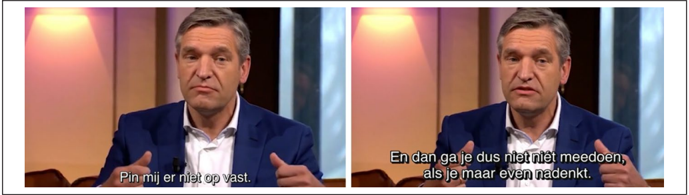
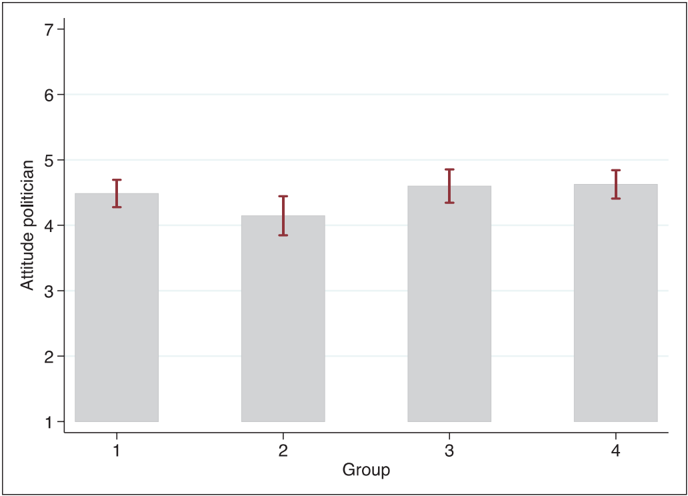
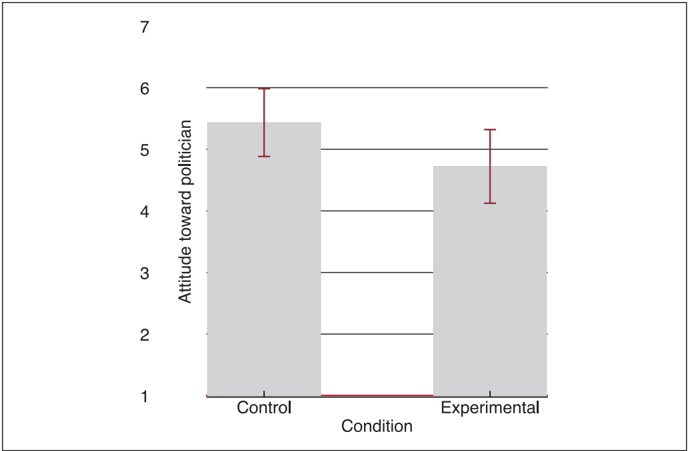
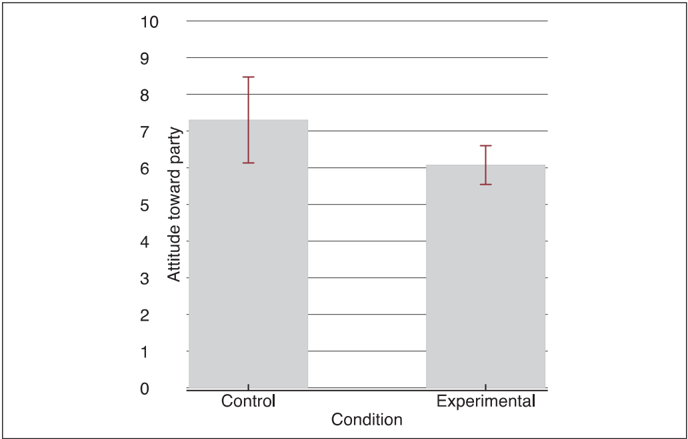
Deepfakes are perceived as a powerful form of disinformation. Although many studies have focused on detecting deepfakes, few have measured their effects on political attitudes, and none have studied microtargeting techniques as an amplifier. We argue that microtargeting techniques can amplify the effects of deepfakes, by enabling malicious political actors to tailor deepfakes to susceptibilities of the receiver. In this study, we have constructed a political deepfake (video and audio), and study its effects on political attitudes in an online experiment ( N = 278). We find that attitudes toward the depicted politician are significantly lower after seeing the deepfake, but the attitudes toward the politician’s party remain similar to the control condition. When we zoom in on the microtargeted group, we see that both the attitudes toward the politician and the attitudes toward his party score significantly lower than the control condition, suggesting that microtargeting techniques can indeed amplify the effects of a deepfake, but for a much smaller subgroup than expected.
Overview
The claims and statistics of this paper haven’t been checked yet.
Free: it reads the open-access text and checks the first 5 claims that cite a source we can check. Create a free account to check every claim.
Integrity signals
Registry
Cites
Statistics
Figures

Verification
Claims the paper makes
The claims and statistics of this paper haven’t been checked yet.
Free: it reads the open-access text and checks the first 5 claims that cite a source we can check. Create a free account to check every claim.
Claims other papers make about this one
Each is checked against this paper’s own text: does it say what the citing paper says it does?
The source backs part of the claim, not all of it — or backs it for a different population, condition or comparison.
In the citing paper
“studies that show that people are poor at recognizing deepfakes and false content online (Dobber et al., 2020; Vaccari and Chadwick, 2020; Köbis et al., 2021; Nightingale and Farid, 2022; Vaccari et al., 2022)”
From On manipulation by emotional AI: UK adults’ views and governance implications (2024) · cites this paper as Dobber et al., 2020
Experimental — accuracy not yet measuredThe source backs part of the claim, not all of it — or backs it for a different population, condition or comparison.
In the citing paper
“However, prior research has largely focused on its potential societal consequences rather than its real-world prevalence.”
From Characterizing AI-Generated Misinformation on Social Media (2025) · cites this paper as Dobber et al. 2021
Experimental — accuracy not yet measuredThe source backs part of the claim, not all of it — or backs it for a different population, condition or comparison.
In the citing paper
“AI-assisted misinformation can spread rapidly on social media and micro-targeting people with deepfakes can influence their attitudes toward politicians (e.g. (23)).”
From The impact of generative artificial intelligence on socioeconomic inequalities and policy making (2024) · cites this paper as [23]
Experimental — accuracy not yet measuredThe source backs part of the claim, not all of it — or backs it for a different population, condition or comparison.
In the citing paper
“These results are based on an experiment with a stimuli set that is much larger than most stimuli sets for the psychology of media effects research38 and deepfake detection33,35,36”
From Human detection of political speech deepfakes across transcripts, audio, and video (2024) · cites this paper as [36]
Experimental — accuracy not yet measuredThe source backs part of the claim, not all of it — or backs it for a different population, condition or comparison.
In the citing paper
“Lip-syncs are easier to detect when there are unnatural or inconsistent lip/mouth movements [20, 30, 7, 28].”
From Human Performance in Deepfake Detection: A Systematic Review (2025) · cites this paper as [30]
Experimental — accuracy not yet measured
10 more claims about this paper
Create a free account to see every claim other papers make about this one.
Self-check
Percentages, sums and reported differences re-computed from the paper’s own numbers.
The self-check needs the paper’s full text.
Citations
Cites
Statistical Power Analysis for the Behavioral Sciences
Muller, K. (1989) · Technometrics · doi:10.1080/00401706.1989.10488618 · Cited by 99,167
Faul, F., Erdfelder, E., Lang, A.-G., & Buchner, A. (2007) · Behavior Research Methods · doi:10.3758/bf03193146 · Cited by 65,971 · cited 1×
“We conducted an a priori power analysis by using G*Power (Faul et al. 2007) with a significance level of α = .05, a moderate effect size of d = .3, and a statistical power of (1 – β ) = 0.80 (Cohen 1988).”
InfluentialProceedings of the National Academy of Sciences of the United States of America
Dowling, J. E., & Wald, G. (2009) · Nutrition Reviews · doi:10.1111/j.1753-4887.1981.tb06752.x · Cited by 17,893
The Elaboration Likelihood Model of Persuasion
Petty, R. E., & Cacioppo, J. T. (1986) · Advances in Experimental Social Psychology · doi:10.1016/s0065-2601(08)60214-2 · Cited by 8,822
JOURNAL OF INTERNATIONAL AFFAIRS
(2023) · JOURNAL OF INTERNATIONAL AFFAIRS · doi:10.58710/jia · Cited by 4,586
The Origins of Totalitarianism
Shields, C. V., & Arendt, H. (1951) · The Western Political Quarterly · doi:10.2307/442863 · Cited by 4,425
MesoNet: a Compact Facial Video Forgery Detection Network
Afchar, D., Nozick, V., Yamagishi, J., & Echizen, I. (2018) · 2018 IEEE International Workshop on Information Forensics and Security (WIFS) · doi:10.1109/wifs.2018.8630761 · Cited by 1,872
A New Era of Minimal Effects? The Changing Foundations of Political Communication
Bennett, W. L., & Iyengar, S. (2008) · Journal of Communication · doi:10.1111/j.1460-2466.2008.00410.x · Cited by 1,558 · cited 1×
“For now, the limited, but significant main effect of our imperfect deepfake on the attitudes of the general sample is more or less aligned with the idea of “minimal effects” of political communication (see Bennett and Iyengar 2008).”
The disinformation order: Disruptive communication and the decline of democratic institutions
Bennett, W. L., & Livingston, S. (2018) · European Journal of Communication · doi:10.1177/0267323118760317 · Cited by 1,552 · cited 1×
“This can raise questions about the legitimacy of democratic institutions (Bennett and Livingston 2018), the quality of public debate (Xia et al. 2019), the power of citizens (Flynn et al. 2017), and the power of malicious political actors (Bradshaw and Howard 2018).”
Tucker, J. A., Guess, A., Barbera, P., Vaccari, C., Siegel, A., Sanovich, S., Stukal, D., & Nyhan, B. (2018) · doi:10.2139/ssrn.3144139 · Cited by 1,222 · cited 1×
“Literature about disinformation is growing rapidly, but there is still a “substantive research gap” about its effects (Tucker et al. 2018: 57).”
Cited by
Items 201–261 of 261
Awodiji, T. O., & Owoyemi, J. (2024) · IARJSET · doi:10.17148/iarjset.2024.114109 · Cited by 1
What Are Platforms For? Profit, Persuasion, and (Dis)Information
Barnard, S. R. (2024) · Oxford University Press eBooks · doi:10.1093/oso/9780197570272.003.0004
Power and Problematic Information in an Era of Hybrid Media
Barnard, S. R. (2024) · Oxford University Press eBooks · doi:10.1093/oso/9780197570272.003.0002 · Cited by 1
Barnard, S. R. (2024) · Oxford University Press eBooks · doi:10.1093/oso/9780197570272.002.0004
Barnard, S. R. (2024) · Oxford University Press eBooks · doi:10.1093/oso/9780197570272.002.0009
We Are Trump’s Digital Army! Capital and Practices of Manipulation on The_Donald
Barnard, S. R. (2024) · Oxford University Press eBooks · doi:10.1093/oso/9780197570272.003.0006
Barnard, S. R. (2024) · Oxford University Press eBooks · doi:10.1093/oso/9780197570272.003.0003
Barnard, S. R. (2024) · Oxford University Press eBooks · doi:10.1093/oso/9780197570272.002.0007
Introduction: The Mediatized Politics of Manipulation
Barnard, S. R. (2024) · Oxford University Press eBooks · doi:10.1093/oso/9780197570272.003.0001
Hacking Meaning and Influence in the (Dis)Information Age: The Acosta “Assault” Case
Barnard, S. R. (2024) · Oxford University Press eBooks · doi:10.1093/oso/9780197570272.003.0005
Trouble with Power, Practice, and Information in the Hybrid Media System
Barnard, S. R. (2024) · Oxford University Press eBooks · doi:10.1093/oso/9780197570272.003.0007
Barnard, S. R. (2024) · Oxford University Press eBooks · doi:10.1093/oso/9780197570272.002.0005
Višnjić, D. (2025) · Communications in computer and information science · doi:10.1007/978-3-031-79086-7_7 · Cited by 4
The Impact of Social Media in Shaping Political Discourse
Puri, N. (2025) · International Journal for Research Publication and Seminars · doi:10.36676/jrps.v16.i1.1628 · Cited by 9
Stancea, A., & Boţan, M. (2025) · Communications · doi:10.1515/commun-2024-0038 · Cited by 2
Media Literacy in Times of Advanced GenAI: New Challenges and Perspectives
Shalevska, E. (2025) · IGI Global eBooks · doi:10.4018/979-8-3693-9601-8.ch003
Hoffmann, C. P., Bitton, D. B., & Godulla, A. (2025) · Social Science Computer Review · doi:10.1177/08944393251354977 · Cited by 6
“However, it also speaks to concerns that microtargeting deepfakes — for example, to those already low in institutional trust — may increase their cynicism (Dobber et al., 2020).”
Understanding the Effects of Visual Misinformation: A Systematic Review of 10 Years (2014–2024)
Liu, A. K. C., & Kuru, O. (2025) · Mass Communication & Society · doi:10.1080/15205436.2025.2549716 · Cited by 2
“In particular, microtargeted recipients of deepfake videos who have voted for the depicted politicians showed additional discomfort (Dobber et al., 2021).”
InfluentialLoewenstein, S. (2025) · Актуальные проблемы экономики и права · doi:10.21202/2782-2923.2025.3.635-674
Lee, S. S., Jang, T.-Y., & Kwon, Y.-S. (2025) · SSRN Electronic Journal · doi:10.2139/ssrn.5572706
YAPAY ZEKÂ İLE SAHTE HABER ÜRETİMİNİN SOSYAL MEDYADAKİ GÖRÜNÜMÜ: TEYİT.ORG ÖRNEĞİ
Yıldız, İ. (2025) · Çukurova Üniversitesi Sosyal Bilimler Enstitüsü Dergisi · doi:10.35379/cusosbil.1696022 · Cited by 1
GERÇEK Mİ, KURGU MU? DEEPFAKE TEKNOLOJİSİ VE DEZENFORMASYON ÇAĞI
Demir, M. (2025) · Dicle Üniversitesi Sosyal Bilimler Enstitüsü Dergisi · doi:10.15182/diclesosbed.1602837
Biały, F., & Gibson, R. (2025) · Parliamentary Affairs · doi:10.1093/pa/gsaf012 · Cited by 1
Lu, X., Jin, Y., & Vijaykumar, S. (2025) · Crisis and Risk Communication · doi:10.1080/29986907.2025.2580989
Pereira, J. S., & Silva, J. G. E. (2025) · Springer eBooks · doi:10.1007/978-3-032-06918-4_61-1
Kober, S. E. (2025) · Lecture notes in computer science · doi:10.1007/978-3-032-11108-1_13
Parodias Deepfakes, Espectáculo Tecnológico y Catarsis Digital
Rebollo, M. A. P., Iriarte, J. B., & Vicent-Ibáñez, M. (2025) · VISUAL REVIEW International Visual Culture Review / Revista Internacional de Cultura Visual · doi:10.62161/revvisual.v17.5902
Digital Media and Disinformation in Postcolonial Africa: Human Rights Implications
Taleb, W. (2025) · IGI Global eBooks · doi:10.4018/979-8-3373-3685-5.ch004
Artificial Intelligence and Misinformation, Disinformation, Fake News, and Deepfakes
Cazzamatta, R. (2025) · Wiley eBooks · doi:10.1002/9781394250424.ch16 · Cited by 1
Disrupted Voter Loyalty as a Political Marketing Challenge
Erdem, E., & Nasır, S. (2025) · IGI Global eBooks · doi:10.4018/979-8-3373-4089-0.ch004
The Effects of AI Deepfake Voices and AI Disclosure in Advertisements on Ad and Brand Responses
Suneej, N., van Reijmersdal, E. A., & Hameleers, M. (2025) · European Advertising Academy · doi:10.1007/978-3-658-49114-7_4
Disinformation and its Sociopolitical Context
Farooq, A., & de Vreese, C. H. (2026) · Springer eBooks · doi:10.1007/978-3-032-00480-2_1 · Cited by 1
Subjective Responses of Gynephilic Men and Women to Real versus Artificial Female Nudes
Zakreski, E., Marečková, A., Vaníček, O., Hůla, M., Klapilová, K., Lindová, J., & Pfaus, J. G. (2026) · Archives of Sexual Behavior · doi:10.1007/s10508-025-03357-2
Xu, Q., Chen, M., & Lee, Y.-H. (2026) · SSRN Electronic Journal · doi:10.2139/ssrn.6281549
Soroka, S., & Wlezien, C. B. (2026) · Political Communication · doi:10.1080/10584609.2026.2613647 · Cited by 1
“Evolving technologies also facilitate the creation of “deepfakes” – photo and video content that is very difficult to identify as having been manipulated (e.g., Dobber et al., 2021; Vaccari & Chadwick, 2020).”
García-Marín, D., Noain-Sánchez, A., & Martinrey, G. S. (2026) · VISUAL REVIEW International Visual Culture Review / Revista Internacional de Cultura Visual · doi:10.62161/revvisual.v18.6137 · Cited by 1
Digital–Physical Integration in Political Marketing: Bridging the Online and Offline Worlds
Sharma, J. S., & Gulati, S. (2026) · Emerald Group Publishing Limited eBooks · doi:10.1108/978-1-83708-712-920261011
Lies for the greater good? Russian perceptions of the (un)acceptability of disinformation
Kazun, A. (2026) · Zhurnal Sotsiologii i Sotsialnoy Antropologii (The Journal of Sociology and Social Anthropology) · doi:10.31119/jssa.2026.29.1.4
Singh, S., & Ahmed, S. (2026) · Frontiers in Law · doi:10.6000/2817-2302.2026.05.02
Guan, T., Yang, Y., & 郭文蕙 (2026) · The International Journal of Press/Politics · doi:10.1177/19401612261435333
Fransen, L. H. S., Tamboer, S. L., Riet, J. V. ‘., & Kleemans, M. (2026) · Children & Society · doi:10.1111/chso.70052
Hidajat, F. J., & Erlyana, Y. (2026) · International Conference on Current Research in Artificial Intelligence and Data Science (ICCRAIDS) · doi:10.1109/iccraids67816.2026.11519676
“By aligning technical functional requirements with human heuristic limitations, developers can engineer more resilient and inclusive multimedia environments that are capable of withstanding the evolving threats of deepfakes and voice cloning [1], [14], [24], [34].”
Price, proficiency, or permission: assessing platform data access for election research
Lukito, J., & Mimizuka, K. (2026) · Information Communication & Society · doi:10.1080/1369118x.2026.2667921
Cracking Political Deepfakes: An Exploratory Study to Unveil Cues for Detection
Kumar, A., Burtscher, C., & Eckhardt, A. (2026) · Lecture notes in information systems and organisation · doi:10.1007/978-3-032-08486-6_2
Deceptive intentions: AI-propaganda use and reach in the 2024 U.S. Presidential Election
Tiberghien, A., Dalton, J., McLean, W., Joshi, D., & Navarro, J. N. (2026) · International Journal of Police Science & Management · doi:10.1177/14613557261447753
“The need to study AI propaganda is especially urgent during high-stakes events like national elections when public opinion can be swayed and democratic processes under-mined (Dan, 2025; Dobber et al., 2021).”
Evaluating the impact of content warning labels on individuals with prior fringe beliefs
Horne, B. D. (2026) · Telematics and Informatics · doi:10.1016/j.tele.2026.102433
Választási deepfake: szabályozási kérdések, kihívások és alkotmányos dilemmák
Szikora, T. A. (2026) · Iustum Aequum Salutare · doi:10.69695/ias.2026.2.10
Bi, C., & Zhu, Y. (2026) · Cogent Arts and Humanities · doi:10.1080/23311983.2026.2696098
Bhatia, S. (2026) · International Journal of Communication Media and Linguistics · doi:10.64823/ijcml.2601001
“In addition, Dobber et al. [5] found in experiments that a political deepfake might lower attitudes towards the politician without having any effect on attitudes towards his or her party, and that micro-targeting certain groups of respondents exacerbates this effect.”
Journalism in the Shadows: AI Deepfakes, Credibility, and the Fragility of Media Trust
Okocha, M. U. (2026) · Journalism Practice · doi:10.1080/17512786.2026.2719552 · Cited by 1
Fake news et IA. Une analyse des défis et opportunités pour l’agence Maghreb Arabe Presse (MAP)
Idrissi, N. (2026) · Communication technologies et développement · doi:10.4000/16o94
BEKİROĞLU, O., & ŞEN, O. (2026) · Advances in computational intelligence and robotics book series · doi:10.4018/979-8-2600-3965-6.ch004
صدور العدد 11 من المجلة الدولية للعلوم القانونية والاقتصادية والاجتماعية شتنبر 2026
ijlessjournal (2026) · المجلة الدولية للعلوم القانونية ولاقتصادية و الاجتماعية · doi:10.63585/hhti6708
Angelis, C. D. (2026) · Revista de ciencias sociales. · doi:10.61303/0718-3631.v35i57.605
Polarisierung, Radikalisierung & Extremismus
Frischlich, L., Schulze, H., & Rieger, D. (2026) · Springer eBooks · doi:10.1007/978-3-658-46851-4_31-1
Amantya, V. V., Destyanti, A., & Arin, I. A. (2026) · International Conference on ICT for Smart Society (ICISS) · doi:10.1109/iciss71466.2026.11715145
“…audiences may be misled by forged information to make voting choices that serve the interests of the operators behind the deepfakes; another study [25] points out that deepfakes can also erode public trust, disrupt information exchange, interfere with democratic processes, and extend their…”
Generative borders: Manipulated visuals, platform drift, and refugee-policy legitimacy
Tunçalp, D. (2026) · Technology in Society · doi:10.1016/j.techsoc.2026.103579
Trust of Pre-Service Teachers in Government Response to Gen AI Generated Deepfakes
Miralles-Sánchez, P., Ferrer, J. M. C., & López-García, A. (2026) · Education Sciences · doi:10.3390/educsci16101753
Reglamento (UE) 2024/900 sobre transparencia y segmentación de la publicidad política
Martínez, G. P. (2026) · Revista Española de Derecho Europeo · doi:10.37417/rede/num99_2026_3544
Deepfakes and the 2020 US elections: what (did not) happen
Meneses, J. P. (2021) · arXiv · doi:10.48550/arxiv.2101.09092
Metadata
- Authors
- Dobber, T., Metoui, N., Trilling, D., Helberger, N., & de Vreese, C.
- Affiliations
- University of Amsterdam (NL)
- University of Amsterdam, Amsterdam, the Netherlands
- Corresponding author
- Dobber, Tom
- Venue
- The International Journal of Press/Politics
- Publisher
- SAGE Publications
- Published
- 2020-07-25
- Volume
- 26
- Issue
- 1
- Pages
- 69-91
- ISSN
- 1040-1620 (ISSN-L)
- 1940-1612
- 1940-1620
- OpenAlex
- W4248879889
- Cited by
- 256
- References
- 68
- Citations by year
- 2026: 46 · 2025: 66 · 2024: 54 · 2023: 39 · 2022: 28 · 2021: 21 · 2020: 1
- FWCI
- 29.74
- Type
- journal article
- Language
- en
- Open access
- hybrid
- doi.org
- Licence
- cc-by-nc
- creativecommons.org/licenses/by-nc/4.0/ (unspecified)
- journals.sagepub.com/page/policies/text-and-data-mining-license (tdm)
- Locations
- The International Journal of Press/Politics (publishedVersion, cc-by-nc)
- UvA-DARE (University of Amsterdam) (submittedVersion, cc-by-nc)
- Data Archiving and Networked Services (DANS) (submittedVersion, other-oa)
- Topics
- Social Sciences › Sociology and Political Science › Misinformation and Its Impacts
- Social Sciences › Communication › Social Media and Politics
- Social Sciences › Sociology and Political Science › Media Influence and Politics
- Keywords
- deepfakes, microtargeting, political disinformation, political attitudes, attitude change, public opinion
About these checks
Registry, retraction, Cites and statistics results are computed, not judged, with one exception: a printed reference that no index lists is read once by a model before it counts as a citation error. Claims are extracted by a model and kept only when their quote appears verbatim in the text; each cited source is then checked, with a model’s help, for whether it says what the claim relies on. Those verdicts can be wrong — read the claim’s quote and the cited source before relying on one.
Statistics and arithmetic are recomputed, not judged.
Confidence bands are shown only for fields calibrated on our annotated test set. None is calibrated yet, so no band is shown.
What counts as a claim ›How we measure confidence ›How we check this ›
Are you an author, or do you see a problem with this page? Request a review
Data sources
Bibliographic data: Semantic Scholar, OpenAlex, Crossref.
Contains information from the Semantic Scholar Academic Graph Datasets, made available under the ODC Attribution License (ODC-BY 1.0).
Semantic Scholar’s data is described in: Kinney, R., et al. (2023). The Semantic Scholar Open Data Platform. arXiv:2301.10140.
