

Do (Microtargeted) Deepfakes Have Real Effects on Political Attitudes?
Open accessThe DOI matches its Crossref record; 68 of the 68 references it cites were found in a registry or an index.
Abstract
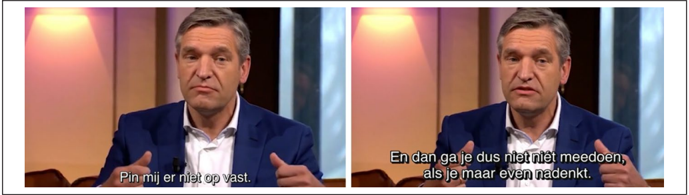
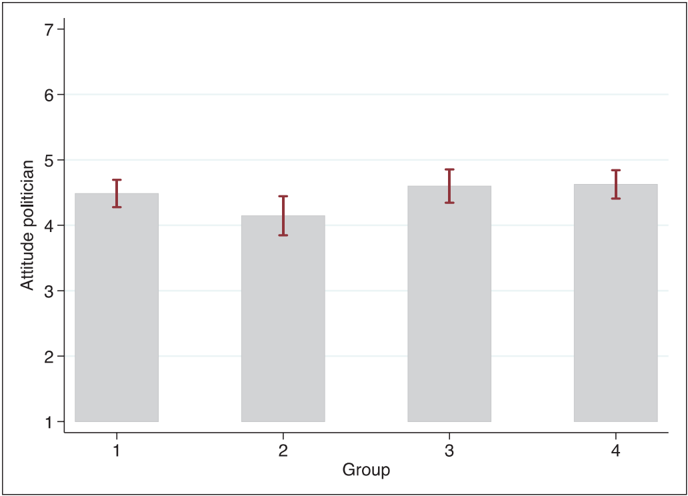
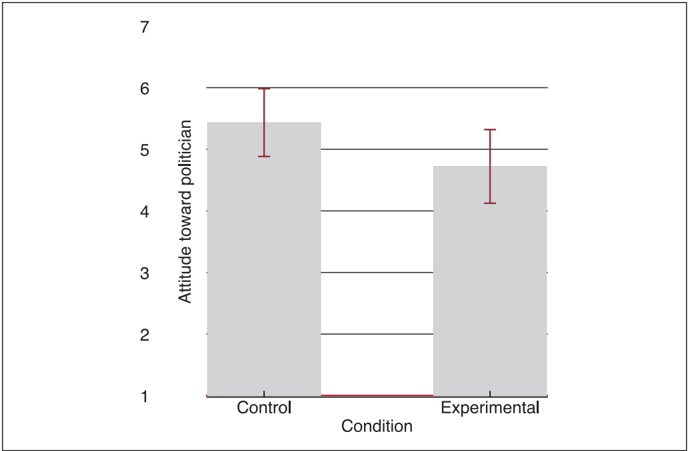
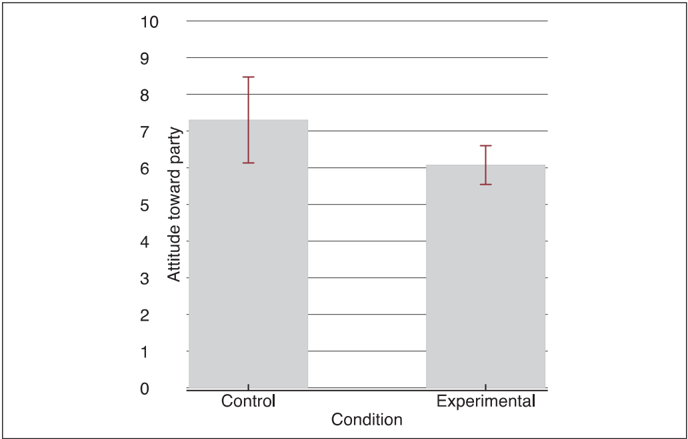
Deepfakes are perceived as a powerful form of disinformation. Although many studies have focused on detecting deepfakes, few have measured their effects on political attitudes, and none have studied microtargeting techniques as an amplifier. We argue that microtargeting techniques can amplify the effects of deepfakes, by enabling malicious political actors to tailor deepfakes to susceptibilities of the receiver. In this study, we have constructed a political deepfake (video and audio), and study its effects on political attitudes in an online experiment ( N = 278). We find that attitudes toward the depicted politician are significantly lower after seeing the deepfake, but the attitudes toward the politician’s party remain similar to the control condition. When we zoom in on the microtargeted group, we see that both the attitudes toward the politician and the attitudes toward his party score significantly lower than the control condition, suggesting that microtargeting techniques can indeed amplify the effects of a deepfake, but for a much smaller subgroup than expected.
Overview
The claims and statistics of this paper haven’t been checked yet.
Free: it reads the open-access text and checks the first 5 claims that cite a source we can check. Create a free account to check every claim.
Integrity signals
Registry
Cites
Statistics
Figures

Verification
Claims the paper makes
The claims and statistics of this paper haven’t been checked yet.
Free: it reads the open-access text and checks the first 5 claims that cite a source we can check. Create a free account to check every claim.
Claims other papers make about this one
Each is checked against this paper’s own text: does it say what the citing paper says it does?
The source backs part of the claim, not all of it — or backs it for a different population, condition or comparison.
In the citing paper
“studies that show that people are poor at recognizing deepfakes and false content online (Dobber et al., 2020; Vaccari and Chadwick, 2020; Köbis et al., 2021; Nightingale and Farid, 2022; Vaccari et al., 2022)”
From On manipulation by emotional AI: UK adults’ views and governance implications (2024) · cites this paper as Dobber et al., 2020
Experimental — accuracy not yet measuredThe source backs part of the claim, not all of it — or backs it for a different population, condition or comparison.
In the citing paper
“However, prior research has largely focused on its potential societal consequences rather than its real-world prevalence.”
From Characterizing AI-Generated Misinformation on Social Media (2025) · cites this paper as Dobber et al. 2021
Experimental — accuracy not yet measuredThe source backs part of the claim, not all of it — or backs it for a different population, condition or comparison.
In the citing paper
“AI-assisted misinformation can spread rapidly on social media and micro-targeting people with deepfakes can influence their attitudes toward politicians (e.g. (23)).”
From The impact of generative artificial intelligence on socioeconomic inequalities and policy making (2024) · cites this paper as [23]
Experimental — accuracy not yet measuredThe source backs part of the claim, not all of it — or backs it for a different population, condition or comparison.
In the citing paper
“These results are based on an experiment with a stimuli set that is much larger than most stimuli sets for the psychology of media effects research38 and deepfake detection33,35,36”
From Human detection of political speech deepfakes across transcripts, audio, and video (2024) · cites this paper as [36]
Experimental — accuracy not yet measuredThe source backs part of the claim, not all of it — or backs it for a different population, condition or comparison.
In the citing paper
“Lip-syncs are easier to detect when there are unnatural or inconsistent lip/mouth movements [20, 30, 7, 28].”
From Human Performance in Deepfake Detection: A Systematic Review (2025) · cites this paper as [30]
Experimental — accuracy not yet measured
10 more claims about this paper
Create a free account to see every claim other papers make about this one.
Self-check
Percentages, sums and reported differences re-computed from the paper’s own numbers.
The self-check needs the paper’s full text.
Citations
Cites
Statistical Power Analysis for the Behavioral Sciences
Muller, K. (1989) · Technometrics · doi:10.1080/00401706.1989.10488618 · Cited by 99,167
Faul, F., Erdfelder, E., Lang, A.-G., & Buchner, A. (2007) · Behavior Research Methods · doi:10.3758/bf03193146 · Cited by 65,971 · cited 1×
“We conducted an a priori power analysis by using G*Power (Faul et al. 2007) with a significance level of α = .05, a moderate effect size of d = .3, and a statistical power of (1 – β ) = 0.80 (Cohen 1988).”
InfluentialProceedings of the National Academy of Sciences of the United States of America
Dowling, J. E., & Wald, G. (2009) · Nutrition Reviews · doi:10.1111/j.1753-4887.1981.tb06752.x · Cited by 17,893
The Elaboration Likelihood Model of Persuasion
Petty, R. E., & Cacioppo, J. T. (1986) · Advances in Experimental Social Psychology · doi:10.1016/s0065-2601(08)60214-2 · Cited by 8,822
JOURNAL OF INTERNATIONAL AFFAIRS
(2023) · JOURNAL OF INTERNATIONAL AFFAIRS · doi:10.58710/jia · Cited by 4,586
The Origins of Totalitarianism
Shields, C. V., & Arendt, H. (1951) · The Western Political Quarterly · doi:10.2307/442863 · Cited by 4,425
MesoNet: a Compact Facial Video Forgery Detection Network
Afchar, D., Nozick, V., Yamagishi, J., & Echizen, I. (2018) · 2018 IEEE International Workshop on Information Forensics and Security (WIFS) · doi:10.1109/wifs.2018.8630761 · Cited by 1,872
A New Era of Minimal Effects? The Changing Foundations of Political Communication
Bennett, W. L., & Iyengar, S. (2008) · Journal of Communication · doi:10.1111/j.1460-2466.2008.00410.x · Cited by 1,558 · cited 1×
“For now, the limited, but significant main effect of our imperfect deepfake on the attitudes of the general sample is more or less aligned with the idea of “minimal effects” of political communication (see Bennett and Iyengar 2008).”
The disinformation order: Disruptive communication and the decline of democratic institutions
Bennett, W. L., & Livingston, S. (2018) · European Journal of Communication · doi:10.1177/0267323118760317 · Cited by 1,552 · cited 1×
“This can raise questions about the legitimacy of democratic institutions (Bennett and Livingston 2018), the quality of public debate (Xia et al. 2019), the power of citizens (Flynn et al. 2017), and the power of malicious political actors (Bradshaw and Howard 2018).”
Tucker, J. A., Guess, A., Barbera, P., Vaccari, C., Siegel, A., Sanovich, S., Stukal, D., & Nyhan, B. (2018) · doi:10.2139/ssrn.3144139 · Cited by 1,222 · cited 1×
“Literature about disinformation is growing rapidly, but there is still a “substantive research gap” about its effects (Tucker et al. 2018: 57).”
Cited by
Masood, M., Nawaz, M., Malik, K. M., Javed, A., Irtaza, A., & Malik, H. (2023) · Applied Intelligence · doi:10.1007/s10489-022-03766-z · Cited by 543
“Deepfake videos generated by hired trolls are the latest weapon in the ongoing fabricated news war that can bring a more devastating effect on society [26].”
BackgroundThe impact of generative artificial intelligence on socioeconomic inequalities and policy making
Capraro, V., Lentsch, A., Acemoglu, D., Akgun, S., Akhmedova, A., Bilancini, E., Bonnefon, J.-F., Brañas-Garza, P., Butera, L., Douglas, K. M., et al. (2024) · PNAS Nexus · doi:10.1093/pnasnexus/pgae191 · Cited by 371
“AI-assisted misinformation can spread rapidly on social media and micro-targeting people with deepfakes can influence their attitudes toward politicians (e.g. (23)).”
Deepfake detection by human crowds, machines, and machine-informed crowds
Groh, M., Epstein, Z., Firestone, C., & Picard, R. (2022) · Proceedings of the National Academy of Sciences · doi:10.1073/pnas.2110013119 · Cited by 248
The Social Impact of Deepfakes
Hancock, J. T., & Bailenson, J. N. (2021) · Cyberpsychology, Behavior, and Social Networking · doi:10.1089/cyber.2021.29208.jth · Cited by 214
“20 Even more worryingly, given social media’s ability to target content to specific political or demographic groups, the study revealed that microtargeting the deepfake to groups most likely to be offended (e.g., Christians) amplified this effect relative to sharing the deepfake with a general…”
Fooled twice: People cannot detect deepfakes but think they can
Köbis, N. C., Doležalová, B., & Soraperra, I. (2021) · iScience · doi:10.1016/j.isci.2021.103364 · Cited by 193
Visual Mis- and Disinformation, Social Media, and Democracy
Dan, V., Paris, B., Donovan, J., Hameleers, M., Roozenbeek, J., van der Linden, S., & von Sikorski, C. (2021) · Journalism & Mass Communication Quarterly · doi:10.1177/10776990211035395 · Cited by 144
“…and Debunking Falsehoods: State-of-the-Art and a Future Research Agenda Techniques to alter, manipulate, or doctor images or even videos are getting more sophisticated, widespread, and accessible to nonprofessional communicators and politicians (e.g., Dobber et al., 2021; Paris & Donovan, 2020).”
A Survey on the Detection and Impacts of Deepfakes in Visual, Audio, and Textual Formats
Mubarak, R., Alsboui, T., Alshaikh, O., Inuwa-Dutse, I., Khan, S., & Parkinson, S. (2023) · IEEE Access · doi:10.1109/access.2023.3344653 · Cited by 132
“…on the possible effects of deepfakes on journalism within controlled environments, illustrating that exposure to such manipulated content can influence the perceptions of news outlets and political leaders, for example, the following studies present work on this topic: [20], [102], [111].”
BackgroundPawelec, M. (2022) · Digital Society · doi:10.1007/s44206-022-00010-6 · Cited by 131
“Accordingly, in a rare experimental study on deepfakes’ effect on political attitudes, less than fifteen percent of participants doubted the authenticity of a deepfake video of a politician shown to them (Dobber et al., 2020: 78).”
BackgroundChadwick, A., & Stanyer, J. (2021) · Communication Theory · doi:10.1093/ct/qtab019 · Cited by 185
The (minimal) persuasive advantage of political video over text
Wittenberg, C., Tappin, B. M., Berinsky, A. J., & Rand, D. G. (2021) · Proceedings of the National Academy of Sciences · doi:10.1073/pnas.2114388118 · Cited by 114
Visual disinformation in a digital age: A literature synthesis and research agenda
Weikmann, T., & Lecheler, S. K. (2022) · New Media & Society · doi:10.1177/14614448221141648 · Cited by 191
“While deepfakes have been taken as an opportunity to test the effects of manipulated visuals on citizens (e.g. Dobber et al., 2021; Lee and Shin, 2021; Vaccari and Chadwick, 2020), research on photoshopped images remains limited.”
BackgroundHameleers, M. (2023) · Communication Theory · doi:10.1093/ct/qtac021 · Cited by 108
“Although deepfakes (still) require substantial resources and effort to create (see Dobber et al., 2020), there are also less re-sourceful techniques that can be used to manipulate audio-visual content—a technique of audio-visual manipulation referred to as cheapfakes (Paris & Donovan, 2020).”
The Rise of Deepfakes: A Conceptual Framework and Research Agenda for Marketing
Whittaker, L., Letheren, K., & Mulcahy, R. (2021) · Australasian Marketing Journal · doi:10.1177/1839334921999479 · Cited by 98
The detection of political deepfakes
Appel, M., & Prietzel, F. (2022) · Journal of Computer-Mediated Communication · doi:10.1093/jcmc/zmac008 · Cited by 95
“They are further in line with the assumption that deepfakes shape recipients’ thoughts and behavior (Dobber et al., 2021; Hwang et al., 2021) and that deepfakes may warrant information in a fake news article (Hwang et.”
InfluentialDeepfakes and scientific knowledge dissemination
Doss, C., Mondschein, J., Shu, D., Wolfson, T., Kopecky, D., Fitton-Kane, V. A., Bush, L., & Tucker, C. (2023) · Scientific Reports · doi:10.1038/s41598-023-39944-3 · Cited by 90
“These vulnerabilities to climate change-related deepfakes are similar to those seen in politically oriented deepfakes focused on elections and context-agnostic deepfakes 41,51,52 , indicating that vulnerabilities to deepfakes may be consistent across contexts.”
BackgroundNegative Consequences of Informing Voters about Deepfakes: Evidence from Two Survey Experiments
Ternovski, J., Kalla, J., & Aronow, P. (2022) · Journal of Online Trust and Safety · doi:10.54501/jots.v1i2.28 · Cited by 90
Lee, J., & Shin, S. Y. (2022) · Media Psychology · doi:10.1080/15213269.2021.2007489 · Cited by 89
“Furthermore, a recent study found that a microtargeted deepfake discredited attitudes toward the manipulated politician (Dobber, Metoui, Trilling, Helberger, & de Vreese, 2020).”
BackgroundQuantifying the potential persuasive returns to political microtargeting
Tappin, B. M., Wittenberg, C., Hewitt, L. B., Berinsky, A. J., & Rand, D. G. (2023) · Proceedings of the National Academy of Sciences · doi:10.1073/pnas.2216261120 · Cited by 83
“…studies investigate treatment effect heterogeneity across multiple political messages, they typically do not distinguish the effectiveness of campaigns that employ microtargeting from those that employ other data-driven messaging strategies, such as the single- best-message approach (24, 42–44).”
Whittaker, L., Mulcahy, R. F., Letheren, K., Kietzmann, J., & Russell‐Bennett, R. (2023) · Technovation · doi:10.1016/j.technovation.2023.102784 · Cited by 106
Godulla, A., Hoffmann, C. P., & Seibert, D. (2021) · Studies in Communication and Media · doi:10.5771/2192-4007-2021-1-72 · Cited by 75
Human detection of political speech deepfakes across transcripts, audio, and video
Groh, M., Sankaranarayanan, A., Singh, N., Kim, D. Y., Lippman, A., & Picard, R. (2024) · Nature Communications · doi:10.1038/s41467-024-51998-z · Cited by 89
“I provide a range of comments below and also extend on my concerns above.”
Digital Resilience Through Training Protocols: Learning To Identify Fake News On Social Media
Soetekouw, L., & Angelopoulos, S. P. (2022) · Information Systems Frontiers · doi:10.1007/s10796-021-10240-7 · Cited by 110
“Previous research has emphasized that deepfakes have the potential to affect attitudes and, especially due to the rapid developments in terms of quality and ease of fabrication, should be expected to have more impact in the future (Dobber et al., 2021).”
InfluentialThe (Un)Intended Consequences of Emphasizing the Threats of Mis- and Disinformation
Hameleers, M. (2023) · Media and Communication · doi:10.17645/mac.v11i2.6301 · Cited by 69
Hameleers, M., van der Meer, T. G. L. A., & Dobber, T. (2022) · Social Media + Society · doi:10.1177/20563051221116346 · Cited by 67
“Deepfakes are strategically crafted and targeted to harm and attack the depicted actor, for example, by making them express pro-vocative, conflicting, or highly implausible claims (e.g., Dobber et al., 2020).”
InfluentialSelf-citationAn Agenda for Studying Credibility Perceptions of Visual Misinformation
Peng, Y., Lu, Y., & Shen, C. (2023) · Political Communication · doi:10.1080/10584609.2023.2175398 · Cited by 112
Conjecturing Fearful Futures: Journalistic Discourses on Deepfakes
Wahl-Jorgensen, K., & Carlson, M. (2021) · Journalism Practice · doi:10.1080/17512786.2021.1908838 · Cited by 66
Shin, S. Y., & Lee, J. (2022) · Digital Journalism · doi:10.1080/21670811.2022.2026797 · Cited by 94
Ahmad, P. N., Shah, A. M., & Lee, K. Y. (2023) · Healthcare · doi:10.3390/healthcare11091268 · Cited by 77
Hameleers, M., Humprecht, E., Möller, J. E., & Lühring, J. (2021) · Information Communication & Society · doi:10.1080/1369118x.2021.2021270 · Cited by 65
“, Hameleers & van der Meer, 2020), trigger uncivil responses (Barfar, 2019), affect political perceptions (Dobber et al., 2020), or decrease trust in the media and news environment (Vaccari & Chadwick, 2020).”
Hameleers, M., van der Meer, T. G. L. A., & Dobber, T. (2023) · Computers in Human Behavior · doi:10.1016/j.chb.2023.108096 · Cited by 97
Self-citationWeikmann, T., & Lecheler, S. (2024) · Digital Journalism · doi:10.1080/21670811.2023.2194665 · Cited by 49
“…debates, recent studies have provided important insights into their potential effects in experimental settings, showing that exposure to deepfakes can impact attitudes towards news media and politicians (e.g., Dobber et al. 2021; Hameleers, van der Meer, and Dobber 2022; Vaccari and Chadwick 2020).”
Li, M., & Wan, Y. (2023) · Internet Research · doi:10.1108/intr-07-2022-0561 · Cited by 66
Using deepfakes for experiments in the social sciences - A pilot study
Eberl, A., Kühn, J., & Wolbring, T. (2022) · Frontiers in Sociology · doi:10.3389/fsoc.2022.907199 · Cited by 48
Park, S., & Nan, X. (2026) · AI & SOCIETY · doi:10.1007/s00146-025-02620-3 · Cited by 58
“These highly realistic fabrica-tions have been increasingly used in disinformation cam-paigns, particularly targeting political figures (Westerlund 2019), raising concerns about their impact on public perception and trust (Dobber et al. 2021; Vaccari and Chadwick 2020; Verma 2024).”
They Would Never Say Anything Like This! Reasons To Doubt Political Deepfakes
Hameleers, M., van der Meer, T. G. L. A., & Dobber, T. (2024) · European Journal of Communication · doi:10.1177/02673231231184703 · Cited by 47
“Deepfakes can technically be understood as synthetic videos in which real actors (i.e., politicians, celebrities) are made to express or perform inauthentic things (e.g., Dobber et al., 2020; Paris and Donovan, 2020; Vaccari and Chadwick, 2020).”
BackgroundMethodInfluentialSelf-citationProblematising reality: the promises and perils of synthetic media
Kalpokas, I. (2020) · SN Social Sciences · doi:10.1007/s43545-020-00010-8 · Cited by 55
Lu, H., & Chu, H. (2023) · Computers in Human Behavior · doi:10.1016/j.chb.2023.107761 · Cited by 53
Deepfakes: Awareness, Concerns, and Platform Accountability
Cochran, J. D., & Napshin, S. A. (2021) · Cyberpsychology, Behavior, and Social Networking · doi:10.1089/cyber.2020.0100 · Cited by 43
Artificial Intelligence and Political Deepfakes: Shaping Citizen Perceptions Through Misinformation
Momeni, M. (2024) · Journal of Creative Communications · doi:10.1177/09732586241277335 · Cited by 83
“This perspective supports the idea that deepfakes can influence the behaviours of their audiences (Dobber et al., 2021; Hwang et al., 2021).”
Vasist, P. N., & Krishnan, S. (2022) · Internet Research · doi:10.1108/intr-06-2022-0465 · Cited by 49
After Deception: How Falling for a Deepfake Affects the Way We See, Hear, and Experience Media
Weikmann, T., Greber, H., & Nikolaou, A. (2024) · The International Journal of Press/Politics · doi:10.1177/19401612241233539 · Cited by 72
“Experimental studies confirm that deepfakes can be deceptive and may impact attitudes toward news on social media as well as toward political actors (Dobber et al. 2021; Lewis et al. 2022; Vaccari and Chadwick 2020).”
Influential”It Matches My Worldview”: Examining Perceptions and Attitudes Around Fake Videos
Shahid, F., Kamath, S., Sidotam, A., Jiang, V., Batino, A., & Vashistha, A. (2022) · CHI Conference on Human Factors in Computing Systems · doi:10.1145/3491102.3517646 · Cited by 68
“For example, scholars have examined human accuracy in spotting deepfake videos [17, 61], the harms they cause to individuals and society [34, 35, 55, 58, 68, 104], and people’s concerns around the discovery and propagation of deepfakes [3, 4, 18, 30, 111].”
BackgroundTernovski, J., Kalla, J., & Aronow, P. M. (2021) · doi:10.31219/osf.io/dta97 · Cited by 37
Disinformation, Misinformation, and Fake News
Lecheler, S. K., & Egelhofer, J. L. (2022) · Routledge eBooks · doi:10.4324/9781003111474-4 · Cited by 63
Deepfakes: evolution and trends
Gil, R., Virgili‐Gomà, J., López, J. M., & García, R. (2023) · Soft Computing · doi:10.1007/s00500-023-08605-y · Cited by 50
Jin, X., Zhang, Z., Gao, B., Gao, S., Zhou, W., Yu, N., & Wang, G. (2023) · New Media & Society · doi:10.1177/14614448231199664 · Cited by 55
“Therefore, deepfakes that spread rumors, blatantly false information, or malicious attacks can profoundly discredit individuals, and even nations (Dobber et al., 2021).”
On manipulation by emotional AI: UK adults’ views and governance implications
Bakir, V., Laffer, A., McStay, A., Miranda, D., & Urquhart, L. (2024) · Frontiers in Sociology · doi:10.3389/fsoc.2024.1339834 · Cited by 34
Cheap Versus Deep Manipulation: The Effects of Cheapfakes Versus Deepfakes in a Political Setting
Hameleers, M. (2024) · International Journal of Public Opinion Research · doi:10.1093/ijpor/edae004 · Cited by 59
Political Deepfakes Are As Credible As Other Fake Media And (Sometimes) Real Media
Barari, S., Lucas, C., & Munger, K. (2021) · doi:10.31219/osf.io/cdfh3 · Cited by 51
“Our study contributes to a growing body of research on manipulated video media (Vaccari and Chadwick, 2020; Wittenberg et al., 2020; Dobber et al., 2020; Ternovski, Kalla and Aronow, 2021), which, taken together, cast doubt on the fear that deepfakes themselves will directly deceive the public of false events on a mas…”
BackgroundRegulating Deep Fakes in the Artificial Intelligence Act
Łabuz, M. (2023) · Applied Cybersecurity & Internet Governance · doi:10.60097/acig/162856 · Cited by 29
Powers, G., Johnson, J. P., & Killian, G. (2023) · Journal of Interactive Advertising · doi:10.1080/15252019.2023.2260399 · Cited by 42
“Dobber et al. (2021) found negative direct effects from synthetic video on attitude toward the politician.”
BackgroundDeepfakes in the context of AI inequalities: analysing disparities in knowledge and attitudes
Bitton, D. B., Hoffmann, C. P., & Godulla, A. (2024) · Information Communication & Society · doi:10.1080/1369118x.2024.2420037 · Cited by 41
“Also, most previous studies have focused on risks associated with deepfakes, for example in the political domain (Dobber et al., 2020; Hamel-eers et al., 2023; Vaccari & Chadwick, 2020), with few taking a broader view and examining both positive and negative attitudes.”
Arcos, R., Barrio, M. G., Arribas, C. M., & Cardarilli, M. (2022) · Open Research Europe · doi:10.12688/openreseurope.14088.1 · Cited by 41
Zmigrod, L., Burnell, R., & Hameleers, M. (2023) · European Psychologist · doi:10.1027/1016-9040/a000498 · Cited by 34
Testing theories of political persuasion using AI
Argyle, L. P., Busby, E. C., Gubler, J. R., Lyman, A., Olcott, J., Pond, J., & Wingate, D. (2025) · Proceedings of the National Academy of Sciences · doi:10.1073/pnas.2412815122 · Cited by 53
Purposes, Principles, and Difficulties of Fact-checking in Ibero-America: Journalists’ Perceptions
Rodríguez-Pérez, C., Seibt, T., Rosa, R. M., Rojano, F. J. P., & Peinado, S. C. (2022) · Journalism Practice · doi:10.1080/17512786.2022.2124434 · Cited by 35
“…digital tools that allows fact-checkers to identify visual misinformation and disinformation in multimedia content (Thomson et al. 2020), especially given that the possible e ff ects of deepfakes on attitudes and social behaviors are already known (Dobber et al. 2021; Vaccari and Chadwick 2020).”
BackgroundTowards Understanding Perceptual Differences between Genuine and Face-Swapped Videos
Wöhler, L., Zembaty, M., Castillo, S., & Magnor, M. (2021) · Proceedings of the 2021 CHI Conference on Human Factors in Computing Systems · doi:10.1145/3411764.3445627 · Cited by 24
Embracing deepfakes and AI‐generated images in neuroscience research
Becker, C., & Laycock, R. (2023) · European Journal of Neuroscience · doi:10.1111/ejn.16052 · Cited by 32
“Indeed, research has shown that political deepfakes can increase negative views of a politician (Dobber et al., 2021), even when the viewer recognises the media is faked (Vaccari & Chadwick, 2020).”
BackgroundLee, J., & Hameleers, M. (2024) · Media Psychology · doi:10.1080/15213269.2024.2401539 · Cited by 27
“…research further shows that deepfake exposure in the political realm can reduce support for a depicted political actor when it is targeted to vulnerable recipients (Dobber et al., 2020), while it can decrease trust in the digital media ecology across the board (Vaccari & Chadwick, 2020).”
Deepfake detection with and without content warnings
Lewis, A., Vu, P., Duch, R. M., & Chowdhury, A. (2023) · Royal Society Open Science · doi:10.1098/rsos.231214 · Cited by 51
“Studying how deepfakes may be deployed by political operatives to undermine their opponents, Dobber and co-authors [14] find that deepfakes that are in line with individuals ’ worldviews are both likely to be perceived as genuine, and also negatively affect respondents ’ perceptions of the…”
BackgroundThe impact of generative artificial intelligence on socioeconomic inequalities and policy makingPreprint
Capraro, V., Lentsch, A., Acemoğlu, D., Akgün, S., Akhmedova, A., Bilancini, E., Bonnefon, J., Brañas‐Garza, P., Butera, L., Douglas, K. M., et al. (2023) · PsyArXiv (OSF Preprints) · doi:10.31234/osf.io/6fd2y · Cited by 48
Fooled twice – people cannot detect deepfakes but think they can
Köbis, N., Doležalová, B., & Soraperra, I. (2021) · doi:10.2139/ssrn.3832978 · Cited by 194
Dan, V. (2025) · The International Journal of Press/Politics · doi:10.1177/19401612251317766 · Cited by 50
“Where past studies had to rely on “imperfect” stimuli (Dobber et al. 2021: 85), we created ours with the help of a video company and professional actors.”
Consumer Engagement: Exploring Deepfake Applications in Consumer Marketing Communication
Salam, M. A., Rayun, S. M. N., Islam, W., Hasan, R., Firmansyah, E. A., & Kalinaki, K. (2024) · Advances in information security, privacy, and ethics book series · doi:10.4018/979-8-3693-5298-4.ch020 · Cited by 23
Xu, Z., Wen, X., Zhong, G., & Fang, Q. (2025) · Social Network Analysis and Mining · doi:10.1007/s13278-025-01445-8 · Cited by 35
“Individuals with pre-existing attitudes aligning with the messages in Deepfake news articles are more susceptible to believing and sharing such content (Dobber 2020).”
Ng, Y.-L. (2023) · Current Psychology · doi:10.1007/s12144-022-03621-x · Cited by 19
“Empirical research has shown that exposure to deceptive deepfake videos would cause negative attitudinal consequences towards the deepfake targeted politicians (Dobber et al., 2021), generate a negative attitude towards deepfake videos and lower sharing intention on social media (Iacobucci et al.”
BackgroundResultInfluentialKaate, I., Salminen, J. O., Santos, J. M., Jung, S., Almerekhi, H., & Jansen, B. J. J. (2023) · Computers in Human Behavior Artificial Humans · doi:10.1016/j.chbah.2023.100031 · Cited by 30
Enhancing Coherence and Diversity in Multi-class Slogan Generation Systems
Ahmad, P. N., Liu, Y., Ullah, I., & Shabaz, M. (2024) · ACM Transactions on Asian and Low-Resource Language Information Processing · doi:10.1145/3637551 · Cited by 23
“Machine learning and data mining algorithms work best with lots of labeled data.”
ProST: spotting propaganda span and technique classification in news articles
Ahmad, P. N., Shah, A. M., Guo, J., & Liu, Y. (2025) · Aslib Journal of Information Management · doi:10.1108/ajim-08-2024-0660 · Cited by 22
Human Performance in Deepfake Detection: A Systematic Review
Somoray, K., Miller, D. J., & Holmes, M. (2025) · Human Behavior and Emerging Technologies · doi:10.1155/hbe2/1833228 · Cited by 19
KARAKOÇ, E., & ZEYBEK, B. (2022) · Öneri Dergisi · doi:10.14783/maruoneri.908542 · Cited by 24
What You See Is Not What You Know: Studying Deception in Deepfake Video Manipulation
Allen, C., Payne, B. R., Abegaz, T. T., & Robertson, C. L. (2023) · Journal of Cybersecurity Education Research and Practice · doi:10.32727/8.2023.25 · Cited by 19
Bakir, V., & McStay, A. (2022) · Springer eBooks · doi:10.1007/978-3-031-13551-4 · Cited by 38
Deepfakes: Vehicles for Radicalization, Not Persuasion
Nieweglowska, M., Stellato, C., & Sloman, S. A. (2023) · Current Directions in Psychological Science · doi:10.1177/09637214231161321 · Cited by 16
“More to the point, deepfakes have been shown to radicalize people against the opposition (Dobber et al., 2021).”
BackgroundAdjusting news accuracy perceptions after deepfakes exposure: Evidence from a non-Western context
Ahmed, S., Wang, Y., & Bee, A. W. T. (2023) · Telematics and Informatics · doi:10.1016/j.tele.2023.102047 · Cited by 22
Neyazi, T. A., Nadaf, A. H., Tan, K. E., & Schroeder, R. (2024) · Government Information Quarterly · doi:10.1016/j.giq.2024.101980 · Cited by 29
Deepfakes and Society: What Lies Ahead?
Gamage, D., Chen, J., Ghasiya, P., & Sasahara, K. (2022) · Studies in Autonomic, Data-driven and Industrial Computing · doi:10.1007/978-981-19-1524-6_1 · Cited by 14
Hameleers, M. (2022) · Media and Communication · doi:10.17645/mac.v10i4.5654 · Cited by 21
“This may indicate that the (micro)targeting of disinformation to vulnerable segments of the popula‐ tion (e.g., Dobber et al., 2020) may not always succeed in amplifying socio‐political cleavages.”
BackgroundAutomated Communication’s Impact on Strategic Communication: Implications from a Systematic Review
Weller, T., & Lock, I. (2024) · International Journal of Strategic Communication · doi:10.1080/1553118x.2024.2379501 · Cited by 24
Li, M., Wan, Y., & Gao, J. (2022) · Computers in Human Behavior · doi:10.1016/j.chb.2022.107286 · Cited by 17
AI IR: Charting International Relations in the Age of Artificial Intelligence
Baele, S. J., Bukhari, I., Whyte, C., Cuomo, S., Jensen, B., Payne, K., & Garcia, E. V. (2024) · International Studies Review · doi:10.1093/isr/viae013 · Cited by 25
Can deepfakes be used to study emotion perception? A comparison of dynamic face stimuli
Becker, C., Conduit, R., Chouinard, P. A., & Laycock, R. (2024) · Behavior Research Methods · doi:10.3758/s13428-024-02443-y · Cited by 20
“However, using deepfake detection studies as a measure of their overall effectiveness is difficult, as many focus on the deepfakes of well-known individuals in the context of fake news (Appel & Prietzel, 2022; Dobber et al., 2021; Hwang et al., 2021; Vaccari & Chadwick, 2020).”
MethodDigital political campaigning: contemporary challenges and regulation
Borz, G., & Francesco, F. D. (2024) · Policy Studies · doi:10.1080/01442872.2024.2384145 · Cited by 28
“…2018; Galais and Cardenal 2017) for political parties relate to higher fortunes in elections, reaching out to a wider audience sometime, low cost (Dobber et al. 2021), better engagement with remote users who could not get access to traditional campaigning or the strengthening of partisan…”
The Impact of Generative Artificial Intelligence on Socioeconomic Inequalities and Policy MakingPreprint
Capraro, V., Lentsch, A., Acemoğlu, D., Akgün, S., Akhmedova, A., Bilancini, E., Bonnefon, J., Brañas‐Garza, P., Butera, L., Douglas, K. M., et al. (2024) · SSRN Electronic Journal · doi:10.2139/ssrn.4666103 · Cited by 18
Marcos-Vílchez, J. M., Sánchez-Martín, M., & Velázquez, J. A. M. (2024) · Thinking Skills and Creativity · doi:10.1016/j.tsc.2024.101474 · Cited by 30
Can deepfakes manipulate us? Assessing the evidence via a critical scoping review
Ching, D., Twomey, J., Aylett, M. P., Quayle, M., Linehan, C., & Murphy, G. (2025) · PLoS ONE · doi:10.1371/journal.pone.0320124 · Cited by 27
“…as from the Canny AI art installation [4,56,60,64,70] and YouTube [4,36,71,75] or they were produced by the researcher themselves using software such as the ZAO mobile app [61], Faceswap software [57], custom made by a VFX artist or similar professional [58,66,67,74] or Tacotron 2 software [59].”
InfluentialPramod, D., Patil, K. P., & Bharathi, S. V. (2025) · Cogent Business & Management · doi:10.1080/23311975.2025.2461239 · Cited by 18
“Because the generated content sounds very convincing, an ordinary person may struggle to differentiate facts from fake content (Dobber et al., 2021).”
Emerging need to regulate deepfakes in international law: the Russo–Ukrainian war as an example
Kuźnicka-Błaszkowska, D., & Kostyuk, N. (2025) · Journal of Cybersecurity · doi:10.1093/cybsec/tyaf008 · Cited by 28
Dobber, T., Trilling, D., Helberger, N., & de Vreese, C. H. (2022) · The Information Society · doi:10.1080/01972243.2022.2134240 · Cited by 22
“Dobber et al. (2021) found that microtargeting could potentially amplify the already negative effects of deepfake disinformation.”
Self-citationHameleers, M., van der Meer, T., & Vliegenthart, R. (2025) · Information, Communication & Society · doi:10.1080/1369118x.2024.2388079 · Cited by 22
“We based the development of these items on experimental research that mapped the effects of deepfakes on the evaluations of depicted political actors (Dobber et al., 2021).”
InfluentialPolitical microtargeting: Towards a pragmatic approach
Aagaard, P., & Marthedal, S. (2023) · Internet Policy Review · doi:10.14763/2023.1.1690 · Cited by 19
George, N., Sham, A., Ajith, T., & Bastos, M. (2024) · Social Science Computer Review · doi:10.1177/08944393241269394 · Cited by 16
“This study is informed by this body of research and attendant literature on visual misinformation, including studies on deepfakes (Dobber et al., 2021; Hameleers et al., 2020; Sundar et al., 2021; Vaccari & Chadwick, 2020), bias in visual communication (Peng et al., 2023), and the narrower…”
AI-generated misinformation in the election year 2024: measures of European Union
Shukla, A. K., & Tripathi, S. (2024) · Frontiers in Political Science · doi:10.3389/fpos.2024.1451601 · Cited by 9
MacKenzie, W. I., Weber, R. P., Barr, H. M., Lanius, C. L., & Tenhundfeld, N. L. (2025) · International Journal of Human-Computer Interaction · doi:10.1080/10447318.2025.2466068 · Cited by 13
“A small subset of carefully micro-targeted voters can have their attitudes influenced by political deepfakes about their own candidate, though many people will engage in motivated reasoning to innoculate themselves against the effects of deepfakes (Dobber et al., 2021).”
InfluentialBeyond Credibility: The Effects of Different Forms of Visual Disinformation
Weikmann, T., Egelhofer, J. L., & Lecheler, S. K. (2025) · Journalism & Mass Communication Quarterly · doi:10.1177/10776990251357299 · Cited by 13
“Deepfakes have put visuals on the agenda of mis-and dis-information research, which shows that they can have detrimental consequences regarding their effect on political attitudes and trust in news on social media (Dobber et al., 2021; Vaccari & Chadwick, 2020).”
InfluentialPolitics in the facebook era. Evidence from the 2016 US presidential elections
Liberini, F., Redoano, M., Russo, A., Cuevas, √., & Cuevas, R. (2025) · European Journal of Political Economy · doi:10.1016/j.ejpoleco.2025.102641 · Cited by 13
Ahmad, P. N., Shah, A. M., & Lee, K. Y. (2025) · Future Internet · doi:10.3390/fi17050212 · Cited by 12
“This issue impacts critical domains such as broadcasting, the economy, politics, healthcare, societal stability, and climate change [2].”
Kang, S., & Valadez, K. (2025) · Journalism & Mass Communication Quarterly · doi:10.1177/10776990251357294 · Cited by 12
“When deepfakes were pre-notified with media literacy, the credibility evaluation of the information was lower than when it was not (Dobber et al., 2021).”
von Sikorski, C., & Hameleers, M. (2025) · Journalism & Mass Communication Quarterly · doi:10.1177/10776990251375097 · Cited by 27
“…widespread resonance of the alarm regarding AI, empirical evidence on the alleged unprecedented undermining influence of AI-disinformation, such as deep-fakes, has not mirrored the abovementioned conclusions of the WEF (e.g., Dobber et al., 2020; Hameleers et al., 2024; Vaccari & Chadwick, 2020).”
Investigating the Perception of Facial Anonymization Techniques in 360° Videos
Wöhler, L., Ikehata, S., & Aizawa, K. (2024) · ACM Transactions on Applied Perception · doi:10.1145/3695254 · Cited by 10
“It was discussed that face-swapped videos of politicians could be used to influence voting behavior and increase their mistrust [49, 50], or be used for various crimes by impersonating others [51].”
Metadata
- Authors
- Dobber, T., Metoui, N., Trilling, D., Helberger, N., & de Vreese, C.
- Affiliations
- University of Amsterdam (NL)
- University of Amsterdam, Amsterdam, the Netherlands
- Corresponding author
- Dobber, Tom
- Venue
- The International Journal of Press/Politics
- Publisher
- SAGE Publications
- Published
- 2020-07-25
- Volume
- 26
- Issue
- 1
- Pages
- 69-91
- ISSN
- 1040-1620 (ISSN-L)
- 1940-1612
- 1940-1620
- OpenAlex
- W4248879889
- Cited by
- 256
- References
- 68
- Citations by year
- 2026: 46 · 2025: 66 · 2024: 54 · 2023: 39 · 2022: 28 · 2021: 21 · 2020: 1
- FWCI
- 29.74
- Type
- journal article
- Language
- en
- Open access
- hybrid
- doi.org
- Licence
- cc-by-nc
- creativecommons.org/licenses/by-nc/4.0/ (unspecified)
- journals.sagepub.com/page/policies/text-and-data-mining-license (tdm)
- Locations
- The International Journal of Press/Politics (publishedVersion, cc-by-nc)
- UvA-DARE (University of Amsterdam) (submittedVersion, cc-by-nc)
- Data Archiving and Networked Services (DANS) (submittedVersion, other-oa)
- Topics
- Social Sciences › Sociology and Political Science › Misinformation and Its Impacts
- Social Sciences › Communication › Social Media and Politics
- Social Sciences › Sociology and Political Science › Media Influence and Politics
- Keywords
- deepfakes, microtargeting, political disinformation, political attitudes, attitude change, public opinion
About these checks
Registry, retraction, Cites and statistics results are computed, not judged, with one exception: a printed reference that no index lists is read once by a model before it counts as a citation error. Claims are extracted by a model and kept only when their quote appears verbatim in the text; each cited source is then checked, with a model’s help, for whether it says what the claim relies on. Those verdicts can be wrong — read the claim’s quote and the cited source before relying on one.
Statistics and arithmetic are recomputed, not judged.
Confidence bands are shown only for fields calibrated on our annotated test set. None is calibrated yet, so no band is shown.
What counts as a claim ›How we measure confidence ›How we check this ›
Are you an author, or do you see a problem with this page? Request a review
Data sources
Bibliographic data: Semantic Scholar, OpenAlex, Crossref.
Contains information from the Semantic Scholar Academic Graph Datasets, made available under the ODC Attribution License (ODC-BY 1.0).
Semantic Scholar’s data is described in: Kinney, R., et al. (2023). The Semantic Scholar Open Data Platform. arXiv:2301.10140.
