

Do (Microtargeted) Deepfakes Have Real Effects on Political Attitudes?
Open accessThe DOI matches its Crossref record; 68 of the 68 references it cites were found in a registry or an index.
Abstract
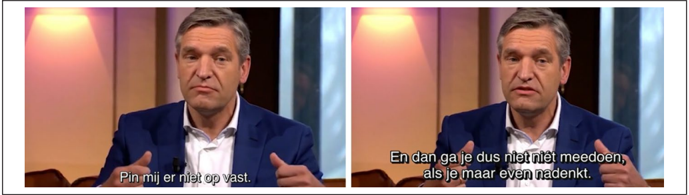
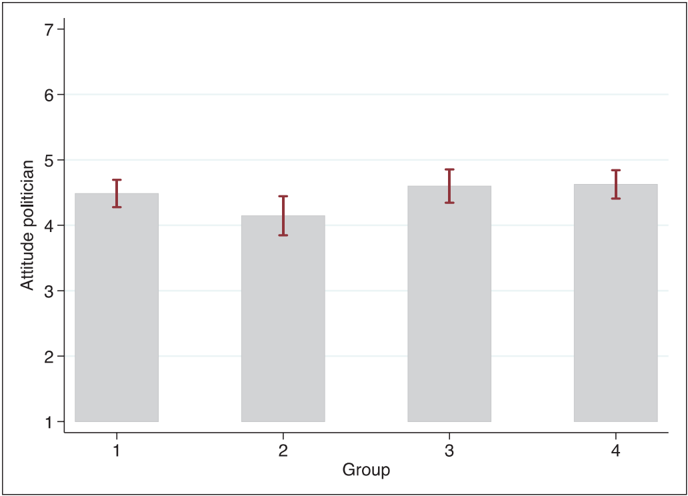
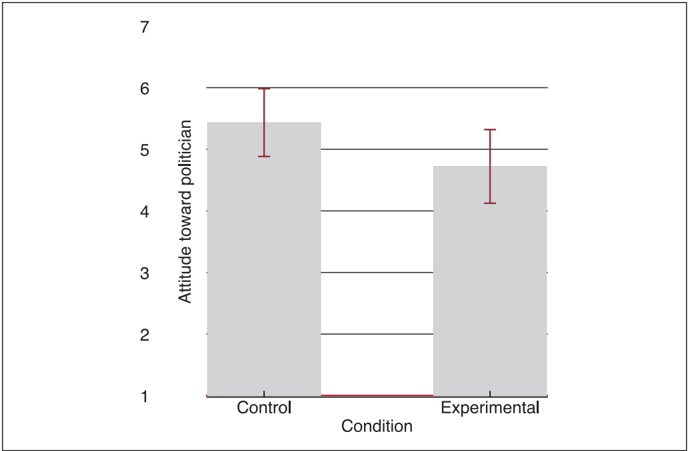
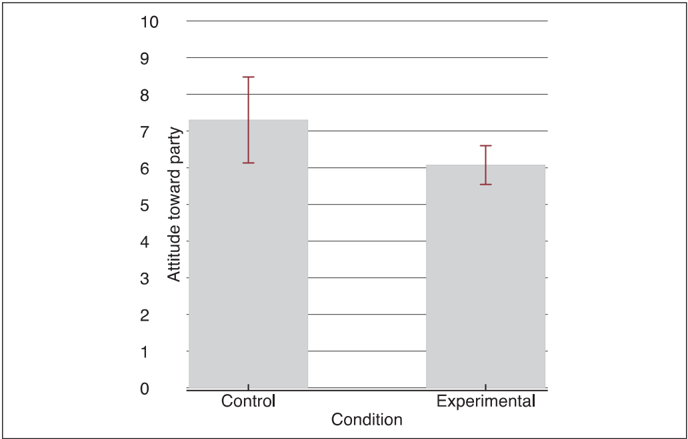
Deepfakes are perceived as a powerful form of disinformation. Although many studies have focused on detecting deepfakes, few have measured their effects on political attitudes, and none have studied microtargeting techniques as an amplifier. We argue that microtargeting techniques can amplify the effects of deepfakes, by enabling malicious political actors to tailor deepfakes to susceptibilities of the receiver. In this study, we have constructed a political deepfake (video and audio), and study its effects on political attitudes in an online experiment ( N = 278). We find that attitudes toward the depicted politician are significantly lower after seeing the deepfake, but the attitudes toward the politician’s party remain similar to the control condition. When we zoom in on the microtargeted group, we see that both the attitudes toward the politician and the attitudes toward his party score significantly lower than the control condition, suggesting that microtargeting techniques can indeed amplify the effects of a deepfake, but for a much smaller subgroup than expected.
Overview
The claims and statistics of this paper haven’t been checked yet.
Free: it reads the open-access text and checks the first 5 claims that cite a source we can check. Create a free account to check every claim.
Integrity signals
Registry
Cites
Statistics
Figures

Verification
Claims the paper makes
The claims and statistics of this paper haven’t been checked yet.
Free: it reads the open-access text and checks the first 5 claims that cite a source we can check. Create a free account to check every claim.
Claims other papers make about this one
Each is checked against this paper’s own text: does it say what the citing paper says it does?
The source backs part of the claim, not all of it — or backs it for a different population, condition or comparison.
In the citing paper
“studies that show that people are poor at recognizing deepfakes and false content online (Dobber et al., 2020; Vaccari and Chadwick, 2020; Köbis et al., 2021; Nightingale and Farid, 2022; Vaccari et al., 2022)”
From On manipulation by emotional AI: UK adults’ views and governance implications (2024) · cites this paper as Dobber et al., 2020
Experimental — accuracy not yet measuredThe source backs part of the claim, not all of it — or backs it for a different population, condition or comparison.
In the citing paper
“However, prior research has largely focused on its potential societal consequences rather than its real-world prevalence.”
From Characterizing AI-Generated Misinformation on Social Media (2025) · cites this paper as Dobber et al. 2021
Experimental — accuracy not yet measuredThe source backs part of the claim, not all of it — or backs it for a different population, condition or comparison.
In the citing paper
“AI-assisted misinformation can spread rapidly on social media and micro-targeting people with deepfakes can influence their attitudes toward politicians (e.g. (23)).”
From The impact of generative artificial intelligence on socioeconomic inequalities and policy making (2024) · cites this paper as [23]
Experimental — accuracy not yet measuredThe source backs part of the claim, not all of it — or backs it for a different population, condition or comparison.
In the citing paper
“These results are based on an experiment with a stimuli set that is much larger than most stimuli sets for the psychology of media effects research38 and deepfake detection33,35,36”
From Human detection of political speech deepfakes across transcripts, audio, and video (2024) · cites this paper as [36]
Experimental — accuracy not yet measuredThe source backs part of the claim, not all of it — or backs it for a different population, condition or comparison.
In the citing paper
“Lip-syncs are easier to detect when there are unnatural or inconsistent lip/mouth movements [20, 30, 7, 28].”
From Human Performance in Deepfake Detection: A Systematic Review (2025) · cites this paper as [30]
Experimental — accuracy not yet measured
10 more claims about this paper
Create a free account to see every claim other papers make about this one.
Self-check
Percentages, sums and reported differences re-computed from the paper’s own numbers.
The self-check needs the paper’s full text.
Citations
Cites
Statistical Power Analysis for the Behavioral Sciences
Muller, K. (1989) · Technometrics · doi:10.1080/00401706.1989.10488618 · Cited by 99,167
Faul, F., Erdfelder, E., Lang, A.-G., & Buchner, A. (2007) · Behavior Research Methods · doi:10.3758/bf03193146 · Cited by 65,971 · cited 1×
“We conducted an a priori power analysis by using G*Power (Faul et al. 2007) with a significance level of α = .05, a moderate effect size of d = .3, and a statistical power of (1 – β ) = 0.80 (Cohen 1988).”
InfluentialProceedings of the National Academy of Sciences of the United States of America
Dowling, J. E., & Wald, G. (2009) · Nutrition Reviews · doi:10.1111/j.1753-4887.1981.tb06752.x · Cited by 17,893
The Elaboration Likelihood Model of Persuasion
Petty, R. E., & Cacioppo, J. T. (1986) · Advances in Experimental Social Psychology · doi:10.1016/s0065-2601(08)60214-2 · Cited by 8,822
JOURNAL OF INTERNATIONAL AFFAIRS
(2023) · JOURNAL OF INTERNATIONAL AFFAIRS · doi:10.58710/jia · Cited by 4,586
The Origins of Totalitarianism
Shields, C. V., & Arendt, H. (1951) · The Western Political Quarterly · doi:10.2307/442863 · Cited by 4,425
MesoNet: a Compact Facial Video Forgery Detection Network
Afchar, D., Nozick, V., Yamagishi, J., & Echizen, I. (2018) · 2018 IEEE International Workshop on Information Forensics and Security (WIFS) · doi:10.1109/wifs.2018.8630761 · Cited by 1,872
A New Era of Minimal Effects? The Changing Foundations of Political Communication
Bennett, W. L., & Iyengar, S. (2008) · Journal of Communication · doi:10.1111/j.1460-2466.2008.00410.x · Cited by 1,558 · cited 1×
“For now, the limited, but significant main effect of our imperfect deepfake on the attitudes of the general sample is more or less aligned with the idea of “minimal effects” of political communication (see Bennett and Iyengar 2008).”
The disinformation order: Disruptive communication and the decline of democratic institutions
Bennett, W. L., & Livingston, S. (2018) · European Journal of Communication · doi:10.1177/0267323118760317 · Cited by 1,552 · cited 1×
“This can raise questions about the legitimacy of democratic institutions (Bennett and Livingston 2018), the quality of public debate (Xia et al. 2019), the power of citizens (Flynn et al. 2017), and the power of malicious political actors (Bradshaw and Howard 2018).”
Tucker, J. A., Guess, A., Barbera, P., Vaccari, C., Siegel, A., Sanovich, S., Stukal, D., & Nyhan, B. (2018) · doi:10.2139/ssrn.3144139 · Cited by 1,222 · cited 1×
“Literature about disinformation is growing rapidly, but there is still a “substantive research gap” about its effects (Tucker et al. 2018: 57).”
Exposing Deep Fakes Using Inconsistent Head Poses
Yang, X., Li, Y., & Lyu, S. (2019) · ICASSP 2019 - 2019 IEEE International Conference on Acoustics, Speech and Signal Processing (ICASSP) · doi:10.1109/icassp.2019.8683164 · Cited by 1,196
The Nature and Origins of Misperceptions: Understanding False and Unsupported Beliefs About Politics
Flynn, D. J., Nyhan, B., & Reifler, J. (2017) · Political Psychology · doi:10.1111/pops.12394 · Cited by 1,183 · cited 1×
“This can raise questions about the legitimacy of democratic institutions (Bennett and Livingston 2018), the quality of public debate (Xia et al. 2019), the power of citizens (Flynn et al. 2017), and the power of malicious political actors (Bradshaw and Howard 2018).”
Synthesizing Obama: learning lip sync from audio
Suwajanakorn, S., Seitz, S. M., & Kemelmacher-Shlizerman, I. (2017) · ACM Transactions on Graphics · doi:10.1145/3072959.3073640 · Cited by 1,057 · cited 1×
“Then, we produced a fake “silent video” of the politician from a real video for which we modified the lip movements (frame by frame) to match the new fake speech using artificial intelligence (AI)-based lip synchronization techniques (Suwajanakorn et al. 2017).”
Motivated numeracy and enlightened self-government
KAHAN, D. M., PETERS, E., DAWSON, E. C., & SLOVIC, P. (2017) · Behavioural Public Policy · doi:10.1017/bpp.2016.2 · Cited by 990 · cited 1×
“For part of the “mistargeted group” (the CDA voters who were not heavy prayers), it appears that motivated reasoning inoculated them from any negative effects of the deepfake (see Kahan et al. 2017 for more information on measuring motivated reasoning).”
Vaccari, C., & Chadwick, A. (2020) · Social Media + Society · doi:10.1177/2056305120903408 · Cited by 978
The Influence of Partisan Motivated Reasoning on Public Opinion
Bolsen, T., Druckman, J. N., & Cook, F. L. (2014) · Political Behavior · doi:10.1007/s11109-013-9238-0 · Cited by 891 · cited 1×
“Partisanship plays an important role in activating motivated reasoning (Bolsen et al. 2014; Slothuus and De Vreese 2010).”
The Origins and Consequences of Public Trust in Government
Chanley, V. A., Rudolph, T. J., & Rahn, W. M. (2000) · Public Opinion Quarterly · doi:10.1086/317987 · Cited by 881 · cited 2×
“In the political scandal literature, scandals are causally associated with a decline of political attitudes toward politicians and political parties (Brody and Shapiro 1989; Chanley et al. 2000; Maier 2011).”
Gifts Differing: Understanding Personality Type
Myers, I. B., & Myers, P. B. (1980) · CERN Document Server (European Organization for Nuclear Research) · Cited by 874
Guess, A. M., Nyhan, B. J., & Reifler, J. (2018) · Cited by 873
Exposing DeepFake Videos By Detecting Face Warping Artifacts
Li, Y., & Lyu, S. (2018) · arXiv · doi:10.48550/arxiv.1811.00656 · Cited by 785
Political Parties, Motivated Reasoning, and Issue Framing Effects
Slothuus, R., & de Vreese, C. H. (2010) · The Journal of Politics · doi:10.1017/s002238161000006x · Cited by 734
Same Facts, Different Interpretations: Partisan Motivation and Opinion on Iraq
Gaines, B. J., Kuklinski, J. H., Quirk, P. J., Peyton, B., & Verkuilen, J. (2007) · The Journal of Politics · doi:10.1111/j.1468-2508.2007.00601.x · Cited by 683
Measuring Message Credibility: Construction and Validation of an Exclusive Scale
Appelman, A., & Sundar, S. S. (2016) · Journalism & Mass Communication Quarterly · doi:10.1177/1077699015606057 · Cited by 625
The Affective Tipping Point: Do Motivated Reasoners Ever “Get It”?
Redlawsk, D. P., Civettini, A. J. W., & Emmerson, K. M. (2010) · Political Psychology · doi:10.1111/j.1467-9221.2010.00772.x · Cited by 571
The Ideological Foundations of Affective Polarization in the U.S. Electorate
Webster, S. W., & Abramowitz, A. I. (2017) · American Politics Research · doi:10.1177/1532673x17703132 · Cited by 557
KALLA, J. L., & BROOCKMAN, D. E. (2018) · American Political Science Review · doi:10.1017/s0003055417000363 · Cited by 454
Nyhan, B., Porter, E., Reifler, J., & Wood, T. J. (2020) · Political Behavior · doi:10.1007/s11109-019-09528-x · Cited by 442 · cited 1×
“Indeed, corrections of misleading statements made by a political candidate have been shown to have no impact on evaluations of that candidate (Nyhan et al. 2019).”
A Practical Primer To Power Analysis for Simple Experimental Designs
Perugini, M., Gallucci, M., & Costantini, G. (2018) · International Review of Social Psychology · doi:10.5334/irsp.181 · Cited by 408
Bisgaard, M. (2015) · The Journal of Politics · doi:10.1086/681591 · Cited by 347 · cited 1×
“Even when facing clear evidence of the incongruency occurring, the partisans indeed did not hold worse attitudes than their counterparts in the control condition did, while the nonpartisan groups did (in line with Bisgaard 2015).”
Online Political Microtargeting: Promises and Threats for Democracy
Zuiderveen Borgesius, F. J., Möller, J., Kruikemeier, S., Ó Fathaigh, R., Irion, K., Dobber, T., Bodo, B., & De Vreese, C. (2018) · Utrecht Law Review · doi:10.18352/ulr.420 · Cited by 340
Self-citationWheeler, S. C., Petty, R. E., & Bizer, G. Y. (2005) · Journal of Consumer Research · doi:10.1086/426613 · Cited by 297
Taking Our Country Back: The Crafting of Networked Politics from Howard Dean to Barack Obama
Kreiss, D. (2012) · Oxford University Press eBooks · doi:10.1093/acprof:oso/9780199782536.001.0001 · Cited by 265
Do tabloids poison the well of social media? Explaining democratically dysfunctional news sharing
Chadwick, A., Vaccari, C., & O’Loughlin, B. (2018) · New Media & Society · doi:10.1177/1461444818769689 · Cited by 258 · cited 1×
“Disinformation can be seen as “intentional behavior that purposively misleads” (Chadwick et al. 2018: 4257).”
Prototype Politics: Technology-Intensive Campaigning and the Data of Democracy
Kreiss, D. (2016) · Oxford University Press eBooks · doi:10.1093/acprof:oso/9780199350247.001.0001 · Cited by 241 · cited 1×
“PMT is a relatively new technique used by political campaigns worldwide (Baldwin-Philippi 2019; Dobber et al. 2017; Dommett 2019; Dommett et al. 2020; Kreiss 2016; Matsumoto 2018; Moura and Michelson 2017).”
Zimmermann, F., & Kohring, M. (2020) · Political Communication · doi:10.1080/10584609.2019.1686095 · Cited by 227
Lexicon of Lies: Terms for Problematic Information
Jack, C. (2017) · doi:10.69985/kmpz3134 · Cited by 226 · cited 1×
“In contrast, misinformation differs from disinformation in the sense that the former does not imply the intention to deceive (Jack 2018), and malinformation is different from disinformation in that malinformation requires a (slim) factual basis.”
Bail, C. A., Guay, B., Maloney, E., Combs, A., Hillygus, D. S., Merhout, F., Freelon, D., & Volfovsky, A. (2020) · Proceedings of the National Academy of Sciences · doi:10.1073/pnas.1906420116 · Cited by 224 · cited 7×
“The current study provides a first careful support for the idea that indeed deepfakes are a more powerful mode of disinformation in comparison with the false news stories studied by Guess et al. (2018) and the Russian Twitter trolls studied by Bail et al. (2020).”
InfluentialThe global organization of social media disinformation campaigns
Howard, P., & Bradshaw, S. (2018) · Oxford University Research Archive (ORA) (University of Oxford) · Cited by 224
Lukito, J. (2020) · Political Communication · doi:10.1080/10584609.2019.1661889 · Cited by 198
The impact of political scandals on political support: An experimental test of two theories
Maier, J. (2010) · International Political Science Review · doi:10.1177/0192512110378056 · Cited by 143 · cited 2×
“In the political scandal literature, scandals are causally associated with a decline of political attitudes toward politicians and political parties (Brody and Shapiro 1989; Chanley et al. 2000; Maier 2011).”
Evans, N. J., & Park, D. (2015) · Journal of Current Issues & Research in Advertising · doi:10.1080/10641734.2015.1023873 · Cited by 123 · cited 1×
“…recognized the deepfake as being a manipulated video, and because people can be influenced even if they are aware of the efforts to influence them (Evans and Park 2015), we decided to carry out our analyses with all participants, regardless of whether they perceived the deepfake as (somewhat…”
Seltzer, T., & Zhang, W. (2010) · Journal of Public Relations Research · doi:10.1080/1062726x.2010.504791 · Cited by 115
Policy failure and public support: The Iran-Contra affair and public assessment of President Reagan
Brody, R. A., & Shapiro, C. R. (1989) · Political Behavior · doi:10.1007/bf01002142 · Cited by 110 · cited 2×
“In the political scandal literature, scandals are causally associated with a decline of political attitudes toward politicians and political parties (Brody and Shapiro 1989; Chanley et al. 2000; Maier 2011).”
Tides of Disagreement: How Reality Facilitates (and Inhibits) Partisan Public Opinion
Parker-Stephen, E. (2013) · The Journal of Politics · doi:10.1017/s0022381613000789 · Cited by 109 · cited 1×
“While partisan motivated reasoning can seem to decrease when presented with clear evidence (Parker-Stephen 2013), this type of reasoning has been shown to be highly adaptive in finding ways to still maintain one’s predispositions, despite clear evidence (Bis-gaard 2015).”
Dommett, K. (2019) · Internet Policy Review · doi:10.14763/2019.4.1432 · Cited by 102 · cited 1×
“PMT is a relatively new technique used by political campaigns worldwide (Baldwin-Philippi 2019; Dobber et al. 2017; Dommett 2019; Dommett et al. 2020; Kreiss 2016; Matsumoto 2018; Moura and Michelson 2017).”
Mobilizing Millennial Voters with Targeted Internet Advertisements: A Field Experiment
Haenschen, K., & Jennings, J. (2019) · Political Communication · doi:10.1080/10584609.2018.1548530 · Cited by 97 · cited 3×
“Haenschen and Jennings (2019) found that microtargeted online ads could increase turnout conditionally under Millennial voters: only in competitive districts.”
InfluentialData campaigning: between empirics and assumptions
Baldwin-Philippi, J. (2019) · Internet Policy Review · doi:10.14763/2019.4.1437 · Cited by 83 · cited 1×
“PMT is a relatively new technique used by political campaigns worldwide (Baldwin-Philippi 2019; Dobber et al. 2017; Dommett 2019; Dommett et al. 2020; Kreiss 2016; Matsumoto 2018; Moura and Michelson 2017).”
Dobber, T., Trilling, D., Helberger, N., & de Vreese, C. H. (2017) · Internet Policy Review · doi:10.14763/2017.4.777 · Cited by 77
Self-citationDisinformation, performed: self-presentation of a Russian IRA account on Twitter
Xia, Y., Lukito, J., Zhang, Y., Wells, C., Kim, S. J., & Tong, C. (2019) · Information Communication & Society · doi:10.1080/1369118x.2019.1621921 · Cited by 70
Image Versus Text: How Newspaper Reports Affect Evaluations of Political Candidates
Boomgaarden, H. G., Boukes, M., & Iorgoveanu, A. (2016) · International journal of communication · Cited by 70
On Digital Disinformation and Democratic Myths
Spies, S. (2019) · doi:10.35650/md.2012.d.2019 · Cited by 64
WhatsApp in Brazil: mobilising voters through door-to-door and personal messages
Moura, M., & Michelson, M. R. (2017) · Internet Policy Review · doi:10.14763/2017.4.775 · Cited by 47 · cited 1×
“Indeed, corrections of misleading statements made by a political candidate have been shown to have no impact on evaluations of that candidate (Nyhan et al. 2019).”
A match made in the laboratory: Persuasion and matches to primed traits and stereotypes
Wheeler, S. C., DeMarree, K. G., & Petty, R. E. (2008) · Journal of Experimental Social Psychology · doi:10.1016/j.jesp.2008.03.007 · Cited by 46
Targeted Issue Messages and Voting Behavior
Endres, K. (2019) · American Politics Research · doi:10.1177/1532673x19875694 · Cited by 43 · cited 4×
“Endres (2019: 1) found that targeting Democratic voters on issues on which they hold similar positions with the Republican candidate “is associated with decreased support” for the Democratic candidate, and “increased abstention, and increased support for” the Republican candidate.”
InfluentialMatthes, J., & Marquart, F. (2013) · Communication Research · doi:10.1177/0093650213514600 · Cited by 42 · cited 1×
“In contrast with Endres (2019) and Matthes and Marquart (2015), we find that a message meant to be incongruent with the opinions of the receiver can have a significant and substantial negative attitudinal effect.”
Dynamics of Intra-Party Organisation in the Digital Age: A Grassroots Analysis of Digital Adoption
Dommett, K., Temple, L., & Seyd, P. (2020) · Parliamentary Affairs · doi:10.1093/pa/gsaa007 · Cited by 41 · cited 1×
“PMT is a relatively new technique used by political campaigns worldwide (Baldwin-Philippi 2019; Dobber et al. 2017; Dommett 2019; Dommett et al. 2020; Kreiss 2016; Matsumoto 2018; Moura and Michelson 2017).”
Limits of Deepfake Detection: A Robust Estimation Viewpoint
Agarwal, S., & Varshney, L. R. (2019) · arXiv (Cornell University) · doi:10.48550/arxiv.1905.03493 · Cited by 39
Seeing the small picture: Ad-self versus ad-culture congruency in international advertising
Chang, C. (2005) · Journal of Business and Psychology · doi:10.1007/s10869-005-9011-4 · Cited by 36 · cited 1×
“People who perceive a message as relevant and engage in greater message scrutiny than those who perceive a message as generic (Chang 2006; Wheeler et al. 2005).”
Partisan Disagreements Arising from Rationalization of Common Information
Lauderdale, B. E. (2016) · Political Science Research and Methods · doi:10.1017/psrm.2015.51 · Cited by 32
Motivated Reasoning in Political Information Processing: The Death Knell of Deliberative Democracy?
Richey, M. L. (2012) · Philosophy of the Social Sciences · doi:10.1177/0048393111430761 · Cited by 28
Authenticity and Carrier Agents: The Social Construction of Political Gaffes
Sheinheit, I., & Bogard, C. J. (2016) · Sociological Forum · doi:10.1111/socf.12292 · Cited by 27
How (often) do voters change their consideration sets?
Rekker, R., & Rosema, M. (2018) · Electoral Studies · doi:10.1016/j.electstud.2018.08.006 · Cited by 21
The Electoral Roots of A merica's Dysfunctional Government
Abramowitz, A. I. (2013) · Presidential Studies Quarterly · doi:10.1111/psq.12063 · Cited by 13 · cited 1×
“Decreasing support for the citizen’s “own” candidate and increasing support for the opponent, as demonstrated by Endres (2019), are arguably impressive in a polarized two-party context such as the United States (Abramowitz 2013; Webster and Abramowitz 2017).”
Democratic defense against disinformation 2.0
Polyakova, A., & Fried, D. (2018) · Cited by 10
Before and afterthe day after:The unexpected results of a televised drama
Adams, W. C., Smith, D. J., Salzman, A., Crossen, R., Hieber, S., Naccarato, T., Vantine, W., & Weisbroth, N. (1986) · Political Communication · doi:10.1080/10584609.1986.9962790 · Cited by 9
Political Communication and the Unexpected Outcome of the 2002 French Presidential Elections
Maarek, P. J. (2003) · Journal of Political Marketing · doi:10.1300/j199v02n02_02 · Cited by 3 · cited 1×
“Similar to Maarek (2003), who attributed the shocking loss of a French presidential candidate to a too professional campaign, or similar to Adams et al. (1986) who found that an antinuclear warfare television broadcast actually increased American viewers’ support for then-president Reagan instead…”
O.O.P.S.: Observing Our Politicians Stumble
Frantzich, S. E. (2012) · Praeger eBooks · doi:10.5040/9798400692536 · Cited by 3
Internet Campaigning in the US and Japan: Battles in Cyber Space
Matsumoto, A. (2018) · The SAIS review of international affairs · doi:10.1353/sais.2018.0003 · Cited by 2 · cited 1×
“PMT is a relatively new technique used by political campaigns worldwide (Baldwin-Philippi 2019; Dobber et al. 2017; Dommett 2019; Dommett et al. 2020; Kreiss 2016; Matsumoto 2018; Moura and Michelson 2017).”
Cited by
Masood, M., Nawaz, M., Malik, K. M., Javed, A., Irtaza, A., & Malik, H. (2023) · Applied Intelligence · doi:10.1007/s10489-022-03766-z · Cited by 543
“Deepfake videos generated by hired trolls are the latest weapon in the ongoing fabricated news war that can bring a more devastating effect on society [26].”
BackgroundThe impact of generative artificial intelligence on socioeconomic inequalities and policy making
Capraro, V., Lentsch, A., Acemoglu, D., Akgun, S., Akhmedova, A., Bilancini, E., Bonnefon, J.-F., Brañas-Garza, P., Butera, L., Douglas, K. M., et al. (2024) · PNAS Nexus · doi:10.1093/pnasnexus/pgae191 · Cited by 371
“AI-assisted misinformation can spread rapidly on social media and micro-targeting people with deepfakes can influence their attitudes toward politicians (e.g. (23)).”
Deepfake detection by human crowds, machines, and machine-informed crowds
Groh, M., Epstein, Z., Firestone, C., & Picard, R. (2022) · Proceedings of the National Academy of Sciences · doi:10.1073/pnas.2110013119 · Cited by 248
The Social Impact of Deepfakes
Hancock, J. T., & Bailenson, J. N. (2021) · Cyberpsychology, Behavior, and Social Networking · doi:10.1089/cyber.2021.29208.jth · Cited by 214
“20 Even more worryingly, given social media’s ability to target content to specific political or demographic groups, the study revealed that microtargeting the deepfake to groups most likely to be offended (e.g., Christians) amplified this effect relative to sharing the deepfake with a general…”
Fooled twice: People cannot detect deepfakes but think they can
Köbis, N. C., Doležalová, B., & Soraperra, I. (2021) · iScience · doi:10.1016/j.isci.2021.103364 · Cited by 193
Metadata
- Authors
- Dobber, T., Metoui, N., Trilling, D., Helberger, N., & de Vreese, C.
- Affiliations
- University of Amsterdam (NL)
- University of Amsterdam, Amsterdam, the Netherlands
- Corresponding author
- Dobber, Tom
- Venue
- The International Journal of Press/Politics
- Publisher
- SAGE Publications
- Published
- 2020-07-25
- Volume
- 26
- Issue
- 1
- Pages
- 69-91
- ISSN
- 1040-1620 (ISSN-L)
- 1940-1612
- 1940-1620
- OpenAlex
- W4248879889
- Cited by
- 256
- References
- 68
- Citations by year
- 2026: 46 · 2025: 66 · 2024: 54 · 2023: 39 · 2022: 28 · 2021: 21 · 2020: 1
- FWCI
- 29.74
- Type
- journal article
- Language
- en
- Open access
- hybrid
- doi.org
- Licence
- cc-by-nc
- creativecommons.org/licenses/by-nc/4.0/ (unspecified)
- journals.sagepub.com/page/policies/text-and-data-mining-license (tdm)
- Locations
- The International Journal of Press/Politics (publishedVersion, cc-by-nc)
- UvA-DARE (University of Amsterdam) (submittedVersion, cc-by-nc)
- Data Archiving and Networked Services (DANS) (submittedVersion, other-oa)
- Topics
- Social Sciences › Sociology and Political Science › Misinformation and Its Impacts
- Social Sciences › Communication › Social Media and Politics
- Social Sciences › Sociology and Political Science › Media Influence and Politics
- Keywords
- deepfakes, microtargeting, political disinformation, political attitudes, attitude change, public opinion
About these checks
Registry, retraction, Cites and statistics results are computed, not judged, with one exception: a printed reference that no index lists is read once by a model before it counts as a citation error. Claims are extracted by a model and kept only when their quote appears verbatim in the text; each cited source is then checked, with a model’s help, for whether it says what the claim relies on. Those verdicts can be wrong — read the claim’s quote and the cited source before relying on one.
Statistics and arithmetic are recomputed, not judged.
Confidence bands are shown only for fields calibrated on our annotated test set. None is calibrated yet, so no band is shown.
What counts as a claim ›How we measure confidence ›How we check this ›
Are you an author, or do you see a problem with this page? Request a review
Data sources
Bibliographic data: Semantic Scholar, OpenAlex, Crossref.
Contains information from the Semantic Scholar Academic Graph Datasets, made available under the ODC Attribution License (ODC-BY 1.0).
Semantic Scholar’s data is described in: Kinney, R., et al. (2023). The Semantic Scholar Open Data Platform. arXiv:2301.10140.
