

The DOI matches its Crossref record; 46 of the 46 references it cites were found in a registry or an index.
Effects of COVID-19 pandemic on mental health of children and adolescents: A systematic review of survey studies
Open accessAbstract
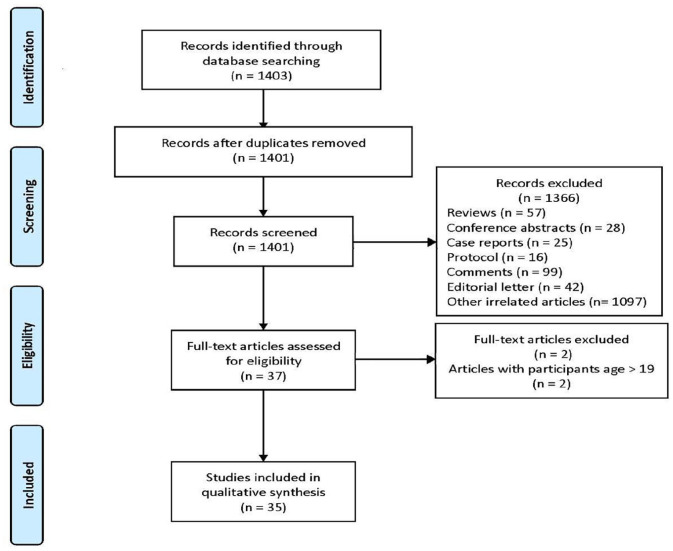
Objective: Mental health problems among children and adolescents are increasingly observed during the outbreak of COVID-19, leading to significant healthcare concerns. Survey studies provide unique opportunities for research during this pandemic, while there are no existing systematic reviews in this setting. The objective was to summarize existing survey studies addressing the effects of the current COVID-19 pandemic on the mental health of children and adolescents. Methods: For this systematic review, we performed an electronic search in multiple databases from December 2019 to December 2020. The quality appraisal of the included studies was performed with the Critical Appraisal Skills Programme Qualitative Checklist. Because of the high methodological heterogeneity between studies, a narrative synthesis of the qualitative data was used. Results: In total, 35 survey studies with 65,508 participants, ranging from 4 to 19 years of age, are included in this review. Anxiety (28%), depression (23%), loneliness (5%), stress (5%), fear (5%), tension (3%), anger (3%), fatigue (3%), confusion (3%), and worry (3%) were the most common mental health issues reported. Children and adolescents with psychiatric and/or developmental disorders, such as severe obesity, chronic lung disease, attention deficit hyperactivity disorder, cystic fibrosis, and obsessive-compulsive disorders, were especially vulnerable to the mental health effects of the COVID-19 pandemic. Age, gender, psychological quality, and negative coping strategies were identified as risk factors for the development of mental health problems. Social and family support, along with a positive coping style, was associated with better outcomes. Conclusion: The impact of the COVID-19 pandemic on mental health of children and adolescents is multifaceted and substantial. Survey studies regarding child and adolescent mental health amid COVID-19 indicated that anxiety, depression, loneliness, stress, and tension are the most observed symptoms. Positive coping strategies with family and social support may be important to achieving better outcomes. Due to limited available evidence, more well-designed studies in this area are urgently needed.
Overview
The claims and statistics of this paper haven’t been checked yet.
Run the check — free, no account needed. It reads the open-access text and checks the sources it cites.
Integrity signals
Registry
Cites
Statistics
Figures
Verification
Claims the paper makes
The claims and statistics of this paper haven’t been checked yet.
Run the check — free, no account needed. It reads the open-access text and checks the sources it cites.
Claims other papers make about this one
Each is checked against this paper’s own text: does it say what the citing paper says it does?
The source backs part of the claim, not all of it — or backs it for a different population, condition or comparison.
In the citing paper
“Systematic reviews have estimated the global prevalence of childhood and teenage depression at 23% and anxiety at 28% [2]”
From Psychological Interventions and Those With Elements of Positive Psychology for Child and Youth Mental Health During the COVID-19 Pandemic: Literature Review, Lessons Learned, and Areas for Future Knowledge Dissemination (2024) · cites this paper as [2]
Experimental — accuracy not yet measuredThe cited source says what the claim attributes to it.
In the citing paper
“Furthermore, the COVID-19 pandemic has exerted a substantial influence on the mental well-being of children and adolescents, with specific subgroups being especially susceptible to the psychological consequences of the pandemic [55].”
From Clinical Efficacy of Psychotherapeutic Interventions for Post-Traumatic Stress Disorder in Children and Adolescents: A Systematic Review and Analysis. (2024) · cites this paper as [55]
In the citing paper
“Several systematic reviews also found that certain child and adolescent populations were at risk for experiencing poorer well-being outcomes, including older adolescents, girls, neurodivergent populations, and/or chronic physical conditions [23], and populations with psychiatric or developmental disorders (e.g., obesity, lung disease, attention deficit hyperactivity disorder (ADHD), obsessive comp”
From Loneliness and Well-Being in Children and Adolescents during the COVID-19 Pandemic: A Systematic Review (2023) · cites this paper as [25]
In the citing paper
“Methods of increasing children’s and adolescents’ feelings of belonging to a social group and experiencing positive social rewards can include access to physical exercise, social hobbies, and entertainment [25,71].”
From Loneliness and Well-Being in Children and Adolescents during the COVID-19 Pandemic: A Systematic Review (2023) · cites this paper as [25]
Self-check
Percentages, sums and reported differences re-computed from the paper’s own numbers.
The self-check needs the paper’s full text.
Citations
Cites
Liberati, A., Altman, D. G., Tetzlaff, J., Mulrow, C., Gøtzsche, P. C., Ioannidis, J. P. A., Clarke, M., Devereaux, P. J., Kleijnen, J., & Moher, D. (2009) · PLoS Medicine · doi:10.1371/journal.pmed.1000100 · Cited by 28,164
The Psychological Impact of Quarantine and How to Reduce It: Rapid Review of the Evidence
Brooks, S. K., Webster, R. K., Smith, L. E., Woodland, L., Wessely, S., Greenberg, N., & Rubin, G. J. (2020) · doi:10.2139/ssrn.3532534 · Cited by 16,394
The psychological impact of quarantine and how to reduce it: Rapid review of the evidence
Brooks, S. K., Webster, R. K., Smith, L. E., Woodland, L., Wessely, S., Greenberg, N., & Rubin, G. J. (2020) · The Lancet · doi:10.1016/s0140-6736(20)30460-8 · Cited by 16,378
Fegert, J. M., Vitiello, B., Plener, P. L., & Clemens, V. (2020) · Child and Adolescent Psychiatry and Mental Health · doi:10.1186/s13034-020-00329-3 · Cited by 1,807
Magson, N. R., Freeman, J. Y. A., Rapee, R. M., Richardson, C. E., Oar, E. L., & Fardouly, J. (2021) · Journal of Youth and Adolescence · doi:10.1007/s10964-020-01332-9 · Cited by 1,498
Behavioral and emotional disorders in children during the COVID-19 epidemic
Jiao, W. Y., Wang, L. N., Liu, J., Fang, S. F., Jiao, F. Y., Pettoello-Mantovani, M., & Somekh, E. (2020) · The Journal of Pediatrics · doi:10.1016/j.jpeds.2020.03.013 · Cited by 1,468
Zhou, S.-J., Zhang, L.-G., Wang, L.-L., Guo, Z.-C., Wang, J.-Q., Chen, J.-C., Liu, M., Chen, X., & Chen, J.-X. (2020) · European Child & Adolescent Psychiatry · doi:10.1007/s00787-020-01541-4 · Cited by 1,464
Posttraumatic stress disorder in parents and youth after health-related disasters
Sprang, G., & Silman, M. (2013) · Disaster Medicine and Public Health Preparedness · doi:10.1017/dmp.2013.22 · Cited by 1,114
Epidemiology of mental health problems in COVID-19: a review
Hossain, M. M., Tasnim, S., Sultana, A., Faizah, F., Mazumder, H., Zou, L., McKyer, E. L. J., Ahmed, H. U., & Ma, P. (2020) · F1000Research · doi:10.12688/f1000research.24457.1 · Cited by 1,113
The impact of COVID-19 lockdown on child and adolescent mental health: systematic review
Panchal, U., Salazar de Pablo, G., Franco, M., Moreno, C., Parellada, M., Arango, C., & Fusar-Poli, P. (2023) · European Child & Adolescent Psychiatry · doi:10.1007/s00787-021-01856-w · Cited by 1,028
Research works printed but not linked: 2
- Pavone P, 2020, Eur Rev Med Pharmacol Sci, 24, 4572
- Kilincel S, 2020, Asia Pac Psychiatry, 13
Cited by
Sorted by citations
Farrell, A. H., Vitoroulis, I., Eriksson, M., & Vaillancourt, T. (2023) · Children · doi:10.3390/children10020279 · Cited by 130
“…including older adolescents, girls, neurodivergent populations, and/or chronic physical conditions [23], and populations with psychiatric or developmental disorders (e.g., obesity, lung disease, attention deficit hyperactivity disorder (ADHD), obsessive compulsive disorder; ages 4 to 19 [25]).”
BackgroundNewlove‐Delgado, T., Russell, A. E., Mathews, F., Cross, L., Bryant, E., Gudka, R., Ukoumunne, O. C., & Ford, T. J. (2023) · Journal of Child Psychology and Psychiatry · doi:10.1111/jcpp.13716 · Cited by 100
“Our findings are in broad agreement with other reviews attempting to synthesise the evidence on this question, which also concluded there had been a deterioration, but with multifaceted effects (Samji et al., 2022; Theberath et al., 2022).”
Trends in Adolescent Health: Successes and Challenges From 2010 to the Present
Beckwith, S., Chandra‐Mouli, V., & Blum, R. W. (2024) · Journal of Adolescent Health · doi:10.1016/j.jadohealth.2024.04.015 · Cited by 90
Champion, K. E., Newton, N. C., Gardner, L. A., Chapman, C., Thornton, L. K., Slade, T. N., Sunderland, M., Hides, L. M., MCBRIDE, N. T., O’Dean, S., et al. (2023) · The Lancet Digital Health · doi:10.1016/s2589-7500(23)00028-6 · Cited by 69
Liverpool, S., Moinuddin, M., Aithal, S., Owen, M. B., Bracegirdle, K., Caravotta, M., Walker, R., Murphy, C., & Karkou, V. (2023) · PLoS ONE · doi:10.1371/journal.pone.0280689 · Cited by 66
“Our findings align with some of the previous research suggesting that age, gender expression and pre-existing conditions can place some students at risk of experiencing poorer mental health and wellbeing [7, 11, 12].”
BackgroundResultHolst, C. G., Bowes, L., Waite, P., Skripkauskaitė, S., Shum, A., Pearcey, S., Raw, J., Patalay, P., & Creswell, C. (2023) · JCPP Advances · doi:10.1002/jcv2.12153 · Cited by 48
“others were important in offsetting mental health difficulties (Theberath et al., 2022; Wolf & Schmitz, 2022).”
BackgroundCampione‐Barr, N., Skinner, A. T., Moeller, K. N., Cui, L., Kealy, C., & Cookston, J. T. (2024) · Journal of Research on Adolescence · doi:10.1111/jora.12969 · Cited by 46
Sabah, A., Aljaberi, M. A. A., Hajji, J., Fang, C., Lai, Y.-C., & Lin, C. (2023) · Children · doi:10.3390/children10111742 · Cited by 41
“Therefore, family support, positive coping strategies, communication, and social support are essential for better outcomes [43,45].”
BackgroundThe Increase in Childhood Obesity and Its Association with Hypertension during Pandemics
Vasile, C. M., Padovani, P., Dumitrache‐Rujinski, S., Nicolosu, D., Toma, C., Turcu, A. A., & Cioboată, R. (2023) · Journal of Clinical Medicine · doi:10.3390/jcm12185909 · Cited by 43
“Consequently, children experienced significant changes in physical activity levels, inactivity habits, and eating disorders [1–3].”
BackgroundPollak, I., Stiehl, K. A. M., Birchwood, J., Schrank, B., Zechner, K. A., Wiesner, C., & Woodcock, K. A. (2023) · Journal of Youth and Adolescence · doi:10.1007/s10964-023-01871-x · Cited by 62
“The context of Covid-19 further complicated matters, as all teachers reported increased workload, stress (Robinson et al., 2023) and mental health problems of students (Theberath et al., 2022) coming out of long lockdowns.”
BackgroundGkintoni, E., Kourkoutas, E., Yotsidi, V., Stavrou, P. D., & Prinianaki, D. (2024) · Children · doi:10.3390/children11050579 · Cited by 37
“Furthermore, the COVID-19 pandemic has exerted a substantial influence on the mental well-being of children and adolescents, with specific subgroups being especially susceptible to the psychological consequences of the pandemic [55].”
BackgroundMarciano, L., Viswanath, K., Morese, R., & Camerini, A.-L. (2022) · Frontiers in Psychiatry · doi:10.3389/fpsyt.2022.981881 · Cited by 36
Bogaert, L., der Gucht, K. V., Kuppens, P., Kock, M., Schreuder, M. J., Kuyken, W., & Raes, F. (2023) · Behaviour Research and Therapy · doi:10.1016/j.brat.2023.104405 · Cited by 29
“However, no indications of the immediate and short-term impact of the COVID-19 pandemic, like higher levels of stress or anxiety (Cohen et al., 2021; Degenhardt, 2022; Panchal et al., 2021; Samji et al., 2022; Theberath et al., 2022) were found in this study sample.”
BackgroundKoppen, A., Thoonen, I. M. J., Hunault, C. C., van Velzen, A. G., de Lange, D. W., & Rietjens, S. J. (2023) · Journal of Adolescent Health · doi:10.1016/j.jadohealth.2023.02.041 · Cited by 25
Kästner, A., Lücker, P., Hannich, A., Schmeyers, L., Lücker, J., & Hoffmann, W. U. (2022) · Frontiers in Public Health · doi:10.3389/fpubh.2022.1003876 · Cited by 23
Meng, J. F., & Wiznitzer, E. (2024) · Preventing Chronic Disease · doi:10.5888/pcd21.240126 · Cited by 22
The role of social and emotional skills on adolescents’ life satisfaction and academic performance
Salas, P. A., & Martín, F. D. F. (2024) · Psychology Society & Education · doi:10.21071/pse.v16i1.16625 · Cited by 36
“Due to COVID-19, teenagers are experiencing more symptoms related to anxiety, depression, loneliness, stress, fear, tension, fatigue, impulsiveness, emotional instability, sleep troubles, and even suicidal behaviors (Hossain et al., 2020; Theberath et al., 2022).”
BackgroundMental health profiles of Finnish adolescents before and after the peak of the COVID-19 pandemic
Gustafsson, J., Lyyra, N., Jasinskaja‐Lahti, I., Simonsen, N., Lahti, H., Kulmala, M., Ojala, K., & Paakkari, L. T. (2023) · Child and Adolescent Psychiatry and Mental Health · doi:10.1186/s13034-023-00591-1 · Cited by 34
“This should also be acknowledged in measures to promote post-pandemic recovery, as adolescents’ loneliness has increased since the onset of the pandemic [55, 80, 81].”
BackgroundBarbieri, V., Piccoliori, G., Mahlknecht, A., Plagg, B., Ausserhofer, D., Engl, A., & Wiedermann, C. J. (2023) · Behavioral Sciences · doi:10.3390/bs13080643 · Cited by 21
Reiß, F., Cosma, A. P., Bersia, M., Erhart, M., Dalmasso, P., Devine, J., Hulbert, S., Catunda, C., Gobiņa, I., Giladi, A., et al. (2024) · Child and Adolescent Psychiatry and Mental Health · doi:10.1186/s13034-024-00779-z · Cited by 22
Solmi, M., Thompson, T., Estradé, A., Agorastos, A., Raduà, J., Cortese, S., Dragioti, E., Leisch, F., Vancampfort, D., Thygesen, L. C., et al. (2022) · Journal of Affective Disorders · doi:10.1016/j.jad.2022.12.022 · Cited by 20
“In children and adolescents (Theberath et al., 2022), surveys focused mainly on anxiety (28”
The role of resilience in the relationship between stress and alcohol
Schwandt, M. L., Cullins, E., & Ramchandani, V. A. (2024) · Neurobiology of Stress · doi:10.1016/j.ynstr.2024.100644 · Cited by 20
Deterioration of Mental Health in Children and Adolescents During the COVID-19 Pandemic
Jo, E., Seo, K., Nam, B., Shin, D., Kim, S., Jeong, Y., Kim, A., & Kim, Y. (2023) · Journal of korean Academy of Child and Adolescent Psychiatry · doi:10.5765/jkacap.220041 · Cited by 20
Are you alone? Measuring solitude in childhood, adolescence, and emerging adulthood
McVarnock, A. M., Cheng, T., Polakova, L., & Coplan, R. J. (2023) · Frontiers in Psychiatry · doi:10.3389/fpsyt.2023.1179677 · Cited by 17
Loneliness and Health: An Umbrella Review
Rezaei, N., & Saghazadeh, A. (2022) · Heart and Mind · doi:10.4103/hm.hm_51_22 · Cited by 18
Long-term central nervous system (CNS) consequences of COVID-19 in children
de la Torre, S. H., Parlatini, V., & Cortese, S. (2023) · Expert Review of Neurotherapeutics · doi:10.1080/14737175.2023.2239500 · Cited by 15
“During the pandemic, there has been a world-wide increase in rates of depression, anxiety, problematic eating and alcohol and cannabis use among previously healthy children and young people [115,116,132,150].”
Gruszka, P., Ganahl, K., Stasch, N., Burger, C., Haberlandt, E., & Bauer, S. M. (2023) · Frontiers in Public Health · doi:10.3389/fpubh.2023.1254277 · Cited by 15
Barbieri, V., Wiedermann, C. J., Piccoliori, G., Mahlknecht, A., Plagg, B., Ausserhofer, D., Ravens‐Sieberer, U., & Engl, A. (2023) · Children · doi:10.3390/children10050895 · Cited by 17
Internalizing the COVID-19 pandemic: Gendered differences in youth mental health
Hoyt, L. T., Dotson, M. P., Suleiman, A. B., Burke, N. L., Johnson, J. B., & Cohen, A. K. (2023) · Current Opinion in Psychology · doi:10.1016/j.copsyc.2023.101636 · Cited by 14
The Shadow Pandemic: Eating Disorders, Youth, and COVID-19
Couturier, J. L., & Norris, M. L. (2023) · Journal of Adolescent Health · doi:10.1016/j.jadohealth.2022.12.008 · Cited by 13
“Studies such as these help to bring attention towhat has been referred to as the “shadow pandemic” in eating disorders in youth [6], also highlighting the tremendous toll and negatively sustained impact that the COVID-19 pandemic has had on the mental health and overall wellbeing of children and youth [7].”
Promoting children’s rights to health and well-being in the United States
Chapman, A. R., Brunelli, L., Forman, L., & Kaempf, J. W. (2023) · The Lancet Regional Health - Americas · doi:10.1016/j.lana.2023.100577 · Cited by 13
Parlatini, V., Frangou, L., Zhang, S., Epstein, S., Morris, A. C., Grant, C., Zalewski, L., Jewell, A., Velupillai, S. U., Simonoff, E. A., et al. (2023) · Social Psychiatry and Psychiatric Epidemiology · doi:10.1007/s00127-023-02517-w · Cited by 12
“Disruption of routines, family and peer relationships, education, and support from services were identified as risk factors [6, 7], while a supportive network and adaptive coping strategies as protective factors [4, 6].”
Korzeniowski, C. (2023) · Journal of Biomedical Research & Environmental Sciences · doi:10.37871/jbres1776 · Cited by 18
“Systematic review studies have reported that anxiety, depression, loneliness, stress, and tension are the most commonly seen symptoms in children and adolescents during COVID-19 which have negatively impacted children’s mental health [12-15].”
BackgroundQuinlan-Davidson, M., Shan, D., Courtney, D., Barbic, S. P., Cleverley, K., Hawke, L. D., Ma, C., Prebeg, M., Relihan, J., Szatmári, P., et al. (2023) · Child and Adolescent Psychiatry and Mental Health · doi:10.1186/s13034-023-00653-4 · Cited by 12
“Factors that could be implicated with these findings are feelings of isolation at specific time points [38, 106], financial strain [107], trauma associated with losing family members and friends [108, 109], health-related fears [110, 111], and exposure to household conflict and abuse [112, 113].”
BackgroundWang, T., Shao, R., Wang, Y., Li, J., & Hao, L. (2024) · Buildings · doi:10.3390/buildings14041115 · Cited by 12
Trends in Mental Health Diagnoses Among Publicly Insured Children.
Cummings, J. R., Hu, X., Marchak, J., Ramos, C. R., Graetz, I., & Ji, X. (2025) · Journal of the American Medical Association (JAMA) · doi:10.1001/jama.2025.4605 · Cited by 11
Rimpelä, A., Kesanto‐Jokipolvi, H., Myöhänen, A., Heikonen, L., Oinas, S., & Ahtiainen, R. (2023) · BMC Public Health · doi:10.1186/s12889-023-17342-8 · Cited by 17
Ruprecht, M. M., Floresca, Y. B., Narla, S. S., Felt, D., Phillips, G., Macapagal, K. R., & Philbin, M. M. (2024) · Health Education & Behavior · doi:10.1177/10901981241249973 · Cited by 16
“Given the pandemic’s continued population-level psychological reper-cussions (Theberath et al., 2022), it is critical to understand the scope of these mental health consequences for LGBTQ + YYA (Dawson et al., 2021).”
BackgroundPasley, K. E., Eisner, M., Sliemers, S., Young, R., Dell, M. L., McCoy, K., & May, A. (2024) · Pediatric Pulmonology · doi:10.1002/ppul.27393 · Cited by 11
Dieu, S. Z. Y., Low, M. K., & Mishu, M. P. (2025) · PLoS ONE · doi:10.1371/journal.pone.0316825 · Cited by 18
“Factors such as isolation, disrupted routines and education, financial strain and increased feelings of uncertainty about the future have significantly contributed to heightened levels of psychological distress [4–6].”
Baggio, S., Nsingi, N., Kanani, A., Bourqui, L., Graglia, M., & Thélin, R. (2022) · Swiss Medical Weekly · doi:10.4414/smw.2022.w30207 · Cited by 10
Park, B., Kim, J., Yang, J., Choi, S., & Oh, K. (2023) · Epidemiology and Health · doi:10.4178/epih.e2023019 · Cited by 10
“In fact, previous studies have reported that the prevalence of anxiety, depression, and stress increased in adolescents during the COVID-19 pandemic [10-12].”
BackgroundSelf-citationChildren’s Subjective Well-Being During the Coronavirus Pandemic
Rodríguez‐Pose, A., Sandu, A., Taylor, C., & Hampton, J. M. (2023) · Child Indicators Research · doi:10.1007/s12187-023-10089-z · Cited by 9
“Surveys conducted during the pandemic have revealed significant increases in rates of depression, anxiety, and behavioural problems when compared to pre-pandemic benchmarks (Racine et al., 2021; Theberath et al., 2022).”
ResultCaregiver and Child Mental Health During 3 Years of the COVID-19 Pandemic
Price, A. M. H., Measey, M., Hoq, M., Rhodes, A., & Goldfeld, S. R. (2024) · PEDIATRICS · doi:10.1542/peds.2023-064658 · Cited by 9
Reitegger, F., Peras, I., Wright, M., & Gasteiger‐Klicpera, B. (2024) · Adolescent Research Review · doi:10.1007/s40894-024-00237-z · Cited by 13
Gómez–Restrepo, C., Sarmiento-Suárez, M. J., Alba-Saavedra, M., Bird, V. J., Priebe, S., & van Loggerenberg, F. (2022) · JMIR Research Protocols · doi:10.2196/40286 · Cited by 9
“…COVID-19 isolation measures had on children and adolescents: lack of social contact, lack of personal space at home, separation from parents or caregivers, and concerns about academic and social impacts [21,22], all of which can lead to the development of anxiety or depressive disorders [23-25].”
Branquinho, C., Moraes, B., Noronha, C., Ferreira, T., Rodrigues, N. N., & de Matos, M. G. (2023) · Children · doi:10.3390/children10091460 · Cited by 12
“…in physical activity [7]; increased symptoms of anxiety, depression, loneliness, stress, fear, tension, anger, fatigue, confusion, and worry [8]; social disconnection with the loss of important life moments [9]; global learning difficulties, initiated during the pandemic and sustained over…”
Mevorach, T., Zur, G., Benaroya-Milshtein, N., Apter, A. S., Fennig, S., & Barzilay, S. (2023) · International Journal of Environmental Research and Public Health · doi:10.3390/ijerph20021619 · Cited by 9
“First, several studies assessed the elevation of mental health symptomatology, treatment seeking, and psychiatric diagnoses during the pandemic [6].”
BackgroundCăliman-Sturdza, O. A., Gheorghita, R. E., Lobiuc, A., Filip, R., Șoldănescu, I., Mangul, S., & Dimian, M. (2026) · Annals of Medicine · doi:10.1080/07853890.2026.2642510 · Cited by 11
“One of the traumatic experiences is being seriously ill, which could result in severe medical procedures or lengthy hospital stays, bringing flashbacks, nightmares, and anxiety [18,202,203].”
Landscape of loss: art therapy outdoors and traumatic bereavement
Wardle, A. (2023) · International Journal of Art Therapy · doi:10.1080/17454832.2023.2267109 · Cited by 8
Schneider, V., Norris, T., Nugawela, M. D., Dalrymple, E., Hargreaves, D. S., Käll, A., McOwat, K., Shafran, R., Stephenson, T. J., Xu, L., et al. (2023) · Psychology Research and Behavior Management · doi:10.2147/prbm.s421165 · Cited by 9
George, S. M. S., Velez, C. V., Ahn, Y. A., Phillips, D. A., Pulgarón, E. R., & Ehrenreich, J. T. (2024) · School Mental Health · doi:10.1007/s12310-024-09686-2 · Cited by 10
“COVID-19 social distancing measures, including school closures and remote learning, resulted in a substantial rise in psychological distress in youth, especially those already struggling with mental health difficulties (Theberath et al., 2022).”
Kołota, A., & Głąbska, D. (2022) · International Journal of Environmental Research and Public Health · doi:10.3390/ijerph191811772 · Cited by 9
“The changes are associated with numerous aspects of everyday life, including physical, mental, and social health [3], resulting from loneliness, stress, anxiety, and depression [4].”
BackgroundAudet, É. C., Dubois, P., Levine, S. L., & Koestner, R. (2023) · Cogent Mental Health · doi:10.1080/28324765.2023.2255040 · Cited by 7
“This is exceptionally true considering the substantial e ff ects of the COVID-19 crisis, where students, with and without disabilities, are struggling now more than ever before (Chen et al., 2022; Dickinson et al., 2021; Lanza et al., 2022; Sandner et al., 2022; Theberath et al., 2022).”
Parents' acceptability of blended psychological interventions for children with emotional disorders
Moreira, H., Góis, A. C., Pereira, A. M., Gomes-Pereira, B., Caiado, B., Nepomuceno, M. I., & Pereira, A. I. (2023) · Internet Interventions · doi:10.1016/j.invent.2023.100687 · Cited by 7
“In addition, the sample was collected during the COVID-19 outbreak, which has had a substantial impact on children's mental health (Theberath et al., 2022).”
BackgroundGaspar, T., Carvalho, M., Guedes, F. B., Cerqueira, A., & de Matos, M. G. (2023) · Child Indicators Research · doi:10.1007/s12187-023-10092-4 · Cited by 8
“Positive management strategies with family and social support can be essential to achieve better results (Gaspar et al., 2022a, b, c; Jones et al., 2021; Panchal et al., 2021; Theberath et al., 2022).”
Fearing, G. (2024) · Children and Youth Services Review · doi:10.1016/j.childyouth.2024.107479 · Cited by 7
Oliver, A. L., Kossowsky, J., Minegishi, M., Levy, S., & Weitzman, E. R. (2023) · Substance Abuse · doi:10.1177/08897077231165860 · Cited by 7
Lyzwinski, L., Zwicker, J. D., Mcdonald, S., & Tough, S. (2024) · JMIR Pediatrics and Parenting · doi:10.2196/59171 · Cited by 7
Dray, J., & Symons, D. (2025) · Current Developmental Disorders Reports · doi:10.1007/s40474-025-00328-z · Cited by 10
Uvhagen, L., Gustafsson, J., & Söderqvist, F. (2025) · PLoS ONE · doi:10.1371/journal.pone.0323963 · Cited by 9
Kurbatfinski, S., Letourneau, N. L., Dewey, D., Hayes, A. F., Hayden, A., Anis, L., & Dosani, A. (2023) · Clinical Medicine Insights Psychiatry · doi:10.1177/11795573231212175 · Cited by 6
Pace, C. S., Muzi, S., Frigerio, A., Morganti, W., Bianchi, V., & Rogier, G. (2023) · Frontiers in Psychiatry · doi:10.3389/fpsyt.2023.1161917 · Cited by 11
Testing a model of benefit-finding and growth in youths with chronic health conditions
von Rezori, R. E., Baumeister, H., Holl, R. W., Minden, K., Mueller‐Stierlin, A. S., Reinauer, C., Temming, S., & Warschburger, P. (2024) · BMC Pediatrics · doi:10.1186/s12887-023-04467-3 · Cited by 7
“Specific CCs (e.g., diabetes) were identified and communicated as a risk factor for severe complications from COVID-19 at an early stage during the pandemic, and children and adolescents with CCs were especially vulnerable to the mental health effects of the COVID-19 pandemic [39].”
BackgroundKim‐Ju, G. M., Knifsend, C. A., & Gonzales, A. (2024) · Social and Emotional Learning Research Practice and Policy · doi:10.1016/j.sel.2024.100033 · Cited by 11
García-Cerde, R., Wagner, G. A., Valente, J. Y., & Sanchez, Z. M. (2024) · Jornal de Pediatria · doi:10.1016/j.jped.2024.01.005 · Cited by 9
“26,29 The present study is the fi rst to investigate the Latin American adolescent population to analyze the consequences of drug use and its relationship with mental health.”
BackgroundResultBadger, J. R., Holst, C. G., Thompson, P. A., Bowes, L., Hayes, R. A., Clarkson, S., Hutchings, J., & Hastings, R. P. (2024) · British Educational Research Journal · doi:10.1002/berj.4022 · Cited by 6
Johnson, S. M., Penner, J., Issitt, R. W., Kmentt, L., Grant, K., Pandey, A., Champsas, D., Abdel‐Mannan, O., Maillard, S., McKenzie, K. A. G. C. A., et al. (2024) · The Pediatric Infectious Disease Journal · doi:10.1097/inf.0000000000004430 · Cited by 6
“32 A small study comparing patients with MIS-C with sibling controls demonstrated lower executive functioning scores.”
Berchialla, P., Canale, N., Kilibarda, B., Comoretto, R. I., Alexandrova‐Karamanova, A., Baška, T., ter Bogt, T., Vieno, A., & Charrier, L. (2024) · Addictive Behaviors · doi:10.1016/j.addbeh.2024.108238 · Cited by 6
Mondragón, N. I., Berasategi, N., Ozamiz-Etxebarria, N., & Santamaría, M. D. (2022) · Children s Geographies · doi:10.1080/14733285.2022.2118030 · Cited by 6
“…post-lockdown period (Cordovil et al. 2021; Idoiaga et al. 2022; Mourouvaye et al. 2021) and meta-analyses (Oliveira et al. 2022; Samji et al. 2022; Theberath et al. 2022) carried out on the effects of pandemics on children point to the fact that children’s mental health is being affected over…”
Marciano, L., Albanese, E., Viswanath, K., & Camerini, A.-L. (2023) · European Journal of Health Communication · doi:10.47368/ejhc.2023.101 · Cited by 6
Green, R., Linga-Easwaran, J., Goodman, C. V., Taylor, M., Fabiano, G. F., Miller, S., & Williams, T. (2024) · Frontiers in Psychology · doi:10.3389/fpsyg.2024.1328476 · Cited by 5
Children’s Coping in Disasters: Developments, Challenges, and Future Directions
Powell, T. M., Cohen, F., & Ramchal, M. (2025) · Current Psychiatry Reports · doi:10.1007/s11920-025-01654-0 · Cited by 6
“In response, researchers have examined children’s cop - ing during the pandemic, revealing that negative strategies such as behavioral avoidance, denial, self-blame, substance use, venting, were consistently associated with heightened distress [ 38, 39 ].”
Gender specific mental health among adolescents in Northern Italy: a cross-sectional study
Barbieri, V., Piccoliori, G., Engl, A., & Wiedermann, C. J. (2026) · Frontiers in Public Health · doi:10.3389/fpubh.2025.1705580 · Cited by 5
Tabullo, Á., Juric, L. C., & Abusamra, V. (2023) · Cognitive Development · doi:10.1016/j.cogdev.2023.101378 · Cited by 9
Guo, Z., Zhang, Y., Pi, P., Zhu, X., Cui, Y., Miao, D., & Lü, H. (2024) · Current Psychology · doi:10.1007/s12144-024-05912-x · Cited by 5
“With regard to PCS and fatigue, many lines of evidence have corroborated the negative relationship between them (Du et al., 2013; Li et al., 2022, c; Theberath et al., 2022), which is in line with our findings.”
Marcotullio, C., Attanasi, M., Porreca, A., Filippo, P. D., Matricardi, S., Venanzi, A., Schiavo, M., Paone, A., Rossi, N., Chiarelli, F., et al. (2024) · Children · doi:10.3390/children11050532 · Cited by 6
“The analysis reported significant rates of headaches [15.88% (95% CI 6.85 The mechanisms underlying the development of short-and long-term pain manifestations post-COVID-19 remain incompletely understood.”
BackgroundInfluentialAn Adaptive Decision-Making System for Behavior Analysis Among Young Adults
Pragathi, S., Narayanamoorthy, S., Pamucar, D. S., & Kang, D. (2024) · Cognitive Computation · doi:10.1007/s12559-024-10372-3 · Cited by 5
“Since the pandemic’s breakout, a growing number of reports of psychotic issues in kids and teens have surfaced, resulting in major health concerns [23].”
Stresserleben und Stresssymptomatik von Kindern und Jugendlichen in Zeiten der COVID-19-Pandemie
Rueth, J., Döring, L., Baier, A., Essing, K., Wagner, S., & Lohaus, U. A. (2023) · Kindheit und Entwicklung: Zeitschrift für Klinische Kinderpsychologie · doi:10.1026/0942-5403/a000430 · Cited by 3
Phan, M. L., & Renshaw, T. L. (2024) · Journal of Educational and Psychological Consultation · doi:10.1080/10474412.2024.2373462 · Cited by 6
“Post-pandemic, anxiety, depression, loneliness, stress, and tension are the now the most commonly reported symptoms affecting children and adolescents (Theberath et al., 2022).”
Global Challenges After a Global Challenge: Lessons Learned from the COVID-19 Pandemic
Yazdanpanah, N., Sedikides, C., Ochs, H. D., Camargo, C. A., Darmstadt, G. L., Cerdà, A., Cauda, V., Peters, G. J., Sellke, F. W., Wong, N. D., et al. (2024) · Advances in experimental medicine and biology · doi:10.1007/978-3-031-61939-7_1 · Cited by 5
“Anxiety, depression, post-traumatic stress disorder (PTSD), obsessive-compulsive disorder (OCD), and sleep disturbances were commonly reported during the pandemic (Zeng et al. 2023; Peng et al. 2023; Ghahramani et al. 2022; Theberath et al. 2022).”
BackgroundRaffagnato, A., Miscioscia, M., Bruni, G., Col, L. D., Traverso, A., Ferrarese, M., Ancora, C., Zanato, S., & Gatta, M. (2023) · Frontiers in Public Health · doi:10.3389/fpubh.2023.1152876 · Cited by 6
Aragón-Daud, A., Abadi, A. F., López, P. L., Torrente, F. M., & Musich, F. M. (2022) · Early Child Development and Care · doi:10.1080/03004430.2022.2090931 · Cited by 5
“In addition, social policies could offer basic and concrete explanations about the Covid-19 pandemic, adapted to preschoolers’ cognitive level, as having accurate knowledge acts as a protective factor for mental health (Theberath et al., 2022).”
BackgroundInfluentialHu, L., & Stamoulis, C. (2024) · Cerebral Cortex · doi:10.1093/cercor/bhae164 · Cited by 6
Equine-assisted learning reduces anxiety and increases calmness and social skills in young people
Sullivan, K., & Hemingway, A. (2024) · Academia Mental Health and Well-Being · doi:10.20935/mhealthwellb7424 · Cited by 5
Ringing the bell for quality P.E.: What are the realities of remote physical education?
Kovacs, V. A., Csányi, T., Blagus, R., Brandes, M., Starc, G., Rocha, P. M., Scheuer, C., & Okely, A. D. (2022) · European Journal of Public Health · doi:10.1093/eurpub/ckac082 · Cited by 5
Fehkührer, S., Humer, E. C., Kaltschik, S., Pieh, C., Probst, T., Diestler, G., & Jesser, A. (2023) · Healthcare · doi:10.3390/healthcare11162242 · Cited by 4
The impact of the COVID-19 pandemic on children’s occupations
Blanta, M., Karathanasi, A., & Tzonichaki, I. (2023) · Hong Kong Journal of Occupational Therapy · doi:10.1177/15691861231204905 · Cited by 4
“A systematic review by Theberath et al. (2022), as well as in this study (Eirich et al., 2022; Gadermann et al., 2022; Li et al., 2021; Nithya et al., 2021; Palomo-Carrion et al., 2022; Sama et al., 2021; Smirni et al., 2021; Werling et al., 2021), the COVID-19 pandemic has been linked with an…”
BackgroundBassi, G., Mancinelli, E., Boldrini, B., Mondini, G., Ferruzza, E., Riso, D. D., & Salcuni, S. (2022) · Children · doi:10.3390/children9060806 · Cited by 4
Conradi, L., Hazen, A. L., & Covert, J. (2022) · Global Implementation Research and Applications · doi:10.1007/s43477-022-00065-0 · Cited by 4
“Effects such as the loss of family members, fears of contracting the disease, economic insecurity, increased caregiving burden, social isolation, and reduced access to supportive services have been associated with heightened levels of stress, increases in mental health and substance use concerns among both adults and…”
BackgroundMüderrisoğlu, S., Akkan, B., Semerci, P. U., & Erdoğan, E. (2023) · International Journal on Child Maltreatment Research Policy and Practice · doi:10.1007/s42448-023-00152-1 · Cited by 4
Olsen, E. B., Tsuda, E., Wyant, J. D., Burrell, R., Mukherjee, J., McKay, A., Herrera, J., & Labrador, D. (2023) · Journal of Teaching in Physical Education · doi:10.1123/jtpe.2022-0196 · Cited by 4
Erazo, C. V., Carcelén, A. C. C., Navas, A. M., Suárez, F. C., Caicedo-Gallardo, J. D., Miño, M. A. A., & Moncayo, A. L. (2023) · BMJ Open · doi:10.1136/bmjopen-2022-068761 · Cited by 4
Family Support And Social Support In Pre-Operative Anxiety Status
Mustamu, A. C., Bistara, D. N., & Susanti, S. (2023) · Journal of Health Sciences · doi:10.33086/jhs.v16i02.3802 · Cited by 4
“The family can be the closest part of the client, so maximum support must be given (Gao et al., 2022; Schwab et al., 2022; Shi et al., 2022; Theberath et al., 2022).”
BackgroundMaternal Beliefs about the Costs and Benefits of Solitude in Childhood and Adolescence
Coplan, R. J., Weingarten, J. P., Bowker, J. C., Ooi, L. L., & Archbell, K. A. (2023) · Journal of Child and Family Studies · doi:10.1007/s10826-023-02713-x · Cited by 5
“Global experiences of lockdowns and social distancing during the COVID-19 pandemic have further highlighted the importance of considering both positive and negative impacts of solitude on youth well-being and mental health (Theberath et al., 2022).”
Long-COVID in children: An exploratory case-control study from a bio-psycho-social perspective
Freda, M. F., Scandurra, C., Auriemma, E., Guarino, A., Lemmo, D., Martino, M. L., Nunziata, F., Maldonato, M. N., & Continisio, G. I. (2023) · Journal of Psychosomatic Research · doi:10.1016/j.jpsychores.2023.111564 · Cited by 5
Koslouski, J. B., Iovino, E. A., & Chafouleas, S. M. (2024) · Social and Emotional Learning Research Practice and Policy · doi:10.1016/j.sel.2024.100037 · Cited by 4
Cattan, S., Farquharson, C., Krutikova, S., McKendrick, A., & Sevilla, A. (2023) · doi:10.1920/re.ifs.2023.0267 · Cited by 4
Rejuvenating School Leadership Preparation and Development: Lessons from the COVID-19 Pandemic
Okilwa, N. S. A., Barnett, B., & Cleveland, S. (2025) · Studies in educational leadership · doi:10.1007/978-3-031-92064-6_16 · Cited by 3
Vatandoost, S., Baetens, I., Meersschaut, J. V. D., Heel, M. V., & Hove, L. V. (2023) · Clinical Medicine Insights Psychiatry · doi:10.1177/11795573231206378 · Cited by 3
“17 Future research needs to determine the potential cross-cultural differences in psychological impact of COVID-19 on adolescents, especially in understudied countries, such as Belgium and Iran.”
Background
Metadata
- Authors
- Theberath, M., Bauer, D., Chen, W., Salinas, M., Mohabbat, A. B., Yang, J., Chon, T. Y., Bauer, B. A., & Wahner-Roedler, D. L.
- Affiliations
- St. Olaf College (US)
- Century High School, Rochester, MN, USA
- Mayo Clinic (US)
- St. Olaf College, Northfield, MN, USA
- Venue
- SAGE Open Medicine
- Publisher
- SAGE Publications
- Published
- 2022-01
- Volume
- 10
- Pages
- 20503121221086712-20503121221086712
- ISSN
- 2050-3121 (ISSN-L)
- PMC
- PMC8972920
- OpenAlex
- W4225507166
- Cited by
- 244
- References
- 44
- Citations by year
- 2026: 21 · 2025: 35 · 2024: 77 · 2023: 89 · 2022: 21
- FWCI
- 9.28
- Type
- journal article
- Language
- en
- Open access
- gold
- doi.org
- Licence
- Locations
- SAGE Open Medicine (publishedVersion, cc-by-nc)
- PubMed Central (publishedVersion, cc-by-nc)
- PubMed (publishedVersion)
- DOAJ (DOAJ: Directory of Open Access Journals) (submittedVersion)
- Funders
- The HEAD Foundation, Singapore
- Topics
- Social Sciences › Psychology › Clinical Psychology › COVID-19 and Mental Health
- Social Sciences › Psychology › Clinical Psychology › Child and Adolescent Psychosocial and Emotional Development
- Health Sciences › Medicine › Public Health, Environmental and Occupational Health › Maternal Mental Health During Pregnancy and Postpartum
- Keywords
- COVID-19 pandemic, child mental health, adolescent mental health, anxiety, depression, loneliness, stress, coping strategies, social support, family support, mental illness, developmental disorders, attention deficit hyperactivity disorder, cystic fibrosis, obsessive-compulsive disorder, morbid obesity, chronic lung disease, risk factors
About these checks
Registry, retraction, Cites and statistics results are computed, not judged, with one exception: a printed reference that no index lists is read once by a model before it counts as a citation error. Claims are extracted by a model and kept only when their quote appears verbatim in the text; each cited source is then checked, with a model’s help, for whether it says what the claim relies on. Those verdicts can be wrong — read the claim’s quote and the cited source before relying on one.
Statistics and arithmetic are recomputed, not judged.
Confidence bands are shown only for fields calibrated on our annotated test set. None is calibrated yet, so no band is shown.
What counts as a claim ›How we measure confidence ›How we check this ›
Are you an author, or do you see a problem with this page? Request a review
