

The DOI matches its Crossref record; 46 of the 46 references it cites were found in a registry or an index.
Effects of COVID-19 pandemic on mental health of children and adolescents: A systematic review of survey studies
Open accessAbstract
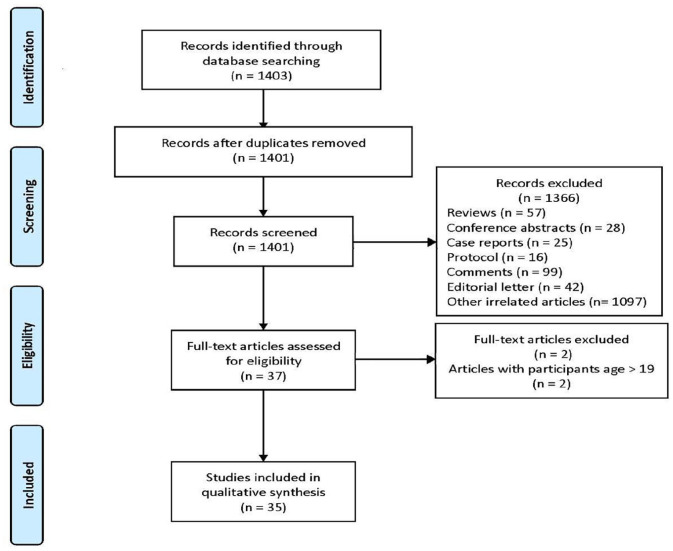
Objective: Mental health problems among children and adolescents are increasingly observed during the outbreak of COVID-19, leading to significant healthcare concerns. Survey studies provide unique opportunities for research during this pandemic, while there are no existing systematic reviews in this setting. The objective was to summarize existing survey studies addressing the effects of the current COVID-19 pandemic on the mental health of children and adolescents. Methods: For this systematic review, we performed an electronic search in multiple databases from December 2019 to December 2020. The quality appraisal of the included studies was performed with the Critical Appraisal Skills Programme Qualitative Checklist. Because of the high methodological heterogeneity between studies, a narrative synthesis of the qualitative data was used. Results: In total, 35 survey studies with 65,508 participants, ranging from 4 to 19 years of age, are included in this review. Anxiety (28%), depression (23%), loneliness (5%), stress (5%), fear (5%), tension (3%), anger (3%), fatigue (3%), confusion (3%), and worry (3%) were the most common mental health issues reported. Children and adolescents with psychiatric and/or developmental disorders, such as severe obesity, chronic lung disease, attention deficit hyperactivity disorder, cystic fibrosis, and obsessive-compulsive disorders, were especially vulnerable to the mental health effects of the COVID-19 pandemic. Age, gender, psychological quality, and negative coping strategies were identified as risk factors for the development of mental health problems. Social and family support, along with a positive coping style, was associated with better outcomes. Conclusion: The impact of the COVID-19 pandemic on mental health of children and adolescents is multifaceted and substantial. Survey studies regarding child and adolescent mental health amid COVID-19 indicated that anxiety, depression, loneliness, stress, and tension are the most observed symptoms. Positive coping strategies with family and social support may be important to achieving better outcomes. Due to limited available evidence, more well-designed studies in this area are urgently needed.
Overview
The claims and statistics of this paper haven’t been checked yet.
Run the check — free, no account needed. It reads the open-access text and checks the sources it cites.
Integrity signals
Registry
Cites
Statistics
Figures
Verification
Claims the paper makes
The claims and statistics of this paper haven’t been checked yet.
Run the check — free, no account needed. It reads the open-access text and checks the sources it cites.
Claims other papers make about this one
Each is checked against this paper’s own text: does it say what the citing paper says it does?
The source backs part of the claim, not all of it — or backs it for a different population, condition or comparison.
In the citing paper
“Systematic reviews have estimated the global prevalence of childhood and teenage depression at 23% and anxiety at 28% [2]”
From Psychological Interventions and Those With Elements of Positive Psychology for Child and Youth Mental Health During the COVID-19 Pandemic: Literature Review, Lessons Learned, and Areas for Future Knowledge Dissemination (2024) · cites this paper as [2]
Experimental — accuracy not yet measuredThe cited source says what the claim attributes to it.
In the citing paper
“Furthermore, the COVID-19 pandemic has exerted a substantial influence on the mental well-being of children and adolescents, with specific subgroups being especially susceptible to the psychological consequences of the pandemic [55].”
From Clinical Efficacy of Psychotherapeutic Interventions for Post-Traumatic Stress Disorder in Children and Adolescents: A Systematic Review and Analysis. (2024) · cites this paper as [55]
In the citing paper
“Several systematic reviews also found that certain child and adolescent populations were at risk for experiencing poorer well-being outcomes, including older adolescents, girls, neurodivergent populations, and/or chronic physical conditions [23], and populations with psychiatric or developmental disorders (e.g., obesity, lung disease, attention deficit hyperactivity disorder (ADHD), obsessive comp”
From Loneliness and Well-Being in Children and Adolescents during the COVID-19 Pandemic: A Systematic Review (2023) · cites this paper as [25]
In the citing paper
“Methods of increasing children’s and adolescents’ feelings of belonging to a social group and experiencing positive social rewards can include access to physical exercise, social hobbies, and entertainment [25,71].”
From Loneliness and Well-Being in Children and Adolescents during the COVID-19 Pandemic: A Systematic Review (2023) · cites this paper as [25]
Self-check
Percentages, sums and reported differences re-computed from the paper’s own numbers.
The self-check needs the paper’s full text.
Citations
Cites
Liberati, A., Altman, D. G., Tetzlaff, J., Mulrow, C., Gøtzsche, P. C., Ioannidis, J. P. A., Clarke, M., Devereaux, P. J., Kleijnen, J., & Moher, D. (2009) · PLoS Medicine · doi:10.1371/journal.pmed.1000100 · Cited by 28,164
The Psychological Impact of Quarantine and How to Reduce It: Rapid Review of the Evidence
Brooks, S. K., Webster, R. K., Smith, L. E., Woodland, L., Wessely, S., Greenberg, N., & Rubin, G. J. (2020) · doi:10.2139/ssrn.3532534 · Cited by 16,394
The psychological impact of quarantine and how to reduce it: Rapid review of the evidence
Brooks, S. K., Webster, R. K., Smith, L. E., Woodland, L., Wessely, S., Greenberg, N., & Rubin, G. J. (2020) · The Lancet · doi:10.1016/s0140-6736(20)30460-8 · Cited by 16,378
Fegert, J. M., Vitiello, B., Plener, P. L., & Clemens, V. (2020) · Child and Adolescent Psychiatry and Mental Health · doi:10.1186/s13034-020-00329-3 · Cited by 1,807
Magson, N. R., Freeman, J. Y. A., Rapee, R. M., Richardson, C. E., Oar, E. L., & Fardouly, J. (2021) · Journal of Youth and Adolescence · doi:10.1007/s10964-020-01332-9 · Cited by 1,498
Behavioral and emotional disorders in children during the COVID-19 epidemic
Jiao, W. Y., Wang, L. N., Liu, J., Fang, S. F., Jiao, F. Y., Pettoello-Mantovani, M., & Somekh, E. (2020) · The Journal of Pediatrics · doi:10.1016/j.jpeds.2020.03.013 · Cited by 1,468
Zhou, S.-J., Zhang, L.-G., Wang, L.-L., Guo, Z.-C., Wang, J.-Q., Chen, J.-C., Liu, M., Chen, X., & Chen, J.-X. (2020) · European Child & Adolescent Psychiatry · doi:10.1007/s00787-020-01541-4 · Cited by 1,464
Posttraumatic stress disorder in parents and youth after health-related disasters
Sprang, G., & Silman, M. (2013) · Disaster Medicine and Public Health Preparedness · doi:10.1017/dmp.2013.22 · Cited by 1,114
Epidemiology of mental health problems in COVID-19: a review
Hossain, M. M., Tasnim, S., Sultana, A., Faizah, F., Mazumder, H., Zou, L., McKyer, E. L. J., Ahmed, H. U., & Ma, P. (2020) · F1000Research · doi:10.12688/f1000research.24457.1 · Cited by 1,113
The impact of COVID-19 lockdown on child and adolescent mental health: systematic review
Panchal, U., Salazar de Pablo, G., Franco, M., Moreno, C., Parellada, M., Arango, C., & Fusar-Poli, P. (2023) · European Child & Adolescent Psychiatry · doi:10.1007/s00787-021-01856-w · Cited by 1,028
Research works printed but not linked: 2
- Pavone P, 2020, Eur Rev Med Pharmacol Sci, 24, 4572
- Kilincel S, 2020, Asia Pac Psychiatry, 13
Cited by
Sorted by citations
Items 101–200 of 243
Kendzerska, T., Radhakrishnan, D., Amin, R., Narang, I., Boafo, A., Robillard, R., Talarico, R., Blinder, H., Spitale, N., & Katz, S. L. (2024) · Annals of the American Thoracic Society · doi:10.1513/annalsats.202311-933oc · Cited by 3
Everett, Y., Lightcap, A., O’Brien, J. R., Weinstein, N. Y., & Zalewski, M. (2024) · Cognitive and Behavioral Practice · doi:10.1016/j.cbpra.2024.04.002 · Cited by 3
Predictors of loneliness among middle childhood and adolescence during the COVID-19 pandemic
Benhayoun, A., Olsavsky, A. L., Akard, T. F., Gerhardt, C. A., & Skeens, M. A. (2024) · PLoS ONE · doi:10.1371/journal.pone.0308091 · Cited by 4
Shokrkon, A., & Nicoladis, E. (2023) · Frontiers in Psychology · doi:10.3389/fpsyg.2023.1190375 · Cited by 4
“Studies have reported various mental health problems among children and adolescents exposed to the COVID-19 pandemic, including anxiety, stress, depression, panic, irritation, impulsivity, loneliness, fatigue, and confusion (Hossain et al., 2020; Jiao et al., 2020; Theberath et al., 2022).”
BackgroundLessons Learned From the COVID-19 Pandemic in K-12 Education
Zimmerman, K. O., & Benjamin, D. K. (2023) · PEDIATRICS · doi:10.1542/peds.2023-060352o · Cited by 3
Saleh, O. A., Khatib, M., Hadid, S., Dahamsheh, K., & Basis, F. (2023) · Vaccines · doi:10.3390/vaccines11101540 · Cited by 3
“Mandatory isolation of confirmed cases led to a rise in anxiety and depression among those children [15].”
BackgroundPontillo, M., Menghini, D., Averna, R., Labonia, M., Lazzaro, G., Tata, M. C., & Vicari, S. (2023) · Children · doi:10.3390/children10121846 · Cited by 2
“Panchal et al. [17], along with another review by Theberath et al. [18], concluded by emphasizing the need for in-depth studies on the effects of lockdown on the mental health of children and adolescents.”
BackgroundImpact of the COVID-19 pandemic on the psychological well-being of adolescents by gender identity
Folch, C., Ganem, F., Colom‐Cadena, A., Martínez, I., Cabezas, C., & Casabona, J. (2023) · Gaceta Sanitaria · doi:10.1016/j.gaceta.2023.102346 · Cited by 3
Influence of the COVID-19 Pandemic on Health-Care Career Interests Among High School Students
Vasudev, K., Vasudev, E., Lee, C., Neumann, A. A., Regner, A., Simpson, P. M., Dasgupta, M., & Fletcher, K. E. (2023) · Journal of Adolescent Health · doi:10.1016/j.jadohealth.2023.10.022 · Cited by 3
Bialy, L. M., Elliott, S. A., Melton, A., Ali, S., Scott, S. D., Knisley, L., & Hartling, L. (2024) · Journal of Child Health Care · doi:10.1177/13674935241238794 · Cited by 6
“Although we did not collect data on the results of the outcomes included in the articles, others have reported that lockdowns have had signi fi cant impact on children ’ s and adolescents ’ mental health (Bussières et al., 2021; Theberath et al., 2022).”
Hughes, M. L., White, L. S., O’Brien, M. J., Aubin, J., & Bradford, C. R. (2024) · The Journal of School Nursing · doi:10.1177/10598405241237726 · Cited by 3
“Students returned full-time to the classroom, discontinued mask mandates, vaccinations with boosters encouraged but not required, and childhood mental health identi fi ed as a national emergency (Hill et al., 2021; Theberath et al., 2022; Van Lancker & Parolin, 2020).”
Psychogenic hearing loss in children and adolescents. Diagnosis and psychotherapy
Gwizda, G., Horaczyńska-Wojtaś, A., Mielnik–Niedzielska, G., Kasprzyk, A., Chmielik, L. P., & Niedzielski, A. (2025) · Annals of Medicine · doi:10.1080/07853890.2024.2447412 · Cited by 3
“…therefore, the cooperation of the audiologist with mental health specialists is extremely important, as confirmed by other researchers [26–31]. this study has some unavoidable limitations. the main limitation is a small sample size with only 22 patients enrolled to the study. this may…”
Negriff, S. L., Sidell, M. A., Barton, L. J., & DiGangi, M. J. (2025) · BMC Pediatrics · doi:10.1186/s12887-025-05456-4 · Cited by 3
Risk of body weight changes among Danish children and adolescents during the COVID ‐19 pandemic
Berg, S. K., Birk, N. M., Thorsted, A. B., Rosenkilde, S., Bering, L., Nygaard, U., Bundgaard, H., Thygesen, L. C., Ersbøll, A. K., Nielsen, S. D., et al. (2023) · Pediatric Obesity · doi:10.1111/ijpo.13005 · Cited by 3
“Likewise, the pandemic has negatively affected the mental well-being of children.(10,11) This is hypothesised to be mediated, at least in part, through mental stressors such as social isolation from peers, cancellation of extracurricular activities and economic and social insecurity in the families.”
BackgroundParental labour market instability and children's mental health during the pandemic
Cattan, S., Farquharson, C., Krutikova, S., McKendrick, A., & Sevilla, A. (2023) · doi:10.1920/wp/ifs.2023.2123 · Cited by 3
Bucko, A. G., Dowda, M., Inak, N., Wilson, D. K., & Pate, R. R. (2024) · Journal of Adolescent Health · doi:10.1016/j.jadohealth.2024.04.026 · Cited by 2
Impact of emerging COVID-19 variants on psychosocial health: A systematic review
Kumar, P., Sarkar, M., Femenías, Y. M., Gnanaraj, R., Martinez, D., Pisfil-Farroñay, Y., Chaudhary, L., Agrawal, P., Kaushal, G. P., Mbwogge, M., et al. (2025) · Journal of Family Medicine and Primary Care · doi:10.4103/jfmpc.jfmpc_606_24 · Cited by 3
“[39,40] Among the results, it was found that the main factors associated with psychological impact were being female, average age between 26 and 35 years, low level of education, being single, al.”
Rahman, N. K., Ishitsuka, K., Piedvache, A., Hangai, M., & Morisaki, N. (2025) · Journal of Affective Disorders Reports · doi:10.1016/j.jadr.2025.100959 · Cited by 2
Wang, C., Li, Q., Xu, D., & Yuan, G. F. (2025) · Asian Journal Of Social Psychology · doi:10.1111/ajsp.70056 · Cited by 2
Agorastos, A., Thompson, T., Solmi, M., Cortese, S., Estradé, A., Raduà, J., Dragioti, E., Vancampfort, D., Thygesen, L. C., Aschauer, H. N., et al. (2025) · European Neuropsychopharmacology · doi:10.1016/j.euroneuro.2025.112741 · Cited by 2
Colosi, E., Lina, B., Elias, C., Vanhems, P., & Colizza, V. (2026) · PNAS Nexus · doi:10.1093/pnasnexus/pgag061 · Cited by 2
“The COVID-19 pandemic pushed authorities worldwide to re-peatedly close schools, exposing students to significant learning losses, increased anxiety, missed social opportunities, and exacerbated inequalities (45, 46).”
Psychometric Validation of the Indonesian Version of Children’s Revised Impact of Event Scale 13
Laksmita, O. D., Chung, M., Shieh, Y., & Chang, P. (2022) · International Journal of Environmental Research and Public Health · doi:10.3390/ijerph192417069 · Cited by 4
“The pandemic has been a traumatic event, with negative effects on the mental health of vulnerable populations such as children and adolescents [5], potentially leading to their development of posttraumatic stress disorder (PTSD) [6].”
BackgroundPalma, P. L., Sessa, A. D., Passaro, A. P., Palladino, E., Furcolo, G., Barlabà, A., Rivetti, G., Lucia, M. D., del Giudice, E. M., Guarino, S., et al. (2023) · Children · doi:10.3390/children10010123 · Cited by 2
“Moreover, various mental health problems among children have been identified such as an increase of anxiety, depression, loneliness, stress, fear, tension, anger, fatigue, confusion, and worry [4].”
BackgroundMAIN FACTORS OF THE NEGATIVE IMPACT OF THE COVID-19 PANDEMIC ON MENTAL HEALTH OF CHILDREN
Hozak, S. V., Єлізарова, О. Т., Stankevych, T. V., & Парац, А. (2022) · Medical Science of Ukraine (MSU) · doi:10.32345/2664-4738.4.2022.11 · Cited by 2
Freeman, S. J., Rasiah, S., Cohen-Silver, J., Xu, K., Lebovic, G., & Maguire, J. L. (2023) · Journal of Pediatric Health Care · doi:10.1016/j.pedhc.2023.04.002 · Cited by 2
“symptoms in children and symptoms of loneliness, stress, and fear during the COVID-19 pandemic (Samji et al., 2022; Theberath et al., 2022).”
Başer, O., Zeng, Y., Alsaleh, S., & Baser, I. (2023) · Adolescents · doi:10.3390/adolescents3040045 · Cited by 2
Chatzidaki, E., Chioti, V., Mourtou, L., Papavasileiou, G., Kitani, R.-A., Kalafatis, E., Mitsis, K., Αθανασίου, Μ., Zarkogianni, K., Nikita, K. S., et al. (2024) · Children · doi:10.3390/children11010107 · Cited by 2
“Many studies have found that strict lockdown measures which cause dramatic lifestyle changes have a serious impact on the psychological well-being of children regardless of weight status [19,78].”
BackgroundThe long-term indirect impact of Covid-19 on child health
Ashikkali, L., Seggie, A. J. R., & Johnson, C. (2024) · Paediatrics and Child Health · doi:10.1016/j.paed.2024.02.003 · Cited by 2
Oppositional Defiant Disorder: Clinical Considerations and When to Worry
Lopez, J. D., Daniels, W., & Joshi, S. V. (2024) · Pediatrics in Review · doi:10.1542/pir.2022-005922 · Cited by 2
Carr, J. M., Schoephoerster, K., & Riegel, C. (2024) · Mathematical Thinking and Learning · doi:10.1080/10986065.2024.2343036 · Cited by 2
“The uptick of sedentary lifestyles during the pandemic was found to negatively affect the academic, physical, mental, and social health of children and young adults on a global scale (Bryant et al., 2022; T.-J. Hwang et al., 2020; Maugeri et al., 2020; Theberath et al., 2022).”
Moving Through the Storm: A Longitudinal Study on IT-Based Agile Organizational Crisis Response
Ou, J., & Wong, I. A. (2024) · SAGE Open · doi:10.1177/21582440241239467 · Cited by 3
“The COVID-19 pandemic not only poses global health and humanitarian challenges to cities and healthcare systems, it also has caused unprecedented disruptions to organizations around the world (Theberath et al., 2022; Wong et al., 2023).”
Wu, J., Kuan, G., Wang, Y., Liu, Z., Hu, X., Kueh, Y. C., & Zhang, X. (2024) · BMC Public Health · doi:10.1186/s12889-024-18842-x · Cited by 2
“Numerous studies have consistently demonstrated that the COVID-19 pandemic has had a profoundly detrimental impact on the mental well-being of adolescents [20–22].”
BackgroundNo Association between SARS-CoV-2 Infection and Quality of Life 6- and 12-Months After Infection
Dun-Dery, F., Xie, J., Winston, K., Burstein, B., Emsley, J. G., Sabhaney, V. J., Gravel, J., Zemek, R. L., Kam, A. J., Mater, A., et al. (2024) · Academic Pediatrics · doi:10.1016/j.acap.2024.07.003 · Cited by 2
Marfoli, A., Speziale, G., Prete-Ferrucci, G. D., Cole, H., Sandi, A. D., Mellace, D., Chieffo, D. P. R., Barbieri, S., Priori, A., Dell’Osso, B. M., et al. (2024) · Journal of Clinical Medicine · doi:10.3390/jcm13164768 · Cited by 2
“The fear of COVID-19, fear of death, fear of relatives’ death, fear of being isolated, and fear of asking questions about the pandemic emerged in greater numbers than in the pre-pandemic period [16,18,20–22].”
BackgroundInfluentialCasline, E. P., Woodard, G. S., Lane, E., Pollowitz, S., Douglas, S. R., Ehrenreich, J. T., Ginsburg, G. S., & Jensen‐Doss, A. (2024) · Administration and Policy in Mental Health and Mental Health Services Research · doi:10.1007/s10488-024-01417-8 · Cited by 2
“…and their further exacerbation by the effects of isolation, stress, and changes in routines during the COVID-19 pandemic have underscored the need for high quality youth mental health care services (Jones et al., 2021; Lebrun-Harris et al., 2022; Theberath et al., 2022; Tkacz & Brady, 2021).”
Rajasekera, T. A., Galley, J. D., Mashburn‐Warren, L., Lauber, C. L., Bailey, M. T., Worly, B. L., & Gur, T. (2024) · Scientific Reports · doi:10.1038/s41598-024-77560-x · Cited by 2
Vachhani, S. S., Riley, H. O., Miller, A. L., Ellis, J., & Herrenkohl, T. I. (2024) · International Journal of School & Educational Psychology · doi:10.1080/21683603.2024.2444445 · Cited by 2
“Students’ mental health only worsened as realities of the pandemic set in (Demaray et al., 2022), and are at high and rising levels in these post-pandemic years (Theberath et al., 2022).”
Raičević, M., Obradovic, A., Samardžić, M., Raicevic, M., Popovic, N. C., & Zarić, S. P. (2022) · International Journal of Environmental Research and Public Health · doi:10.3390/ijerph192214873 · Cited by 2
“It was previously reported that during COVID-19 pandemic children and adolescents were frequently coping with mental disturbances such as anxiety, depression, stress, loneliness and tension [8].”
BackgroundAvşar, A. Ş., & Avşar, V. (2022) · International Journal of Cognitive Therapy · doi:10.1007/s41811-022-00155-9 · Cited by 2
“However, the high rates of transmission and death of COVID-19, the significant damage to health by the infection, the uncertainties about the course of the disease, its negative consequences on daily life, and the measures taken to prevent its transmission have fueled the development of pandemic-specific fear and anxi…”
BackgroundParental Burnout, Quality of Life, and Pregnancy During COVID-19
Holmes, C., & Iwanaga, K. (2023) · The Family Journal · doi:10.1177/10664807231173693 · Cited by 2
“Furthermore, child mental health and wellbeing has also worsened since the onset of the pandemic (Theberath et al., 2022).”
BackgroundThe Silent Victims of the Pandemic: Children During the Coronavirus Disease 2019 Crisis
Topçu, S., & Gür, E. (2023) · Turkish Archives of Pediatrics · doi:10.5152/turkarchpediatr.2023.23044 · Cited by 2
Attridge, M. M., Heffernan, M. E., Bendelow, A. C., Menker, C. G., Davis, M. M., & Sheehan, K. (2023) · Injury Epidemiology · doi:10.1186/s40621-023-00444-7 · Cited by 2
“While not necessarily a limitation, these results were collected during the COVID-19 pandemic during which firearm sales rose rapidly (Schleimer et al. 2021), and more children experienced behavioral health concerns (Theberath et al. 2022).”
ResultPerspective Chapter: Mind the Gap – Young People’s Mental Health and Equine Assisted Interventions
Sullivan, S. K., & Hemingway, A. (2023) · IntechOpen eBooks · doi:10.5772/intechopen.1003135 · Cited by 3
Pilot Trial of a Four-Session Parent Training Tele-Group for Adolescent ADHD
Schoenfelder, E. N., Gabert, T., Jenness, J. L., Macphee, F. L., Stein, M. A., & Sibley, M. H. (2024) · Cognitive and Behavioral Practice · doi:10.1016/j.cbpra.2023.12.010 · Cited by 2
Al‐Mamun, F., Mamun, M. A., ALmerab, M. M., Islam, J., & Muhit, M. (2024) · Psychological Reports · doi:10.1177/00332941241287490 · Cited by 2
Tabullo, A. J., Canet-Juric, L., & Abusamra, V. (2022) · Research Square · doi:10.21203/rs.3.rs-1784639/v1 · Cited by 2
Believe in You student empowerment program: A pilot study
Centeio, E. E., Barcelona, J., Mercier, K., Hart, A., & Foley, J. T. (2023) · Frontiers in Sports and Active Living · doi:10.3389/fspor.2022.1078002 · Cited by 1
Robles, B., Kwak, H., & Kuo, T. (2024) · International Journal of Behavioral Medicine · doi:10.1007/s12529-024-10259-5 · Cited by 1
“For example, there is evidence that during the pandemic, these conditions disproportionately affected certain groups, such as children/adolescents [5, 6] and racially minoritized populations [7].”
Goddard, J. A., Pagnotta, V. F., Duncan, M. J., Sudiyono, M., Pickett, W., Leatherdale, S. T., & Patte, K. A. (2024) · Health Promotion and Chronic Disease Prevention in Canada · doi:10.24095/hpcdp.44.3.04 · Cited by 1
“26,27 Evidence exists for the positive effects of social support on adolescent mental health during the pandemic, 23 and one US study identified a moderating effect of parental support on adolescents’ financial stress and mental health.”
BackgroundThe Experience of Psychosomatic Disorders among Adolescents: Challenges and Coping Strategies
Bulut, S., Bukhori, B., & Bhat, R. H. (2023) · Journal of Personality and Psychosomatic Research · doi:10.61838/kman.jppr.2.2.4 · Cited by 1
Rezende, E. R., & Barboza, A. R. A. (2024) · Research Society and Development · doi:10.33448/rsd-v13i7.46066 · Cited by 1
Powell, T. M., Wetzel, G., & Cardoso, J. B. (2024) · Children & Schools · doi:10.1093/cs/cdae020 · Cited by 1
Identifying Caregiving Youth and Associated Mental Health Concerns in a Medical Clinic Setting
Pulgarón, E. R., Llano, G., Guevara, G., Kenworthy, T., Wurm, G., Gwynn, L. A., Siskowski, C., & Belkowitz, J. (2025) · Healthcare · doi:10.3390/healthcare13030255 · Cited by 1
Child Well‐Being and Family Quality of Life During the COVID‐19 Pandemic
Lategan, C., Newton, A. S., Thull‐Freedman, J. D., Xie, J., Winston, K., Wright, B. J., Stubbs, M., & Freedman, S. B. (2025) · Child Care Health and Development · doi:10.1111/cch.70063 · Cited by 1
“…deteriorations or exacerbations during the pandemic (Cost et al. 2022; Hawke et al. 2020; Richard et al. 2023; T. Vaillancourt et al. 2021; Theberath et al. 2022), there is evidence that a child's mental health condition can negatively impact parental well-being (Azman et al. 2019;…”
Kurbatfinski, S., Dosani, A., Hayes, A. F., Dewey, D., & Letourneau, N. L. (2025) · Frontiers in Psychology · doi:10.3389/fpsyg.2025.1596613 · Cited by 1
Parent–Adolescent communication during COVID-19 and adolescent Emotions: The role of parenting style
Lee, W., & Kim, A. J. (2025) · Children and Youth Services Review · doi:10.1016/j.childyouth.2025.108730 · Cited by 1
Tatematsu, D., Nakamura, N., Abe, M., Ishikawa, T., Ezaki, T., Cai, L., Kawakami, E., Aihara, K., Nishida, A., Okada, N., et al. (2026) · PLoS Medicine · doi:10.1371/journal.pmed.1004884 · Cited by 1
“Most reports showed increased psychological distress during the pandemic [8,9], but some conversely showed better mental health outcomes, suggesting relief from routine psychological stress experienced during school and social activities [10–12].”
Cai, Z., Herold, F., Zhou, L., Lubans, D. R., Gerber, M., Chen, J., Werneck, A. O., Pan, S., Aikeremu, A., Mavilidi, M. F., et al. (2026) · Mental health and physical activity · doi:10.1016/j.mhpa.2026.100795 · Cited by 1
Connelly, M. A., Dilts, J. J., Boorigie, M. E., & Gerson, T. (2023) · Children · doi:10.3390/children10020184 · Cited by 1
“Consistent with coping and stress buffering theories [14,15], children’s coping strategies and their level of perceived family and peer support are speculated to be important moderators of the pandemic’s impact [8,9,13].”
BackgroundResultCocientes de neurodesarrollo en niños postconfinamiento por covid-19
Salazar, C. M. L., Pérez, M. L. R., Ortíz, A. B., & Rubio, A. D. R. M. (2023) · LATAM Revista Latinoamericana de Ciencias Sociales y Humanidades · doi:10.56712/latam.v4i1.371 · Cited by 1
Psychological Impact of COVID-19 on Children and Adolescents: A Narrative Review
Nafei, Z., Samadzadeh, G., Ordooei, M., & Vaghefi, M. (2023) · Journal of Pediatrics Review · doi:10.32598/jpr.11.1.1088.1 · Cited by 1
Ordóñez-Camblor, N., Landa, S. U., Castro, J. L. G., & Pizarro-Ruiz, J. P. (2023) · Current Psychology · doi:10.1007/s12144-023-04893-7 · Cited by 1
“…the cross-sectional studies conducted in this field, informants were parents rather than the children/adolescents themselves (Ezpeleta et al., 2020; Stassart et al., 2021), rendering the number of those that directly assessed young people smaller still (Jones et al., 2023; Theberath et al., 2022).”
ISLAM, M. A. (2023) · Journal of Community Positive Practices · doi:10.35782/jcpp.2023.2.05 · Cited by 3
Quality of life in adolescents. A longitudinal study of the impact of the COVID-19 pandemic
Morales-Ortiz, J., Muñoz-Martínez, S., Martínez-Sánchez, A., & García, J. J. L. (2023) · Anales de Psicología · doi:10.6018/analesps.554511 · Cited by 3
Sosialisasi Resiliensi Pada Remaja: You Are Strong Than You Think
Putri, R. D., Hidajat, H. G., Asfari, N. A. B., & Rahmi, Y. (2023) · GERVASI Jurnal Pengabdian kepada Masyarakat · doi:10.31571/gervasi.v7i2.5234 · Cited by 1
“Guna mengoptimalkan perkembangan remaja dalam mengatasi faktor risiko dari masalah kesehatan mental, beberapa studi menjelaskan bahwa remaja dapat melakukan positive coping strategies (Jones et al., 2021; Theberath et al., 2022).”
BackgroundCross-Cohort Changes in Parent-Rated Child Mental Health over Two Decades
Slobodskaya, H. R., Kornienko, O. S., Leto, I. V., Ryabichenko, T. I., Варшал, А. В., Petrenko, E. N., Козлова, Е. А., Grishkevich, M. E., & Loginova, S. V. (2024) · Psikhiatriya · doi:10.30629/2618-6667-2023-21-6-6-16 · Cited by 1
Covid-19 Pandemisi Sonrası Okullarda Yaşanan Öğrenci Sorunlarının İncelenmesi
Çelik, N., & Kılıçoğlu, D. Y. (2024) · Anadolu Üniversitesi Eğitim Fakültesi Dergisi · doi:10.34056/aujef.1338055 · Cited by 2
Gowans, L., Ritchie, T., Rogers, M., Jiang, Y., Climie, E. A., Mah, J. W. T., Corkum, P. V., Krause, A., & Parvanova, M. (2024) · Child Psychiatry & Human Development · doi:10.1007/s10578-024-01732-z · Cited by 2
Impact of healthy lifestyles on mental health indicators in adolescents after the COVID-19 pandemic
Carrizales, L. M., Vilca, L. W., Santiago-Vizcarra, C., Fernández, Y. S., & Caycho‐Rodríguez, T. (2024) · Mental Health & Prevention · doi:10.1016/j.mhp.2024.200371 · Cited by 4
Zupanič, S., Karakatič, S., & Radobuljac, M. D. (2024) · Child and Adolescent Psychiatry and Mental Health · doi:10.1186/s13034-024-00811-2 · Cited by 1
Sohn, S., Jeong, J., & Park, H. (2024) · Asian Social Work and Policy Review · doi:10.1111/aswp.70001 · Cited by 1
Muhajarine, N., & Ramamoorthy, S. (2024) · Current Psychology · doi:10.1007/s12144-024-07009-x · Cited by 1
“Adolescent life stage, developmentally and chrono - logically, has consistently been identified as a significant risk factor for adverse mental health outcomes during the COVID-19 pandemic (Theberath et al., 2022 ).”
Telepsychiatry Expansion of Inpatient Psychiatry Services During the COVID-19 Pandemic
Penwill, N. Y., Lalisan, A., Carubia, B. A., McNitt, C., Fritsch, S. L., Clark, B., Hyle, B., & Lockwood, J. M. (2025) · Hospital Pediatrics · doi:10.1542/hpeds.2024-007942 · Cited by 1
Network analysis of loneliness, mental, and physical health in Czech adolescents
Meier, Z., Helvich, J., Fürstová, J., Novák, L., Purova, D., Žídková, R., & Tavel, P. (2025) · Child and Adolescent Psychiatry and Mental Health · doi:10.1186/s13034-025-00884-7 · Cited by 1
“This isolation was closely tied to mental health challenges such as depression, anxiety, and stress [18, 168– 170].”
Durak, F., Tezol, Ö., Aksu, G. G., & Bozlu, G. (2025) · The Journal of Pediatric Academy · doi:10.4274/jpea.2025.398 · Cited by 1
“The COVID-19 pandemic has significantly impacted young child and adolescent mental health, with anxiety, depression, loneliness, and stress being the most commonly reported issues 13 .”
Schreyer, V., Bornschlegl, M. X., & Hemmje, M. (2025) · Information · doi:10.3390/info16050349 · Cited by 1
Penguatan Kapasitas Guru SMA Dalam Masa Pandemi Covid-19 Terkait Usaha Kesehatan Sekolah
Santi, B. T., Kristian, K., Hadiyanto, H., Fitriah, N., & Gunawan, D. (2023) · Jurnal Pengabdian Pada Masyarakat · doi:10.30653/jppm.v8i1.184 · Cited by 1
COVID-19 and children's behavioral health: An overview
Pajek, J. A., Mancini, K. J., & Murray, M. S. (2023) · Current problems in pediatric and adolescent health care · doi:10.1016/j.cppeds.2023.101491 · Cited by 3
Anaemia and its relation to physical and mental health of Indonesian adolescents
Asrullah, M. (2023) · doi:10.18174/586155 · Cited by 1
Mental Health Outcomes and Vulnerability to COVID-19: A Systematic ReviewPreprint
Dondashe, N., Anakpo, G., & Mishi, S. (2023) · Preprints.org · doi:10.20944/preprints202308.0469.v1
[Mutagenic effect of the decay of 32p incorporated into mRNA].
Zakharov, I. A., Vg, K., & Gracheva, L. M. (1978) · PubMed
Application of the Toxic Stress Schema: An Exemplar for School Nurses
Childs, G. D., DeSocio, J. E., Sloand, E., GARY, F. A., Burke, P. J., Outlaw, F. H., Snethen, J. A., Lewandowski, L., & Bowen, F. (2022) · The Journal of School Nursing · doi:10.1177/10598405221135186
“%) among other mental health concerns (Theberath et al., 2022).”
Raffagnato, A., Miscioscia, M., Bruni, G., Col, L. D., Traverso, A., Tascini, B., Rossaro, M. P., Zanato, S., & Gatta, M. (2022) · Research Square · doi:10.21203/rs.3.rs-2268953/v1
COVID-19 and the developing brain
Zarifkar, P., Peinkhofer, C., & Kondziella, D. (2022) · Elsevier eBooks · doi:10.1016/b978-0-12-818872-9.00130-8
Reflections on an ongoing pilot using the ADDRESSING Model
Charity‐Parker, B. (2023) · The Brown University Child and Adolescent Behavior Letter · doi:10.1002/cbl.30706
Healing Broken Bones and Fixing Fractured Connections
Ingoglia, C. (2023) · The Journal of Behavioral Health Services & Research · doi:10.1007/s11414-023-09842-7
Editorial: Social cognition and mental health among children and youth
Zhi, K., Xia, L., Bueno, D., Chen, Y., Li, Z., & Laranjeira, C. (2023) · Frontiers in Psychology · doi:10.3389/fpsyg.2023.1228526
“Long-term effects of stress, such as COVID-19, have the potential to seriously endanger developing children’s and youth’s social cognition and mental health (Marques de Miranda et al., 2020; Theberath et al., 2022).”
BackgroundMcDougal, L., Majnoonian, A., Stone, G., & Fielding-Miller, R. K. (2023) · PLoS ONE · doi:10.1371/journal.pone.0288628
Manifestações psicopatológicas e cognitivas associadas à infecção pelo vírus SARS-CoV-2
Damiano, R. F. (2023) · Digital Library of Theses and Dissertations (Universidade de São Paulo) · doi:10.11606/t.5.2023.tde-29082023-114208
Wyant, J. D., Olsen, E. B., Towner, B. C., Keath, A. J., Huang, J., Meeteer, W., Tsuda, E., & Burneisen, L. M. (2023) · European Physical Education Review · doi:10.1177/1356336x231205466
“…also alerted the public to concerns over children ’ s health, which stemmed from increased screen time, decreased physical activity levels, poor nutrition habits, weight gain (Bennett et al., 2021), and mental health issues such as depression, stress, fear, and confusion (Theberath et al., 2022).”
BackgroundZhang, L., Hu, H., & Wu, S. (2023) · International Conference on Intelligent Computing and Human-Computer Interaction (ICHCI) · doi:10.1109/ichci58871.2023.10278007
“This has had a significant impact on emotional well-being and societal mindset, especially on the mental health of children and adolescents [2].”
BackgroundSacotte, K. A., Tomlin, B. D., Judkins, A. J., & Brunelli, L. (2023) · SpringerBriefs in public health · doi:10.1007/978-3-031-45520-9_6
Internalisierende Störungen bei Kindern und Jugendlichen
Dippel, N., & Asbrand, J. (2023) · Kindheit und Entwicklung · doi:10.1026/0942-5403/a000431 · Cited by 1
Bernardo, G. D., Ferraro, V. A., Zanconato, S., & Carraro, S. (2024) · doi:10.56164/pediatrrespirj.2023.38
Bashatah, L., Aseri, S., & Al‐Rawi, M. B. A. (2024) · Psychology Research and Behavior Management · doi:10.2147/prbm.s448194
“13,14 In addition, literature shows that COVID-19 caused different mental behaviors among youngsters by worsening the child’s mental health outcomes which was further reflected by the socioeconomic status of the family.”
Bernardo, G. D., Ferraro, V. A., Zanconato, S., & Carraro, S. (2024) · doi:10.56164/pediatrrespirj.2024.38
Goddard, J. A., Pagnotta, V. F., Duncan, M. J., Sudiyono, M., Pickett, W., Leatherdale, S. T., & Patte, K. A. (2024) · Promotion de la santé et prévention des maladies chroniques au Canada · doi:10.24095/hpcdp.44.3.04f
Impact of the COVID‑19 pandemic on emergency transport times for patients with urological diseases
Minami, M., Miyauchi, M., Eitoku, M., Kawauchi, A., Fukuhara, H., Ashida, S., Karashima, T., Inoue, K., Suganuma, N., & Nishiyama, K. (2024) · World Academy of Sciences Journal · doi:10.3892/wasj.2024.240
Saleem, A., & Tariq, U. (2024) · Infectious diseases News Opinions Training · doi:10.33029/2305-3496-2024-13-1-27-34
Metadata
- Authors
- Theberath, M., Bauer, D., Chen, W., Salinas, M., Mohabbat, A. B., Yang, J., Chon, T. Y., Bauer, B. A., & Wahner-Roedler, D. L.
- Affiliations
- St. Olaf College (US)
- Century High School, Rochester, MN, USA
- Mayo Clinic (US)
- St. Olaf College, Northfield, MN, USA
- Venue
- SAGE Open Medicine
- Publisher
- SAGE Publications
- Published
- 2022-01
- Volume
- 10
- Pages
- 20503121221086712-20503121221086712
- ISSN
- 2050-3121 (ISSN-L)
- PMC
- PMC8972920
- OpenAlex
- W4225507166
- Cited by
- 244
- References
- 44
- Citations by year
- 2026: 21 · 2025: 35 · 2024: 77 · 2023: 89 · 2022: 21
- FWCI
- 9.28
- Type
- journal article
- Language
- en
- Open access
- gold
- doi.org
- Licence
- Locations
- SAGE Open Medicine (publishedVersion, cc-by-nc)
- PubMed Central (publishedVersion, cc-by-nc)
- PubMed (publishedVersion)
- DOAJ (DOAJ: Directory of Open Access Journals) (submittedVersion)
- Funders
- The HEAD Foundation, Singapore
- Topics
- Social Sciences › Psychology › Clinical Psychology › COVID-19 and Mental Health
- Social Sciences › Psychology › Clinical Psychology › Child and Adolescent Psychosocial and Emotional Development
- Health Sciences › Medicine › Public Health, Environmental and Occupational Health › Maternal Mental Health During Pregnancy and Postpartum
- Keywords
- COVID-19 pandemic, child mental health, adolescent mental health, anxiety, depression, loneliness, stress, coping strategies, social support, family support, mental illness, developmental disorders, attention deficit hyperactivity disorder, cystic fibrosis, obsessive-compulsive disorder, morbid obesity, chronic lung disease, risk factors
About these checks
Registry, retraction, Cites and statistics results are computed, not judged, with one exception: a printed reference that no index lists is read once by a model before it counts as a citation error. Claims are extracted by a model and kept only when their quote appears verbatim in the text; each cited source is then checked, with a model’s help, for whether it says what the claim relies on. Those verdicts can be wrong — read the claim’s quote and the cited source before relying on one.
Statistics and arithmetic are recomputed, not judged.
Confidence bands are shown only for fields calibrated on our annotated test set. None is calibrated yet, so no band is shown.
What counts as a claim ›How we measure confidence ›How we check this ›
Are you an author, or do you see a problem with this page? Request a review
