

Randomized double blind placebo-controlled trial of Saccharomyces cerevisiae CNCM I-3856 in irritable bowel syndrome: improvement in abdominal pain and bloating in those with predominant constipation
Open accessThe DOI matches its Crossref record; 28 of the 28 references it cites were found in a registry or an index.
Abstract
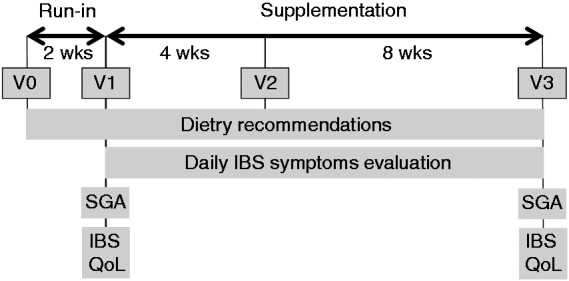
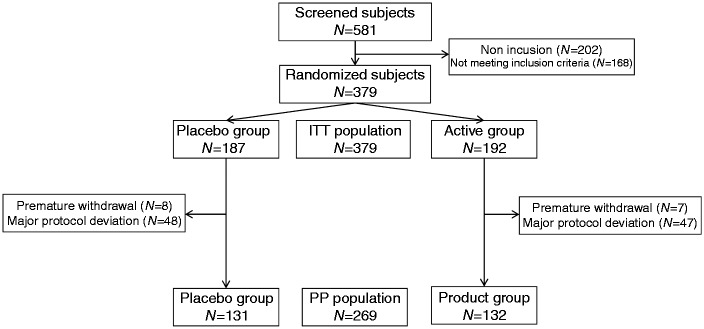
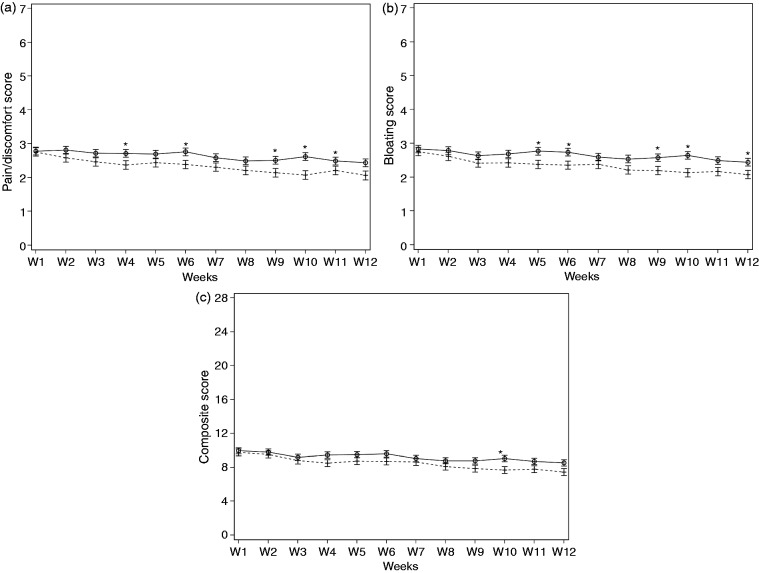
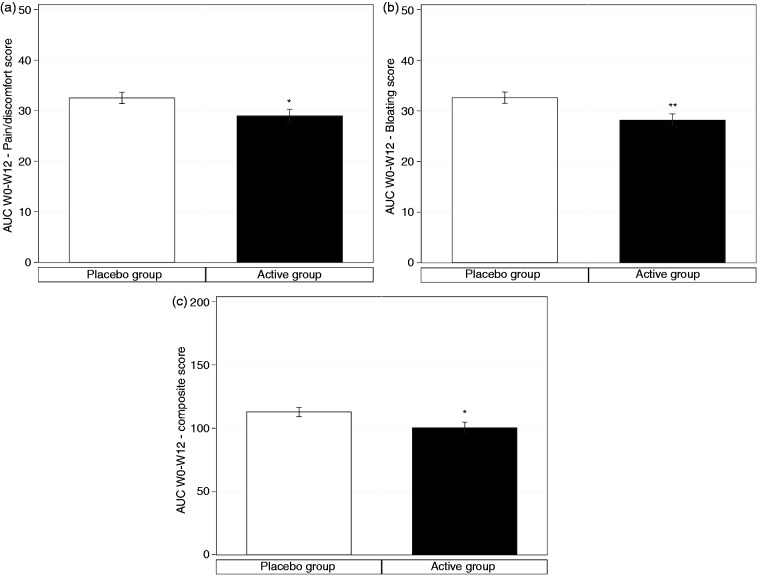
BACKGROUND: Irritable bowel syndrome (IBS) is a common functional gastrointestinal disorder characterized by recurrent abdominal pain and/or discomfort. Probiotics have been reported to benefit IBS symptoms but the level of benefit remains quite unclear. OBJECTIVE: This study was designed to assess the benefit of Saccharomyces cerevisiae I-3856 on IBS symptoms. METHODS: A randomized, double blind, placebo-controlled trial has been performed in 379 subjects with diagnosed IBS. Subjects were randomly supplemented with the probiotics (1000 mg) or placebo for 12 weeks. Questionnaires (gastrointestinal symptoms, stools, wellbeing, and quality of life) were completed. Primary endpoint was percentage of responders defined as having a 50% decrease in the weekly average "intestinal pain/discomfort score" for at least 4 out of the last 8 weeks of the study. RESULTS: There was no overall benefit of S. cerevisiae I-3856 on IBS symptoms and wellbeing in the study population. Moreover, S. cerevisiae I-3856 was not statistically significant predictor of the responder status of the subjects (p > 0.05). Planned subgroup analyses showed significant effect in the IBS-C subjects: improvement of gastrointestinal symptoms was significantly higher in active group, compared to placebo, on abdominal pain/discomfort and bloating throughout the study and at the end of the supplementation. CONCLUSIONS: In this study, S. cerevisiae I-3856 at the dose of 1000 mg per day does not improve intestinal pain and discomfort in general IBS patients. However, it seems to have an effect in the subgroup with constipation which needs further studies to confirm (NCT01613456 in ClinicalTrials.gov registry).
Overview
The claims and statistics of this paper haven’t been checked yet.
Free: it reads the open-access text and checks the first 5 claims that cite a source we can check. Create a free account to check every claim.
Integrity signals
Registry
Cites
Statistics
Figures
Verification
Claims the paper makes
The claims and statistics of this paper haven’t been checked yet.
Free: it reads the open-access text and checks the first 5 claims that cite a source we can check. Create a free account to check every claim.
Self-check
Percentages, sums and reported differences re-computed from the paper’s own numbers.
The self-check needs the paper’s full text.
Citations
Cites
Longstreth, G. F., Thompson, W. G., Chey, W. D., Houghton, L. A., Mearin, F., & Spiller, R. C. (2006) · Gastroenterology · doi:10.1053/j.gastro.2005.11.061 · Cited by 4,856
Self-citationStool form scale as a useful guide to intestinal transit time
Lewis, S. J., & Heaton, K. W. (1997) · Scandinavian Journal of Gastroenterology · doi:10.3109/00365529709011203 · Cited by 3,244
Kurtzman, C. P., & Robnett, C. J. (1998) · Antonie van Leeuwenhoek · doi:10.1023/a:1001761008817 · Cited by 2,353 · cited 1×
“cerevisiae species is characterized by using phenotypic (API ID32C, Biomerieux SAS) and genotypic referenced methods (genetic amplification and sequencing of 26S DNA).(18,19) Moreover, the strain I-3856 is identified thanks to the polymerase chain reaction (PCR) Interdelta typing technique,(20) and other genetic metho…”
MethodA Diet Low in FODMAPs Reduces Symptoms of Irritable Bowel Syndrome
Halmos, E. P., Power, V. A., Shepherd, S. J., Gibson, P. R., & Muir, J. G. (2014) · Gastroenterology · doi:10.1053/j.gastro.2013.09.046 · Cited by 1,249
Rifaximin Therapy for Patients with Irritable Bowel Syndrome without Constipation
Pimentel, M., Lembo, A., Chey, W. D., Zakko, S., Ringel, Y., Yu, J., Mareya, S. M., Shaw, A. L., Bortey, E., & Forbes, W. P. (2011) · New England Journal of Medicine · doi:10.1056/nejmoa1004409 · Cited by 1,036 · cited 1×
“Its role in causing IBS symptoms is contentious but some studies suggest a modest benefit from antibiotic use.(28) At present it is not usually used in screening patients subjected to clinical trials but if a more reliable method of testing was available this might be reconsidered in the future, especially when testin…”
BackgroundKurtzman, C. P., & Robnett, C. J. (1997) · Journal of Clinical Microbiology · doi:10.1128/jcm.35.5.1216-1223.1997 · Cited by 962 · cited 1×
“cerevisiae species is characterized by using phenotypic (API ID32C, Biomerieux SAS) and genotypic referenced methods (genetic amplification and sequencing of 26S DNA).(18,19) Moreover, the strain I-3856 is identified thanks to the polymerase chain reaction (PCR) Interdelta typing technique,(20) and other genetic metho…”
MethodThe epidemiology of irritable bowel syndrome
Card, T., Canavan, C., & West, J. (2014) · Clinical Epidemiology · doi:10.2147/clep.s40245 · Cited by 889 · cited 1×
“Irritable bowel syndrome (IBS) is a ubiquitous functional gastrointestinal disorder characterized by abdominal pain or discomfort, associated with altered bowel habits,(1) reported by 10% of the general population with a female predominance.(2) It has negative impact on health-related quality of life and induces high…”
BackgroundPatrick, D. L., Drossman, D. A., Frederick, I. O., Dicesare, J., & Puder, K. L. (1998) · Digestive Diseases and Sciences · doi:10.1023/a:1018831127942 · Cited by 761 · cited 3×
“(binary endpoint Yes/No).16 Finally, they completed an IBS-specific quality of life questionnaire (IBS QoL) at V1 and V3.”
MethodInfluentialThe efficacy of probiotics in the treatment of irritable bowel syndrome: a systematic review
Moayyedi, P., Ford, A. C., Talley, N. J., Cremonini, F., Foxx-Orenstein, A. E., Brandt, L. J., & Quigley, E. M. M. (2010) · Gut · doi:10.1136/gut.2008.167270 · Cited by 728
Small intestinal bacterial overgrowth in patients with irritable bowel syndrome
Posserud, I., Stotzer, P.-O., Björnsson, E. S., Abrahamsson, H., & Simrén, M. (2007) · Gut · doi:10.1136/gut.2006.108712 · Cited by 499
Cited by
ACG Clinical Guideline: Management of Irritable Bowel Syndrome
Lacy, B. E., Pimentel, M., Brenner, D. M., Chey, W. D., Keefer, L. A., Long, M. D., & Moshiree, B. (2021) · American Journal of Gastroenterology · doi:10.14309/ajg.0000000000001036 · Cited by 893
“50% of weeks with improvement, which approximates US FDA recommended outcome measures (154).”
BackgroundFord, A. C., Harris, L. A., Lacy, B. E., Quigley, E. M. M., & Moayyedi, P. (2018) · Alimentary Pharmacology & Therapeutics · doi:10.1111/apt.15001 · Cited by 619
“The 53 RCTs of probiotics in IBS involved 5545 patients.(32-49,53-87) The proportion of women in trials ranged between 9% and 100%.”
BackgroundInfluentialMcFarland, L. V., Evans, C. T., & Goldstein, E. J. C. (2018) · Frontiers in Medicine · doi:10.3389/fmed.2018.00124 · Cited by 609
Pain regulation by gut microbiota: molecular mechanisms and therapeutic potential
Guo, R., Chen, L.-H., Xing, C., & Liu, T. (2019) · British Journal of Anaesthesia · doi:10.1016/j.bja.2019.07.026 · Cited by 405
American College of Gastroenterology Monograph on Management of Irritable Bowel Syndrome
Ford, A. C., Moayyedi, P., Chey, W. D., Harris, L. A., Lacy, B. E., Saito, Y. A., & Quigley, E. M. M. (2018) · American Journal of Gastroenterology · doi:10.1038/s41395-018-0084-x · Cited by 388
Serra, J., Pohl, D., Azpiroz, F., Chiarioni, G., Ducrotté, P., Gourcerol, G., Hungin, A. P. S., Layer, P., Mendive, J., Pfeifer, J., et al. (2020) · Neurogastroenterology & Motility · doi:10.1111/nmo.13762 · Cited by 244
Dietary and pharmacological treatment of abdominal pain in IBS
Camilleri, M., & Boeckxstaens, G. (2017) · Gut · doi:10.1136/gutjnl-2016-313425 · Cited by 158
Hungin, A. P. S., Mitchell, C. R., Whorwell, P., Mulligan, C., Cole, O., Agréus, L., Fracasso, P., Lionis, C., Mendive, J., Philippart de Foy, J. ‐., et al. (2018) · Alimentary Pharmacology & Therapeutics · doi:10.1111/apt.14539 · Cited by 154
“Of these studies, some found a significant effect only at one time point,(50) after a single dose(92) or only in patients with IBS-C.(85,92) Fifteen studies reported no significant difference between 12 different probiotic treatments and placebo(30,36,37,59,60,64,66,74,80,82,83,88,94-96) (1 of these probiotics(60) als…”
InfluentialMoayyedi, P., Andrews, C. N., MacQueen, G., Korownyk, C., Marsiglio, M., Graff, L., Kvern, B., Lazarescu, A., Liu, L., Paterson, W. G., et al. (2019) · Journal of the Canadian Association of Gastroenterology · doi:10.1093/jcag/gwy071 · Cited by 150
AGA Technical Review on the Role of Probiotics in the Management of Gastrointestinal Disorders
Preidis, G. A., Weizman, A. V., Kashyap, P. C., & Morgan, R. L. (2020) · Gastroenterology · doi:10.1053/j.gastro.2020.05.060 · Cited by 127
Sun, Y.-Y., Li, M., Li, Y.-Y., Li, L.-X., Zhai, W.-Z., Wang, P., Yang, X.-X., Gu, X., Song, L.-J., Li, Z., et al. (2018) · Scientific Reports · doi:10.1038/s41598-018-21241-z · Cited by 126
Efficacy of Probiotics for Irritable Bowel Syndrome: A Systematic Review and Network Meta-Analysis
Zhang, T., Zhang, C., Zhang, J., Sun, F., & Duan, L. (2022) · Frontiers in Cellular and Infection Microbiology · doi:10.3389/fcimb.2022.859967 · Cited by 125
“(Spiller et al., 2016) France Rome III criteria IBS-C 192 45.”
BackgroundEfficacy and Safety of Probiotics in Irritable Bowel Syndrome: A Systematic Review and Meta-Analysis
Li, B., Li, L., Deng, H., Guo, J., Shu, H., & Zhang, L. (2020) · Frontiers in Pharmacology · doi:10.3389/fphar.2020.00332 · Cited by 111
“Probiotics seemed safe for patients with irritable bowel syndrome (O'Mahony et al., 2005; Whorwell et al., 2006; Majeed et al., 2016; Spiller et al., 2016), but more long-term trials are required to prove it.”
BackgroundMethodInfluentialMcFarland, L. V., Karakan, T., & Karataş, A. (2021) · EClinicalMedicine · doi:10.1016/j.eclinm.2021.101154 · Cited by 110
Napolitano, M., Fasulo, E., Ungaro, F., Massimino, L., Sinagra, E., Danese, S., & Mandarino, F. V. (2023) · Microorganisms · doi:10.3390/microorganisms11102369 · Cited by 110
“Other trials reported no significant clinical effects of S. cerevisiae in IBS treatment, but also noticed that the main beneficial effects on symptoms were imputable to the IBS-C population [139–141].”
ResultAsha, M. Z., & Khalil, S. F. H. (2020) · Sultan Qaboos University medical journal · doi:10.18295/squmj.2020.20.01.003 · Cited by 100
Gut-brain axis: A matter of concern in neuropsychiatric disorders…!
Naveed, M., Zhou, Q.-G., Chu, X., Taleb, A., Meng, F. J., Ahmed, B., Zhang, Y., Fukunaga, K., & Han, F. (2020) · Progress in Neuro-Psychopharmacology and Biological Psychiatry · doi:10.1016/j.pnpbp.2020.110051 · Cited by 106
Di Rosa, C., Altomare, A., Terrigno, V., Carbone, F., Tack, J., Cicala, M., & Guarino, M. (2023) · Nutrients · doi:10.3390/nu15071647 · Cited by 78
“Moreover, also abdominal pain/discomfort and bloating improved in the IBS-C subtype throughout the study and at the end of the supplementation compared to placebo [96].”
Layer, P., Andresen, V., Allescher, H., Bischoff, S. C., Claßen, M., Elsenbruch, S., Freitag, M., Frieling, T., Gebhard, M., Goebel-Stengel, M., et al. (2021) · Zeitschrift für Gastroenterologie · doi:10.1055/a-1591-4794 · Cited by 76
The Role of the Human Microbiome in the Pathogenesis of Pain
Ustianowska, K., Ustianowski, Ł., Machaj, F., Gorący, A., Rosik, J., Szostak, B., Szostak, J., & Pawlik, A. (2022) · International Journal of Molecular Sciences · doi:10.3390/ijms232113267 · Cited by 90
Gaziano, R., Sabbatini, S., Roselletti, E., Perito, S., & Monari, C. (2020) · Frontiers in Microbiology · doi:10.3389/fmicb.2020.00718 · Cited by 70
Cayzeele-Decherf, A., Pélerin, F., Leuillet, S., Douillard, B., Housez, B., Cazaubiel, M., Jacobson, G. K., Jüsten, P., & Desreumaux, P. (2017) · World Journal of Gastroenterology · doi:10.3748/wjg.v23.i2.336 · Cited by 58
Self-citationWu, Y., Li, Y., Zheng, Q., & Li, L. (2024) · Nutrients · doi:10.3390/nu16132114 · Cited by 82
Guidelines on the management of irritable bowel syndrome
Pietrzak, A., Skrzydło-Radomańska, B., Mulak, A., Lipiński, M., Małecka-Panas, E., Reguła, J., & Rydzewska, G. (2018) · Gastroenterology Review · doi:10.5114/pg.2018.78343 · Cited by 23
Targeting the gut microbiota for the treatment of irritable bowel syndrome
Herndon, C. C., Wang, Y., & Lu, C. (2019) · The Kaohsiung Journal of Medical Sciences · doi:10.1002/kjm2.12154 · Cited by 64
Probiotics, Prebiotics, and Synbiotics in the Irritable Bowel Syndrome Treatment: A Review
Chlebicz-Wójcik, A., & Śliżewska, K. (2021) · Biomolecules · doi:10.3390/biom11081154 · Cited by 62
“De Chambrun et al. (2015) observed reduced severity of abdominal pain and discomfort, whereas Spiller et al. (2016) noted overall improvement of IBS symptoms but only among IBS-C subjects [108,109].”
BackgroundMethodRingot-Destrez, B., D’Alessandro, Z., Lacroix, J.-M., Mercier‐Bonin, M., Léonard, R., & Masselot, C. R. (2018) · Microorganisms · doi:10.3390/microorganisms6020049 · Cited by 46
Xie, P., Luo, M., Deng, X., Fan, J., & Xiong, L. (2023) · Nutrients · doi:10.3390/nu15173856 · Cited by 50
A Brief Review of Nutraceutical Ingredients in Gastrointestinal Disorders: Evidence and Suggestions
Gao, X., Liu, J., Li, L., Liu, W., & Sun, M. (2020) · International Journal of Molecular Sciences · doi:10.3390/ijms21051822 · Cited by 48
“[14] Senna TCM/Anthraquinone Constipation human Anti-constipation effect [15–17] Cascara TCM/Anthraquinone Constipation human Improve stool frequency and consistency [18] Mixed fiber Fiber Constipation human Alleviate flatulence, bloating [19] Saccharomyces cerevisiae Yeast IBS human Improve abdominal pain and bloatin…”
BackgroundShang, X., E, F.-F., Guo, K.-L., Li, Y.-F., Zhao, H.-L., Wang, Y., Chen, N., Nian, T., Yang, C.-Q., Yang, K.-H., et al. (2022) · Nutrients · doi:10.3390/nu14122482 · Cited by 41
“Two RCTs [54,57] involving 447 patients reported the effects of probiotics on bloating scores in IBS-C patients.”
BackgroundMethodInfluentialGabrielli, E., Pericolini, E., Ballet, N., Roselletti, E., Sabbatini, S., Mosci, P., Decherf, A. C., Pélerin, F., Perito, S., Jüsten, P., et al. (2018) · Beneficial Microbes · doi:10.3920/bm2017.0099 · Cited by 41
“S. cerevisiae CNCM I-3856 is already recognised for these probiotic properties (Cayzeele-Decherf et al. , 2017; Pineton de Chambrun et al. , 2015; Spiller et al. , 2016).”
Self-citationEmerging Role of the Gut Microbiome in Irritable Bowel Syndrome
Singh, P., & Lembo, A. J. (2021) · Gastroenterology Clinics of North America · doi:10.1016/j.gtc.2021.03.003 · Cited by 42
Probiotics for management of functional abdominal pain disorders in children
Gordon, M. A., Wallace, C., Sinopoulou, V., & Akobeng, A. K. (2023) · Cochrane Database of Systematic Reviews · doi:10.1002/14651858.cd012849.pub2 · Cited by 57
Efficacy of Saccharomyces cerevisiae CNCM I-3856 as an add-on therapy for irritable bowel syndrome
Gayathri, R., Aruna, T., Malar, S., Shilpa, B., & Dhanasekar, K. R. (2020) · International Journal of Colorectal Disease · doi:10.1007/s00384-019-03462-4 · Cited by 33
How can probiotic improve irritable bowel syndrome symptoms?
Horvat, I. B., Gobin, I., Kresović, A., & Hauser, G. (2021) · World Journal of Gastrointestinal Surgery · doi:10.4240/wjgs.v13.i9.923 · Cited by 40
Effects ofSaccharomyces cerevisiaeorboulardiiyeasts on acute stress induced intestinal dysmotility
West, C. L., Stanisz, A. M., Wong, A., & Kunze, W. (2016) · World Journal of Gastroenterology · doi:10.3748/wjg.v22.i48.10532 · Cited by 40
Chen, M., Lu, Y., Xie, C.-R., Wang, X., Feng, S., Xiao, X.-Y., & Zheng, H. (2023) · International Journal of Surgery · doi:10.1097/js9.0000000000000658 · Cited by 40
Enterochromaffin Cells: Sentinels to Gut Microbiota in Hyperalgesia?
Xu, X., Chen, R., Zhan, G., Wang, D., Tan, X., & Xu, H. (2021) · Frontiers in Cellular and Infection Microbiology · doi:10.3389/fcimb.2021.760076 · Cited by 33
Joseph, J. M., & Law, C. (2019) · Neuroscience & Biobehavioral Reviews · doi:10.1016/j.neubiorev.2018.11.010 · Cited by 26
Xie, C.-R., Tang, B., Shi, Y., Peng, W.-Y., Ye, K., Tao, Q., Yu, S., Zheng, H., & Chen, M. (2022) · Frontiers in Pharmacology · doi:10.3389/fphar.2022.853011 · Cited by 37
“Certainty of the evidence, and classification* of intervention Intervention† Interventions vs. placebo (mean difference (95%credible interval)) High certainty (moderate to high certainty evidence) Category 1: inferior to the most effective, or superior to the least effective Lactobacillus (M) -0.90 (-1.54 to -0.27) Ca…”
BackgroundInfluentialSaccharomyces cerevisiae I-3856 in irritable bowel syndrome with predominant constipation
Mourey, F., Decherf, A. C., Jeanne, J.-F., Clément‐Ziza, M., Grisoni, M.-L., Machuron, F., Legrain–Raspaud, S., Bourreille, A., & Desreumaux, P. (2022) · World Journal of Gastroenterology · doi:10.3748/wjg.v28.i22.2509 · Cited by 32
Mashatan, N., Heidari, R., Altafi, M., Amiri, A., Ommati, M. M., & Hashemzaei, M. (2023) · Pathogens and Disease · doi:10.1093/femspd/ftad012 · Cited by 23
The role of the gut microbiome in disorders of gut–brain interaction
Gawey, B. J., Mars, R. A. T., & Kashyap, P. (2024) · FEBS Journal · doi:10.1111/febs.17200 · Cited by 32
“Clinical trials have even shown the efficacy of specific yeast strains in managing IBS symptoms in some patients, highlighting the need for a more comprehensive understanding of these microbial communities [263,264].”
Zhang, W. X., Shi, L., Zhou, M. S., Wu, J., & Shi, H. Y. (2023) · Journal of Medical Microbiology · doi:10.1099/jmm.0.001758 · Cited by 29
Efficacy and safety of probiotics in irritable bowel syndrome: A systematic review and meta-analysis
Yang, R., Jiang, J., Ouyang, J., Zhao, Y., & Xi, B. (2024) · Clinical Nutrition ESPEN · doi:10.1016/j.clnesp.2024.02.025 · Cited by 27
Non-Celiac Gluten Sensitivity and Irritable Bowel Disease: Looking for the Culprits
Koumbi, L., Γιουλεμέ, Ό., & Vassilopoulou, Ε. (2020) · Current Developments in Nutrition · doi:10.1093/cdn/nzaa176 · Cited by 21
Vito, M. D., Bellardi, M. G., Sanguinetti, M., Mondello, F., Girolamo, A., Barbanti, L., Garzoli, S., Sabatino, M., Ragno, R., Vitali, A., et al. (2020) · Nutrients · doi:10.3390/nu12051329 · Cited by 18
The role of gut microbiota in the treatment of irritable bowel syndrome
Leylabadlo, H. E., Heravi, F. S., Soltani, E., Abbasi, A., Kafil, H. S., Parsaei, M., Sanaie, S., Ahmadian, Z., & Ghotaslou, R. (2021) · Reviews in Medical Microbiology · doi:10.1097/mrm.0000000000000284 · Cited by 19
Gut Non-Bacterial Microbiota: Emerging Link to Irritable Bowel Syndrome
Liu, A., Gao, W., Zhu, Y., Hou, X., & Chu, H. (2022) · Toxins · doi:10.3390/toxins14090596 · Cited by 19
“cerevisiae is another commonly reported fungal probiotic for IBS that significantly alleviates abdominal pain, stool consistency and bloating in patients [27,32,111,112].”
BackgroundEfficacy and safety of non-pharmacological interventions for irritable bowel syndrome in adults
Dai, Y., Wu, Y., Li, R., Chen, W., Tang, C., Lu, L., & Hu, L. (2020) · World Journal of Gastroenterology · doi:10.3748/wjg.v26.i41.6488 · Cited by 22
Li, R., Chen, F., He, X., Feng, Y., Pei, Q., Wang, D., Liu, X., Liu, J., Hou, X., & Bai, T. (2022) · Frontiers in Medicine · doi:10.3389/fmed.2022.1018713 · Cited by 16
Opioid Use and Gut Dysbiosis in Cancer Pain Patients
Coluzzi, F., Scerpa, M. S., Loffredo, C., Borro, M., Pergolizzi, J. V., LeQuang, J. A., Alessandri, E., Simmaco, M., & Rocco, M. (2024) · International Journal of Molecular Sciences · doi:10.3390/ijms25147999 · Cited by 16
“In a study performed in children, Lactobacillus reuterii administration significantly reduced non-surgical abdominal pain [121], while Spiller et al. failed to prove a beneficial effect of Saccaromyces cerevisiae administration in improving intestinal pain in patients with IBS [122].”
BackgroundLei, Y., Sun, X., Ruan, T., Lu, W., Deng, B., Zhou, R., & Mu, D. (2025) · Nutrition Reviews · doi:10.1093/nutrit/nuae217 · Cited by 14
Yousif, D., Wu, Y., Gonzales, A., Mathieu, C., Zeng, Y., Sample, L., Terando, S., Li, T., & Xiao, J. (2024) · Pharmaceutics · doi:10.3390/pharmaceutics16020215 · Cited by 10
“For example, daily supplements of S. cerevisiae delivered in single capsules were found to significantly reduce gastrointestinal symptoms of irritable bowel syndrome in both mice and humans [36,37].”
BackgroundUegWeek 2020 Poster Presentations
de Pierola, L. B. F., Nyssen, O. P., Cosme, Á., Bordin, D. S., Tepeš, B., Aísa, Á. P., Vaira, D., Álvarez, M. C., Fernández, M. C., Lerang, F., et al. (2020) · United European Gastroenterology Journal · doi:10.1177/2050640620927345 · Cited by 12
Pierro, F. D., Ficuccilli, F., Tessieri, L., Menasci, F., Pasquale, C., Khan, A. P., Rabbani, F., Memon, N. M., Cazzaniga, M., Bertuccioli, A., et al. (2025) · Microorganisms · doi:10.3390/microorganisms13051139 · Cited by 13
Mokha, J. S., & Hyams, J. S. (2016) · Springer eBooks · doi:10.1007/978-3-319-43268-7_37 · Cited by 10
Valibouze, C., Speca, S., Dubuquoy, C., Mourey, F., M'Ba, L., Schneider, L., Titécat, M., Foligné, B., Genin, M., Neut, C., et al. (2023) · World Journal of Gastroenterology · doi:10.3748/wjg.v29.i5.851 · Cited by 9
Probiotics: current regulatory aspects of probiotics for use in different disease conditions
Pogačar, M. Š., Mičetić‐Turk, D., & Fijan, S. (2021) · Elsevier eBooks · doi:10.1016/b978-0-12-823733-5.00021-0 · Cited by 10
Non-lactic acid bacteria probiotics isolated from intestine or various circumstances
Lee, N., Jang, H. J., & Paik, H. (2024) · Food Science and Biotechnology · doi:10.1007/s10068-024-01608-x · Cited by 9
Beer for live microbe delivery
Ramanan, M., Fox, G. P., & Marco, M. L. (2024) · Journal of Functional Foods · doi:10.1016/j.jff.2023.105987 · Cited by 10
Maslennikov, R. V., Gosteeva, E., Ananeva, V., Korshunova, L., Kravtsowa, A., Poluektova, E., Ulyanin, A. I., Sigidaev, A. S., Kikhasurova, P. M., & Ivashkin, V. T. (2026) · Journal of Clinical Medicine · doi:10.3390/jcm15031152 · Cited by 16
Probiotics and prebiotics, including fibers and medicinal foods
Jana, T., Acker, B. W., & Cash, B. D. (2019) · Elsevier eBooks · doi:10.1016/b978-0-12-813037-7.00042-x · Cited by 4
Almabruk, B. A., Bajafar, A. A., Mohamed, A., Al-Zahrani, S. A., Albishi, N. M., Aljarwan, R. M., Aljaser, R. A., Alghamdi, L. I., Almutairi, T., Alsolami, A. S., et al. (2024) · Cureus · doi:10.7759/cureus.75954 · Cited by 10
Probiotic Yeast Therapy for Irritable Bowel Syndrome
Pélerin, F., & Desreumaux, P. (2016) · Journal of Neurogastroenterology and Motility · doi:10.5056/jnm16075 · Cited by 4
Self-citationAl Helo, A., & Department of family medicine, J. M. O. H. (2019) · Journal of Gastroenterology and Hepatology Research · doi:10.17554/j.issn.2224-3992.2019.08.818 · Cited by 3
Systematic review with meta-analysis: effects of probiotic fungi on irritable bowel syndrome
Qing, Q., Chen, Y., Zheng, D., Sun, M., Xie, Y., & Zhang, S. H. (2023) · Beneficial Microbes · doi:10.1163/18762891-20220134 · Cited by 4
Shanshal, S. A., Alsaaty, M. H., Al-Qazaz, H., & Al-Zidan, R. N. (2023) · Česká a slovenská farmacie · doi:10.5817/csf2023-5-233 · Cited by 9
Grambusch, I. M., Schmitz, C., Schlabitz, C., Ducati, R. G., Lehn, D. N., & de Souza, C. F. V. (2024) · Probiotics and Antimicrobial Proteins · doi:10.1007/s12602-024-10331-2 · Cited by 4
Remes-Troche, J. M., Coss‐Adame, E., Schmulson, M. J., García‐Zermeño, K. R., Amieva‐Balmori, M., Carmona-Sánchez, R., Gomez-Escudero, O., Gómez-Castaños, P. C., Icaza-Chávez, M. E., López‐Colombo, A., et al. (2025) · Revista de Gastroenterología de México (English Edition) · doi:10.1016/j.rgmxen.2024.10.009 · Cited by 13
Schmulson (2025) · doi:10.1016/j.rgmx.2024.10.003 · Cited by 3
Abdominal pain models: mechanisms and therapies and experimental models
Lucarini, E., Mannelli, L. D. C., & Ghelardini, C. (2020) · doi:10.36118/pharmadvances.03.2020.04 · Cited by 1
Beneficial microbes for One Health in Canada: a review of evidence and a policy proposal
Reid, G., Allen‐Vercoe, E., Al, K. F., Burton, J. P., Daisley, B. A., Dixon, B., Mousavi, H., Sølberg, S. Ø., Peixoto, R. S., Silverman, M., et al. (2025) · FACETS · doi:10.1139/facets-2024-0182 · Cited by 1
Progress with treating the microbial dysbiosis associated with irritable bowel syndrome
Pearson, J. S., & Whorwell, P. J. (2016) · Current Opinion in Gastroenterology · doi:10.1097/mog.0000000000000328 · Cited by 3
Benefits and safety of probiotics in gastrointestinal diseases
Profir, M., Roşu, O. A., Ionescu, R. F., Pavelescu, L. A., & Creţoiu, S. M. (2024) · Elsevier eBooks · doi:10.1016/b978-0-12-824472-2.00011-7 · Cited by 5
McFarland, L. V., Karatas, T., & Karataş, A. (2021) · SSRN Electronic Journal · doi:10.2139/ssrn.3894914
Wie wirksam sind Probiotika bei Reizdarm, CED und C.-difficile-Infektionen?
Toader, J., & Erhardt, A. (2023) · Gastro-News · doi:10.1007/s15036-023-3240-0
“In allen drei Studien konnte gegenüber Placebo eine Überlegenheit der probiotischen Therapie ge- Probiotischer Stamm n Studienergebnisse Bifidobacterium infantis 35624 302 keine signifikante Verbesserung des mittleren Schweregrades der Symptome von Bauchbeschwerden und Blähungen [5] Bifidobacterium longum NCC3001 44 V…”
BackgroundNutraceuticals and phytoceuticals in the treatment of colon disorders
Verma, N., Kumar, J., Kanojia, N., Thapa, K., & Dua, K. (2024) · Elsevier eBooks · doi:10.1016/b978-0-443-14044-0.00011-9
Bioprospecting Nutraceuticals for Human Welfare
Hegde, M., Mishra, A., Kunnumakkara, A. B., & Aggarwal, B. B. (2024) · Springer eBooks · doi:10.1007/978-3-031-71674-4_16
Kamiya, T. (2024) · Springer eBooks · doi:10.1007/978-981-97-8410-3_16
IRRITABLE BOWEL SYNDROME: THE ROLE OF GUT MICROBIOTA IN ETIOLOGY AND TREATMENT. A LITERATURE REVIEW
Cieślik-Porębska, M., & Cieślik, A. (2026) · International Journal of Innovative Technologies in Social Science · doi:10.31435/ijitss.1(49).2026.4612
Roussel, C. (2019) · theses.fr (ABES) · doi:10.70675/b3d8f0fez3749z48a3z90b7z4cb7d222e4d5 · Cited by 1
Ringot-Destrez, B. (2018) · theses.fr (ABES) · doi:10.70675/f7ae5fcfz9161z42f4zaafez00d9e3f000ad
Can Saccharomyces cerevisiae be used as a therapeutic agent for vulvovaginal candidiasis?
Sillen, M., Baldewijns, S., Vandecruys, P., & Dijck, P. V. (2026) · Expert Review of Anti-infective Therapy · doi:10.1080/14787210.2026.2659774
Petitfils, C., & Cénac, N. (2025) · Dunod eBooks · doi:10.3917/dunod.poisb.2025.01.0910
Koper, J. E. B., Ghyselinck, J., Meulebroek, L. V., Duysburgh, C., Chabrand, L., Machuron, F., Mourey, F., Marzorati, M., & Bosco, N. (2026) · Food Research International · doi:10.1016/j.foodres.2026.120894
Metadata
- Authors
- Spiller, R., Pélerin, F., Cayzeele Decherf, A., Maudet, C., Housez, B., Cazaubiel, M., & Jüsten, P.
- Affiliations
- Nottingham Digestive Diseases Biomedical Research Unit, Nottingham Digestive Diseases Centre, Nottingham, United Kingdom
- Lesaffre (France) (FR)
- Lesaffre Human Care, Lesaffre Group, Marcq en Baroeul, France
- Biofortis–Mérieux NutriSciences, Saint-Herblain, France
- Venue
- United European Gastroenterology Journal
- Publisher
- Wiley
- Published
- 2015-08-21
- Volume
- 4
- Issue
- 3
- Pages
- 353-362
- ISSN
- 2050-6406 (ISSN-L)
- 2050-6414
- PMC
- PMC4924426
- OpenAlex
- W1821958984
- Cited by
- 87
- References
- 28
- Citations by year
- 2026: 4 · 2025: 5 · 2024: 14 · 2023: 12 · 2022: 7 · 2021: 9 · 2020: 12 · 2019: 8 · 2018: 10 · 2017: 2 · 2016: 4
- FWCI
- 5.56
- Type
- journal article
- Language
- en
- Update notices
- correction (2017-03-01)
- Open access
- hybrid
- doi.org
- Licence
- cc-by-nc
- journals.sagepub.com/page/policies/text-and-data-mining-license (tdm)
- Locations
- United European Gastroenterology Journal (publishedVersion, cc-by-nc)
- PubMed Central (publishedVersion, cc-by-nc)
- PubMed (publishedVersion)
- Funders
- National Institute for Health and Care Research (NF-SI-0509-10005)
- Topics
- Health Sciences › Medicine › Gastroenterology › Gastrointestinal motility and disorders
- Life Sciences › Agricultural and Biological Sciences › Food Science › Probiotics and Fermented Foods
- Life Sciences › Biochemistry, Genetics and Molecular Biology › Molecular Biology › Gut microbiota and health
- Keywords
- irritable bowel syndrome, probiotics, irritable bowel syndrome with constipation, abdominal pain, bloating, constipation, functional gastrointestinal disorders, quality of life, probiotic supplementation
About these checks
Registry, retraction, Cites and statistics results are computed, not judged, with one exception: a printed reference that no index lists is read once by a model before it counts as a citation error. Claims are extracted by a model and kept only when their quote appears verbatim in the text; each cited source is then checked, with a model’s help, for whether it says what the claim relies on. Those verdicts can be wrong — read the claim’s quote and the cited source before relying on one.
Statistics and arithmetic are recomputed, not judged.
Confidence bands are shown only for fields calibrated on our annotated test set. None is calibrated yet, so no band is shown.
What counts as a claim ›How we measure confidence ›How we check this ›
Are you an author, or do you see a problem with this page? Request a review
Data sources
Bibliographic data: Semantic Scholar, OpenAlex, Crossref.
Contains information from the Semantic Scholar Academic Graph Datasets, made available under the ODC Attribution License (ODC-BY 1.0).
Semantic Scholar’s data is described in: Kinney, R., et al. (2023). The Semantic Scholar Open Data Platform. arXiv:2301.10140.
