

Randomized double blind placebo-controlled trial of Saccharomyces cerevisiae CNCM I-3856 in irritable bowel syndrome: improvement in abdominal pain and bloating in those with predominant constipation
Open accessThe DOI matches its Crossref record; 28 of the 28 references it cites were found in a registry or an index.
Abstract
BACKGROUND: Irritable bowel syndrome (IBS) is a common functional gastrointestinal disorder characterized by recurrent abdominal pain and/or discomfort. Probiotics have been reported to benefit IBS symptoms but the level of benefit remains quite unclear. OBJECTIVE: This study was designed to assess the benefit of Saccharomyces cerevisiae I-3856 on IBS symptoms. METHODS: A randomized, double blind, placebo-controlled trial has been performed in 379 subjects with diagnosed IBS. Subjects were randomly supplemented with the probiotics (1000 mg) or placebo for 12 weeks. Questionnaires (gastrointestinal symptoms, stools, wellbeing, and quality of life) were completed. Primary endpoint was percentage of responders defined as having a 50% decrease in the weekly average "intestinal pain/discomfort score" for at least 4 out of the last 8 weeks of the study. RESULTS: There was no overall benefit of S. cerevisiae I-3856 on IBS symptoms and wellbeing in the study population. Moreover, S. cerevisiae I-3856 was not statistically significant predictor of the responder status of the subjects (p > 0.05). Planned subgroup analyses showed significant effect in the IBS-C subjects: improvement of gastrointestinal symptoms was significantly higher in active group, compared to placebo, on abdominal pain/discomfort and bloating throughout the study and at the end of the supplementation. CONCLUSIONS: In this study, S. cerevisiae I-3856 at the dose of 1000 mg per day does not improve intestinal pain and discomfort in general IBS patients. However, it seems to have an effect in the subgroup with constipation which needs further studies to confirm (NCT01613456 in ClinicalTrials.gov registry).
Overview
The claims and statistics of this paper haven’t been checked yet.
Free: it reads the open-access text and checks the first 5 claims that cite a source we can check. Create a free account to check every claim.
Integrity signals
Registry
Cites
Statistics
Figures
Verification
Claims the paper makes
The claims and statistics of this paper haven’t been checked yet.
Free: it reads the open-access text and checks the first 5 claims that cite a source we can check. Create a free account to check every claim.
Self-check
Percentages, sums and reported differences re-computed from the paper’s own numbers.
The self-check needs the paper’s full text.
Citations
Cites
Longstreth, G. F., Thompson, W. G., Chey, W. D., Houghton, L. A., Mearin, F., & Spiller, R. C. (2006) · Gastroenterology · doi:10.1053/j.gastro.2005.11.061 · Cited by 4,856
Self-citationStool form scale as a useful guide to intestinal transit time
Lewis, S. J., & Heaton, K. W. (1997) · Scandinavian Journal of Gastroenterology · doi:10.3109/00365529709011203 · Cited by 3,244
Kurtzman, C. P., & Robnett, C. J. (1998) · Antonie van Leeuwenhoek · doi:10.1023/a:1001761008817 · Cited by 2,353 · cited 1×
“cerevisiae species is characterized by using phenotypic (API ID32C, Biomerieux SAS) and genotypic referenced methods (genetic amplification and sequencing of 26S DNA).(18,19) Moreover, the strain I-3856 is identified thanks to the polymerase chain reaction (PCR) Interdelta typing technique,(20) and other genetic metho…”
MethodA Diet Low in FODMAPs Reduces Symptoms of Irritable Bowel Syndrome
Halmos, E. P., Power, V. A., Shepherd, S. J., Gibson, P. R., & Muir, J. G. (2014) · Gastroenterology · doi:10.1053/j.gastro.2013.09.046 · Cited by 1,249
Rifaximin Therapy for Patients with Irritable Bowel Syndrome without Constipation
Pimentel, M., Lembo, A., Chey, W. D., Zakko, S., Ringel, Y., Yu, J., Mareya, S. M., Shaw, A. L., Bortey, E., & Forbes, W. P. (2011) · New England Journal of Medicine · doi:10.1056/nejmoa1004409 · Cited by 1,036 · cited 1×
“Its role in causing IBS symptoms is contentious but some studies suggest a modest benefit from antibiotic use.(28) At present it is not usually used in screening patients subjected to clinical trials but if a more reliable method of testing was available this might be reconsidered in the future, especially when testin…”
BackgroundKurtzman, C. P., & Robnett, C. J. (1997) · Journal of Clinical Microbiology · doi:10.1128/jcm.35.5.1216-1223.1997 · Cited by 962 · cited 1×
“cerevisiae species is characterized by using phenotypic (API ID32C, Biomerieux SAS) and genotypic referenced methods (genetic amplification and sequencing of 26S DNA).(18,19) Moreover, the strain I-3856 is identified thanks to the polymerase chain reaction (PCR) Interdelta typing technique,(20) and other genetic metho…”
MethodThe epidemiology of irritable bowel syndrome
Card, T., Canavan, C., & West, J. (2014) · Clinical Epidemiology · doi:10.2147/clep.s40245 · Cited by 889 · cited 1×
“Irritable bowel syndrome (IBS) is a ubiquitous functional gastrointestinal disorder characterized by abdominal pain or discomfort, associated with altered bowel habits,(1) reported by 10% of the general population with a female predominance.(2) It has negative impact on health-related quality of life and induces high…”
BackgroundPatrick, D. L., Drossman, D. A., Frederick, I. O., Dicesare, J., & Puder, K. L. (1998) · Digestive Diseases and Sciences · doi:10.1023/a:1018831127942 · Cited by 761 · cited 3×
“(binary endpoint Yes/No).16 Finally, they completed an IBS-specific quality of life questionnaire (IBS QoL) at V1 and V3.”
MethodInfluentialThe efficacy of probiotics in the treatment of irritable bowel syndrome: a systematic review
Moayyedi, P., Ford, A. C., Talley, N. J., Cremonini, F., Foxx-Orenstein, A. E., Brandt, L. J., & Quigley, E. M. M. (2010) · Gut · doi:10.1136/gut.2008.167270 · Cited by 728
Small intestinal bacterial overgrowth in patients with irritable bowel syndrome
Posserud, I., Stotzer, P.-O., Björnsson, E. S., Abrahamsson, H., & Simrén, M. (2007) · Gut · doi:10.1136/gut.2006.108712 · Cited by 499
Capacity of the human colon to absorb fluid
Debongnie, J. C., & Phillips, S. F. (1978) · Gastroenterology · doi:10.1016/0016-5085(78)90246-9 · Cited by 413
DROSSMAN, D. A., CHEY, W. D., JOHANSON, J. F., FASS, R., SCOTT, C., PANAS, R., & UENO, R. (2009) · Alimentary Pharmacology & Therapeutics · doi:10.1111/j.1365-2036.2008.03881.x · Cited by 399
Bouin, M., Plourde, V., Boivin, M., Riberdy, M., Lupien, F., Laganière, M., Verrier, P., & Poitras, P. (2002) · Gastroenterology · doi:10.1053/gast.2002.33601 · Cited by 388 · cited 1×
“This property also suggested that it might benefit all subtypes of IBS given that visceral hypersensitivity is thought to be important in many IBS patients.(12) Preliminary data from the first randomized placebo-controlled trial (RCT) of S.”
BackgroundThe Utility of Probiotics in the Treatment of Irritable Bowel Syndrome: A Systematic Review
Brenner, D. M., Moeller, M. J., Chey, W. D., & Schoenfeld, P. S. (2009) · The American Journal of Gastroenterology · doi:10.1038/ajg.2009.25 · Cited by 362
Meta-analysis of probiotics for the treatment of irritable bowel syndrome
McFarland, L. V., & Dublin, S. (2008) · World Journal of Gastroenterology · doi:10.3748/wjg.14.2650 · Cited by 341
AGRAWAL, A., HOUGHTON, L. A., MORRIS, J., REILLY, B., GUYONNET, D., GOUPIL FEUILLERAT, N., SCHLUMBERGER, A., JAKOB, S., & WHORWELL, P. J. (2009) · Alimentary Pharmacology & Therapeutics · doi:10.1111/j.1365-2036.2008.03853.x · Cited by 334 · cited 1×
“A previous mechanistic study in IBS with constipation using Bifidobacterium infantis showed an acceleration of both small and large bowel transit.(10) Accelerating small bowel transit would be predicted to increase the influx of ileal contents into the caecum and secondarily accelerate colonic transit.”
MethodA systematic review and meta-analysis: probiotics in the treatment of irritable bowel syndrome
Hoveyda, N., Heneghan, C., Mahtani, K. R., Perera, R., Roberts, N., & Glasziou, P. (2009) · BMC Gastroenterology · doi:10.1186/1471-230x-9-15 · Cited by 297
Johnston, J. M., Kurtz, C. B., MacDougall, J. E., Lavins, B. J., Currie, M. G., Fitch, D. A., O'Dea, C., Baird, M., & Lembo, A. J. (2010) · Gastroenterology · doi:10.1053/j.gastro.2010.08.041 · Cited by 229
Marciani, L., Cox, E. F., Hoad, C. L., Pritchard, S., Totman, J. J., Foley, S., Mistry, A., Evans, S., Gowland, P. A., & Spiller, R. C. (2010) · Gastroenterology · doi:10.1053/j.gastro.2009.10.055 · Cited by 218
Self-citationTack, J., Müller-Lissner, S., Bytzer, P., Corinaldesi, R., Chang, L., Viegas, A., Schnekenbuehl, S., Dunger-Baldauf, C., & Rueegg, P. (2005) · Gut · doi:10.1136/gut.2005.070789 · Cited by 168 · cited 1×
“Subjective global assessment (SGA) was assessed once a week from their answer to the following question: ‘‘Have you had satisfactory relief from your IBS symptoms in the last 7 days?’’ (binary endpoint Yes/No).(16) Finally, they completed an IBS-specific quality of life questionnaire (IBS QoL) at V1 and V3.”
MethodShort-Chain Fatty Acids Stimulate Ileal Motility in Humans
Kamath, P. S., Phillips, S. F., & Zinsmeister, A. R. (1988) · Gastroenterology · doi:10.1016/s0016-5085(88)80068-4 · Cited by 158 · cited 2×
“Saccharomyces cerevisiae I-3856, a strain from Lesaffre baker’s yeast collection, in common with most yeasts secretes numerous saccharolytic enzymes which may assist the intestinal microbiota in generating short chain fatty acids (SCFAs) and alcohols which are known to exert a prokinetic effect at least in the small i…”
BackgroundPritchard, S. E., Marciani, L., Garsed, K. C., Hoad, C. L., Thongborisute, W., Roberts, E., Gowland, P. A., & Spiller, R. C. (2014) · Neurogastroenterology & Motility · doi:10.1111/nmo.12243 · Cited by 134 · cited 1×
“The normal fasting small bowel volume averages just 90mL,(24) while the fasting colon volume averages 561mL.(25) The commensal bacterial titer is low, usually below 10(5) while the titer of the colon can reach a concentration of 10(13)/mL of normal commensals.”
BackgroundSelf-citationPineton de Chambrun, G., Neut, C., Chau, A., Cazaubiel, M., Pelerin, F., Justen, P., & Desreumaux, P. (2015) · Digestive and Liver Disease · doi:10.1016/j.dld.2014.11.007 · Cited by 120
Self-citationWhelan, K. (2011) · Current Opinion in Clinical Nutrition and Metabolic Care · doi:10.1097/mco.0b013e32834b8082 · Cited by 120 · cited 6×
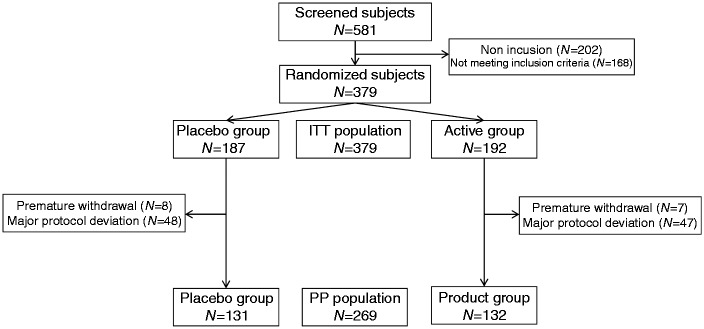
“The ITT population was defined as all subjects who were randomized (N¼ 379, active group N¼ 192, placebo group N¼ 187) whereas PP population included subjects of the ITT population presenting no major protocol deviations, and where IBS-C: constipation predominant IBS; IBS-D: diarrhea predominant IBS; IBS-M: mixed IBS.…”
BackgroundInfluentialEffect of probiotic species on irritable bowel syndrome symptoms: A bring up to date meta-analysis
Ortiz-Lucas, M., Aurelio, T., Saz, P., & Sebastián, J. J. (2013) · Revista Española de Enfermedades Digestivas · doi:10.4321/s1130-01082013000100005 · Cited by 103
Ghoshal, U. C., Srivastava, D., Ghoshal, U., & Misra, A. (2014) · European Journal of Gastroenterology & Hepatology · doi:10.1097/meg.0000000000000122 · Cited by 100
Clinical trial guidelines for pharmacological treatment of irritable bowel syndrome
Corazziari, E., Bytzer, P., Delvaux, M., Holtmann, G., Malagelada, J. R., Morris, J., Muller‐Lissner, S., Spiller, R. C., Tack, J., & Whorwell, P. J. (2003) · Alimentary Pharmacology & Therapeutics · doi:10.1046/j.1365-2036.2003.01709.x · Cited by 80 · cited 1×
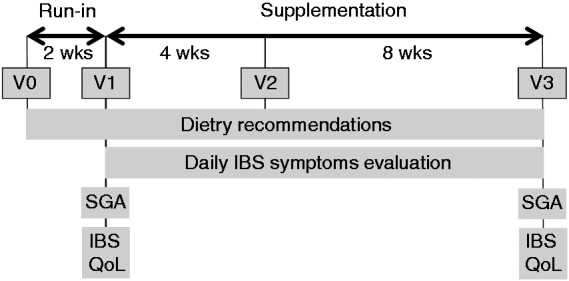
“From V1 to V3, patients had to complete a daily diary documenting the frequency and consistency of their stools (BSS),(14) and the intensity of IBS symptoms (abdominal pain/ discomfort, bloating, flatulence/borborygmi, and difficulty with defecation) on Likert scales rated from 0 (null) to 7 (severe).(15) They also ha…”
BackgroundSelf-citationRousseaux, C., Bouguen, G., Dubuquoy, C., Dubuquoy, L., Vandekerckove, P., & Desreumaux, P. (2010) · Gastroenterology · doi:10.1016/s0016-5085(10)60232-6 · Cited by 5
Cited by
ACG Clinical Guideline: Management of Irritable Bowel Syndrome
Lacy, B. E., Pimentel, M., Brenner, D. M., Chey, W. D., Keefer, L. A., Long, M. D., & Moshiree, B. (2021) · American Journal of Gastroenterology · doi:10.14309/ajg.0000000000001036 · Cited by 893
“50% of weeks with improvement, which approximates US FDA recommended outcome measures (154).”
BackgroundFord, A. C., Harris, L. A., Lacy, B. E., Quigley, E. M. M., & Moayyedi, P. (2018) · Alimentary Pharmacology & Therapeutics · doi:10.1111/apt.15001 · Cited by 619
“The 53 RCTs of probiotics in IBS involved 5545 patients.(32-49,53-87) The proportion of women in trials ranged between 9% and 100%.”
BackgroundInfluentialMcFarland, L. V., Evans, C. T., & Goldstein, E. J. C. (2018) · Frontiers in Medicine · doi:10.3389/fmed.2018.00124 · Cited by 609
Pain regulation by gut microbiota: molecular mechanisms and therapeutic potential
Guo, R., Chen, L.-H., Xing, C., & Liu, T. (2019) · British Journal of Anaesthesia · doi:10.1016/j.bja.2019.07.026 · Cited by 405
American College of Gastroenterology Monograph on Management of Irritable Bowel Syndrome
Ford, A. C., Moayyedi, P., Chey, W. D., Harris, L. A., Lacy, B. E., Saito, Y. A., & Quigley, E. M. M. (2018) · American Journal of Gastroenterology · doi:10.1038/s41395-018-0084-x · Cited by 388
Metadata
- Authors
- Spiller, R., Pélerin, F., Cayzeele Decherf, A., Maudet, C., Housez, B., Cazaubiel, M., & Jüsten, P.
- Affiliations
- Nottingham Digestive Diseases Biomedical Research Unit, Nottingham Digestive Diseases Centre, Nottingham, United Kingdom
- Lesaffre (France) (FR)
- Lesaffre Human Care, Lesaffre Group, Marcq en Baroeul, France
- Biofortis–Mérieux NutriSciences, Saint-Herblain, France
- Venue
- United European Gastroenterology Journal
- Publisher
- Wiley
- Published
- 2015-08-21
- Volume
- 4
- Issue
- 3
- Pages
- 353-362
- ISSN
- 2050-6406 (ISSN-L)
- 2050-6414
- PMC
- PMC4924426
- OpenAlex
- W1821958984
- Cited by
- 87
- References
- 28
- Citations by year
- 2026: 4 · 2025: 5 · 2024: 14 · 2023: 12 · 2022: 7 · 2021: 9 · 2020: 12 · 2019: 8 · 2018: 10 · 2017: 2 · 2016: 4
- FWCI
- 5.56
- Type
- journal article
- Language
- en
- Update notices
- correction (2017-03-01)
- Open access
- hybrid
- doi.org
- Licence
- cc-by-nc
- journals.sagepub.com/page/policies/text-and-data-mining-license (tdm)
- Locations
- United European Gastroenterology Journal (publishedVersion, cc-by-nc)
- PubMed Central (publishedVersion, cc-by-nc)
- PubMed (publishedVersion)
- Funders
- National Institute for Health and Care Research (NF-SI-0509-10005)
- Topics
- Health Sciences › Medicine › Gastroenterology › Gastrointestinal motility and disorders
- Life Sciences › Agricultural and Biological Sciences › Food Science › Probiotics and Fermented Foods
- Life Sciences › Biochemistry, Genetics and Molecular Biology › Molecular Biology › Gut microbiota and health
- Keywords
- irritable bowel syndrome, probiotics, irritable bowel syndrome with constipation, abdominal pain, bloating, constipation, functional gastrointestinal disorders, quality of life, probiotic supplementation
About these checks
Registry, retraction, Cites and statistics results are computed, not judged, with one exception: a printed reference that no index lists is read once by a model before it counts as a citation error. Claims are extracted by a model and kept only when their quote appears verbatim in the text; each cited source is then checked, with a model’s help, for whether it says what the claim relies on. Those verdicts can be wrong — read the claim’s quote and the cited source before relying on one.
Statistics and arithmetic are recomputed, not judged.
Confidence bands are shown only for fields calibrated on our annotated test set. None is calibrated yet, so no band is shown.
What counts as a claim ›How we measure confidence ›How we check this ›
Are you an author, or do you see a problem with this page? Request a review
Data sources
Bibliographic data: Semantic Scholar, OpenAlex, Crossref.
Contains information from the Semantic Scholar Academic Graph Datasets, made available under the ODC Attribution License (ODC-BY 1.0).
Semantic Scholar’s data is described in: Kinney, R., et al. (2023). The Semantic Scholar Open Data Platform. arXiv:2301.10140.
