

Interactive effects of pain catastrophizing and mindfulness on pain intensity in women with fibromyalgia
Open accessThe DOI matches its Crossref record; 60 of the 60 references it cites were found in a registry or an index.
Abstract
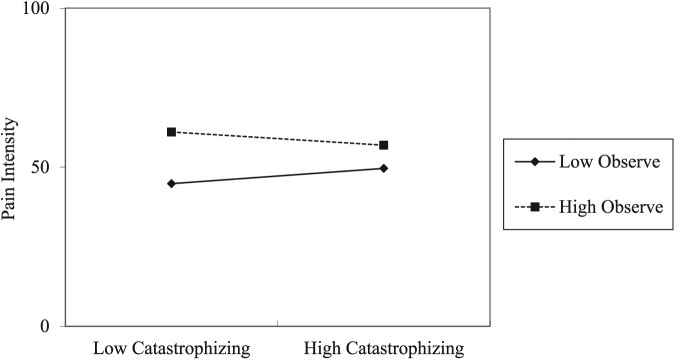
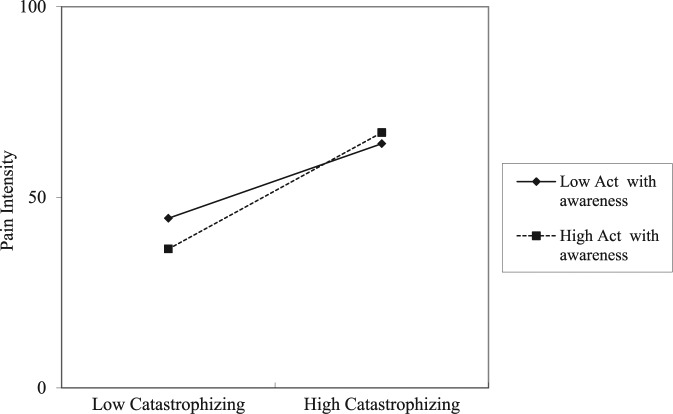
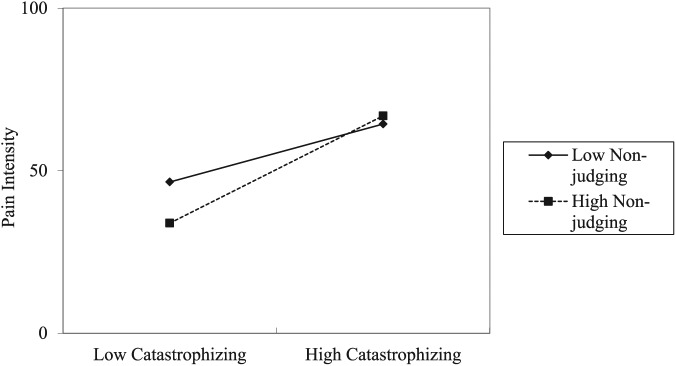
The objective of this study was to examine the association between facets of trait mindfulness, pain catastrophizing, and pain severity in a sample of patients with fibromyalgia. Patients with fibromyalgia completed validated baseline and diary assessments of clinical pain, mindfulness, and pain catastrophizing. Multilevel modeling analyses indicated that the daily association between catastrophizing and pain intensity was moderated by certain mindfulness facets. Our findings suggest that various aspects of mindfulness may interact differently with pain and catastrophizing, which may have implications for the design and testing of interventions targeting mindfulness and catastrophizing in fibromyalgia patients.
Overview
The claims and statistics of this paper haven’t been checked yet.
Free: it reads the open-access text and checks the first 5 claims that cite a source we can check. Create a free account to check every claim.
Integrity signals
Registry
Cites
Statistics
Figures
Verification
Claims the paper makes
The claims and statistics of this paper haven’t been checked yet.
Free: it reads the open-access text and checks the first 5 claims that cite a source we can check. Create a free account to check every claim.
Claims other papers make about this one
Each is checked against this paper’s own text: does it say what the citing paper says it does?
The source backs part of the claim, not all of it — or backs it for a different population, condition or comparison.
In the citing paper
“Mindfulness's role as a buffer against negative affect (ie, distress or catastrophizing) associated with pain could provide a positive psychological adjustment to patients experiencing these types of painassociated psychological symptoms.48,49”
From Mindful attention is inversely associated with pain via mediation by psychological distress in orthopedic patients. (2024) · cites this paper as [49]
Experimental — accuracy not yet measuredThe source backs part of the claim, not all of it — or backs it for a different population, condition or comparison.
In the citing paper
“A previous study found MBIs for chronic pain to be effective via reductions in pain catastrophizing.[21]”
From Mindfulness influences the psycho-social dimension of chronic pain: A randomized controlled clinical trial in Indian context (2023) · cites this paper as [21]
Experimental — accuracy not yet measured
Self-check
Percentages, sums and reported differences re-computed from the paper’s own numbers.
The self-check needs the paper’s full text.
Citations
Cites
Mindfulness: A proposed operational definition.
Bishop, S. R., Lau, M., Shapiro, S., Carlson, L., Anderson, N. D., Carmody, J., Segal, Z. V., Abbey, S., Speca, M., Velting, D., et al. (2004) · Clinical Psychology: Science and Practice · doi:10.1093/clipsy.bph077 · Cited by 7,234 · cited 1×
“It has been posited that these inconclusive findings are a result of a two-component model of mindfulness tenets consisting of awareness and acceptance (Bishop et al., 2004).”
BackgroundCentering predictor variables in cross-sectional multilevel models: A new look at an old issue.
Enders, C. K., & Tofighi, D. (2007) · Psychological Methods · doi:10.1037/1082-989x.12.2.121 · Cited by 4,462 · cited 1×
“As recommended, all Level 1 scores were centered within participants, and Level 2 scores were centered at the grand mean (Enders and Tofighi, 2007; Nezlek, 2001).”
BackgroundKabat-Zinn, J. (1982) · General Hospital Psychiatry · doi:10.1016/0163-8343(82)90026-3 · Cited by 4,255 · cited 2×
“For example, Mindfulness-Based Stress Reduction (MBSR) therapy incorporates the practices of mindful meditation and has been used to treat patients with chronic pain (Kabat-Zinn, 1982).”
BackgroundMethodBaer, R. A., Smith, G. T., Lykins, E., Button, D., Krietemeyer, J., Sauer, S., Walsh, E., Duggan, D., & Williams, J. M. G. (2008) · Assessment · doi:10.1177/1073191107313003 · Cited by 2,930 · cited 2×
“…acting with awareness (Act with awareness), (4) detachment (Detach) to inner experience, and (5) non-judging (Non-judging) of inner experience and uses a five-point Likert-type scale with answer choices ranging from 1 (never or very rarely true) to 5 (very often or always true) (Baer et al., 2008).”
BackgroundWOLFE, F., CLAUW, D. J., FITZCHARLES, M.-A., GOLDENBERG, D. L., HÄUSER, W., KATZ, R. S., MEASE, P., RUSSELL, A. S., RUSSELL, I. J., & WINFIELD, J. B. (2011) · The Journal of Rheumatology · doi:10.3899/jrheum.100594 · Cited by 1,499
A practical guide to multilevel modeling
Peugh, J. L. (2010) · Journal of School Psychology · doi:10.1016/j.jsp.2009.09.002 · Cited by 1,418
Using SAS PROC MIXED to Fit Multilevel Models, Hierarchical Models, and Individual Growth Models
Singer, J. D. (1998) · Journal of Educational and Behavioral Statistics · doi:10.2307/1165280 · Cited by 1,092
Bohlmeijer, E., ten Klooster, P. M., Fledderus, M., Veehof, M., & Baer, R. (2011) · Assessment · doi:10.1177/1073191111408231 · Cited by 990 · cited 7×
“…various tenets including attention to external experiences, conversion of internal experiences into words, attending to the present moment, not recognizing thoughts and feelings as negative or positive, and allowing thoughts and feelings to enter and leave the mind (Bohlmeijer et al., 2011).”
BackgroundMethodResultInfluentialMindfulness Meditation for Chronic Pain: Systematic Review and Meta-analysis
Hilton, L., Hempel, S., Ewing, B. A., Apaydin, E., Xenakis, L., Newberry, S., Colaiaco, B., Maher, A. R., Shanman, R. M., Sorbero, M. E., et al. (2017) · Annals of Behavioral Medicine · doi:10.1007/s12160-016-9844-2 · Cited by 977 · cited 1×
“Mindfulnessbased interventions have been shown to be beneficial for patients with chronic pain and for patients who catastrophize (Hilton et al., 2017; Mun et al., 2014; Schutze et al., 2010; Zeidan et al., 2010, 2012).”
BackgroundPain catastrophizing and neural responses to pain among persons with fibromyalgia
Gracely, R. H. (2004) · Brain · doi:10.1093/brain/awh098 · Cited by 892 · cited 1×
“Furthermore, high catastrophizing in FM patients is associated with greater activation in brain regions associated with emotional and motivational modulation of pain (Gracely et al., 2004; Kim et al., 2015; Loggia et al., 2015).”
Background
Cited by
Zorn, J., Abdoun, O., Bouet, R., & Lutz, A. (2020) · European Journal of Pain · doi:10.1002/ejp.1576 · Cited by 56
“…MBI (Turner et al., 2016), and negative relations between measures of mindfulness and pain catastrophizing (Day, Smitherman, Ward, & Thorn, 2015; Dorado et al., 2018; Elvery, Jensen, Ehde, & Day, 2017; Jensen, Thorn, Carmody, Keefe, & Burns, 2018; Schutze, Rees, Preece, & Schutze, 2010).”
Criss, C. R., Melton, M. S., Ulloa, S. A., Simon, J. E., Clark, B. C., France, C. R., & Grooms, D. R. (2021) · The Knee · doi:10.1016/j.knee.2021.03.009 · Cited by 66
Zorn, J., Abdoun, O., Sonié, S., & Lutz, A. (2021) · Psychosomatic Medicine · doi:10.1097/psy.0000000000000938 · Cited by 31
“Such lack of sufficient divergent validity is congruent with a high degree of correspondence reported between mindfulness scores, on the one hand, and stress (60,61) and personality factors (62), on the other, and could as well explain other counterintuitive results in the literature, for instance, nonreactivity being…”
BackgroundBraun, A., Evdokimov, D., Frank, J., Pauli, P., Üçeyler, N., & Sommer, C. (2020) · PLoS ONE · doi:10.1371/journal.pone.0243806 · Cited by 39
“The highest loadings on factor 1 were anxiety and pain catastrophizing that are well-known risk factors and promote vulnerability [52, 53].”
BackgroundRole of Occupational Therapy in Pain Management
American Occupational Therapy Association (2021) · American Journal of Occupational Therapy · doi:10.5014/ajot.2021.75s3001 · Cited by 35
“Intervention may include activities to address client factors, such as mindfulness (Dorado et al., 2018; Goodman et al., 2019; Zeidan et al., 2019) and biofeedback (Sielski et al., 2017).”
Loss of adaptive mechanisms during aging.
Rc, A. (1979) · PubMed · Cited by 31
Modifiable Psychological Factors Affecting Functioning in Fibromyalgia
Paschali, M., Lazaridou, A., Paschalis, T., Napadow, V., & Edwards, R. R. (2021) · Journal of Clinical Medicine · doi:10.3390/jcm10040803 · Cited by 33
“Mindfulness-based interventions for chronic pain seem to be effective by increasing the mindfulness trait [48], thus achieving nonreactivity to cognitions, emotions, and physiological sensations, and can lead to decreased pain catastrophizing and improved quality of life [49,50].”
BackgroundSelf-citationAn Examination of Day-to-Day and Intraindividual Pain Variability in Low Back Pain
Wesolowicz, D. M., Bishop, M. D., & Robinson, M. E. (2021) · Pain Medicine · doi:10.1093/pm/pnab119 · Cited by 32
Multimodal Chronic Pain Therapy for Adults via Smartphone: Randomized Controlled Clinical Trial
Morcillo-Muñoz, Y., Sánchez-Guarnido, A. J., Calzón-Fernández, S., & Baena-Parejo, I. (2022) · Journal of Medical Internet Research · doi:10.2196/36114 · Cited by 28
“Another group of activities aims to raise awareness of an individual’s own values through a series of activities to recover a meaningful life project [22,23,39,40].”
Parisi, A. B., Landicho, H. L., Hudak, J., Leknes, S., Froeliger, B., & Garland, E. L. (2022) · Drug and Alcohol Dependence · doi:10.1016/j.drugalcdep.2022.109361 · Cited by 23
Hunt, C., Letzen, J. E., Krimmel, S. R., Burrowes, S. A. B., Haythornthwaite, J. A., Finan, P. H., Vetter, M., & Seminowicz, D. A. (2022) · Journal of Pain · doi:10.1016/j.jpain.2022.07.011 · Cited by 17
Catalá, P., Blanco, S., Perez-Calvo, S., Luque-Reca, O., Bedmar, D., & Peñacoba, C. (2021) · Frontiers in Psychology · doi:10.3389/fpsyg.2021.658974 · Cited by 9
Bigliassi, M., Ocubaro, A. M., Lima‐Silva, A. E., Buzzachera, C. F., & Bertuzzi, R. (2021) · International Journal of Sport and Exercise Psychology · doi:10.1080/1612197x.2021.1919743 · Cited by 11
da Silva, G. V., Magri, L. V., Melchior, M. D. O., Leite‐Panissi, C. R. A., & Gherardi‐Donato, E. C. D. S. (2022) · CRANIO® · doi:10.1080/08869634.2022.2086208 · Cited by 10
“Perceiving the flow of thoughts without identifying them, taking a more neutral stance, acting toward both the attentional and the evaluative processing [15] are all associated with lower clinical pain results [16], explaining the reduction in patients’ suffering and pain [17,18].”
Role of Occupational Therapy in Pain Management
American Occupational Therapy Association (2021) · American Journal of Occupational Therapy · doi:10.5014/ajot.2020.75s3001 · Cited by 11
Lazaridou, A., Schneller, T., Freislederer, F., Moroder, P., & Scheibel, M. (2024) · BMC Musculoskeletal Disorders · doi:10.1186/s12891-024-08117-2 · Cited by 5
Self-citationGiorgi, V., Farah, S., Salaffi, F., Butera, G., & Sarzi‐Puttini, P. (2023) · Journal of Bodywork and Movement Therapies · doi:10.1016/j.jbmt.2023.08.001 · Cited by 6
Pal, A., Mukhopadhyay, P., Biswas, R., & Bhattacharya, D. (2023) · Indian Journal of Psychiatry · doi:10.4103/indianjpsychiatry.indianjpsychiatry_393_23 · Cited by 3
“[21] In our study, there was an impact on pain catastrophizing in the mindfulness group [F(1,326) = 8.0009; P = 0.004965] compared to control group.”
InfluentialYamin, J. B., Meints, S. M., Pester, B., Crago, M. A., Papianou, L., Lazaridou, A., Paschali, M., Napadow, V., & Edwards, R. R. (2025) · BMC Musculoskeletal Disorders · doi:10.1186/s12891-025-08449-7 · Cited by 9
“Among these, pain catastrophizing—a set of cognitive processes characterized by ruminating about pain, feeling helpless, and magnifying the threat value of pain—has been shown to exacerbate pain perception and interfere with pain management [18, 19, 20].”
Self-citationThe Moderating Effects of Cognitive Processes on Pain-related Outcomes
Torres, N. D., Newman, A. K., Day, M. A., Chan, J. F., Friedly, J. L., & Jensen, M. P. (2024) · Journal of Pain · doi:10.1016/j.jpain.2024.01.348 · Cited by 3
Lam, C. N., Larach, D. B., Chou, C.-P., & Black, D. S. (2024) · Pain Medicine · doi:10.1093/pm/pnad119 · Cited by 2
Aguerre, N. V., Miró, E., Martínez, M. P., Raya-Terrón, A., & Sánchez, A. I. (2025) · Mindfulness · doi:10.1007/s12671-025-02643-3 · Cited by 6
“This finding is consistent with previous research (Curtin & Norris, 2017; Day et al., 2015; Dorado et al., 2018; McCracken & Thompson, 2009; Schütze et al., 2010), emphasizing the protective role of the facets of non-judgment, non-reactivity and acting with awareness against pain.”
InfluentialPester, B., Yamin, J. B., Cabrera, M. J., Mehta, S. M., Silverman, J. M., Grossestreuer, A. V., Howard, P., Edwards, R. R., & Donnino, M. W. (2023) · Journal of Pain Research · doi:10.2147/jpr.s416305 · Cited by 4
Self-citationBurrai, F., Micheluzzi, V., Sotgia, M., Giaconi, G. L., & Senatore, M. (2026) · Giornale di Clinica Nefrologica e Dialisi · doi:10.33393/gcnd.2026.3757 · Cited by 1
“VR can also deliver mindfulness-based content that trains nonjudgmental attention to internal states, which may reduce catastrophic interpretations of bodily sensations and attenuate distress amplification of pain and anxiety (35).”
Treister, R., Emergui, G., Agostinho, M. R., Khashan, M., & Hochberg, U. (2026) · Journal of Psychosomatic Research · doi:10.1016/j.jpsychores.2026.112694 · Cited by 1
Fonia, D., & Aisenberg-Shafran, D. (2022) · Journal of Clinical Psychology in Medical Settings · doi:10.1007/s10880-022-09911-7 · Cited by 2
“, 2002), avoidance, involvement and effective disengagement from painrelated threat (Vago & Nakamura, 2011), catastrophizing (Dorado et al., 2018; Dowd et al., 2015), coping with pain, stress, positive and negative affect, social involvement, loneliness, family stress (Davis & Zautra, 2013), and sleeping problems (Amu…”
BackgroundPsychophysiologic symptom relief therapy for chronic back pain: hypothesis and trial rationale
Paschali, M., Thompson, G. S., Mehta, S. M., Howard, P. M., Yamin, J. B., Edwards, R. R., & Donnino, M. W. (2024) · Frontiers in Pain Research · doi:10.3389/fpain.2024.1328495 · Cited by 2
Self-citationSaracutu, M. M. (2019) · Cronfa (Swansea University) · doi:10.23889/suthesis.54524
Mindfulness and Pain Catastrophizing on Chronic Disease Patients
Gamayanti, W., Amalia, A., & Mursidin, M. (2021) · International Conference on Social Science, Humanities, Education and Society Development (ICONS) · doi:10.4108/eai.30-11-2020.2303767
“catastrophization is high in fibromyalgia patients with greater activation in the brain area associated with emotion and modulation of pain money [5].”
BackgroundInfluentialCatastrofização e atenção plena na disfunção temporomandibular: estudo correlacional
da Silva, G. V. (2021) · Digital Library of Theses and Dissertations (Universidade de São Paulo) · doi:10.11606/d.22.2021.tde-15122021-082411
Tobar, B. I. F., González-Moreno, J., & Cantero-García, M. (2022) · Revista de Estudios e Investigación en Psicología y Educación · doi:10.17979/reipe.2022.9.1.8999
Effects of Race on Chronic Pain in a Randomized Clinical Trial of Integrative Medical Group VisitsPreprint
Polcari, J. J., Rodriguez, A. C. I., Nephew, B. C., Melican, V., King, J. A., & Gardiner, P. M. (2023) · medRxiv · doi:10.1101/2023.03.03.23286767 · Cited by 1
Foley, J., Batchelder, A., Bernier, L., Glynn, T. R., Moskowitz, J. T., & Carrico, A. W. (2024) · Psychology Health & Medicine · doi:10.1080/13548506.2024.2407445
“The positive associations between awareness and description with IL-6 highlight how attending to internal experiences can increase perceptions of intensity (Dorado et al., 2018), associated distress (McHugh et al., 2020) and thus, inflammation.”
ONAL, A. K. (2025) · Psychology Health & Medicine · doi:10.1080/13548506.2025.2587260
“…should include managing underlying depression and anxiety, promoting pain acceptance and awareness, and encouraging regular physical activity such as walking, especially in patients with high levels of catastrophizing (Dorado et al., 2018; Droppert & Knowles, 2023; López-Gómez et al., 2023).”
DURUSOY, E., Ulusoy, A. İ., Zeyrek, Ö. Ö., Çetin, S. Y., Bilgin, S., & Ünal, E. (2026) · Healthcare · doi:10.3390/healthcare14121792 · Cited by 2
“Mindfulness-based approaches may contribute to individuals re-evaluating their thoughts about pain and developing functional coping strategies [69].”
Metadata
- Authors
- Dorado, K., Schreiber, K. L., Koulouris, A., Edwards, R. R., Napadow, V., & Lazaridou, A.
- Affiliations
- Brigham and Women's Hospital (US)
- Corresponding author
- Edwards, Robert R
- Venue
- Health Psychology Open
- Publisher
- SAGE Publications
- Published
- 2018-07
- Volume
- 5
- Issue
- 2
- Pages
- 2055102918807406-2055102918807406
- ISSN
- 2055-1029 (ISSN-L)
- PMC
- PMC6198401
- OpenAlex
- W2896810193
- Cited by
- 37
- References
- 60
- Citations by year
- 2026: 3 · 2025: 3 · 2024: 4 · 2023: 5 · 2022: 6 · 2021: 11 · 2020: 3 · 2019: 1
- FWCI
- 2.93
- Type
- journal article
- Language
- en
- Open access
- gold
- doi.org
- Licence
- cc-by-nc
- journals.sagepub.com/page/policies/text-and-data-mining-license (tdm)
- Locations
- Health Psychology Open (publishedVersion, cc-by-nc)
- Europe PMC (PubMed Central) (publishedVersion, cc-by-nc)
- PubMed Central (publishedVersion, cc-by-nc)
- PubMed (publishedVersion)
- DOAJ (DOAJ: Directory of Open Access Journals) (submittedVersion)
- Funders
- National Institutes of Health, National Institute of Arthritis and Musculoskeletal and Skin Diseases (R01-AR064367)
- National Center for Complementary and Integrative Health (R01-AT007550, R61-AT009306)
- Topics
- Health Sciences › Medicine › Psychiatry and Mental health › Fibromyalgia and Chronic Fatigue Syndrome Research
- Social Sciences › Psychology › Clinical Psychology › Mindfulness and Compassion Interventions
- Health Sciences › Health Professions › Physical Therapy, Sports Therapy and Rehabilitation › Musculoskeletal pain and rehabilitation
- Keywords
- fibromyalgia, pain catastrophizing, trait mindfulness, pain intensity, women, daily pain, moderated effects, mindfulness facets, chronic pain
About these checks
Registry, retraction, Cites and statistics results are computed, not judged, with one exception: a printed reference that no index lists is read once by a model before it counts as a citation error. Claims are extracted by a model and kept only when their quote appears verbatim in the text; each cited source is then checked, with a model’s help, for whether it says what the claim relies on. Those verdicts can be wrong — read the claim’s quote and the cited source before relying on one.
Statistics and arithmetic are recomputed, not judged.
Confidence bands are shown only for fields calibrated on our annotated test set. None is calibrated yet, so no band is shown.
What counts as a claim ›How we measure confidence ›How we check this ›
Are you an author, or do you see a problem with this page? Request a review
Data sources
Bibliographic data: Semantic Scholar, OpenAlex, Crossref.
Contains information from the Semantic Scholar Academic Graph Datasets, made available under the ODC Attribution License (ODC-BY 1.0).
Semantic Scholar’s data is described in: Kinney, R., et al. (2023). The Semantic Scholar Open Data Platform. arXiv:2301.10140.
