

Interactive effects of pain catastrophizing and mindfulness on pain intensity in women with fibromyalgia
Open accessThe DOI matches its Crossref record; 60 of the 60 references it cites were found in a registry or an index.
Abstract
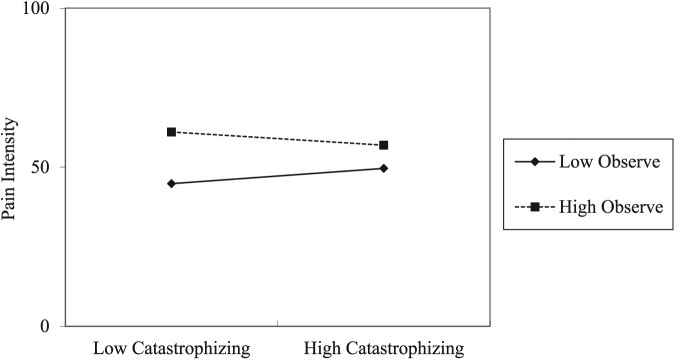
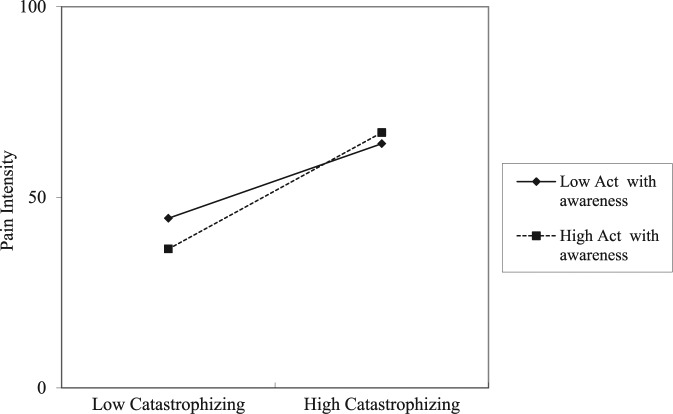
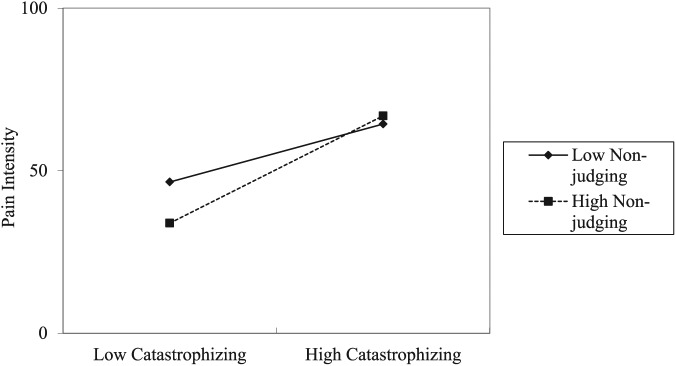
The objective of this study was to examine the association between facets of trait mindfulness, pain catastrophizing, and pain severity in a sample of patients with fibromyalgia. Patients with fibromyalgia completed validated baseline and diary assessments of clinical pain, mindfulness, and pain catastrophizing. Multilevel modeling analyses indicated that the daily association between catastrophizing and pain intensity was moderated by certain mindfulness facets. Our findings suggest that various aspects of mindfulness may interact differently with pain and catastrophizing, which may have implications for the design and testing of interventions targeting mindfulness and catastrophizing in fibromyalgia patients.
Overview
The claims and statistics of this paper haven’t been checked yet.
Free: it reads the open-access text and checks the first 5 claims that cite a source we can check. Create a free account to check every claim.
Integrity signals
Registry
Cites
Statistics
Figures
Verification
Claims the paper makes
The claims and statistics of this paper haven’t been checked yet.
Free: it reads the open-access text and checks the first 5 claims that cite a source we can check. Create a free account to check every claim.
Claims other papers make about this one
Each is checked against this paper’s own text: does it say what the citing paper says it does?
The source backs part of the claim, not all of it — or backs it for a different population, condition or comparison.
In the citing paper
“Mindfulness's role as a buffer against negative affect (ie, distress or catastrophizing) associated with pain could provide a positive psychological adjustment to patients experiencing these types of painassociated psychological symptoms.48,49”
From Mindful attention is inversely associated with pain via mediation by psychological distress in orthopedic patients. (2024) · cites this paper as [49]
Experimental — accuracy not yet measuredThe source backs part of the claim, not all of it — or backs it for a different population, condition or comparison.
In the citing paper
“A previous study found MBIs for chronic pain to be effective via reductions in pain catastrophizing.[21]”
From Mindfulness influences the psycho-social dimension of chronic pain: A randomized controlled clinical trial in Indian context (2023) · cites this paper as [21]
Experimental — accuracy not yet measured
Self-check
Percentages, sums and reported differences re-computed from the paper’s own numbers.
The self-check needs the paper’s full text.
Citations
Cites
Mindfulness: A proposed operational definition.
Bishop, S. R., Lau, M., Shapiro, S., Carlson, L., Anderson, N. D., Carmody, J., Segal, Z. V., Abbey, S., Speca, M., Velting, D., et al. (2004) · Clinical Psychology: Science and Practice · doi:10.1093/clipsy.bph077 · Cited by 7,234 · cited 1×
“It has been posited that these inconclusive findings are a result of a two-component model of mindfulness tenets consisting of awareness and acceptance (Bishop et al., 2004).”
BackgroundCentering predictor variables in cross-sectional multilevel models: A new look at an old issue.
Enders, C. K., & Tofighi, D. (2007) · Psychological Methods · doi:10.1037/1082-989x.12.2.121 · Cited by 4,462 · cited 1×
“As recommended, all Level 1 scores were centered within participants, and Level 2 scores were centered at the grand mean (Enders and Tofighi, 2007; Nezlek, 2001).”
BackgroundKabat-Zinn, J. (1982) · General Hospital Psychiatry · doi:10.1016/0163-8343(82)90026-3 · Cited by 4,255 · cited 2×
“For example, Mindfulness-Based Stress Reduction (MBSR) therapy incorporates the practices of mindful meditation and has been used to treat patients with chronic pain (Kabat-Zinn, 1982).”
BackgroundMethodBaer, R. A., Smith, G. T., Lykins, E., Button, D., Krietemeyer, J., Sauer, S., Walsh, E., Duggan, D., & Williams, J. M. G. (2008) · Assessment · doi:10.1177/1073191107313003 · Cited by 2,930 · cited 2×
“…acting with awareness (Act with awareness), (4) detachment (Detach) to inner experience, and (5) non-judging (Non-judging) of inner experience and uses a five-point Likert-type scale with answer choices ranging from 1 (never or very rarely true) to 5 (very often or always true) (Baer et al., 2008).”
BackgroundWOLFE, F., CLAUW, D. J., FITZCHARLES, M.-A., GOLDENBERG, D. L., HÄUSER, W., KATZ, R. S., MEASE, P., RUSSELL, A. S., RUSSELL, I. J., & WINFIELD, J. B. (2011) · The Journal of Rheumatology · doi:10.3899/jrheum.100594 · Cited by 1,499
A practical guide to multilevel modeling
Peugh, J. L. (2010) · Journal of School Psychology · doi:10.1016/j.jsp.2009.09.002 · Cited by 1,418
Using SAS PROC MIXED to Fit Multilevel Models, Hierarchical Models, and Individual Growth Models
Singer, J. D. (1998) · Journal of Educational and Behavioral Statistics · doi:10.2307/1165280 · Cited by 1,092
Bohlmeijer, E., ten Klooster, P. M., Fledderus, M., Veehof, M., & Baer, R. (2011) · Assessment · doi:10.1177/1073191111408231 · Cited by 990 · cited 7×
“…various tenets including attention to external experiences, conversion of internal experiences into words, attending to the present moment, not recognizing thoughts and feelings as negative or positive, and allowing thoughts and feelings to enter and leave the mind (Bohlmeijer et al., 2011).”
BackgroundMethodResultInfluentialMindfulness Meditation for Chronic Pain: Systematic Review and Meta-analysis
Hilton, L., Hempel, S., Ewing, B. A., Apaydin, E., Xenakis, L., Newberry, S., Colaiaco, B., Maher, A. R., Shanman, R. M., Sorbero, M. E., et al. (2017) · Annals of Behavioral Medicine · doi:10.1007/s12160-016-9844-2 · Cited by 977 · cited 1×
“Mindfulnessbased interventions have been shown to be beneficial for patients with chronic pain and for patients who catastrophize (Hilton et al., 2017; Mun et al., 2014; Schutze et al., 2010; Zeidan et al., 2010, 2012).”
BackgroundPain catastrophizing and neural responses to pain among persons with fibromyalgia
Gracely, R. H. (2004) · Brain · doi:10.1093/brain/awh098 · Cited by 892 · cited 1×
“Furthermore, high catastrophizing in FM patients is associated with greater activation in brain regions associated with emotional and motivational modulation of pain (Gracely et al., 2004; Kim et al., 2015; Loggia et al., 2015).”
Background
Cited by
Zorn, J., Abdoun, O., Bouet, R., & Lutz, A. (2020) · European Journal of Pain · doi:10.1002/ejp.1576 · Cited by 56
“…MBI (Turner et al., 2016), and negative relations between measures of mindfulness and pain catastrophizing (Day, Smitherman, Ward, & Thorn, 2015; Dorado et al., 2018; Elvery, Jensen, Ehde, & Day, 2017; Jensen, Thorn, Carmody, Keefe, & Burns, 2018; Schutze, Rees, Preece, & Schutze, 2010).”
Criss, C. R., Melton, M. S., Ulloa, S. A., Simon, J. E., Clark, B. C., France, C. R., & Grooms, D. R. (2021) · The Knee · doi:10.1016/j.knee.2021.03.009 · Cited by 66
Zorn, J., Abdoun, O., Sonié, S., & Lutz, A. (2021) · Psychosomatic Medicine · doi:10.1097/psy.0000000000000938 · Cited by 31
“Such lack of sufficient divergent validity is congruent with a high degree of correspondence reported between mindfulness scores, on the one hand, and stress (60,61) and personality factors (62), on the other, and could as well explain other counterintuitive results in the literature, for instance, nonreactivity being…”
BackgroundBraun, A., Evdokimov, D., Frank, J., Pauli, P., Üçeyler, N., & Sommer, C. (2020) · PLoS ONE · doi:10.1371/journal.pone.0243806 · Cited by 39
“The highest loadings on factor 1 were anxiety and pain catastrophizing that are well-known risk factors and promote vulnerability [52, 53].”
BackgroundRole of Occupational Therapy in Pain Management
American Occupational Therapy Association (2021) · American Journal of Occupational Therapy · doi:10.5014/ajot.2021.75s3001 · Cited by 35
“Intervention may include activities to address client factors, such as mindfulness (Dorado et al., 2018; Goodman et al., 2019; Zeidan et al., 2019) and biofeedback (Sielski et al., 2017).”
Metadata
- Authors
- Dorado, K., Schreiber, K. L., Koulouris, A., Edwards, R. R., Napadow, V., & Lazaridou, A.
- Affiliations
- Brigham and Women's Hospital (US)
- Corresponding author
- Edwards, Robert R
- Venue
- Health Psychology Open
- Publisher
- SAGE Publications
- Published
- 2018-07
- Volume
- 5
- Issue
- 2
- Pages
- 2055102918807406-2055102918807406
- ISSN
- 2055-1029 (ISSN-L)
- PMC
- PMC6198401
- OpenAlex
- W2896810193
- Cited by
- 37
- References
- 60
- Citations by year
- 2026: 3 · 2025: 3 · 2024: 4 · 2023: 5 · 2022: 6 · 2021: 11 · 2020: 3 · 2019: 1
- FWCI
- 2.93
- Type
- journal article
- Language
- en
- Open access
- gold
- doi.org
- Licence
- cc-by-nc
- journals.sagepub.com/page/policies/text-and-data-mining-license (tdm)
- Locations
- Health Psychology Open (publishedVersion, cc-by-nc)
- Europe PMC (PubMed Central) (publishedVersion, cc-by-nc)
- PubMed Central (publishedVersion, cc-by-nc)
- PubMed (publishedVersion)
- DOAJ (DOAJ: Directory of Open Access Journals) (submittedVersion)
- Funders
- National Institutes of Health, National Institute of Arthritis and Musculoskeletal and Skin Diseases (R01-AR064367)
- National Center for Complementary and Integrative Health (R01-AT007550, R61-AT009306)
- Topics
- Health Sciences › Medicine › Psychiatry and Mental health › Fibromyalgia and Chronic Fatigue Syndrome Research
- Social Sciences › Psychology › Clinical Psychology › Mindfulness and Compassion Interventions
- Health Sciences › Health Professions › Physical Therapy, Sports Therapy and Rehabilitation › Musculoskeletal pain and rehabilitation
- Keywords
- fibromyalgia, pain catastrophizing, trait mindfulness, pain intensity, women, daily pain, moderated effects, mindfulness facets, chronic pain
About these checks
Registry, retraction, Cites and statistics results are computed, not judged, with one exception: a printed reference that no index lists is read once by a model before it counts as a citation error. Claims are extracted by a model and kept only when their quote appears verbatim in the text; each cited source is then checked, with a model’s help, for whether it says what the claim relies on. Those verdicts can be wrong — read the claim’s quote and the cited source before relying on one.
Statistics and arithmetic are recomputed, not judged.
Confidence bands are shown only for fields calibrated on our annotated test set. None is calibrated yet, so no band is shown.
What counts as a claim ›How we measure confidence ›How we check this ›
Are you an author, or do you see a problem with this page? Request a review
Data sources
Bibliographic data: Semantic Scholar, OpenAlex, Crossref.
Contains information from the Semantic Scholar Academic Graph Datasets, made available under the ODC Attribution License (ODC-BY 1.0).
Semantic Scholar’s data is described in: Kinney, R., et al. (2023). The Semantic Scholar Open Data Platform. arXiv:2301.10140.
