

Dysfunction of the Microbiota-Gut-Brain Axis in Neurodegenerative Disease: The Promise of Therapeutic Modulation With Prebiotics, Medicinal Herbs, Probiotics, and Synbiotics
Open accessThe DOI matches its Crossref record; 181 of the 181 references it cites were found in a registry or an index.
Abstract
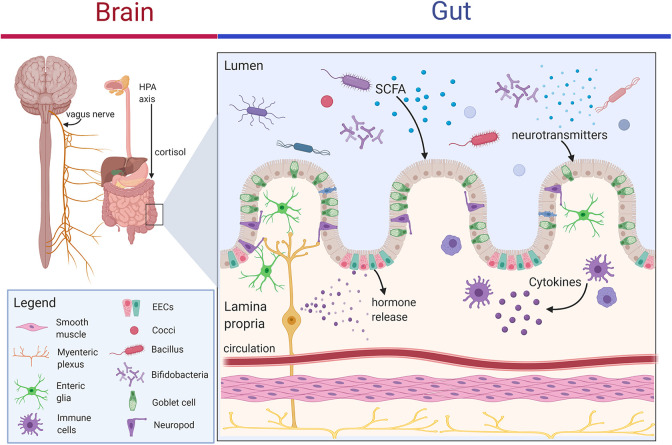
Recent data suggest gut microbiota dysbiosis as a contributing factor in neurodegenerative diseases, such as Parkinson's Disease (PD) and Alzheimer's Disease (AD), and these pathologies may manifest via the microbiota-gut-brain-axis, which comprises bidirectional communication through neuroimmune, neuroendocrine, and direct neural pathways such as the vagus nerve. Preclinical and human clinical trial data reveal exciting potential for novel treatment targets and therapeutic modulation with prebiotics, medicinal herbs, probiotics, and synbiotics in health, aging, and neurodegeneration and are reviewed here. While greater insights and characterization of the microbiota-gut-brain axis have been revealed over the past decade, salient questions related to the pathology, pathogenesis and clinical treatment of the axis in the context of both health and neurodegenerative disease remain and are discussed in this review. Future directions such as additional well-controlled, large scale, longitudinal human clinical trials are urgently needed to further elucidate both mechanism and therapeutic opportunity in health, neurological disease, and disease subpopulations to ensure that the next decade ushers the dawn of targeted therapeutic modulation of the microbiota-gut-brain axis.
Overview
The claims and statistics of this paper haven’t been checked yet.
Free: it reads the open-access text and checks the first 5 claims that cite a source we can check. Create a free account to check every claim.
Integrity signals
Registry
Cites
Statistics
Figures
Verification
Claims the paper makes
The claims and statistics of this paper haven’t been checked yet.
Free: it reads the open-access text and checks the first 5 claims that cite a source we can check. Create a free account to check every claim.
Claims other papers make about this one
Each is checked against this paper’s own text: does it say what the citing paper says it does?
The source backs part of the claim, not all of it — or backs it for a different population, condition or comparison.
In the citing paper
“Moreover, it is now evident that GM dysbiosis is a factor that takes part in the development of several neurological diseases, including PD, AD, multiple sclerosis, autism spectrum disorders (ASD), anxiety, depression, schizophrenia, and other mental illnesses [314,315].”
From The Interplay between Gut Microbiota and Parkinson’s Disease: Implications on Diagnosis and Treatment (2022) · cites this paper as [315]
Experimental — accuracy not yet measuredThe cited source says what the claim attributes to it.
In the citing paper
“Therefore, modulation of the microbiota-gut-brain axis using probiotics could be a promising complementary approach to traditional methods to prevent or counteract these disorders, including PD, as widely reported in literature [315,317,318,319,320].”
From The Interplay between Gut Microbiota and Parkinson’s Disease: Implications on Diagnosis and Treatment (2022) · cites this paper as [315]
Self-check
Percentages, sums and reported differences re-computed from the paper’s own numbers.
The self-check needs the paper’s full text.
Citations
Cites
1 retracted
Tamtaji, O. R., Taghizadeh, M., Daneshvar Kakhaki, R., Kouchaki, E., Bahmani, F., Borzabadi, S., Oryan, S., Mafi, A., & Asemi, Z. (2019) · Clinical Nutrition · doi:10.1016/j.clnu.2018.05.018 · Cited by 398
RetractedDiversity of the Human Intestinal Microbial Flora
Eckburg, P. B., Bik, E. M., Bernstein, C. N., Purdom, E., Dethlefsen, L., Sargent, M., Gill, S. R., Nelson, K. E., & Relman, D. A. (2005) · Science · doi:10.1126/science.1110591 · Cited by 7,913 · cited 2×
“Over 50 phyla colonize the planet but the predominant phyla in the mammalian intestine include Bacteroidetes, Firmicutes, Proteobacteria, Actinobacteria, and Fusobacteria.(8) With its 400 m(2) of surface area, the gastrointestinal (GI) tract represents one of the largest interfaces for host-microbe interactions.”
BackgroundDietary Modulation of the Human Colonic Microbiota: Introducing the Concept of Prebiotics
Gibson, G. R., & Roberfroid, M. B. (1995) · The Journal of Nutrition · doi:10.1093/jn/125.6.1401 · Cited by 7,667 · cited 1×
“The prebiotic definition, while highly debated, most commonly refers to dietary carbohydrates that are selectively fermented by gut microbiota to modulate the composition of microbiota and in turn confer health benefits to the host.(89,90) Prebiotics reach the site of action in the colon and are fermented by saccharol…”
BackgroundChanges of Intestinal Functions in Liver Cirrhosis
Fukui, H., & Wiest, R. (2016) · Inflammatory Intestinal Diseases · doi:10.1159/000444436 · Cited by 6,808
The gut microbiota as an environmental factor that regulates fat storage
Bäckhed, F., Ding, H., Wang, T., Hooper, L. V., Koh, G. Y., Nagy, A., Semenkovich, C. F., & Gordon, J. I. (2004) · Proceedings of the National Academy of Sciences · doi:10.1073/pnas.0407076101 · Cited by 6,245 · cited 1×
“A major function of this bacterial population is energy harvest through the metabolism of otherwise indigestible complex polysaccharides from food and the subsequent generation of short-chain fatty acids (SCFA).(16) The GI tract is also a site of production for hormones involved in energy homeostasis (e.”
BackgroundFeigin, V. L., Nichols, E., Alam, T., Bannick, M. S., Beghi, E., Blake, N., Culpepper, W. J., Dorsey, E. R., Elbaz, A., Ellenbogen, R. G., et al. (2019) · The Lancet Neurology · doi:10.1016/s1474-4422(18)30499-x · Cited by 5,644
Commensal microbe-derived butyrate induces the differentiation of colonic regulatory T cells
Furusawa, Y., Obata, Y., Fukuda, S., Endo, T. A., Nakato, G., Takahashi, D., Nakanishi, Y., Uetake, C., Kato, K., Kato, T., et al. (2013) · Nature · doi:10.1038/nature12721 · Cited by 5,549
Host-Bacterial Mutualism in the Human Intestine
Bäckhed, F., Ley, R. E., Sonnenburg, J. L., Peterson, D. A., & Gordon, J. I. (2005) · Science · doi:10.1126/science.1104816 · Cited by 5,277
Metagenomic Analysis of the Human Distal Gut Microbiome
Gill, S. R., Pop, M., DeBoy, R. T., Eckburg, P. B., Turnbaugh, P. J., Samuel, B. S., Gordon, J. I., Relman, D. A., Fraser-Liggett, C. M., & Nelson, K. E. (2006) · Science · doi:10.1126/science.1124234 · Cited by 4,699 · cited 1×
“The gut microbiota performs important protective and metabolic functions, such as fermentation of indigestible plant components and endogenous mucous using genes encoding enzymes and biochemical pathways not contained within the host genome.(10) The information encoded by the mammalian genome is not sufficient to main…”
BackgroundBravo, J. A., Forsythe, P., Chew, M. V., Escaravage, E., Savignac, H. M., Dinan, T. G., Bienenstock, J., & Cryan, J. F. (2011) · Proceedings of the National Academy of Sciences · doi:10.1073/pnas.1102999108 · Cited by 3,888 · cited 1×
“In mice, Lactobacillus rhamnosus probiotic supplementation significantly increased GABA activity in the brain and changed their response to stress in a vagus nerve-dependent manner.(120) Gut microbe-derived metabolites such as SCFAs influence the permeability of the both intestinal and blood–brain barrier.”
Background
Cited by
Immunological mechanisms of inflammatory diseases caused by gut microbiota dysbiosis: A review
Zhao, M., Chu, J., Feng, S., Guo, C., Xue, B., He, K., & Li, L. (2023) · Biomedicine & Pharmacotherapy · doi:10.1016/j.biopha.2023.114985 · Cited by 458
Ruminococcus gnavus : friend or foe for human health
Crost, E. H., Coletto, E., Bell, A., & Juge, N. (2023) · FEMS Microbiology Reviews · doi:10.1093/femsre/fuad014 · Cited by 335
“…between gut microbiota and neurodegenerative diseases such as Alzheimer’s disease (AD) and Parkinson’s disease (PD) is gaining attention due to the ageing population revealing the contribution of microbial metabolites in progression of brain pathologies (De-Paula et al. 2018, Peterson 2020).”
BackgroundMitrea, L., Nemeş, S.-A., Szabo, K., Teleky, B.-E., & Vodnar, D.-C. (2022) · Frontiers in Medicine · doi:10.3389/fmed.2022.813204 · Cited by 237
“Besides, as there is a symbiotic relationship between gut microbiota and the host, their dynamic disruption interaction leads to profound effects on host health, including damage to the cortex (80, 81).”
BackgroundBeltrán-Velasco, A. I., & Clemente‐Suárez, V. J. (2025) · International Journal of Molecular Sciences · doi:10.3390/ijms26062440 · Cited by 138
“Interventions such as anti-inflammatory treatments, probiotic supplementation, and dietary modifications aimed at restoring gut microbial balance have shown promise in mitigating neuroinflammation and preserving BBB function [98].”
Toader, C., Tătaru, C. P., Munteanu, O., Șerban, M., Covache-Busuioc, R.-A., Ciurea, A. V., & Enyedi, M. (2024) · International Journal of Molecular Sciences · doi:10.3390/ijms252312613 · Cited by 124
Role of enteric glia and microbiota-gut-brain axis in parkinson disease pathogenesis
dos Santos, J. C. C., Lima, M. P. P., Brito, G. A. D. C., & Viana, G. S. D. B. (2022) · Ageing Research Reviews · doi:10.1016/j.arr.2022.101812 · Cited by 111
Recent Advances in Understanding the Structure and Function of the Human Microbiome
Mousa, W. K., Chehadeh, F., & Husband, S. (2022) · Frontiers in Microbiology · doi:10.3389/fmicb.2022.825338 · Cited by 100
“Preliminary data suggest that probiotics can treat diseases beyond the stomach disorders such as cancer and Alzheimer’s.”
BackgroundResultInfluentialVaresi, A., Campagnoli, L. I. M., Fahmideh, F., Pierella, E., Romeo, M., Ricevuti, G., Nicoletta, M., Chirumbolo, S., & Pascale, A. (2022) · International Journal of Molecular Sciences · doi:10.3390/ijms232012289 · Cited by 88
Liu, X., Liu, Y., Liu, J., Zhang, H., Shan, C., Guo, Y., Gong, X., Cui, M., Li, X., & Tang, M. (2023) · Neural Regeneration Research · doi:10.4103/1673-5374.382223 · Cited by 84
“Lactobacillus and Bifidobacterium are beneficial microorganisms with a long history of use, and have been reported to have the potential to modulate NDD progression through gut microbiome intervention (O’Toole et al., 2017; Long-Smith et al., 2020; Peterson, 2020; Anderson, 2022; Zuo et al., 2022).”
BackgroundCitrus Polyphenols in Brain Health and Disease: Current Perspectives
Pontifex, M. G., Malik, M., Connell, E., Müller, M. M., & Vauzour, D. (2021) · Frontiers in Neuroscience · doi:10.3389/fnins.2021.640648 · Cited by 78
“Indeed, further elucidation of the mechanistic as well as the determination of overall therapeutic validity are still required (Peterson, 2020).”
BackgroundMicroglial dynamics and neuroinflammation in prodromal and early Parkinson’s disease
Mogensen, F. L., Seibler, P., Grünewald, A., & Michelucci, A. (2025) · Journal of Neuroinflammation · doi:10.1186/s12974-025-03462-y · Cited by 69
“…for certain implicated viruses, immunization could serve as a preventive strategy to lower the risk of PD. Helicobacter pylori infections and periodontal bacteria have been shown to increase the risk of PD and have been linked with neuropathology without a known direct entrance to the CNS [110].”
Gut-brain axis and neurodegeneration: mechanisms and therapeutic potentials
Park, K. J., & Gao, Y. (2024) · Frontiers in Neuroscience · doi:10.3389/fnins.2024.1481390 · Cited by 71
Yadav, M. K., Sehrawat, N., Sharma, A. K., Kumar, S., Singh, R., Kumar, A., & Kumar, A. (2022) · Journal of Food Science and Technology · doi:10.1007/s13197-022-05621-y · Cited by 68
“These substances are effective to maintain balance between excitatory-inhibitory signaling in neurons, control memory, mood, cognitive functions and learning processes (Peterson 2020).”
The microbiota–gut–brain axis in Huntington's disease: pathogenic mechanisms and therapeutic targets
Ekwudo, M. N., Gubert, C., & Hannan, A. J. (2024) · FEBS Journal · doi:10.1111/febs.17102 · Cited by 65
“There are a plethora of studies providing consistent evidence of the efficacy of probiotics and prebiotics in modulating the gut microbiome and consequently, disease outcomes in clinical trials and preclinical models of NDs including AD, PD, and MS, and have been summarized elsewhere [227,228].”
Gut microbiota and its metabolites in Alzheimer’s disease: from pathogenesis to treatment
Zou, X., Zou, G., Zou, X., Wang, K., & Chen, Z. (2024) · PeerJ · doi:10.7717/peerj.17061 · Cited by 53
“XOS exerted significant effects in altering gut microbiota composition and improving AD symptoms ( Peterson, 2020 ; Liu et al., 2021 ; Arora, Green & Prakash, 2020 ; Ávila et al., 2020 ).”
BackgroundThe gut microbiota in retinal diseases
Bringer, M.-A., Gabrielle, P., Bron, A. M., Creuzot-Garcher, C. P., & Acar, N. (2021) · Experimental Eye Research · doi:10.1016/j.exer.2021.108867 · Cited by 53
“The effects of oral supplementation with synbiotic formulations on neurodegenerative or ocular diseases have been little explored to date, either in model organisms or in humans (Arora et al., 2020; Askari and Moravejolahkami, 2019; Chisari et al., 2017; Peterson, 2020).”
BackgroundFakhri, S., Yarmohammadi, A., Yarmohammadi, M., Farzaei, M. H., & Echeverría, J. (2021) · Marine Drugs · doi:10.3390/md19030165 · Cited by 57
“, alteration of GM) and AD pathology [49], decreased count of gram-negative species and increased intestinal permeability also have been noted [48].”
BackgroundIshii, T., Furuoka, H., Kaya, M., & Kuhara, T. (2021) · Biomedicines · doi:10.3390/biomedicines9020167 · Cited by 51
Wadan, A.-H. S., El‐Aziz, M. K. A., & Ellakwa, D. E. (2025) · Naunyn-Schmiedeberg s Archives of Pharmacology · doi:10.1007/s00210-025-04155-2 · Cited by 61
“Beyond neurological applications, engineered B. breve was utilized for systemic VEGF inhibitor delivery, reducing abnormal blood vessel growth in AMD models by responding to oxidative stress, a hallmark of the disease (Peterson 2020).”
The Link between Gut Dysbiosis Caused by a High-Fat Diet and Hearing Loss
Kociszewska, D., Chan, J., Thorne, P. R., & Vlajkovic, S. M. (2021) · International Journal of Molecular Sciences · doi:10.3390/ijms222413177 · Cited by 59
“Several studies have reported gut microbiota as a critical player in neuroinflammation, neurodegeneration and mental illness development [171,172].”
BackgroundChui, Z. S. W., Chan, L. M. L., Zhang, E. W. H., Liang, S., Choi, E. P. H., Lok, K. Y. W., Tun, H. M., & Kwok, J. Y. Y. (2024) · Scientific Reports · doi:10.1038/s41598-024-59250-w · Cited by 47
Salinas, E., Reyes-Pavón, D., Cortes‐Perez, N. G., Torres-Maravilla, E., Bitzer-Quintero, O. K., Langella, P., & Bermúdez‐Humarán, L. G. (2021) · Microorganisms · doi:10.3390/microorganisms9081634 · Cited by 49
“Links have also been found with many non-gastrointestinal pathologies, such as obesity, diabetes, FA, autism, and Parkinson’s disease [29,30].”
BackgroundChronic consumption of food-additives lead to changes via microbiota gut-brain axis
de Abiega-Franyutti, P., & Freyre‐Fonseca, V. (2021) · Toxicology · doi:10.1016/j.tox.2021.153001 · Cited by 49
Merino del Portillo, M., Clemente-Suárez, V. J., Ruisoto, P., Jimenez, M., Ramos-Campo, D. J., Beltran-Velasco, A. I., Martínez-Guardado, I., Rubio-Zarapuz, A., Navarro-Jiménez, E., & Tornero-Aguilera, J. F. (2024) · Metabolites · doi:10.3390/metabo14100549 · Cited by 44
“In particular, diet is one of the most critical modifiable factors of the gut microbiota ecosystem, for example, using probiotics [81,158,162].”
BackgroundNeurodegenerative Microbially-Shaped Diseases: Oxidative Stress Meets Neuroinflammation
Silva, D. F., Empadinhas, N., Cardoso, S. M., & Esteves, A. R. (2022) · Antioxidants · doi:10.3390/antiox11112141 · Cited by 47
“Recently, the microbiota–gut–brain axis was added to the well-known processes mediating the neurodegenerative process in these diseases [3,4].”
BackgroundButyrate as a potential therapeutic agent for neurodegenerative disorders
Chakraborty, P., Gamage, H. K. A. H., & Laird, A. S. (2024) · Neurochemistry International · doi:10.1016/j.neuint.2024.105745 · Cited by 48
Kim, Y.-T., & Mills, D. A. (2024) · Food Science and Biotechnology · doi:10.1007/s10068-024-01620-1 · Cited by 50
Convergent pathways of the gut microbiota–brain axis and neurodegenerative disorders
Gubert, C., Gasparotto, J., & Morais, L. H. (2022) · Gastroenterology report · doi:10.1093/gastro/goac017 · Cited by 45
“Not surprisingly, the role of probiotics in the context of neurodegenerative disorders has been explored and neurological factors, endocrine pathways, and immune signals have been suggested as their main potential mechanisms of action [212, 213].”
Wali, R., Khan, M. F., Mahmood, A., Mahmood, M., Qureshi, R., Ahmad, K. S., & Mashwani, Z. (2022) · PLoS ONE · doi:10.1371/journal.pone.0269445 · Cited by 41
“The role of plants and their derivatives is somehow reiterated not only for the treatment of GIDs but also for mitigation of various neurological disorders and psychological condition known to be aggravated by gut discomfort [3, 5, 76, 77].”
Munteanu, C., Galaction, A., Turnea, M. A., Blendea, C. D., Rotariu, M., & Poştaru, M. (2024) · Antioxidants · doi:10.3390/antiox13091062 · Cited by 49
“In the context of NDDs, synbiotics are particularly relevant due to their potential to modulate the gut–brain axis [130].”
Olteanu, G., Pană, M.-A., Busnatu, Ș., Lupuliasa, D., Neacșu, S. M., Mititelu, M., Musuc, A. M., Ioniță-Mîndrican, C.-B., & Boroghină, S. C. (2024) · International Journal of Molecular Sciences · doi:10.3390/ijms25105561 · Cited by 39
“This intricate connection is governed by the nervous, immune, and endocrine systems, facilitating a bidirectional communication system [151–153].”
BackgroundMultifaceted role of synbiotics as nutraceuticals, therapeutics and carrier for drug delivery
Khursheed, R., Gulati, M., Wadhwa, S., Vishwas, S., Sharma, D. S., Corrie, L., Alam, A., Alnasser, S. M., Alkhayl, F. F. A., Parveen, Z., et al. (2022) · Chemico-Biological Interactions · doi:10.1016/j.cbi.2022.110223 · Cited by 39
Tan, L. Y., Yeo, X. Y., Bae, H., Lee, D. P. S., Ho, R., Kim, J. E., Jo, D., & Jung, S. (2021) · Life · doi:10.3390/life11070698 · Cited by 37
“A comprehensive review of the relationship between the HPA, ANS, gut microbiome, and neurodegeneration was recently discussed by Peterson (2020) and Giordano (2020) [6,7].”
BackgroundCracking Brain Diseases from Gut Microbes-Mediated Metabolites for Precise Treatment
Gong, Y., Chen, A., Zhang, G., Shen, Q., Zou, L., Li, J., Miao, Y., & Liu, W. (2023) · International Journal of Biological Sciences · doi:10.7150/ijbs.85259 · Cited by 35
Vakili, K. G., Fathi, M., Yaghoobpoor, S., Sayehmiri, F., Nazerian, Y., Nazerian, A., Mohamadkhani, A., Khodabakhsh, P., Réus, G. Z., Hajibeygi, R., et al. (2022) · Frontiers in Cellular and Infection Microbiology · doi:10.3389/fcimb.2022.983089 · Cited by 32
“One of the mechanisms that play a role in the communication between the enteric nervous system (ENS) within the GI tract and the CNS is the “microbiota-gut-brain” axis (Peterson, 2020; Nagata et al., 2022).”
BackgroundThe interaction between gut microbiome and bone health
Inchingolo, F., Inchingolo, A. M., Piras, F., Ferrante, L., Mancini, A., Palermo, A., Inchingolo, A. D., & Dipalma, G. (2024) · Current Opinion in Endocrinology Diabetes and Obesity · doi:10.1097/med.0000000000000863 · Cited by 36
Nanoarmour-shielded single-cell factory for bacteriotherapy of Parkinson's disease
Zhou, X., Guo, Q., Guo, M., Li, B., Peng, W., Wang, D., Ming, D., & Zheng, B. (2021) · Journal of Controlled Release · doi:10.1016/j.jconrel.2021.09.009 · Cited by 31
Contribution of CNS and extra-CNS infections to neurodegeneration: a narrative review
Kettunen, P., Koıstınaho, J., & Rõlova, T. (2024) · Journal of Neuroinflammation · doi:10.1186/s12974-024-03139-y · Cited by 33
“In fact, changes of the gut-brain axis, such as gut dysbiosis (imbalance of the gut microbiome), are very common in patients of neurodegenerative diseases [14].”
BackgroundGulej, R., Patai, R., Ungvari, A., Kállai, A., Tarantini, S., Yabluchanskiy, A., Huffman, D. M., Conboy, M. J., Conboy, I. M., Kivimäki, M., et al. (2025) · GeroScience · doi:10.1007/s11357-025-01657-y · Cited by 32
Beyond Digestion: The Gut Microbiota as an Immune–Metabolic Interface in Disease Modulation
Mohammad, I., Ansari, M. R., Khan, M. S., Bari, M. N., Kamal, M. A., & Poyil, M. M. (2025) · Gastrointestinal Disorders · doi:10.3390/gidisord7040077 · Cited by 32
“Fermented foods, including yogurt, kefir, sauerkraut, and kimchi, introduce live microbial cultures that reinforce microbial resilience and immune tolerance [80].”
The Intestine as a Lifespan- and Proteostasis-Promoting Signaling Tissue
Hodge, F., Bajuszova, V., & van Oosten‐Hawle, P. (2022) · Frontiers in Aging · doi:10.3389/fragi.2022.897741 · Cited by 31
“The importance of the intestine is highlighted through its role in the gut-brain axis in humans where the intestine plays a key role in the regulation of brain health that influences the development of neurodegenerative diseases [reviewed in Houser and Tansey (2017); reviewed in Peterson (2020)].”
BackgroundHeidari, H., & Lawrence, D. A. (2024) · Journal of Toxicology and Environmental Health Part B · doi:10.1080/10937404.2024.2378406 · Cited by 29
“Several investigators reported on the complex interplay between gut dysbiosis, probiotics, and neurodegenerative diseases with the inclusion of the potential therapeutic impact of probiotics in ameliorating symptoms (Chang et al. 2019; Peterson 2020; Shabbir et al. 2021; Zhang 2022).”
Towards early detection of neurodegenerative diseases: A gut feeling
Makdissi, S., Parsons, B., & Cara, F. D. (2023) · Frontiers in Cell and Developmental Biology · doi:10.3389/fcell.2023.1087091 · Cited by 31
“It has indeed been reported that in both mouse and Drosophila models of human PD, the neurodegenerative pathologies in the brain have been observed in concurrence with commensal dysbiosis in the gut (Erny et al., 2015; Challis et al., 2020; Peterson, 2020; Kitani-Morii et al., 2021; Rydbom et al., 2021).”
BackgroundManipulation of the diet–microbiota–brain axis in Alzheimer’s disease
Lee, D. D., Lee, V. M. ‐., & Hur, S. K. (2022) · Frontiers in Neuroscience · doi:10.3389/fnins.2022.1042865 · Cited by 29
“To note, while several murine studies have demonstrated the psychophysiological effects of prebiotics, there are very few studies that have examined the targeting of the GBA in humans (Peterson, 2020).”
BackgroundSilva, B., Teixeira, J. A., Cadavez, V., & Gonzales‐Barron, U. A. (2023) · Foods · doi:10.3390/foods12173206 · Cited by 28
Flynn, C. M., Omoluabi, T., Janes, A. M., Rodgers, E. J., Torraville, S. E., Negandhi, B. L., Nobel, T. E., Mayengbam, S., & Yuan, Q. (2025) · Alzheimer s Research & Therapy · doi:10.1186/s13195-025-01674-1 · Cited by 26
Lavanya, M., Namasivayam, S. K. R., Priyanka, S. G. S., & Abiraamavalli, T. (2024) · 3 Biotech · doi:10.1007/s13205-024-04158-5 · Cited by 25
“Probiotics may also aid in stress and anxiety management through their effects on gut–brain signaling (Bi et al. 2023a; b; Peterson 2020).”
Gut-Brain Axis Deregulation and Its Possible Contribution to Neurodegenerative Disorders
Villavicencio-Tejo, F., Olesen, M. A., Navarro, L., Calisto, N., Iribarren, C., GARCÍA, K. P., Corsini, G., & Quintanilla, R. A. (2023) · Neurotoxicity Research · doi:10.1007/s12640-023-00681-0 · Cited by 25
“Therefore, it has been proposed that microbiota dysfunction could play a vital role in the pathogenesis of age-related dementias, indicating that the GBA could be considered a risk factor for these disorders (Peterson 2020).”
Unraveling the gut-brain axis: the impact of steroid hormones and nutrition on Parkinson’s disease
Neufeld, P. M., Nettersheim, R., Matschke, V., Vorgerd, M., Stahlke, S., & Theiß, C. (2023) · Neural Regeneration Research · doi:10.4103/1673-5374.391304 · Cited by 25
“Recent research indicates that the gut microbiota plays a crucial role in the pathogenesis of neurodegenerative diseases, including PD (Quigley, 2017; Peterson, 2020; Gubert et al., 2022; Singh et al., 2022).”
BackgroundThe Importance of Gut Microbiota on Choline Metabolism in Neurodegenerative Diseases
Eslami, M., Alibabaei, F., Babaeizad, A., Banihashemian, S. Z., Mazandarani, M., Hoseini, A., Ramezankhah, M., Oksenych, V., & Yousefi, B. (2024) · Biomolecules · doi:10.3390/biom14111345 · Cited by 24
Wang, C., & Zheng, C. (2022) · Frontiers in Pharmacology · doi:10.3389/fphar.2022.875349 · Cited by 24
“One of such new ideas in the past decade came from the realization that intestinal bacteria may be a crucial predisposing factor that contributes to the development of ND through the ‘‘microbiota-gut-brain axis’’ (Peterson, 2020).”
BackgroundTsai, P.-H., Wu, P.-C., Li, H.-R., Kumar, K. J. S., & Wang, S. (2023) · Food & Function · doi:10.1039/d3fo01301d · Cited by 22
Patel, D., Evanchuk, J. L., Wang, R., Dunbar, C. L., Munhoz, J., & Field, C. J. (2023) · Applied Physiology, Nutrition, and Metabolism · doi:10.1139/apnm-2022-0456 · Cited by 21
Panaitescu, P.-Ș., Răzniceanu, V., Mocrei-Rebrean, Ș.-M., Neculicioiu, V. S., Dragoș, H.-M., Costache, C. A., & Filip, G. A. (2024) · Current Issues in Molecular Biology · doi:10.3390/cimb46050244 · Cited by 21
“Human studies on prebiotic and synbiotic interventions in neurodegenerative diseases are even more scarce [69–71] Finally, solid preclinical evidence must precede the design of large RCTs on the efficacy and safety of these interventions.”
BackgroundMicrobiota-Gut-Brain Axis in Age-Related Neurodegenerative Diseases
Nie, T., Li, Y., Tang, F., Duan, Y., Nepovimová, E., Kuča, K., Wu, Q., & Wei, W. (2024) · Current Neuropharmacology · doi:10.2174/1570159x23666241101093436 · Cited by 25
“In addition, the HPA axis is also important in the endocrine route [80, 95].”
Therapeutic role of gut microbiota in lung injury-related cognitive impairment
Cheng, Y., Hu, G., Deng, L., Zan, Y., & Chen, X. (2025) · Frontiers in Nutrition · doi:10.3389/fnut.2024.1521214 · Cited by 22
Evaluating the Role of Probiotics in the Prevention and Management of Age-Related Diseases
Kiousi, D. E., Kouroutzidou, A. Z., Neanidis, K., Matthaios, D., Pappa, A., & Galanis, Α. (2022) · International Journal of Molecular Sciences · doi:10.3390/ijms23073628 · Cited by 21
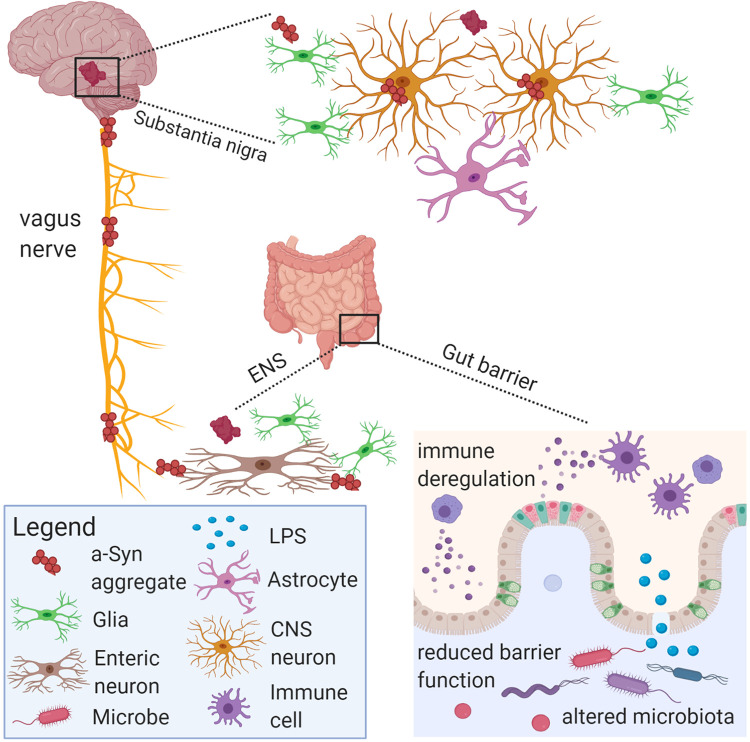
“An interesting new hypothesis supported by animal studies is the production of aggregates in the gut by microbial residents and their transport to the lower brain stem via the vagus nerve [68].”
BackgroundDing, L., You, H.-J., Hu, G.-J., Yao, R., Xie, A., & Li, X.-Y. (2023) · Frontiers in Nutrition · doi:10.3389/fnut.2022.945356 · Cited by 18
Vishweswaraiah, S., Akyol, S., Yılmaz, A., Ugur, Z., Gordevičius, J., Oh, K. J., Brundin, P., Radhakrishna, U., Labrie, V., & Graham, S. F. (2022) · Frontiers in Neuroscience · doi:10.3389/fnins.2022.804261 · Cited by 19
“The gut-brain axis has been receiving a lot of attention in recent years, specifically how it relates to neurodegenerative disease (Peterson, 2020; Agus et al., 2021; Varma et al., 2021); herein and for the first time, combining metabolomics and epigenetics approaches, we highlight bile acid metabolism as being the ma…”
BackgroundResultAnxiety and depression in keratotic oral lichen planus: a multicentric study from the SIPMO
Adamo, D., Calabria, E., Canfora, F., Coppola, N., Leuci, S., Mignogna, M., Muzio, L. L., Spirito, F., Giuliani, M., Azzi, L., et al. (2023) · Clinical Oral Investigations · doi:10.1007/s00784-023-04909-3 · Cited by 23
Gut Microbiota and Dietary Strategies for Age‐Related Diseases
Upadhyay, P., Kumar, S., Chellammal, H. S. J., Sahu, N., Srivastava, S., Kumar, R., & Gasmi, A. (2025) · Molecular Nutrition & Food Research · doi:10.1002/mnfr.70308 · Cited by 19
“Synbiotics are dietary supplements or functional foods that combine probiotics and prebiotics, working together to improve the survival and activity of beneficial gut microbes [125].”
Koumpouli, D., Koumpouli, V., & Koutelidakis, A. Ε. (2025) · Applied Sciences · doi:10.3390/app15105558 · Cited by 19
“Firmicutes and Bacteroidetes represent almost 90% of the gut microbiota [2,3,5,16].”
InfluentialMicrobiome Alterations and Alzheimer’s Disease: Modeling Strategies with Transgenic Mice
López-Villodres, J. A., Escamilla, A., Mercado-Sáenz, S., Alba-Tercedor, C., Rodríguez‐Pérez, L., Arranz‐Salas, I., Sanchez-Varo, R. M., & Bermúdez, D. (2023) · Biomedicines · doi:10.3390/biomedicines11071846 · Cited by 20
Andriolo, I. R. L., Longo, B. C., de Melo, D. M., de Souza, M. M., Prediger, R. D., & da Silva, L. M. (2024) · CNS & Neurological Disorders - Drug Targets · doi:10.2174/0118715273289138240306050532 · Cited by 20
The anti‐inflammatory and anti‐oxidative potential of synbiotics in two independent cell lines
Eor, J. Y., Son, Y. J., & Kim, S. H. (2021) · International Journal of Dairy Technology · doi:10.1111/1471-0307.12777 · Cited by 14
Han, H., & Jang, J. (2022) · Frontiers in Medical Technology · doi:10.3389/fmedt.2022.931411 · Cited by 14
Advances in Bioactive Compounds from Plants and Their Applications in Alzheimer’s Disease
Pavlov, S. A., Prajapati, S. K., Yadav, D., Marcano-Rodriguez, A., Yadav, H., & Jain, S. (2025) · Biomolecules · doi:10.3390/biom16010007 · Cited by 16
“In terms of the gut–brain axis component, we see two contradictory mouse studies, where one shows an increase in SCFA, which are known to help with AD, while another study shows a disturbance of the microbiota, which led to an exacerbation of inflammation [80].”
InfluentialAijaz, M., Ahmad, S., Ahmad, S., Afzal, M., & Kothiyal, P. (2025) · Naunyn-Schmiedeberg s Archives of Pharmacology · doi:10.1007/s00210-025-04776-7 · Cited by 17
Atp11b Deletion Affects the Gut Microbiota and Accelerates Brain Aging in Mice
Liu, C., Zhang, S., Shi, H., Zhou, H., Zhuang, J., Cao, Y., Ward, N., & Wang, J. (2022) · Brain Sciences · doi:10.3390/brainsci12060709 · Cited by 13
Acero, N., Ortega, T., Villagrasa, V., Leon, G., Mingarro, D. M., Castillo, E., González‐Rosende, M. E., Borrás, S., Ríos, J. L., Bosch‐Morell, F., et al. (2023) · Phytotherapy Research · doi:10.1002/ptr.7727 · Cited by 16
“They also act on the inhibition of MAOs and the modulation of the content of DA (Amro, Teoh, Norzana, & Srijit, 2018; Khazdair, Kianmehr, & Anaeigoudari, 2021; Peterson, 2020).”
BackgroundMicrobiome Impact on Amyloidogenesis
Curto, J. S., Lopez, A. S., Sanchez, M. C., Tic, I., Fernández, M. R., & de Groot, N. S. (2022) · Frontiers in Molecular Biosciences · doi:10.3389/fmolb.2022.926702 · Cited by 14
“Recently, several publications reported altered gut populations in patients with neurodegenerative diseases (Hill-Burns et al., 2017; Peterson, 2020).”
BackgroundAziz, N., Wal, P., Patel, A., & Prajapati, H. (2024) · Naunyn-Schmiedeberg s Archives of Pharmacology · doi:10.1007/s00210-024-03109-4 · Cited by 13
“According to an in vitro research of 10 nervine herbal remedies used to treat neurodegenerative diseases like Parkinson’s disease, cultures supplemented with bacopa had the highest overall microbiota modulatory capacity (Peterson 2020).”
The Vagus Nerve and the Brain-Gut Axis: Implications for Neuropsychiatric Disorders
López-Ojeda, W., & Hurley, R. A. (2024) · Journal of Neuropsychiatry · doi:10.1176/appi.neuropsych.20240118 · Cited by 14
Mitochondrial Dysfunction in Parkinson’s Disease: A Contribution to Cognitive Impairment?
Scorziello, A., Sirabella, R., Sisalli, M. J., Tufano, M., Giaccio, L., D’Apolito, E., Castellano, L., & Annunziato, L. (2024) · International Journal of Molecular Sciences · doi:10.3390/ijms252111490 · Cited by 12
“On the other hand, changes in the gut–brain axis can also affect the CNS via the secretion of neurotransmitters, vitamins, important fatty acids such as butyrate, and misfolded proteins like α -syn by gut microbes [60].”
BackgroundUnlocking the neuroprotective secrets of natural products: a focus on the gut-brain axis
Yang, X., Hu, D., Cheng, R., Bao, Q., Jiang, H., Zhao, B., & Zhang, Y. (2025) · Phytochemistry Reviews · doi:10.1007/s11101-025-10081-1 · Cited by 16
“As life expectancy continues to increase in developed countries, the economic burden for the treatment of neurodegenerative conditions is expected to greatly exceed the $20 billion currently spent annually (Peterson 2020).”
Unraveling the gut microbiota-brain axis: Mechanisms, pathophysiology, and therapeutic opportunities
Jiang, C., Nageeb, W. M., Batool, S., Hashish, A., Alkhawagah, S. M., Ibrahim, H. A. A., Zhu, W., Che, C., Li, X., Jin, M., et al. (2026) · iScience · doi:10.1016/j.isci.2026.116224 · Cited by 14
Merchak, A. R., Bolen, M. L., Tansey, M. G., & Menees, K. B. (2024) · Neurotherapeutics · doi:10.1016/j.neurot.2024.e00476 · Cited by 12
Renesteen, E., Boyajian, J. L., Islam, P., Kassab, A., Abosalha, A. K., Makhlouf, S., Santos, M., Chen, H., Shum-Tim, C., & Prakash, S. (2025) · International Journal of Molecular Sciences · doi:10.3390/ijms26115351 · Cited by 16
“Nonetheless, comprehensive research, including extensive longitudinal clinical trials, is essential to clarify the underlying mechanisms and the therapeutic efficacy of targeting this axis in the management of AD [76].”
Hammed, O. S., Afolabi, O. A., Ajike, R. A., Hezekiah, O. S., Alabi, B. A., Ajao, D., Saka, W. A., Oyekunle, O. S., & Olusola, B. O. (2025) · Frontiers in Neuroscience · doi:10.3389/fnins.2025.1597170 · Cited by 14
“Several studies suggest that probiotic supplementation can significantly reduce BBB disruption, although the exact mechanisms through which probiotics achieve this are still under investigation (Dziedzic and Saluk, 2022; Peterson, 2020; Soltanian et al., 2025).”
Water extract of ginseng alleviates parkinsonism in MPTP–induced Parkinson’s disease mice
Ning, X., Xing, S., Li, J., Pang, B., Liu, M., Fan, M., & Zhao, Y. (2024) · PLoS ONE · doi:10.1371/journal.pone.0296424 · Cited by 11
Hamzeh, O., Halaji, M., Ghasemi‐Kasman, M., Parsian, H., & Rostami-Mansoor, S. (2025) · Molecular Neurobiology · doi:10.1007/s12035-025-05093-z · Cited by 12
Synergistic Welfare of Synbiotic Nutraceuticals on Neurological Function
Bhat, A. A., Gilhotra, R. M., Thapa, R., Subramaniyan, V., Singh, S. K., Yadav, V. K., Dave, P. N., Singla, N., & Gupta, G. (2024) · Springer eBooks · doi:10.1007/978-981-99-5575-6_29 · Cited by 14
Wang, X. J., Zhang, W., Wang, H. H., Zhao, Y., Wang, P., Wang, R., Sun, Y., Ren, F., & Li, Y. (2025) · Nutrients · doi:10.3390/nu17223519 · Cited by 9
“Probiotics and prebiotics contribute to the maintenance of intestinal homeostasis by modulating neurotransmitter release within the ENS and reshaping microbiota–ENS interactions [15,16].”
Probiotic and Dietary Supplements Intervention in Age-Related Neurodegenerative Disorders
Salles, C. B. D. D., Prajapati, S. K., Yadav, D., Rennar, J., Marcano-Rodriguez, A., Yadav, H., & Jain, S. (2026) · Microorganisms · doi:10.3390/microorganisms14020290 · Cited by 9
“As a result, there is an increase in gut permeability, oxidative stress, and inflammation, commonly known as an inflammaging [10,15–17].”
InfluentialInulin as a Prebiotic and Its Effect on Gut Microbiota
Anand, A. K., Manjula, S. N., Fuloria, N. K., Sharma, H., & Mruthunjaya, K. (2025) · Springer eBooks · doi:10.1007/978-981-97-9056-2_6 · Cited by 14
Sri, R. S., Pavithra, T., Vinciya, T., Kumar, V. S., Harikrishnan, N., Begum, R. F., & Singh, S. A. (2025) · Frontiers in Pharmacology · doi:10.3389/fphar.2025.1561702 · Cited by 11
“The microbiota-gut-brain axis includes bidirectional communication via neuroimmune, neuroendocrine, and direct neural routes, such as the vagus nerve (Peterson, 2020).”
dos Santos, J. C. C. (2025) · NeuroMarkers. · doi:10.1016/j.neumar.2025.100111 · Cited by 9
Chauhan, V., Chauhan, N. K., Dutta, S., Pathak, D., & Nongthomba, U. (2023) · Frontiers in Neuroscience · doi:10.3389/fnins.2023.1153422 · Cited by 8
“Gut microbes and the brain communicate bidirectionally through various neuroendocrine, neuroimmune and neural connections like the vagus nerve (Peterson, 2020).”
BackgroundAge-driven dysbiosis: gut microbiota in the pathogenesis and treatment of aging disorders
Kopalli, S. R., Wankhede, N. L., Rahangdale, S. R., Sammeta, S. S., Aglawe, M. M., Koppula, S., Taksande, B. G., Upaganlawar, A., Umekar, M. J., & Kale, M. B. (2026) · Biogerontology · doi:10.1007/s10522-026-10389-1 · Cited by 7
“(1234567890)”
Xia, Y., Zhang, Y., Li, Y., Li, X., Wu, Y., & Yao, Q. (2024) · Cellular and Molecular Biology · doi:10.14715/cmb/2024.70.4.17 · Cited by 8
“The latest research depicted that α-syn in Lewy bodies expresses in intestinal neurons and endocrine cells, thus some scholars speculated that PD pathology may originate from the in - testine [6].”
BackgroundChai, Z., Ouyang, Y., Debebe, A., Picker, M., Lee, W., Fenton, S., Becker, A., Augustin-Emmerichs, K., Schwiertz, A., Weber, S. N., et al. (2025) · Journal of Parkinson s Disease · doi:10.1177/1877718x251328567 · Cited by 8
“65,66 Compositional and functional changes in the gut microbiota following treatment with probiotics, prebiotics, and synbiotics have often resulted in the improvement of the symptoms, 67 suggesting a causal link between the microbiota and constipation.”
Harun, N., Waheed, M., Rubab, S. S., Arshad, M., Haq, S. M., Arshad, F., Hussain, S. M., Bukhari, I., Shoaib, M., Fatima, K., et al. (2025) · Scientific Reports · doi:10.1038/s41598-025-15632-2 · Cited by 6
Interaction Between Natural Products and Gut Microbiota
Ağagündüz, D., Cemali, Ö., & Çelik, E. (2022) · Current Pharmacology Reports · doi:10.1007/s40495-022-00309-5 · Cited by 6
Herbal medicines in Alzheimer’s disease and the involvement of gut microbiota
Liu, M., Li, T., Liang, H., & Zhong, P. (2024) · Frontiers in Pharmacology · doi:10.3389/fphar.2024.1416502 · Cited by 11
“A number of potent therapeutic approaches have been elucidated to target the gut microbiome, such as prebiotics, probiotics, dietary agents, and herbal medicine (Peterson, 2020).”
BackgroundIshii, T., Kaya, M., & Muroi, Y. (2024) · International Journal of Molecular Sciences · doi:10.3390/ijms25179259 · Cited by 6
Faysal, M. F., Zehravi, M., Amin, M. A., Rab, S. O., Jahnavi, P., Arjun, U. V. N. V., Gupta, J. K., Billah, A. A. M., Vodeti, R., Prasad, P. D., et al. (2025) · Pathology - Research and Practice · doi:10.1016/j.prp.2025.156090 · Cited by 7
Kaur, A., Kaur, I. P., Chopra, K., & Rishi, P. (2022) · Gut Pathogens · doi:10.1186/s13099-022-00484-2 · Cited by 6
“In consonance with our findings, various studies have highlighted the ability of probiotics in reversing pathogen or microbial component such as lipopolysaccharide (LPS) mediated neurodegeneration by using interventions targeting the gut microbiota [13, 23].”
BackgroundMicroplastics and the gut-brain axis: Unraveling neurotoxic mechanisms and health implications
Farooq, U., Muhammad, Z., Yang, Q., Usman, M., Qu, Z., Zou, B., & Liu, N. (2026) · The Innovation Medicine · doi:10.59717/j.xinn-med.2026.100190 · Cited by 5
Horn, M. D., Forest, S. C., Saied, A. A., & MacLean, A. G. (2024) · Frontiers in Aging Neuroscience · doi:10.3389/fnagi.2024.1368517 · Cited by 5
“For example, several animals were euthanized due to gastrointestinal issues and likely had severe dysbiosis of their gut microbiota, which has been linked to several neurodegenerative disorders (Peterson, 2020).”
BackgroundMartinez-Vega, M. V., Conde, S. G. M., & Freyre‐Fonseca, V. (2023) · ACS Chemical Neuroscience · doi:10.1021/acschemneuro.3c00170 · Cited by 6
Metadata
- Authors
- Peterson, C. T.
- Affiliations
- University of California San Diego (US)
- Corresponding author
- Peterson, Christine Tara
- Venue
- Journal of Evidence-Based Integrative Medicine
- Publisher
- SAGE Publications
- Published
- 2020-01-01
- Volume
- 25
- Pages
- 2515690X2095722
- ISSN
- 2515-690X (ISSN-L)
- PMC
- PMC7586271
- OpenAlex
- W3094482185
- Cited by
- 160
- References
- 181
- Citations by year
- 2026: 26 · 2025: 31 · 2024: 41 · 2023: 23 · 2022: 28 · 2021: 11
- FWCI
- 5.03
- Type
- journal article
- Language
- en
- Open access
- gold
- doi.org
- Licence
- Locations
- Journal of Evidence-Based Integrative Medicine (publishedVersion, cc-by-nc)
- PubMed Central (publishedVersion, cc-by-nc)
- PubMed (publishedVersion)
- DOAJ (DOAJ: Directory of Open Access Journals) (submittedVersion, cc-by-sa)
- Funders
- Chopra Foundation (Fellowship Grant)
- Topics
- Life Sciences › Biochemistry, Genetics and Molecular Biology › Molecular Biology › Gut microbiota and health
- Life Sciences › Agricultural and Biological Sciences › Food Science › Probiotics and Fermented Foods
- Health Sciences › Medicine › Gastroenterology › Gastrointestinal motility and disorders
- Keywords
- microbiota-gut-brain axis, gut dysbiosis, neurodegenerative diseases, Parkinson's disease, Alzheimer's disease, prebiotics, probiotics, synbiotics, medicinal plants, vagus nerve, neuroimmune interactions
- MeSH terms
- Gastrointestinal Microbiome, Alzheimer Disease, Brain, Humans, Phytotherapy, Parkinson Disease, Plant Extracts, Plants, Medicinal, Enteric Nervous System, Neurodegenerative Diseases, Probiotics, Gastrointestinal Tract, Prebiotics, Synbiotics, Dysbiosis
About these checks
Registry, retraction, Cites and statistics results are computed, not judged, with one exception: a printed reference that no index lists is read once by a model before it counts as a citation error. Claims are extracted by a model and kept only when their quote appears verbatim in the text; each cited source is then checked, with a model’s help, for whether it says what the claim relies on. Those verdicts can be wrong — read the claim’s quote and the cited source before relying on one.
Statistics and arithmetic are recomputed, not judged.
Confidence bands are shown only for fields calibrated on our annotated test set. None is calibrated yet, so no band is shown.
What counts as a claim ›How we measure confidence ›How we check this ›
Are you an author, or do you see a problem with this page? Request a review
Data sources
Bibliographic data: Semantic Scholar, OpenAlex, Crossref.
Contains information from the Semantic Scholar Academic Graph Datasets, made available under the ODC Attribution License (ODC-BY 1.0).
Semantic Scholar’s data is described in: Kinney, R., et al. (2023). The Semantic Scholar Open Data Platform. arXiv:2301.10140.
