

Dysfunction of the Microbiota-Gut-Brain Axis in Neurodegenerative Disease: The Promise of Therapeutic Modulation With Prebiotics, Medicinal Herbs, Probiotics, and Synbiotics
Open accessThe DOI matches its Crossref record; 181 of the 181 references it cites were found in a registry or an index.
Abstract
Recent data suggest gut microbiota dysbiosis as a contributing factor in neurodegenerative diseases, such as Parkinson's Disease (PD) and Alzheimer's Disease (AD), and these pathologies may manifest via the microbiota-gut-brain-axis, which comprises bidirectional communication through neuroimmune, neuroendocrine, and direct neural pathways such as the vagus nerve. Preclinical and human clinical trial data reveal exciting potential for novel treatment targets and therapeutic modulation with prebiotics, medicinal herbs, probiotics, and synbiotics in health, aging, and neurodegeneration and are reviewed here. While greater insights and characterization of the microbiota-gut-brain axis have been revealed over the past decade, salient questions related to the pathology, pathogenesis and clinical treatment of the axis in the context of both health and neurodegenerative disease remain and are discussed in this review. Future directions such as additional well-controlled, large scale, longitudinal human clinical trials are urgently needed to further elucidate both mechanism and therapeutic opportunity in health, neurological disease, and disease subpopulations to ensure that the next decade ushers the dawn of targeted therapeutic modulation of the microbiota-gut-brain axis.
Overview
The claims and statistics of this paper haven’t been checked yet.
Free: it reads the open-access text and checks the first 5 claims that cite a source we can check. Create a free account to check every claim.
Integrity signals
Registry
Cites
Statistics
Figures
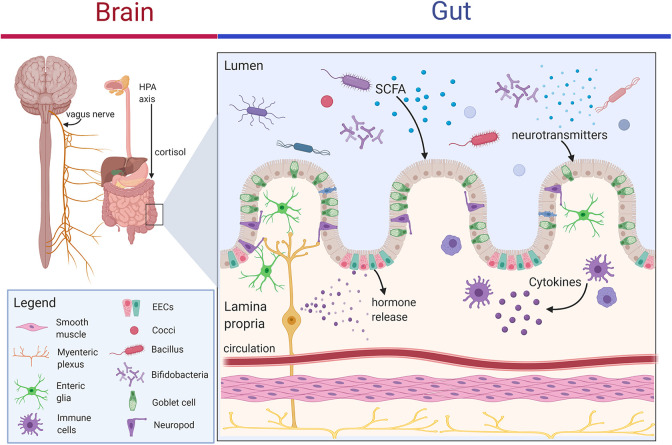
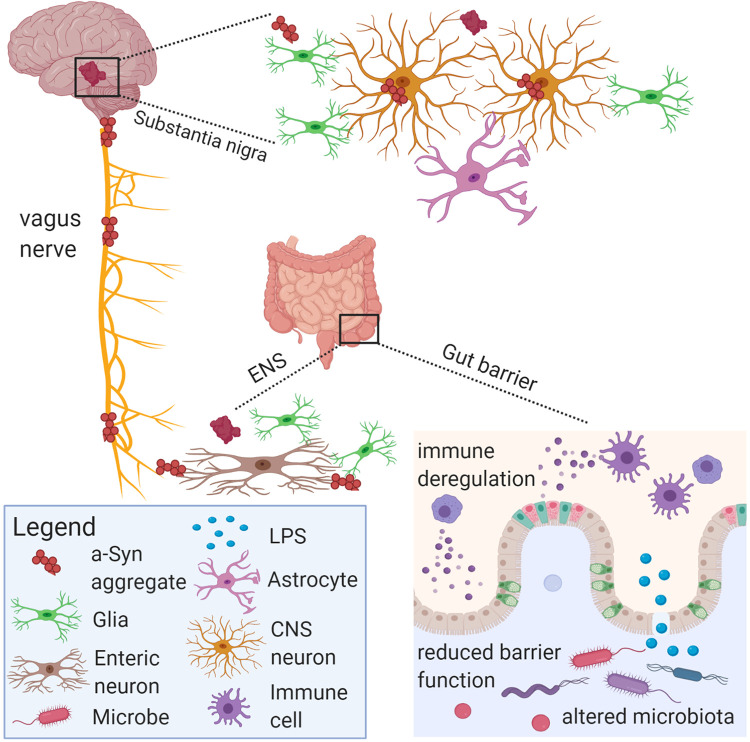
Verification
Claims the paper makes
The claims and statistics of this paper haven’t been checked yet.
Free: it reads the open-access text and checks the first 5 claims that cite a source we can check. Create a free account to check every claim.
Claims other papers make about this one
Each is checked against this paper’s own text: does it say what the citing paper says it does?
The source backs part of the claim, not all of it — or backs it for a different population, condition or comparison.
In the citing paper
“Moreover, it is now evident that GM dysbiosis is a factor that takes part in the development of several neurological diseases, including PD, AD, multiple sclerosis, autism spectrum disorders (ASD), anxiety, depression, schizophrenia, and other mental illnesses [314,315].”
From The Interplay between Gut Microbiota and Parkinson’s Disease: Implications on Diagnosis and Treatment (2022) · cites this paper as [315]
Experimental — accuracy not yet measuredThe cited source says what the claim attributes to it.
In the citing paper
“Therefore, modulation of the microbiota-gut-brain axis using probiotics could be a promising complementary approach to traditional methods to prevent or counteract these disorders, including PD, as widely reported in literature [315,317,318,319,320].”
From The Interplay between Gut Microbiota and Parkinson’s Disease: Implications on Diagnosis and Treatment (2022) · cites this paper as [315]
Self-check
Percentages, sums and reported differences re-computed from the paper’s own numbers.
The self-check needs the paper’s full text.
Citations
Cites
1 retracted
Tamtaji, O. R., Taghizadeh, M., Daneshvar Kakhaki, R., Kouchaki, E., Bahmani, F., Borzabadi, S., Oryan, S., Mafi, A., & Asemi, Z. (2019) · Clinical Nutrition · doi:10.1016/j.clnu.2018.05.018 · Cited by 398
RetractedDiversity of the Human Intestinal Microbial Flora
Eckburg, P. B., Bik, E. M., Bernstein, C. N., Purdom, E., Dethlefsen, L., Sargent, M., Gill, S. R., Nelson, K. E., & Relman, D. A. (2005) · Science · doi:10.1126/science.1110591 · Cited by 7,913 · cited 2×
“Over 50 phyla colonize the planet but the predominant phyla in the mammalian intestine include Bacteroidetes, Firmicutes, Proteobacteria, Actinobacteria, and Fusobacteria.(8) With its 400 m(2) of surface area, the gastrointestinal (GI) tract represents one of the largest interfaces for host-microbe interactions.”
BackgroundDietary Modulation of the Human Colonic Microbiota: Introducing the Concept of Prebiotics
Gibson, G. R., & Roberfroid, M. B. (1995) · The Journal of Nutrition · doi:10.1093/jn/125.6.1401 · Cited by 7,667 · cited 1×
“The prebiotic definition, while highly debated, most commonly refers to dietary carbohydrates that are selectively fermented by gut microbiota to modulate the composition of microbiota and in turn confer health benefits to the host.(89,90) Prebiotics reach the site of action in the colon and are fermented by saccharol…”
BackgroundChanges of Intestinal Functions in Liver Cirrhosis
Fukui, H., & Wiest, R. (2016) · Inflammatory Intestinal Diseases · doi:10.1159/000444436 · Cited by 6,808
The gut microbiota as an environmental factor that regulates fat storage
Bäckhed, F., Ding, H., Wang, T., Hooper, L. V., Koh, G. Y., Nagy, A., Semenkovich, C. F., & Gordon, J. I. (2004) · Proceedings of the National Academy of Sciences · doi:10.1073/pnas.0407076101 · Cited by 6,245 · cited 1×
“A major function of this bacterial population is energy harvest through the metabolism of otherwise indigestible complex polysaccharides from food and the subsequent generation of short-chain fatty acids (SCFA).(16) The GI tract is also a site of production for hormones involved in energy homeostasis (e.”
BackgroundFeigin, V. L., Nichols, E., Alam, T., Bannick, M. S., Beghi, E., Blake, N., Culpepper, W. J., Dorsey, E. R., Elbaz, A., Ellenbogen, R. G., et al. (2019) · The Lancet Neurology · doi:10.1016/s1474-4422(18)30499-x · Cited by 5,644
Commensal microbe-derived butyrate induces the differentiation of colonic regulatory T cells
Furusawa, Y., Obata, Y., Fukuda, S., Endo, T. A., Nakato, G., Takahashi, D., Nakanishi, Y., Uetake, C., Kato, K., Kato, T., et al. (2013) · Nature · doi:10.1038/nature12721 · Cited by 5,549
Host-Bacterial Mutualism in the Human Intestine
Bäckhed, F., Ley, R. E., Sonnenburg, J. L., Peterson, D. A., & Gordon, J. I. (2005) · Science · doi:10.1126/science.1104816 · Cited by 5,277
Metagenomic Analysis of the Human Distal Gut Microbiome
Gill, S. R., Pop, M., DeBoy, R. T., Eckburg, P. B., Turnbaugh, P. J., Samuel, B. S., Gordon, J. I., Relman, D. A., Fraser-Liggett, C. M., & Nelson, K. E. (2006) · Science · doi:10.1126/science.1124234 · Cited by 4,699 · cited 1×
“The gut microbiota performs important protective and metabolic functions, such as fermentation of indigestible plant components and endogenous mucous using genes encoding enzymes and biochemical pathways not contained within the host genome.(10) The information encoded by the mammalian genome is not sufficient to main…”
BackgroundBravo, J. A., Forsythe, P., Chew, M. V., Escaravage, E., Savignac, H. M., Dinan, T. G., Bienenstock, J., & Cryan, J. F. (2011) · Proceedings of the National Academy of Sciences · doi:10.1073/pnas.1102999108 · Cited by 3,888 · cited 1×
“In mice, Lactobacillus rhamnosus probiotic supplementation significantly increased GABA activity in the brain and changed their response to stress in a vagus nerve-dependent manner.(120) Gut microbe-derived metabolites such as SCFAs influence the permeability of the both intestinal and blood–brain barrier.”
Background
Cited by
Items 101–179 of 179
The correlation of vaginal flora and anxiety in perimenopause women: a prospective study
Ren, Y., Pan, Z., Zuo, X., & Jiang, X. (2025) · BMC Women s Health · doi:10.1186/s12905-025-04019-0 · Cited by 4
“The gut-brain axis has received the most attention, and it influences anxiety symptoms by activating neural pathways and central nervous system signals that regulate neuro-inflammation [14, 15].”
Probiotics, gut microbiota, and brain health: Exploring therapeutic pathways.
Vijayaram, S., Mahendran, K., Razafindralambo, H. L., Ringø, E., Kannan, S., & Sun, Y. (2025) · Europe PMC (PubMed Central) · doi:10.3934/microbiol.2025022 · Cited by 12
Zhao, Z., Dong, M., Mu, Z., ZHENG, Z., & ZHANG, Z. (2025) · Journal of Pharmaceutical Analysis · doi:10.1016/j.jpha.2025.101521 · Cited by 6
“This complex network of gut microbiota, immune response, and neurodegeneration highlights the importance of the GBA in PD [25,26].”
Mendonça, I. P., da Silva, R. S., de Paiva, I. H. R., Costa, B. L. D. S. A., Teixeira, K. P. D. S. B., de Souza, J. R. B., & Peixoto, C. A. (2026) · Inflammopharmacology · doi:10.1007/s10787-026-02152-2 · Cited by 6
“Each approach has advantages and disadvantages, but all have shown significant potential for improving PD symptoms in patients and animal models (Gazerani 2019 ; Peterson 2020; Zhao et al. b).”
Research progress on natural products in regulating the gut microbiota in Parkinson’s disease
Jia, Y., Zhang, Y., Tai, X., Zhao, T., Zhang, H., & Zhou, H. (2025) · Frontiers in Pharmacology · doi:10.3389/fphar.2025.1667694 · Cited by 5
“Instead, communication occurs through specialized structures called neuropods on enteroendocrine cells (Peterson, 2020).”
Torraville, S. E., Flynn, C. M., Kendall, T. L., & Yuan, Q. (2023) · Biomedicines · doi:10.3390/biomedicines11071884 · Cited by 4
“Combined with this, studies using probiotic supplementation have also been shown to improve AD pathologies [233].”
BackgroundOnaolapo, A. Y., Ojo, F. O., Olofinnade, A. T., Falade, J., Lawal, I. A., & Onaolapo, O. J. (2022) · CNS & Neurological Disorders - Drug Targets · doi:10.2174/1871527321666220903114559 · Cited by 5
Authenticity of probiotic foods and supplements: Up-to-date situation and methods to assess it
Fusco, V., Fanelli, F., & Chieffi, D. (2022) · Elsevier eBooks · doi:10.1016/b978-0-323-89908-6.00015-7 · Cited by 7
Saldaña-Chafloque, C. F., Acosta-Román, M., Huamaní, J. T., & Zavala, J. L. C. (2024) · Biologics · doi:10.3390/biologics4010003 · Cited by 3
Sharma, S., & Tanwar, S. S. (2026) · Journal of Holistic Integrative Pharmacy · doi:10.1016/j.jhip.2026.02.004 · Cited by 5
Xu, T., Roy, S. P., Hadia, R., Annu, Bhowmik, S., & Panchal, A. (2026) · Frontiers in Pharmacology · doi:10.3389/fphar.2026.1826681 · Cited by 4
“Although microbiome research has advanced, clinical and translational hurdles limit its integration into CNS pharmacology (Peterson, 2020; Alam, 2025).”
Prasanth, M. I., Prasansuklab, A., Verma, K., Brimson, J. M., Malar, D. S., & Tencomnao, T. (2023) · Nutrition and Healthy Aging · doi:10.3233/nha-220196 · Cited by 3
“According to World Health Organization (WHO), neurodegenerative diseases will bypass cancer to become the second leading cause of death globally by 2040 [2].”
BackgroundLatorre, M. A. D. (2023) · Revista de Nutrición Clínica y Metabolismo · doi:10.35454/rncm.v6n3.504 · Cited by 3
Emerging Relationship Between the Gut Microbiota and Neurodegenerative Disorders
Iyer, S., Verma, S., Marathe, S. A., & Tare, M. (2024) · Springer eBooks · doi:10.1007/978-981-97-4288-2_11 · Cited by 3
Reversal of Metabolic Disorder Through the Restoration of Gut Microbiota
Upadhyay, P., Kalra, D., Gupta, S., & Mishra, S. K. (2022) · Nutritional neurosciences · doi:10.1007/978-981-19-4530-4_11 · Cited by 3
Influence of intestinal dysbiosis on the course of authistic spectrum: literature review
Григорьянц, Э. О., Chervinets, Y. V., Chervinets, V. M., & Rumyantseva, E. S. (2024) · ASTRAKHAN MEDICAL JOURNAL · doi:10.17021/1992-6499-2024-4-16-30 · Cited by 2
Agarwal, U., Paliwal, S., Yadav, V., Pannu, A. S., Tonk, R. K., & Verma, S. K. (2025) · CNS & Neurological Disorders - Drug Targets · doi:10.2174/0118715273402657250905055635 · Cited by 2
Chambilo, B., Dhiver, T., Sahu, K., & Parashar, R. (2025) · Neurological Sciences and Neurophysiology · doi:10.4103/nsn.nsn_39_25 · Cited by 2
Wang, Q., Vinothkanna, A., Prathiviraj, R., Li, X., Prabhu, S., & Dass, K. (2026) · Journal of Computational Biophysics and Chemistry · doi:10.1142/s2737416526500535 · Cited by 2
Handajani, Y. S., Turana, Y., Hengky, A., & Kristian, K. (2026) · Journal of Alzheimer s Disease · doi:10.1177/13872877261415596 · Cited by 2
Abdelaziz, A. M. (2026) · International Immunopharmacology · doi:10.1016/j.intimp.2026.116628 · Cited by 2
The Gut–Ear Axis: From Dysbiosis to Auditory and Vestibular Disorders
Li, Y., Shi, X., Liu, X., & Sun, Y. (2026) · International Journal of Molecular Sciences · doi:10.3390/ijms27177523 · Cited by 3
Future Perspective and Safety Issues of Synbiotics in Different Diseases
Gomte, S. S., Rout, B., Agnihotri, T. G., Peddinti, V., & Jain, A. (2024) · Springer eBooks · doi:10.1007/978-981-99-5575-6_13 · Cited by 2
Cavalcante, F. S. B. M., de Araújo, L. L., Gomes, G. F., Galvão, S. L., Hipólito, T. C. S. E., Piagentini, M. D. C., & dos Santos, J. C. C. (2025) · Brazilian Journal of Clinical Medicine and Review · doi:10.52600/2965-0968.bjcmr.2025.3.1.bjcmr5 · Cited by 2
“In addition, with its use, they showed improvement in social behavior and sleep patterns in patients with autism spectrum disorder (ASD) and improvement in anxiety in patients with irritable bowel syndrome [12, 14].”
BackgroundInfluentialSaniotis, A., Henneberg, M., & Mohammadi, K. (2025) · Frontiers in Physiology · doi:10.3389/fphys.2025.1558625 · Cited by 2
“Alterations to the microbiota-gut-brain-axis are associated with the pathogenesis of neurologic and psychiatric disorders (Cryan and Dinan, 2012; Kim et al., 2015; Mohajeri et al., 2018; Peterson, 2020).”
Gut microbiota and motoric-cognitive frailty in hospitalized older persons
Lauretani, F., Longobucco, Y., & Maggio, M. G. (2021) · Current Opinion in Clinical Nutrition & Metabolic Care · doi:10.1097/mco.0000000000000739 · Cited by 3
Carp, T.-N. (2024) · Preprints.org · doi:10.20944/preprints202401.2108.v1 · Cited by 2
The Biomolecular Basis of Gut Microbiome on Neurological Diseases
Anaya‐Prado, R., Cárdenas-Fregoso, A. P., Reyes-Perez, A. M., Ortiz-Hernandez, D. M., Quijano-Ortiz, M., Delgado-Martinez, M. V., Pelayo-Romo, A. S., Anaya-Fernández, R., Anaya-Fernandez, M. M., Azcona-Ramirez, C. C., et al. (2024) · OBM Neurobiology · doi:10.21926/obm.neurobiol.2403232 · Cited by 1
Yang, X., Qin, Y., Mu, W., Gao, W., Chen, Q., Xia, J., & Huang, Z. (2026) · Journal of Microbiology and Biotechnology · doi:10.4014/jmb.2510.10008 · Cited by 1
Nutrition, Gut–Brain Axis and Cognitive Health: The Probiotics–Walnut Paradigm
Moummou, H., & Britel, I. (2026) · IntechOpen eBooks · doi:10.5772/intechopen.1014012 · Cited by 2
Zhang, M., Du, M., Zhang, W., Huang, R., Li, W., Li, T., Bai, J., Zhang, N., Chen, J., Zhou, J., et al. (2026) · iMetaMed · doi:10.1002/imm3.70033 · Cited by 2
Gut microbiota as a modulator of HDAC: insights into Alzheimer’s disease treatment
Verma, E., Mishra, S., Chellammal, H. S. J., Khandige, P. S., & Gasmi, A. (2026) · Pharmacological Reports · doi:10.1007/s43440-026-00897-9 · Cited by 1
Role of the Gut Microbiome and Its Modulation in Neurodegenerative Diseases
Prabhakar, P., & Punnaveetil, S. (2022) · Springer eBooks · doi:10.1007/978-981-16-6703-9_5 · Cited by 1
Precision Nutrition in Aging and Brain Health
Chen, S. T., & Small, G. W. (2023) · Elsevier eBooks · doi:10.1016/b978-0-443-15315-0.00017-1 · Cited by 2
Therapeutic Potential of Synbiotics in Management of Various Disorders
Singh, L., Kaur, H., & Bhatti, R. (2024) · Springer eBooks · doi:10.1007/978-981-99-5575-6_16 · Cited by 1
Rahmaddiansyah, R., Rita, R. S., & Rusti, S. (2024) · South East European Journal of Immunology · doi:10.3889/seejim.2024.6066 · Cited by 3
Zhang, J., Yan, X., Zhang, B., Zhang, H., Miao, S., Du, Q., Zhang, Q., & Du, J. (2025) · Medicine · doi:10.1097/md.0000000000044723 · Cited by 1
Influence of gut microbiota on axonal cells of the brain
Suresh, G., Srivastava, S., & Singh, A. (2025) · Elsevier eBooks · doi:10.1016/b978-0-443-29932-2.00004-9 · Cited by 1
Profound Associations between Maternal Infectious Disease and Fetal Neurodevelopmental DelaysPreprint
Carp, T.-N., & Metoudi, M. (2022) · Preprints.org · doi:10.20944/preprints202212.0190.v1 · Cited by 1
Analysis of neurodegenerative disorders across multiple species
Eaton, S. (2021) · ERA · doi:10.7488/era/1220
Ramayulis, R., & Wasito, E. (2022) · World Nutrition Journal · doi:10.25220/wnj.v05.s2.0004
“Other studies on autisms shows that various prebiotics may have therapeutic effects on patients with autism by decreasing the population of Clostridium perfringens and increasing the rate of Bifidobacteria.19,20,21 An imbalance and/or reduced microbial diversity has been associated with a wide variety of functional ga…”
BackgroundMicrobiome-Based Interventions: A New Prospect in Post-Stroke Rehabilitation
Muhammad, M., Isah, R. M., & Muhammad, A. (2022) · IntechOpen eBooks · doi:10.5772/intechopen.103976
Piana, G. S., Batista, C. D. C. L., Contão, H. D. O., Lopes, K. A., Silva, L. T. D., Cardoso, T. C., de Assunção, G. N., ZAMPROGNO, S. B., Cavalcante, R. L. D. C., Borges, S. R. A., et al. (2022) · International Journal of Health Science · doi:10.22533/at.ed.159312301013
Human Microbiome and the Neurological Disorders
Pamanji, R., & Selvin, J. (2023) · Springer eBooks · doi:10.1007/978-981-99-1463-0_8
O papel do eixo intestino-cérebro-microbiota em doenças neurodegenerativas
Galvão, S. L., Gomes, G. F., & dos Santos, J. C. C. (2023) · Revista Interdisciplinar de Saúde e Educação · doi:10.56344/2675-4827.v4n3a2023.13
Role of Co-Block Polymers in the Treatment of Neurodegenerative Diseases
Kaur, S., Ghosh, S., Sharma, G., Mishra, J., Joshi, R., Bhatti, G. K., & Bhatti, J. S. (2023) · Springer eBooks · doi:10.1007/978-981-99-6917-3_6
Espécies vegetais empregadas para fins medicinais no tratamento de doenças do aparelho digestivo
Rios, F. M. M., Filho, W. M. L., Barroso, W. A., do Amaral, F. M. M., & Gondim, R. S. D. (2024) · Revista Eletrônica Acervo Saúde · doi:10.25248/reas.e15375.2024
Salama, H. H., Abdel-Wahhab, K. G., Khalil, H. M. A., Abdelhamid, S. M., & Hassan, L. K. (2024) · Foods and raw materials · doi:10.21603/2308-4057-2025-1-619 · Cited by 1
Carp, T.-N. (2024) · Preprints.org · doi:10.20944/preprints202401.2108.v2
Combination of bifidobacteria and arabinogalactan when fermenting skim milk
Ababkova, A. A., Вячеславовна, Х. Е., Novokshanova, A. L., Kuzin, A., & Arsenyeva, T. P. (2024) · BIO Web of Conferences · doi:10.1051/bioconf/2024126aeea2024_01046 · Cited by 1
Neuroprotective Role of Probiotics
(2024) · International Journal of Veterinary Science · doi:10.47278/book.cam/2024.110
Gut Microbiome Modulation of Innate Immunity in Neurodegenerative Diseases
Merchak, A. R., Menees, K. B., Bolen, M. L., & Tansey, M. G. (2024) · Oxford University Press eBooks · doi:10.1093/oxfordhb/9780190931544.013.14
Hsu, F.-C., Weng, T.-H., Pu, T., Chang, P.-K., Lin, T.-C., Jao, S., Chen, C., Hu, J., & Chien, W. (2024) · Scientific Reports · doi:10.1038/s41598-024-81950-6 · Cited by 1
“Moreover, as there is a symbiotic relationship between the gut microbiota and the host, their dynamic and disrupted interaction can have extensive effects on the host health, potentially resulting in 22,23 .”
*, Chouhan, P. N., & Thakur, S. (2025) · International Journal of Research in Ayurveda and Pharmacy · doi:10.7897/2277-4343.16272
Kim, C.-H., Ahn, T., So, Y., Cho, H.-G., Kim, J., Moon, J., Oh, M., Kang, S., Ji, S., Kim, L., et al. (2025) · Parkinson s Disease · doi:10.1155/padi/9860808
“Recent evidence suggests that gut microbiota dysbiosis contributes to the PD pathophysiology through the microbiota–gut–brain axis and that modulation of gut fora with medicinal herbs can infuence the neuroimmune and neuroendocrine pathways [17].”
Francuziak, A. E., Dembicki, P. M., Kozłowska, K., Książek, T. K., Szeliga, A., Borowski, M., Dzieszko, N., Szczepański, M., Kalinowska, W., & Kulasza, P. S. (2025) · Quality in Sport · doi:10.12775/qs.2025.45.66476
Gut—brain: interactions in health and pathology
Веремеев, А. В., Киприна, Е. С., Berns, S. A., Рантиковна, М. А., Ринатовна, Г. И., Zhdanova, O. V., & Drapkina, O. M. (2025) · Russian Journal of Preventive Medicine · doi:10.17116/profmed202528111106
Eje intestino-cerebro: modificaciones de la microbiota intestinal en enfermedades priónicas.
De Diego Abejón, P., Martín Burriel, I., & López, L. G. (2024) · Zaguan (Universidad de Zaragoza)
GUT INSTINCTS: NAVIGATING THE MICROBIAL MAZE IN MULTIPLE SCLEROSIS
Goldfine, M. A., & Goldfine, M. A. (2023) · UA Campus Repository (The University of Arizona)
Silva, B. N. (2024) · Portuguese National Funding Agency for Science, Research and Technology (RCAAP Project by FCT)
Repurposing gut microbiota modulators: insights into current and novel applications
Mabrouk, R. R., Beshbishy, A. M., Elmalah, W. M., Elattar, O. M., & Noah, A. A. (2026) · Beni-Suef University Journal of Basic and Applied Sciences · doi:10.1186/s43088-025-00727-6
“Impairment in catecholaminergic and cholinergic neuromodulation causes the manifestations of ASD and ADHD, with similarities and differences between both diseases at the level of genetics, functional brain networks, and at the cellular level [44].”
Nano Probiotics in Gut Health: Link with Neuroprotection
Sriwastawa, K. K., & Kumar, A. (2026) · Springer eBooks · doi:10.1007/978-981-95-5088-3_7
Gut dysbiosis in Parkinson’s disease: A systematic review of human studies
Bexheti‐Ferati, A., Ferati, K., Inchingolo, A. D., Marinelli, G., Bassi, P., Lagioia, R., Rizzo, A., Inchingolo, F., Vinjolli, F., Palermo, A., et al. (2026) · Eurasian Journal of Medicine and Oncology · doi:10.36922/ejmo025510527
The Gut-Brain Axis in Neurodegeneration: Mechanistic Insights and Emerging Therapeutic Perspectives
Marathe, H., Darade, A., Mahajan, M., Upaganlawar, A., & Upasani, C. (2026) · Yemen Journal of Medicine · doi:10.63475/yjm.v5i1.0295
Petrushanko, T. O., Ilenko, N. M., Boychenko, O., & Іленко-Лобач, Н. В. (2026) · Bulletin of Problems Biology and Medicine · doi:10.29254/2077-4214-2026-2-181-103-108
Bozkurt, B. K., Aslan, S., Bozkurt, O., Bodur, M., Ağagündüz, D., & Budán, F. (2026) · Frontiers in Aging Neuroscience · doi:10.3389/fnagi.2026.1814234
“…these, the vagus nerve provides the most direct neural link, transmitting sensory information from the gastrointestinal (GI) tract to the nucleus tractus solitarius (NTS) and onward to brain regions involved in regulating stress responses, appetite, mood, and cognitive functions (Peterson, 2020).”
Gut-Brain Neuroomics and Smart Microbiomes: AI-Driven Insights Into Personalized Neurological Health
Britil, I., Moummou, H., & El‐Mansoury, B. (2026) · Advances in computational intelligence and robotics book series · doi:10.4018/979-8-3373-8172-5.ch008
Sattar, Z., & Asili, J. (2026) · Probiotics and Antimicrobial Proteins · doi:10.1007/s12602-026-11152-1
Palve, S., & Palve, S. (2026) · Journal of Education and Health Promotion · doi:10.4103/jehp.jehp_401_25
“[31] Our results have also shown that individuals with poor sleep quality had significantly elevated levels of inflammatory markers, including CRP, IL‑6, and TNF‑ α .”
Microbiome‐Phytochemical Crosstalk Along the Gut‐Brain Axis in Alzheimer and Parkinson's Disease
Emon, M., Rahaman, M. M., Sarder, D., Shadin, M., Neela, S. A., Wangchuk, P., & Sarker, S. (2026) · MicrobiologyOpen · doi:10.1002/mbo3.70374
“Phytochemicals enhance the abundance of Lactobacillus and Bifidobacteria abundance, thereby increasing GABA availability via the GBA (Peterson 2020).”
Virobiome-mediated regulation of microbiota–gut–brain axis signaling and neuroimmune homeostasis
Afkhamian, A., Natanzi, A. S., Jafaridarabjerdi, M., Aghaei, S., Haghjou, A., Shafiei, M., Bashkandi, A. H., Shahraki, S., Reiter, R. J., Kashani, H. H., et al. (2026) · Cell Communication and Signaling · doi:10.1186/s12964-026-03067-9
Afzaal, M., Saeed, F., Gulzar, R., Raza, A., Abdullah, H., Butt, M. U., Saleem, S., Ali, A., Ahsan, S., & Ateeq, H. (2026) · Elsevier eBooks · doi:10.1016/b978-0-443-29835-6.00002-2
A Critical Review of the Effects of Gut Microbiome Activity on Neurodegeneration
Ta, R. A. B. (2023) · Journal of Undergraduate Studies at Trent (JUST)
DOENÇA DE ALZHEIMER E SUA RELAÇÃO COM A MICROBIOTA INTESTINAL: UMA REVISÃO DE LITERATURA
Saez, L. D., & Gagliani, L. H. (2025) · UNILUS Ensino e Pesquisa
Untangling the gut-brain axis: the relevance of gut microbiota in alcohol use disorder
Letizia, C. (2024) · Nutrimentum et Curae
Therapeutic Role of Centella asiatica (L.) in Gut Dysbiosis Induced by Environmental Toxic Metals
Ekka, R., Naik, K., Chandel, S. S., Sahu, S. K., & Ahirwar, B. (2026) · Research Journal of Pharmacy and Technology · doi:10.52711/0974-360x.2026.00689
Gong, W., Priebs, J., Ohse, V. A., Bremges, A., Dieck, H. T., Klotz, L., Dargatz, M., & Steinbrenner, H. (2026) · GeroScience · doi:10.1007/s11357-026-02594-0
Microbiome influence on drug absorption and blood–brain barrier permeability
Bhattacharya, H., & Dewanjee, S. (2026) · Advances in pharmacology · doi:10.1016/bs.apha.2026.10.001
Probiotics and impact on human health
Rawat, H. K., Bohrpi, R., Gupta, P., & Kango, N. (2026) · Elsevier eBooks · doi:10.1016/b978-0-443-45154-6.00037-4
Metadata
- Authors
- Peterson, C. T.
- Affiliations
- University of California San Diego (US)
- Corresponding author
- Peterson, Christine Tara
- Venue
- Journal of Evidence-Based Integrative Medicine
- Publisher
- SAGE Publications
- Published
- 2020-01-01
- Volume
- 25
- Pages
- 2515690X2095722
- ISSN
- 2515-690X (ISSN-L)
- PMC
- PMC7586271
- OpenAlex
- W3094482185
- Semantic Scholar
- 85af0d8e3ee2c165cf48eb075c5072989f8150ef
- Cited by
- 160
- References
- 181
- Citations by year
- 2026: 26 · 2025: 31 · 2024: 41 · 2023: 23 · 2022: 28 · 2021: 11
- FWCI
- 5.03
- Type
- journal article
- Language
- en
- Open access
- gold
- doi.org
- Licence
- Locations
- Journal of Evidence-Based Integrative Medicine (publishedVersion, cc-by-nc)
- PubMed Central (publishedVersion, cc-by-nc)
- PubMed (publishedVersion)
- DOAJ (DOAJ: Directory of Open Access Journals) (submittedVersion, cc-by-sa)
- Funders
- Chopra Foundation (Fellowship Grant)
- Topics
- Life Sciences › Biochemistry, Genetics and Molecular Biology › Molecular Biology › Gut microbiota and health
- Life Sciences › Agricultural and Biological Sciences › Food Science › Probiotics and Fermented Foods
- Health Sciences › Medicine › Gastroenterology › Gastrointestinal motility and disorders
- Keywords
- microbiota-gut-brain axis, gut dysbiosis, neurodegenerative diseases, Parkinson's disease, Alzheimer's disease, prebiotics, probiotics, synbiotics, medicinal plants, vagus nerve, neuroimmune interactions
- MeSH terms
- Gastrointestinal Microbiome, Alzheimer Disease, Brain, Humans, Phytotherapy, Parkinson Disease, Plant Extracts, Plants, Medicinal, Enteric Nervous System, Neurodegenerative Diseases, Probiotics, Gastrointestinal Tract, Prebiotics, Synbiotics, Dysbiosis
About these checks
Registry, retraction, Cites and statistics results are computed, not judged, with one exception: a printed reference that no index lists is read once by a model before it counts as a citation error. Claims are extracted by a model and kept only when their quote appears verbatim in the text; each cited source is then checked, with a model’s help, for whether it says what the claim relies on. Those verdicts can be wrong — read the claim’s quote and the cited source before relying on one.
Statistics and arithmetic are recomputed, not judged.
Confidence bands are shown only for fields calibrated on our annotated test set. None is calibrated yet, so no band is shown.
What counts as a claim ›How we measure confidence ›How we check this ›
Are you an author, or do you see a problem with this page? Request a review
Data sources
Bibliographic data: Semantic Scholar, OpenAlex, Crossref.
Contains information from the Semantic Scholar Academic Graph Datasets, made available under the ODC Attribution License (ODC-BY 1.0).
Semantic Scholar’s data is described in: Kinney, R., et al. (2023). The Semantic Scholar Open Data Platform. arXiv:2301.10140.
