

Conserved helical motifs in the IKZF1 disordered region mediate NuRD interaction and transcriptional repression
Open accessThe DOI matches its Crossref record; 80 of the 80 references it cites were found in a registry or an index.
Abstract
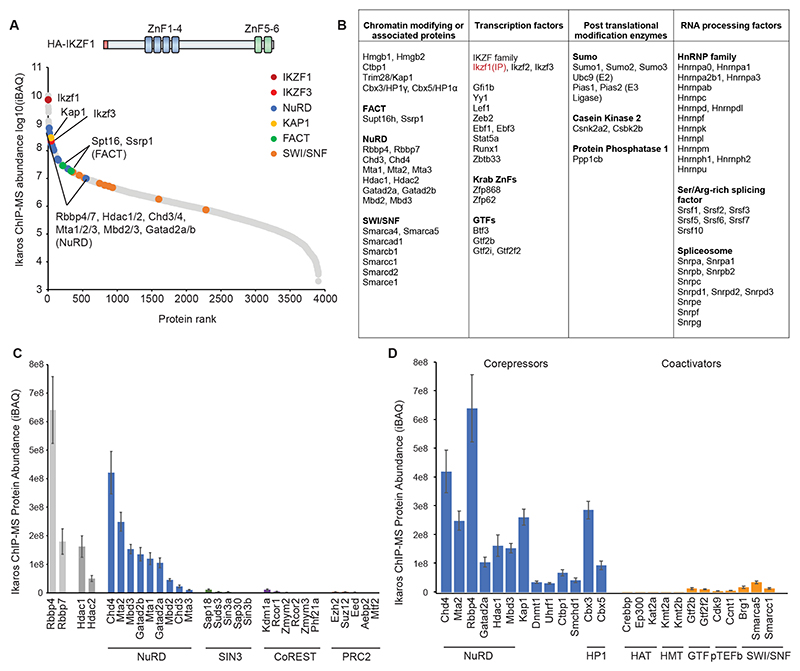
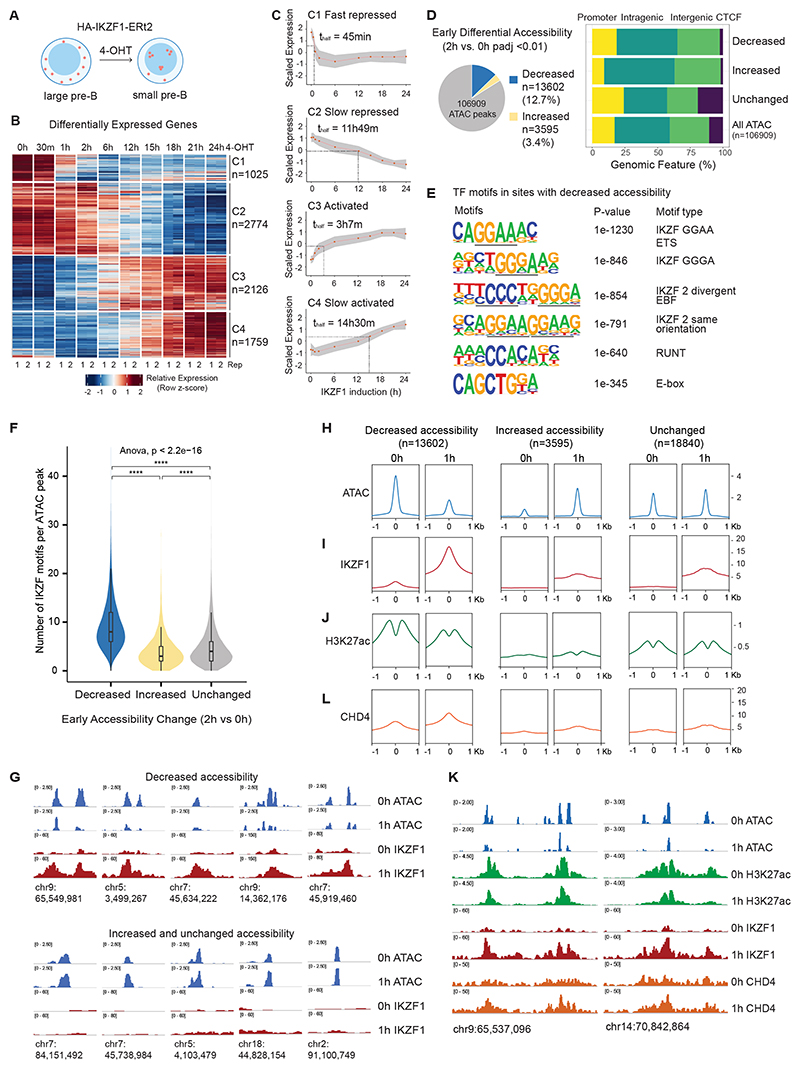
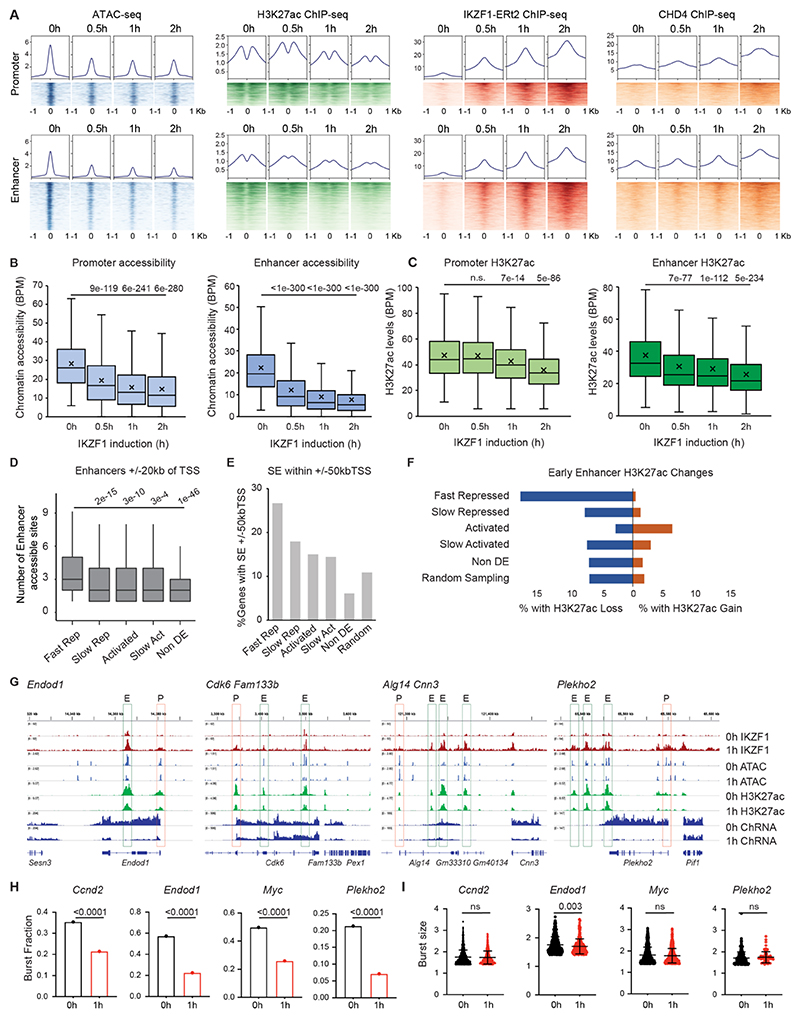
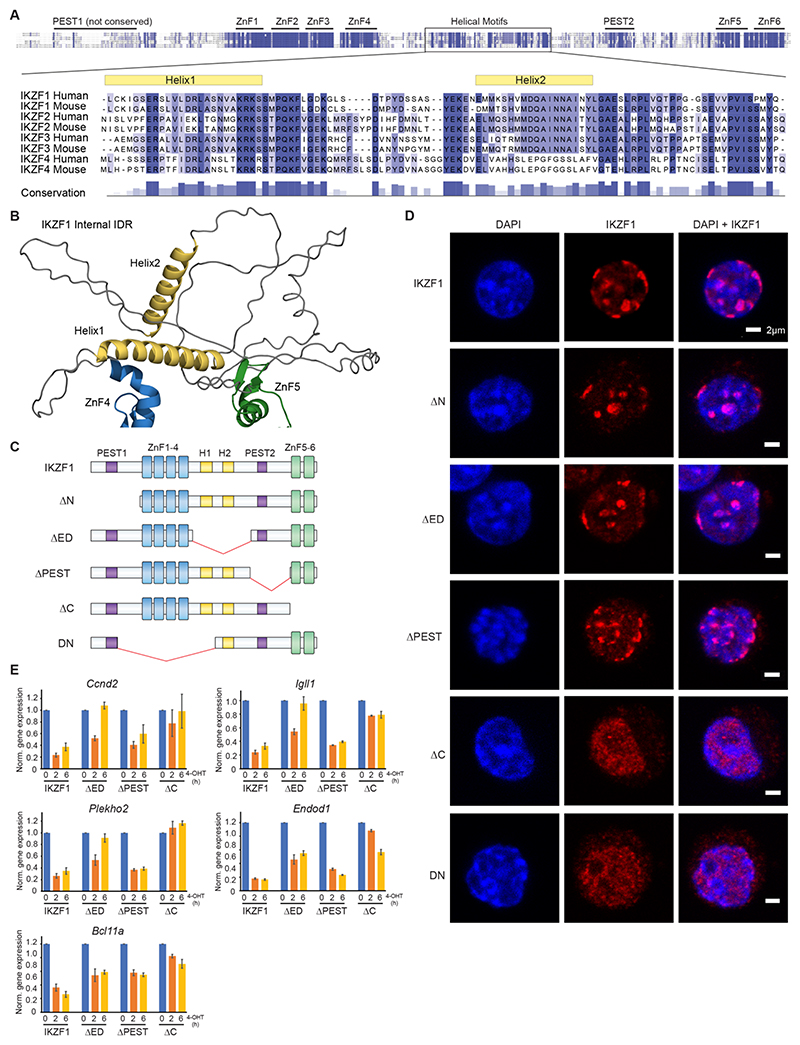
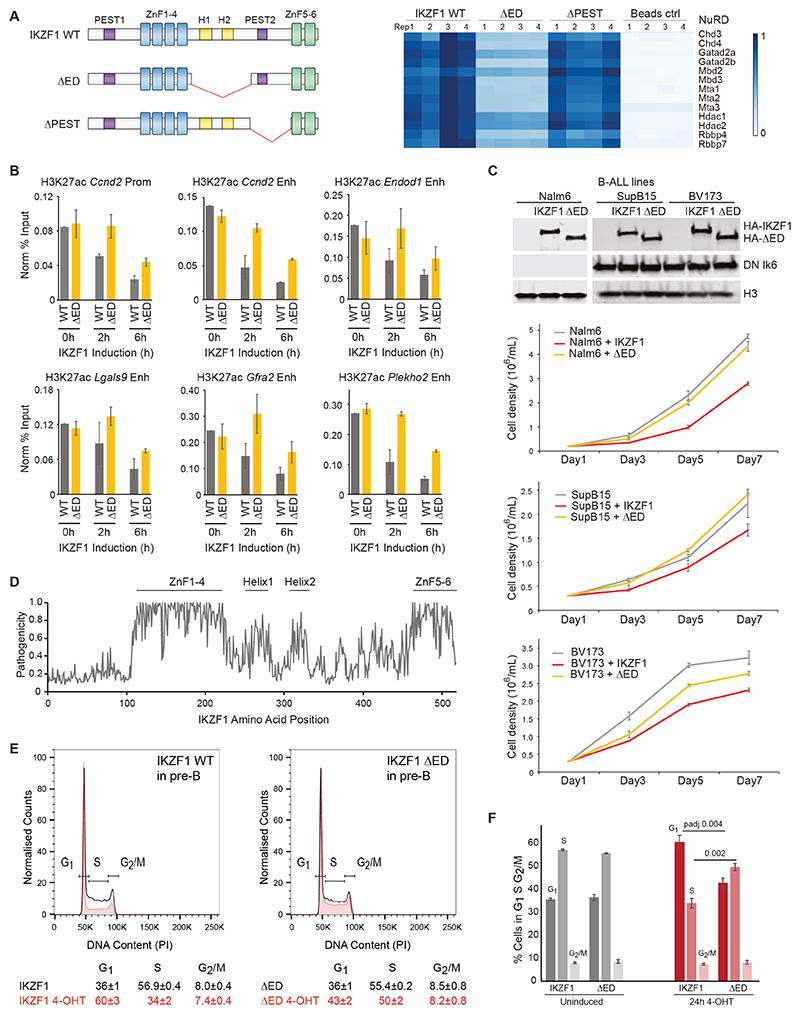
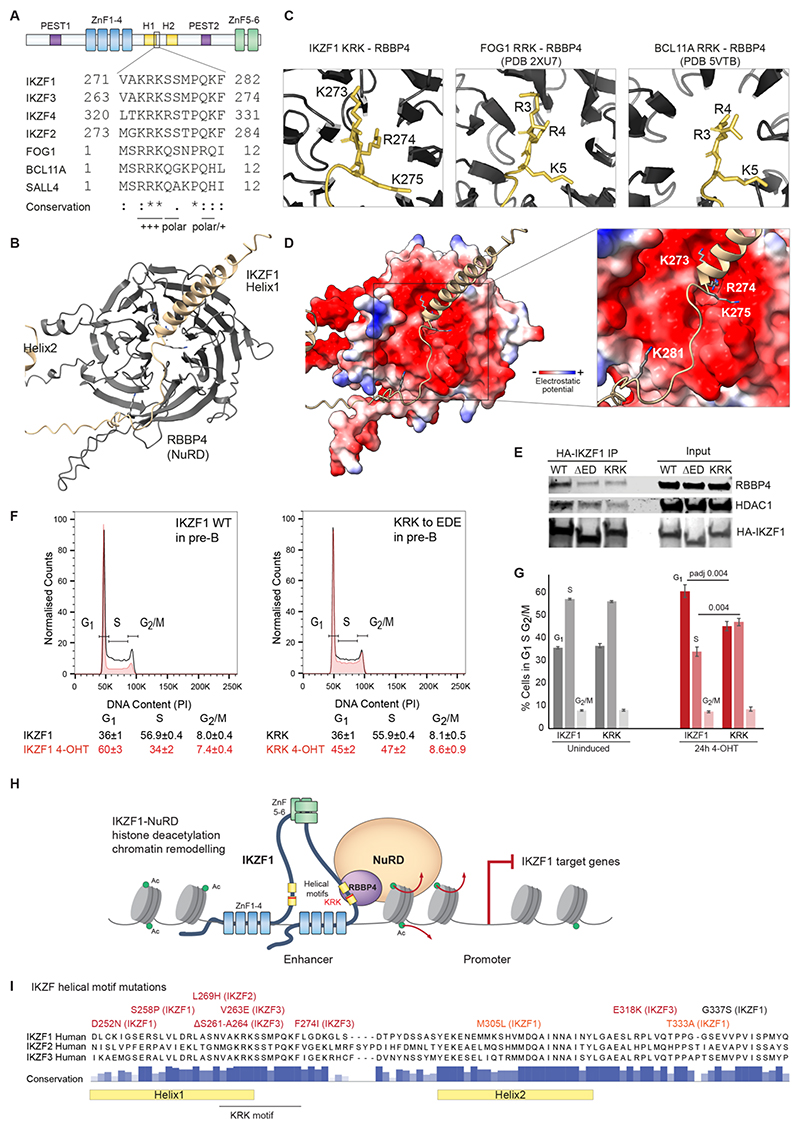
The transcription factor (TF) Ikaros zinc finger 1 (IKZF1) is essential for B-cell development, and recurrently mutated in human B-cell acute lymphoblastic leukemia (B-ALL). IKZF1 has been ascribed both activating and repressive functions via interactions with coactivator and corepressor complexes, but the relative abundance of IKZF1-associated coregulators and their contribution to IKZF1-mediated gene regulation are not well understood. To address this, we performed an unbiased identification of IKZF1-interacting proteins in pre-B cells and found that IKZF1 interacts overwhelmingly with corepressors and heterochromatin-associated proteins. Time-resolved analysis of transcription and chromatin state identified transcriptional repression as the immediate response to IKZF1 induction. Transcriptional repression preceded transcriptional activation by several hours, manifesting as a decrease in the fraction of transcriptional bursts at the single-molecule level. Repression was accompanied by a rapid loss of chromatin accessibility and reduced levels of histone H3 lysine 27 acetylation (H3K27ac), particularly at enhancers. We identified highly conserved helical motifs within the intrinsically disordered region of IKZF1 that mediate its association with the nucleosome remodeling and deacetylase (NuRD) corepressor complex through critical “KRK” residues that bind the NuRD subunit retinoblastoma binding protein 4 (RBBP4), a mechanism shared with the TFs FOG1, BCL11A, and SALL4. Functional characterization reveals that this region is necessary for the efficient silencing of target genes and antiproliferative functions of IKZF1 in B-ALL.
Overview
The claims and statistics of this paper haven’t been checked yet.
Free: it reads the open-access text and checks the first 5 claims that cite a source we can check. Create a free account to check every claim.
Integrity signals
Registry
Cites
Statistics
Figures
Verification
Claims the paper makes
The claims and statistics of this paper haven’t been checked yet.
Free: it reads the open-access text and checks the first 5 claims that cite a source we can check. Create a free account to check every claim.
Self-check
Percentages, sums and reported differences re-computed from the paper’s own numbers.
The self-check needs the paper’s full text.
Citations
Cites
Subramanian, A., Tamayo, P., Mootha, V. K., Mukherjee, S., Ebert, B. L., Gillette, M. A., Paulovich, A., Pomeroy, S. L., Golub, T. R., Lander, E. S., et al. (2005) · Proceedings of the National Academy of Sciences · doi:10.1073/pnas.0506580102 · Cited by 53,625 · cited 1×
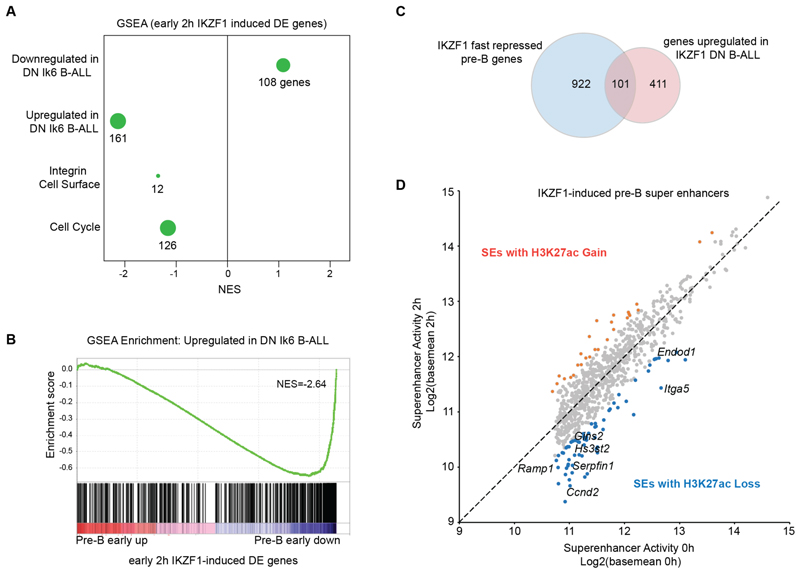
“Gene set enrichment 32 was performed for early IKZF1-induced DE genes (2h vs. 0h) against gene sets Reactome integrin cell surface interaction, Reactome cell cycle, down or upregulated in DN Ik6 B-ALL vs wildtype IKZF1 B-ALL (DE padj<0.01 and FC>1.5 from Supplementary Table 4 (Ref.”
InfluentialHistone H3K27ac separates active from poised enhancers and predicts developmental state
Creyghton, M. P., Cheng, A. W., Welstead, G. G., Kooistra, T., Carey, B. W., Steine, E. J., Hanna, J., Lodato, M. A., Frampton, G. M., Sharp, P. A., et al. (2010) · Proceedings of the National Academy of Sciences · doi:10.1073/pnas.1016071107 · Cited by 4,302 · cited 1×
“We used ATAC-seq and ChIP-seq for histone H3K27 acetylation to map changes in chromatin accessibility and activity of regulatory elements 45,46,47 .”
ATAC-seq: a method for assaying chromatin accessibility genome-wide
Buenrostro, J. D., Wu, B., Chang, H. Y., & Greenleaf, W. J. (2015) · Current Protocols in Molecular Biology · doi:10.1002/0471142727.mb2129s109 · Cited by 3,289 · cited 1×
“50K cells were lysed, and nuclei tagmented with 3ul of Ilumina Tn5 for 30min at 37°C. DNA was purified with Zymo DNA Clean and Concentrator and libraries were generated following the original ATAC protocol 28 .”
A unique chromatin signature uncovers early developmental enhancers in humans
Rada-Iglesias, A., Bajpai, R., Swigut, T., Brugmann, S. A., Flynn, R. A., & Wysocka, J. (2011) · Nature · doi:10.1038/nature09692 · Cited by 2,233
Genome-wide analysis of genetic alterations in acute lymphoblastic leukaemia
Mullighan, C. G., Goorha, S., Radtke, I., Miller, C. B., Coustan-Smith, E., Dalton, J. D., Girtman, K., Mathew, S., Ma, J., Pounds, S. B., et al. (2007) · Nature · doi:10.1038/nature05690 · Cited by 1,801 · cited 2×
“8 ).”
Cis-regulatory elements: Molecular mechanisms and evolutionary processes underlying divergence
Wittkopp, P. J., & Kalay, G. (2012) · Nature Reviews Genetics · doi:10.1038/nrg3095 · Cited by 1,231
BCR–ABL1 lymphoblastic leukaemia is characterized by the deletion of Ikaros
Mullighan, C. G., Miller, C. B., Radtke, I., Phillips, L. A., Dalton, J., Ma, J., White, D., Hughes, T. P., Le Beau, M. M., Pui, C.-H., et al. (2008) · Nature · doi:10.1038/nature06866 · Cited by 1,072 · cited 1×
“IKZF1 haploinsufficiency and dominant negative mutations are frequent in pre-B cell acute lymphoblastic leukemia (B-ALL), where they predict poor patient outcomes 5–8 .”
The ikaros gene is required for the development of all lymphoid lineages
Georgopoulos, K., Bigby, M., Wang, J.-H., Molnar, A., Wu, P., Winandy, S., & Sharpe, A. (1994) · Cell · doi:10.1016/0092-8674(94)90407-3 · Cited by 985 · cited 1×
“IKZF1 is a hematopoietic TF essential for lymphoid commitment and pre-B cell development 2–4 .”
Enhancer function: new insights into the regulation of tissue-specific gene expression
Ong, C.-T., & Corces, V. G. (2011) · Nature Reviews Genetics · doi:10.1038/nrg2957 · Cited by 929
Mammalian genes are transcribed with widely different bursting kinetics
Suter, D. M., Molina, N., Gatfield, D., Schneider, K., Schibler, U., & Naef, F. (2011) · Science · doi:10.1126/science.1198817 · Cited by 927 · cited 1×
“Transcription is a discontinuous process occurring in bursts 50,51 , and can be regulated by the probability (frequency) or the intensity (size) of bursting 50,51 .”
Cited by
Dimond, A., Gim, D. H., Ing‐Simmons, E., Whilding, C., Kramer, H., Djeghloul, D., Montoya, A., Patel, B., Cheriyamkunnel, S. J., Brown, K. E., et al. (2025) · Nature Communications · doi:10.1038/s41467-025-63740-4 · Cited by 5
“At the molecular level, Ikaros forms dimers with itself or other closefamily members (suchas Aiolos) 30,33 – 35 , and ispostulated to either mediate silencing or to activate transcription, according to context 36 – 40 .”
Self-citationRewiring tumor immunity via zinc finger proteins: a new frontier in cancer immunotherapy
Zhou, Z., Le, W., Luo, J., Li, Z., & Zhong, S. (2025) · Journal of Translational Medicine · doi:10.1186/s12967-025-07549-1 · Cited by 5
“IKZF1 governs early B cell development by regulating the expression of key genes, including integrin subunit alpha 5 (ITGA5), endonuclease domain containing 1 (ENDOD1), and receptor activity modifying protein 1 (RAMP1) [171].”
IKZF-associated inborn errors of immunity
Yamashita, M., & Morio, T. (2025) · Journal of Human Immunity · doi:10.70962/jhi.20250063 · Cited by 2
“Recent studies revealed that the intrinsically disordered domain between ZF4 and ZF5 of IKAROS mediates interactions with the NuRD complex (48), whereas ZF2–3 interact with Foxp3 (10).”
Systematic functional validation of IKAROS variants from patients and laboratory-generated mutations
Kuehn, H. S., Silva, A. A. G., Klangkalya, N., Esteve‐Solé, A., Goel, S., Niemela, J. E., Stoddard, J. L., Chong, H., Williams, K. W., Ip, W., et al. (2025) · Blood Advances · doi:10.1182/bloodadvances.2025017243 · Cited by 1
“37 Moreover, several SUMOylation sites (K240, K425 and K459) are located in between ZF4 and ZF5, which have been shown to disrupt IKAROS-NuRD complex interaction.”
Fu, J., Xu, H., Zhao, X., Gao, M., Tian, Y., Chang, Y., & Zheng, X. (2026) · Nature Communications · doi:10.1038/s41467-026-74343-y · Cited by 1
“NuRD complex deacetylates histone H3K27 and represses gene expression in B lymphocytic leukemia and erythroid progenitor cells 52,53 .”
Xia, C., Pradhan, D., Wang, W., Tang, Z., & Khoury, J. D. (2026) · Leukemia · doi:10.1038/s41375-026-03067-1 · Cited by 1
“Ikaros is normally required for lymphoid priming [69], but its deletions or mutations recurrent in BPDCN skew transcriptional states toward pDC-like phenotypes and may promote aberrant expression of CD56 [25], a diagnostic hallmark for BPDCN. Dysregulation of adhesion-related genes and chemokine…”
IKZF1: born to be the repressor
Emerenciano, M. (2025) · Blood · doi:10.1182/blood.2024026967
How Ikaros and Aiolos homo- and heterodimers drive gene expression to ensure B cell developmentPreprint
Deau, M., Heizmann, B., Aukenova, A., Heydt, Q., Marchal, P., Charvet, C., Gras, S. L., Billas, I. M. L., van Essen, D., Saccani, S., et al. (2025) · bioRxiv (Cold Spring Harbor Laboratory) · doi:10.1101/2025.06.09.658591
Heidari, I., & Kariminik, A. (2025) · Irish Journal of Medical Science (1971 -) · doi:10.1007/s11845-025-04065-5
“The IKZF1 gene produces the transcription factor IKAROS, which is essential for regulating gene expression and chromatin remodeling [5, 6].”
Dong, X., Xu, H., Zou, P., Lei, J., & Shao, S. H. (2025) · Research Square · doi:10.21203/rs.3.rs-7280626/v1
Cao, X., Wang, Y., Kang, Y., Abubakar, M. U., Yang, Y., Fang, D., & He, B. (2025) · Global Medical Genetics · doi:10.1016/j.gmg.2025.100084
“This dual-domain architecture enables IKAROS to function as a master regulator of chromatin remodeling complexes, particularly through interactions with NuRD and SWI/SNF complexes, thereby modulating transcriptional programs in lymphocyte development [33,34].”
Self-citationRysan, H., Iansavitchous, J., Day, T., Estrada, M. U., Dou, E., Ye, S., Baronijan, L. H., & DeKoter, R. P. (2026) · Journal of Leukocyte Biology · doi:10.1093/jleuko/qiag001
Ma, X. X., & Jiang, E. (2026) · PubMed Central · doi:10.3760/cma.j.cn121090-20250826-00400
Dąbkowska, A., Poprzeczko, M., Pastorczak, A. K., Domka, K., Nowicka, Z., Urbańska, Z., Zając, W., Bugajewski, M., Grzybowska-Adamowicz, J., Pruchniak, P., et al. (2026) · Leukemia · doi:10.1038/s41375-026-03093-z
“IKZF1 mainly represses gene expression, promoting pre-B cell differentiation while limiting proliferation and survival, acting as a tumor suppressor in BCP-ALL [14].”
PRDM16 attenuates pulmonary fibrosis through NuRD-mediated epigenetic remodeling in lung fibroblasts
Wang, J., 李建芳, Shang, B., Feng, X., Wang, W., Han, L., Zhong, C., Liu, X., Chen, Y., Wang, Z., et al. (2026) · Science China Life Sciences · doi:10.1007/s11427-025-3429-6
Metadata
- Authors
- Zhang, T., Wang, Y.-F., Montoya, A., Patrascan, I., Nebioglu, N., Pallikonda, H. A., Georgieva, R., King, J. W. D., Kramer, H. B., Shliaha, P. V., Rueda, D. S., & Merkenschlager, M.
- Affiliations
- Imperial College London (GB)
- Corresponding author
- Zhang, Tianyi
- Rueda, David S.
- Merkenschlager, Matthias
- ORCID
- Venue
- Blood
- Publisher
- American Society of Hematology
- Published
- 2025-01-23
- Volume
- 145
- Issue
- 4
- Pages
- 422-437
- ISSN
- 0006-4971 (ISSN-L)
- 1528-0020
- PMC
- PMC7617475
- OpenAlex
- W4403629186
- Cited by
- 14
- References
- 80
- Citations by year
- 2026: 5 · 2025: 9
- FWCI
- 1.91
- Type
- journal article
- Language
- en
- Open access
- hybrid
- doi.org
- Licence
- Locations
- Blood (publishedVersion, cc-by-nc-nd)
- PubMed (publishedVersion)
- Europe PMC (PubMed Central) (acceptedVersion, cc-by)
- PubMed Central (acceptedVersion, cc-by)
- Spiral (Imperial College London) (submittedVersion, cc-by)
- Funders
- Yale University
- Wellcome Trust (215933, 215933/Z/19/Z, 099276/Z/12/Z, 099276)
- Leverhulme Trust (RPG-2016-214)
- University of Leicester
- Medical Research Council
- Topics
- Life Sciences › Biochemistry, Genetics and Molecular Biology › Molecular Biology › Genomics and Chromatin Dynamics
- Health Sciences › Medicine › Hematology › Acute Lymphoblastic Leukemia research
- Life Sciences › Biochemistry, Genetics and Molecular Biology › Molecular Biology › Chromatin Remodeling and Cancer
- Keywords
- IKZF1, intrinsically disordered regions, helical motifs, RBBP4, transcriptional repression, chromatin accessibility, H3K27 acetylation, enhancers, transcriptional bursts, B-cell acute lymphoblastic leukemia, pre-B cells, FOG-1, BCL11A, SALL4
- MeSH terms
- Animals, Chromatin, Humans, Protein Binding, Transcription, Genetic, Precursor B-Cell Lymphoblastic Leukemia-Lymphoma, Conserved Sequence, Amino Acid Motifs, Mice, Ikaros Transcription Factor, Precursor Cells, B-Lymphoid, Mi-2 Nucleosome Remodeling and Deacetylase Complex
About these checks
Registry, retraction, Cites and statistics results are computed, not judged, with one exception: a printed reference that no index lists is read once by a model before it counts as a citation error. Claims are extracted by a model and kept only when their quote appears verbatim in the text; each cited source is then checked, with a model’s help, for whether it says what the claim relies on. Those verdicts can be wrong — read the claim’s quote and the cited source before relying on one.
Statistics and arithmetic are recomputed, not judged.
Confidence bands are shown only for fields calibrated on our annotated test set. None is calibrated yet, so no band is shown.
What counts as a claim ›How we measure confidence ›How we check this ›
Are you an author, or do you see a problem with this page? Request a review
Data sources
Bibliographic data: Semantic Scholar, OpenAlex, Crossref.
Contains information from the Semantic Scholar Academic Graph Datasets, made available under the ODC Attribution License (ODC-BY 1.0).
Semantic Scholar’s data is described in: Kinney, R., et al. (2023). The Semantic Scholar Open Data Platform. arXiv:2301.10140.
