

Microplastic and plastic pollution: impact on respiratory disease and health
Open accessThe DOI matches its Crossref record; 158 of the 158 references it cites were found in a registry or an index.
Abstract
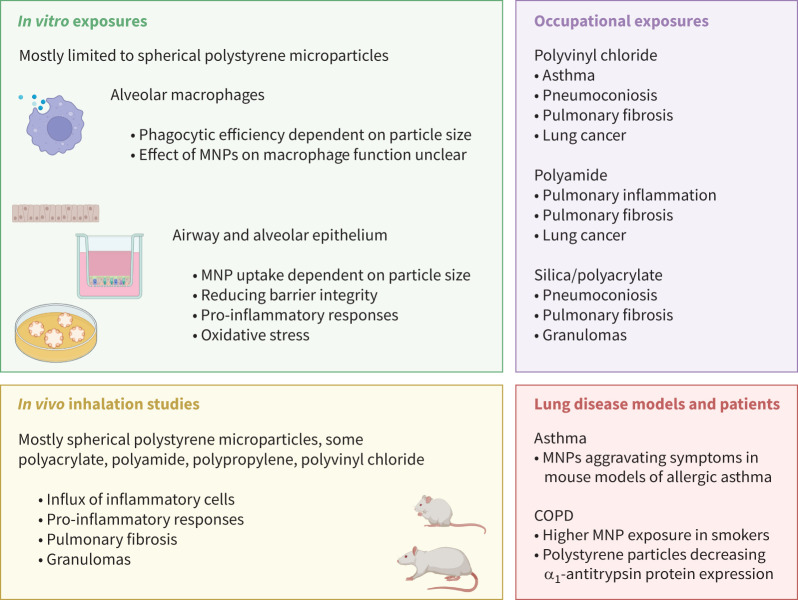
Throughout their lifecycle, from production to use and upon disposal, plastics release chemicals and particles known as micro- and nanoplastics (MNPs) that can accumulate in the environment. MNPs have been detected in different locations of the human body, including in our lungs. This is likely a consequence of MNP exposure through the air we breathe. Yet, we still lack a comprehensive understanding of the impact that MNP exposure may have on respiratory disease and health. In this review, we have collated the current body of evidence on the implications of MNP inhalation on human lung health from in vitro,in vivo and occupational exposure studies. We focused on interactions between MNP pollution and different specific lung-resident cells and respiratory diseases. We conclude that it is evident that MNPs possess the capacity to affect lung tissue in disease and health. Yet, it remains unclear to which extent this occurs upon exposure to ambient levels of MNPs, emphasising the need for a more comprehensive evaluation of environmental MNP exposure levels in everyday life.
Overview
The claims and statistics of this paper haven’t been checked yet.
Free: it reads the open-access text and checks the first 5 claims that cite a source we can check. Create a free account to check every claim.
Integrity signals
Registry
Cites
Statistics
Figures
Verification
Claims the paper makes
The claims and statistics of this paper haven’t been checked yet.
Free: it reads the open-access text and checks the first 5 claims that cite a source we can check. Create a free account to check every claim.
Claims other papers make about this one
Each is checked against this paper’s own text: does it say what the citing paper says it does?
The source backs part of the claim, not all of it — or backs it for a different population, condition or comparison.
In the citing paper
“Due to limited data on the abundance and size of particles smaller than 1 µm, which have a higher probability of penetrating to the deeper areas of lung tissues, effects on human health via respiratory inhalation are also not well established [128].”
From Environmental consequences of interacting effects of changes in stratospheric ozone, ultraviolet radiation, and climate: UNEP Environmental Effects Assessment Panel, Update 2024 (2025) · cites this paper as [128]
Experimental — accuracy not yet measuredThe cited source says what the claim attributes to it.
In the citing paper
“Although MP have been detected in human biological samples such as blood (Leonard et al., 2024), urine (Pironti et al., 2022) and in human lung tissue (Vasse & Melgert, 2024), the evidence of exposure to MP associated with biological alterations that may lead to development of diseases in humans is still limited.”
From Airborne microplastic exposure and urinary oxidative damage biomarkers in populations living in traffic-congested areas (2026) · cites this paper as Vasse & Melgert, 2024
Self-check
Percentages, sums and reported differences re-computed from the paper’s own numbers.
The self-check needs the paper’s full text.
Citations
Cites
Lost at sea: where is all the plastic?
Thompson, R. C., Olsen, Y., Mitchell, R. P., Davis, A., Rowland, S. J., John, A. W. G., McGonigle, D., & Russell, A. E. (2004) · Science · doi:10.1126/science.1094559 · Cited by 7,765
Health Effects of Fine Particulate Air Pollution: Lines that Connect
Pope, C. A., & Dockery, D. W. (2006) · Journal of the Air & Waste Management Association · doi:10.1080/10473289.2006.10464485 · Cited by 6,583 · cited 1×
“Given the established lung health risks associated with particle inhalation [7, 8], this new form of particle pollution raises concerns, especially in a world that exponentially increases its plastics use [9].”
BackgroundKLEPEIS, N. E., NELSON, W. C., OTT, W. R., ROBINSON, J. P., TSANG, A. M., SWITZER, P., BEHAR, J. V., HERN, S. C., & ENGELMANN, W. H. (2001) · Journal of Exposure Science & Environmental Epidemiology · doi:10.1038/sj.jea.7500165 · Cited by 4,803 · cited 1×
“This is concerning because most people spend more than 90% of their time indoors [22].”
BackgroundDegradation rates of plastics in the environment
Chamas, A., Moon, H., Zheng, J., Qiu, Y., Tabassum, T., Jang, J. H., Abu-Omar, M., Scott, S. L., & Suh, S. (2020) · ACS Sustainable Chemistry & Engineering · doi:10.1021/acssuschemeng.9b06635 · Cited by 3,463 · cited 1×
“Owing to their durability, plastics can take anywhere from decades to millennia to biodegrade [10].”
BackgroundPlastics, the environment and human health: current consensus and future trends
Thompson, R. C., Moore, C. J., vom Saal, F. S., & Swan, S. H. (2009) · Philosophical Transactions of the Royal Society B: Biological Sciences · doi:10.1098/rstb.2009.0053 · Cited by 3,032 · cited 1×
“During use these agents have been shown to leach out and contribute to adverse health effects of plastics use [14].”
BackgroundHartmann, N. B., Hüffer, T., Thompson, R. C., Hassellöv, M., Verschoor, A., Daugaard, A. E., Rist, S., Karlsson, T., Brennholt, N., Cole, M., et al. (2019) · Environmental Science & Technology · doi:10.1021/acs.est.8b05297 · Cited by 2,881 · cited 1×
“Fragments less than 5 mm in size are classified as microplastics (ranging between 5 mm and 1 µm) and those less than 1 µm are called nanoplastics [11].”
BackgroundMicroplastics and human health
Vethaak, A. D., & Legler, J. (2021) · Science · doi:10.1126/science.abe5041 · Cited by 1,537
Detection of microplastics in human lung tissue using μFTIR spectroscopy
Jenner, L. C., Rotchell, J. M., Bennett, R. T., Cowen, M., Tentzeris, V., & Sadofsky, L. R. (2022) · Science of The Total Environment · doi:10.1016/j.scitotenv.2022.154907 · Cited by 1,536
Presence of airborne microplastics in human lung tissue
Amato-Lourenço, L. F., Carvalho-Oliveira, R., Júnior, G. R., dos Santos Galvão, L., Ando, R. A., & Mauad, T. (2021) · Journal of Hazardous Materials · doi:10.1016/j.jhazmat.2021.126124 · Cited by 1,329 · cited 1×
“Three more recent studies, however, did investigate plastic particles and fibres in peripheral lung tissue, and found predominantly polypropylene and polyethylene/polyethylene terephthalate MNPs in lung tissue [25 – 27].”
ResultChronic obstructive pulmonary disease
Christenson, S. A., Smith, B. M., Bafadhel, M., & Putcha, N. (2022) · The Lancet · doi:10.1016/s0140-6736(22)00470-6 · Cited by 1,219 · cited 1×
“COPD can develop due to genetic risk factors or upon chronic exposure to irritants such as cigarette smoke [120].”
BackgroundThe basic immunology of asthma
Hammad, H., & Lambrecht, B. N. (2021) · Cell · doi:10.1016/j.cell.2021.02.016 · Cited by 1,105 · cited 1×
“The latter is characterised by a strong T-helper (Th) 2 cell response upon exposure to environmental allergens, which can promote symptoms such as bronchial hyperresponsiveness and mucus hypersecretion [111].”
BackgroundWest Antarctic ice sheet and CO2 greenhouse effect: a threat of disaster
Mercer, J. H. (1978) · Nature · doi:10.1038/271321a0 · Cited by 1,032
Role of Particle Size in Phagocytosis of Polymeric Microspheres
Champion, J. A., Walker, A., & Mitragotri, S. (2008) · Pharmaceutical Research · doi:10.1007/s11095-008-9562-y · Cited by 888
Polystyrene microplastic particles: In vitro pulmonary toxicity assessment
Dong, C.-D., Chen, C.-W., Chen, Y.-C., Chen, H.-H., Lee, J.-S., & Lin, C.-H. (2020) · Journal of Hazardous Materials · doi:10.1016/j.jhazmat.2019.121575 · Cited by 711 · cited 2×
“A deficiency in this protein is an established risk factor for COPD development [40].”
BackgroundSimplifying Microplastic via Continuous Probability Distributions for Size, Shape, and Density
Kooi, M., & Koelmans, A. A. (2019) · Environmental Science & Technology Letters · doi:10.1021/acs.estlett.9b00379 · Cited by 639 · cited 1×
“These abraded or designed MNPs come in many different shapes, with fibres and irregularly shaped fragments being the most common in air, water and sediment [12, 13].”
BackgroundFossi, M. C., Panti, C., Guerranti, C., Coppola, D., Giannetti, M., Marsili, L., & Minutoli, R. (2012) · Marine Pollution Bulletin · doi:10.1016/j.marpolbul.2012.08.013 · Cited by 582
Detection and Analysis of Microplastics in Human Sputum
Huang, S., Huang, X., Bi, R., Guo, Q., Yu, X., Zeng, Q., Huang, Z., Liu, T., Wu, H., Chen, Y., et al. (2022) · Environmental Science & Technology · doi:10.1021/acs.est.1c03859 · Cited by 582 · cited 1×
“Previously, H UANG et al. [121] also described trends towards more microplastics in the sputum of smokers and COPD patients compared to non-smokers and non-COPD patients, respectively.”
Inhaled cellulosic and plastic fibers found in human lung tissue.
Pauly, J. L., Stegmeier, S. J., Allaart, H. A., Cheney, R. T., Zhang, P. J., Mayer, A. G., & Streck, R. J. (1998) · PubMed · Cited by 509
Respiratory health effects of air pollution: Update on biomass smoke and traffic pollution
Laumbach, R. J., & Kipen, H. M. (2012) · Journal of Allergy and Clinical Immunology · doi:10.1016/j.jaci.2011.11.021 · Cited by 474 · cited 1×
“Given the established lung health risks associated with particle inhalation [7, 8], this new form of particle pollution raises concerns, especially in a world that exponentially increases its plastics use [9].”
BackgroundChen, Q., Yin, D., Jia, Y., Schiwy, S., Legradi, J., Yang, S., & Hollert, H. (2017) · Science of The Total Environment · doi:10.1016/j.scitotenv.2017.07.144 · Cited by 474
The Minderoo-Monaco Commission on Plastics and Human Health
Landrigan, P. J., Raps, H., Cropper, M., Bald, C., Brunner, M., Canonizado, E. M., Charles, D., Chiles, T. C., Donohue, M. J., Enck, J., et al. (2023) · Annals of Global Health · doi:10.5334/aogh.4056 · Cited by 471
Microplastics:Occurrence, effects and sources of releases to the environment in Denmark
Lassen, C., Hansen, S. F., Magnusson, K., Hartmann, N. B., Jensen, P. R., Nielsen, T. G., & Brinch, A. (2015) · Technical University of Denmark, DTU Orbit (Technical University of Denmark, DTU) · Cited by 468
Jamieson, A. J., Brooks, L. S. R., Reid, W. D. K., Piertney, S. B., Narayanaswamy, B. E., & Linley, T. D. (2019) · Royal Society Open Science · doi:10.1098/rsos.180667 · Cited by 450 · cited 1×
“Studies in the last decade have clearly illustrated the pervasiveness of the MNP problem: none of the tested locations on Earth were free of microplastic contamination [19, 20].”
BackgroundExposure to nanoparticles is related to pleural effusion, pulmonary fibrosis and granuloma
Song, Y., Li, X., & Du, X. (2009) · European Respiratory Journal · doi:10.1183/09031936.00178308 · Cited by 448 · cited 1×
“Workers exposed to polyacrylate MNPs were found to develop shortness of breath and pleural effusions, and had granulomas and fibrosis in lung tissue with evidence of polyacrylate nanoparticles in the cytoplasm of epithelial cells [145].”
BackgroundAirborne microplastics in indoor and outdoor environments of a coastal city in Eastern China
Liao, Z., Ji, X., Ma, Y., Lv, B., Huang, W., Zhu, X., Fang, M., Wang, Q., Wang, X., Dahlgren, R., et al. (2021) · Journal of Hazardous Materials · doi:10.1016/j.jhazmat.2021.126007 · Cited by 440 · cited 1×
“However, the study of L IAO et al. [23] proposes an upper limit of 1583±1181 MNPs·m − 3 for particles between 5 and 30 µm.”
O'Brien, S., Rauert, C., Ribeiro, F., Okoffo, E. D., Burrows, S. D., O'Brien, J. W., Wang, X., Wright, S. L., & Thomas, K. V. (2023) · Science of The Total Environment · doi:10.1016/j.scitotenv.2023.162193 · Cited by 409 · cited 3×
“Of the plastic types found, polyethylene terephthalate, polyethylene and polypropylene were the most common [12], which reflects the ubiquitousness of these plastics in daily life materials like textiles and packaging.”
BackgroundINFLAMMATION CAUSED BY PARTICLES AND FIBERS
Donaldson, K., & Tran, C. L. (2002) · Inhalation Toxicology · doi:10.1080/089583701753338613 · Cited by 394 · cited 1×
“However, large fibres have been found to penetrate unexpectedly deep into peripheral lung tissue probably due to specific aerodynamic properties [21].”
BackgroundClimate change, extreme weather events, air pollution and respiratory health in Europe
De Sario, M., Katsouyanni, K., & Michelozzi, P. (2013) · European Respiratory Journal · doi:10.1183/09031936.00074712 · Cited by 334
Barboza, L. G. A., Cunha, S. C., Monteiro, C., Fernandes, J. O., & Guilhermino, L. (2020) · Journal of Hazardous Materials · doi:10.1016/j.jhazmat.2020.122419 · Cited by 318
Goodman, K. E., Hare, J. T., Khamis, Z. I., Hua, T., & Sang, Q.-X. A. (2021) · Chemical Research in Toxicology · doi:10.1021/acs.chemrestox.0c00486 · Cited by 293 · cited 2×
“Studies using this cell line show that exposure to polystyrene microplastics can decrease cell proliferation/metabolic activity and change cell behaviour without significantly affecting cell survival [41, 49, 50].”
BackgroundPulmonary fibrosis: from pathogenesis to clinical decision-making
Koudstaal, T., Funke-Chambour, M., Kreuter, M., Molyneaux, P. L., & Wijsenbeek, M. S. (2023) · Trends in Molecular Medicine · doi:10.1016/j.molmed.2023.08.010 · Cited by 256 · cited 1×
“These interstitial diseases are characterised by varying degrees of inflammation and/or fibrosis [126, 127], but a considerable portion of ILDs evolve into pulmonary fibrosis.”
BackgroundMan-made Carbon Dioxide and the “Greenhouse” Effect
SAWYER, J. S. (1972) · Nature · doi:10.1038/239023a0 · Cited by 239
Detrimental effects of microplastic exposure on normal and asthmatic pulmonary physiology
Lu, K., Lai, K. P., Stoeger, T., Ji, S., Lin, Z., Lin, X., Chan, T. F., Fang, J. K.-H., Lo, M., Gao, L., et al. (2021) · Journal of Hazardous Materials · doi:10.1016/j.jhazmat.2021.126069 · Cited by 238 · cited 2×
“In house dust mite-treated mice, a model for allergic asthma, the number of macrophages increased even more drastically upon co-inhalation of microplastics, together with increased mucus production [105].”
BackgroundFirst evidence of microplastics isolated in European citizens’ lower airway
Baeza-Martínez, C., Olmos, S., González-Pleiter, M., López-Castellanos, J., García-Pachón, E., Masiá-Canuto, M., Hernández-Blasco, L., & Bayo, J. (2022) · Journal of Hazardous Materials · doi:10.1016/j.jhazmat.2022.129439 · Cited by 235
Promotion of work ability during ageing
Ilmarinen, J., & Rantanen, J. H. (1999) · American Journal of Industrial Medicine · doi:10.1002/(sici)1097-0274(199909)36:1+<145::aid-ajim51>3.0.co;2-f · Cited by 209 · cited 1×
“Exposure to flock was not only associated with interstitial inflammation/fibrosis and lung cancer, but also with inflammation in and around the airways, particularly with nylon flock [68, 74, 79, 99 – 102 , 137].”
BackgroundArtificial stone-associated silicosis: a rapidly emerging occupational lung disease
Hoy, R. F., Baird, T., Hammerschlag, G., Hart, D., Johnson, A. R., King, P., Putt, M., & Yates, D. H. (2018) · Occupational and Environmental Medicine · doi:10.1136/oemed-2017-104428 · Cited by 194
Evaluation of potential toxicity of polyethylene microplastics on human derived cell lines
Gautam, R., Jo, J., Acharya, M., Maharjan, A., Lee, D., K.C., P. B., Kim, C., Kim, K., Kim, H., & Heo, Y. (2022) · Science of The Total Environment · doi:10.1016/j.scitotenv.2022.156089 · Cited by 191
Li, X., Zhang, T., Lv, W., Wang, H., Chen, H., Xu, Q., Cai, H., & Dai, J. (2022) · Ecotoxicology and Environmental Safety · doi:10.1016/j.ecoenv.2022.113238 · Cited by 188 · cited 1×
“Mice exposed to polystyrene microplastics developed pulmonary fibrosis in size-and dose-dependent manners [109, 110].”
BackgroundThe respiratory effects of occupational polypropylene flock exposure
Atis, S., Tutluoglu, B., Levent, E., Ozturk, C., Tunaci, A., Sahin, K., Saral, A., Oktay, I., Kanik, A., & Nemery, B. (2005) · European Respiratory Journal · doi:10.1183/09031936.04.00138403 · Cited by 178 · cited 3×
“Exposure to flock was not only associated with interstitial inflammation/fibrosis and lung cancer, but also with inflammation in and around the airways, particularly with nylon flock [68, 74, 79, 99 – 102 , 137].”
BackgroundMakino, K., Yamamoto, N., Higuchi, K., Harada, N., Ohshima, H., & Terada, H. (2003) · Colloids and Surfaces B: Biointerfaces · doi:10.1016/s0927-7765(02)00042-5 · Cited by 176 · cited 1×
“Primary rat alveolar macrophages also size-specifically produced superoxide when exposed to polystyrene microspheres [38].”
BackgroundKramer, M. R., Blanc, P. D., Fireman, E., Amital, A., Guber, A., Rhahman, N. A., & Shitrit, D. (2012) · Chest · doi:10.1378/chest.11-1321 · Cited by 175
Shi, X., Wang, X., Huang, R., Tang, C., Hu, C., Ning, P., & Wang, F. (2022) · International Journal of Nanomedicine · doi:10.2147/ijn.s381776 · Cited by 170 · cited 2×
“Studies using this cell line show that exposure to polystyrene microplastics can decrease cell proliferation/metabolic activity and change cell behaviour without significantly affecting cell survival [41, 49, 50].”
BackgroundCao, J., Xu, R., Geng, Y., Xu, S., & Guo, M. (2023) · Environmental Pollution · doi:10.1016/j.envpol.2023.121068 · Cited by 161
Blanks and bias in microplastic research: Implications for future quality assurance
Shruti, V. C., & Kutralam-Muniasamy, G. (2023) · Trends in Environmental Analytical Chemistry · doi:10.1016/j.teac.2023.e00203 · Cited by 158 · cited 1×
“Furthermore, proper blanks are essential to rule out external contamination [29].”
BackgroundFlock Worker's Lung: Chronic Interstitial Lung Disease in the Nylon Flocking Industry
Kern, D. G., Crausman, R. S., Durand, K. T. H., Nayer, A., & Kuhn III, C. (1998) · Annals of Internal Medicine · doi:10.7326/0003-4819-129-4-199808150-00001 · Cited by 150
Rose, C. S., Heinzerling, A., Patel, K., Sack, C. S., Wolff, J., Zell-Baran, L. M., Weissman, D. N., Hall, E., Sooriash, R., McCarthy, R. B., et al. (2019) · MMWR Morbidity and Mortality Weekly Report · doi:10.15585/mmwr.mm6838a1 · Cited by 147
Outbreak of silicosis in Spanish quartz conglomerate workers
Pérez-Alonso, A., Córdoba-Doña, J. A., Millares-Lorenzo, J. L., Murillo, E. F., García-Vadillo, C., & Morillo, J. R. (2013) · International Journal of Occupational and Environmental Health · doi:10.1179/2049396713y.0000000049 · Cited by 144 · cited 1×
“These effects Recently, alarming reports of another form of plastic-associated pneumoconiosis related to silicosis have been published [88, 90 – 96 , 142 ].”
BackgroundLi, Y., Shi, T., Li, X., Sun, H., Xia, X., Ji, X., Zhang, J., Liu, M., Lin, Y., Zhang, R., et al. (2022) · Environment International · doi:10.1016/j.envint.2022.107257 · Cited by 144 · cited 2×
“One study involving mice demonstrated that exposure to tyre wear-derived MNPs precipitated pathological fibrotic alterations in lung tissue [108].”
BackgroundTalukdar, A., Bhattacharya, S., Bandyopadhyay, A., & Dey, A. (2023) · The Science of The Total Environment · doi:10.1016/j.scitotenv.2023.162495 · Cited by 142 · cited 1×
“Studies in the last decade have clearly illustrated the pervasiveness of the MNP problem: none of the tested locations on Earth were free of microplastic contamination [19, 20].”
BackgroundHuman airway organoids and microplastic fibers: A new exposure model for emerging contaminants
Winkler, A., Cherubini, A., Rusconi, F., Santo, N., Madaschi, L., Pistoni, C., Moschetti, G., Sarnicola, M. L., Crosti, M., Rosso, L., et al. (2022) · Environment International · doi:10.1016/j.envint.2022.107200 · Cited by 138 · cited 1×
“However, exposure to polyester fibres did reduce the expression of club cell secretory protein SCGB1A1, which has been associated with airway inflammatory diseases [48].”
BackgroundKern, D. G., Kuhn, C., Ely, E. W., Pransky, G., Mello, C. J., Fraire, A. E., & Müller, J. (2000) · CHEST Journal · doi:10.1378/chest.117.1.251 · Cited by 118
León‐Jiménez, A., Hidalgo‐Molina, A., Conde-Sánchez, M. Á., Pérez-Alonso, A., Morales-Morales, J. M., García-Gámez, E. M., & Córdoba-Doña, J. A. (2020) · CHEST Journal · doi:10.1016/j.chest.2020.03.026 · Cited by 118
Qiu, L., Lu, W., Tu, C., Li, X., Zhang, H., Wang, S., Chen, M., Zheng, X., Wang, Z., Lin, M., et al. (2023) · Environmental Science & Technology · doi:10.1021/acs.est.2c06880 · Cited by 117
Helmke, R. J., Boyd, R. L., German, V. F., & MANGOS, J. A. (1987) · In Vitro Cellular & Developmental Biology - Plant · doi:10.1007/bf02620974 · Cited by 115
Fan, Z., Xiao, T., Luo, H., Chen, D., Lu, K., Shi, W., Sun, C., & Bian, Q. (2022) · Environment International · doi:10.1016/j.envint.2022.107223 · Cited by 112 · cited 1×
“Intratracheal instillation of different sizes of polystyrene MNPs also induced pro-inflammatory responses and alveolar destruction in rats [107].”
BackgroundInhalable Textile Microplastic Fibers Impair Airway Epithelial Differentiation
Song, S., van Dijk, F., Vasse, G. F., Liu, Q., Gosselink, I. F., Weltjens, E., Remels, A. H. V., de Jager, M. H., Bos, S. T., Li, C., et al. (2024) · American Journal of Respiratory and Critical Care Medicine · doi:10.1164/rccm.202211-2099oc · Cited by 112 · cited 2×
“We recently demonstrated that exposure to polyester or polyamide 6,6 fibres could lower the number of murine alveolar organoids, although less pronounced than their effect on airway organoids [47].”
BackgroundSelf-citationPulmonary Toxicity of Polystyrene, Polypropylene, and Polyvinyl Chloride Microplastics in Mice
Danso, I. K., Woo, J.-H., & Lee, K. (2022) · Molecules · doi:10.3390/molecules27227926 · Cited by 110 · cited 2×
“Prolonged exposure of three different strains of mice to polystyrene, polypropylene or polyvinyl chloride resulted in variable inflammatory responses between different types of MNPs as well as between mice strains [106].”
BackgroundAdvanced epithelial lung and gut barrier models demonstrate passage of microplastic particles
Donkers, J. M., Höppener, E. M., Grigoriev, I., Will, L., Melgert, B. N., van der Zaan, B., van de Steeg, E., & Kooter, I. M. (2022) · Microplastics and Nanoplastics · doi:10.1186/s43591-021-00024-w · Cited by 108 · cited 2×
“D ONKERS et al. [46] exposed the air-side of pseudo-stratified bronchial epithelial cell layers to different sizes of polystyrene particles, high-density polyethylene, polyamide 6,6 fragments and even car tyre and ocean cleanup fragments.”
BackgroundSelf-citationJeon, M. S., Kim, J. W., Han, Y. B., Jeong, M. H., Kim, H. R., Kim, H. S., Park, Y. J., & Chung, K. H. (2022) · Environmental Toxicology · doi:10.1002/tox.23705 · Cited by 105 · cited 1×
“However, conflicting results have been described for the production of reactive oxygen species (ROS), likely caused by differences in particle characteristics between studies, such as surface roughness, charge and concentrations [40 – 42].”
BackgroundA review on methods for extracting and quantifying microplastic in biological tissues
Fiore, C. D., Ishikawa, Y., & Wright, S. (2023) · Journal of Hazardous Materials · doi:10.1016/j.jhazmat.2023.132991 · Cited by 104
Air pollution and the development of asthma from birth until young adulthood
Gehring, U., Wijga, A. H., Koppelman, G. H., Vonk, J. M., Smit, H. A., & Brunekreef, B. (2020) · European Respiratory Journal · doi:10.1183/13993003.00147-2020 · Cited by 103 · cited 1×
“Although there is a known connection between air pollution and asthma development [112, 113], the possible role of MNPs in asthma development and severity is not yet studied intensively.”
BackgroundChen, C., Liu, F., Quan, S., Chen, L., Shen, A., Jiao, A., Qi, H. M., & Yu, G. (2023) · Environmental Science & Technology · doi:10.1021/acs.est.3c01771 · Cited by 103 · cited 2×
“In other studies, bronchoalveolar lavage was sampled to detect MNP presence in the lumen of the airways [30 – 34].”
BackgroundMethodImmunological mechanisms in the pathogenesis of vinyl chloride disease.
Ward, A. M., Udnoon, S., Watkins, J., Walker, A. E., & Darke, C. S. (1976) · BMJ · doi:10.1136/bmj.1.6015.936 · Cited by 101 · cited 1×
“In addition, polyvinyl chloride monomers have been shown to induce pulmonary fibrosis, possibly through their interaction with proteins and the subsequent initiation of immunological responses directed towards these modified proteins [133].”
BackgroundThe Pathology of Interstitial Lung Disease in Nylon Flock Workers
Boag, A. H., Colby, T. V., Fraire, A. E., Kuhn, C., Roggli, V. L., Travis, W. D., & Vallyathan, V. (1999) · The American Journal of Surgical Pathology · doi:10.1097/00000478-199912000-00012 · Cited by 100 · cited 2×
“Exposure to flock was not only associated with interstitial inflammation/fibrosis and lung cancer, but also with inflammation in and around the airways, particularly with nylon flock [68, 74, 79, 99 – 102 , 137].”
BackgroundNew Evidence of Microplastics in the Lower Respiratory Tract: Inhalation through Smoking
Lu, W., Li, X., Wang, S., Tu, C., Qiu, L., Zhang, H., Zhong, C., Li, S., Liu, Y., Liu, J., et al. (2023) · Environmental Science & Technology · doi:10.1021/acs.est.3c00716 · Cited by 100 · cited 1×
“However, smoking is considered to be the primary risk factor for COPD development and recently microplastics of around 20 – 500 µm have been detected in cigarette smoke by L U et al. [32].”
BackgroundWu, N., Xue, C., Yu, S., & Ye, Q. (2019) · Respirology · doi:10.1111/resp.13744 · Cited by 97
Airborne Emissions of Carcinogens and Respiratory Sensitizers during Thermal Processing of Plastics
Unwin, J., Coldwell, M., Keen, C., & McAlinden, J. J. (2012) · The Annals of Occupational Hygiene · doi:10.1093/annhyg/mes078 · Cited by 88
Microplastics in the Lung Tissues Associated with Blood Test Index
Wang, S., Lu, W., Cao, Q., Tu, C., Zhong, C., Qiu, L., Li, S., Zhang, H., Lan, M., Qiu, L., et al. (2023) · Toxics · doi:10.3390/toxics11090759 · Cited by 88 · cited 1×
“Three more recent studies, however, did investigate plastic particles and fibres in peripheral lung tissue, and found predominantly polypropylene and polyethylene/polyethylene terephthalate MNPs in lung tissue [25 – 27].”
ResultOccupational Exposure to Vinyl Chloride, Acrylonitrile and Styrene and Lung Cancer Risk (Europe)
Scélo, G., Constantinescu, V., Csiki, I. E., Zaridze, D. G., Szeszenia‐Dąbrowska, N., Rudnai, P., Lissowska, J., Fabiánová, E., Cassidy, A., Slámová, A., et al. (2004) · Cancer Causes & Control · doi:10.1023/b:caco.0000036444.11655.be · Cited by 86 · cited 1×
“Those same polyvinyl chloride monomers were also assumed to be the most probable cause of the increased lung cancer risk in polyvinyl chloride workers [64, 67, 69 – 71, 73, 78, 80, 82 – 84, 98].”
BackgroundSilicosis Among Immigrant Engineered Stone (Quartz) Countertop Fabrication Workers in California
Fazio, J. C., Gandhi, S. A., Flattery, J., Heinzerling, A., Kamangar, N., Afif, N., Cummings, K. J., & Harrison, R. J. (2023) · JAMA Internal Medicine · doi:10.1001/jamainternmed.2023.3295 · Cited by 85 · cited 1×
“These effects Recently, alarming reports of another form of plastic-associated pneumoconiosis related to silicosis have been published [88, 90 – 96 , 142 ].”
BackgroundAsthma and air pollution: recent insights in pathogenesis and clinical implications
Bontinck, A., Maes, T., & Joos, G. (2019) · Current Opinion in Pulmonary Medicine · doi:10.1097/mcp.0000000000000644 · Cited by 83 · cited 1×
“Although there is a known connection between air pollution and asthma development [112, 113], the possible role of MNPs in asthma development and severity is not yet studied intensively.”
BackgroundCary, C. M., Seymore, T., Singh, D., Vayas, K. N., Goedken, M. J., Adams, S. E., Polunas, M., Sunil, V. R., Laskin, D. L., Demokritou, P., et al. (2023) · Particle and Fibre Toxicology · doi:10.1186/s12989-023-00525-x · Cited by 82
Incidence of cancer among vinyl chloride and polyvinyl chloride workers.
Heldaas, S. S., Langård, S., & Andersen, A. (1984) · Occupational and Environmental Medicine · doi:10.1136/oem.41.1.25 · Cited by 78
Dale W. Porter, V. C., V (1999) · Journal of Toxicology and Environmental Health, Part A · doi:10.1080/009841099157845 · Cited by 78
Lu, I.-C., Chao, H., Mansor, W. N. W., Peng, C.-W., Hsu, Y.-C., Yu, T., Chang, W., & Fu, L. (2021) · Toxics · doi:10.3390/toxics9100246 · Cited by 77
Polystyrene microplastics significantly facilitate influenza A virus infection of host cells
Wang, C., Wu, W., Zefen, P., Liu, J., Qiu, J., Luan, T., Deng, J., & Fang, Z. (2022) · Journal of Hazardous Materials · doi:10.1016/j.jhazmat.2022.130617 · Cited by 75
Lung cancer risk in workers exposed to poly(vinyl chloride) dust: a nested case-referent study
Mastrangelo, G., Fedeli, U., Fadda, E., Milan, G., Turato, A., & Pavanello, S. (2003) · Occupational and Environmental Medicine · doi:10.1136/oem.60.6.423 · Cited by 74 · cited 3×
“Those same polyvinyl chloride monomers were also assumed to be the most probable cause of the increased lung cancer risk in polyvinyl chloride workers [64, 67, 69 – 71, 73, 78, 80, 82 – 84, 98].”
BackgroundMundt, K. A., Dell, L. D., Crawford, L., & Gallagher, A. E. (2017) · Occupational and Environmental Medicine · doi:10.1136/oemed-2016-104051 · Cited by 73 · cited 1×
“Those same polyvinyl chloride monomers were also assumed to be the most probable cause of the increased lung cancer risk in polyvinyl chloride workers [64, 67, 69 – 71, 73, 78, 80, 82 – 84, 98].”
BackgroundMeat-Wrapper's Asthma: A New Syndrome?
Sokol, W. N. (1973) · JAMA · doi:10.1001/jama.226.6.639 · Cited by 71
CHANGES IN PULMONARY FUNCTION IN WORKERS EXPOSED TO VINYL CHLORIDE AND POLYVINYL CHLORIDE*
Miller, A., Teirstein, A. S., Chuang, M. T., Selikoff, I. J., & Warshaw, R. H. (1975) · Annals of the New York Academy of Sciences · doi:10.1111/j.1749-6632.1975.tb51079.x · Cited by 69
Hagmar, L., �kesson, B., Nielsen, J., Andersson, C., Lindan, K., Attewell, R. G., & Müller, T. (1990) · American Journal of Industrial Medicine · doi:10.1002/ajim.4700170502 · Cited by 68
Effects of true-to-life PET nanoplastics using primary human nasal epithelial cells
Annangi, B., Villacorta, A., Vela, L., Tavakolpournegari, A., Marcos, R., & Hernández, A. (2023) · Environmental Toxicology and Pharmacology · doi:10.1016/j.etap.2023.104140 · Cited by 68 · cited 1×
“In primary nasal epithelial cells, both pristine polystyrene and non-pristine polyethylene terephthalate nanoplastics were internalised and induced ROS production, loss of mitochondrial membrane potential and inhibited the autophagy pathway [43, 44].”
BackgroundExcess Lung Cancer Risk in a Synthetic Chemicals Plant
Waxweiler, R. J., Smith, A. H., Falk, H., & Tyroler, H. A. (1981) · Environmental Health Perspectives · doi:10.1289/ehp.8141159 · Cited by 67 · cited 1×
“Those same polyvinyl chloride monomers were also assumed to be the most probable cause of the increased lung cancer risk in polyvinyl chloride workers [64, 67, 69 – 71, 73, 78, 80, 82 – 84, 98].”
BackgroundYang, S., Zhang, T., Ge, Y., Cheng, Y., Yin, L., Pu, Y., Chen, Z., & Liang, G. (2023) · Journal of Hazardous Materials · doi:10.1016/j.jhazmat.2023.131962 · Cited by 66 · cited 2×
“Another possibility, described by Y ANG et al. [53], is culturing primary alveolar type I and II epithelial cells together with endothelial cells and macrophages in a lung-on-a-chip model.”
BackgroundHan, Q., Gao, X. Z., Wang, S., Wei, Z., Wang, Y., Xu, K., Zhu, Z., & Chen, M. (2022) · Toxicology Letters · doi:10.1016/j.toxlet.2023.07.013 · Cited by 65 · cited 1×
“This effect was not observed in control mice and co-stimulation with the plasticiser di(2-ethylhexyl) phthalate further exacerbated airway mucus hypersecretion, Th1/Th2 imbalance and oxidative stress levels [115].”
BackgroundGennaro, V., Ceppi, M., Crosignani, P., & Montanaro, F. (2008) · BMC Public Health · doi:10.1186/1471-2458-8-21 · Cited by 63 · cited 1×
“Those same polyvinyl chloride monomers were also assumed to be the most probable cause of the increased lung cancer risk in polyvinyl chloride workers [64, 67, 69 – 71, 73, 78, 80, 82 – 84, 98].”
BackgroundDiisononyl phthalate induces asthma via modulation of Th1/Th2 equilibrium
Hwang, Y.-H., Paik, M., & Yee, S. (2017) · Toxicology Letters · doi:10.1016/j.toxlet.2017.03.014 · Cited by 62 · cited 1×
“Other plasticisers such as diisononyl phthalate have also been shown to induce allergic asthma by modulating the Th1/Th2 balance [116].”
BackgroundPeng, M., Vercauteren, M., Grootaert, C., Rajković, A., Boon, N., Janssen, C., & Asselman, J. (2023) · Environmental Pollution · doi:10.1016/j.envpol.2023.122550 · Cited by 62 · cited 2×
“Studies using this cell line show that exposure to polystyrene microplastics can decrease cell proliferation/metabolic activity and change cell behaviour without significantly affecting cell survival [41, 49, 50].”
BackgroundRossi, G., Cavazza, A., Spagnolo, P., Bellafiore, S., Kuhn, E., Carassai, P., Caramanico, L., Montanari, G., Cappiello, G. F., Andreani, A., et al. (2017) · European Respiratory Review · doi:10.1183/16000617.0009-2017 · Cited by 61 · cited 1×
“This type of ILD stems from a phenomenon known as frustrated phagocytosis, with macrophages failing to fully engulf and digest inhaled particles due to excessive size or indigestibility [128].”
BackgroundHua, J. T., Zell-Baran, L. M., Go, L. H. T., Kramer, M. R., Bree, J. B. V., Chambers, D. C., Deller, D., Newbigin, K., Matula, M., Fireman, E. M., et al. (2022) · Occupational and Environmental Medicine · doi:10.1136/oemed-2021-108190 · Cited by 60 · cited 1×
“These effects Recently, alarming reports of another form of plastic-associated pneumoconiosis related to silicosis have been published [88, 90 – 96 , 142 ].”
BackgroundBengalli, R. D., Zerboni, A., Bonfanti, P., Saibene, M., Méhn, D., Cella, C., Ponti, J., Spina, R. L., & Mantecca, P. (2022) · Journal of Applied Toxicology · doi:10.1002/jat.4372 · Cited by 58 · cited 1×
“However, these observed inflammatory responses may be due to absorbed pollutants or chemicals associated with waste-derived microplastic particles [52].”
BackgroundUnraveling the in vivo fate of inhaled micro- and nanoplastics with PET imaging
Delaney, S., Rodríguez, C. M. A., Sarrett, S. M., Dayts, E. J., Zeglis, B. M., & Keinänen, O. M. (2023) · The Science of The Total Environment · doi:10.1016/j.scitotenv.2023.166320 · Cited by 58 · cited 3×
“Similar results were found for MH-S mouse alveolar macrophages [36].”
BackgroundResultAnnangi, B., Villacorta, A., López-Mesas, M., Fuentes-Cebrian, V., Marcos, R., & Hernández, A. (2023) · Biomolecules · doi:10.3390/biom13020220 · Cited by 55 · cited 1×
“In primary nasal epithelial cells, both pristine polystyrene and non-pristine polyethylene terephthalate nanoplastics were internalised and induced ROS production, loss of mitochondrial membrane potential and inhibited the autophagy pathway [43, 44].”
BackgroundPneumoconiosis and systemic sclerosis following 10 years of exposure to polyvinyl chloride dust.
Studnicka, M. J., Menzinger, G., Drlicek, M., Maruna, H., & Neumann, M. G. (1995) · Thorax · doi:10.1136/thx.50.5.583 · Cited by 54 · cited 1×
“The different studies found that exposure to 10 – 20 mg·m − 3 polyvinyl chloride dust could trigger pneumoconiosis with granulomatous reactions of macrophages against polyvinyl chloride particles leading to associated interstitial fibrosis in humans [56, 75, 85].”
BackgroundPneumoconiosis caused by the inhalation of polyvinylchloride dust.
Szende, B., Lapis, K., Nemes, A., & Pinter, A. (1970) · La Medicina del Lavoro · Cited by 54
Polyvinyl chloride pneumoconiosis.
Arnaud, A., Pommier de Santi, P. P., Garbe, L., Payan, H., & Charpin, J. (1978) · Thorax · doi:10.1136/thx.33.1.19 · Cited by 53 · cited 2×
“However, other studies soon showed more adverse respiratory effects of working with polyvinyl chloride dust and polyvinyl chloride monomers [54 – 62].”
BackgroundThio, B. J. R., Lee, J., & Meredith, J. C. (2009) · Environmental Science & Technology · doi:10.1021/es803422s · Cited by 53
Pneumoconiosis caused by the inhalation of polyvinylchloride dust.
Szende, B., Lapis, K., Nemes, A., et al. (1971) · PubMed · Cited by 53
Incidence of cancer among workers exposed to vinyl chloride in polyvinyl chloride manufacture
Langård, S., Rosenberg, J., Andersen, A., & Heldaas, S. S. (2000) · Occupational and Environmental Medicine · doi:10.1136/oem.57.1.65 · Cited by 52 · cited 1×
“Those same polyvinyl chloride monomers were also assumed to be the most probable cause of the increased lung cancer risk in polyvinyl chloride workers [64, 67, 69 – 71, 73, 78, 80, 82 – 84, 98].”
BackgroundHan, Y., Song, Y., Kim, G. W., Ha, C., Lee, J., Kim, M., Son, H., Lee, G., Gautam, R., & Heo, Y. (2021) · Toxicological Research · doi:10.1007/s43188-020-00086-7 · Cited by 52 · cited 1×
“Polyethylene microspheres were even detected in the kidneys of neonates after intratracheal exposure of pregnant mice [104].”
BackgroundCohort and Case-Control Analyses of Workers Exposed to Vinyl Chloride: An Update
Wu, W.-A., Steenland, K., Brown, D., Wells, V., Jones, J., Schulte, P. A., & Halperin, W. (1989) · Journal of Occupational and Environmental Medicine · doi:10.1097/00043764-198906000-00007 · Cited by 51 · cited 1×
“Those same polyvinyl chloride monomers were also assumed to be the most probable cause of the increased lung cancer risk in polyvinyl chloride workers [64, 67, 69 – 71, 73, 78, 80, 82 – 84, 98].”
BackgroundXu, H. (2003) · Toxicological Sciences · doi:10.1093/toxsci/kfg003 · Cited by 48
Detection of microplastics in patients with allergic rhinitis
Tuna, A., Taş, B. M., Kankılıç, G. B., Koçak, F. M., Şencan, Z., Cömert, E., Muluk, N. B., Kaçmaz, B., Gül, S., & Böke, E. (2023) · European Archives of Oto-Rhino-Laryngology · doi:10.1007/s00405-023-08105-7 · Cited by 47 · cited 1×
“However, in nasal lavages of healthy volunteers, fewer microplastics were detected than in nasal lavages of patients with allergic rhinitis, a disease often associated with allergic asthma [114].”
BackgroundRapid Lymph Accumulation of Polystyrene Nanoparticles Following Pulmonary Administration
Mohammad, A. K., Amayreh, L. K., Mazzara, J. M., & Reineke, J. (2012) · Pharmaceutical Research · doi:10.1007/s11095-012-0884-4 · Cited by 45 · cited 1×
“Most inhalation studies focused on polystyrene particles of variable sizes, which were demonstrated to reach the lungs as well as many other organs upon inhalation [36, 103].”
BackgroundUogintė, I., Vailionytė, A., Skapas, M., Bolanos, D., Bagurskienė, E., Gruslys, V., Aldonytė, R., & Byčenkienė, S. (2023) · Heliyon · doi:10.1016/j.heliyon.2023.e19665 · Cited by 45
Erden, E. Ş., Motor, S., Ustun, I., Demirköse, M., Yüksel, R., Okur, R., Oktar, S., Yakar, Y., Sungur, Ş., & Gökçe, C. (2014) · PubMed · Cited by 42
Microplastic Index—How to Predict Microplastics Formation?
Boersma, A., Grigoriadi, K., Nooijens, M. G. A., Henke, S., Kooter, I. M., Parker, L. A., Dortmans, L. A., & Urbanus, J. H. (2023) · Polymers · doi:10.3390/polym15092185 · Cited by 42 · cited 1×
“Wear and tear of this type of floor in houses with polyvinyl chloride flooring will probably result in higher levels of this type of MNPs [134].”
BackgroundENVIRONMENTAL STUDY OF NYLON FLOCKING PROCESS
Joseph Burkhart, C. P. (1999) · Journal of Toxicology and Environmental Health, Part A · doi:10.1080/009841099157836 · Cited by 38
Kreider, M. L., Doyle‐Eisele, M., Russell, R. G., McDonald, J. D., & Panko, J. M. (2012) · Inhalation Toxicology · doi:10.3109/08958378.2012.730071 · Cited by 37 · cited 1×
“Conversely, rat-based studies presented inconsistent outcomes, revealing only a mild pulmonary inflammatory response [151, 152].”
BackgroundSilica Exposure During Granite Countertop Fabrication
Simcox, N. J., Lofgren, D. J., Leons, J., & Camp, J. (1999) · Applied Occupational and Environmental Hygiene · doi:10.1080/104732299302350 · Cited by 36 · cited 1×
“Engineered stone contains about 90% silica, substantially more than the 3 – 30% typically found in natural stone [143].”
BackgroundIncidence of cancer among vinyl chloride and polyvinyl chloride workers
(1985) · Journal of Safety Research · doi:10.1016/0022-4375(85)90030-1 · Cited by 35
Sources of microplastics relevant to marine protection in Germany
Essel, R., Ahrens, R., & Engel, L. (2015) · OpenUMWELT · doi:10.60810/openumwelt-5758 · Cited by 34
Reuzel, P. G. J., Kuper, C. F., Feron, V. J., Appelman, L. M., & Löser, E. (1994) · Fundamental and Applied Toxicology · doi:10.1006/faat.1994.1023 · Cited by 33 · cited 1×
“However, they did experience interstitial inflammation accompanied by pulmonary fibrosis, indicating that inhaling elevated levels of these particles has the potential to be harmful [154 – 157].”
BackgroundVandervort, R., & Brooks, S. M. (1977) · PubMed · Cited by 32
Pulmonary changes among vinyl chloride polymerization workers
Lilis, R., Anderson, H., Miller, A., & Selikoff, I. J. (1976) · CHEST Journal · doi:10.1378/chest.69.2.299 · Cited by 31
A Follow-up Study of Workers at a Dye and Resin Manufacturing Plant
Delzell, E., Macaluso, M., & Cole, P. T. (1989) · Journal of Occupational and Environmental Medicine · doi:10.1097/00043764-198903000-00016 · Cited by 31
Pulmonary Manifestations of Vinyl and Polyvinyl Chloride (Interstitial Lung Disease)
Cordasco, E. M., Demeter, S. L., Kerkay, J., Ordstrand, H. S. V., Lucas, E. V., Chen, T., & Golish, J. A. (1980) · CHEST Journal · doi:10.1378/chest.78.6.828 · Cited by 31
Polyvinyl chloride pneumoconiosis: epidemiological study of exposed workers.
Mastrangelo, G., Manno, M., Marcer, G., Gb, B., Gemignani, C., SALADINO, G., Simonato, L., & Saia, B. (1979) · PubMed · Cited by 30
Grubstein, A., Shtraichman, O., Fireman, E. M., Bachar, G. N., Ophir, N., & Kramer, M. R. (2016) · Journal of Computer Assisted Tomography · doi:10.1097/rct.0000000000000454 · Cited by 30
Quantification of E. coli adhesion to polyamides and polystyrene with atomic force microscopy
Thio, B. J. R., & Meredith, J. C. (2008) · Colloids and Surfaces B Biointerfaces · doi:10.1016/j.colsurfb.2008.05.005 · Cited by 29
A Retrospective Cohort Study of Lung Cancer Incidence in Nylon Flock Workers, 1998–2008
Kern, D. G., Kern, E., Crausman, R. S., & Clapp, R. (2011) · International Journal of Occupational and Environmental Health · doi:10.1179/oeh.2011.17.4.345 · Cited by 29
Song, Y., Zhu, X., Cao, W., Chang, B., Zhang, L., Qiao, P., Li, X., Si, L., & Niu, Y.-M. (2016) · International Journal of Nanomedicine · doi:10.2147/ijn.s102020 · Cited by 27 · cited 1×
“A study in rats intratracheally exposed to polyacrylate and silica nanoparticles reported a similar histological pattern [146].”
BackgroundFour-week inhalation toxicity study in rats with nylon respirable fibers: rapid lung clearance
Warheit, D. B., Webb, T. R., Reed, K. L., Hansen, J. F., & Kennedy, G. L. (2003) · Toxicology · doi:10.1016/s0300-483x(03)00304-4 · Cited by 26
Pulmonary Fibrosis and Ferruginous Bodies Associated with Exposure to Synthetic Fibers
Ghio, A. J., Funkhouser, W., Pugh, C. B., Winters, S., Stonehuerner, J. G., Mahar, A. M., & Roggli, V. L. (2006) · Toxicologic Pathology · doi:10.1080/01926230600932448 · Cited by 26
Pulmonary toxicity of inhaled polypropylene fibers in rats
Hesterberg, T. W., McConnell, E. E., Miller, W. C., Hamilton, R., & Bunn, W. B. (1992) · Fundamental and Applied Toxicology · doi:10.1016/0272-0590(92)90174-g · Cited by 25
Sm, B., & Vandervort, R. (1977) · PubMed · Cited by 23
Hazardous dusts from the fabrication of countertop: a review
Mandler, W. K., Qi, C., & Qian, Y. R. (2022) · Archives of Environmental & Occupational Health · doi:10.1080/19338244.2022.2105287 · Cited by 23
FURTHER RESULTS IN POLYVINYL CHLORIDE PRODUCTION WORKERS
Lange, C. ‐., Jühe, S., Stein, G. P., & Veltman, G. (1975) · Annals of the New York Academy of Sciences · doi:10.1111/j.1749-6632.1975.tb51077.x · Cited by 22
Exposure to vinyl chloride monomer: report on a cohort study.
Laplanche, A., Clavel‐Chapelon, F., Contassot, J.-C., & Lanouziere, C. (1987) · Occupational and Environmental Medicine · doi:10.1136/oem.44.10.711 · Cited by 22 · cited 1×
“Those same polyvinyl chloride monomers were also assumed to be the most probable cause of the increased lung cancer risk in polyvinyl chloride workers [64, 67, 69 – 71, 73, 78, 80, 82 – 84, 98].”
BackgroundSartorelli, P., D'Hauw, G., Spina, D., Volterrani, L., & Mazzei, M. A. (2019) · International Journal of Occupational Medicine and Environmental Health · doi:10.13075/ijomeh.1896.01465 · Cited by 22
Palm, A., Grote, L., Ekström, M. P., & Ljunggren, M. E. (2021) · European Respiratory Journal · doi:10.1183/13993003.00237-2022 · Cited by 21 · cited 1×
“Initial research aimed at determining whether individuals using these devices are at greater risk for health problems showed that, despite a necessity for more anti-obstructive medication, they did not seem to have an increased risk of lung cancer [65, 153].”
BackgroundMortality for Lung Cancer among PVC Baggers Employed in the Vinyl Chloride Industry
Girardi, P., Barbiero, F., Baccini, M., Comba, P., Pirastu, R., Mastrangelo, G., Ballarin, M. N., Biggeri, A., & Fedeli, U. (2022) · International Journal of Environmental Research and Public Health · doi:10.3390/ijerph19106246 · Cited by 20 · cited 2×
“Those same polyvinyl chloride monomers were also assumed to be the most probable cause of the increased lung cancer risk in polyvinyl chloride workers [64, 67, 69 – 71, 73, 78, 80, 82 – 84, 98].”
BackgroundMortality among employees at a plastics and resins research and development facility.
Cowles, S. R., Tsai, S. P., Gilstrap, E. L., & Ross, C. E. (1994) · Occupational and Environmental Medicine · doi:10.1136/oem.51.12.799 · Cited by 18
Respiratory Tract Disease from Thermosetting Resins: Study of an Outbreak in Rubber Tire Workers
doPICO, G. A., RANKIN, J., CHOSY, L. W., REDDAN, W. G., BARBEE, R., GEE, B., & DICKIE, H. A. (1975) · Annals of Internal Medicine · doi:10.7326/0003-4819-83-2-177 · Cited by 18
Pulmonary Changes among Vinyl Chloride Polymerization Workers
Lilis, R., Anderson, H., Miller, A., & Selikoff, I. J. (1976) · CHEST Journal · doi:10.1378/chest.69.2_supplement.299 · Cited by 18
Epidemiological Study of Pneumoconiosis in the Italian Poly(Vinyl Chloride) Industry
Mastrangelo, G., Saia, B., Marcer, G., & Piazza, G. (1981) · Environmental Health Perspectives · doi:10.1289/ehp.8141153 · Cited by 17 · cited 1×
“The prevalence of pneumoconiosis in workers from polyvinyl chloride industries was estimated to be around 3% [130].”
BackgroundEffeets in the Rat of Inhaling PVC Dust at the Nuisance Dust LCYCI (10 mg/m3)
Richards, R. J., Rose, F. A., Tetley, T. D., Cobb, L., & HARDY, C. J. (1981) · Archives of Environmental Health An International Journal · doi:10.1080/00039896.1981.10667600 · Cited by 16
Quirós-Alcalá, L., Belz, D. C., Woo, H., Lorizio, W., Putcha, N., Koehler, K., McCormack, M. C., & Hansel, N. N. (2022) · Environmental Research · doi:10.1016/j.envres.2023.115622 · Cited by 16
Lung Injury after Experimental Smoke Inhalation: Particle-Associated Changes in Alveolar Macrophages
Moores, H. K., Janigan, D. T., & Hajela, R. P. (1993) · Toxicologic Pathology · doi:10.1177/019262339302100601 · Cited by 15
Vinyl Chloride and Polyvinyl Chloride Exposure and Occupational Lung Disease
Lilis, R. (1980) · CHEST Journal · doi:10.1378/chest.78.6.826 · Cited by 14 · cited 1×
“The inhalation of plastic dust or associated components may not only predispose individuals to an array of ILDs, but may also lead to lung malignancies as can be seen from the well-documented effects of exposure to polyvinyl chloride [59 – 61, 85, 129].”
BackgroundPulmonary Response to Polyurethane Dust
Stemmer, K. L., Bingham, E., & Barkley, W. (1975) · Environmental Health Perspectives · doi:10.1289/ehp.7511109 · Cited by 14
A case‐control study of lung cancer at a dye and resin manufacturing plant
Barbone, F., Delzell, E., Austin, H. D., & Cole, P. T. (1992) · American Journal of Industrial Medicine · doi:10.1002/ajim.4700220606 · Cited by 14
Shiue, I. (2016) · Environmental Science and Pollution Research · doi:10.1007/s11356-016-7867-7 · Cited by 14 · cited 1×
“Specific polyaromatic hydrocarbons detected in urine have been linked to emphysema and chronic bronchitis, and certain phthalates have been associated with increased respiratory morbidity in COPD patients [124, 125].”
BackgroundPneumoconiosis in Animals Exposed to Poly(Vinyl Chloride) Dust
Groth, D. H., Lynch, D. W., Moorman, W. J., Stettler, L. E., Lewis, T. R., Wagner, W. D., & Kommineni, C. (1981) · Environmental Health Perspectives · doi:10.1289/ehp.814173 · Cited by 13 · cited 1×
“Similarly, rats, guinea pigs and monkeys exposed to 10 – 13 mg·m − 3 polyvinyl chloride dust for 4 – 22 months also developed a benign pneumoconiosis but with no effect on lung function [131, 132].”
BackgroundZhou, R., Jin, S., Jin, C., Sun, Y., Zhang, L., Yan, J., & Jiang, H. (2022) · Environmental Science and Pollution Research · doi:10.1007/s11356-022-24572-7 · Cited by 12 · cited 1×
“Bisphenol A levels in blood and urine have been shown to correlate positively with the incidence of COPD and COPD-related diseases [122, 123].”
BackgroundCancer risk in adherent users of polyurethane foam-containing CPAP devices for sleep apnoea
Justeau, G., Gervès‐Pinquié, C., Jouvenot, M., Pigeanne, T., Launois, S. H., Leclair‐Visonneau, L., Masson, P., Bizieux‐Thaminy, A., Bailly, S., Meslier, N., et al. (2022) · European Respiratory Journal · doi:10.1183/13993003.00551-2022 · Cited by 11 · cited 1×
“Initial research aimed at determining whether individuals using these devices are at greater risk for health problems showed that, despite a necessity for more anti-obstructive medication, they did not seem to have an increased risk of lung cancer [65, 153].”
BackgroundMortality of a cohort in a polyamide-polyester factory in Lyon: a further follow up.
Hours, M., Cardis, E., Marciniak, A., Quelin, P., & Fabry, J. (1989) · Occupational and Environmental Medicine · doi:10.1136/oem.46.9.665 · Cited by 10 · cited 3×
“Exposure to flock was not only associated with interstitial inflammation/fibrosis and lung cancer, but also with inflammation in and around the airways, particularly with nylon flock [68, 74, 79, 99 – 102 , 137].”
BackgroundInhalation studies with polyurethane foam dust in relation to respiratory tract carcinogenesis.
Thyssen, J., Kimmerle, G., Dickhaus, S., Emminger, E., & Möhr, U. (1978) · PubMed · Cited by 9
An Updated Mortality Study of Workers at a Dye and Resin Manufacturing Plant
Sathiakumar, N., & Delzell, E. (2000) · Journal of Occupational and Environmental Medicine · doi:10.1097/00043764-200007000-00012 · Cited by 7
The air–liquid interface model
Hackett, T., Vasse, G. F., van der Does, A. M., Rae, B., Nawijn, M. C., & Heijink, I. H. (2022) · Elsevier eBooks · doi:10.1016/b978-0-323-90871-9.00006-1 · Cited by 7
Self-citationEffects of subacute inhalation exposure to tire and road wear particles in rats
Kreider, M. L., McAtee, B. L., Finley, B. L., & Panko, J. M. (2012) · Toxicology Letters · doi:10.1016/j.toxlet.2012.03.306 · Cited by 6 · cited 1×
“Conversely, rat-based studies presented inconsistent outcomes, revealing only a mild pulmonary inflammatory response [151, 152].”
BackgroundAsymptomatic lung nodules in dental professionals: A diagnostic challenge
Godallage, A. N., Kolekar, S., Olsen, K. E., Bonnesen, B., Petersen, J. K., Clementsen, P. F., Bødtger, U. C. S., & Sivapalan, P. (2022) · Respiratory Medicine Case Reports · doi:10.1016/j.rmcr.2022.101691 · Cited by 5
Pulmonary disorder induced by cross-linked polyacrylic acid
Higashi, Y., Morimoto, Y., Nishida, C., Tomonaga, T., Izumi, H., Wang, K., Higashi, H., Ono, R., Sumiya, K., Sakurai, K., et al. (2022) · Journal of Occupational Health · doi:10.1002/1348-9585.12369 · Cited by 5
Meat-Wrapper's Respiratory Tract Disease
HUSSEY, H. H. (1976) · JAMA · doi:10.1001/jama.1976.03260350047032 · Cited by 4 · cited 2×
“The inhalation of plastic dust or associated components may not only predispose individuals to an array of ILDs, but may also lead to lung malignancies as can be seen from the well-documented effects of exposure to polyvinyl chloride [59 – 61, 85, 129].”
BackgroundWijsenbeek, M. S., & Brusselle, G. (2022) · American Journal of Respiratory and Critical Care Medicine · doi:10.1164/rccm.202209-1817ed · Cited by 4
Pulmonary Response to Polyurethane Dust
Stemmer, K. L., Bingham, E., & Barkley, W. E. (1975) · Environmental Health Perspectives · doi:10.2307/3428332 · Cited by 2
Lung cancer risk in the vinyl chloride industry
Mastrangelo, G., Fedeli, U., Priolo, G., & Buja, A. (2005) · Cancer Causes & Control · doi:10.1007/s10552-004-2592-9 · Cited by 1
Sokol, W. N. (1973) · JAMA · doi:10.1001/jama.1973.03230060017005
Research works printed but not linked: 1
- Bahners T, Ehler P, Hengstberger M. Erste Untersuchungen zur Erfassung und Charakterisierung textiler Feinstaübe. [Initial studies to record and characterize textile fine dust.] Melliand Textbilber 1994; 75: 24– 30.
Cited by
Zhang, X., Yin, Z., Xiang, S., Yan, H., & Tian, H. (2024) · Polymers · doi:10.3390/polym16192807 · Cited by 181
“Inflammatory markers in the blood or lung tissue, along with pulmonary function tests, help determine the impact on respiratory efficiency [171].”
BackgroundCheng, Y., Chen, J., Fu, R., Zhang, P., Chen, H., Cao, H., Jiang, Z., Hong, Y., Li, Y., He, C., et al. (2025) · Journal of Nanobiotechnology · doi:10.1186/s12951-025-03545-1 · Cited by 65
“The impact of microplastics on gut health is not just a biological issue but also a growing public health concern [43, 75, 76].”
Belmaker, I., Anca, E. D., Rubin, L. P., Magen-Molho, H., Miodovnik, A., & van der Hal, N. (2024) · Israel Journal of Health Policy Research · doi:10.1186/s13584-024-00628-6 · Cited by 64
Microplastics in Agricultural Crops and Their Possible Impact on Farmers’ Health: A Review
Masciarelli, E., Casorri, L., Luigi, M. D., Beni, C., Valentini, M., Costantini, E., Aielli, L., & Reale, M. (2024) · International Journal of Environmental Research and Public Health · doi:10.3390/ijerph22010045 · Cited by 124
Najahi, H., Bannı, M., Nakad, M., Abboud, R., Assaf, J. C., Operato, L., Hassen, M. B., Gomes, L., & Hamd, W. S. (2025) · Journal of Hazardous Materials Advances · doi:10.1016/j.hazadv.2025.100667 · Cited by 81
Metadata
- Authors
- Vasse, G. F., & Melgert, B. N.
- Affiliations
- University Medical Center Groningen (NL)
- Corresponding author
- Melgert, Barbro N.
- Venue
- European Respiratory Review
- Publisher
- European Respiratory Society (ERS)
- Published
- 2024-04-30
- Volume
- 33
- Issue
- 172
- Pages
- 230226
- ISSN
- 0905-9180 (ISSN-L)
- 1600-0617
- PMC
- PMC11262622
- OpenAlex
- W4400211555
- Cited by
- 146
- References
- 155
- Citations by year
- 2026: 69 · 2025: 64 · 2024: 13
- FWCI
- 3.76
- Type
- journal article
- Language
- en
- Open access
- diamond
- doi.org
- Licence
- Locations
- European Respiratory Review (publishedVersion, cc-by-nc)
- PubMed Central (publishedVersion, cc-by-nc)
- PubMed (publishedVersion)
- DOAJ (DOAJ: Directory of Open Access Journals) (submittedVersion)
- University of Groningen research database (University of Groningen / Centre for Information Technology) (submittedVersion, cc-by-nc)
- Funders
- ZonMw (458001101)
- Topics
- Physical Sciences › Environmental Science › Pollution › Microplastics and Plastic Pollution
- Physical Sciences › Environmental Science › Health, Toxicology and Mutagenesis › Air Quality and Health Impacts
- Health Sciences › Medicine › Pulmonary and Respiratory Medicine › Occupational and environmental lung diseases
- Keywords
- microplastics, nanoplastics, plastic pollution, respiratory diseases, lung health, inhalation exposure, occupational exposure, ambient air pollution, human exposure assessment
- MeSH terms
- Microplastics, Air Pollutants, Animals, Humans, Lung, Plastics, Respiratory Tract Diseases, Risk Factors, Occupational Exposure, Risk Assessment, Inhalation Exposure
About these checks
Registry, retraction, Cites and statistics results are computed, not judged, with one exception: a printed reference that no index lists is read once by a model before it counts as a citation error. Claims are extracted by a model and kept only when their quote appears verbatim in the text; each cited source is then checked, with a model’s help, for whether it says what the claim relies on. Those verdicts can be wrong — read the claim’s quote and the cited source before relying on one.
Statistics and arithmetic are recomputed, not judged.
Confidence bands are shown only for fields calibrated on our annotated test set. None is calibrated yet, so no band is shown.
What counts as a claim ›How we measure confidence ›How we check this ›
Are you an author, or do you see a problem with this page? Request a review
Data sources
Bibliographic data: Semantic Scholar, OpenAlex, Crossref.
Contains information from the Semantic Scholar Academic Graph Datasets, made available under the ODC Attribution License (ODC-BY 1.0).
Semantic Scholar’s data is described in: Kinney, R., et al. (2023). The Semantic Scholar Open Data Platform. arXiv:2301.10140.
