

Nutritional status of school-age children - A scenario of urban slums in India
Open accessThe DOI matches its Crossref record; 38 of the 38 references it cites were found in a registry or an index.
Abstract
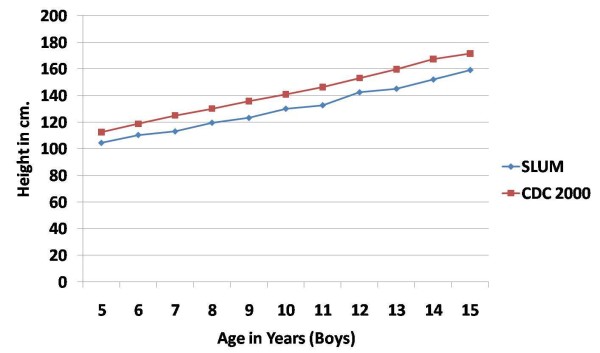
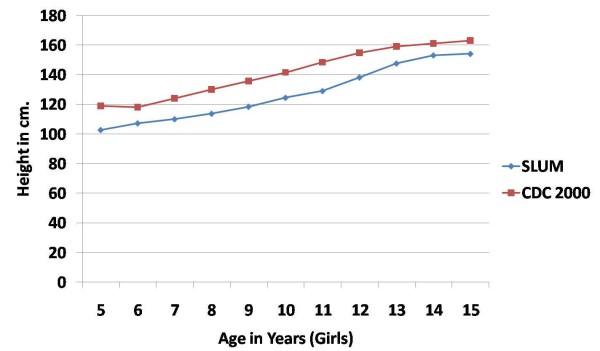
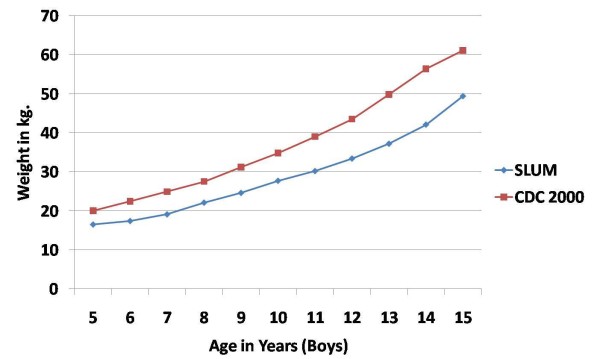
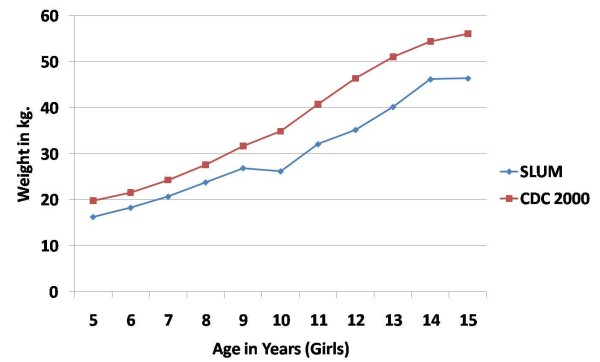
BACKGROUND: One of the greatest problems for India is undernutrition among children. The country is still struggling with this problem. Malnutrition, the condition resulting from faulty nutrition, weakens the immune system and causes significant growth and cognitive delay. Growth assessment is the measurement that best defines the health and nutritional status of children, while also providing an indirect measurement of well-being for the entire population. METHODS: A cross-sectional study, in which we explored nutritional status in school-age slum children and analyze factors associated with malnutrition with the help of a pre-designed and pre-tested questionnaire, anthropometric measurements and clinical examination from December 2010 to April 2011 in urban slums of Bareilly, Uttar-Pradesh (UP), India. RESULT: The mean height and weight of boys and girls in the study group was lower than the CDC 2000 (Centers for Disease Control and Prevention) standards in all age groups. Regarding nutritional status, prevalence of stunting and underweight was highest in age group 11 yrs to 13 yrs whereas prevalence of wasting was highest in age group 5 yrs to 7 yrs. Except refractive errors all illnesses are more common among girls, but this gender difference is statistically significant only for anemia and rickets. The risk of malnutrition was significantly higher among children living in joint families, children whose mother's education was [less than or equal to] 6th standard and children with working mothers. CONCLUSIONS: Most of the school-age slum children in our study had a poor nutritional status. Interventions such as skills-based nutrition education, fortification of food items, effective infection control, training of public healthcare workers and delivery of integrated programs are recommended.
Overview
The claims and statistics of this paper haven’t been checked yet.
Free: it reads the open-access text and checks the first 5 claims that cite a source we can check. Create a free account to check every claim.
Integrity signals
Registry
Cites
Statistics
Figures
Verification
Claims the paper makes
The claims and statistics of this paper haven’t been checked yet.
Free: it reads the open-access text and checks the first 5 claims that cite a source we can check. Create a free account to check every claim.
Claims other papers make about this one
Each is checked against this paper’s own text: does it say what the citing paper says it does?
The source backs part of the claim, not all of it — or backs it for a different population, condition or comparison.
In the citing paper
“Schools often provide essential nutrition and meals for children living in slums, and closing those institutions may deny children access to their only consistent meals [71].”
From Slum Health: Arresting COVID-19 and Improving Well-Being in Urban Informal Settlements (2020) · cites this paper as [71]
Experimental — accuracy not yet measured
Self-check
Percentages, sums and reported differences re-computed from the paper’s own numbers.
The self-check needs the paper’s full text.
Citations
Cites
2000 CDC Growth Charts for the United States: methods and development.
Kuczmarski, R. J., Ogden, C. L., Guo, S. S., Grummer‐Strawn, L. M., Flegal, K. M., Mei, Z., Wei, R. X., Curtin, L. R., Roche, A. F., & Johnson, C. L. (2002) · PubMed · Cited by 8,518
CDC GROWTH CHARTS FOR THE UNITED STATES: METHODS AND DEVELOPMENT 2000
Kuczmarski, R. J., Ogden, C. L., Guo, S. S., Strawn, L. G., Flegal, K. M., & Mei, Z. (2002) · Cited by 6,426
The assessment of the nutritional status of the community
Jelliffe, D. B. (1997) · Nutrition · doi:10.1016/s0899-9007(97)83027-4 · Cited by 1,599
Waterlow, J. C., Buzina, R., Keller, W., Lane, J. M., Nichaman, M. Z., & Tanner, J. M. (1977) · Europe PMC (PubMed Central) · Cited by 962
Maternal education and child health: Is there a strong causal relationship?
Desai, S., & Alva, S. (1998) · Demography · doi:10.2307/3004028 · Cited by 781 · cited 1×
“Earlier studies using household-level data have found mother’s education to be positively associated with a number of measures of child health and nutritional status [25-31].”
BackgroundExplaining Child Malnutrition in Developing Countries: A Cross-Country Analysis
(2000) · International Food Policy Research Institute eBooks · doi:10.2499/0896291146rr111 · Cited by 706 · cited 1×
“Women’s educational and social status, food availability, and access to safe water are well reported important underlying determinants that directly or indirectly cause malnutrition among children [23].”
BackgroundJelliffe, D. B. (1966) · PubMed · Cited by 633
How Does Mother's Education Affect Child Height?
Thomas, D., Strauss, J., & Henriques, M.-H. (1991) · The Journal of Human Resources · doi:10.2307/145920 · Cited by 599 · cited 1×
“Earlier studies using household-level data have found mother’s education to be positively associated with a number of measures of child health and nutritional status [25-31].”
BackgroundWomen's education, child welfare and child survival: a review of the evidence.
Hobcraft, J. (1993) · PubMed · Cited by 377
Maternal education and child nutritional status in Bolivia: finding the links
Frost, M. B., Forste, R., & Haas, D. W. (2005) · Social Science & Medicine · doi:10.1016/j.socscimed.2004.05.010 · Cited by 365 · cited 1×
“The pattern for wasting concurs with arguments found in several other studies [38,39] that wasting is influenced less by maternal characteristics than is stunting.”
Result
Research works printed but not linked: 6
- Labadarios D Swart R Maunder EMW Kruger HS Gericke GJ Kuzwayo PMM Ntsie PR Steyn NP Schloss I Dhansay MA Jooste PL Dannhauser A Nel JH Molefe D Kotze YJVW Executive summary of the national food consumption survey fortification baseline (NFCS-FB-1) South Africa, 2005 S Afr J Clin Nutr 2008 21 Suppl 2 245 300
- Gopalan C Harvinder Kaur Towards Better Nutrition - Problems and Policies Nutrition Foundation of India, Special Publication Series 1993 No.9 70 78
- Panda P Benjamin AI Zachariah P Growth and morbidity patterns among rural school children in Ludhiana, Punjab Health Popul Perspect Issues 1997 20 1 20 28
- Goyal RC Chavan UA Health status of school children in Ahmednagar city Indian J Maternal Child Health 1993 4 3 81 83
- Bishnoi P Sehgal S Kwatra A Anthropometric measurements of preschool children as effected by socio-economic factors Asian Pac J Clin Nutr 2004 13 132
- Moen AA The impact of child and maternal survival programmes on socio-economic development 1993 Center for Economic Research on Africa: School of Business, Montclair State University, Upper Montclair, New Jersey
Cited by
Items 101–200 of 269
Minja, E. G., Mrimi, E. C., Mponzi, W. P., Mollel, G. J., Lang, C., Beckmann, J., Gerber, M., Pühse, U., Long, K. Z., Masanja, H., et al. (2024) · Tropical Medicine and Infectious Disease · doi:10.3390/tropicalmed9050096 · Cited by 5
“This observation is in line with other studies in Ethiopia [54,55], Pakistan [33], and India.”
ResultSouza, S. H. D., Shetty, P., & Shetty, G. B. (2021) · International Journal of Community Medicine and Public Health · doi:10.18203/2394-6040.ijcmph20213806 · Cited by 5
“School health is a cross-disciplinary field of study and a fundamental strategy that influences both health and education; sub sequentially helps in the future well-being and determines the economic productivity of the populations.(1,2) In India, children represent more than 25% of the population and primary school ch…”
BackgroundDirghayu, K. C., Ulak, N., Poudyal, A., Shrestha, N., Gautam, N., Ghimire, L., & Paudel, U. (2021) · Current Developments in Nutrition · doi:10.1093/cdn/nzab127 · Cited by 13
Nutritional Status and Food Behavior among Primary School Students in Duhok City
Abdullah, R. Y., Sarkees, A. N., & Yasin, N. A. (2017) · kufa journal for nursing sciences · doi:10.36321/kjns.vi20171.2294 · Cited by 7
Assessment of Nutritional Status and Signs of Growth among Bullying School Children
El-Sahar, E.-S. G. E., & Sopeah, H. R. A. (2019) · Psychology · doi:10.4236/psych.2019.1014123 · Cited by 5
“Physical development evaluation is one of the appropriate instruments to evaluate the nutritional status of the child (Srivastava et al., 2012).”
Effect of School Nutrition Education Program on Nutritional Practices
Gemily, S. C., Fikawati, S., & Syafiq, A. (2020) · Kesmas National Public Health Journal · doi:10.21109/kesmas.v15i3.3258 · Cited by 5
Relationship between Nutritional Status and Cognitive Performance among Primary School Students
A.Bassuoni, R., Mohamed, M. S., M.Monir, Z., & Abdel-Megeid, A. A. (2021) · Bulletin of the National Nutrition Institute · doi:10.21608/enj.2021.209229 · Cited by 8
“Primary school age is a dynamic time of physical growth in addition to child mental development (Srivastava et al., 2012).”
BackgroundBenchmarking the Determinants of Nutritional Status among Community Schools’ Children in Nepal
Acharya, D., Thapa, K. B., Bhandari, T. R., Giri, S., Upreti, Y. R., Sharma, S., & Tripathi, K. P. (2024) · Current Research in Nutrition and Food Science Journal · doi:10.12944/crnfsj.12.2.21 · Cited by 9
Socio-demographic correlates of stunting among children in Port Blair, India
Ritu, S., Rao, S., Charlette, L., Thatkar, P. V., Rajaram, N., & Sethuraman, A. R. (2018) · International Journal of Community Medicine and Public Health · doi:10.18203/2394-6040.ijcmph20183838 · Cited by 5
Egbi, G., Alatiah, G., Ayi, I., & Asiedu, M. (2017) · African Journal of Food Agriculture Nutrition and Development · doi:10.18697/ajfand.80.16750 · Cited by 5
Panda, M., Nanda, S., Murmu, M. C., Giri, R. C., & Debi, L. L. (2019) · International Journal of Community Medicine and Public Health · doi:10.18203/2394-6040.ijcmph20191428 · Cited by 5
The Social Economic Impacts of Covid-19 in Informal Urban Settlements
Lenhardt, A. (2021) · OpenDocs (Institute of Development Studies) · doi:10.19088/cc.2021.008 · Cited by 5
Dual Role of Early Childhood Teachers as Health Cadres in Reducing Stunting
Hakimah, N., Nadhiroh, S. R., Dhorta, N. F., Tapriadi, Palupi, F. D., Hapsari, I., Fajar, I., & Hadisuyitno, J. (2022) · Media Gizi Indonesia · doi:10.20473/mgi.v17i1sp.244-249 · Cited by 4
Beressa, G., Biratu, A., Lencha, B., Sahiledengle, B., Zenbaba, D., Bekele, D., Tekalegn, Y., & Beressa, K. (2024) · Journal of Health Population and Nutrition · doi:10.1186/s41043-024-00687-0 · Cited by 7
“Understanding children’s nutritional state has far-reaching ramifications for future genera-tions’ growth in this area [6].”
Angkasa, D., Sitoayu, L., & Jus’at, I. (2018) · Gizi Indonesia · doi:10.36457/gizindo.v41i1.251 · Cited by 4
Nutritional Health Status of Rural Tribal Children in Khowai District of Tripura, India
Debbarma, M., Debbarma, L. L., & Nath, D. (2018) · International Journal of Current Microbiology and Applied Sciences · doi:10.20546/ijcmas.2018.709.395 · Cited by 4
Ahmad, I., Fatima, S., Luqman, M. W., Nazli, R., Habib, S. H., & Shah, I. (2022) · Journal of Ayub Medical College Abbottabad · doi:10.55519/jamc-03-s1-9296 · Cited by 5
“About 200 million school going children are found to be underweight and have lower height for age (stunted); the number is feared to increase to 1 billion by 2020.(4) Malnutrition is on rise in and 50% of the children here are assessed as malnourished and contribute to about 13 million deaths of infants and children a…”
BackgroundWhat explains the differences in children's health outcomes in slum and non-slum areas in India?
Zeeshan, Z., Khan, M. R., Kaushik, I., Hoda, M. N., & Khatoon, N. (2022) · GeoJournal · doi:10.1007/s10708-022-10787-1 · Cited by 4
“Anthropologists have studied the persistent rise of slums as part of the urbanization development, economists, sociologists, public health experts, and others exploring a wide variety of issues such as access to services, education, health, poverty, and migration (Deshmukh, 2013; Fox, 2014; Heijnen et al., 2015; Kamnd…”
BackgroundAppiah, P. K., Dzata, W. M., Bonchel, D. A., Korklu, A. R. N., Ayeley, D. J. N., Fenu, G. A., & Abdul-Rahman, T. I. (2017) · European Scientific Journal ESJ · doi:10.19044/esj.2017.v13n30p183 · Cited by 4
Dietary Habits and Nutritional Knowledge among Primary School Children in Fayoum Governorate
El–Kader, R. G. A., Mekhamier, H. A., & Hegazy, A. E.-S. A. (2019) · International Journal of Studies in Nursing · doi:10.20849/ijsn.v4i2.593 · Cited by 4
A Study of Anthropometric Indices among Pupils in Rural Communities around Kainji Dam, Niger State
Adewale, B., Osuolale, K. A., Rahman, N., Sulyman, M. A., & Akindele, S. K. (2020) · Journal of Biosciences and Medicines · doi:10.4236/jbm.2020.86016 · Cited by 4
An Assessment of Nutritional Status of under-five Children in Rural Area, Udaipur, Rajasthan, India
Sethy, S., & Mogra, R. (2020) · International Journal of Current Microbiology and Applied Sciences · doi:10.20546/ijcmas.2020.906.463 · Cited by 4
Health status of primary school children: study in urban slums of Lucknow
Verma, N., & Bajpai, P. K. (2021) · International Journal of Community Medicine and Public Health · doi:10.18203/2394-6040.ijcmph20211449 · Cited by 4
“Primary school age is a dynamic period of physical growth and mental development of the child, and School health is an essential branch of community health.(1) School health services are an economical and powerful means of raising community health and becoming more important in future generations.”
BackgroundKinanthi, M. T. A., Irmawati, M., & Aprilawati, D. (2021) · JUXTA Jurnal Ilmiah Mahasiswa Kedokteran Universitas Airlangga · doi:10.20473/juxta.v12i22021.90-93 · Cited by 4
“This may be related to the ability of families to provide balanced nutritious food for their children.(6) A study shows that low household income is a risk factor that contributes to children's nutritional problems in the slums of Nagpur, India.”
Onabanjo, O., Quadri, J. A., A, Y.-B. M., Anisere, D. I., & Solaja, O. O. (2021) · Research Journal of Food and Nutrition · doi:10.22259/2637-5583.0501001 · Cited by 4
Amin, A. S. A., Debnath, S. C., Galib, A., Rouf, M. A., Haque, M. R., Rabby, M. F., Zannat, T., & Rahim, Z. (2018) · Asian Journal of Medical and Biological Research · doi:10.3329/ajmbr.v4i3.38470 · Cited by 4
“Those mother needs knowledge regarding these in order to practice them and that depends on the mother‟s education, her socioeconomic status, her access to information regarding breast feeding, feeding taboos, and so on (Srivastava et al., 2012; Mittal et al., 2007).”
BackgroundPeran Status Gizi Terhadap Tingkat Kecerdasan Kognitif Anak
Muin, M., Burhanuddin, N., Zulfahmidah, Z., & Aisyah, W. N. (2020) · Indonesian Journal of Health · doi:10.33368/inajoh.v0i0.8 · Cited by 8
(2018) · The Egyptian Journal of Community Medicine · doi:10.21608/ejcm.2018.11043 · Cited by 4
Life Between the City and the Village: Comparative Analysis of Service Access in Indian Urban SlumsPreprint
Sahasranaman, A., & Bettencourt, L. M. A. (2019) · arXiv (Cornell University) · doi:10.48550/arxiv.1909.05728 · Cited by 6
Angkasa, D., & Nadiyah, N. (2019) · Indonesian Journal of Human Nutrition · doi:10.21776/ub.ijhn.2019.006.01.6 · Cited by 3
Achouri, I., Aboussaleh, Y., Sbaibi, R., & Ahami, A. O. T. (2021) · Pan African Medical Journal · doi:10.11604/pamj.2021.38.374.10008 · Cited by 3
“This finding is consistent with the results reported in India, and Pakistan [21, 24].”
ResultInfluentialA review of food and nutrition communication and promotion in Ghana
Parbey, P., & Aryeetey, R. (2022) · African Journal of Food Agriculture Nutrition and Development · doi:10.18697/ajfand.107.21810 · Cited by 4
Child Malnutrition and Mortality in South Asia: A Comparative Analysis
Amir, M. (2024) · doi:10.52783/eel.v14i1.1119 · Cited by 3
Ashourpour, M., Kaveh, M. H., Salehi, M., Tabatabaee, H., & Taghdir, M. (2017) · Nutrition & Dietetics · doi:10.1111/1747-0080.12383 · Cited by 4
Touré, A. F., Olivier, K. K. J.-J., Alioune, C., Sidikiba, S., Alexandre, D., Emmanuel, K. Y., Koolo, B. I., Sory, D. I., Falaye, T., Bangaly, M. F., et al. (2018) · Central African Journal of Public Health · doi:10.11648/j.cajph.20180402.12 · Cited by 3
“This period of transition from childhood to adolescence requires a healthy and balanced diet for better health in adulthood, while physical, emotional and social changes occur among them [9].”
BackgroundKhongrangjem, T., & Marwein, A. (2019) · Clinical Epidemiology and Global Health · doi:10.1016/j.cegh.2019.10.012 · Cited by 3
Ghumre, K. Y., & Arya, A. (2020) · International Journal of Current Microbiology and Applied Sciences · doi:10.20546/ijcmas.2020.906.462 · Cited by 3
Goson, P. C., Ishaya, T., Ezeh, O. K., Oforkansi, G. H., LIM, D. J., & Agho, K. (2022) · Nutrients · doi:10.3390/nu14102042 · Cited by 5
“The adverse impacts of undernutrition in children can be long-lasting, devastating, and often irreversible, such as neurocognitive delay, growth impediments leading to short adult stature, lower productivity later in life, and poor learning performance [3,4].”
BackgroundAnita (2024) · Nutrition · doi:10.1016/j.nut.2024.112487 · Cited by 3
Moyegbone, J. E., Okpoghono, J., Nwose, E. U., Clarke, A. H., Ofili, C. C., Odoko, J. O., & Agege, E. A. (2024) · Acta Medica Bulgarica · doi:10.2478/amb-2024-0018 · Cited by 3
URBAN POOR CHILDREN: THE PRIORITY
Ambey, R. (2013) · Australasian Medical Journal · doi:10.4066/amj.2013.1714 · Cited by 3
Yeasmin, S., & Islam, K. (2016) · Asian Journal of Medical Sciences · doi:10.3126/ajms.v7i4.14558 · Cited by 3
Angkasa, D., & Nadiyah, N. (2019) · Nutrition and Food Sciences Research · doi:10.29252/nfsr.6.3.1 · Cited by 3
“demonstrated that schoolchildren from an urban slum area in India were at higher risks of malnutrition if mothers had lower schooling years (12).”
BackgroundPal, J. (2017) · Journal of Medical Science And clinical Research · doi:10.18535/jmscr/v5i7.65 · Cited by 3
Hubungan Karakteristik Sosiodemografi dengan Status Gizi Siswa Sekolah Dasar
Konstantin, T., Tantular, I. S., Athiyyah, A. F., & Rossyanti, L. (2020) · JI-KES (Jurnal Ilmu Kesehatan) · doi:10.33006/ji-kes.v3i2.135 · Cited by 3
Kujur, A., Kumar, D., Kumar, C., Rana, R. K., & Kashyap, V. (2020) · International Journal of Adolescent Medicine and Health · doi:10.1515/ijamh-2018-0219 · Cited by 3
School health services in Egypt: Critical analysis
Rizk, H., Abdel-Razik, M. S. M., Elsayad, A. S., & Elhabashi, E. M. (2020) · Children and Youth Services Review · doi:10.1016/j.childyouth.2020.105609 · Cited by 3
Roshan, P. S. B., Chandrashekar, C., & Likhitha, N. J. (2021) · International Journal of Science and Healthcare Research · doi:10.52403/ijshr.20210713 · Cited by 2
Prevalence of Iron Deficiency Anaemia among School Children in Sabratha, Western Libya
Jbireal, J. M., & Azab, A. E. (2020) · Archives of Hematology and Blood Diseases · doi:10.22259/2639-3581.0301004 · Cited by 3
Karim, R., Kundu, R. N., Hossain, S., Bharati, S., Bharati, P., & Hossain, G. (2024) · BMC Public Health · doi:10.1186/s12889-024-20487-9 · Cited by 2
“School age is a pivotal period in the lives of children when important physical, mental, emotional, and social transformations occur [3].”
BackgroundEducational Settings and Nutrition Promotion: Practices and Policy
Bhamani, S., Ladhani, Z., Karim, Z., & Chunara, S. (2025) · Springer eBooks · doi:10.1007/978-3-031-95721-5_12 · Cited by 3
Aramani, A., Kumar, S., Prabhu, S. H., & Acharya, D. (2019) · International Journal of Community Medicine and Public Health · doi:10.18203/2394-6040.ijcmph20192834 · Cited by 2
“It is dynamic growing phase of childhood.(4) It has been found out that health problems due to poor nutritional status in primary school-age children are among the causes of low school enrolment, absenteeism and dropout and unsatisfactory academic results.”
BackgroundGodbole, M., Sarvar, R., & Bant, D. D. (2020) · Indian Journal of Forensic and Community Medicine · doi:10.18231/j.ijfcm.2020.032 · Cited by 2
“Children 6–23 months of age who received foods from four or more food groups of the eight food groups were assessed to have minimum dietary diversity the food groups included (1) grain, root, and tubers, (2) legumes and nuts, (3) dairy products, (4) flesh food, (5) egg, (6) vitamin A-rich fruit and vegetables, (7) oth…”
BackgroundBhattacharyya, H., Medhi, G. K., Pala, S., Sarkar, A., Lynrah, W., & Kharmujai, O. M. (2020) · Journal of Family Medicine and Primary Care · doi:10.4103/jfmpc.jfmpc_1016_20 · Cited by 2
“4%).[1] In another study conducted by Bose et al.”
BackgroundRani, S. (2020) · Indian Journal of Youth and Adolescent Health · doi:10.24321/2349.2880.202006 · Cited by 2
Diabetes and Periodontitis – A Socioeconomic Disease?
Palwankar, P., Tandon, S., Blaggana, V., Palwankar, D., & Sachdeva, A. (2021) · Journal of Evolution of Medical and Dental Sciences · doi:10.14260/jemds/2021/474 · Cited by 4
EBEVEYN BESLENME EĞİTİMİNİN OKUL ÇAĞI ÇOCUKLARINDA VERİLEN BESLENME EĞİTİMİNE ETKİSİ
Zakkour, H. K., & Yıldıran, H. (2022) · Gazi Sağlık Bilimleri Dergisi · doi:10.52881/gsbdergi.1140710 · Cited by 8
Phogat, R., Rani, G., Manjunath, B. C., Kumar, A. M., & Rani, V. (2023) · Journal of Indian Association of Public Health Dentistry · doi:10.4103/jiaphd.jiaphd_285_22 · Cited by 3
Assessing the Impact of Varied Dark Chocolate Concentrations on Enamel and Dentine Microhardness
Hamasaeed, N. H., Toma, I. S., Abdullah, A. O., & Kadir, S. (2023) · Applied Sciences · doi:10.3390/app14010382 · Cited by 6
Obembe, T. A., Bosede, A. O., Ariyo, O., Adeniji, F. I. P., Olaoye, A., & Adebayo, A. M. (2024) · African Health Sciences · doi:10.4314/ahs.v24i1.29 · Cited by 2
Meskele, D. K., Abiso, T. L., Belete, T. B., Koyira, M. M., & Dake, S. K. (2024) · Frontiers in Nutrition · doi:10.3389/fnut.2024.1400276 · Cited by 2
“This finding was also similar to the findings from other studies conducted in South Ethiopia (42), Assam (44), Nepal (45), and India (6).”
ResultA qualitative study on dietary habits and nutritional awareness among school children
Koneru, G., Rao, N. S. S., & Sai, T. S. R. (2020) · The Journal of Community Health Management · doi:10.18231/j.jchm.2019.023 · Cited by 2
Role of Mothers’ Nutritional Knowledge, Nutritional Factors on The School Performance
Farhana, J., Akther, F., Talukder, M. U., Islam, M. A., Islam, M. T., & Bhuyan, M. A. H. (2015) · International Journal of Public Health Science (IJPHS) · doi:10.11591/.v4i1.4710 · Cited by 2
Silva, D. E., Nóbrega, L. A. L., Valente, A., Dias, C. C., Almeida, F., Cruz, J. L., Neves, E., Afonso, A. C., & Guerra, A. (2014) · Revista Brasileira de Saúde Materno Infantil · doi:10.1590/s1519-38292014000300008 · Cited by 2
Nutritional Status of School-Going Children: What Do We Know?
Seshadri, S. R., & Ramakrishna, J. (2017) · Springer eBooks · doi:10.1007/978-981-10-3470-1_1 · Cited by 2
Al-Ameri, R. J. K., & Abdalhamid, W. G. (2018) · Family Medicine & Medical Science Research · doi:10.4172/2327-4972.1000223 · Cited by 2
Rajan, X. C., & Ravishankar, R. (2019) · International Journal of Community Medicine and Public Health · doi:10.18203/2394-6040.ijcmph20192320 · Cited by 2
“Srivastava et al showed that mother's education was found to be a strong predictor of child nutritional status.(1) Those children whose mothers are working were also found to have more stunting and the probable explanation is that working mother often finds less time to care for her children.”
BackgroundJoshi, H. S., Katyal, R., Singh, A., Khan, S., & Upadhayay, D. (2018) · International Journal of Advanced and Integrated Medical Sciences · doi:10.5005/jp-journals-10050-10112 · Cited by 2
Bhandari, P., & Gayawan, E. (2022) · Spatial Demography · doi:10.1007/s40980-022-00108-y · Cited by 2
“The independent variables considered for the present study were guided by the UNICEF (1998) framework as well as previous research on child nutrition from India and elsewhere (Agho et al., 2019; Degarege et al., 2015; Fenske et al., 2013; Gayawan et al., 2019a, 2019b; Kandala et al., 2011; Srivastava et al., 2012; Yad…”
BackgroundMethodTiwari, M., Nathani, N., & Dubey, G. P. (2022) · AYUHOM · doi:10.4103/ayuhom.ayuhom_16_22 · Cited by 2
Hannah, R. A., Sekarwana, N., & Effendi, S. H. (2017) · American journal of clinical medicine research · doi:10.12691/ajcmr-5-1-2 · Cited by 2
Relationship between body mass index with eruption of third molar teeth
Deka, S. J., Putul, M., Nomi, D., Bora, N., Jahnobi, D., & Thakuria, K. D. (2019) · International Journal of Health Research and Medico Legal Practice · doi:10.31741/ijhrmlp.v5.i2.2019.17 · Cited by 2
“Growth assessment is the measurement that best defines the health and nutritional status of children.(1) A balanced diet contains all the elements is very necessary for the growth of the teeth.”
BackgroundRekha, V., & Pal, R. (2022) · Regional Economic Development Research · doi:10.37256/redr.3120221023 · Cited by 2
“Only a handful of studies in the regional context of India have explored the burden of malnutrition among school going children (Srivastava et al., 2012; Pal et al., 2016; Ahmad et al., 2018; Bhattacharyya et al., 2021).”
BackgroundOduor, F. O. (2013) · Cited by 2
Alula, G. A., & Tesema, S. (2024) · Research Square · doi:10.21203/rs.3.rs-4245533/v1 · Cited by 3
Sultan, S. (2014) · Journal of Advances in Medicine · doi:10.5958/2319-4324.2014.01122.5 · Cited by 1
Factors affecting stunting among 3–12 years old girls of Purba Medinipur, West Bengal, India
Khanra, P., Chakraborty, R., & Bose, K. (2023) · Anthropological Review · doi:10.18778/1898-6773.86.3.07 · Cited by 3
“It is a significant predictor of human capital and social advancement since it is linked to higher illness and mortality, delayed mental development, low educational attainment, and diminished intellectual capacity (Victora et al. 2008; Srivastava et al. 2012; De Onis et al. 2012; Prendergast et al. 2014).”
BackgroundMelese, M., Esubalew, D., Malede, A., Birhan, T. A., & Azanaw, J. (2024) · Environmental Health Insights · doi:10.1177/11786302241252735 · Cited by 1
Moiane, T., Modjadji, P., Cele, L. P., Chelule, P. K., Mphekgwana, P. M., Monyeki, K. D., & Madiba, S. (2023) · African Journal for Physical Activity and Health Sciences (AJPHES) · doi:10.37597/ajphes.2023.sup1.1.3 · Cited by 1
Sinha, R., Kumar, A., Utkarsh, K., & Sharma, B. (2024) · Bhartiya Krishi Anusandhan Patrika · doi:10.18805/bkap752 · Cited by 2
Dejazmach, Z., Ayal, B. G., Kassahun, W. D., Kumie, G., Mezen, M. K., Yayeh, B. M., Ahmed, S. S., Gela, A. W., Debash, H., Ayalew, S., et al. (2025) · BMC Public Health · doi:10.1186/s12889-025-24104-1 · Cited by 2
“Improper feeding practices can negatively impact children’s growth and development, especially in developing countries where access to essential health services is limited [52, 53].”
Berk, E., ALATAŞ, H., & Arslan, N. (2025) · Medicine · doi:10.1097/md.0000000000046321 · Cited by 3
Tewani, G. R., & Saranyan, P. (2015) · Journal of Health Education Research & Development · doi:10.4172/2380-5439.s1-002 · Cited by 1
“J Health Edu Res Dev ISSN: JHERD, an open access journal Etiology of Diseases, Nutrition and Human Learning the regularity and continuity of this practice among students were collected and analyzed [6].”
BackgroundRamagopal, G., & Umadevi, L. (2016) · International Journal of Community Medicine and Public Health · doi:10.18203/2394-6040.ijcmph20163388 · Cited by 1
Impact of Domestic Waste Exposure on Health and Nutritional Status of Children Aged 5-7 Years
Awan, R., Khan, N., & Nasir, M. (2016) · Vitamins & Minerals · doi:10.4172/2376-1318.1000148 · Cited by 1
“Other variables checked for health and nutritional status were physical signs and symptoms [11] including eyes, nails, teeth, hair and skin examination; stool character and pattern; current eye, skin or respiratory allergy/infection or nervous disorder; and frequency of severe sickness [12,13].”
BackgroundKreshanti, P., Sari, V. A., Wangge, G., & Wahyuni, L. K. (2018) · Jurnal Plastik Rekonstruksi · doi:10.14228/jpr.v5i1.248 · Cited by 1
Khan, M. F., & Kotecha, I. S. (2021) · Indian Journal of Community and Family Medicine · doi:10.4103/ijcfm.ijcfm_30_20 · Cited by 1
Nohwar, A. K., Venu, V. P., & Singh, R. (2021) · Indian Journal of Community Health · doi:10.47203/ijch.2021.v33i04.009 · Cited by 1
Oguejiofor, E. R., & Nwankwo, C. U. (2023) · GSC Advanced Research and Reviews · doi:10.30574/gscarr.2023.14.1.0375 · Cited by 1
Ogunfowokan, A., Oyela, B., Olodu, M. D., Olagunju, O., Famakinwa, T., & Olumakaiye, M. F. (2022) · Nigerian Journal of Health Sciences · doi:10.4103/njhs.njhs_8_22 · Cited by 3
Nutritional Status and Related Factors among Primary School Children, at Mangalore
Savitha, S., Anitha, C., & Sams, L. M. (2023) · doi:10.52711/jnmr.2023.05 · Cited by 1
Nutritional Demands in Schools Children for Performance and Health: A Brief Review in India
Ghosh, A., & Kathayat, L. B. (2023) · Journal of Exercise Science and Physiotherapy · doi:10.18376/jesp/2023/v19/i2/223655 · Cited by 1
Bouchefra, S., Chaal, R. E., & Bour, A. (2024) · Healthcraft Frontiers · doi:10.56578/hf020101 · Cited by 4
Indicators of Malnutrition Among School-Going Children in an Eastern State (West Bengal) of India
Dutta, A., Suri, S., Rai, M., Malik, R. A., Acharya, R., & Pandey, P. (2024) · Ecology of Food and Nutrition · doi:10.1080/03670244.2024.2334064 · Cited by 1
“According to Global Nutrition Report 2018 (Fanzo et al. 2019), India tops the number of stunted children (46.6 million), followed by Nigeria (13.9) and Pakistan (10.7 million).”
ResultInfluentialStudy on Common Health Problem of School going Children in a City of Central India
Sharma, V. K., Parmar, V., Singh, D., & Jain, S. (2024) · SSR Institute of International Journal of Life Sciences · doi:10.21276/ssr-iijls.2024.10.4.6 · Cited by 1
“We considered the normal hearing range 1000– 4000 Hz at an intensity of 25 dB [12] .”
BackgroundInfluentialHealth profile assessment of school children of Jodhpur District of Rajasthan
Shafi, S., Raghav, P. R., Naveen, K. H., Chowdhary, Y., & Pundhir, A. (2025) · Journal of Family Medicine and Primary Care · doi:10.4103/jfmpc.jfmpc_681_24 · Cited by 1
“[1,2] Health problems because of poor nutritional status in school‑aged children are among the foremost common causes of low school enrolment, high absenteeism, early dropout and unsatisfactory classroom performance.”
Ndukwu, C., Egbuonu, I., & Ulasi, T. (2014) · Nigerian Journal of Paediatrics · doi:10.4314/njp.v41i3.4 · Cited by 1
Pal, J. (2017) · International Journal Of Medical Science And Clinical Invention · doi:10.18535/ijmsci/v4i8.08 · Cited by 1
Metadata
- Authors
- Srivastava, A., Mahmood, S. E., Srivastava, P. M., Shrotriya, V. P., & Kumar, B.
- Affiliations
- M.J.P. Rohilkhand University (IN)
- Corresponding author
- Srivastava, Anurag
- Venue
- Archives of Public Health
- Published
- 2012-04-17
- Volume
- 70
- Issue
- 1
- Pages
- 8-8
- ISSN
- 0778-7367 (ISSN-L)
- 2049-3258
- PMC
- PMC3436633
- OpenAlex
- W2155145217
- Cited by
- 270
- References
- 38
- Citations by year
- 2026: 5 · 2025: 11 · 2024: 24 · 2023: 22 · 2022: 24 · 2021: 25 · 2020: 36 · 2019: 27 · 2018: 23 · 2017: 22 · 2016: 15 · 2015: 11 · 2014: 14 · 2013: 10 · 2012: 1
- FWCI
- 10.76
- Type
- journal article
- Language
- en
- Open access
- gold
- doi.org
- Licence
- cc-by
- creativecommons.org/licenses/by/2.0 (tdm)
- Locations
- Archives of Public Health (publishedVersion, cc-by)
- Europe PMC (PubMed Central) (publishedVersion, cc-by)
- PubMed Central (publishedVersion, cc-by)
- PubMed (publishedVersion)
- Topics
- Health Sciences › Nursing › Nutrition and Dietetics › Child Nutrition and Water Access
- Health Sciences › Medicine › Pediatrics, Perinatology and Child Health › Public Health and Nutrition
- Social Sciences › Development › Poverty, Education, and Child Welfare
- Keywords
- child malnutrition, elementary school students, urban slums, stunting, underweight, wasting, anemia, rickets, maternal education, working mothers, joint family, nutritional status
About these checks
Registry, retraction, Cites and statistics results are computed, not judged, with one exception: a printed reference that no index lists is read once by a model before it counts as a citation error. Claims are extracted by a model and kept only when their quote appears verbatim in the text; each cited source is then checked, with a model’s help, for whether it says what the claim relies on. Those verdicts can be wrong — read the claim’s quote and the cited source before relying on one.
Statistics and arithmetic are recomputed, not judged.
Confidence bands are shown only for fields calibrated on our annotated test set. None is calibrated yet, so no band is shown.
What counts as a claim ›How we measure confidence ›How we check this ›
Are you an author, or do you see a problem with this page? Request a review
Data sources
Bibliographic data: Semantic Scholar, OpenAlex, Crossref.
Contains information from the Semantic Scholar Academic Graph Datasets, made available under the ODC Attribution License (ODC-BY 1.0).
Semantic Scholar’s data is described in: Kinney, R., et al. (2023). The Semantic Scholar Open Data Platform. arXiv:2301.10140.
