

The DOI matches its Crossref record; 39 of the 39 references it cites were found in a registry or an index.
RSEM: accurate transcript quantification from RNA-Seq data with or without a reference genome
Open accessAbstract
Background: RNA-Seq is revolutionizing the way transcript abundances are measured. A key challenge in transcript quantification from RNA-Seq data is the handling of reads that map to multiple genes or isoforms. This issue is particularly important for quantification with de novo transcriptome assemblies in the absence of sequenced genomes, as it is difficult to determine which transcripts are isoforms of the same gene. A second significant issue is the design of RNA-Seq experiments, in terms of the number of reads, read length, and whether reads come from one or both ends of cDNA fragments. Results: We present RSEM, an user-friendly software package for quantifying gene and isoform abundances from single-end or paired-end RNA-Seq data. RSEM outputs abundance estimates, 95% credibility intervals, and visualization files and can also simulate RNA-Seq data. In contrast to other existing tools, the software does not require a reference genome. Thus, in combination with a de novo transcriptome assembler, RSEM enables accurate transcript quantification for species without sequenced genomes. On simulated and real data sets, RSEM has superior or comparable performance to quantification methods that rely on a reference genome. Taking advantage of RSEM's ability to effectively use ambiguously-mapping reads, we show that accurate gene-level abundance estimates are best obtained with large numbers of short single-end reads. On the other hand, estimates of the relative frequencies of isoforms within single genes may be improved through the use of paired-end reads, depending on the number of possible splice forms for each gene. Conclusions: RSEM is an accurate and user-friendly software tool for quantifying transcript abundances from RNA-Seq data. As it does not rely on the existence of a reference genome, it is particularly useful for quantification with de novo transcriptome assemblies. In addition, RSEM has enabled valuable guidance for cost-efficient design of quantification experiments with RNA-Seq, which is currently relatively expensive.
Overview
The claims and statistics of this paper haven’t been checked yet.
Run the check — free, no account needed. It reads the open-access text and checks the sources it cites.
Integrity signals
Registry
Cites
Statistics
Figures
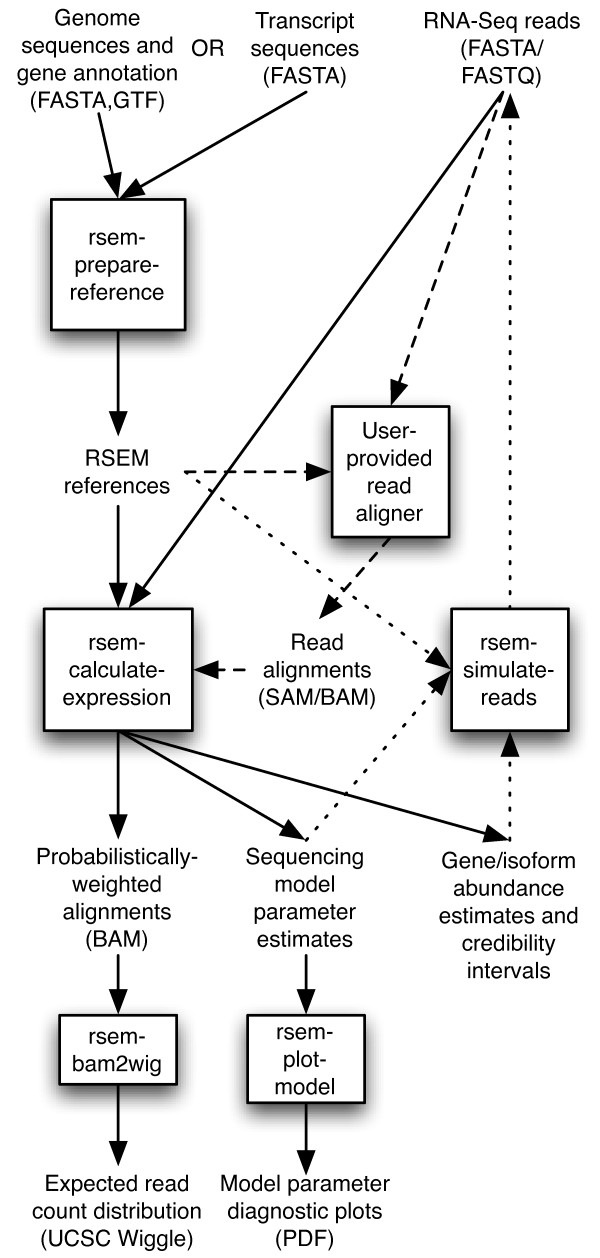
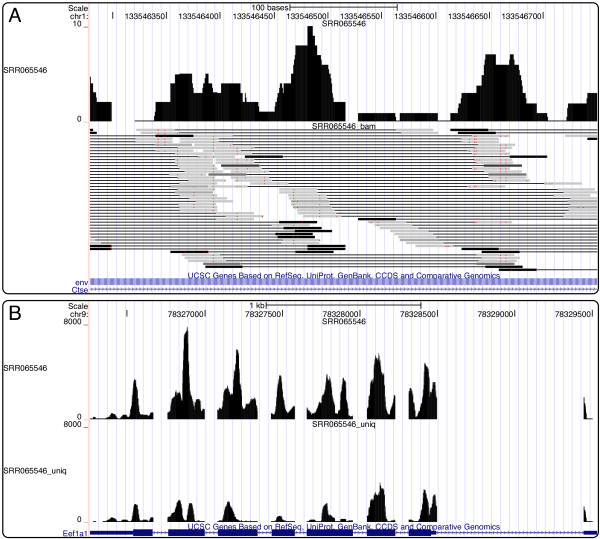
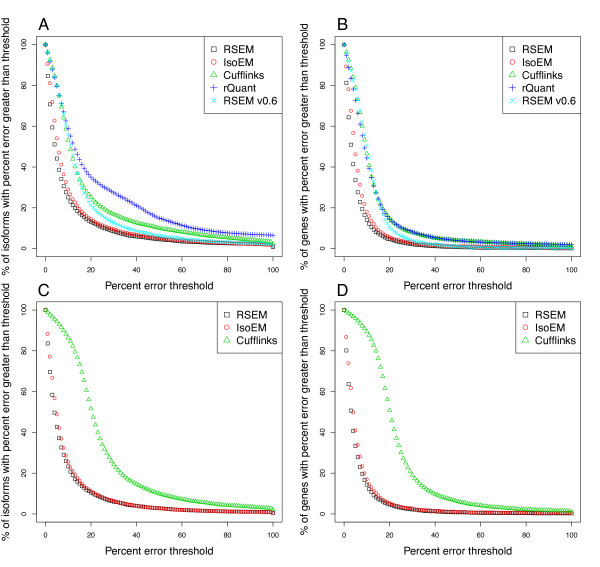
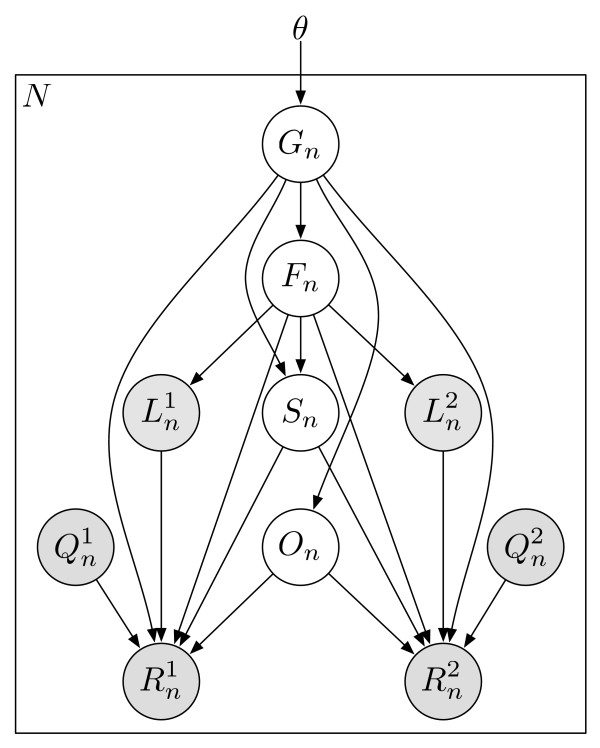
Verification
Claims the paper makes
The claims and statistics of this paper haven’t been checked yet.
Run the check — free, no account needed. It reads the open-access text and checks the sources it cites.
Claims other papers make about this one
Each is checked against this paper’s own text: does it say what the citing paper says it does?
The source backs part of the claim, not all of it — or backs it for a different population, condition or comparison.
In the citing paper
“Raw read counts are assembled outside limma using tools such as featureCounts (29), HTSeq-counts (30) or RSEM (31).”
From limma powers differential expression analyses for RNA-sequencing and microarray studies (2015) · cites this paper as [31]
Experimental — accuracy not yet measuredThe source backs part of the claim, not all of it — or backs it for a different population, condition or comparison.
In the citing paper
“Transcriptome alignment substantially reduces target complexity by limiting it to known transcripts, including all possible splice isoforms (Li and Dewey 2011).”
From RNA-Seq Alignment to Individualized Genomes Improves Transcript Abundance Estimates in Multiparent Populations (2014) · cites this paper as Li and Dewey 2011
Experimental — accuracy not yet measuredThe source backs part of the claim, not all of it — or backs it for a different population, condition or comparison.
In the citing paper
“our results confirm published reports that relative gene abundance estimates based solely on unique read counts are biased—genes composed primarily of unique sequence are overestimated while genes with closely related pseudogenes or family members are underestimated (Mortazavi et al. 2008; Li and Dewey 2011).”
From RNA-Seq Alignment to Individualized Genomes Improves Transcript Abundance Estimates in Multiparent Populations (2014) · cites this paper as Li and Dewey 2011
Experimental — accuracy not yet measuredThe cited source says what the claim attributes to it.
In the citing paper
“Additionally, the RSEM algorithm uses an expectation maximization approach that returns TPM values [40].”
From A survey of best practices for RNA-seq data analysis (2016) · cites this paper as [40]
The cited source says what the claim attributes to it.
In the citing paper
“The inclusion of multireads adds complexity to the abundance estimation problem but EM algorithms are well suited to this task (Li and Dewey 2011; Nicolae et al. 2011; Turro et al. 2011; Roberts and Pachter 2013).”
From RNA-Seq Alignment to Individualized Genomes Improves Transcript Abundance Estimates in Multiparent Populations (2014) · cites this paper as Li and Dewey 2011
Self-check
Percentages, sums and reported differences re-computed from the paper’s own numbers.
The self-check needs the paper’s full text.
Citations
Cites
The Sequence Alignment/Map format and SAMtools
Li, H., Handsaker, B., Wysoker, A., Fennell, T., Ruan, J., Homer, N., Marth, G., Abecasis, G., Durbin, R., & 1000 Genome Project Data Processing Subgroup (2009) · Bioinformatics · doi:10.1093/bioinformatics/btp352 · Cited by 62,041
Robinson, M. D., McCarthy, D. J., & Smyth, G. K. (2010) · Bioinformatics · doi:10.1093/bioinformatics/btp616 · Cited by 41,364
Ultrafast and memory-efficient alignment of short DNA sequences to the human genome.
Langmead, B., Trapnell, C., Pop, M., & Salzberg, S. L. (2009) · Genome Biology · doi:10.1186/gb-2009-10-3-r25 · Cited by 21,849
Full-length transcriptome assembly from RNA-Seq data without a reference genome
Grabherr, M. G., Haas, B. J., Yassour, M., Levin, J. Z., Thompson, D. A., Amit, I., Adiconis, X., Fan, L., Raychowdhury, R., Zeng, Q., et al. (2011) · Nature Biotechnology · doi:10.1038/nbt.1883 · Cited by 21,201
Differential expression analysis for sequence count data
Anders, S., & Huber, W. (2010) · Genome Biology · doi:10.1186/gb-2010-11-10-r106 · Cited by 15,581
Trapnell, C., Williams, B. A., Pertea, G., Mortazavi, A., Kwan, G., van Baren, M. J., Salzberg, S. L., Wold, B. J., & Pachter, L. (2010) · Nature Biotechnology · doi:10.1038/nbt.1621 · Cited by 15,556
Mapping and quantifying mammalian transcriptomes by RNA-Seq
Mortazavi, A., Williams, B. A., McCue, K., Schaeffer, L., & Wold, B. (2008) · Nature Methods · doi:10.1038/nmeth.1226 · Cited by 13,696
RNA-Seq: a revolutionary tool for transcriptomics
Wang, Z., Gerstein, M., & Snyder, M. (2009) · Nature Reviews Genetics · doi:10.1038/nrg2484 · Cited by 13,174
TopHat: discovering splice junctions with RNA-Seq
Trapnell, C., Pachter, L. S., & Salzberg, S. L. (2009) · Bioinformatics · doi:10.1093/bioinformatics/btp120 · Cited by 11,682
The Human Genome Browser at UCSC
Kent, W. J., Sugnet, C. W., Furey, T. S., Roskin, K. M., Pringle, T. H., Zahler, A. M., & Haussler, A. D. (2002) · Genome Research · doi:10.1101/gr.229102 · Cited by 10,400
Alternative isoform regulation in human tissue transcriptomes
Wang, E. T., Sandberg, R., Luo, S., Khrebtukova, I., Zhang, L., Mayr, C., Kingsmore, S. F., Schroth, G. P., & Burge, C. B. (2008) · Nature · doi:10.1038/nature07509 · Cited by 5,181
RNA-seq: An assessment of technical reproducibility and comparison with gene expression arrays
Marioni, J. C., Mason, C. E., Mane, S. M., Stephens, M., & Gilad, Y. (2008) · Genome Research · doi:10.1101/gr.079558.108 · Cited by 2,771
The Transcriptional Landscape of the Yeast Genome Defined by RNA Sequencing
Nagalakshmi, U., Wang, Z., Waern, K., Shou, C., Raha, D., Gerstein, M., & Snyder, M. (2008) · Science · doi:10.1126/science.1158441 · Cited by 2,479
MAQC Consortium, Shi, L., Shi, L., Reid, L. H., Jones, W. D., Shippy, R., Warrington, J. A., Baker, S. C., Collins, P. J., de Longueville, F., et al. (2006) · Nature Biotechnology · doi:10.1038/nbt1239 · Cited by 2,126
The UCSC Genome Browser database: update 2011
Fujita, P. A., Rhead, B., Zweig, A. S., Hinrichs, A. S., Karolchik, D., Cline, M., Goldman, M. J., Barber, G. P., Clawson, H., Coelho, A., et al. (2010) · Nucleic Acids Research · doi:10.1093/nar/gkq963 · Cited by 1,843
Improving RNA-Seq expression estimates by correcting for fragment bias
Roberts, A., Trapnell, C., Donaghey, J., Rinn, J. L., & Pachter, L. (2011) · Genome Biology · doi:10.1186/gb-2011-12-3-r22 · Cited by 1,725
Bullard, J. H., Purdom, E., Hansen, K. D., & Dudoit, S. (2010) · BMC Bioinformatics · doi:10.1186/1471-2105-11-94 · Cited by 1,680
Analysis and design of RNA sequencing experiments for identifying isoform regulation
Katz, Y., Wang, E. T., Airoldi, E. M., & Burge, C. B. (2010) · Nature Methods · doi:10.1038/nmeth.1528 · Cited by 1,353
Guttman, M., Garber, M., Levin, J. Z., Donaghey, J., Robinson, J., Adiconis, X., Fan, L., Koziol, M. J., Gnirke, A., Nusbaum, C., et al. (2010) · Nature Biotechnology · doi:10.1038/nbt.1633 · Cited by 1,253
RNA-Seq gene expression estimation with read mapping uncertainty
Li, B., Ruotti, V., Stewart, R. M., Thomson, J. A., & Dewey, C. N. (2010) · Bioinformatics · doi:10.1093/bioinformatics/btp692 · Cited by 1,198
Self-citationDe novo assembly and analysis of RNA-seq data
Robertson, G., Schein, J. E., Chiu, R., Corbett, R., Field, M. A., Jackman, S. D., Mungall, K. L., Lee, S. S., Okada, H. M., Qian, J. Q., et al. (2010) · Nature Methods · doi:10.1038/nmeth.1517 · Cited by 1,028
Identification of novel transcripts in annotated genomes using RNA-Seq
Roberts, A., Pimentel, H., Trapnell, C., & Pachter, L. S. (2011) · Bioinformatics · doi:10.1093/bioinformatics/btr355 · Cited by 988
NCBI Reference Sequences: current status, policy and new initiatives
Pruitt, K. D., Tatusova, T., Klimke, W., & Maglott, D. R. (2009) · Nucleic Acids Research · doi:10.1093/nar/gkn721 · Cited by 736 · cited 1×
“Two mouse reference transcript sets were used: the RefSeq annotation [34] and the Ensembl annotation [27] (see Methods).”
MethodBiases in Illumina transcriptome sequencing caused by random hexamer priming
Hansen, K. D., Brenner, S. E., & Dudoit, S. (2010) · Nucleic Acids Research · doi:10.1093/nar/gkq224 · Cited by 713
Flicek, P., Amode, M. R., Barrell, D. G., Beal, K. M., Brent, S., Chen, Y., Clapham, P., Coates, G. M. P., Fairley, S., Fitzgerald, S. F., et al. (2010) · Nucleic Acids Research · doi:10.1093/nar/gkq1064 · Cited by 607
Statistical inferences for isoform expression in RNA-Seq
Jiang, H., & Wong, W. H. (2009) · Bioinformatics · doi:10.1093/bioinformatics/btp113 · Cited by 468
Morin, R. D., Bainbridge, M. N., Fejes, A. P., Hirst, M., Krzywinski, M. I., Pugh, T. J., McDonald, H., Varhol, R., Jones, S. J. M., & Marra, M. A. (2008) · BioTechniques · doi:10.2144/000112900 · Cited by 433
Why the need for qPCR publication guidelines?--The case for MIQE.
Bustin, S. (2010) · Methods · doi:10.1016/j.ymeth.2009.12.006 · Cited by 387
Detection of splice junctions from paired-end RNA-seq data by SpliceMap
Au, K. F., Jiang, H., Lin, L., Xing, Y., & Wong, W. H. (2010) · Nucleic Acids Research · doi:10.1093/nar/gkq211 · Cited by 341
Modeling non-uniformity in short-read rates in RNA-Seq data
Li, J., Jiang, H., & Wong, W. H. (2010) · Genome Biology · doi:10.1186/gb-2010-11-5-r50 · Cited by 193
Prediction of alternative isoforms from exon expression levels in RNA-Seq experiments
Richard, H., Schulz, M. H., Sultan, M., Nürnberger, A., Schrinner, S., Balzereit, D., Dagand, E., Rasche, A., Lehrach, H., Vingron, M., et al. (2010) · Nucleic Acids Research · doi:10.1093/nar/gkq041 · Cited by 160
Using non-uniform read distribution models to improve isoform expression inference in RNA-Seq
Wu, Z., Wang, X., & Zhang, X. (2010) · Bioinformatics · doi:10.1093/bioinformatics/btq696 · Cited by 99
The Collapsed Gibbs Sampler in Bayesian Computations with Applications to a Gene Regulation Problem
Liu, J. S. (1994) · Journal of the American Statistical Association · doi:10.2307/2290921 · Cited by 96
Optimal spliced alignments of short sequence reads
Bona, F. D., Ossowski, S., Schneeberger, K., & Rätsch, G. (2008) · Bioinformatics · doi:10.1093/bioinformatics/btn300 · Cited by 94
Inference of Isoforms from Short Sequence Reads
Feng, J., Li, W., & Jiang, T. (2011) · Journal of Computational Biology · doi:10.1089/cmb.2010.0243 · Cited by 91
Faulkner, G. J., Forrest, A. R. R., Chalk, A. M., Schroder, K., Hayashizaki, Y., Carninci, P., Hume, D. A., & Grimmond, S. M. (2008) · Genomics · doi:10.1016/j.ygeno.2007.11.003 · Cited by 82
rQuant.web: a tool for RNA-Seq-based transcript quantitation
Bohnert, R., & Rätsch, G. (2010) · Nucleic Acids Research · doi:10.1093/nar/gkq448 · Cited by 71
Accurate Estimation of Expression Levels of Homologous Genes in RNA-seq Experiments
Paşaniuc, B., Zaitlen, N., & Halperin, E. (2011) · Journal of Computational Biology · doi:10.1089/cmb.2010.0259 · Cited by 50
ISOFORM ABUNDANCE INFERENCE PROVIDES A MORE ACCURATE ESTIMATION OF GENE EXPRESSION LEVELS IN RNA-SEQ
Wang, X., Wu, Z., & Zhang, X. (2010) · Journal of Bioinformatics and Computational Biology · doi:10.1142/s0219720010005178 · Cited by 39
Research works printed but not linked: 2
- Nicolae M, Mangul S, Măndoiu I, Zelikovsky A: Estimation of alternative splicing isoform frequencies from RNA-Seq data. In Algorithms in Bioinformatics, Lecture Notes in Computer Science. Edited by: Moulton V, Singh M. Liverpool, UK: Springer Berlin/Heidelberg; 2010:202–214. · DOI
- Taub M, Lipson D, Speed TP: Methods for allocating ambiguous short-reads. Communications in Information and Systems 2010, 10(2):69–82. · DOI
Cited by
Sorted by citations
limma powers differential expression analyses for RNA-sequencing and microarray studies
Ritchie, M. E., Phipson, B., Wu, D., Hu, Y., Law, C. W., Shi, W., & Smyth, G. K. (2015) · Nucleic Acids Research · doi:10.1093/nar/gkv007 · Cited by 40,458
featureCounts: an efficient general purpose program for assigning sequence reads to genomic features
Liao, Y., Smyth, G. K., & Shi, W. (2014) · Bioinformatics · doi:10.1093/bioinformatics/btt656 · Cited by 27,219
Inferring tumour purity and stromal and immune cell admixture from expression data
Yoshihara, K., Shahmoradgoli, M., Martínez, E., Vegesna, R., Kim, H., Torres-Garcia, W., Treviño, V., Shen, H., Laird, P. W., Levine, D. A., et al. (2013) · Nature Communications · doi:10.1038/ncomms3612 · Cited by 9,778
Near-optimal probabilistic RNA-seq quantification
Bray, N. L., Pimentel, H., Melsted, P., & Pachter, L. (2016) · Nature Biotechnology · doi:10.1038/nbt.3519 · Cited by 9,723
The Immune Landscape of Cancer
Thorsson, V., Gibbs, D. L., Brown, S. D., Wolf, D., Bortone, D. S., Ou Yang, T.-H., Porta-Pardo, E., Gao, G. F., Plaisier, C. L., Eddy, J. A., et al. (2018) · Immunity · doi:10.1016/j.immuni.2018.03.023 · Cited by 5,870
Metadata
- Authors
- Li, B., & Dewey, C. N.
- Affiliations
- University of Wisconsin–Madison (US)
- Corresponding author
- Dewey, Colin N
- ORCID
- Venue
- BMC Bioinformatics
- Published
- 2011-08-04
- Volume
- 12
- Issue
- 1
- Pages
- 323-323
- ISSN
- 1471-2105 (ISSN-L)
- PMC
- PMC3163565
- OpenAlex
- W1999574084
- Cited by
- 22,179
- References
- 39
- Citations by year
- 2026: 1650 · 2025: 2387 · 2024: 2647 · 2023: 2517 · 2022: 2448 · 2021: 2588 · 2020: 2146 · 2019: 1674 · 2018: 1311 · 2017: 1062 · 2016: 794 · 2015: 487 · 2014: 279 · 2013: 134 · 2012: 28
- FWCI
- 57.58
- Type
- journal article
- Language
- en
- Open access
- gold
- doi.org
- Locations
- BMC Bioinformatics (publishedVersion, cc-by)
- Europe PMC (PubMed Central) (publishedVersion, cc-by)
- PubMed Central (publishedVersion, cc-by)
- PubMed (publishedVersion)
- DOAJ (DOAJ: Directory of Open Access Journals) (submittedVersion, cc-by-sa)
- Funders
- National Institutes of Health
- National Human Genome Research Institute (R01HG005232)
- Topics
- Life Sciences › Biochemistry, Genetics and Molecular Biology › Molecular Biology › Genomics and Phylogenetic Studies
- Life Sciences › Biochemistry, Genetics and Molecular Biology › Molecular Biology › Single-cell and spatial transcriptomics
- Life Sciences › Biochemistry, Genetics and Molecular Biology › Molecular Biology › Gene expression and cancer classification
- Keywords
- RSEM, transcript quantification, RNA-seq, isoform abundance, gene expression, de novo transcriptome assembly, paired-end reads, single-end reads, credibility intervals
- MeSH terms
- Animals, Computer Simulation, Humans, RNA, Software, Sequence Analysis, RNA, Protein Isoforms, Gene Expression Profiling, Mice
About these checks
Registry, retraction, Cites and statistics results are computed, not judged, with one exception: a printed reference that no index lists is read once by a model before it counts as a citation error. Claims are extracted by a model and kept only when their quote appears verbatim in the text; each cited source is then checked, with a model’s help, for whether it says what the claim relies on. Those verdicts can be wrong — read the claim’s quote and the cited source before relying on one.
Statistics and arithmetic are recomputed, not judged.
Confidence bands are shown only for fields calibrated on our annotated test set. None is calibrated yet, so no band is shown.
What counts as a claim ›How we measure confidence ›How we check this ›
Are you an author, or do you see a problem with this page? Request a review
