

The DOI matches its Crossref record; 37 of the 37 references it cites were found in a registry or an index.
GC-Content Normalization for RNA-Seq Data
Open accessAbstract
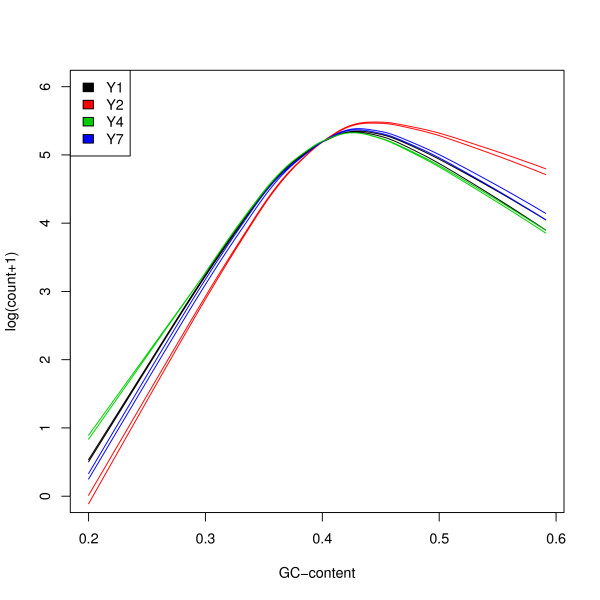
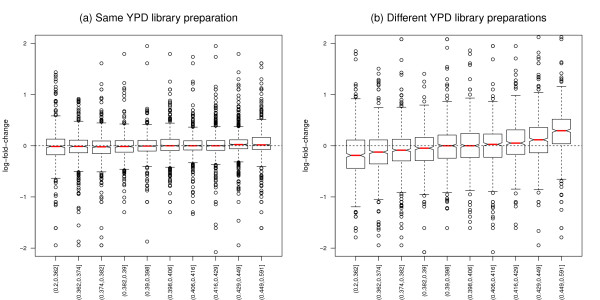
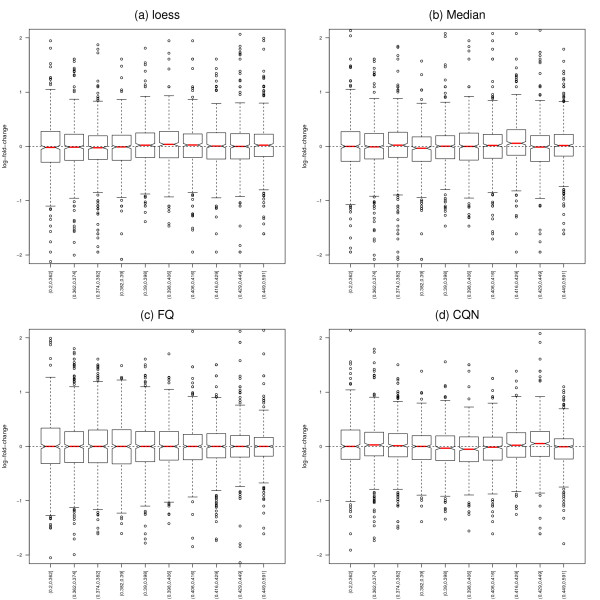
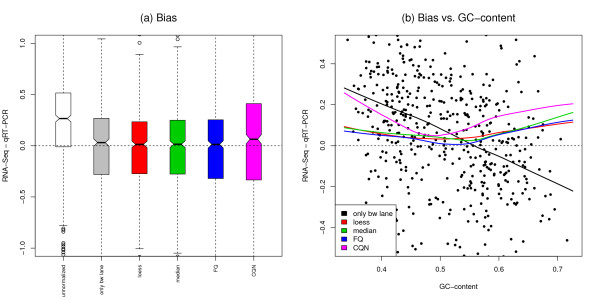
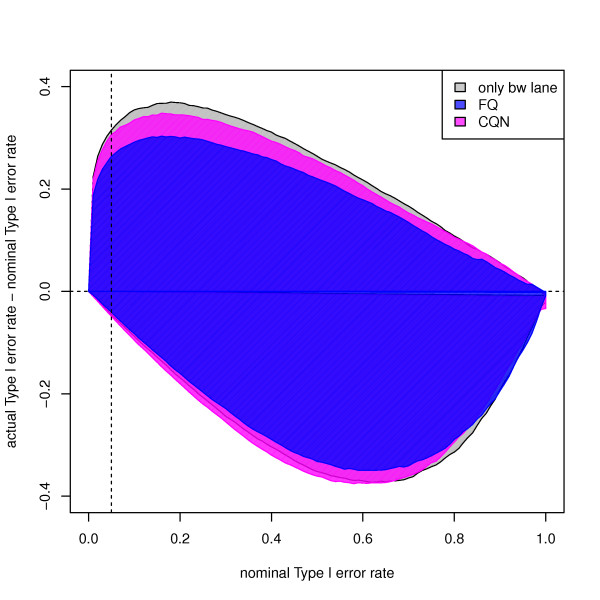
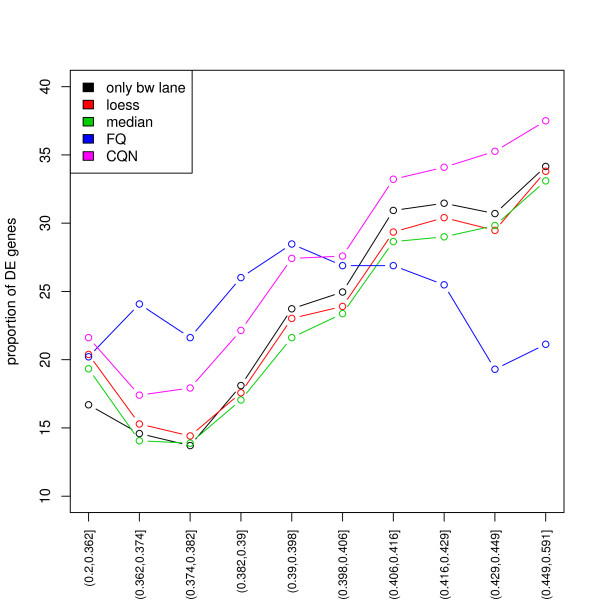
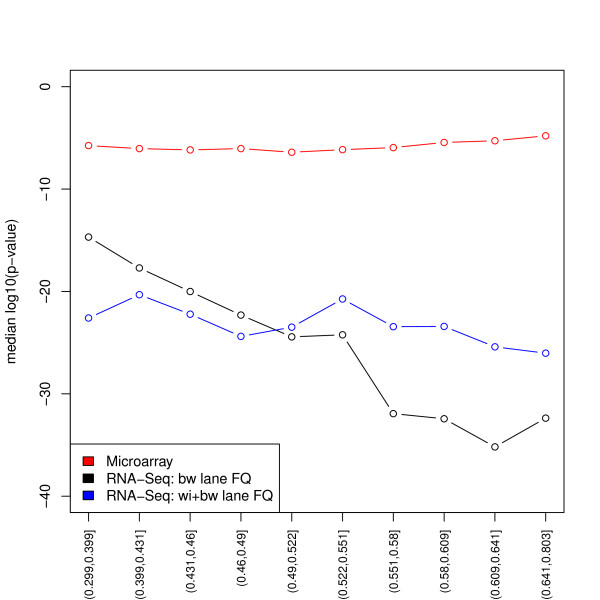
Background: Transcriptome sequencing (RNA-Seq) has become the assay of choice for high-throughput studies of gene expression. However, as is the case with microarrays, major technology-related artifacts and biases affect the resulting expression measures. Normalization is therefore essential to ensure accurate inference of expression levels and subsequent analyses thereof. Results: We focus on biases related to GC-content and demonstrate the existence of strong sample-specific GC-content effects on RNA-Seq read counts, which can substantially bias differential expression analysis. We propose three simple within-lane gene-level GC-content normalization approaches and assess their performance on two different RNA-Seq datasets, involving different species and experimental designs. Our methods are compared to state-of-the-art normalization procedures in terms of bias and mean squared error for expression fold-change estimation and in terms of Type I error and p-value distributions for tests of differential expression. The exploratory data analysis and normalization methods proposed in this article are implemented in the open-source Bioconductor R package EDASeq. Conclusions: Our within-lane normalization procedures, followed by between-lane normalization, reduce GC-content bias and lead to more accurate estimates of expression fold-changes and tests of differential expression. Such results are crucial for the biological interpretation of RNA-Seq experiments, where downstream analyses can be sensitive to the supplied lists of genes.
Overview
The claims and statistics of this paper haven’t been checked yet.
Run the check — free, no account needed. It reads the open-access text and checks the sources it cites.
Integrity signals
Registry
Cites
Statistics
Figures
Verification
Claims the paper makes
The claims and statistics of this paper haven’t been checked yet.
Run the check — free, no account needed. It reads the open-access text and checks the sources it cites.
Claims other papers make about this one
Each is checked against this paper’s own text: does it say what the citing paper says it does?
The source backs part of the claim, not all of it — or backs it for a different population, condition or comparison.
In the citing paper
“commonly used methods fornormalization (cqn, EDASeq, RUV2, sva, PEER) varied in their ability to remove these systematic biases, depending on sample complexity and initial data quality.”
From Detecting and correcting systematic variation in large-scale RNA sequencing data (2014) · cites this paper as [15]
Experimental — accuracy not yet measuredIn the citing paper
“These effects can be minimized by appropriate experimental design [51] or, alternatively, removed by batch-correction methods such as COMBAT [52] or ARSyN [20, 53].”
From A survey of best practices for RNA-seq data analysis (2016) · cites this paper as [20]
In the citing paper
“Filtering out genes that are expressed at low levels prior to differential expression analysis reduces the severity of the correction and may improve the power of detection [20].”
From A survey of best practices for RNA-seq data analysis (2016) · cites this paper as [20]
In the citing paper
“NOISeq and NOISeqBIO (the adaptation of NOISeq for biological replication) are more efficient in avoiding false positive calls at the cost of some sensitivity but perform well with different numbers of replicates [10, 20, 212].”
From A survey of best practices for RNA-seq data analysis (2016) · cites this paper as [20]
In the citing paper
“SAMseq performs well in terms of FDR but presents an acceptable sensitivity when the number of replicates is relatively high, at least 10 [20, 55, 209].”
From A survey of best practices for RNA-seq data analysis (2016) · cites this paper as [20]
In the citing paper
“Notably, neither applying GC bias correction tools (cqn14 and EDASeq15) to individual sites nor changing read counts to only use 3′-UTRs was effective at decreasing the number of inter-site false positive DEGs (Fig. 1b and Supplementary Fig. 3); in most cases, these methods actually increased the number of false positives.”
From Detecting and correcting systematic variation in large-scale RNA sequencing data (2014) · cites this paper as [15]
In the citing paper
“The application of GC content bias correction packages including cqn14 and EDASeq15 could not remove these false positives, likely because GC content bias is not the only source that contributes to bias in gene expression data.”
From Detecting and correcting systematic variation in large-scale RNA sequencing data (2014) · cites this paper as [15]
In the citing paper
“This confirms the impact of two already recognized RNA-seq latent variables, GC-content and insert size15,22, and it also identifies two more relevant contributions to technical variation, gene coverage variation and error rate.”
From Detecting and correcting systematic variation in large-scale RNA sequencing data (2014) · cites this paper as [15]
Self-check
Percentages, sums and reported differences re-computed from the paper’s own numbers.
The self-check needs the paper’s full text.
Citations
Cites
Controlling the False Discovery Rate: A Practical and Powerful Approach to Multiple Testing
Benjamini, Y., & Hochberg, Y. (1995) · Journal of the Royal Statistical Society Series B: Statistical Methodology · doi:10.1111/j.2517-6161.1995.tb02031.x · Cited by 109,482
Robinson, M. D., McCarthy, D. J., & Smyth, G. K. (2010) · Bioinformatics · doi:10.1093/bioinformatics/btp616 · Cited by 41,364
Ultrafast and memory-efficient alignment of short DNA sequences to the human genome.
Langmead, B., Trapnell, C., Pop, M., & Salzberg, S. L. (2009) · Genome Biology · doi:10.1186/gb-2009-10-3-r25 · Cited by 21,849
Differential expression analysis for sequence count data
Anders, S., & Huber, W. (2010) · Genome Biology · doi:10.1186/gb-2010-11-10-r106 · Cited by 15,581
Mapping and quantifying mammalian transcriptomes by RNA-Seq
Mortazavi, A., Williams, B. A., McCue, K., Schaeffer, L., & Wold, B. (2008) · Nature Methods · doi:10.1038/nmeth.1226 · Cited by 13,696
RNA-Seq: a revolutionary tool for transcriptomics
Wang, Z., Gerstein, M., & Snyder, M. (2009) · Nature Reviews Genetics · doi:10.1038/nrg2484 · Cited by 13,174
Smyth, G. K. (2004) · Statistical Applications in Genetics and Molecular Biology · doi:10.2202/1544-6115.1027 · Cited by 11,829
Exploration, normalization, and summaries of high density oligonucleotide array probe level data
Irizarry, R. A. (2003) · Biostatistics · doi:10.1093/biostatistics/4.2.249 · Cited by 10,603
A scaling normalization method for differential expression analysis of RNA-seq data
Robinson, M. D., & Oshlack, A. (2010) · Genome Biology · doi:10.1186/gb-2010-11-3-r25 · Cited by 7,876
Gene ontology analysis for RNA-seq: accounting for selection bias
Young, M. D., Wakefield, M. J., Smyth, G. K., & Oshlack, A. (2010) · Genome Biology · doi:10.1186/gb-2010-11-2-r14 · Cited by 7,107
Locally Weighted Regression: An Approach to Regression Analysis by Local Fitting
Cleveland, W. S., & Devlin, S. J. (1988) · Journal of the American Statistical Association · doi:10.1080/01621459.1988.10478639 · Cited by 5,893
Yang, Y., Dudoit, S., Luu, P., Lin, D., Peng, V., Ngai, J., & Speed, T. (2002) · Nucleic Acids Research · doi:10.1093/nar/30.4.e15 · Cited by 3,722
Self-citationAccurate whole human genome sequencing using reversible terminator chemistry
Bentley, D. R., Balasubramanian, S., Swerdlow, H. P., Smith, G. P., Milton, J., Brown, C. G., Hall, K. P., Evers, D. J., Barnes, C. L., Bignell, H. R., et al. (2008) · Nature · doi:10.1038/nature07517 · Cited by 3,684
RNA-seq: An assessment of technical reproducibility and comparison with gene expression arrays
Marioni, J. C., Mason, C. E., Mane, S. M., Stephens, M., & Gilad, Y. (2008) · Genome Research · doi:10.1101/gr.079558.108 · Cited by 2,771
The Transcriptional Landscape of the Yeast Genome Defined by RNA Sequencing
Nagalakshmi, U., Wang, Z., Waern, K., Shou, C., Raha, D., Gerstein, M., & Snyder, M. (2008) · Science · doi:10.1126/science.1158441 · Cited by 2,479
MAQC Consortium, Shi, L., Shi, L., Reid, L. H., Jones, W. D., Shippy, R., Warrington, J. A., Baker, S. C., Collins, P. J., de Longueville, F., et al. (2006) · Nature Biotechnology · doi:10.1038/nbt1239 · Cited by 2,126
Improving RNA-Seq expression estimates by correcting for fragment bias
Roberts, A., Trapnell, C., Donaghey, J., Rinn, J. L., & Pachter, L. (2011) · Genome Biology · doi:10.1186/gb-2011-12-3-r22 · Cited by 1,725
Bullard, J. H., Purdom, E., Hansen, K. D., & Dudoit, S. (2010) · BMC Bioinformatics · doi:10.1186/1471-2105-11-94 · Cited by 1,680
Self-citationA rapid and simple method for preparation of RNA from Saccharomyces cerevisiae
Schmitt, M. E., Brown, T. A., & Trumpower, B. L. (1990) · Nucleic Acids Research · doi:10.1093/nar/18.10.3091 · Cited by 1,344
Understanding mechanisms underlying human gene expression variation with RNA sequencing
Pickrell, J. K., Marioni, J. C., Pai, A. A., Degner, J. F., Engelhardt, B. E., Nkadori, E., Veyrieras, J.-B., Stephens, M., Gilad, Y., & Pritchard, J. K. (2010) · Nature · doi:10.1038/nature08872 · Cited by 1,256
Substantial biases in ultra-short read data sets from high-throughput DNA sequencing
Dohm, J. C., Lottaz, C., Borodina, T., & Himmelbauer, H. (2008) · Nucleic Acids Research · doi:10.1093/nar/gkn425 · Cited by 1,088
Transcriptome analysis by strand-specific sequencing of complementary DNA
Parkhomchuk, D., Borodina, T. A., Amstislavskiy, V. S., Banaru, M., Hallen, L., Krobitsch, S., Lehrach, H. R., & Солдатов, А. В. (2009) · Nucleic Acids Research · doi:10.1093/nar/gkp596 · Cited by 934
Locally Weighted Regression: An Approach to Regression Analysis by Local Fitting
Cleveland, W. S., & Devlin, S. J. (1988) · Journal of the American Statistical Association · doi:10.2307/2289282 · Cited by 854
Biases in Illumina transcriptome sequencing caused by random hexamer priming
Hansen, K. D., Brenner, S. E., & Dudoit, S. (2010) · Nucleic Acids Research · doi:10.1093/nar/gkq224 · Cited by 713
Self-citationSynthetic spike-in standards for RNA-seq experiments
Jiang, L., Schlesinger, F., Davis, C. A., Zhang, Y., Li, R., Salit, M., Gingeras, T. R., & Oliver, B. (2011) · Genome Research · doi:10.1101/gr.121095.111 · Cited by 653
Sensitive and accurate detection of copy number variants using read depth of coveragePreprint
Yoon, S. C., Xuan, Z., Makarov, V., Ye, K. Q., & Sebat, J. L. (2009) · Genome Research · doi:10.1101/gr.092981.109 · Cited by 640
Removing technical variability in RNA-seq data using conditional quantile normalization
Hansen, K. D., Irizarry, R. A., & WU, Z. (2012) · Biostatistics · doi:10.1093/biostatistics/kxr054 · Cited by 607
Transcript length bias in RNA-seq data confounds systems biology
Oshlack, A., & Wakefield, M. J. (2009) · Biology Direct · doi:10.1186/1745-6150-4-14 · Cited by 497 · cited 2×
“Another well-known selection bias in RNA-Seq is due to gene length [3,14].”
BackgroundBoeva, V., Zinovyev, A. Y., Kevin Bleakley, A., Vert, J., Janoueix‐Lerosey, I., Delattre, O., & Barillot, E. (2010) · Bioinformatics · doi:10.1093/bioinformatics/btq635 · Cited by 265
Modeling non-uniformity in short-read rates in RNA-Seq data
Li, J., Jiang, H., & Wong, W. H. (2010) · Genome Biology · doi:10.1186/gb-2010-11-5-r50 · Cited by 193
Bias detection and correction in RNA-Sequencing data
Zheng, W., Chung, L. M., & Zhao, H. (2011) · BMC Bioinformatics · doi:10.1186/1471-2105-12-290 · Cited by 169
The Bayes/Non-Bayes Compromise: A Brief Review
Good, I. J. (1992) · Journal of the American Statistical Association · doi:10.1080/01621459.1992.10475256 · Cited by 140
Impact of Chromatin Structures on DNA Processing for Genomic Analyses
Teytelman, L., Özaydın, B., Zill, O. A., Lefrançois, P., Snyder, M. P., Rine, J., & Eisen, M. B. (2009) · PLoS ONE · doi:10.1371/journal.pone.0006700 · Cited by 119
Polygenic and directional regulatory evolution across pathways in Saccharomyces
Bullard, J. H., Mostovoy, Y., Dudoit, S., & Brem, R. B. (2010) · Proceedings of the National Academy of Sciences · doi:10.1073/pnas.0912959107 · Cited by 87
Self-citationManiar, J. M., & Fire, A. Z. (2011) · Current Biology · doi:10.1016/j.cub.2011.02.019 · Cited by 80
The Bayes/Non-Bayes Compromise: A Brief Review
Good, I. J. (1992) · Journal of the American Statistical Association · doi:10.2307/2290192 · Cited by 21
Rnnotator: an automated de novo transcriptome assembly pipeline from stranded RNA-Seq reads
Martin, J., Bruno, V. M., Fang, Z., Meng, X., Blow, M., Zhang, T., Sherlock, G., Snyder, M., & Wang, Z. (2010) · BMC Genomics · doi:10.1186/1471-2164-11-663
Self-citation
Cited by
Sorted by citations
Moderated estimation of fold change and dispersion for RNA-seq data with DESeq2
Love, M. I., Huber, W., & Anders, S. (2014) · Genome Biology · doi:10.1186/s13059-014-0550-8 · Cited by 95,106
TCGAbiolinks: an R/Bioconductor package for integrative analysis of TCGA data
Colaprico, A., Silva, T. C., Olsen, C., Garofano, L., Cava, C., Garolini, D., Sabedot, T. S., Malta, T. M., Pagnotta, S. M., Castiglioni, I., et al. (2015) · Nucleic Acids Research · doi:10.1093/nar/gkv1507 · Cited by 4,205
A survey of best practices for RNA-seq data analysis
Conesa, A., Madrigal, P., Tarazona, S., Gomez-Cabrero, D., Cervera, A., McPherson, A., Szcześniak, M. W., Gaffney, D. J., Elo, L. L., Zhang, X., et al. (2016) · Genome Biology · doi:10.1186/s13059-016-0881-8 · Cited by 2,794
Normalization of RNA-seq data using factor analysis of control genes or samples
Risso, D., Ngai, J., Speed, T. P., & Dudoit, S. (2014) · Nature Biotechnology · doi:10.1038/nbt.2931 · Cited by 2,052
Self-citationRNA sequencing: the teenage years
Stark, R., Grzelak, M., & Hadfield, J. (2019) · Nature Reviews Genetics · doi:10.1038/s41576-019-0150-2 · Cited by 2,041
Metadata
- Authors
- Risso, D., Schwartz, K., Sherlock, G., & Dudoit, S.
- Affiliations
- University of Padua (IT)
- Stanford University (US)
- University of California, Berkeley (US)
- Corresponding author
- Dudoit, Sandrine
- Venue
- BMC Bioinformatics
- Published
- 2011-12
- Volume
- 12
- Issue
- 1
- Pages
- 480-480
- ISSN
- 1471-2105 (ISSN-L)
- PMC
- PMC3315510
- OpenAlex
- W2168342464
- Cited by
- 867
- References
- 35
- Citations by year
- 2026: 29 · 2025: 58 · 2024: 83 · 2023: 80 · 2022: 89 · 2021: 97 · 2020: 74 · 2019: 55 · 2018: 60 · 2017: 49 · 2016: 59 · 2015: 38 · 2014: 48 · 2013: 30 · 2012: 18
- FWCI
- 12.48
- Type
- journal article
- Language
- en
- Open access
- gold
- doi.org
- Licence
- cc-by
- Locations
- BMC Bioinformatics (publishedVersion, cc-by)
- Europe PMC (PubMed Central) (publishedVersion, cc-by)
- PubMed Central (publishedVersion, cc-by)
- PubMed (publishedVersion)
- Collection of Biostatistics Research Archive (submittedVersion)
- DOAJ (DOAJ: Directory of Open Access Journals) (submittedVersion, cc-by-sa)
- eScholarship (California Digital Library) (submittedVersion)
- Padua Research Archive (University of Padova) (submittedVersion, cc-by)
- Funders
- Università degli Studi di Padova
- National Institutes of Health
- National Human Genome Research Institute (R01 HG03468, R01HG003468)
- National Institute of Allergy and Infectious Diseases (R01AI077737)
- Topics
- Life Sciences › Biochemistry, Genetics and Molecular Biology › Molecular Biology › Gene expression and cancer classification
- Life Sciences › Biochemistry, Genetics and Molecular Biology › Molecular Biology › Genomics and Phylogenetic Studies
- Life Sciences › Biochemistry, Genetics and Molecular Biology › Molecular Biology › Single-cell and spatial transcriptomics
- Keywords
- RNA-seq, differential gene expression, gene expression bias, transcriptome sequencing
- MeSH terms
- Base Composition, Saccharomyces cerevisiae, Sequence Analysis, RNA, Gene Expression Profiling, Transcriptome
About these checks
Registry, retraction, Cites and statistics results are computed, not judged, with one exception: a printed reference that no index lists is read once by a model before it counts as a citation error. Claims are extracted by a model and kept only when their quote appears verbatim in the text; each cited source is then checked, with a model’s help, for whether it says what the claim relies on. Those verdicts can be wrong — read the claim’s quote and the cited source before relying on one.
Statistics and arithmetic are recomputed, not judged.
Confidence bands are shown only for fields calibrated on our annotated test set. None is calibrated yet, so no band is shown.
What counts as a claim ›How we measure confidence ›How we check this ›
Are you an author, or do you see a problem with this page? Request a review
