

A new advance in alternative splicing databases: from catalogue to detailed analysis of regulation of expression and function of human alternative splicing variants
Open accessThe DOI matches its Crossref record; 51 of the 51 references it cites were found in a registry or an index.
Abstract
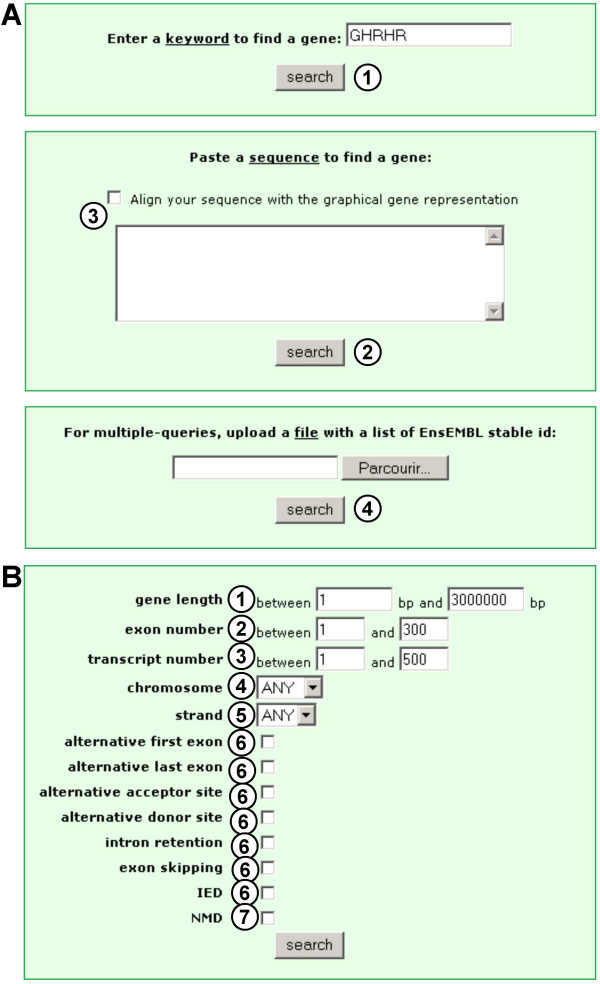
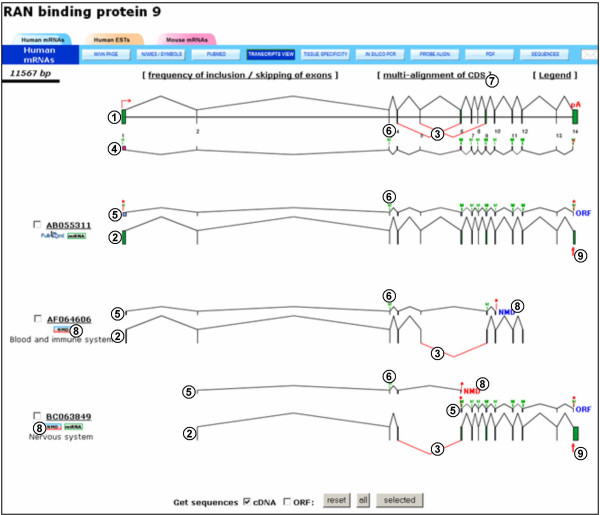
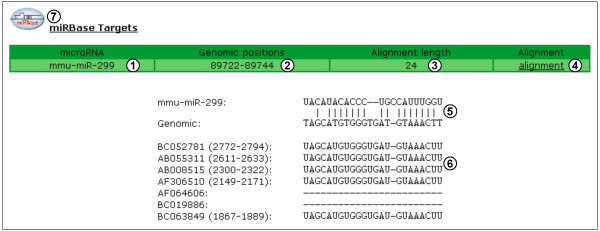
Background: Most human genes produce several transcripts with different exon contents by using alternative promoters, alternative polyadenylation sites and alternative splice sites. Much effort has been devoted to describing known gene transcripts through the development of numerous databases. Nevertheless, owing to the diversity of the transcriptome, there is a need for interactive databases that provide information about the potential function of each splicing variant, as well as its expression pattern. Description: After setting up a database in which human and mouse splicing variants were compiled, we developed tools (1) to predict the production of protein isoforms from these transcripts, taking account of the presence of open reading frames and mechanisms that could potentially eliminate transcripts and/or inhibit their translation, i.e. nonsense-mediated mRNA decay and microRNAs; (2) to support studies of the regulation of transcript expression at multiple levels, including transcription and splicing, particularly in terms of tissue specificity; and (3) to assist in experimental analysis of the expression of splicing variants. Importantly, analyses of all features from transcript metabolism to functional protein domains were integrated in a highly interactive, user-friendly web interface that allows the functional and regulatory features of gene transcripts to be assessed rapidly and accurately. Conclusion: In addition to identifying the transcripts produced by human and mouse genes, fast DB http://www.fast-db.com provides tools for analyzing the putative functions of these transcripts and the regulation of their expression. Therefore, fast DB has achieved an advance in alternative splicing databases by providing resources for the functional interpretation of splicing variants for the human and mouse genomes. Because gene expression studies are increasingly employed in clinical analyses, our web interface has been designed to be as user-friendly as possible and to be readily searchable and intelligible at a glance by the whole biomedical community.
Overview
The claims and statistics of this paper haven’t been checked yet.
Free: it reads the open-access text and checks the first 5 claims that cite a source we can check. Create a free account to check every claim.
Integrity signals
Registry
Cites
Statistics
Figures
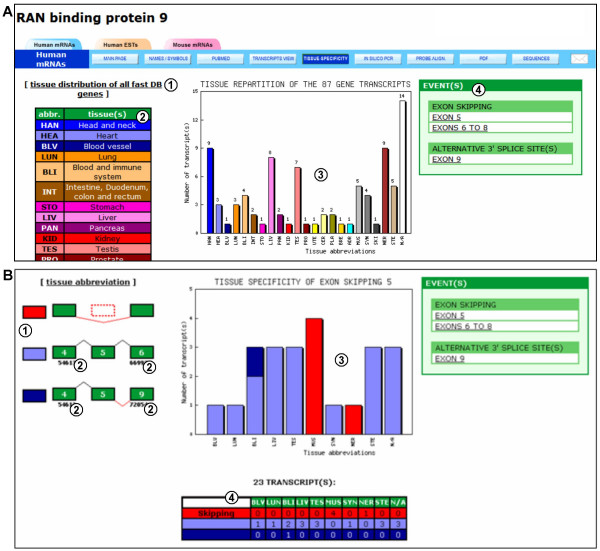
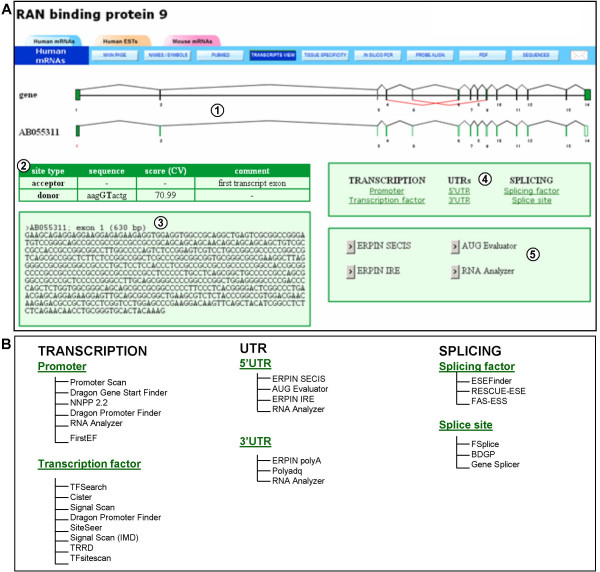
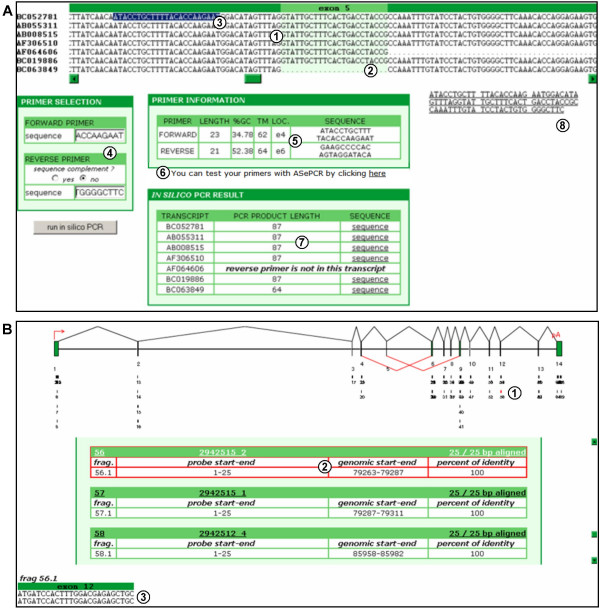
Verification
Claims the paper makes
The claims and statistics of this paper haven’t been checked yet.
Free: it reads the open-access text and checks the first 5 claims that cite a source we can check. Create a free account to check every claim.
Claims other papers make about this one
Each is checked against this paper’s own text: does it say what the citing paper says it does?
The source backs part of the claim, not all of it — or backs it for a different population, condition or comparison.
In the citing paper
“with variation in splicing patterns reported in different tissues or at different developmental stages.”
From The MIQE guidelines: minimum information for publication of quantitative real-time PCR experiments (2009) · cites this paper as [31]
Experimental — accuracy not yet measuredThe source backs part of the claim, not all of it — or backs it for a different population, condition or comparison.
In the citing paper
“The transcripts of most human genes and many genes in other multicellular organisms are alternatively spliced (31,32 ),”
From The MIQE guidelines: minimum information for publication of quantitative real-time PCR experiments (2009) · cites this paper as [31]
Experimental — accuracy not yet measuredThe cited source says what the claim attributes to it.
In the citing paper
“these splicing variants specify alternative protein isoforms”
From The MIQE guidelines: minimum information for publication of quantitative real-time PCR experiments (2009) · cites this paper as [31]
Self-check
Percentages, sums and reported differences re-computed from the paper’s own numbers.
The self-check needs the paper’s full text.
Citations
Cites
EMBOSS: the European molecular biology open software suite.
Rice, P., Longden, I., & Bleasby, A. (2000) · Trends in Genetics · doi:10.1016/s0168-9525(00)02024-2 · Cited by 9,466
miRBase: microRNA sequences, targets and gene nomenclature
Griffiths-Jones, S. (2006) · Nucleic Acids Research · doi:10.1093/nar/gkj112 · Cited by 3,950 · cited 1×
“Several databases based on different algorithms able to predict miRNA targets have been constructed [12-14].”
BackgroundPrinciples of MicroRNA–Target Recognition
Brennecke, J., Stark, A., Russell, R. B., & Cohen, S. M. (2005) · PLoS Biology · doi:10.1371/journal.pbio.0030085 · Cited by 2,378 · cited 1×
“These mechanisms include nonsense-mediated mRNA decay (NMD) [6-8] and targeting of microRNAs (miRNA) [9-11].”
BackgroundPfam: clans, web tools and services
Finn, R. D. (2006) · Nucleic Acids Research · doi:10.1093/nar/gkj149 · Cited by 2,302
Entrez Gene: gene-centered information at NCBI
Maglott, D., Ostell, J., Pruitt, K. D., & Tatusova, T. (2011) · Nucleic Acids Research · doi:10.1093/nar/gkq1237 · Cited by 2,094
The UCSC Genome Browser Database: update 2006
Hinrichs, A. S. (2006) · Nucleic Acids Research · doi:10.1093/nar/gkj144 · Cited by 1,646 · cited 1×
“"Full length" mRNAs and expressed sequence tags (ESTs) came from the UCSC website as available in January 2006 [ 19 ] and "partial" mRNAs were downloaded from the NCBI website [20].”
MethodScansite 2.0: proteome-wide prediction of cell signaling interactions using short sequence motifs
Obenauer, J. C. (2003) · Nucleic Acids Research · doi:10.1093/nar/gkg584 · Cited by 1,596
Genome-Wide Survey of Human Alternative Pre-mRNA Splicing with Exon Junction Microarrays
Johnson, J. M., Castle, J., Garrett-Engele, P., Kan, Z., Loerch, P. M., Armour, C. D., Santos, R., Schadt, E. E., Stoughton, R., & Shoemaker, D. D. (2003) · Science · doi:10.1126/science.1090100 · Cited by 1,418 · cited 1×
“Of the 18,008 human genes present in our database, 11,071 (61%) were estimated to undergo AS. This result is consistent with other studies, which estimate that 40– 75% of human genes are alternatively spliced [1-3, 28 ,29].”
ResultFunction of alternative splicing
Stamm, S., Ben-Ari, S., Rafalska, I., Tang, Y., Zhang, Z., Toiber, D., Thanaraj, T. A., & Soreq, H. (2005) · Gene · doi:10.1016/j.gene.2004.10.022 · Cited by 1,377 · cited 4×
“This result is consistent with other studies, which estimate that 40– 75% of human genes are alternatively spliced [1-3,28,29].”
BackgroundResultInfluentialPre-mRNA splicing and human disease
Faustino, N. A., & Cooper, T. A. (2003) · Genes & Development · doi:10.1101/gad.1048803 · Cited by 1,256
Lewis, B. P., Green, R. E., & Brenner, S. E. (2003) · Proceedings of the National Academy of Sciences · doi:10.1073/pnas.0136770100 · Cited by 1,067 · cited 2×
“These mechanisms include nonsense-mediated mRNA decay (NMD) [6-8] and targeting of microRNAs (miRNA) [9-11].”
BackgroundResultSMART 5: domains in the context of genomes and networks
Letunic, I. (2006) · Nucleic Acids Research · doi:10.1093/nar/gkj079 · Cited by 978 · cited 1×
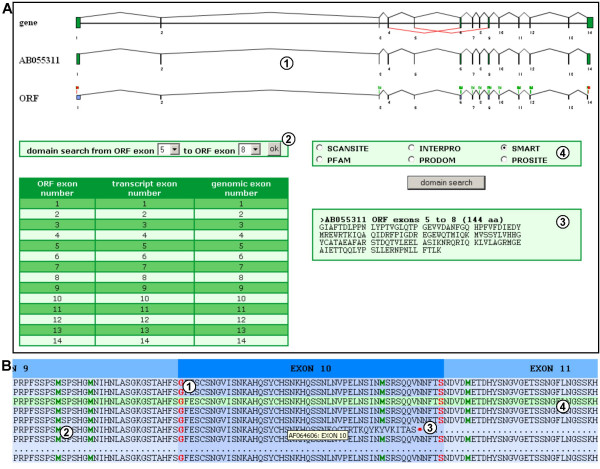
“Once the choice of exon is validated, the corresponding amino acid sequence is displayed (Figure 3A, item 3), and the user can select an external website to predict the functional domain encoded within the selected exon [37-42] (Figure 3A, item 4).”
BackgroundHulo, N. (2006) · Nucleic Acids Research · doi:10.1093/nar/gkj063 · Cited by 971 · cited 1×
“Once the choice of exon is validated, the corresponding amino acid sequence is displayed (Figure 3A, item 3), and the user can select an external website to predict the functional domain encoded within the selected exon [37-42] (Figure 3A, item 4).”
BackgroundEntrez Gene: gene-centered information at NCBI
Maglott, D. (2004) · Nucleic Acids Research · doi:10.1093/nar/gki031 · Cited by 748 · cited 1×
“"Full length" mRNAs and expressed sequence tags (ESTs) came from the UCSC website as available in January 2006 [19] and "partial" mRNAs were downloaded from the NCBI website [ 20 ].”
MethodA Computer Program for Aligning a cDNA Sequence with a Genomic DNA Sequence
Florea, L., Hartzell, G., Zhang, Z., Rubin, G. M., & Miller, W. (1998) · Genome Research · doi:10.1101/gr.8.9.967 · Cited by 729 · cited 1×
“To define exon/intron structures and alternative splicing events, we aligned transcript sequences against genomic sequence using sim4 [18].”
MethodTarBase: A comprehensive database of experimentally supported animal microRNA targets
SETHUPATHY, P., CORDA, B., & HATZIGEORGIOU, A. G. (2006) · RNA · doi:10.1261/rna.2239606 · Cited by 717 · cited 1×
“Several databases based on different algorithms able to predict miRNA targets have been constructed [ 12-14 ].”
BackgroundMicroRNA function: Multiple mechanisms for a tiny RNA?: FIGURE 1.
PILLAI, R. S. (2005) · RNA · doi:10.1261/rna.2248605 · Cited by 681
Genome-wide detection of alternative splicing in expressed sequences of human genes
Modrek, B. (2001) · Nucleic Acids Research · doi:10.1093/nar/29.13.2850 · Cited by 679 · cited 1×
“This result is consistent with other studies, which estimate that 40– 75% of human genes are alternatively spliced [1-3,28,29].”
ResultVitale, A. V., Tan, H., & Jin, P. (2011) · Journal of Nucleic Acids Investigation · doi:10.4081/jnai.2011.2236 · Cited by 623
Variation in alternative splicing across human tissues
Yeo, G., Holste, D., Kreiman, G., & Burge, C. B. (2004) · Genome Biology · doi:10.1186/gb-2004-5-10-r74 · Cited by 584 · cited 1×
“Global gene expression, promoter use and SV expression can be specific to a tissue or a group of tissues [15,16].”
BackgroundInterPro, progress and status in 2005
Mulder, N. J. (2004) · Nucleic Acids Research · doi:10.1093/nar/gki106 · Cited by 546
Alternative splicing and genome complexity
Brett, D., Pospisil, H., Valcárcel, J., Reich, J., & Bork, P. (2002) · Nature Genetics · doi:10.1038/ng803 · Cited by 536 · cited 2×
“Of the 18,008 human genes present in our database, 11,071 (61%) were estimated to undergo AS. This result is consistent with other studies, which estimate that 40– 75% of human genes are alternatively spliced [ 1-3 ,28,29].”
BackgroundResultRegulation of mRNA translation by 5′- and 3′-UTR-binding factors
Wilkie, G. S., Dickson, K. S., & Gray, N. K. (2003) · Trends in Biochemical Sciences · doi:10.1016/s0968-0004(03)00051-3 · Cited by 512 · cited 1×
“This enables either promoter, transcription factor or splicing factor binding site to be predicted, or splice sites strengths to be scored, and for 5' and 3' UTR sequences to be analyzed, since RNA sequences regulating mRNA metabolism are usually located in UTRs [44].”
BackgroundMechanistic links between nonsense-mediated mRNA decay and pre-mRNA splicing in mammalian cells
Lejeune, F., & Maquat, L. E. (2005) · Current Opinion in Cell Biology · doi:10.1016/j.ceb.2005.03.002 · Cited by 430 · cited 2×
“a stop codon more than 50 nucleotides upstream of any exon/ exon junction [6, 7 ].”
BackgroundGenome-wide detection of tissue-specific alternative splicing in the human transcriptome
Xu, Q. (2002) · Nucleic Acids Research · doi:10.1093/nar/gkf492 · Cited by 415 · cited 2×
“Global gene expression, promoter use and SV expression can be specific to a tissue or a group of tissues [15,16].”
BackgroundPrediction and validation of microRNAs and their targets
Bentwich, I. (2005) · FEBS Letters · doi:10.1016/j.febslet.2005.09.040 · Cited by 369 · cited 2×
“MiRNAs are 21- to 25-nucleotidelong RNAs that can either induce the degradation or suppress the translation of mRNAs, depending on whether they match their targets perfectly or approximately [9].”
BackgroundThe ProDom database of protein domain families: more emphasis on 3D
Bru, C. (2004) · Nucleic Acids Research · doi:10.1093/nar/gki034 · Cited by 351
Integrative Annotation of 21,037 Human Genes Validated by Full-Length cDNA Clones
Imanishi, T., Itoh, T., Suzuki, Y., O'Donovan, C., Fukuchi, S., Koyanagi, K. O., Barrero, R. A., Tamura, T., Yamaguchi-Kabata, Y., Tanino, M., et al. (2004) · PLoS Biology · doi:10.1371/journal.pbio.0020162 · Cited by 332
Birney, E. (2006) · Nucleic Acids Research · doi:10.1093/nar/gkj133 · Cited by 310
The Use of CLUSTAL W and CLUSTAL X for Multiple Sequence Alignment
Aiyar, A. (2003) · Bioinformatics Methods and Protocols · doi:10.1385/1-59259-192-2:221 · Cited by 261 · cited 1×
“Each transcript sequence within the alignment region was aligned with the genomic sequence using Clustalw [25], and differences between genomic and transcript sequences were highlighted in red in order to predict whether they potentially affect miRNA/transcript interaction.”
MethodGeneration of protein isoform diversity by alternative initiation of translation at non‐AUG codons
Touriol, C., Bornes, S., Bonnal, S., Audigier, S., Prats, H., Prats, A., & Vagner, S. (2003) · Biology of the Cell · doi:10.1016/s0248-4900(03)00033-9 · Cited by 257 · cited 1×
“Methionines also indicate potential translation initiation sites, as translation can be initiated from downstream in-frame AUG codons [36].”
BackgroundIncrease of functional diversity by alternative splicing
Kriventseva, E. V., Koch, I., Apweiler, R., Vingron, M., Bork, P., Gelfand, M. S., & Sunyaev, S. (2003) · Trends in Genetics · doi:10.1016/s0168-9525(03)00023-4 · Cited by 227 · cited 2×
“This result is consistent with other studies, which estimate that 40– 75% of human genes are alternatively spliced [1-3,28,29].”
BackgroundResultASD: a bioinformatics resource on alternative splicing
Stamm, S. (2006) · Nucleic Acids Research · doi:10.1093/nar/gkj031 · Cited by 223 · cited 3×
“About 40% of human genes produce at least five different splicing variants (SVs) and up to 10% of them produce more than 10 alternate transcripts each [4,5].”
BackgroundResultmiRNAMap: genomic maps of microRNA genes and their target genes in mammalian genomes
Hsu, P. W. C. (2006) · Nucleic Acids Research · doi:10.1093/nar/gkj135 · Cited by 214 · cited 2×
“Among all human cDNAs, 13% (14,667 of 112,609) have at least one transcript labeled "NMD" [14,667 (31”
BackgroundAn unappreciated role for RNA surveillance
Hillman, R. T., Green, R. E., & Brenner, S. E. (2004) · Genome Biology · doi:10.1186/gb-2004-5-2-r8 · Cited by 193 · cited 2×
“These mechanisms include nonsense-mediated mRNA decay (NMD) [6-8] and targeting of microRNAs (miRNA) [9-11].”
BackgroundASAP: the Alternative Splicing Annotation Project
Lee, C. (2003) · Nucleic Acids Research · doi:10.1093/nar/gkg029 · Cited by 153 · cited 2×
“To try to correlate AS events with their functional consequences, some AS databases integrate protein sequences to annotate splicing events [47,48], while others indicate translational product start positions, end positions and amino acid sequences corresponding to some SVs [5,31,49-51].”
BackgroundThe ASAP II database: analysis and comparative genomics of alternative splicing in 15 animal species
Kim, N., Alekseyenko, A. V., Roy, M., & Lee, C. (2006) · Nucleic Acids Research · doi:10.1093/nar/gkl884 · Cited by 135 · cited 1×
“These results are highly consistent with those of other databases [5,30-35].”
ResultBrudno, M. (2001) · Nucleic Acids Research · doi:10.1093/nar/29.11.2338 · Cited by 119 · cited 1×
“Several studies have identified tissue-specific AS events [15,54], and some AS databases present EST tissue-expression histograms [49,50].”
BackgroundThe complexity of the mammalian transcriptome
Gustincich, S., Sandelin, A., Plessy, C., Katayama, S., Simone, R., Lazarevic, D., Hayashizaki, Y., & Carninci, P. (2006) · The Journal of Physiology · doi:10.1113/jphysiol.2006.115568 · Cited by 97 · cited 1×
“These results are highly consistent with those of other databases [5,30-35].”
ResultFAST DB: a website resource for the study of the expression regulation of human gene products
de la Grange, P. (2005) · Nucleic Acids Research · doi:10.1093/nar/gki738 · Cited by 95 · cited 4×
“About 40% of human genes produce at least five different splicing variants (SVs) and up to 10% of them produce more than 10 alternate transcripts each [4,5].”
BackgroundInfluentialHOLLYWOOD: a comparative relational database of alternative splicing
Holste, D., Huo, G., Tung, V., & Burge, C. B. (2005) · Nucleic Acids Research · doi:10.1093/nar/gkj048 · Cited by 84 · cited 3×
“Several databases based on different algorithms able to predict miRNA targets have been constructed [ 12-14 ].”
BackgroundMethodResultInfluentialAlternative splicing in human transcriptome: Functional and structural influence on proteins
Yura, K., Shionyu, M., Hagino, K., Hijikata, A., Hirashima, Y., Nakahara, T., Eguchi, T., Shinoda, K., Yamaguchi, A., Takahashi, K.-I., et al. (2006) · Gene · doi:10.1016/j.gene.2006.05.015 · Cited by 76 · cited 1×
“The next objective in the development of fast DB will be to integrate structural protein domain analysis, as this kind of domain has been shown to be altered by AS [2,53].”
BackgroundECgene: genome annotation for alternative splicing
Kim, P., Kim, N., Lee, Y., Kim, B., Shin, Y., & Lee, S. (2004) · Nucleic Acids Research · doi:10.1093/nar/gki118 · Cited by 66 · cited 2×
“To try to correlate AS events with their functional consequences, some AS databases integrate protein sequences to annotate splicing events [47,48], while others indicate translational product start positions, end positions and amino acid sequences corresponding to some SVs [5,31,49-51].”
BackgroundSYSTERS, GeneNest, SpliceNest: exploring sequence space from genome to protein
Krause, A., Haas, S. A., Coward, E., & Vingron, M. (2002) · Nucleic Acids Research · doi:10.1093/nar/30.1.299 · Cited by 64
Strengths and weaknesses of EST-based prediction of tissue-specific alternative splicing
Gupta, S., Zink, D., Korn, B., Vingron, M., & Haas, S. A. (2004) · BMC Genomics · doi:10.1186/1471-2164-5-72 · Cited by 51
ECgene: an alternative splicing database update
Lee, Y., Lee, Y., Kim, B., Shin, Y., Nam, S., Kim, N., Kim, N., Chung, W., Kim, J., & Lee, S. (2006) · Nucleic Acids Research · doi:10.1093/nar/gkl992 · Cited by 51 · cited 2×
“To try to correlate AS events with their functional consequences, some AS databases integrate protein sequences to annotate splicing events [47,48], while others indicate translational product start positions, end positions and amino acid sequences corresponding to some SVs [5,31,49-51].”
BackgroundTexier, V. L., Riethoven, J.-J. M., Kumanduri, V., Gopalakrishnan, C., Lopez, F., Gautheret, D., & Thanaraj, T. A. (2006) · BMC Bioinformatics · doi:10.1186/1471-2105-7-169 · Cited by 50
Nagasaki, H., Arita, M., Nishizawa, T., Suwa, M., & Gotoh, O. (2006) · Bioinformatics · doi:10.1093/bioinformatics/btl067 · Cited by 43 · cited 3×
“To try to correlate AS events with their functional consequences, some AS databases integrate protein sequences to annotate splicing events [47,48], while others indicate translational product start positions, end positions and amino acid sequences corresponding to some SVs [5,31,49-51].”
BackgroundResultHuang, H., Horng, J., Lee, C.-C., & Liu, B.-J. (2003) · Genome biology · doi:10.1186/gb-2003-4-4-r29 · Cited by 39 · cited 1×
“To do that, fast DB integrates information and tools for predicting the functional consequences of AS. Several other databases have assembled protein information or information regarding AS. To try to correlate AS events with their functional consequences, some AS databases integrate protein sequences to annotate spli…”
BackgroundEDAS—A database of alternatively spliced human genes
Nurtdinov, R., Neverov, A. D., Malko, D. B., Kosmodem’yanskii, I. A., Ermakova, E. O., Ramensky, V. E., Mironov, A. A., & Gelfand, M. S. (2006) · BIOPHYSICS · doi:10.1134/s0006350906040026 · Cited by 11 · cited 1×
“To try to correlate AS events with their functional consequences, some AS databases integrate protein sequences to annotate splicing events [47,48], while others indicate translational product start positions, end positions and amino acid sequences corresponding to some SVs [5,31,49-51].”
BackgroundASePCR: alternative splicing electronic RT-PCR in multiple tissues and organs
Kim, N., Lim, D., Lee, S., & Kim, H. (2005) · Nucleic Acids Research · doi:10.1093/nar/gki407 · Cited by 10 · cited 1×
“Fast DB also provides a link to ASePCR [46] that displays the predicted PCR products expected in various tissues.”
Background
Cited by
The MIQE guidelines: minimum information for publication of quantitative real-time PCR experiments
Bustin, S. A., Benes, V., Garson, J. A., Hellemans, J., Huggett, J., Kubista, M., Mueller, R., Nolan, T., Pfaffl, M. W., Shipley, G. L., et al. (2009) · Clinical Chemistry · doi:10.1373/clinchem.2008.112797 · Cited by 16,303
Function of alternative splicing
Stamm, S., Ben-Ari, S., Rafalska, I., Tang, Y., Zhang, Z., Toiber, D., Thanaraj, T. A., & Soreq, H. (2005) · Gene · doi:10.1016/j.gene.2004.10.022 · Cited by 1,377
Function of alternative splicing
Kelemen, O., Convertini, P., Zhang, Z., Wen, Y., Shen, M., Falaleeva, M., & Stamm, S. (2013) · Gene · doi:10.1016/j.gene.2012.07.083 · Cited by 743
“…http://avatar.iecs.fcu.edu.tw/ (Hsu et al., 2005) FAST DB Computationally generated from EST and mRNA Human and mouse http://www.fast-db.com/ (de la Grange et al., 2007) (Lerivray et al., 2006) H-DBAS Human-transcriptome database for alternative splicing (based on H-invatational full-length cDNAs)…”
Controlling cholesterol synthesis beyond 3-hydroxy-3-methylglutaryl-CoA reductase (HMGCR)
Sharpe, L. J., & Brown, A. J. (2013) · Journal of Biological Chemistry · doi:10.1074/jbc.r113.479808 · Cited by 382
Cotranscriptional exon skipping in the genotoxic stress response
Dutertre, M., Sanchez, G., De Cian, M.-C., Barbier, J., Dardenne, E., Gratadou, L., Dujardin, G., Le Jossic-Corcos, C., Corcos, L., & Auboeuf, D. (2010) · Nature Structural & Molecular Biology · doi:10.1038/nsmb.1912 · Cited by 160
Self-citation
Metadata
- Authors
- de la Grange, P., Dutertre, M., Correa, M., & Auboeuf, D.
- Affiliations
- Inserm (FR)
- Corresponding author
- Auboeuf, Didier
- Venue
- BMC Bioinformatics
- Published
- 2007-06-04
- Volume
- 8
- Issue
- 1
- Pages
- 180-180
- ISSN
- 1471-2105 (ISSN-L)
- PMC
- PMC1904244
- OpenAlex
- W2140397282
- Cited by
- 78
- References
- 51
- Citations by year
- 2025: 1 · 2023: 5 · 2022: 3 · 2021: 6 · 2020: 1 · 2019: 6 · 2018: 2 · 2017: 2 · 2016: 8 · 2015: 2 · 2014: 1 · 2013: 7 · 2012: 7
- FWCI
- 2.65
- Type
- journal article
- Language
- en
- Open access
- gold
- doi.org
- Licence
- cc-by
- Locations
- BMC Bioinformatics (publishedVersion, cc-by)
- Europe PMC (PubMed Central) (publishedVersion, cc-by)
- PubMed Central (publishedVersion, cc-by)
- PubMed (publishedVersion)
- DOAJ (DOAJ: Directory of Open Access Journals) (submittedVersion)
- Funders
- Institut National de la Santé et de la Recherche Médicale
- Topics
- Life Sciences › Biochemistry, Genetics and Molecular Biology › Molecular Biology › RNA Research and Splicing
- Life Sciences › Biochemistry, Genetics and Molecular Biology › Molecular Biology › Genomics and Phylogenetic Studies
- Life Sciences › Biochemistry, Genetics and Molecular Biology › Cancer Research › Cancer-related molecular mechanisms research
- Keywords
- alternative splicing, splice variants, transcriptome database, nonsense-mediated mRNA decay, microRNA, alternative promoters, alternative polyadenylation, tissue-specific gene expression, transcript regulation, web interface
- MeSH terms
- Animals, Chromosome Mapping, Database Management Systems, Gene Expression Regulation, Humans, Transcription Factors, Genetic Variation, Information Storage and Retrieval, Proteome, RNA Splice Sites, Databases, Genetic, Mice
About these checks
Registry, retraction, Cites and statistics results are computed, not judged, with one exception: a printed reference that no index lists is read once by a model before it counts as a citation error. Claims are extracted by a model and kept only when their quote appears verbatim in the text; each cited source is then checked, with a model’s help, for whether it says what the claim relies on. Those verdicts can be wrong — read the claim’s quote and the cited source before relying on one.
Statistics and arithmetic are recomputed, not judged.
Confidence bands are shown only for fields calibrated on our annotated test set. None is calibrated yet, so no band is shown.
What counts as a claim ›How we measure confidence ›How we check this ›
Are you an author, or do you see a problem with this page? Request a review
Data sources
Bibliographic data: Semantic Scholar, OpenAlex, Crossref.
Contains information from the Semantic Scholar Academic Graph Datasets, made available under the ODC Attribution License (ODC-BY 1.0).
Semantic Scholar’s data is described in: Kinney, R., et al. (2023). The Semantic Scholar Open Data Platform. arXiv:2301.10140.
