

The DOI matches its Crossref record; 76 of the 76 references it cites were found in a registry or an index.
Experimental evolution with E. coli in diverse resource environments. I. Fluctuating environments promote divergence of replicate populations
Open accessAbstract
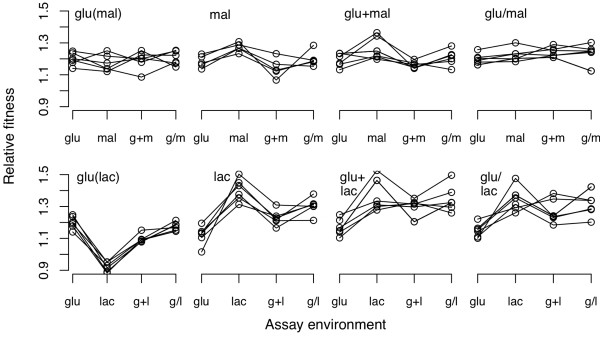
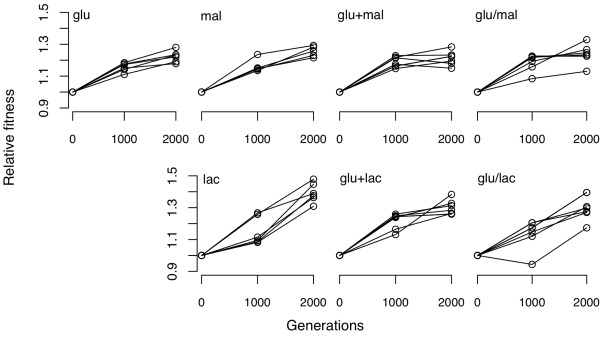
BACKGROUND: Environmental conditions affect the topology of the adaptive landscape and thus the trajectories followed by evolving populations. For example, a heterogeneous environment might lead to a more rugged adaptive landscape, making it more likely that replicate populations would evolve toward distinct adaptive peaks, relative to a uniform environment. To date, the influence of environmental variability on evolutionary dynamics has received relatively little experimental study. RESULTS: We report findings from an experiment designed to test the effects of environmental variability on the adaptation and divergence of replicate populations of E. coli. A total of 42 populations evolved for 2000 generations in 7 environmental regimes that differed in the number, identity, and presentation of the limiting resource. Regimes were organized in two sets, having the sugars glucose and maltose singly and in combination, or glucose and lactose singly and in combination. Combinations of sugars were presented either simultaneously or as temporally fluctuating resource regimes. This design allowed us to compare the effects of resource identity and presentation on the evolutionary trajectories followed by replicate populations. After 2000 generations, the fitness of all populations had increased relative to the common ancestor, but to different extents. Populations evolved in glucose improved the least, whereas populations evolving in maltose or lactose increased the most in their respective sets. Among-population divergence also differed across regimes, with variation higher in those groups that evolved in fluctuating environments than in those that faced constant resource regimens. This divergence under the fluctuating conditions increased between 1000 and 2000 generations, consistent with replicate populations evolving toward distinct adaptive peaks. CONCLUSIONS: These results support the hypothesis that environmental heterogeneity can give rise to more rugged adaptive landscapes, which in turn promote evolutionary diversification. These results also demonstrate that this effect depends on the form of environmental heterogeneity, with greater divergence when the pairs of resources fluctuated temporally rather than being presented simultaneously.
Overview
The claims and statistics of this paper haven’t been checked yet.
Run the check — free, no account needed. It reads the open-access text and checks the sources it cites.
Integrity signals
Registry
Cites
Statistics
Figures
Verification
Claims the paper makes
The claims and statistics of this paper haven’t been checked yet.
Run the check — free, no account needed. It reads the open-access text and checks the sources it cites.
Claims other papers make about this one
Each is checked against this paper’s own text: does it say what the citing paper says it does?
In the citing paper
“Besides insights into co-evolutionary behavior, this approach can be exploited in order to increase antibiotic production such as in the case of co-cultivation of Streptomyces clavuligerus and Staphylococcus aureus[55].”
From Adaptive laboratory evolution—Principles and applications for biotechnology (2013) · cites this paper as [55]
Self-check
Percentages, sums and reported differences re-computed from the paper’s own numbers.
The self-check needs the paper’s full text.
Citations
Cites
Analyzing Tables of Statistical Tests
Rice, W. R. (1989) · Evolution · doi:10.2307/2409177 · Cited by 14,571
ANALYZING TABLES OF STATISTICAL TESTS
Rice, W. R. (1989) · Evolution · doi:10.1111/j.1558-5646.1989.tb04220.x · Cited by 14,437
The Origins of Order: Self-Organization and Selection in Evolution
Kauffman, S. A. (1993) · doi:10.1093/oso/9780195079517.001.0001 · Cited by 7,855
The Ecology of Adaptive Radiation
Schluter, D. (2000) · doi:10.1093/oso/9780198505235.001.0001 · Cited by 4,974
The comparative method in evolutionary biology
Harvey, P., & Pagel, M. (1991) · Choice Reviews Online · doi:10.5860/choice.29-5104 · Cited by 4,778
The Comparative Method in Evolutionary Biology
Harvey, P. H., & Pagel, M. D. (1991) · doi:10.1093/oso/9780198546412.001.0001 · Cited by 4,337
Escherichia Coli and Salmonella: Typhimurium Cellular and Molecular Biology
Neidhardt, F. C., & Ingraham, J. L. (1987) · Medical Entomology and Zoology · Cited by 4,089
THE MAJOR FEATURES OF EVOLUTION
Olson, E. C., & Simpson, G. G. (1954) · Evolution · doi:10.2307/2405671 · Cited by 2,029
Funnekotter, B. (2005) · Amsterdam University Press eBooks · doi:10.1017/9789048505418.012 · Cited by 1,672
Lenski, R. E., Rose, M. R., Simpson, S. C., & Tadler, S. C. (1991) · The American Naturalist · doi:10.1086/285289 · Cited by 1,587
Self-citation
Research works printed but not linked: 1
- Kauffman SA The Origins of Order 1993 New York: Oxford Univ. Press
Cited by
Sorted by citations
Cellular Decision Making and Biological Noise: From Microbes to Mammals
Balázsi, G., van Oudenaarden, A., & Collins, J. J. (2011) · Cell · doi:10.1016/j.cell.2011.01.030 · Cited by 1,017
Adaptive laboratory evolution—Principles and applications for biotechnology
Dragosits, M., & Mattanovich, D. (2013) · Microbial Cell Factories · doi:10.1186/1475-2859-12-64 · Cited by 827
Contingency and determinism in evolution: Replaying life’s tape
Blount, Z. D., Lenski, R. E., & Losos, J. B. (2018) · Science · doi:10.1126/science.aam5979 · Cited by 590
Self-citationEnvironmental fluctuations and their effects on microbial communities, populations and individuals
Nguyen, J., Lara‐Gutiérrez, J., & Stocker, R. (2020) · FEMS Microbiology Reviews · doi:10.1093/femsre/fuaa068 · Cited by 338
de Visser, J. A. G. M., Cooper, T. F., & Elena, S. F. (2011) · Proceedings of the Royal Society B Biological Sciences · doi:10.1098/rspb.2011.1537 · Cited by 213
Self-citationEvolutionary potential of marine phytoplankton under ocean acidification
Collins, S., Rost, B., & Rynearson, T. A. (2013) · Evolutionary Applications · doi:10.1111/eva.12120 · Cited by 224
Adaptation of cells to new environments
Brooks, A. N., Turkarslan, S., Beer, K. D., Lo, F. Y., & Baliga, N. S. (2010) · WIREs Systems Biology and Medicine · doi:10.1002/wsbm.136 · Cited by 205
New insights into bacterial adaptation through in vivo and in silico experimental evolution
Hindré, T., Knibbe, C., Beslon, G., & Schneider, D. (2012) · Nature Reviews Microbiology · doi:10.1038/nrmicro2750 · Cited by 194
Experimental Design, Population Dynamics, and Diversity in Microbial Experimental Evolution
den Bergh, B. V., Swings, T., Fauvart, M., & Michiels, J. J. (2018) · Microbiology and Molecular Biology Reviews · doi:10.1128/mmbr.00008-18 · Cited by 200
Availability of public goods shapes the evolution of competing metabolic strategies
Bachmann, H., Fischlechner, M., Rabbers, I., Barfa, N., dos Santos, F. B., Douwe Molenaar, B., & Teusink, B. (2013) · Proceedings of the National Academy of Sciences · doi:10.1073/pnas.1308523110 · Cited by 176
Plasticity predicts evolution in a marine alga
Schaum, C., & Collins, S. (2014) · Proceedings of the Royal Society B Biological Sciences · doi:10.1098/rspb.2014.1486 · Cited by 162
Predicting microbial growth in a mixed culture from growth curve data
Ram, Y., Dellus-Gur, E., Bibi, M., Karkare, K., Obolski, U., Feldman, M. W., Cooper, T. F., Berman, J., & Hadany, L. (2019) · Proceedings of the National Academy of Sciences · doi:10.1073/pnas.1902217116 · Cited by 161
Self-citationExperimental evolution in biofilm populations
Steenackers, H. P. L., Parijs, I., Foster, K. R., & Vanderleyden, J. (2016) · FEMS Microbiology Reviews · doi:10.1093/femsre/fuw002 · Cited by 156
Hunger Artists: Yeast Adapted to Carbon Limitation Show Trade-Offs under Carbon Sufficiency
Wenger, J. W., Piotrowski, J., Nagarajan, S., Chiotti, K., Sherlock, G., & Rosenzweig, F. (2011) · PLoS Genetics · doi:10.1371/journal.pgen.1002202 · Cited by 154
Dragosits, M., Mozhayskiy, V., Quiñones-Soto, S., Park, J., & Tagkopoulos, I. (2013) · Molecular Systems Biology · doi:10.1038/msb.2012.76 · Cited by 149
EXPERIMENTAL EVOLUTION MEETS MARINE PHYTOPLANKTON
Reusch, T. B. H., & Boyd, P. W. (2012) · Evolution · doi:10.1111/evo.12035 · Cited by 151
Evolutionary highways to persistent bacterial infection
Bartell, J. A., Sommer, L. M., Haagensen, J. A. J., Loch, A., Espinosa, R., Molin, S., & Johansen, H. K. (2019) · Nature Communications · doi:10.1038/s41467-019-08504-7 · Cited by 136
Dhar, R., Sägesser, R., Weikert, C., & Wagner, A. (2013) · Molecular Biology and Evolution · doi:10.1093/molbev/mss253 · Cited by 126
Ketola, T., Mikonranta, L., Zhang, J., Saarinen, K., Örmälä‐Odegrip, A., Friman, V., Mappes, J., & Laakso, J. T. (2013) · Evolution · doi:10.1111/evo.12148 · Cited by 116
Reyes, L. H., Almario, M. P., Winkler, J. D., Orozco, M. M., & Kao, K. C. (2012) · Metabolic Engineering · doi:10.1016/j.ymben.2012.05.002 · Cited by 113
Replaying the Tape of Life: Quantification of the Predictability of Evolution
Lobkovsky, A. E., & Koonin, E. V. (2012) · Frontiers in Genetics · doi:10.3389/fgene.2012.00246 · Cited by 106
Sandberg, T. E., Lloyd, C. J., Palsson, B. Ø., & Feist, A. M. (2017) · Applied and Environmental Microbiology · doi:10.1128/aem.00410-17 · Cited by 99
Many Possible Worlds: Expanding the Ecological Scenarios in Experimental Evolution
Collins, S. (2010) · Evolutionary Biology · doi:10.1007/s11692-010-9106-3 · Cited by 77
Aphid-encoded variability in susceptibility to a parasitoid
Martinez, A. J., Ritter, S. G., Doremus, M. R., Russell, J. A., & Oliver, K. M. (2014) · BMC Evolutionary Biology · doi:10.1186/1471-2148-14-127 · Cited by 72
Convergence and Divergence in a Long-Term Experiment with Bacteria
Lenski, R. E. (2017) · The American Naturalist · doi:10.1086/691209 · Cited by 76
Self-citationMonds, R. D., Lee, T. K., Colavin, A., Ursell, T. S., Quan, S., Cooper, T. F., & Huang, K. C. (2014) · Cell Reports · doi:10.1016/j.celrep.2014.10.040 · Cited by 70
Self-citationAbdul‐Rahman, F., Tranchina, D., & Gresham, D. (2021) · Molecular Biology and Evolution · doi:10.1093/molbev/msab173 · Cited by 66
Araújo, A. G. D. M. (2015) · Anais da Academia Brasileira de Ciências · doi:10.1590/0001-3765201520140219 · Cited by 63
Quan, S., Ray, J. C. J., Kwota, Z., Duong, T., Balázsi, G., Cooper, T. F., & Monds, R. D. (2012) · PLoS Genetics · doi:10.1371/journal.pgen.1002444 · Cited by 59
Self-citationSaxer, G., Doebeli, M., & Travisano, M. (2010) · PLoS ONE · doi:10.1371/journal.pone.0014184 · Cited by 57
Roemhild, R., Barbosa, C., Beardmore, R., Jansen, G., & Hinrich Schulenburg, Y. (2015) · Evolutionary Applications · doi:10.1111/eva.12330 · Cited by 57
Gibbons, H. S., Broomall, S. M., McNew, L. A., Daligault, H. E., Chapman, C., Bruce, D. C., Karavis, M. A., Krepps, M. D., McGregor, P., Hong, C., et al. (2011) · PLoS ONE · doi:10.1371/journal.pone.0017836 · Cited by 52
Revisiting the Design of the Long-Term Evolution Experiment with Escherichia coli
Lenski, R. E. (2023) · Journal of Molecular Evolution · doi:10.1007/s00239-023-10095-3 · Cited by 62
Self-citationTime‐shift experiments and patterns of adaptation across time and space
Blanquart, F., & Gandon, S. (2012) · Ecology Letters · doi:10.1111/ele.12007 · Cited by 49
Escherichia coli cultures maintain stable subpopulation structure during long-term evolution
Behringer, M. G., Choi, B. I., Miller, S. F., Doak, T. G., Karty, J. A., Guo, W., & Lynch, M. (2018) · Proceedings of the National Academy of Sciences · doi:10.1073/pnas.1708371115 · Cited by 51
Phenotypic convergence in bacterial adaptive evolution to ethanol stress
Horinouchi, T., Suzuki, S., Hirasawa, T., Ono, N., Yomo, T., Shimizu, H., & Furusawa, C. (2015) · BMC Evolutionary Biology · doi:10.1186/s12862-015-0454-6 · Cited by 43
Interrelationship between HIV-1 Fitness and Mutation Rate
Dapp, M. J., Heineman, R. H., & Mansky, L. M. (2012) · Journal of Molecular Biology · doi:10.1016/j.jmb.2012.10.009 · Cited by 43
A case study in evolutionary contingency
Blount, Z. D. (2016) · Studies in History and Philosophy of Science Part C Studies in History and Philosophy of Biological and Biomedical Sciences · doi:10.1016/j.shpsc.2015.12.007 · Cited by 40
Constraints on adaptation ofEscherichia colito mixed-resource environments increase over time
Satterwhite, R. S., & Cooper, T. F. (2015) · Evolution · doi:10.1111/evo.12710 · Cited by 40
Self-citationLong, S. M., Tull, D., Jeppe, K. J., Souza, D. P. D., Dayalan, S., Pettigrove, V. J., McConville, M. J., & Hoffmann, A. A. (2015) · Aquatic Toxicology · doi:10.1016/j.aquatox.2015.03.009 · Cited by 39
Morton, E. R., Platt, T. G., Fuqua, C., & Bever, J. D. (2014) · Proceedings of the Royal Society B Biological Sciences · doi:10.1098/rspb.2013.2173 · Cited by 37
Ekkers, D. M., Tusso, S., Moreno-Gámez, S., Rillo, M. C., Kuipers, O. P., & van Doorn, G. S. (2022) · Molecular Biology and Evolution · doi:10.1093/molbev/msac124 · Cited by 36
Jensen, R. E., Enkegaard, A., & Steenberg, T. (2019) · PLoS ONE · doi:10.1371/journal.pone.0223616 · Cited by 35
Compensatory Evolution and the Origins of Innovations
Rajon, É., & Masel, J. (2013) · Genetics · doi:10.1534/genetics.112.148627 · Cited by 32
Morley, V. J., Sistrom, M., Usme-Ciro, J. A., Remold, S. K., & Turner, P. E. (2016) · Virus Evolution · doi:10.1093/ve/vev022 · Cited by 30
Evolutionary constraints in variable environments, from proteins to networks
Taute, K. M., Gude, S., Nghe, P., & Tans, S. J. (2014) · Trends in Genetics · doi:10.1016/j.tig.2014.04.003 · Cited by 30
Social selection within aggregative multicellular development drives morphological evolution
Fortezza, M. L., & Velicer, G. J. (2021) · Proceedings of the Royal Society B Biological Sciences · doi:10.1098/rspb.2021.1522 · Cited by 29
Evolution of evolvability and phenotypic plasticity in virtual cells
Cuypers, T. D., Rutten, J. P., & Hogeweg, P. (2017) · BMC Evolutionary Biology · doi:10.1186/s12862-017-0918-y · Cited by 32
Jeppe, K. J., Carew, M. E., Long, S. M., Lee, S. F., Pettigrove, V. J., & Hoffmann, A. A. (2014) · Comparative Biochemistry and Physiology Part C Toxicology & Pharmacology · doi:10.1016/j.cbpc.2014.02.006 · Cited by 28
Hexose Transporters in Cancer: From Multifunctionality to Diagnosis and Therapy
Echeverría, C. E., Nualart, F., Ferrada, L., Smith, G. J., & Godoy, A. (2021) · Trends in Endocrinology and Metabolism · doi:10.1016/j.tem.2020.12.006 · Cited by 27
Genetic Regulation of Phenotypic Plasticity and Canalisation in Yeast Growth
Yadav, A., Dhole, K., & Sinha, H. (2016) · PLoS ONE · doi:10.1371/journal.pone.0162326 · Cited by 32
Godinho, D. P., Cruz, M. A., de la Masselière, M. C., Teodoro‐Paulo, J., Eira, C., Fragata, I., Rodrigues, L. R., Zélé, F., & Magalhães, S. (2020) · Ecology and Evolution · doi:10.1002/ece3.6454 · Cited by 26
Karve, S. M., Daniel, S., Chavhan, Y., Anand, A., Kharola, S. S., & Dey, S. (2015) · Journal of Evolutionary Biology · doi:10.1111/jeb.12640 · Cited by 25
Adaptation costs to constant and alternating polluted environments
Dutilleul, M., Réale, D. J. F., Goussen, B., Lecomte-Pradines, C., Galas, S., & Bonzom, J. (2017) · Evolutionary Applications · doi:10.1111/eva.12510 · Cited by 24
Wolff, P. B., Nielsen, M. L., Slot, J. C., Andersen, L. N., Petersen, L. M., Isbrandt, T., Holm, D. K., Mortensen, U. H., Nødvig, C. S., Larsen, T. O., et al. (2020) · Fungal Genetics and Biology · doi:10.1016/j.fgb.2020.103378 · Cited by 24
Plenk, K., Bardy, K., Höhn, M., & Kropf, M. (2019) · Biodiversity and Conservation · doi:10.1007/s10531-019-01722-x · Cited by 22
Dutilleul, M., Bonzom, J., Lecomte-Pradines, C., Goussen, B., Daian, F., Galas, S., & Réale, D. J. F. (2014) · BMC Evolutionary Biology · doi:10.1186/s12862-014-0252-6 · Cited by 20
Adaptation and Heterogeneity of Escherichia coli MC1000 Growing in Complex Environments
Puentes‐Téllez, P. E., Hansen, M. A., Sørensen, S. J., & van Elsas, J. D. (2012) · Applied and Environmental Microbiology · doi:10.1128/aem.02920-12 · Cited by 20
Statistical Mechanics of Modularity and Horizontal Gene Transfer
Deem, M. W. (2013) · Annual Review of Condensed Matter Physics · doi:10.1146/annurev-conmatphys-030212-184316 · Cited by 20
Matange, N., Hegde, S., & Bodkhe, S. (2019) · Genetics · doi:10.1534/genetics.119.301834 · Cited by 20
The voyage of the microbial eukaryote
Worden, A. Z., & Allen, A. E. (2010) · Current Opinion in Microbiology · doi:10.1016/j.mib.2010.08.001 · Cited by 19
Karve, S. M., Bhave, D., Nevgi, D., & Dey, S. (2016) · Journal of Evolutionary Biology · doi:10.1111/jeb.12972 · Cited by 18
Rendueles, O., & Velicer, G. J. (2020) · BMC Evolutionary Biology · doi:10.1186/s12862-020-01707-3 · Cited by 18
Adaptive evolution of sulfite tolerance inBrettanomyces bruxellensis
Bartel, C., Roach, M. J., Onetto, C. A., Curtin, C. D., Varela, C., & Borneman, A. R. (2021) · FEMS Yeast Research · doi:10.1093/femsyr/foab036 · Cited by 16
Inactivation of Transcriptional Regulators during Within-Household Evolution of Escherichia coli
Kisiela, D., Radey, M. C., Paul, S., Porter, S. B., Polukhina, K., Tchesnokova, V. L., Shevchenko, S., Chan, D. W., Aziz, M., Johnson, T. J., et al. (2017) · Journal of Bacteriology · doi:10.1128/jb.00036-17 · Cited by 16
Fox, J. W., & Harder, L. D. (2014) · Evolution · doi:10.1111/evo.12543 · Cited by 16
Environmental memory alters the fitness effects of adaptive mutations in fluctuating environments
Abreu, C. I., Mathur, S., & Petrov, D. A. (2024) · Nature Ecology & Evolution · doi:10.1038/s41559-024-02475-9 · Cited by 15
Barrick, J. E., Blount, Z. D., Lake, D. M., Dwenger, J. H., Chavarria-Palma, J. E., Izutsu, M., & Wiser, M. J. (2023) · Journal of Visualized Experiments · doi:10.3791/65342 · Cited by 15
Evolution in alternating environments with tunable interlandscape correlations
Maltas, J., McNally, D. M., & Wood, K. B. (2020) · Evolution · doi:10.1111/evo.14121 · Cited by 15
A sink host allows a specialist herbivore to persist in a seasonal source
Laska, A., Magalhães, S., Lewandowski, M., Puchalska, E., Karpicka‐Ignatowska, K., Radwańska, A., Meagher, S., Kuczyński, L., & Skoracka, A. (2021) · Proceedings of the Royal Society B Biological Sciences · doi:10.1098/rspb.2021.1604 · Cited by 15
Do mites evolving in alternating host plants adapt to host switch?
Magalhães, S., Cailleau, A., Blanchet, E., & Olivieri, I. (2014) · Journal of Evolutionary Biology · doi:10.1111/jeb.12453 · Cited by 15
Net effect of environmental fluctuations in multiple global-change drivers across the tree of life
Cabrerizo, M. J., & Emilio Marañón, C. (2022) · Proceedings of the National Academy of Sciences · doi:10.1073/pnas.2205495119 · Cited by 13
Zion, S., Katz, S., & Hershberg, R. (2024) · PLoS Genetics · doi:10.1371/journal.pgen.1011333 · Cited by 13
Chemla, Y., Dorfan, Y., Yannai, A., Meng, D., Cao, P., Glaven, S. M., Gordon, D. B., Elbaz, J., & Voigt, C. A. (2022) · PLoS ONE · doi:10.1371/journal.pone.0278471 · Cited by 13
Adaptation of Escherichia coli to glucose promotes evolvability in lactose
Phillips, K. N., Castillo, G., Wünsche, A., & Cooper, T. F. (2016) · Evolution · doi:10.1111/evo.12849 · Cited by 13
Self-citationFitness in time-dependent environments includes a geometric phase contribution
Tănase‐Nicola, S., & Nemenman, I. M. (2011) · Journal of The Royal Society Interface · doi:10.1098/rsif.2011.0695 · Cited by 12
Toxicant mixtures in sediment alter gene expression in the cysteine metabolism of Chironomus tepperi
Jeppe, K. J., Carew, M. E., Pettigrove, V. J., & Hoffmann, A. A. (2016) · Environmental Toxicology and Chemistry · doi:10.1002/etc.3570 · Cited by 12
High-throughput analysis of adaptation using barcoded strains of Saccharomyces cerevisiae
Fasanello, V. J., Liu, P., Botero, C. A., & Fay, J. C. (2020) · PeerJ · doi:10.7717/peerj.10118 · Cited by 11
Fortezza, M. L., Rendueles, O., Keller, H., & Velicer, G. J. (2022) · Communications Biology · doi:10.1038/s42003-022-03912-w · Cited by 11
Zhang, X., Shen, G., Wang, Y., Huang, P., Ame, K. H., Zang, Y., & Shen, H. (2019) · Comparative Biochemistry and Physiology Part C Toxicology & Pharmacology · doi:10.1016/j.cbpc.2019.108700 · Cited by 11
Semumu, T., Gamero, A., Boekhout, T., & Zhou, N. (2022) · World Journal of Microbiology and Biotechnology · doi:10.1007/s11274-021-03226-9 · Cited by 11
Rediversification following ecotype isolation reveals hidden adaptive potential
Ascensao, J. A., Denk, J., Lok, K., Yu, Q., Wetmore, K. M., & Hallatschek, O. (2024) · Current Biology · doi:10.1016/j.cub.2024.01.029 · Cited by 10
Jerney, J., Rengefors, K., Nagai, S., Krock, B., Sjöqvist, C., Suikkanen, S., & Kremp, A. (2021) · Molecular Ecology · doi:10.1111/mec.16257 · Cited by 10
Coincidental Loss of Bacterial Virulence in Multi-Enemy Microbial Communities
Zhang, J., Ketola, T., Örmälä‐Odegrip, A., Mappes, J., & Laakso, J. T. (2014) · PLoS ONE · doi:10.1371/journal.pone.0111871 · Cited by 10
Merkley, E. D., Sego, L. H., Lin, A., Leiser, O. P., Kaiser, B. L. D., Adkins, J., Keim, P., Wagner, D. M., & Kreuzer, H. W. (2017) · PLoS ONE · doi:10.1371/journal.pone.0183478 · Cited by 9
Low Selection Pressure Aids the Evolution of Cooperative Ribozyme Mutations in Cells
Amini, Z. N., & Müller, U. F. (2013) · Journal of Biological Chemistry · doi:10.1074/jbc.m113.511469 · Cited by 9
Phillips, K. N., & Cooper, T. F. (2021) · Ecology and Evolution · doi:10.1002/ece3.7994 · Cited by 8
Self-citationQuasispecies theory for evolution of modularity
Park, J.-M., Niestemski, L. R., & Deem, M. W. (2015) · Physical Review E · doi:10.1103/physreve.91.012714 · Cited by 8
Experimental evolution of the grain of metabolic specialization in yeast
Samani, P., & Bell, G. (2016) · Ecology and Evolution · doi:10.1002/ece3.2151 · Cited by 8
Cheating Promotes Coexistence in a Two-Species One-Substrate Culture Model
Xenophontos, C., Harpole, W. S., Küsel, K., & Clark, A. T. (2022) · Frontiers in Ecology and Evolution · doi:10.3389/fevo.2021.786006 · Cited by 9
Hidden paths to endless forms most wonderful: parasite-blind diversification of host quality
Freund, L., Vasse, M., & Velicer, G. J. (2021) · Proceedings of the Royal Society B Biological Sciences · doi:10.1098/rspb.2021.0456 · Cited by 7
Co‐Existence Slows Diversification in Experimental Populations of E. coli and P. fluorescens
Howells, G., Sezmis, A. L., Blake, C., & McDonald, M. J. (2025) · Environmental Microbiology · doi:10.1111/1462-2920.70061 · Cited by 5
Experimental evolution of evolutionary potential in fluctuating environments
Ketola, T., & Kronholm, I. (2023) · Journal of Evolutionary Biology · doi:10.1111/jeb.14178 · Cited by 5
Zhou, D., & Zhang, Q. (2021) · Ecology and Evolution · doi:10.1002/ece3.7792 · Cited by 5
Smith, C., Smith, A. N. H., Cooper, T. F., & Moore, F. B. ‐. (2022) · Proceedings of the Royal Society B Biological Sciences · doi:10.1098/rspb.2022.1292 · Cited by 4
Self-citationHistorical Contingency Causes Divergence in Adaptive Expression of the lac Operon
Karkare, K., Lai, H.-Y., Azevedo, R. B. R., & Cooper, T. F. (2021) · Molecular Biology and Evolution · doi:10.1093/molbev/msab077 · Cited by 4
Self-citationKarve, S. M., Tiwary, K., Selveshwari, S., & Dey, S. (2016) · Journal of Biosciences · doi:10.1007/s12038-016-9592-2 · Cited by 4
Population dynamics of generalist and specialist strategies under feast-famine cycles
Niimi, R., Furusawa, C., & Himeoka, Y. (2026) · PLoS Computational Biology · doi:10.1371/journal.pcbi.1014265 · Cited by 3
Noise-Induced Replicator Dynamics in Evolutionary Games
Anonymous, Su, Q., Wang, L., & Plotkin, J. B. (2026) · Physical Review Letters · doi:10.1103/3yby-qq2n · Cited by 2
Dynamics of bacterial adaptation
Lai, H.-Y., & Cooper, T. F. (2021) · Biochemical Society Transactions · doi:10.1042/bst20200885 · Cited by 1
Self-citation
Metadata
- Authors
- Cooper, T. F., & Lenski, R. E.
- Affiliations
- University of Houston (US)
- Michigan State University (US)
- Corresponding author
- Cooper, Tim F
- Venue
- BMC Evolutionary Biology
- Published
- 2010
- Volume
- 10
- Issue
- 1
- Pages
- 11
- ISSN
- 1471-2148 (ISSN-L)
- PMC
- PMC2827396
- OpenAlex
- W2007287937
- Cited by
- 129
- References
- 68
- Citations by year
- 2026: 8 · 2025: 2 · 2024: 7 · 2023: 5 · 2022: 9 · 2021: 11 · 2020: 11 · 2019: 7 · 2018: 4 · 2017: 8 · 2016: 9 · 2015: 10 · 2014: 10 · 2013: 8 · 2012: 10
- FWCI
- 5.03
- Type
- journal article
- Language
- en
- Open access
- gold
- doi.org
- Licence
- cc-by
- Locations
- BMC Evolutionary Biology (publishedVersion, cc-by)
- PubMed Central (publishedVersion, cc-by)
- PubMed (publishedVersion)
- DOAJ (DOAJ: Directory of Open Access Journals) (submittedVersion, cc-by-sa)
- Funders
- National Science Foundation
- Defense Advanced Research Projects Agency
- Topics
- Life Sciences › Biochemistry, Genetics and Molecular Biology › Genetics › Evolution and Genetic Dynamics
- Social Sciences › Cultural Studies › Language and cultural evolution
- Physical Sciences › Earth and Planetary Sciences › Paleontology › Evolution and Paleontology Studies
- Keywords
- experimental evolution, Escherichia coli, environmental variability, environmental heterogeneity, population divergence, resource competition, glucose, maltose, lactose, evolutionary trajectories, fitness
- MeSH terms
- Adaptation, Physiological, Analysis of Variance, Culture Media, Environment, Escherichia coli, Genetics, Population, Evolution, Molecular, Genetic Fitness
About these checks
Registry, retraction, Cites and statistics results are computed, not judged, with one exception: a printed reference that no index lists is read once by a model before it counts as a citation error. Claims are extracted by a model and kept only when their quote appears verbatim in the text; each cited source is then checked, with a model’s help, for whether it says what the claim relies on. Those verdicts can be wrong — read the claim’s quote and the cited source before relying on one.
Statistics and arithmetic are recomputed, not judged.
Confidence bands are shown only for fields calibrated on our annotated test set. None is calibrated yet, so no band is shown.
What counts as a claim ›How we measure confidence ›How we check this ›
Are you an author, or do you see a problem with this page? Request a review
