

Robustness of genome-wide scanning using archived dried blood spot samples as a DNA source
Open accessThe DOI matches its Crossref record; 26 of the 27 references it cites were found in a registry or an index.
Abstract
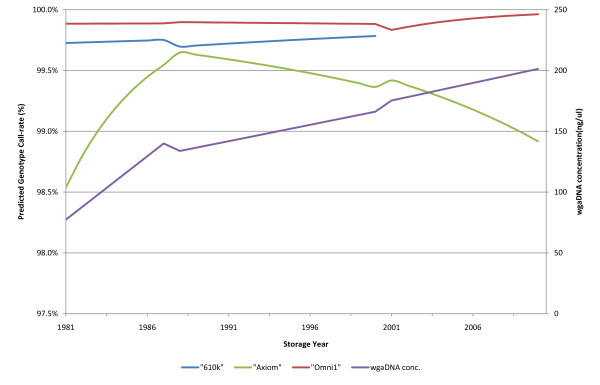
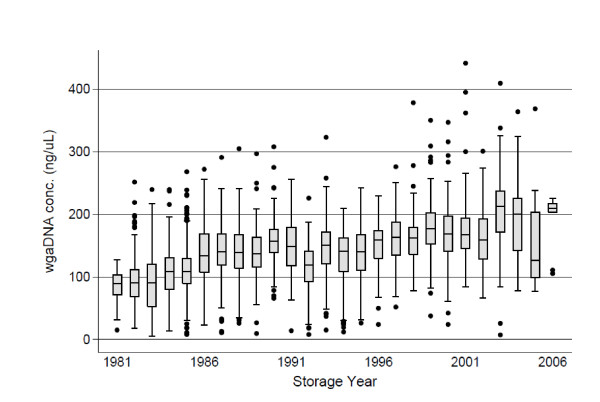
BACKGROUND: The search to identify disease-susceptible genes requires access to biological material from numerous well-characterized subjects. Archived residual dried blood spot (DBS) samples, also known as Guthrie cards, from national newborn screening programs may provide a DNA source for entire populations. Combined with clinical information from medical registries, DBS samples could provide a rich source for productive research. However, the amounts of DNA which can be extracted from these precious samples are minute and may be prohibitive for numerous genotypings. Previously, we demonstrated that DBS DNA can be whole-genome amplified and used for reliable genetic analysis on different platforms, including genome-wide scanning arrays. However, it remains unclear whether this approach is workable on a large sample scale. We examined the robustness of using DBS samples for whole-genome amplification following genome-wide scanning, using arrays from Illumina and Affymetrix. RESULTS: This study is based on 4,641 DBS samples from the Danish Newborn Screening Biobank, extracted for three separate genome-wide association studies. The amount of amplified DNA was significantly (P < 0.05) affected by the year of storage and storage conditions. Nine (0.2%) DBS samples failed whole-genome amplification. A total of 4,586 (98.8%) samples met our criterion of success of a genetic call-rate above 97%. The three studies used different arrays, with mean genotyping call-rates of 99.385% (Illumina Infinium Human610-Quad), 99.722% (Illumina Infinium HD HumanOmni1-Quad), and 99.206% (Affymetrix Axiom Genome-Wide CEU). We observed a concordance rate of 99.997% in the 38 methodological replications, and 99.999% in the 27 technical replications. Handling variables such as time of storage, storage conditions and type of filter paper were shown too significantly (P < 0.05) affect the genotype call-rates in some of the arrays, although the effect was minimal. CONCLUSION: Our study indicates that archived DBS samples from the Danish Newborn Screening Biobank represent a reliable resource of DNA for whole-genome amplification and subsequent genome-wide association studies. With call-rates equivalent to high quality DNA samples, our results point to new opportunities for using the neonatal biobanks available worldwide in the hunt for genetic components of disease.
Overview
The claims and statistics of this paper haven’t been checked yet.
Free: it reads the open-access text and checks the first 5 claims that cite a source we can check. Create a free account to check every claim.
Integrity signals
Registry
Cites
Statistics
Figures
Verification
Claims the paper makes
The claims and statistics of this paper haven’t been checked yet.
Free: it reads the open-access text and checks the first 5 claims that cite a source we can check. Create a free account to check every claim.
Claims other papers make about this one
Each is checked against this paper’s own text: does it say what the citing paper says it does?
The cited source says what the claim attributes to it.
In the citing paper
“We have previously validated registry-based ASD diagnoses 11,12 and demonstrated the accuracy of genotyping DNA extracted and amplified from bloodspots collected shortly after birth 13,14 .”
From Identification of common genetic risk variants for autism spectrum disorder (2019) · cites this paper as [13]
Self-check
Percentages, sums and reported differences re-computed from the paper’s own numbers.
The self-check needs the paper’s full text.
Citations
Cites
When an Entire Country Is a Cohort
Frank, L. (2000) · Science · doi:10.1126/science.287.5462.2398 · Cited by 864 · cited 1×
“These resources allow researchers to study the entire country as a cohort, and make the DNSB an ideal resource for studying common and complex genetic diseases in Caucasians [10].”
BackgroundUse of Filter Paper for the Collection and Analysis of Human Whole Blood Specimens
Mei, J. V., Alexander, J. R., Adam, B. W., & Hannon, W. H. (2001) · The Journal of Nutrition · doi:10.1093/jn/131.5.1631s · Cited by 579 · cited 1×
“The blood is usually collected by heel-prick and applied to special filter paper; a proven robust and convenient medium for transport and storage [1].”
BackgroundBoppana, S. B. (2010) · JAMA · doi:10.1001/jama.2010.423 · Cited by 383
Skogstrand, K., Thorsen, P., Nørgaard-Pedersen, B., Schendel, D. E., Sørensen, L. C., & Hougaard, D. M. (2005) · Clinical Chemistry · doi:10.1373/clinchem.2005.052241 · Cited by 262 · cited 1×
“2-mm disks were punched from each DBS sample, and protein was removed as previously described [18].”
MethodSelf-citationStorage policies and use of the Danish Newborn Screening Biobank
Nørgaard‐Pedersen, B., & Hougaard, D. M. (2007) · Journal of Inherited Metabolic Disease · doi:10.1007/s10545-007-0631-x · Cited by 257 · cited 1×
“It has recently been updated to meet new general guidelines for the establishment and operation of biobanks [9].”
BackgroundSelf-citationA sensitive LC/MS/MS assay of 25OH vitamin D3 and 25OH vitamin D2 in dried blood spots
Eyles, D., Anderson, C., Ko, P., Jones, A., Thomas, A., Burne, T., Mortensen, P. B., Nørgaard-Pedersen, B., Hougaard, D. M., & McGrath, J. (2009) · Clinica Chimica Acta · doi:10.1016/j.cca.2009.02.005 · Cited by 228 · cited 1×
“To date, DBS samples have been used for multiplex protein analysis [21], Vitamin D estimation [22], mRNA profiling [23], cytomegalovirus identification [24], and epigenetic methylation testing [25].”
MethodSelf-citationWilcken, B. M., & Wiley, V. C. (2008) · Pathology · doi:10.1080/00313020701813743 · Cited by 195
Lovmar, L. (2003) · Nucleic Acids Research · doi:10.1093/nar/gng129 · Cited by 146 · cited 1×
“Previous studies have used whole-genome amplified DNA (wgaDNA) for genotyping with some success, but in most cases, only a limited number of polymorphisms could be tested [11-17].”
BackgroundGenomic DNA amplification by the multiple displacement amplification (MDA) method
Lasken, R. S. (2009) · Biochemical Society Transactions · doi:10.1042/bst0370450 · Cited by 145 · cited 1×
“In the current study, which combined results from three recent GWS studies, we found that DBS samples are suitable for large-scale genetic studies [20].”
ResultNewborn screening in North America
Therrell, B. L., & Adams, J. (2007) · Journal of Inherited Metabolic Disease · doi:10.1007/s10545-007-0690-z · Cited by 141 · cited 1×
“Storage policies for residual neonatal dried blood spot (DBS) samples vary internationally, but several countries store residual samples in repositories for research purposes [2-8].”
Background
Cited by
Identification of common genetic risk variants for autism spectrum disorder
Autism Spectrum Disorder Working Group of the Psychiatric Genomics Consortium, Grove, J., BUPGEN, Major Depressive Disorder Working Group of the Psychiatric Genomics Consortium, 23andMe Research Team, Ripke, S., Als, T. D., Mattheisen, M., Walters, R. K., Won, H., et al. (2019) · Nature Genetics · doi:10.1038/s41588-019-0344-8 · Cited by 2,421
Self-citationGERAD1 Consortium, Pardiñas, A. F., CRESTAR Consortium, Holmans, P., Pocklington, A. J., Escott-Price, V., Ripke, S., Carrera, N., Legge, S. E., Bishop, S., et al. (2018) · Nature Genetics · doi:10.1038/s41588-018-0059-2 · Cited by 1,552
Self-citationDemontis, D., Walters, G. B., Athanasiadis, G., Walters, R., Therrien, K., Nielsen, T. T., Farajzadeh, L., Voloudakis, G., Bendl, J., Zeng, B., et al. (2023) · Nature Genetics · doi:10.1038/s41588-022-01285-8 · Cited by 768
“77 ), using CAUSALdb-finemapping-pip downloaded from https://github.com/ mulinlab/CAUSALdb-finemapping-pip (ref.”
Self-citationNievergelt, C. M., Maihofer, A. X., Klengel, T., Atkinson, E. G., Chen, C.-Y., Choi, K. W., Coleman, J. R. I., Dalvie, S., Duncan, L. E., Gelernter, J., et al. (2019) · Nature Communications · doi:10.1038/s41467-019-12576-w · Cited by 635
Self-citationBønnelykke, K., Sleiman, P., Nielsen, K., Kreiner-Møller, E., Mercader, J. M., Belgrave, D., den Dekker, H. T., Husby, A., Sevelsted, A., Faura-Tellez, G., et al. (2014) · Nature Genetics · doi:10.1038/ng.2830 · Cited by 568
Self-citationGenetic risk for autism spectrum disorders and neuropsychiatric variation in the general population
iPSYCH-SSI-Broad Autism Group, Robinson, E. B., St Pourcain, B., Anttila, V., Kosmicki, J. A., Bulik-Sullivan, B., Grove, J., Maller, J., Samocha, K. E., Sanders, S. J., et al. (2016) · Nature Genetics · doi:10.1038/ng.3529 · Cited by 367
Self-citationPedersen, C. B., Bybjerg-Grauholm, J., Pedersen, M. G., Grove, J., Agerbo, E., Bækvad-Hansen, M., Poulsen, J. B., Hansen, C. S., McGrath, J. J., Als, T. D., et al. (2018) · Molecular Psychiatry · doi:10.1038/mp.2017.196 · Cited by 338
Self-citationAls, T. D., Kurki, M. I., Grove, J., Voloudakis, G., Therrien, K., Tasanko, E., Nielsen, T. T., Naamanka, J., Veerapen, K., Levey, D. F., et al. (2023) · Nature Medicine · doi:10.1038/s41591-023-02352-1 · Cited by 324
Self-citationDNA Source Selection for Downstream Applications Based on DNA Quality Indicators Analysis
Lucena-Aguilar, G., Sánchez-López, A. M., Barberán-Aceituno, C., Carrillo-Ávila, J. A., López-Guerrero, J. A., & Aguilar-Quesada, R. (2016) · Biopreservation and Biobanking · doi:10.1089/bio.2015.0064 · Cited by 286
“In fact, residual clinical samples have been previously used for other applications.(21,22) The use of saliva as an alternative source of DNA for a variety of genetic studies has been explored even for other species.”
iPSYCH-Broad Consortium, Satterstrom, F. K., Walters, R. K., Singh, T., Wigdor, E. M., Lescai, F., Demontis, D., Kosmicki, J. A., Grove, J., Stevens, C., et al. (2019) · Nature Neuroscience · doi:10.1038/s41593-019-0527-8 · Cited by 209
Self-citationGene expression imputation across multiple brain regions provides insights into schizophrenia risk
CommonMind Consortium, Huckins, L. M., The Schizophrenia Working Group of the Psychiatric Genomics Consortium, iPSYCH-GEMS Schizophrenia Working Group, Dobbyn, A., Ruderfer, D. M., Hoffman, G., Wang, W., Pardiñas, A. F., Rajagopal, V. M., et al. (2019) · Nature Genetics · doi:10.1038/s41588-019-0364-4 · Cited by 188
Self-citationPreanalytical Variables Affecting the Integrity of Human Biospecimens in Biobanking
Ellervik, C., & Vaught, J. (2015) · Clinical Chemistry · doi:10.1373/clinchem.2014.228783 · Cited by 167
Genome-wide association study implicates CHRNA2 in cannabis use disorder
Demontis, D., Rajagopal, V. M., Thorgeirsson, T. E., Als, T. D., Grove, J., Leppälä, K., Gudbjartsson, D. F., Pallesen, J., Hjorthøj, C., Reginsson, G. W., et al. (2019) · Nature Neuroscience · doi:10.1038/s41593-019-0416-1 · Cited by 131
Self-citationCommon risk variants identified in autism spectrum disorder
Grove, J., Ripke, S., Als, T. D., Mattheisen, M., Walters, R., Won, H., Pallesen, J., Agerbo, E., Andreassen, O. A., Anney, R., et al. (2017) · doi:10.1101/224774 · Cited by 89
Self-citationRapid DNA Extraction from Dried Blood Spots on Filter Paper: Potential Applications in Biobanking
Choi, E., Lee, S. K., Ihm, C., & Sohn, Y.-H. (2014) · Osong Public Health and Research Perspectives · doi:10.1016/j.phrp.2014.09.005 · Cited by 82
“In addition, DBSs offer several advantages in areas that lack appropriate infrastructure for processing blood and a cold chain for the transportation and storage of blood products [7].”
Psychosocial Issues Related to Newborn Screening: A Systematic Review and Synthesis
Tluczek, A., Ersig, A. L., & Lee, S. (2022) · International Journal of Neonatal Screening · doi:10.3390/ijns8040053 · Cited by 91
“Identifying more complex inherited disorders through tandem mass spectrometry and other novel genetic technologies further expands knowledge of risk beyond single-gene conditions [10,11].”
BackgroundRajagopal, V. M., Duan, J., Vilar-Ribó, L., Grove, J., Zayats, T., Ramos-Quiroga, J. A., Satterstrom, F. K., Artigas, M. S., Bybjerg-Grauholm, J., Bækvad-Hansen, M., et al. (2022) · Nature Genetics · doi:10.1038/s41588-022-01143-7 · Cited by 78
Self-citationThe use of DNA from archival dried blood spots with the Infinium HumanMethylation450 array
Joo, J. E., Wong, E. M., Baglietto, L., Jung, C., Tsimiklis, H., Park, D. J., Wong, N. C., English, D. R., Hopper, J. L., Severi, G., et al. (2013) · BMC Biotechnology · doi:10.1186/1472-6750-13-23 · Cited by 69
“; licensee BioMed Central Ltd Commons Attribution License (http://creativec reproduction in any medium, provided the or such as microarray-based SNP genotyping has been occasionally reported [5,6].”
BackgroundHollegaard, M. V., Bybjerg‐Grauholm, J., Nielsen, R., Grove, J., Mandrup, S., & HOUGAARD, D. M. (2013) · Molecular Genetics and Metabolism · doi:10.1016/j.ymgme.2013.06.004 · Cited by 70
“wgaDNA amplified from DBSS stored at −20 °C/−4 °F for three decades in the Danish Newborn Screening Biobank (DNSB) has been shown to provide highly reliable genotyping results by different approaches: Sanger sequencing [7], genome wide arraying [1,8], high-resolution melting curve analysis [7], and simple SNP genotypi…”
Self-citationKvaskoff, D., Ko, P., Simila, H. A., & Eyles, D. W. (2012) · Journal of Chromatography B · doi:10.1016/j.jchromb.2012.05.040 · Cited by 52
Demontis, D., Walters, R. K., Rajagopal, V. M., Waldman, I. D., Grove, J., Als, T. D., Dalsgaard, S., Ribasés, M., Bybjerg-Grauholm, J., Bækvad-Hansen, M., et al. (2021) · Nature Communications · doi:10.1038/s41467-020-20443-2 · Cited by 50
Self-citationAhluwalia, T. S., Eliasen, A. U., Sevelsted, A., Pedersen, C. T., Stokholm, J., Chawes, B., Bork‐Jensen, J., Grarup, N., Pedersen, O. B., Hansen, T. F., et al. (2020) · Nature Communications · doi:10.1038/s41467-020-19814-6 · Cited by 53
Self-citationNissen, J. B., Hansen, C. S., Starnawska, A., Mattheisen, M., Børglum, A. D., Buttenschøn, H. N., & Hollegaard, M. (2016) · Frontiers in Psychiatry · doi:10.3389/fpsyt.2016.00035 · Cited by 45
“DNA was extracted from the filter paper as previously described (34, 35).”
MethodSelf-citationNilufer, R., Karina, B., Paraskevi, C., Rebecca, D., Genevieve, G., Ayush, G., Stuart, M., Sally, M., Yadav, S., Andrew, S. J., et al. (2018) · bioRxiv (Cold Spring Harbor Laboratory) · doi:10.1101/406967 · Cited by 42
“successfully amplified and employed in GWAS [36].”
Self-citationPanda, B. B., Meher, A. S., & Hazra, R. K. (2019) · Journal of Parasitic Diseases · doi:10.1007/s12639-019-01136-0 · Cited by 40
Population-Based Risk of Psychiatric Disorders Associated With Recurrent Copy Number Variants
Vaez, M., Montalbano, S., Sánchez, X. C., Hellberg, K.-L. G., Dehkordi, S. R., Krebs, M. D., Meijsen, J. J., Shorter, J. R., Bybjerg‐Grauholm, J., Mortensen, P. B., et al. (2024) · JAMA Psychiatry · doi:10.1001/jamapsychiatry.2024.1453 · Cited by 40
Self-citationSánchez, X. C., Montalbano, S., Vaez, M., Krebs, M. D., Byberg-Grauholm, J., Mortensen, P. B., Børglum, A. D., HOUGAARD, D. M., Nordentoft, M., Geschwind, D. H., et al. (2023) · The Lancet Psychiatry · doi:10.1016/s2215-0366(23)00004-4 · Cited by 44
“Finally, the study relies on diagnoses from a nationwide hospital-based register of inpatients and outpatients, 25 which does not include information on individuals who are diagnosed and treated for psychiatric illness solely by general practitioners or privately practising psychiatrists.”
Self-citationBäumer, C., Fisch, E., Wedler, H., Reinecke, F., & Korfhage, C. (2018) · Scientific Reports · doi:10.1038/s41598-018-25895-7 · Cited by 40
Multi-omics analysis from archival neonatal dried blood spots: limitations and opportunities
Zhuang, Y.-J., Mangwiro, Y. T. M., Wake, M. A., Saffery, R., & Greaves, R. F. (2022) · Clinical Chemistry and Laboratory Medicine (CCLM) · doi:10.1515/cclm-2022-0311 · Cited by 34
Schizophrenia polygenic risk scores, urbanicity and treatment-resistant schizophrenia
Gasse, C., Wimberley, T., Wang, Y., Mors, O. N., Børglum, A. D., Als, T. D., Werge, T. M., Nordentoft, M., HOUGAARD, D. M., & Horsdal, H. T. (2019) · Schizophrenia Research · doi:10.1016/j.schres.2019.08.008 · Cited by 33
Self-citationEliasen, A. U., Pedersen, C. E. T., Rasmussen, M. A., Wang, N., Soverini, M., Fritz, A., Stokholm, J., Chawes, B., Morin, A., Bork‐Jensen, J., et al. (2022) · Journal of Allergy and Clinical Immunology · doi:10.1016/j.jaci.2022.03.019 · Cited by 33
“Top pairwise SNP interactions from the discovery analysis were replicated in independent populations, specifically, the iPSYCH study(15,16), UK Biobank(21), and the COPSAC cohorts(17,18). r e In the iPSYCH study, childhood asthma cases were defined with at least one hospitalization due to asthma…”
MethodSelf-citationRajatileka, S., Luyt, K., El-Bokle, M., Williams, M., Kemp, H., Molnár, E., & Váradi, A. (2013) · BMC Genetics · doi:10.1186/1471-2156-14-105 · Cited by 31
“This is in line with previous studies that showed reduced gDNA quality following 25 years storage [35,36].”
BackgroundResultScalable, high quality, whole genome sequencing from archived, newborn, dried blood spots
Ding, Y., Owen, M. J., Le, J. M., Batalov, S., Chau, K. K., Kwon, Y. H., Kraan, L. V. D., Bezares-Orin, Z., Zhu, Z., Veeraraghavan, N., et al. (2023) · npj Genomic Medicine · doi:10.1038/s41525-023-00349-w · Cited by 32
High Quality Genome-Wide Genotyping from Archived Dried Blood Spots without DNA Amplification
Julien, K. R. S., Jelliffe‐Pawlowski, L. L., Shaw, G. M., Stevenson, D. K., O'Brodovich, H. M., Krasnow, M. A., & the Stanford BPD Study Group (2013) · PLoS ONE · doi:10.1371/journal.pone.0064710 · Cited by 30
“More recently, it was shown that targeted SNP analysis can be done on whole genome amplified DNA (wgaDNA) from DBS [8,9,10,11,12] and that wgaDNA from DBS can be used for arraybased genome-wide SNP genotyping [13,14,15,16].”
BackgroundIs Addition in Bioanalysis of DBS: Results from The EBF DBS-Microsampling Consortium
van Baar, B. L. M., Verhaeghe, T., Heudi, O., Rohde, M., Wood, S. A., Wieling, J., de Vries, R., White, S., Cobb, Z., & Timmerman, P. (2013) · Bioanalysis · doi:10.4155/bio.13.172 · Cited by 29
Åberg, K. A., Xie, L. Y., Nerella, S., Copeland, W., Costello, E. J., & van den Oord, E. J. C. G. (2013) · Epigenetics · doi:10.4161/epi.24508 · Cited by 27
Dried Blood Spots Allow Targeted Screening to Diagnose Mucopolysaccharidosis and Mucolipidosis
Cobos, P. N., Steglich, C., Santer, R., Lukács, Z., & Gal, A. (2014) · JIMD Reports · doi:10.1007/8904_2014_308 · Cited by 26
“2011) or stability of genomic DNA (Chaisomchit et al. 2005; Hollegaard et al. 2011).”
BackgroundMind the Quality Gap When Banking on Dry Blood Spots
Carpentieri, D. F., Colvard, A., Petersen, J., Marsh, W., David‐Dirgo, V., Huentelman, M. J., Pirrotte, P., & Sivakumaran, T. A. (2021) · Biopreservation and Biobanking · doi:10.1089/bio.2020.0131 · Cited by 26
“32 In 2011, 30 the ability to extract adequate DNA from DBS for whole-genome amplification following genome-wide scanning was confirmed with three commercial platforms.”
Genetic Variation in NFKBIE Is Associated With Increased Risk of Pneumococcal Meningitis in Children
Lundbo, L. F., Harboe, Z. B., Clausen, L. N., Hollegaard, M. V., Sørensen, H. T., HOUGAARD, D. M., Konradsen, H. B., Nørgaard, M., & Benfield, T. (2015) · EBioMedicine · doi:10.1016/j.ebiom.2015.11.048 · Cited by 30
Self-citationDahlin, A. M., Hollegaard, M. V., Wibom, C., Andersson, U., HOUGAARD, D. M., Deltour, I., Hjalmars, U., & Melin, B. (2015) · Journal of Neuro-Oncology · doi:10.1007/s11060-015-1891-1 · Cited by 24
“viously [11–13].”
Self-citationKrebs, M. D., Themudo, G. E., Benros, M. E., Mors, O. N., Børglum, A. D., HOUGAARD, D. M., Mortensen, P. B., Nordentoft, M., Gandal, M. J., Fan, C. C., et al. (2021) · Nature Communications · doi:10.1038/s41467-021-26903-7 · Cited by 27
Self-citationBybjerg‐Grauholm, J., Khoo, S. K., Nickolov, R. Z., Poulsen, J. B., Bækvad‐Hansen, M., Hansen, C. S., HOUGAARD, D. M., & Hollegaard, M. V. (2015) · Molecular Genetics and Metabolism · doi:10.1016/j.ymgme.2015.06.011 · Cited by 24
“We have previously shown that DNSB DBS samples can be used for array genotyping [12,13], DNA methylation [14], and whole genome and exome sequencing [15].”
BackgroundSelf-citationMusliner, K. L., Andersen, K. K., Agerbo, E., Albiñana, C., Vilhjálmsson, B. J., Rajagopal, V. M., Bybjerg‐Grauholm, J., Hansen, T. F., Pedersen, C. B., Pedersen, M. G., et al. (2021) · Psychological Medicine · doi:10.1017/s0033291721001410 · Cited by 27
“DNA was extracted from these blood spots and amplified in triplicate at the Danish State Serum Institute (Hollegaard et al., 2009, 2011; Pedersen et al., 2018).”
MethodSelf-citationLundbo, L. F., Harboe, Z. B., Clausen, L. N., Hollegaard, M. V., Sørensen, H. T., Hougaard, D. M., Konradsen, H. B., Nørgaard, M., & Benfield, T. (2014) · Clinical Infectious Diseases · doi:10.1093/cid/ciu276 · Cited by 18
“cation was performed by the Department of Clinical Biochemistry at SSI, as previously described [26].”
MethodSelf-citationGENOME-WIDE ASSOCIATION STUDY IMPLICATES CHRNA2 IN CANNABIS USE DISORDER
Demontis, D., Rajagopal, V. M., Als, T. D., Grove, J., Pallesen, J., Hjorthøj, C., Qvist, P., Christensen, J., Bybjerg‐Grauholm, J., Bækvad‐Hansen, M., et al. (2019) · European Neuropsychopharmacology · doi:10.1016/j.euroneuro.2018.07.008 · Cited by 18
Self-citationWang, Y., Karstoft, K., Nievergelt, C. M., Maihofer, A. X., Stein, M. B., Ursano, R. J., Bybjerg‐Grauholm, J., Bækvad‐Hansen, M., HOUGAARD, D. M., Andreassen, O. A., et al. (2019) · Journal of Affective Disorders · doi:10.1016/j.jad.2019.04.070 · Cited by 20
Self-citationAksglæde, L., Garn, I. D., Hollegaard, M. V., Hougaard, D. M., Meyts, E. R., & Juul, A. (2012) · Acta Paediatrica · doi:10.1111/apa.12008 · Cited by 19
“from this biobank have been shown to represent a reliable resource of DNA for whole-genome amplification and subsequent genome-wide association studies (5).”
Self-citationPreserving avian blood and DNA sampled in the wild: A survey of personal experiences
Lecce, I. D., Sudyka, J., Westneat, D. F., & Szulkin, M. (2022) · Ecology and Evolution · doi:10.1002/ece3.9232 · Cited by 15
“…(this study) Relatively expensive (this study) Routinely kept at room temperature, leading to DNA degradation (this study; Carpentieri et al., 2021; Hollegaard et al., 2011) Long-term storage should be in a freezer (avoid fridge for risk of developing mildew) (this study; Carpentieri et al., 2021;…”
InfluentialLundbo, L. F., Sørensen, H. T., Clausen, L. N., Hollegaard, M. V., HOUGAARD, D. M., Konradsen, H. B., Harboe, Z. B., Nørgaard, M., & Benfield, T. (2015) · Open Forum Infectious Diseases · doi:10.1093/ofid/ofv127 · Cited by 15
“For the current study, DNA extraction and genome amplification were performed by the Department of Clinical Biochemistry at SSI, as previously described [18].”
MethodSelf-citationGenetic liability to major depression and risk of childhood asthma
Liu, X., Munk‐Olsen, T., Albiñana, C., Vilhjálmsson, B. J., Pedersen, E. M., Schlünssen, V., Bækvad‐Hansen, M., Bybjerg‐Grauholm, J., Nordentoft, M., Børglum, A. D., et al. (2020) · Brain Behavior and Immunity · doi:10.1016/j.bbi.2020.07.030 · Cited by 16
Self-citationRNA sequencing of archived neonatal dried blood spots
Bybjerg‐Grauholm, J., Hagen, C. M., Khoo, S. K., Johannesen, M. L., Hansen, C. S., Bækvad‐Hansen, M., Christiansen, M., HOUGAARD, D. M., & Hollegaard, M. V. (2016) · Molecular Genetics and Metabolism Reports · doi:10.1016/j.ymgmr.2016.12.004 · Cited by 22
“This provides a unique biospecimen repository to enable large population research at a perinatal level.”
BackgroundSelf-citationSegundo, G. R. S., Anh, N. T. V., Huyen, T. T., Nguyen-Ngoc-Quynh, L., Kobayashi, R. H., Le, H. T., Le, H. T. M., Torgerson, T. R., & Ochs, H. D. (2018) · Frontiers in Immunology · doi:10.3389/fimmu.2018.00289 · Cited by 16
“The approach has been validated by the demonstration that gDNA, stored for years in DBS, is stable and suitable for sequence analysis (14).”
MethodMunk‐Olsen, T., Florio, A. D., Madsen, K. B., Albiñana, C., Mægbæk, M. L., Bergink, V., Frøkjær, V. G., Agerbo, E., Vilhjálmsson, B. J., Werge, T. M., et al. (2023) · Translational Psychiatry · doi:10.1038/s41398-023-02649-2 · Cited by 13
“Characteristics of PPD cases, MDD cases, and controls were summarized by the use of descriptive statistics.”
MethodSelf-citationUtilization of archived neonatal dried blood spots for genome-wide genotyping
Sok, P., Lupo, P. J., Richard, M. A., Rabin, K. R., Ehli, E. A., Kallsen, N. A., Davies, G. E., Scheurer, M. E., & Brown, A. L. (2020) · PLoS ONE · doi:10.1371/journal.pone.0229352 · Cited by 13
“This association was similarly described previously [28, 29], with the effect of storage duration on DNA quality reduced among DBS archived in a controlled environment.”
BackgroundGenetic traceability practices in a large-size beef company in China
Zhao, J., Xu, Z., You, X., Zhao, Y., He, W., Zhao, L., Chen, A., & Yang, S. (2018) · Food Chemistry · doi:10.1016/j.foodchem.2018.10.007 · Cited by 12
Newborn Screening Policy and Practice Issues for Nurses
Tluczek, A., & Luca, J. M. D. (2013) · Journal of Obstetric, Gynecologic & Neonatal Nursing · doi:10.1111/1552-6909.12252 · Cited by 14
“Considerable interest exists in applying still newer technologies to NBS, such as deoxyribonucleic acid (DNA) analysis (Hollegard et al., 2011) and genome-wide scanning.”
BackgroundDahlin, A. M., Wibom, C., Andersson, U., HOUGAARD, D. M., Bybjerg‐Grauholm, J., Deltour, I., Hultman, C. M., Kähler, A. K., Karlsson, R., Hjalmars, U., et al. (2019) · Cancer Epidemiology Biomarkers & Prevention · doi:10.1158/1055-9965.epi-18-1026 · Cited by 13
Self-citationA genome-wide association study on medulloblastoma
The Cefalo Study Group, Dahlin, A. M., Wibom, C., Andersson, U., Bybjerg‐Grauholm, J., Deltour, I., HOUGAARD, D. M., Scheurer, M. E., Lau, C. C., McKean‐Cowdin, R., et al. (2020) · Journal of Neuro-Oncology · doi:10.1007/s11060-020-03424-9 · Cited by 13
Self-citationCall to Action for Advancing Equitable Genomic Newborn Screening
Ersig, A. L., Jaja, C., & Tluczek, A. (2023) · Public Health Genomics · doi:10.1159/000534648 · Cited by 12
“Recent technological advancements have led to the detection of more complex inherited disorders [4, 5].”
BackgroundUrtiaga, G., Domingues, W. B., Komninou, E. R., Martins, A. W. S., Blödorn, E. B., Dellagostin, E. N., Woloski, R., Pinto, L. D. S., Brum, C. B., Tovo‐Rodrigues, L., et al. (2022) · Forensic Science International · doi:10.1016/j.forsciint.2022.111181 · Cited by 11
Evaluation of whole genome amplified DNA to decrease material expenditure and increase quality
Bækvad‐Hansen, M., Bybjerg‐Grauholm, J., Poulsen, J. B., Hansen, C. S., HOUGAARD, D. M., & Hollegaard, M. V. (2017) · Molecular Genetics and Metabolism Reports · doi:10.1016/j.ymgmr.2017.04.002 · Cited by 12
“All dried blood samples were stored frozen (−20 °C/−4 °F) limiting potential performance bias due to differences in age of the samples/ storage time [12].”
BackgroundSelf-citationAssociation betweenAXLpromoter methylation and lung function growth during adolescence
Gao, L., Urman, R., Millstein, J., Siegmund, K. D., Dubeau, L., & Breton, C. V. (2018) · Epigenetics · doi:10.1080/15592294.2018.1529517 · Cited by 9
Hi-Plex targeted sequencing is effective using DNA derived from archival dried blood spots
Nguyen‐Dumont, T., Mahmoodi, M., Hammet, F., Tran, T., Tsimiklis, H., Giles, G. G., Hopper, J. L., Australian Breast Cancer Family Registry, Southey, M. C., & Park, D. J. (2014) · Analytical Biochemistry · doi:10.1016/j.ab.2014.10.010 · Cited by 8
“Dried blood spots have been reported as a source of DNA suitable for downstream SNP genotyping via prior whole-genome amplification [7, 8] and, more recently, without the requirement for pre-amplification [9].”
BackgroundEvaluating the performance of whole genome amplification for use in low template DNA typing
Jc, L., Tsai, L., Lai, P.-Y., Lee, C., Lin, C.-Y., Huang, T.-Y., Linacre, A. M. T., & Hsieh, H. (2012) · Medicine Science and the Law · doi:10.1258/msl.2012.011126 · Cited by 8
Liu, X., Trinh, N. T., Wray, N. R., Lupattelli, A., Albiñana, C., Agerbo, E., Vilhjálmsson, B. J., Bergink, V., & Munk‐Olsen, T. (2024) · European Neuropsychopharmacology · doi:10.1016/j.euroneuro.2024.01.010 · Cited by 8
“DNA was extracted from the biobank and whole-genome amplified in triplicate (Hollegaard et al., 2011).”
MethodAslam, M., Naeem, F., Seher, R., Shabbir, M. Z., Shehzad, W., & Imran, M. (2022) · Gene · doi:10.1016/j.gene.2022.147116 · Cited by 6
Canning, J., Strawbridge, R. J., Miedzybrodzka, Z., Marioni, R. E., Melbye, M., Porteous, D. J., Hurles, M. E., Sattar, N. A., Sudlow, C. L. M., Collins, R., et al. (2024) · Critical Reviews in Clinical Laboratory Sciences · doi:10.1080/10408363.2024.2360996 · Cited by 9
“Thirty-one were conducted in the USA [13–16,22,24,28,29,36,37,40,42,44,45,48–52,54–58, 63,66,68,69,71,72,77], 16 in Denmark [18,20,25,27,31–34, 39,46,61,62,67,74–76], five in Sweden [19,23,30,41,59], five in the UK [17,26,35,43,65], three in Canada [38,64, 70], two in Italy [53,78], two in The…”
InfluentialKlassen, T., Drabek, J. M., Tomson, T., Sveinsson, O. A., von Döbeln, U., Noebels, J. L., & Goldman, A. M. (2013) · Journal of Molecular Diagnostics · doi:10.1016/j.jmoldx.2013.01.003 · Cited by 6
“The DBSs preserved and protected in the neonatal biobanks represent a multigenerational archive of populations and offer an unparalleled opportunity to assess both personal and population-based profiles of genetic variation.(20,21,30) Moreover, they may be the only resource for a personal genomic profile in cases of s…”
BackgroundResultHuang, M.-C., Chuang, T., Chen, C.-H., Wu, J., Chen, Y.-T., Li, L., & Yang, H. (2016) · BMC Genomics · doi:10.1186/s12864-016-2478-8 · Cited by 4
“Axiom arrays have been applied for but are not limited to the mapping of susceptibility loci [77 – 81], homozygosity mapping [82, 83], anthropological investigation [84 – 88], pharmacogenomic testing [89], and genome-wide scanning using archived dried blood spot samples [90].”
BackgroundWoon, S., Tjandra, F., Mackay, J. F., Lumley, T., Grainger, P., Wood, A., Hsiao, K., & Ameratunga, R. (2023) · Pathology · doi:10.1016/j.pathol.2023.09.006 · Cited by 3
From genotype to phenotype in early childhood asthma
Jensen, S. K., Fischer‐Rasmussen, K., Eliasen, A., Hesselberg, L. M., Brustad, N., Melgaard, M. E., Werge, T. M., Bybjerg‐Grauholm, J., Nyegaard, M., Merid, S. K., et al. (2026) · Journal of Allergy and Clinical Immunology · doi:10.1016/j.jaci.2025.12.1006 · Cited by 2
Self-citationShaik, M. B., Alladi, A., Vedamurthy, A. B., Devaraju, K. S., Kamate, M., & Kruthika‐Vinod, T. P. (2021) · Iranian Journal of Science and Technology Transactions A Science · doi:10.1007/s40995-021-01225-x · Cited by 1
Sánchez, X. C., Montalbano, S., Vaez, M., Krebs, M. D., Bybjerg‐Grauholm, J., Mortensen, P. B., Børglum, A. D., HOUGAARD, D. M., Nordentoft, M., Geschwind, D. H., et al. (2022) · SSRN Electronic Journal · doi:10.2139/ssrn.4165610 · Cited by 1
Self-citationHaferlach, T., Weber, S., Konietschke, R., Nadarajah, N., Stengel, A., Kern, W., Haferlach, C., & Meggendorfer, M. (2016) · Leukemia · doi:10.1038/leu.2016.156
Whole Genome Amplification from Blood Spot Samples
Sørensen, K. M. (2015) · Methods in molecular biology · doi:10.1007/978-1-4939-2990-0_12
Early Environmental and Epigenetic Influences on Respiratory Health
deDekker, H. T. (2017)
Kertas Saring sebagai Media Transpor Darah untuk Pemeriksaan Antibodi Rabies
Wijayanti, R., Damayanti, R., & Murtini, S. (2019) · Jurnal Sain Veteriner · doi:10.22146/jsv.26914
“Koleksi darah dengan menggunakan kertas saring memiliki kelebihan dapat disimpan pada suhu kamar, mudah dibawa ke laboratorium dengan resiko biohazard yang rendah dan dapat diaplikasikan pada daerah yang tidak memiliki infrastruktur memadai (Hollegaard et al., 2011).”
BackgroundNürnberger, J. I. (2019) · Faculty Opinions – Post-Publication Peer Review of the Biomedical Literature · doi:10.3410/f.735152734.793563005 · Cited by 1
Iyavoo, S., Matute, S. P., Turvey, K., Cummings, S. P., & Haizel, T. (2025) · Forensic Science International Reports · doi:10.1016/j.fsir.2025.100429
Giacomini, L., Sacchetti, S., Pavanello, E., Foglia, L., Mellone, S., Borgonovi, G., Rabbone, I., Monzani, A., Palmeri, M., Ferrante, D., et al. (2026) · International Journal of Neonatal Screening · doi:10.3390/ijns12040091
Metadata
- Authors
- Hollegaard, M. V., Grove, J., Grauholm, J., Kreiner-Møller, E., Bønnelykke, K., Nørgaard, M., Benfield, T. L., Nørgaard-Pedersen, B., Mortensen, P. B., Mors, O., Sørensen, H. T., Harboe, Z. B., Børglum, A. D., Demontis, D., Ørntoft, T. F., Bisgaard, H., & Hougaard, D. M.
- Affiliations
- Statens Serum Institut (DK)
- Aarhus University (DK)
- Copenhagen University Hospital (DK)
- Aarhus University Hospital (DK)
- University of Copenhagen (DK)
- Corresponding author
- Hollegaard, Mads V
- ORCID
- Venue
- BMC Genetics
- Published
- 2011
- Volume
- 12
- Issue
- 1
- Pages
- 58
- ISSN
- 1471-2156 (ISSN-L)
- PMC
- PMC3142526
- OpenAlex
- W2157123852
- Cited by
- 83
- References
- 27
- Citations by year
- 2026: 1 · 2025: 1 · 2024: 3 · 2023: 7 · 2022: 9 · 2021: 5 · 2020: 4 · 2019: 11 · 2018: 8 · 2017: 5 · 2016: 6 · 2015: 7 · 2014: 4 · 2013: 9 · 2012: 3
- FWCI
- 3.19
- Type
- journal article
- Language
- en
- Open access
- gold
- doi.org
- Licence
- cc-by
- Locations
- BMC Genetics (publishedVersion, cc-by)
- Europe PMC (PubMed Central) (publishedVersion, cc-by)
- PubMed Central (publishedVersion, cc-by)
- PubMed (publishedVersion)
- DOAJ (DOAJ: Directory of Open Access Journals) (submittedVersion, cc-by-sa)
- Research at the University of Copenhagen (University of Copenhagen) (submittedVersion)
- Funders
- Stanley Medical Research Institute
- Strategiske Forskningsråd
- Dagmar Marshalls Fond
- Sundhed og Sygdom, Det Frie Forskningsråd
- Lundbeckfonden
- Novo Nordisk
- Augustinus Fonden
- Novo Nordisk Fonden
- H. Lundbeck A/S
- Medical Research Council
- Topics
- Life Sciences › Biochemistry, Genetics and Molecular Biology › Genetics › Genetic Associations and Epidemiology
- Life Sciences › Biochemistry, Genetics and Molecular Biology › Genetics › Genetic diversity and population structure
- Life Sciences › Biochemistry, Genetics and Molecular Biology › Genetics › Forensic and Genetic Research
- Keywords
- dried blood spot samples, Guthrie cards, whole genome amplification, genome-wide association study, storage conditions, susceptibility genes
- MeSH terms
- Blood Specimen Collection, Denmark, DNA, Female, Genetic Testing, Humans, Infant, Newborn, Male, Specimen Handling, Sequence Analysis, DNA, Genetic Predisposition to Disease, Polymorphism, Single Nucleotide, Genome-Wide Association Study
About these checks
Registry, retraction, Cites and statistics results are computed, not judged, with one exception: a printed reference that no index lists is read once by a model before it counts as a citation error. Claims are extracted by a model and kept only when their quote appears verbatim in the text; each cited source is then checked, with a model’s help, for whether it says what the claim relies on. Those verdicts can be wrong — read the claim’s quote and the cited source before relying on one.
Statistics and arithmetic are recomputed, not judged.
Confidence bands are shown only for fields calibrated on our annotated test set. None is calibrated yet, so no band is shown.
What counts as a claim ›How we measure confidence ›How we check this ›
Are you an author, or do you see a problem with this page? Request a review
Data sources
Bibliographic data: Semantic Scholar, OpenAlex, Crossref.
Contains information from the Semantic Scholar Academic Graph Datasets, made available under the ODC Attribution License (ODC-BY 1.0).
Semantic Scholar’s data is described in: Kinney, R., et al. (2023). The Semantic Scholar Open Data Platform. arXiv:2301.10140.
