

The DOI matches its Crossref record; 76 of the 77 references it cites were found in a registry or an index.
Signed weighted gene co-expression network analysis of transcriptional regulation in murine embryonic stem cells
Open accessAbstract
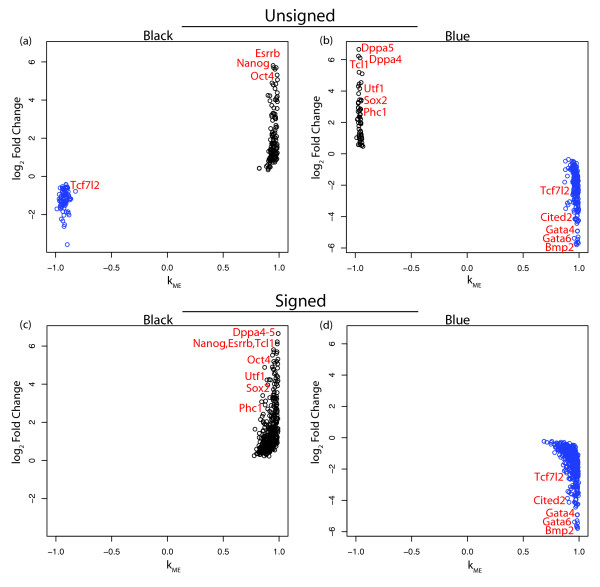
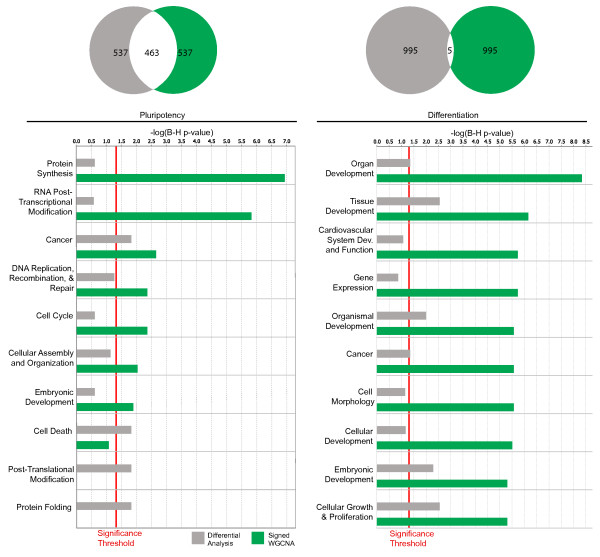
Background: Recent work has revealed that a core group of transcription factors (TFs) regulates the key characteristics of embryonic stem (ES) cells: pluripotency and self-renewal. Current efforts focus on identifying genes that play important roles in maintaining pluripotency and self-renewal in ES cells and aim to understand the interactions among these genes. To that end, we investigated the use of unsigned and signed network analysis to identify pluripotency and differentiation related genes. Results: We show that signed networks provide a better systems level understanding of the regulatory mechanisms of ES cells than unsigned networks, using two independent murine ES cell expression data sets. Specifically, using signed weighted gene co-expression network analysis (WGCNA), we found a pluripotency module and a differentiation module, which are not identified in unsigned networks. We confirmed the importance of these modules by incorporating genome-wide TF binding data for key ES cell regulators. Interestingly, we find that the pluripotency module is enriched with genes related to DNA damage repair and mitochondrial function in addition to transcriptional regulation. Using a connectivity measure of module membership, we not only identify known regulators of ES cells but also show that Mrpl15, Msh6, Nrf1, Nup133, Ppif, Rbpj, Sh3gl2, and Zfp39, among other genes, have important roles in maintaining ES cell pluripotency and self-renewal. We also report highly significant relationships between module membership and epigenetic modifications (histone modifications and promoter CpG methylation status), which are known to play a role in controlling gene expression during ES cell self-renewal and differentiation. Conclusion: Our systems biologic re-analysis of gene expression, transcription factor binding, epigenetic and gene ontology data provides a novel integrative view of ES cell biology.
Overview
The claims and statistics of this paper haven’t been checked yet.
Run the check — free, no account needed. It reads the open-access text and checks the sources it cites.
Integrity signals
Registry
Cites
Statistics
Figures
Verification
Claims the paper makes
The claims and statistics of this paper haven’t been checked yet.
Run the check — free, no account needed. It reads the open-access text and checks the sources it cites.
Claims other papers make about this one
Each is checked against this paper’s own text: does it say what the citing paper says it does?
The cited source says what the claim attributes to it.
In the citing paper
“A signed method creates networks where biologically meaningful modules (such as those representing a specific biological process) are better separated [37].”
From Gene co-expression analysis for functional classification and gene–disease predictions (2017) · cites this paper as [37]
Self-check
Percentages, sums and reported differences re-computed from the paper’s own numbers.
The self-check needs the paper’s full text.
Citations
Cites
WGCNA: an R package for weighted correlation network analysis
Langfelder, P., & Horvath, S. (2008) · BMC Bioinformatics · doi:10.1186/1471-2105-9-559 · Cited by 27,252
Self-citationTakahashi, K., & Yamanaka, S. (2006) · Cell · doi:10.1016/j.cell.2006.07.024 · Cited by 26,673 · cited 2×
“the four TFs that can reprogram differentiated cells into a pluripotency state [3].”
BackgroundInduction of Pluripotent Stem Cells from Adult Human Fibroblasts by Defined Factors
Takahashi, K., Tanabe, K., Ohnuki, M., Narita, M., Ichisaka, T., Tomoda, K., & Yamanaka, S. (2007) · Cell · doi:10.1016/j.cell.2007.11.019 · Cited by 20,221
Induced Pluripotent Stem Cell Lines Derived from Human Somatic Cells
Yu, J., Vodyanik, M. A., Smuga-Otto, K., Antosiewicz-Bourget, J., Frane, J. L., Tian, S., Nie, J., Jonsdottir, G. A., Ruotti, V., Stewart, R., et al. (2007) · Science · doi:10.1126/science.1151526 · Cited by 10,310 · cited 9×
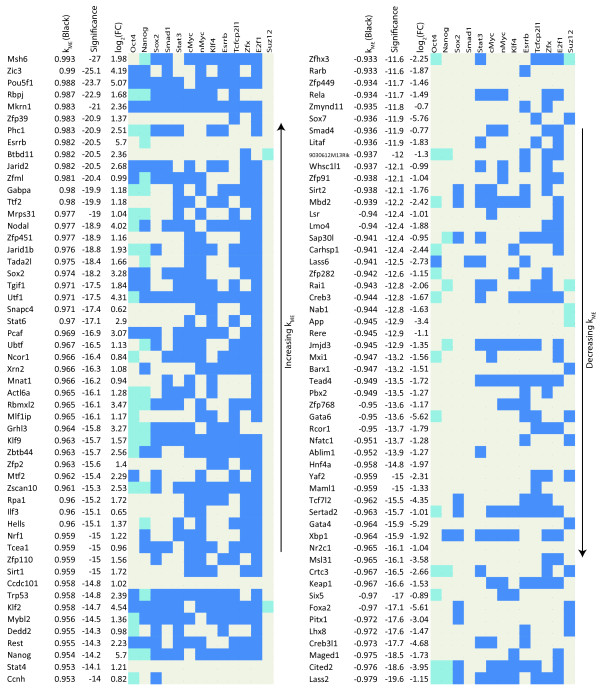
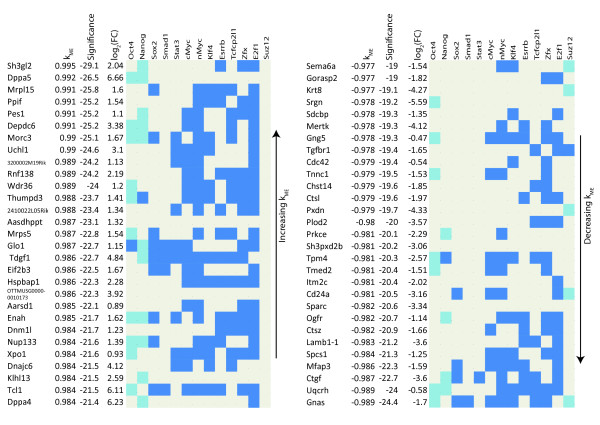
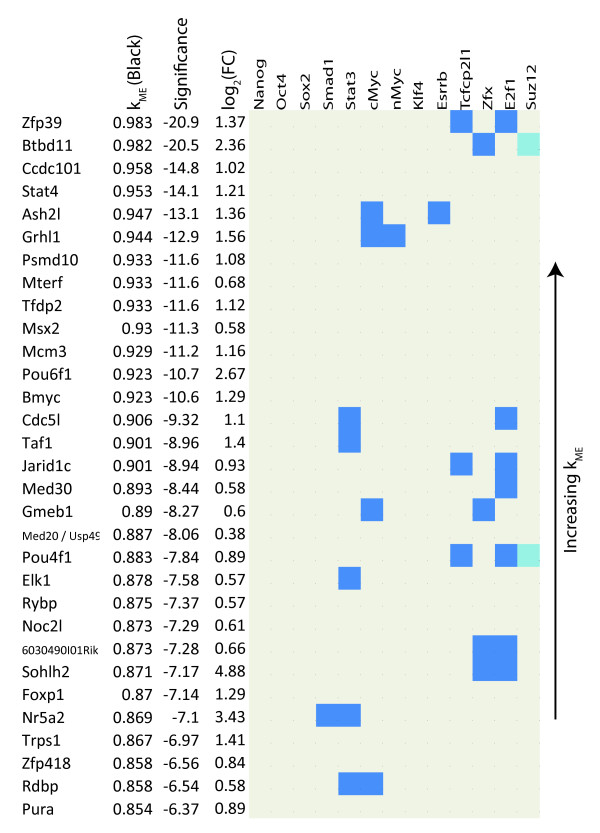
“Figure 9 shows genes with relatively high that lack binding by the TFs Nanog, Oct4, Sox2, and Klf4 [10,11] and have low binding (≤ 2) by other TFs that maintain pluripotency (Smad1, Stat3, cMyc, nMyc, Esrrb, Tcfcp2l1, Zfx, and E2f1).”
BackgroundInfluentialDAVID: Database for Annotation, Visualization, and Integrated Discovery
Dennis, G., Sherman, B. T., Hosack, D. A., Yang, J., Gao, W., Lane, H. C., & Lempicki, R. A. (2003) · Genome Biology · doi:10.1186/gb-2003-4-5-p3 · Cited by 9,327 · cited 3×
“ment using the Database for Annotation Visualization and Integrated Discovery (DAVID) [53].”
MethodInfluentialA General Framework for Weighted Gene Co-Expression Network Analysis
Zhang, B., & Horvath, S. (2005) · Statistical Applications in Genetics and Molecular Biology · doi:10.2202/1544-6115.1128 · Cited by 5,684 · cited 29×
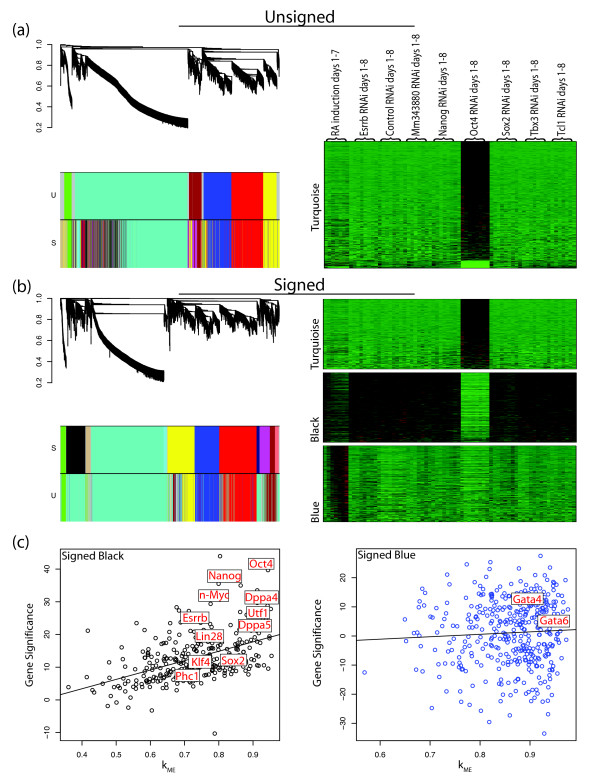
“It is important to reiterate that the pluripotency/self-renewal black module was only found using signed WGCNA.”
BackgroundMethodInfluentialSelf-citationA bivalent chromatin structure marks key developmental genes in embryonic stem cells
Bernstein, B. E., Mikkelsen, T. S., Xie, X., Kamal, M., Huebert, D. J., Cuff, J., Fry, B., Meissner, A., Wernig, M., Plath, K., et al. (2006) · Cell · doi:10.1016/j.cell.2006.02.041 · Cited by 5,361 · cited 1×
“Recent studies suggest that chromatin structure and epigenetic modifications, like histone modification and DNA methylation, play a role in controlling gene expression during ES cell self-renewal and differentiation [46-51].”
BackgroundSelf-citationHierarchical Organization of Modularity in Metabolic Networks
Ravasz, E., Somera, A. L., Mongru, D. A., Oltvai, Z. N., & Barabási, A.-L. (2002) · Science · doi:10.1126/science.1073374 · Cited by 4,224 · cited 7×
“Specifically, we define the proximity as the topological overlap measure (TOM) [35-37] which can also be defined for weighted networks [19].”
BackgroundInfluentialGenome-wide maps of chromatin state in pluripotent and lineage-committed cells
Mikkelsen, T. S., Ku, M., Jaffe, D. B., Issac, B., Lieberman, E., Giannoukos, G., Alvarez, P., Brockman, W., Kim, T.-K., Koche, R. P., et al. (2007) · Nature · doi:10.1038/nature06008 · Cited by 4,129 · cited 10×
“Recent studies suggest that chromatin structure and epigenetic modifications, like histone modification and DNA methylation, play a role in controlling gene expression during ES cell self-renewal and differentiation [46-51].”
BackgroundMethodInfluentialThe Homeoprotein Nanog Is Required for Maintenance of Pluripotency in Mouse Epiblast and ES Cells
Mitsui, K., Tokuzawa, Y., Itoh, H., Segawa, K., Murakami, M., Takahashi, K., Maruyama, M., Maeda, M., & Yamanaka, S. (2003) · Cell · doi:10.1016/s0092-8674(03)00393-3 · Cited by 3,192 · cited 1×
“Several studies have identified the targets of these TFs and the mechanism by which they regulate them [4,8,17].”
Background
Cited by
Sorted by citations
Items 101–200 of 255
Gaspar, J. A., Doss, M. X., Winkler, J., Wagh, V., Hescheler, J., Kolde, R., Vilo, J., Schulz, H., & Sachinidis, A. (2012) · Stem Cells and Development · doi:10.1089/scd.2011.0637 · Cited by 23
“Rbpj (recombination signal binding protein for immunoglobulin kappa J region) is involved in NOTCH signaling [23] and has been predicted to have an important role in maintaining pluripotency [24].”
High transcriptome plasticity drives phosphate starvation responses in tomato
Satheesh, V., Zhang, J., Li, J., You, Q., Zhao, P., Wang, P., & Lei, M. (2022) · Stress Biology · doi:10.1007/s44154-022-00035-4 · Cited by 23
“Hub genes are those that have strong connections within a given module and are considered possible regulators of that module (Mason et al. 2009).”
BackgroundBo, L., Wei, B., Wang, Z., Kong, D., Gao, Z., & Miao, Z. (2017) · Medical Science Monitor · doi:10.12659/msm.902953 · Cited by 23
“Briefly, the framework for WGCNA involves four steps 1) an unsigned similarity matrix of gene co-expression is initially determined based on pair-wise Pearson correlations for all genes across the samples; 2) the co-expression similarities are transformed into a weighted adjacency matrix of connection strengths using…”
MethodChen, Z., Wang, W., Zhang, Y., Xue, X., & Hua, Y. (2023) · Cytokine · doi:10.1016/j.cyto.2023.156300 · Cited by 23
Liu, W., Huang, X., Xiao, L., Zhou, Y., Li, H., Yu, Q., & Li, Q. (2017) · Plastic & Reconstructive Surgery · doi:10.1097/prs.0000000000003014 · Cited by 21
Bouchereau, W., Jouneau, L., Archilla, C., Aksoy, I., Moulin, A., Daniel, N., Peynot, N., Caldérari, S., Joly, T., Godet, M., et al. (2022) · Development · doi:10.1242/dev.200538 · Cited by 19
Xu, L., Zhao, F., Ren, H., Li, L., Lü, J., Liu, J., Zhang, S., Liu, G. E., Song, J., Zhang, L., et al. (2014) · International Journal of Biological Sciences · doi:10.7150/ijbs.9737 · Cited by 21
“WGCNA was developed to find modules/clusters of highly correlated genes and link modules to quantitative traits, which has been successfully applied in a variety of different studies recently [33, 34, 37-41].”
MethodShen, Z., Chen, Q., Ying, H., Ma, Z., Bi, X., Li, X., Wang, M., Jin, C., Lai, D., Zhao, Y., et al. (2019) · Experimental and Therapeutic Medicine · doi:10.3892/etm.2019.8239 · Cited by 18
Willis, C. R. G., Deane, C. S., Ames, R. M., Bass, J. J., Wilkinson, D. J., Smith, K., Phillips, B. E., Szewczyk, N. J., Atherton, P. J., & Etheridge, T. (2021) · Scientific Reports · doi:10.1038/s41598-021-03393-7 · Cited by 18
Chen, S., Liu, Z., Li, M., Huang, Y., Wang, M., Zeng, W., Wei, W., Zhang, C., Gong, Y. Q., & Guo, L. (2020) · Current Gene Therapy · doi:10.2174/1566523220666200516170832 · Cited by 17
Wu, Z., Du, G., & Lin, Y.-C. (2021) · Journal of Orthopaedic Surgery and Research · doi:10.1186/s13018-021-02796-6 · Cited by 17
“Construction of the WGCN and hub module identification The “WGCNA” package in R was utilized to construct a gene co-expression network [19, 20].”
MethodModule Based Differential Coexpression Analysis Method for Type 2 Diabetes
Yuan, L., Zheng, C.-H., Xia, J., & Huang, D.-S. (2015) · BioMed Research International · doi:10.1155/2015/836929 · Cited by 17
Liu, B., Huang, G., Zhu, H., Ma, Z., Tian, X., Yin, L., Gao, X.-Y., & He, X. (2019) · Oncology Reports · doi:10.3892/or.2019.7019 · Cited by 16
“To construct a scale-free gene co-expression network, the WGCNA package in R (14,22,23) was used.”
MethodZeng, D., Shen, H., Ma, C., Wen, Y., Xie, Y., Zhao, N., Sun, X., Wang, D., Shen, Y., Yu, Y., et al. (2019) · Frontiers in Genetics · doi:10.3389/fgene.2019.00703 · Cited by 16
Liu, J., Li, S., Lin, L., Jiang, Y., Wan, Y., Zhou, S., & Cheng, W. (2020) · Cancer Biomarkers · doi:10.3233/cbm-190533 · Cited by 16
“Secondly, we used the R package called “WGCNA” to build the co-expression network based on the genes [8, 9].”
Willis, C. R. G., Gallagher, I. J., Wilkinson, D. J., Brook, M. S., Bass, J. J., Phillips, B. E., Smith, K., Etheridge, T., Stokes, T., McGlory, C., et al. (2021) · The FASEB Journal · doi:10.1096/fj.202100276rr · Cited by 17
Liu, J., Li, S., Liang, J., Jiang, Y., Wan, Y., Zhou, S., & Cheng, W. (2019) · Cancer Management and Research · doi:10.2147/cmar.s189784 · Cited by 15
“Validation of hub genes The key genes were identified as the intersecting genes of the turquoise module in WGCNA and DEGs.”
MethodInfluentialChen, Y., Ni, P., Fu, R., Murphy, K. J., Wyeth, R. C., Bishop, C. D., Huang, X., Li, S., & Zhan, A. (2022) · Ecological Applications · doi:10.1002/eap.2772 · Cited by 18
Network analysis of human muscle adaptation to aging and contraction
Willis, C. R. G., Ames, R. M., Deane, C. S., Phillips, B. E., Boereboom, C., Abdulla, H., Bukhari, S. S. I., Lund, J. N., Williams, J. P., Wilkinson, D. J., et al. (2020) · Aging · doi:10.18632/aging.102653 · Cited by 15
“represents a biologically-motivated data reduction scheme that can provide novel understanding of complex biological phenomena beyond that attained via standard differential gene-level analysis alone [21, 23].”
BackgroundGui, S., Liu, Y., Pu, J., Song, X., Chen, X., Chen, W., Zhong, X., Wang, H., Liu, L., & Xie, P. (2021) · Journal of Affective Disorders · doi:10.1016/j.jad.2021.06.007 · Cited by 16
csuWGCNA: a combination of signed and unsigned WGCNA to capture negative correlations
Dai, R., Xia, Y., Liu, C., & Chen, C. (2018) · doi:10.1101/288225 · Cited by 13
Tissue specific LRRK2 interactomes reveal a distinct striatal functional unit
Zhao, Y., Vavouraki, N., Lovering, R. C., Escott‐Price, V., Harvey, K., Lewis, P. A., & Manzoni, C. (2023) · PLoS Computational Biology · doi:10.1371/journal.pcbi.1010847 · Cited by 17
A Survey of Current Integrative Network Algorithms for Systems Biology
Rider, A. K., Chawla, N. V., & Emrich, S. (2013) · Springer eBooks · doi:10.1007/978-94-007-6803-1_17 · Cited by 14
“[27] compared co-expression networks based on Pearson’s correlation to co-expression networks based on the absolute value of Pearson’s correlation and showed that modules in the signed network are more biologically coherent.”
BackgroundKang, K., Li, J., Li, R., Xu, X., Liu, J., Qin, L., Huang, T., Wu, J., Jiao, M., Wei, M., et al. (2019) · DNA and Cell Biology · doi:10.1089/dna.2019.4859 · Cited by 15
“The DEGs coexpression network was constructed by the WGCNA package for R (Mason et al. , 2009).”
Zhang, Y., Sun, L., Wang, X., Sun, Y., Chen, Y., Xu, M., Chi, P., Lu, X., & Xu, Z. (2020) · Frontiers in Genetics · doi:10.3389/fgene.2020.00113 · Cited by 13
“…GSE83889, GSE72968, GSE110785, and GSE69657 were contained CRC patients who received FOLFOX chemotherapy (Watanabe et al., 2011; Li et al., 2013; Estevez-Garcia et al., 2015; Tong et al., 2015; Del et al., 2017; Cherradi et al., 2017; Kwon et al., 2017; Okita et al., 2018; Cherradi et al., 2019).”
BackgroundGhosh, A., & Som, A. (2021) · Stem Cell Research · doi:10.1016/j.scr.2021.102334 · Cited by 14
Dehghanian, F., Hojati, Z., Esmaeili, F., & Masoudi‐Nejad, A. (2018) · Genomics · doi:10.1016/j.ygeno.2018.05.007 · Cited by 14
Scott, M. A., Woolums, A. R., Swiderski, C. E., Finley, A., Perkins, A., Nanduri, B., & Karisch, B. B. (2022) · PLoS ONE · doi:10.1371/journal.pone.0277033 · Cited by 13
Wang, A., Du, Y., He, Q., & Zhou, C. (2013) · PLoS ONE · doi:10.1371/journal.pone.0056095 · Cited by 13
“lection approaches as previously reported by our group [12] (Materials and methods). This ensures the selected biomarkers as the most important loci accounting for the most variability in the dataset [27,28]. Therefore, these ~200 biomarkers for each group should represent the most crucial and independent methylation…”
Hu, J., Li, R., Miao, H., & Wen, Z. (2020) · Journal of Thoracic Disease · doi:10.21037/jtd.2020.01.33 · Cited by 12
“The “WGCNA” R package was used to put the DEGs of ESCC samples from TCGA database into modules by average linkage clustering (19,20).”
MethodZhu, A., Pei, D., Zong, Y., Fan, Y., Wei, S., Xing, Z., Song, S., Wang, X., & Gao, X. (2023) · Frontiers in Oncology · doi:10.3389/fonc.2023.1199608 · Cited by 12
“WGCNA can help us to systematically construct individual biological interaction network maps that can help us to identify core genes that are highly associated with disease prognosis (28, 29).”
BackgroundHong, W., Hu, Y., Fan, Z., Gao, R., Yang, R., Bi, J., & Hou, J. (2019) · Oncology Letters · doi:10.3892/ol.2019.11171 · Cited by 13
“Therefore, highly connected hub genes in a signed networks may upregulate adjacent genes since they are positively correlated with them, while in unsigned networks, highly connected hub genes may activate or repress their neighboring genes (39).”
Novel oxidative stress-related prognostic biomarkers for melanoma associated with tumor metastasis
Wu, X., Wu, Z., & Zhao, J. (2021) · Medicine · doi:10.1097/md.0000000000024866 · Cited by 13
“Expression profiles of OS genes in TCGA cohort were utilized to create a co-expression networkwith R package “WGCNA”,([37,38]) and pairwise Pearson’s correlation coefficients were calculated between genes.”
MethodNetREx: Network-based Rice Expression Analysis Server for abiotic stress conditions
Sircar, S., Musaddi, M., & Parekh, N. (2022) · Database · doi:10.1093/database/baac060 · Cited by 12
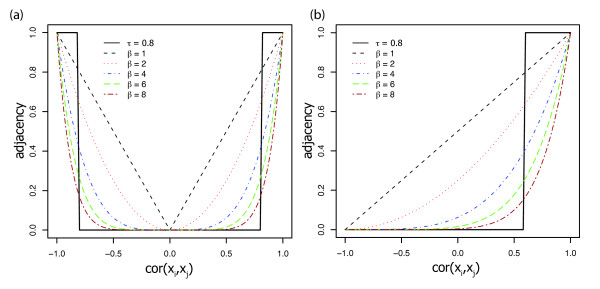
“The unsigned networks use the absolute value of correlations, s unsigned = ∣cor(xi,yj)∣, and are unable to distinguish between gene activation (sunsigned = 1) and gene repression (sunsigned = 1), leading to the loss of biological information (32).”
Cheng, S. Y., Li, Z., Zhang, W., Sun, Z., Fan, Z., Luo, J., & Liu, H. (2021) · Frontiers in Cell and Developmental Biology · doi:10.3389/fcell.2020.630790 · Cited by 12
“Construction of Gene Coexpression Network We construct a gene co-expression network using the WGCNA package (Horvath and Dong, 2008; Mason et al., 2009).”
MethodJiang, H., Zhou, C., Ma, J., Qu, S., Liu, F., Sun, H., Zhao, X., & Han, Y. (2023) · Frontiers in Plant Science · doi:10.3389/fpls.2022.1118503 · Cited by 11
“edu/html/CoexpressionNetwork/Rpackages/WGCNA/ Tutorials/) in R was used to perform the analysis, as described previously (Mason et al., 2009).”
MethodRichiardi, J., Altmann, A., & Greicius, M. D. (2017) · bioRxiv (Cold Spring Harbor Laboratory) · doi:10.1101/132746 · Cited by 11
Zhang, Y., Gao, Q., Wu, Y., Peng, Y., Zhuang, J., Yang, Y., Jiang, W., Liu, X., & Guan, G. (2021) · Frontiers in Cell and Developmental Biology · doi:10.3389/fcell.2021.607782 · Cited by 12
Mola, S., Foisy, S., Boucher, G., Major, F., Beauchamp, C., Karaky, M., Goyette, P., Lesage, S., & Rioux, J. D. (2020) · PLoS ONE · doi:10.1371/journal.pone.0233543 · Cited by 10
“Signed topology makes it easier for interpretation purposes or relevant biology, such as making distinction gene repression and activation [19].”
BackgroundUddin, R., & Singh, S. M. (2017) · Frontiers in Systems Neuroscience · doi:10.3389/fnsys.2017.00075 · Cited by 9
“…modeling method implemented in WGCNA (Zhang and Horvath, 2005) has gained a lot of popularity (Fuller et al., 2007; Oldham et al., 2008; Mason et al., 2009; Plaisier et al., 2009; Miller et al., 2010; Levine et al., 2013; Fontenot and Konopka, 2014; Rickabaugh et al., 2015; Ye and Liu,…”
MethodReassessing the modularity of gene co-expression networks using the Stochastic Block Model
Melo, D., Pallares, L. F., & Ayroles, J. F. (2024) · PLoS Computational Biology · doi:10.1371/journal.pcbi.1012300 · Cited by 10
“Furthermore, when a non-assortative group was introduced into the correlation matrix (Fig 3E), the two methods exhibited markedly different behaviors with respect to this non-assortative group.”
Analysis of Time-Resolved Gene Expression Measurements across Individuals
Elo, L. L., & Schwikowski, B. (2013) · PLoS ONE · doi:10.1371/journal.pone.0082340 · Cited by 10
“DE, WGCNA, and DCp Differential expression (DE) was determined using the Bioconductor limma package [28].”
MethodInfluentialTang, Y., Zha, L., Zeng, X., & Yu, Z. (2020) · Journal of Computational Biology · doi:10.1089/cmb.2019.0492 · Cited by 9
“The WGCNA R package (Mason et al., 2009) was used to construct the co-expression network.”
Dreval, K., Lake, R. J., & Fan, H.-Y. (2022) · Methods in molecular biology · doi:10.1007/978-1-0716-2201-8_9 · Cited by 8
Gehrmann, T., & Reinders, M. J. T. (2015) · Bioinformatics · doi:10.1093/bioinformatics/btv389 · Cited by 10
“Instead, we define a cluster score which reflects our expectations of syntenic clusters.”
BackgroundAssociation between SNAP25 and human glioblastoma multiform: a comprehensive bioinformatic analysis
Cheng, Y., Yin, J., Wang, X., Chen, L., Wei, Y., Lu, C., & You, Y. (2020) · Bioscience Reports · doi:10.1042/bsr20200516 · Cited by 8
Locally associated graphical models and mixed convex exponential families
Lauritzen, S. L., & Zwiernik, P. (2022) · The Annals of Statistics · doi:10.1214/22-aos2219 · Cited by 8
YUE, H., Yang, B. K., YANG, F., Hu, X.-L., & bin Kong, F. (2016) · Experimental and Therapeutic Medicine · doi:10.3892/etm.2016.3131 · Cited by 8
“The aforementioned co‑expression‑based methods have been used in a number of studies and have shown their usefulness in the interpretation of biological results and identification of important gene modules (17,21,22).”
Zhang, Y., Liu, Y., Ma, X., & Song, J. (2019) · Neural Computing and Applications · doi:10.1007/s00521-019-04597-9 · Cited by 8
“For example, the friendly and hostile relations coexist among individuals [15, 16], the alliances and disputes occur among countries simultaneously [17], and the active and inhibitive regulations appear among genes at the same time [18].”
BackgroundDecoding mechanosensitive genes in cardiac fibroblasts via 3D hydrogel models of fibrosis
Chen, H., Chen, Y., Yang, J., Yang, P. F., Cheng, H., & Guo, X. (2025) · Scientific Reports · doi:10.1038/s41598-025-16708-9 · Cited by 9
“Transcript-level expression data were normalized to transcripts per million (TPM) to approximate continuous and comparable values across samples, as required by WGCNA.”
InfluentialGene correlation network analysis to identify regulatory factors in sciatic nerve injury
Li, L., Du, X., Ling, H., Li, Y., Wu, X., Jin, A., & Yang, M. (2021) · Journal of Orthopaedic Surgery and Research · doi:10.1186/s13018-021-02756-0 · Cited by 7
Hasankhani, A., Bahrami, A., Mackie, S., Maghsoodi, S., Alawamleh, H. S. K., Sheybani, N., Dehkordi, F. S., Rajabi, F., Javanmard, G., Khadem, H., et al. (2022) · Frontiers in Microbiology · doi:10.3389/fmicb.2022.1041314 · Cited by 9
“Generally, signed networks provide a better understanding of the biological mechanisms behind traits/diseases at the systematic level and differentiate the potential functions of the modules better and more accurately (Mason et al., 2009).”
BackgroundRetractedLakatos, A., Goldberg, N. R. S., & Blurton-Jones, M. M. (2017) · Acta Neuropathologica Communications · doi:10.1186/s40478-017-0421-0 · Cited by 8
“Mitochondrial dysfunction and impairments in lysosomal function and mitophagy have been strongly implicated in the pathogenesis of Parkinson’s disease and other synucleinopathies [13, 70, 97, 107, 111].”
BackgroundInfluentialCathepsin-L Secreted by High-Quality Bovine Embryos Exerts an Embryotrophic Effect In Vitro
Raes, A., Wydooghe, E., Pavani, K. C., Pascottini, O. B., Steendam, K. V., Dhaenens, M., Boel, A., Heras, S., Heindryckx, B., Peelman, L. J., et al. (2023) · International Journal of Molecular Sciences · doi:10.3390/ijms24076563 · Cited by 7
Correlation and Gene Co-Expression Networks
Horvath, S. (2011) · Springer eBooks · doi:10.1007/978-1-4419-8819-5_5 · Cited by 7
Self-citationNetworks' characteristics are important for systems biology
Rider, A. K., Milenković, T., Siwo, G., Pinapati, R. S., Emrich, S., Ferdig, M. T., & Chawla, N. V. (2014) · Network Science · doi:10.1017/nws.2014.13 · Cited by 7
“Given a gene expression dataset, the strength (or weight) of the co-expression relationship between each pair of genes can be quantified in a number of ways, each of which may be revealing different biological insights (Rider et al., 2011; Mason et al., 2009).”
BackgroundInfluentialCanuti, E., & Penna, A. (2024) · Frontiers in Marine Science · doi:10.3389/fmars.2024.1425347 · Cited by 6
“However, Mason et al. (2009) provided evidence that utilizing the absolute value of the correlation may obscure biologically signi fi cant insights in unsigned networks.”
Bayesian hierarchical graph-structured model for pathway analysis using gene expression data
Zhou, H., & Zheng, T. (2013) · Statistical Applications in Genetics and Molecular Biology · doi:10.1515/sagmb-2013-0011 · Cited by 6
Identification of Prognosis-Related Oxidative Stress Model with Immunosuppression in HCC
Ren, Z., Zhang, J., Zheng, D., Luo, Y., Song, Z., Chen, F., Li, A., & Liu, X. (2023) · Biomedicines · doi:10.3390/biomedicines11030695 · Cited by 6
“The “WGCNA” R package was performed to build a co-expression network based on 434 DEOSGs in the TCGA database [25,26].”
MethodRoberts, W. R., & Roalson, E. H. (2020) · PeerJ · doi:10.7717/peerj.8778 · Cited by 7
Zhang, Y., Xu, M., Sun, Y., Chen, Y., Chi, P., Xu, Z., & Lu, X. (2021) · Frontiers in Cell and Developmental Biology · doi:10.3389/fcell.2020.609832 · Cited by 6
“We constructed the coexpression network by using the “WGCNA” package in R software (Horvath and Dong, 2008; Mason et al., 2009).”
MethodTF-Prioritizer: a Java pipeline to prioritize condition-specific transcription factors
Hoffmann, M., Trummer, N., Schwartz, L., Jankowski, J., Lee, H., Willruth, L.-L., Lazareva, O., Yuan, K. Z., Baumgarten, N., Schmidt, F., et al. (2022) · GigaScience · doi:10.1093/gigascience/giad026 · Cited by 6
“(ii) Some tools use a combination of TF ChIP-seq data—providing genome-wide information about the exact locations of TF binding—with predicted target genes that can enhance coexpression analyses [15].”
Patowary, P., Bhattacharyya, D. K., & Kalita, J. K. (2025) · Network Modeling Analysis in Health Informatics and Bioinformatics · doi:10.1007/s13721-025-00612-3 · Cited by 6
“These networks are crucial in studying diseases with complex regulatory mechanisms Mason et al. (2009 ).”
InfluentialWang, Y., FaXiang, J., Mao, W., Yu, Y., & Xu, W. (2024) · Frontiers in Microbiology · doi:10.3389/fmicb.2024.1349374 · Cited by 5
Schupp, P. G., Shelton, S. J., Brody, D. J., Eliscu, R., Johnson, B., Mazor, T., Kelley, K. W., Potts, M. B., McDermott, M. W., Huang, E. J., et al. (2024) · Cancers · doi:10.3390/cancers16132429 · Cited by 5
“These correlations were then scaled to lie between [0, 1] using the strategy of Mason et al. [113].”
Zhu, W., Ding, M., Chang, J. H., Liao, H., Xiao, G., & Wang, Q. (2022) · Chemical Biology & Drug Design · doi:10.1111/cbdd.14141 · Cited by 5
“Weighted gene co- expression network for the DEGs was conducted by R package “WGCNA” (Horvath & Dong, 2008; Mason et al., 2009).”
MethodA penalized Bayesian approach to predicting sparse protein–DNA binding landscapes
Levinson, M. D., & Zhou, Q. (2013) · Bioinformatics · doi:10.1093/bioinformatics/btt585 · Cited by 5
Self-citationChakraborty, A., Purcell, E. K., & Moore, M. G. (2025) · BMC Bioinformatics · doi:10.1186/s12859-025-06232-y · Cited by 4
“These modules were examined for differential coexpression, which revealed dynamic changes in gene regulatory networks across situations [14].”
Mashatola, L., Kader, Z., Abdulla, N., & Kaur, M. (2024) · International Journal of Data Science and Analytics · doi:10.1007/s41060-024-00534-9 · Cited by 4
Gaballah, H. H. (2016) · Transcriptomics Open Access · doi:10.4172/2329-8936.1000126 · Cited by 4
“, [17].”
Meng, J., Wen, H. Y., Li, X., Luan, B., Gong, S., Wen, J., Wang, Y., & Wang, L. (2021) · Bioengineered · doi:10.1080/21655979.2021.1990822 · Cited by 4
“In order to characterize the network biology more precisely, a signed WGCNA network was applied in present study [13].”
MethodIdentifying the hub genes and immune infiltration related to pyroptosis in rheumatoid arthritis
Xie, W., & Wu, Z. (2021) · Medicine · doi:10.1097/md.0000000000028321 · Cited by 4
“The complete gene expression profiles were utilized to construct a gene co-expression network in RA by the “WGCNA” package.([21,22]) All genes were subjected to pairwise Pearson’s correlation coefficients, and a weighted adjacency matrix was identified with the following formula: amn=jcmnjb (cmn = Pearson’s correlatio…”
MethodZhang, Y., Shu-wen, L. U. O., Hou, L., Gu, T., Zhu, G., Vongsangnak, W., Xu, Q., & Chen, G. (2022) · Journal of Integrative Agriculture · doi:10.1016/s2095-3119(21)63888-1 · Cited by 4
Huang, Y., Wang, Y., Sun, Z., Wang, G., Niu, J., & Luan, M. (2025) · BMC Plant Biology · doi:10.1186/s12870-025-07162-w · Cited by 3
Martin, L. E., Barr, J. S., Cartailler, J.-P., Shrestha, S., Estévez-Lao, T. Y., & Hillyer, J. F. (2025) · Immunity & Ageing · doi:10.1186/s12979-025-00551-7 · Cited by 3
“…we first identified how genes correlate in a network and performed power analysis of the signed network of correlations using the “beta” power selection for iWGCNA’s soft thresholding to reach scale-free topology [61], resulting in a power of 20 for downstream analysis (Additional File 3: File S2).”
Biomarker Identification for ESCC Using Integrative DEA
Patowary, P., Bhattacharyya, D. K., & Barah, P. (2019) · Lecture notes in computer science · doi:10.1007/978-3-030-34872-4_18 · Cited by 3
Locally associated graphical modelsPreprint
Lauritzen, S. L., & Zwiernik, P. (2020) · arXiv (Cornell University) · Cited by 3
Informed spatially aware patterns for multiplexed immunofluorescence data
Bhadury, S., Peruzzi, M., Acharyya, S., Eliason, J., di Magliano, M. P., Frankel, T. L., Ravikumar, V., Krishnan, S., & Rao, A. (2026) · Scientific Reports · doi:10.1038/s41598-026-35341-8 · Cited by 2
Biochip analysis of prostate cancer
Fan, M. Q., Wang, P. X., Feng, J., Xiao, Y., & Huang, C. B. (2014) · Genetics and Molecular Research · doi:10.4238/2014.january.10.6 · Cited by 2
Forabosco, P., Pala, M., Crobu, F., Diana, M. A., Marongiu, M., Cusano, R., Angius, A., Steri, M., Orrù, V., Schlessinger, D., et al. (2024) · Frontiers in Immunology · doi:10.3389/fimmu.2024.1350111 · Cited by 2
“Co-expression network analysis thus identi fi es gene sets, or modules, that are potentially involved in common biological functions, typically determined by enrichment of annotation terms (4 – 7).”
BackgroundMethodAnalysis of key lncRNA related to Parkinson’s disease based on gene co-expression weight networks
Liang, W., Zhao, W., Li, B., Luo, J., Li, X., & Jia, W. (2025) · Neurosciences · doi:10.17712/nsj.2025.1.20230112 · Cited by 2
ACT2.6: Global Gene Coexpression Network in Arabidopsis thaliana Using WGCNA
Zogopoulos, V. L., Papadopoulos, K. A., Malatras, A., Iconomidou, V. A., & Michalopoulos, I. (2025) · Genes · doi:10.3390/genes16030258 · Cited by 2
“Empirical and simulated studies have demonstrated the effectiveness of weighted network approaches in capturing meaningful biological relationships and producing more reliable results compared to unweighted networks, with WGNCA having numerous biological applications [27,28].”
Establishment of an Immune-Related Gene Signature for Risk Stratification for Patients with Glioma
He, J., Zeng, C., & Long, Y. (2021) · Computational and Mathematical Methods in Medicine · doi:10.1155/2021/2191709 · Cited by 2
“Module eigengene (ME) is defined as the main component of the first standardized expression profile [39] and also is thought as the representative gene expression profile in modules [33, 40].”
BackgroundBountress, K. E., Vladimirov, V. I., McMichael, G. O., Taylor, Z. N., Hardiman, G., Chung, D., Adams, Z. W., Danielson, C. K., & Amstadter, A. B. (2021) · Frontiers in Psychiatry · doi:10.3389/fpsyt.2021.581093 · Cited by 2
Wang, X., Gan, L., Ju, Y., Tang, M., & Liu, W. (2021) · Journal of Immunology Research · doi:10.1155/2021/9989321 · Cited by 2
Characterizing edges in signed and vector-valued graphs
Falher, G. L. (2018) · theses.fr (ABES) · doi:10.70675/909bbe94z5fa8z4ba3z80bbzc56545575d65 · Cited by 2
Sun, P., Xiao, M.-H., Chen, H., Zhong, Z., Jiang, H., Feng, X., & Luo, Z. (2022) · Frontiers in Pediatrics · doi:10.3389/fped.2022.1050326 · Cited by 1
Ba, H., Zhang, L., Peng, H., He, X., Lin, Y., Li, X., Li, S., Zhu, L., Qin, Y., Zhang, X., et al. (2023) · Journal of Immunology Research · doi:10.1155/2023/1774260 · Cited by 1
Zengin, H. Y., & Karabulut, E. (2023) · BMC Bioinformatics · doi:10.1186/s12859-023-05540-5 · Cited by 1
Zheng, J., Xu, X., Chen, X., Li, X., Fu, M., Zheng, Y., & Yang, J. (2025) · Frontiers in Oncology · doi:10.3389/fonc.2025.1630663 · Cited by 1
Yuan, L., Sha, W., Sun, Z.-L., & Zheng, C.-H. (2013) · Communications in computer and information science · doi:10.1007/978-3-642-39678-6_14 · Cited by 1
Identification of potential Parkinson’s disease biomarkers using computational biology approaches
Chowdhury, H. A., Barah, P., Bhattacharyya, D. K., & Kalita, J. K. (2021) · Network Modeling Analysis in Health Informatics and Bioinformatics · doi:10.1007/s13721-020-00280-5 · Cited by 1
Hub genes and their key effects on prognosis of Burkitt lymphoma
Xu, Y., Wang, G.-Y., Zhang, M., & Yang, J. (2023) · World Journal of Clinical Oncology · doi:10.5306/wjco.v14.i10.357 · Cited by 1
Topologically Overlapped Fused LASSO Measure for Reconstructing Gene Regulation Networks
Majumder, A., & Sharma, P. (2023) · IETE Journal of Research · doi:10.1080/03772063.2023.2280620 · Cited by 1
Chen, Y., Wang, D., Li, Q., Zhang, Y., Peng, Z., He, Y., Lin, B., Xu, M., Chen, Q., & Chen, Y. (2022) · Journal of Oncology · doi:10.1155/2022/4567063 · Cited by 1
“Briefly, firstly the coexpression network was constructed by “WGCNA” package in R software [20, 21].”
MethodA neuro-genetic approach for inferring gene regulatory networks from gene expression data
Mao, G., Pang, Z., Liu, J., & Zuo, K. (2022) · International Conference on Bioinformatics Research and Applications (ICBRA) · doi:10.1145/3569192.3569193 · Cited by 1
“These data were generated using GeneNetWeaver or GNW tools[12, 15].”
MethodGRASMOS: Graph Signage Model Selection for Gene Regulatory Networks
Brilliantova, A., Miller, H. J., & Bezáková, I. (2023) · Proceedings of the AAAI Conference on Artificial Intelligence · doi:10.1609/aaai.v37i10.26457
“Signed networks were successfully applied to model social interactions (trust/distrust in Epinions (Xu et al. 2019), epidemic spreading (Li et al. 2021), political interactions between US Congressmen (Thomas, Pang, and Lee 2006), and gene regulation (Mason et al. 2009).”
BackgroundMethodSIREN Cytoscape plugin: Interaction Type Discrimination in Gene Regulatory NetworksPreprint
Montojo, J., Khosravi, P., Gazestani, V., & Bader, G. D. (2015) · arXiv (Cornell University) · doi:10.48550/arxiv.1512.05067 · Cited by 1
“module-centric analysis, network simulation and is essential for data interpretation [2, 3].”
BackgroundTissue specific LRRK2 interactomes reveal a distinct functional unit within the striatumPreprint
Zhao, Y., Vavouraki, N., Lovering, R. C., Escott‐Price, V., Harvey, K., Lewis, P. A., & Manzoni, C. (2022) · bioRxiv (Cold Spring Harbor Laboratory) · doi:10.1101/2022.06.28.497918 · Cited by 1
“The Rab GTPase family and the 14-3-3 family are the 2 groups of proteins that have been most widely recognised as LRRK2 interactors (Mason et al, 2009; Seol et al, 2019).”
BackgroundA deep graph model for the signed interaction prediction in biological networkPreprint
Jin, S., Zhang, M., Wang, M., & Yu, L. (2024) · Research Square · doi:10.21203/rs.3.rs-4783941/v1 · Cited by 1
Metadata
- Authors
- Mason, M. J., Fan, G., Plath, K., Zhou, Q., & Horvath, S.
- Affiliations
- University of California, Los Angeles (US)
- Corresponding author
- Zhou, Qing
- Horvath, Steve
- Venue
- BMC Genomics
- Published
- 2009-07-20
- Volume
- 10
- Issue
- 1
- Pages
- 327-327
- ISSN
- 1471-2164 (ISSN-L)
- PMC
- PMC2727539
- OpenAlex
- W2138720219
- Cited by
- 243
- References
- 77
- Citations by year
- 2026: 8 · 2025: 10 · 2024: 12 · 2023: 12 · 2022: 18 · 2021: 34 · 2020: 18 · 2019: 18 · 2018: 18 · 2017: 12 · 2016: 10 · 2015: 8 · 2014: 14 · 2013: 22 · 2012: 11
- FWCI
- 3.89
- Type
- journal article
- Language
- en
- Open access
- gold
- doi.org
- Licence
- cc-by
- Locations
- BMC Genomics (publishedVersion, cc-by)
- PubMed Central (publishedVersion, cc-by)
- PubMed (publishedVersion)
- DOAJ (DOAJ: Directory of Open Access Journals) (submittedVersion)
- eScholarship (California Digital Library) (submittedVersion)
- The HKU Scholars Hub (University of Hong Kong) (submittedVersion)
- Funders
- National Science Foundation (0805491)
- National Institutes of Health (1dp2od001686-01)
- National Cancer Institute (P50CA092131, P30CA016042)
- National Institute of General Medical Sciences (P01GM081621)
- National Institute of Allergy and Infectious Diseases (U19AI063603)
- National Institute of Diabetes and Digestive and Kidney Diseases (R01DK072206, DK-072206)
- Topics
- Life Sciences › Biochemistry, Genetics and Molecular Biology › Molecular Biology › Pluripotent Stem Cells Research
- Life Sciences › Biochemistry, Genetics and Molecular Biology › Molecular Biology › Bioinformatics and Genomic Networks
- Life Sciences › Biochemistry, Genetics and Molecular Biology › Molecular Biology › Gene Regulatory Network Analysis
- Keywords
- mouse embryonic stem cells, pluripotency, self-renewal, gene co-expression network, transcriptional regulation, transcription factor binding, DNA repair, mitochondrial function, histone modifications, promoter CpG methylation, epigenetic regulation, module membership
- MeSH terms
- Animals, Chromatin, DNA, DNA Damage, DNA Repair, Gene Expression Regulation, Protein Binding, Transcription Factors, Transcription, Genetic, CpG Islands, DNA Methylation, Gene Expression Profiling, Pluripotent Stem Cells, Mice, Gene Regulatory Networks, Embryonic Stem Cells
About these checks
Registry, retraction, Cites and statistics results are computed, not judged, with one exception: a printed reference that no index lists is read once by a model before it counts as a citation error. Claims are extracted by a model and kept only when their quote appears verbatim in the text; each cited source is then checked, with a model’s help, for whether it says what the claim relies on. Those verdicts can be wrong — read the claim’s quote and the cited source before relying on one.
Statistics and arithmetic are recomputed, not judged.
Confidence bands are shown only for fields calibrated on our annotated test set. None is calibrated yet, so no band is shown.
What counts as a claim ›How we measure confidence ›How we check this ›
Are you an author, or do you see a problem with this page? Request a review
