

Comparative 454 pyrosequencing of transcripts from two olive genotypes during fruit development
Open accessThe DOI matches its Crossref record; 31 of the 33 references it cites were found in a registry or an index, and 1 are not checked yet.
Abstract
Background: Despite its primary economic importance, genomic information on olive tree is still lacking. 454 pyrosequencing was used to enrich the very few sequence data currently available for the Olea europaea species and to identify genes involved in expression of fruit quality traits. Results: Fruits of Coratina, a widely cultivated variety characterized by a very high phenolic content, and Tendellone, an oleuropein-lacking natural variant, were used as starting material for monitoring the transcriptome. Four different cDNA libraries were sequenced, respectively at the beginning and at the end of drupe development. A total of 261,485 reads were obtained, for an output of about 58 Mb. Raw sequence data were processed using a four step pipeline procedure and data were stored in a relational database with a web interface. Conclusion: Massively parallel sequencing of different fruit cDNA collections has provided large scale information about the structure and putative function of gene transcripts accumulated during fruit development. Comparative transcript profiling allowed the identification of differentially expressed genes with potential relevance in regulating the fruit metabolism and phenolic content during ripening.
Overview
The claims and statistics of this paper haven’t been checked yet.
Free: it reads the open-access text and checks the first 5 claims that cite a source we can check. Create a free account to check every claim.
Integrity signals
Registry
Cites
Statistics
Figures
Verification
Claims the paper makes
The claims and statistics of this paper haven’t been checked yet.
Free: it reads the open-access text and checks the first 5 claims that cite a source we can check. Create a free account to check every claim.
Claims other papers make about this one
Each is checked against this paper’s own text: does it say what the citing paper says it does?
The cited source says what the claim attributes to it.
In the citing paper
“Due to its long read length and appearance ahead of the other two platforms, Roche GS FLX has been the most widely used platform for de novo transcriptome sequencing in many organisms, such as chestnut [19], pine [10], olive [44], ginseng [20], A. thaliana [45,46], maize [47], Artemisia annua [48], fish [18], insects [49,50], and worms [17].”
Self-check
Percentages, sums and reported differences re-computed from the paper’s own numbers.
The self-check needs the paper’s full text.
Citations
Cites
Gene Ontology: tool for the unification of biology
Ashburner, M., Ball, C. A., Blake, J. A., Botstein, D., Butler, H., Cherry, J. M., Davis, A. P., Dolinski, K., Dwight, S. S., Eppig, J. T., et al. (2000) · Nature Genetics · doi:10.1038/75556 · Cited by 43,206
Genome sequencing in microfabricated high-density picolitre reactors
Margulies, M., Egholm, M., Altman, W. E., Attiya, S., Bader, J. S., Bemben, L. A., Berka, J., Braverman, M. S., Chen, Y.-J., Chen, Z., et al. (2005) · Nature · doi:10.1038/nature03959 · Cited by 7,693 · cited 1×
“In this respect, the 454 pyrosequencing technology [1] is a rather novel method for high-throughput DNA sequencing, allowing gene discovery and parallel efficient and quantitative analysis of expression patterns in cells, tissues and organs.”
MethodKEGG for linking genomes to life and the environment
Kanehisa, M., Araki, M., Goto, S., Hattori, M., Hirakawa, M., Itoh, M., Katayama, T., Kawashima, S., Okuda, S., Tokimatsu, T., et al. (2007) · Nucleic Acids Research · doi:10.1093/nar/gkm882 · Cited by 6,782 · cited 4×
“dat files (release 04 Nov 2008) retrieved from the ExPASy FTP site; myGO, a mirror of the Gene Ontology database, which was built by running the seqdblite MySQL script (version 20081102) downloaded from the GO database archives; myKEGG, which was built by parsing XML files of the KEGG pathways (release 21 October 2008…”
MethodInfluentialThe Universal Protein Resource (UniProt)
Bairoch, A. (2004) · Nucleic Acids Research · doi:10.1093/nar/gki070 · Cited by 3,774
Repbase Update, a database of eukaryotic repetitive elements
Jurka, J., Kapitonov, V. V., Pavlicek, A., Klonowski, P., Kohany, O., & Walichiewicz, J. (2005) · Cytogenetic and Genome Research · doi:10.1159/000084979 · Cited by 3,370 · cited 1×
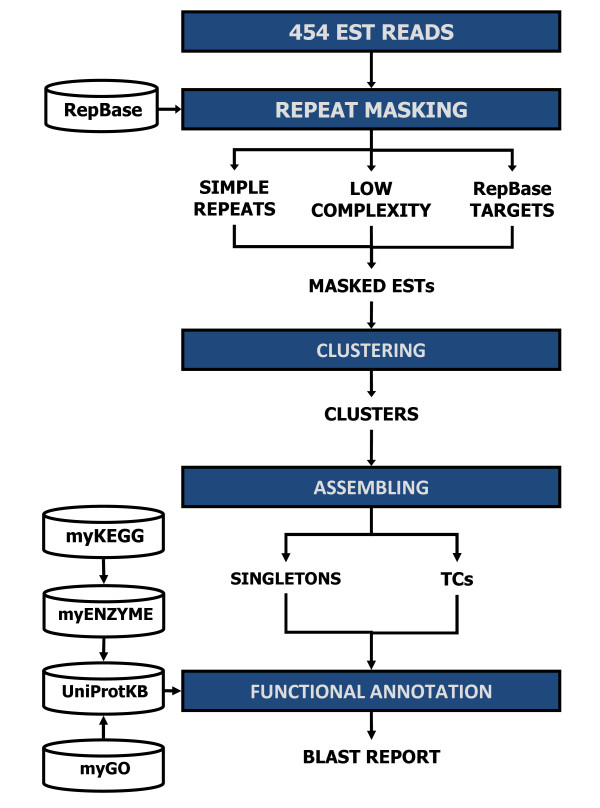
“06) [27], a library of repetitive elements, and returned as masked sequences ready for the clustering/assembling and annotation procedures.”
BackgroundBairoch, A. (2000) · Nucleic Acids Research · doi:10.1093/nar/28.1.304 · Cited by 1,129
Ibuprofen-like activity in extra-virgin olive oil
Beauchamp, G. K., Keast, R. S. J., Morel, D., Lin, J., Pika, J., Han, Q., Lee, C.-H., Smith, A. B., & Breslin, P. A. S. (2005) · Nature · doi:10.1038/437045a · Cited by 885
The Universal Protein Resource (UniProt)
The UniProt Consortium (2007) · Nucleic Acids Research · doi:10.1093/nar/gkm895 · Cited by 823
(2008) · Nutrition & Food Science · doi:10.1108/nfs.2008.01738aab.008 · Cited by 611
Servili, M., Selvaggini, R., Esposto, S., Taticchi, A., Montedoro, G., & Morozzi, G. (2004) · Journal of Chromatography A · doi:10.1016/j.chroma.2004.08.070 · Cited by 588 · cited 2×
“Secoiridoids represent the most important class of phenolics and they arise from simple structures, like tyrosol and hydroxytyrosol, to quantitatively more important conjugated forms like oleuropein, demethyloleuropein, 34DHPEA-EDA and ligstroside [10].”
BackgroundSelf-citation
Research works printed but not linked: 1
- Sanchez J Harwood JL Biosynthesis of triacylglycerols and volatiles in olives Eur J Lipid Sci Technol 2002 104 564 573 10.1002/1438-9312(200210)104:9/10<564::AID-EJLT564>3.0.CO;2-5 · doi:10.1002/1438-9312(200210)104:9/10<564::aid-ejlt564>3.0.co;2-5
Cited by
Items 201–263 of 263
Du, Y., Lin, Y., Zhang, K., Rothenberg, D. O., Zhang, H., Zhou, H., Su, H., & Zhang, L. (2023) · International Journal of Molecular Sciences · doi:10.3390/ijms241713198 · Cited by 4
Lagiotis, G., Karamichali, I., Astrinaki, M., Bibi, A. C., Vassou, D., Nteve, G., Anastasios, K., Manolikaki, I., Skodra, C., Michailidis, M., et al. (2024) · Physiologia Plantarum · doi:10.1111/ppl.14600 · Cited by 4
Wang, B., Zhang, C., Li, J., Li, X., Mao, J., Wang, Y., & Zhang, Z. (2024) · Acta Physiologiae Plantarum · doi:10.1007/s11738-024-03726-9 · Cited by 5
Biotechnology and molecular biology of tropical and subtropical fruits
Islas-Osuna, M. A., & Tiznado‐Hernández, M. E. (2011) · Elsevier eBooks · doi:10.1533/9780857093622.315 · Cited by 4
The diverse roles of vitamin E, its occurrence and regulation in different plant tissues
Georgiadou, E. C., Manganaris, G. Α., & Fotopoulos, V. (2020) · Zywnosc-nauka Technologia Jakosc · doi:10.15193/zntj/2020/125/363 · Cited by 4
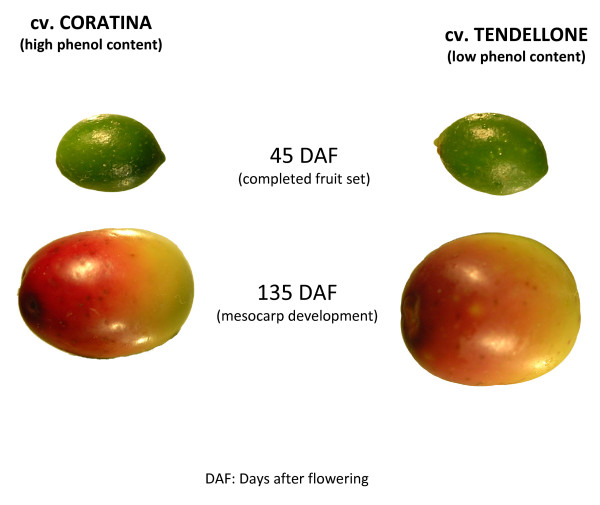
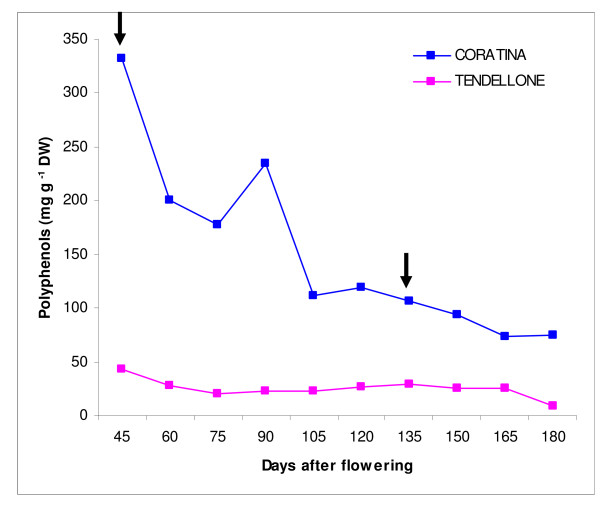
“It was also found that olive oil production and phenolic fraction increase, reaching their highest levels when the mesocarp reaches the end of its development and change colour [3, 7, 10, 38].”
BackgroundMachine learning-aided microRNA discovery for olive oil quality
Pakdel, M. H., Asadi, A., Tavakol, E., Shariati, V., & Mazinani, M. H. (2024) · PLoS ONE · doi:10.1371/journal.pone.0311569 · Cited by 3
Fruit Germplasm Characterization: Genomics Approaches for the Valorisation of Genetic Diversity
Muzzalupo, I., Perri, E., & Chiappett, A. (2012) · InTech eBooks · doi:10.5772/32906 · Cited by 5
“In this contest, the parallel sequencing of different fruit cDNA collections has provided large scale information about the structure and putative function of gene transcripts accumulated during fruit development (Alagna et al., 2009).”
BackgroundIn Silico Identification of Plant-Derived Secondary Metabolites in Defense
Nadarajah, K. K. (2018) · Springer eBooks · doi:10.1007/978-981-13-0347-0_16 · Cited by 5
Genetics and Molecular Biology of Olives
Banilas, G., & Hatzopoulos, P. (2013) · Springer eBooks · doi:10.1007/978-1-4614-7777-8_5 · Cited by 3
Tackling the Heat-Stress Tolerance in Crop Plants: A Bioinformatics Approach
Palakolanu, S. R., Vadez, V., Sreenivasulu, N., & Kishor, P. B. K. (2014) · Springer eBooks · doi:10.1007/978-81-322-1880-7_3 · Cited by 2
Functional network analysis of gene‑phenotype connectivity based on pioglitazone
Wang, W., Zhang, L., Wang, X., Lin, D., Pan, Q., & Guo, L. (2019) · Experimental and Therapeutic Medicine · doi:10.3892/etm.2019.8162 · Cited by 2
“Therefore, it has been widely applied in the fields of life science and medicine (11-13).”
BackgroundSex-specific expression during embryonic development of Anopheles gambiae
Dennison, N. J. (2012) · University of Liverpool · doi:10.17638/00006373 · Cited by 2
Bioinformatics Applied to Proteomics
Cristoni, S., & Mazzuc, S. (2011) · InTech eBooks · doi:10.5772/23680 · Cited by 3
AL-Janabi, A. S. A., & Al-Rawi, T. K. (2018) · SABRAO Journal of Breeding and Genetics · Cited by 5
Choudhary, A. K., Riyazuddin, R., Maurya, A. K., & Gupta, R. (2021) · Springer eBooks · doi:10.1007/978-981-16-3876-3_10 · Cited by 2
Transcriptome Analysis of Medicinal Plant with Next‐Generation Sequencing Technologies
Chen, S., & Luo, H. (2014) · Wiley eBooks · doi:10.1002/9780470027318.a9936 · Cited by 2
Xanthopoulou, A., Ganopoulos, I. V., Bosmali, I., Tsaftaris, A. S., & Madesis, P. B. (2017) · Wiley eBooks · doi:10.1002/9781119135340.ch32 · Cited by 2
Diversity and Roles of Mycorrhizal Fungi in the Bee Orchid Ophrys apifera
Abdullah, W. (2018) · University of Liverpool · doi:10.17638/03022579 · Cited by 4
Bioinformatics Approaches for Unraveling the Complexities of Plant Stress Physiology
Murmu, S., Chaurasia, H., Samal, I., Bhoi, T. K., & Pradhan, A. K. (2024) · Wiley eBooks · doi:10.1002/9781394209965.ch8 · Cited by 2
Plasticité phénotypique et moléculaire de deux clones d'eucalyptus sous contrainte hydrique au champ
Villar, É. (2011) · theses.fr (ABES) · doi:10.70675/52657987zfd09z428dz9e36z619c173798ea · Cited by 3
“Figure 4 – Evolution of water reserve was modeled using soil volumetric water content measured with TDR trases installed on P6 for the two genotypes (1-41; 18-50) subjected to the two treatments (NIR; IR).”
MethodEffect of abscisic acid on the maturation of olive trees cv. Arbequina
Contreras, A., & Lagos, T. F. (2012) · Idesia · doi:10.4067/s0718-34292012000100005 · Cited by 1
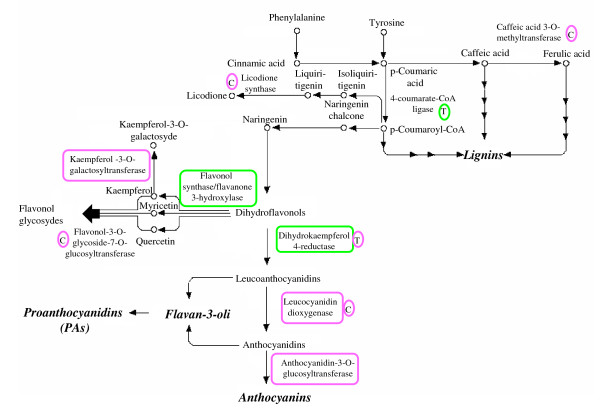
“Anthocyanins are the pigments which give the olive fruit its final color (Agustí, 2008); a number of the genes involved in the anthocyanin pathway have been identified in olive fruit (Alagna et al., 2009).”
BackgroundJIANG, G.-X., Chen, H., & Tan, X. (2013) · DOAJ (DOAJ: Directory of Open Access Journals) · Cited by 1
Olive Tree in the Genomic Era: Focus on Plant Architecture
Plaza, J. J. G., & Hulak, N. (2016) · Agriculturae Conspectus Scientificus (Poljoprivredna Znanstvena Smotra) · Cited by 2
Optimizing of cDNA preparation for next generation sequencing
Qin, Q., Zhang, L., Li, N., Cui, Y., & Xu, K. (2011) · Hereditas (Beijing) · doi:10.3724/sp.j.1005.2010.00974 · Cited by 1
“[3] Alagna F, D'Agostino N, Torchia L, Servili M, Rao R, Pietrella M, Giuliano G, Chiusano ML, Baldoni L, Perrotta G.”
BackgroundXue, Z., Li, Y., Yin, X., Guo, Y., & Liu, J. (2024) · Elsevier eBooks · doi:10.1016/b978-0-443-15558-1.00002-3 · Cited by 2
De novo assembly and annotation of the grey reindeer lichen (Cladonia rangiferina) transcriptome
Junttila, S., & Rudd, S. A. (2013) · EMBnet journal · doi:10.14806/ej.19.a.644 · Cited by 1
AL-Janabi, A. S. A. (2015) · European Journal of Molecular Biotechnology · doi:10.13187/ejmb.2015.7.27 · Cited by 1
“) is an evergreen species that ranks sixth in the world's production of vegetable oils [1].”
BackgroundMetabolic and Biochemical Profiling of Phenolic Compound and their Biosynthesis in Oil Crops
Shah, Z. H. (2019) · Biomedical Journal of Scientific & Technical Research · doi:10.26717/bjstr.2019.18.003166 · Cited by 3
Role of Metabolomics and Next-Generation Sequencing for Sustainable Crop Production
Waseem, M., Nkurikiyimfura, O., Niyitanga, S., Nyimbo, W. J., Shaheen, I., & Aslam, M. M. (2022) · Springer eBooks · doi:10.1007/978-3-030-96925-7_5 · Cited by 2
An investigation of genetic factors impacting sterol profiles in Australian olive oils
Ray, D. L. (2014) · Victoria University Research Repository (Victoria University) · Cited by 2
Molecular genetic causes of columnar growth in apple (Malus x domestica)
Petersen, R. (2014) · Gutenberg Open Science · doi:10.25358/openscience-4281 · Cited by 1
Garzón-Martínez, G. A. (2020) · Repositorio Institucional (Pontificia Universidad Javeriana) · doi:10.11144/javeriana.10554.3384 · Cited by 1
Olive Tree: A Source of Functional Bioactive Components
Journals, I., Parveen, S., Ishfaq, B., Kausar, H., Saeed, S., & Ali, M. A. (2015) · Figshare · doi:10.6084/m9.figshare.1520400 · Cited by 1
High-Throughput Transcriptome Analysis of Plant Stress Responses
Tombuloğlu, G., & Tombuloğlu, H. (2015) · Springer eBooks · doi:10.1007/978-3-319-17157-9_12
Gómez, C. (2012) · RiuNet (Universitat Politècnica de València) · doi:10.4995/thesis/10251/17046 · Cited by 2
OLIVE GENETIC DIVERSITY AND MOLECULAR INTERACTION WITH BACTROCERA OLEAE
Grasso, F. (2015) · Università degli Studi di Napoli Federico II · doi:10.6092/unina/fedoa/10340
“La caratterizzazione metabolica e trascrittomica ha consentito l'identificazione dei geni differenzialmente espressi durante lo sviluppo del frutto (Alagna et al., 2009).”
BackgroundRegulation of juvenility in Antirrhinum majus
Sgamma, T. (2026) · Warwick Research Archive Portal (University of Warwick) · doi:10.82444/warw.33672691
The difference between Treg cells and naive T cells analyzed by cluster analysis
Wang, Y. (2017) · International Conference on Machinery, Electronics and Control Simulation (MECS) · doi:10.2991/mecs-17.2017.46
“RNA-seq more fully reveals the biological individuals at specific times and specific tissue global gene expression ([5-9]), such as the discovery of new transcripts.”
BackgroundBandupriya, H. D. D. (2015) · CORD · doi:10.37833/cord.v31i2.58
“…EST analyses in non-model plants (Barakat et al. 2009; Graham et al. 2010; Li et al. 2010; Luo et al. 2010; Wang et al. 2009; Novaes et al. 2008; Alagna et al. 2009) and is an ideal way to discover genes and markers, quantify transcripts and discover small RNA (Morozova et al. 2009; Brautigam…”
BackgroundJai-uean, A., & Sangin, P. (2021) · Genetics and Molecular Research · doi:10.4238/gmr18802
Developments in Tomato Transcriptomics
Matas, A. J., Fei, Z., & Giovannoni, J. J. (2013) · CRC Press eBooks · doi:10.1201/b14578-17
Díaz, A. (2011) · Springer eBooks · doi:10.1007/978-1-4614-0356-2_11
journal, E. (2013) · EMBnet journal · doi:10.14806/ej.19.a.689
张, 渝. (2020) · Botanical Research · doi:10.12677/br.2020.96066
Genotyping Technologies for Olive Cultivar Characterization and Development of Functional Markers
Mousavi, S., Mariotti, R., Belaj, A., Guerrero, C., Valeri, M. C., & Baldoni, L. (2023) · CABI eBooks · doi:10.1079/9781789247350.0007
Self-citationWang, Z., Fang, B., Chen, J., Zhang, X., Luo, Z., Huang, L., Chen, X., & Li, Y. (2020) · Figshare · doi:10.6084/m9.figshare.12880604
Coppe, A., Pujolar, J. M., Maes, G. E., Larsen, P. F., Hansen, M. M., Bernatchez, L., Zane, L., & Bortoluzzi, S. (2021) · Figshare · doi:10.6084/m9.figshare.14434826
Wang, Z., Fang, B., Chen, J., Zhang, X., Luo, Z., Huang, L., Chen, X., & Li, Y. (2020) · Figshare · doi:10.6084/m9.figshare.12880616
Wang, Z., Fang, B., Chen, J., Zhang, X., Luo, Z., Huang, L., Chen, X., & Li, Y. (2020) · Figshare · doi:10.6084/m9.figshare.12880619
Wang, Z., Fang, B., Chen, J., Zhang, X., Luo, Z., Huang, L., Chen, X., & Li, Y. (2020) · Figshare · doi:10.6084/m9.figshare.12880610
Coppe, A., Pujolar, J. M., Maes, G. E., Larsen, P. F., Hansen, M. M., Bernatchez, L., Zane, L., & Bortoluzzi, S. (2021) · Figshare · doi:10.6084/m9.figshare.14434838
Wang, Z., Fang, B., Chen, J., Zhang, X., Luo, Z., Huang, L., Chen, X., & Li, Y. (2020) · Figshare · doi:10.6084/m9.figshare.12880625
Wang, Z., Fang, B., Chen, J., Zhang, X., Luo, Z., Huang, L., Chen, X., & Li, Y. (2020) · Figshare · doi:10.6084/m9.figshare.12880601
Coppe, A., Pujolar, J. M., Maes, G. E., Larsen, P. F., Hansen, M. M., Bernatchez, L., Zane, L., & Bortoluzzi, S. (2021) · Figshare · doi:10.6084/m9.figshare.14434844
Wang, Z., Fang, B., Chen, J., Zhang, X., Luo, Z., Huang, L., Chen, X., & Li, Y. (2020) · Figshare · doi:10.6084/m9.figshare.12880631
Wang, Z., Fang, B., Chen, J., Zhang, X., Luo, Z., Huang, L., Chen, X., & Li, Y. (2020) · Figshare · doi:10.6084/m9.figshare.12880628
Wang, Z., Fang, B., Chen, J., Zhang, X., Luo, Z., Huang, L., Chen, X., & Li, Y. (2020) · Figshare · doi:10.6084/m9.figshare.12880613
Wang, Z., Fang, B., Chen, J., Zhang, X., Luo, Z., Huang, L., Chen, X., & Li, Y. (2020) · Figshare · doi:10.6084/m9.figshare.12880598
de Carvalho, J. F. (2013) · theses.fr (ABES) · doi:10.70675/1e79d92cz4a5fz4205zab66zcc2e30c0d6f1 · Cited by 1
Vers une comparaison métatranscriptomique entre deux sols alpins sous couvert nival contrasté
Mustafa, T. (2011) · theses.fr (ABES) · doi:10.70675/f44ff2adze29az4b9eza7f4z55fddfc0ba62
Diversité et biosynthèse des lipides chez les palmiers
Guerin, C. (2015) · theses.fr (ABES) · doi:10.70675/8e5c888czcde3z4e37zac82zcdb4e367da59
Genomics of Temperate Fruit Trees
Aranzana, M. J., Eduardo, I., Vilanova, S., Romero, C., & Martín‐Hernández, A. M. (2012) · Springer eBooks · doi:10.1007/978-1-4614-0920-5_6 · Cited by 1
Metadata
- Authors
- Alagna, F., D'Agostino, N., Torchia, L., Servili, M., Rao, R., Pietrella, M., Giuliano, G., Chiusano, M. L., Baldoni, L., & Perrotta, G.
- Affiliations
- National Agency for New Technologies, Energy and Sustainable Economic Development (IT)
- University of Perugia (IT)
- University of Naples Federico II (IT)
- Corresponding author
- Baldoni, Luciana
- Perrotta, Gaetano
- ORCID
- Venue
- BMC Genomics
- Published
- 2009-08-26
- Volume
- 10
- Issue
- 1
- Pages
- 399-399
- ISSN
- 1471-2164 (ISSN-L)
- PMC
- PMC2748093
- OpenAlex
- W2159594972
- Cited by
- 263
- References
- 33
- Citations by year
- 2026: 1 · 2025: 1 · 2024: 7 · 2023: 8 · 2022: 5 · 2021: 13 · 2020: 21 · 2019: 14 · 2018: 13 · 2017: 14 · 2016: 23 · 2015: 28 · 2014: 21 · 2013: 24 · 2012: 30
- FWCI
- 9.40
- Type
- journal article
- Language
- en
- Open access
- gold
- doi.org
- Licence
- cc-by
- Locations
- BMC Genomics (publishedVersion, cc-by)
- PubMed Central (publishedVersion, cc-by)
- PubMed (publishedVersion)
- DOAJ (DOAJ: Directory of Open Access Journals) (submittedVersion, cc-by-sa)
- Topics
- Life Sciences › Biochemistry, Genetics and Molecular Biology › Molecular Biology › Genomics and Phylogenetic Studies
- Life Sciences › Biochemistry, Genetics and Molecular Biology › Genetics › Genetic Mapping and Diversity in Plants and Animals
- Life Sciences › Agricultural and Biological Sciences › Plant Science › Plant Molecular Biology Research
- Keywords
- olive, Olea europaea, fruit development, transcriptome, Coratina, phenolic content, oleuropein, fruit quality, differentially expressed genes, fruit metabolism, cDNA library
- MeSH terms
- Fruit, Genotype, Phenols, User-Computer Interface, Gene Library, Sequence Analysis, DNA, DNA, Complementary, Gene Expression Regulation, Plant, Gene Expression Regulation, Developmental, DNA, Plant, Genome, Plant, Expressed Sequence Tags, Gene Expression Profiling, Databases, Genetic, Olea, Lipid Metabolism, Comparative Genomic Hybridization
About these checks
Registry, retraction, Cites and statistics results are computed, not judged, with one exception: a printed reference that no index lists is read once by a model before it counts as a citation error. Claims are extracted by a model and kept only when their quote appears verbatim in the text; each cited source is then checked, with a model’s help, for whether it says what the claim relies on. Those verdicts can be wrong — read the claim’s quote and the cited source before relying on one.
Statistics and arithmetic are recomputed, not judged.
Confidence bands are shown only for fields calibrated on our annotated test set. None is calibrated yet, so no band is shown.
What counts as a claim ›How we measure confidence ›How we check this ›
Are you an author, or do you see a problem with this page? Request a review
Data sources
Bibliographic data: Semantic Scholar, OpenAlex, Crossref.
Contains information from the Semantic Scholar Academic Graph Datasets, made available under the ODC Attribution License (ODC-BY 1.0).
Semantic Scholar’s data is described in: Kinney, R., et al. (2023). The Semantic Scholar Open Data Platform. arXiv:2301.10140.
