

RegPrecise 3.0–a resource for genome-scale exploration of transcriptional regulation in bacteria
Open accessThe DOI matches its Crossref record; 40 of the 44 references it cites were found in a registry or an index.
Abstract
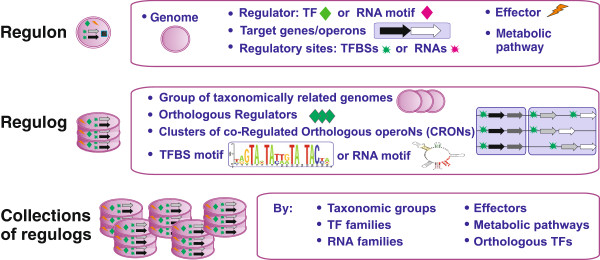
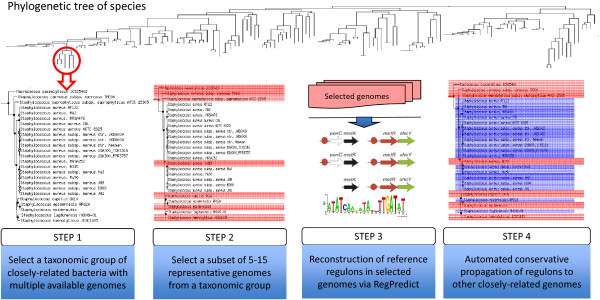
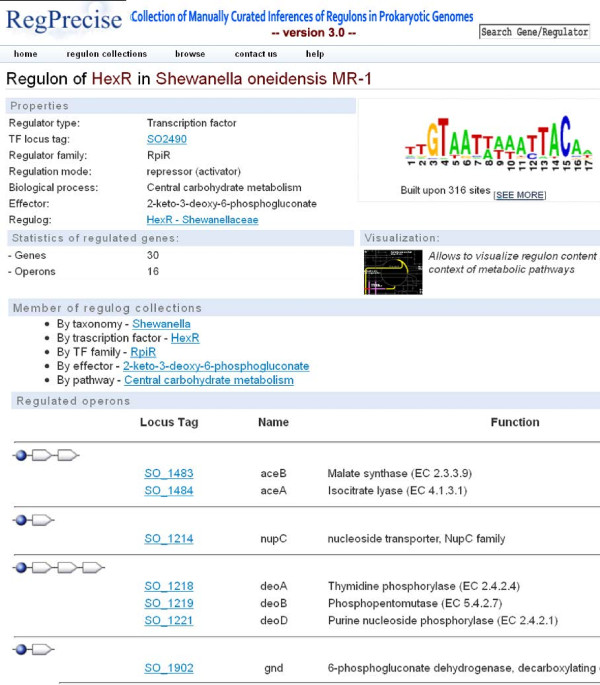
BACKGROUND: Genome-scale prediction of gene regulation and reconstruction of transcriptional regulatory networks in prokaryotes is one of the critical tasks of modern genomics. Bacteria from different taxonomic groups, whose lifestyles and natural environments are substantially different, possess highly diverged transcriptional regulatory networks. The comparative genomics approaches are useful for in silico reconstruction of bacterial regulons and networks operated by both transcription factors (TFs) and RNA regulatory elements (riboswitches). DESCRIPTION: RegPrecise (http://regprecise.lbl.gov) is a web resource for collection, visualization and analysis of transcriptional regulons reconstructed by comparative genomics. We significantly expanded a reference collection of manually curated regulons we introduced earlier. RegPrecise 3.0 provides access to inferred regulatory interactions organized by phylogenetic, structural and functional properties. Taxonomy-specific collections include 781 TF regulogs inferred in more than 160 genomes representing 14 taxonomic groups of Bacteria. TF-specific collections include regulogs for a selected subset of 40 TFs reconstructed across more than 30 taxonomic lineages. Novel collections of regulons operated by RNA regulatory elements (riboswitches) include near 400 regulogs inferred in 24 bacterial lineages. RegPrecise 3.0 provides four classifications of the reference regulons implemented as controlled vocabularies: 55 TF protein families; 43 RNA motif families; ~150 biological processes or metabolic pathways; and ~200 effectors or environmental signals. Genome-wide visualization of regulatory networks and metabolic pathways covered by the reference regulons are available for all studied genomes. A separate section of RegPrecise 3.0 contains draft regulatory networks in 640 genomes obtained by an conservative propagation of the reference regulons to closely related genomes. CONCLUSIONS: RegPrecise 3.0 gives access to the transcriptional regulons reconstructed in bacterial genomes. Analytical capabilities include exploration of: regulon content, structure and function; TF binding site motifs; conservation and variations in genome-wide regulatory networks across all taxonomic groups of Bacteria. RegPrecise 3.0 was selected as a core resource on transcriptional regulation of the Department of Energy Systems Biology Knowledgebase, an emerging software and data environment designed to enable researchers to collaboratively generate, test and share new hypotheses about gene and protein functions, perform large-scale analyses, and model interactions in microbes, plants, and their communities.
Overview
The claims and statistics of this paper haven’t been checked yet.
Free: it reads the open-access text and checks the first 5 claims that cite a source we can check. Create a free account to check every claim.
Integrity signals
Registry
Cites
Statistics
Figures


Verification
Claims the paper makes
The claims and statistics of this paper haven’t been checked yet.
Free: it reads the open-access text and checks the first 5 claims that cite a source we can check. Create a free account to check every claim.
Self-check
Percentages, sums and reported differences re-computed from the paper’s own numbers.
The self-check needs the paper’s full text.
Citations
Cites
The Pfam Protein Families Database
Bateman, A. (2002) · Nucleic Acids Research · doi:10.1093/nar/30.1.276 · Cited by 14,000
The COG database: an updated version includes eukaryotes
Tatusov, R. L., Fedorova, N. D., Jackson, J. D., Jacobs, A. R., Kiryutin, B., Koonin, E. V., Krylov, D. M., Mazumder, R., Mekhedov, S. L., Nikolskaya, A. N., et al. (2003) · BMC Bioinformatics · doi:10.1186/1471-2105-4-41 · Cited by 4,430 · cited 1×
“All studied TFs were classified into 55 protein families based on their domain composition in the Pfam [36], COG [37] and Superfamily [38] libraries (see TF families classification and domains architecture in Additional file 1).”
BackgroundThe Pfam protein families database
Punta, M., Coggill, P. C., Eberhardt, R. Y., Mistry, J., Tate, J., Boursnell, C., Pang, N., Forslund, K., Ceric, G., Clements, J., et al. (2012) · Nucleic Acids Research · doi:10.1093/nar/gkr1065 · Cited by 3,719 · cited 1×
“All studied TFs were classified into 55 protein families based on their domain composition in the Pfam [36], COG [37] and Superfamily [38] libraries (see TF families classification and domains architecture in Additional file 1).”
BackgroundThe Subsystems Approach to Genome Annotation and its Use in the Project to Annotate 1000 Genomes
Overbeek, R. (2005) · Nucleic Acids Research · doi:10.1093/nar/gki866 · Cited by 2,012 · cited 1×
“The RegPrecise 3.0 contains 235 pathways classified into 23 functional categories according to the biological subsystems classification from the SEED database [40].”
MethodInfluentialInfernal 1.0: inference of RNA alignments
Nawrocki, E. P., Kolbe, D. L., & Eddy, S. R. (2009) · Bioinformatics · doi:10.1093/bioinformatics/btp157 · Cited by 1,436
Rfam: updates to the RNA families database
Gardner, P. P., Daub, J., Tate, J. G., Nawrocki, E. P., Kolbe, D. L., Lindgreen, S., Wilkinson, A. C., Finn, R. D., Griffiths-Jones, S., Eddy, S. R., et al. (2009) · Nucleic Acids Research · doi:10.1093/nar/gkn766 · Cited by 919 · cited 2×
“First, RNA regulatory sites were identified in the studied genomes using the probabilistic covariance models for 43 RNA families from the Rfam database [28] and the Infernal program [29].”
MethodAccurate taxonomy assignments from 16S rRNA sequences produced by highly parallel pyrosequencers
Liu, Z., DeSantis, T. Z., Andersen, G. L., & Knight, R. (2008) · Nucleic Acids Research · doi:10.1093/nar/gkn491 · Cited by 592
Gama-Castro, S., Jimenez-Jacinto, V., Peralta-Gil, M., Santos-Zavaleta, A., Penaloza-Spinola, M. I., Contreras-Moreira, B., Segura-Salazar, J., Muniz-Rascado, L., Martinez-Flores, I., Salgado, H., et al. (2007) · Nucleic Acids Research · doi:10.1093/nar/gkm994 · Cited by 491 · cited 6×
“We are planning to incorporate supportive experimental evidences for reconstructed regulons and effectors using information from literature and other databases on microbial regulation including RegTransBase [25], RegulonDB [26], DBTBS [27], and CoryneRegNet [24].”
MethodInfluentialSUPERFAMILY—sophisticated comparative genomics, data mining, visualization and phylogeny
Wilson, D., Pethica, R., Zhou, Y., Talbot, C., Vogel, C., Madera, M., Chothia, C., & Gough, J. (2009) · Nucleic Acids Research · doi:10.1093/nar/gkn762 · Cited by 488 · cited 3×
“All studied TFs were classified into 55 protein families based on their domain composition in the Pfam [36], COG [37] and Superfamily [38] libraries (see TF families classification and domains architecture in Additional file 1).”
MethodMicrobesOnline: an integrated portal for comparative and functional genomics
Dehal, P. S., Joachimiak, M. P., Price, M. N., Bates, J. T., Baumohl, J. K., Chivian, D., Friedland, G. D., Huang, K. H., Keller, K., Novichkov, P. S., et al. (2010) · Nucleic Acids Research · doi:10.1093/nar/gkp919 · Cited by 432 · cited 3×
“Annotations of TF protein domains were collected from the MicrobesOnline database [39].”
BackgroundMethodInfluentialSelf-citation
Cited by
Items 201–300 of 450
Prediction of bacterial small RNAs in the RsmA (CsrA) and ToxT pathways: a machine learning approach
Fakhry, C. T., Kulkarni, P. R., Chen, P., Kulkarni, R., & Zarringhalam, K. (2017) · BMC Genomics · doi:10.1186/s12864-017-4057-z · Cited by 14
“Next, we developed Position Weight Matrices (PWMs) for transcription factors in Vibrio cholerae using the RegPrecise database [36].”
MethodZorro-Aranda, A., Escorcia-Rodríguez, J. M., González-Kise, J. K., & Freyre-González, J. A. (2022) · Scientific Reports · doi:10.1038/s41598-022-06658-x · Cited by 15
Long, X., Wang, X., Mao, D., Wu, W., & Luo, Y. (2022) · Microbiology Spectrum · doi:10.1128/spectrum.03511-22 · Cited by 13
Eddie, B. J., Malanoski, A. P., Onderko, E. L., Phillips, D. A., & Glaven, S. M. (2021) · Biofilm · doi:10.1016/j.bioflm.2021.100051 · Cited by 13
AURTHO: Autoregulation of transcription factors as facilitator of cis-acting element discovery
Anderssen, S., Naômé, A., Jadot, C., Brans, A., Tocquin, P., & Rigali, S. (2022) · Biochimica et Biophysica Acta (BBA) - Gene Regulatory Mechanisms · doi:10.1016/j.bbagrm.2022.194847 · Cited by 15
Wu, J., McAuliffe, O. E., & O'Byrne, C. P. (2023) · International Journal of Food Microbiology · doi:10.1016/j.ijfoodmicro.2023.110238 · Cited by 15
Demeester, W., Baets, J. D., Duchi, D., Mey, M. D., & Paepe, B. D. (2023) · Biosensors · doi:10.3390/bios13060590 · Cited by 13
On the necessity and biological significance of threshold-free regulon prediction outputs
Rigali, S., Nivelle, R., & Tocquin, P. (2014) · Molecular BioSystems · doi:10.1039/c4mb00485j · Cited by 12
Korostelev, Y., Zharov, I. A., Mironov, A. A., Rakhmaininova, A. B., & Gelfand, M. S. (2016) · PLoS ONE · doi:10.1371/journal.pone.0162681 · Cited by 12
“TFBS and operon data were submitted to the RegPrecise database [27].”
BackgroundMethodSynthetic and Evolutionary Construction of a Chlorate-Reducing Shewanella oneidensis MR-1
Clark, I. C., Melnyk, R. A., Youngblut, M. D., Carlson, H. K., Iavarone, A. T., & Coates, J. D. (2015) · mBio · doi:10.1128/mbio.00282-15 · Cited by 12
Milano, T., Angelaccio, S., Tramonti, A., di Salvo, M. L., Contestabile, R., & Pascarella, S. (2016) · Biochimie Open · doi:10.1016/j.biopen.2016.07.002 · Cited by 13
Chen, F., Zhao, Q., Yang, Z., Chen, R., Pan, H., Wang, Y., Liu, H., Cao, Q., Gan, J., Liu, X., et al. (2024) · PLoS Pathogens · doi:10.1371/journal.ppat.1012425 · Cited by 17
K+ modulates genetic competence and the stress regulon of Streptococcus mutans
Binepal, G., Wenderska, I. B., Crowley, P. J., Besingi, R. N., Senadheera, D. B., Brady, L. J., & Cvitkovitch, D. G. (2017) · Microbiology · doi:10.1099/mic.0.000458 · Cited by 11
Duboux, S., Muller, J. A., Franceschi, F. D., Mercenier, A., & Kleerebezem, M. (2022) · Scientific Reports · doi:10.1038/s41598-022-14638-4 · Cited by 11
Discovery of an ʟ-amino acid ligase implicated in Staphylococcal sulfur amino acid metabolism
Pederick, J. L., Horsfall, A. J., Jovcevski, B., Klose, J. W., Abell, A. D., Pukala, T. L., & Bruning, J. B. (2022) · Journal of Biological Chemistry · doi:10.1016/j.jbc.2022.102392 · Cited by 11
Diez, C., Antelo, G. T., Dalia, T. N., Dalia, A. B., Giedroc, D. P., & Capdevila, D. A. (2023) · Journal of Biological Chemistry · doi:10.1016/j.jbc.2023.105147 · Cited by 12
A new regulatory mechanism for bacterial lipoic acid synthesis
Zhang, H., Luo, Q., Gao, H., & Feng, Y. (2015) · MicrobiologyOpen · doi:10.1002/mbo3.237 · Cited by 12
“MicrobiologyOpen published by John Wiley & Sons Ltd. 283 et al. 2011; Novichkov et al. 2013) predicted that a possible CRP box (AAGTGTGATCTATCTTACATTT) is present in front of lipBA operon (SO1162-S01161) of Shewanella oneidensis MR-1(a marine-borne species of c-proteobacteria family) with…”
BackgroundResultIablokov, S. N., Novichkov, P. S., Osterman, A. L., & Rodionov, D. A. (2021) · Frontiers in Microbiology · doi:10.3389/fmicb.2021.653314 · Cited by 14
“Rapid advancement of genomic technology enabled a comprehensive coverage of HGM by thousands of completely sequenced reference genomes (O’Leary et al., 2016; Forster et al., 2019; Poyet et al., 2019; Zou et al., 2019).”
BackgroundSelf-citationBirk, M. S., Ahmed-Begrich, R., Tran, S., Elsholz, A. K. W., Frese, C. K., & Charpentier, E. (2021) · mSystems · doi:10.1128/msystems.00215-21 · Cited by 13
Freyre-González, J. A., & Tauch, A. (2016) · Journal of Biotechnology · doi:10.1016/j.jbiotec.2016.10.025 · Cited by 14
“To overcome this limitation, it is important to adopt pipelines to transfer regulatory knowledge among organisms as has been previously described (Baumbach, 2010; Novichkov et al., 2013).”
MethodRegulation of Class A β-Lactamase CzoA by CzoR and IscR in Comamonas testosteroni S44
Zhuang, W., Liu, H., Li, J., Chen, L., & Wang, G. (2017) · Frontiers in Microbiology · doi:10.3389/fmicb.2017.02573 · Cited by 11
“Based on IscR-binding motifs (5′-WTAMYYRNSNVDWWYRVWMRRBWWH-3′) in C. testosteroni KF-1 obtained from the RegPrecise database (Novichkov et al., 2013), we found a putative IscR-binding site within the czoR–czoA intergenic region using online program MEME (Bailey and Elkan, 1994), suggesting that…”
BackgroundMethodInfluentialStamm, C. E., McFarland, A. P., Locke, M. N., Tabakh, H., Tang, Q., Thomason, M. K., & Woodward, J. J. (2024) · mBio · doi:10.1128/mbio.01332-24 · Cited by 8
Ma, J., Jiang, X., Bi, H., Li, J., Ma, X., Chi, X., Tang, Y., Liu, Z., & Li, H. (2025) · Nucleic Acids Research · doi:10.1093/nar/gkaf659 · Cited by 11
“The motif that differed between the WT and (cid:2) RMS strains was the one recognized and methylated by RMS. TF-encoding genes containing the RMS target sites were extracted, and their regulatory sites were obtained from the RegPrecise database [ 40 ].”
Shewanella oneidensis NADH Dehydrogenase Mutants Exhibit an Amino Acid Synthesis Defect
Duhl, K. L., & TerAvest, M. A. (2019) · Frontiers in Energy Research · doi:10.3389/fenrg.2019.00116 · Cited by 10
Costa, M. D. O. C. E., do Nascimento, A. P. B., Martins, Y., dos Santos, M. T., Figueiredo, A. M. S., Pérez‐Rueda, E., & Nicolás, M. (2023) · Frontiers in Microbiology · doi:10.3389/fmicb.2022.1049819 · Cited by 12
“In step (i), we retrieved TFs and target genes and the available TFBSs from the RegPrecise database, including those on the GRN of N315 published in 2011 (Ravcheev et al., 2011; Novichkov et al., 2013).”
MethodInfluentialBajpe, H., Rychel, K., Lamoureux, C. R., Sastry, A. V., & Palsson, B. Ø. (2023) · mSystems · doi:10.1128/msystems.00437-23 · Cited by 12
“Furthermore, the TRN was annotated using RegPrecise, Pseudomonas Genome Database, and literature (55, 56).”
MethodChan, C. T. Y., Kennedy, V., & Kinshuk, S. (2024) · Biotechnology Advances · doi:10.1016/j.biotechadv.2024.108345 · Cited by 10
Ding, D., & Sun, X. S. (2018) · Genes · doi:10.3390/genes9010041 · Cited by 10
“oneidensis MR-1 from the RegPrecise database [22].”
MethodServinsky, M. D., Renberg, R. L., Perisin, M., Gerlach, E. S., Liu, S., & Sund, C. J. (2018) · mSystems · doi:10.1128/msystems.00064-18 · Cited by 13
“We assigned transcriptional regulation sites (AraR and XylR) according to RegPrecise (60) predictions and included all downstream genes in operons (according to DOOR [61–63] predictions).”
MethodA role for Vibrio vulnificus PecS during hypoxia
Bhattacharyya, N., Lemon, T., & Grove, A. (2019) · Scientific Reports · doi:10.1038/s41598-019-39095-4 · Cited by 10
Escorcia-Rodríguez, J. M., Tauch, A., & Freyre-González, J. A. (2021) · Microorganisms · doi:10.3390/microorganisms9071395 · Cited by 12
“However, model organisms for the study of regulatory networks are phylogenetically far from each other, which allows the transfer of interactions from model organisms across several bacterial genera [10,15,40].”
BackgroundMilano, T., Angelaccio, S., Tramonti, A., di Salvo, M. L., Contestabile, R., & Pascarella, S. (2016) · Biochemistry Research International · doi:10.1155/2016/4360285 · Cited by 11
“3 [19] was utilized to retrieve MocR sequences predicted to regulate expression of specific regulons.”
InfluentialHeterologous expression of nifA or nodD genes improves chickpea-Mesorhizobium symbiotic performance
da-Silva, J. R., Menéndez, E., Eliziário, F., Mateos, P. F., Alexandre, A., & Oliveira, S. (2019) · Plant and Soil · doi:10.1007/s11104-019-03950-0 · Cited by 11
The metabolite vanillic acid regulates Acinetobacter baumannii surface attachment
Brychcy, M., Nguyen, B. H., Tierney, G. A., Casula, P., Kokodynski, A., & Godoy, V. G. (2024) · Molecular Microbiology · doi:10.1111/mmi.15234 · Cited by 9
“For this, the binding motif was first identified through a database analysis using RegPrecise (Novichkov et al., 2013) and adjusted to A. baumannii ATCC17978.”
MethodBioinformatics in Russia: history and present-day landscape
Nawaz, M. A., Pamirsky, I. E., & Golokhvast, K. S. (2024) · Briefings in Bioinformatics · doi:10.1093/bib/bbae513 · Cited by 11
“RTCB researchers have also developed a web resource based on these data for collection, visualization, and analysis of reconstructed regulons [142].”
Sitara, A., Hocq, R., Lu, A. J., & Pflügl, S. (2025) · Biotechnology for Biofuels and Bioproducts · doi:10.1186/s13068-025-02647-0 · Cited by 9
Qiu, S., Yang, A., Yang, X., Ni, H., Li, W., Yang, Z., Zeng, H., & Wang, Y. (2025) · Metabolic Engineering · doi:10.1016/j.ymben.2025.05.002 · Cited by 10
Anion transport as a target of adaption to perchlorate in sulfate-reducing communities
Stoeva, M. K., Kuehl, J. V., Kazakov, A. E., Wang, O., Rushton-Green, R., & Coates, J. D. (2019) · The ISME Journal · doi:10.1038/s41396-019-0540-7 · Cited by 9
Self-citationPoorinmohammad, N., Hamedi, J., & Masoudi‐Nejad, A. (2020) · Scientific Reports · doi:10.1038/s41598-020-59731-8 · Cited by 10
Audretsch, C. K., Gratani, F. L., Wolz, C., & Dandekar, T. (2021) · Scientific Reports · doi:10.1038/s41598-021-88646-1 · Cited by 9
Li, X., Busch, L. M., Piersma, S., Wang, M., Liu, L., Salazar, M. G., Surmann, K., Mäder, U., Völker, U., Buist, G., et al. (2024) · Journal of Proteome Research · doi:10.1021/acs.jproteome.4c00724 · Cited by 8
Freyre-González, J. A., Escorcia-Rodríguez, J. M., Gutiérrez-Mondragón, L. F., Martí-Vértiz, J., Torres-Franco, C. N., & Zorro-Aranda, A. (2022) · Frontiers in Bioengineering and Biotechnology · doi:10.3389/fbioe.2022.888732 · Cited by 10
ZrgA contributes to zinc acquisition in Vibrio parahaemolyticus
Zheng, C., Qiu, J., Zhai, Y., Wei, M., Zhou, X., & Jiao, X. (2022) · Virulence · doi:10.1080/21505594.2022.2156196 · Cited by 9
“RegPrecise, a resource for genome-scale exploration of transcription factor regulons [35], predicted that the Zur regulon is partly conserved in Vibrionaceae (Fig.”
BackgroundInfluentialPan, S., Nikolakakis, K. C., Adamczyk, P., Pan, M., Ruby, E. G., & Reed, J. L. (2017) · Journal of Biological Chemistry · doi:10.1074/jbc.m116.763193 · Cited by 10
“VF_0668 is a predictedmember of SiaR regulon (controlling sialic acid degradation) according to the RegPrecise database (43), and it was tentatively annotated as a possible sialic acid transporter (permease), NanT.”
MethodGenetically Encoded Biosensors and Their Applications in the Development of Microbial Cell Factories
Wu, Y., Du, G., Chen, J., & Liu, L. (2020) · Springer eBooks · doi:10.1007/978-981-15-2604-6_4 · Cited by 8
Getz, L. J., Robinson, O. S., & Thomas, N. A. (2025) · PLoS Genetics · doi:10.1371/journal.pgen.1011370 · Cited by 10
“In the case of V. parahaemolyticus , bioinformatic analyses predict HexR to bind at a conserved pseudo-palindromic motif (TGTAATTAAATTACA) within promoter regions of various genes [49](S4 Data).”
Mychack, A., Evans, D., Gilles, T., James, M. J., & Walker, S. (2025) · Proceedings of the National Academy of Sciences · doi:10.1073/pnas.2414696122 · Cited by 7
Characterizing the Staphylococcus aureus fatty acid degradation operon
Menjivar, C., DeMars, Z. R., Wiemels, R. E., Carroll, R. K., & Bose, J. L. (2025) · Journal of Bacteriology · doi:10.1128/jb.00089-25 · Cited by 8
“This site has been previously noted as a potential CRE site in the S. aureus N315 genome on the RegPrecise website (39).”
Pseudomonas putida JM37 as a novel bacterial chassis for ethylene glycol upcycling
Molpeceres-García, F. J., García-Miró, A., Mateos-García, E., Prieto, A., Sanz, D., Jiménez, J. I., & Barriuso, J. (2025) · Bioresource Technology · doi:10.1016/j.biortech.2025.133884 · Cited by 7
Munyati-Othman, N., Appasamy, S. D., Damiri, N., Emrizal, R., Alipiah, N. M., Ramlan, E. I., & Firdaus‐Raih, M. (2021) · Current Microbiology · doi:10.1007/s00284-021-02550-5 · Cited by 7
Dow, A., Burger, A. H., Marcantonio, E., & Prišić, S. (2022) · Frontiers in Microbiology · doi:10.3389/fmicb.2022.811774 · Cited by 8
Vallejo-García, L. C., Olmos, M. D. C. S., Gutiérrez-Ríos, R.-M., & López-Munguía, A. (2023) · Foods · doi:10.3390/foods12091893 · Cited by 8
“The DNA sequence where the complex CcpA-Hpr-P binds to the promotor is known as the catabolite response element (cre), and its canonical sequence has been identified for Lactobacillaceae (WTGWAARCGYTTWCAW) through experimental and comparative genomics [55,61].”
BackgroundSander, K. B., Abel, A. J., Friedline, S., Sharpless, W. A., Skerker, J. M., Deutschbauer, A. M., Clark, D. S., & Arkin, A. P. (2023) · Biotechnology and Bioengineering · doi:10.1002/bit.28532 · Cited by 7
Self-citationGao, R., Wu, T., & Stock, A. (2024) · mBio · doi:10.1128/mbio.01220-24 · Cited by 7
“Binding sites for BT4124 and BT4663 have been predicted within the promoters of bt4114 and bt4662 , respectively (9, 59).”
BackgroundInteractive tools for functional annotation of bacterial genomes
Price, M. N., & Arkin, A. P. (2024) · Database · doi:10.1093/database/baae089 · Cited by 11
“(5) RegPrecise is a database of predicted regulons, as reconstructed by comparative genomics [71].”
BackgroundSelf-citationWoo, S., Han, Y. H., Lee, H. K., Baek, D., Noh, M. H., Han, S., Lim, H. G., Jung, G. Y., & Seo, S. W. (2024) · Metabolic Engineering · doi:10.1016/j.ymben.2024.11.001 · Cited by 7
The interplay between iron, haem and manganese in Porphyromonas gingivalis
Butler, C. A., Dashper, S. G., Khan, H. B. S. G., Zhang, L., & Reynolds, E. C. (2015) · Journal of Oral Biosciences · doi:10.1016/j.job.2014.12.003 · Cited by 7
“[162] (http://regprecise.”
Geng, J., Huang, S.-C., Chen, Y.-Y., Chiu, C., Hu, S., & Chen, Y. M. (2018) · BMC Genomics · doi:10.1186/s12864-018-4781-z · Cited by 9
Validating regulatory predictions from diverse bacteria with mutant fitness data
Sagawa, S., Price, M. N., Deutschbauer, A. M., & Arkin, A. P. (2017) · PLoS ONE · doi:10.1371/journal.pone.0178258 · Cited by 7
“0 of RegPrecise was downloaded on April 29, 2016 (Novichkov et al., 2013).”
BackgroundMethodInfluentialSelf-citationReconstruction and analysis of transcriptome regulatory network of Methanobrevibacter ruminantium M1
Bharathi, M., & Chellapandi, P. (2022) · Gene Reports · doi:10.1016/j.genrep.2021.101489 · Cited by 7
Duboux, S., Pruvost, S., Joyce, C., Bogićević, B., Muller, J. A., Mercenier, A., & Kleerebezem, M. (2023) · Microorganisms · doi:10.3390/microorganisms11030588 · Cited by 9
“Finally, the log2FC values obtained previously were mapped on the list of AraQ and MalR1 regulons retrieved from the RegPrecise database [39], and used to color the constructed maps in Cytoscape.”
BackgroundMethodFundamental Building Blocks of Whole-Cell Biosensor Design
Wen, K. Y., Rutter, J. W., Barnes, C. P., & Dekker, L. (2019) · Springer eBooks · doi:10.1007/978-3-319-47405-2_181-1 · Cited by 8
Learning supervised embeddings for large scale sequence comparisons
Kimothi, D., Biyani, P., Hogan, J. M., Soni, A., & Kelly, W. (2020) · PLoS ONE · doi:10.1371/journal.pone.0216636 · Cited by 9
Taboada, H., Castro-Mondragon, J. A., Aguilar-Vera, A., Hernández-Álvarez, A. J., van Helden, J., & Encarnación‐Guevara, S. (2020) · Frontiers in Microbiology · doi:10.3389/fmicb.2020.567471 · Cited by 7
Park, J. Y., Lee, S., Ebrahim, A., Scott-Nevros, Z. K., Kim, J., Yang, L., Sastry, A. V., Seo, S. W., Palsson, B. Ø., & Kim, D. (2023) · NAR Genomics and Bioinformatics · doi:10.1093/nargab/lqad006 · Cited by 8
“Motifs of TFs and -factors were identical to previous results (38,43,53,54).”
ResultFucose-Mediated Transcriptional Activation of the fcs Operon by FcsR in Streptococcus pneumoniae
Manzoor, I., Shafeeq, S., Afzal, M., & Kuipers, O. P. (2015) · Microbial Physiology · doi:10.1159/000377724 · Cited by 8
“Many transcriptional regulators belonging to the DeoR family have been identified that regulate the catabolic pathways for different sugars, including lactose, fructose, ascorbate, mannitol, glycerol and xylitol [Garces et al., 2008; Novichkov et al., 2013].”
BackgroundAngelaccio, S., Milano, T., Tramonti, A., di Salvo, M. L., Contestabile, R., & Pascarella, S. (2016) · Data in Brief · doi:10.1016/j.dib.2016.08.064 · Cited by 7
“Sequences assigned to each of the two subgroups were retrieved from the RegPrecise data bank [15] and aligned separately (Table 8); a HMM pro fi le [16] was calculated for each one of the multiple alignment.”
MethodRoyet, K., Kergoat, L., Lutz, S., Oriol, C., Parisot, N., Schori, C., Ahrens, C. H., Rodrigue, A., & Gueguen, E. (2025) · Environmental Microbiology · doi:10.1111/1462-2920.70095 · Cited by 7
“…putida . however, a putative CueR binding site (ACCTTGCCTGCGTGGCAAGGT) is in the promoter region of copA1 KT2440 as indicated in the RegPrecise database (https:// regpr ecise. lbl. gov/ sites. jsp? regul og_ id= 5159; (Novichkov et al. 2013), suggesting a direct regulation like in P. aeruginosa .”
Moldovan, A., Flannagan, R. S., Rühling, M., Stelzner, K., Hans, C., Paprotka, K., Kunz, T. C., Heinrichs, D. E., Rudel, T., & Fraunholz, M. J. (2025) · PLoS Pathogens · doi:10.1371/journal.ppat.1013291 · Cited by 6
“The observation that many of the most significantly downregulated genes in the brnQ1 mutant function in iron acquisition, prompted us to consult a list of Fur-regulated targets retrieved from the RegPrecise database [42].”
Johnson, C., Johnson, Z., Mackey, L. S., Li, X., Sadler, N., Zhang, T., Qian, W., Bohutskyi, P., Feng, S., & Cheung, M. S. (2025) · PRX Life · doi:10.1103/l2dp-kw2t · Cited by 9
Liu, X., Dou, H., Liu, L., Wang, G., Xiong, Z., & Ai, L. (2024) · Journal of Agricultural and Food Chemistry · doi:10.1021/acs.jafc.4c08591 · Cited by 6
Cortés, M. P., Acuña, V., Travisany, D., Siegel, A., Maass, A., & Latorre, M. (2020) · Frontiers in Molecular Biosciences · doi:10.3389/fmolb.2019.00155 · Cited by 6
“Specifically, a Regprecise (Novichkov et al., 2013) or Prodoric (Münch et al., 2003) PSSM was downloaded or generated using MEME (Bailey et al., 2009) with promoter consensus sequences.”
BackgroundJin, X., Yang, Y., Cao, H., Gao, B., & Zhao, Z. (2022) · Environmental Microbiology Reports · doi:10.1111/1758-2229.13036 · Cited by 6
Burian, M., Wolz, C., & Yazdi, A. S. (2022) · Frontiers in Cellular and Infection Microbiology · doi:10.3389/fcimb.2022.1062329 · Cited by 6
“, 2020), and for many regulators, prototypic target genes are well defined based on known binding motifs (Novichkov et al., 2013).”
BackgroundA critical role for staphylococcal nitric oxide synthase in controlling flavohemoglobin toxicity
Singh, R. M., Chaudhari, S. S., Panda, S., Hutfless, E. H., Heim, C. E., Shinde, D. D., Alqarzaee, A. A., Sladek, M. F., Kumar, V., Zimmerman, M. C., et al. (2023) · Redox Biology · doi:10.1016/j.redox.2023.102935 · Cited by 6
“The 45-bp region accommodates a motif that re-sembles a predicted consensus binding site for CymR [25], potentially serving as the operator site (Fig.”
BackgroundRegulation of S treptococcus mutans PTSBio by the transcriptional repressor NigR
Vujanac, M., Iyer, V. S., Sengupta, M., & Ajdić, D. (2015) · Molecular Oral Microbiology · doi:10.1111/omi.12093 · Cited by 7
“ScrR consensus derived from 27 operators found in 13 streptococcus species (Novichkov et al., 2013).”
BackgroundMethodSubramanian, D., & Natarajan, J. (2022) · Critical Reviews in Microbiology · doi:10.1080/1040841x.2022.2065905 · Cited by 8
Kim, K., Choe, D., Kim, S. C., Yim, S. S., Jeong, K. J., Palsson, B. Ø., Cho, S., & Cho, B. (2025) · Nucleic Acids Research · doi:10.1093/nar/gkaf1166 · Cited by 5
“The existing TRN was collected from RegPre-cise [ 41 ] and published literatures ( Supplementary Table S9 ).”
InfluentialYang, X., Zhang, J., Zhu, J., Yang, R., & Tong, Y. (2024) · Microbiological Research · doi:10.1016/j.micres.2024.127709 · Cited by 5
Kinshuk, S., Li, L., Meckes, B., & Chan, C. T. Y. (2024) · International Journal of Molecular Sciences · doi:10.3390/ijms25158320 · Cited by 5
D’Mello, A., Murphy, T. F., Wade, M., Kirkham, C., Kong, Y., Tettelin, H., & Pettigrew, M. M. (2025) · mSphere · doi:10.1128/msphere.00242-25 · Cited by 5
“Genes moaE , moaC , and mobA are part of a four-gene operon involved in molybdenum homeostasis in multiple species (RegPrecise database [33]).”
A Graph-based Approach for Integrating Biological Heterogeneous Data Based on Connecting Ontology
Zhang, S., Tang, Y., Yan, J., Li, L., Li, T., Li, J., Xie, P., Gu, Y., Xu, J., Feng, Z., et al. (2021) · IEEE International Conference on Bioinformatics and Biomedicine (BIBM) · doi:10.1109/bibm52615.2021.9669700 · Cited by 5
Olbei, M. L., Bohár, B., Fazekas, D., Madgwick, M., Sudhakar, P., Hautefort, I., Métris, A., Baranyi, J., Kingsley, R. A., & Korcsmáros, T. (2022) · mSystems · doi:10.1128/msystems.01493-21 · Cited by 6
Xu, X., Liu, F., Qiao, W., Dong, Y., Yang, H., Liu, F., Xu, H., & Qiao, M. (2024) · Microorganisms · doi:10.3390/microorganisms12040773 · Cited by 5
“RegPrecise (http://regprecise.lbl.gov, accessed on 1 September 2021) is a web resource for the collection, visualization, and analysis of transcriptional regulons reconstructed by comparative genomics [39].”
BackgroundAndré, G., Haudecoeur, E., Courtois, E., Monot, M., Dupuy, B., Rodionov, D. A., & Martin‐Verstraete, I. (2016) · Research in Microbiology · doi:10.1016/j.resmic.2016.03.002 · Cited by 6
“The RegPredict web-server [23] was subsequently used to search for similar DNA motifs and 331 reconstruct candidate IscR regulons in the genomes of 16 Clostridium spp.”
MethodSelf-citationZhao, J., Sun, X. H., Mao, Z., Zheng, Y., Geng, Z., Zhang, Y., Ma, H., & Wang, Z. (2023) · Microbiological Research · doi:10.1016/j.micres.2023.127485 · Cited by 6
Derepression of bkd by the FadR loss dictates elevated production of BCFAs and isoleucine starvation
Sun, Y., Meng, Q., Zhang, Y., & Gao, H. (2019) · Biochimica et Biophysica Acta (BBA) - Molecular and Cell Biology of Lipids · doi:10.1016/j.bbalip.2019.158577 · Cited by 5
Liu, X., Zhao, Z., Dong, G., Li, Y., Peng, F., Liu, C., Zhang, F., Linhardt, R. J., Yang, Y., & Bai, Z. (2020) · Enzyme and Microbial Technology · doi:10.1016/j.enzmictec.2020.109651 · Cited by 5
Hammerstad, M., Rugtveit, A. K., Dahlen, S., Andersen, H. K., & Hersleth, H.-P. (2023) · Antioxidants · doi:10.3390/antiox12061224 · Cited by 4
“Searching the RegPrecise Database [39] and manual inspection of the upstream sequences of selected genes for a Firmicute Fur-binding consensus sequence was performed to examine Fur regulation of selected FNR and IsdG genes in Bc, Ba, Bs, and Sa.”
Structural idiosyncrasies of glycyl T-box riboswitches among pathogenic bacteria
Γιαρίμογλου, Ν., Kouvela, A., Zhang, J., Stamatopoulou, V., & Stathopoulos, C. (2024) · RNA · doi:10.1261/rna.080071.124 · Cited by 4
“The sequences of the glyQS T-boxes from C. tetani , L. monocyto-genes , S. pneumoniae , and S. pyogenes , which were used for the multiple sequence alignment, were identified using the RegPrecise database (Novichkov et al. 2013).”
Carrera-Reyna, M., Cruz-Flores, E., & Merino, E. (2025) · PLoS ONE · doi:10.1371/journal.pone.0327805 · Cited by 5
“…bias toward E. coli or other model organisms, we curated a diverse dataset of experimentally validated RpoN-dependent promoter sequences from major regulatory databases, including RegPrecise 3.0 [49], DBTBS [50], and EcoCyc [51], as well as from the comprehensive compilation by Barrios et al .”
InfluentialZheng, C., Zhai, Y., Wang, M. Z., Xu, Z., Zhang, Y., Zhou, X., Chen, X., & Jiao, X. (2025) · Virulence · doi:10.1080/21505594.2025.2545557 · Cited by 5
“The regulons and putative binding sites of CueR and Fur were predicted by RegPrecise [34].”
Eckmann, J. B., Enright, A. L., Davies, M., Whelan, E., Myers, K. S., Robinson, M. L., Banta, A. B., Lal, P. B., Coon, J. J., Sato, T. K., et al. (2025) · mSystems · doi:10.1128/msystems.01001-25 · Cited by 4
“Furthermore, ferulic acid treatment results in changes in the abundance of several transporters, including putative efflux systems and TonB-depend ent transporters, suggesting a potential role in ferulic acid transport.”
InfluentialMasotti, F., Krink, N., Lencina, N., Gottig, N., Ottado, J., & Nikel, P. I. (2024) · ACS Synthetic Biology · doi:10.1021/acssynbio.4c00497 · Cited by 5
Amin, M. R., Korchinski, L., Yoneda, J. R. K., Thakkar, R., Sanson, C. L. A., Fitzgerald, S. F., Kelln, R. A., & Cameron, A. D. S. (2022) · Canadian Journal of Microbiology · doi:10.1139/cjm-2022-0120 · Cited by 5
Ding, D., & Sun, X. S. (2018) · IEEE Transactions on Computational Biology and Bioinformatics · doi:10.1109/tcbb.2018.2804393 · Cited by 4
Ding, D., Shu, C., & Sun, X. S. (2019) · Proteins Structure Function and Bioinformatics · doi:10.1002/prot.25789 · Cited by 4
“According to the transcriptional regulatory information in the RegPrecise database and Pathway Tools, four transcription factors are involved in regulating protein-coding genes in the EET pathways.(13,14)”
MethodGene targets for engineering osmotolerance in Caldicellulosiruptor bescii
Sander, K. B., Chung, D., Klingeman, D. M., Giannone, R. J., Rodríguez, M., Whitham, J. M., Hettich, R. L., Davison, B. H., Westpheling, J., & Brown, S. D. (2020) · Biotechnology for Biofuels · doi:10.1186/s13068-020-01690-3 · Cited by 4
Liu, J.-R., Wang, Z.-Q., Li, F., Li, Z.-K., Wang, M., Wang, N., An, Y., Chen, X., Zhang, Y., & Fu, H. (2025) · Microbiology Spectrum · doi:10.1128/spectrum.03324-24 · Cited by 5
“These NDH genes are predicted to belong to the regulons of global regulators including Crp, HexR, and EtrA (41–44).”
Integrated genomic and proteomic analysis of the mouse-adapted Staphylococcus aureus strain JSNZ
Wolfgramm, H., Busch, L. M., Tebben, J., Mehlan, H., Hagenau, L., Sura, T., Hoffmüller, T., Bludau, E., Salazar, M. G., Reder, A., et al. (2025) · Current Research in Microbial Sciences · doi:10.1016/j.crmicr.2025.100489 · Cited by 3
“3.3; Bailey and Elkan, 1994) using known Staphylococcocae binding site sequences provided by RegPrecise (Novichkov et al. , 2013) as well as the S. aureus WalR and GraR binding sites as used in M ¨ ader et al. (2016) and SarA binding sites as described in Oriol et al. (2021).”
Influential
Metadata
- Authors
- Novichkov, P. S., Kazakov, A. E., Ravcheev, D. A., Leyn, S. A., Kovaleva, G. Y., Sutormin, R. A., Kazanov, M. D., Riehl, W., Arkin, A. P., Dubchak, I., & Rodionov, D. A.
- Affiliations
- Lawrence Berkeley National Laboratory (US)
- Russian Academy of Sciences (RU)
- Corresponding author
- Novichkov, Pavel S
- Rodionov, Dmitry A
- ORCID
- Venue
- BMC Genomics
- Published
- 2013
- Volume
- 14
- Issue
- 1
- Pages
- 745
- ISSN
- 1471-2164 (ISSN-L)
- PMC
- PMC3840689
- OpenAlex
- W2142284828
- Semantic Scholar
- 57d8fb6226e225f571afede69f48412e1e411d6e
- Cited by
- 451
- References
- 44
- Citations by year
- 2026: 39 · 2025: 39 · 2024: 44 · 2023: 35 · 2022: 36 · 2021: 44 · 2020: 28 · 2019: 35 · 2018: 33 · 2017: 38 · 2016: 39 · 2015: 27 · 2014: 12 · 2013: 2
- FWCI
- 17.67
- Type
- journal article
- Language
- en
- Open access
- gold
- doi.org
- Licence
- cc-by
- Locations
- BMC Genomics (publishedVersion, cc-by)
- Europe PMC (PubMed Central) (publishedVersion, cc-by)
- PubMed Central (publishedVersion, cc-by)
- PubMed (publishedVersion)
- Open Repository and Bibliography (University of Luxembourg) (submittedVersion, cc-by-nc-sa)
- OSTI OAI (U.S. Department of Energy Office of Scientific and Technical Information) (submittedVersion, other-oa)
- eScholarship (California Digital Library) (submittedVersion)
- eScholarship (California Digital Library) (submittedVersion, cc-by)
- Funders
- U.S. Department of Energy (-AC02-05CH11231, 05CH11231, DESC0004999, DE AC02 05CH11231, DE-AC02-)
- Russian Foundation for Basic Research
- Biological and Environmental Research (05CH11231, DE-AC02 − 05CH11231, AC02-05CH11231)
- Lawrence Berkeley National Laboratory (AC02‐05CH11231, DE-AC02-05CH11231, 05CH11231)
- Pacific Northwest National Laboratory (DE-AC02-05CH11231)
- Topics
- Life Sciences › Biochemistry, Genetics and Molecular Biology › Genetics › Bacterial Genetics and Biotechnology
- Life Sciences › Biochemistry, Genetics and Molecular Biology › Molecular Biology › Gene Regulatory Network Analysis
- Life Sciences › Biochemistry, Genetics and Molecular Biology › Molecular Biology › Microbial Metabolic Engineering and Bioproduction
- Keywords
- transcriptional regulation, transcription factors, riboswitches, RNA regulatory elements, transcriptional regulatory networks, comparative genomics, online resources, metabolic pathways
- MeSH terms
- Bacteria, Transcription Factors, User-Computer Interface, Genome, Bacterial, Internet, Databases, Genetic, Gene Regulatory Networks, Metabolic Networks and Pathways
About these checks
Registry, retraction, Cites and statistics results are computed, not judged, with one exception: a printed reference that no index lists is read once by a model before it counts as a citation error. Claims are extracted by a model and kept only when their quote appears verbatim in the text; each cited source is then checked, with a model’s help, for whether it says what the claim relies on. Those verdicts can be wrong — read the claim’s quote and the cited source before relying on one.
Statistics and arithmetic are recomputed, not judged.
Confidence bands are shown only for fields calibrated on our annotated test set. None is calibrated yet, so no band is shown.
What counts as a claim ›How we measure confidence ›How we check this ›
Are you an author, or do you see a problem with this page? Request a review
Data sources
Bibliographic data: Semantic Scholar, OpenAlex, Crossref.
Contains information from the Semantic Scholar Academic Graph Datasets, made available under the ODC Attribution License (ODC-BY 1.0).
Semantic Scholar’s data is described in: Kinney, R., et al. (2023). The Semantic Scholar Open Data Platform. arXiv:2301.10140.
