

Transcriptomic analysis of the exit from dormancy of Aspergillus fumigatus conidia
Open accessThe DOI matches its Crossref record; 54 of the 54 references it cites were found in a registry or an index.
Abstract
Background: Establishment of aspergillosis is depending upon the exit from dormancy and germination of the conidia of Aspergillus fumigatus in the lung. To gain an understanding of the molecular mechanisms underlying the early steps of conidial germination, we undertook a transcriptomic analysis using macroarrays constructed with PCR fragments from > 3,000 genes (around one third of the annotated A . fumigatus genome). Results: Major results of this analysis are the following: (i) conidia stored pre-packaged mRNAs transcripts (27% of genes have transcripts in the resting conidia; (ii) incubation at 37°C in a nutritive medium induced up- and down-regulation of genes: 19% of the total number of genes deposited on the array were up-regulated whereas 22% of the genes with pre-packaged mRNA in the resting conidia were down-regulated; (iii) most modifications were seen during the first 30 min of germination whereas very little modification of gene expression occurred during the following hour; (iv) one-year old conidia and one-week old conidia behaved similarly at transcriptional level. Conclusion: Transcriptomic data indicate that the exit from dormancy is associated with a shift from a fermentative metabolism to a respiratory metabolism as well as a trend toward immediate protein synthesis.
Overview
The claims and statistics of this paper haven’t been checked yet.
Free: it reads the open-access text and checks the first 5 claims that cite a source we can check. Create a free account to check every claim.
Integrity signals
Registry
Cites
Statistics
Figures
Verification
Claims the paper makes
The claims and statistics of this paper haven’t been checked yet.
Free: it reads the open-access text and checks the first 5 claims that cite a source we can check. Create a free account to check every claim.
Claims other papers make about this one
Each is checked against this paper’s own text: does it say what the citing paper says it does?
The source backs part of the claim, not all of it — or backs it for a different population, condition or comparison.
In the citing paper
“Early transcriptome analyses have shown that the conidia contain one-third of the genome with active transcripts and display a silent fermentative metabolism (410, 503).”
From Aspergillus fumigatus and Aspergillosis in 2019 (2019) · cites this paper as [410]
Experimental — accuracy not yet measuredIn the citing paper
“However, no specific pathway controlling the thermophilicity of this species has been identified (410–412).”
From Aspergillus fumigatus and Aspergillosis in 2019 (2019) · cites this paper as [410]
Self-check
Percentages, sums and reported differences re-computed from the paper’s own numbers.
The self-check needs the paper’s full text.
Citations
Cites
Genomic sequence of the pathogenic and allergenic filamentous fungus Aspergillus fumigatus
Nierman, W. C., Pain, A., Anderson, M. J., Wortman, J. R., Kim, H. S., Arroyo, J., Berriman, M., Abe, K., Archer, D. B., Bermejo, C., et al. (2005) · Nature · doi:10.1038/nature04332 · Cited by 1,391 · cited 2×
“fumigatus only started recently due to the completion of the genome of this fungal species in 2005 [29].”
BackgroundSelf-citationAsexual Sporulation in Aspergillus nidulans
Adams, T. H., Wieser, J. K., & Yu, J.-H. (1998) · Microbiology and Molecular Biology Reviews · doi:10.1128/mmbr.62.1.35-54.1998 · Cited by 708 · cited 1×
“This may be the case for the two transcription factors WETA (Afu4g13230) and ABAA (Afu1g04830) that have been shown to be involved in conidiation [18].”
BackgroundPlant dormancy in the perennial context
Rohde, A., & Bhalerao, R. P. (2007) · Trends in Plant Science · doi:10.1016/j.tplants.2007.03.012 · Cited by 703 · cited 1×
“In most systems, the changes (if any) occurring after growth cessation to enter dormancy and maintain dormancy are unknown [38].”
BackgroundHypoxia Tolerance in Reptiles, Amphibians, and Fishes: Life with Variable Oxygen Availability
Bickler, P. E., & Buck, L. T. (2007) · Annual Review of Physiology · doi:10.1146/annurev.physiol.69.031905.162529 · Cited by 687 · cited 1×
“Ethanol diffuses easily from the gills avoiding the build up of lactic acid [39].”
Background“Sleeping Beauty”: Quiescence in Saccharomyces cerevisiae
Gray, J. V., Petsko, G. A., Johnston, G. C., Ringe, D., Singer, R. A., & Werner-Washburne, M. (2004) · Microbiology and Molecular Biology Reviews · doi:10.1128/mmbr.68.2.187-206.2004 · Cited by 577 · cited 1×
“Similarly, in yeast, mitochondria contribute to ageing through their propensity to generate reactive oxygen species [40,41].”
BackgroundInsights on the evolution of trehalose biosynthesis
Avonce, N., Mendoza-Vargas, A., Morett, E., & Iturriaga, G. (2006) · BMC Evolutionary Biology · doi:10.1186/1471-2148-6-109 · Cited by 515 · cited 1×
“In the second one, trehalose is produced directly from glucose-1-phosphate [20-23].”
BackgroundTranscriptional Regulation of Chemical Diversity in Aspergillus fumigatus by LaeA
Perrin, R. M., Fedorova, N. D., Bok, J. W., Cramer, R. A., Wortman, J. R., Kim, H. S., Nierman, W. C., & Keller, N. P. (2007) · PLoS Pathogens · doi:10.1371/journal.ppat.0030050 · Cited by 352 · cited 1×
“Global gene expression analysis of this fungus under stress conditions (thermic shock or drug) or in mutants have been already reported [29-32].”
BackgroundThe molecular mechanisms of conidial germination
Osherov, N. (2001) · FEMS Microbiology Letters · doi:10.1016/s0378-1097(01)00178-1 · Cited by 325 · cited 3×
“Background Conidia represent the main reproductive route of the opportunistic fungal pathogen Aspergillus fumigatus [1].”
BackgroundMilohanic, E., Glaser, P., Coppée, J., Frangeul, L., Vega, Y., Vázquez‐Boland, J. A., Kunst, F., Cossart, P., & Buchrieser, C. (2003) · Molecular Microbiology · doi:10.1046/j.1365-2958.2003.03413.x · Cited by 325
Self-citationGrowth control of the eukaryote cell: a systems biology study in yeast
Castrillo, J. I., Zeef, L. A., Hoyle, D. C., Zhang, N., Hayes, A., Gardner, D. C., Cornell, M. J., Petty, J., Hakes, L., Wardleworth, L., et al. (2007) · Journal of Biology · doi:10.1186/jbiol54 · Cited by 263 · cited 1×
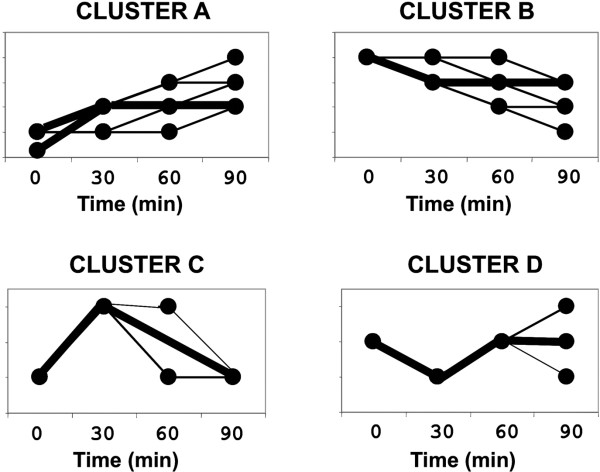
“Cluster C contained many genes somehow associated with the TOR signal transduction pathway, an eukaryotic sensor of the environment that links nutrient assimilation with translation initiation and ribosomal protein biosynthesis [28].”
Background
Cited by
Microbial seed banks: the ecological and evolutionary implications of dormancy
Lennon, J. T., & Jones, S. E. (2011) · Nature Reviews Microbiology · doi:10.1038/nrmicro2504 · Cited by 1,883
“Despite these general trade-offs, microbial species from all domains of life have evolved the ability to use dormancy during periods of environmental stres”
BackgroundAspergillus fumigatus and Aspergillosis in 2019
Latgé, J.-P., & Chamilos, G. (2019) · Clinical Microbiology Reviews · doi:10.1128/cmr.00140-18 · Cited by 1,400
Self-citationSurface hydrophobin prevents immune recognition of airborne fungal spores
Aimanianda, V., Bayry, J., Bozza, S., Kniemeyer, O., Perruccio, K., Elluru, S. R., Clavaud, C., Paris, S., Brakhage, A. A., Kaveri, S. V., et al. (2009) · Nature · doi:10.1038/nature08264 · Cited by 792
Self-citationKrijgsheld, P., Bleichrodt, R., van Veluw, G. J., Wang, F., Müller, W. H., Dijksterhuis, J., & Wösten, H. A. B. (2013) · Studies in Mycology · doi:10.3114/sim0006 · Cited by 410
“In a dried state, the mRNA pool of the conidia of A. fumigatus hardly changes even after a year of storage (Lamarre et al. 2008).”
BackgroundAbad, A., Victoria Fernández-Molina, J., Bikandi, J., Ramírez, A., Margareto, J., Sendino, J., Luis Hernando, F., Pontón, J., Garaizar, J., & Rementeria, A. (2010) · Revista Iberoamericana de Micología · doi:10.1016/j.riam.2010.10.003 · Cited by 394
“Using transcriptomic analysis, other authors have investigated the exit from dormancy of A. fumigatus conidia 146 and the genes differentially expressed in conidia and hyphae of this fungus upon exposure to human neutrophils.”
Metadata
- Authors
- Lamarre, C., Sokol, S., Debeaupuis, J.-P., Henry, C., Lacroix, C., Glaser, P., Coppée, J.-Y., François, J.-M., & Latgé, J.-P.
- Affiliations
- Institut Pasteur (FR)
- Centre National de la Recherche Scientifique (FR)
- Corresponding author
- Debeaupuis, Jean-Paul
- Latgé, Jean-Paul
- ORCID
- Venue
- BMC Genomics
- Published
- 2008-09-16
- Volume
- 9
- Issue
- 1
- Pages
- 417-417
- ISSN
- 1471-2164 (ISSN-L)
- PMC
- PMC2556354
- OpenAlex
- W2134384685
- Cited by
- 148
- References
- 53
- Citations by year
- 2026: 8 · 2025: 2 · 2024: 8 · 2023: 10 · 2022: 5 · 2021: 12 · 2020: 3 · 2019: 8 · 2018: 12 · 2017: 10 · 2016: 12 · 2015: 9 · 2014: 7 · 2013: 15 · 2012: 4
- FWCI
- 3.15
- Type
- journal article
- Language
- en
- Open access
- gold
- doi.org
- Licence
- cc-by
- Locations
- BMC Genomics (publishedVersion, cc-by)
- PubMed Central (publishedVersion, cc-by)
- PubMed (publishedVersion)
- DOAJ (DOAJ: Directory of Open Access Journals) (submittedVersion)
- Topics
- Life Sciences › Biochemistry, Genetics and Molecular Biology › Molecular Biology › Fungal and yeast genetics research
- Health Sciences › Medicine › Infectious Diseases › Antifungal resistance and susceptibility
- Health Sciences › Medicine › Infectious Diseases › Fungal Infections and Studies
- Keywords
- Aspergillus fumigatus, conidial dormancy, conidial germination, aspergillosis, gene expression, protein synthesis, transcriptome
- MeSH terms
- Aspergillus fumigatus, RNA, Messenger, Spores, Fungal, Oligonucleotide Array Sequence Analysis, Gene Expression Profiling
About these checks
Registry, retraction, Cites and statistics results are computed, not judged, with one exception: a printed reference that no index lists is read once by a model before it counts as a citation error. Claims are extracted by a model and kept only when their quote appears verbatim in the text; each cited source is then checked, with a model’s help, for whether it says what the claim relies on. Those verdicts can be wrong — read the claim’s quote and the cited source before relying on one.
Statistics and arithmetic are recomputed, not judged.
Confidence bands are shown only for fields calibrated on our annotated test set. None is calibrated yet, so no band is shown.
What counts as a claim ›How we measure confidence ›How we check this ›
Are you an author, or do you see a problem with this page? Request a review
How to cite
Cite CoChat for the checks on this page, and the paper for its own findings.
- This page
- CoChat. (2026). Citation check: Transcriptomic analysis of the exit from dormancy of Aspergillus fumigatus conidia. https://app.cochat.ai/papers/10.1186/1471-2164-9-417
- The paper
- Lamarre, C., Sokol, S., Debeaupuis, J.-P., Henry, C., Lacroix, C., Glaser, P., Coppée, J.-Y., François, J.-M., & Latgé, J.-P. (2008). Transcriptomic analysis of the exit from dormancy of Aspergillus fumigatus conidia. BMC Genomics. https://doi.org/10.1186/1471-2164-9-417
Data sources
Bibliographic data: Semantic Scholar, OpenAlex, Crossref.
Contains information from the Semantic Scholar Academic Graph Datasets, made available under the ODC Attribution License (ODC-BY 1.0).
Semantic Scholar’s data is described in: Kinney, R., et al. (2023). The Semantic Scholar Open Data Platform. arXiv:2301.10140.
